
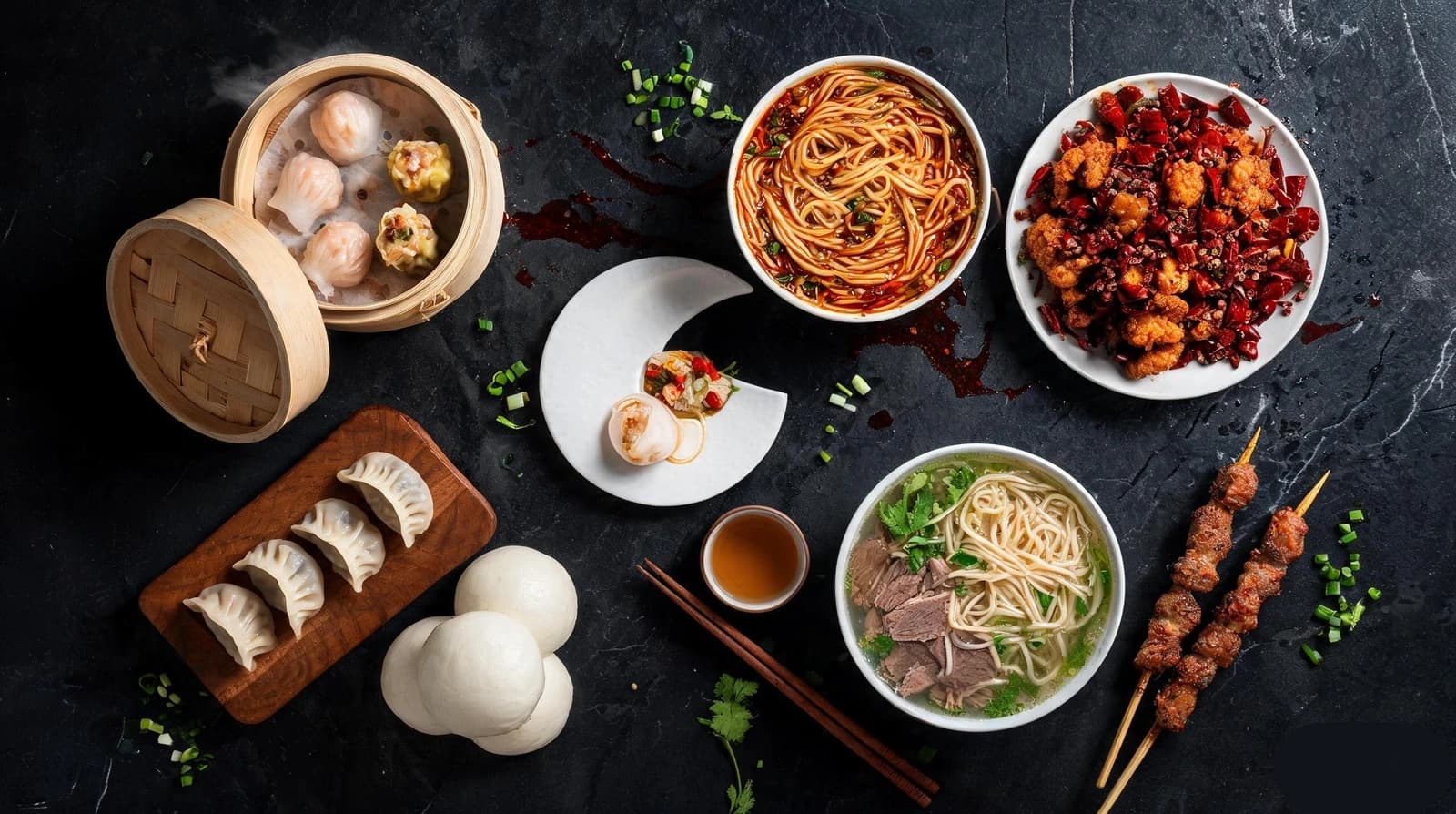
One of the biggest surprises for first-time visitors to China is that Chinese food in China is often completely different from the Chinese dishes they know at home. A bowl of hand-pulled noodles in Lanzhou, a late-night hot pot in Chengdu, and a dim sum breakfast in Guangzhou can feel like three different countries connected by one railway network.
China isn't defined by a single cuisine. Instead, every region has its own flavors, ingredients, traditions, and food culture. From smoky street food stalls to centuries-old tea houses, eating your way across China is one of the best ways to understand the country itself.
Understanding Chinese Cuisine: The 8 Great Culinary Traditions
If you think Chinese food is all about dumplings and fried rice, you’re only scratching the surface. China is made up of vastly different regional food cultures shaped by geography, climate, and local ingredients.
To make sense of this diversity, Chinese cuisine is traditionally divided into the “Eight Great Culinary Traditions.” Each one represents a unique flavor world—from the fiery spice of Sichuan to the delicate freshness of Cantonese cooking. The table below gives you a quick snapshot before we explore each style in detail.
Cuisine Type | Key Cities | Flavor Profile | Famous Dishes |
Sichuan Cuisine | Chengdu, Chongqing | Numbing, spicy, aromatic, rich layers, heavy chili oil & Sichuan peppercorns | Hot Pot, Mapo Tofu, Boiled Fish, Husband-and-wife Lung Slices |
Cantonese Cuisine | Guangzhou, Shunde, Foshan | Light, fresh, slightly sweet, emphasizes natural ingredient flavor | White Cut Chicken, Steamed Seafood, Dim Sum, Herbal Soup |
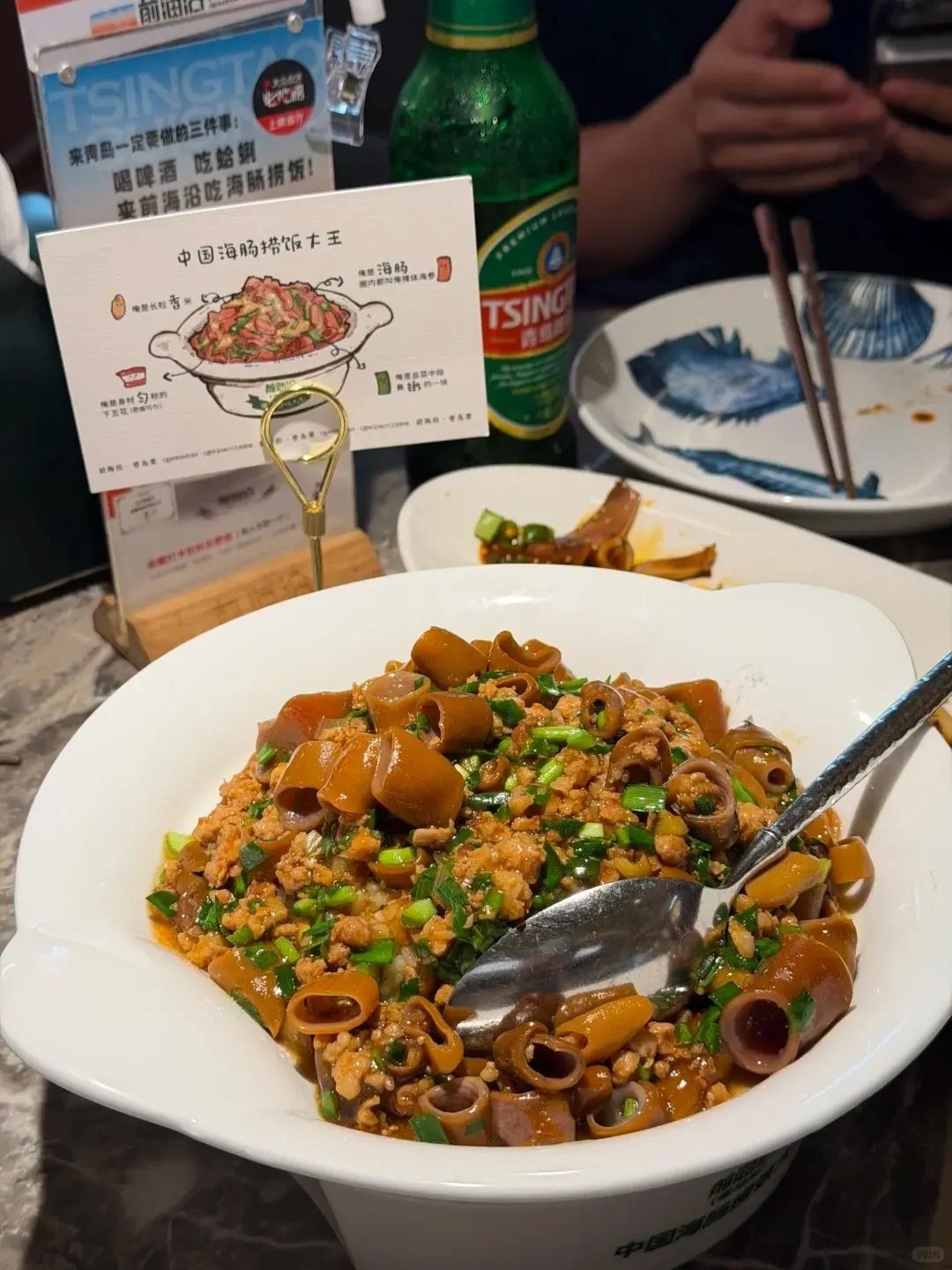
Shandong Cuisine | Jinan, Yantai, Qufu | Savory, rich, heavy umami, oily and flavorful, origin of northern Chinese cuisine | Braised Sea Cucumber with Scallions, Sweet and Sour Carp, Nine-Treasure Intestines |
Huaiyang Cuisine | Yangzhou, Huai’an, Nanjing | Mild, balanced taste, refined knife skills, slightly sweet and salty | Lion’s Head Meatballs, Tofu Carving Soup, Shredded Dried Tofu Dish |
Jiangsu Cuisine | Suzhou, Wuxi | Slightly sweet, soft texture, delicate and refined Jiangnan style | Squirrel-Shaped Mandarin Fish, Wuxi Spare Ribs |
Zhejiang Cuisine | Hangzhou, Ningbo, Shaoxing | Fresh, crisp, slightly sweet, strong river and lake ingredients | Braised Pork (Dongpo Pork), West Lake Fish in Vinegar Sauce, Longjing Shrimp |
Hunan Cuisine | Changsha, Yueyang | Spicy, sour-spicy, direct heat without numbing peppercorns | Steamed Fish Head with Chopped Chili, Stir-Fried Chili Pork, Hunan Cured Pork |
Fujian Cuisine | Fuzhou, Xiamen, Quanzhou | Sweet and sour, seafood-focused, uses fermented red yeast rice | Buddha Jumps Over the Wall, Lychee Pork, Shacha Noodles |
Knowing the eight culinary traditions gives you a map. But a map is not the same as a journey. I won't ask you to memorize more categories. Instead, I want to ask you a different question: What kind of eater are you? Because the best food trip to China isn't about checking off every cuisine—it's about finding the flavors and experiences that feel like they were made for you.
Finding Your Flavor: What Kind of Chinese Food Explorer Are You?
Chinese food isn't a menu you order from—it's a series of worlds you step into. Some travelers crave the adrenaline of a boiling chili-oil hot pot at midnight; others want the slow, quiet ritual of a morning tea house. Some will plan entire detours for a single bowl of hand-pulled noodles; others want to graze through night markets until their legs give out.
This chapter is not a list of dishes. It's a map of experiences.
Each section answers a different traveler's question: Is this for me? And each one comes with a rough route—an itinerary framework you can build a trip around, or a single evening you can step into and never forget.
The Spice Chaser: Sichuan, Hunan, and the Fiery Heart of China
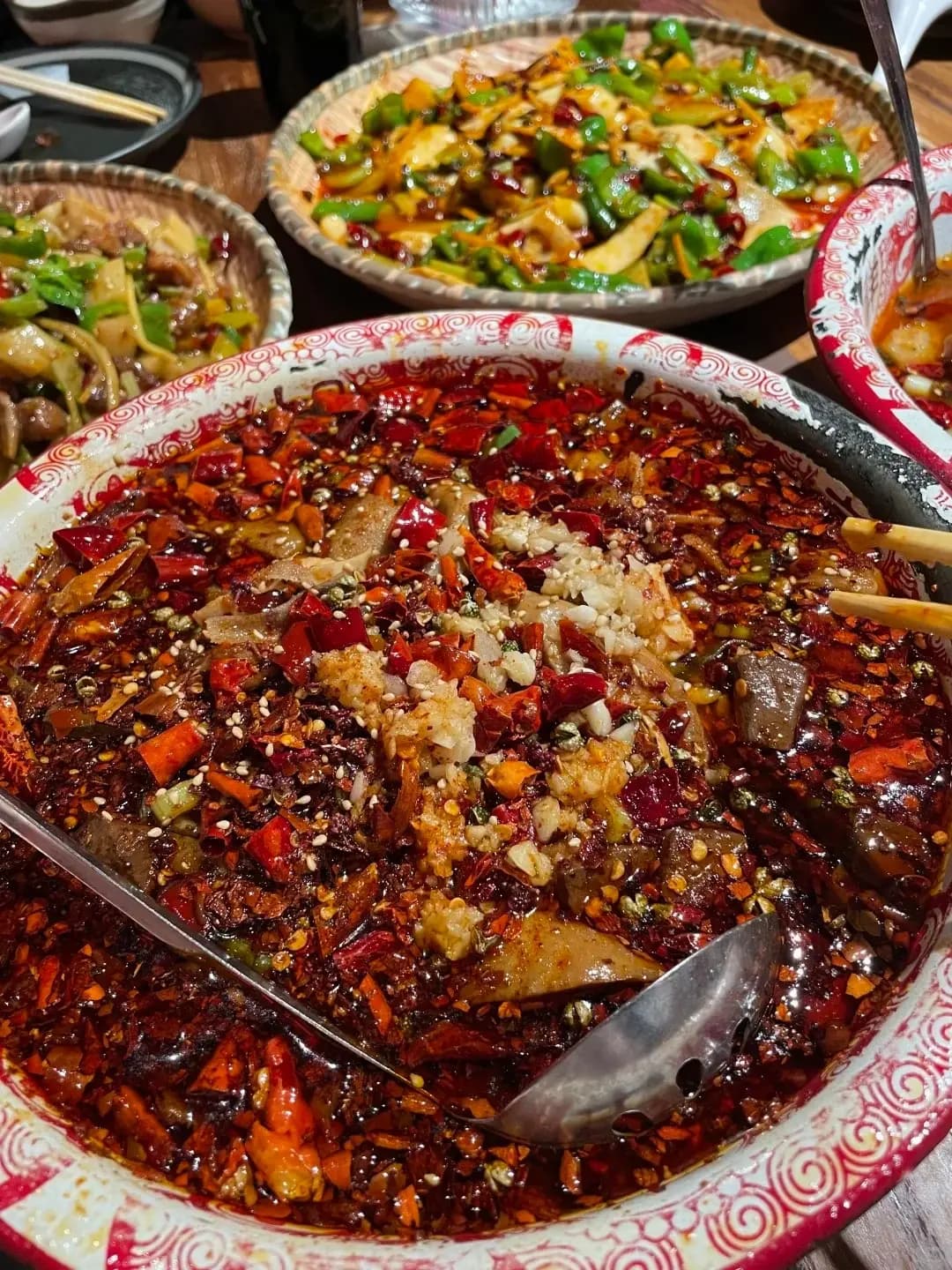
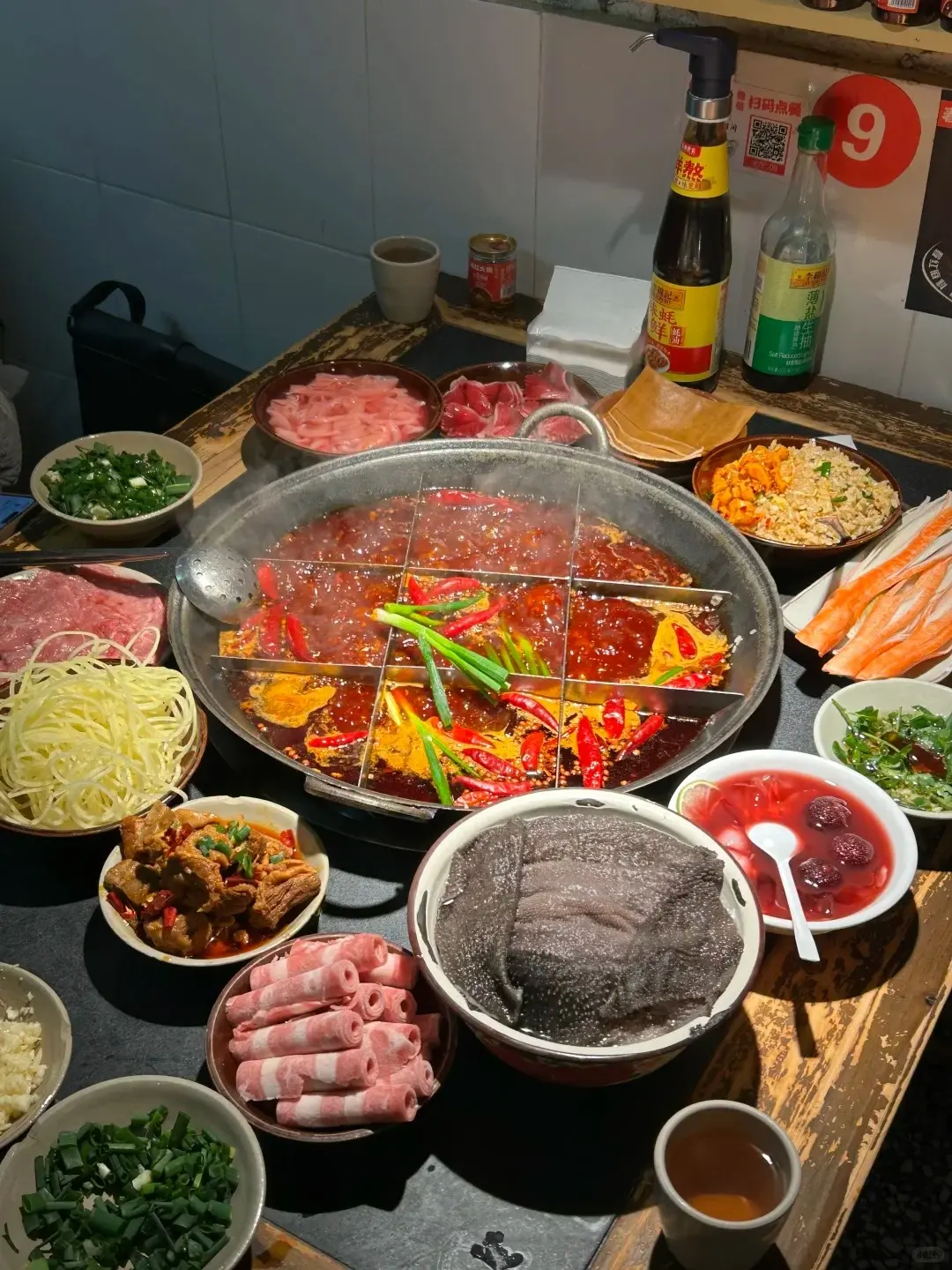
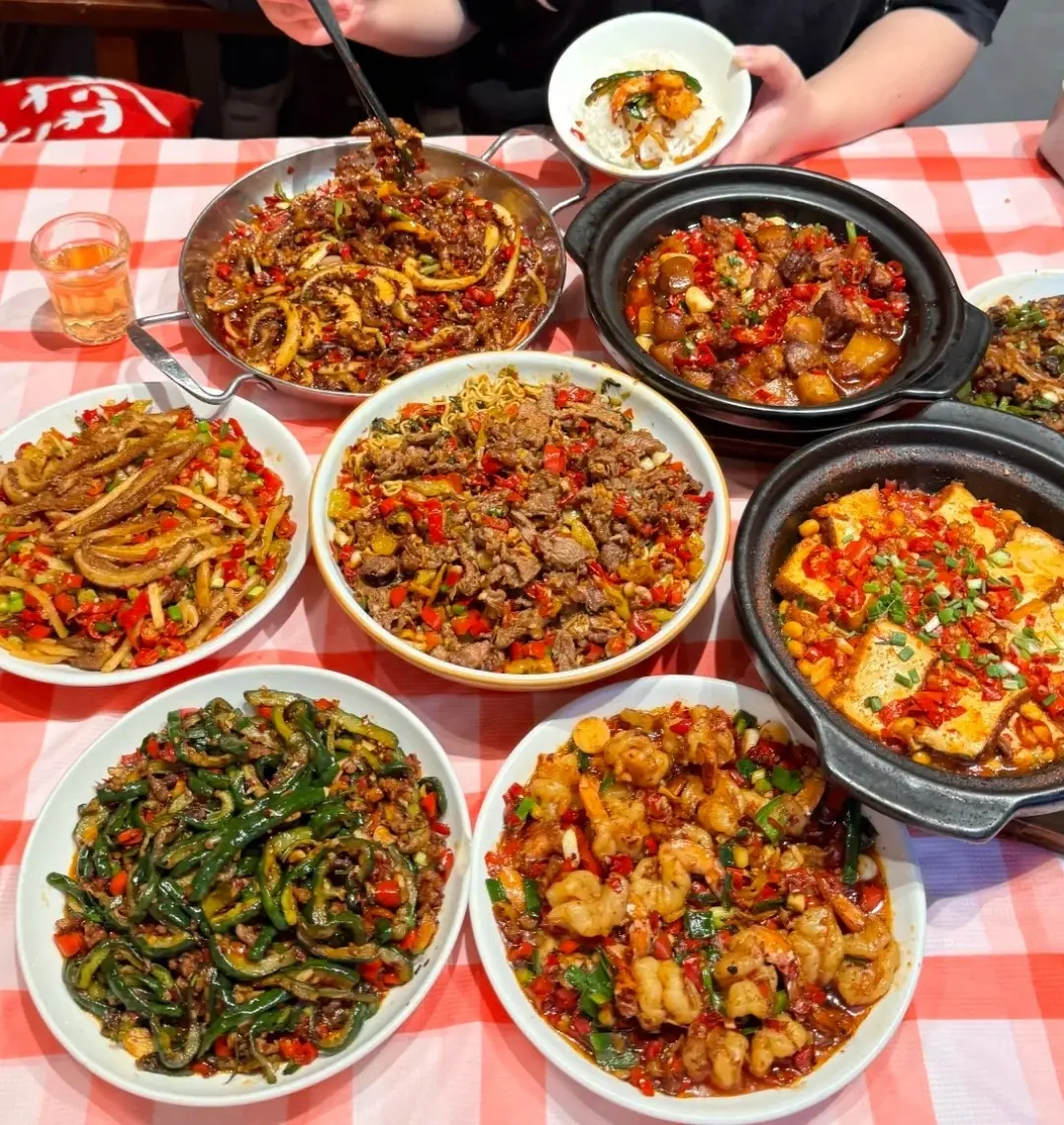
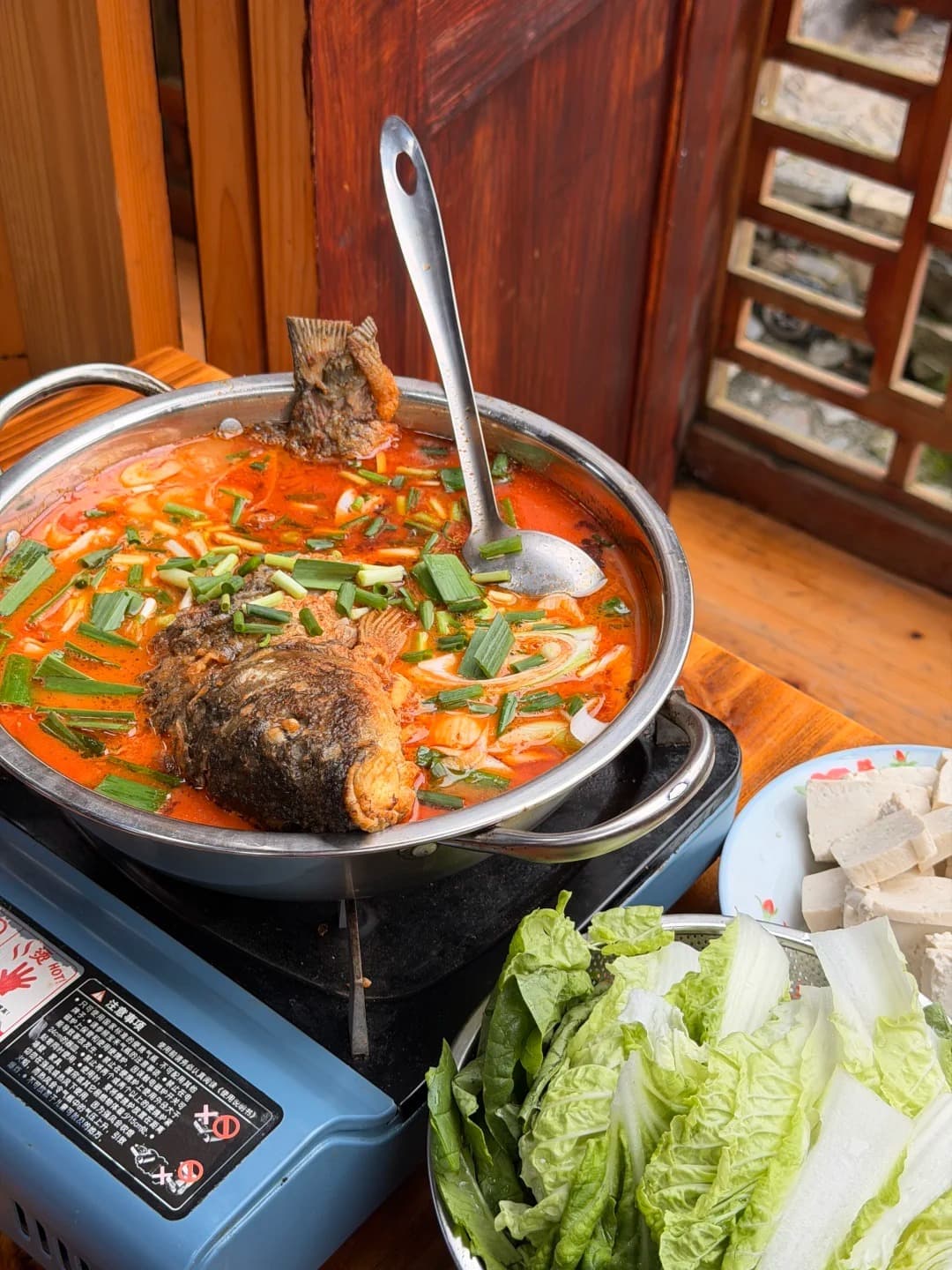
Who this is for: The traveler who believes a meal should make them sweat, who orders the spiciest thing on the menu not out of bravery but out of curiosity, who understands that the burn is not the enemy—it's the whole point.
The rough route
Locations
Numbered locations- 1Chengdu
- 2Chongqing
- 3Changsha
- 4Guiyang
Your first night in Chengdu, you follow the scent of chili and Sichuan pepper down a narrow lane. The restaurant isn't on any map—you found it because a crowd had gathered at the door, plastic stools in hand, waiting for a number to be called. Inside, the air is thick with steam and laughter. Every table holds a cauldron of deep red broth, bubbling like something alive. You sit down. You order. And when the first slice of beef hits your tongue, you understand: this is not just food. This is a sport.
Across China’s spice belt, though, “spicy” means more than one thing. Each region has its own logic, its own rhythm, and its own way of making your mouth wake up.
In Sichuan and Chongqing, the signature style is málà—a mouth-tingling combination of dried chilies and Sichuan peppercorns. The heat builds slowly, then turns electric, creating that famous numbing sensation travelers either love immediately or spend weeks learning to appreciate. You’ll find it in hot pot, of course, but also in mapo tofu, twice-cooked pork, and husband-and-wife lung slices served cold with chili oil and sesame. For many first-time visitors, this is the most memorable kind of spice in China, because it doesn’t just burn; it changes the way everything tastes.
Move east into Hunan, and the spice becomes more direct. Hunanese cooking is bold, sharp, and unapologetically chili-forward. Unlike Sichuan food, it usually skips the numbing peppercorn effect and goes straight for fresh chili heat. One of the region’s signature dishes, steamed fish head with chopped chili, looks dramatic when it arrives at the table: a whole fish head buried under bright red peppers. But the flavor is not aggressive for the sake of drama. It is intense, yes, but also clean and focused. Stir-fried chili pork follows the same logic—simple ingredients, big heat, no distractions.
Then there is Guizhou, the quieter and less touristy member of China’s spice family. Here, heat often comes with sourness. Fermented chilies, sour broths, pickled vegetables, and tangy bases create a flavor profile that feels both bright and deep. A sour broth hot pot in Guiyang tastes nothing like Sichuan hot pot or Hunan stir-fries, which is exactly why it deserves a place on any serious food traveler’s route. If Sichuan is about numbing fire and Hunan is about direct impact, Guizhou is about layered, sour heat that catches you by surprise.
One traveler on our 14-day China route arrived convinced she couldn't handle any spice. By day five in Chengdu, she was requesting "medium spicy" hot pot. By day twelve in Changsha, she'd bought a bag of dried chilies to take home.
How Spicy Is It? A Traveler-Friendly Guide to China’s Heat Levels
Spice level | Best for | Dish examples | What to expect |
Mild | Travelers new to spicy food | Steamed fish with light seasoning, mild Sichuan dishes, some Guizhou sour dishes | Flavorful but not overwhelming |
Medium | Travelers who can handle some heat | Mapo tofu, dan dan noodles, mild hot pot, chili pork with less oil | Noticeable heat, but still manageable |
Hot | Spice lovers who want a challenge | Sichuan hot pot, Chongqing noodles, Hunan chopped chili dishes | Strong heat that builds quickly |
Very hot | Experienced spice eaters only | Extra-spicy hot pot, heavily seasoned Hunan dishes, strong Guizhou sour-spicy soups | Intense, long-lasting heat that may linger |
Extreme | For brave eaters, not first-timers | Local street versions with extra chilies, very spicy rabbit heads, heavily loaded chili oil dishes | A real test of tolerance |
The Street Food Wanderer: Night Markets, Skewers, and Open-Air Feasts
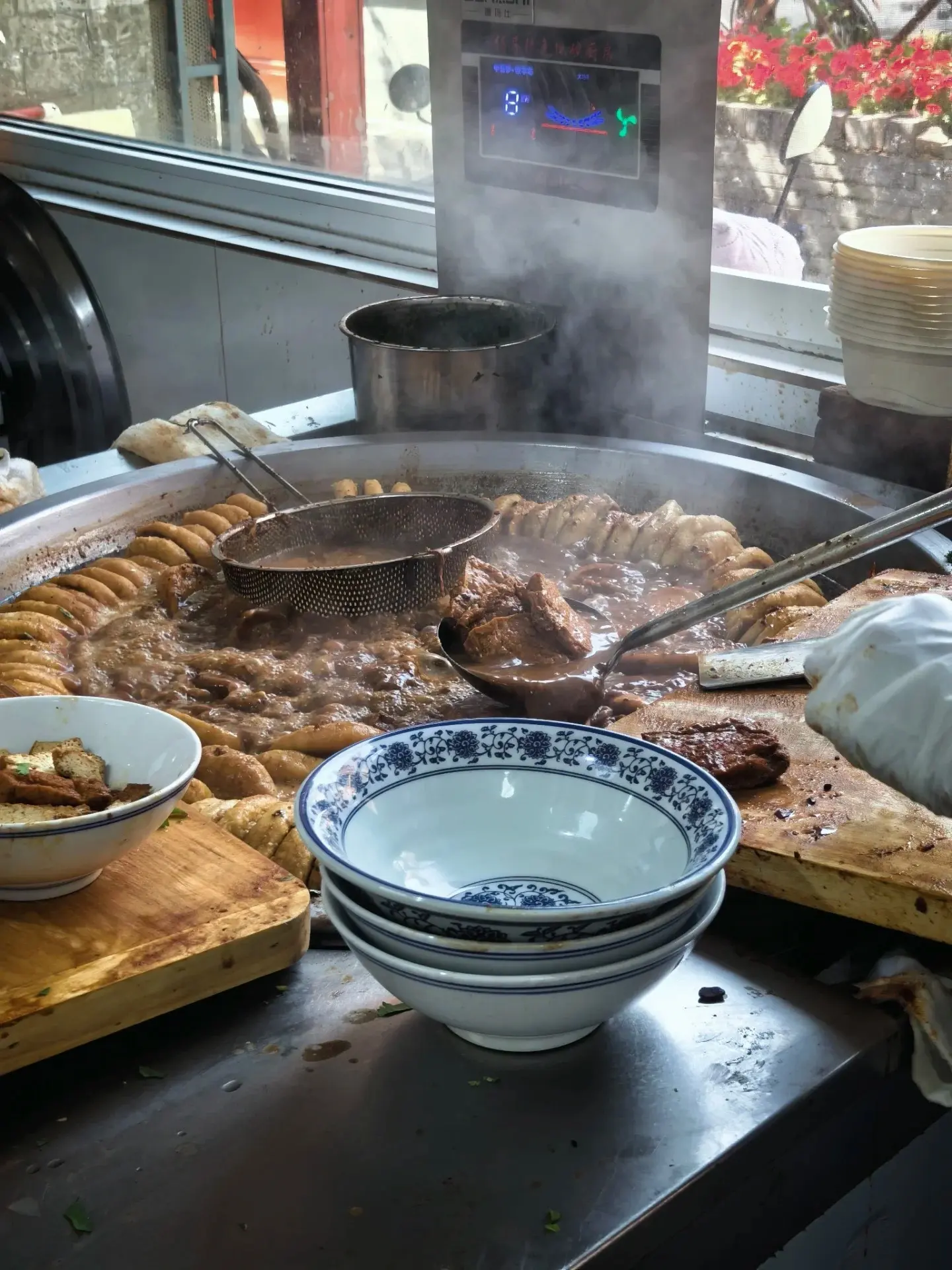
Who this is for: The traveler who hates rigid itineraries, who believes a city reveals itself through its street corners, and who would rather eat five small things standing up than one big meal sitting down.
The rough route
Locations
Numbered locations- 1Beijing
- 2Xi'an
- 3Chengdu
- 4Guangzhou
- 5Changsha
A street food crawl is never perfectly linear. It loops, doubles back, and rewards whoever is willing to get a little lost.
You do not sit down for this meal. You walk into it.
At dusk, the first carts begin to roll out, charcoal fires catch, and streets that looked ordinary an hour ago start to change shape. By 8 p.m., the air is full of smoke, grill marks, and voices calling out prices. Someone is stretching dough by hand behind a glass window. Someone else is flipping skewers over open flame. A crowd gathers where the line is longest, because that is usually the sign that something worth eating is happening.
This is street food in China: not just a list of dishes, but a way of moving through a city.
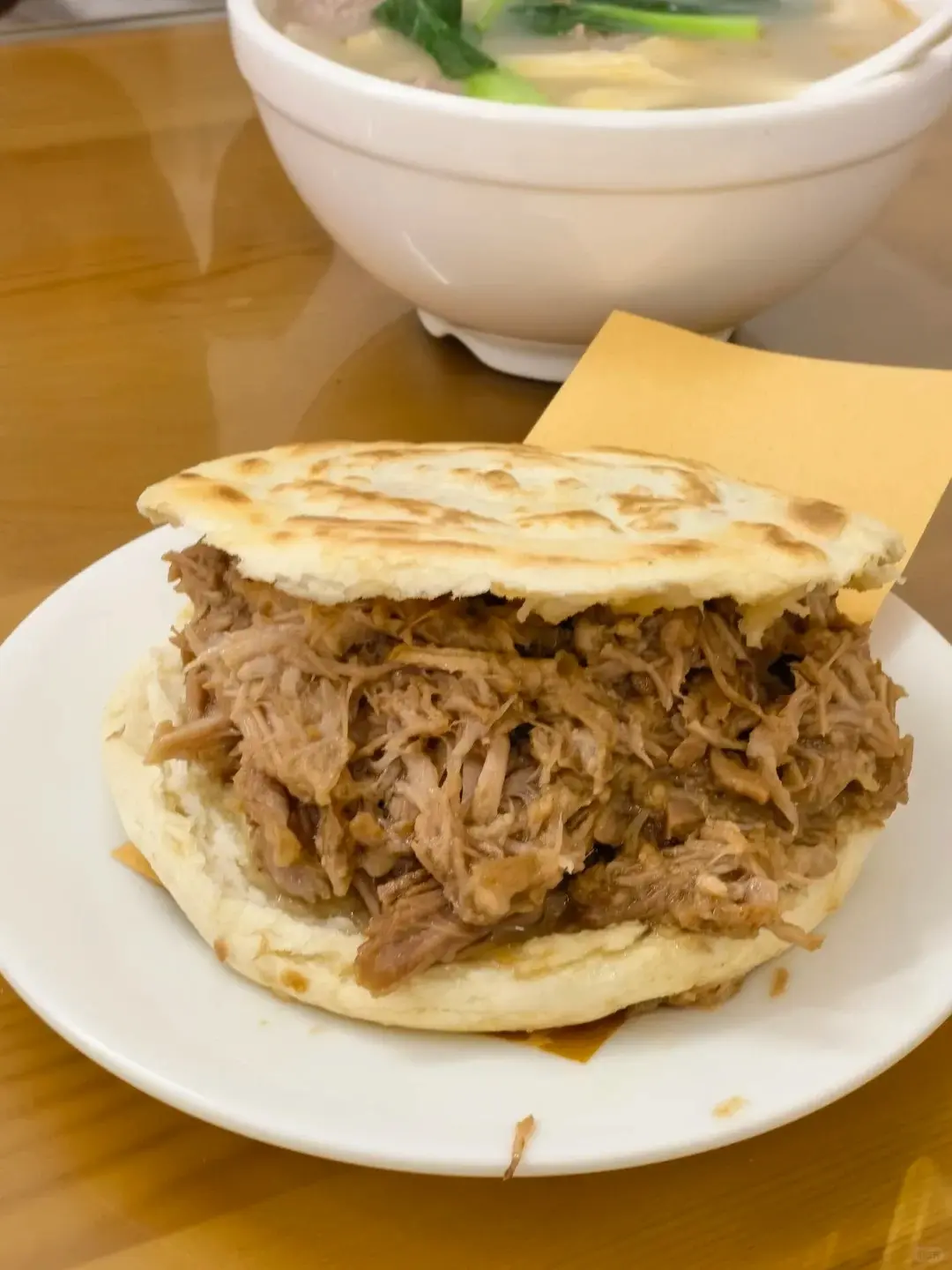
In Xi’an, the Muslim Quarter is the classic Silk Road stop for travelers who want bold, fast, and unforgettable flavors. You’ll find cumin-heavy lamb skewers, hand-torn flatbread soaked in lamb soup, sticky persimmon cakes, and other snacks that feel rooted in the history of the northwest. The streets are narrow, crowded, and noisy, which is exactly why they work so well. Street food here is part food, part performance, part local rhythm.
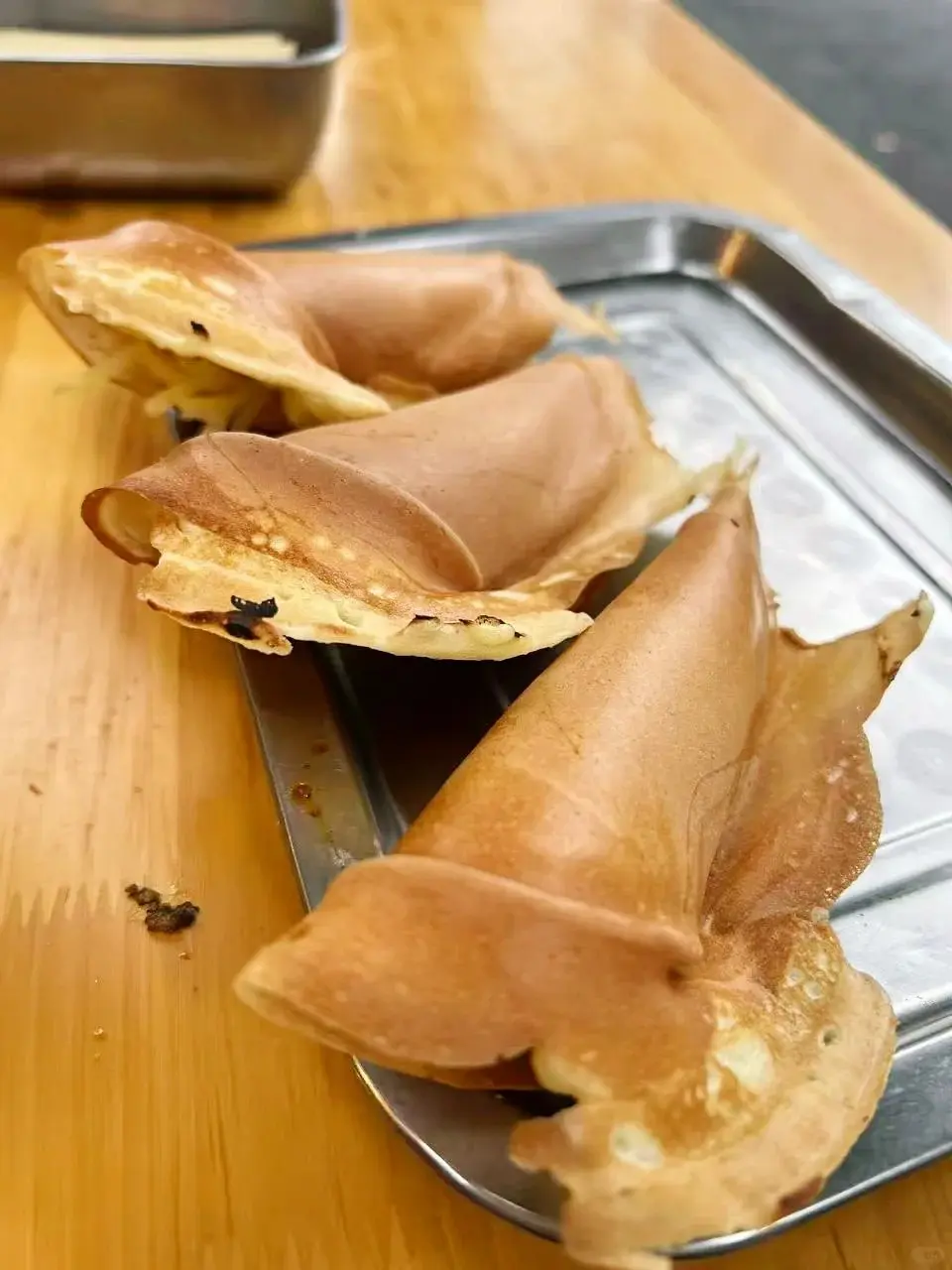
In Beijing, the street food scene changes with the hour. Mornings belong to jianbing, the savory crepe folded around egg, crispy crackers, scallions, and sauce. Nights belong to Guijie, where red lanterns, grilled seafood, spicy crayfish, and endless tables turn the whole street into a late-night dining room. It is one of the easiest places in the capital to understand how Beijing eats when it is not trying to impress anyone.
In Chengdu, street food does not wait for nightfall. It appears in side streets, parks, and neighborhood corners all day long. A small cart selling dan dan noodles, a vendor frying snacks in chili oil, a granny making something by instinct rather than recipe—all of it feels casual until you realize how much flavor is packed into each bite. Chengdu’s street food is less about spectacle than about everyday habit, which makes it even more interesting.
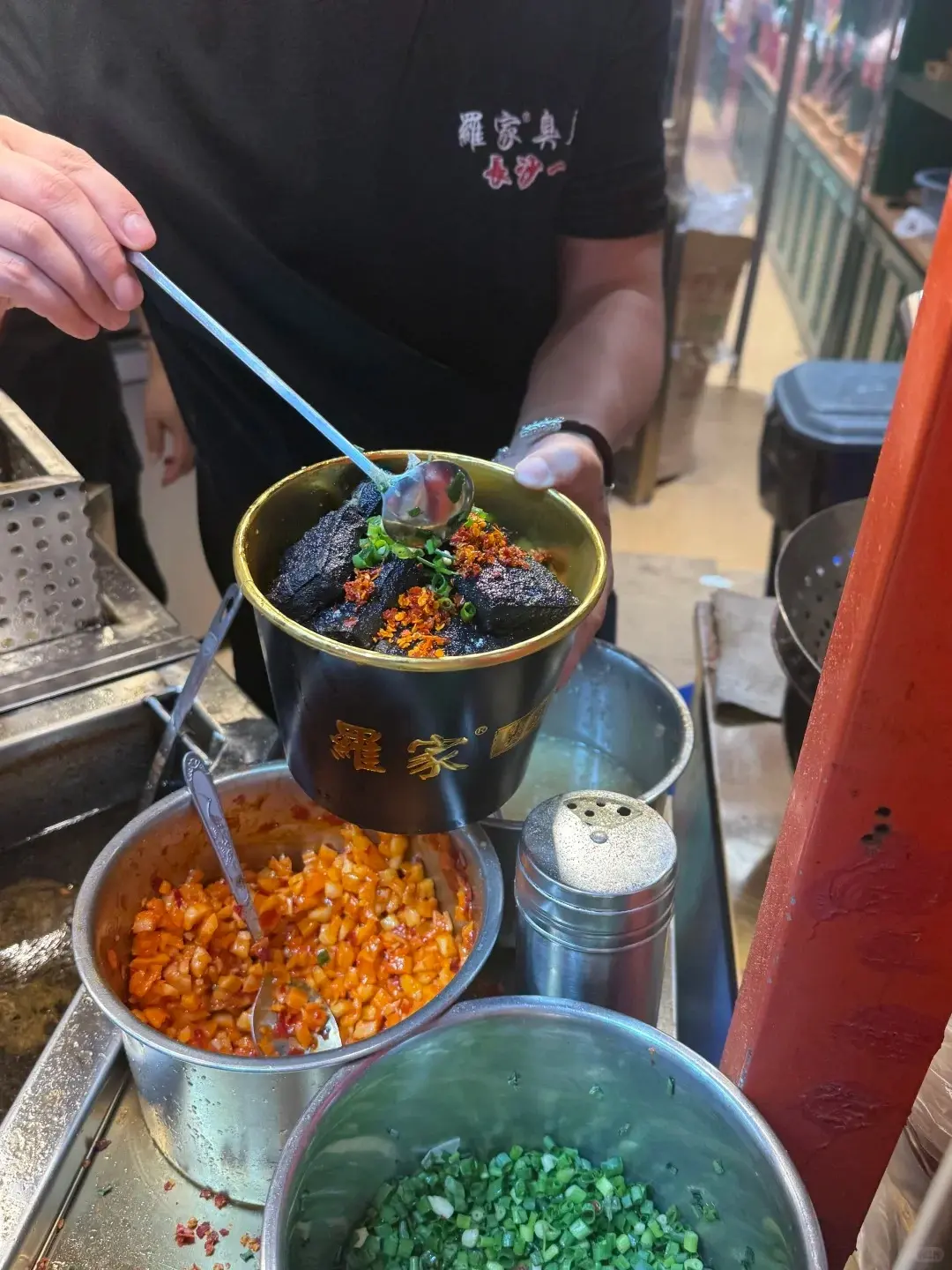
In Changsha, the energy gets louder, sharper, and more intense. Stinky tofu fried to order, skewers of grilled offal, spicy rice snacks, and late-night stalls packed with students and office workers make the city feel built for people who eat with enthusiasm. If Chengdu is the city of social dining, Changsha is the city of no apologies.
The rule of the crawl is simple: do not fill up at one stall. If the line is long, join it. If something looks unfamiliar but smells amazing, order it. And always carry tissues—good street food is supposed to leave evidence.
Famous Night Markets Worth Visiting
Beijing — Guijie (Ghost Street). Best for late-night crayfish, grilled skewers, and a lively dinner atmosphere.
Xi’an — Muslim Quarter. Best for lamb skewers, flatbreads, and Silk Road-style snacks.
Chengdu — Jinli and nearby snack streets. Best for Sichuan-style snacks, chili oil dishes, and casual grazing.
Guangzhou — Liwan old alleys. Best for dim sum-style snacks, desserts, and lighter Cantonese street food.
Changsha — Taiping Street. Best for spicy snacks, stinky tofu, and energetic night eating.
Wuhan — Hubu Alley. Best for breakfast snacks and all-day local street food.
Shanghai — Yuyuan area and traditional snack streets. Best for soup dumplings, sweet snacks, and easier first-time street food.
Chongqing — night snack streets around local neighborhoods. Best for grilled skewers and heavy chili flavors.
An Australian guest told us his favorite meal in two weeks of traveling China wasn't a restaurant—it was a lamb skewer from a Uyghur vendor in Xi'an's Muslim Quarter, eaten standing in the rain at 10 p.m., cumin on his fingers, already planning the next stall.
The Noodle Pilgrim: One Bowl, One City, a Thousand Miles of Carbs
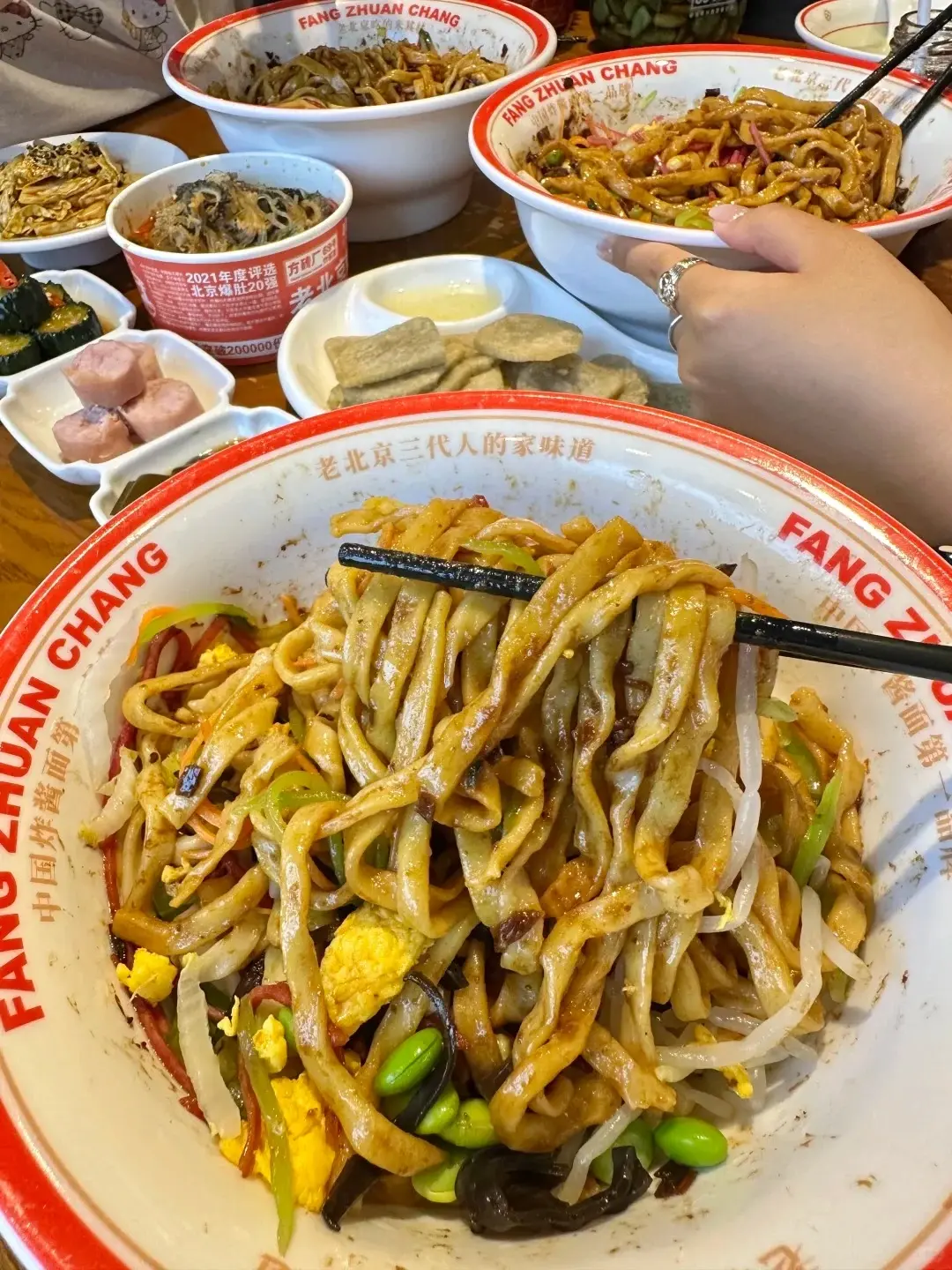
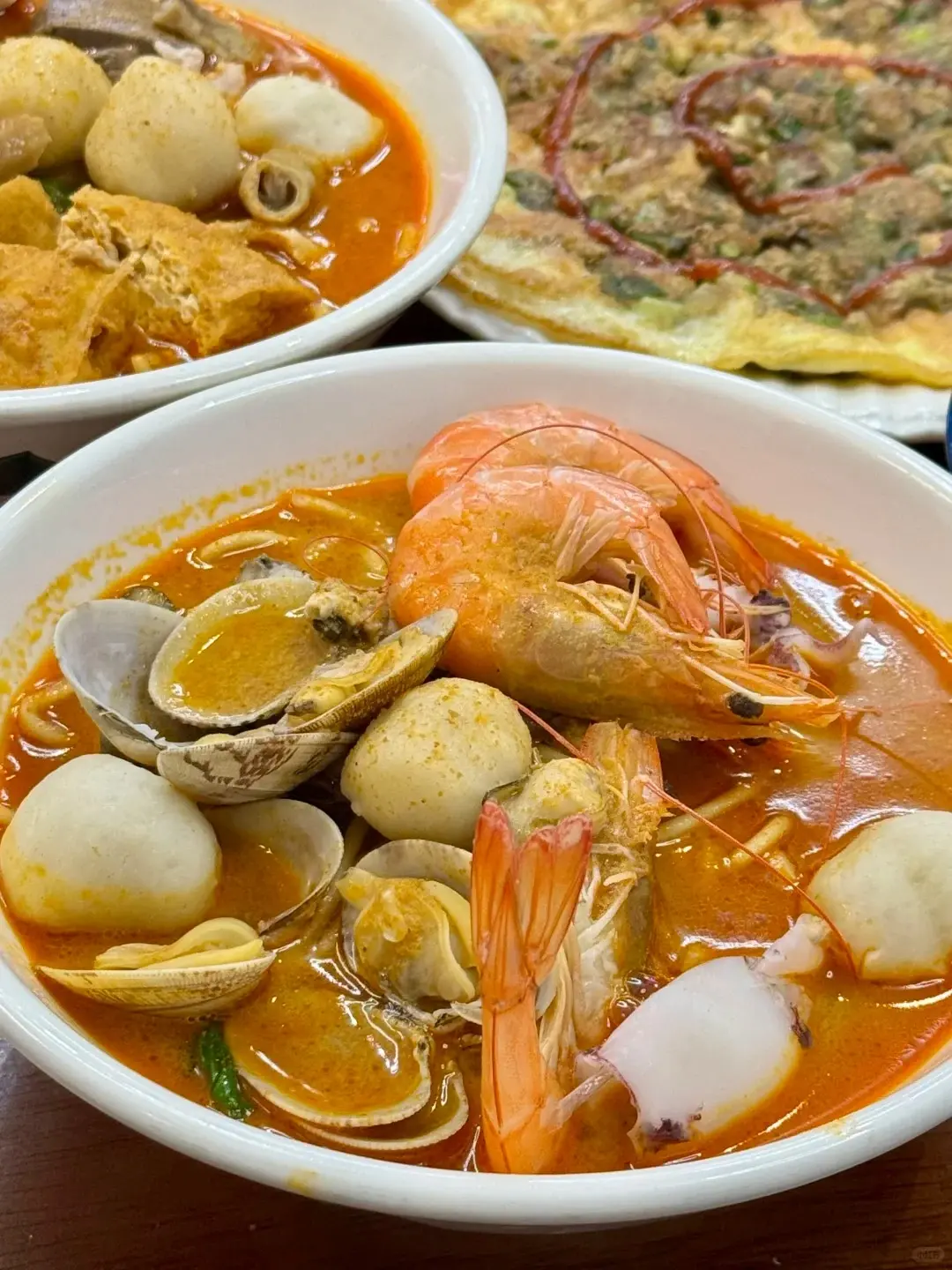
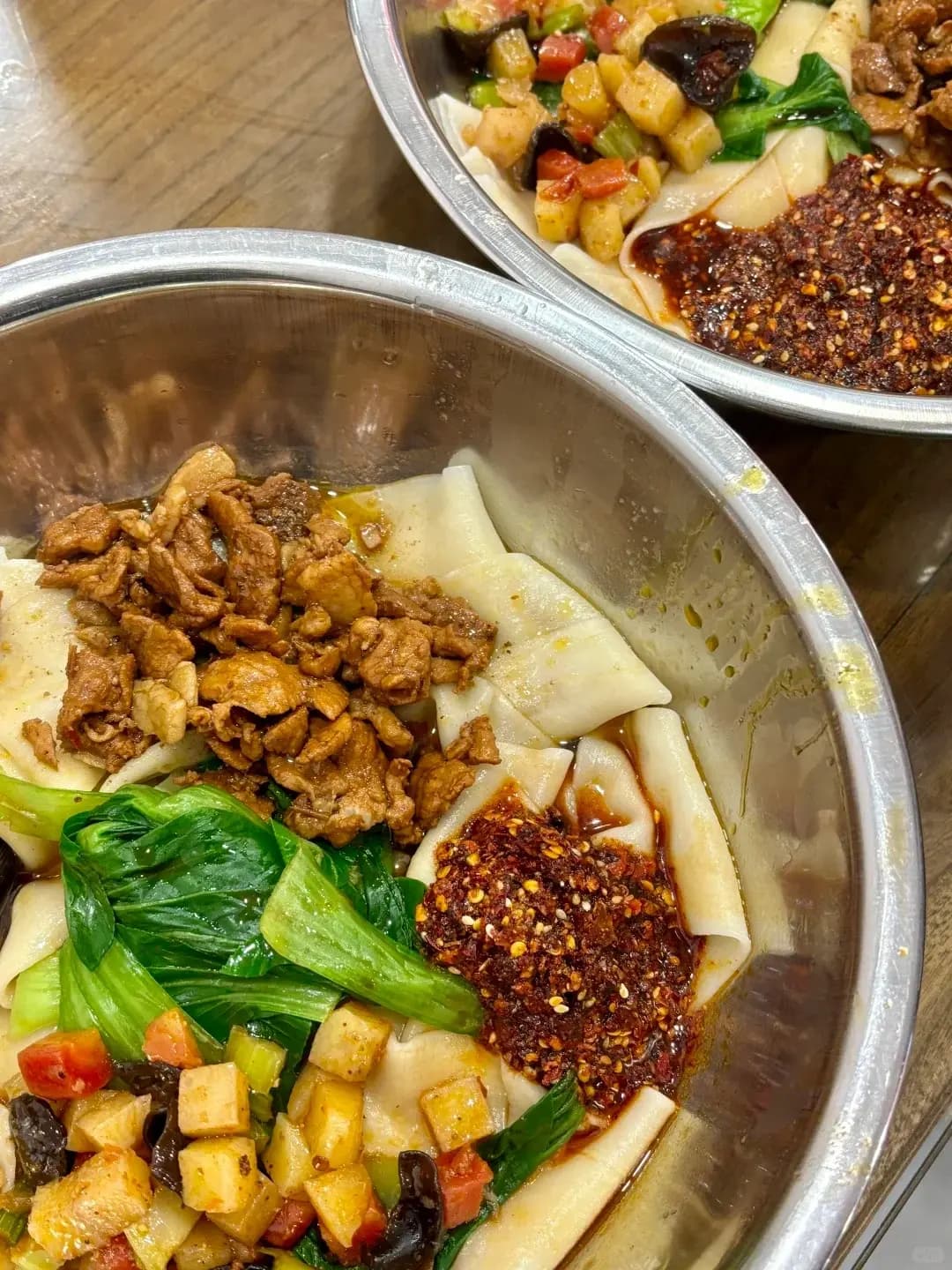
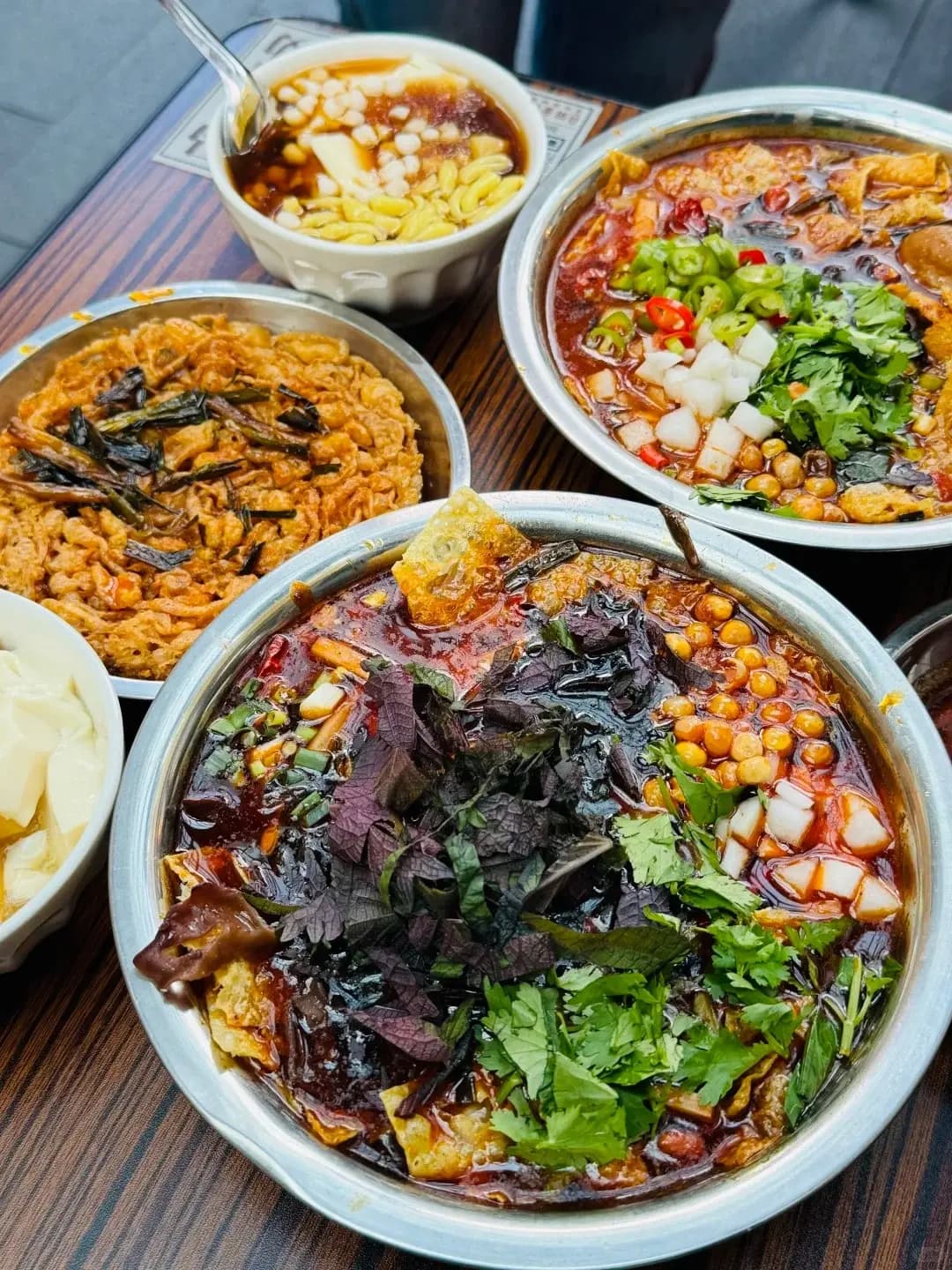
Who this is for: The traveler who would happily reroute a trip for a legendary bowl of noodles, who understands that carbs are not the enemy, and who thinks the sound of someone slurping next to them means they’ve found the right place.
The rough route
Locations
Numbered locations- 1Beijing
- 2Xi'an
- 3Lanzhou
- 4Wuhan
- 5Xiamen
- 6Liuzhou
- 7Hangzhou
For some travelers, noodles are just a quick meal. In China, they are a map. A single bowl can tell you where you are, what grows nearby, how people like to season their food, and what kind of comfort they expect from a meal. If you come from Europe, North America, or Southeast Asia, Chinese noodles may look familiar at first—but they are built on a very different logic.
Comparison | Chinese noodles | Western pasta | Southeast Asian noodles |
Main idea | Regional identity first | Sauce or dish first | Broth, herbs, and aroma first |
Common base | Wheat noodles or rice noodles | Wheat pasta, egg noodles | Rice noodles, egg noodles, glass noodles |
Flavor style | Soy sauce, sesame, chili oil, vinegar, fermented sauces, broth | Butter, tomato, cream, cheese, olive oil | Fish sauce, lime, herbs, coconut, tamarind |
Texture focus | Chewy, hand-pulled, wide, soft, springy | Usually al dente or smooth | Soft, slippery, springy, soupy |
Eating style | Often mixed at the table, fast and casual | Usually plated and eaten with utensils | Often broth-heavy or herb-heavy with toppings |
What makes it different | Geography and local tradition shape the bowl | Technique and sauce often matter more | Fresh herbs and layered aromatics are central |
In Lanzhou, the noodle bowl begins before sunrise. A halal noodle shop fills with the sound of dough hitting metal tables, and a Hui Muslim chef stretches a single piece of dough into long, even strands with practiced speed. Lanzhou beef noodles are known for their clear broth, sliced beef, radish, herbs, and a small spoonful of chili oil that adds heat without hiding the broth. It is one of the most precise noodle dishes in China, and one of the easiest to love.
Xi’an noodles are broader, heavier, and more rustic. Biangbiang noodles are famous for their width and chew, usually dressed with garlic, chili oil, vinegar, and sometimes minced meat or vegetables. They are built for appetite rather than elegance. Xi’an also has other noodle styles that reflect its history as a Silk Road city, where wheat, spice, and stamina matter more than refinement.
In Beijing, zhajiangmian is the everyday bowl. Thick wheat noodles are topped with fermented soybean paste, diced pork, and fresh vegetables, then mixed together at the table. It is not flashy, and that is exactly the point. This is the kind of food locals eat when they want something filling, familiar, and deeply Beijing.
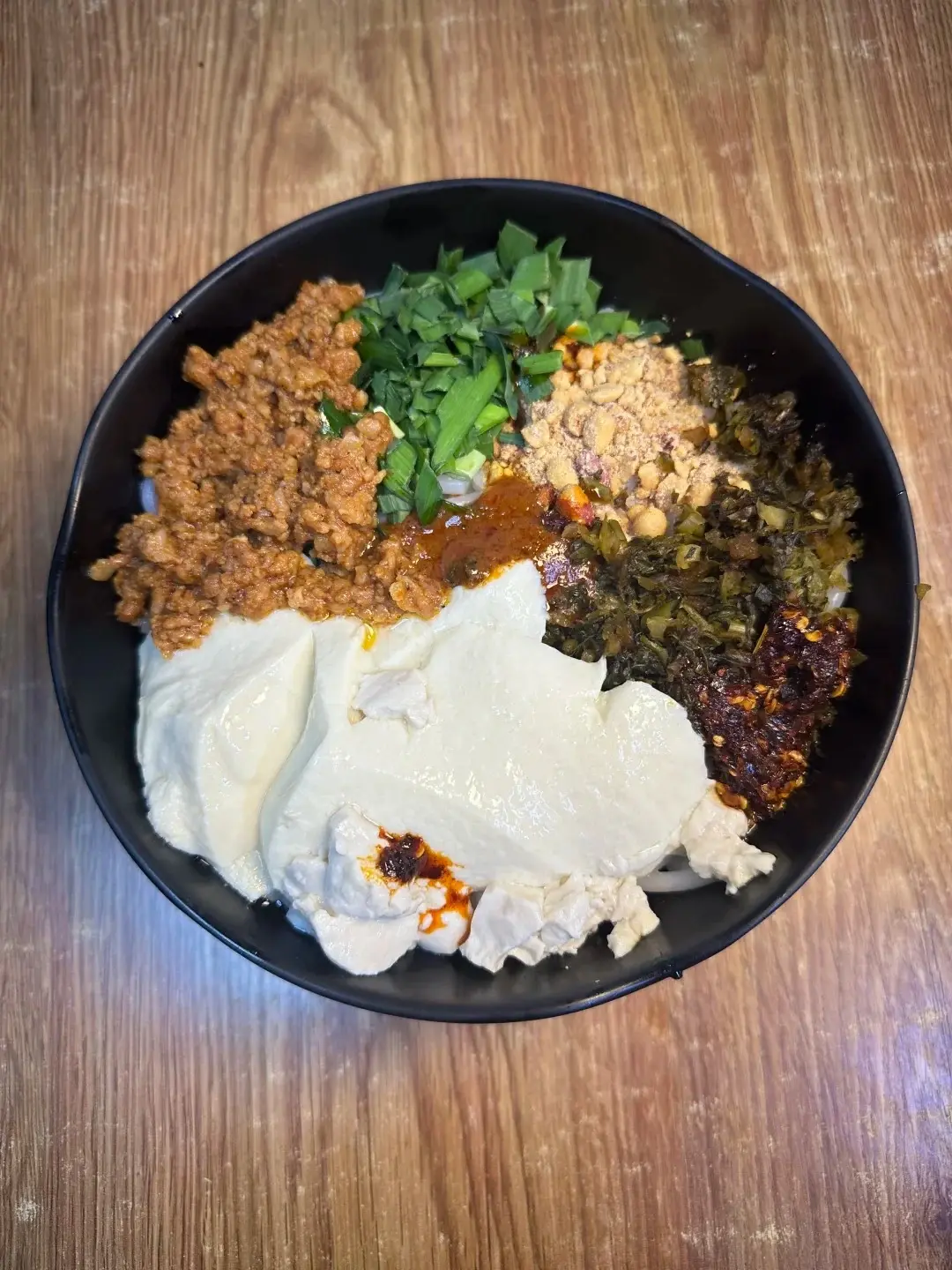
Wuhan’s signature noodle is hot dry noodles, or reganmian. These noodles are tossed with sesame paste, soy sauce, chili oil, pickled vegetables, and scallions, then eaten in the morning as a fast, satisfying breakfast. It is a city food with a strong personality: simple at first glance, but rich, salty, and unforgettable after a few bites.
In Xiamen, noodles take on a coastal character. Shacha noodles are built around shacha sauce, which gives the dish a savory, nutty, slightly sweet flavor that feels different from the heavier wheat noodles of the north. The result is warmer and more seafood-friendly, with a softer and more relaxed flavor profile that suits the Fujian coast.
Liuzhou is the home of luosifen, one of China’s most distinctive noodle dishes, known for its sour, funky, and deeply aromatic broth. For some travelers, it is love at first bite; for others, it is an acquired taste. Guangxi also has other local noodle traditions, including old friend noodles, which bring a more direct sour-spicy comfort. This is a part of China where noodle culture leans bold, regional, and impossible to mistake for anywhere else.
Hangzhou offers a gentler answer to the noodle question. Pian’erchuan is a local favorite that feels more delicate and balanced, shaped by the Jiangnan food style rather than the stronger flavors of the northwest. It is a good choice for travelers who want something comforting but not heavy, especially if they prefer milder flavors and a softer finish.
The noodle pilgrim’s journey is not about checking off famous restaurants. It is about understanding that each bowl reflects a place, a climate, and a local idea of comfort. The best noodles in China are often eaten at small tables in crowded rooms, with strangers slurping beside you and nobody apologizing for the noise.
A traveler from London rerouted his entire itinerary to stop in Lanzhou for twelve hours—just long enough to eat two bowls of beef noodles from two different shops. He still talks about the second bowl, the one with the wider noodles, four years later.
The Morning Ritualist: Tea, Steam Buns, and How China Starts Its Day
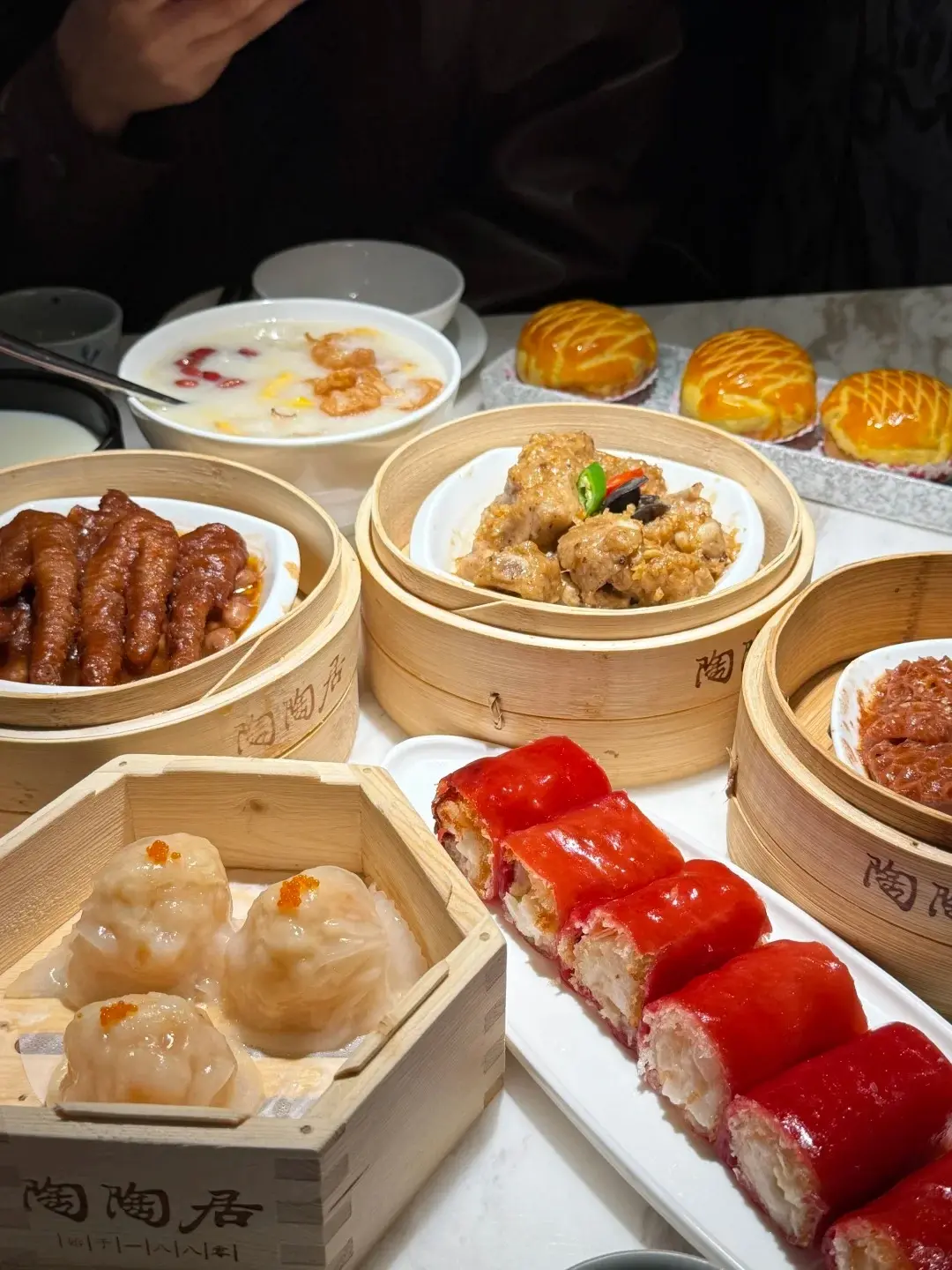
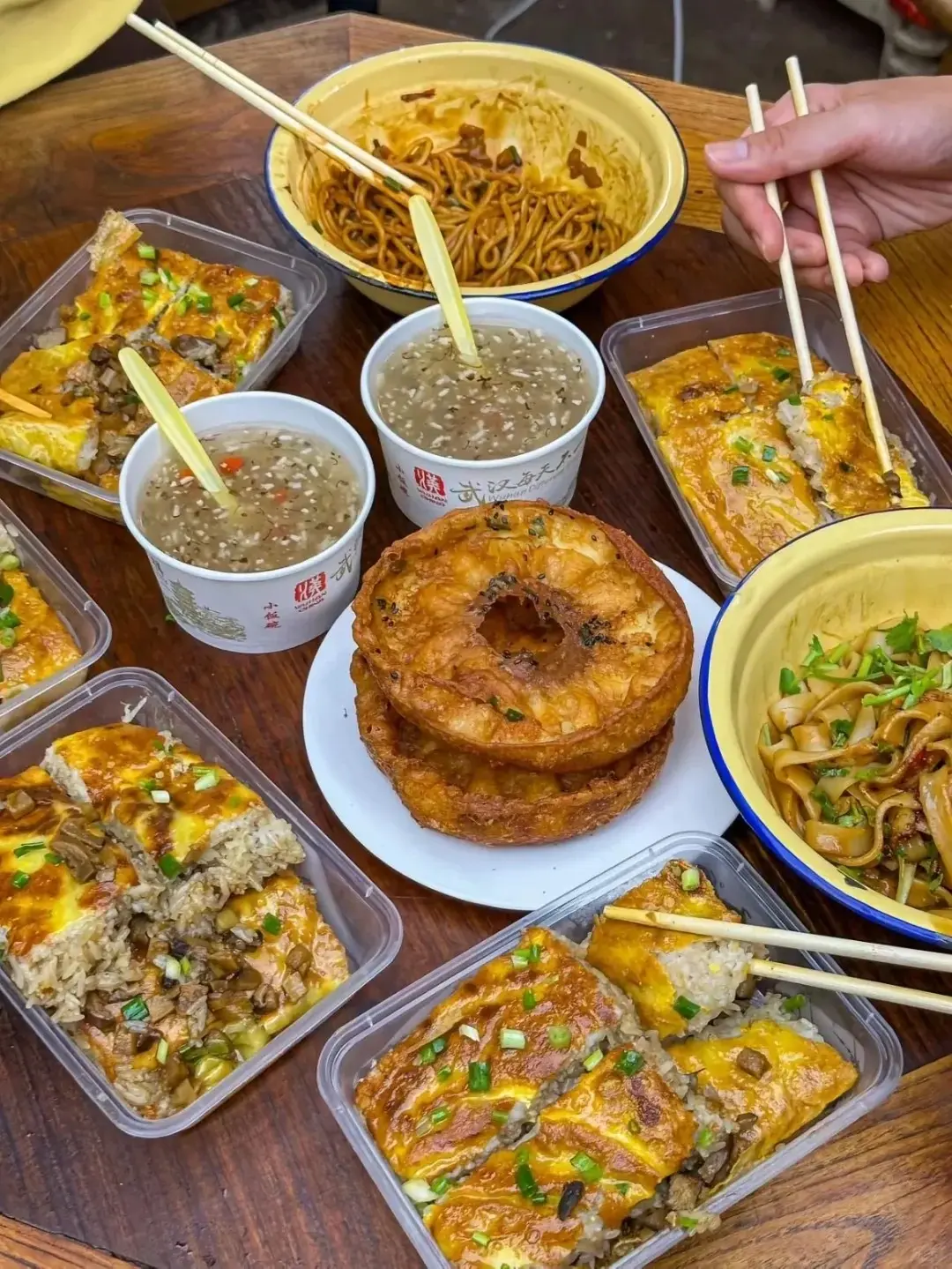
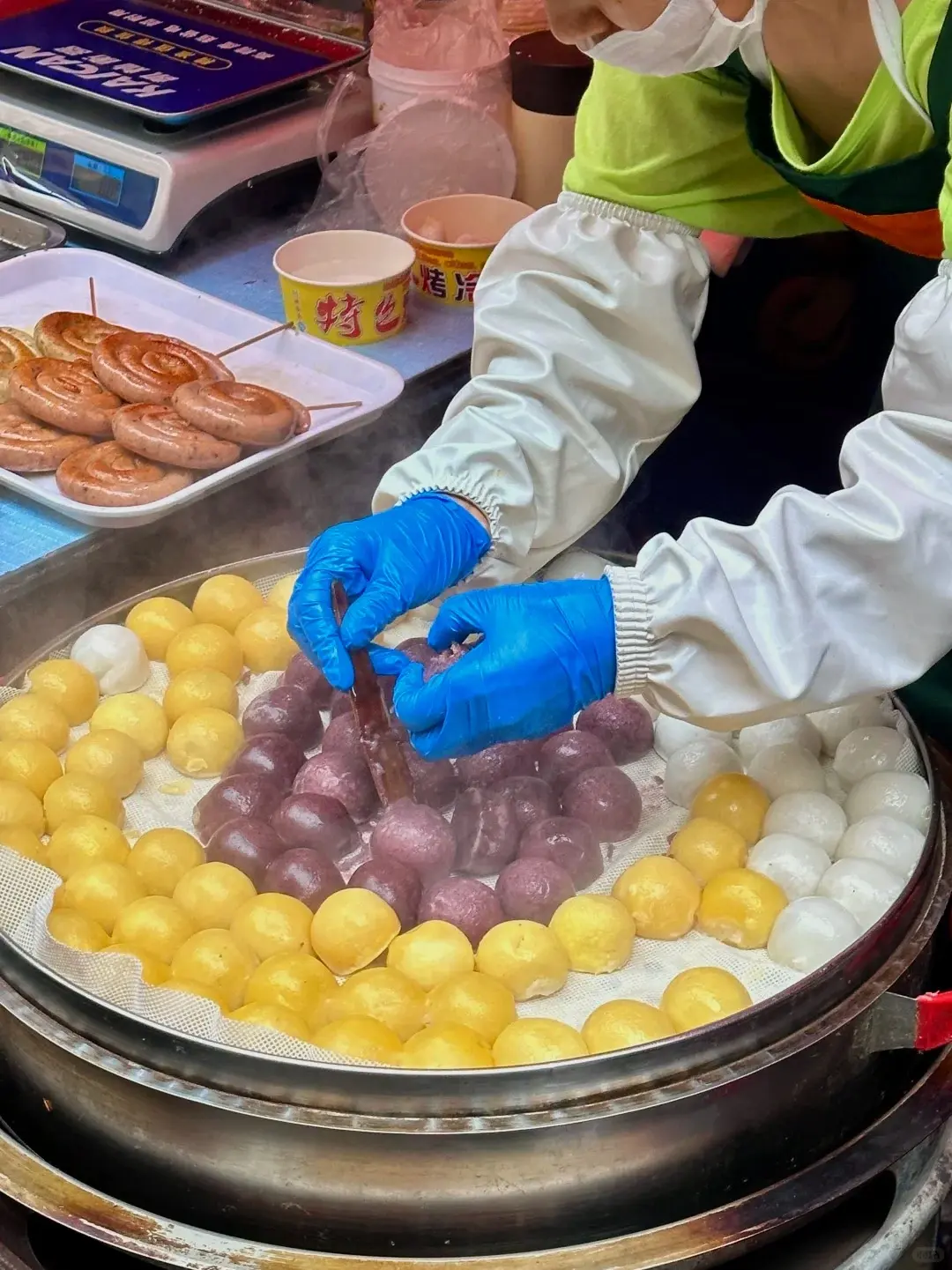
Who this is for: The traveler who wakes up early and wants to see a city before it fully opens, who believes that the best way to understand a place is to follow it into the morning, and who knows that in China, breakfast is often part meal, part market, and part daily ritual.
The rough route
Locations
Numbered locations- 1Guangzhou
- 2Shanghai
- 3Wuhan
- 4Yangzhou
- 5Harbin
- 6Shenyang
- 7Kunming
- 8Xiamen
In China, morning eating is rarely just a single breakfast stop. It is usually part of a larger rhythm: tea houses, breakfast stalls, noodle shops, steamed bun counters, and early markets all blending into one scene. In many cities, the first food of the day is bought where locals also shop for vegetables, meat, and other ingredients. That is why breakfast and the morning market are best understood together, as one shared way of starting the day.
This morning system changes from city to city. In the south, it may center on tea and dim sum. In the north, it often means hot food, fried dough, buns, pancakes, and market stalls that open before sunrise. In central cities, it can become a fast, practical routine built around noodles or rice snacks. But everywhere, the principle is the same: the city wakes up through food.
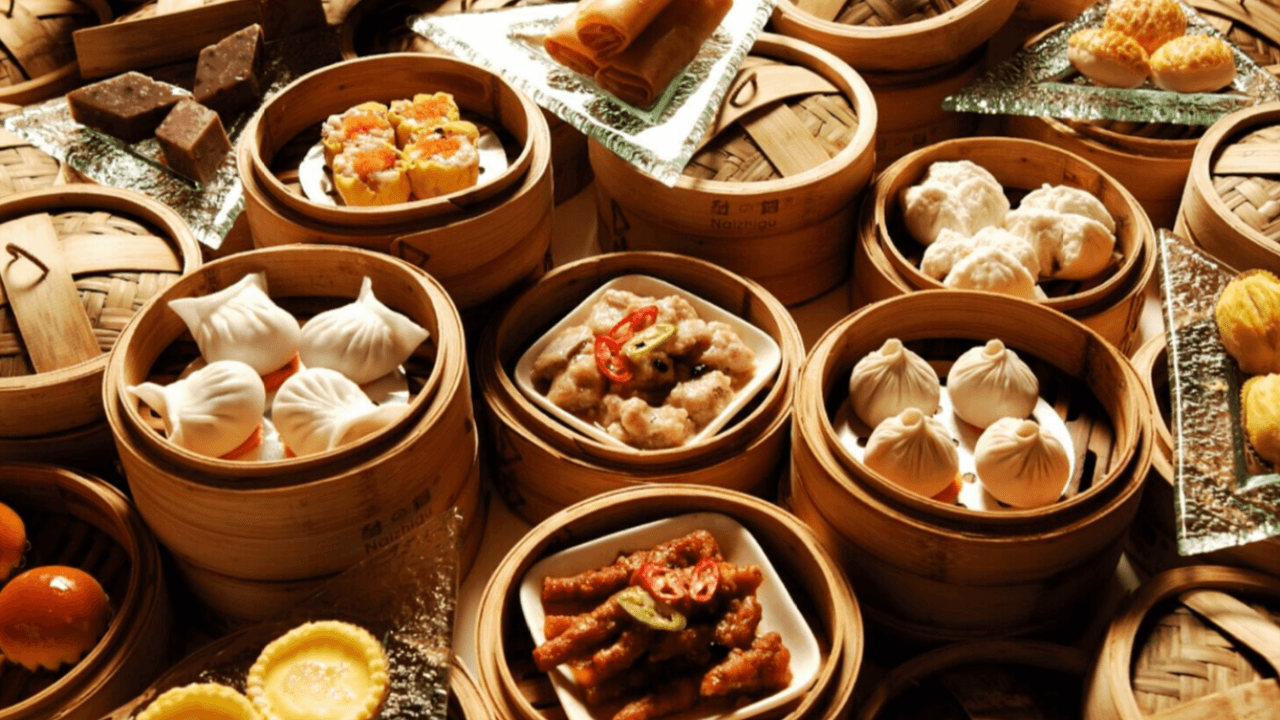
The most famous is Cantonese morning tea, or yum cha, centered in Guangzhou but beloved across the south. It's a system, not a meal: small plates arrive in waves, shared, replaced, refilled. Har gow (shrimp dumplings), siu mai (pork and mushroom), rice noodle rolls drenched in sweet soy, chicken feet braised until the skin slips off the bone. Tea is constant—pu'er, jasmine, tieguanyin—and the pot is refilled without asking. Nobody rushes. Nobody looks at their phone. A proper yum cha session can stretch for three hours, and nobody thinks that's unusual.
In Shanghai, the morning is sharper, faster, more urban. The "Four Heavenly Kings" of Shanghainese breakfast are street food, not tea house fare: da bing (a sesame flatbread), youtiao (a golden fried dough stick), doujiang (soy milk, savory or sweet), and cifantuan (a sticky rice roll wrapped around pickled vegetables and a crispy dough stick). You eat them standing outside a subway entrance, or walking to work, or sitting on a low stool as the city roars past. It's breakfast as fuel—but fuel with soul.
Then there's Wuhan, where the entire city seems to eat breakfast on the street in a ritual called guozao. Reganmian—hot dry noodles tossed with sesame paste, soy sauce, pickled vegetables, and chili oil—is the defining dish, eaten from paper bowls while walking, sitting on curbs, balancing on the back of a bicycle seat if necessary. In Wuhan, breakfast is not a sit-down affair. It is a citywide performance, and everyone is in it together.
In Harbin, morning food is built for cold weather and early hours. The city’s most recognizable breakfast scene often begins at the morning market, where steam rises from bowls of hot soy milk and vendors sell fried dough sticks, stuffed buns, and other filling snacks that make sense in the northeast. Breakfast here is warm, practical, and generous. It is the kind of food that helps people face a long winter morning without rushing through the day.
Kunming’s mornings are shaped by Yunnan’s lighter, fresher food culture. Rice noodles, local breakfast snacks, and simple market dishes are common, often sold early to people starting the day at a slower pace. The city’s highland climate and regional ingredients give breakfast a cleaner, more relaxed feel. It is a good place for travelers who want morning food that feels regional without being heavy.
Xiamen mornings lean coastal and gentle. Breakfast often includes shacha noodles, seafood-based dishes, and Fujian-style snacks that feel lighter than the richer breakfast traditions of northern China. The pace is calm, and the flavors often have a soft savory depth rather than bold spice. For travelers, Xiamen is a nice reminder that breakfast in China can also be fresh, subtle, and shaped by the sea.
One guest on our Guangzhou itinerary arrived skeptical about "breakfast that takes three hours." She left the tea house at 11:30 a.m., having eaten eight types of dim sum and drunk more pu'er than she'd consumed in her entire life, and said it was the most civilized morning she'd ever had.
The Delicate Palate: Seafood, Freshness, and the Art of Subtlety
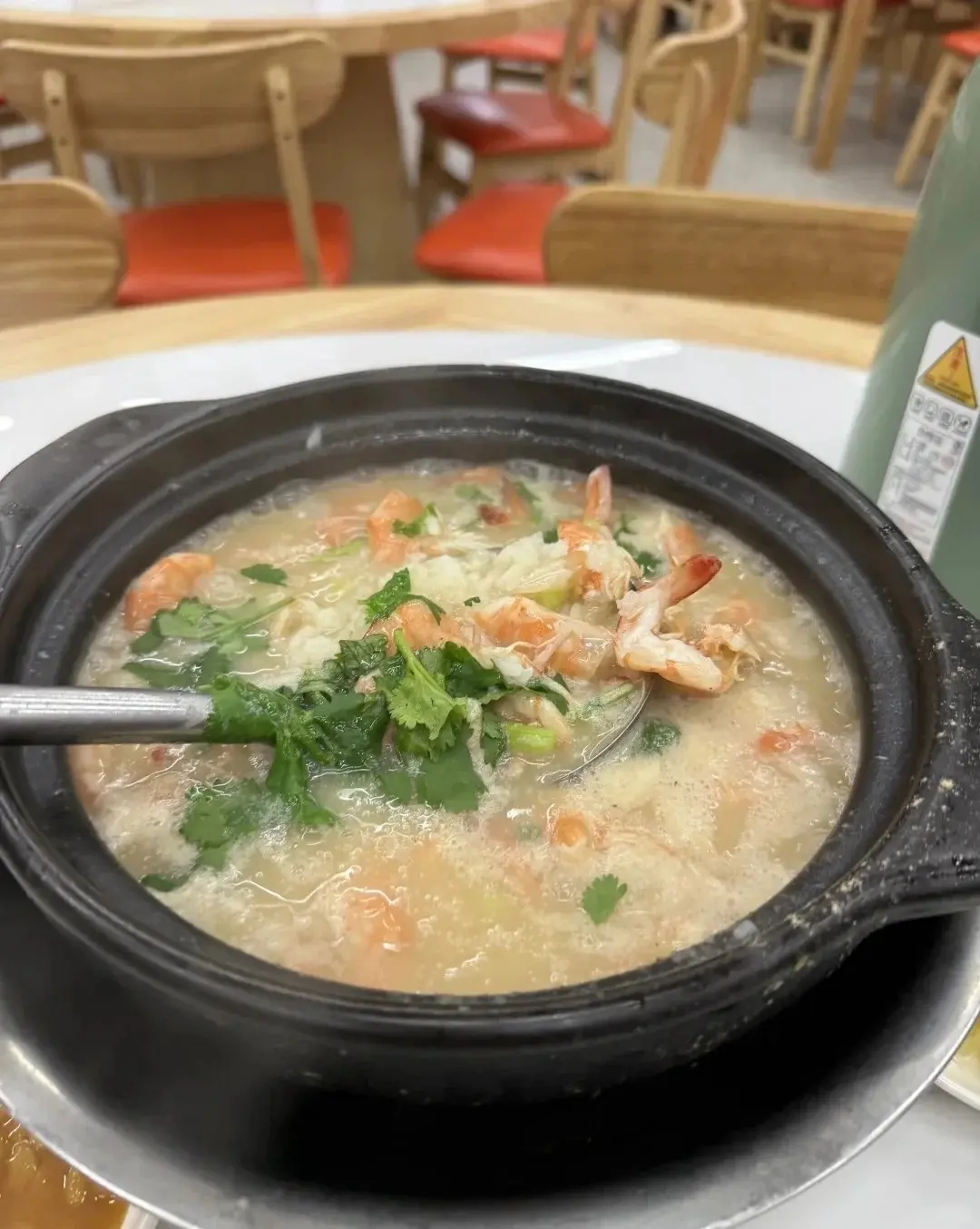
Who this is for: The traveler who loves seafood, values freshness over firepower, and wants to eat well without overwhelming flavors.
The rough route
Locations
Numbered locations- 1Guangzhou
- 2Chaoshan
- 3Xiamen
- 4Zhoushan
- 5Qingdao
- 6Dalian
- 7Yantai
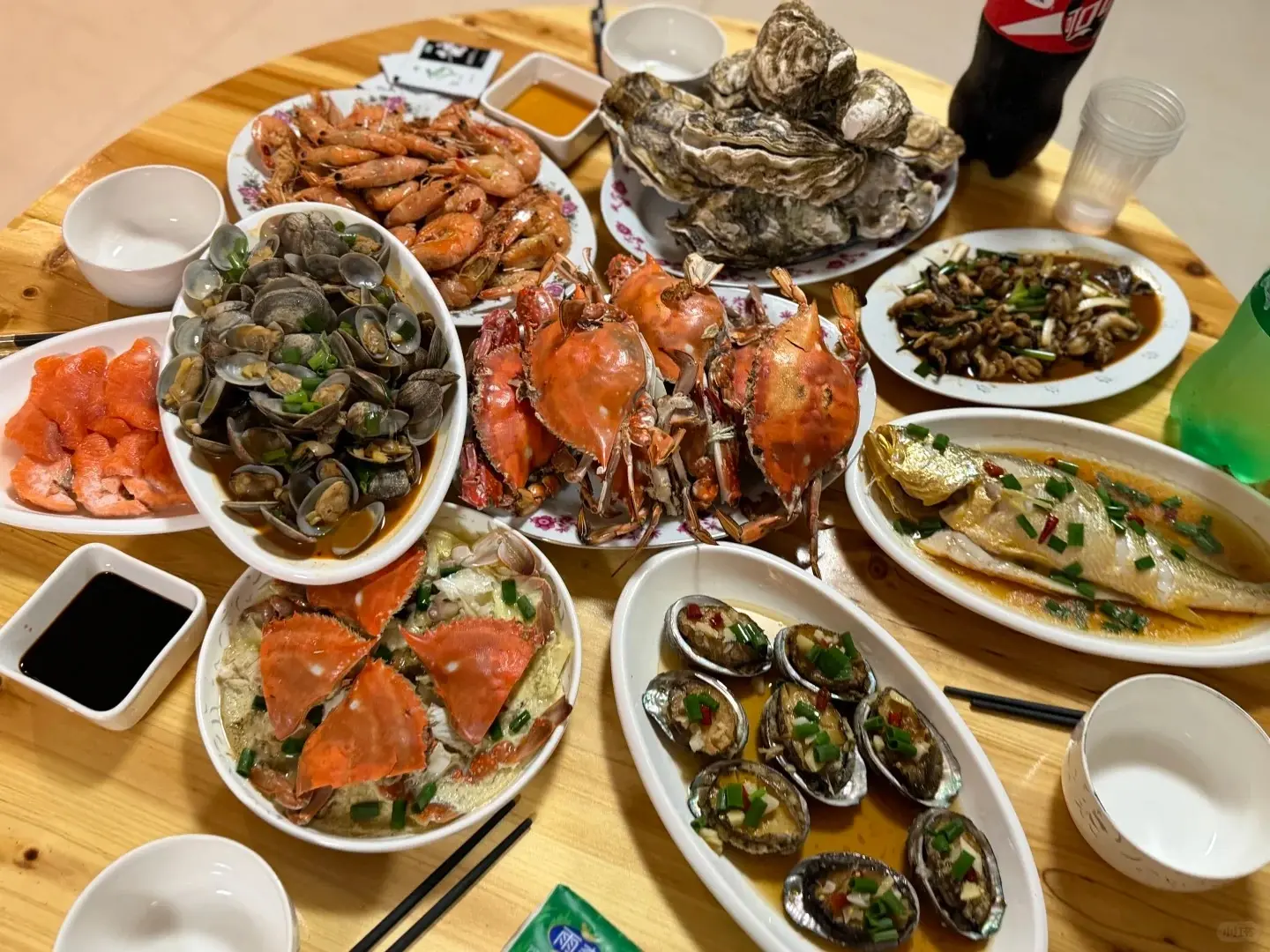
Seafood in China is not one single style. It changes as you move along the coastline, shaped by the local waters, the climate, and the way each region thinks about freshness. In some cities, seafood is prepared with elegant restraint. In others, it appears in bustling markets, grilled over open heat, or steamed so simply that the flavor of the sea stays at the center of the meal.
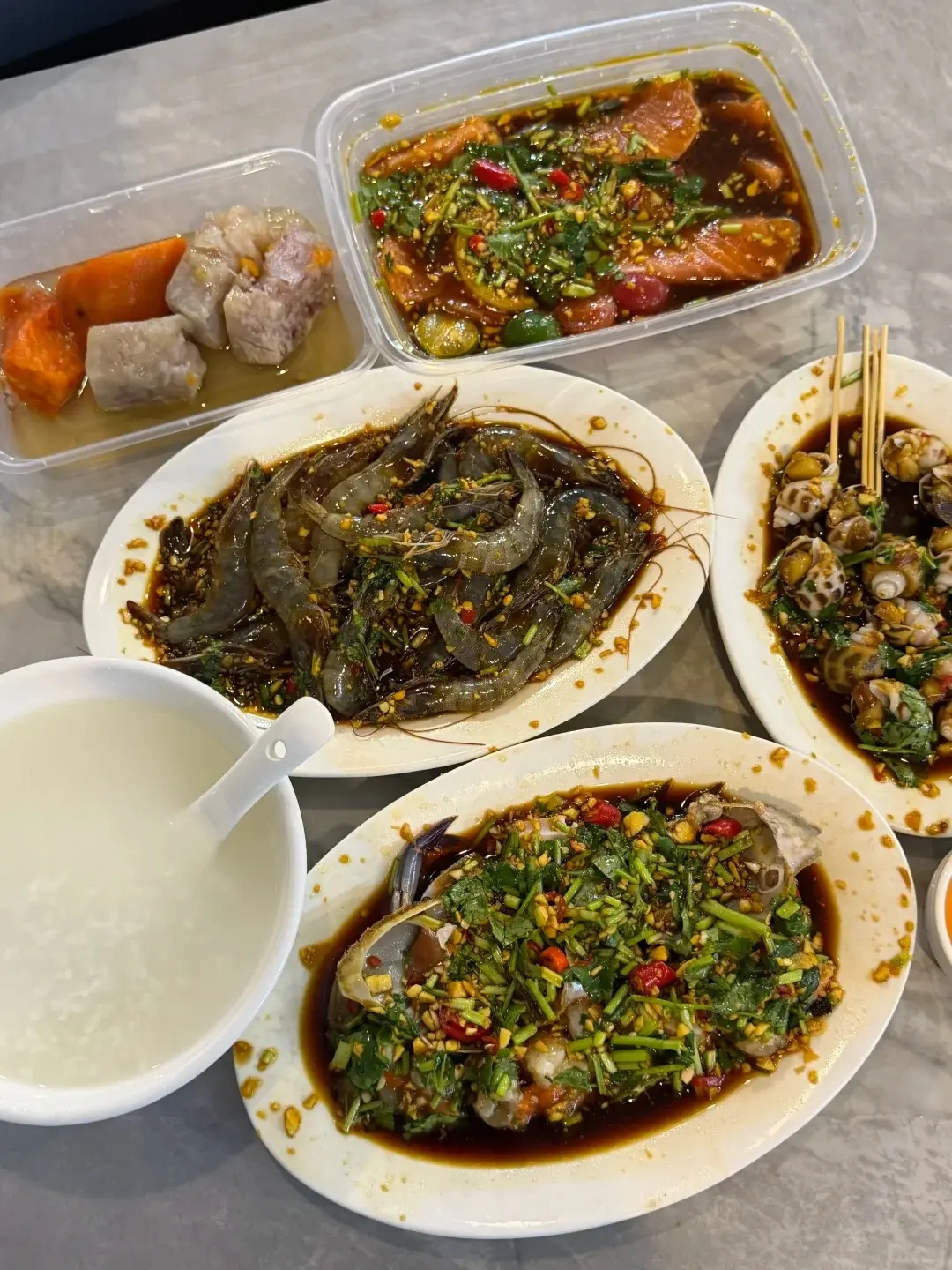
In Guangzhou, seafood is part of the city’s everyday refinement. Cantonese cooking is known for treating ingredients with respect, and that approach shows clearly in fish, shrimp, crab, and shellfish. Steamed fish with ginger and scallions, shrimp dumplings, and other light seafood dishes all reflect the same idea: when the ingredients are fresh enough, they do not need much decoration.
From Guangzhou, the route moves to Shunde, a place known across China for culinary precision. Seafood here is often prepared with great care, especially fish and steamed dishes that depend on timing, temperature, and technique. Shunde cooking is not about bold seasoning. It is about balance, texture, and control.
In Chaoshan, seafood becomes more specific and more local. Cold crab, fish balls, oyster omelets, and other coastal specialties show how much the region values texture as much as flavor. The dishes are still subtle, but they are also deeply expressive in their own way. A fish ball’s bounce, the softness of crab, and the crisp edges of an oyster omelet are all part of the experience.
In Xiamen, the Fujian coast adds another layer of subtlety. Seafood is often woven into soups, noodles, and lighter local meals, while dishes like shacha noodles bring a savory, nutty depth without heaviness. Xiamen’s seafood culture feels coastal and relaxed, shaped by a city that moves at a gentler pace.
Then comes Zhoushan, one of China’s most important fishing regions. Here, seafood is not just something you order in a restaurant—it is the foundation of the local food culture. If you want to understand what freshness really means in a Chinese coastal setting, Zhoushan is one of the clearest places to start.
The northern coast tells a different but equally important story. In Qingdao, seafood is tied closely to the city’s port identity. Shellfish, clams, squid, prawns, and fish are everywhere, often served in casual settings that feel social and easygoing. Qingdao’s seafood culture is shaped by the sea, but also by the city’s relaxed, outdoor atmosphere.
In Dalian, seafood is just as central, but the city’s relationship with the coast can feel broader and more everyday. Fresh fish, shellfish, sea cucumber, and grilled seafood all belong here, and the dining style often reflects abundance rather than ceremony. It is the kind of city where seafood feels woven into normal life.
In Yantai, the seafood tradition becomes quieter and more practical. The dishes are often straightforward, built around freshness and seasonality rather than presentation. That simplicity is part of what makes the food memorable, especially for travelers who appreciate local coastal cooking without excess.
This is a route for travelers who enjoy meals that feel calm, precise, and deeply connected to place. It is not about intensity. It is about letting the coast do the work.
A traveler once said she thought she only liked seafood when it was heavily seasoned. After meals in Shunde, Xiamen, and Qingdao, she changed her mind. She had simply never eaten seafood where freshness itself was the main feature.
The Silk Road Bite: Cumin, Lamb, and China's Muslim Food Traditions
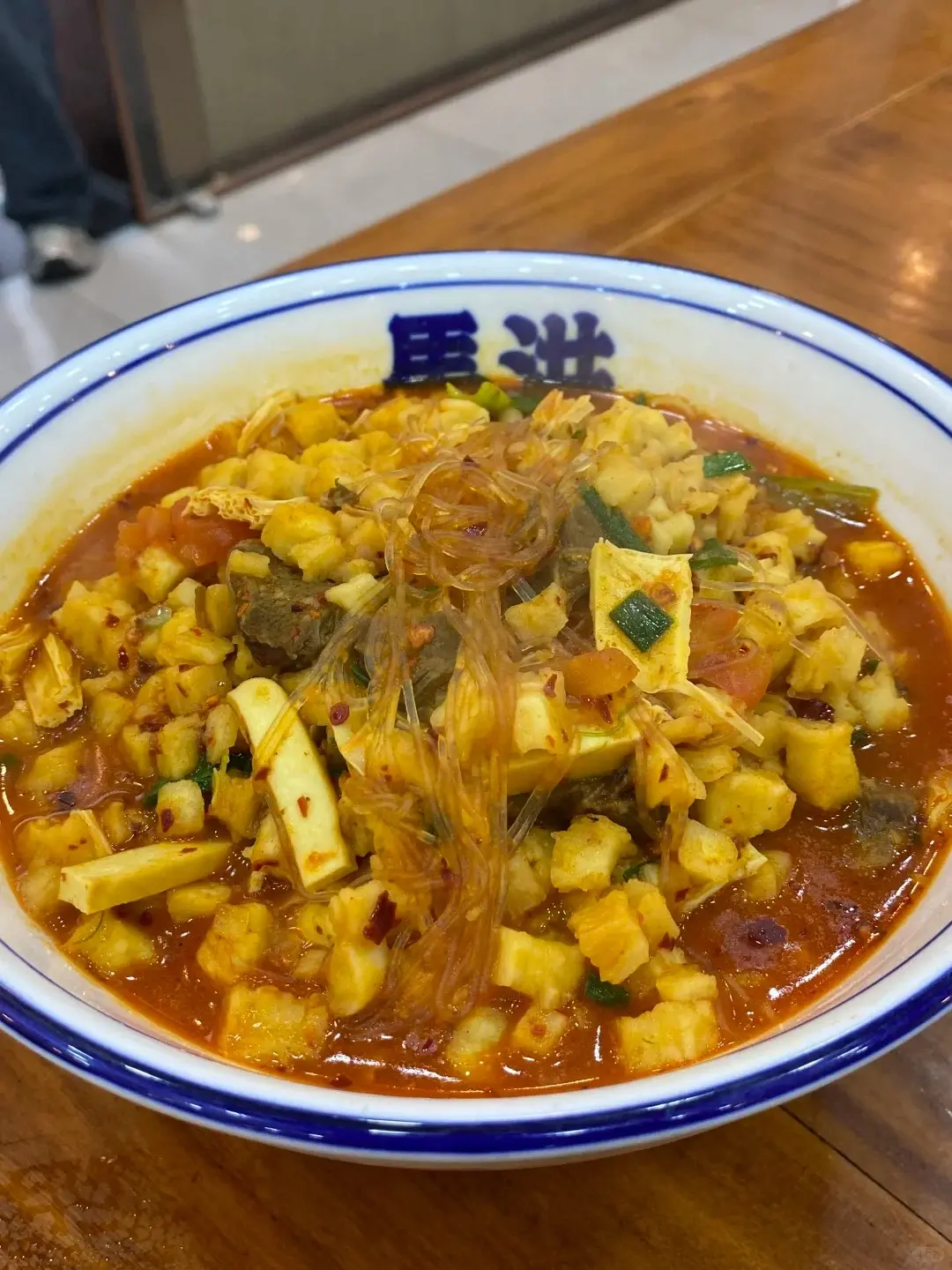
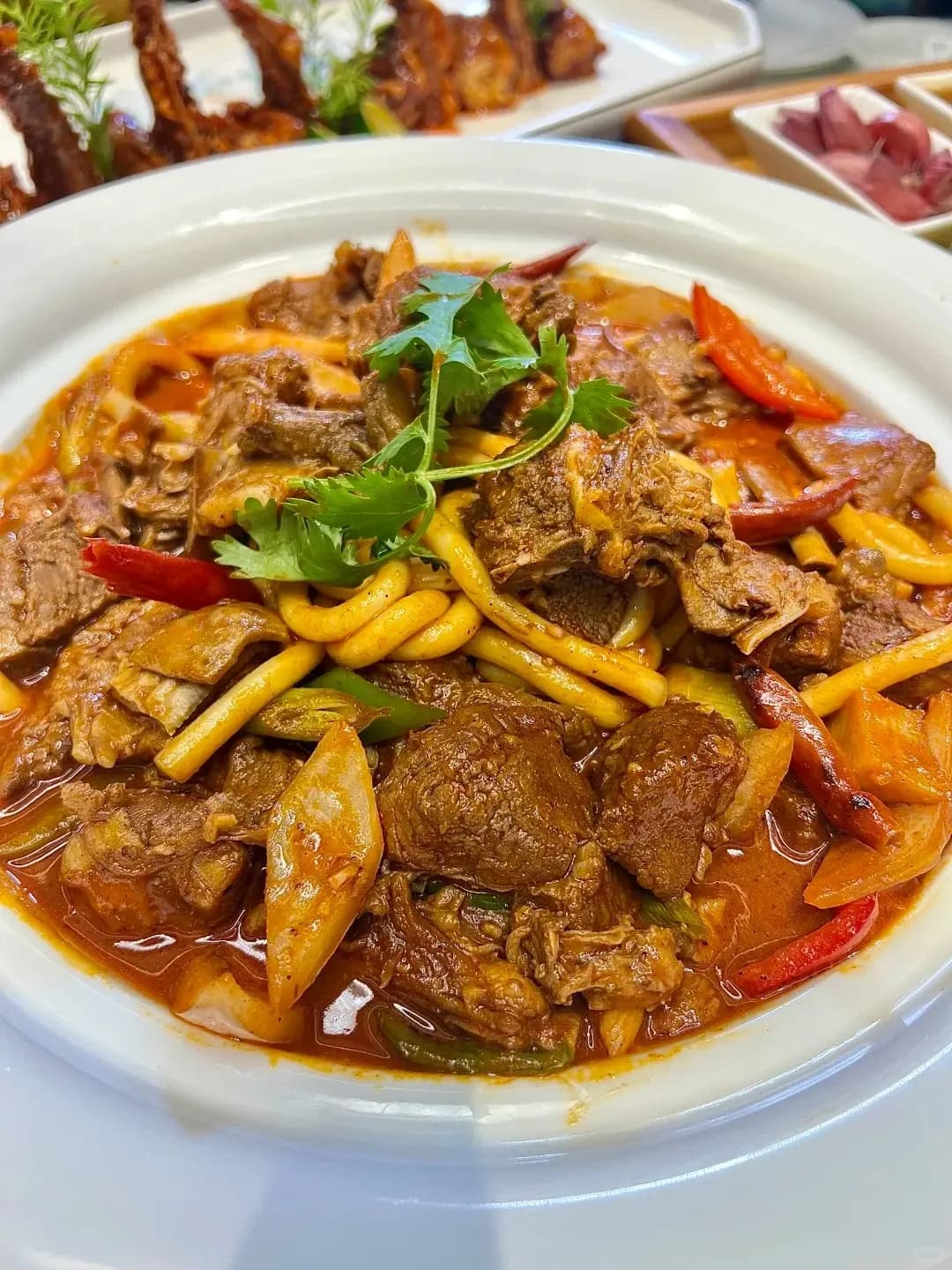
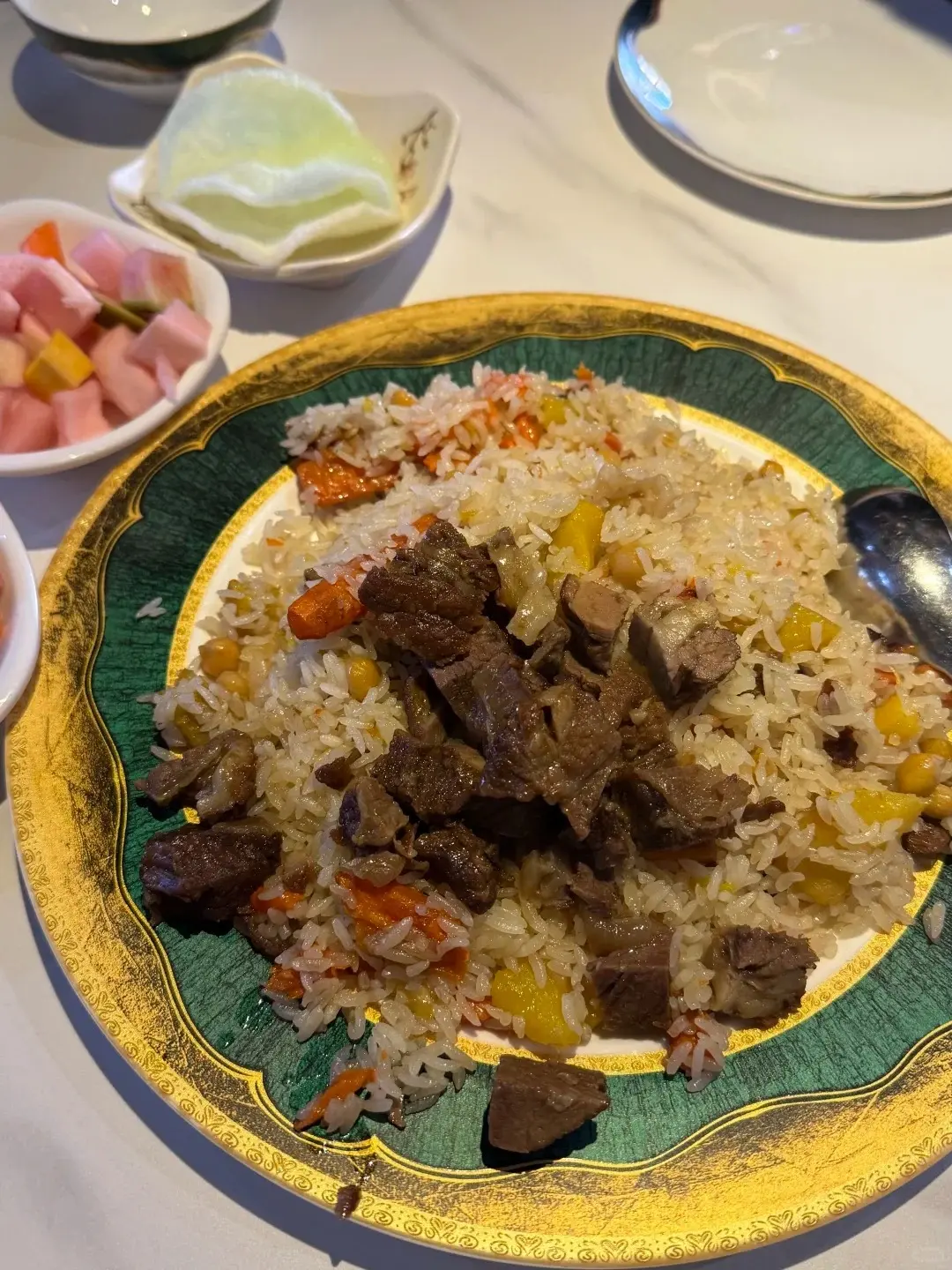
Who this is for: The traveler who loves Middle Eastern or Central Asian flavors and wants to see how they play out in a Chinese context, who believes cumin is underrated, who wants to experience a side of Chinese food culture that most visitors miss entirely. Also: anyone who eats halal and wants to know where to find it.
The rough route:
Locations
Numbered locations- 1Xi'an
- 2Lanzhou
- 3Xinjiang
- 4Ningxia
- 5Beijing
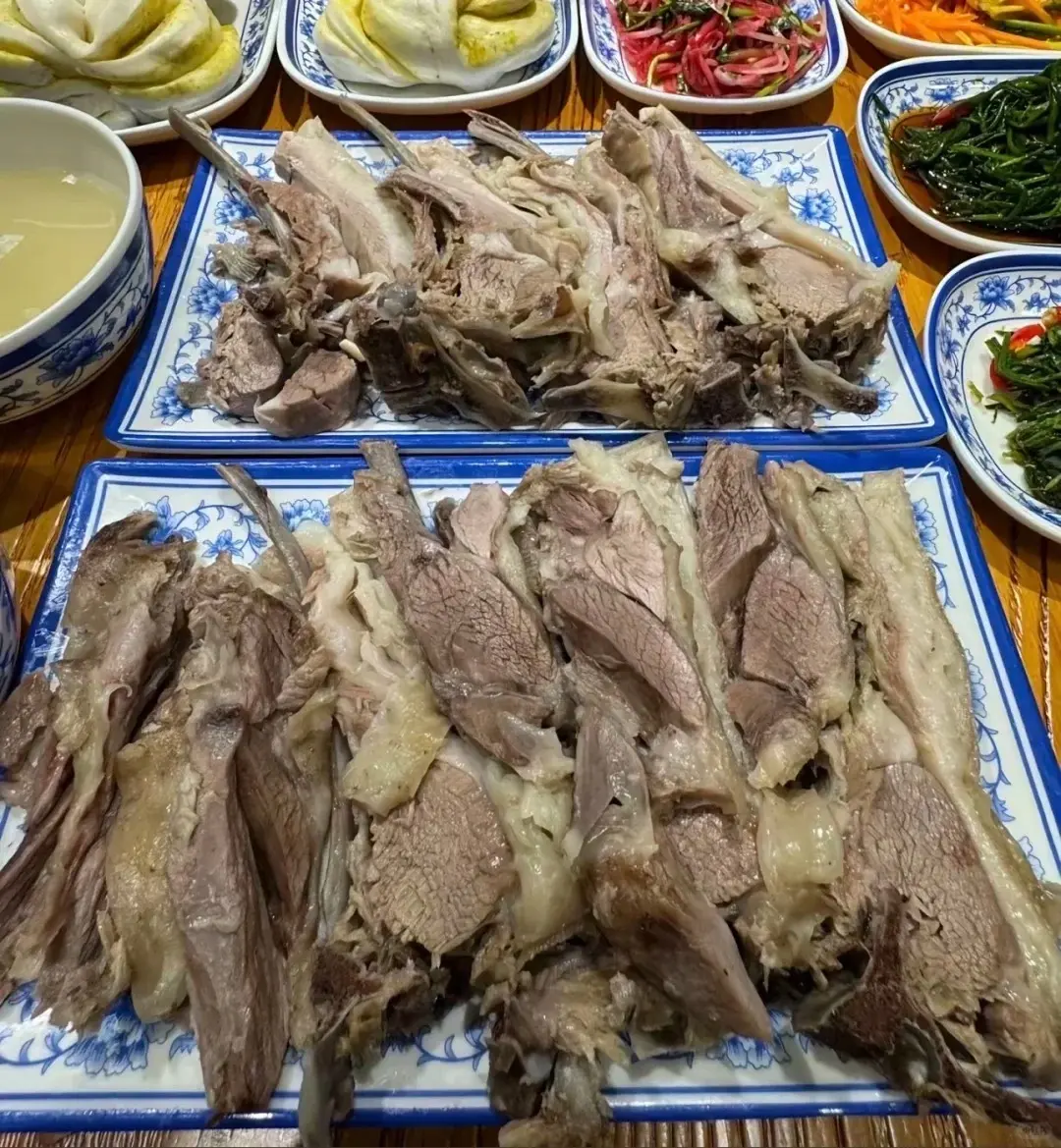
The smoke from the grill curls into the narrow lane, carrying a scent that stops you mid-stride: cumin, chili, and sizzling lamb fat. In Xi’an’s Muslim Quarter, you follow the smell to a street vendor where lamb skewers cook over charcoal, the edges charring, the fat dripping, and the spice hanging in the air. The first bite is earthy and warm, with cumin leading the way before the chili and lamb richness arrive. You finish the skewer in three bites, then order another without thinking.
This is one of China’s most distinctive food traditions, shaped by the Silk Road and by the Hui and Uyghur communities that have helped define it. It runs through the Muslim Quarter of Xi’an, the noodle shops of Lanzhou, and the kitchens of Xinjiang, and it feels unlike any other part of Chinese cuisine.
The foundation is simple: lamb, wheat, cumin, and fire. But the expressions vary from city to city.
In Xi'an, the Muslim Quarter is the beating heart of this cuisine. Yangrou paomo is the iconic dish—a bowl of crumbled flatbread soaked in rich lamb broth, the bread softening into something between porridge and stew, topped with tender lamb slices and pickled garlic. It's hearty, ancient, and deeply satisfying in a way that feels designed for Silk Road travelers crossing deserts. Lamb skewers are the street version of the same impulse: quick, smoky, intense.
Move west to Lanzhou, and the Muslim food culture shifts from street to shop. This is where the legendary Lanzhou beef noodles were born—a dish created by Hui Muslims that has spread across the entire country. The rules are strict: the broth must be clear, the beef must be halal, the noodles must be pulled by hand. A proper Lanzhou noodle shop opens early and closes by 2 p.m., because the broth is best in the morning and nobody believes in serving it past its prime.
Further west, in Xinjiang, the food becomes Central Asian in spirit. Big plates of chicken stewed with potatoes and peppers. Hand-pulled laghman noodles topped with lamb and vegetables. Naan bread baked in clay ovens, torn by hand and used to scoop up everything else. Whole roasted lamb, the skin crackling, served at weddings and celebrations. The cumin becomes more intense, the portions larger, the flavors bolder. This is not the delicate south or the refined east—it's food for a landscape of mountains and deserts, built to sustain and satisfy.
The Silk Road food story does not end in the far west. In Ningxia, Hui food traditions continue in a way that feels quieter but equally important, with halal noodles, lamb dishes, and local specialties that reflect the region’s long Muslim heritage. Even in Beijing, Muslim noodle shops and lamb hot pot restaurants are part of the city’s food landscape. Once you start looking for them, they are everywhere.
This is a food route built on smoke, spice, wheat, and movement. It connects cities, communities, and histories that are easy to overlook if you only follow the most famous dishes. But once you taste it, the Silk Road stops being an idea and becomes something physical: warm, aromatic, and impossible to forget.
A Singapore guest who kept halal described Xi'an's Muslim Quarter as "the moment I stopped worrying about finding food in China and started planning what to eat next." He spent three days eating his way through the quarter and never repeated a meal.
The Sweet Wanderer: Tea, Desserts, and China's Gentle Side
Who this is for: The traveler who doesn't need every meal to be an adventure, who wants to sit in a tea house for two hours and not feel guilty about it, who believes that dessert is not the afterthought but sometimes the whole point. Also: anyone traveling with a sweet tooth who's been told Chinese food doesn't "do" dessert. It does. Beautifully.
The rough route:
Locations
Numbered locations- 1Hangzhou
- 2Suzhou
- 3Guangzhou
- 4Yunnan
After the fire of Sichuan, the cumin haze of Xinjiang, the garlic punch of a late-night street skewer, there comes a moment when you want something gentle. Something sweet. Something that asks nothing of you but to sit still and taste.
China's dessert and tea traditions are not an afterthought—they are a parallel universe of flavor, quietly running alongside the big, loud, spicy main events. For the traveler drawn to subtle pleasures, this is a journey worth taking on its own.
Start with tea, because tea is where Chinese sweetness begins. Not the sugary bubble tea that's conquered the world (though that has its place), but the old traditions: Longjing tea sipped beside West Lake in Hangzhou, the flat green leaves dancing in a glass cup; pu'er tea in Yunnan, dark and earthy, aged for years like wine; jasmine tea in a Guangzhou tea house, delicate and floral, the perfect companion to a long dim sum morning. In Chengdu, tea houses fill with locals playing mahjong, their cups refilled endlessly from tall brass kettles. In Suzhou, tea comes with gardens—you drink tieguanyin while looking out at rockeries and koi ponds, the whole experience designed to slow your heartbeat.
Chinese desserts are not what Western palates expect. They are generally less sweet, more textural, often served warm or at room temperature rather than cold. But once you adjust, a new world opens.
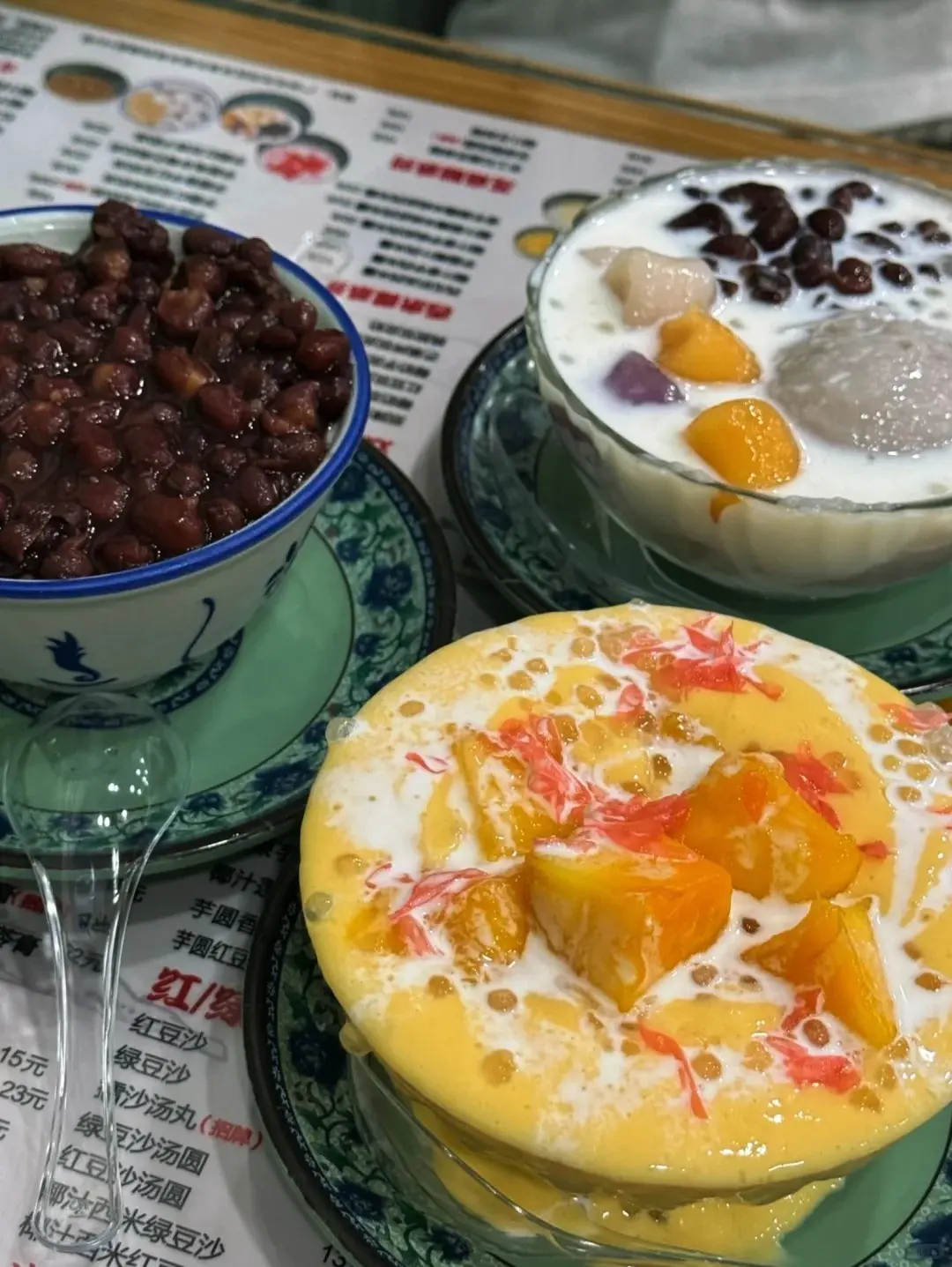
In Guangzhou, the tangshui (sugar water) shops are the dessert temples of the south. Double-skin milk is the star—a velvety, custard-like dish made from milk and egg whites, steamed until just set, served warm and sliding down your throat like silk. Mango sago pomelo is brighter, fresher, a bowl of mango puree with tapioca pearls and pomelo sacs that burst between your teeth. Black sesame paste looks like something you should be afraid of but tastes like toasted, nutty comfort, thick enough to hold a spoon upright.
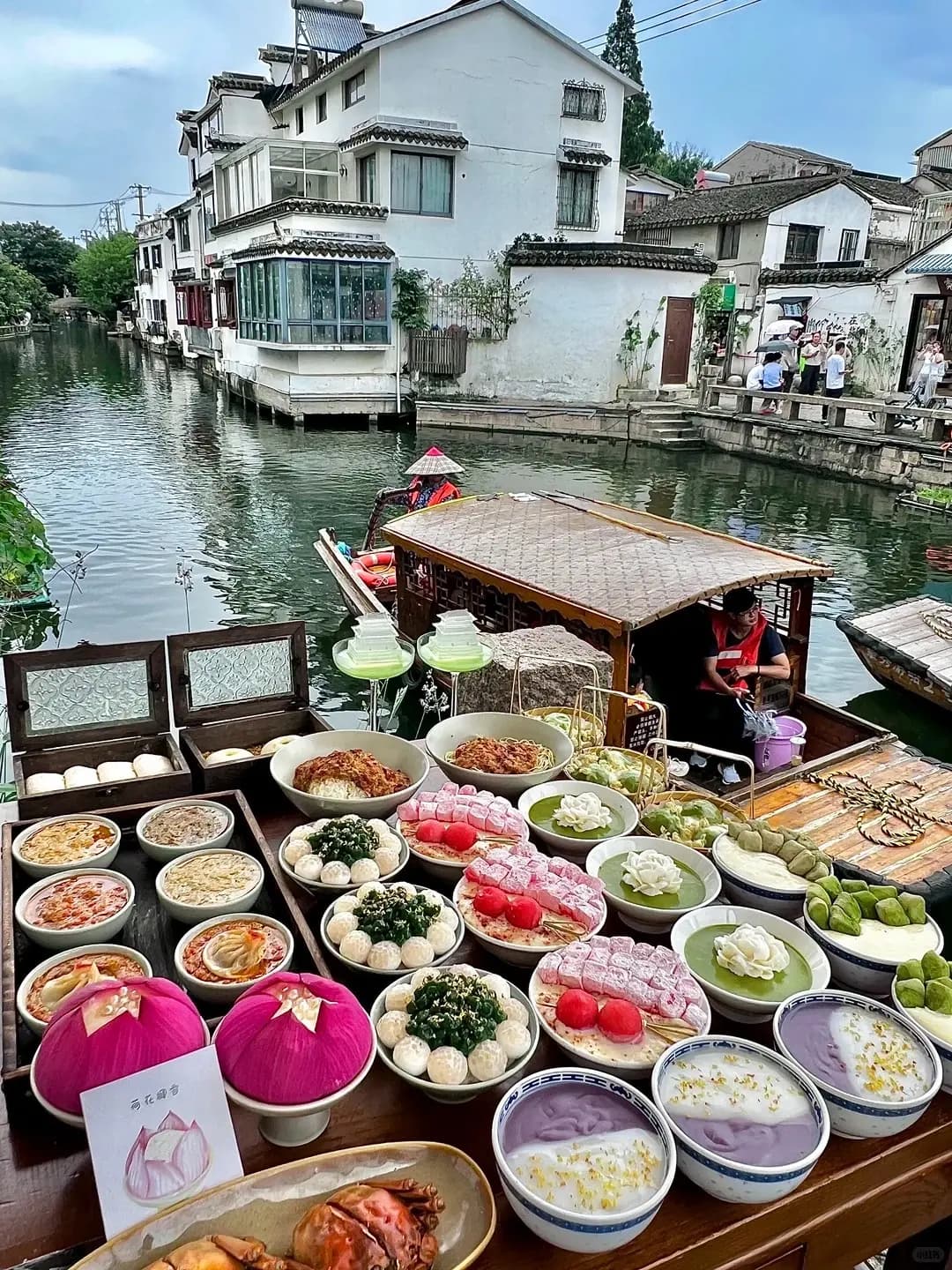
In Suzhou and Hangzhou, desserts lean floral and refined. Osmanthus cakes taste like autumn, lotus root stuffed with sticky rice arrives glossy and delicate, and pastries often crumble at the lightest touch. These are desserts that reward patience more than hunger. They feel tied to gardens, lakes, and slow afternoons.
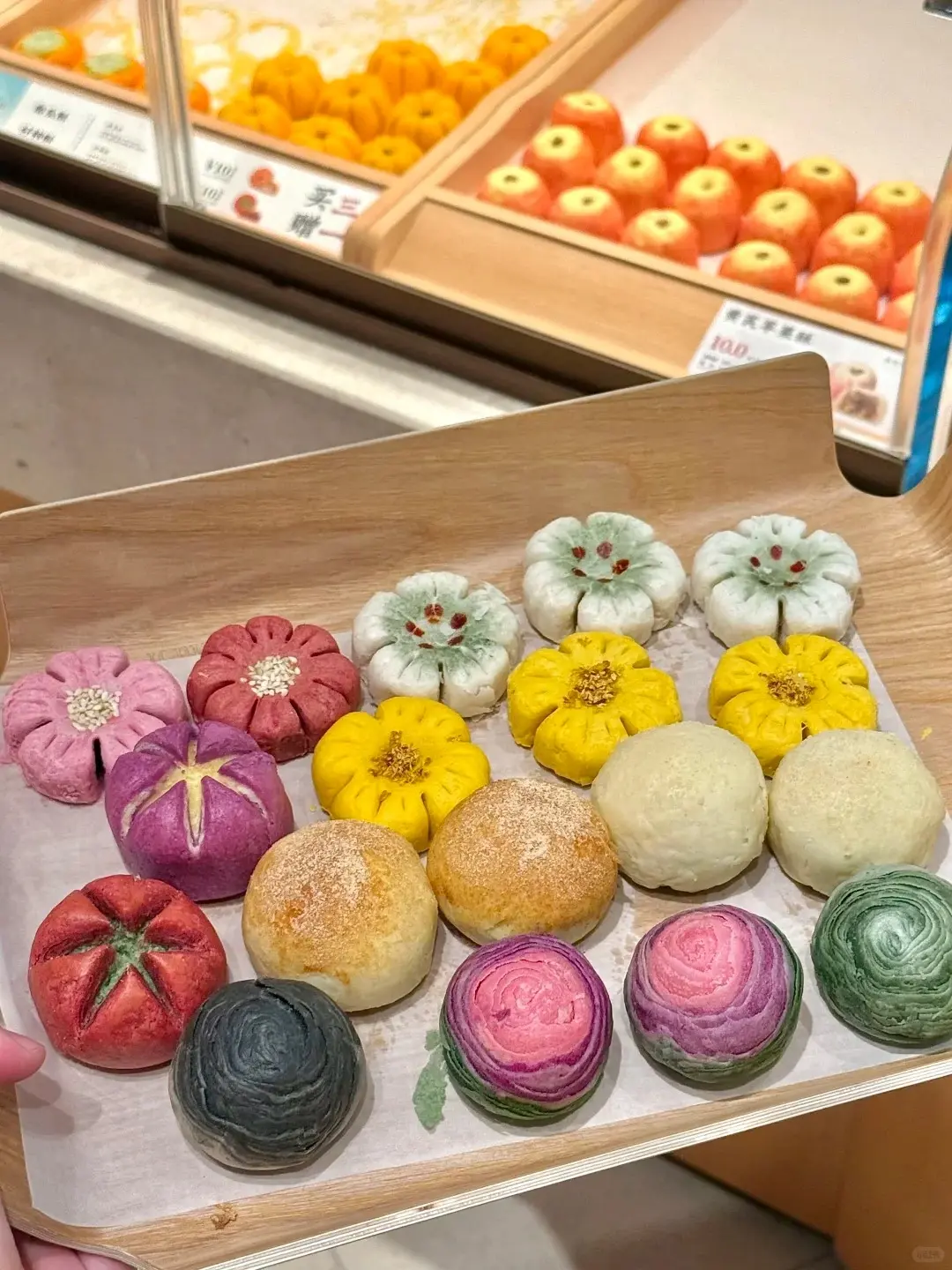
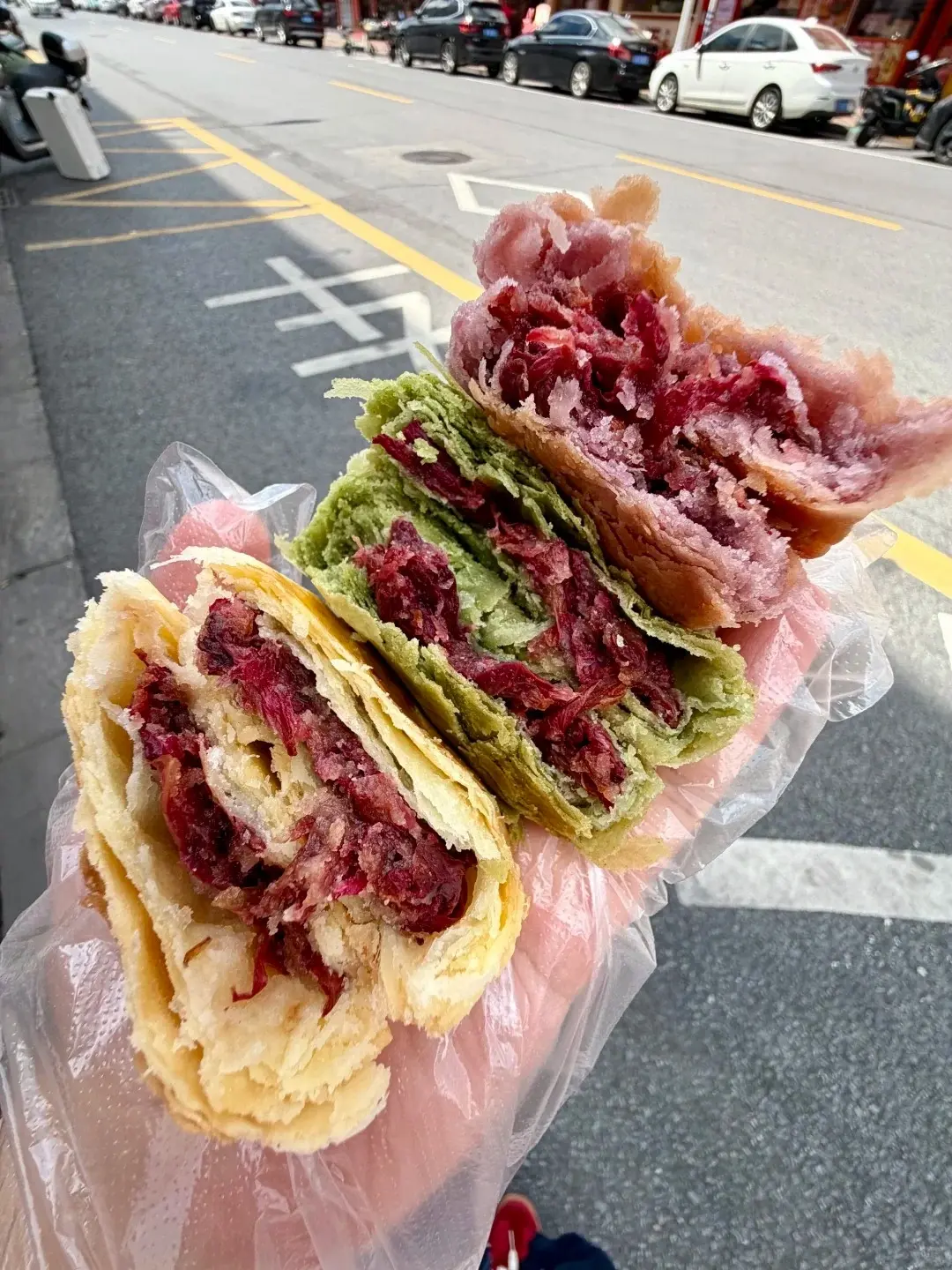
In Yunnan, flower cakes made with rose petals are one of the region’s best-known sweets. They are buttery, flaky, and fragrant, the kind of dessert travelers buy as a souvenir and end up eating before they leave the city. Yunnan’s sweetness is often scented rather than heavy, which gives it a gentler, more memorable character.
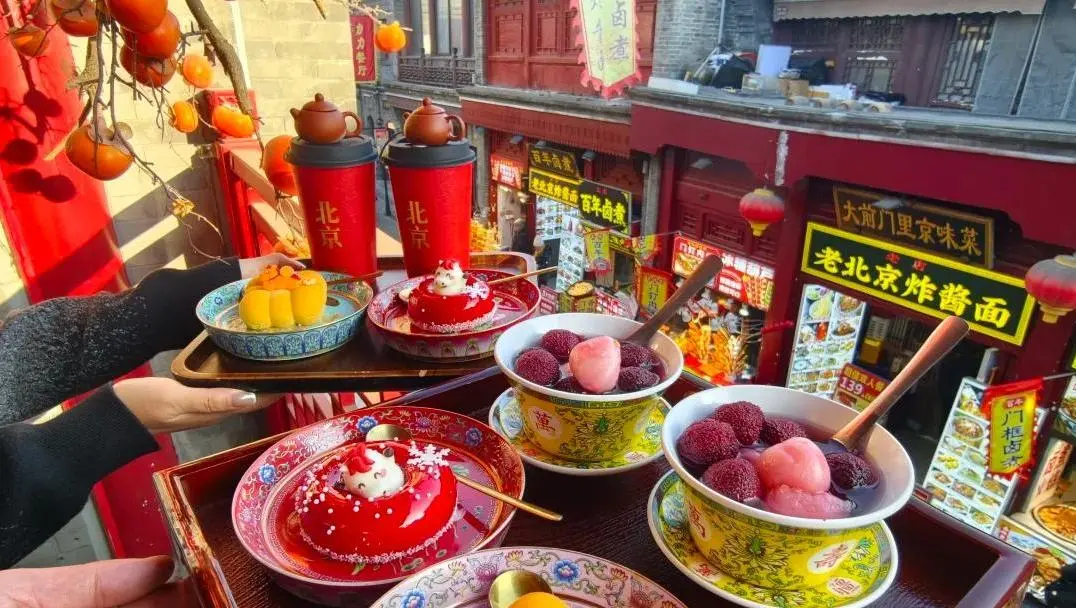
And then there are the street desserts: tanghulu, the candied hawthorn skewers that gleam like jewels on Beijing winter streets, cracking satisfyingly between your teeth; dragon's beard candy, spun sugar pulled into a thousand fine threads, filled with peanuts and coconut, a performance as much as a food; ice jelly in Chengdu, a wobbly, translucent mountain drenched in brown sugar syrup, the perfect fire-extinguisher after a hot pot session.
A traveler who told us she didn't "do desserts" found herself in a Guangzhou tangshui shop at midnight, spooning double-skin milk and asking the server how it was made. She went back the next night for the mango sago.
Beyond the Plate: Your Food City Guides
You've found your flavor now. You know whether you're a spice chaser, a noodle pilgrim, or a morning ritualist. Now the question becomes practical: Where exactly do I go? What street? What neighborhood? What time of day? And how do I avoid the tourist traps?
Beijing: Imperial Grandeur Meets Everyday Comfort
Beijing's food scene is a study in contrasts. On one end, Peking Duck—a dish born in imperial kitchens, carved tableside with surgical precision. On the other, jianbing eaten on a hutong corner, the crepe folded into a hot, messy bundle that costs less than a subway ticket. The city absorbs everything—Muslim noodle shops, imperial banquet halls, street carts from a dozen provinces—and makes it its own.
Best For: The Noodle Pilgrim, the Morning Ritualist, and anyone who wants to see how imperial cuisine and street food coexist in a single city.
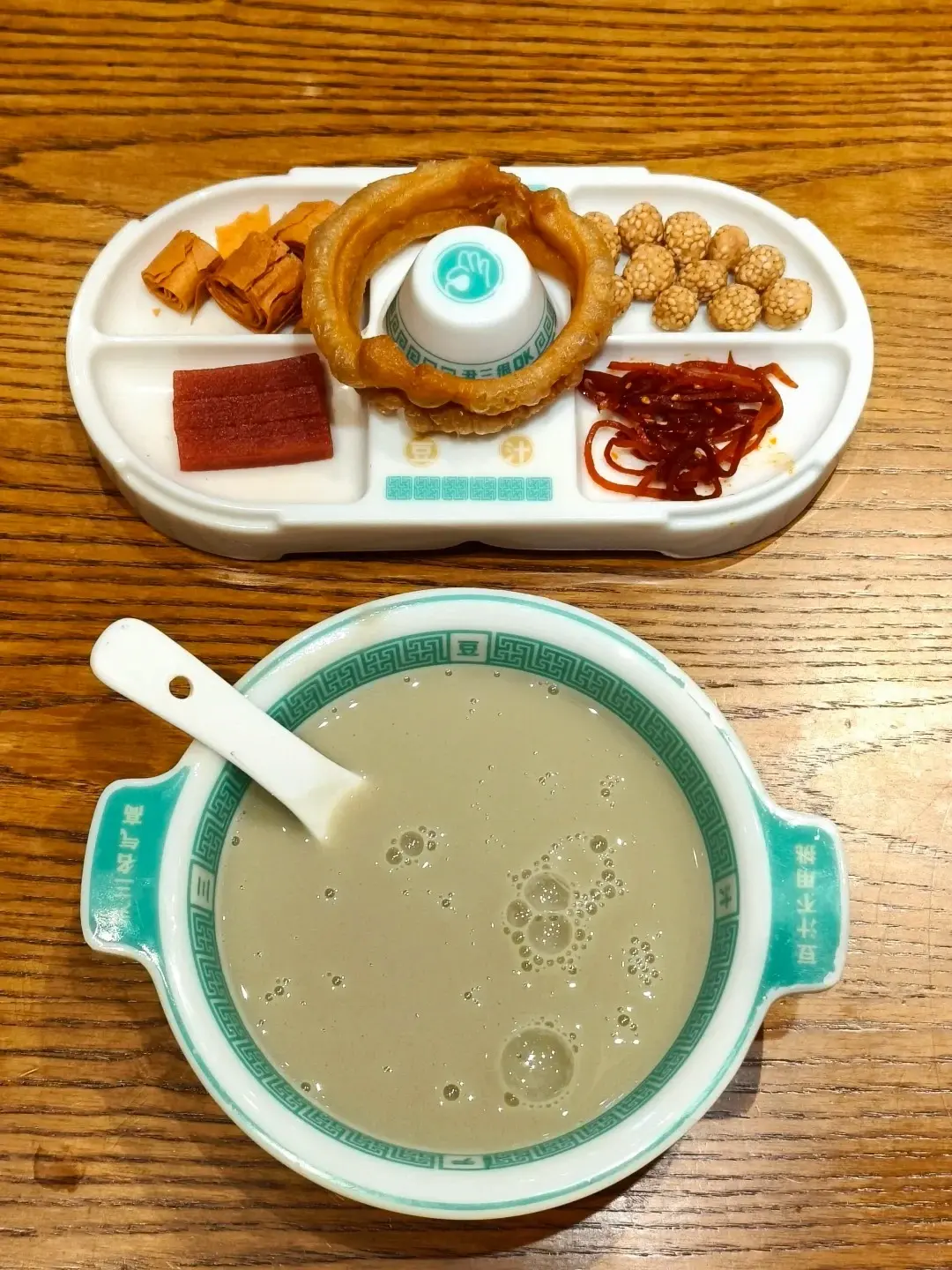
Start where Beijing starts: on the street. Find a jianbing cart with a line of locals—the vendor spreads batter, cracks an egg, adds a crispy cracker, and hands you a paper-wrapped bundle that's savory, crunchy, and gone in four minutes. If you want to sit down, find a hutong breakfast shop for zhajiangmian—thick wheat noodles with fermented soybean paste, diced pork, and shredded vegetables. This is what Beijingers eat when no one is watching. It's earthy, salty, and costs less than three dollars.
Head deeper into the hutongs. A small dumpling shop with handwritten menus and no English will serve you jiaozi by the plate—pork and chive, lamb and carrot, dipped in black vinegar and chili oil. If dumplings aren't calling you, find a Muslim noodle shop in Niujie (Ox Street) for hand-pulled noodles in clear beef broth. The city's Muslim quarter is less known than Xi'an's but deeply authentic, and the noodles are pulled to order by Hui chefs who've done this since childhood.
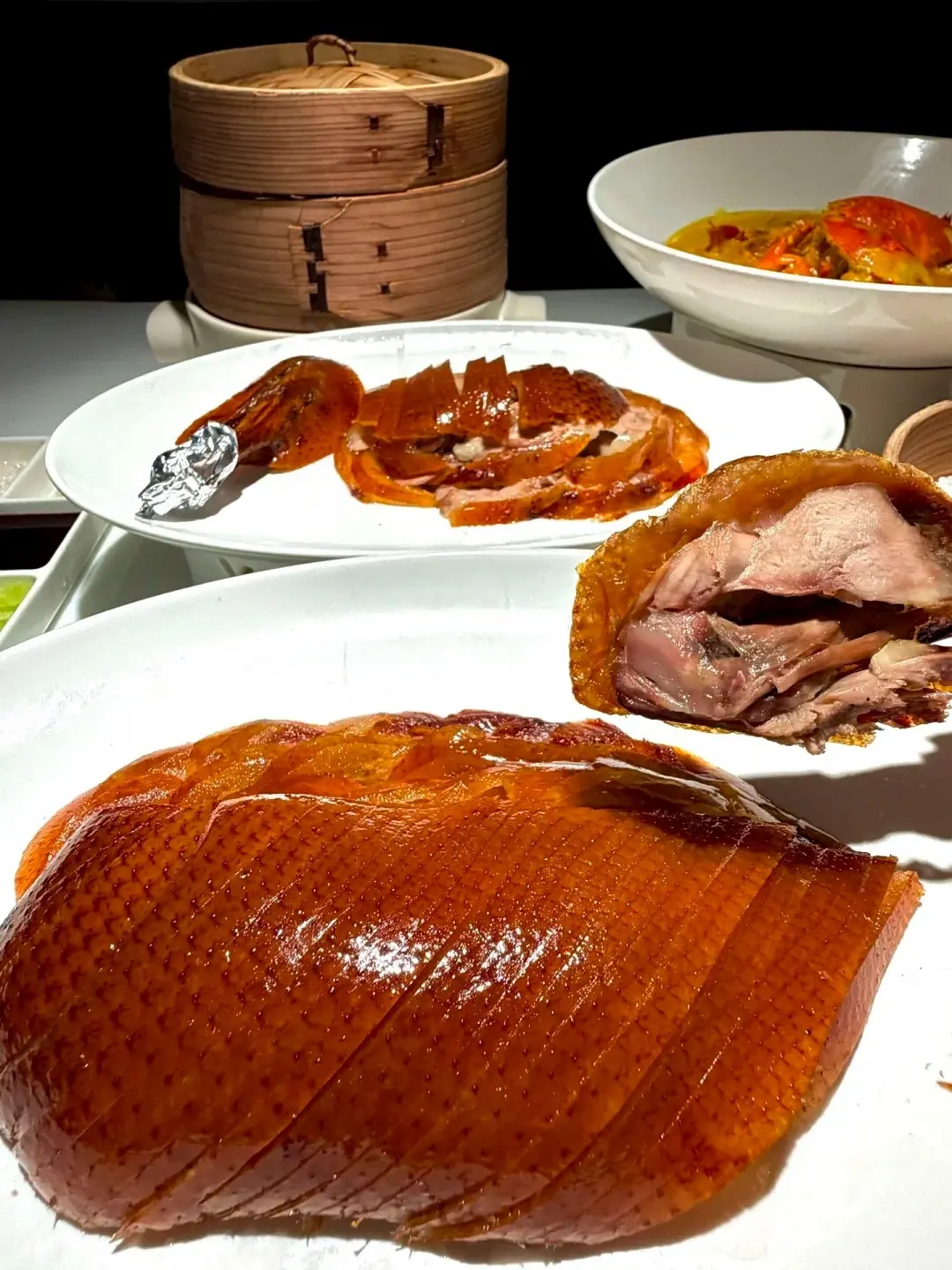
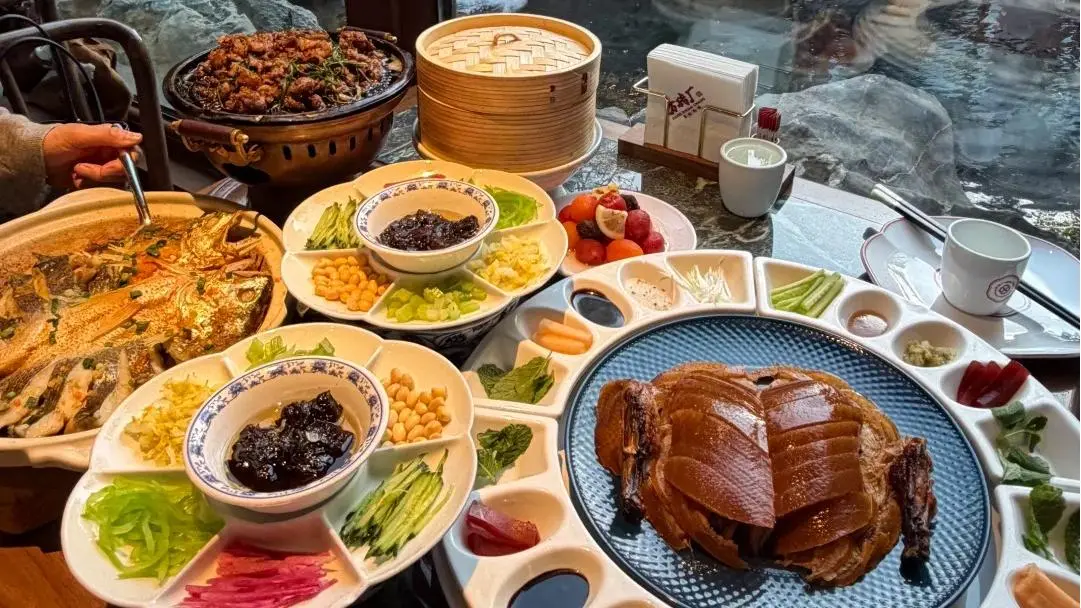
Book ahead for Peking Duck. Siji Minfu and Bianyifang do it right—the duck arrives whole, skin lacquered mahogany, and the chef carves at the table. You wrap the slices in a thin pancake with sweet bean sauce, cucumber, and scallion. The skin crackles. The fat melts. This is the dish that made Beijing famous, and done properly, it earns the reputation. Skip Quanjude unless you want the tourist spectacle—the quality gap between the famous chain and the local favorites is significant.
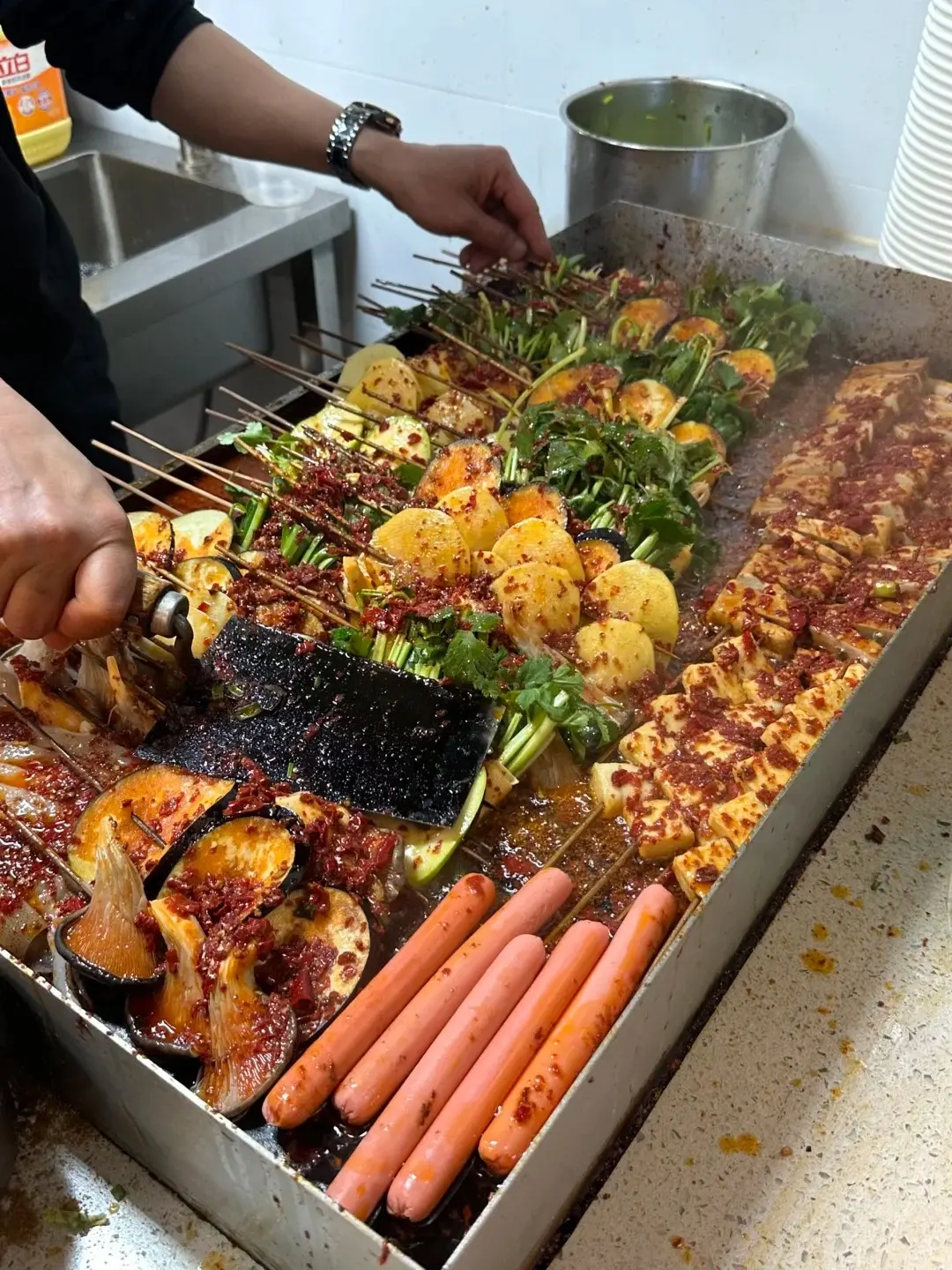
End on Guijie—Ghost Street—where red lanterns stretch for blocks and the grills never go cold. Crayfish platters, spicy Sichuan skewers, cold beer. Even if you're full, walk the street for the energy. If you've got room, order mala crayfish and crack the shells with your hands. This is Beijing after dark, and it's worth staying up for.
Chengdu: The City Where Eating Is a Social Event
Chengdu doesn't do solo dining. Even if you arrive alone, you'll leave having shared a table, a pot, or at least a knowing nod with strangers. Food here is the city's primary social language—more important than small talk, more reliable than the weather, and taken more seriously than almost anything else. The city has been designated a UNESCO City of Gastronomy, and it wears the title lightly, while quietly backing it up on every street corner.
Best For: The Spice Chaser, the Street Food Wanderer, the Morning Ritualist (for tea houses), and anyone who believes a city's soul is found in how it gathers around a table.
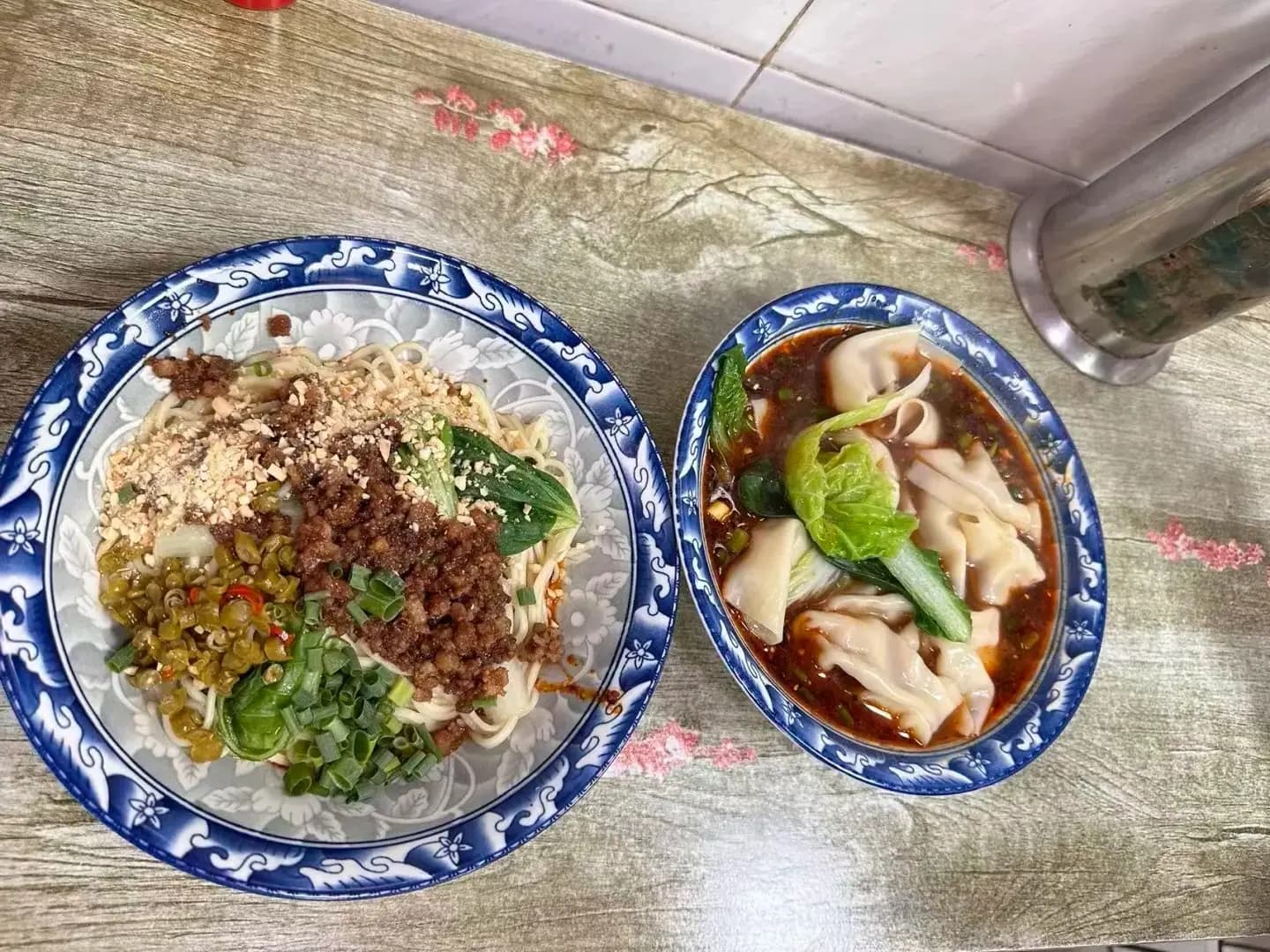
Chengdu mornings start with noodles. Find a small shop—look for steam on the windows and a crowd inside—and order dan dan noodles. They arrive in a small bowl: thin wheat noodles under a blanket of minced pork, preserved vegetables, and chili oil. You mix it. The oil turns everything red. The first bite is nutty from sesame paste, savory from pork, then the heat rolls in and doesn't leave. It costs less than two dollars. It takes four minutes to eat. It will stay with you all day.
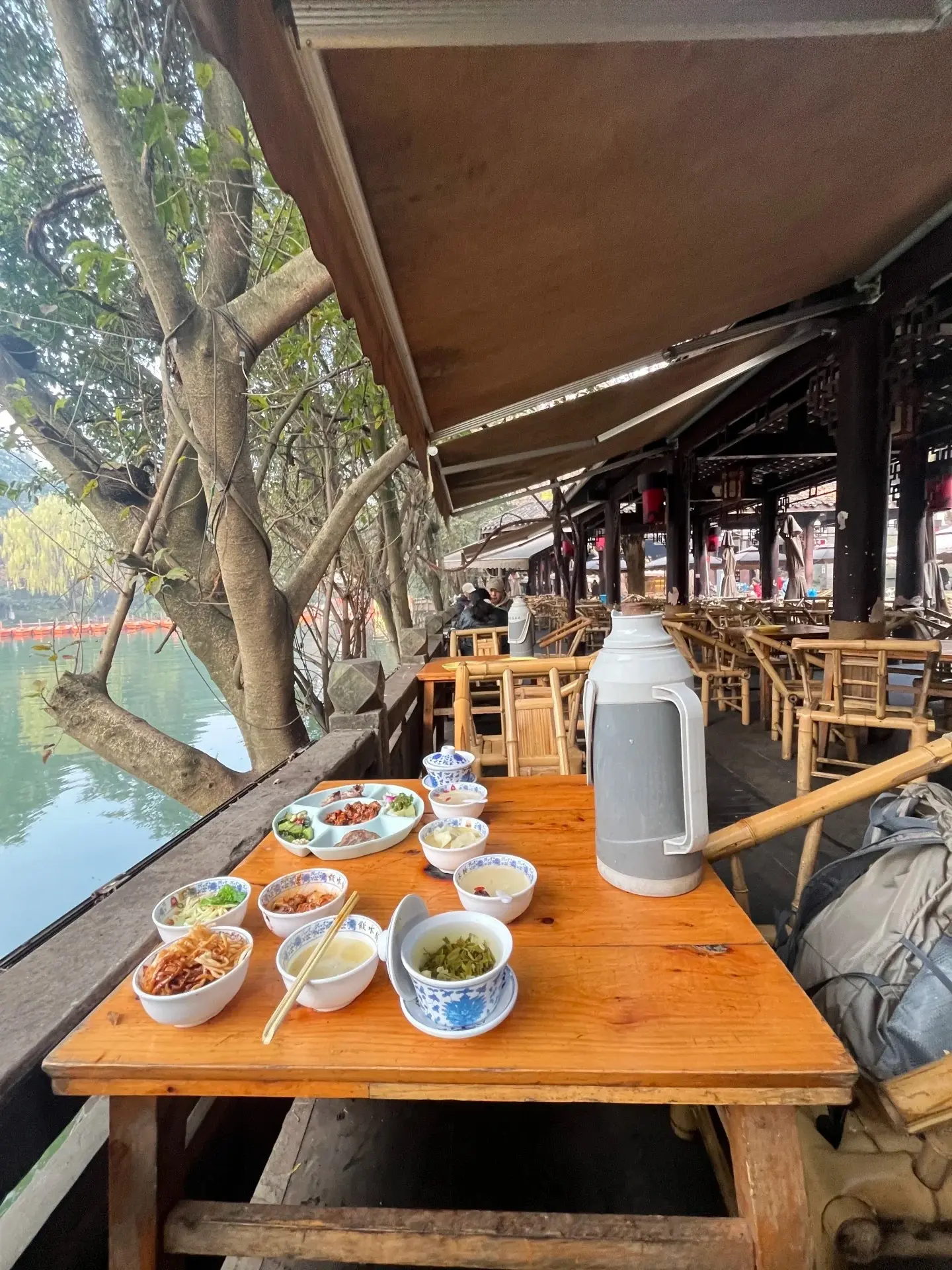
Before the next meal, learn how to pause. Go to Renmin Park and find the Heming Tea House. Secure a bamboo chair. Order jasmine tea—it comes in a covered cup, the leaves settling slowly at the bottom. Around you, old men play mahjong, couples chat, ear-cleaners work their strange trade. You sit. You sip. You do nothing. This is the secret ingredient in every Chengdu meal: the space between courses.
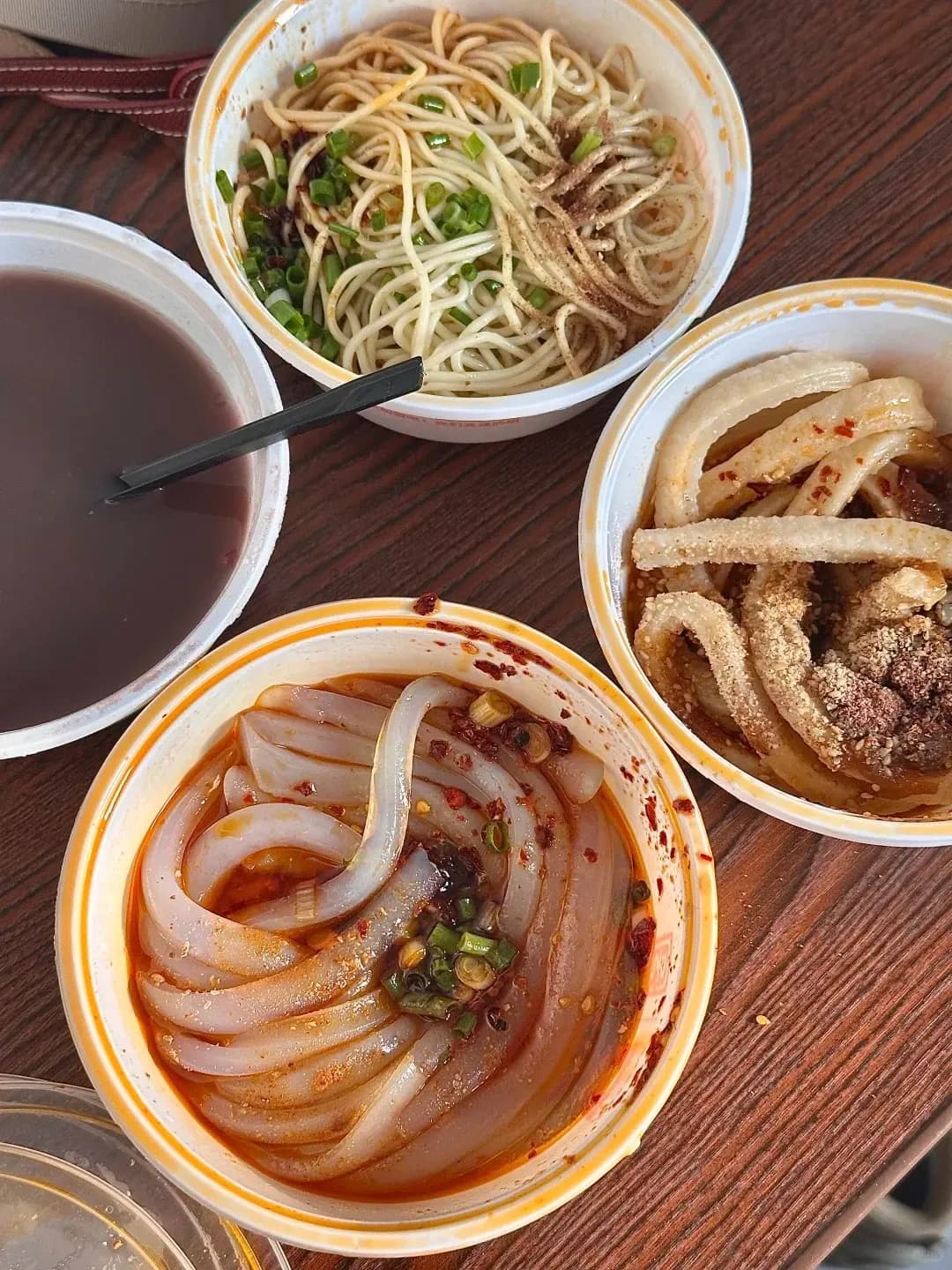
Skip the main Jinli drag if it's too crowded and duck into the side streets nearby. Find a vendor selling liangfen (cold jelly noodles), Sichuan-style dumplings in chili oil, or a granny selling dan dan noodles from a cart she's pushed for thirty years. Eat a little. Walk a little. Eat some more. The goal is not a full meal—it's grazing through the afternoon.
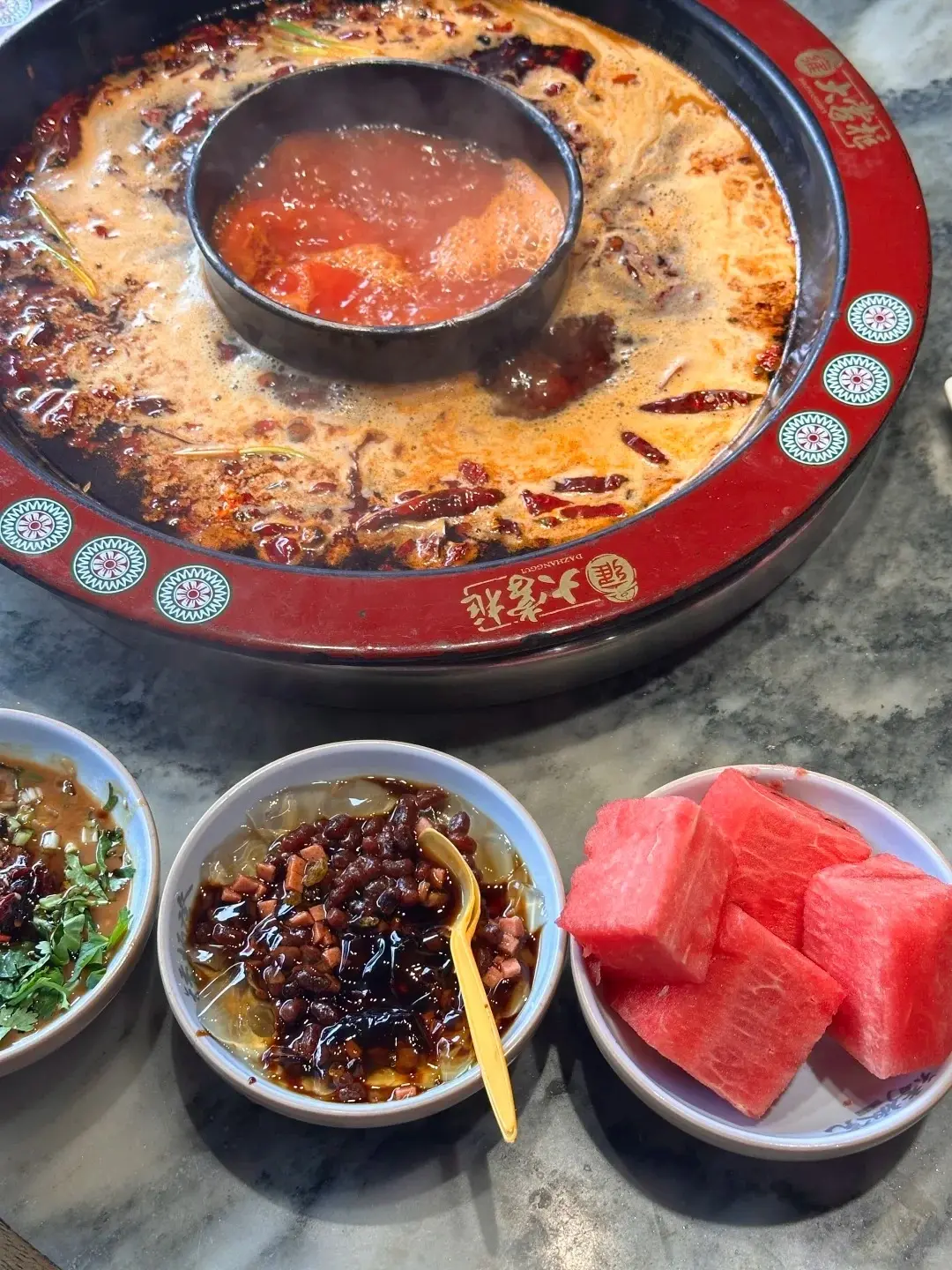
Book ahead at a local hot pot favorite—Dalongyi and Shujiuixiang are famous for a reason, but don't overlook smaller neighborhood spots where the queue is all locals. Order the split pot if you're unsure. The essentials: hand-sliced beef, lotus root, tofu skin, and fern root noodles that soak up broth like sponges. At the sauce station, do what the locals do: sesame oil, garlic, a little salt. Eat with your own chopsticks. Use the serving chopsticks for raw ingredients. The system is simple once you learn it.
After the fire, walk it off and find an ice jelly vendor. Bingfen is a translucent, wobbly dessert drenched in brown sugar syrup with crushed peanuts and sesame seeds. It slides down cool and sweet, the perfect antidote to the heat still buzzing on your lips. In Chengdu, this is not optional—it's the dessert that makes tomorrow's hot pot possible.
Xi'an: The City of Street Food Chaos and History
Xi'an is where the Silk Road began, and you can taste that history on every street corner. The city's food is a palimpsest of cultural layers: Han Chinese foundations, Hui Muslim traditions, Central Asian influences carried by camel caravans over centuries. The result is a food scene that doesn't taste like anywhere else in China—heavy on lamb and cumin, anchored by wheat and bread, served in narrow alleys where vendors have been making the same dishes for generations.
Best For: The Street Food Wanderer, the Silk Road Bite personality, the Noodle Pilgrim, and anyone who believes the best food cities are the ones where you eat with your hands.
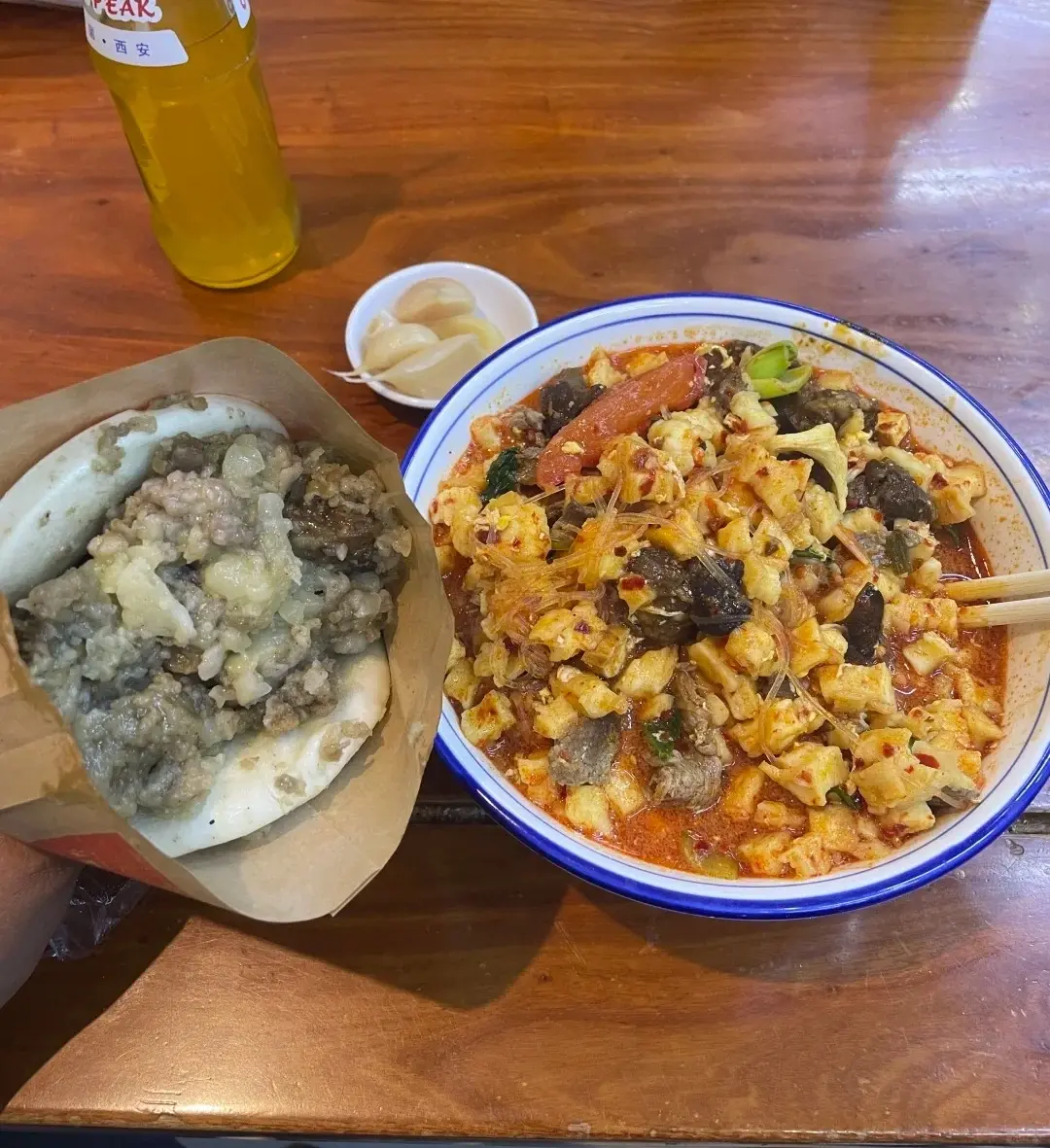
Start with the dish that has fueled Xi'an mornings for centuries: yangrou paomo. It's a lamb soup served with crumbled flatbread—you break the bread into small pieces yourself (smaller is better; it soaks up more broth), then hand the bowl to the kitchen where it's filled with rich lamb stock and tender meat. Add pickled garlic and chili paste. Eat slowly. The shops that serve it—find one on a side street in the Muslim Quarter—often close by early afternoon once the broth runs out.
By late morning, the Muslim Quarter's grills are firing. Follow the smell of cumin to a lamb skewer vendor—the meat is threaded onto thin metal sticks, dusted with cumin and chili, and grilled over charcoal until the edges char and the fat renders into something crispy and molten at the same time. Eat them standing at the counter. Order more than you think you need. Alongside, grab a freshly baked sesame flatbread from a clay oven—crisp on the outside, soft inside, the perfect vehicle for soaking up lamb juices.
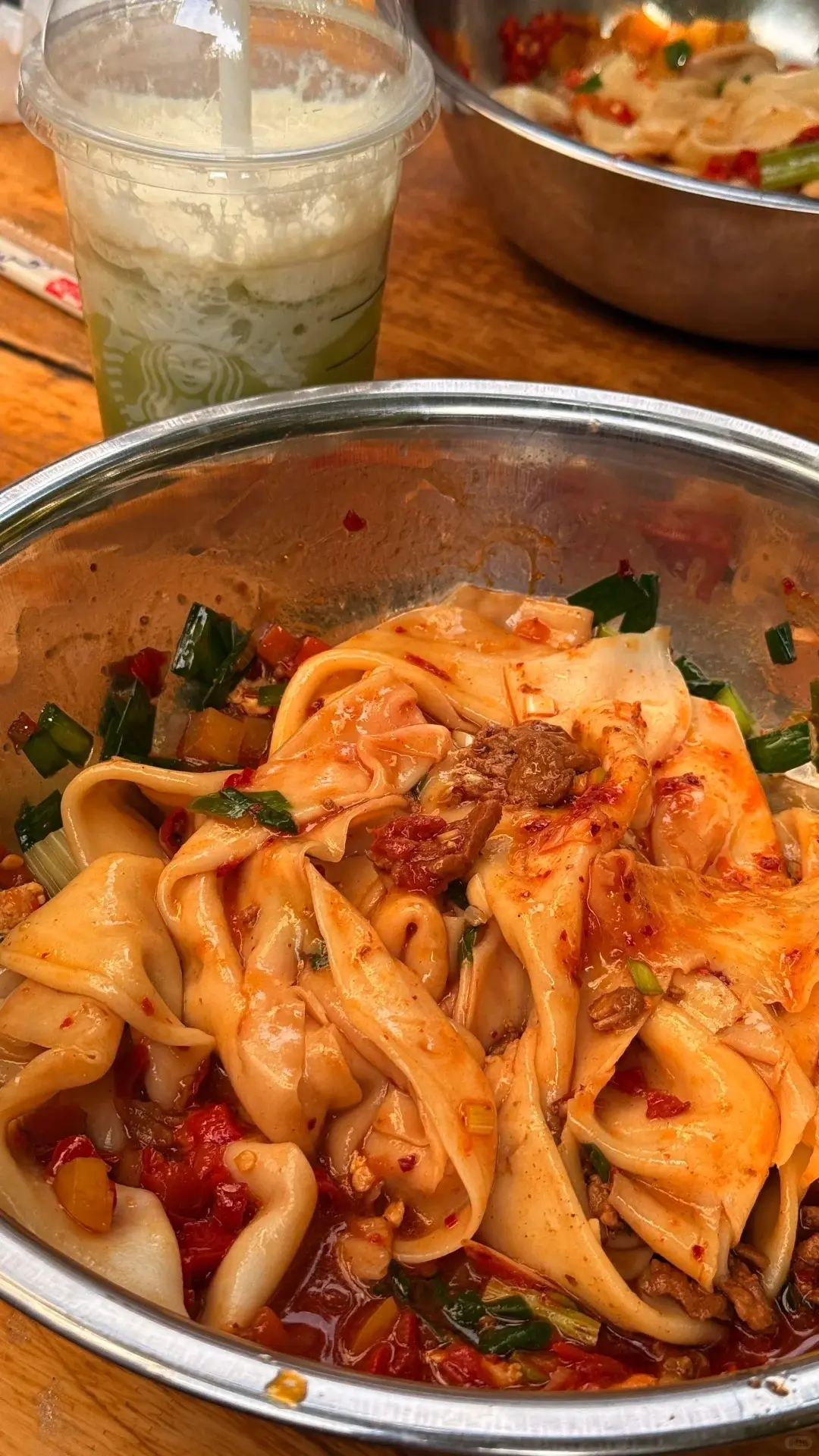
Find a biangbiang noodle shop. You'll recognize the character—it's famously complex, a tangle of strokes that most Chinese people can't write from memory. The noodles are wide and thick, pulled by hand and slapped against the counter with a satisfying thwack. They arrive in a giant bowl with garlic, chili flakes, and hot oil poured over the top at the last moment, making everything sizzle. Mix it. Eat it. This is Xi'an's signature carb, and it demands your full attention. For something sweet, find a persimmon cake vendor—flat, fried pastries made from dried persimmons, filled with sweet bean paste or nuts, golden and chewy.
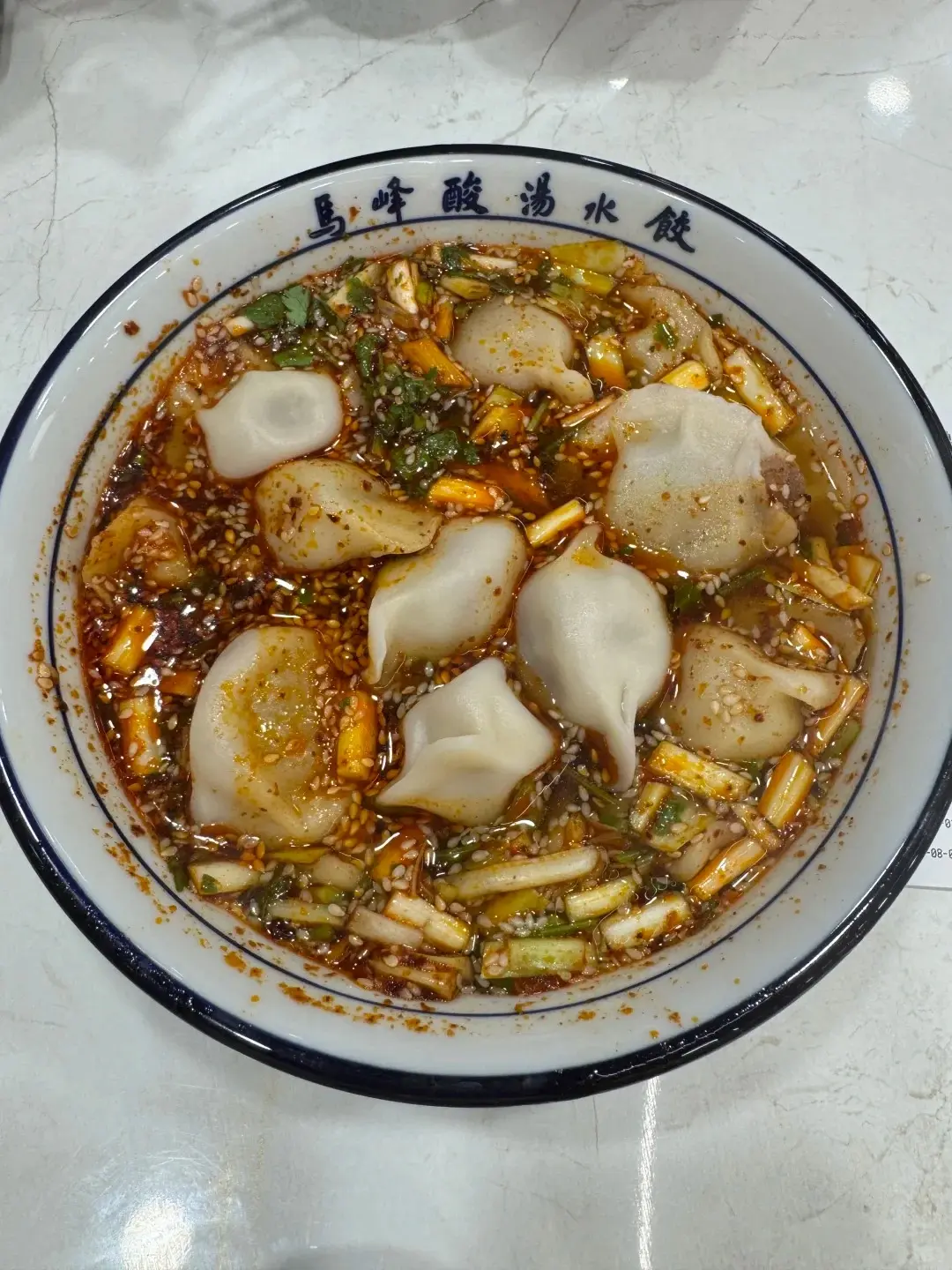
Xi'an is famous for its dumpling banquets—elaborate multi-course meals where dumplings come in dozens of shapes and fillings. Defachang is the classic choice. But if you'd rather stay on the street, head back to the Muslim Quarter for roujiamo—a flatbread stuffed with slow-cooked, shredded pork that's often called a "Chinese hamburger" but deserves better than the comparison—and cold noodles dressed with sesame paste and vinegar.
Guangzhou: The City of Calm, Precision, and Three-Hour Breakfasts
If Chengdu is a party and Xi'an is a street carnival, Guangzhou is a meditation. The city's Cantonese food culture is built on restraint, freshness, and a near-religious devotion to the quality of ingredients. The goal is not to overwhelm you with flavor—it's to make you notice how good a single shrimp can taste when it's steamed just until translucent and served without adornment.
Best For: The Delicate Palate, the Morning Ritualist, the Sweet Wanderer, and anyone who thinks they don't like Chinese food because they've only had the heavy, oily versions served abroad. Guangzhou will change your mind.
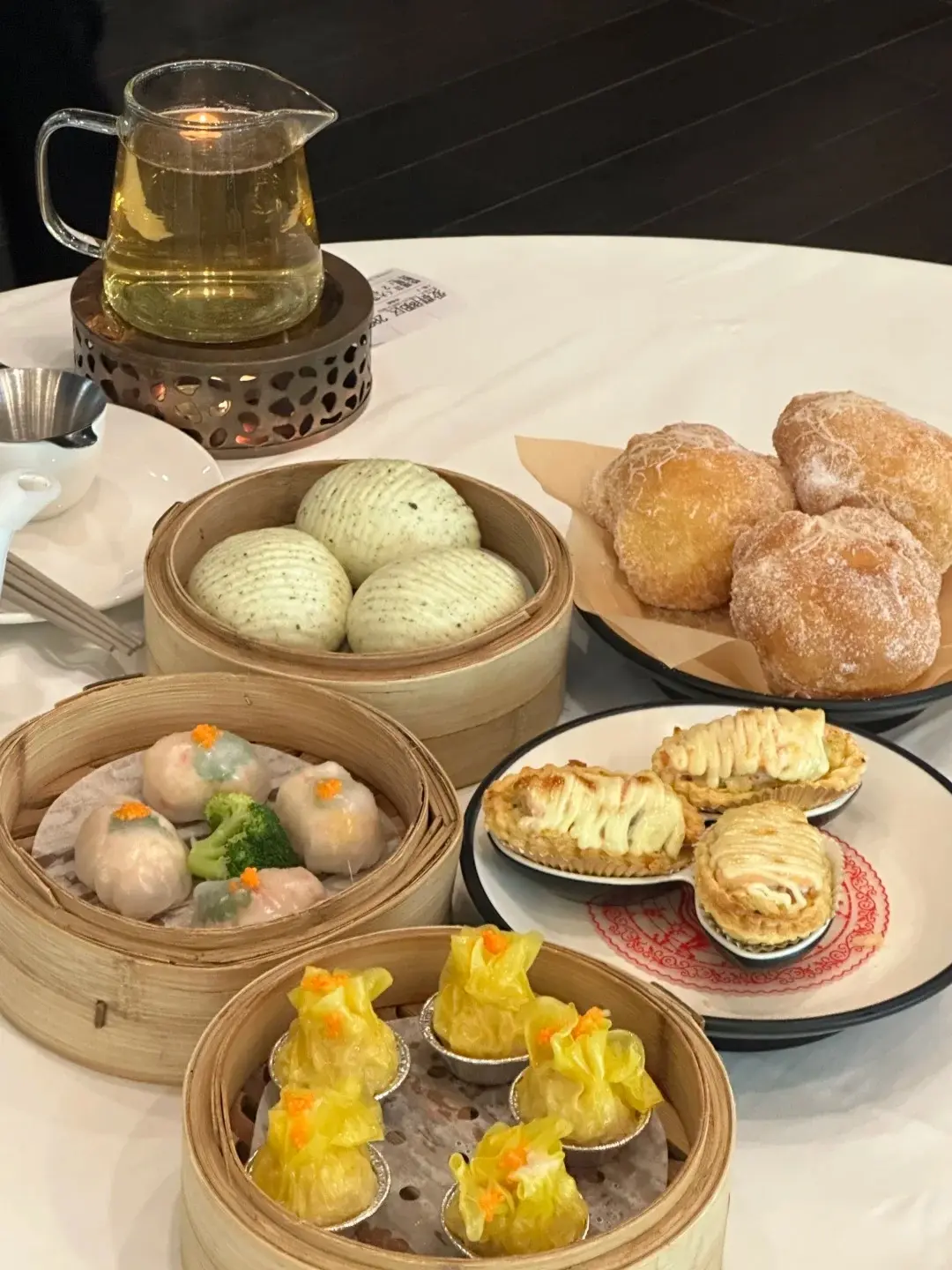
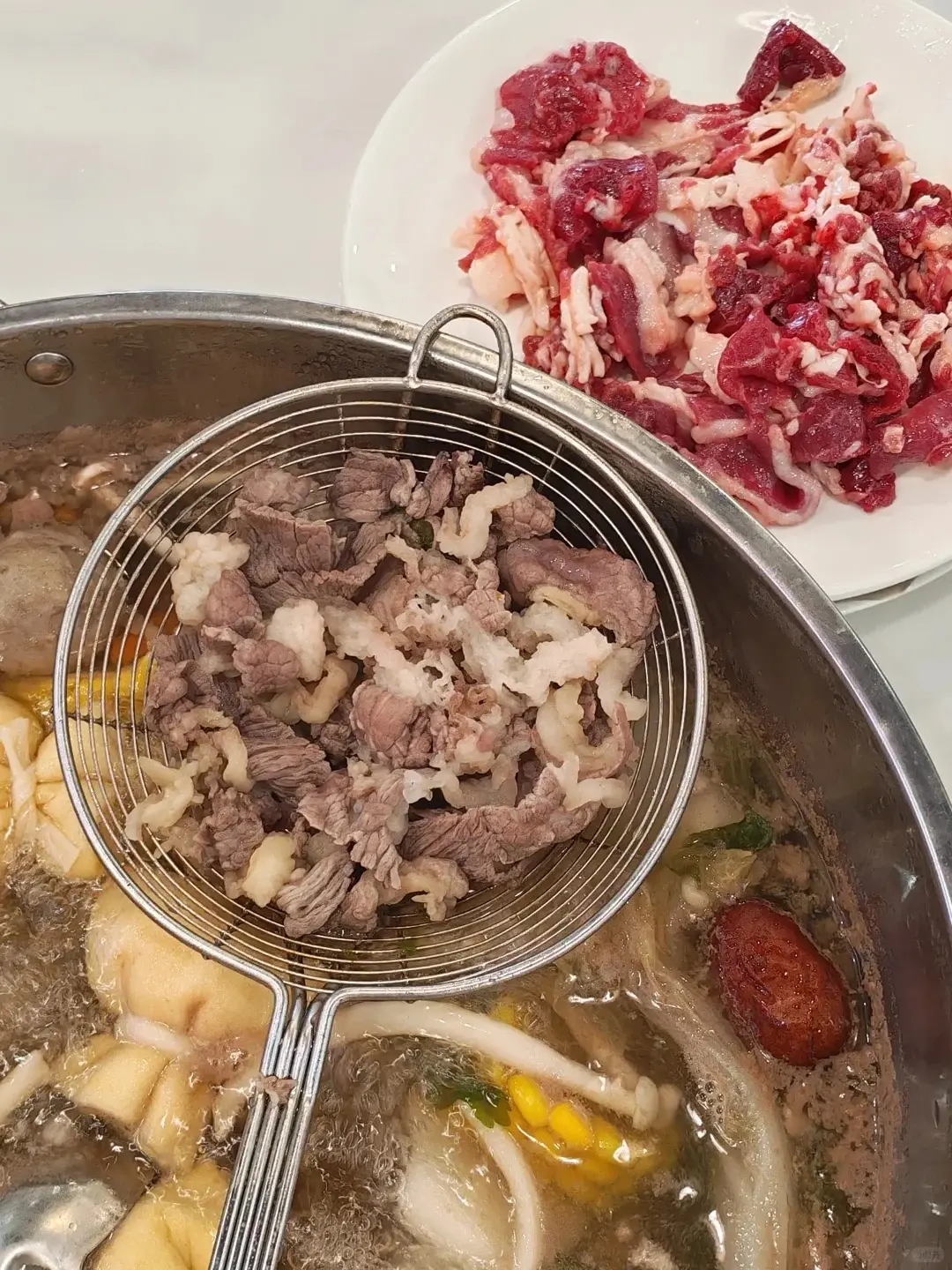
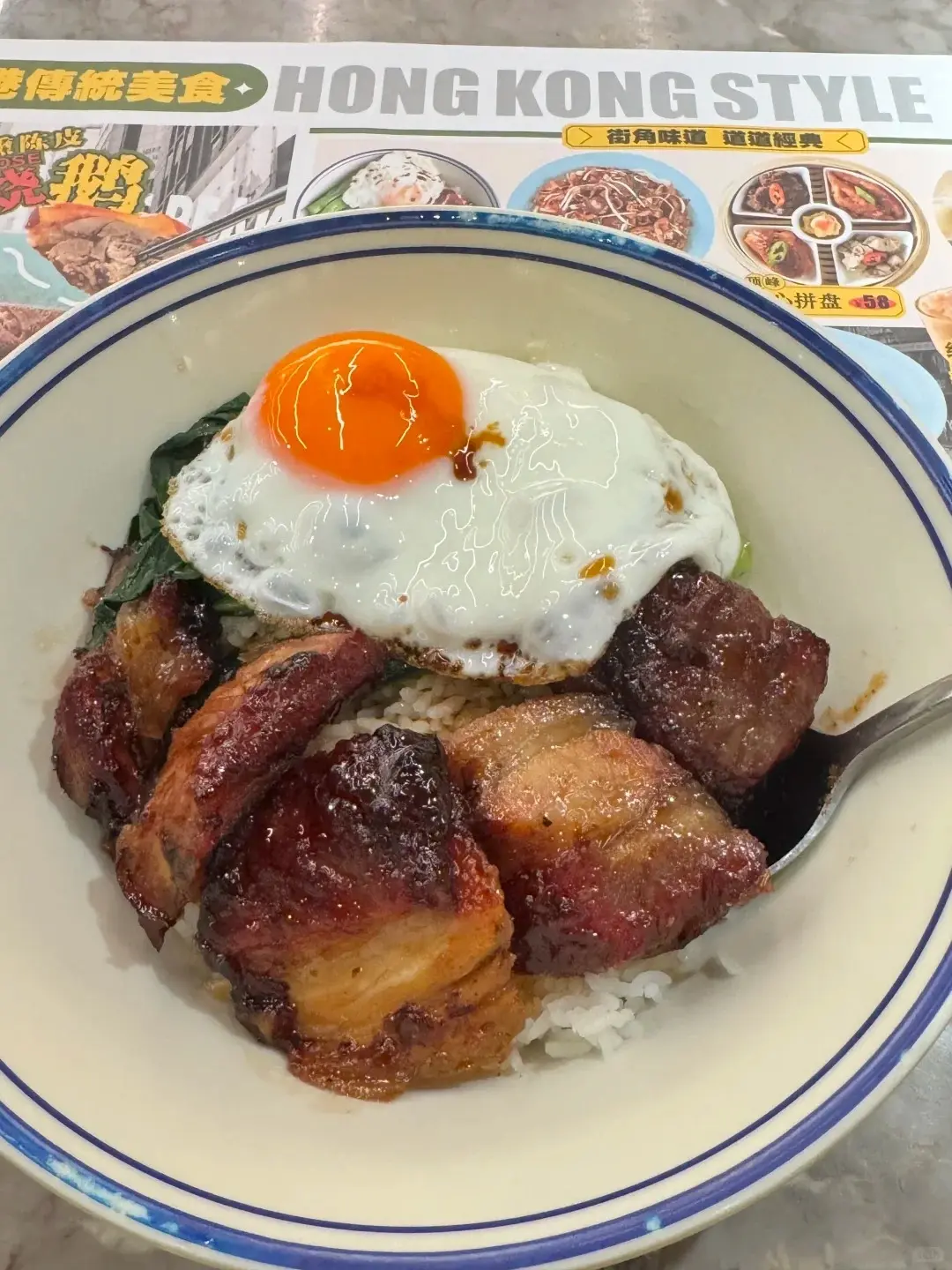
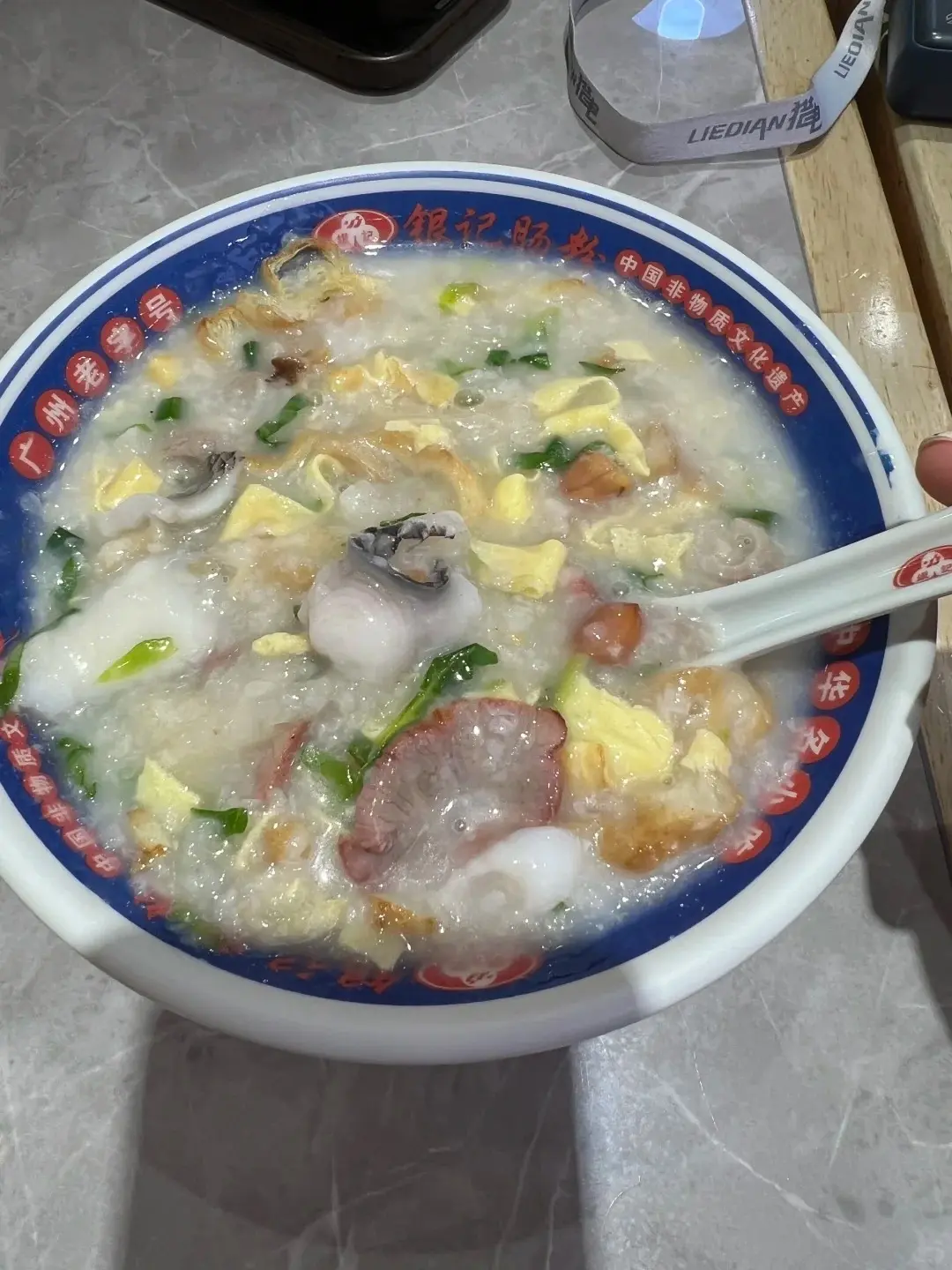
You can't visit Guangzhou without yum cha. Book a table at a classic tea house—Panxi in Liwan District is a local institution, with garden seating and dim sum carts that have been rolling for decades. Arrive early. The room will already be full of families, elderly couples reading newspapers, groups of friends who meet here every weekend. The carts come around in waves: har gow (shrimp dumplings with translucent wrappers), siu mai (pork and mushroom), rice noodle rolls draped in sweet soy sauce, chicken feet braised in black bean sauce, egg tarts warm from the oven. Point at whatever looks good. Tea is constant—let someone else at the table pour for you, and pour for them in return. A proper yum cha session lasts two to three hours. Do not rush it.
By the time yum cha ends, it's almost lunch—and in Guangzhou, roast meat is an art form. Find a siu mei shop (roast meat specialist) and order a plate of roast goose, its skin lacquered to a deep mahogany, the fat rendered until it's just a thin, crisp layer between skin and meat. Add char siu (Cantonese barbecue pork), red-glazed and sticky-sweet at the edges. Eat with rice and a simple vegetable dish. The contrast is the point: rich, decadent meat balanced by clean, barely-seasoned greens.
Afternoon calls for tangshui—"sugar water," the Cantonese dessert tradition. Find a shop specializing in double-skin milk: a custard made from milk and egg whites, steamed until just set, warm, silky, and barely sweet. If you're in the mood for something brighter, order mango sago pomelo, a bowl of mango puree with tapioca pearls and citrus sacs that pop between your teeth.
Go to a seafood restaurant where the ingredients swim in tanks by the door. Choose your fish—garoupa, sea bass, pomfret—and specify how you want it cooked. The correct answer is almost always steamed with ginger and scallions. The fish arrives whole, the flesh pearly white and so tender it slides off the bone with the lightest touch of chopsticks. A drizzle of soy sauce. A tangle of fresh herbs. That's it. When seafood is this fresh, anything more would be a distraction.
If you're still hungry, find a congee shop still open. Cantonese congee is rice porridge cooked until the grains dissolve into a silky, almost creamy texture, topped with preserved egg, lean pork, or fresh fish slices. It's comfort food at its most elemental—the kind of thing you eat when you want your stomach to feel settled and your mind to feel quiet.
Eating with the Seasons: What to Chase and When
China doesn't eat by the calendar—it eats by the season. And once you understand this, your entire approach to food travel shifts.
You stop asking "What's the best restaurant in Shanghai?" and start asking "What's in season right now?" You plan trips not around landmarks but around harvests. You learn that a hairy crab in September is a religious experience, while a hairy crab in July is just a crab. You discover that the same city can taste completely different in spring than it does in autumn.
Season | Best Months | What to Chase |
Spring | March–May Bamboo shoots, Mingqian | Longjing tea, spring chives, pea shoots, qingtuan |
Summer | May–September | Crayfish, cold noodles, BBQ skewers, mango desserts, watermelon |
Autumn | September–November | Hairy crab, mooncakes, chestnuts, persimmons, Yunnan wild mushrooms |
Winter | November–March | Hot pot (all regions), dumplings, clay pot rice, roasted sweet potatoes, New Year sticky rice cakes |
Spring: Bamboo Shoots, Tea Harvests, and the Taste of New Life
Spring in China tastes green. After months of preserved vegetables and root storage, the first fresh shoots break through the soil, and the entire country seems to exhale.
Bamboo Shoots — March to May
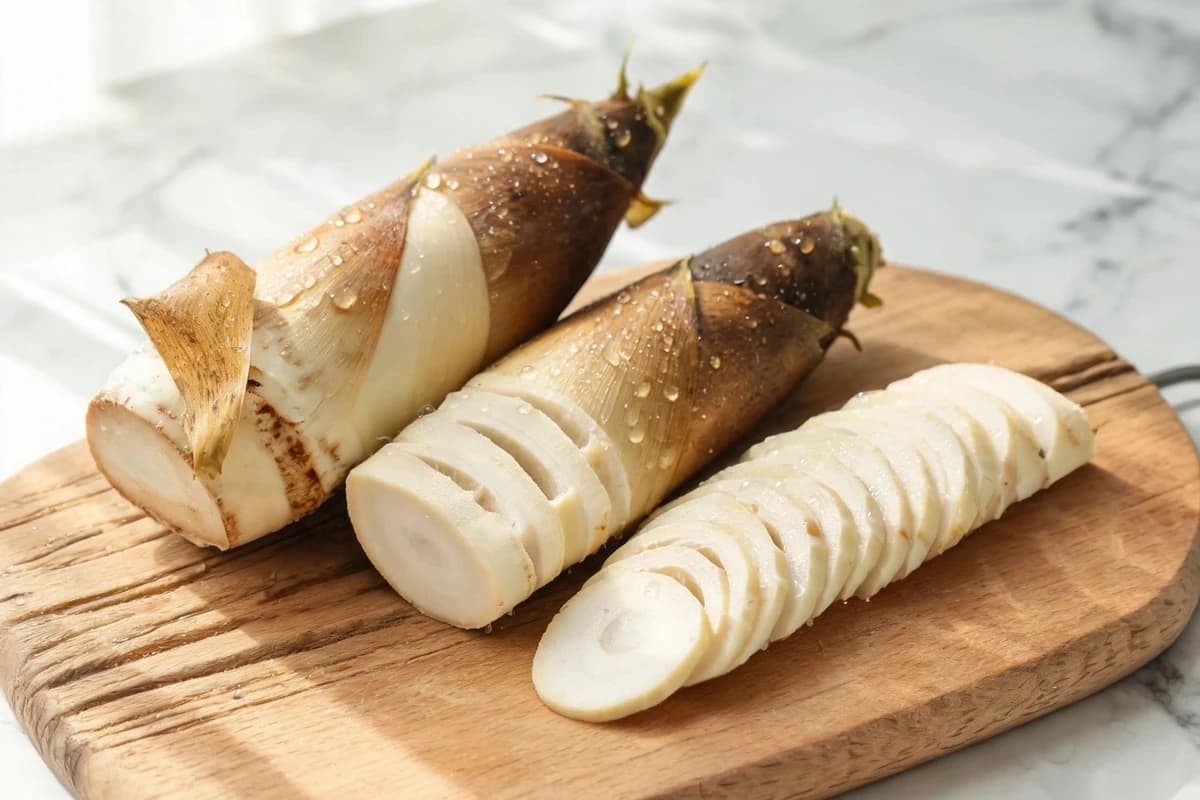
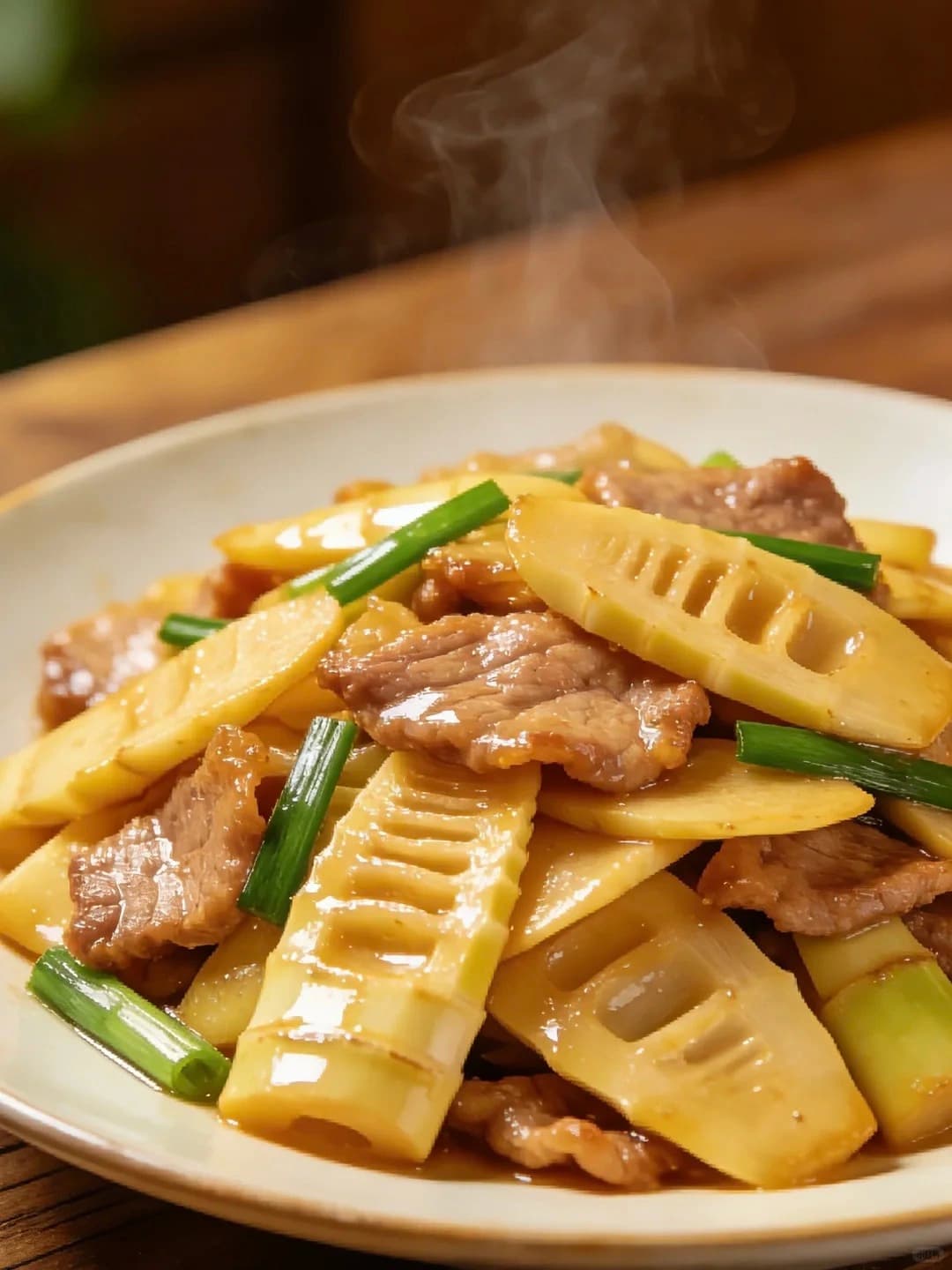
In the bamboo forests around Hangzhou and across the Yangtze River Delta, spring bamboo shoots are a seasonal obsession. Unlike their year-round canned counterparts, fresh spring shoots are sweet, tender, and completely free of bitterness. They're dug in the early morning and in kitchens by lunchtime—speed matters, because the natural sugars start converting to starch the moment they leave the soil.
The classic preparation is youmen sun: shoots braised slowly in oil with soy sauce and a touch of sugar until they absorb all the savory richness and turn glossy brown. The texture is somewhere between a mushroom and a water chestnut—meaty but delicate, substantial but somehow still light. It's vegetarian cooking so satisfying you don't miss the meat.
In Shanghai and Suzhou, spring bamboo shoots also appear in soup, stir-fried with fresh greens, or chopped into wonton fillings. If you're traveling through the Jiangnan region in March or April, order them wherever you see them. This is not a dish you can replicate at home with canned bamboo shoots. This is the real thing, and it's only here, and only now.
Spring Tea Harvest — Late March to Early May
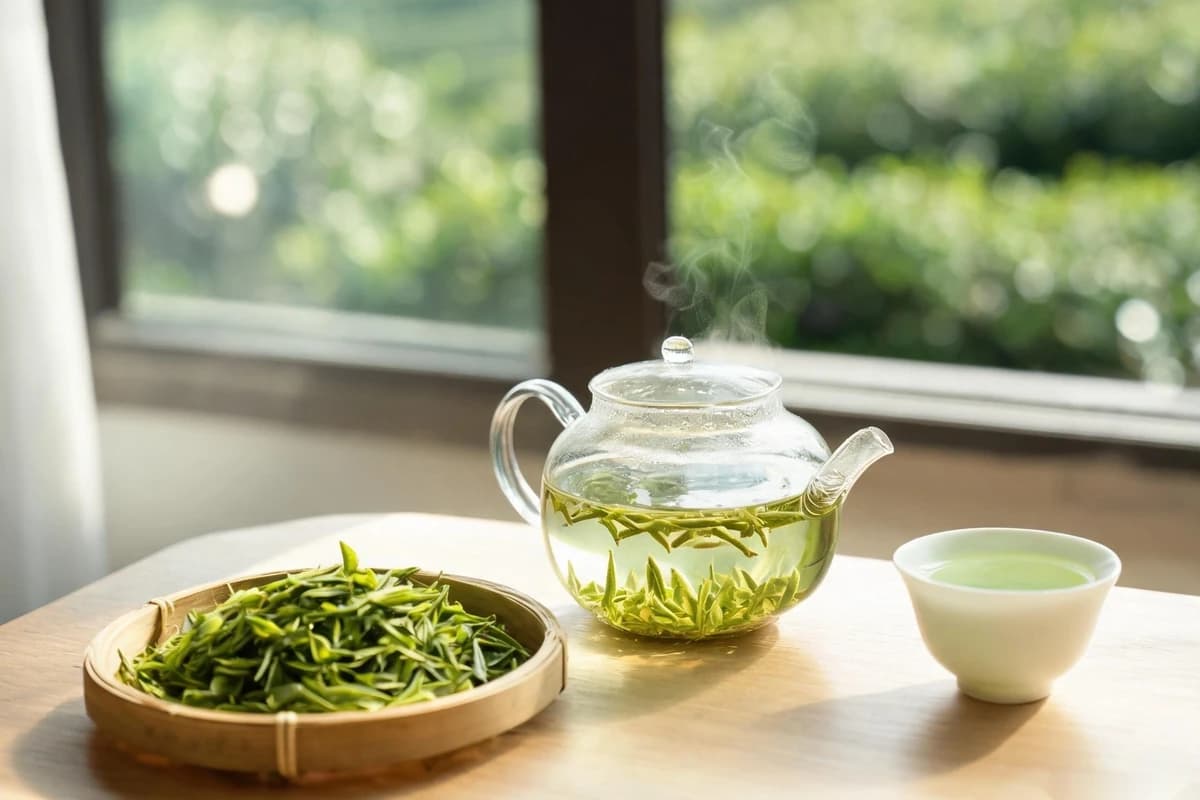
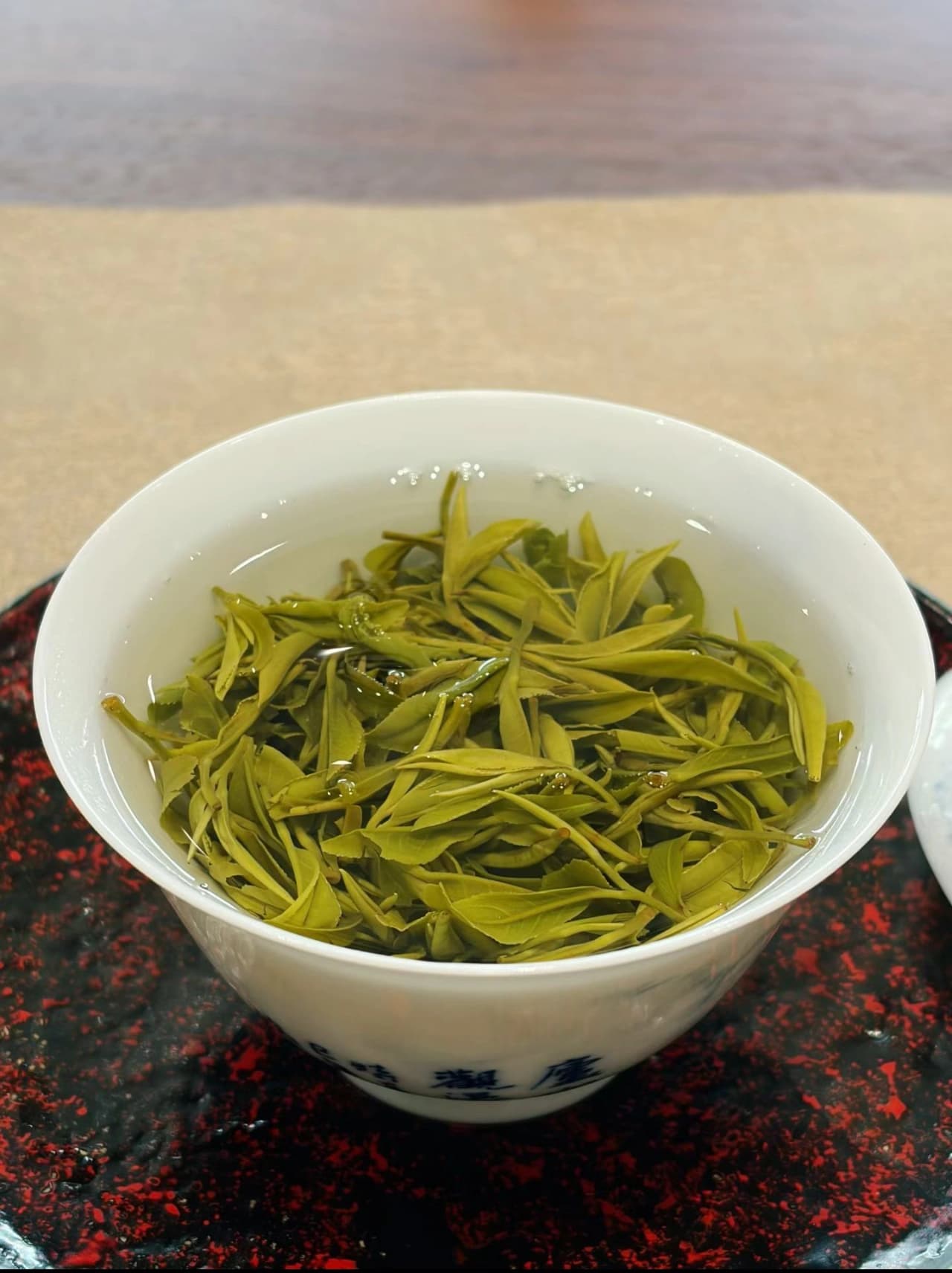
The tea fields around Hangzhou's West Lake turn electric green in early spring, and for a few precious weeks, the year's most coveted tea leaves are being plucked. Longjing (Dragon Well) tea harvested before the Qingming Festival in early April—called Mingqian tea—is the most prized. The leaves are small, tender, and carry a delicate chestnut sweetness that later harvests lack.
You don't just drink this tea. You experience it. At a tea house in the Longjing village outside Hangzhou, the farmer might show you the morning's harvest, still cool from the mountain air. The leaves are pan-fired by hand in a wok, pressed and turned with a motion that looks simple but takes years to master. When steeped in a glass cup, the leaves dance—sinking, rising, unfurling—and the water turns a pale jade green.
The experience is part agriculture, part meditation, and entirely seasonal. By late May, the spring harvest is over, and the tea season has moved on.
Quick Spring Hits
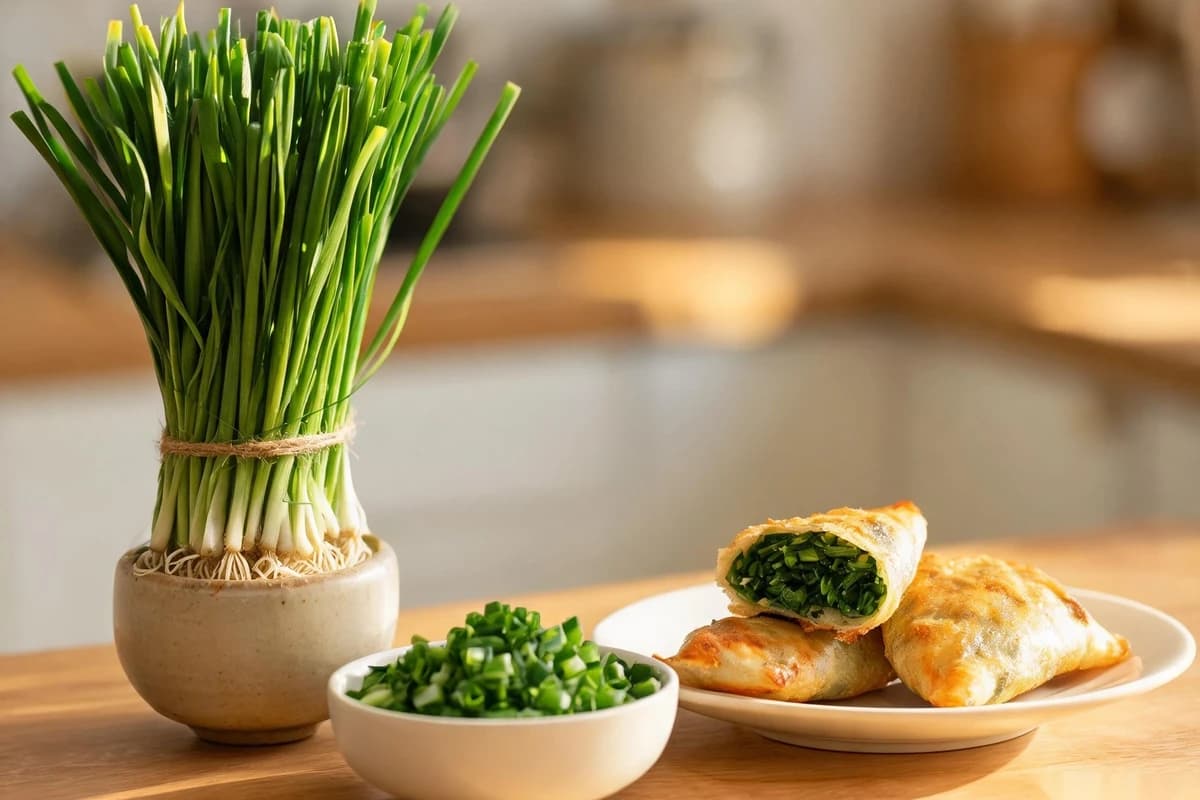
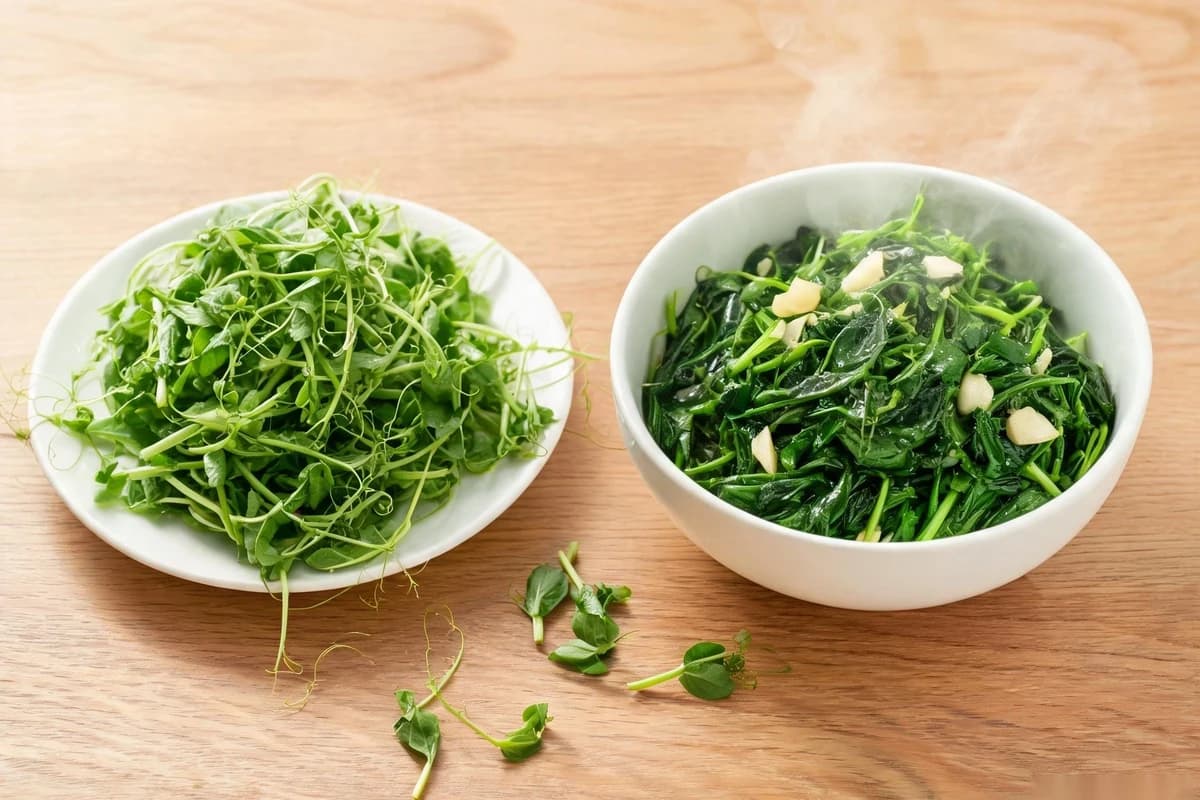
Spring chives (韭菜): The first cutting of chives after winter is the most fragrant. Find them in dumplings, stir-fries, and savory pancakes across northern China.
Pea shoots (豆苗): Tender pea tendrils stir-fried with garlic—a dish so simple and so green it tastes like spring distilled. Common in Shanghai and Cantonese cooking.
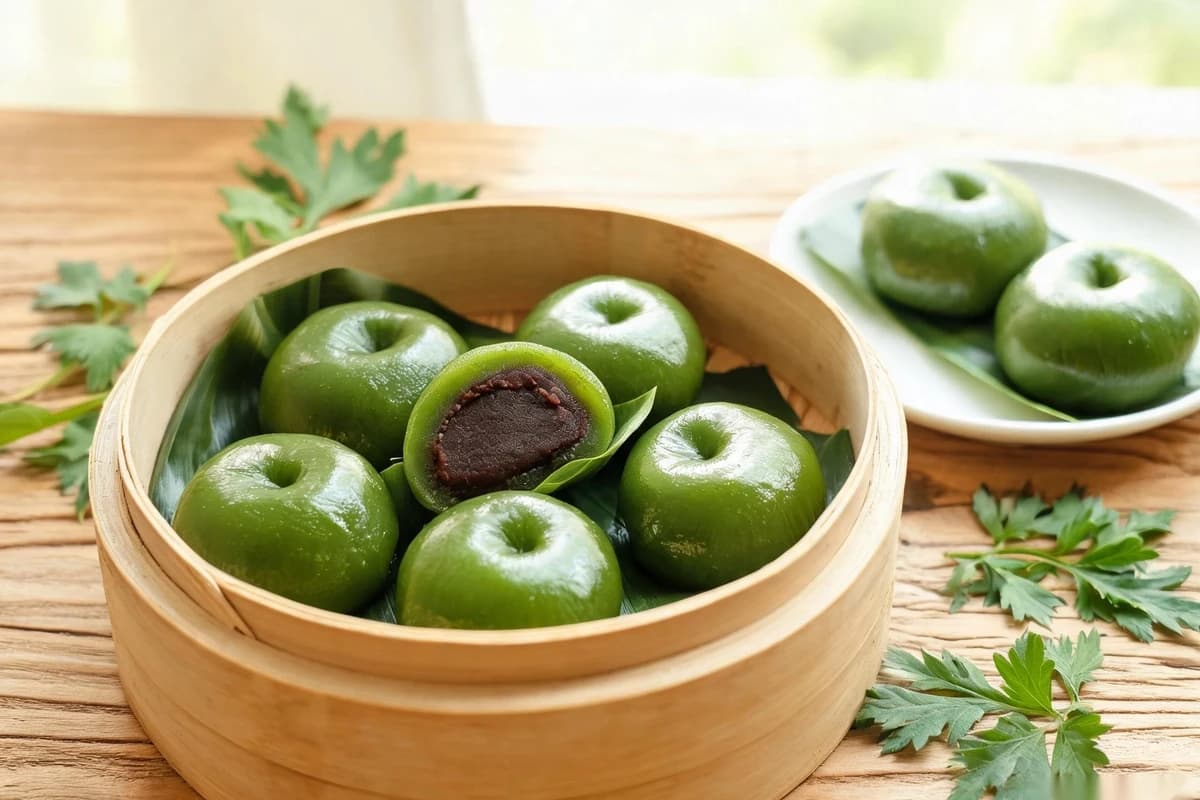
Qingtuan (青团): Glutinous rice dumplings colored green with mugwort juice, filled with sweet red bean paste or savory pork floss. A spring specialty of the Jiangnan region, sold at street stalls and tea houses around the Qingming Festival in early April.
Summer: Crayfish, Night Markets, and the Season of Cold Dishes
Summer in China is hot, humid, and absolutely dedicated to eating outdoors. The season's defining food experience is not a dish—it's the atmosphere. Plastic tables on sidewalks. Beer bottles sweating in the heat. The hiss of grills. And everywhere, the bright red shells of crayfish piled high on metal trays.
Crayfish — May to September
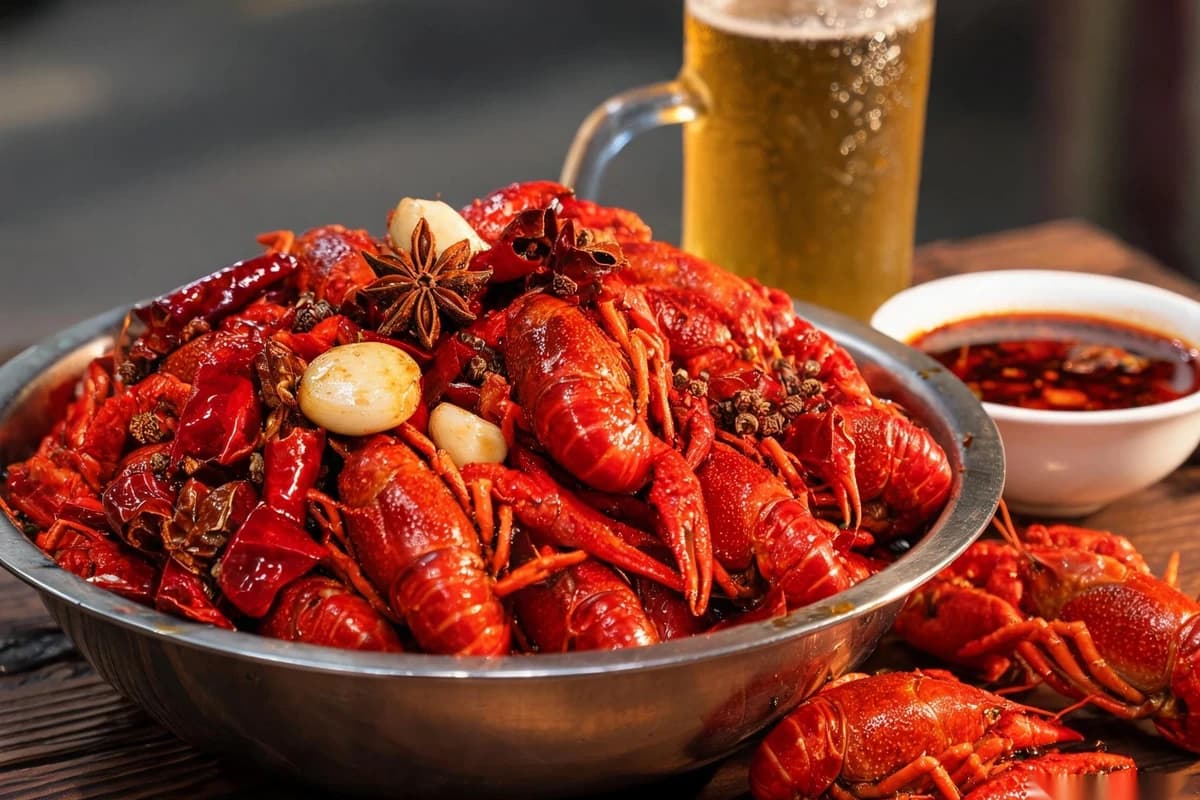
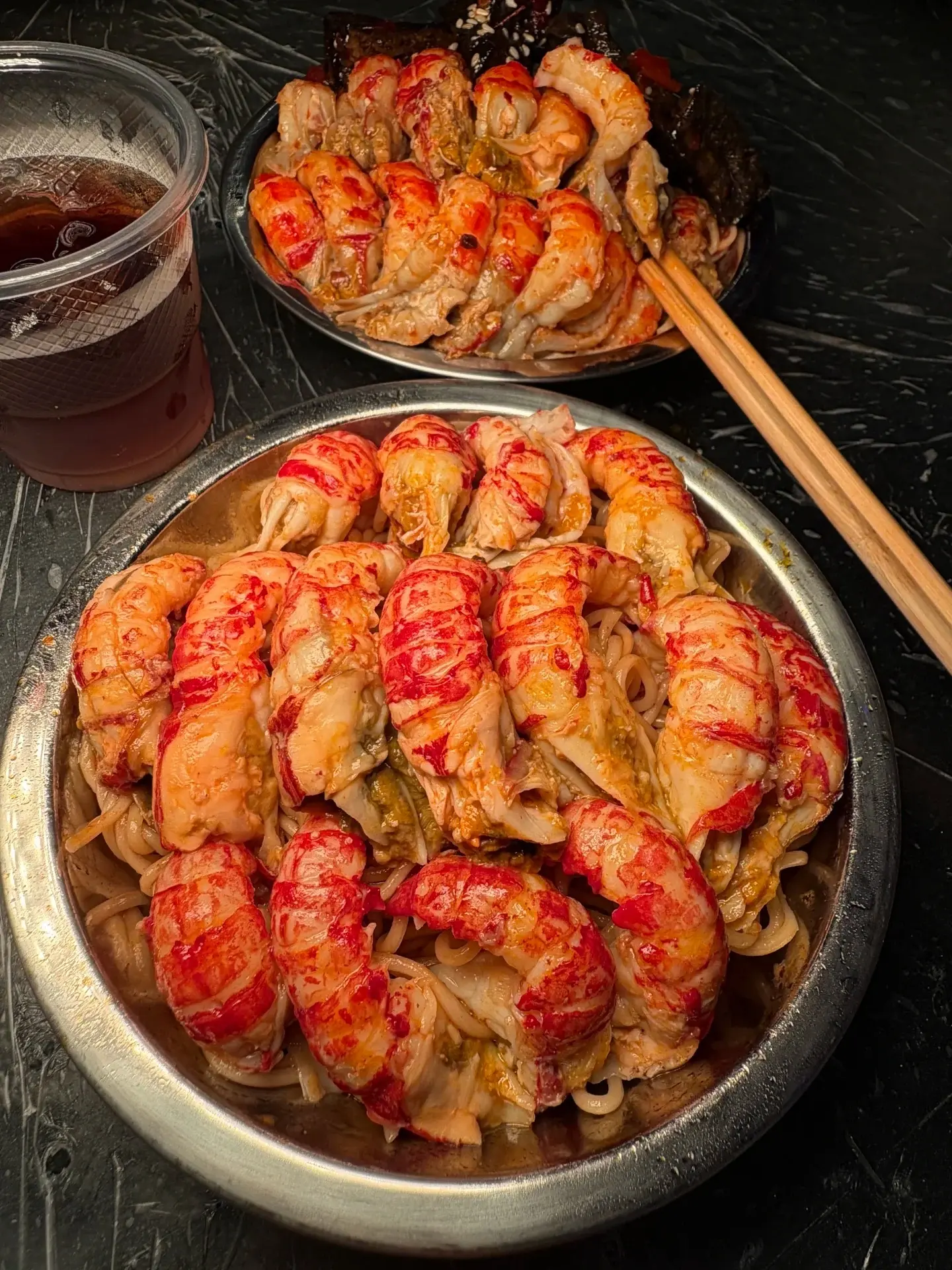
The Chinese crayfish phenomenon needs some explanation for the uninitiated. Across the country, but especially in Changsha, Wuhan, and cities along the Yangtze, summer nights are dominated by one ritual: sitting around a table covered in crayfish, wearing plastic gloves, and methodically dismantling the tiny crustaceans while drinking cold beer.
The crayfish are typically cooked in a spicy broth heavy with chili, Sichuan peppercorn, garlic, and a dozen other aromatics. They arrive at the table in a mountain, shells glistening red, and you go to work—twist off the head, suck the spicy juices from it (this is optional but encouraged), peel the tail, and extract the small curl of meat. One crayfish yields about one bite. You'll eat forty of them. This is not efficient eating. That's the point.
Changsha is the spiritual capital of crayfish culture. On summer nights, the streets around Juzizhou and along the Xiang River fill with open-air restaurants where the crayfish pots never stop simmering. The Hunanese version is punishingly spicy—more direct heat than Sichuan mala, with fresh chili peppers piled on generously. In Wuhan, the crayfish tend toward garlic and spice blends. In Shanghai, upscale restaurants serve them in cleaner, more refined preparations, but the soul of the dish remains gloriously messy.
Cold Dishes and Summer Survival
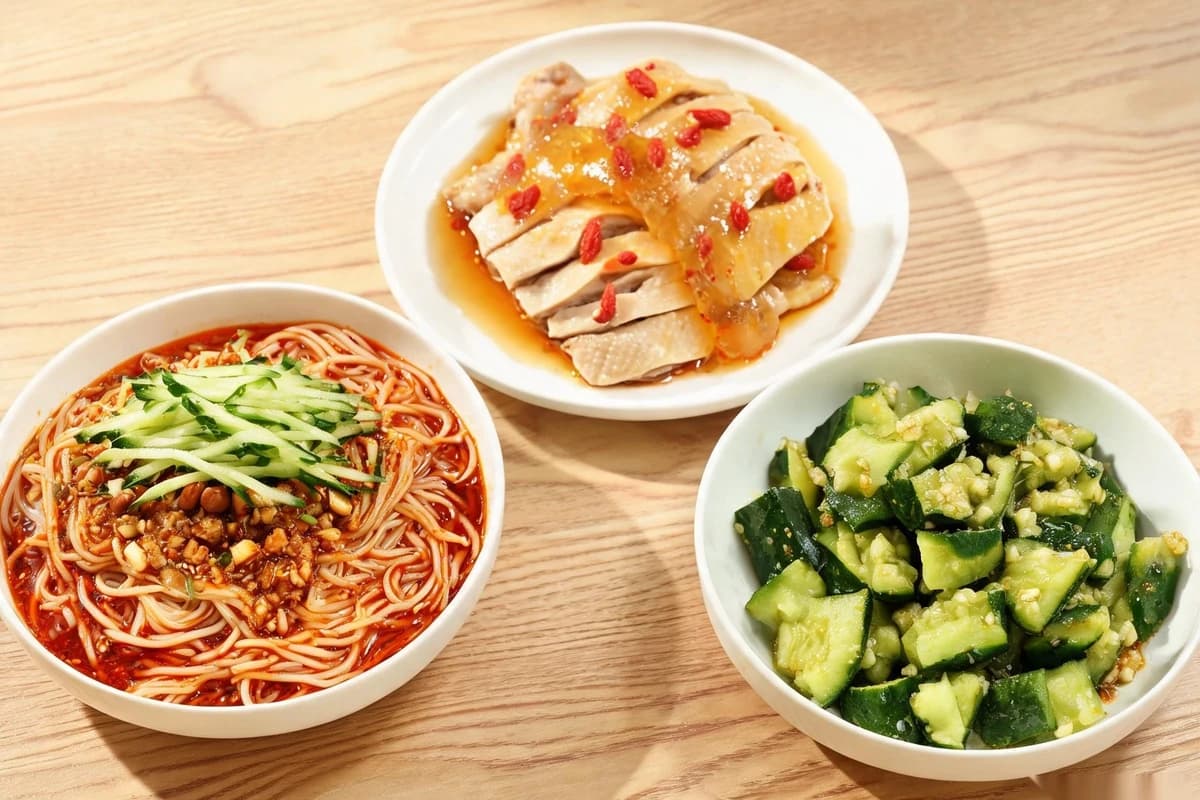
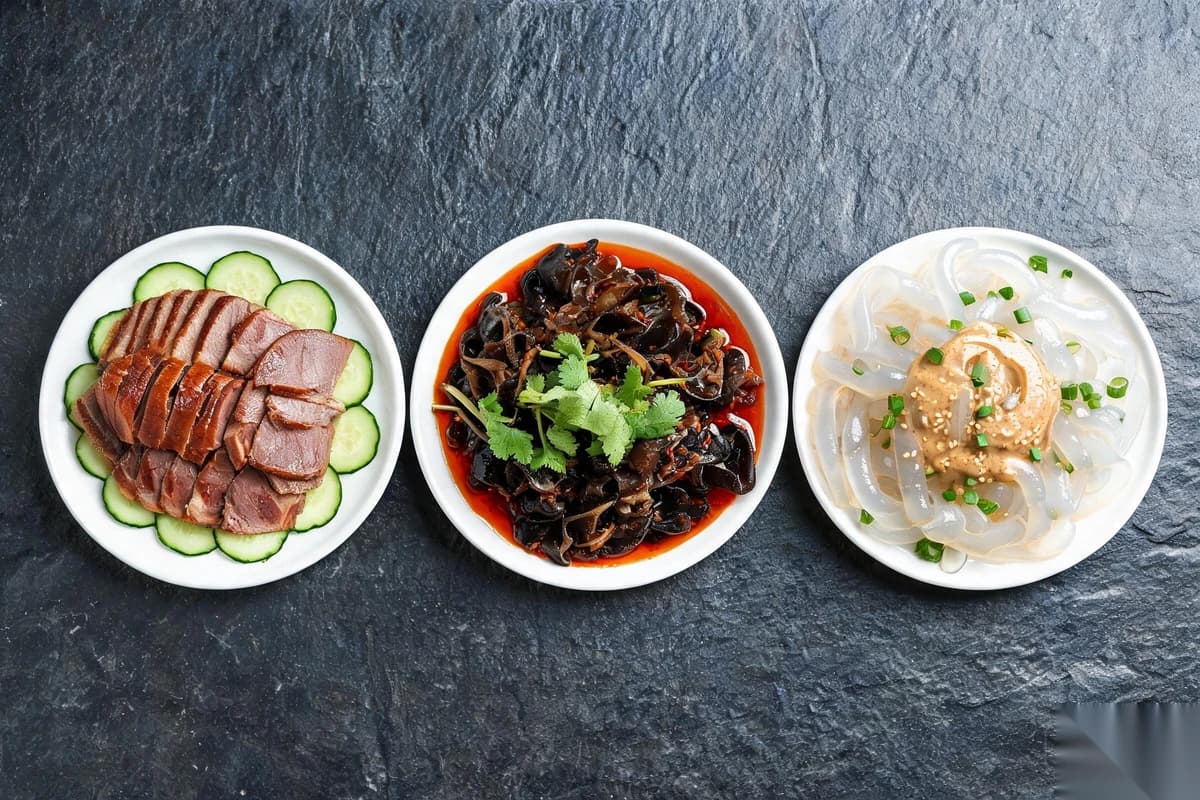
Chinese summer cooking has a whole category dedicated to getting through the heat: cold dishes (liang cai, 凉菜). These are not sad salads. They're aggressively seasoned, texturally interesting, and designed to be eaten at room temperature or chilled.
In Sichuan, cold noodles in chili oil are a summer staple—chewy, spicy, and weirdly refreshing despite the heat. In Shanghai, drunk chicken (chicken marinated in Shaoxing wine) is served cold, the meat infused with a subtle, boozy sweetness. Across the north, smashed cucumber salad appears on every table: cucumbers whacked with the flat of a cleaver until they craze and crack, then dressed with garlic, vinegar, sesame oil, and chili. The cracking isn't theater—it creates rough surfaces that grip the dressing better than clean slices ever could.
In Yunnan, cold rice noodles with a tangle of herbs and a lime-chili dressing taste almost Southeast Asian. In Xinjiang, cold lamb with cumin and onion offers a Silk Road take on the concept. Every region has its own summer cold dish repertoire. When the temperature climbs, order them aggressively.
Quick Summer Hits

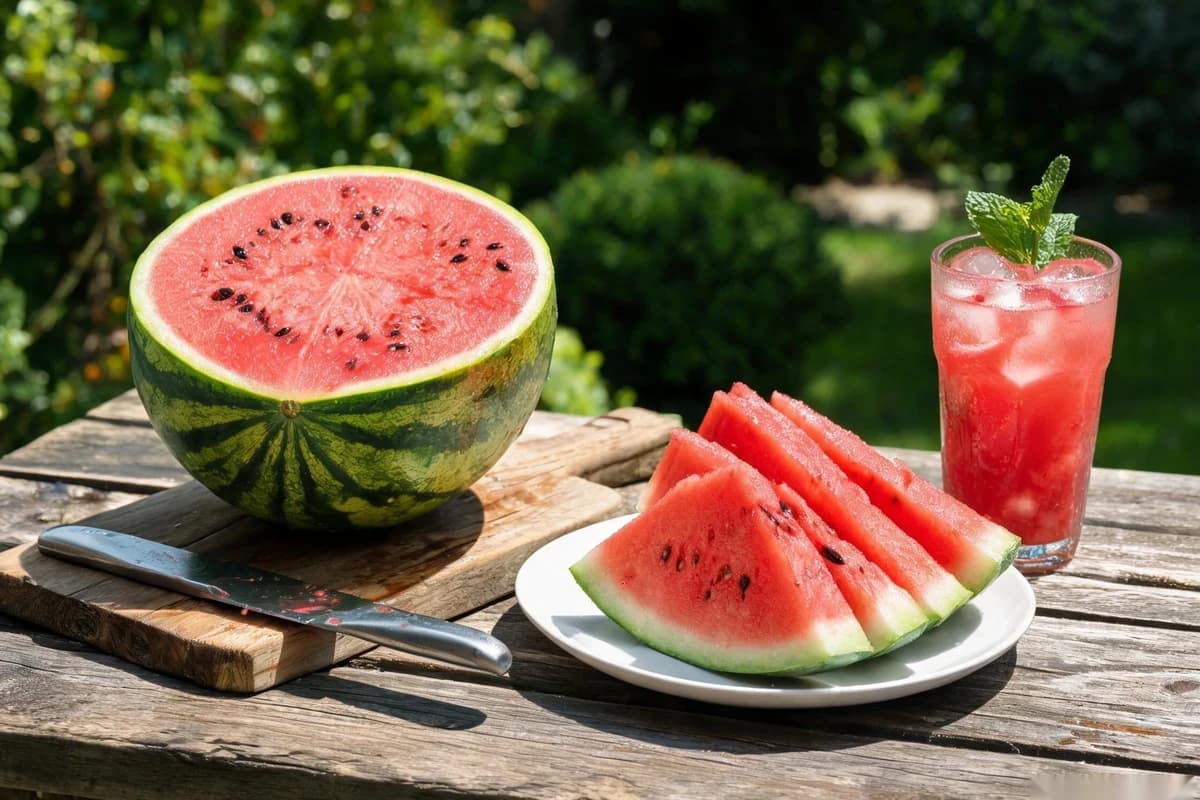
Mango desserts: Summer is mango season in southern China. Mango sago pomelo, fresh mango with sticky rice, and mango smoothies flood Guangzhou and Hong Kong dessert shops from June to August.
Watermelon: Sold by street vendors across the country, often from trucks parked in the shade. Some vendors will cut it for you on the spot. Eat it immediately.
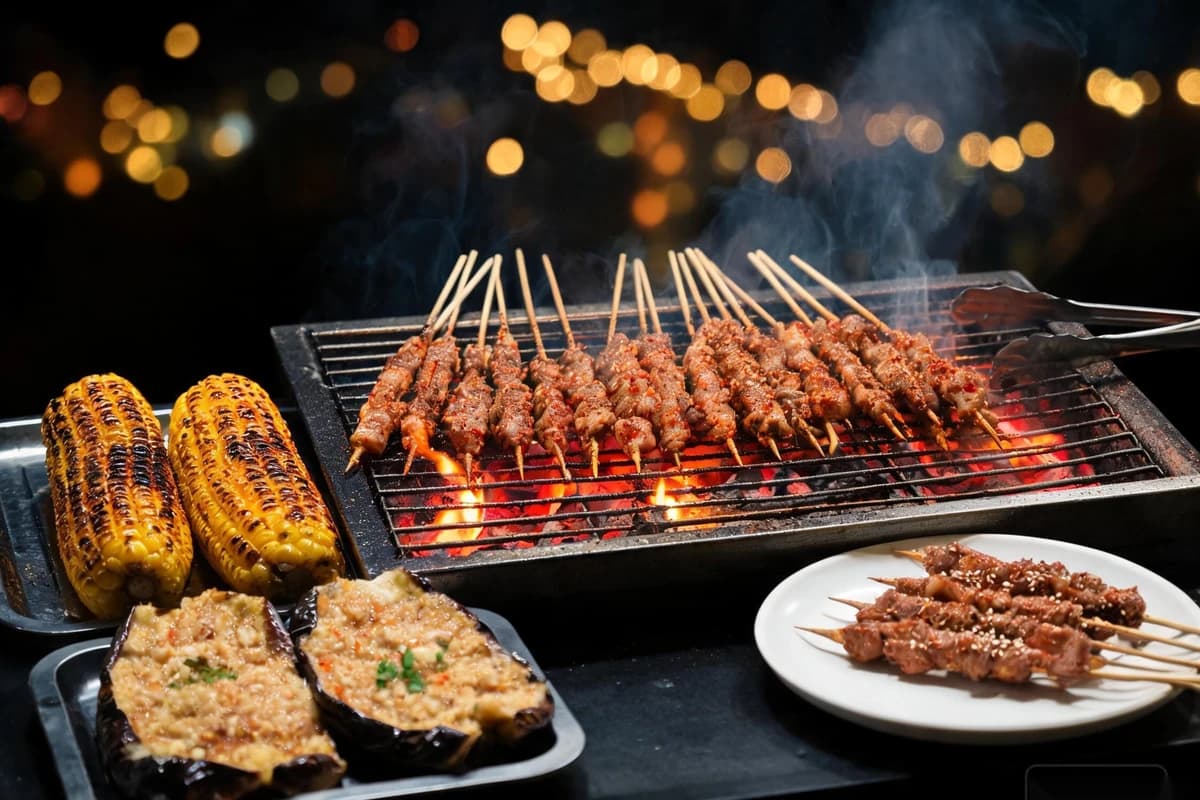
BBQ skewers (烧烤): While available year-round, summer is peak outdoor BBQ season. Every city has its own style, but the setup is universal: a charcoal grill, a cooler of beer, and a plastic stool under the stars.
Autumn: Hairy Crab, Mooncakes, and the Season of Indulgence
If spring is about freshness and summer is about chaos, autumn is about luxury. The weather cools, appetites return, and two seasonal obsessions take over the country: hairy crab in the east and mooncakes everywhere.
Hairy Crab — September to November
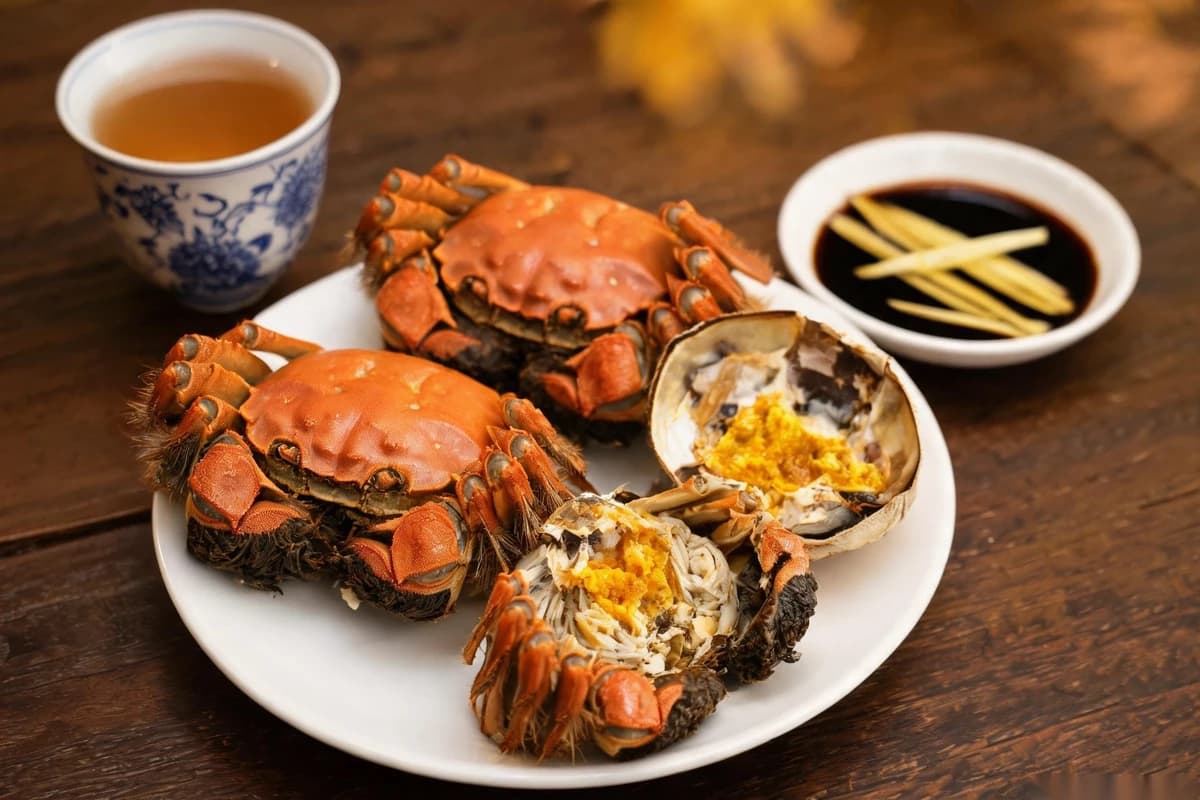
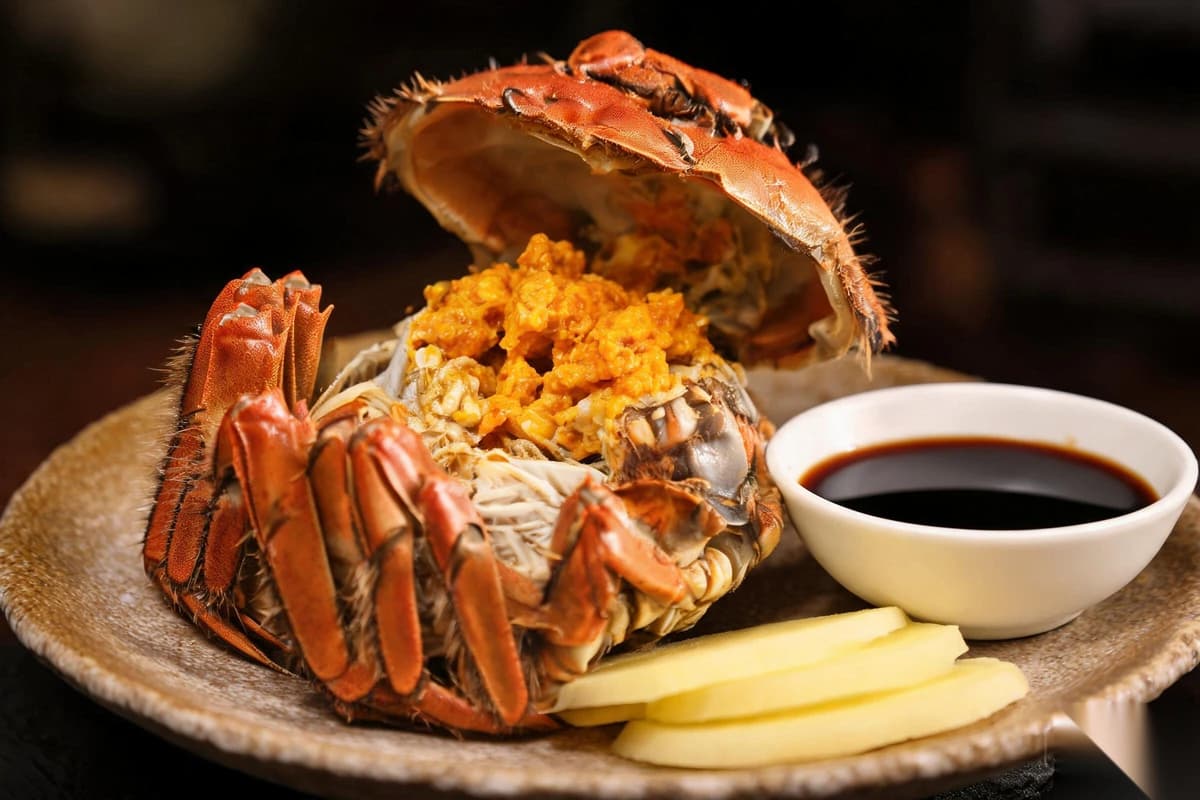
In the canals and lakes around Suzhou and Shanghai, a small, fuzzy-clawed crab begins its annual migration toward dinner tables across China. The hairy crab—dazhaxie—is not impressive to look at. It's palm-sized, covered in dark greenish-brown fur on its claws, and about as photogenic as a mud-covered rock. But inside, it holds something that inspires near-religious devotion: golden, custardy roe and sweet, delicate flesh that tastes faintly of chestnuts and freshwater.
The season runs from September to November, with female crabs prized in September for their roe and male crabs peaking in October for their richer, creamier interior. The best crabs come from Yangcheng Lake outside Suzhou, and restaurants and families will pay extraordinary prices for certified origin crabs during the peak.
Eating hairy crab is a ritual. The crab is steamed whole and served with a dipping sauce of ginger-infused black vinegar. You dismantle it with your hands, crack the shell, and spoon out the golden roe first—this is the prize, rich and briny and sweet all at once. Then you work through the body, extracting the flesh from each chamber. It takes time. It takes patience. It requires getting your fingers dirty and being okay with that. A proper hairy crab dinner might last two hours, and you might only eat two crabs. That's the pace it demands.
In Shanghai, specialty restaurants like Cheng Long Hang employ servers who will dismantle the crab for you with surgical tools, turning the whole experience into a performance. In Suzhou, you can visit the lakeside restaurants near Yangcheng Lake and eat crabs that were pulled from the water that morning. Wherever you go, pair the crab with warm Shaoxing wine and a simple vegetable dish—the crab is the star, and everything else is supporting cast.
Mooncakes and Mid-Autumn Festival
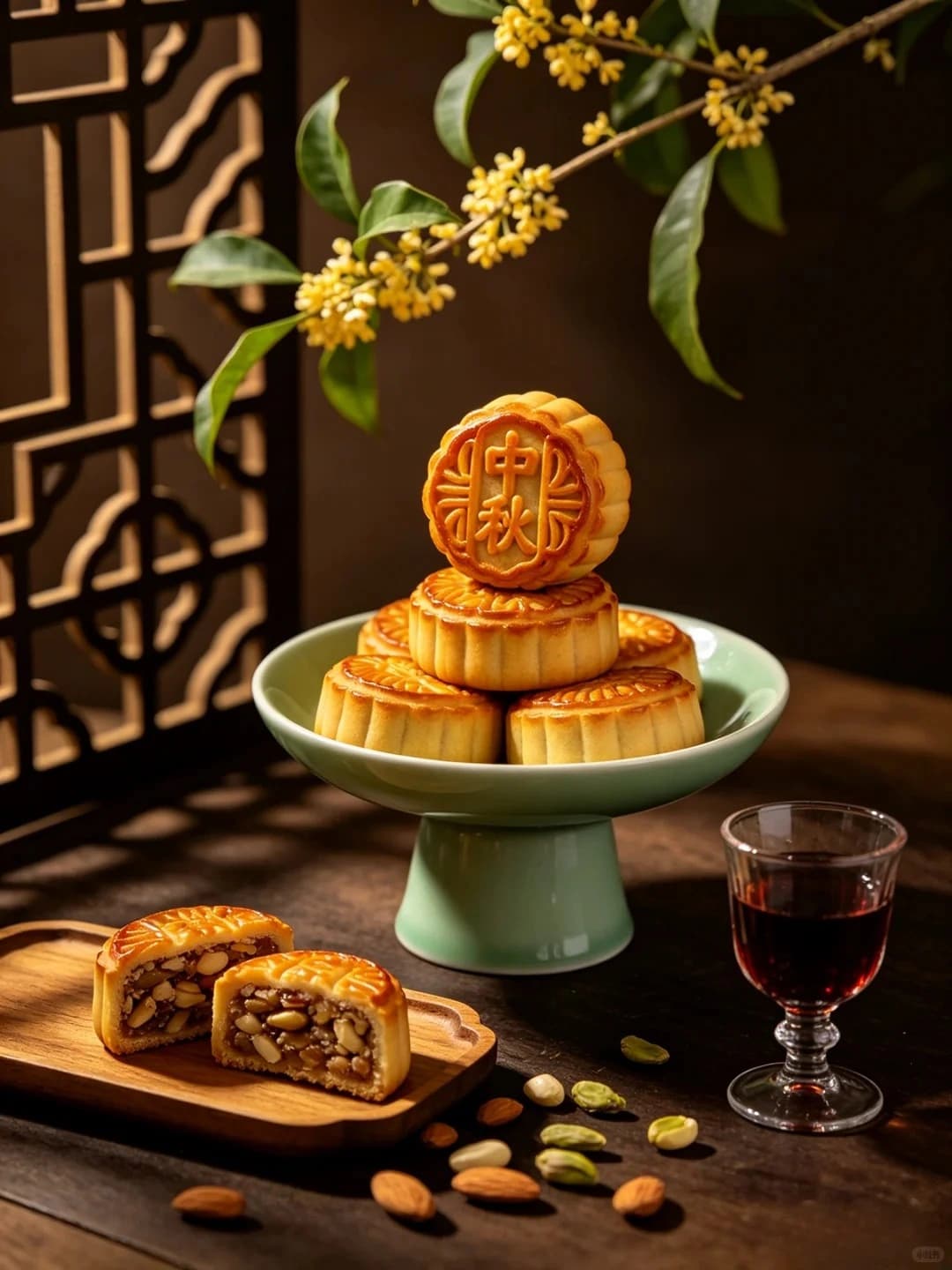
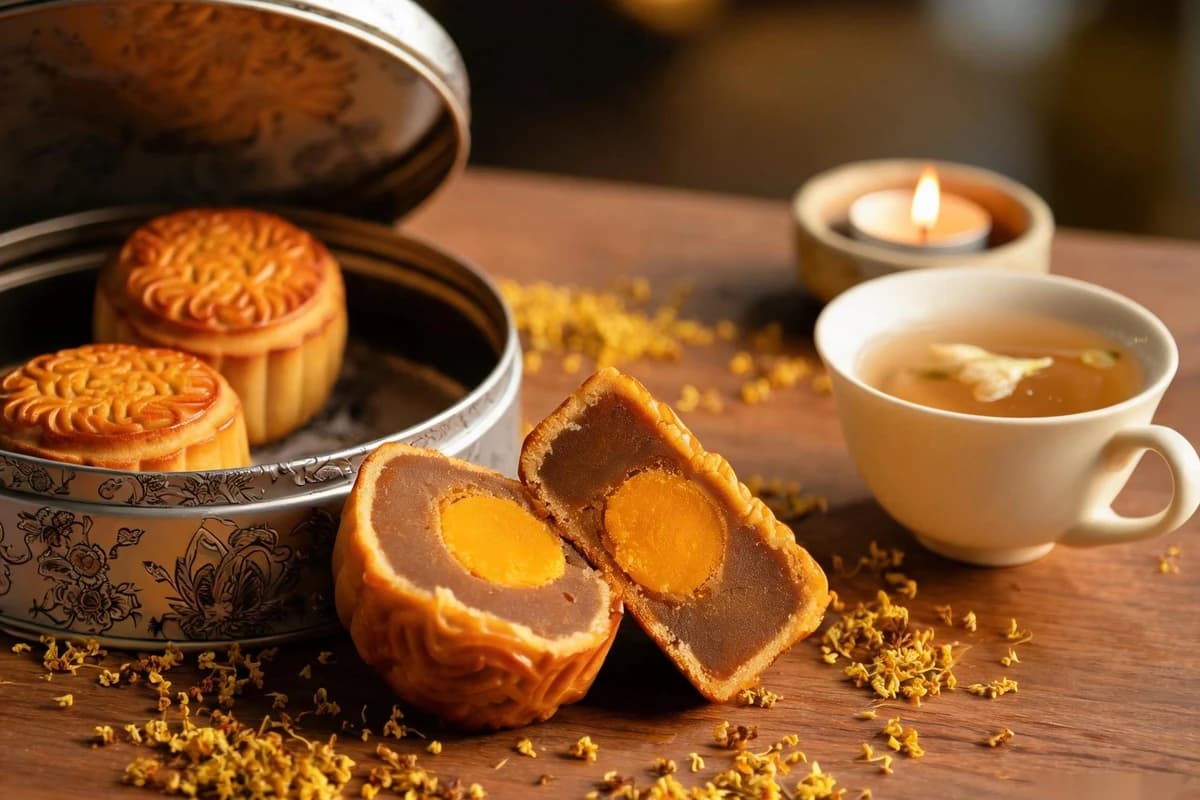
The Mid-Autumn Festival falls in September or October, and for weeks beforehand, every bakery, hotel, and tea house in China sells mooncakes. These are dense, ornate pastries filled with lotus seed paste, red bean, or mixed nuts, often with a salted duck egg yolk at the center representing the full moon.
Mooncakes are as much social currency as food. They're given as gifts, exchanged between business partners, brought to family gatherings. The traditional versions are heavy, sweet, and best eaten in small slices with tea. In recent years, modern variations have appeared—snow skin mooncakes, matcha mooncakes, even durian mooncakes—but the classic remains the classic for a reason.
If you're traveling during Mid-Autumn, you'll see mooncakes everywhere. Buy a single one from a bakery (not the elaborate gift boxes) and eat it outside under the actual full moon. It's the one time of year when the food and the calendar align perfectly.
Quick Autumn Hits
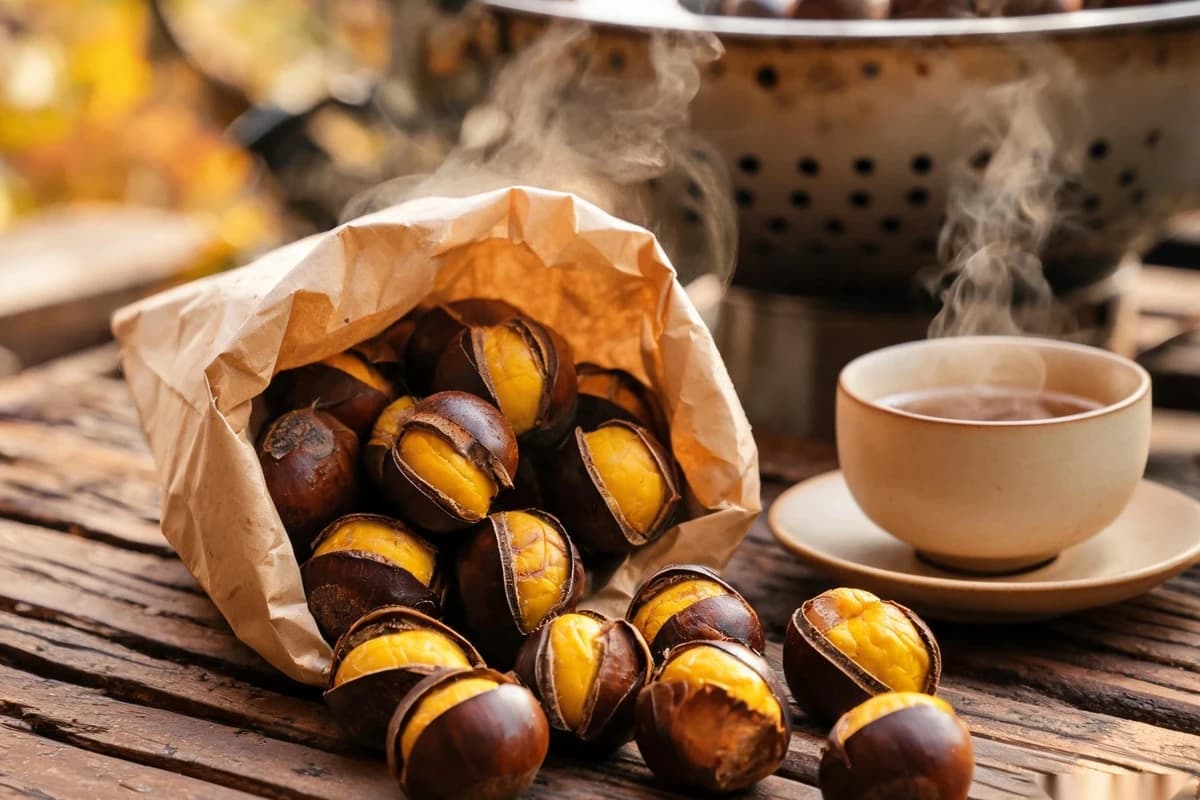
Chestnuts (栗子): Roasted chestnut vendors appear on street corners as soon as the weather cools. The smell of chestnuts roasting in black sand is the scent of Chinese autumn. Find them in Beijing, Shanghai, and cities across the north.
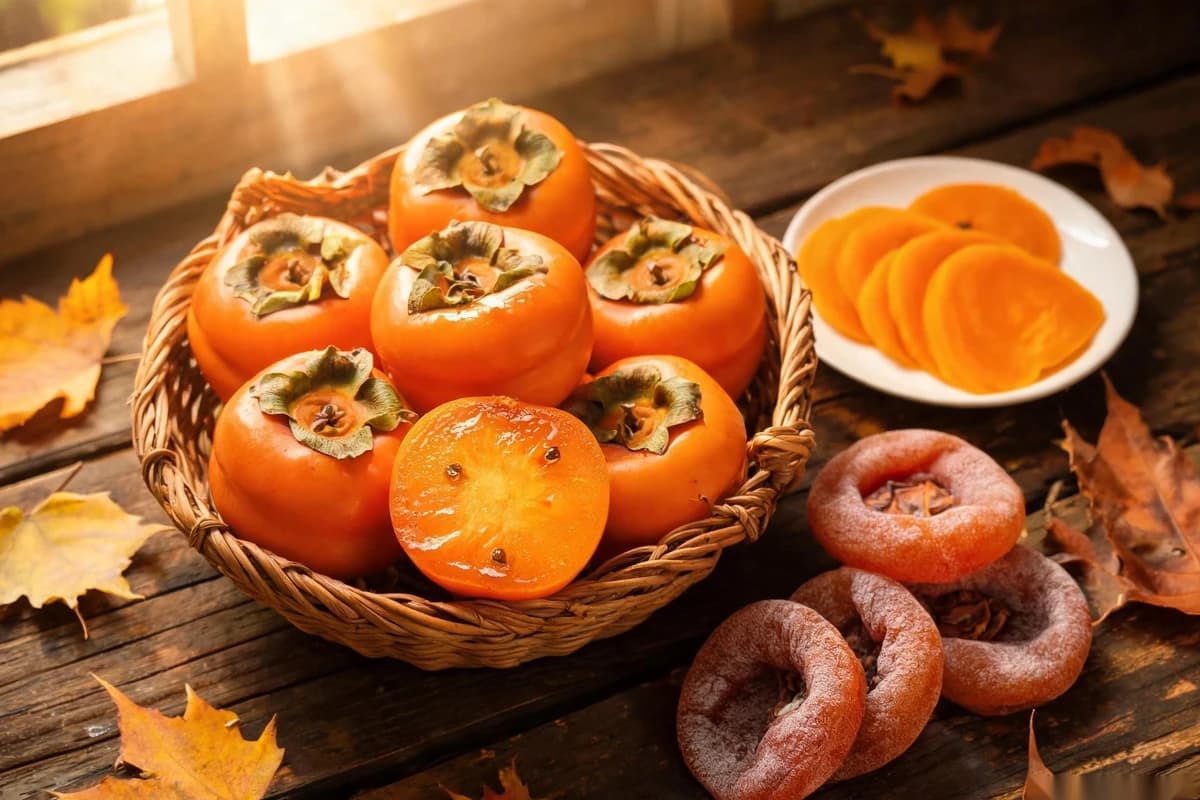
Persimmons (柿子): Fresh persimmons come into season in October, glowing orange and impossibly sweet when fully ripe. In Xi'an and across Shaanxi, dried persimmons are pressed into cakes and sold as a local specialty.
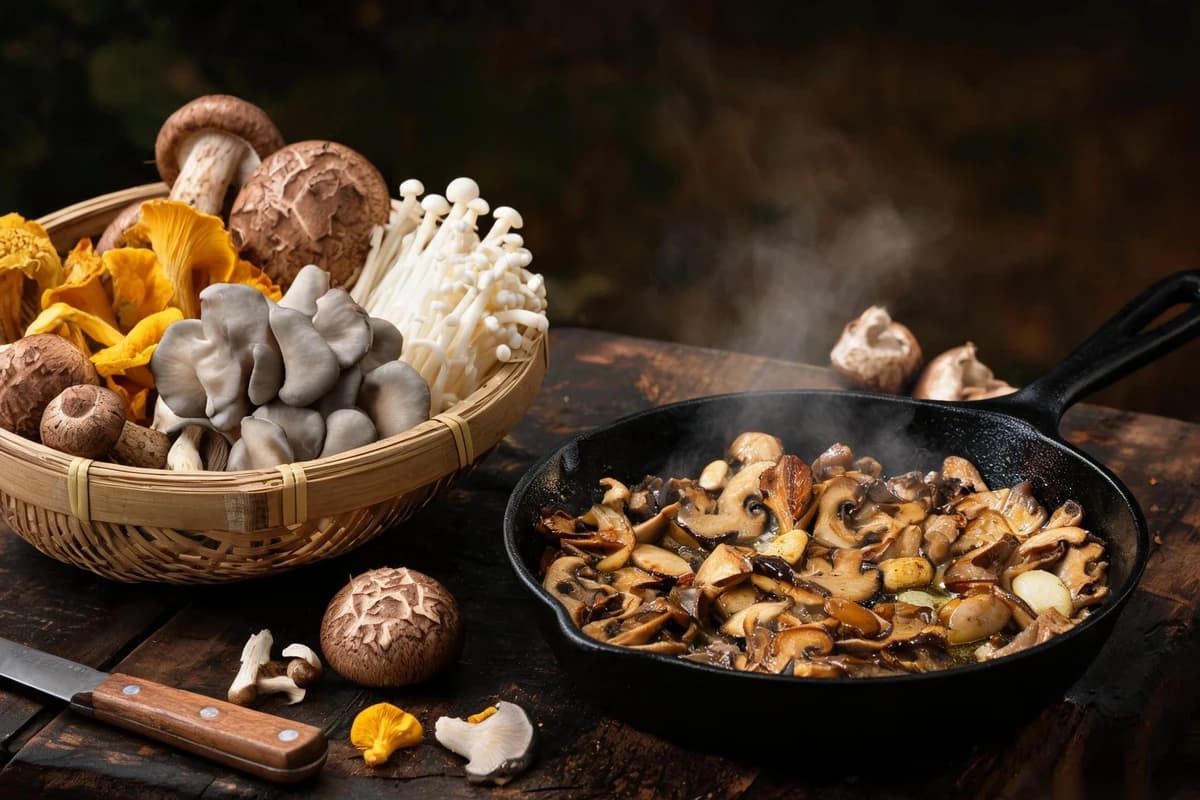
Autumn mushrooms: In Yunnan, autumn brings the tail end of the wild mushroom season—porcini, chanterelles, and the legendary matsutake. Mushroom hot pot is still available through October.
Winter: Hot Pot Everywhere, Dumplings, and the Season of Slow Cooking
Winter in China is not a season of deprivation—it's the season of depth. The cooking slows down. Broths simmer for hours. Clay pots emerge from storage. And hot pot, which was already a year-round obsession, becomes a near-daily ritual in every city where the temperature drops below freezing.
Hot Pot as a Winter Institution
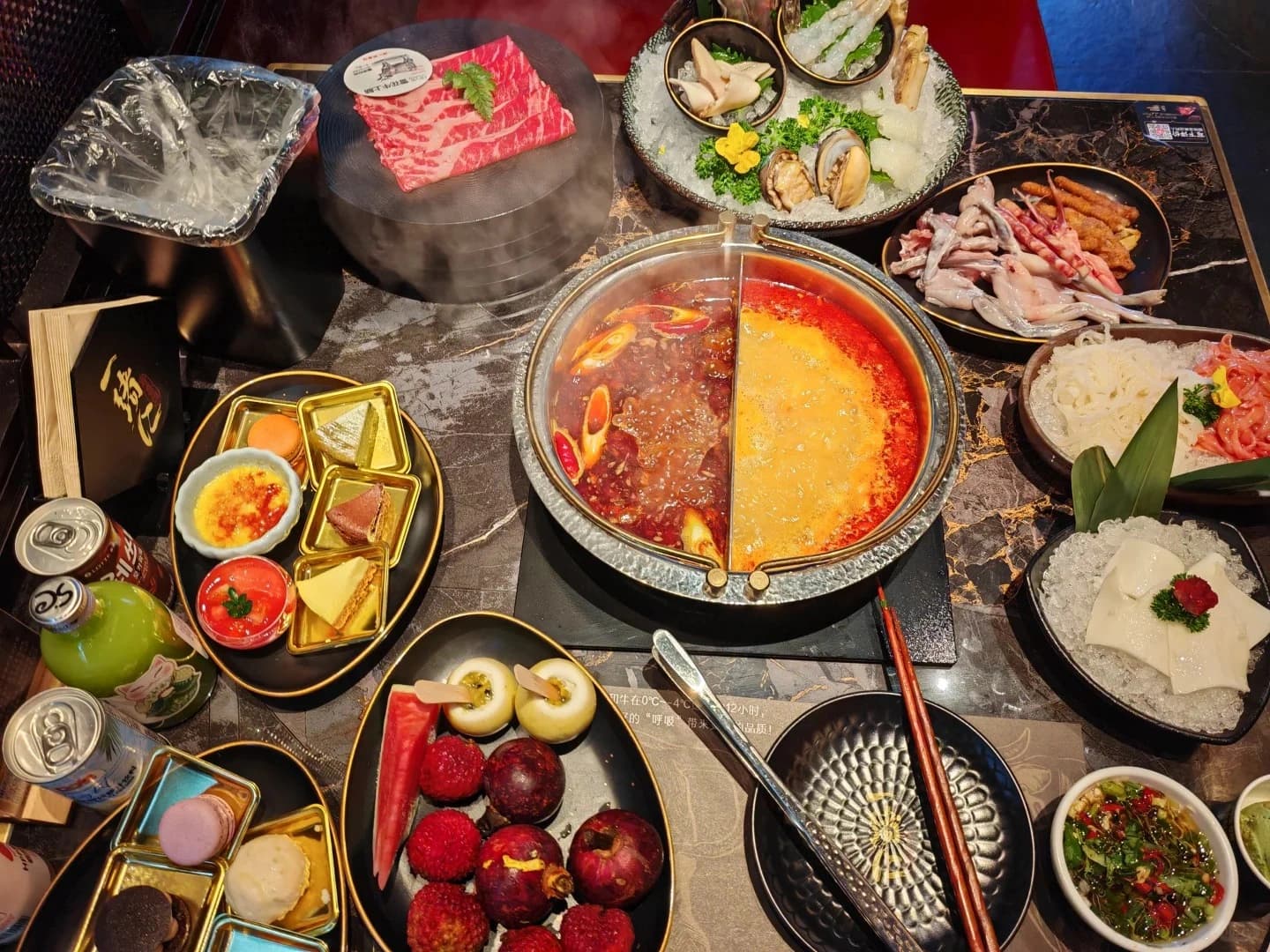
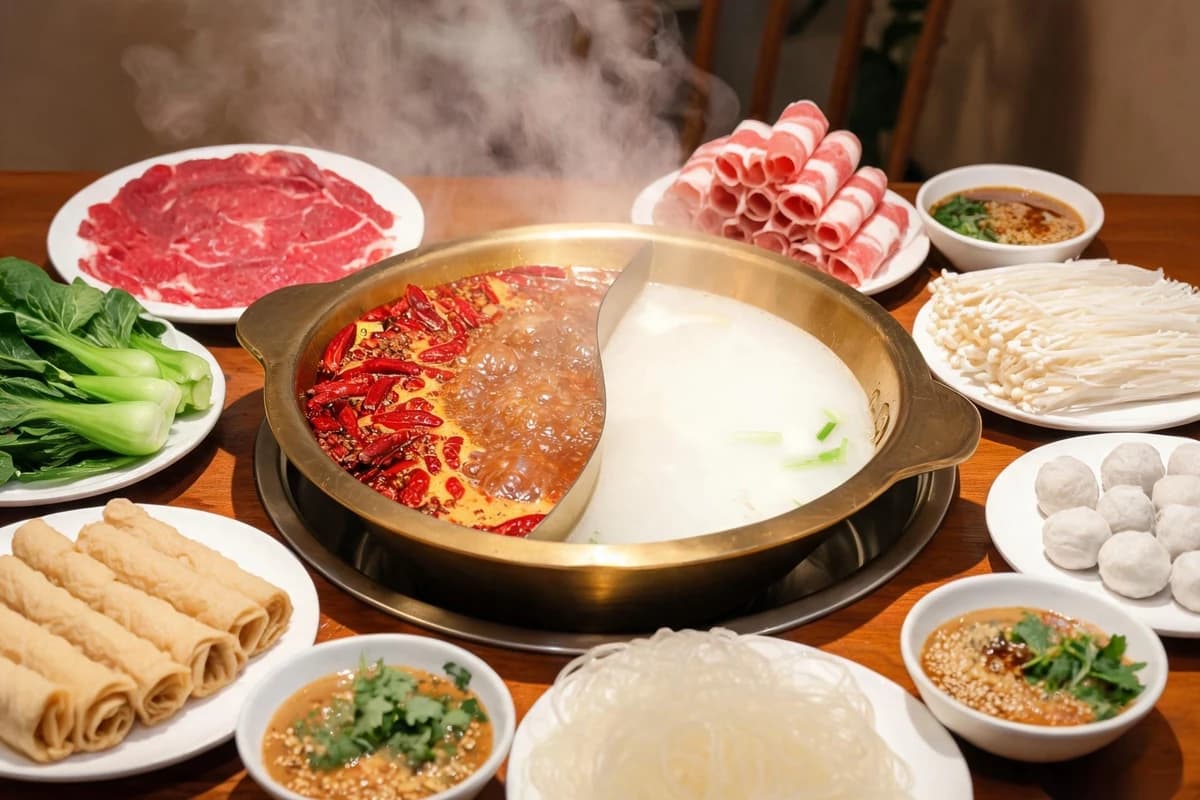
Hot pot doesn't go away in summer—but in winter, it becomes essential. The experience changes: the steam rising from the pot feels like a warm blanket, the chili oil broth seems to heat you from the inside, and the act of huddling around a bubbling cauldron with friends or strangers feels like the most natural thing in the world.
This is the season to explore hot pot's regional variations. In Beijing, winter belongs to instant-boiled mutton (shuan yangrou)—a northern style where thin slices of lamb are swished through a copper pot of clear broth, then dipped in sesame sauce. It's simpler than Sichuan hot pot but no less satisfying, and the focus on lamb gives it a distinctively northern character. In Chongqing, winter hot pot is an endurance sport, the spice turned up to maximum, the cold outside forgotten the moment you step into a restaurant. In Chaoshan, winter is when beef hot pot feels most right—the clear broth and freshly carved beef providing warmth without weight.
Dumplings for the New Year
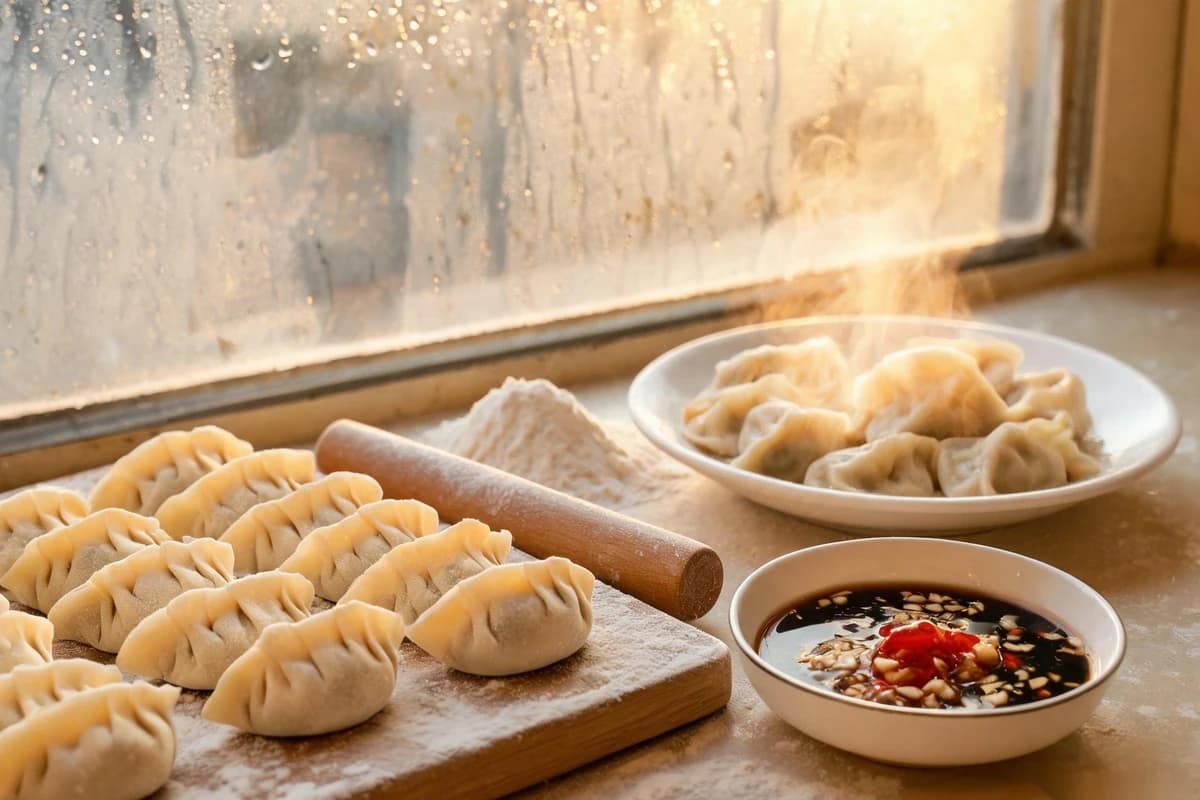
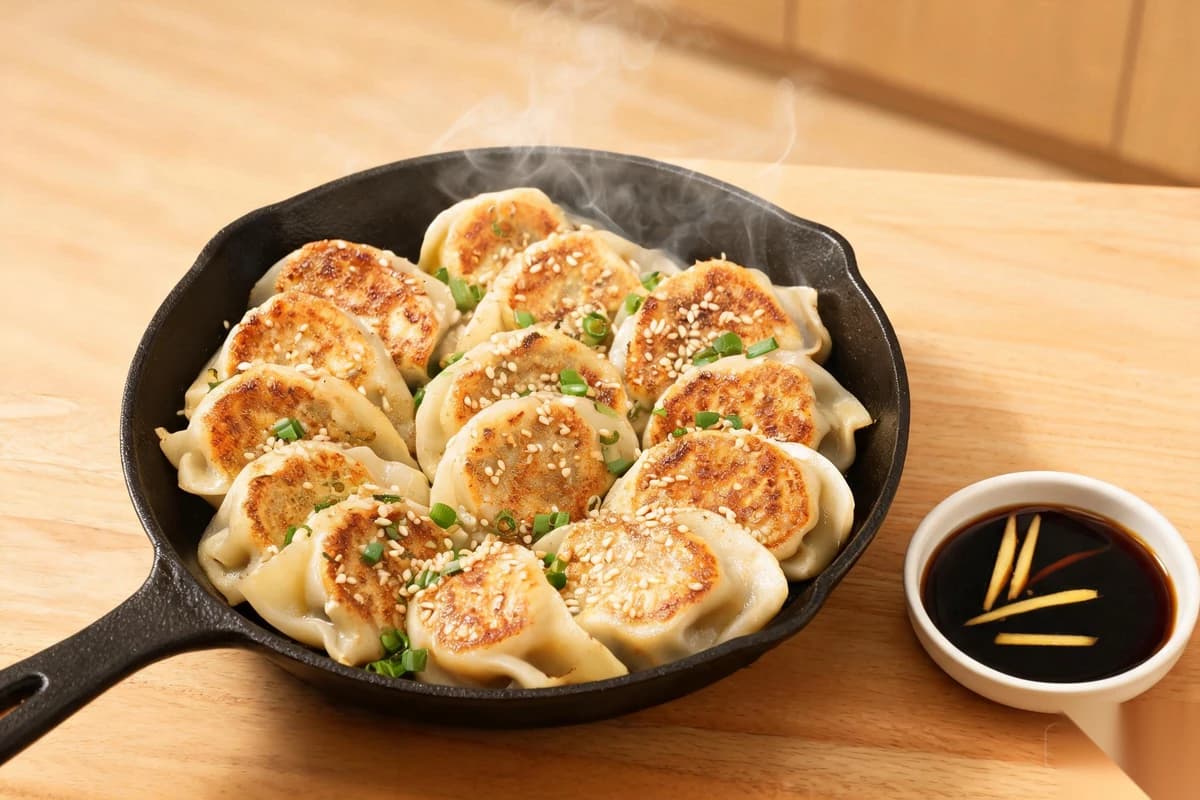
Winter is dumpling season, and Chinese New Year (January or February, depending on the lunar calendar) is dumpling ground zero. Across northern China, families gather to make jiaozi from scratch—rolling dough, mixing fillings, pleating edges—and the act of making them together is as important as eating them.
The classic filling is pork and cabbage, but variations are endless: lamb and carrot, beef and onion, shrimp and chive, egg and tomato. They're boiled, steamed, or pan-fried, served with black vinegar and chili oil, and eaten in quantities that seem physically impossible until you realize you've been eating them for an hour.
If you're traveling during Chinese New Year, be aware that many small restaurants close for the holiday as staff return home. But this is also when you can find special holiday foods and festival markets. In Beijing, temple fairs during the New Year period serve festive street foods—candied hawthorn, fried dough treats, lamb skewers—in a carnival atmosphere.
Quick Winter Hits
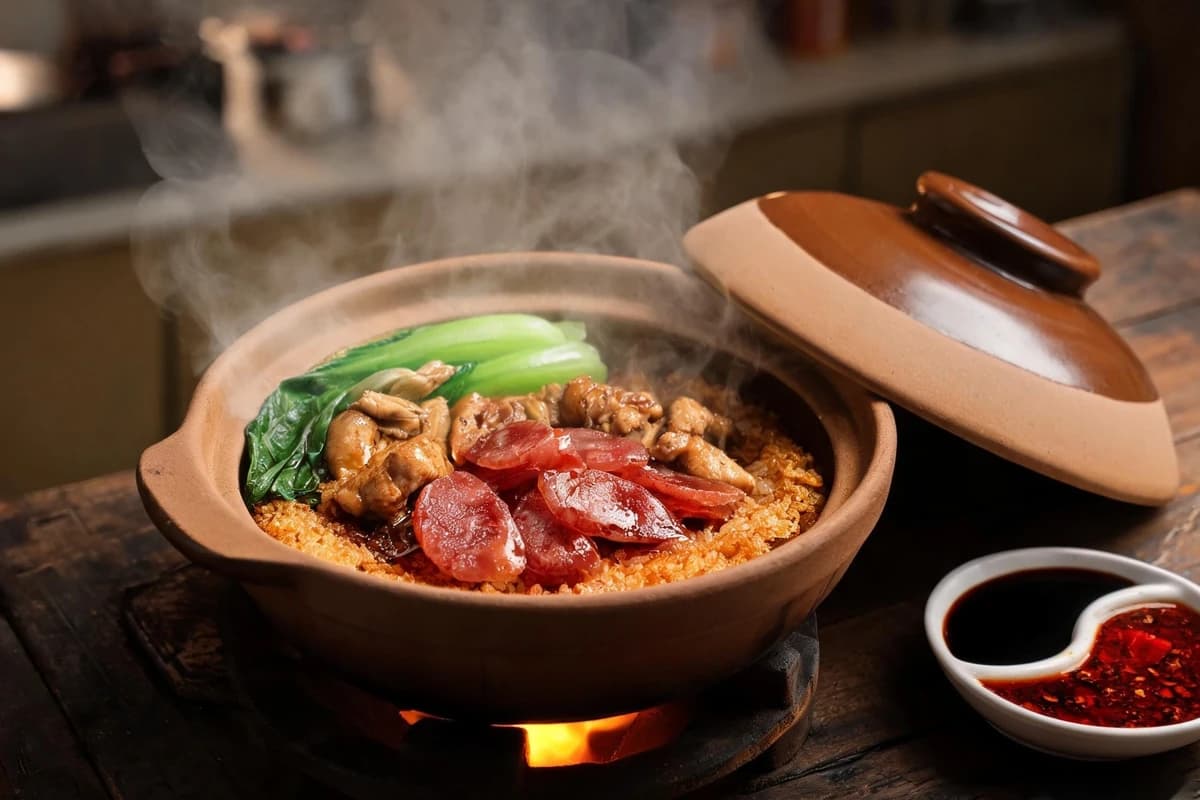
Clay pot dishes (煲仔): In Guangdong, winter is the season for clay pot rice—rice cooked in a clay pot until the bottom forms a crispy crust, topped with Chinese sausage, cured pork, and vegetables. The pot arrives sizzling, and you scrape the crispy bits from the bottom. Those crispy bits are the point.
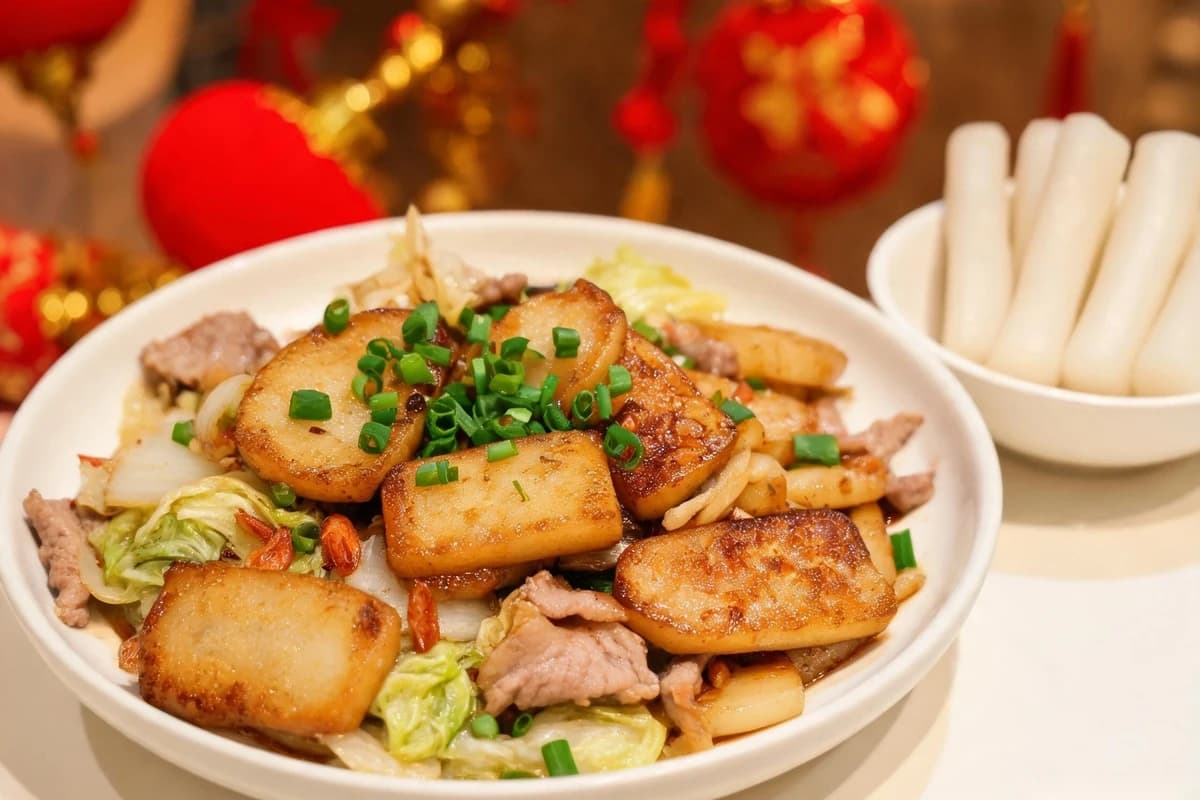
Sticky rice cakes (年糕): A New Year specialty across the country, niangao are chewy, sweet or savory rice cakes that symbolize rising fortune in the coming year. In Shanghai, they're stir-fried with pork and vegetables; in the south, they're sweetened with brown sugar.
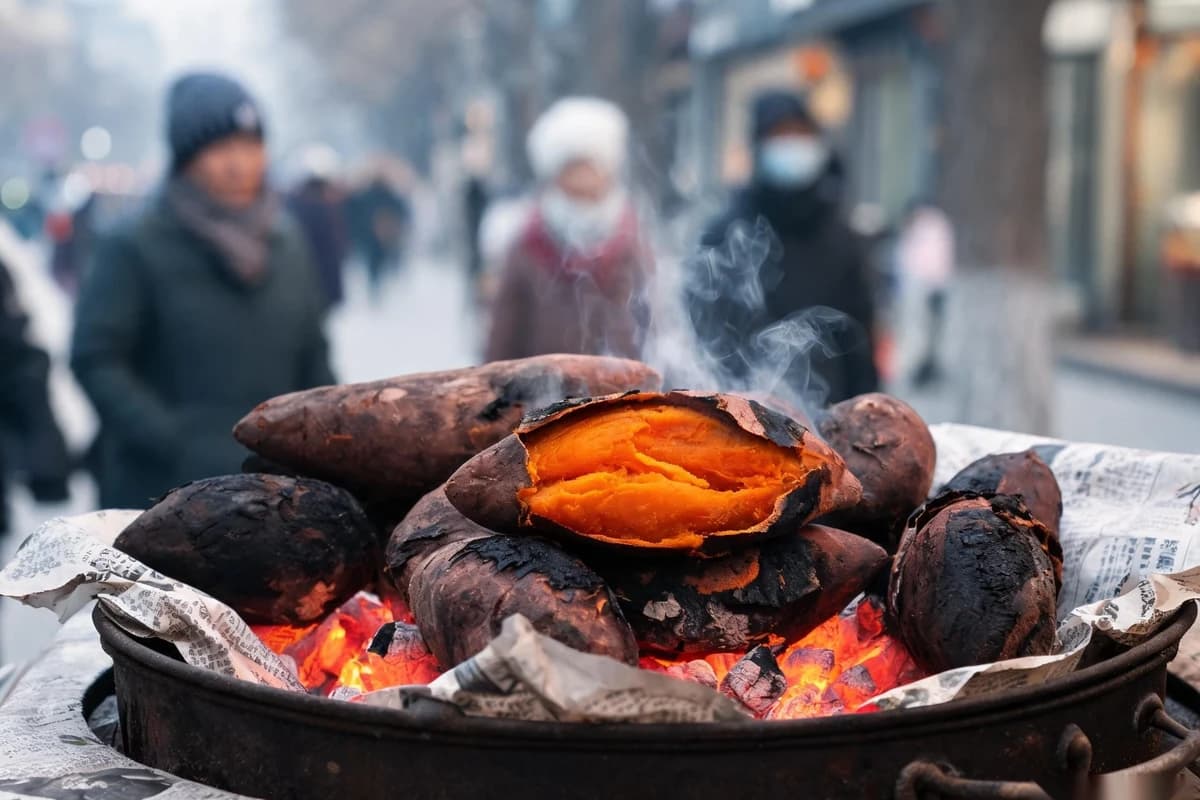
Roasted sweet potatoes (烤红薯): Winter street vendors across China sell roasted sweet potatoes from metal drums, the skins charred and the insides molten and caramelized. They're handed to you in a scrap of newspaper, too hot to hold, and they taste like winter itself.
How to Eat in China: Practical Tips, Etiquette, and Survival Phrases
You've found your flavor. You've chosen your cities. You've timed your trip for hairy crab season or spring bamboo shoots. Now comes the part that no amount of food research can fully prepare you for: actually sitting down at a Chinese table and figuring out how this all works.
What You Need to Know Before You Sit Down
Rule 1: Hot Water Is the Default Drink
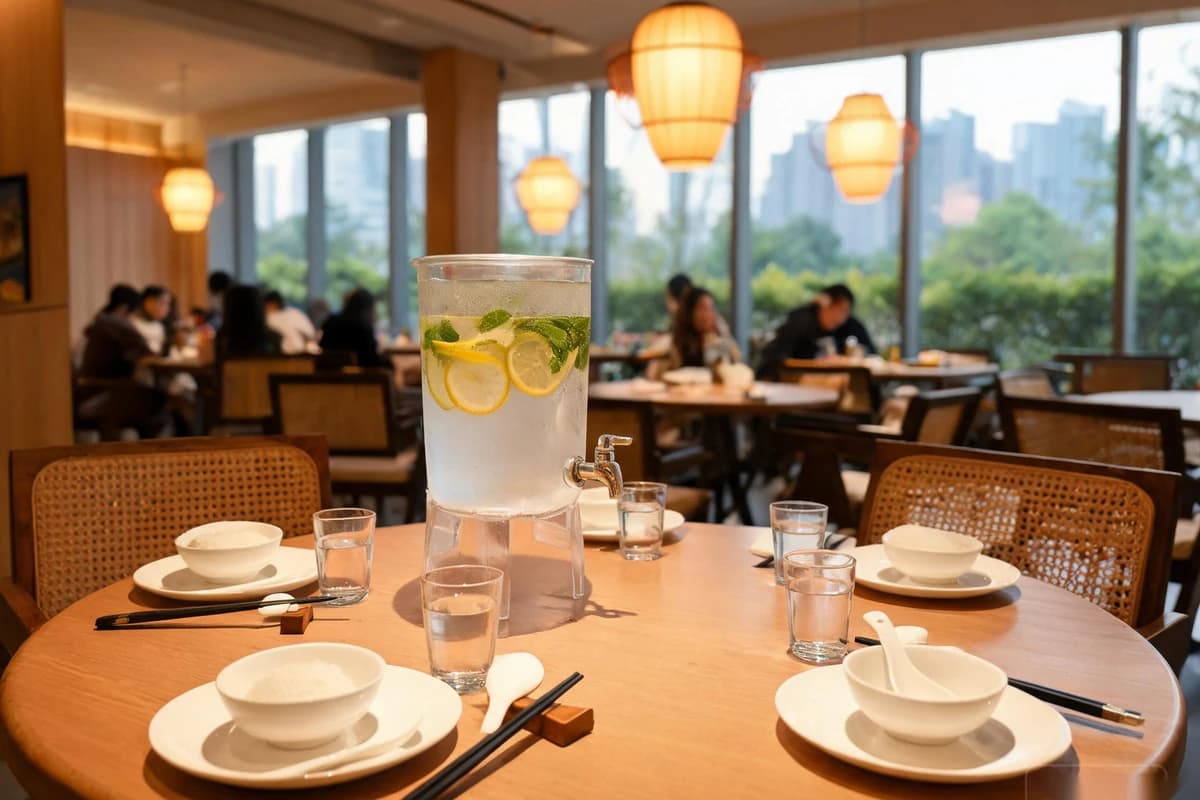
In most Chinese restaurants, you'll be served hot water or tea, not cold water. This isn't a test of your fortitude—it's a cultural norm rooted in traditional Chinese medicine, which holds that cold drinks disrupt digestion.
Rule 2: Tissues Are Not Always Free
Restaurant napkins are not a given in China. Many casual and mid-range restaurants charge a small fee (usually 1-2 RMB) for a sealed pack of tissues on the table. Locals often carry their own. Bring a small pack of tissues in your bag—it'll save you minor annoyance and you'll use them constantly, not just at meals.
Rule 3: Meals are shared
Dishes are placed in the center of the table, and everyone takes small portions with their own chopsticks. You don't order an individual entree—the group orders a collection of dishes, usually a mix of meat, seafood, vegetables, and soup. This changes the rhythm: you eat slower, pace yourself across multiple dishes, and pay attention to what others are taking.
Chopsticks: What Actually Matters
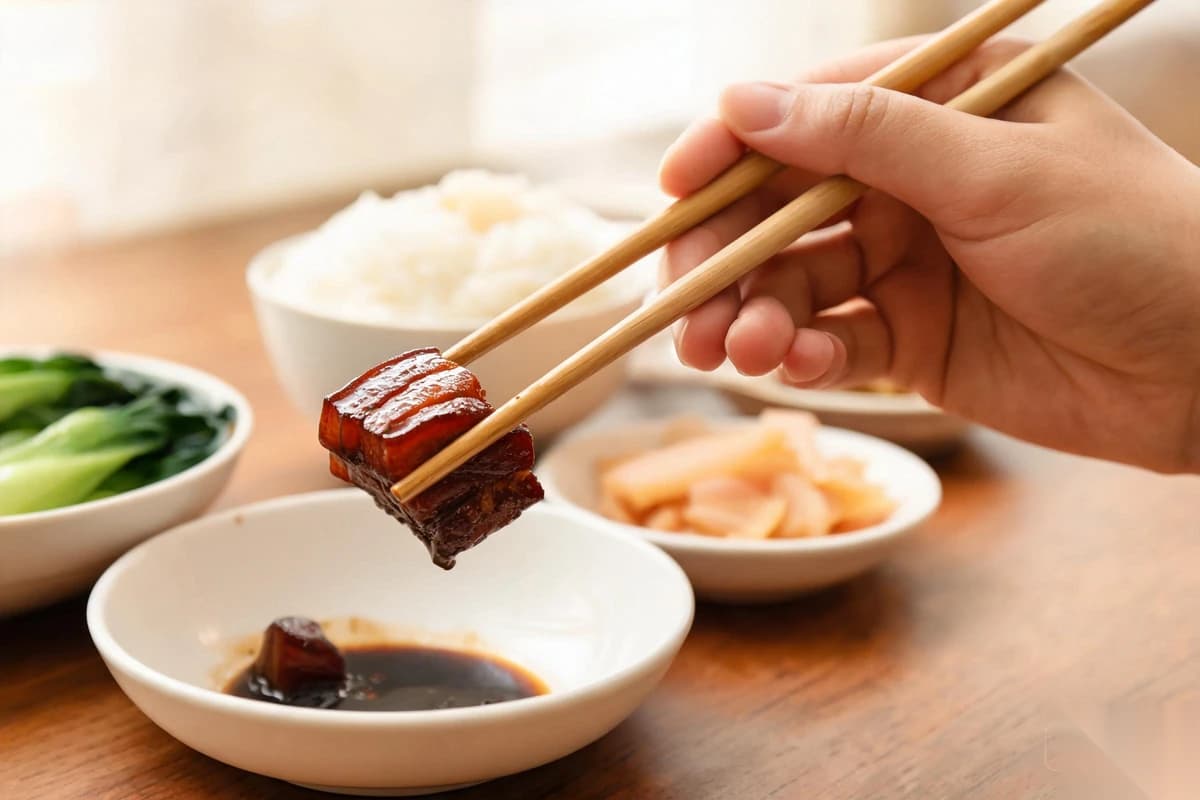
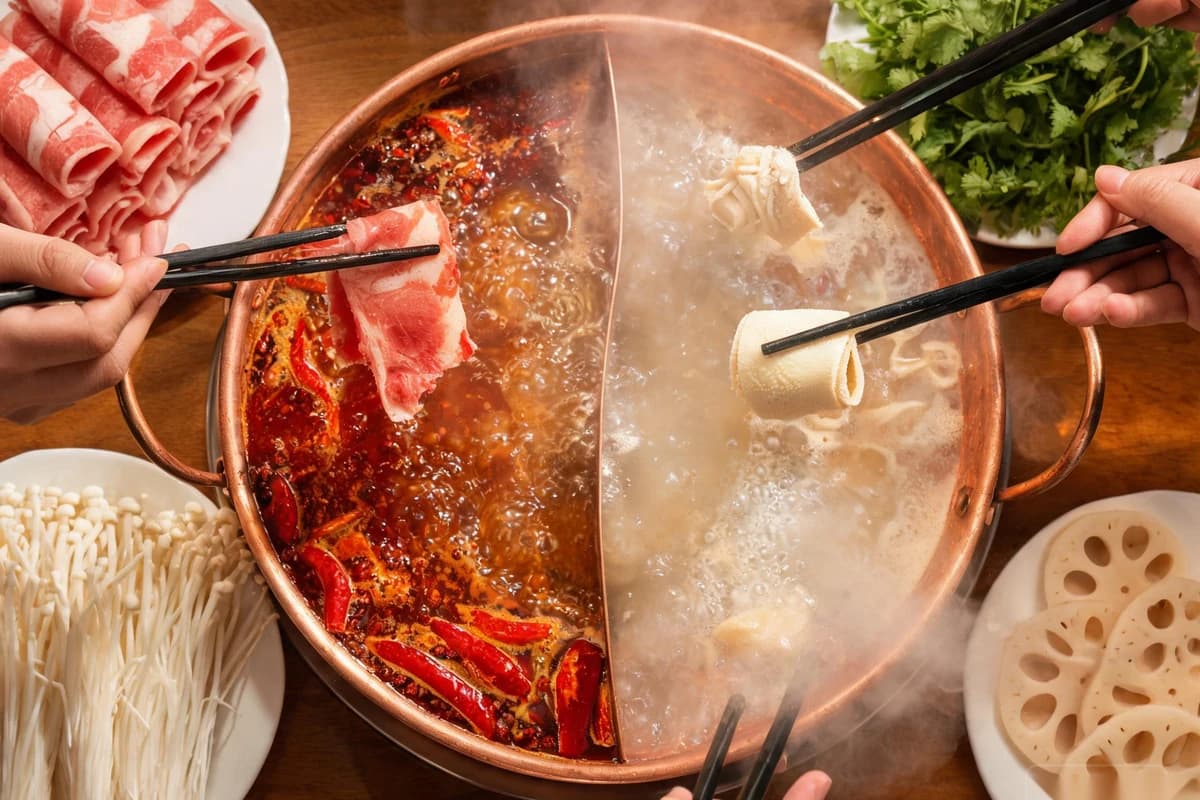
Don't stick chopsticks upright in rice.
This is one of the most important chopstick rules to remember. A pair of chopsticks standing vertically in a bowl of rice resembles incense sticks used during funerals, making it an unlucky and uncomfortable image for many Chinese people. Always place your chopsticks horizontally across your bowl or on the chopstick rest provided.
Don't point with chopsticks.
Chopsticks are considered an extension of your hands, so pointing them at people or waving them around while talking is seen as impolite. If you want to gesture or explain something, put your chopsticks down first—especially when dining with elders or in a more formal setting.
Don't dig around in shared dishes.
Chinese meals are usually shared, so avoid searching through a dish to find your favorite piece. Instead, pick up food from the nearest area of the plate or take what is offered to you. In more traditional settings, repeatedly turning food over with your chopsticks can be considered poor table manners.
Use serving chopsticks when provided.
Many restaurants provide a separate pair of serving chopsticks or a serving spoon for shared dishes. Use them to transfer food onto your own plate rather than eating directly from the communal dish. This is especially important when dining with a larger group or in higher-end restaurants.
Don't tap your chopsticks on the bowl.
Tapping chopsticks against a bowl is considered rude and is traditionally associated with beggars asking for food. While this may not be noticed in casual situations, it is best avoided, especially in family meals or formal dining environments.
Don't cross your chopsticks on the table.
Leaving chopsticks crossed can carry negative associations because crossed chopsticks resemble certain funeral symbols. When you finish eating, place them neatly side by side on the chopstick rest or beside your bowl.
Learn how to handle shared dishes gracefully.
In Chinese dining culture, taking food for others—especially elders or guests—is a common way of showing hospitality. Don't be surprised if someone uses their serving chopsticks to place food on your plate. It is usually a gesture of kindness, not an invasion of personal space.
How to Order Food Without Speaking Chinese
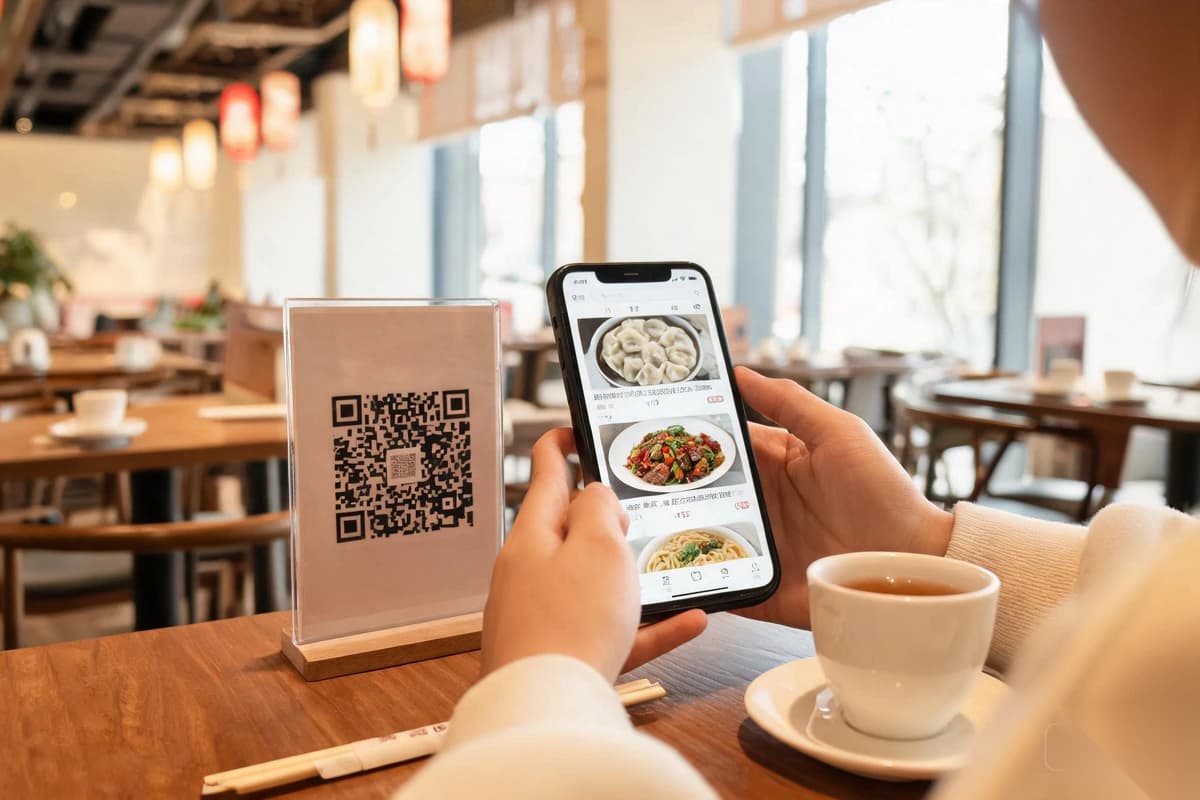
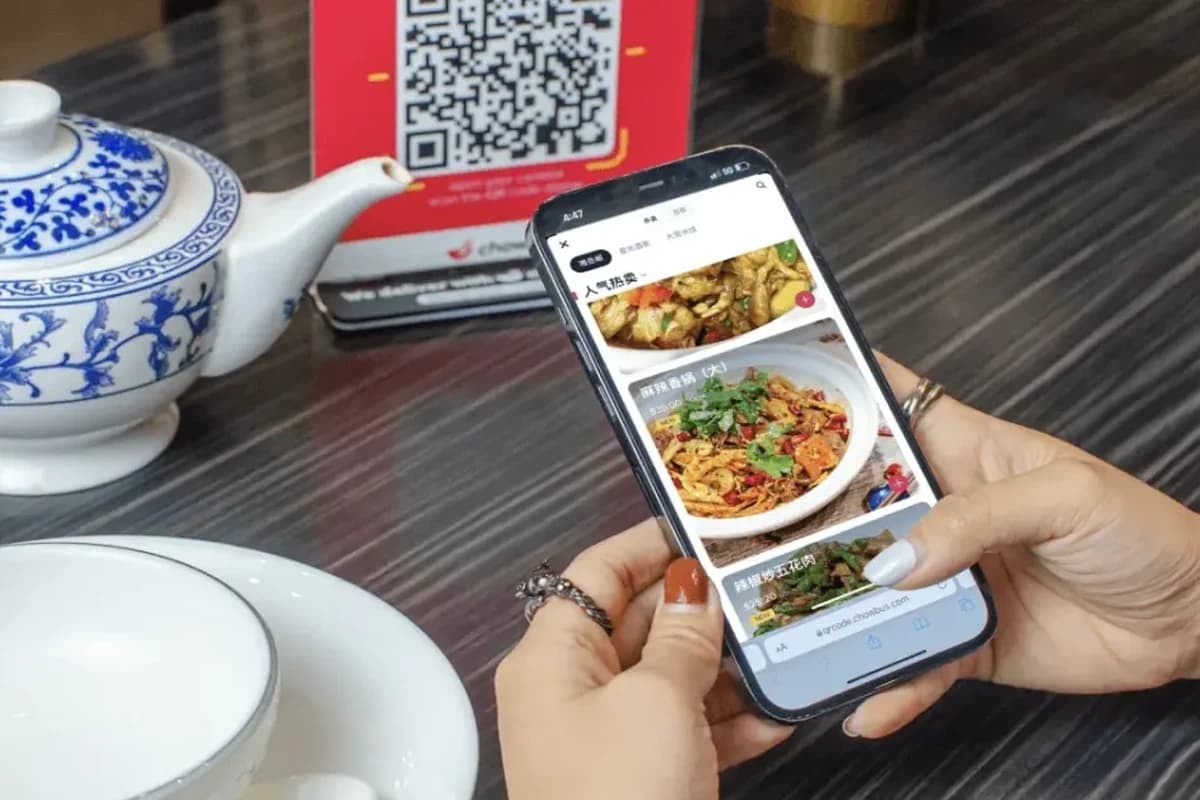
This is the section that causes the most anxiety before a trip and turns out to be the least problematic once you're actually there. China's food culture is visual and point-friendly. You have options.
Method 1: Point at What Others Are Eating
This is the most reliable move in any restaurant. Look around at what other tables have ordered. Find something that looks good. When the server comes, point at it. Smile. Nod. You have just successfully ordered food in China.
Method 2: The Picture Menu
Many restaurants, especially in areas that see tourists, have menus with photographs. Point at pictures. It works. If a dish looks spicy, it probably is. If it looks like something you can't identify, it might be chicken feet or tripe—ask yourself if you're feeling adventurous before pointing.
Method 3: The Translation App Scan
Apps like Google Translate, Baidu Translate, or Pleco can scan Chinese characters through your phone camera and give you a rough translation. Results vary—menus are poetic and often defy literal translation—but you'll usually get enough information to know if you're ordering beef or intestine.
Method 4: The Pre-Saved Phrases
Before your trip, save a few key phrases on your phone:
English | Chinese | Pronunciation |
What do you recommend? | 有什么推荐的吗? | Yǒu shénme tuījiàn de ma? |
Not too spicy, please | 不要太辣 | Bú yao tài là |
One of these, please | 我要这个 | Wǒ yào zhè ge |
The bill, please | 买单 | Mǎi dān |
Thank you | 谢谢 | Xiè xiè |
This is delicious | 这个很好吃 | Zhè ge hěn hǎo chī |
Method 5: Embrace the Unknown
Sometimes you'll order something and have no idea what it is until it arrives. This is not a failure of the system. This is part of the experience. The worst-case scenario is you try something unexpected. The best case scenario is you discover your new favorite food.
How to Spot a Good Restaurant
In China, the standard rules for choosing restaurants don't always apply. Online reviews can be gamed. The most beautiful storefront might serve the most mediocre food. Here's how to find the real thing.
The Crowd Test
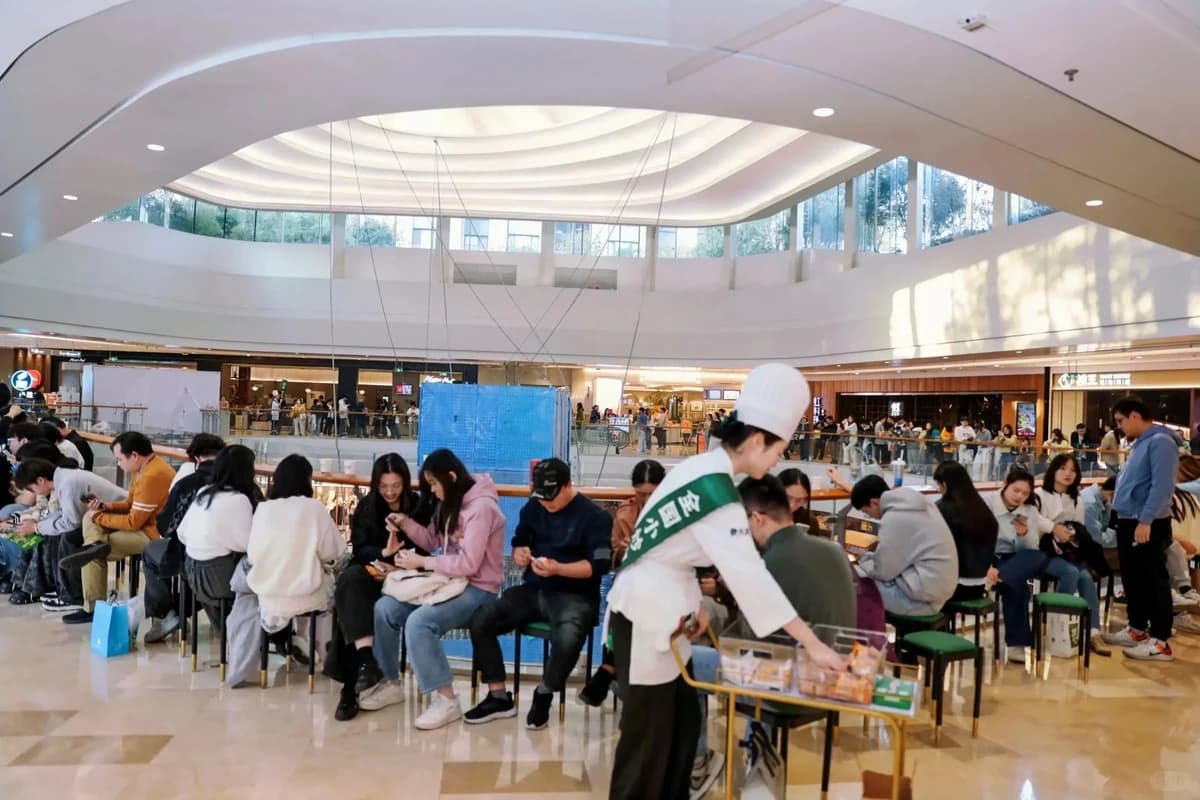
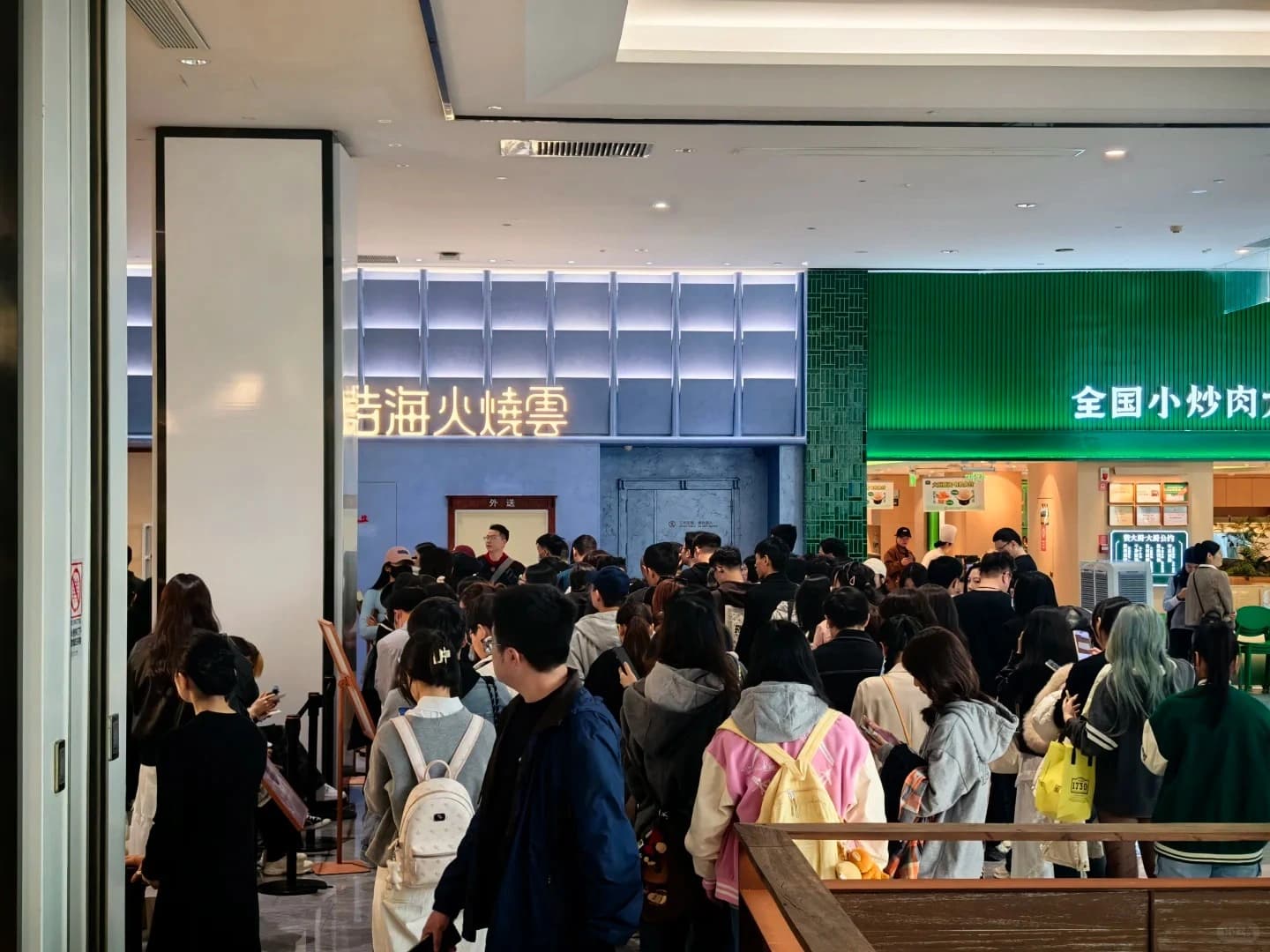
Go where the locals go. A restaurant that's full of Chinese families at 7 p.m. on a weekday is almost certainly good. A restaurant that's empty at peak hours is empty for a reason. The line outside is not an inconvenience—it's a recommendation.
The Handwritten Menu
Some of the best meals in China happen in restaurants with no English menu, no photos, and sometimes no printed menu at all—just characters scrawled on a whiteboard or strips of paper taped to the wall. These places are cooking for locals, not tourists. If you can handle the ordering challenge, the food will almost always be worth it.
The Dianping and Map Check
If you want a digital backup to the crowd test, open Dianping or a map app like Amap or Baidu Maps. Dianping is China's version of Yelp, and while individual reviews can be gamed, the overall rating and volume tell a useful story: a restaurant with a 4.5+ rating and hundreds of reviews is reliably solid, while anything below 4.0 is a gamble.
Even more telling is the map data. On Chinese map apps, restaurants display a "collection" or "bookmark" count—how many users have saved the restaurant. A local favorite might have a modest 4.2 rating but tens of thousands of saves. That gap between rating and save count is often where the real gems hide: places too beloved to need perfect scores.
Navigating Dietary Restrictions and Preferences
"I Don't Eat Spicy Food"
If you can't handle heat, you have options. Cantonese, Jiangsu, Zhejiang, and Fujian cuisines are all generally mild. Even in Sichuan, you can ask for dishes to be made "not spicy" (不辣, bú là)—but understand that the kitchen may still include a baseline level of chili that Western palates consider spicy.
And if you've been traveling for a week and your stomach just wants something familiar—don't hesitate to eat Western food. China's major cities have excellent Western restaurants, from casual pizza and burger joints to high-end Italian and French dining.
Vegetarian and Vegan Diets
This is genuinely challenging. Chinese cuisine does not have a strong vegetarian tradition in most regions—meat, seafood, and animal-based broths are fundamental to most cooking. Even vegetable dishes are often stir-fried in lard or finished with oyster sauce.
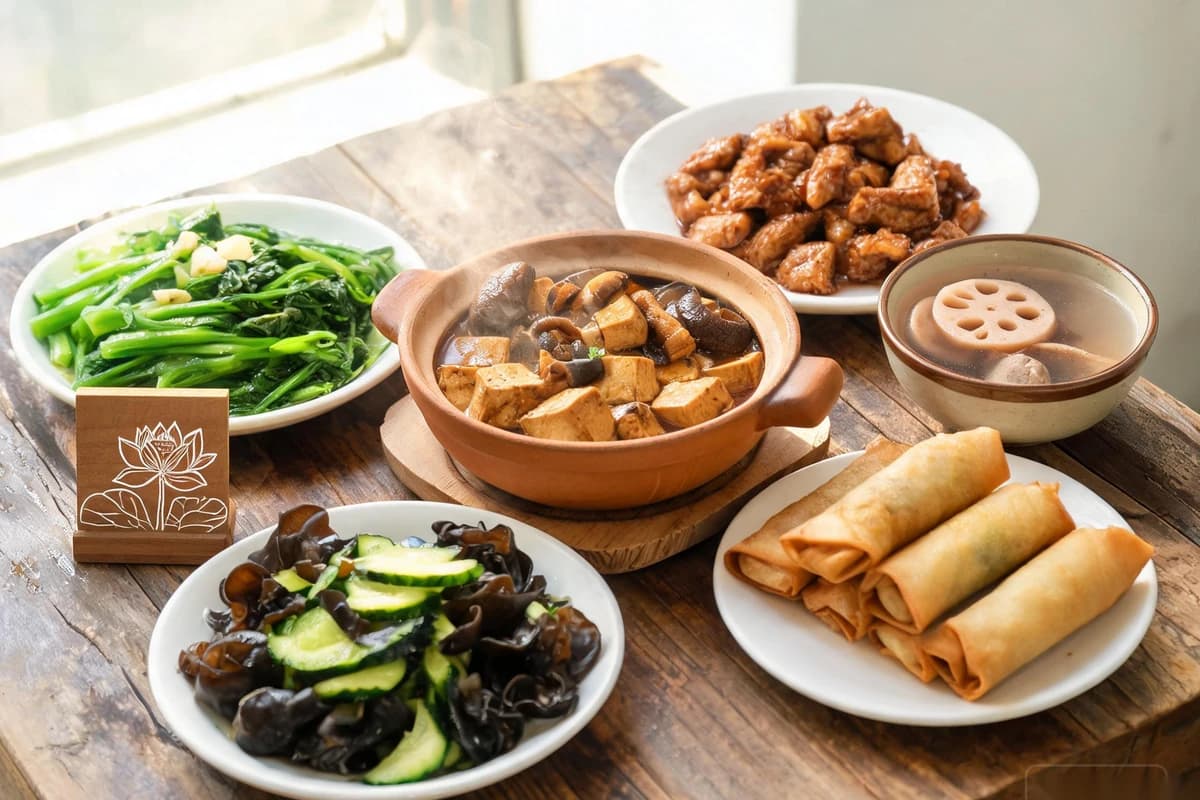
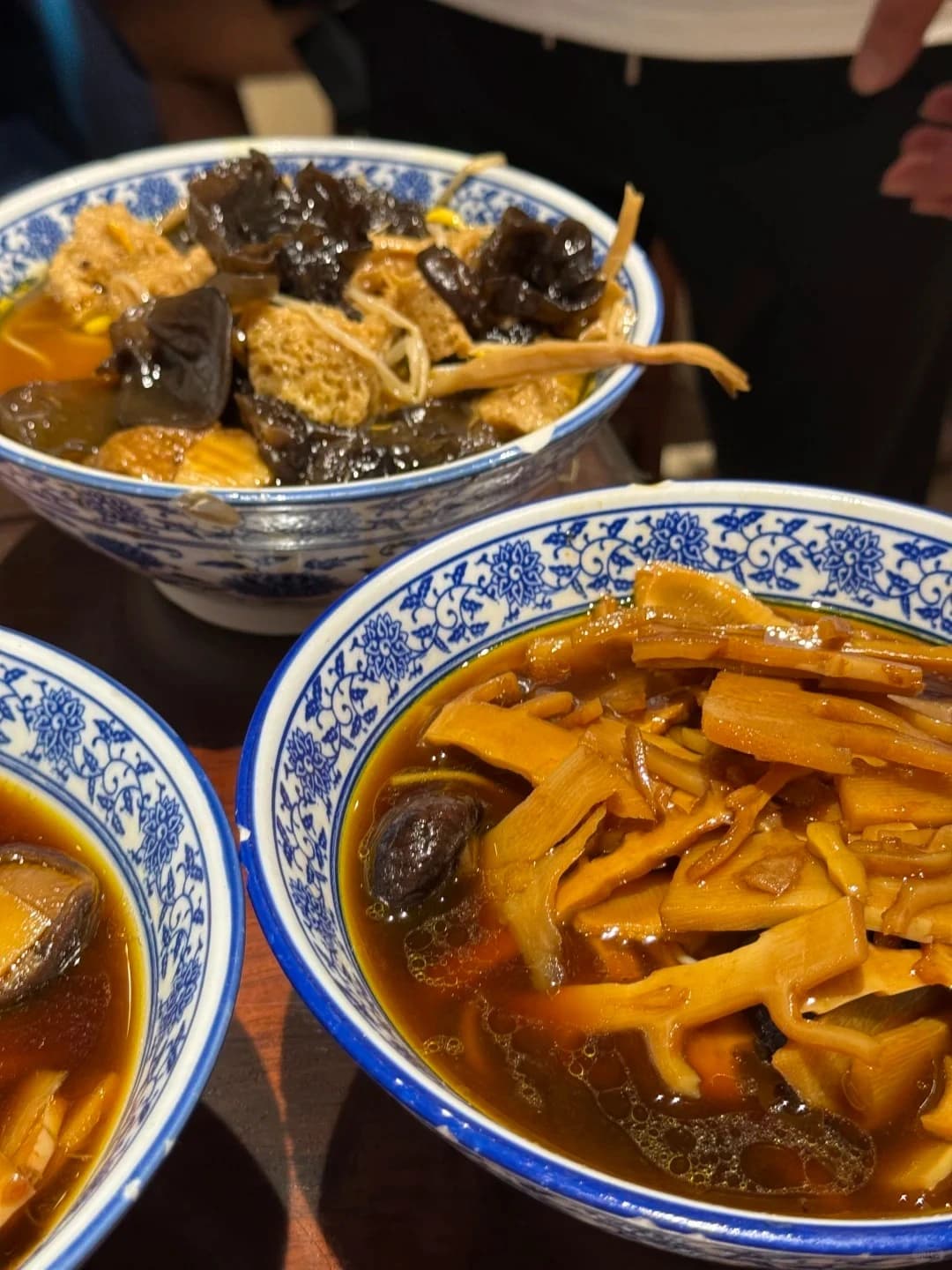
Buddhist vegetarian restaurants (素菜馆, sù cài guǎn) exist in most cities and offer completely plant-based meals, often with remarkably convincing meat substitutes made from tofu and gluten. These are your safest bet.
In regular restaurants, communicating "no meat" is possible but "no animal products of any kind" requires significant language skills or a very patient translation app.
Halal
The good news: halal food is widely available in China, particularly in cities with significant Muslim populations. Look for restaurants with "清真" (qīng zhēn) signs—this indicates halal certification.
In Xi'an, Lanzhou, and throughout Xinjiang and Ningxia, halal food is the default in many areas. Lanzhou beef noodle shops across the country are almost universally halal. Even in cities with smaller Muslim populations, you can usually find halal noodle shops and lamb-focused restaurants.
Food Allergies
This is the hardest category. Awareness of food allergies is low in China compared to Western countries, and the concept of cross-contamination is not widely understood.
If you have severe allergies, carry a card with your allergies written clearly in Chinese characters. Show it at every restaurant. Be prepared for servers to not fully understand—the cultural framework around allergies is simply different.
For severe nut allergies, be particularly cautious; peanuts and peanut oil are ubiquitous in Chinese cooking.
Paying, Tipping, and Leaving
Tipping Is Not Common
Unlike many Western countries, tipping is not a common practice in China. In most restaurants, hotels, taxis, and everyday services, the listed price is the final amount you pay, and leaving extra money is usually not expected.
How to Pay
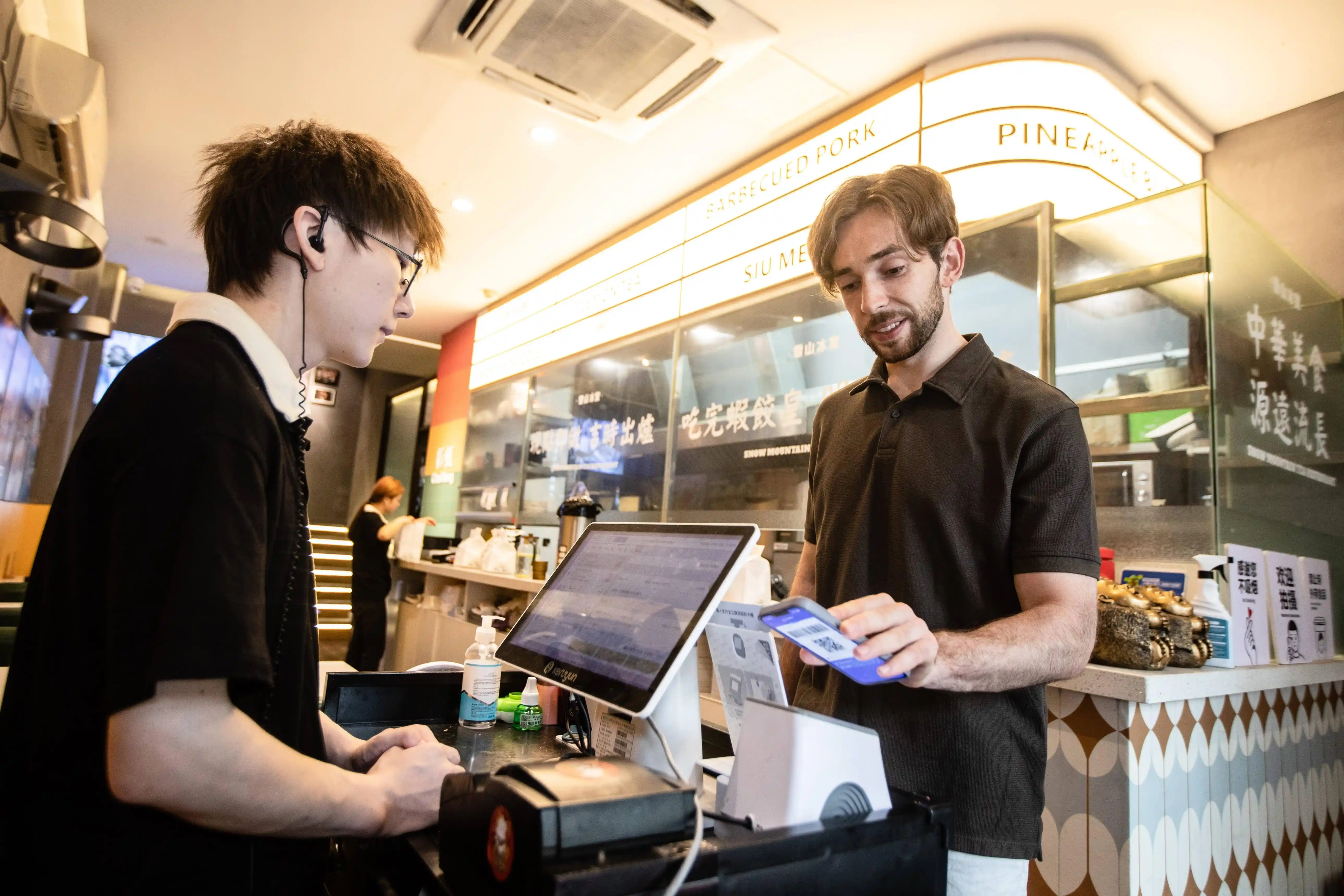
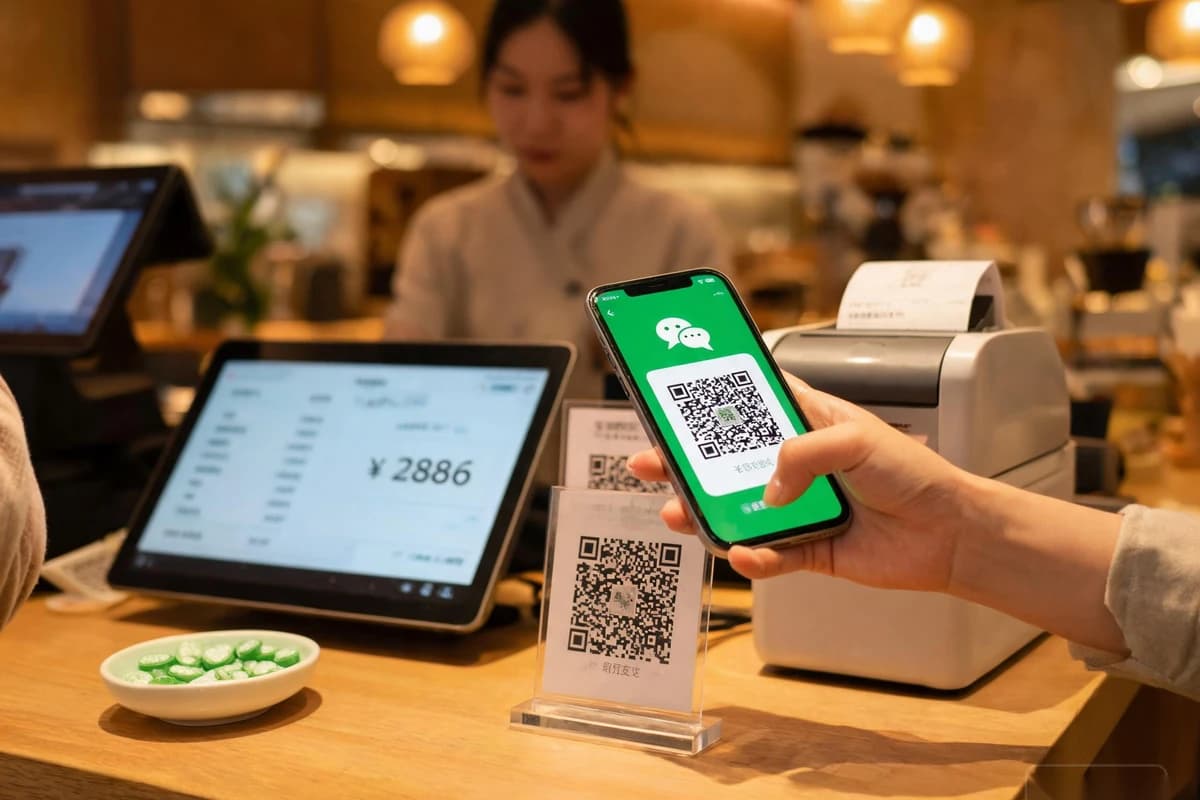
Cash is increasingly rare. Most transactions in China happen through WeChat Pay or Alipay—mobile payment platforms that are ubiquitous. As a foreign traveler, you may or may not be able to set these up depending on your bank and the current regulations. Visa and Mastercard are accepted at larger hotels and upscale restaurants but not reliably at small local spots. Carry some cash as backup. If you can link a foreign card to Alipay or WeChat Pay before your trip, your life will be significantly easier.
Getting the Bill
To ask for the bill, say "买单" (mǎi dān) or make a writing gesture in the air—the universal sign language for "check please." In casual restaurants, you often pay at the counter rather than at your table. If you're unsure, watch what other diners do.
A Note on Food Safety
The question every traveler asks: "Is street food safe in China?"
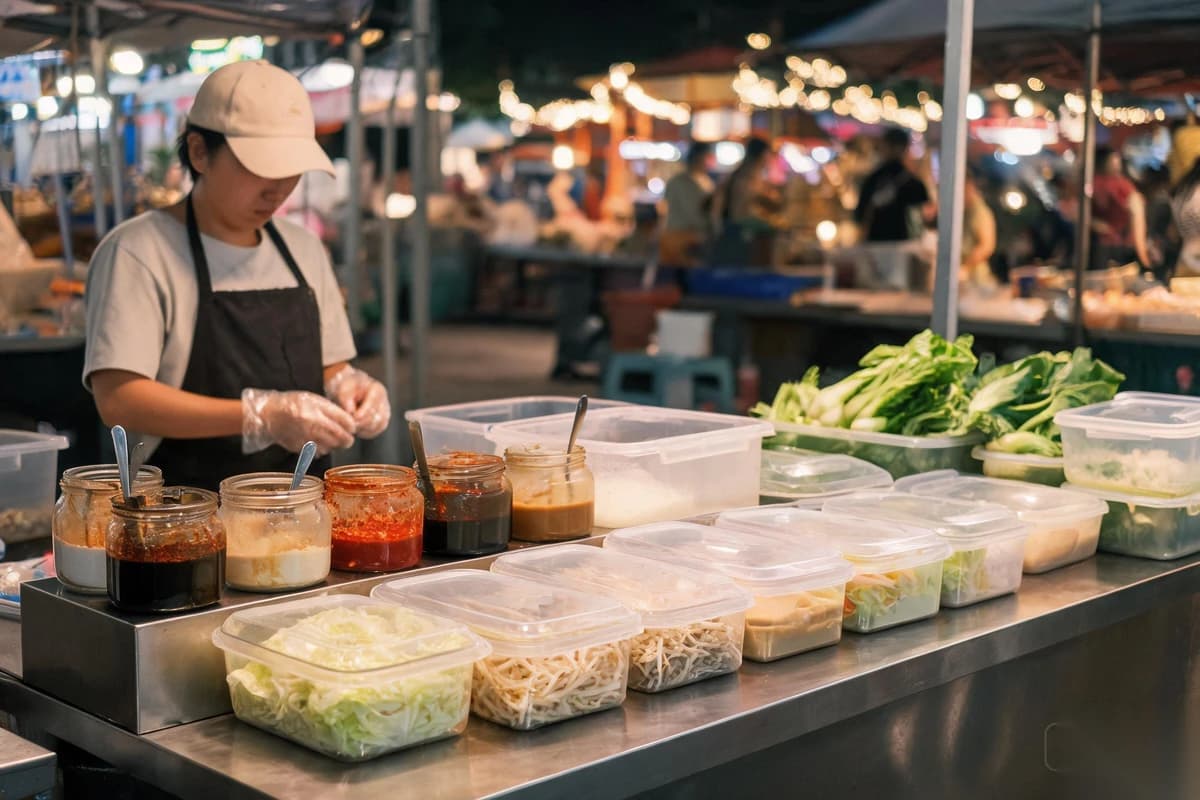
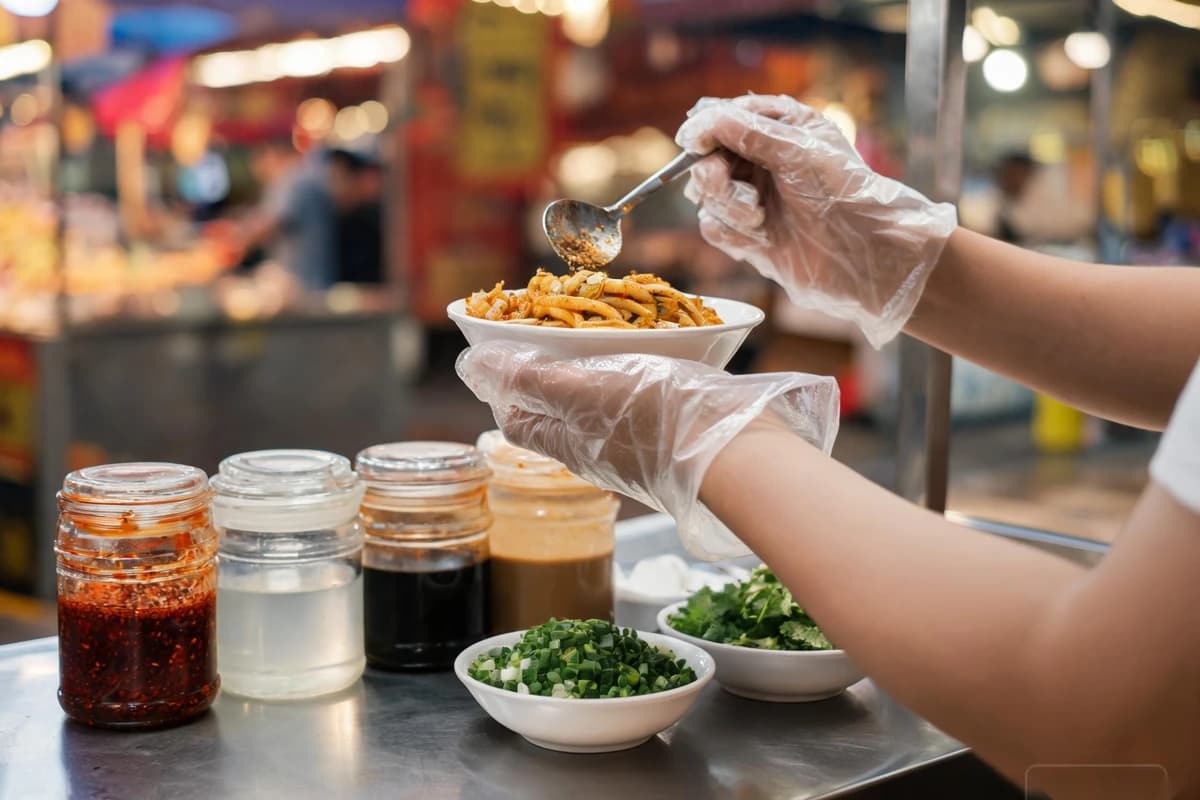
The honest answer: street food in China is generally safe, with the same caveats you'd apply anywhere. Look for stalls with high turnover—if locals are lining up, the food hasn't been sitting around. Avoid stalls where raw and cooked ingredients are handled together without separation. Watch for vendors who are clearly taking pride in their setup, with clean surfaces and organized ingredients.
Tap water is not safe to drink anywhere in China. Boiled water, which you'll be served at every restaurant, is perfectly safe. Ice in drinks at reputable establishments is made from purified water, but at street stalls, you might want to skip the ice.
Most travelers experience some degree of digestive adjustment when eating in China—not because the food is unsafe, but because your gut microbiome is encountering an entirely new set of ingredients and bacteria. This is normal. It passes. Carry basic stomach medication if you're concerned, and ease into the street food rather than eating everything on day one.

Traveler Discussions
Questions from travelers