
The best time to visit Hangzhou is often said to be spring or autumn, but the reality is a little more nuanced. Early March can still feel chilly, late September may bring lingering summer heat and humidity, and the most beautiful autumn colors often arrive in November rather than October.
So, when should you actually plan your trip? This guide breaks down Hangzhou weather by month, explores what each season has to offer, and highlights the best times to enjoy the city's famous West Lake scenery, seasonal landscapes, and local festivals. You'll also find practical advice on crowds, travel costs, what to pack, and how to make the most of your visit when it rains.
What Is the Best Time to Visit Hangzhou?
1.1 The Two Winning Windows
Looking at Hangzhou's seasonal weather patterns, natural scenery, and typical tourist crowds, two travel windows stand out as the best times to visit. Both offer a particularly good balance of comfortable temperatures, clear views, seasonal highlights, and relatively manageable crowds.
Window One: Late March to Mid-April (20–25 days)
Temperature: 12–22°C (54–72°F) — the most consistent spring weather in eastern China.
What you get: Plum blossom fading out, cherry coming in, peach trees opening along the Su Causeway, and the year's first Longjing tea already picked. The lake is green, the air is clear, and half the city seems to have taken the afternoon off to sit by the water. Late March also opens the Prince Bay (Taiziwan) tulip show — free, but reservation-only, and covered in detail in Section 8.2.
The catch: Rain. Hangzhou records rain on about 16 days in both March and April, so bring a small umbrella. Light rain is genuinely good weather here — the crowds disappear, and the mist does the rest.
Window Two: Mid-October to Mid-November (30 days)
Temperature: 9–22°C (48–72°F) — warm afternoons, cool evenings, and much less rain than spring.
What you get: Osmanthus scenting the air at Manjuelong in late October, red maples at Jiuxi in early November, and the plane trees on Beishan Street turning gold by mid-month. The light is clean, the water is clear, and the lake finally looks like the photographs.
The catch: The first week of October is National Day — the worst week of the year to be anywhere near West Lake. Wait until October 8. After the holiday ends, crowds collapse by 70–80%, hotel prices drop overnight, and the city breathes again.
Everything else is a trade-off. January and February are cheap and empty but damp and cold. July and August are brutal and crowded but offer the best lotus flowers and night-lake cruises. May and September are pleasant but already thick with tourists. The two windows above give you the highest probability of weather + crowd + view aligning in your favour.
1.2 Month-by-Month Scorecard
The following table combines monthly weather data, holiday crowd multipliers, and seasonal highlights into a quick decision score. Ratings are relative to Hangzhou itself — five stars in January does not mean "perfect weather" but "the best you can do in winter at West Lake".
Month | Avg High / Low | Crowd Level | Hotel Price (vs. Peak) | What's On | Score |
January | 8°C / 1°C (46°F / 34°F) | Very Low | −35% | Plum blossoms begin (Lingfeng); New Year local crowds Jan 1–3 | ★★ |
February | 9°C / 2°C (48°F / 36°F) | Extreme (Spring Festival) | +50% (Feb 5–11) | Chinese New Year (Feb 6); Plum blossoms peak (Lingfeng & Xixi) | ★★ |
March | 14°C / 6°C (57°F / 43°F) | Medium-Rising | −15% | Early cherry blossoms; Prince Bay tulip show begins (usually late March) | ★★★★ |
April | 20°C / 12°C (68°F / 54°F) | Medium (peak Apr 3–5, Qingming) | Base price | Peach blossoms on Su Causeway; Late cherry blossoms; Prince Bay tulips peak; Longjing pre-Qingming tea Apr 1–5 | ★★★★★ |
May | 25°C / 17°C (77°F / 63°F) | High (May 1–5 Labour Day) | +20% | West Lake greenest; Lotus emerges; May Day holiday crowds | ★★★ |
June | 28°C / 21°C (82°F / 70°F) | Low-Medium (Plum Rain) | −10% | Plum Rain mid-June to early July (continuous grey rain); Early lotus blooms; Dragon Boat Festival Jun 9–11 | ★★ |
July | 33°C / 25°C (91°F / 77°F) | Medium | −5% | Lotus peak; Daytime 35–38°C humidity — unbearable; Night-lake cruises | ★★ |
August | 33°C / 25°C (91°F / 77°F) | Medium (domestic summer break) | −5% | Lotus continues; Typhoon peripheral impacts possible; Still very hot | ★★ |
September | 27°C / 20°C (81°F / 68°F) | Medium-Rising | −5% | Autumn "mini-summer" (still 30°C+ daytime); Qiantang tidal bore peak mid-September; Mid-Autumn Festival Sep 15–17 | ★★★ |
October | 22°C / 15°C (72°F / 59°F) | Extreme (Oct 1–7) Very Low after Oct 8 | +100% (Oct 1–7) −20% after Oct 8 | Osmanthus blossoms late Oct; National Day Oct 1–7 = worst crowd week — wait until Oct 8 | ★★★★ (after Oct 8) |
November | 17°C / 9°C (63°F / 48°F) | Low | −15% | Manjuelong osmanthus late Oct–early Nov; Jiuxi red maples mid-Nov; Beishan Street plane trees gold; Best month for visibility — see Baoshi Tower & Qiantang River from Baoshi Mountain | ★★★★★ |
December | 11°C / 3°C (52°F / 37°F) | Low | −25% | Rare "Broken Bridge Snow" (unpredictable); Winter chill sets in; Pre-New Year hotel deals | ★★ |
All temperatures are multi-year historical averages; holiday dates reference the official 2027 Chinese government calendar.
1.3 Which Month Suits Which Traveller?
The scorecard above gives you the general picture, but the right month for you depends on what you are actually trying to do with your trip. If you have a specific goal — tea harvest, sunrise photography, avoiding crowds, or budget travel — the "best month" may not be April or November.
Traveller Type | Best Months | Why |
Photographers | Late March, Mid-November | Spring mist and peach blossom; November's clearest air. |
Families with young children | April, Mid-October | Mild 18–23°C days. Avoid July–August heat. |
Budget travellers | January, Early June, Early September | January hotel rates sit at their annual low. |
Tea enthusiasts | Late March – April 5 | The pre-Qingming Longjing harvest. |
Crowd avoiders | Early December, Mid-January, Mid-June | Empty causeways, except New Year on January 1–3. |
First-timers | Mid-November | No crowds, best visibility, mild walking weather. |
Festival and culture travellers | Late February, Mid-September, Late October | Temple fairs, tidal bore, osmanthus season. |
Hangzhou Weather by Month
2.1 The Climate in One Paragraph
Hangzhou sits in a humid subtropical monsoon zone, which in practice means four sharply different seasons rather than one gentle "Jiangnan" climate. Annual rainfall is around 1,380 mm, and most of it arrives in two bursts: the Plum Rain period from mid-June to early July, and the typhoon season that grazes the city between July and September.
The postcard version of Hangzhou — soft mist, drizzle, grey water — is really a spring phenomenon. July and August can push past 40°C with humidity to match, while January and February sit near 0–8°C and feel colder than the numbers suggest, because residential buildings and many older hotels have no central heating. Pack for the season you will actually get, not the one on the postcard.
2.2 The 12-Month Weather Table
These are long-term monthly averages, not a forecast. Use them to rule months in or out, then check a seven-day forecast about a week before you fly.
Month | Rainfall | What It Feels Like |
January | ~59 mm | Damp cold that seeps through clothes. Cheapest and quietest month. |
February | ~88 mm | Coldest-feeling weeks of the year. Plum blossom opens late in the month. |
March | ~115 mm | Warming quickly but wet. First cherry and tulip displays. |
April | ~130 mm | The most comfortable month. Mild, green, everything in bloom. |
May | ~159 mm | Warm and lush. Crowds jump around the May Day holiday. |
June | ~185 mm | Plum Rain: humid, hazy, days of drizzle. Few tourists. |
July | ~129 mm | Brutal heat, often 40°C. Lotus peaks; lake is best after dark. |
August | ~145 mm | Still punishing. Highest typhoon risk of the year. |
September | ~171 mm | Autumn tiger: hot days, cooler evenings. Tidal bore season. |
October | ~89 mm | Clearest skies of the year — after the National Day week ends. |
November | ~58 mm | Crisp, golden, best visibility. Cold after sunset. |
December | ~48 mm | Damp cold returns. The quietest the lake gets all year. |
2.3 Three Weather Patterns That Ruin Trips
Most bad Hangzhou trips are not caused by "bad weather" in general. They are caused by three specific patterns that visitors underestimate, because the average monthly numbers hide them.
Plum Rain, mid-June to early July
Not a thunderstorm — a slow, grey soak that can last a week. Visibility over the lake drops, stone paths stay slick, and shoes never quite dry. The upside is real: crowds thin out, hotel rates fall, and the tea hills look their most cinematic. Bring shoes you can walk in wet, and keep one indoor day in reserve.
The September autumn tiger
September looks like autumn on paper and behaves like August in practice, with daytime highs near 35°C and humidity that makes the lakeside feel hotter. Locals still stay indoors at midday. Do not pack a wardrobe based on the word "September" — pack for summer, and add one light layer for the evening.
The December–February damp cold
Air temperatures of 0–8°C sound mild to anyone from northern Europe or northern China, but Hangzhou's humidity makes it feel several degrees colder, and most residential buildings — plus plenty of older hotels — have no central heating. Confirm that your room has working heating before booking, and treat a hot tea house as legitimate itinerary, not a fallback.
Hangzhou in Spring (March–May)
3.1 March — Cold Start, First Blossoms
March is a transition month, and it behaves like one. Average highs climb from around 16°C by the end of the month, but lows still sit near 7°C, and a cold snap can pull the lakeside back into single digits for a few days. Rain is frequent — roughly 130 mm across the month — and the wind coming off West Lake makes the causeways feel colder than the thermometer suggests. Visitors who pack for "spring" in the postcard sense usually spend the first day buying a scarf.
What March does offer is the year's first real colour. The plum blossom season that began in late January is finishing at Lingfeng and in Xixi Wetland, early cherry varieties open in the second half of the month, and the willows along Baidi turn green before almost anything else. Crowds are still moderate: the spring surge does not arrive until late March and April, which makes the last ten days of March a genuine sweet spot — blossom plus breathing room.
Three things worth planning around:
Lingfeng plum blossom — the tail end of the season, usually gone by mid-March.
Early cherry — mid-to-late March, well before the main cherry weeks in April.
Willows on Baidi Causeway — green from early March, best in soft morning light.
Pack layers rather than a single coat, bring shoes that tolerate wet stone, and keep one indoor option ready for the inevitable grey day.
3.2 April — The Single Best Month
April is the month that every Hangzhou travel guide silently points toward, and for good reason. Temperatures sit almost perfectly between mild and warm — average highs of 21°C and lows of 13°C — with 130 mm of rain spread across the month, enough to keep the lake green without the grey weeks of March or the summer monsoon.
It is the only month of the year where every major attraction is open, in peak condition, and walkable without either a thick coat or a heat stroke.
The big events line up neatly:
Prince Bay tulip exhibition — roughly early March to mid-April (2026 ran March 6 through April 12; 2027 will shift a week earlier or later depending on winter temperatures). Free admission, but a same-day or one-day-ahead reservation is required through the official West Lake Tourism mini program.
Cherry blossom peak — usually the first ten days of April at the Sudi Causeway and Longjing Village.
Peach blossom on Baidi — late March through mid-April, the classic pink-and-white causeway that appears in every Hangzhou photograph.
Pre-Qingming Longjing harvest — the most prestigious grade of green tea in China, picked in the few days before Qingming. In 2027, it falls on April 5. The Longjing 43 variety opens around March 19; the slower-growing "group cultivar" opens a week or two later. Expect tea village teahouses to be busy through April 10.
The one catch is the Qingming holiday. In 2027, it falls on April 5, with a 3–day break April 3–5. The week before and after Qingming sees West Lake visitor numbers roughly double on weekends. If your dates are flexible, book for a weekday in early or mid-April, not a weekend near the holiday.
3.3 May — Warm, Green, Already Crowded
By May, the average high has climbed to 26°C, and the low to 18°C, and the humidity starts to make itself felt. It is still far more comfortable than July or August, but the "perfect spring" window has closed — after about 10 a.m., the sun is strong enough that you will want shade, a hat, and sunscreen. Crowd pressure is also noticeably higher than in April, particularly around the first week of the month.
The May Day holiday — May 1–5, 2027 — is the second-largest domestic travel surge of the year, behind only National Day in October. Hotel prices jump, restaurant waits lengthen, and Baidi and Sudi causeways become, in effect, pedestrian queues rather than walking paths. The two days immediately before and after the holiday are the sweet spots if you have to be in Hangzhou that week.
What May does have that April does not:
Roses and peonies — late April through early May at Prince Bay and Huagang Park.
Tea villages winding down — the second Longjing flush runs through late April; by early May most farmhouses have stopped picking, so Meijiawu and Longjing Village are quieter and cheaper.
Longer evenings — sunset pushes past 18:30, which makes the lakeside walk after dinner genuinely pleasant.
Pack sunscreen, a wide-brim hat, and one light, breathable layer. By late May the first days of Plum Rain can appear — sudden afternoon showers that pass in an hour — so keep a compact umbrella within reach.
3.4 The Spring Bloom Calendar
Hangzhou's flowers open in a reliable sequence that shifts only about a week earlier or later each year, depending on winter temperatures. The city culture bureau and the municipal joint weather service publish an updated bloom progress chart every spring; the dates below are the long-term average. If you are visiting specifically for flowers, cross-check against the latest forecast once you know your dates.
Week | In Bloom | Where |
Late February | Plum blossom (tail of season) | Lingfeng Park, Xixi Wetland, Gushan |
Early–Mid March | Magnolia, Daffodil, Early peach, Tulip (first openings) | Faxi Temple (magnolia), Prince Bay (tulip), Baidi (peach) |
Late March | Tulip (peak), Early cherry, Rapeseed, Early azalea | Prince Bay (tulip), Longjing Village (rapeseed), Sudi Causeway (cherry) |
Early April | Cherry blossom (peak), Peach blossom (peak), Late tulip, Azalea | Sudi Causeway (cherry), Baidi (peach), Prince Bay (tulip wrap-up) |
Mid April | Late cherry, Peony (early), Chinese rose (early) | Huagang Park (peony), Prince Bay (rose) |
Late April – Early May | Peony (peak), Chinese rose (peak) | Huagang Park, Prince Bay, West Lake Botanical Garden |
A few things to note about using this table:
Tulips at Prince Bay run roughly March 6 to April 12, but peak bloom is mid-to-late March. By mid-April most beds are past their best even if the exhibition is still open.
Cherry blossom is the most temperature-sensitive flower on this list — a 2°C swing in March can shift peak week by five days. If cherry is the reason for your trip, book for early April and be prepared to shift a day either way.
Rapeseed in the tea hills is a local favourite but rarely mentioned in international guides. The bright yellow fields sit below the Longjing and Meijiawu tea villages in late March, mixed with the new green of the tea terraces.
3.5 Spring Packing & Rain Strategy
Spring in Hangzhou is not one weather pattern but three overlapping ones: cool and damp March, mild and rainy April, and warm and sticky May. Packing for all three in one trip means layers, not a single season of clothes. A lightweight down jacket or fleece can sit in your bag all April and still be useful for one morning, while a short-sleeve shirt will get worn before you notice.
Pack for | What to Bring | Why |
Layering | T-shirt + light long-sleeve + waterproof jacket (or fleece for March) | Lake wind and sudden afternoon showers can swing the "feels like" temperature by 8–10°C in one day. |
Footwear | Trail shoes or any closed-toe shoe with grip | Most of West Lake's path is polished stone that becomes slippery after ten minutes of drizzle. |
Umbrella | Compact, wind-resistant (not the cheap folding kind from tourist shops) | Spring rain often falls with lake-side wind — small umbrellas turn inside out. One is enough per two people. |
Face mask | Light disposable or cloth mask | Poplar and willow catkins plus early-season pollen make the lakeside hazy for about two weeks in late March and early April. |
Sun protection | Sunscreen SPF 30+, sunglasses, lip balm with SPF | April and May sun is surprisingly strong. Reflection off the water doubles the effective dose on the causeways. |
When it rains in spring, do not treat the whole day as lost. Hangzhou has a set of indoor options that are genuinely worth your time on their own, not just something to pass an hour:
Zhejiang Provincial Museum — free, on Gushan Island, quiet even on rainy weekends. The West Lake Culture Gallery explains how the lake was engineered into its current shape over two thousand years.
China National Tea Museum — free, near Longjing Village. Tea brewing demonstrations every hour; the outdoor tea garden is still pleasant in drizzle.
Hangzhou Silk Museum — free, south of the lake. Live silk weaving on the ground floor; much more engaging than it sounds.
Tea houses — not a fallback. Reservations at a lakeside tea house (the ones at Quyuan Fenghe or Guo Zhuang) are good even in light rain; the sound of rain on the water is part of the atmosphere.
Outdoor in light rain — Jiuxi Stream and Yunqi Bamboo Path actually look better wet, with water beading on the bamboo leaves and the stream running louder.
Hangzhou in Summer (June–August)
Summer is the most underrated season for West Lake. The heat is real — 34°C averages in July and August, humidity that makes the lakeside feel hotter than the number, and regular reminders that Hangzhou sits on the edge of the typhoon belt.
But for visitors who adjust their schedule rather than fight the weather, summer offers three things no other season can match: peak lotus blooms, the year's best night lake, and the emptiest daytime causeways.
The rule is simple: Be outside before 10 a.m. and after 5 p.m., and stay indoors in between.
4.1 June — Plum Rain Season
June starts with Plum Rain, the most misunderstood weather pattern in eastern China. It is not a series of thunderstorms — it is a slow, grey, persistent drizzle that settles over the region for three to four weeks each summer.
Hangzhou's long-term average is roughly June 8 to July 8, though the dates shift by a week or two most years: 2026, for example, saw the city enter Plum Rain on June 13 (five days late) and exit on July 6 (two days early).
Timing matters more than most visitors expect. The period is shorter and the rain lighter if you arrive at the beginning of June; by late June the lake is grey and the paths are slick for days.
The upside of Plum Rain is real. Tourist numbers thin out dramatically once the drizzle settles in — most international visitors simply leave earlier or book elsewhere. Hotel rates drop, and a walk along Baidi Causeway in late June is genuinely quiet, with just enough mist over the water to make the lake look like an ink painting.
The downside is equally real: visibility over the lake drops to a hazy grey, stone paths stay slippery, and anything left out overnight gets damp. Pack shoes that grip well and plan one indoor day per three outdoor days.
Late June is also when the first lotus buds open. By the last week of the month, Quyuan Fenghe park has patches of fully open pink and white flowers mixed with floating lily pads, and Huagang Park follows a week behind. Peak lotus viewing, however, is still a month away.
4.2 July & August — Brutal Heat, Best Lotus
July and August are Hangzhou's hottest months, with average highs of 34°C and regular spikes past 40°C. Humidity sits at 75–80% for most of both months, which makes walking along the sun-exposed causeways feel like walking through steam. The city operates on a schedule: locals avoid the lake from roughly 10:00 to 17:00, and so should you.
What you get in exchange for beating the heat at midday is the best lotus of the year. Peak bloom runs roughly the last week of June through the first week of August, with the absolute peak falling around mid-July. Three spots are worth your time:
Quyuan Fenghe — the iconic lotus spot, with large patches of pink and white flowers backed by water masts and shaded paths. Best visited at 7:00 a.m., before the day heats up and before the flowers start closing.
Huagang Park — less famous but more varied, with red and white lotuses plus lily ponds and a peony garden that lasts into early July.
Guo Garden — a small classical garden with lotus ponds right outside the tea-house windows. Less crowded than the big parks.
Also worth planning for summer:
West Lake Music Fountain — runs twice weekly in summer (typically Tuesday, Friday, and Saturday evenings at 19:30 for about 15 minutes). It is free and best experienced from the lakeside paths rather than the paid viewing platforms. Check the official West Lake WeChat account for schedule changes — typhoons and heavy rain occasionally cancel shows.
Night lake boat tours — the only time of year to comfortably sit on a boat after dark. Private rowboats leave from several piers until late evening, and the lake lights up with pagoda and bridge illuminations.
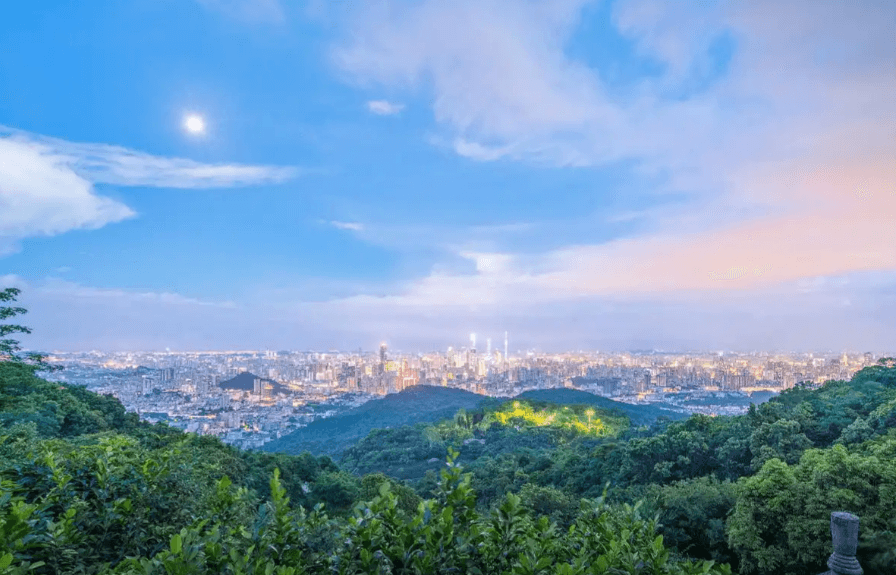
Baoshi Mountain night hike — locals climb the hill after 18:00 to catch the cooled air and the skyline view with the lit pagodas. The hike takes 20 minutes from the Huanglong Cave metro entrance.
4.3 Typhoon Season Reality Check
Typhoons hit Hangzhou less often than they hit Shanghai or the coastal cities of Zhejiang, but the city experiences the outer reaches of several storms most years, between July and September. A full typhoon is rare, but the typical impact — 24–36 hours of strong rain and 50–80 km/h winds — is enough to close the causeways, cancel boat trips, and leave streets flooded in low-lying areas.
The West Lake Scenic Area management closes Su Causeway and Bai Causeway during typhoon warnings, and no boats operate on the lake until the wind settles.
Three things to do to manage this:
Leave one flexible day in your itinerary — move the boat ride or the causeway walk to another day if the forecast calls for a storm.
Check the right source — follow the West Lake Scenic Area official account for closure notices, not just general weather. Causeways can close on a storm watch days before the rain arrives.
Book refundable flights — storms can delay or cancel inbound flights at Xiaoshan Airport for 12–24 hours.
If a typhoon does arrive during your trip, treat it as a museum and tea-house day. The rain will pass in 36 hours at most, and West Lake reopens fully once the wind drops.
4.4 Summer-Only Experiences
Summer in Hangzhou is not about finding more things to do. It is about sequencing the same things around the heat. This is the shape of a day that works in July and August, when the afternoon sun is genuinely hostile and the evening is the best part of the trip.
Lotus at dawn — 6:30–8:00 a.m. at Quyuan Fenghe or Huagang. Flowers open fully in the morning and close by early afternoon. A tripod is not necessary — the light is soft enough for handheld.
Paddle-boat ride at dusk — 18:00 onward, after the day's heat breaks. You can rent a private rowboat from Quyuan Fenghe pier for about ¥30 per hour. Keep an eye on the wind, though — summer evenings can bring sudden gusts.
Nine Creeks water play — Jiuxi Yanshu is a forested stream about a 30-minute walk west of the lake, with shallow, clear water that runs cool even in July. Locals bring children here in swimming trunks and sandals. The walk from Longjing Village to Jiuxi is about an hour and downhill all the way.
Lakeside music fountain — free, at the Hubin Three Parks. Arrive 30 minutes early for a good spot; the viewing platform fills up quickly on weekends.
Baoshi Mountain at night — the climb is cool after sunset, and the view of the illuminated pagodas plus the city skyline is the best night view of Hangzhou. Start the hike around 18:30 in July and August, when the sun goes down near 19:00.
Hangzhou in Autumn (September–November)
Autumn is Hangzhou's quietest peak season. Temperatures drop from the summer highs, humidity falls, the lake clears, and the city turns gold — but unlike spring, there is no single flower event to draw every tourist at once.
The season unfolds in three phases: a leftover summer in early September, a sweet spot after National Day, and the year's best visibility in November. If you can only visit Hangzhou once and your dates are flexible, pick October after the first week, or November if you want to photograph the lake.
5.1 September — Still Summer, but Something Changes
September looks like autumn on paper and behaves like August in practice. Average highs of 27°C and lows of 20°C are misleading, because humidity stays high through most of the month and the daytime sun still drives locals indoors until evening. Pack for summer, then add one light layer for the evening. The crisp air arrives in October, not on the first of September.
Two things make September worth planning for:
Qiantang River tidal bore — the world's largest tidal river bore, formed where Hangzhou Bay narrows. Its traditional peak is the 18th day of the eighth lunar month, which falls on September 18 in 2027, but the tide runs large twice a lunar month anyway. Section 8.2 covers where to watch it.
Mid-Autumn Festival — 2027 falls on September 15. Locals gather along the lake with mooncakes and tea after dinner. The best free spots are the Hubin Three Parks and the promenade near Leifeng Pagoda; both fill up by 19:00. Hotel prices jump on the festival day itself but return to normal the following morning.
5.2 October — The Best Window (After the First Week)
October is the month every Hangzhou guide quietly waits for, with one exception. The first week belongs to National Day, when the two causeways stop being paths and start being queues, and locals leave town. If your dates are locked into that week, Section 7 explains how to cope; otherwise, arrive after the 8th.
After the 8th, the month settles into its best weather — highs around 22°C, lows around 15°C, humidity finally falling. The crowd logic is covered in Section 7.2. What matters here is what the season looks like.
Osmanthus begins — the scent reaches the western side of the lake before the flowers are visible. Peak is mid-October to mid-November; the walk from Manjuelong through Shangu Temple and Hupao to Six Harmonies Pagoda takes about two hours and is almost empty on weekdays.
Clearest skies of the year begin — the lake water turns a deeper, clearer green, and the skyline views from Baoshi Mountain become sharp enough that you can make out the Qiantang River and the city's high-rises in the distance. Photography conditions improve steadily through November.
Osmanthus Festival and West Lake International Arts Festival — both run through mid-to-late October; the festival is low-key, with farmhouses selling osmanthus tea and sugar cakes.
5.3 November — Osmanthus, Ginkgo, Maple, and the Best Visibility
November is the month when Hangzhou stops looking like a travel poster and starts looking like the photographs people actually bring home. Temperatures settle at about 17°C by day and 9°C at night, the summer haze is gone, and reflections on the water sharpen. It is also the quietest autumn month, because National Day is a distant memory and nothing replaces it.
Three things to plan around:
Full osmanthus bloom — individual trees stay fragrant into late November in a warm autumn, and the groves between Hupao and Six Harmonies Pagoda hold their scent longest. Walk downwind and you will smell the flowers before you see them.
Beishan Street plane trees turn gold — the avenue along the north shore of West Lake gets yellow leaves in late November, usually after the osmanthus has started fading. This is the most photographed street in Hangzhou in autumn; arrive before 8:00 a.m. if you want the path without crowds or parked cars.
Jiuxi red maples — the forested stream west of the lake has a handful of red maple trees scattered through bamboo and ginkgo. Peak colour is late November through early December. This is also a good hike to pair with an osmanthus walk — take the bus to Shangu Temple, walk past the osmanthus groves, and continue downhill to Jiuxi Stream.
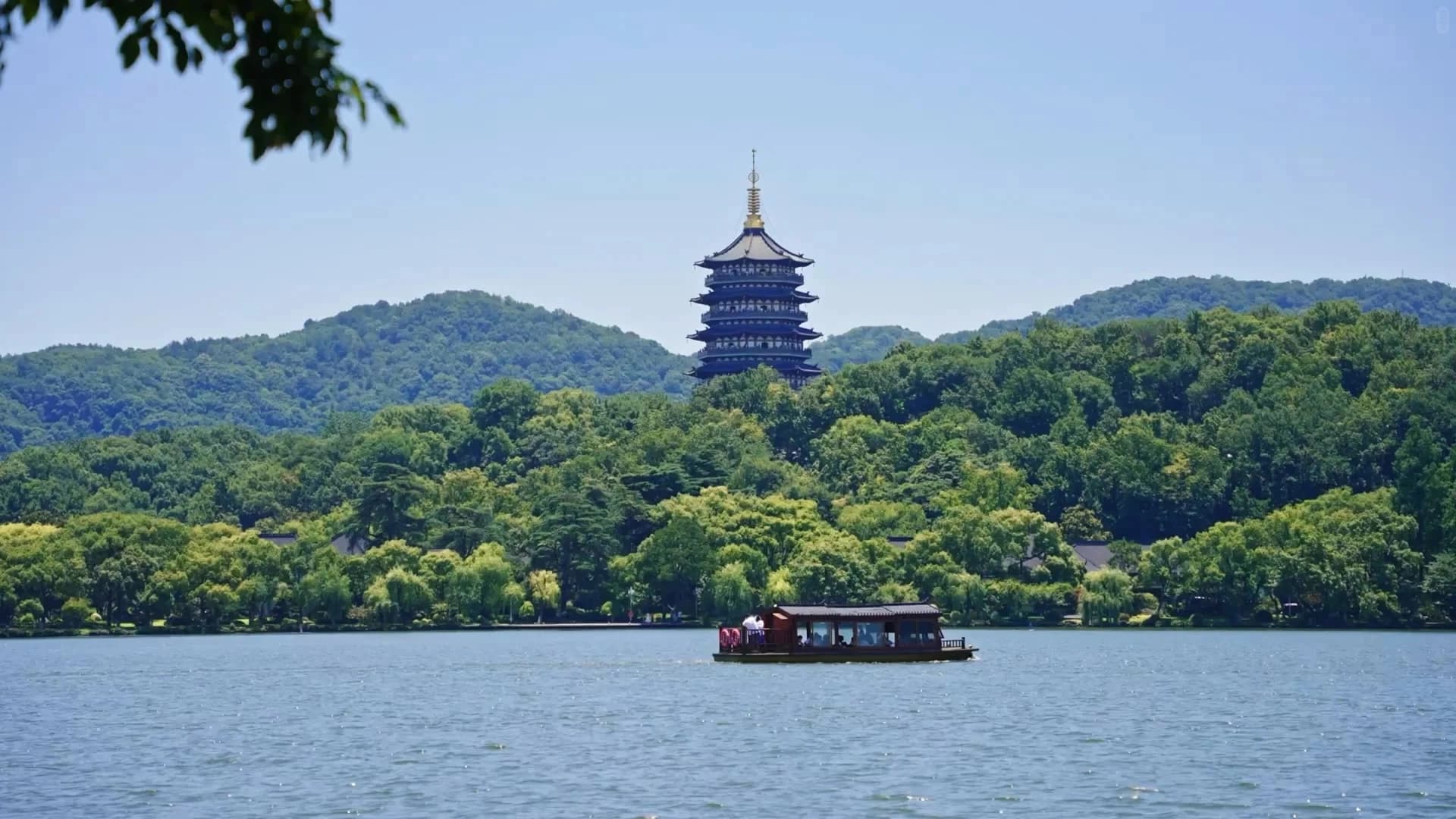
November is the month when locals stop recommending "West Lake" and start recommending Baoshi Mountain at dawn. The lake below is clear, the pagoda on the hill catches the first sunlight, and the city lights are still on. If you get there by 6:30 a.m. in November, you will share the hill with maybe five other photographers and a group of elderly locals doing morning exercises. It is the quietest you will see Hangzhou all year.
5.4 The Autumn Colour Calendar
Autumn colours in Hangzhou follow a slightly less predictable sequence than spring flowers — leaves respond to day length first and temperature second, so a late frost can shift the peak week of some trees by five days or more. The dates below are long-term averages; if colours are why you are travelling, cross-check with the local West Lake account once you know your dates.
Week | In Bloom / Colour Change | Where |
Late September | Osmanthus (first openings), Sweet osmanthus scent begins | Manjuelong, Shangu Temple, Jiuxi |
Early October | Osmanthus (early peak) | Same as above, plus Hupao and Six Harmonies Pagoda |
Mid–Late October | Osmanthus (full peak) | All osmanthus zones — the entire western side of West Lake smells like honey by mid-month |
Early November | Osmanthus (late peak), Ginkgo (early yellow), Plane tree (early yellow) | Manjuelong, Beishan Street, Meijiawu tea hills |
Mid-November | Ginkgo (peak), Plane tree (peak), Red maple (first openings) | Beishan Street, Gushan Island, Jiuxi Stream |
Late November – Early December | Red maple (peak) | Jiuxi Stream, Yuhuang Mountain, Xixi Wetland |
Hangzhou in Winter (December–February)
Winter is Hangzhou's cheapest and quietest season, and also the most physically uncomfortable if you are not prepared. The problem is not the air temperature — which sits at an average 1–11°C, mild by northern European or northern Chinese standards — but the humidity.
Hangzhou's damp cold penetrates through layers of clothing and settles in, and because most older residential buildings and a surprising number of mid-range hotels have no central heating, you can find yourself colder indoors than out. Winter rewards visitors who come prepared, who prioritise tea houses and plum blossom over long days on the causeways, and who are flexible enough to rearrange plans around the few days when it actually snows.
6.1 December and Early January — Damp Cold, Near-Empty Lake
December is the quietest month for West Lake. School holidays have not yet begun, most international visitors have left, and the causeways are genuinely empty outside of local weekend walkers. Average highs fall to around 11°C and lows to 3°C, but the humidity makes it feel colder. Pack thick layers and a windproof outer — the lake breeze on Su Causeway in December will cut through anything lighter than a fleece.
Early January follows the same pattern, with the year's coldest temperatures arriving around January 5–10. The only non-local crowds you will see in early January are day-trippers from Shanghai and nearby cities on weekends, plus a small number of tourists taking advantage of the lowest hotel rates of the year. If you arrive between January 4 and January 20, you will probably have the lake paths, the pagoda views, and the tea houses almost to yourself.
December is also when plum blossom season opens — the wintersweet (la mei) variety blooms in late December at the Hangzhou Botanical Garden, and the first true plum blossoms follow two to three weeks later. These early winter blooms are concentrated in the Lingfeng section of the Botanical Garden, where about 100 plum varieties and 1,200 wintersweet clusters are maintained by the city. The official "Lingfeng Plum Blossom" activity runs January through March each year.
When booking a hotel for winter in Hangzhou, explicitly ask about heating. Many older three-star hotels advertise "air conditioning" but their heat function is weak or broken. Some boutique hotels and international chains have proper heating; the safest budget bet is anything built after 2018.
6.2 Chinese New Year 2027 — February 6, with a 9-Day Holiday
2027 is the Year of the Goat, with the Lunar New Year falling on February 6. A 2024 revision to China's national holiday law changed Spring Festival to four paid days (New Year's Eve plus the first three days of the lunar calendar), plus four days of make-up rest for adjacent weekends.
In 2027 the holiday runs roughly February 5 through 13 — nine consecutive days — because New Year's Eve happens to fall on a Friday, which lets the existing weekend slots stack directly after the holiday itself.
During Spring Festival West Lake takes its second-largest domestic surge of the year, after National Day — though nationally the holiday moves more people than any other week. The character of the crowd is different: most are local families or relatives visiting from nearby cities, not the national mass tourist that arrives in October. The best things to do during Spring Festival are the seasonal activities, not the standard West Lake walk:
Lingyin Temple first incense — locals line up for the "first incense stick" of the new year from New Year's Eve evening through midnight. If you want to participate, arrive at 22:00 on February 5; the queue moves slowly and the temple stays open all night. This is one of the few genuinely local cultural events you can attend without advance reservation.
Temple fairs — the He Fang Street fair and the Wushan Square fair run through the first five days of the new year, with traditional street food, lion dances, calligraphy writing, and small fireworks shows. These are crowded but genuinely fun, and worth the experience even if you normally avoid Hefang Street.
Plum blossom at peak — mid-February is typically peak bloom at Lingfeng, Gushan Island, and Xixi Wetland. The combination of plum blossom and festival red lanterns makes for Hangzhou's most distinctive winter photography.
Two things to know about Spring Festival dining: many local family-owned restaurants close from New Year's Eve through the third day of the lunar calendar (February 5–8 in 2027), so book ahead at international chains or larger establishments, or eat at hotel restaurants.
6.3 Plum Blossom Season — Late January through February
Plum blossom is the reason many visitors choose Hangzhou in winter, and the season is more generous than people expect: the official bloom period runs from mid-January through early March, with peak falling somewhere between February 10 and February 20 depending on temperatures the previous December. Unlike cherry blossoms, plum blossoms can tolerate cold weather — snow on the branches is considered the most photogenic combination, and the tradition of "seeking plum blossom in snow" has been a Hangzhou pastime for centuries.
Four places worth knowing, roughly in order of convenience for a first-time visitor:
Hangzhou Botanical Garden — the most famous plum spot in Hangzhou, with around 5,000 plum trees and 1,200 wintersweet clusters. ¥10 entrance fee; open 8:00–17:00; take Metro Line 3 to Huanglong Sports Centre and transfer to bus M1003 to the Qingzhiwu entrance. Peak bloom is usually in mid-February, during the Spring Festival period.
Gushan Island — free, no ticket required, and on West Lake itself. Plum trees line the island's northern edge near the West Lake Society of Seal Carving. Best for combining plum blossom with a tea house break.
Xixi Wetland — the wetland has more scattered plum trees than Lingfeng, but the combination of blossom, water, and traditional boat traffic gives it a different, more intimate feel. ¥80 entrance fee; the best spots are near the Zhoujia Dock entrance, and it is usually less crowded than Lingfeng.
Chaoyang Cave — outside the West Lake Scenic Area, about 40 minutes by bus from downtown Hangzhou. Has larger plum trees and more variety, but requires a half-day trip. Only worth it if you are specifically a plum blossom enthusiast.
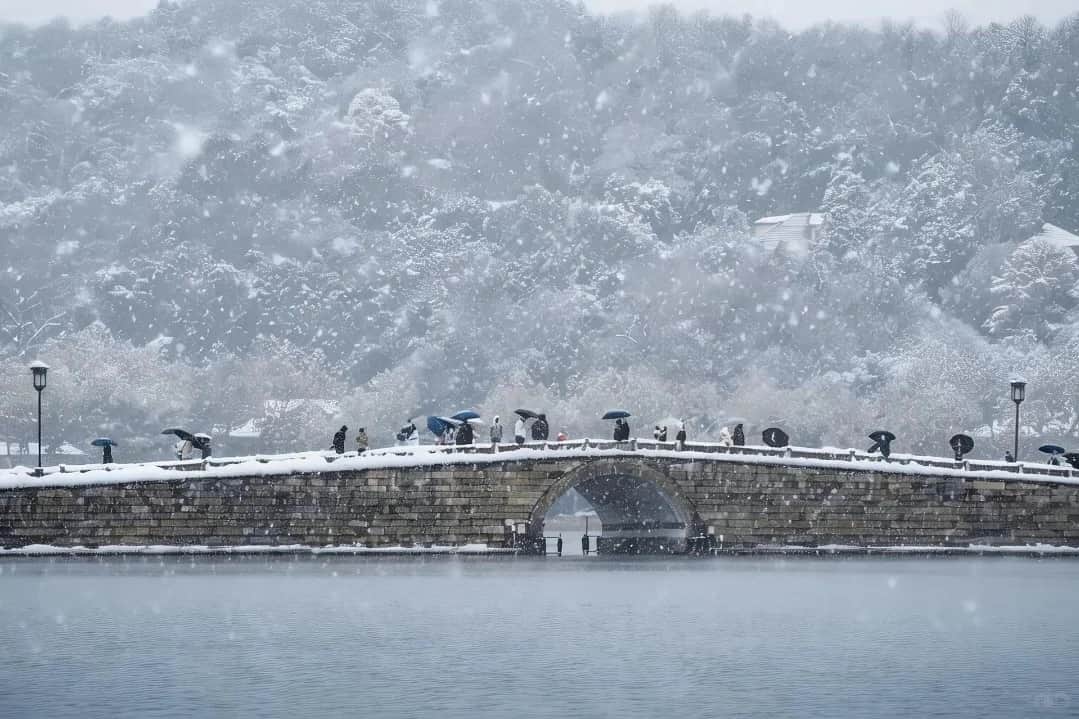
6.4 Broken Bridge Snow — Luck, Not Plan
One of West Lake's four-season symbols, "Broken Bridge Snow" is something you photograph if it happens, not something you plan for. Hangzhou sees only a handful of snow days most winters, and the snow rarely accumulates: it falls overnight, melts by mid-morning, and the bridge is back to stone grey by lunchtime. Treat it as a bonus rather than a reason to book.
If a snowfall is forecast, here is the playbook:
Book a hotel within 10 minutes' walk of Baidi Causeway — the lakeside hotels near Lingyin Road or the Hyatt Regency are ideal. You want to be able to leave your hotel room, walk to the bridge, and be back inside by the time the snow melts.
Be at the bridge at 6:00 a.m. — the snow will still be visible, the bridge will be almost empty, and the light will be soft. Any later than 7:30 a.m. and both the snow and the quiet will be gone.
Wear traction shoes — the stone surface of the bridge becomes dangerously slippery when wet or snow-covered, and the handrails are not heated.
Do not build your entire winter trip around seeing snow on Broken Bridge. Build it around plum blossom and tea houses, and treat snow at dawn as a bonus if it happens to fall during your dates.
When Not to Visit Hangzhou: The 2027 Crowd Calendar
Weather decides whether Hangzhou is comfortable. The Chinese holiday calendar decides whether you can actually move. These are two separate problems, and most guides only solve the first one. A mild, clear week in early October can be the worst week of the year to stand on Su Causeway, while a drizzly Tuesday in late November — objectively worse weather — gives you the lake almost to yourself. If you take one thing from this section, take this: check the holiday calendar before you check the forecast.
7.1 Seven Holiday Windows in 2027
China's public holidays are set by the State Council under the National Holiday and Memorial Days Regulations. Since the 2024 revision, that means one day for New Year's Day, four for Spring Festival, one for Qingming, two for Labour Day, one for Dragon Boat, one for Mid-Autumn, and three for National Day.
Those statutory days are then stretched with adjusted weekends, which is how a four-day Spring Festival becomes an eight- or nine-day national travel window. The 2027 dates below follow that rule set. The final adjusted days are confirmed in the State Council's annual notice, normally published in November of the preceding year, so treat the outer edges of each window as provisional.
2027 Window | Holiday | What It Does to a Hangzhou Trip |
Jan 1–3 | New Year | Short domestic break. The lake is busy but walkable; hotel rates rise modestly. The quiet returns on January 4. |
Feb 5–13 | Spring Festival | The single busiest travel period in China. If the usual pattern holds, nine days off, because New Year's Eve falls on a Friday. Flights, trains and hotels sell out weeks ahead; many family-run restaurants close. |
Apr 3–5 | Qingming | First warm long weekend of the year and it collides with peak tulips at Taiziwan. Locals book the park slots early; walk-ins are turned away. |
May 1–5 | Labour Day | Second-largest domestic surge after National Day. Causeways become shoulder-to-shoulder; boat queues run past an hour. |
Early June | Dragon Boat Festival | Smaller and more local. Mostly affects the Grand Canal and Xixi, not West Lake. Perfectly usable if you avoid the race venues. |
Mid-September | Mid-Autumn | One crowded evening rather than a crowded week. The lakeside fills from 18:00 for moon viewing; hotel rates spike for a single night. |
Oct 1–7 | National Day | The worst week of the year. Hotel rates roughly double, restaurant waits pass an hour, and both causeways function as queues rather than paths. |
Notice what the table does not say. None of these windows is unwalkable, and none of them is dangerous — they are simply the periods when the lake's capacity is exceeded by several times. If your dates are fixed by work or school and one of them lands inside a red row, you can still have a good trip: be outdoors between 6:30 and 9:30, keep the middle of the day indoors, and book every ticket and table in advance.
7.2 Ordinary Weekends Are the Real Crowd Variable
Holidays get all the attention, but for most visitors the more relevant variable is the ordinary weekend. Hangzhou is a two-hour high-speed train ride from Shanghai and about an hour from Suzhou, which makes West Lake the default weekend destination for tens of millions of people.
The crowd difference between a Saturday and a Tuesday in the same month is larger than the difference between many months. The pattern is predictable. Friday evening through Sunday afternoon is the local peak: hotel rates climb from Friday, the causeways fill by 9:00 on Saturday, and the lakeside restaurants stop taking walk-ins by 18:30.
Sunday clears out noticeably after 16:00, when day-trippers start heading for the train stations — which makes Sunday late afternoon one of the better times to be on the water. Monday to Thursday is the calmest stretch of any normal week, and a Monday in the shoulder season is about as close to an empty West Lake as a visitor can reasonably get.
Three practical consequences follow. Plan the boat ride and the hill climbs for a weekday if your schedule allows, because both are capacity-limited and both queue badly on weekends. Do not schedule Taiziwan or Lingyin on a Saturday, since both use timed reservations that fill up first. And if a weekend is unavoidable, invert the day: start at 6:30, take the long indoor break from 11:00 to 15:00, then return to the lake after 16:30 when the day-trippers begin to leave.
Festivals and Events: What's Actually Worth Planning Around
Hangzhou runs events all year, and most guides list them as if every one were a reason to book a flight. It is not true.
Some events genuinely change what you can see — the osmanthus season turns an ordinary street into the best-smelling place in China, and the tulip show at Taiziwan fills the south shore for roughly three weeks each spring.
Others are trade fairs, industry conferences, or city-wide marketing campaigns that will not affect your trip at all. This section separates the two: first the full calendar, then the few dates worth building an itinerary around.
8.1 The Annual Calendar at a Glance
Dates below reflect the most recent published editions. Almost every one of these shifts by one to three weeks each year depending on the lunar calendar and the weather, so use them to plan the month, not the day, and confirm the exact dates against the official tourism bureau page before you book anything non-refundable.
Season | Event | Where and What to Expect |
Jan – Mar | Xixi Plum Blossom Festival | Xixi Wetland. Runs through the whole first quarter, with the wetland's plum trees blooming from late January. Companion lantern show in February. |
Late Mar – late Apr | Taiziwan (Prince Bay) Tulip Show | Taiziwan Park, free but reservation-only. Peak bloom runs about three weeks; busiest at weekends and around Qingming. |
April | West Lake International Tea Culture Expo | Around Longjing village and the tea museums. Tastings, picking demonstrations, and the year's first spring tea released for sale. |
Jun 17–21 (2026 edition) | China International Cartoon & Animation Festival | Baima Lake International Expo Centre, Binjiang. Huge domestic draw, almost no foreign visitors. Avoid the venue area unless you are attending. |
Jul – Oct | Hangzhou Wonderful Night | City-wide night programme: late-opening museums, night markets, boat trips, and discounted evening tickets across the summer and into autumn. |
Late Sep – late Oct | Manjuelong Osmanthus Season | Manjuelong village, south of the lake. Roughly 7,000 osmanthus trees on the hillside; parades, tea-house performances, and the year's best smell. |
Late Oct | West Lake International Documentary Festival | City venues, mostly downtown. Screenings and talks, largely in Chinese with some English-subtitled sessions. |
Nov 1 (2026 edition) | Hangzhou Marathon | Course links West Lake and the Grand Canal. Road closures affect the lakeside from early morning to mid-afternoon; check the route if you are in town. |
Feb (Spring Festival) | Temple fairs, Lantern Show | Wushan Square, Hefang Street, Xixi. Crowded but genuinely local; see the winter section for how to handle the dates. |
8.2 The Three Events Worth Rearranging Your Trip For
Of the nine entries above, three justify moving your dates. They are not the largest or the most famous — they are the three where the city itself changes for a couple of weeks, and where arriving two days late means missing the whole point.
Osmanthus season at Manjuelong. This is the one event where the appeal is scent rather than scenery. The village sits in a bowl of terraced hillside, and for about a month the whole valley carries a smell you can detect from the main road.
The city marks the opening with a ceremony in the Manlong Guiyu corridor, then runs parades, tea-house music and craft workshops through the season. Go on a weekday morning and walk up through the village rather than driving in; Section 5.3 has the timing.
Taiziwan tulip show. For roughly three weeks in late March and April, a free public park on the south shore becomes the most photographed place in the city. The show is genuinely impressive rather than a tourist-brochure promise: tens of thousands of bulbs planted in beds that run along the lake, backed by cherry trees that usually bloom at the same time.
The catch is that entry is reservation-based, and the slots go first on weekends and during Qingming. If you want to see it, book the slot the moment your dates are fixed and go at 8:00 rather than 11:00.
Qiantang tidal bore. Twice a lunar month, and most dramatically around the eighteenth day of the eighth lunar month, the tide comes up the Qiantang River as a visible wall of water. In 2027, that peak falls on September 18.
When the Weather Turns: How to Rebuild a Day
Rain is not the problem in Hangzhou. The problem is that a wet morning tempts you to cancel the whole day, when in practice only part of it is actually closed. Boats stop, hills get slippery, and the lake turns grey — but the villages, the gardens and the tea houses look better than they do in sunshine. The skill is knowing what shuts, what improves, and in which order to rearrange things.
9.1 What Closes First, and What Never Does
Closures follow wind and visibility more than rainfall. A steady drizzle will not stop a ferry; a gusty front will. The table below is the order in which things tend to go, from most fragile to most reliable.
What | Usually Closes When | Your Move |
Cable car (Beigao Peak) | Wind or lightning anywhere near the ridge | Walk instead, or skip the peak — the view is worthless in cloud anyway |
Rowboats and hand-rowed boats | Wind warnings, heavy rain, typhoon signal | Switch to the covered sightseeing trolley, or move indoors for two hours |
Public ferry to the islands | Sustained strong wind; short suspensions are common and announced same-day | Check the scenic-area notice board before walking to the pier |
Hill trails | Not formally closed, but stone steps become genuinely dangerous | Treat them as closed. This is the one closure nobody announces |
Music fountain | Rain or high wind | Nothing lost — it runs another evening |
Causeways, gardens, villages | Effectively never | Go. This is where a wet day is better than a dry one |
9.2 A Wet Day, Rebuilt Hour by Hour
Here is what a rain plan actually looks like when it is written down, using a spring day as the example. The logic transfers to any season; only the indoor stops change.
07:00–09:30. Keep the early walk — light rain on the causeways empties them, and the willows along the north shore read better wet than dry. Wear the grippy shoes, carry the umbrella, and accept damp shoulders for two hours.
09:30–12:00. Move indoors before the rain gets serious. The free museums listed in Section 3.5 are the default; if you have already done those, the tea houses at Quyuan Fenghe and Guo Zhuang are the better choice on a wet morning, because you are paying for a seat with a view rather than a exhibit.
12:00–14:00. Eat properly and slowly. This is the one part of the day where weather is irrelevant, so give it real time instead of grabbing noodles under an awning.
14:00–16:30. This is the awkward block. Shops and cafés along Hubin and Nanshan Road fill up, and the museums are crowded by early afternoon. The useful trick is to go west: Maojiabu, Wuguitan and the Yuhu Bay boardwalks stay quiet in rain, and the reed beds and stone bridges look considerably better with water on them.
16:30 onward. Rain usually eases late in the day. If it does, the lake clears fast — everyone else gave up at noon. If it does not, move to Nanshan Road for dinner and treat the evening as the indoor half of the day.
9.3 The Views That Improve in Rain
Three places are worth deliberately visiting in bad weather rather than in spite of it. Jiuxi and Yunqi, in the hills south of the lake, are at their best with wet bamboo and running water — the path is shaded and the stream does the work. Guo Zhuang and the Quyuan Fenghe gardens gain the reflection and the muted colour that postcards exaggerate. And the lake itself, from any covered pavilion, looks closer to the paintings than it ever does at midday in July.
What does not improve is anything that depends on a long view. Skip the pagoda, skip the peak, and do not pay for a boat you cannot see out of. Foghorns and grey water are not what you came for.
9.4 The Signals Worth Checking
Chinese weather warnings run on a four-colour scale, and only two of them should change your plans: orange and red. Blue and yellow mean rain, sometimes heavy, and nothing more than a wet afternoon. Check the scenic area's own channel rather than a general forecast, because boat suspensions and timed-entry cancellations are announced there first and are rarely reflected in weather apps.
One last point that saves arguments: if your trip is three days or longer, do not schedule the boat and the hill on the same day. Put them on separate days and you keep a spare slot for whichever one the weather allows. This costs nothing to plan and is the single most useful piece of scheduling advice for a short visit.
The Shoulder-Season Strategy
Every guide, this one included, names a best month. Very few explain the more useful version: the two or three weeks that sit just outside the peak and deliver most of the same things with a fraction of the people. That is the window worth planning around, and it is narrow enough that a week of hesitation closes it.
10.1 Two Weeks That Beat Every "Best Month"
The last week of March. The gardens are already in colour, the tea terraces are being picked, and the holiday crowds are still two weeks away. Hotel rates have not stepped up yet either, because the market does not believe the season has started until April. You get spring without the queue at the ticket gate.
The trade-off is variability: one day can be 20°C and the next can be 9°C with rain, so this week rewards people who pack layers and keep a flexible middle day. Section 7.2 puts the exact dates next to the Qingming holiday that follows it.
The second week of October. The national holiday ends, the city empties within about 48 hours, and the weather is at its most reliable all year. This is the week when the lake looks the way it does in the photographs and the pavements are walkable. It is also the shortest-lived window on the calendar, because late October brings the first cold fronts and the light starts going by half past five.
The reason both windows work has less to do with the weather than with pricing. Booking sites price by date, not by month, and the difference between 28 March and 4 April is often larger than the difference between two entirely different months. Book the window, not the month.
10.2 How to Read a 10-Day Forecast Like a Local
Forecasts here are not unreliable. They are just read the wrong way by visitors who expect a single number to describe a whole day. Three habits fix most of it.
Count the consecutive dry days, not the daily icons. A day with a 60% chance of rain is often a morning of drizzle and an afternoon of clear light. What matters is how many days in a row stay dry: two or three consecutive dry days means the ground dries, the views open up, and the lake behaves. A single dry day between two wet ones usually means haze and wet stone, whatever the icon says.
Look at millimetres, and ignore the percentage. The percentage tells you how likely rain is somewhere in the region. The millimetre total tells you whether it will affect your day. The thresholds worth remembering are in Section 2.3, and they are the only part of a forecast that changes an itinerary.
Watch the wind direction. A southerly or south-easterly flow pulls warm, moist air off the coast and brings haze and drizzle. A northerly clears it out within a day and drops the temperature by several degrees at the same time. If the forecast shows the wind swinging north after rain, that is your clear-view day — and it is usually the best photography morning of the week.
10.3 If Your Dates Are Fixed
Most people cannot move their trip, and that is fine. Each of the difficult months has a version that works; the trick is to stop treating it like a compromised version of a better month.
If you can only come in July. Move your sleep, not your sightseeing. The lake is at its best before seven and after five, and the middle of the day belongs indoors — Section 4.4 already sequences it. In exchange you get peak lotus and the night boats, neither of which exists in April.
If you can only come for National Day week. Stay inside the scenic area if your budget stretches to it, because the value of walking out at six in the morning is higher that week than at any other time of year. Then apply the early-start rule in Section 7.3 and treat eleven to three as lost.
If you can only come for Spring Festival. Come for the festival rather than for the lake. The old streets, the lanterns, the temple fairs and the food are worth the trip on their own; the lake is cold, grey and full of domestic visitors. Build the days around New Year's Eve and the first two days of the holiday, and you will remember the city rather than a list of viewpoints.
How Long to Stay, and How to Split the Days
The honest answer to "how many days do I need" is that it depends on whether you want to see Hangzhou or collect it. One day gets you the postcard. Three days gets you the lake at six in the morning, the tea hills in the afternoon, and a dinner that is not chosen from a photograph. Most visitors book two days and then discover, on the train out, that they spent both of them on the same two kilometres of shoreline.
11.1 How Much Time Buys What
Time | What Fits Comfortably | What You Give Up |
Half a day | North shore walk, one boat crossing, an early dinner | Everything west of the causeways, and the evening lake |
One day | Full shoreline loop, island, one hill or one temple | Any sense of the city around the lake |
Two days | Lake on day one; tea hills, a temple and the old streets on day two | Nothing important, but both days are full |
Three days | The above, plus the west-shore villages and a slow morning | Nothing. This is the first length that feels unhurried |
Four days or more | Adds a day trip — a water town, the wetland, or the river | Nothing, but the lake stops being the centre of the trip |
Two days is the practical minimum, and three is the point where the trip stops being an itinerary and starts being a visit. If you can only manage one day, read the next section and then skip to 11.4, which is written specifically for you.
11.2 What to Cut First
Short trips go wrong when people try to keep everything. Cut in this order, and the trip improves as it shrinks.
Drop the second viewpoint. One elevated view of the lake is enough; the second costs an hour and returns a slightly different angle of the same water.
Drop any attraction whose appeal is mainly its name — if you cannot say what you would do there for forty minutes, you are going for the photograph, and the photograph is available elsewhere.
Drop the island if the queue exceeds the crossing time.
Only if you are down to half a day, drop the southern shore and stay north, where the walking is better and the exits are closer.
What you should not cut is the early morning. It is free, it requires no booking, and it is the difference between seeing the lake and seeing the lake with several thousand other people in it.
11.3 Adjusting the Plan by Season
If You Visit In | Swap This | For This |
March–April | Long afternoon on the water | A morning in the gardens, before the coaches arrive |
June–August | Midday walking anywhere | Early start, long indoor lunch, water after four |
September–October | Any plan built around a single day | A flexible middle day, because holiday crowds move |
November–February | The evening fountain | An earlier dinner and a short walk before dark |
None of this is complicated. The itinerary that fails is the one with too many entries; the one that works has three or four anchors and a lot of space between them. Book the anchors, leave the gaps open, and let the weather and your legs decide the rest.
The Honest Verdict
The best time to visit Hangzhou is late March or the second week of October, when the season has arrived, but the crowds have not. If you can only travel in summer, come for the lotus and the evenings and accept the heat. If you can only travel in winter, come for the quiet and the old streets and skip the postcard.
There is no month in which the city is bad. There are only months in which it rewards a different kind of trip.

Traveler Discussions
Questions from travelers