
1. Why Chengdu Is China’s Top Luxury Travel Destination
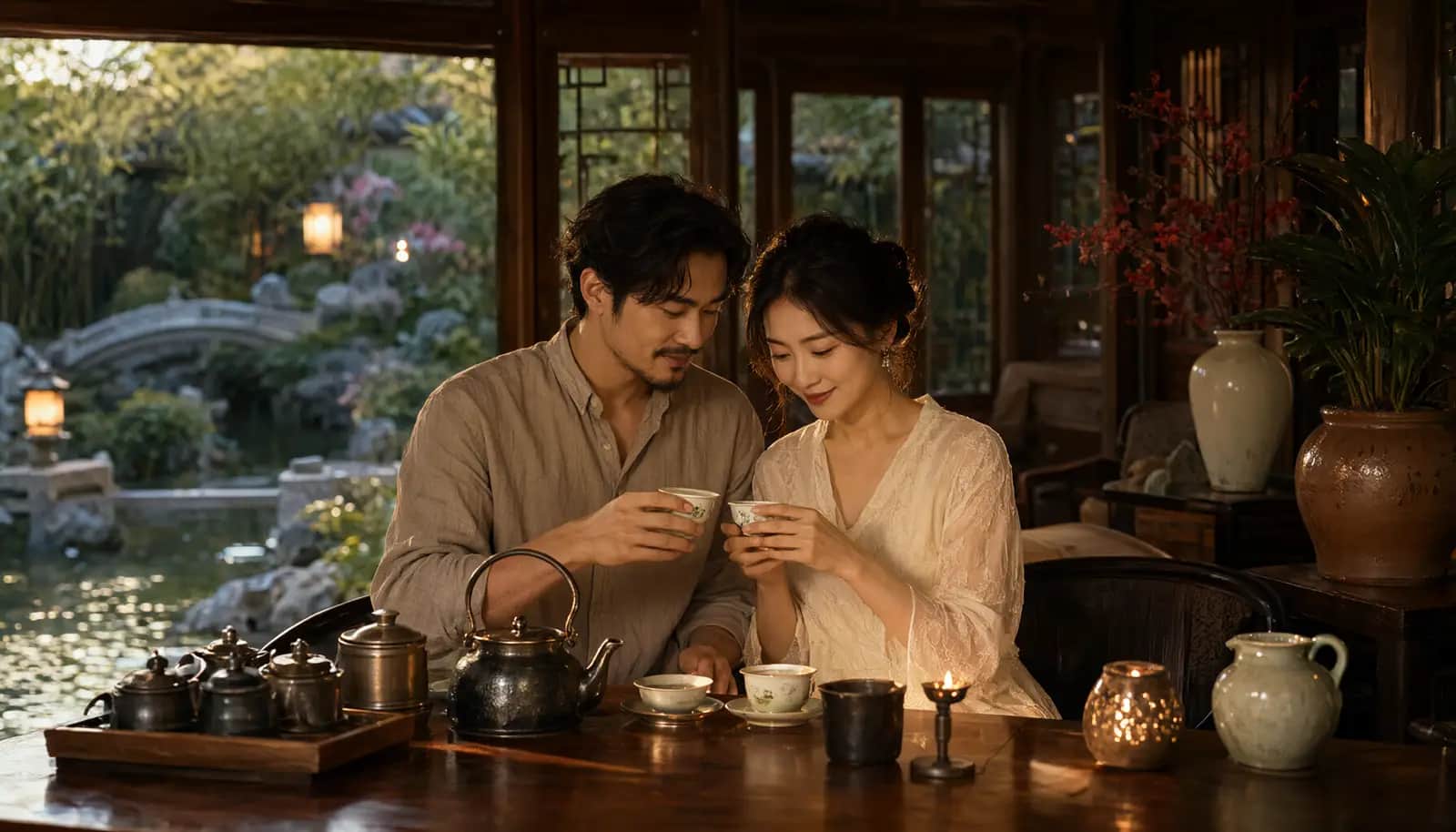
Chengdu offers something Beijing and Shanghai cannot — international luxury standards (Ritz-Carlton, Michelin, Taikoo Li) wrapped in 3,000 years of slow, intentional living. Every major luxury hotel brand opened here between 2013-2017. The Michelin Guide arrived in 2022 and awarded 15 stars by 2027. Where else can you see giant pandas, eat 3-star Michelin cuisine, watch a 1,300-year-old face-changing opera, drink tea in a Qing Dynasty courtyard, and sleep at a wellness resort at a Taoist sacred mountain — all within 90 minutes?
2. Best Time for Luxury Travel in Chengdu: Season-by-Season Guide
2.1 Season-by-Season Luxury Guide
Season | Months | Weather | Crowds | Luxury Experience Quality | Best For |
|---|---|---|---|---|---|
Spring | Mar-May | 15-25°C, mild, some rain | Moderate | Excellent — green landscapes, comfortable touring | All-around luxury travel |
Summer | Jun-Aug | 25-35°C, humid, thunderstorms | Very heavy (school holidays) | Fair — heat limits outdoor activities | Indoor luxury: spas, dining, shopping |
Autumn | Sep-Nov | 15-28°C, clear skies | Moderate (except Oct 1-7) | Outstanding — best weather, golden landscapes | Photography, day trips, outdoor dining |
Winter | Dec-Feb | 5-12°C, overcast, occasional fog | Light | Good — peaceful, uncrowded luxury | Spa retreats, tea houses, quiet temples |
2.2 The Goldilocks Months: April and October
April is Chengdu luxury travel at its finest. Temperatures range 18-25°C, gardens are blooming, and the summer crowds have not yet arrived. Hotel rates are at shoulder-season levels (15-25% below summer peaks). Outdoor dining at Taikoo Li is delightful, and Mount Qingcheng is lush and green. The only drawback is occasional spring rain in late April.
October offers crisp autumn air, blue skies (rare in Chengdu), and the sandstone temples glow warm in afternoon light. The exception is October 1-7 (National Day holiday), when all of China travels — avoid this week entirely. From October 8 onward, crowds drop dramatically and luxury hotels offer post-holiday value rates.
2.3 Luxury Travel Calendar: What Happens When
Month | Key Events | Hotel Rates | Recommendation |
|---|---|---|---|
January | Lunar New Year prep (varies) | Low | Good for spa retreats and tea houses |
February | Lunar New Year (varies) — citywide celebrations | Peak (CNY week) | Avoid CNY week; otherwise excellent |
March | Spring flowers, mild weather | Shoulder | Recommended — great value and weather |
April | Chengdu International Panda Festival | Shoulder | Best month — book early |
May | Labor Day holiday (May 1-5) | Peak (holiday week) | Avoid May 1-5; rest of month good |
June | Early summer, some rain | Shoulder to peak | Acceptable — indoor luxury focus |
July | Peak summer heat, school holidays | Peak | Only for hotel-pool-and-spa luxury |
August | Peak heat and humidity | Peak | Only for indoor luxury experiences |
September | Mid-Autumn Festival (varies) | Shoulder | Recommended — weather improving |
October | National Day (Oct 1-7) — avoid | Peak then shoulder | Best after Oct 8 — top recommendation |
November | Cool, clear, peaceful | Low to shoulder | Hidden gem month — best value luxury |
December | Winter chill, Christmas season | Low | Good for spa retreats and fine dining |
Luxury insider tip: November is the secret best month for luxury travel to Chengdu. Weather is cool but pleasant (12-18°C), hotels drop to shoulder-season rates, Michelin restaurants have availability, and you can book spa treatments without weeks of advance notice. The only trade-off is shorter daylight hours (sunset around 6 PM).
3. Where to Stay: Chengdu’s Best Luxury Hotels
Chengdu has 10+ verified international luxury hotels, each offering a distinct experience. Below is a comprehensive guide based on verified hotel data, official websites, and firsthand visits. All hotels listed are confirmed operating properties as of 2026.
3.1 Luxury Hotel Comparison Table
Hotel | Brand | District | Rooms | Price/Night (RMB) | Best For |
|---|---|---|---|---|---|
The Ritz-Carlton, Chengdu | Marriott | Qingyang | 353 | 1,000-2,800 | City center luxury, Forbes-rated |
Waldorf Astoria Chengdu | Hilton | Hi-Tech Zone | 289 | 1,265-3,500 | Modern luxury, Financial City |
The St. Regis Chengdu | Marriott | Qingyang | 312 | 980-2,500 | Butler service, rooftop bar |
Fairmont Chengdu | Accor | Hi-Tech Zone | 336 | 900-2,200 | South business district, spa |
Niccolo Chengdu | Niccolo | Jinjiang (IFS) | 238 | 1,191-2,800 | Shopping, IFS location |
Upper House Chengdu | Upper House | Jinjiang (Taikoo Li) | ~100 | 1,600-3,800 | Boutique design, Qing courtyard |
InterContinental Century City | IHG | Century City | 555+ | 700-1,800 | Convention travel, value luxury |
Six Senses Qingcheng | Six Senses | Dujiangyan | 130 | 2,200-5,000 | Wellness retreat, UNESCO setting |
Grand Hyatt Chengdu | Hyatt | Jinjiang (IFS) | ~390 | 1,100-2,600 | Luxury with IFS views, dining |
Wanda Reign Chengdu | Wanda | Jinjiang | ~280 | 800-2,000 | Chinese luxury, riverside setting |
Hyatt Centric The Ring | Hyatt | Jinjiang (The Ring) | 234 | 900-2,200 | Riverside design hotel, trendy |
3.2 The Ritz-Carlton, Chengdu
Address: 269 Shuncheng Avenue, Qingyang District, Chengdu 610017
Opened: October 2013 (renovated 2017) | Rooms: 353 (including 57 suites)
Price: 1,000-2,800 RMB/night ($140-390)
Location: Overlooks Tianfu Square in the city center — walking distance to Tianfu Square Metro, People’s Park, and the traditional teahouse district.
Design: 41-story tower blending contemporary luxury with Sichuan cultural motifs. Lobby features Chinese art installations and warm wood paneling.
Dining: Li Xuan (Cantonese fine dining with private rooms), Spices (all-day dining), FLAIR (rooftop bar and restaurant — one of Chengdu’s highest bars).
Spa: The Ritz-Carlton Spa with treatment rooms, indoor pool, and fitness center. Recognized by Forbes Travel Guide 2026.
Club Level: Ritz-Carlton Club rooms include exclusive lounge access with five daily food and beverage presentations, dedicated concierge.
Best for: Travelers who want international luxury standards in the city center. The most reliable “can’t go wrong” choice for first-time visitors.
Why choose Ritz-Carlton: It is the most internationally recognized luxury brand in Chengdu, with the most central location, Forbes-rated spa, and the elevated FLAIR bar with panoramic city views. Club Level rooms offer excellent value for the service level.
3.3 Waldorf Astoria Chengdu
Address: No. 1199 Tianfu Avenue North, High-Tech Zone, Chengdu 610041
Opened: July 2017 | Rooms: 289 (including 31 suites)
Price: 1,265-3,500 RMB/night ($175-490)
Location: Chengdu’s Financial City / Hi-Tech Zone — near SKP luxury mall, Jiaozi Park, and in99 shopping center. 20 minutes from city center.
Design: Elevated lobby on high floors with floor-to-ceiling windows. Twin-tower architecture. Library lounge with curated art collection.
Dining: Six restaurants and bars including high-floor dining venues. Library Lounge for afternoon tea.
Spa: Waldorf Astoria Spa, indoor pool, and fitness center.
Best for: Modern luxury travelers who prefer new construction, elevated design, and proximity to the financial district and SKP shopping.
Why choose Waldorf Astoria: The newest international luxury hotel in Chengdu’s business district, with the most architecturally impressive design. Its elevated lobby and high-floor rooms give a sense of being above the city. SKP mall (Chengdu’s newest luxury shopping destination) is walkable.
3.4 The St. Regis Chengdu
Address: 88 Taisheng Road South, Qingyang District, Chengdu 610016
Opened: 2014 | Rooms: 312 (276 rooms + 36 suites)
Price: 980-2,500 RMB/night ($137-350)
Location: Steps from IFS, Taikoo Li, and Chunxi Road — the absolute best location for luxury shopping and dining in Chengdu.
Design: 29-floor landmark tower. Vantage XXVII rooftop bar on the 27th floor — one of Chengdu’s best rooftop venues.
Service: 24-hour St. Regis Butler Service — the signature St. Regis experience. Pressing service, unpacking/packing, tea/coffee preparation.
Dining: Six restaurants and two bars/lounges. Vantage XXVII for sunset cocktails with city views.
Spa: Iridium Spa with indoor pool, seasonal outdoor pool, and sauna. Remede bath products in all rooms.
Best for: Travelers who prioritize location (walking distance to Taikoo Li and IFS) and appreciate classic butler-service luxury.
Why choose St. Regis: Unbeatable location — you can walk to Taikoo Li in 3 minutes and IFS in 5 minutes. The butler service is genuine and personal. Vantage XXVII is one of the best rooftop bars in western China. Best choice for shoppers and socializers.
3.5 Fairmont Chengdu
Address: 269 Tianfu Avenue Middle Section, Hi-Tech Zone, Chengdu 610041
Opened: 2016 | Rooms: 336
Location: South Golden Business Circle in the Hi-Tech Zone — near Waldorf Astoria and SKP. Modern business district.
Design: Modern Shu culture design — contemporary interpretation of Sichuan aesthetics with brass, wood, and jade-green accents.
Dining: Four dining outlets: Spectrum (all-day dining), Chang Yi (Chinese restaurant), MIKU (Japanese), and CUBE (lounge bar).
Spa: Fairmont Spa and wellness lounge with sauna and hot tub. Indoor pool.
Best for: Business-luxury travelers combining work and leisure in the south business district. Good value relative to Ritz-Carlton and Waldorf.
Why choose Fairmont: The best value among international luxury brands in Chengdu. Same 5-star standards as Ritz-Carlton and Waldorf but typically 15-25% lower rates. MIKU restaurant is excellent for Japanese fine dining in Chengdu.
3.6 Niccolo Chengdu
Address: Tower 3, IFS, No.1 Section 3, Hongxing Road, Jinjiang District, Chengdu 610021
Opened: 2015 | Rooms: 238
Price: from 1,191 RMB/night ($166+)
Location: Inside Chengdu IFS (International Finance Square) — the city’s premier luxury shopping tower. The IFS rooftop panda sculpture is your neighbor.
Design: Contemporary luxury with Italian-design furniture and floor-to-ceiling windows. iPad-controlled room systems.
Signature Room: The N2 Grand Temple View room category offers views of Daci Temple — a 1,600-year-old Buddhist temple next to Taikoo Li. The contrast of ancient temple rooftops with modern luxury is stunning.
Dining: Multiple restaurants and bars with IFS city views.
Best for: Luxury shoppers and urban explorers. You are literally inside the IFS mall — Cartier, Louis Vuitton, and Hermès are in your building.
Why choose Niccolo: If shopping is your luxury priority, Niccolo is unmatched — you are inside IFS, steps from Taikoo Li, and the IFS rooftop panda is visible from your room. The Grand Temple View rooms offer a unique ancient-meets-modern perspective.
3.7 Upper House Chengdu (Formerly The Temple House)
Address: 81 Bitieshi Street, Jinjiang District, Chengdu 610021
Opened: 2015
Price: 1,600-3,800 RMB/night ($224-530)
Location: Set within the Daci Temple historic preservation area, adjacent to Taikoo Li. The hotel occupies the site of Daci Temple’s ancient mulberry garden.
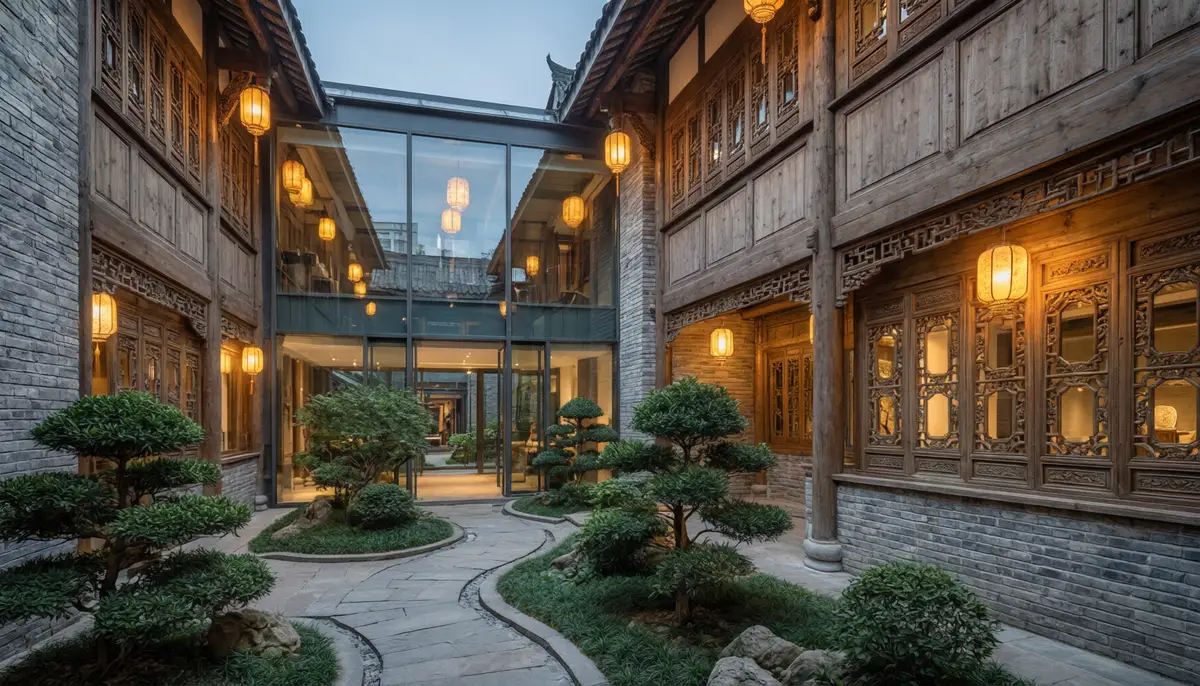
Design: Boutique luxury blending preserved Qing Dynasty courtyard architecture with contemporary design. Two historic heritage buildings frame the entrance.
Spa: Mi Xun Spa — a 900-square-meter sanctuary set in a Qing Dynasty courtyard. 11 treatment suites, sauna, hammam. Signature treatments include diamond-infused facials and ocean-stone massages.
Best for: Design-conscious travelers seeking boutique luxury with cultural depth. Not a brand-luxury person’s hotel — this is for travelers who want the hotel itself to be a cultural experience.
Why choose Upper House: The most atmospheric luxury hotel in Chengdu. Walking through the Qing Dynasty courtyard to reach the spa is an experience no other Chengdu hotel can replicate. Mi Xun Spa alone is worth the stay. Best choice for honeymooners, design lovers, and travelers who want “quiet luxury” over brand display.
3.8 InterContinental Century City Chengdu
Address: 88 Century City Boulevard, Chengdu 610041
Opened: 2008 (renovated 2019) | Rooms: 555+
Price: 700-1,800 RMB/night ($98-250)
Location: Century City — near the New International Convention and Exhibition Center. Connected to Century City Metro station.
Best for: Convention attendees and travelers who need large-hotel amenities at accessible luxury pricing. Not the most boutique choice, but reliable and well-connected.
Why choose InterContinental: The most affordable IHG luxury option in Chengdu, with full 5-star amenities. If you are attending a conference at the exhibition center, this is the logical choice. For leisure luxury travelers, the location is less ideal (30 minutes from Taikoo Li).
3.9 Six Senses Qingcheng Mountain
Address: No. 2 Dong Ruan Road, Qingcheng Mountain Town, Dujiangyan, Chengdu 611844
Opened: 2015 | Rooms: 130
Price: 2,200-5,000 RMB/night ($311-700); villas up to 13,500 RMB
Location: At the gateway to Mount Qingcheng and Dujiangyan — both UNESCO World Heritage Sites. 60 km (90 minutes) from Chengdu city center.
Design: Contemporary classic mountain resort with villas and suites nestled in forested grounds. Sustainable resort positioning with natural materials.
Spa: Six Senses Spa — one of the most comprehensive wellness programs in China. Multi-day wellness journeys, yoga, meditation, and holistic treatments.
Dining: Tea lounge with curated Sichuan tea service, regional dining with farm-to-table ingredients.
Best for: Wellness travelers, honeymooners, and those seeking a luxury retreat in nature. Not a city hotel — plan 2-3 nights here as part of a Chengdu + Qingcheng itinerary.
Why choose Six Senses: The only true wellness luxury resort in the Chengdu area. If your luxury travel includes wellness journeys, yoga, or digital detox, this is your hotel. Combine 2 nights here with 2-3 nights at a city hotel (St. Regis or Upper House) for the perfect Chengdu luxury trip.
3.10 Grand Hyatt Chengdu
Address: No. 1 Hongyuan Road, Jinjiang District, Chengdu 610021 (within IFS complex)
Opened: 2014 | Rooms: ~390
Price: 1,100-2,600 RMB/night ($154-365)
Location: Adjacent to Niccolo inside the IFS complex — same unbeatable shopping access with a different brand perspective. Walking distance to Taikoo Li.
Design: Contemporary luxury with floor-to-ceiling windows offering panoramic city views. Modern interiors with warm wood and stone accents.
Dining: Multiple restaurants including The Chinese Kitchen (all-day dining), Made in Kitchen (Western), and a lobby lounge. Strong breakfast buffet — one of the best in Chengdu.
Spa: Grand Club rooms and suites include Club Lounge access with complimentary breakfast, evening cocktails, and hors d’oeuvres.
Best for: Travelers who want Hyatt-brand consistency and Grand Club lounge benefits at the same premier location as Niccolo.
Why choose Grand Hyatt: If you prefer Hyatt loyalty program (World of Hyatt) over Niccolo’s independent program, Grand Hyatt gives you the same IFS/Taikoo Li location with the bonus of Club Lounge access. The breakfast buffet is consistently rated among Chengdu’s best.
3.11 Wanda Reign Chengdu
Address: No. 1 Zhongli Road, Jinjiang District, Chengdu 610021
Rooms: ~280
Price: 800-2,000 RMB/night ($112-280)
Location: Riverside location on the Jinjiang River, near Hejiang Pavilion (Hejiang Ting) — a historic area with riverside dining and nightlife.
Design: Chinese contemporary luxury with bold cultural motifs — red lacquer, gold accents, and calligraphy-inspired decor. More visually striking than Western-brand hotels.
Dining: Chinese restaurant specializing in Sichuan and Cantonese cuisine. Lobby bar with river views.
Best for: Travelers who want a Chinese luxury brand experience (not another Western chain) and prefer riverside ambiance over downtown shopping proximity.
Why choose Wanda Reign: The only Chinese-origin luxury hotel brand in this guide. If you want to experience Chinese luxury hospitality standards (rather than another international chain), Wanda Reign offers bold design, riverside location, and pricing 20-30% below international competitors. The riverside evening walks from the hotel to Jiuyan Bridge are one of Chengdu’s best nighttime experiences.
3.12 Hyatt Centric The Ring Chengdu
Address: No. 1 Jiaozi Road, Jinjiang District, Chengdu (The Ring lifestyle complex)
Opened: 2023 | Rooms: 234
Price: 900-2,200 RMB/night ($126-308)
Location: The Ring — Chengdu’s newest lifestyle and shopping complex on the Jinjiang River. Between the city center and the Hi-Tech Zone.
Design: Boutique-style Hyatt brand designed for experiential travelers. Locally inspired design with Chengdu-specific art and cultural elements in every room.
Dining: Rooftop bar and restaurant with river and city views. Trendy lobby lounge.
Best for: Design-conscious millennials and Gen Z luxury travelers who want a trendy, locally-connected hotel rather than a traditional 5-star brand experience.
Why choose Hyatt Centric: The newest luxury hotel in Chengdu (opened 2023). The “Centric” brand is Hyatt’s lifestyle tier — it trades traditional formality for local immersion and design edge. If you find Ritz-Carlton too formal and want something more Instagram-worthy, this is your hotel. The Ring complex itself is one of Chengdu’s most exciting new retail and dining destinations.
4. How to Choose the Perfect Luxury Hotel in Chengdu
4.1 Decision Matrix
Your Priority | Best Hotel Choice | Why |
|---|---|---|
Best overall location | St. Regis or Niccolo | Walking distance to Taikoo Li, IFS, and Chunxi Road |
Brand luxury / reliability | Ritz-Carlton | Forbes-rated, most internationally recognized |
Modern design + new construction | Waldorf Astoria | Newest luxury build, elevated lobby, Financial City |
Boutique / cultural luxury | Upper House | Qing Dynasty courtyard, Mi Xun Spa, Taikoo Li adjacent |
Best value luxury | Fairmont | Same 5-star standards, 15-25% lower rates |
Shopping convenience | Niccolo | Inside IFS mall — luxury retail in your building |
Convention / business | InterContinental Century City | Connected to exhibition center, large-scale service |
Wellness retreat | Six Senses Qingcheng | Comprehensive spa, yoga, wellness journeys in UNESCO setting |
Honeymoon | Upper House + Six Senses | Cultural boutique + nature retreat combo |
Best rooftop bar | St. Regis (Vantage XXVII) | 27th floor rooftop with panoramic city views |
Butler service | St. Regis | 24-hour St. Regis Butler Service included |
Best spa in the city | Upper House (Mi Xun Spa) | 900 sqm in Qing Dynasty courtyard, 11 treatment suites |
Trendy / design-forward | Hyatt Centric The Ring | Newest hotel (2023), lifestyle brand, riverside |
Hyatt loyalty program | Grand Hyatt | World of Hyatt points, Club Lounge, best breakfast |
Chinese luxury brand | Wanda Reign | Chinese-origin luxury, bold design, riverside |
Riverside ambiance | Wanda Reign or Hyatt Centric | Jinjiang River views, walk to Jiuyan Bridge nightlife |
Hotel booking tip: For a 4-night Chengdu luxury trip, spend Nights 1-2 at St. Regis or Upper House in the city (shopping, dining, opera, pandas, tea) and Nights 3-4 at Six Senses Qingcheng (wellness, hiking, Taoist temples, nature). This gives you the full spectrum of Chengdu luxury: urban sophistication + nature retreat.
4.2 Neighborhood Guide for Luxury Travelers
Jinjiang / Taikoo Li Area (Best for First-Time Luxury Visitors)
The heart of Chengdu luxury: St. Regis, Niccolo, Grand Hyatt, Upper House, and Hyatt Centric The Ring are all in or adjacent to this area. If this is your first luxury visit to Chengdu, stay here. You can walk to luxury shopping, fine dining, and cultural sites without needing transport. The Daci Temple historic area adds cultural depth to the luxury shopping district.
Qingyang / Tianfu Square Area (Best for City Center Convenience)
Ritz-Carlton and St. Regis anchor this central area near Tianfu Square. You get access to People’s Park (home of Heming Teahouse), the traditional teahouse culture, and Kuanzhai Alley heritage district. 10 minutes by metro from Taikoo Li. Slightly less glamorous than Jinjiang but more authentically local.
Hi-Tech Zone / Financial City (Best for Business Luxury)
Waldorf Astoria and Fairmont anchor the south business district. This area is modern, spacious, and near SKP (Chengdu’s newest luxury mall). Less atmospheric than Jinjiang but excellent for business travelers combining meetings with luxury. 20 minutes from the city center by metro or car.
Jinjiang Riverside Area (Best for Trendy / Nightlife)
Wanda Reign and Hyatt Centric The Ring sit along the Jinjiang River — the newest trendy luxury corridor. The Ring lifestyle complex offers dining and retail. Jiuyan Bridge bar street and riverside walks are the area’s highlights. Best for travelers who want nightlife and riverside ambiance over shopping proximity.
Dujiangyan / Mount Qingcheng (Best for Wellness Retreat)
Six Senses Qingcheng is the only true wellness luxury resort in the Chengdu area. Located 60 km from the city at the gateway to two UNESCO World Heritage Sites (Mount Qingcheng and Dujiangyan Irrigation System), this is where you go for multi-day spa retreats, yoga, and nature immersion. Not a city base — plan it as a 2-3 night segment of your trip.
5. Michelin-Starred Dining: Chengdu’s Fine Dining Guide
Explore the full list in our Michelin-star restaurants of Chengdu guide.
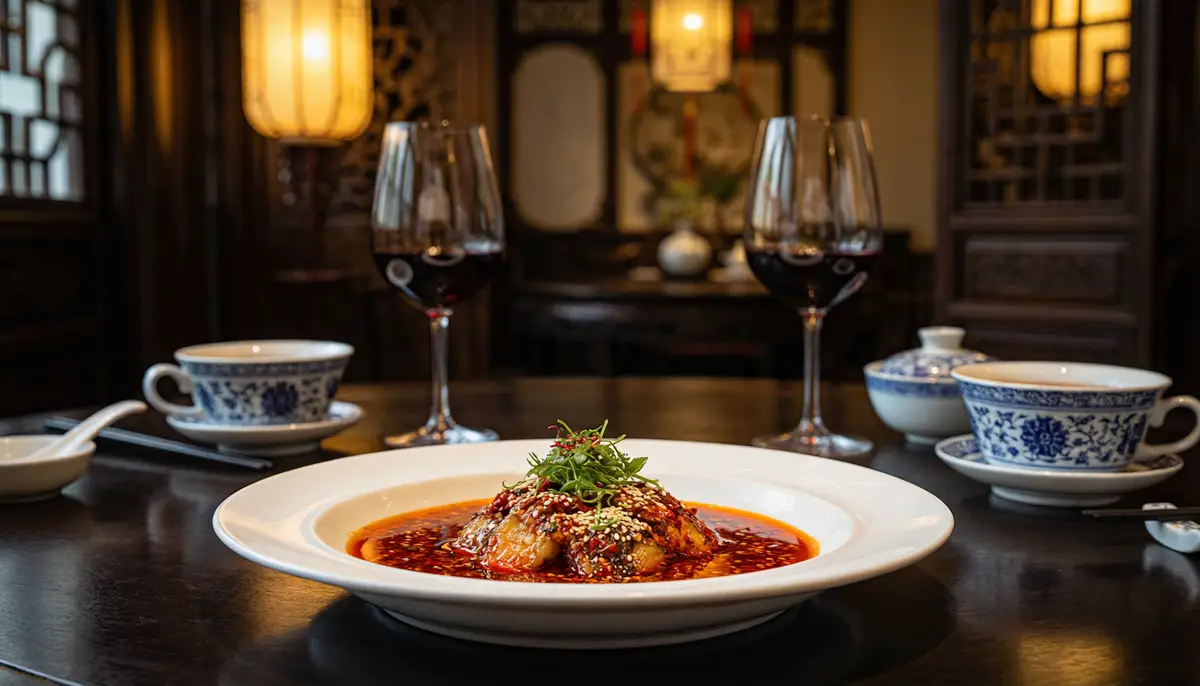
The Michelin Guide Chengdu debuted in 2022 and has grown rapidly. The 2027 edition awards 15 stars to Chengdu restaurants — including the city’s first-ever 3-star restaurant. This makes Chengdu one of only a handful of Chinese cities with a 3-star Michelin venue, alongside Shanghai and Beijing.
5.1 Michelin Guide Chengdu 2027: Star Breakdown
Star Level | Count | Restaurants | Cuisine |
|---|---|---|---|
Three Stars | 1 | Xin Rong Ji | Taizhou cuisine elevated with Sichuan ingredients |
Two Stars | 1 | Yu Zhi Lan | Contemporary Sichuan tasting menu |
One Star | 13 | AuJardin, Furonghuang, Mawangzi, C-O, Muxun Chashi, Fumanlou + others | Various (French, Sichuan, creative, tea-pairing) |
Bib Gourmand | Multiple | Various | Quality dining at moderate prices |
5.2 Xin Rong Ji — Chengdu’s First Three-Star Restaurant
Xin Rong Ji is the first restaurant in Chengdu to receive Michelin’s highest honor — three stars. Originating from Taizhou, Zhejiang Province, Xin Rong Ji elevates coastal Taizhou cuisine with premium Sichuan ingredients. The result is a unique culinary bridge between eastern Chinese seafood traditions and western Chinese spice culture.
Cuisine: Taizhou-style cuisine (seafood-focused, light, fresh) elevated with Sichuan ingredients
Price: Estimated 800-2,000 RMB per person ($110-280)
Must-try: Signature dishes include yellow croaker (huangyu) in multiple preparations, seafood soups, and seasonal specialties
Reservations: Essential. Book 2-4 weeks in advance through the restaurant or your hotel concierge
Best for: Anniversary dinners, business entertaining, once-in-a-trip splurge
5.3 Yu Zhi Lan — Two-Star Sichuan Tasting Menu
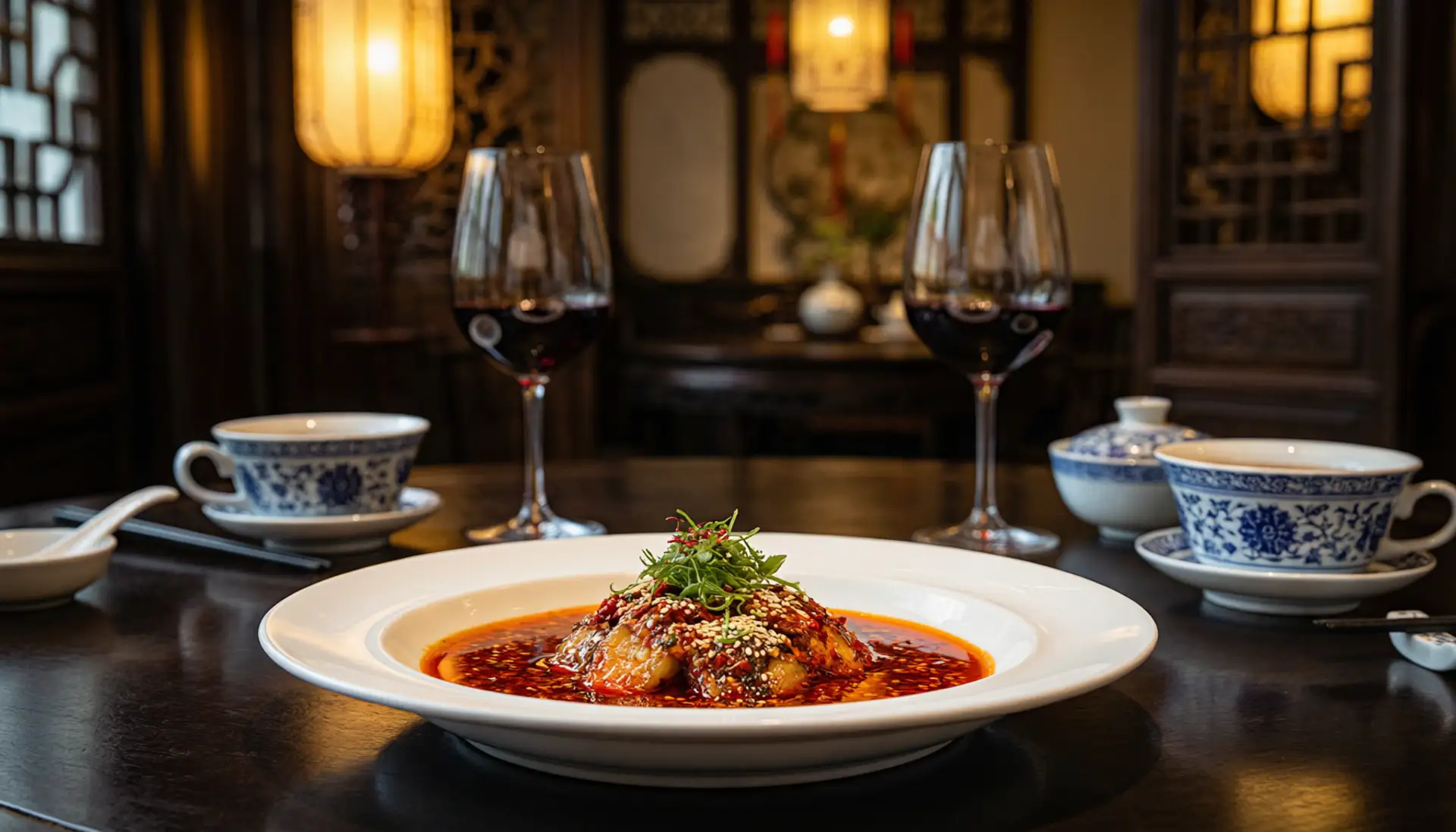
Yu Zhi Lan is Chengdu’s most celebrated contemporary Sichuan restaurant. The two-star Michelin designation recognizes its innovative approach: taking traditional Sichuan flavor profiles (numbing-spicy, fish-fragrant, strange-flavor, chili oil) and refining them into an elegant multi-course tasting menu.
Cuisine: Contemporary Sichuan tasting menu — traditional flavors refined to fine-dining level
Price: Estimated 600-1,200 RMB per person ($85-168)
Experience: Multi-course tasting menu with wine/tea pairing options
Reservations: Essential. Book 1-2 weeks in advance
Best for: Travelers who want to experience Sichuan cuisine at its most refined — this is the Sichuan equivalent of eating at a 2-star restaurant in Lyon or Kyoto
5.4 One-Star Standouts Worth Seeking
AuJardin — French-inspired fine dining in a garden setting. One of Chengdu’s most romantic restaurants. Wine list is exceptional. Price: 500-800 RMB per person.
Furonghuang — Elevated traditional Sichuan cuisine in a luxurious setting. If you want classic Sichuan dishes (mapo tofu, twice-cooked pork, boiled beef) prepared to Michelin standards, this is the place. Price: 400-700 RMB per person.
Muxun Chashi — Tea-pairing fine dining — courses are matched with different Sichuan teas rather than wine. A uniquely Chengdu dining concept. Price: 500-900 RMB per person.
Mawangzi — Creative Chinese cuisine with modern presentation. Known for artistic plating and seasonal ingredients. Price: 400-700 RMB per person.
C-O — Modern fusion cuisine combining Sichuan flavors with Western techniques. Minimalist, design-forward interior. Price: 400-700 RMB per person.
Fumanlou — Cantonese fine dining in an opulent setting. If you need a break from Sichuan spice, Fumanlou offers exquisite Cantonese dim sum and seafood. Price: 350-600 RMB per person.
5.5 Non-Michelin Fine Dining Recommendations
Beyond Michelin, Chengdu has several outstanding high-end restaurants worth seeking:
Silver Pot / Art Yinba: Premium hot pot in an art-gallery setting. Elevates Sichuan hot pot to a fine-dining experience. Price: 300-500 RMB per person.
Jiao Yan Hot Pot Art Museum: Hot pot as performance art — each ingredient is explained, each broth is curated. Price: 300-500 RMB per person.
Chengdu Chi Ke: Creative Sichuan cuisine in a design-forward space in Taikoo Li. Price: 200-400 RMB per person.
Taolin Restaurant: Modern Chinese dining with farm-to-table approach. Price: 250-450 RMB per person.
Quantum Boiling Hot Pot: Tech-enhanced hot pot with curated spice profiles and premium ingredients. Price: 300-500 RMB per person.
Chaimen Fan’er: Rustic-luxe Sichuan home cooking elevated to restaurant level. Comfort food at fine-dining quality. Price: 200-350 RMB per person.
5.6 Fine Dining Price Comparison
Restaurant | Michelin Status | Cuisine | Price/Person | Reservation Lead Time |
|---|---|---|---|---|
Xin Rong Ji | 3 Stars | Taizhou + Sichuan | 800-2,000 RMB | 2-4 weeks |
Yu Zhi Lan | 2 Stars | Contemporary Sichuan | 600-1,200 RMB | 1-2 weeks |
AuJardin | 1 Star | French-inspired | 500-800 RMB | 1 week |
Muxun Chashi | 1 Star | Tea-pairing Chinese | 500-900 RMB | 1 week |
Furonghuang | 1 Star | Elevated Sichuan | 400-700 RMB | 3-5 days |
Mawangzi | 1 Star | Creative Chinese | 400-700 RMB | 3-5 days |
C-O | 1 Star | Sichuan-Western fusion | 400-700 RMB | 3-5 days |
Fumanlou | 1 Star | Cantonese | 350-600 RMB | 3-5 days |
Silver Pot | Non-Michelin | Premium hot pot | 300-500 RMB | 2-3 days |
Jiao Yan | Non-Michelin | Hot pot art | 300-500 RMB | 2-3 days |
Quantum Boiling | Non-Michelin | Tech hot pot | 300-500 RMB | 2-3 days |
Chengdu Chi Ke | Non-Michelin | Creative Sichuan | 200-400 RMB | 1-2 days |
Taolin | Non-Michelin | Farm-to-table Chinese | 250-450 RMB | 1-2 days |
Chaimen Fan’er | Non-Michelin | Rustic Sichuan | 200-350 RMB | Walk-in OK |
6. Private Panda Experiences: VIP Access at the Chengdu Research Base
For a guided panda visit with entry timing and hotel transfers arranged for you, see this Chengdu panda tour.
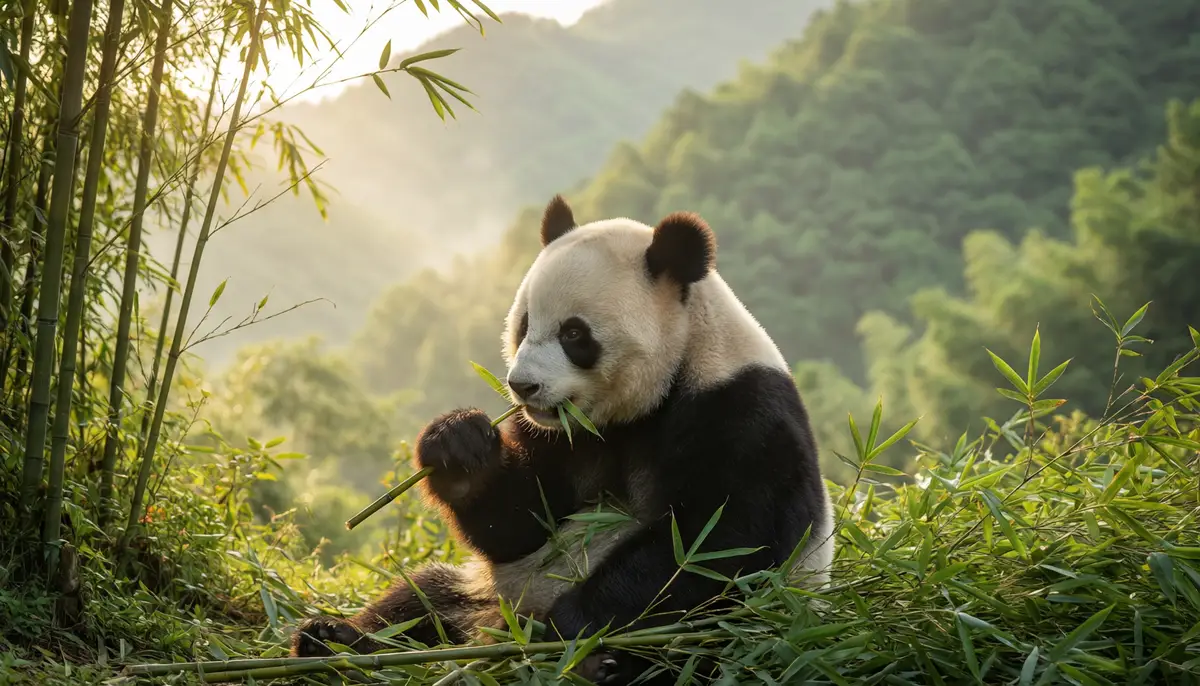
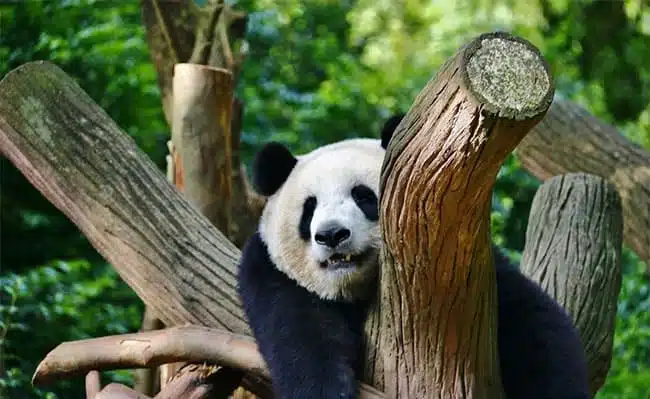
The Chengdu Research Base of Giant Panda Breeding is the world’s premier panda conservation facility, and it is the #1 reason most travelers visit Chengdu. For luxury travelers, the standard panda visit (walking through the park with crowds) is insufficient. Here is how to elevate the panda experience to luxury level.
6.1 VIP Early-Entry Panda Tour
The standard panda base opens at 7:30 AM, but most tour groups arrive between 9-11 AM. A VIP early-entry tour gets you into the park before public opening, allowing you to see pandas at their most active (morning feeding time) without the crowds. Pandas are crepuscular — most active at dawn and dusk — so arriving early is not just about avoiding crowds, it is about seeing pandas actually moving, eating, and playing rather than sleeping.
Arrangement: Book through your hotel concierge (St. Regis, Ritz-Carlton, and Upper House all arrange this) or a private tour operator
Cost: 500-1,500 RMB per person ($70-210) depending on group size and exclusivity
Includes: Private guide, private vehicle, early entry (typically 7:00 AM), priority access to key viewing areas
Duration: 2-3 hours including transport
6.2 Panda Helicopter Tour (“Panda Flying”)
One of Chengdu’s most unique luxury experiences — a helicopter sightseeing flight over the panda base and surrounding countryside. Operated from the panda base parking area using Robinson R44 helicopters.
Aircraft: Robinson R44 light helicopter (3 passengers per flight)
Duration: Approximately 5-6 minutes flight time
Price: 398 RMB per person ($56) | 776 RMB for two ($109) | 1,099 RMB for family of 3-4 ($154)
Hours: 9:00 AM - 5:00 PM, weather permitting
Booking: Via the “Panda Flying” WeChat mini-program (xiong mao fei de) or at the helicopter pad on-site
Views: Aerial view of the panda base, surrounding bamboo forests, and Chengdu countryside
6.3 Dujiangyan Panda Volunteer Program
For the ultimate panda experience, the Dujiangyan Panda Base (different from the Chengdu Research Base) offers a volunteer program where you can help prepare panda food, clean enclosures, and observe pandas behind the scenes. This is a full-day experience 60 km from Chengdu (90 minutes by car).
Location: Dujiangyan Panda Park — 60 km from Chengdu city
Duration: Full day (approximately 8 hours including transport)
Cost: Approximately 700-1,500 RMB per person ($98-210) depending on the program level
Requirements: Advance booking required (1-2 weeks), health screening, age restrictions (usually 12+), no open wounds or contagious illness
What you do: Prepare bamboo and panda bread, clean enclosures (not with pandas inside), observe feeding, learn about conservation
Best for: Families with older children, wildlife enthusiasts, travelers who want more than photography
6.4 Standard Panda Base Visit (If You Skip VIP)
If you choose the standard visit without VIP access, here is how to optimize it:
Arrive at 7:30 AM: Be at the gate when it opens. The first hour is the least crowded.
Go to the panda kindergarten first: The most popular area — get there before the tour groups arrive around 9:30 AM.
Visit the red pandas: Often overlooked, red pandas are in a walk-through enclosure where they may cross your path.
Avoid weekends and holidays: Weekday mornings are 50% less crowded than weekends.
Hire a guide: English-speaking guides at the entrance cost 100-200 RMB and provide valuable context about panda biology and conservation.
7. Sichuan Opera & Face-Changing: An Exclusive Evening Guide
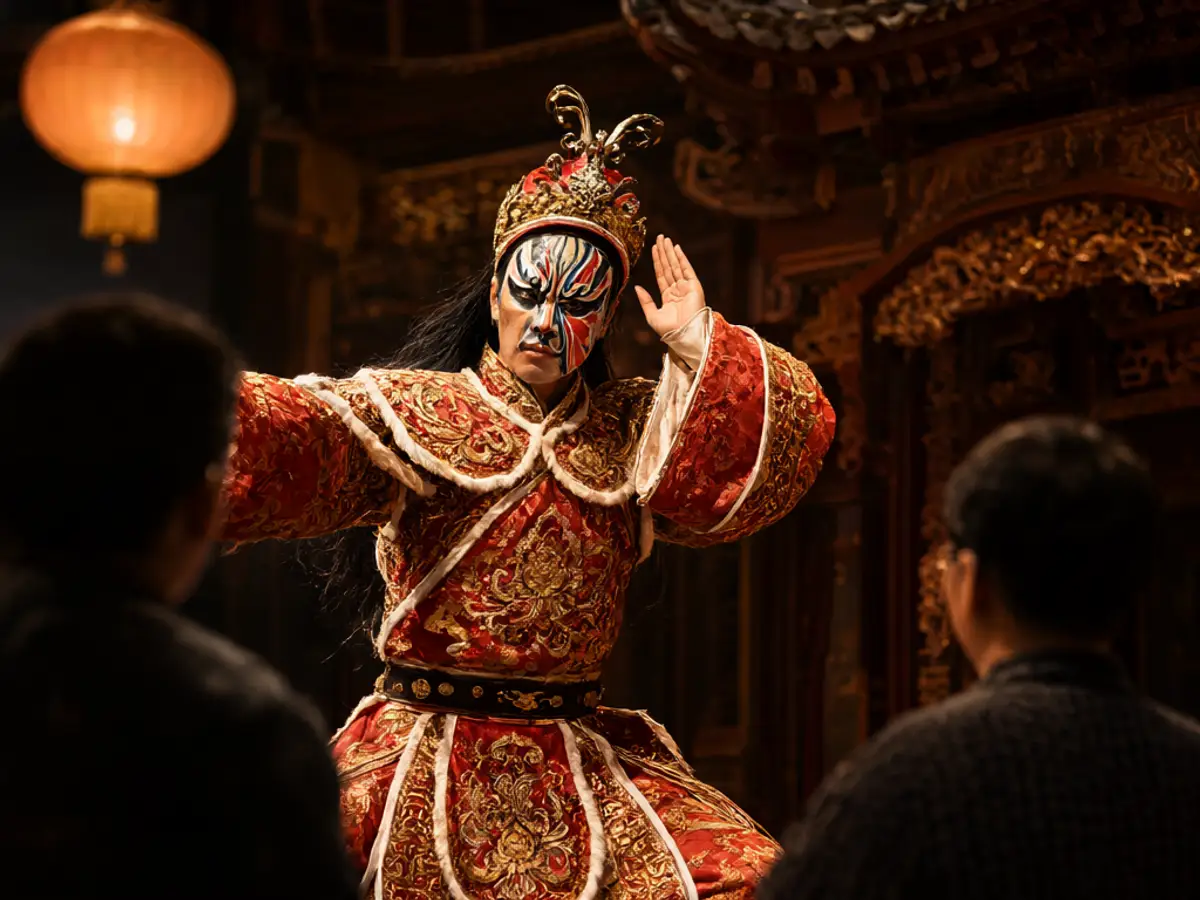
Sichuan Opera is one of China’s oldest and most distinctive theatrical traditions, dating back to the Tang Dynasty. Its most famous element is Bian Lian (face-changing) — a technique where performers change their painted silk masks instantaneously, sometimes in a fraction of a second, with a swift head movement. The secret of how the masks change has been closely guarded for centuries and was only recently revealed to involve hidden silk threads and mechanical toggles hidden in the costume.
7.1 Where to See Sichuan Opera in Chengdu
Venue | Location | Experience | Price | Best For |
|---|---|---|---|---|
Shufeng Yayun Sichuan Opera House | Culture Park, near Qingyang Palace | Traditional opera with face-changing, fire-spitting, hand-shadow performance | 120-380 RMB ($17-53) | Authentic traditional experience |
Shuyanfu Dinner Show | Near Jinli area | 8-course banquet dinner with cultural performances including opera and music | 500-1,200 RMB ($70-168) | Luxury dinner-and-show combination |
Jinli Street open-air stage | Jinli Ancient Street | Free street performances of opera excerpts and face-changing | Free | Casual cultural encounter |
Hotel-arranged private performance | Your hotel (St. Regis, Ritz-Carlton) | Private face-changing performance for hotel guests | 1,000-3,000 RMB | Exclusive private experience |
7.2 What to Expect at Shufeng Yayun
Shufeng Yayun is the most established Sichuan Opera venue for visitors. Located in Culture Park near Qingyang Palace, it offers daily performances that include:
• Sichuan Opera selections (high-pitched singing, dramatic movements, traditional costumes)
• Bian Lian (face-changing) — the highlight, with performers changing 10+ masks in seconds
• Fire-spitting (tu huo) — performers breathe fire as part of the drama
• Hand-shadow puppetry — intricate shadow figures created with bare hands
• Chinese comic dialogue (xiang sheng) — humorous performance (in Chinese)
• Lute (pipa) and erhu musical performances
Show times: Daily, typically evening performances (7:30-9:30 PM)
Duration: Approximately 80-90 minutes
Ticket tiers: VIP (front rows, includes tea service), A-class (good central seats), B-class (rear seats)
Booking: Through your hotel concierge, CTrip, or at the venue (book 1-2 days in advance)
Photography: Allowed but no flash. The face-changing happens too fast for most cameras — enjoy it live.
7.3 Shuyanfu: Luxury Dinner Show
For a luxury take on Sichuan Opera, Shuyanfu offers an 8-course royal banquet dinner combined with cultural performances including opera singing, face-changing, instrumental music, and dance. This is the most upscale way to experience Sichuan’s performing arts — you dine on elevated Sichuan cuisine in a beautiful setting while performers move between tables.
Location: Near Jinli / Wuhou Temple area
Duration: Approximately 2 hours (dinner + show)
Price: 500-1,200 RMB per person depending on seating tier and menu
Best for: Couples, luxury travelers who want dining and culture combined, visitors who want an atmospheric evening
Cultural context: Sichuan Opera is not like Western opera — it is more akin to a variety show with multiple short performances. You do not need to understand Chinese to enjoy it. The face-changing and fire-spitting are visual spectacles that transcend language. The music and singing are an acquired taste for Western ears, but the atmosphere, costumes, and energy make it a memorable cultural experience.
8. Tea Culture & Private Tea Ceremonies in Chengdu
Go deeper at the source with our Mengding Mountain tea origin guide.
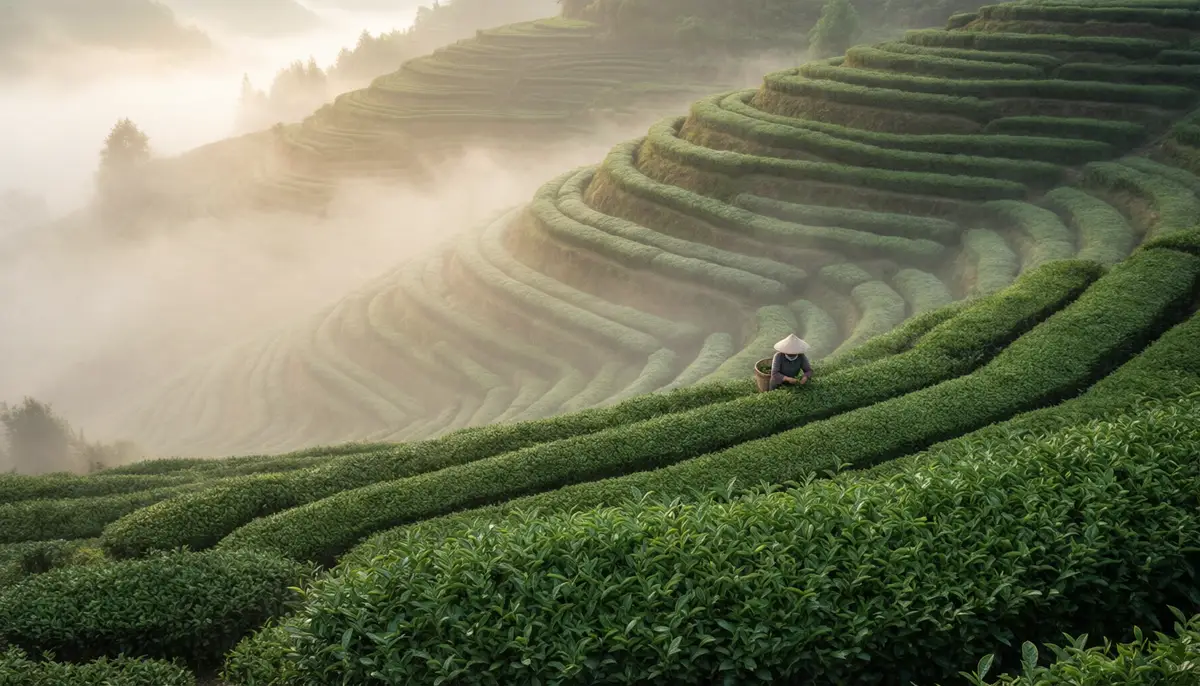
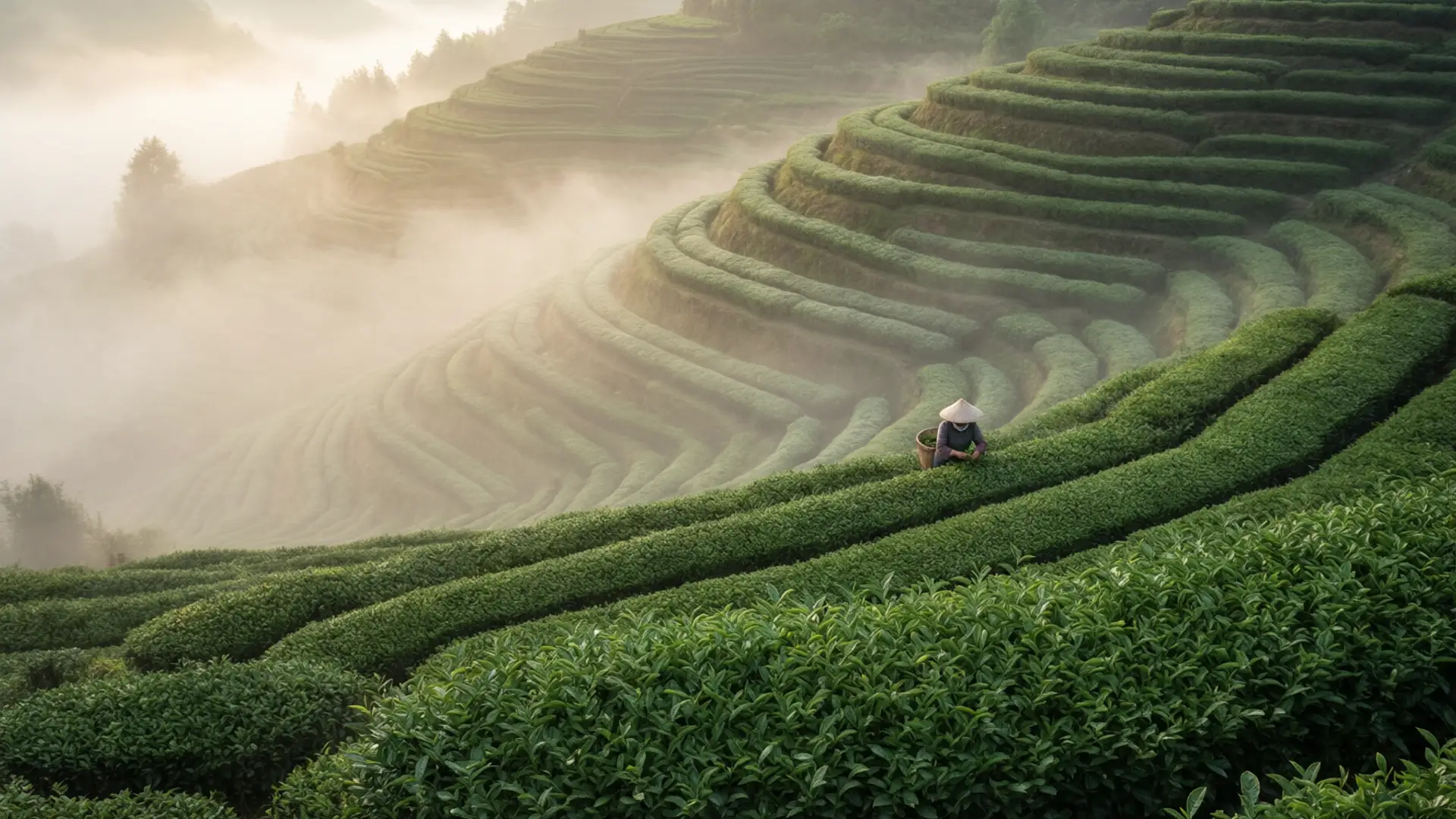
Chengdu is China’s tea culture capital. The city has an estimated 10,000 teahouses — more than any other city in China. Tea is not just a beverage here; it is a way of life, a social institution, and a luxury experience that predates the concept of luxury by centuries. For luxury travelers, Chengdu’s tea culture offers a unique form of “slow luxury” — the indulgence of time, attention, and ritual.
8.1 Heming Teahouse — People’s Park
Heming Teahouse is the most famous traditional teahouse in Chengdu, located in People’s Park (Renmin Gongyuan). Established over a century ago, it is the quintessential Chengdu teahouse experience: bamboo chairs, gaiwan tea bowls, ear-cleaners, and a lively atmosphere where locals play mahjong, read newspapers, and socialize for hours.
Location: Inside People’s Park, near Tianfu Square (walking distance from Ritz-Carlton)
Price: 15-50 RMB ($2-7) for a pot of tea — the most affordable luxury in Chengdu
Experience: Order gaiwan tea (covered bowl tea), find a bamboo chair, and spend 1-2 hours observing local life
Tea types: Mao Feng (green), Jasmine, Zhuyeqing (Bamboo Leaf Green), Gou Gou Cha (dark tea)
Best time: Morning (9-11 AM) for peaceful atmosphere; afternoon (2-4 PM) for lively social scene
Services: Ear cleaning (traditional service, 30-50 RMB), fortune telling, massage
8.2 Private Tea Ceremony Experience
For a more elevated tea experience, several venues and hotels offer private gongfu tea ceremonies — multi-course tastings where a tea master guides you through brewing and tasting several premium Sichuan teas, explaining the history, terroir, and brewing technique of each.
Muxun Chashi (Michelin-starred): Tea-pairing fine dining — courses matched with different Sichuan teas. 500-900 RMB per person.
Six Senses Qingcheng tea lounge: Curated tea service in a mountain resort setting. Included for hotel guests or available to day visitors.
Hotel-arranged ceremony: Upper House, St. Regis, and Ritz-Carlton can arrange private tea ceremonies with a master, typically 200-500 RMB per person.
Wenshu Monastery teahouse: A Buddhist monastery teahouse where you can drink tea in a serene temple courtyard. 20-40 RMB for tea. The most atmospheric budget tea experience in Chengdu.
8.3 Sichuan Tea Types: A Luxury Traveler’s Guide
Tea | Type | Flavor Profile | Best For | Price (loose leaf) |
|---|---|---|---|---|
Zhuyeqing (Bamboo Leaf Green) | Green tea | Fresh, vegetal, slightly sweet, clean finish | Morning, hot weather | 200-2,000 RMB/50g |
Mengding Ganlu | Green tea | Sweet, floral, delicate — one of China’s oldest teas | Afternoon, contemplation | 150-1,500 RMB/50g |
Emei Xueya | Green tea | Crisp, grassy, slightly nutty | Casual drinking | 80-500 RMB/50g |
Sichuan Black Tea (Chuan Hong) | Black tea | Malty, caramel, smooth — excellent with food | Afternoon, after meals | 100-800 RMB/50g |
Ya’an Tibetan Tea | Dark tea (post-fermented) | Earth, woody, smooth — similar to puerh | Digestion, evening | 100-2,000 RMB/50g |
Jasmine Sichuan | Scented tea | Floral, fragrant, refreshing | Afternoon, social occasions | 50-400 RMB/50g |
9. Luxury Shopping in Chengdu: Taikoo Li, IFS & SKP Guide
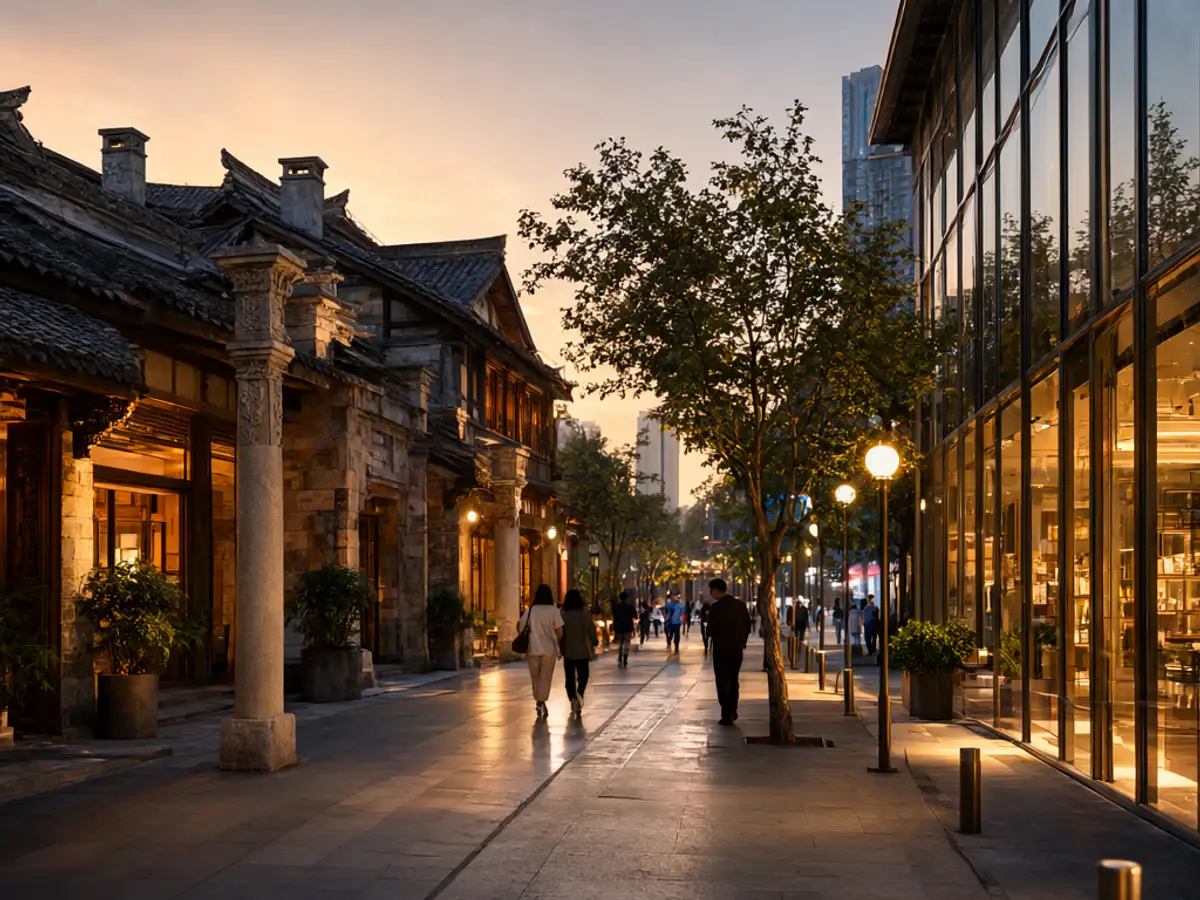
Chengdu has become western China’s luxury shopping capital. Three major retail complexes offer the full spectrum of global luxury brands, from Hermès and Chanel to Cartier and Louis Vuitton, alongside unique local design boutiques and cultural retail experiences.
9.1 Taikoo Li (Sino-Ocean Taikoo Li)
Taikoo Li is not just a shopping mall — it is an architectural masterpiece that blends preserved Qing Dynasty heritage buildings with cutting-edge contemporary retail design. The open-air complex features two lanes (East and West) organized around the historic Daci Temple, creating a shopping environment that feels more like a historic neighborhood than a mall.
Brands: Hermès, Chanel, Gucci, Cartier, Louis Vuitton, Dior, Loewe, Tiffany & Co., plus contemporary brands and local designers
Architecture: Preserved Qing Dynasty buildings house some boutiques; modern glass-and-steel pavilions house others
Dining: Multiple cafes, restaurants, and bars integrated into the complex
Location: Jinjiang District, adjacent to Upper House hotel and walking distance from St. Regis and Niccolo
Best for: Designer shopping, people-watching, architectural photography, cafe culture
Tips: The East Lane has more luxury brands; the West Lane has more lifestyle and dining. Visit in the evening when lighting is most beautiful.
9.2 IFS (International Finance Square)
IFS is Chengdu’s premier luxury retail tower — a 7-story shopping complex anchored by Niccolo Hotel and topped by the famous giant panda sculpture that has become Chengdu’s most photographed landmark. IFS concentrates the most luxury brands per square meter of any Chengdu shopping destination.
Brands: Chanel, Hermès, Cartier, Louis Vuitton, Prada, Salvatore Ferragamo, Burberry, and more
Panda sculpture: The IFS rooftop panda (designed by Lawrence Argent) is climbable — you can go to the rooftop and take photos with the panda’s face peeking over the building edge
Dining: Multiple floors of restaurants including international and Chinese fine dining
Location: Jinjiang District, Hongxing Road — Niccolo Hotel is inside the building
Best for: One-stop luxury shopping, the iconic panda photo, international brand flagship stores
9.3 SKP Chengdu
SKP is Chengdu’s newest luxury shopping destination, opened in the Hi-Tech Zone near Waldorf Astoria. SKP is a Beijing-origin luxury department store brand, and the Chengdu location brings a more curated, exclusive retail experience compared to the mass-luxury of IFS.
Brands: Ultra-luxury focus including Bottega Veneta, Celine, Balenciaga, Saint Laurent, and exclusive Chengdu first-to-market brands
Location: Hi-Tech Zone / Financial City — near Waldorf Astoria and Fairmont
Best for: Ultra-luxury shopping, brands not available at IFS, curated department store experience
Design: Underground retail concept with natural light wells — a distinctive shopping environment
9.4 Luxury Shopping Comparison
Mall | Location | Luxury Level | Best Brands | Unique Feature | Nearby Hotel |
|---|---|---|---|---|---|
Taikoo Li | Jinjiang / Daci Temple | Designer + luxury | Hermes, Chanel, Cartier | Heritage architecture + open-air | Upper House |
IFS | Jinjiang / Hongxing Rd | Luxury flagship | LV, Prada, Cartier | Rooftop panda sculpture | Niccolo / Grand Hyatt |
SKP | Hi-Tech Zone | Ultra-luxury | Celine, Balenciaga, Bottega | Underground concept store | Waldorf Astoria |
The Ring | Jinjiang / Riverside | Lifestyle + premium | Mixed lifestyle + dining | Newest riverside complex | Hyatt Centric |
Chunxi Road | Jinjiang / Downtown | Mid-to-luxury | Mixed international + domestic | Historic shopping street | St. Regis |
in99 | Hi-Tech Zone | Lifestyle + premium | Mixed lifestyle brands | Newest lifestyle mall | Waldorf Astoria |
10. Spa & Wellness: Chengdu’s Best Luxury Spa Experiences
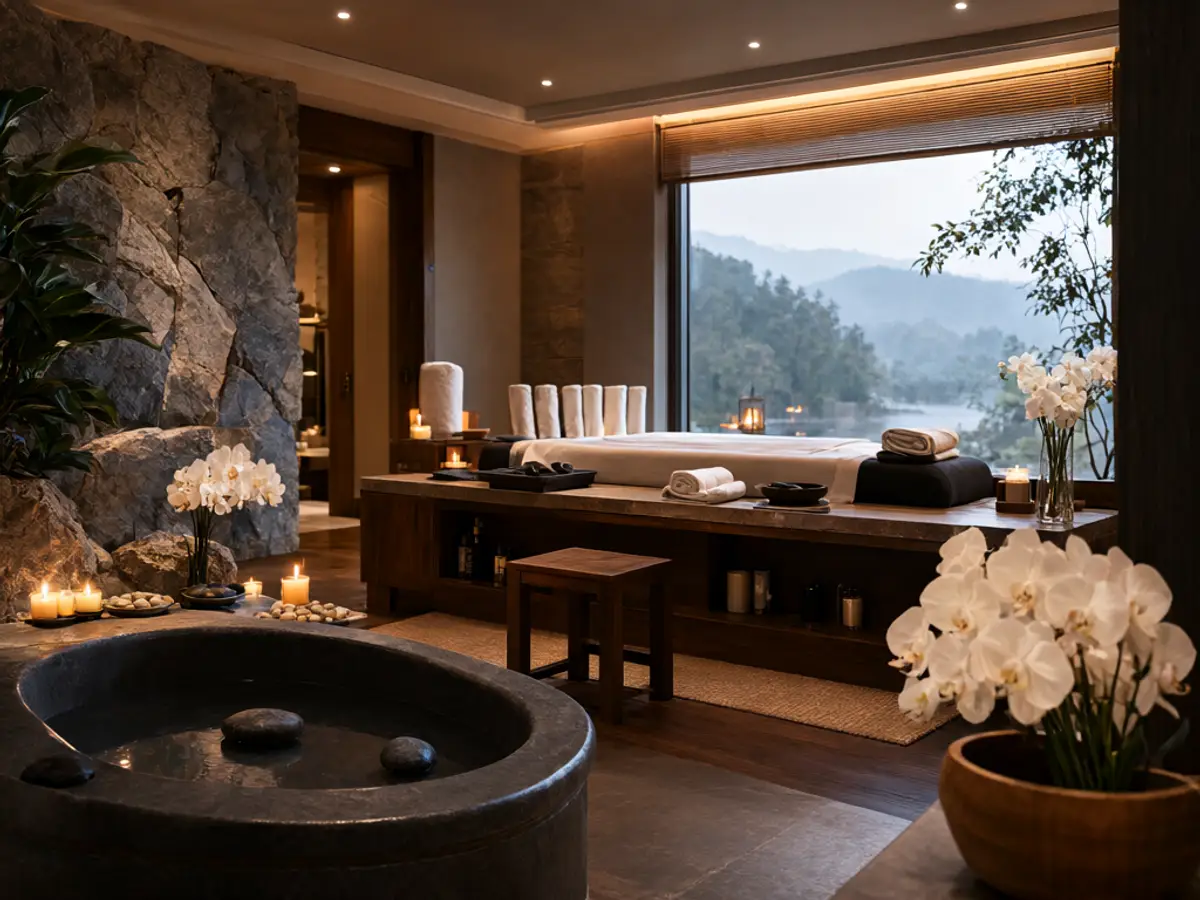
Chengdu offers two tiers of luxury spa experiences: hotel spas in the city (for daily treatments) and resort spas at Mount Qingcheng (for multi-day wellness retreats). Together, they make Chengdu one of Asia’s emerging wellness destinations.
10.1 City Hotel Spas
Spa | Hotel | Specialty | Price Range | Unique Feature |
|---|---|---|---|---|
Mi Xun Spa | Upper House | Holistic wellness in Qing Dynasty courtyard | 800-2,500 RMB | 900 sqm sanctuary, 11 suites, diamond facials |
The Ritz-Carlton Spa | Ritz-Carlton | Forbes-rated treatments | 600-2,000 RMB | Forbes Travel Guide recognition |
Iridium Spa | St. Regis | Luxury treatments + mineral therapies | 600-1,800 RMB | Remede bath products, indoor + outdoor pools |
Waldorf Astoria Spa | Waldorf Astoria | High-floor spa with city views | 700-2,000 RMB | Elevated spa experience |
Fairmont Spa | Fairmont | Shu culture-inspired wellness | 500-1,500 RMB | Sauna, hot tub, wellness lounge |
Mi Xun Spa — The Crown Jewel
Mi Xun Spa at Upper House Chengdu is in a category of its own. Set in a preserved Qing Dynasty courtyard on the site of Daci Temple’s ancient mulberry garden, the 900-square-meter spa offers 11 treatment suites, a sauna, and a hammam. Signature treatments include diamond-infused facials, ocean-stone massages, and customized wellness journeys. The atmosphere — ancient brick walls, warm wood, and natural light filtered through courtyard trees — creates a setting no other spa in China can replicate.
10.2 Six Senses Qingcheng — Wellness Retreat
Six Senses Qingcheng Mountain is the only true wellness retreat resort in the Chengdu area. Located at the gateway to Mount Qingcheng (UNESCO World Heritage Site), it offers multi-day wellness programs that go beyond individual treatments:
Wellness programs: 3, 5, and 7-day wellness journeys including yoga, meditation, detox, stress management, and sleep enhancement
Treatments: Six Senses signature therapies, traditional Chinese medicine consultations, holistic wellness assessments
Activities: Yoga and meditation in mountain settings, guided hikes on Mount Qingcheng, Taoist wellness practices
Dining: Farm-to-table cuisine with wellness-focused menus, Sichuan tea service
Price: 2,200-5,000 RMB/night for rooms; villas up to 13,500 RMB. Wellness programs priced separately.
Best for: Travelers seeking a genuine wellness retreat — not just a massage but a multi-day reset
10.3 Traditional Chinese Wellness Experiences
Beyond hotel spas, Chengdu offers traditional wellness experiences that are uniquely Chinese:
Tuina massage: Traditional Chinese therapeutic massage available at wellness centers throughout the city. 100-300 RMB per session.
Cupping therapy (ba guan): Fire cupping or suction cupping for muscle tension and circulation. Available at traditional medicine clinics. 80-200 RMB.
Foot reflexology: Chengdu has excellent foot reflexology lounges — a local tradition. 80-200 RMB for 60-90 minutes.
Herbal bath: Sichuan herbal baths using local medicinal plants. Available at some hotel spas and traditional wellness centers.
11. Cocktails & Rooftop Bars: Chengdu’s Luxury Nightlife Scene
Chengdu’s cocktail and wine bar scene has evolved dramatically. No longer just a hot pot and beer city, Chengdu now has sophisticated rooftop bars, speakeasies, and wine lounges that rival those of Shanghai and Beijing. This is a dimension that almost no competitor luxury guide covers — yet it is one of the city’s most appealing luxury lifestyle assets.
11.1 Top Luxury Bars in Chengdu
Bar | Location | Vibe | Signature | Price |
|---|---|---|---|---|
FLAIR | Ritz-Carlton (high floor) | Rooftop luxury, panoramic city views | Champagne cocktails, international spirits | 120-300 RMB/drink |
Vantage XXVII | St. Regis (27th floor) | Sophisticated rooftop, sunset views | Craft cocktails, champagne by the glass | 100-250 RMB/drink |
Upper House bar | Upper House lobby | Boutique luxury, intimate | Sichuan-inspired cocktails, premium teas | 80-200 RMB/drink |
Niccolo bar | Niccolo (IFS) | Modern, city-view | International cocktails, afternoon tea | 80-180 RMB/drink |
Waldorf Peacock Alley | Waldorf Astoria lobby | Classic luxury, live music | Waldorf signature cocktails, champagne | 100-250 RMB/drink |
Grand Hyatt lobby bar | Grand Hyatt (IFS) | Lively, modern | Signature martinis, afternoon tea | 80-180 RMB/drink |
Hyatt Centric rooftop | Hyatt Centric The Ring | Trendy, riverside views | Botanical cocktails, local gin | 80-200 RMB/drink |
Wanda Reign lobby bar | Wanda Reign | Bold Chinese luxury, river view | Chinese-inspired cocktails, premium baijiu | 80-180 RMB/drink |
11.2 Speakeasies & Independent Cocktail Bars
Beyond hotel bars, Chengdu has a growing independent craft cocktail scene, particularly in the Jiuyan Bridge (jiuyan qiao) area along the river:
Jiuyan Bridge bar street: A cluster of bars along the Jinjiang River — from casual to upscale. Best for bar-hopping.
Taikoo Li bars: Several cocktail bars and wine bars integrated into the Taikoo Li complex — sophisticated, design-forward venues.
Speakeasies: Ask your hotel concierge for current recommendations — the speakeasy scene changes frequently, with hidden entrances and password-requirement bars opening and closing regularly.
11.3 Wine Culture in Chengdu
Chengdu’s wine culture is young but growing. Several hotel restaurants (particularly Ritz-Carlton’s Li Xuan and Waldorf Astoria’s dining venues) have serious wine lists curated by sommeliers. For wine shopping, IFS and SKP have premium wine boutiques. Muxun Chashi offers tea-pairing as an alternative to wine-pairing — a uniquely Chengdu concept.
12. Sanxingdui Museum: Discovering the Ancient Shu Civilization
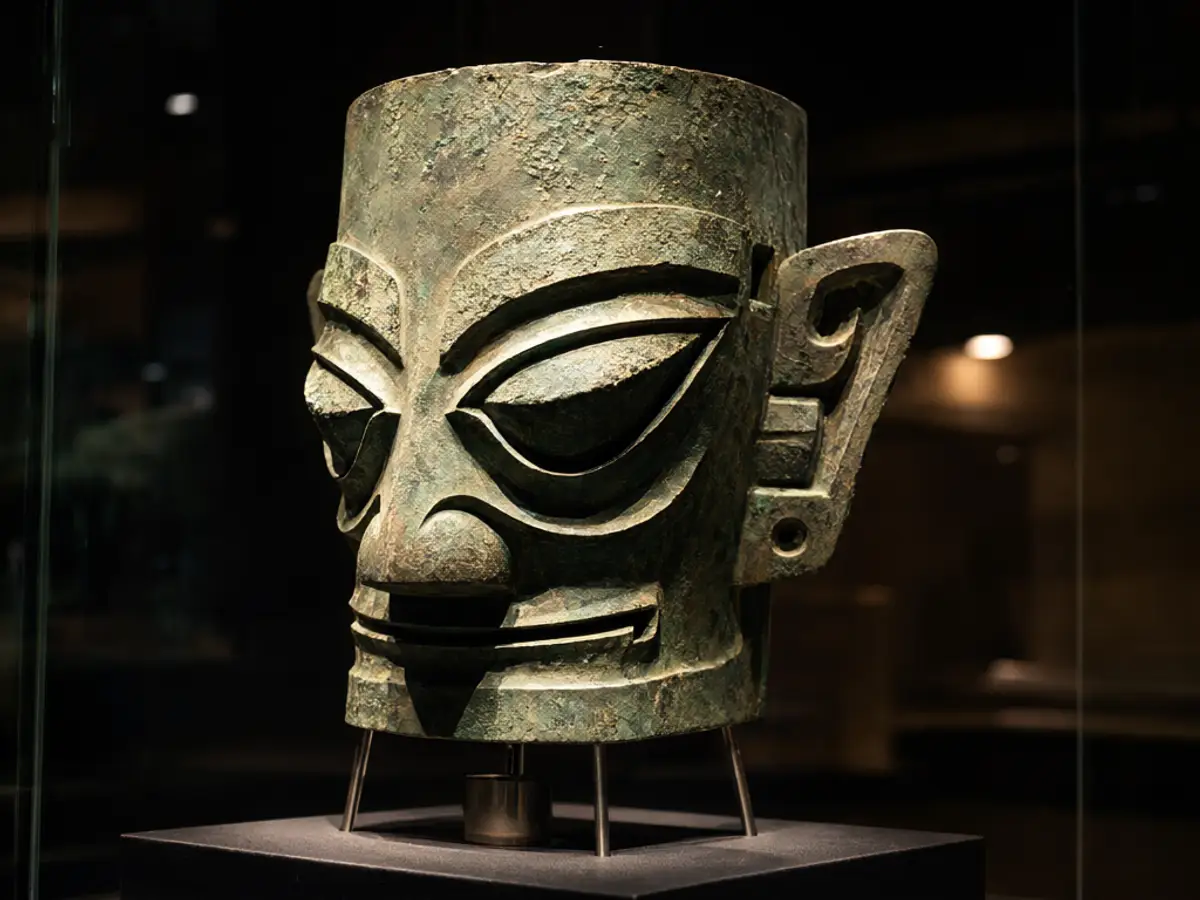
No competitor luxury guide covers Sanxingdui in depth, yet it is one of the most extraordinary archaeological discoveries of the 20th century — and it is less than 90 minutes from Chengdu. For luxury travelers interested in culture beyond pandas and hot pot, Sanxingdui is a must-visit.
12.1 What Is Sanxingdui?
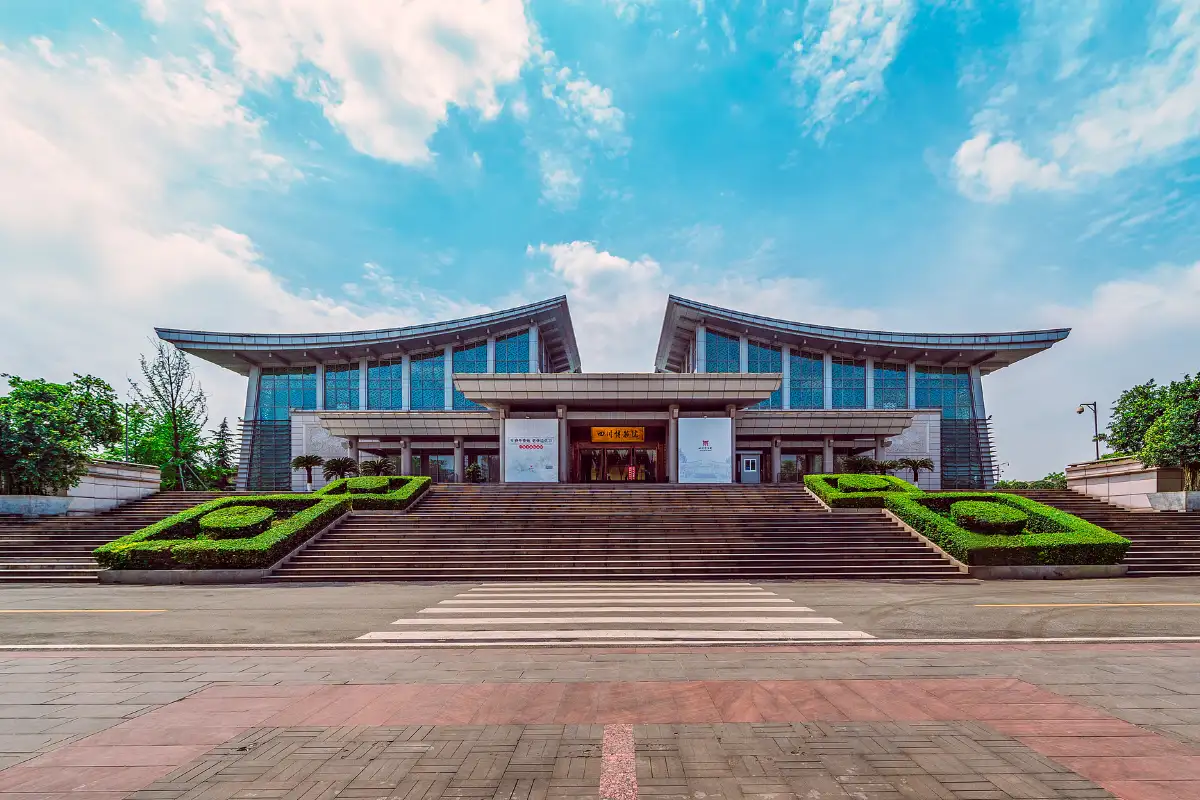
Sanxingdui (“Three Star Mound”) is an archaeological site near Guanghan, 40 km north of Chengdu. Discovered in 1986, it revealed the remains of a previously unknown Bronze Age civilization — the Shu Kingdom — that flourished 3,000-4,000 years ago, contemporary with ancient Egypt and Mesopotamia. The artifacts are staggering: bronze masks with protruding eyes (some over 1 meter wide), gold scepters, jade tablets, and the world’s largest bronze standing figure (2.62 meters tall).
What makes Sanxingdui revolutionary is that it overturned the long-held belief that Chinese civilization originated solely in the Yellow River valley. The Shu civilization in Sichuan was independently sophisticated, with bronze casting techniques rivaling anything in the ancient world.
12.2 Visiting the Sanxingdui Museum
Location: Guanghan City, 40 km north of Chengdu (60-90 minutes by car)
Opened: Original museum 1997; spectacular new building opened 2023
Ticket: 60-72 RMB ($8-10)
Duration: 3-4 hours for the museum; half-day including transport
Highlights: The 2.62-meter bronze standing figure, the 1-meter-wide bronze masks with protruding eyes, the gold mask (recently discovered in 2021), the bronze sacred tree (3.96 meters tall)
Best for: Culture lovers, history enthusiasts, travelers who want to understand the deep roots of Sichuan civilization
12.3 Luxury Access
For a luxury experience, arrange a private car and guide through your hotel concierge. A half-day private tour including car, guide, and skip-the-line tickets costs approximately 800-1,500 RMB ($110-210) per person. Combine Sanxingdui with a stop at the Jinsha Site Museum in Chengdu (a related Shu civilization site) for a full day of archaeological exploration.
Why Sanxingdui matters for luxury travelers: It is the cultural key to understanding Chengdu. The giant Buddha, the Taoist mountains, the teahouses — all of these sit on top of a 3,000-year-old civilization that was already sophisticated when Europe was in the Bronze Age. Seeing Sanxingdui first gives depth and context to everything else you experience in Chengdu.
13. Cultural Districts: Jinli, Kuanzhai Alley & Wenshu Monastery
Orient yourself first with our Chengdu travel guide, then cap the day on the Jinjiang River night cruise.
Chengdu’s old city districts offer luxury travelers atmospheric alternatives to the modern shopping areas. These districts combine historic architecture, local food, traditional crafts, and cultural atmosphere — the “soul” of Chengdu that sits alongside its luxury infrastructure.
13.1 Jinli Ancient Street
Jinli is Chengdu’s most famous pedestrian street — a 350-meter lane of traditional-style architecture that recreates a Qing Dynasty market street. While touristy, it is atmospheric, especially in the evening when red lanterns illuminate the lane. Entry is free.
Location: Adjacent to Wuhou Temple (Wuhouci), 10 minutes by taxi from Taikoo Li
What to see: Traditional crafts (sugar painting, shadow puppetry, face-changing street performances), snack food stalls, souvenir shops
Best time: Evening (6-9 PM) when lanterns are lit and the street performance stage is active
Tips: Snacks are overpriced here — eat for atmosphere, not for quality. Buy souvenirs here but check prices carefully.
Combine with: Wuhou Temple (Three Kingdoms history) and Shufeng Yayun Opera House nearby
13.2 Kuanzhai Alley (Wide and Narrow Alleys)
Kuanzhai Alley is Chengdu’s most atmospheric heritage district — three parallel lanes (Wide Alley, Narrow Alley, and Well Alley) lined with preserved Qing Dynasty courtyard houses, now converted into teahouses, boutique shops, restaurants, and bars. It is the closest Chengdu gets to Beijing’s hutong culture.
Location: Qingyang District, 10 minutes by metro from Tianfu Square (near Ritz-Carlton)
What to see: Heritage courtyard architecture, boutique teahouses, local crafts, street snacks, traditional gate houses
Best for: Afternoon tea in a courtyard, photography, buying traditional crafts
Tips: The alleys are free to enter. The best teahouses are in the Wide Alley (Kuan Xiangzi). Visit in the afternoon for the best light.
Luxury angle: Several high-end restaurants and boutique shops have opened in the alleys, making it a blend of authentic heritage and curated luxury
13.3 Wenshu Monastery Area
Wenshu Monastery (Wenshu Yuan) is Chengdu’s best-preserved Buddhist monastery, dating to the Tang Dynasty. The monastery itself is serene and free to enter. The surrounding neighborhood has become Chengdu’s most appealing cultural district for luxury travelers — a grid of lanes with teahouses, vegetarian restaurants, independent bookshops, and design boutiques.
Location: Qingyang District, near Ritz-Carlton (15-minute walk)
What to see: Tang Dynasty monastery architecture, Buddhist chanting, vegetarian restaurant (Xiang Tang), teahouse in the monastery courtyard
Teahouse: The monastery teahouse is one of the most peaceful in Chengdu — drink tea in a courtyard surrounded by monks, incense, and ancient trees. 20-40 RMB for tea.
Best for: Morning or afternoon contemplation, tea in a spiritual setting, photography of architecture and incense
14. Luxury Day Trips from Chengdu: UNESCO Sites & Beyond
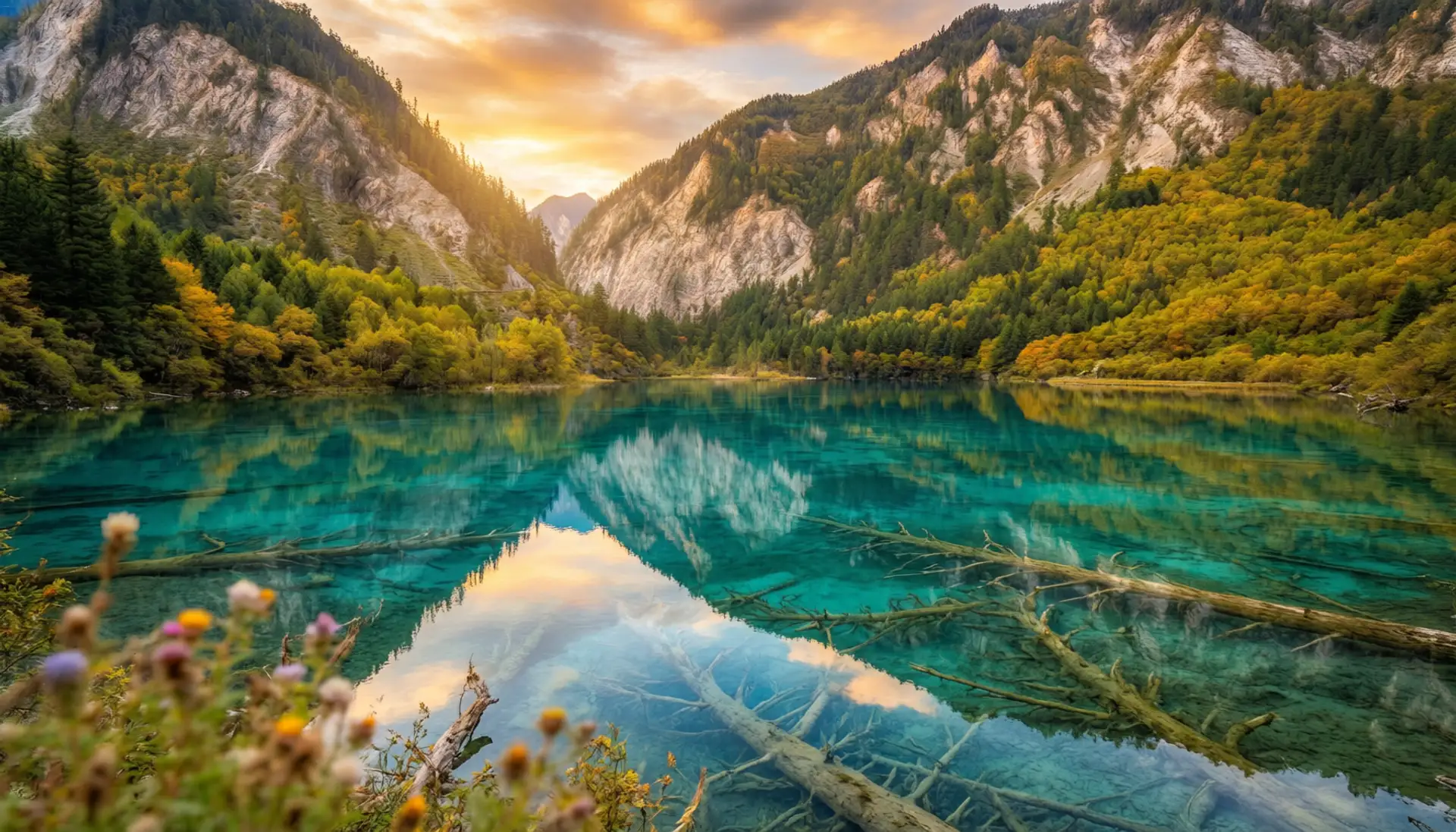
Two unmissable additions: the Jiuzhaigou route from Chengdu and the Mount Qingcheng Taoist retreat.
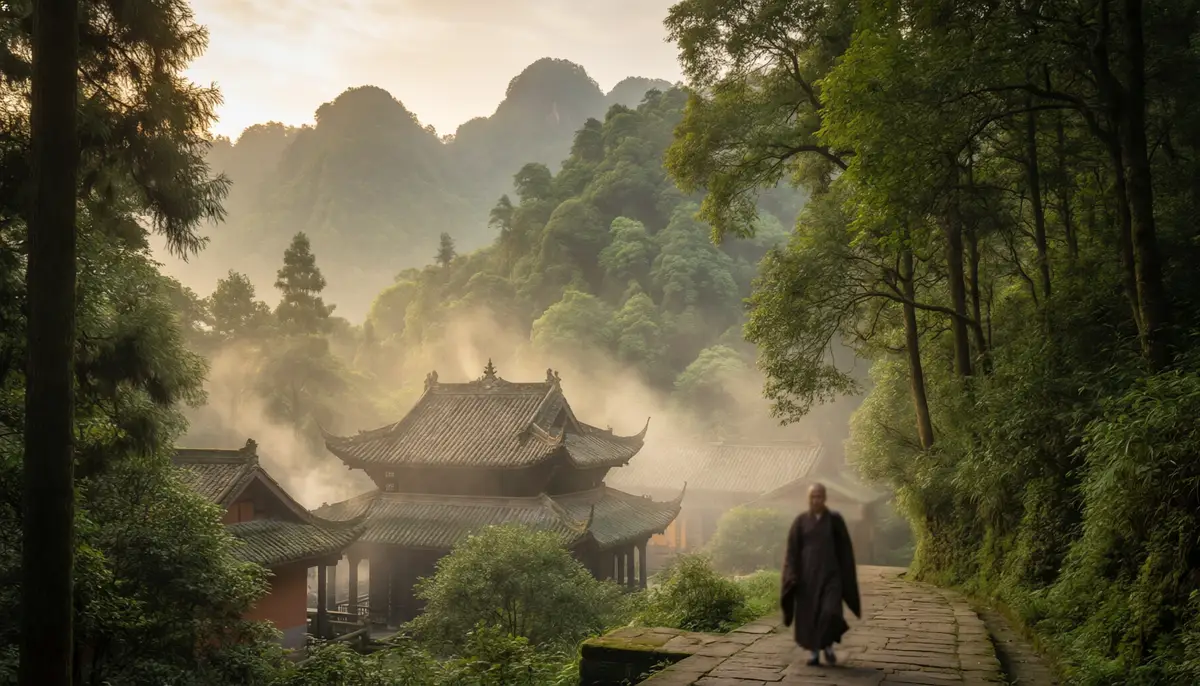
Chengdu is the base for some of the most spectacular day trips in China — all accessible within 90 minutes. For luxury travelers, these trips can be arranged with private car, guide, and VIP access.
14.1 Mount Qingcheng & Dujiangyan (UNESCO World Heritage)
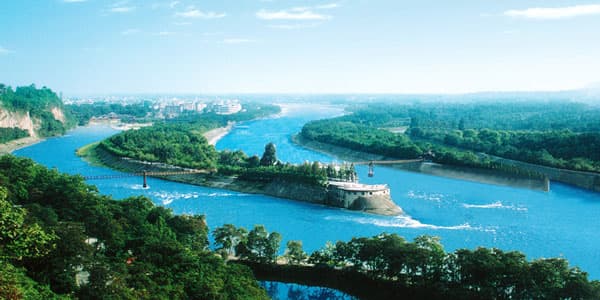
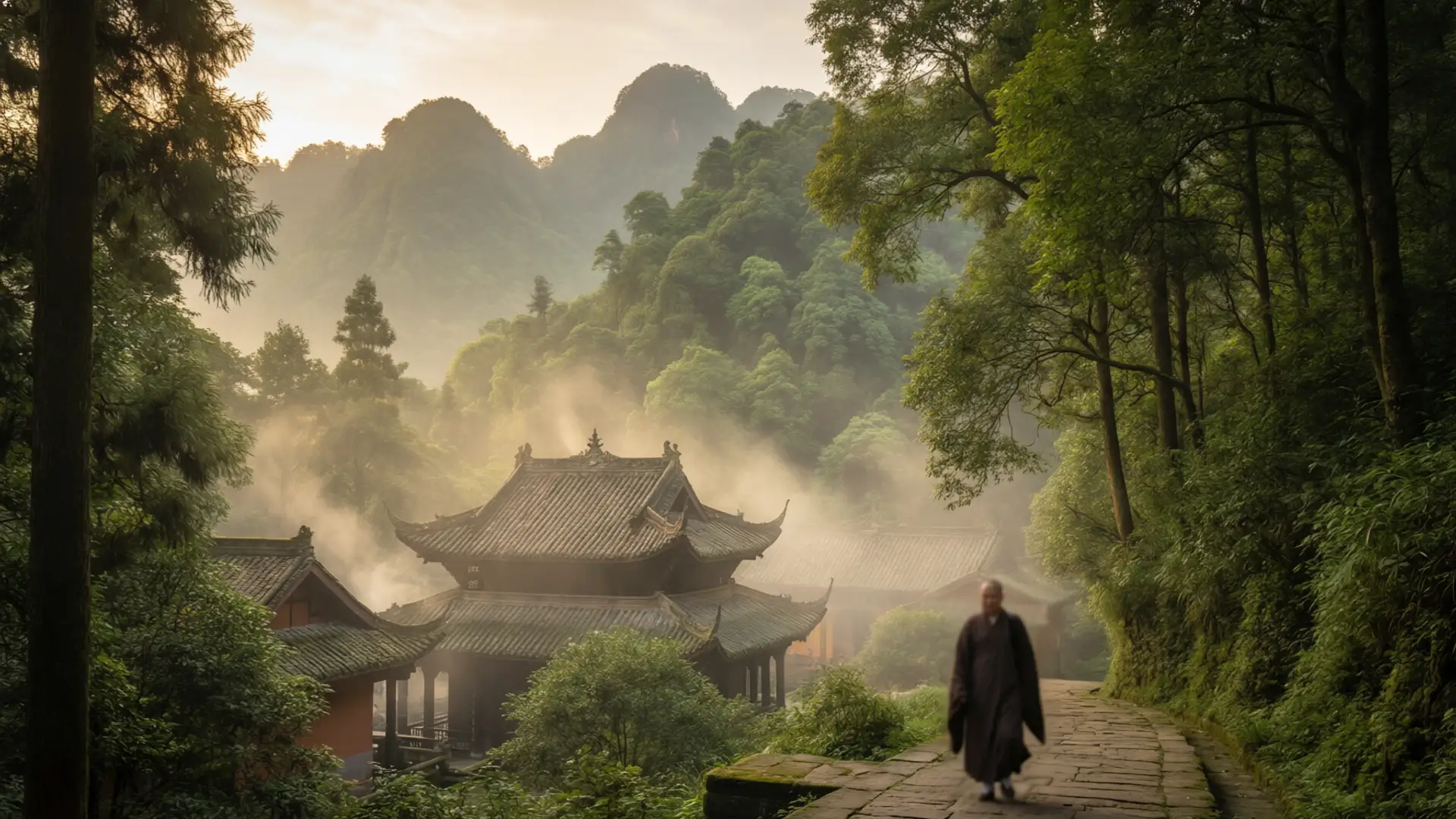
Mount Qingcheng is one of the birthplaces of Taoism and a UNESCO World Heritage Site. The front mountain (Qian Shan) is a 2-3 hour hike up stone steps through ancient Taoist temples, caves, and pavilions set in dense forest. The back mountain (Hou Shan) is wilder, with waterfalls and gorges. The Dujiangyan Irrigation System, also UNESCO-listed, is a 2,000-year-old engineering marvel that still irrigates the Sichuan plain.
Distance: 60 km (90 minutes by car)
Duration: Full day (8-10 hours including transport and hiking)
Luxury arrangement: Private car + guide: 800-1,500 RMB. Or stay at Six Senses Qingcheng (at the mountain base) for 1-2 nights.
Best for: Nature lovers, hikers, spiritual/cultural travelers
Tip: Take the cable car up (front mountain) to save energy for the temple exploration. The hike down is easier on the knees.
14.2 Leshan Giant Buddha (UNESCO World Heritage)
The world’s largest stone Buddha (71 meters) carved into a cliff face in 713-803 AD. A full day trip from Chengdu by high-speed rail (1 hour each way).
Distance: 150 km (1 hour by high-speed rail)
Duration: Full day (8-10 hours)
Luxury arrangement: Private car: 500-800 RMB. High-speed rail: 108 RMB round trip + taxi.
Best for: Cultural travelers, photographers, those who want to combine with Mount Emei
14.3 Mount Emei (UNESCO World Heritage)
One of China’s Four Sacred Buddhist Mountains. The Golden Summit (Jinding) at 3,079 meters features a golden statue of Samantabhadra and spectacular cloud-sea views. Can be combined with Leshan Buddha for a 2-day trip.
Distance: 170 km (1.5 hours by high-speed rail + shuttle)
Duration: 1-2 days
Luxury arrangement: Private car: 600-1,000 RMB. Premium cable car to summit.
14.4 Day Trip Comparison
Destination | Distance | Travel Time | UNESCO? | Duration | Cost (private car) | Best For |
|---|---|---|---|---|---|---|
Mount Qingcheng + Dujiangyan | 60 km | 90 min | Yes | Full day | 800-1,500 RMB | Taoist culture, nature, wellness |
Leshan Giant Buddha | 150 km | 1 hr (HSR) | Yes | Full day | 500-800 RMB | Buddhist art, photography |
Mount Emei | 170 km | 1.5 hr (HSR) | Yes | 1-2 days | 600-1,000 RMB | Buddhist pilgrimage, mountain views |
Sanxingdui Museum | 40 km | 60-90 min | No | Half day | 500-1,000 RMB | Archaeology, Shu civilization |
Dujiangyan Panda Base | 60 km | 90 min | No | Full day | 800-1,200 RMB | Panda volunteer program |
15. The Ultimate 3-Day Luxury Itinerary for Chengdu
Short on planning time? Start from a curated Chengdu tour package or add day trips from Chengdu.
This itinerary is designed for luxury travelers who want the full Chengdu experience in 3 days — hotels, dining, culture, wellness, and shopping. It assumes you stay at St. Regis or Upper House in the city center.
15.1 Day 1: Arrival, Shopping & Fine Dining
Time | Activity | Location | Notes |
|---|---|---|---|
12:00 PM | Arrive at hotel, check-in | St. Regis or Upper House | Butler service welcome |
1:00 PM | Lunch at Taikoo Li | Taikoo Li restaurant | Chengdu Chi Ke or similar creative Sichuan |
2:30 PM | Shopping at Taikoo Li + IFS | Jinjiang District | See the IFS rooftop panda |
5:00 PM | Tea at Heming Teahouse | People’s Park | Traditional teahouse experience |
6:30 PM | Sunset cocktails at Vantage XXVII | St. Regis 27th floor | Best rooftop view in Chengdu |
8:00 PM | Dinner at Yu Zhi Lan (2-star Michelin) | Advance booking required | Contemporary Sichuan tasting menu |
15.2 Day 2: Pandas, Culture & Opera
Time | Activity | Location | Notes |
|---|---|---|---|
7:00 AM | VIP early-entry panda tour | Chengdu Research Base | Private guide + early access |
10:00 AM | Panda helicopter tour (optional) | Panda base parking | 398 RMB, 5-6 min flight |
11:00 AM | Return to hotel, spa treatment | Mi Xun Spa or Ritz-Carlton Spa | 90-minute treatment |
1:00 PM | Lunch at Wenshu Monastery teahouse | Wenshu Yuan | Vegetarian, peaceful courtyard |
2:30 PM | Kuanzhai Alley heritage walk | Qingyang District | Craft shopping, tea, photography |
4:00 PM | Rest at hotel | Freshen up for evening | |
6:30 PM | Dinner at Furonghuang (1-star Michelin) | Advance booking | Elevated classic Sichuan |
8:00 PM | Sichuan Opera at Shufeng Yayun | Culture Park | Face-changing, fire-spitting, shadow play |
15.3 Day 3: Mount Qingcheng & Wellness Retreat
Time | Activity | Location | Notes |
|---|---|---|---|
8:00 AM | Private car to Mount Qingcheng | 60 km, 90 min | Pre-arranged through hotel |
10:00 AM | Hike front mountain (cable car up) | Mount Qingcheng | Taoist temples, forest, caves |
1:00 PM | Lunch at Six Senses Qingcheng | Six Senses resort | Farm-to-table cuisine |
2:30 PM | Dujiangyan Irrigation System | UNESCO site nearby | 2,000-year-old engineering marvel |
4:00 PM | Check in at Six Senses | Wellness retreat | 2-night stay begins |
5:00 PM | Spa treatment at Six Senses Spa | Mountain resort spa | Signature Six Senses therapy |
7:00 PM | Dinner at Six Senses | Tea lounge / restaurant | Wellness-focused menu |
8:30 PM | Evening meditation or yoga | Mountain setting | Digital detox evening |
Extension option: If you have 4-5 days, add Day 4 at Six Senses (full wellness program, yoga, hiking) and Day 5 back in Chengdu for Sanxingdui Museum half-day trip + final luxury dinner at Xin Rong Ji (3-star Michelin). This gives you the complete Chengdu luxury experience: city, culture, nature, wellness, and the highest-level dining.
16. Practical Tips for International Luxury Travelers in Chengdu
16.1 Payment & Money
Alipay & WeChat Pay: These are essential in China. Both now accept foreign credit cards (Visa/Mastercard). Set up Alipay with your foreign card before arrival. WeChat Pay also accepts foreign cards.
Cash: Still useful for small vendors, taxis, and teahouses. Withdraw RMB at ATMs in Chengdu (Bank of China, ICBC accept most international cards).
Credit cards: Major hotels (Ritz-Carlton, St. Regis, Waldorf) accept Visa/Mastercard. Smaller restaurants and shops often do not. Amex acceptance is limited.
Currency: Chinese Yuan (RMB/CNY). Exchange rate approximately 7.1 RMB = 1 USD (verify current rate).
Tipping: Not expected in China. Hotels may add a 10-15% service charge. No need to tip at restaurants or taxis.
16.2 Connectivity
eSIM: Available for China through providers like Airalo and Holafly. Check compatibility with your phone before travel. eSIMs bypass VPN needs for basic connectivity.
Physical SIM: Buy a China Unicom or China Mobile SIM at Chengdu Airport (T1 or T2) with your passport. 100-200 RMB for a tourist data plan.
VPN: Google, Instagram, Facebook, WhatsApp, and YouTube are blocked in China. Install a reliable VPN (Astrill, ExpressVPN) BEFORE arriving — you cannot download them from inside China.
Navigation: Apple Maps works well in China. Google Maps is inaccurate and outdated. For Chinese-language navigation, use Baidu Maps.
Wi-Fi: All luxury hotels have Wi-Fi. Quality varies but is generally adequate. Some hotel Wi-Fi blocks VPNs — use cellular data if VPN is essential.
16.3 Transport
Didi (ride-hailing): Download the Didi app (English version available). Set up with your foreign card. More reliable than street taxis for English-speaking travelers.
Metro: Chengdu Metro has 13+ lines covering the city. Clean, efficient, 2-7 RMB per ride. Buy a QR travel card via Alipay or at station machines.
Taxis: Plentiful but most drivers do not speak English. Have your destination written in Chinese characters. Metered, 15-50 RMB for typical city trips.
Private car: Arrange through your hotel for 400-800 RMB per day. Best for day trips and airport transfers.
Airport: Chengdu Tianfu International Airport (TFU) is the main international airport. 30-45 minutes from city center by taxi (100-150 RMB) or 60 minutes by Metro Line 18.
16.4 Health & Safety
Travel insurance: Essential for luxury travel. Ensure coverage includes medical evacuation. World Nomads, Allianz, and AXA offer China-compatible plans.
Hospitals: Chengdu has international-standard hospitals: Global Doctor Chengdu, Sino United Health. Your hotel can arrange English-speaking medical assistance.
Water: Do not drink tap water. Bottled water is provided free at all luxury hotels. Boiled water in teahouses is safe.
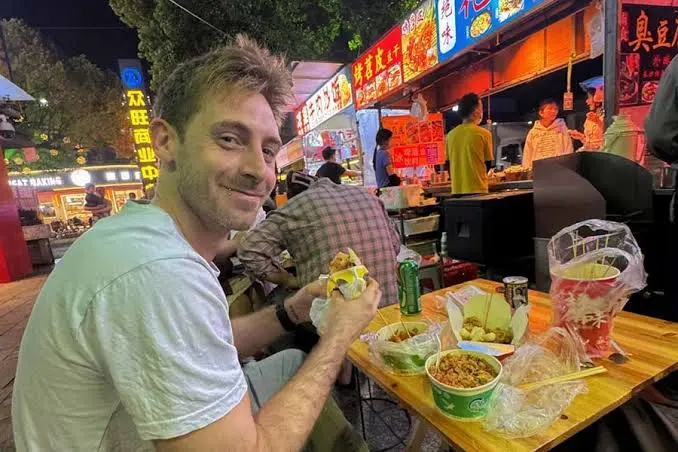
Food safety: Fine dining and hotel restaurants are safe. Be cautious at street food stalls — eat where there is high turnover and where locals eat.
Air quality: Chengdu air quality varies. Check AQI (Air Quality Index) on your phone. Luxury hotels have air filtration; request a room with good air if AQI is high.
17. Chengdu Luxury Travel Budget: What to Expect
17.1 Per Person, Per Day Budget Tiers
Tier | Hotel | Dining | Experiences | Transport | Total/Day |
|---|---|---|---|---|---|
Entry Luxury | Fairmont (900 RMB) | 300 RMB | 200 RMB | 100 RMB | 1,500 RMB ($210) |
Premium Luxury | St. Regis (1,500 RMB) | 600 RMB | 400 RMB | 200 RMB | 2,700 RMB ($380) |
Ultra Luxury | Upper House (2,500 RMB) | 1,200 RMB | 600 RMB | 300 RMB | 4,600 RMB ($648) |
Splurge | Six Senses villa (5,000 RMB) | 1,500 RMB | 800 RMB | 500 RMB | 7,800 RMB ($1,098) |
17.2 3-Day Trip Total Estimates
Tier | Hotel (3 nights) | Dining (3 days) | Experiences | Transport | Total |
|---|---|---|---|---|---|
Entry Luxury | 2,700 | 900 | 600 | 300 | 4,500 RMB ($634) |
Premium Luxury | 4,500 | 1,800 | 1,200 | 600 | 8,100 RMB ($1,141) |
Ultra Luxury | 7,500 | 3,600 | 1,800 | 900 | 13,800 RMB ($1,944) |
Splurge (incl. Six Senses 2 nights) | 12,000 | 4,500 | 2,400 | 1,500 | 20,400 RMB ($2,873) |
18. Luxury Travel Etiquette in Chengdu
18.1 Hotel Etiquette
Butler service (St. Regis): Greet your butler by name. Requests for pressing, unpacking, or tea service are included — do not tip. A thank-you note at checkout is appreciated.
Spa treatments: Arrive 15 minutes early to fill out the intake form and use the relaxation lounge. Communicate pressure preferences clearly.
Room service: Available 24/7 at luxury hotels. A 15% service charge is usually added. No additional tip needed.
18.2 Dining Etiquette
Reservations: Michelin restaurants require 1-4 weeks advance booking. Cancellations should be made 24+ hours in advance.
Fine dining: Standard Western fine dining etiquette applies at Michelin restaurants. Tasting menus are paced — allow 2.5-3 hours.
Hot pot: At premium hot pot venues, the staff will cook ingredients for you if requested. Do not overcook — most items need 15-60 seconds.
Tea: When served tea, tap two fingers on the table (a traditional “thank you” gesture). Refills are usually free at teahouses.
18.3 Cultural Etiquette
Temples: Dress modestly (cover shoulders and knees). Do not touch Buddha statues or ritual objects. No photos inside main halls.
Monks: Do not touch a monk’s head. Do not take photos without permission. Use both hands when giving or receiving.
Face-changing: Do not try to figure out how the masks change during the performance — it is considered disrespectful to the performers’ craft. Enjoy the mystery.
Tea ceremonies: When a tea master pours, receive with both hands or tap two fingers on the table. Do not gulp — sip slowly and appreciate the fragrance.
19. What to Pack for a Luxury Trip to Chengdu
Item | Why | Essential? |
|---|---|---|
Passport (physical) | Required for hotel check-in, attraction entry, train tickets | Yes |
Comfortable walking shoes | Panda base, Mount Qingcheng, shopping | Yes |
Elegant evening wear | Michelin dining, rooftop bars, opera | Yes (smart casual minimum) |
Light jacket | Evening chill, mountain day trips | Yes (spring/autumn/winter) |
Sunscreen | Panda base and mountain hiking | Yes (summer) |
Power bank | Long days, GPS, photos drain battery | Recommended |
VPN app (pre-installed) | Google, WhatsApp, Instagram access | Yes (if you need these apps) |
Alipay (set up before arrival) | Payment everywhere in China | Yes |
Hand sanitizer | Some restrooms lack soap | Recommended |
Small backpack | Daily essentials, hands-free | Recommended |
Earplugs | Sichuan opera can be loud | Optional |
Gifts from home | For hotel staff or guides (optional) | Optional |
20. Art Galleries & Creative Districts in Chengdu
Meet living artisans through our private Sichuan embroidery workshop guide.
Chengdu’s art and design scene is growing rapidly, and it is a dimension that no competitor luxury guide covers. For travelers interested in contemporary culture, these venues offer a different perspective on Chengdu’s creative energy.
20.1 Key Art Venues
A4 Art Museum: Contemporary art in a striking building in the Luxelakes area. Exhibits rotating exhibitions of Chinese and international contemporary art.
Chengdu Museum: Free city museum near Tianfu Square with excellent Shu civilization and Sichuan culture exhibits. Good orientation visit.
Jinsha Site Museum: On-site museum of the Jinsha archaeological discovery (a companion to Sanxingdui). Features the iconic “Sun Bird” gold leaf — the symbol of China’s cultural heritage. 15 minutes from city center.
Taikoo Li art installations: Rotating contemporary art installations integrated into the Taikoo Li shopping complex. Free to view.
Eastern Suburb Memory (Dongjiao Jiyi): A former factory complex converted into a creative arts district with galleries, cafes, and design studios. Chengdu’s answer to Beijing’s 798.
20.2 Bamboo Culture & Sichuan Crafts
Bamboo is Sichuan’s signature material, and Chengdu has a rich tradition of bamboo weaving, carving, and craftsmanship that makes for unique luxury souvenirs:
Bamboo weaving: Sichuan bamboo weaving (zhubian) is a national intangible cultural heritage. Look for fine-woven tea trays, fans, and decorative pieces at craft shops in Kuanzhai Alley and Wenshu area.
Lacquerware: Chengdu lacquerware has a 3,000-year tradition. Modern pieces are available at boutiques in Taikoo Li and IFS.
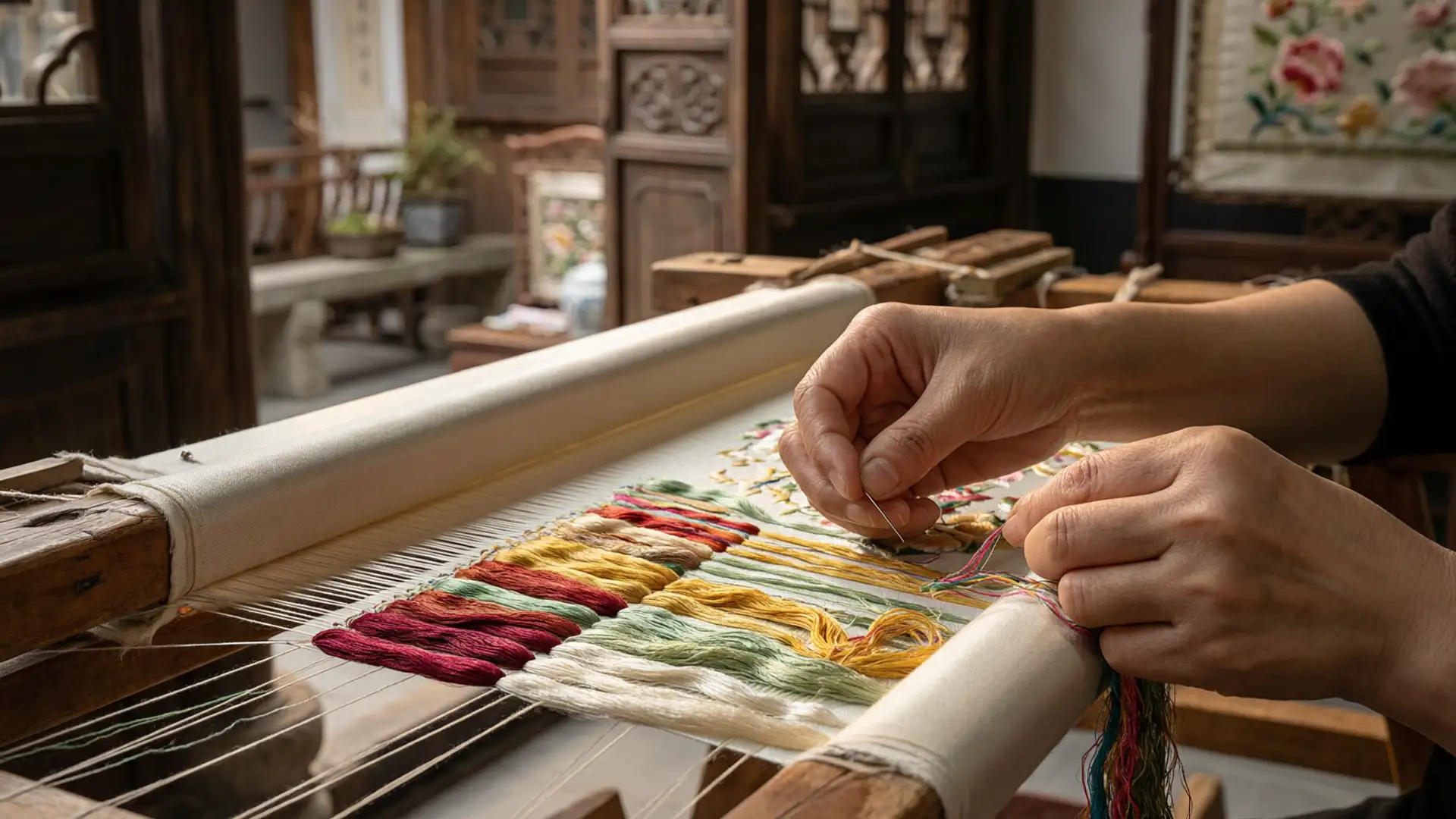
Shu embroidery (Shu Xiu): One of China’s four great embroidery traditions. Sichuan embroidery is known for its vivid colors and fine technique. Available at specialty shops and the Shu Embroidery Institute.
Silver inlay: Sichuan silver inlay (Yinping) is a traditional craft combining silver thread inlay with lacquer. Unique to the region.
21. Chengdu Luxury Travel: Frequently Asked Questions
Q: Is Chengdu safe for luxury travelers?
Yes. Chengdu is one of China’s safest major cities. Violent crime is extremely rare. The main risks are pickpocketing in crowded tourist areas (Jinli, Chunxi Road) and tourist-price scams. Luxury hotels have excellent security. Standard urban precautions apply.
Q: Do luxury hotel staff speak English?
Yes, at the 5-star international hotels (Ritz-Carlton, St. Regis, Waldorf, Fairmont, Niccolo, Upper House). Front desk, concierge, and butler staff speak functional to fluent English. Restaurant staff may have limited English but menus are often bilingual.
Q: Can I book Michelin restaurants without speaking Chinese?
Yes. Most Michelin restaurants in Chengdu accept reservations through CTrip (English app), Dianping (Chinese), or directly by phone with an English speaker. Your hotel concierge can make reservations for you — this is the most reliable method.
Q: What is the minimum budget for a luxury Chengdu trip?
For a 3-day trip at entry-luxury level (Fairmont hotel, good dining, standard experiences): approximately 4,500 RMB ($634) per person. For premium luxury (St. Regis, Michelin dining, VIP experiences): approximately 8,100 RMB ($1,141) per person.
Q: Do I need a visa for China?
Most international visitors need a visa. China has expanded its visa-free transit policy — 72-hour and 144-hour transit visa exemptions are available for citizens of 53 countries (including US, UK, EU, Australia, Canada). Check current policy with your nearest Chinese embassy. For longer stays, apply for a tourist (L) visa.
Q: Is it worth combining Chengdu with other Chinese cities?
Yes. Chengdu pairs excellently with: Shanghai (2-hour flight — cosmopolitan luxury contrast), Beijing (2.5-hour flight — imperial grandeur), Xi’an (3.5-hour high-speed rail — Terracotta Warriors), and Lhasa (2-hour flight — Tibetan culture). A 10-day China luxury trip could include 3 days in Chengdu, 3 in Shanghai, 2 in Beijing, and 2 in Xi’an.
Q: Can I use foreign credit cards at luxury hotels and restaurants?
Yes at luxury hotels (Visa/Mastercard widely accepted). At fine dining restaurants, credit card acceptance varies — always carry cash as backup. At smaller restaurants, shops, and taxis, cash or Alipay/WeChat Pay is required.
Q: What is the best luxury souvenir to buy in Chengdu?
Premium Sichuan tea (Zhuyeqing or Mengding Ganlu), Sichuan embroidery, bamboo crafts, and Sichuan opera masks. These are genuine regional specialties unavailable outside China. For luxury goods, Taikoo Li and SKP have the full range of international brands.
Q: Is Chengdu a good destination for honeymooners?
Excellent. The combination of boutique luxury (Upper House), wellness retreat (Six Senses), fine dining (Michelin), and romantic experiences (sunset cocktails, private tea ceremony, panda encounters) makes Chengdu ideal for a luxury honeymoon. The city is less crowded than Shanghai and more atmospheric than Beijing for couples.
22. Final Tips: The Key to an Exclusive Chengdu Getaway
22.1 The 10 Commandments of Luxury Chengdu Travel
Stay in the Jinjiang district. St. Regis, Niccolo, or Upper House put you walking distance from everything.
Book Michelin restaurants 2-4 weeks in advance. Xin Rong Ji and Yu Zhi Lan fill up fast.
Do the VIP panda early-entry. Standard panda visits are crowded and pandas sleep by 10 AM.
Experience Sichuan Opera. No competitor guide emphasizes this enough — it is Chengdu’s most spectacular cultural performance.
Set up Alipay and a VPN before arriving. You cannot do this from inside China.
Spend one night at Six Senses Qingcheng. City luxury + nature wellness = the perfect Chengdu combination.
Take tea seriously. Heming Teahouse, Wenshu teahouse, and a private ceremony — three different tea experiences.
Visit Sanxingdui. It is the cultural key to understanding everything else in Chengdu.
Sunset cocktails at Vantage XXVII. The best rooftop view in western China.
Allow 3-4 nights minimum. Chengdu rewards slow travel — rushing through in 2 days misses the point.
22.2 Quick Reference Card
Item | Details |
|---|---|
Best overall hotel | St. Regis (location) or Upper House (atmosphere) |
Best boutique hotel | Upper House (Qing Dynasty courtyard) |
Best wellness resort | Six Senses Qingcheng Mountain |
Best trendy hotel | Hyatt Centric The Ring (2023, riverside) |
Best Chinese luxury hotel | Wanda Reign (riverside, bold design) |
Best Michelin restaurant | Xin Rong Ji (3-star) or Yu Zhi Lan (2-star) |
Best rooftop bar | Vantage XXVII at St. Regis (27th floor) |
Best spa | Mi Xun Spa at Upper House |
Best shopping | Taikoo Li (atmosphere) + IFS (brands) + SKP (ultra-luxury) |
Best teahouse | Heming Teahouse (People’s Park) |
Best cultural experience | Sichuan Opera at Shufeng Yayun |
Best day trip | Mount Qingcheng + Dujiangyan (UNESCO) |
Best hidden gem | Sanxingdui Museum (3,000-year-old Shu civilization) |
Best luxury souvenir | Premium Sichuan tea (Zhuyeqing) |
Best time to visit | April or November |
Recommended trip length | 3-4 nights (2 city + 1-2 wellness) |
Daily budget (premium luxury) | 2,700 RMB ($380) per person |
Must-have apps | Alipay, Didi, VPN, Apple Maps |
Final word: Chengdu is not trying to be Shanghai or Beijing. It does not need to be. It offers something those cities cannot — luxury wrapped in 3,000 years of slow, intentional living. The tea houses, the pandas, the Taoist mountains, the opera, the Michelin dining, the bamboo forests — these are not attractions you check off a list. They are experiences you sink into. Come for the luxury hotels. Stay for the slow luxury that only Chengdu can offer.
Last updated: September 2026. Hotel information verified through official hotel websites and booking platforms. Michelin data from Michelin Guide Chengdu 2027. Prices and policies may change — verify current rates before booking.
Traveler Discussions
Questions from travelers