
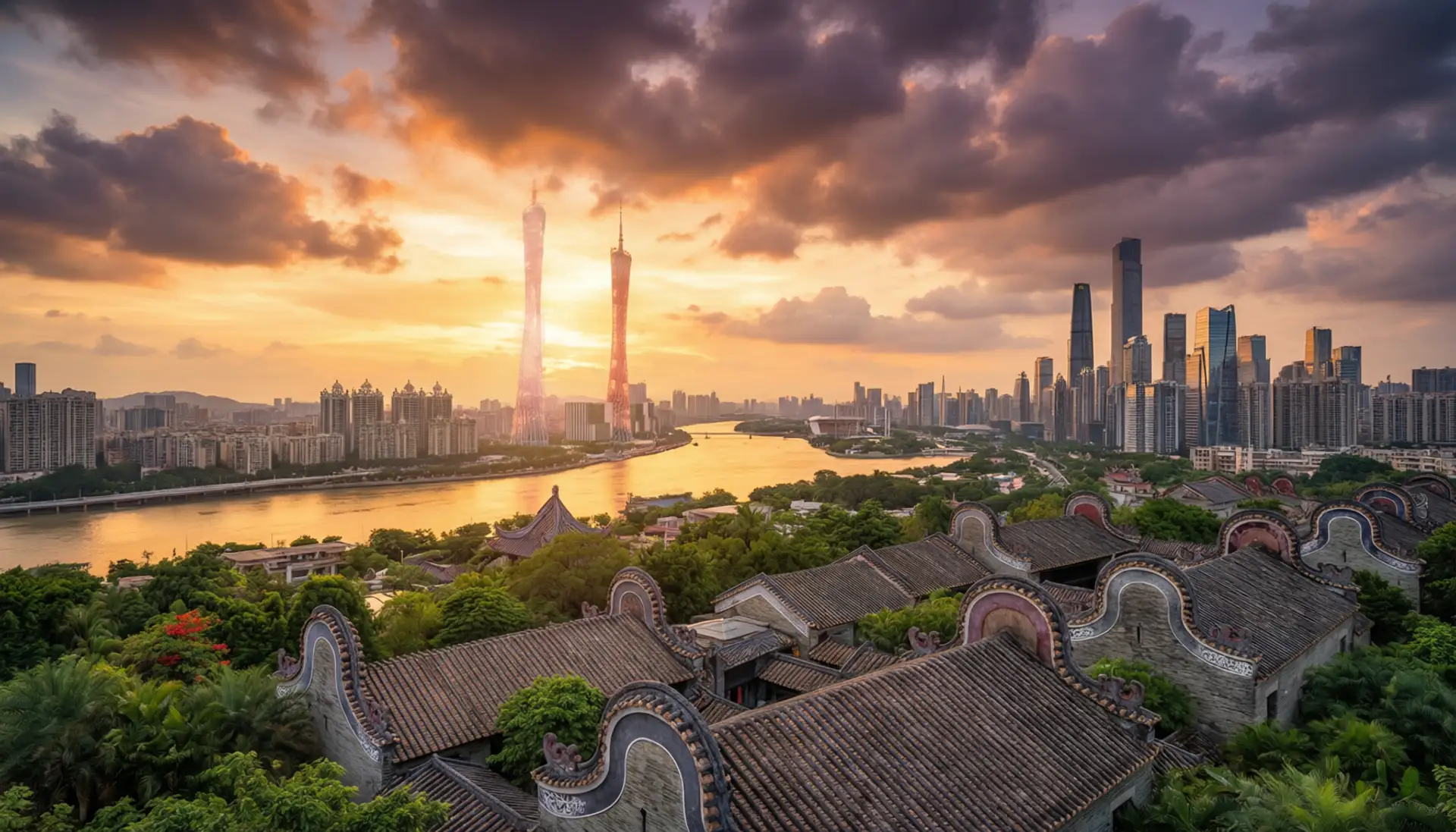
In the heart of southern China, Guangdong is one of the most varied provinces to explore. In the same trip, you can experience the historic streets of Guangzhou, the fast-changing skyline of Shenzhen, the traditional culture of Foshan, the food traditions of Shunde, and the distinctive heritage of eastern Guangdong. What makes Guangdong particularly interesting is the contrast between its cities.
Guangdong at a Glance — Quick Facts About the Province
Guangdong sits in southern China, facing the South China Sea and bordering Hong Kong and Macau. It is one of the country's most economically developed provinces, but its appeal to visitors goes far beyond modern city life. For trip planning, it helps to think of Guangdong as several connected travel areas rather than one single destination.
Guangdong Travel Areas at a Glance
Travel Area | Key Destinations | Overall Character | Why Include It |
|---|---|---|---|
Central Guangdong | Guangzhou, Foshan, Shunde | Urban, cultural, food-focused | An easy introduction to Cantonese and Lingnan culture |
Pearl River Delta | Shenzhen, Zhuhai, Jiangmen | Modern cities, coastal areas, heritage | Good for combining contemporary China with local culture |
Eastern Guangdong | Chaozhou, Shantou | Historic, culinary, strongly regional | Distinctive Teochew culture and food |
Western Guangdong | Zhanjiang and surrounding areas | Coastal, relaxed, less urban | A different side of Guangdong away from the main city corridor |
Greater Bay Area | Guangzhou, Shenzhen, Zhuhai, Hong Kong, Macau | Highly connected metropolitan region | Well suited to multi-city and cross-border travel |
A Simple Way to Think About the Province
If you are unsure where to start, use your interests as the filter:
If You Are Interested In... | Start Looking At... |
|---|---|
Cantonese culture and traditional city life | Guangzhou, Foshan, Shunde |
Modern China and major city skylines | Guangzhou, Shenzhen |
Food-focused travel | Guangzhou, Shunde, Chaozhou, Shantou |
Historic villages and overseas Chinese heritage | Kaiping, Jiangmen |
Coastal scenery and a slower pace | Zhuhai, Zhanjiang |
A multi-city Greater Bay Area trip | Guangzhou, Shenzhen, Zhuhai + Hong Kong or Macau |
A deeper regional experience | Eastern or western Guangdong |
Which Cities Should You Visit in Guangdong? A Complete City Guide
You do not need to visit every major city in Guangdong to have a rewarding trip. In fact, trying to cover too many places can make the journey feel like a series of transfers rather than a vacation. A better approach is to choose cities that offer something different from one another.
Guangdong Cities at a Glance
City / Area | Main Travel Interest | Recommended Stay | Works Well With |
|---|---|---|---|
Guangzhou | Cantonese culture, history, food, urban life | 2–3 days | Foshan, Shunde, Shenzhen |
Shenzhen | Modern China, innovation, shopping, city life | 1–2 days | Guangzhou, Hong Kong |
Foshan | Lingnan culture, traditional arts, local heritage | 1 day | Guangzhou, Shunde |
Shunde | Cantonese food and culinary culture | 1 day | Guangzhou, Foshan |
Zhuhai | Coastal scenery, relaxed city atmosphere | 1–2 days | Macau, Guangzhou |
Chaozhou | Teochew culture, historic streets, traditional architecture | 1–2 days | Shantou |
Shantou | Chaoshan food and local coastal city life | 1–2 days | Chaozhou |
Kaiping | Diaolou, villages, overseas Chinese heritage | 1–2 days | Jiangmen, Guangzhou |
Jiangmen | Overseas Chinese heritage and Lingnan countryside | 1–2 days | Kaiping, Guangzhou |
Zhanjiang | Coastal scenery, seafood, southern Guangdong atmosphere | 2+ days | Other western Guangdong destinations |
Guangzhou — A Natural Starting Point
For many international visitors, Guangzhou is the easiest place to begin exploring Guangdong. It combines strong transport connections with a broad introduction to the region's culture and food. It is also useful as part of a longer route because nearby destinations can be added without immediately committing to long-distance travel.
Shenzhen — A Different Face of Southern China
Shenzhen feels very different from historic Guangzhou. Its identity is closely associated with modern urban development, technology, business, shopping, and contemporary city life. It makes sense to add Shenzhen when you want your trip to show the contrast between traditional and modern southern China.
Foshan — Traditional Lingnan Culture
Foshan is a good addition for travelers who want to go beyond Guangzhou and explore traditional Lingnan culture in greater depth. It is close enough to combine with Guangzhou without requiring a major change of base, making it particularly suitable for shorter trips.
Shunde — For Travelers Who Plan Around Food
Shunde deserves its own place on a Guangdong itinerary if food is one of your main interests. Rather than treating it as simply another sightseeing stop, think of Shunde as a culinary destination. It works especially well when paired with Guangzhou and Foshan, creating a compact route centered around Cantonese food and culture.
Zhuhai — Slow Down by the Coast
Zhuhai offers a change of pace from the province's larger inland cities. It can be a good choice if you want some coastal scenery and a more relaxed atmosphere, particularly when combined with Macau or other destinations in the Pearl River Delta.
Chaozhou & Shantou — Distinctive Eastern Guangdong
Chaozhou has a strong regional identity and is one of the more rewarding choices for travelers who want to experience a side of Guangdong that feels different from the Pearl River Delta. Shantou works naturally with Chaozhou as part of an eastern Guangdong route. The two destinations complement each other rather than offering exactly the same experience.
Kaiping & Jiangmen — Heritage Beyond the Major Cities
Kaiping and Jiangmen are worth considering when you want to see a quieter side of Guangdong. This area is particularly associated with overseas Chinese heritage, rural landscapes, traditional villages, and distinctive architecture.
Zhanjiang — Western Guangdong
Zhanjiang offers a more southern coastal atmosphere and is better suited to travelers with additional time. Because of the greater distance from Guangzhou and Shenzhen, it usually makes more sense as part of a dedicated western Guangdong route rather than a quick add-on to a short city break.
How Many Days Do You Need for a Guangdong Itinerary?
There is no single ideal length for a Guangdong trip. The right number of days depends mainly on how many parts of the province you want to connect. For a first visit, 5–6 days is a comfortable starting point. With a week or more, you can begin adding eastern Guangdong, heritage areas, or the Greater Bay Area.
Guangdong Trip Length at a Glance
Trip Length | Suggested Route | Travel Style |
|---|---|---|
3–4 days | Guangzhou + Foshan or Shunde | Short city break with one nearby cultural or food-focused extension |
5–6 days | Guangzhou + Foshan/Shunde + Shenzhen | A balanced introduction to traditional and modern Guangdong |
7–8 days | Guangzhou + Foshan/Shunde + Shenzhen + Zhuhai or Kaiping/Jiangmen | More variety, with time for heritage or coastal experiences |
10+ days | Central Guangdong + eastern or western Guangdong | A deeper regional journey with fewer compromises on travel time |
3–4 Days: Keep the Route Compact
With only a few days, it is better to stay within one connected part of Guangdong. Guangzhou can form the main base, with Foshan or Shunde added as a nearby extension. This gives you a taste of the province without turning a short holiday into a transport-heavy itinerary.
5–6 Days: A Good Balance for First-Time Visitors
Five or six days gives you considerably more flexibility. You can combine Guangzhou with nearby cultural or culinary destinations and still have time for Shenzhen. This is also a useful length for travelers who want some variety but do not want to change hotels every night.
7–8 Days: Add a Second Travel Area
With a full week or slightly longer, you can move beyond the central Guangdong corridor. This is when routes including Kaiping and Jiangmen, Zhuhai, or a combination with eastern Guangdong become more practical. At this length, route design becomes more important than simply adding more cities.
10+ Days: Explore Guangdong in Greater Depth
Ten days or more opens up the possibility of combining central Guangdong with eastern or western destinations. You can spend several nights in different parts of the province and allow extra time for local food, villages, countryside, coastal areas, or less-visited destinations.
Best Guangdong Itineraries for First-Time Visitors: 4 to 10+ Day Routes
Once you know how many days you have, the next question is how to connect the destinations without spending too much time in transit. For a first trip, it is usually better to build your itinerary around one clear travel theme rather than trying to include every major city.
Guangdong Itinerary Ideas at a Glance
Duration | Route | Main Focus |
|---|---|---|
4 days | Guangzhou → Foshan → Guangzhou | Cantonese culture and Lingnan heritage |
5 days | Guangzhou → Shenzhen | Traditional and modern Guangdong |
6 days | Guangzhou → Foshan → Shunde → Guangzhou | Cantonese food and local culture |
6 days | Guangzhou → Foshan → Kaiping → Jiangmen | Heritage, villages, and overseas Chinese history |
7 days | Guangzhou → Chaozhou → Shantou | Eastern Guangdong and Teochew culture |
8 days | Guangzhou → Foshan/Shunde → Shenzhen → Zhuhai | A broad introduction to central and Pearl River Delta Guangdong |
10+ days | Guangzhou → Foshan → Kaiping → Zhuhai → Shenzhen → Chaozhou → Shantou | A deeper multi-region journey |
4-Day Classic Guangdong: Guangzhou → Foshan
This compact route works well when Guangdong is one stop within a larger China trip. Guangzhou provides the main base, while Foshan adds a nearby change of scenery and cultural context. Returning to Guangzhou rather than changing hotels every night also keeps the trip simple and leaves more time for exploring.
5-Day Guangzhou & Shenzhen
This route focuses on contrast. Instead of trying to cover a large number of destinations, it gives you time in two very different urban environments. It is particularly suitable for travelers interested in seeing both the historical side of southern China and the pace of contemporary urban development.
6-Day Cantonese Food Journey
For travelers who plan their trips around food, this is one of the most natural short routes in Guangdong. The journey stays relatively compact while allowing each destination to contribute something different to the culinary experience.
6-Day Lingnan Culture & Heritage Route
This route moves gradually from urban Guangdong into areas where traditional architecture, villages, and overseas Chinese heritage become more prominent. It suits travelers who prefer history and local character over a schedule dominated by major city landmarks.
7-Day Eastern Guangdong Route
A week gives you enough time to travel east without trying to squeeze the region into a single day. This route is particularly appealing to travelers interested in regional food and cultural traditions. Spending nights in the eastern part of the province also means you can explore at a more relaxed pace.
8-Day Guangdong Highlights
This is a broader introduction to the province's central and Pearl River Delta areas. The route combines cultural experiences, food, major metropolitan areas, and a coastal destination. It is a good option for travelers who want variety and are comfortable moving between several bases.
10+ Day Deep Guangdong Journey
With more than ten days, you can connect several parts of Guangdong instead of focusing on a single metropolitan area. This longer route works best when planned geographically and with enough overnight stays along the way.
How to Combine Guangdong's Cities — Smart Route Planning
Guangdong is easier to plan when you think in terms of travel combinations rather than individual cities. Nearby destinations can complement one another, while places that look close on a map may still require enough time to justify the journey.
Cantonese Culture: Guangzhou + Foshan + Shunde
This is one of the most straightforward combinations for travelers interested in the cultural roots of the Pearl River Delta. Guangzhou provides the urban setting, while Foshan and Shunde allow you to explore different aspects of Lingnan culture and Cantonese food. Because the destinations are relatively close, this combination works for both short trips and longer stays.
Modern China: Guangzhou + Shenzhen
If you want to see the contrast between an established southern metropolis and one of China's most rapidly developed cities, these two destinations make a natural pair. The route also works well for travelers continuing toward Hong Kong.
Heritage: Guangzhou + Kaiping + Jiangmen
For travelers more interested in architecture, villages, and overseas Chinese heritage, this combination takes you beyond the major urban centers. The route benefits from at least one overnight stay outside Guangzhou.
Food: Guangzhou + Shunde + Chaozhou + Shantou
A food-focused journey can connect several distinct regional traditions rather than treating all Guangdong cuisine as one category. Guangzhou and Shunde provide a strong introduction to Cantonese cooking, while Chaozhou and Shantou introduce the different culinary traditions of eastern Guangdong.
Coastal Guangdong: Zhuhai + Shenzhen + Zhanjiang
These destinations can work for travelers who want to add a coastal dimension to a Guangdong journey. Zhuhai and Shenzhen fit naturally into a Pearl River Delta route, while Zhanjiang is much farther west and should usually be treated as a separate extension.
Don't Force Every Destination Into One Trip
One of the easiest mistakes in Guangdong trip planning is treating the province as a checklist. A useful rule is to ask what the next destination adds that the previous one does not. If the answer is clear, the combination probably makes sense. If not, staying longer in one place may give you a better experience.
Greater Bay Area Travel: How Does Guangdong Connect with Hong Kong & Macau?
One of the advantages of traveling around Guangdong is its connection with the Greater Bay Area, a metropolitan region that links several major cities in Guangdong with Hong Kong and Macau. For travelers, this means you can combine different parts of southern China without treating every destination as a separate trip.
The Main Greater Bay Area Connections
Route | Typical Transport | Best For |
|---|---|---|
Guangzhou ↔ Shenzhen | High-speed or intercity rail | Combining two major mainland cities |
Shenzhen ↔ Hong Kong | High-speed rail, metro/border crossings | Adding Hong Kong to a mainland itinerary |
Guangzhou ↔ Hong Kong | High-speed rail | Direct connection between two major travel bases |
Guangzhou ↔ Zhuhai | High-speed/intercity rail or private vehicle | Combining inland and coastal Guangdong |
Zhuhai ↔ Macau | Land border crossing | Pairing Zhuhai with Macau |
Shenzhen ↔ Zhuhai | Intercity transport or private vehicle | Connecting different parts of the Pearl River Delta |
Plan the Route, Not Just the Destinations
A Greater Bay Area trip is most efficient when you treat the region as one connected travel network. For example, a route such as Guangzhou → Shenzhen → Hong Kong can work naturally, while Guangzhou → Shenzhen → Guangzhou → Hong Kong may involve unnecessary backtracking. When planning a multi-city journey, look at the entire route first, then decide where to spend your nights.
How to Travel Between Cities in Guangdong — Metro, Rail & Private Transport
Getting around Guangdong is generally straightforward, but the best transport option depends on the distance, the number of stops, and what you plan to do when you arrive. For most travelers, high-speed rail is the backbone of a multi-city Guangdong trip.
Transport Options at a Glance
Transport | Best For | Advantages | Things to Consider |
|---|---|---|---|
High-Speed Rail | Major city-to-city journeys | Fast, comfortable, frequent on major routes | Stations can be outside the area you want to visit |
Intercity Rail | Shorter Pearl River Delta connections | Convenient for nearby cities | Routes and schedules vary |
Private Car | Rural areas and multi-stop days | Door-to-door, flexible, no station transfers | Higher cost than public transport |
Taxi / Ride-Hailing | Local transportation | Convenient for short urban journeys | Less practical for long-distance sightseeing |
Domestic Flights | Long-distance travel within China | Useful when rail travel is impractical | Airport procedures and transfers add time |
High-Speed Rail: The Main Choice for Major Cities
For journeys between major Guangdong cities, high-speed rail is often the most practical option. It is particularly useful when moving between established urban centers such as Guangzhou, Shenzhen, Chaozhou, and other cities on the high-speed network. However, do not judge a train journey only by its scheduled travel time — allow time to reach the station, pass security checks, and transfer to your final destination.
When Is a Private Car Better?
Private transportation becomes particularly valuable when the destination is not centered around a railway station. This is especially relevant for trips involving Kaiping's villages and Diaolou, rural heritage areas, countryside stops, or several attractions spread across a region. A practical approach is to combine transport methods — use high-speed rail for major transfers, then arrange a private vehicle for sightseeing once you arrive.
When Is the Best Time to Visit Guangdong for Comfortable Sightseeing?
Guangdong can be visited throughout the year, but the best time depends on which parts of the province you plan to explore. For a multi-city trip, spring and autumn are generally the easiest seasons to plan around.
Guangdong Travel Seasons at a Glance
Period | Weather | Travel Advantages | Things to Watch |
|---|---|---|---|
March–April | Mild to warm, with some rain | Comfortable for cities, culture, and outdoor sightseeing | Rainy days can affect outdoor plans |
May–June | Warm and increasingly humid | Long daylight hours and lush scenery | Heavy rain and high humidity |
July–September | Hot, humid, sometimes stormy | Good for travelers comfortable with summer weather | Heat, heavy rain, and typhoon risk |
October–November | Generally warm and comfortable | Excellent conditions for multi-city travel | National Day period can be extremely busy |
December–February | Cooler and relatively dry | Comfortable for sightseeing and food-focused trips | Coastal areas can still be windy or changeable |
Spring: A Comfortable Time for Exploring
March and April are often pleasant months for moving between cities and spending long periods outdoors. The weather can be changeable, particularly during rainy periods, so it is worth keeping some flexibility in your schedule.
Summer: Plan Around the Heat
From late spring through summer, Guangdong becomes hot and humid, with heavy rain possible. If you travel during this period, avoid building every day around long periods of outdoor walking. Summer is also part of Guangdong's typhoon season — coastal destinations may occasionally experience weather disruptions.
Autumn: A Strong Season for Multi-City Trips
October and November are generally well suited to traveling around Guangdong. However, China's National Day holiday in early October is one of the busiest travel periods of the year. Railway stations, popular attractions, hotels, and major transport routes can become significantly busier.
Winter: Cooler, Not Necessarily Cold
Guangdong's winter is generally milder than northern China, making it possible to continue sightseeing comfortably in many parts of the province. Winter can also be a good period for travelers who want to focus on food, culture, historic neighborhoods, and city exploration.
What Should You Eat Across Guangdong? A Cantonese Food Guide
Food is one of the best reasons to travel beyond Guangzhou. Guangdong cuisine is not a single style: different parts of the province have developed their own ingredients, cooking methods, flavors, and dining traditions. A trip through Guangdong can therefore feel like several food journeys in one.
Guangdong Food by Destination
Destination | Food Identity | What to Try | Best Food Experience |
|---|---|---|---|
Guangzhou | Classic Cantonese cuisine | Dim sum, roast meats, Cantonese soups | Morning tea and local restaurants |
Foshan | Traditional Lingnan cooking | Cantonese specialties and local snacks | Neighborhood restaurants and traditional food streets |
Shunde | Refined Cantonese cuisine | Freshwater fish, steamed dishes, traditional desserts | Local restaurants and food-focused day trips |
Chaozhou | Teochew cuisine | Teochew-style seafood, braised dishes, rice dishes | Traditional restaurants and local food streets |
Shantou | Chaoshan food culture | Beef hot pot, seafood, snacks, rice noodle dishes | Street food and local neighborhood eateries |
Jiangmen / Kaiping | Regional Lingnan food | Local home-style dishes and specialties | Village restaurants and small local eateries |
Zhanjiang | Southern coastal cuisine | Seafood, grilled and simply cooked seafood dishes | Seafood restaurants and local markets |
Guangzhou: Start With Cantonese Dining Culture
Guangzhou is an easy place to begin exploring Guangdong food because you can experience both everyday Cantonese meals and more traditional dining customs. Dim sum and morning tea are particularly useful for understanding how food fits into local social life. Allow enough time to enjoy the slower rhythm of a traditional tea-house meal.
Shunde: Make Food Part of the Journey
Shunde is worth approaching as a culinary destination in its own right. Fresh ingredients, careful cooking, and a strong local food culture are central to the experience. If food is a major reason for your Guangdong trip, consider giving Shunde enough time for more than one meal.
Chaozhou and Shantou: Explore Eastern Guangdong Through Food
Eastern Guangdong offers one of the clearest examples of why regional food matters when traveling around the province. Traditional Teochew cooking, seafood, beef dishes, snacks, and local street foods give this part of Guangdong a culinary identity that feels quite different from the food commonly associated with Guangzhou.
How to Eat Well in Guangdong
Eat according to the destination — look for local specialties instead of ordering the same Cantonese dishes everywhere.
Mix restaurants with everyday food — a well-known restaurant and a small neighborhood shop can offer very different experiences.
Share dishes — many Guangdong meals are designed around sharing, which allows a group to try several dishes in one meal.
Ask about portion sizes — this is especially useful when traveling as a couple or small group.
Leave room for spontaneity — markets, food streets, and local neighborhoods often reveal dishes that were never on your original list.
Essential Guangdong Travel Tips for a Smooth First Visit
Traveling around Guangdong is relatively convenient, but a multi-city trip requires more planning than staying in one destination. The biggest difference is that small logistical decisions can affect an entire day.
1. Do Not Underestimate Distances
Guangdong may look compact on a map, especially around the Greater Bay Area, but the province itself is large. Before adding another city, check the complete journey rather than judging the distance visually.
2. Check the Railway Station Carefully
A city can have several railway stations, and they are not necessarily equally convenient for your hotel or sightseeing route. When booking a train, check the exact departure station, arrival station, and distance from the station to your hotel.
3. Do Not Book the Last Possible Train
If a sightseeing day ends close to your scheduled departure, leave some margin for traffic, queues, or an attraction taking longer than expected.
4. Build the Route Around Geography
Try to move progressively through the province instead of repeatedly returning to the same base. For example, if you are traveling from central Guangdong toward eastern Guangdong, continuing east can be more efficient than returning to Guangzhou.
5. Leave Some Flexibility for Weather
Rain and severe weather can affect outdoor sightseeing, especially during the warmer and wetter months. If your itinerary includes several outdoor destinations, avoid making every day dependent on perfect weather.
6. Book Ahead During Major Holidays
Transport and popular attractions can become much busier during major Chinese holidays, particularly around the National Day holiday in early October and the Spring Festival period.
7. Allow Extra Time at Railway Stations
For an unfamiliar station, allow enough time to find the entrance, pass security, locate the correct waiting area, and reach your platform. Do not treat the scheduled train departure time as the time you should arrive at the station.
8. Plan Meals Around the Route
If you are traveling specifically for local cuisine, check where you will be at mealtimes rather than simply choosing restaurants after arriving. A long transfer can otherwise leave you in a completely different city from the one where you planned to try a particular specialty.
9. Consider Private Transportation for Complex Days
A private vehicle can be more practical when one day includes several attractions spread across different areas. This is particularly useful for rural destinations, heritage villages, and routes where railway stations do not align neatly with the sightseeing plan.
10. Keep Your Itinerary Adjustable
A multi-city trip should have a clear structure, but not every hour needs to be fixed. Leave some room for an unexpectedly good meal, a local neighborhood you want to explore longer, or a weather-related change. The goal is to make sure that one small delay does not cause the entire itinerary to unravel.




Traveler Discussions
Questions from travelers