
In the heart of ancient Chang'an, where Silk Road caravans once converged from Persia, Arabia, and Central Asia, a living cultural heritage continues to shape the identity of modern Xi'an. This is not a museum exhibit frozen in time — it is a vibrant community of mosques, halal kitchens, family workshops, and neighborhood traditions that have evolved over more than a thousand years.
This guide takes you beyond the surface of Xi'an's Muslim Quarter to explore the deeper stories behind its cultural heritage. You will discover how Silk Road trade shaped the city's Muslim communities, how Chinese and Islamic traditions merged in mosque architecture, and how halal cuisine, traditional crafts, festivals, and neighborhood life preserve this heritage today.
1. Why Is Xi'an Muslim Culture Unique?
As the starting point of the Silk Road, Xi'an (ancient Chang'an) was a vital hub for trade, religion, and cultural exchange between East and West. During the Tang Dynasty, Chang'an became an international metropolis where merchants, diplomats, and travelers from Persia, Arabia, and Central Asia interacted with local Chinese society.
Islamic culture was not merely "transplanted" from abroad; rather, it gradually integrated into local society through long-term interaction.
Why Did Islam Spread to Xi'an Through People Rather Than Conquest?
Silk Road Exchange: Islam arrived in Xi'an through the Silk Road, where merchants, diplomats, and travelers connected China with Persia, Arabia, and Central Asia.
Trade and Migration: Muslim communities formed as foreign traders and settlers stayed in Chang'an, gradually building social and economic connections.
Cultural Integration: Over generations, Muslim communities adapted to local customs while preserving Islamic traditions, creating a unique Chinese Muslim culture.
Peaceful Coexistence: Unlike regions shaped by military expansion, Xi'an's Islamic heritage developed mainly through everyday interactions, trade, and cultural exchange.
What Makes Xi'an Muslim Culture Different From Other Regions?
Region | Cultural Characteristics |
|---|---|
Xinjiang Muslim Culture | Strong Central Asian influences, reflected in language, food, and traditional lifestyles. |
Ningxia Muslim Culture | Known for strong Hui Muslim community traditions and religious heritage. |
Yunnan Muslim Culture | Shaped by interaction between Hui communities and diverse ethnic cultures. |
Xi'an Muslim Culture | A Silk Road heritage shaped by Islamic traditions, Tang-era exchanges, and integration with Han Chinese culture. |
2. Xi'an Muslim History: From Silk Road Exchange to Local Community
What Lies Beyond Hui Street in Xi'an's Muslim Culture?
Common Impression | Deeper Exploration |
|---|---|
Hui Street snacks | The history of Muslim communities |
Yangrou Paomo (lamb soup with bread) | The wider halal food culture and traditions |
Mosque architecture | The integration of Islamic and Chinese architectural styles |
Tourist streets | A living cultural community |
How the Silk Road Shaped Xi'an's Muslim Heritage
Muslim Travelers Along the Silk Road: From the Tang Dynasty onward, merchants, diplomats, and travelers from Persia, Arabia, and Central Asia arrived in Chang'an through the Silk Road, bringing new goods, ideas, and traditions.
Trade as Cultural Exchange: Silk Road trade connected different civilizations, spreading not only commodities but also languages, beliefs, and customs.
From Traders to Communities: Over generations, Muslim settlers integrated with local society through trade, marriage, and cultural exchange, forming established Muslim communities in China.
A Heritage of Integration: Xi'an's Muslim culture developed through centuries of interaction between Islamic traditions and Chinese society, shaping its unique architecture, food, and community life.
Silk Road Cultural Exchange Map
Region of Origin | Cultural Elements Introduced |
|---|---|
Persia | Trade traditions and spice culture |
Arabian Regions | Islamic beliefs and halal dietary practices |
Central Asia | Noodle traditions and meat-processing techniques |
Local Chinese Culture | Wheat-based cuisine, architectural styles, and daily customs |
How Is Hui Culture Integrated into Xi'an Society?
Islamic Beliefs: Religious traditions, halal dietary practices, and community customs remain important parts of Hui cultural identity.
Han Chinese Lifestyle: Hui communities have integrated local Chinese language, festivals, architecture, and daily habits into their way of life.
Northwestern Food Traditions: Local wheat-based cuisine, noodles, and meat dishes combined with halal practices to create Xi'an's unique Muslim food culture.
Silk Road Commercial Culture: The historical tradition of trade and exchange continues to influence Hui communities, connecting Xi'an with wider cultural networks.
3. Muslim Architecture in Xi'an: A Dialogue Between Islam and Chinese Culture
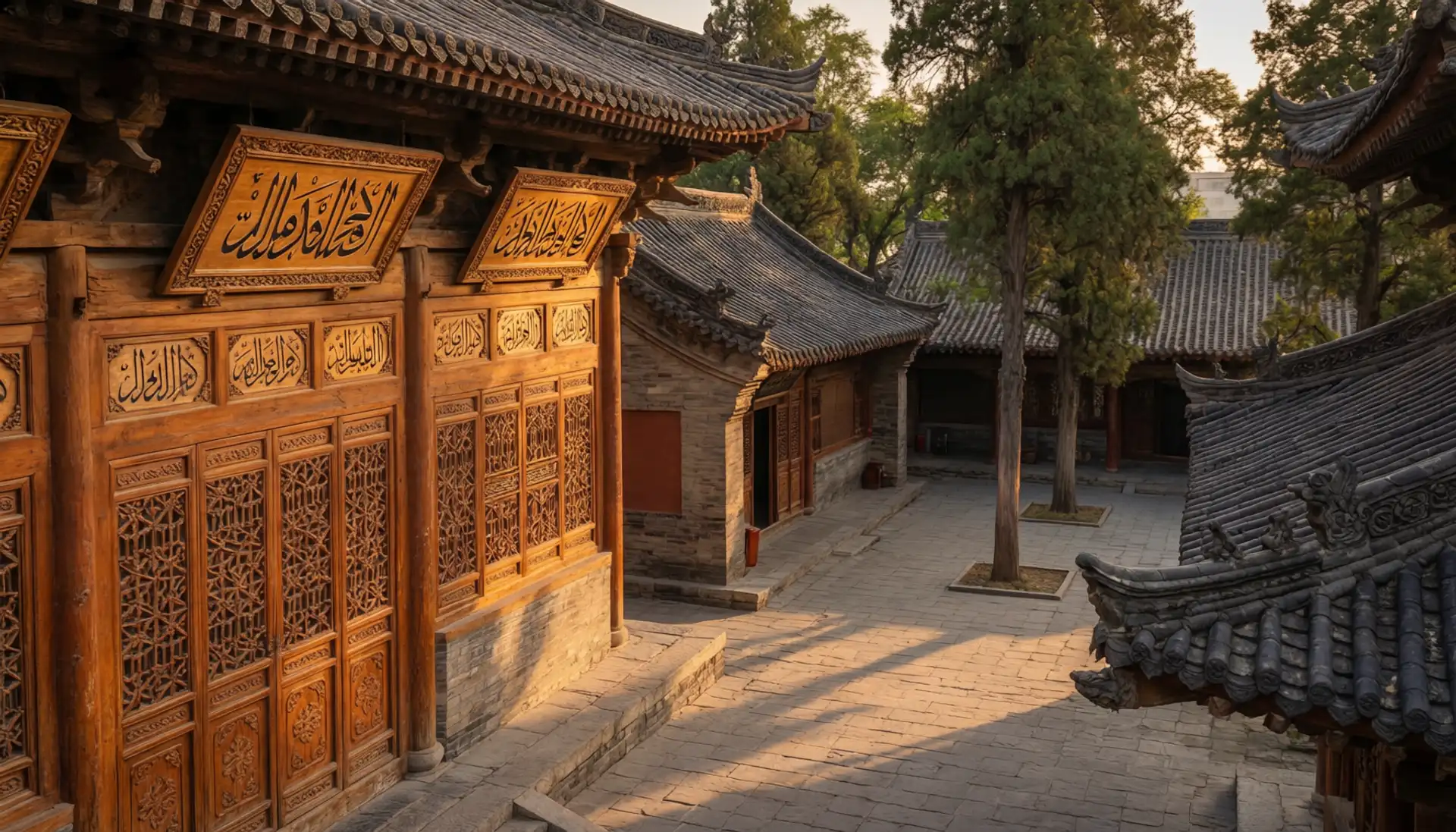
Xi'an's Muslim architecture is not a copy of Middle Eastern Islamic architecture. Instead, it represents the localization of Islam in China, where Islamic religious traditions merged with Chinese architectural philosophy, courtyard layouts, wooden structures, and traditional decorative arts.
How Did the Silk Road Shape Muslim Architecture in Xi'an?
Period | Historical Background | Architectural Development |
|---|---|---|
Tang Dynasty (618–907) | Chang'an became an international city with frequent cultural exchanges | Early Muslim communities formed, creating the foundation for Islamic religious spaces |
Song & Yuan Dynasties | Trade networks expanded and Muslim merchants increased | Mosques and community spaces developed around commercial areas |
Ming & Qing Dynasties | Muslim communities became more established | Many existing mosques were renovated and expanded using Chinese architectural styles |
Modern Era | Urban development transformed historic neighborhoods | Muslim architecture continues as both religious spaces and cultural heritage |
Why Does Xi'an's Mosque Look Chinese Rather Than Middle Eastern?
Many travelers expect mosques to have domes and tall minarets, but the Great Mosque of Xi'an looks very different. Its wooden halls, tiled roofs, courtyards, and garden-style layout make it resemble a traditional Chinese architectural complex.
This unique appearance does not mean it lost its Islamic identity. Instead, it shows how Islamic traditions adapted to Chinese culture, creating a distinctive Sino-Islamic architectural style.
How the Great Mosque of Xi'an Compares with Middle Eastern Mosques
Feature | Middle Eastern Mosques | The Great Mosque of Xi'an |
|---|---|---|
Style | Domes, arches, and minarets | Chinese roofs, courtyards, and wooden structures |
Design | Islamic architectural forms dominate | Chinese design with Islamic functions |
Features | Prayer halls, geometric patterns, and Arabic calligraphy | Courtyards, pavilions, Arabic inscriptions, and prayer spaces |
Meaning | Represents Middle Eastern Islamic traditions | Shows the integration of Islam and Chinese culture |
The Great Mosque of Xi'an represents how Islamic traditions adapted to Chinese society, creating a unique form of Sino-Islamic cultural heritage.
Which Mosques Best Represent Xi'an's Muslim Architectural Heritage?
Mosque | Historical Background | Architectural Features | Cultural Significance |
|---|---|---|---|
Great Mosque of Xi'an | Built in the Tang Dynasty and expanded later; one of China's oldest mosques | Chinese courtyard layout, wooden structures, Arabic inscriptions | A symbol of Islamic-Chinese architectural integration |
Daxuexi Lane Mosque | Historic mosque in the Muslim Quarter | Compact courtyard design with community features | Reflects local Muslim religious life |
Xiaopiyuan Mosque | Located in an old Muslim neighborhood | Combines residential and religious architecture | Shows the link between mosque and community |
Guangji Street Mosque | Historic mosque serving local Muslims | Chinese style with Islamic elements | Represents Muslim heritage in modern Xi'an |
4. Xi'an Halal Food Guide: How Cuisine Preserves Muslim Heritage
Xi'an Muslim cuisine developed through the combination of Islamic dietary traditions, Silk Road cultural exchange, and Shaanxi local food culture. Over centuries, Muslim communities adapted halal practices to local ingredients and cooking methods, creating a unique cuisine featuring wheat-based dishes, lamb and beef, spices, and regional flavors.
Why Does Xi'an Muslim Food Use Beef and Lamb?
The use of beef and lamb in Xi'an Muslim cuisine comes from a combination of Islamic dietary practices, Silk Road exchanges, northern pastoral traditions, and Shaanxi's wheat-based food culture.
Cultural Influence | How It Shaped Xi'an Muslim Cuisine |
|---|---|
Islamic Dietary Guidelines | Halal principles encourage the use of permitted meats, especially lamb and beef, while shaping preparation methods and dining traditions. |
Grassland Dietary Traditions | Pastoral communities across northern China and Central Asia relied on sheep and cattle as important sources of food, influencing local meat preferences. |
Central Asian Culinary Culture | Silk Road exchanges introduced meat-based cooking methods, spices, and techniques that became part of Muslim cuisine in Xi'an. |
Shaanxi Wheat-Based Food Culture | Local traditions of noodles, bread, and wheat products combined with lamb and beef, creating dishes such as yangrou paomo and hand-pulled noodles. |
Which Muslim Foods Reveal the History of Xi'an Cuisine?
Yangrou Paomo (Lamb Soup with Bread): A signature Xi'an halal dish combining Islamic dietary traditions, northern pastoral culture, and Shaanxi wheat cuisine. Visitors can experience the traditional bread-tearing process before enjoying the dish.
Lamb Skewers (Yangrou Chuan): Influenced by Central Asian barbecue traditions and Silk Road spice culture, grilled lamb reflects the exchange of flavors along ancient trade routes.
Babao Tea (Eight-Treasure Tea): A traditional Northwest Muslim hospitality culture featuring tea, dried fruits, and nuts, often shared during social gatherings.
Roujiamo (Chinese Hamburger): A combination of Shaanxi wheat-based food traditions and Northwestern meat culture, representing the everyday food culture of Xi'an.
Zenggao (Sticky Rice Cake): A traditional Shaanxi snack found in local communities, reflecting regional dessert traditions and festive food culture.
What Can You Discover Beyond Xi'an's Tourist Food Streets?
Morning Food Culture: Morning markets and street stalls offer a glimpse into everyday Muslim food traditions. Traditional meat soups reflect halal practices and Northwest culinary heritage. Noodles, bread, and other wheat-based dishes show the connection between local cuisine and daily life.
Family-style Cuisine: Shared meals strengthen relationships and community connections. Special dishes preserve religious traditions and cultural memories. Large family banquets reflect hospitality, social bonds, and local customs.
Why Does Halal Food Culture Go Beyond Dietary Rules?
Halal food in Xi'an is not only about what people eat, but also a way of preserving religious identity, community connections, and cultural traditions. For Hui Muslims, halal practices shape daily life, from food preparation to social gatherings, making cuisine an important expression of living heritage.
Halal food helps Hui communities maintain Islamic traditions while living within Chinese society. It represents both religious belief and a shared cultural identity. Xi'an halal cuisine reflects centuries of Silk Road connections, combining Islamic dietary principles with Chinese ingredients, cooking methods, and local flavors.
Halal restaurants are not only places to eat but also important social spaces where families gather, neighbors connect, and cultural traditions continue.
5. Daily Life in Xi'an Muslim Community
Muslim Quarter: A Living Neighborhood, Not Just a Tourist Street
Function | Role in the Muslim Quarter |
|---|---|
Religious Space | Mosques serve as places of worship, religious education, and community activities. |
Commercial Space | Restaurants, markets, and family businesses support daily economic life and preserve halal food traditions. |
Community Space | Residential areas maintain neighborhood relationships and everyday social connections. |
Cultural Space | Traditional food, crafts, customs, and festivals continue to pass through generations. |
How Does a Muslim Neighborhood Work in Xi'an?
Mosques as Community Centers: Mosques in Xi'an serve not only as places of worship but also as social and cultural centers. For example, the Great Mosque of Xi'an has long been surrounded by residential areas and markets, helping connect religious life with everyday community activities.
Halal Restaurants and Community Networks: Halal restaurants often develop around Muslim neighborhoods, supported by family traditions and local networks. Areas such as Sajinqiao and Dapiyuan preserve many long-established halal restaurants where food culture continues through generations.
The Integration of Commercial and Residential Spaces: Historic Muslim neighborhoods combine homes, markets, restaurants, and religious spaces in the same area. In places like the Muslim Quarter, residents, shop owners, and visitors share the same streets, keeping the community active beyond tourism.
Which Hidden Muslim Neighborhoods Reveal the Authentic Life of Xi'an?
Neighborhood | Features | Experience |
|---|---|---|
Dapiyuan Area | Historic streets; local shops; traditional homes | Daily community life; authentic neighborhood atmosphere |
Sajinqiao Area | Local markets; halal restaurants; lively streets | Morning markets; local food; community interactions |
How Do Family Businesses Preserve Muslim Traditions in Xi'an?
Family-run halal restaurants preserve unique flavors and cooking methods by teaching recipes from one generation to the next. Handmade noodles, halal meat preparation, and traditional pastry-making techniques continue through family training and daily practice.
Local shops and restaurants are not only businesses but also gathering spaces where neighbors interact and maintain social relationships. Each family business carries stories, traditions, and local experiences, helping preserve the cultural identity of Xi'an's Muslim communities.
How Do Traditional Crafts and Skills Preserve Muslim Heritage?
Metal Crafts Preserve Generations of Craftsmanship: Traditional metalwork creates copper ewers, incense burners, and ornaments, preserving Silk Road craftsmanship influenced by Persian and Central Asian techniques. Copper ewers used before prayer are decorated with geometric patterns and Arabic calligraphy, following Islamic artistic traditions.
Food Craftsmanship Preserves Cultural Memory: Traditional dishes such as beef and lamb paomo, halal noodles, and festival pastries preserve generations of cooking skills. Halal ingredients, traditional preparation methods, and festival foods reflect Muslim customs.
Arabic Calligraphy Connects Faith and Art: Arabic calligraphy is not only decoration but also a way to preserve Qur'anic texts and express Islamic faith. In Xi'an, Arabic script combines with Chinese wood carving, stone engraving, and plaque-making techniques, creating a unique Sino-Islamic style.
Traditional Clothing Reflects Cultural Identity: Traditional textiles, including embroidered prayer rugs and decorative clothing, preserve local craftsmanship and community identity. Embroidery uses floral, geometric, and symbolic patterns instead of human or animal images, reflecting Islamic artistic traditions.
6. Experience Muslim Culture in Xi'an
Where Can You Experience Xi'an's Living Muslim Heritage?
Location | Cultural Experience |
|---|---|
Great Mosque of Xi'an (Huajue Lane Mosque) | Explore one of China's oldest mosques, where Islamic traditions blend with Chinese courtyard architecture and Silk Road history. |
Muslim Quarter (Hui Fang) | Experience traditional halal food, local markets, and the daily life of Xi'an's Muslim community. |
Sajinqiao Area | Discover a less commercial Muslim neighborhood with long-established halal restaurants, local shops, and community life. |
Dapiyuan Area | Walk through historic residential streets where mosques, family businesses, and traditional neighborhoods coexist. |
Family-run Halal Restaurants | Experience authentic Muslim cuisine and the social role of food in local community life. |
How to Explore Xi'an's Muslim Heritage on Foot?
Start at the Great Mosque of Xi'an to explore Sino-Islamic architecture, then walk through Huajue Lane and the Muslim Quarter for local food and community life. Continue to Sajinqiao and Dapiyuan to discover traditional neighborhoods where mosques, markets, and residential spaces remain connected.
Best Time to Explore Muslim Culture in Xi'an?
Morning: Best for experiencing local breakfast culture, markets, and community activities.
Late Afternoon and Evening: Best for exploring food streets, family restaurants, and neighborhood atmosphere.
During Festivals: Ramadan and Eid al-Fitr offer deeper opportunities to experience religious traditions and community celebrations.
7. Muslim Festivals and Cultural Experiences
Muslim festivals in Xi'an combine religious traditions with community life. Ramadan is a period of fasting, prayer, and shared iftar meals. Eid al-Fitr celebrates the end of Ramadan through prayers, family visits, and traditional foods, while Eid al-Adha focuses on worship, gatherings, and sharing. These traditions continue to preserve Xi'an's living Muslim heritage.
Ramadan in Xi'an: A Living Tradition in the Muslim Quarter
Ramadan is the ninth month of the Islamic calendar, during which Muslims fast from dawn to sunset. In Xi'an, Ramadan is closely connected with the historic Muslim Quarter. After sunset, the neighborhood transforms as families gather for iftar, mosques host prayers, and streets become active with halal food and social activities.
How Is Ramadan Celebrated in Xi'an?
Practice | Cultural Experience |
|---|---|
Suhoor and Fasting | Families eat before dawn, then fast from food and drink until sunset. |
Iftar and Community Gatherings | Families and neighbors share meals after sunset, followed by evening prayers. |
Ramadan Night Food Culture | Areas like Miaohou Street and Sajinqiao become lively with halal foods and late-night dining. |
How Can Visitors Experience Ramadan in Xi'an?
Visitors can explore Muslim neighborhoods after sunset, especially areas such as the Muslim Quarter, Miaohou Street, and Sajinqiao, to experience the unique Ramadan atmosphere, local markets, and community life.
Trying traditional halal foods, such as yangrou paomo, lamb dishes, and local snacks, offers a way to understand the connection between Ramadan, food, and cultural traditions.
When visiting mosques or interacting with local communities, travelers should respect fasting practices, prayer times, and local customs to experience Ramadan in a meaningful way.
Eid al-Fitr in Xi'an: Celebrating Community and Tradition
Eid al-Fitr marks the end of Ramadan and is one of the most important festivals for Xi'an's Muslim communities. It is a time for worship, gratitude, family reunions, and community connections.
How Is Eid al-Fitr Celebrated in Xi'an Muslim Communities?
Festival Food and Sharing: During Eid, families prepare festive halal foods such as oil cakes, sanzi, beef and lamb dishes, and traditional snacks. Sharing food with relatives and neighbors is an important way to express hospitality and strengthen community ties.
Family Gatherings and Traditions: After morning prayers, families visit relatives, exchange greetings, and gather for meals. For many Hui Muslims, Eid is not only a religious celebration but also an important moment for family reunion and passing traditions between generations.
Community Celebrations in Xi'an: In Xi'an's Muslim neighborhoods, mosques become important gathering spaces during Eid. Community members attend prayers, share festive meals, and maintain connections through collective celebrations.
How Does Eid al-Adha Express Faith, Sharing, and Community Values?
Eid al-Adha commemorates devotion and generosity in Islamic tradition. In Xi'an, Muslim communities observe the festival through mosque prayers, family gatherings, and sharing halal food. The festival highlights values of gratitude, charity, and community responsibility.
Families prepare traditional foods, especially beef and lamb dishes, and share them with relatives, neighbors, and those in need. The festival strengthens community connections and reflects how Muslim traditions continue as part of Xi'an's living cultural heritage.
What Are the Differences Between the Three Major Muslim Festivals?
Festival | Meaning | Main Activities | Cultural Experience |
|---|---|---|---|
Ramadan | A month of fasting, prayer, and spiritual reflection | Fasting from dawn to sunset, iftar meals, evening prayers | Night food and community life |
Eid al-Fitr | Celebrates the end of Ramadan and completion of fasting | Mosque prayers, family visits, festive meals, gift and food sharing | Family and community celebrations |
Eid al-Adha | Commemorates devotion, sacrifice, and generosity | Special prayers, family gatherings, sharing halal food | Experience religious traditions, halal cuisine, and community connections |
8. Modern Xi'an Muslim Culture
How Is Muslim Culture Continuing in Modern Xi'an?
Xi'an's Muslim culture is adapting to modern urban life while retaining its community roots. The Muslim Quarter remains both a residential community and a major cultural-tourism area, with halal food, commerce, and Muslim traditions continuing alongside new urban businesses.
Young Muslim Entrepreneurs: Younger Hui business owners are expanding beyond traditional retail and restaurants into e-commerce, creative businesses, and cultural tourism.
New Halal Business Models: Traditional family businesses are increasingly combining halal food with tourism, branding, and online commerce. Xi'an's Lianhu District is also developing new commercial and cultural-tourism industries around its historic neighborhoods.
Innovation in Traditional Cuisine: Muslim food is being adapted into new products while maintaining its Silk Road identity. Examples include halal gelato and modern Hui desserts, which reinterpret traditional Chinese and Silk Road influences for contemporary consumers.
From Food Street to Cultural Tourism: The Muslim Quarter has evolved from a local commercial neighborhood into a major tourism destination, attracting visitors through its food, architecture, history, and community culture.
How Does Muslim Culture Shape Modern Xi'an?
Cultural Influence | Modern Examples in Xi'an |
|---|---|
Food as a Cultural Symbol | Halal dishes such as yangrou paomo and lamb barbecue combine Silk Road influences with Shaanxi cuisine, becoming symbols of Xi'an's multicultural identity. |
Neighborhoods as Cultural Spaces | Areas like Muslim Quarter, Dapiyuan, and Sajinqiao continue to connect residents, family businesses, markets, and visitors through everyday community life. |
Architecture and Cultural Identity | Sites such as the Great Mosque of Xi'an preserve the city's multicultural history while remaining active religious and community spaces. |
How Do Traditional Food Techniques Live in Everyday Xi'an Muslim Life?
Beef and lamb paomo preserves traditional skills through slow-cooked broth, carefully selected ingredients, and handmade bread preparation. The process of breaking bread by hand and sharing the meal with family has become an important part of Xi'an Muslim food culture.
Jiasan guantang baozi continues handmade techniques including dough preparation, filling, and shaping. Beyond its taste, this dish reflects the role of food in hospitality, family gatherings, and everyday community life.
Traditional foods such as youxiang (fried festival bread) and sanzi (crispy fried dough) are closely connected with Islamic festivals. Families prepare these foods together, allowing cooking skills and cultural memories to pass from one generation to the next.
Xi'an Muslim cuisine still carries traces of Silk Road exchanges through spices, ingredients, and cooking methods. Flavors such as cumin and sesame show how centuries of cultural exchange continue to shape modern local food.
How Do Traditional Markets Keep Muslim Culture Alive in Xi'an?
Traditional markets in Xi'an Muslim communities are not only shopping spaces but also places where food traditions, trade, and local businesses continue in daily life. Areas such as the Muslim Quarter, Sajinqiao, and Dapiyuan preserve this living commercial culture.
Copper and metal products reflect traditional skills once used in daily life, trade, and religious spaces.
Spice shops preserve Silk Road influences, with ingredients such as cumin and chili shaping the flavors of halal cuisine.
Family-run shops continue making halal snacks, pastries, and traditional foods using long-established methods.
Established halal restaurants and local brands preserve traditional recipes while adapting to modern tourism and consumer needs.
What Challenges Does Xi'an Muslim Culture Face Today?
The modernization of Xi'an Muslim areas brings both opportunities and challenges. Tourism has increased awareness of Hui culture, but it also creates challenges in balancing commercial development with community life.
The Muslim Quarter attracts visitors through food, architecture, and history. However, tourism development may reshape traditional neighborhoods and influence residents' daily lives. Xi'an Muslim culture must balance preservation and adaptation.
When Is the Best Time to Experience Muslim Culture in Xi'an?
Season | Best Cultural Experience |
|---|---|
Spring (March–May) | Comfortable for walking tours, mosques, and historic Muslim neighborhoods. |
Summer (June–August) | Best for night food culture, lamb barbecue, and lively street atmosphere. |
Autumn (September–November) | Ideal weather for exploring neighborhoods and tasting seasonal foods. |
Winter (December–February) | Quieter season for local restaurants and everyday community life. |
Discover Xi'an Muslim culture beyond the famous food streets. The best experience combines historic mosques, halal cuisine, traditional neighborhoods, and local community life. Visit the Great Mosque of Xi'an, explore areas like Sajinqiao and Dapiyuan, and taste dishes such as yangrou paomo to understand the connection between Silk Road history and everyday traditions.
Respect local customs, explore at a relaxed pace, and look beyond tourist attractions. Xi'an's Muslim culture is not only a historical heritage but a living tradition that continues to shape the city today.



Traveler Discussions
Questions from travelers