
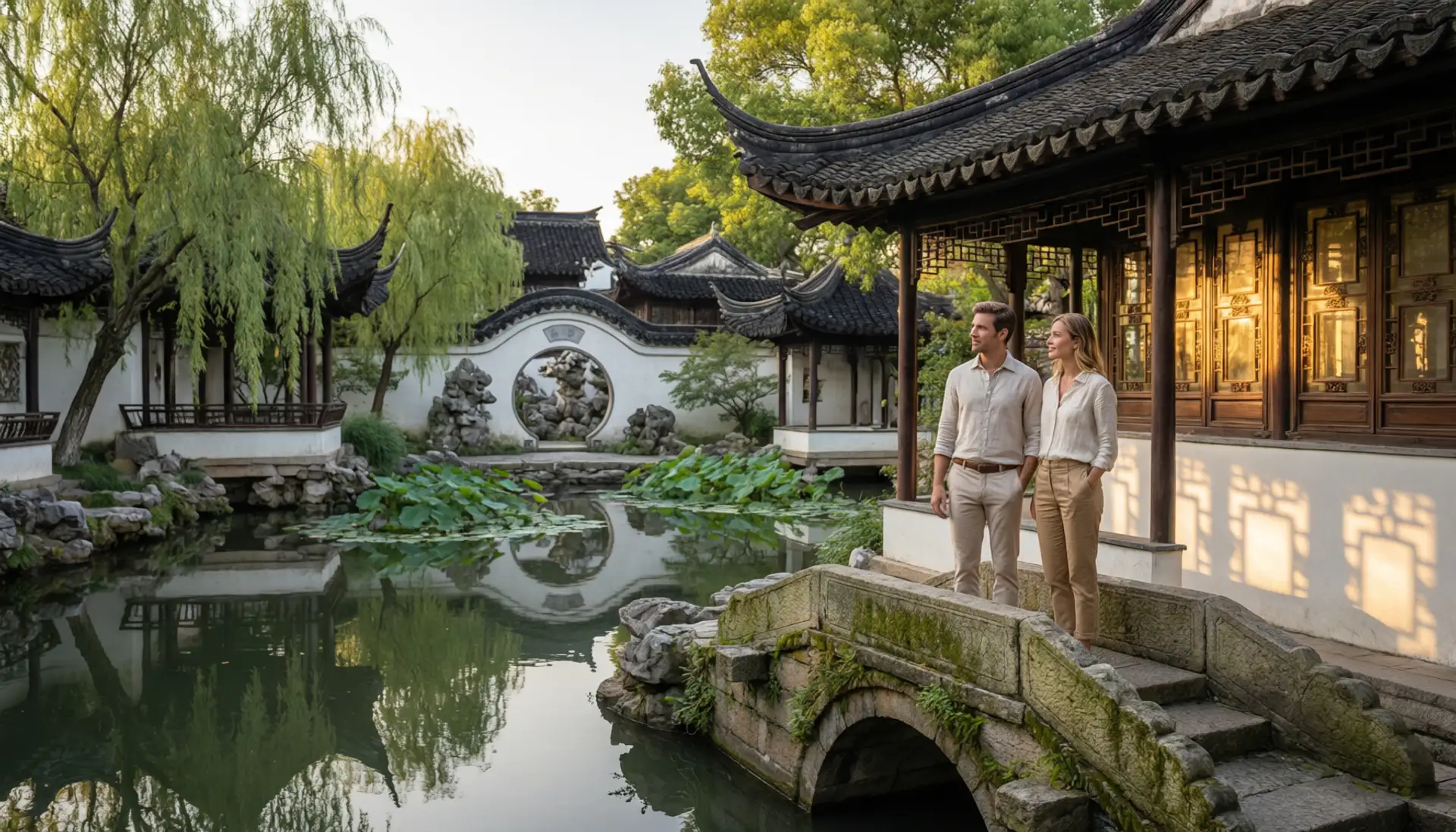
Suzhou — a city of whispering canals, moonlit garden pavilions, and silk that once graced imperial courts. For 2,500 years, this Jiangnan gem has inspired poets, scholars, and traders. With over 60 surviving classical gardens (9 UNESCO World Heritage Sites), centuries-old silk-making traditions, and a cuisine ranked among China's finest, Suzhou rewards every type of traveller. This guide covers everything you need to plan your visit.
All Suzhou Highlights at a Glance
Attraction | Best For | Time Needed | Admission | Must-Know |
|---|---|---|---|---|
Humble Administrator's Garden | First-time visitors | 2–3 hours | ¥90 peak / ¥70 off | Book 7 days ahead; arrive at 07:30 |
Lingering Garden | Architecture lovers | 1.5–2 hours | ¥55 peak / ¥45 off | One-way corridor route; pair with Tiger Hill |
Master of the Nets Garden | Intimate charm & night opera | 1–2 hours | ¥40 day / ¥120 night | Night Kunqu opera (Mar–Nov) |
Lion Grove Garden | Families & explorers | 1–1.5 hours | ¥40 peak / ¥30 off | Rockery maze takes 30+ min alone |
Pingjiang Road | Canal walks & tea | 2–3 hours | Free | Boat ride ¥40–60; 800-year-old street |
Shantang Street | Night lanterns | 2–3 hours | Free | Best at dusk; leads to Tiger Hill |
Tiger Hill | Iconic pagoda | 2–3 hours | ¥80 peak / ¥60 off | "China's Leaning Tower of Pisa" |
Suzhou Museum | I.M. Pei masterpiece | 1.5–2 hours | Free (reserve 7 days ahead) | Closed Mondays; 2024 West Wing added |
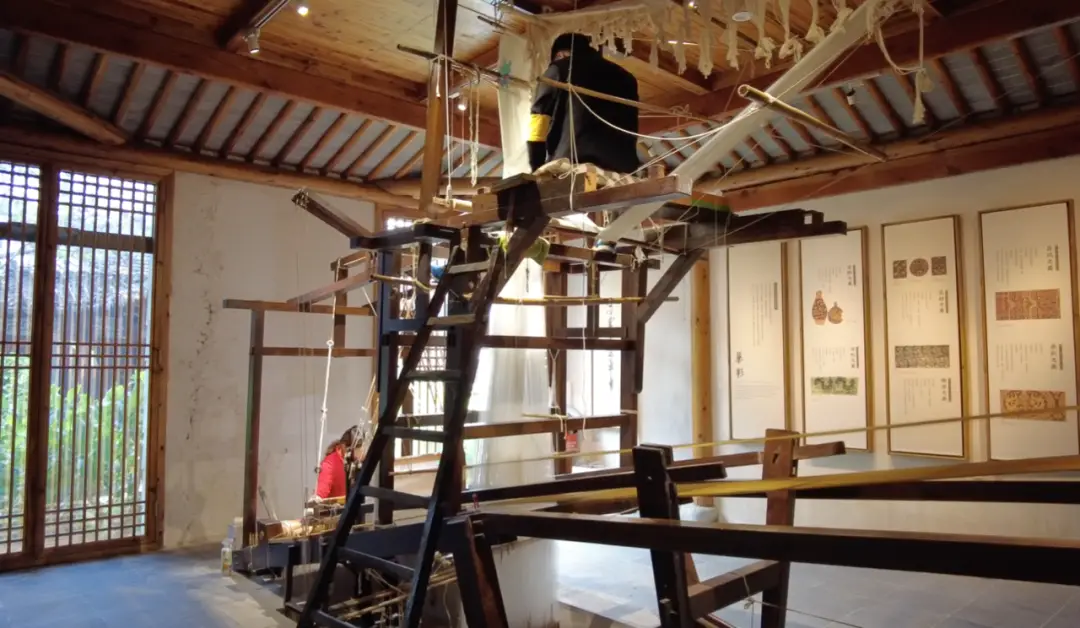
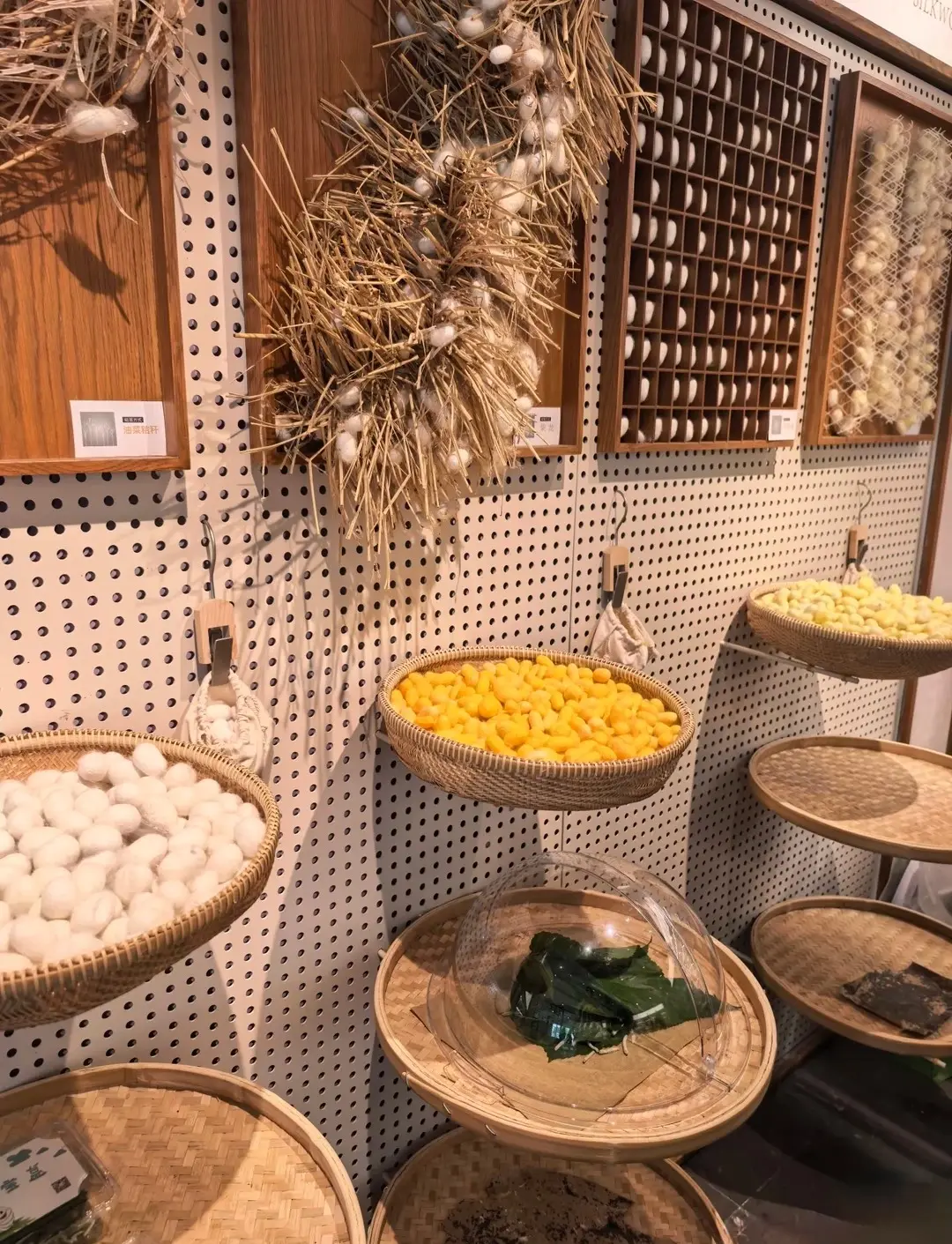
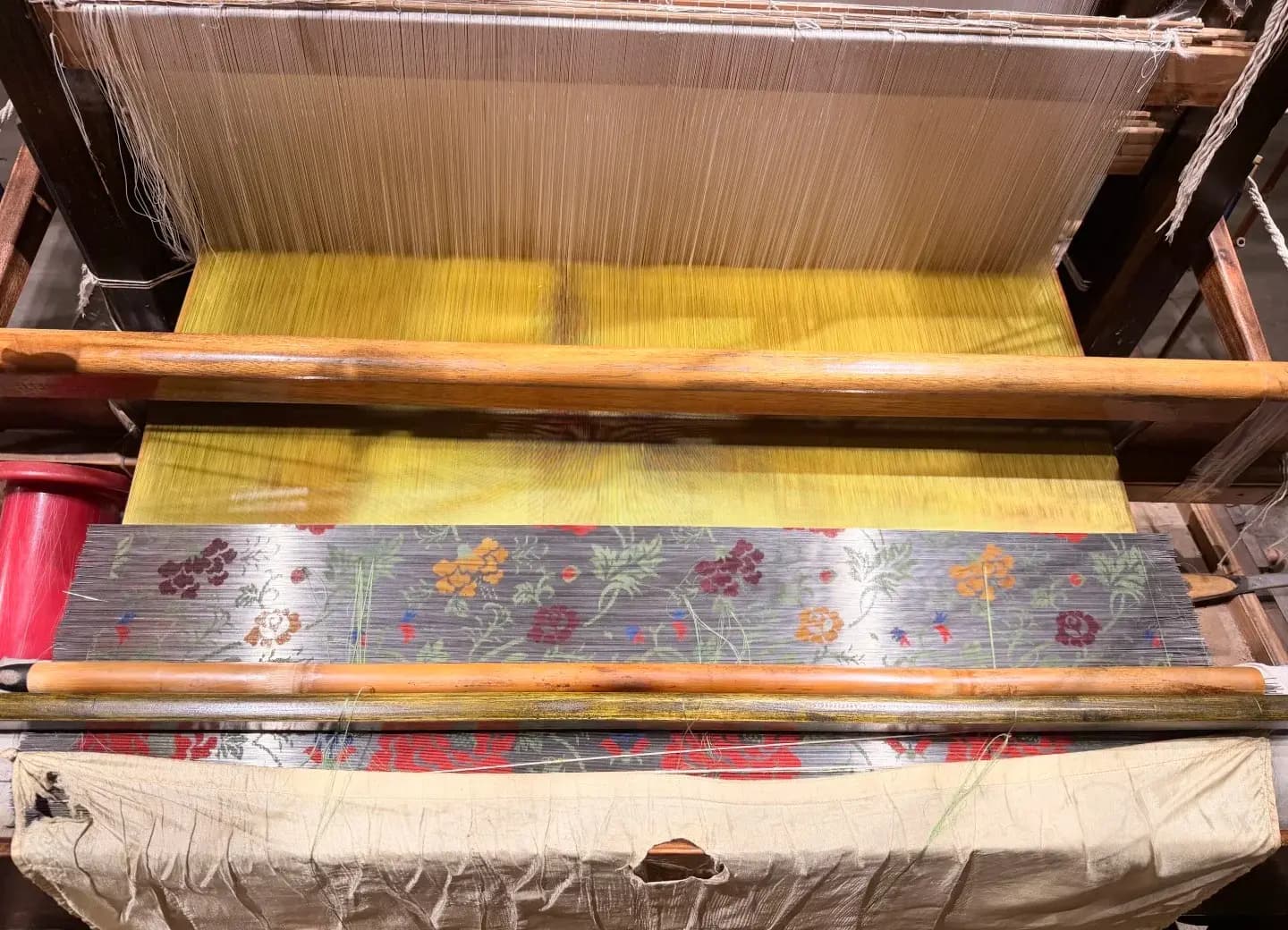
Suzhou Silk Museum | Culture & textile lovers | 1–1.5 hours | Free (reservation required) | Watch live silk reeling demonstration; closed on Mondays |
Tongli Water Town | Easy day trip | Half day | ¥100 | Metro Line 4 direct access |
Zhouzhuang Water Town | First-time "famous" experience | Half day | ¥100 | Most photographed; arrive early or stay overnight |
Suzhou's Four Great Gardens: A Deep Dive
Humble Administrator's Garden (Zhuozheng Yuan)
The largest classical garden in Suzhou — spanning 5.2 hectares — and widely regarded as the finest in all of China. Built in the early 16th century by a Ming-dynasty official, it has been a UNESCO World Heritage Site since 1997. The garden harmonises the four classic elements of Chinese garden design: water, rockeries, plants, and architecture.
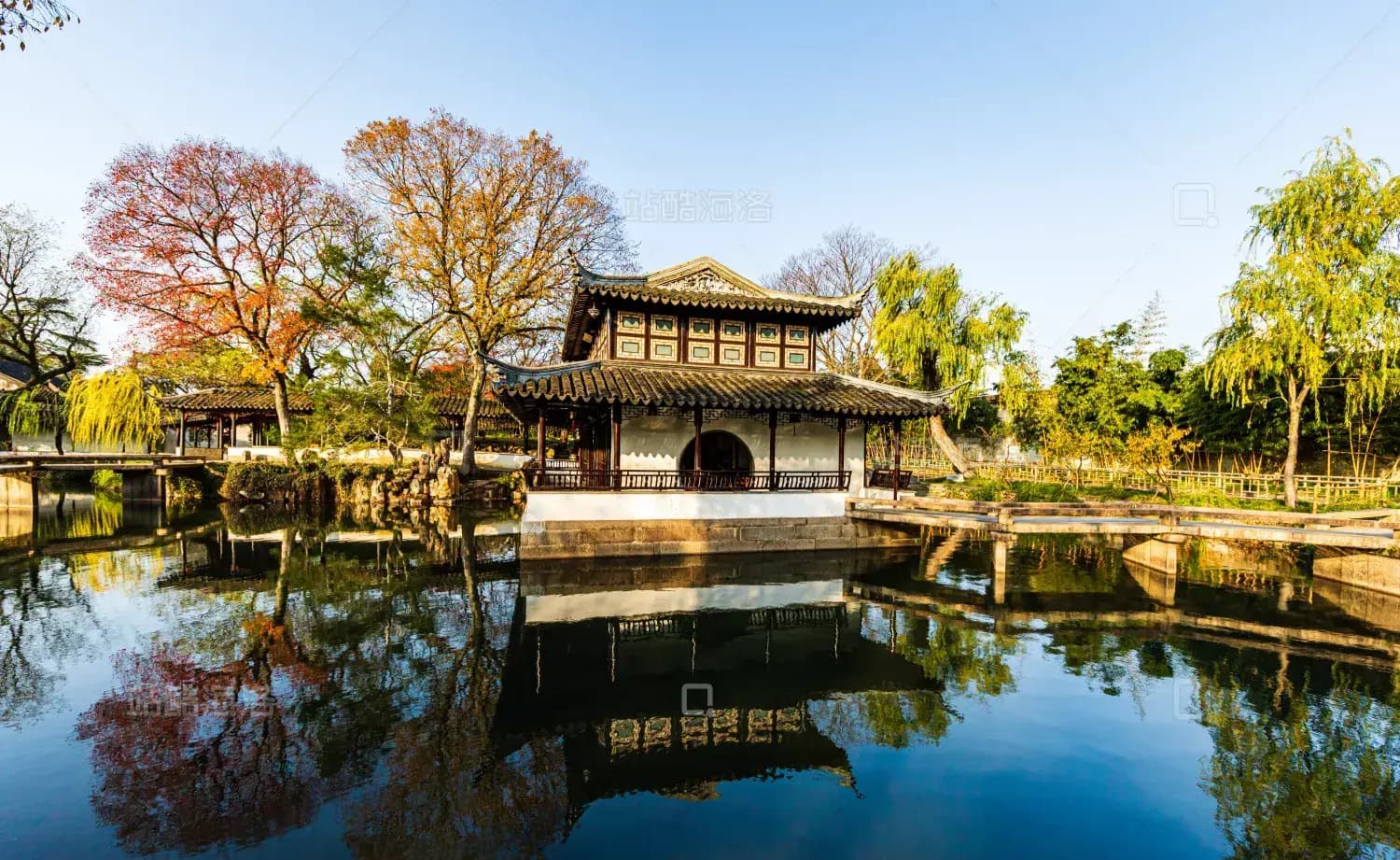
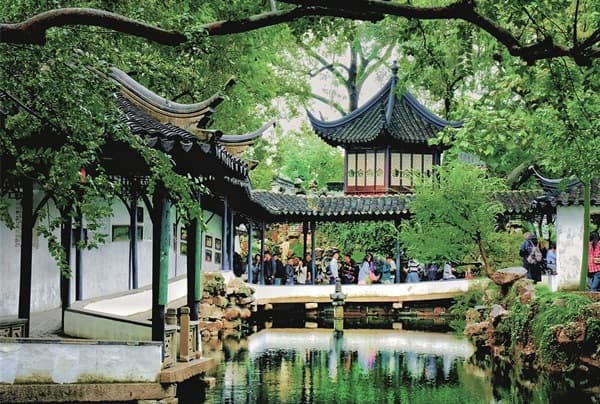
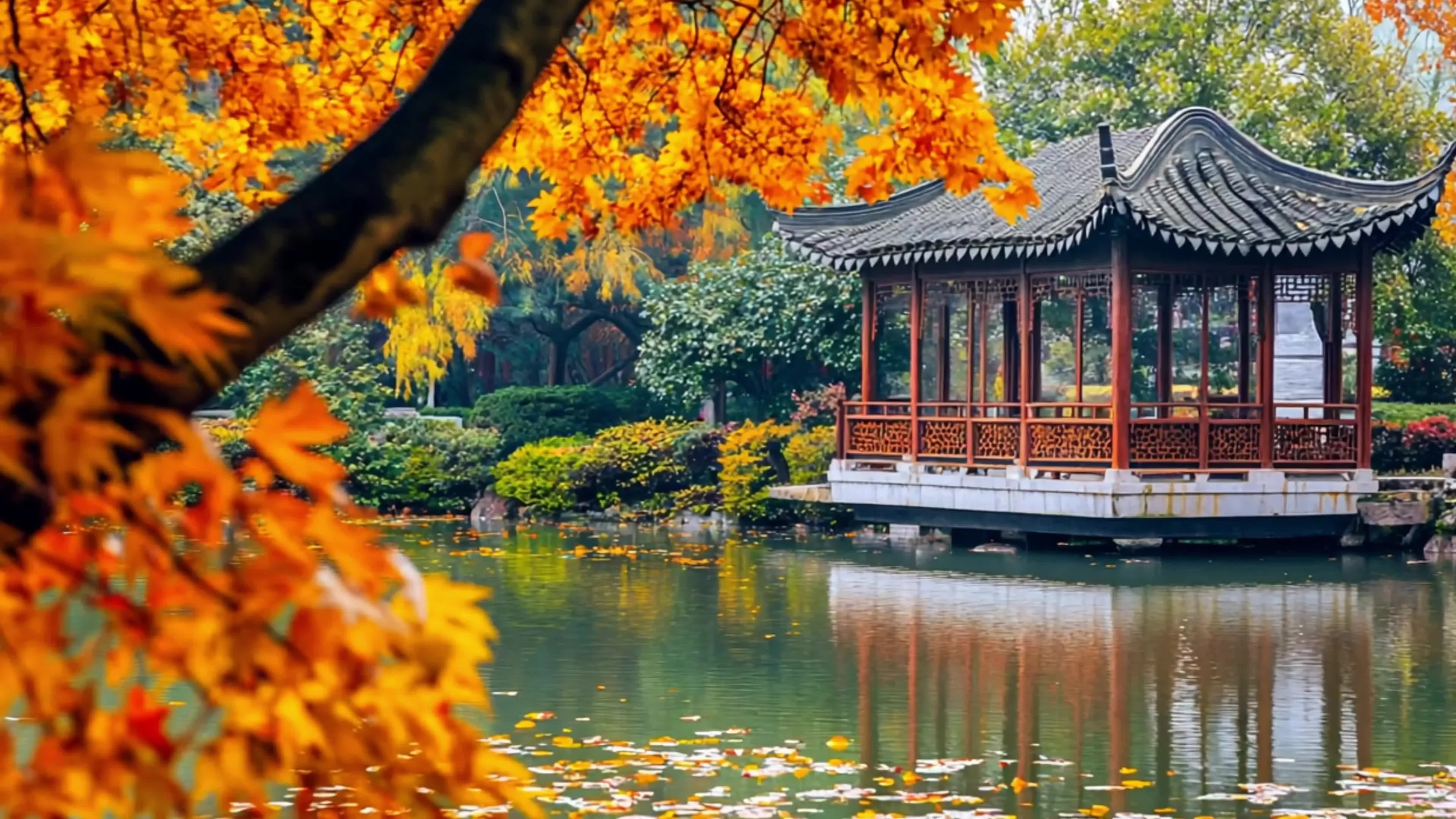
Its central section, with large lotus ponds, willow-lined pavilions, and the iconic Faraway Fragrance Hall, is the highlight. The western section features a bonsai garden and reflective pools, while the eastern section offers open lawns and rockeries.
Travel Tips:
Reserve tickets at least 7 days in advance via the official WeChat mini-program.
Allocate 2–3 hours for a thorough visit.
Arrive at opening time (07:30 in peak season) to beat large crowds.
Admission: ¥90 peak season (Apr, May, Jul–Oct), ¥70 off-season (Jan–Mar, Jun, Nov–Dec).
The Lingering Garden (Liu Yuan)
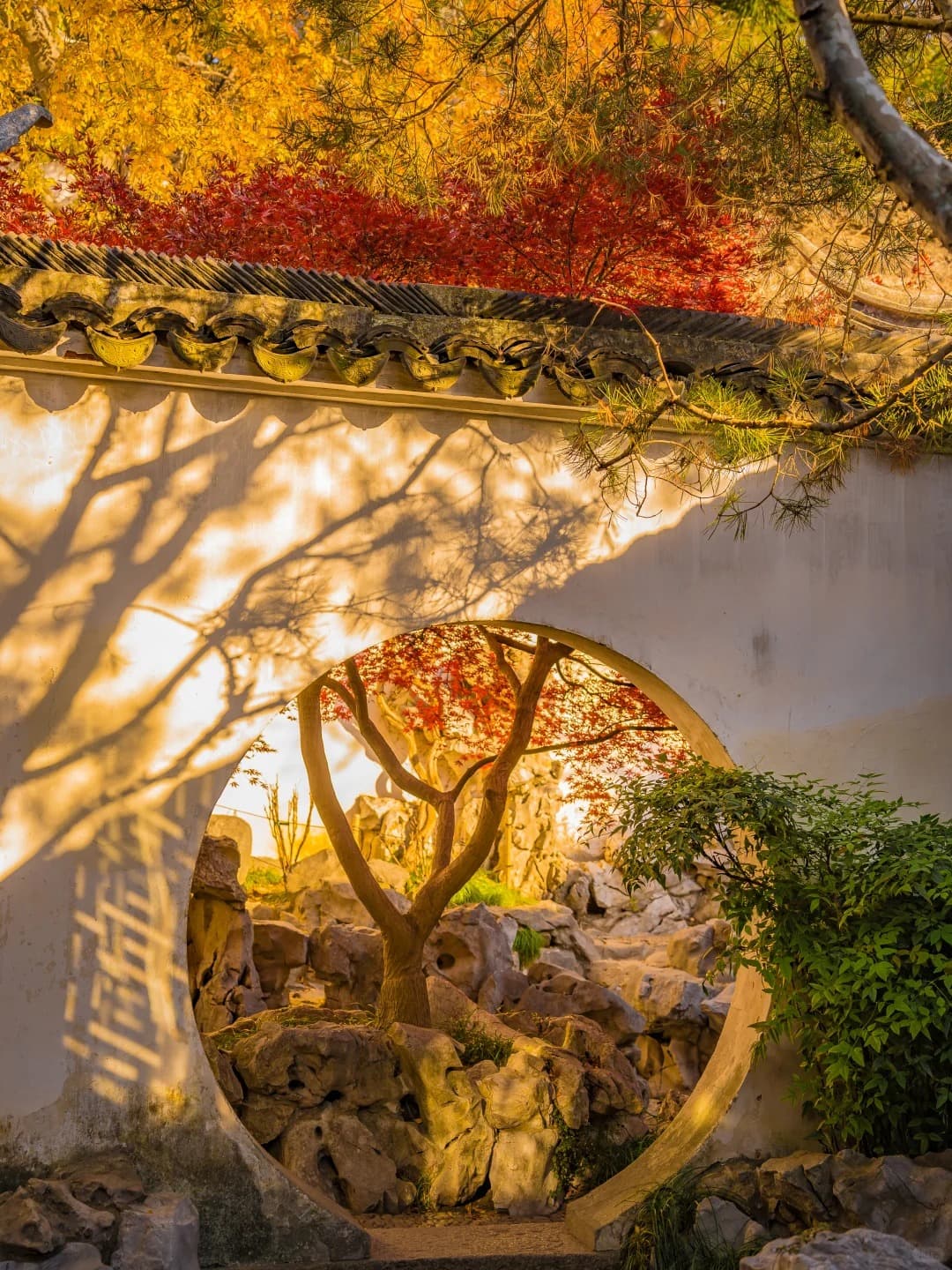
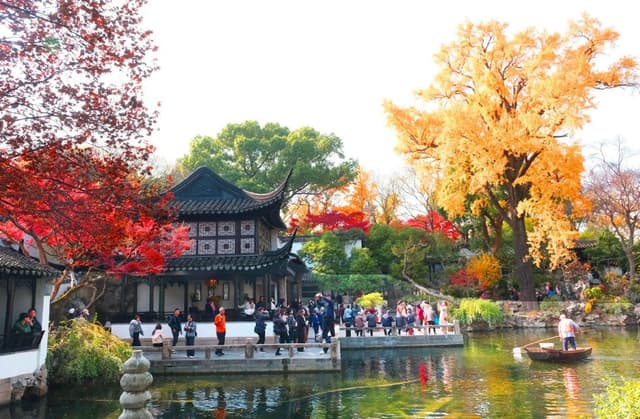
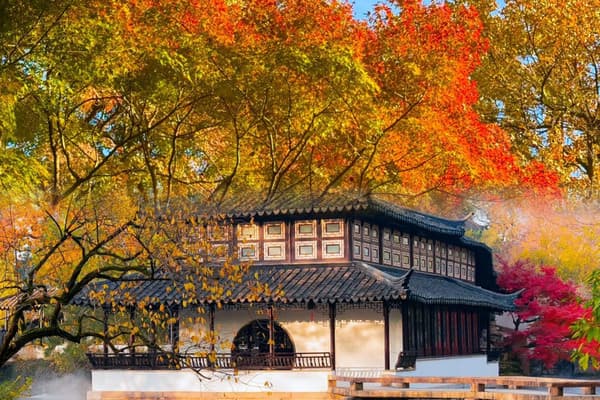
One of China's "Four Great Gardens" and a UNESCO World Heritage Site. It is celebrated for its masterful spatial design — the garden creates a sense of infinite depth through a sequence of courtyards, corridors, and framed views. The Coronet Cloud Peak (Guanyun Feng), a 6.5-tonne Taihu limestone rock standing 8 metres tall, is the garden's most famous feature.
Travel Tips:
Admission: ¥55 (peak season), ¥45 (off-season).
Allow 1.5–2 hours. Follow the one-way corridor route to experience the garden's designed sequence of views.
Best paired with nearby Tiger Hill on the same day.
Master of the Nets Garden (Wangshi Yuan)
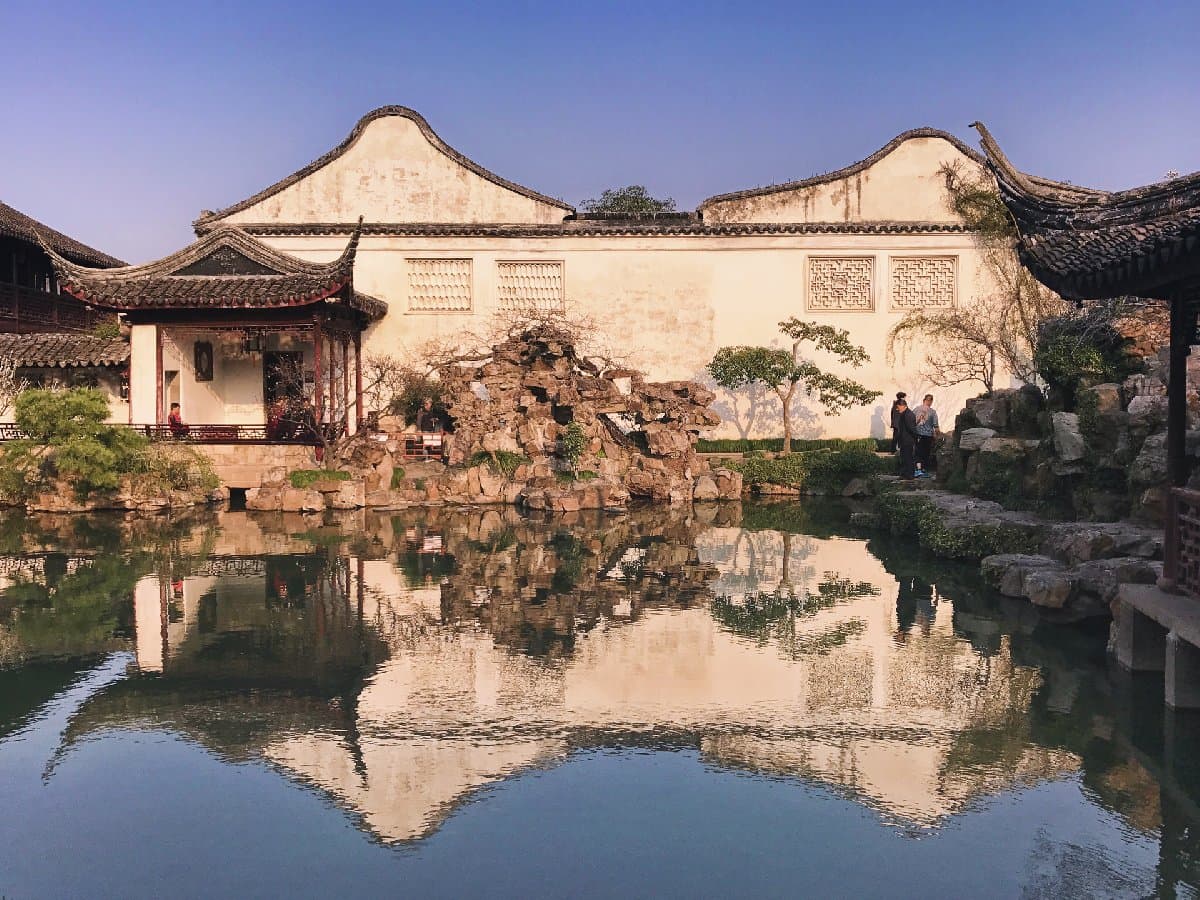
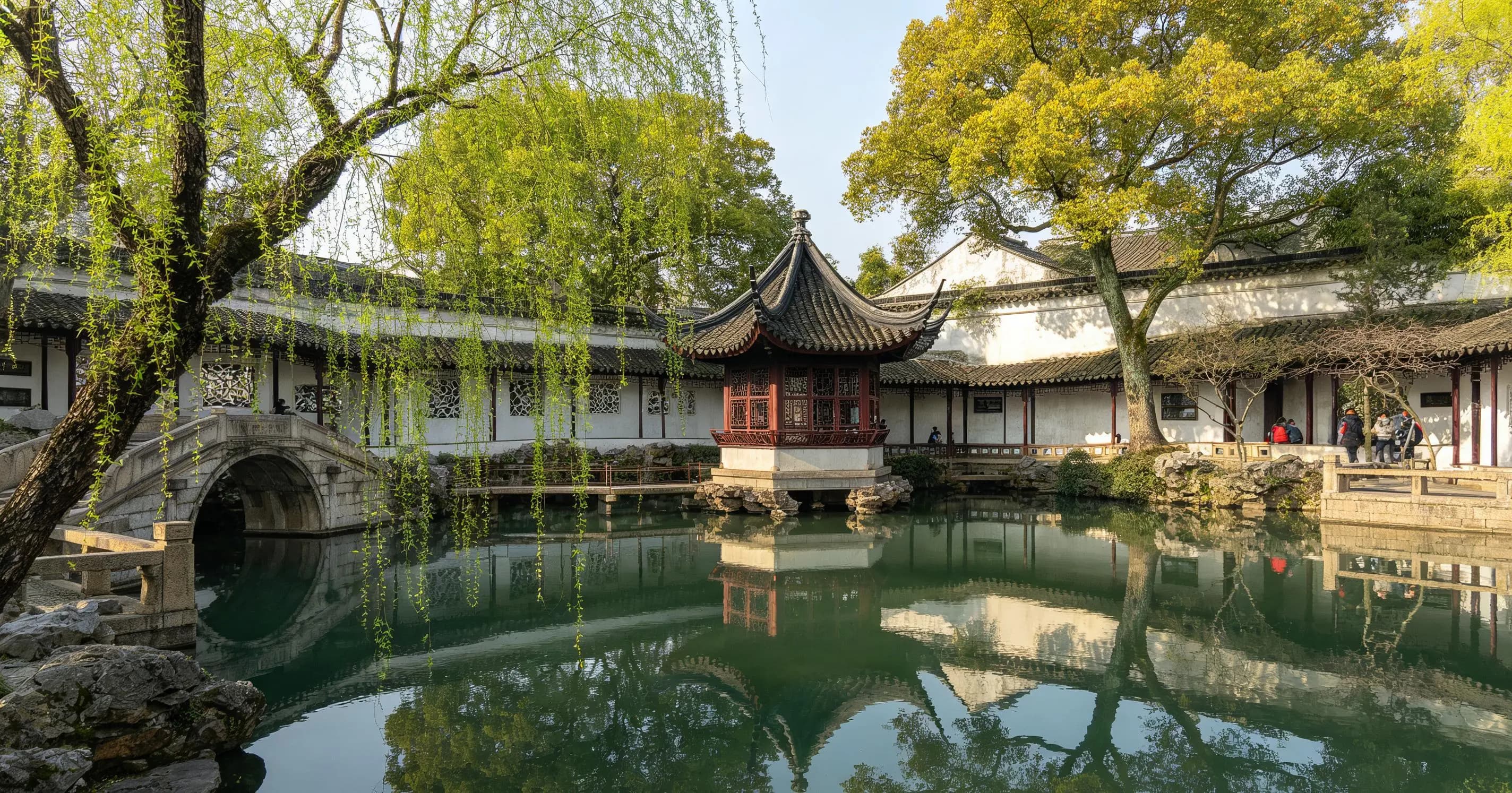
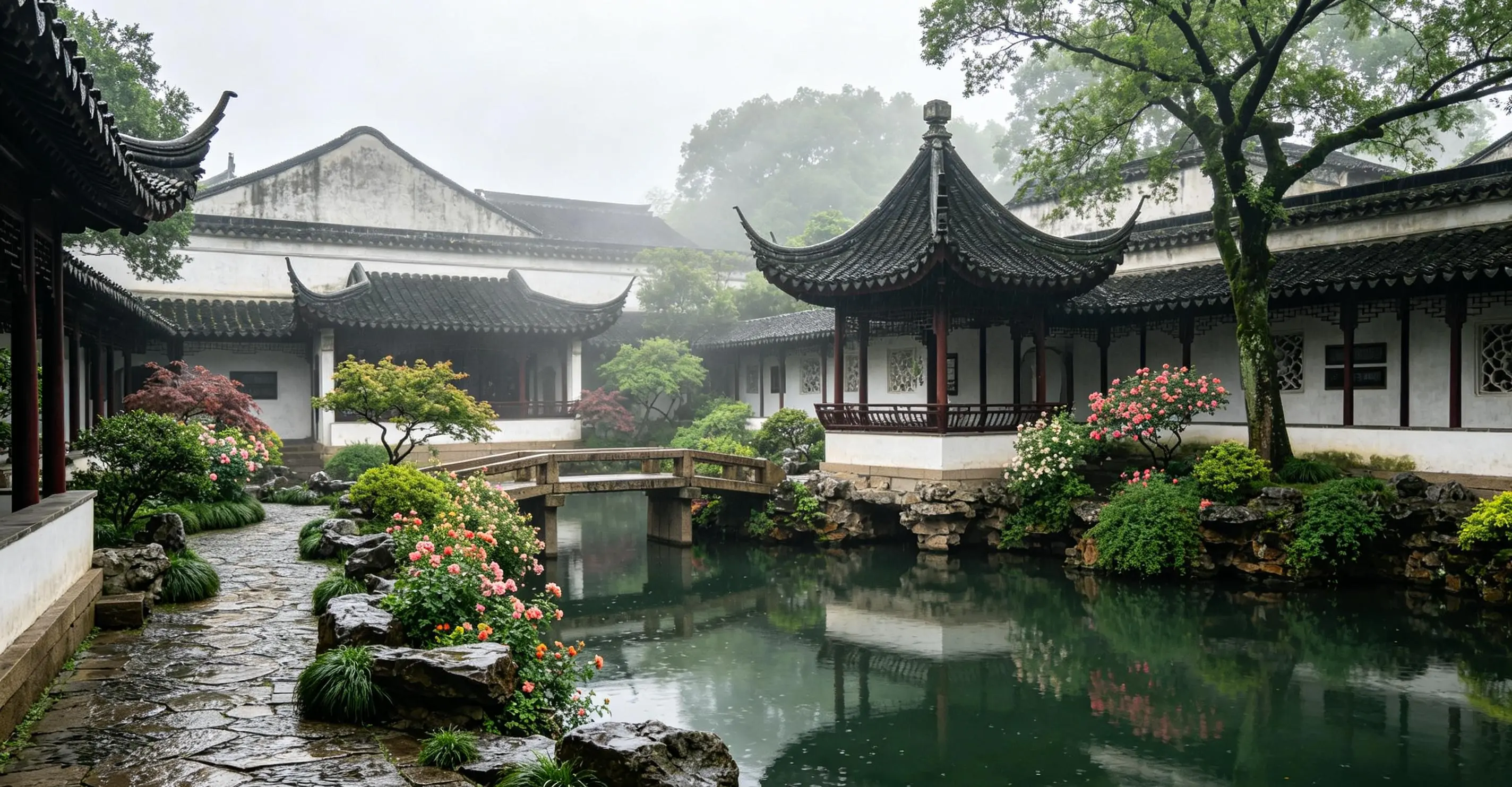
The smallest of Suzhou's four major gardens, but many travellers consider it the most charming. Its compact design packs remarkable detail into less than half a hectare. The garden's night programme is a unique cultural experience: from spring to autumn, the garden hosts evening performances of Kunqu opera (a UNESCO intangible heritage), pipa music, and classical dance in illuminated pavilion settings.
Travel Tips:
Daytime admission: ¥40 peak season, ¥30 off-season; night tour ticket: ¥120 per person (includes on-site performances).
Night tours run roughly mid-March to November, evening sessions only.
Book night tour tickets in advance — capacity is very limited.
The garden is ideal for visitors who prefer fewer crowds and more atmosphere.
Lion Grove Garden (Shizi Lin)
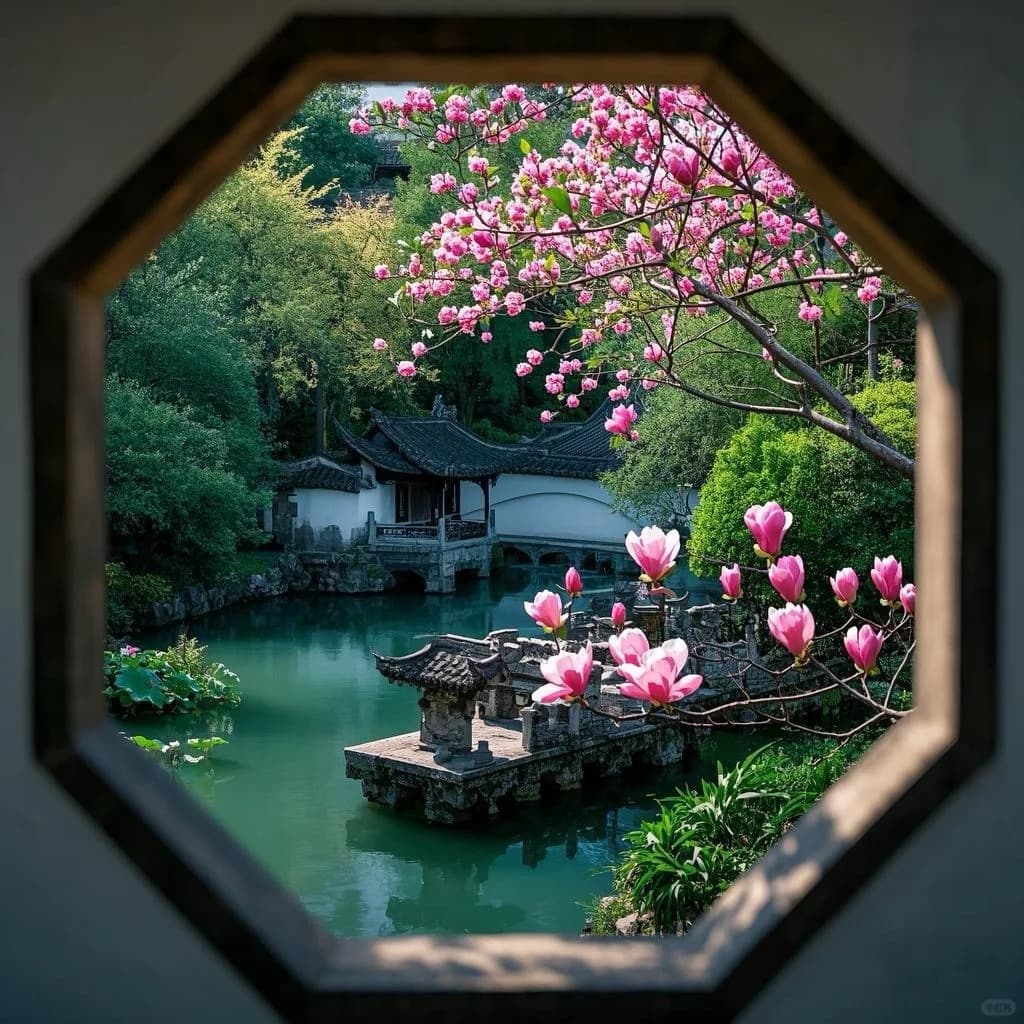
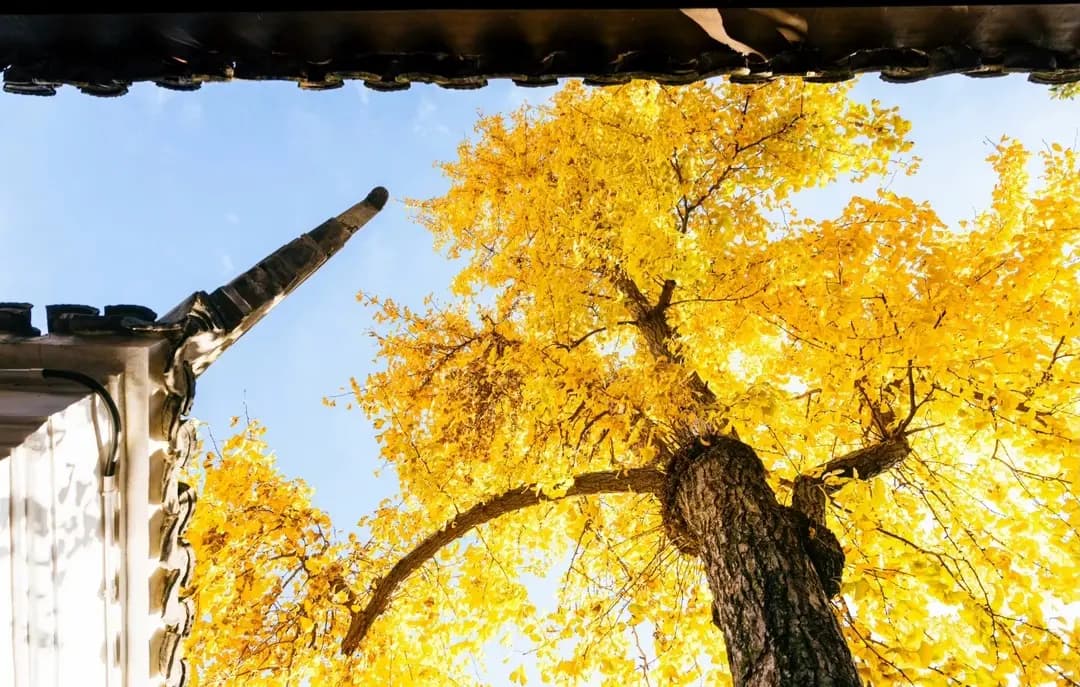
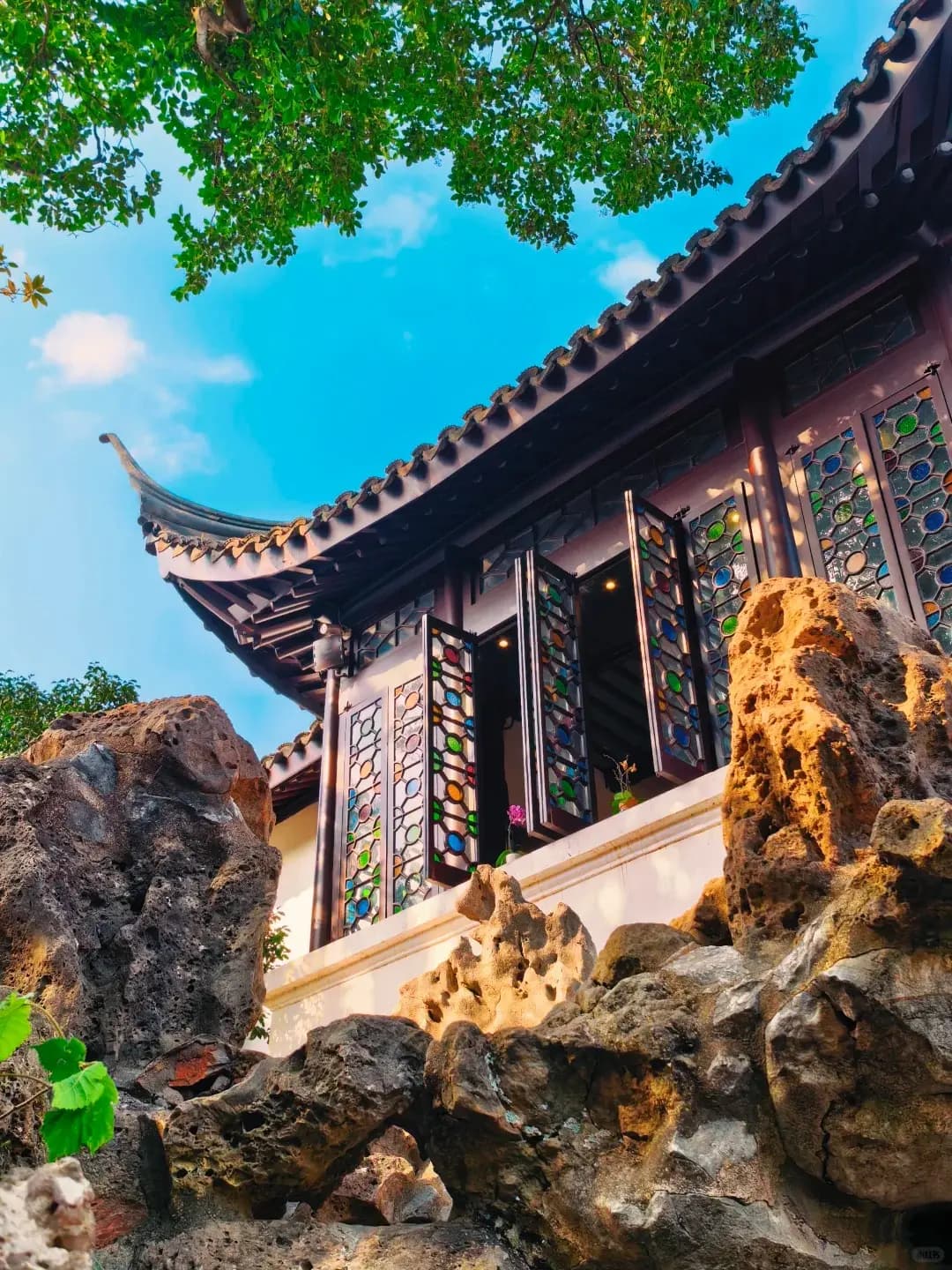
Famous for its extraordinary rockery landscape — a labyrinth of Taihu limestone caves and tunnels that visitors can climb through and explore. Built in 1342 by a Zen Buddhist monk, the garden's name comes from rocks that resemble lions in various poses. It is a favourite with children and anyone who enjoys interactive exploration.
Travel Tips:
Admission: ¥40 (peak), ¥30 (off). Allow 1–1.5 hours.
Located next to the Humble Administrator's Garden — visit both on the same morning.
Wear non-slip shoes; the rockery paths are uneven.
Canal Streets: Pingjiang Road & Shantang Street
Pingjiang Road: Suzhou's Living Canal Street
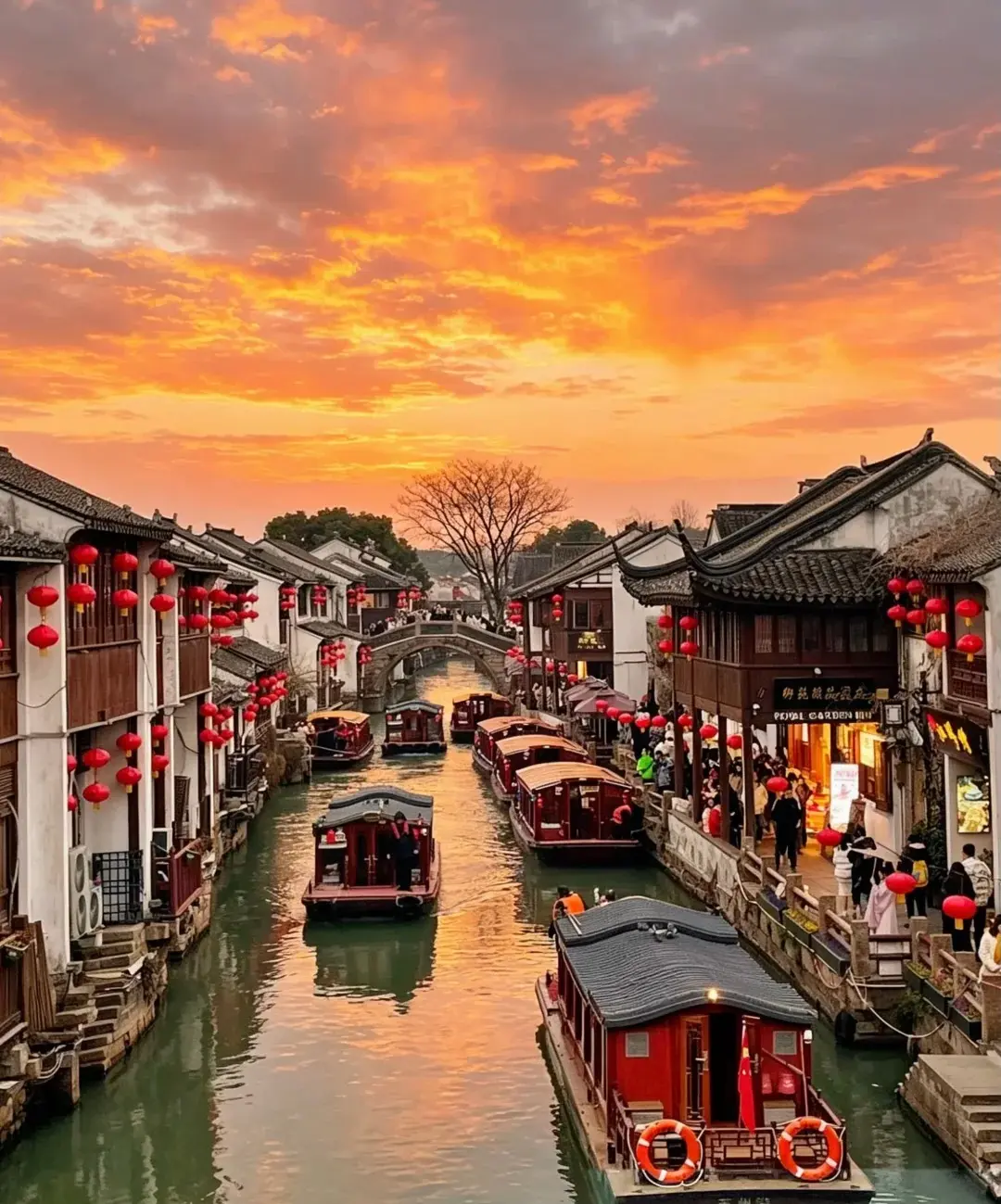
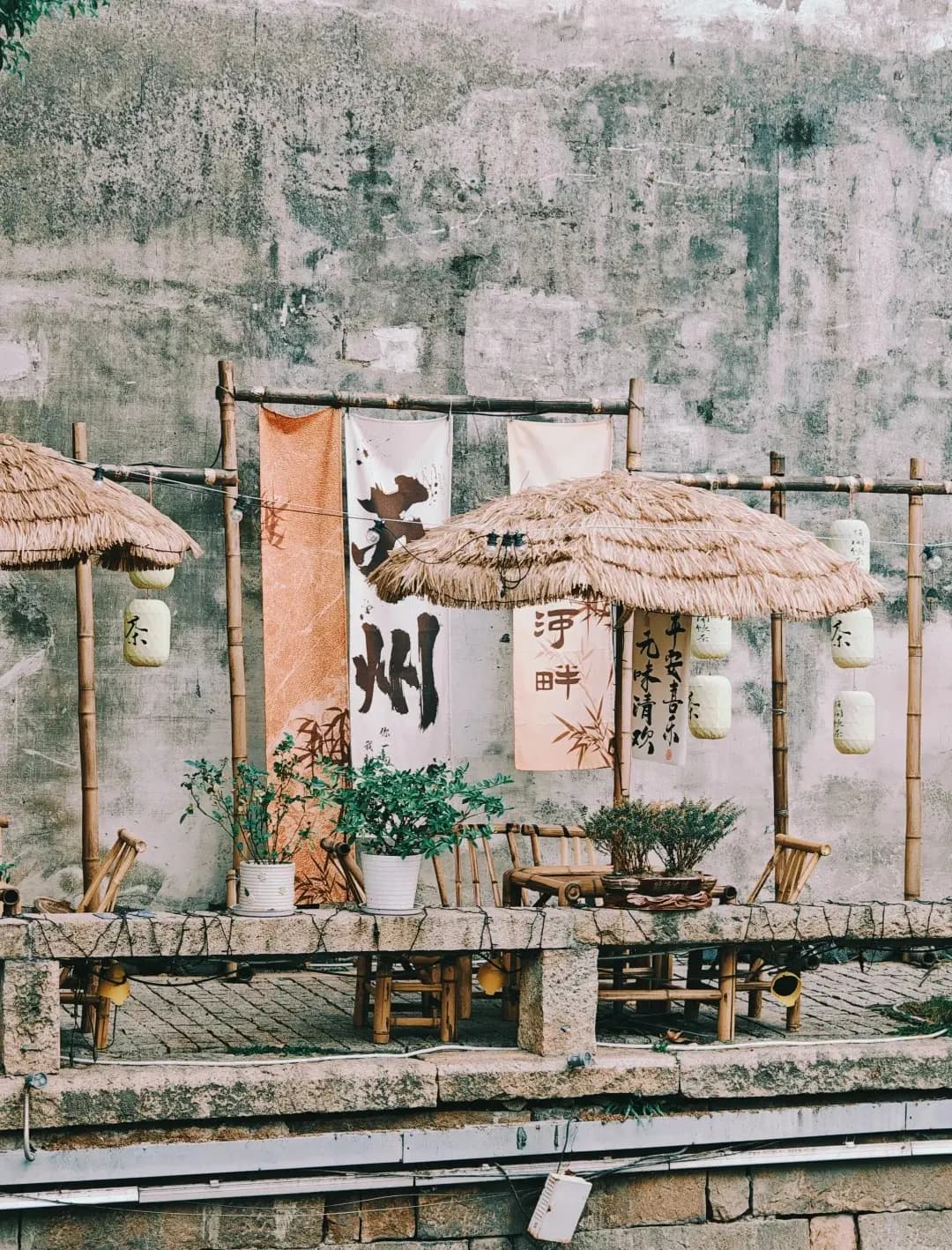
A 1.4-kilometre cobblestone street that follows a canal through the heart of Suzhou's old town. Continuously inhabited for over 800 years, it remains one of the best-preserved examples of a Song-dynasty urban canal street. Today, it is lined with teahouses, bookshops, silk boutiques, and local snack stalls, all set against white-walled, black-tiled Jiangnan architecture. Unlike the more commercialised Shantang Street, Pingjiang Road retains a quieter, more authentic atmosphere.
Recommended experiences:
Sip Biluochun tea at a canal-side teahouse in the late afternoon.
Visit the Pingjiang History Museum to understand the street's Song-dynasty origins.
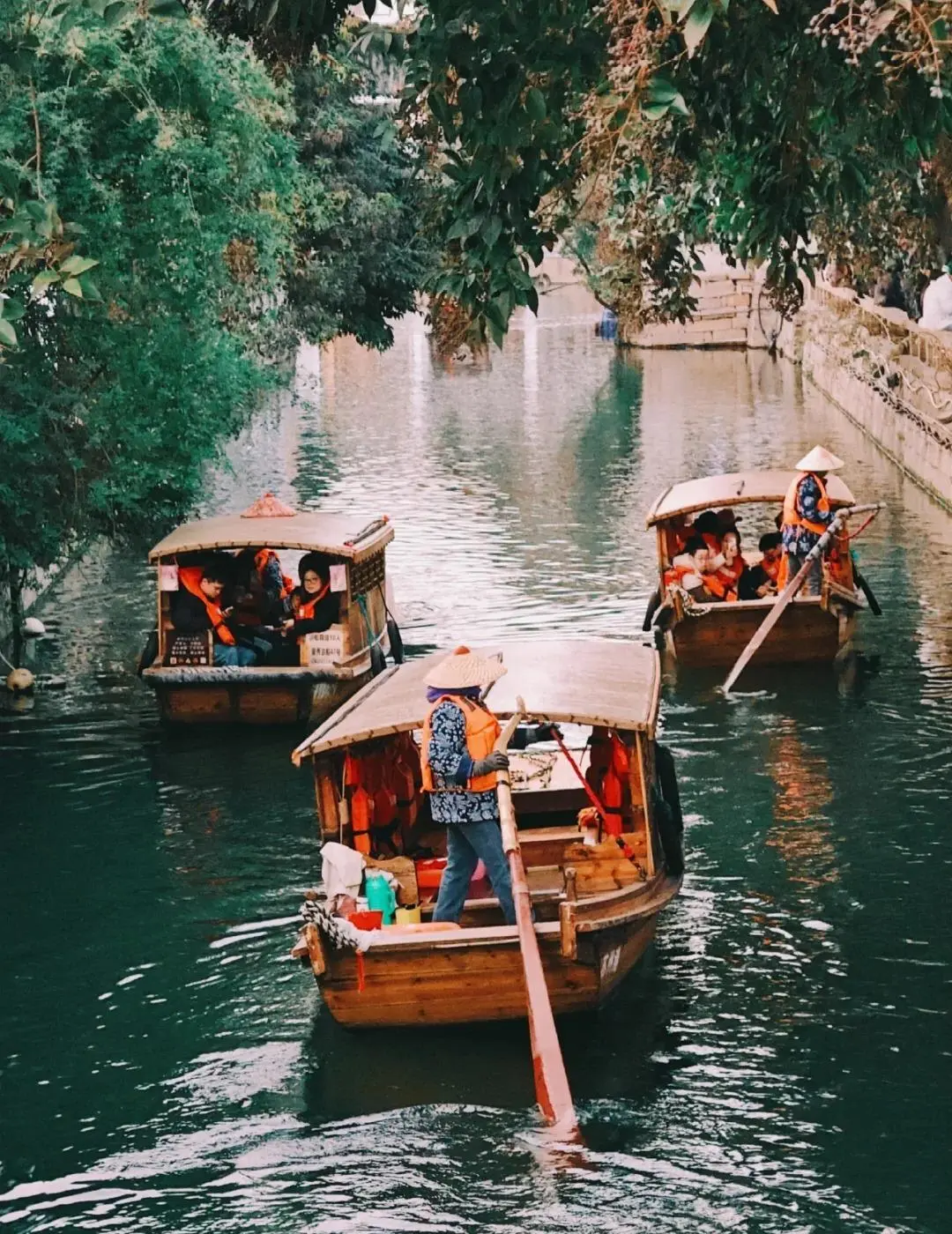
Take a hand-rowed boat ride along the canal (¥40–60 per person).
Sample local snacks: sweet lotus root, osmanthus cake, and sesame cakes.
Shantang Street: The Seven-Li Canal Corridor
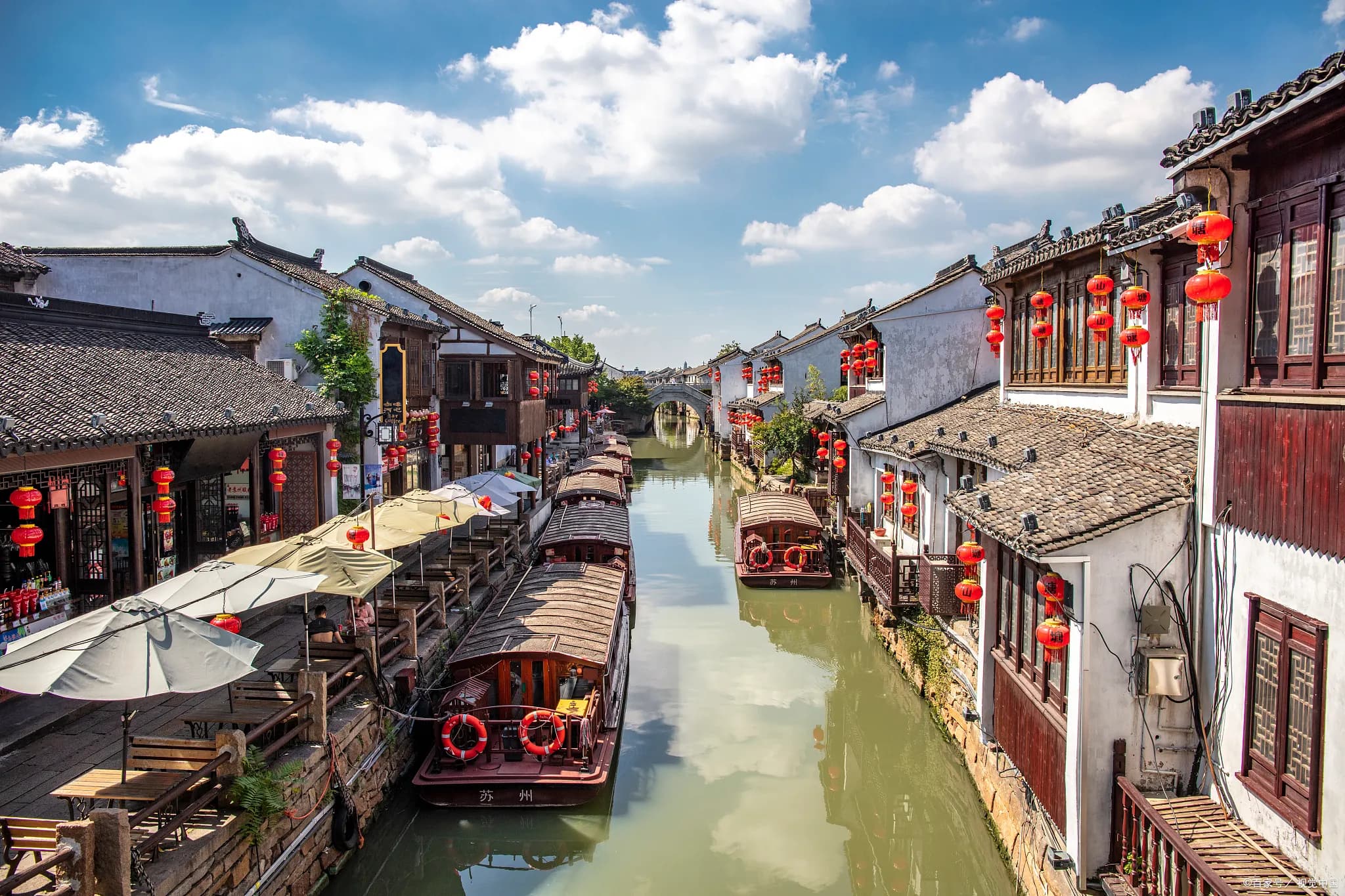
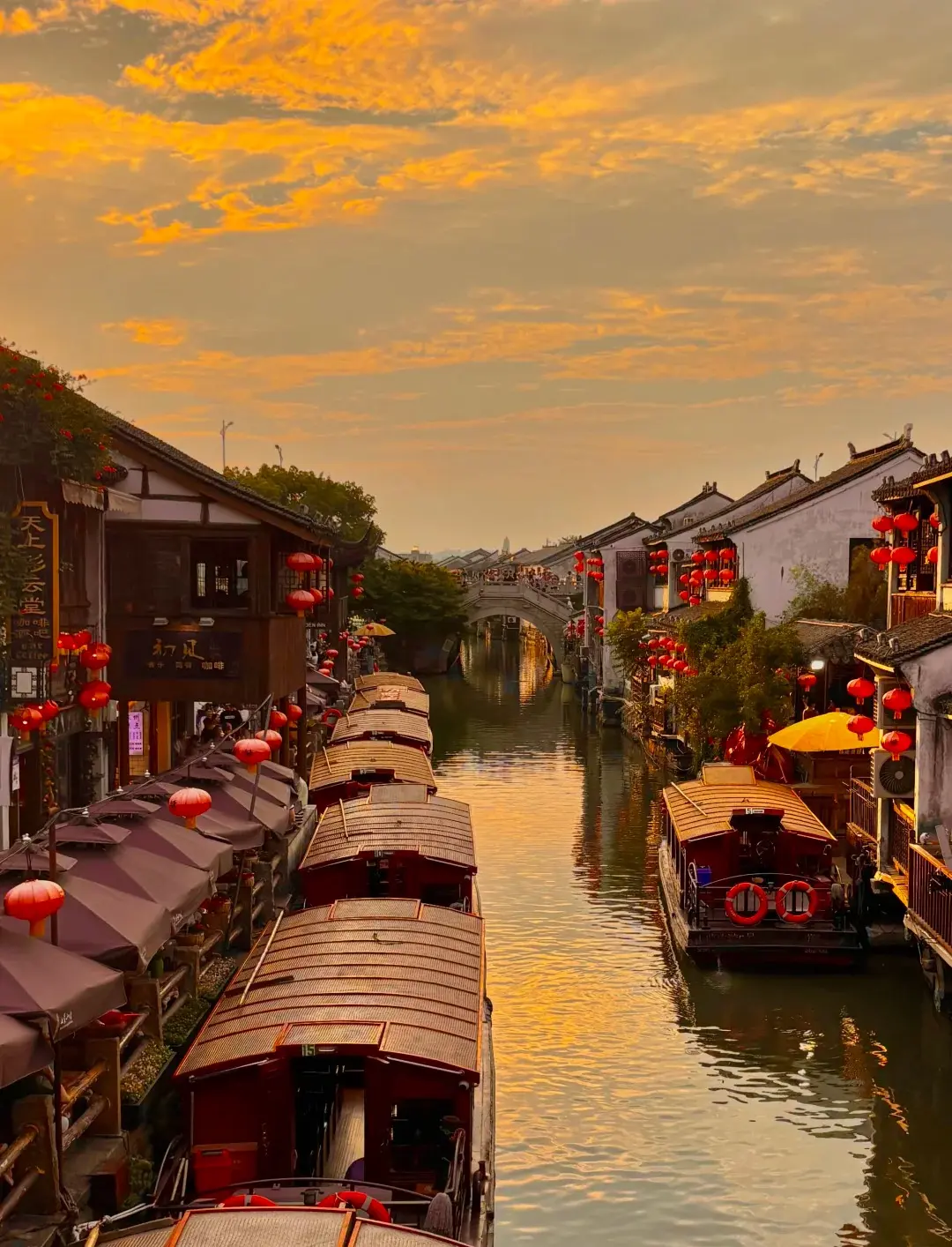
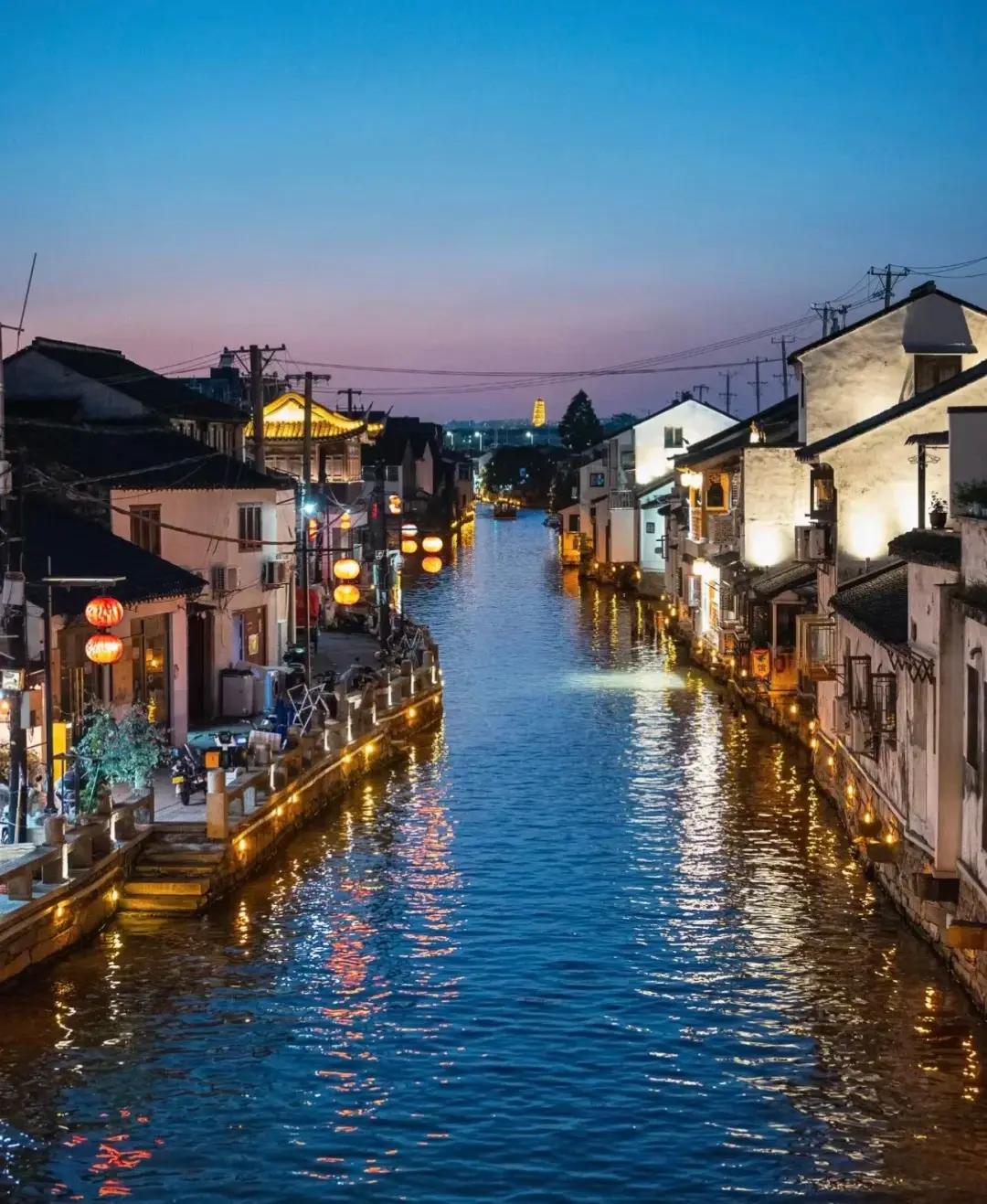
Built in 825 AD by the Tang-dynasty poet-governor Bai Juyi, the 3.5-kilometre canal street connects the old city gate to Tiger Hill. The eastern section is a lively pedestrian street with restaurants, bars, and souvenir shops, while the western section retains a more residential, old-world character. At night, red lanterns reflect on the canal water, creating one of Suzhou's most photographed scenes.
Travel Tips:
Free to walk; boat rides ¥50–80 per person.
Best visited in the late afternoon through evening for lantern-lit scenery.
Combine with Tiger Hill — Shantang Street leads directly to it.
The eastern section is more touristy; walk west for quieter, more authentic scenes.
Tiger Hill & Museum
Tiger Hill: Suzhou's Iconic Leaning Pagoda
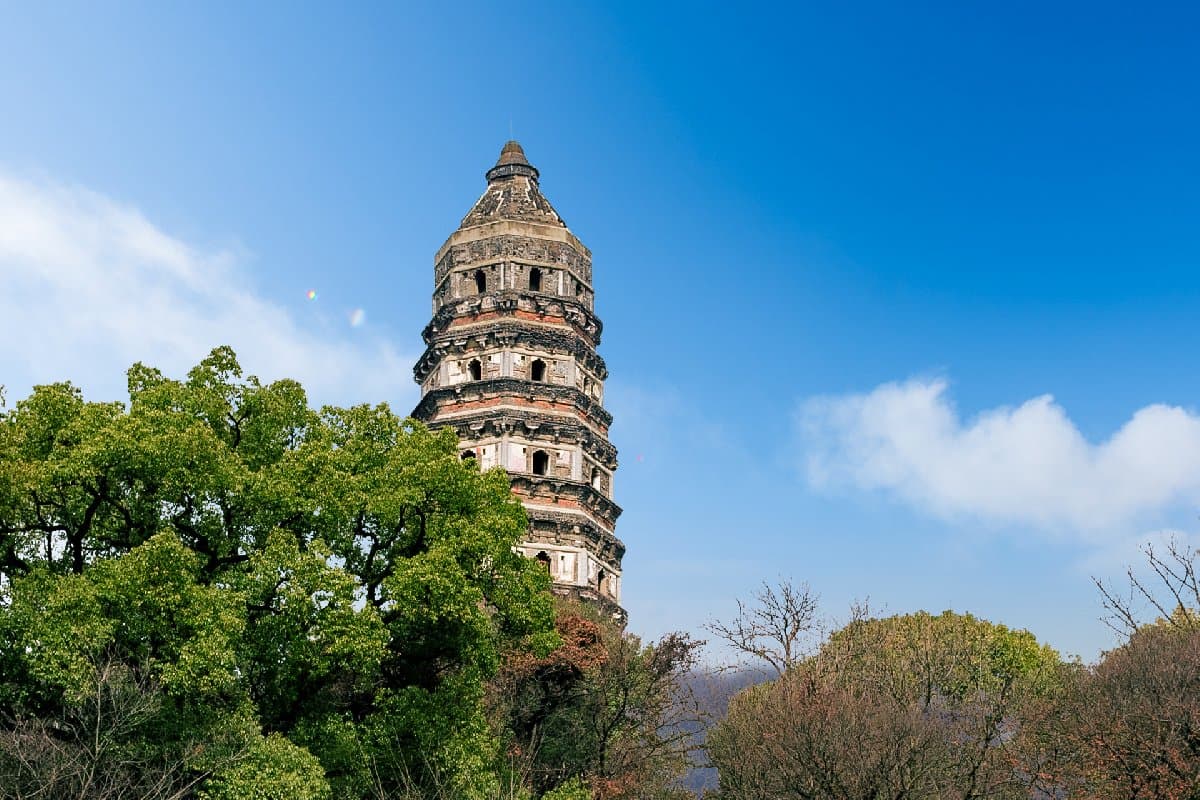
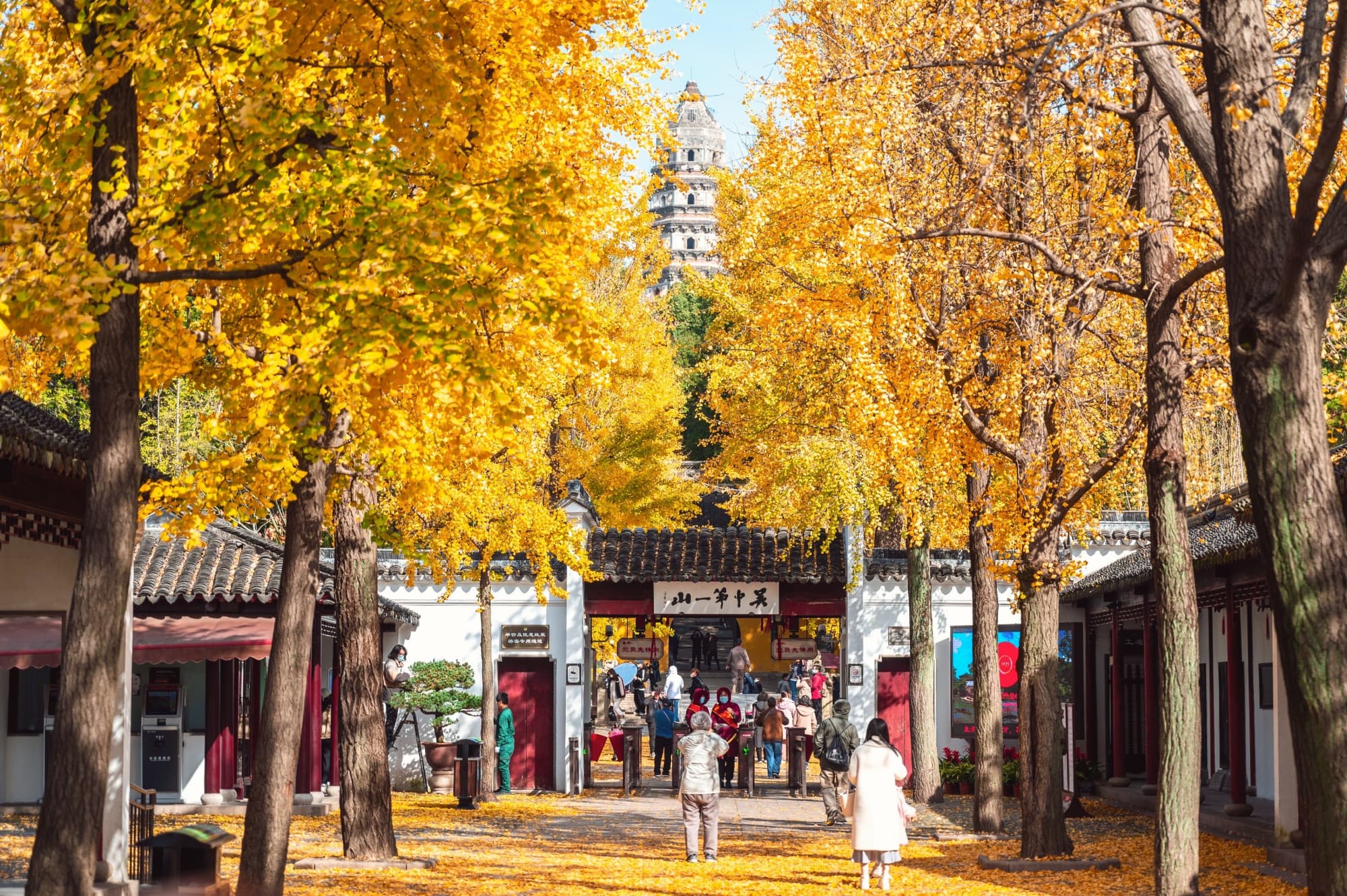
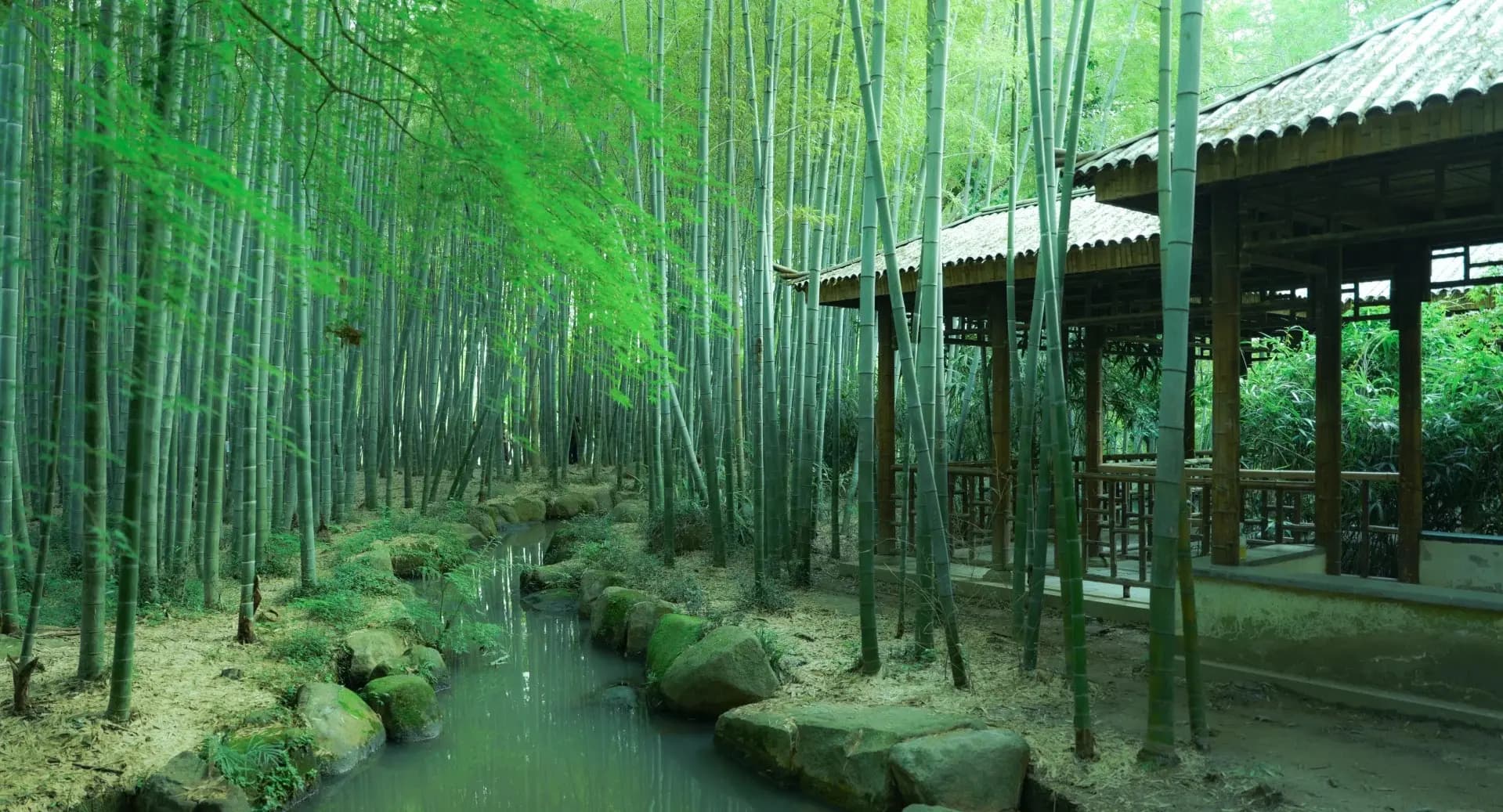
A 36-metre-high hill topped by the Cloud Rock Pagoda — a 47-metre-tall brick pagoda that leans nearly 3 degrees, earning it the nickname "China's Leaning Tower of Pisa." The site has been a Buddhist centre for over 1,400 years. Song-dynasty poet Su Shi famously said, "It is a lifelong regret not to visit Tiger Hill in Suzhou."
Travel Tips:
Admission: ¥80 (peak season), ¥60 (off-season).
Allow 2–3 hours; the climb is gentle but the grounds are expansive.
Take the summit path first, then explore the lower gardens on your way down.
Best in early morning or late afternoon for softer light and fewer crowds.
Suzhou Museum: I.M. Pei's Architectural Masterpiece
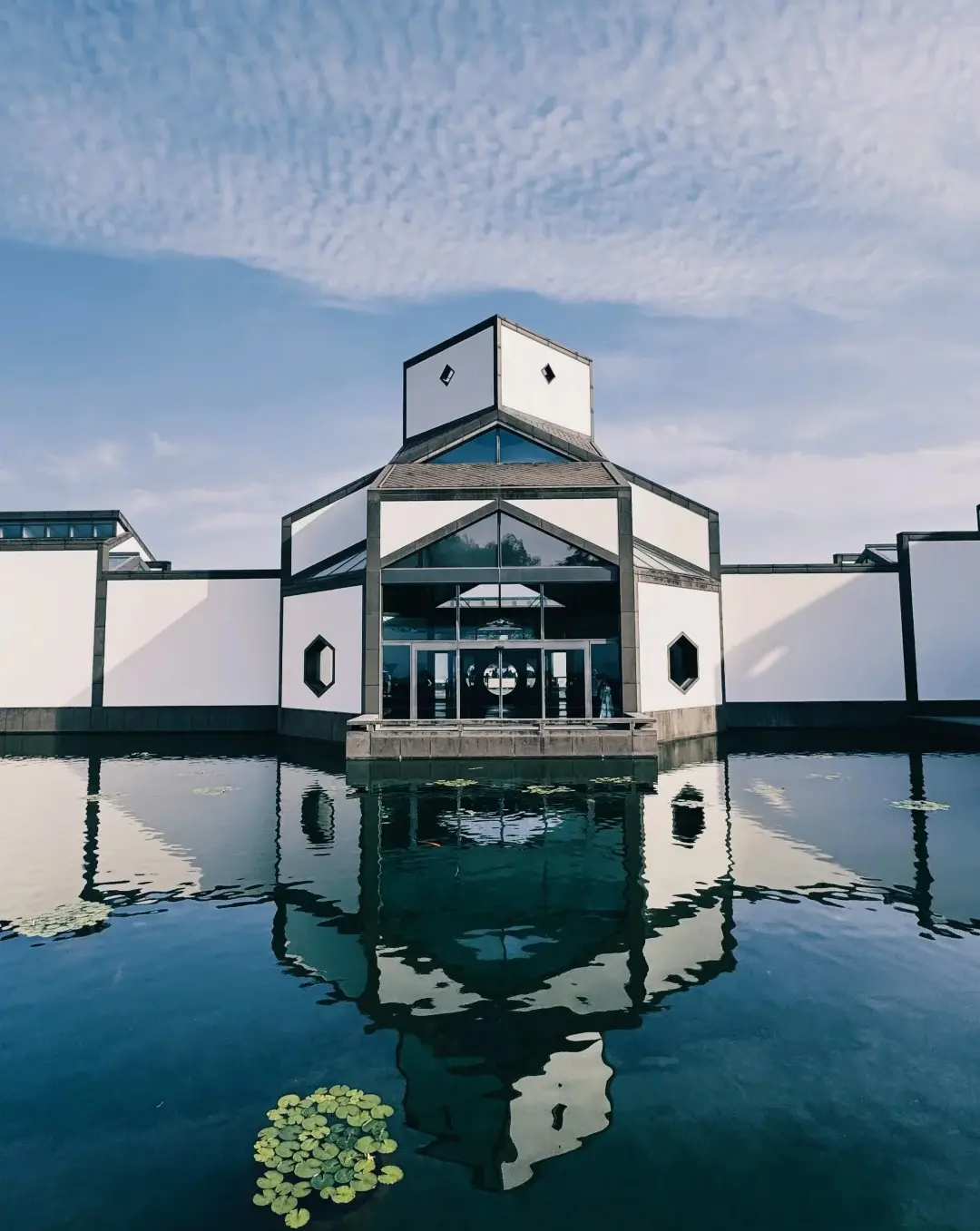
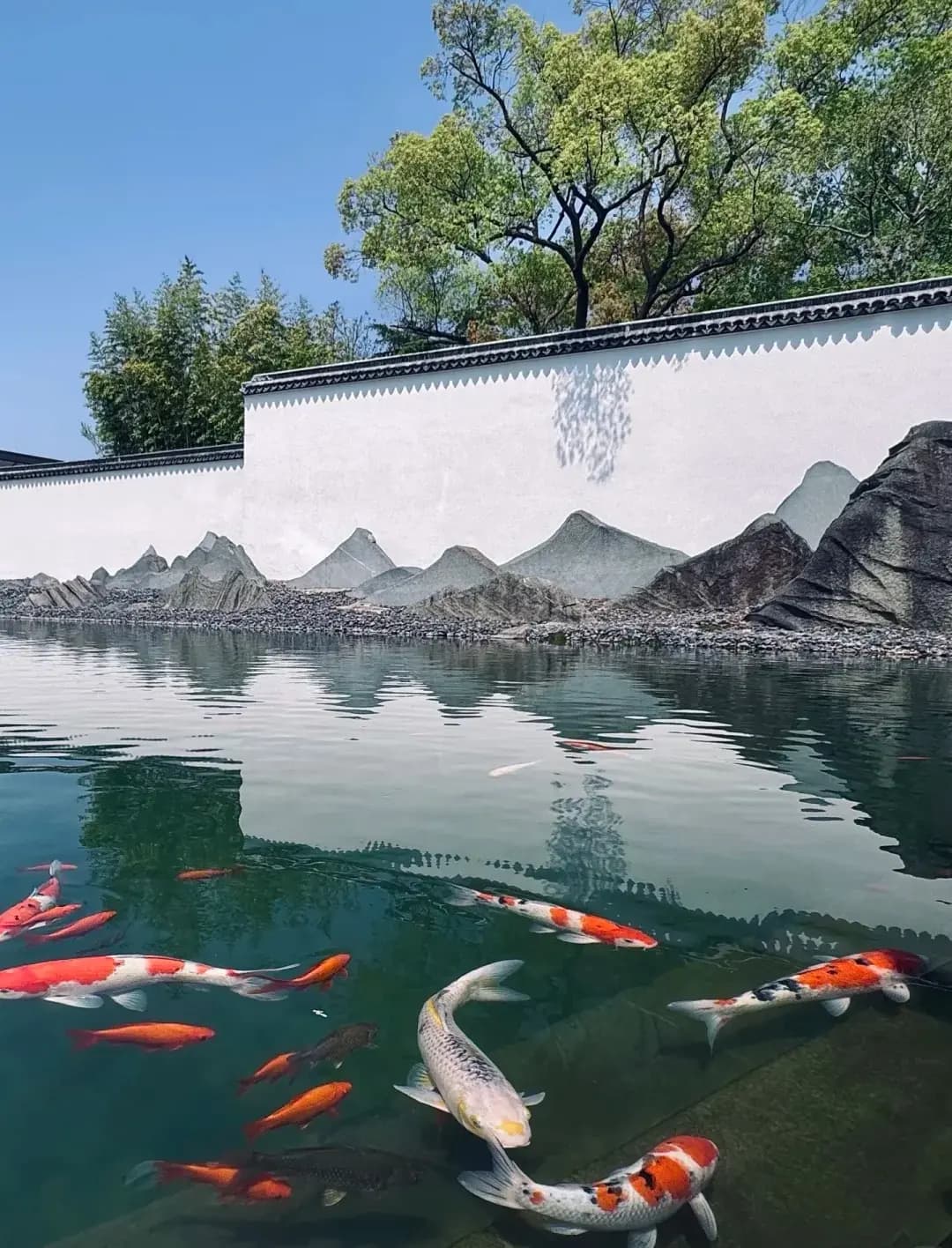
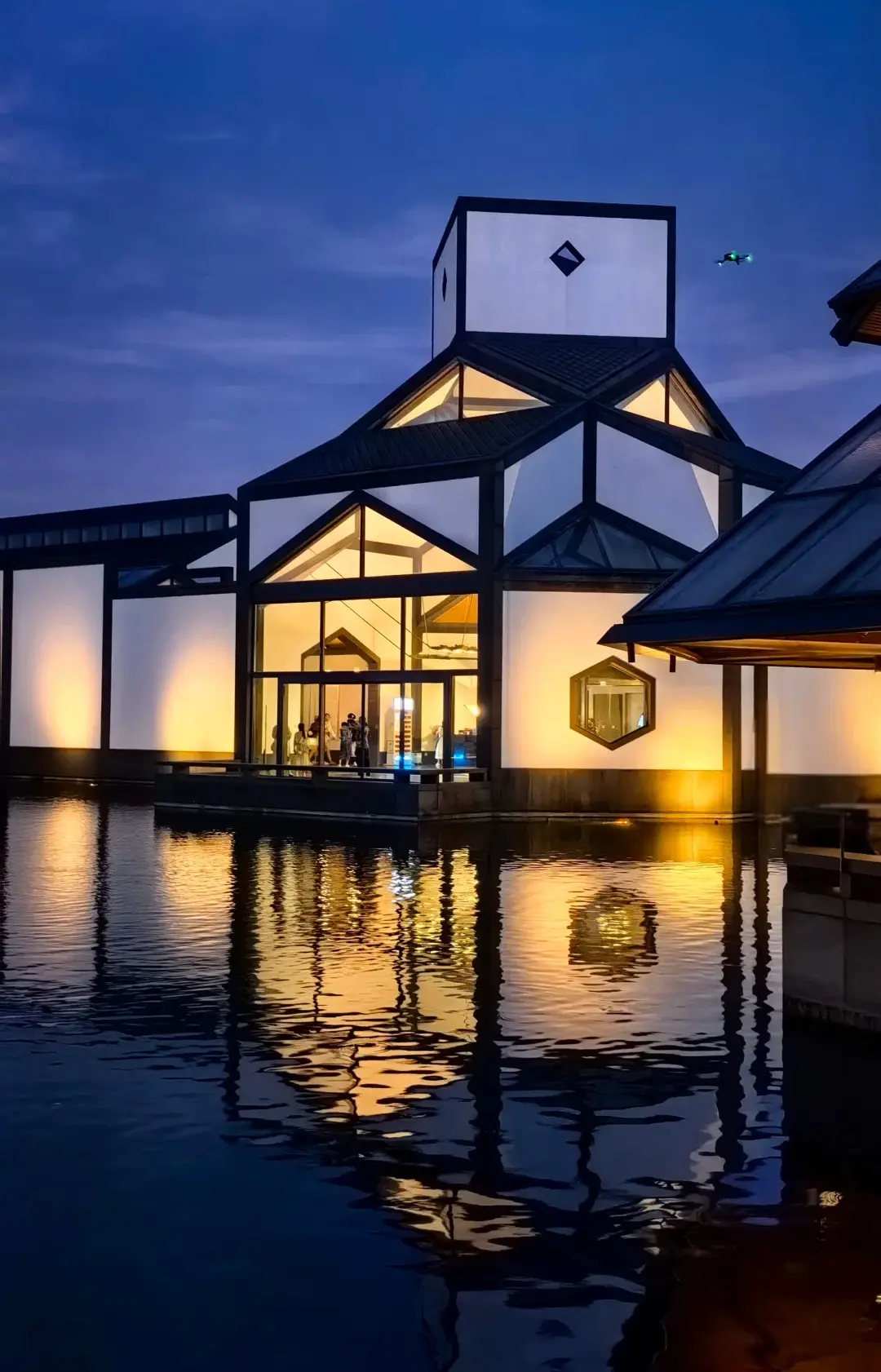
Designed by world-renowned architect I.M. Pei (a Suzhou native) and opened in 2006. The building itself is the main attraction — a modern interpretation of traditional Suzhou garden and courtyard architecture, with geometric skylights, white walls, and a stunning rock-and-water garden. A 2024 expansion added a second building (West Wing) with more exhibition space.
Travel Tips:
Free admission, but advance reservation required (book 7 days ahead via WeChat).
Open Tuesday–Sunday, 09:00–17:00 (closed Mondays; extended to 20:00 in summer).
Allow 1.5–2 hours; the museum garden alone deserves 30 minutes.
Suzhou Silk Museum: Tracing 4,000 Years of Silk Heritage
Designed by world-famous Suzhou-born architect I.M. Pei, Suzhou Museum opened in 2006. The building itself is a major attraction: a contemporary re-interpretation of Suzhou courtyard-garden aesthetics, with geometric skylights, white walls and a poetic rock-and-water inner garden. Collections feature ancient Wu-region calligraphy, porcelain, jade and silk relics. A 2024 expansion added the West Wing building.
Travel Tips:
Main building (original location): Free entry but mandatory advance reservation, book up to 7 days ahead via WeChat mini-program.
West Wing (new branch): Free entry for permanent exhibitions, no advance reservation required; subject to on-site capacity limits.
Opening hours: Tuesday-Sunday, 09:00-17:00 (last entry 16:00), closed on Mondays except national public holidays. Extended opening until 20:00 applies only in summer vacation season.
Suggest visiting time: 1.5-2 hours; allocate at least 30 minutes for the museum’s inner garden.
Water Towns: Tongli & Zhouzhuang
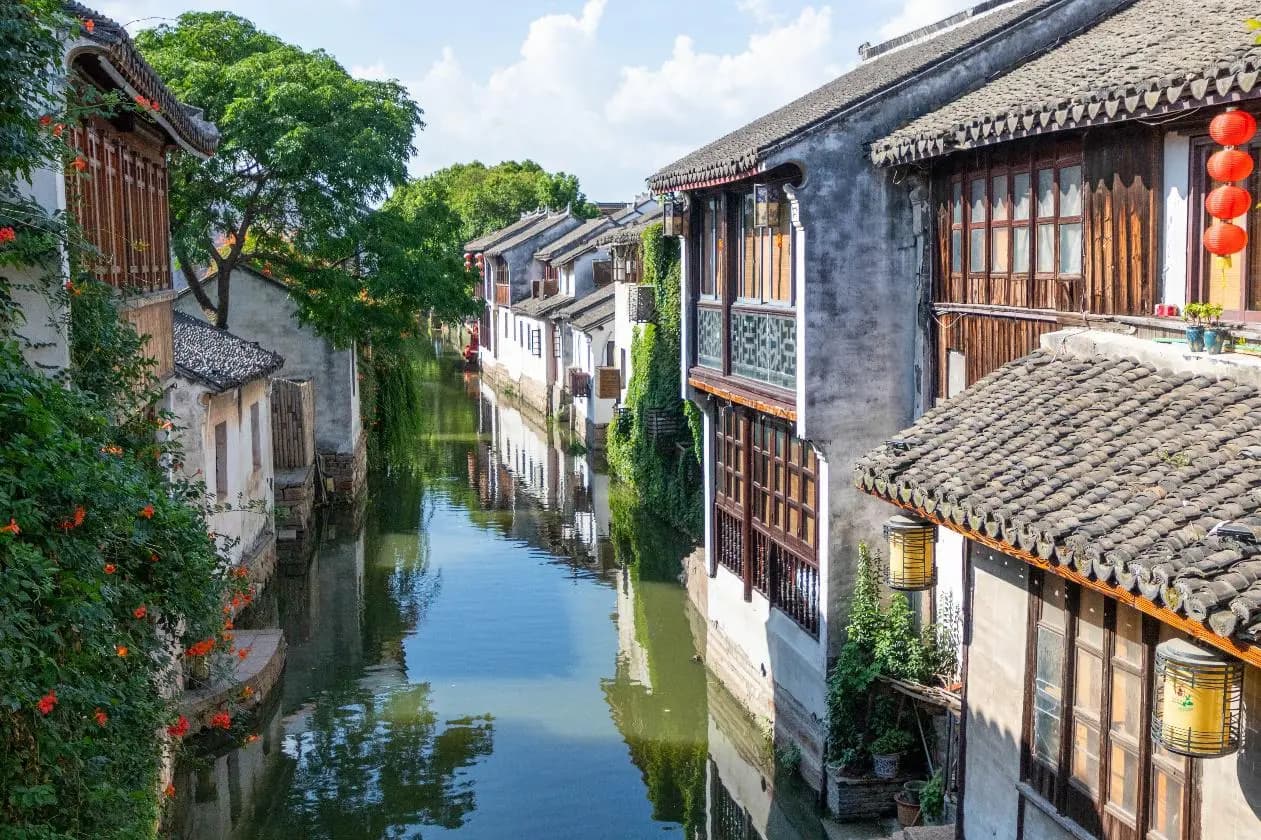
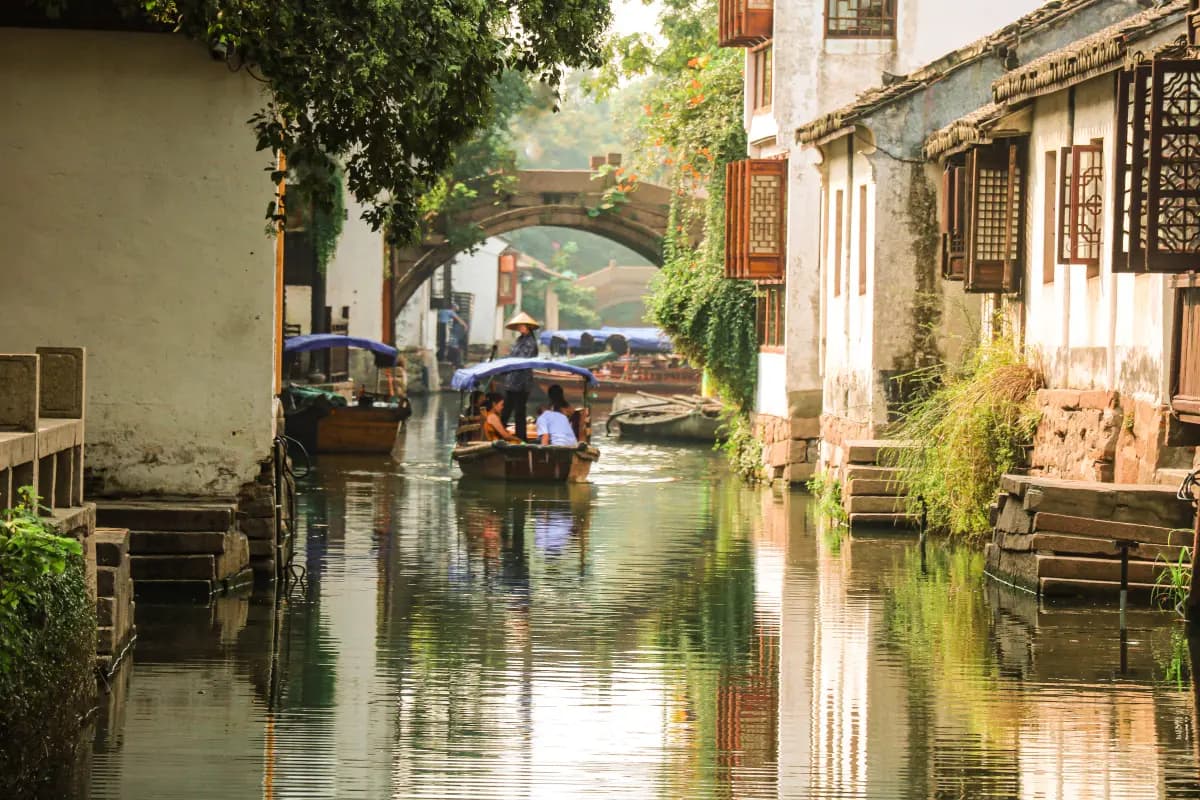
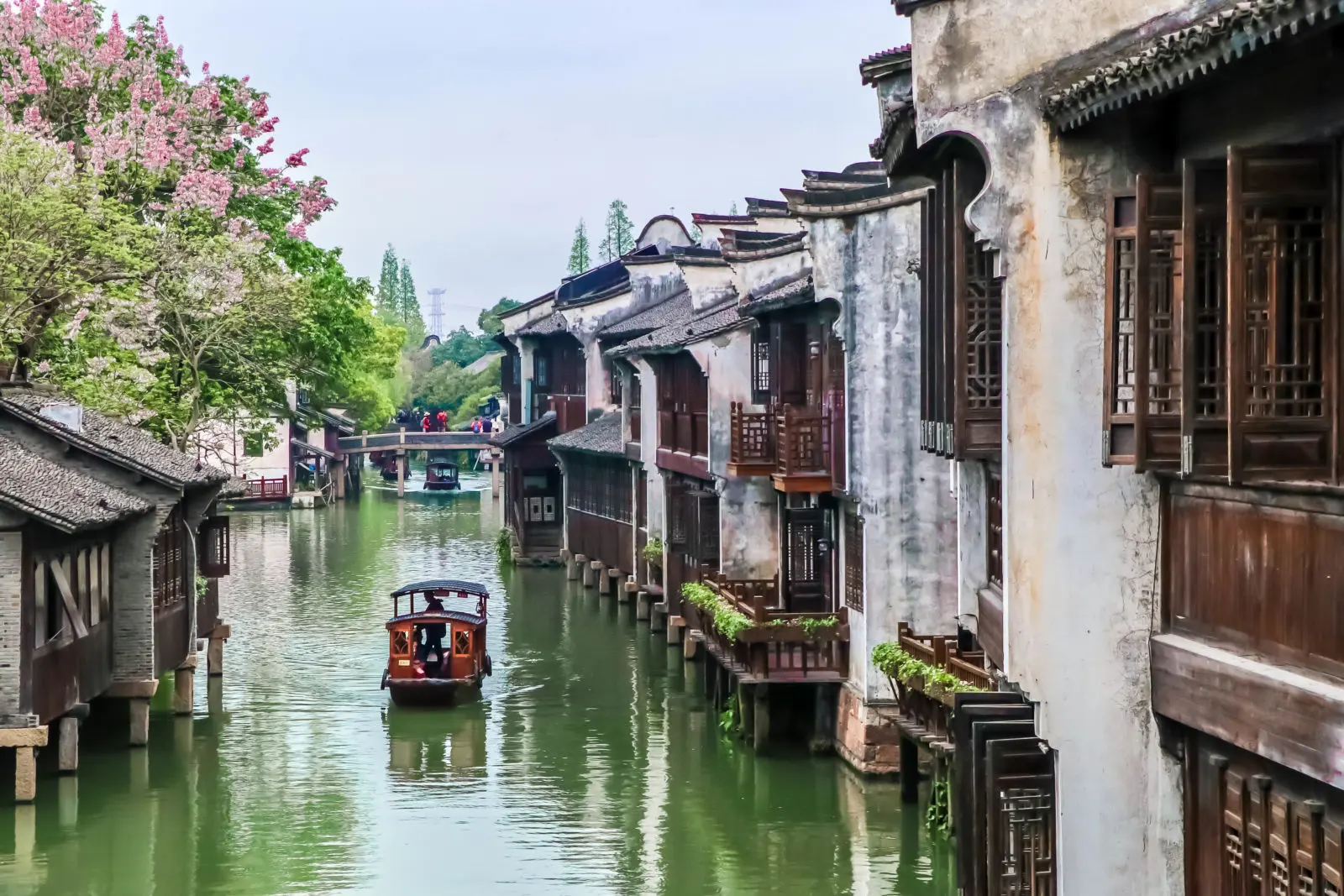
No Suzhou travel guide is complete without a visit to at least one of the surrounding water towns. These ancient canal settlements, with their stone bridges, whitewashed houses, and boat-filled waterways, are the quintessential Jiangnan landscape.
Water Town | Best For | Advantages | Things to Know |
|---|---|---|---|
Tongli | Easy day-trippers & families | Direct Metro Line 4 access; UNESCO Retreat & Reflection Garden; 49 ancient bridges; less crowded | Best overall choice for convenience |
Zhouzhuang | First-time visitors wanting the "famous" experience | Most photographed water town; Double Bridges; Shen Hall; night illuminations | More crowded and commercialised; requires bus/taxi |
Practical Water Town Tips:
Wear comfortable walking shoes; cobblestone streets and stone bridges are uneven.
Canal boat rides cost ¥40–80 per person (20–30 minutes).
Private boat charter costs ¥150 per boat (up to 6 people).
For Zhouzhuang: arrive early morning or stay overnight — the town is magical after day-trippers leave.
Both towns have local speciality snacks — try Tongli's "sock-sole" pastries and Zhouzhuang's Wansan pork knuckle.
More Classical Gardens Worth Exploring
Beyond the four famous gardens, Suzhou has over 60 surviving classical gardens — 9 of them UNESCO World Heritage Sites. If you have extra time or prefer fewer crowds, these lesser-known gardens offer equally stunning design and much more peaceful atmospheres.
Canglang Pavilion: Suzhou's Oldest Garden
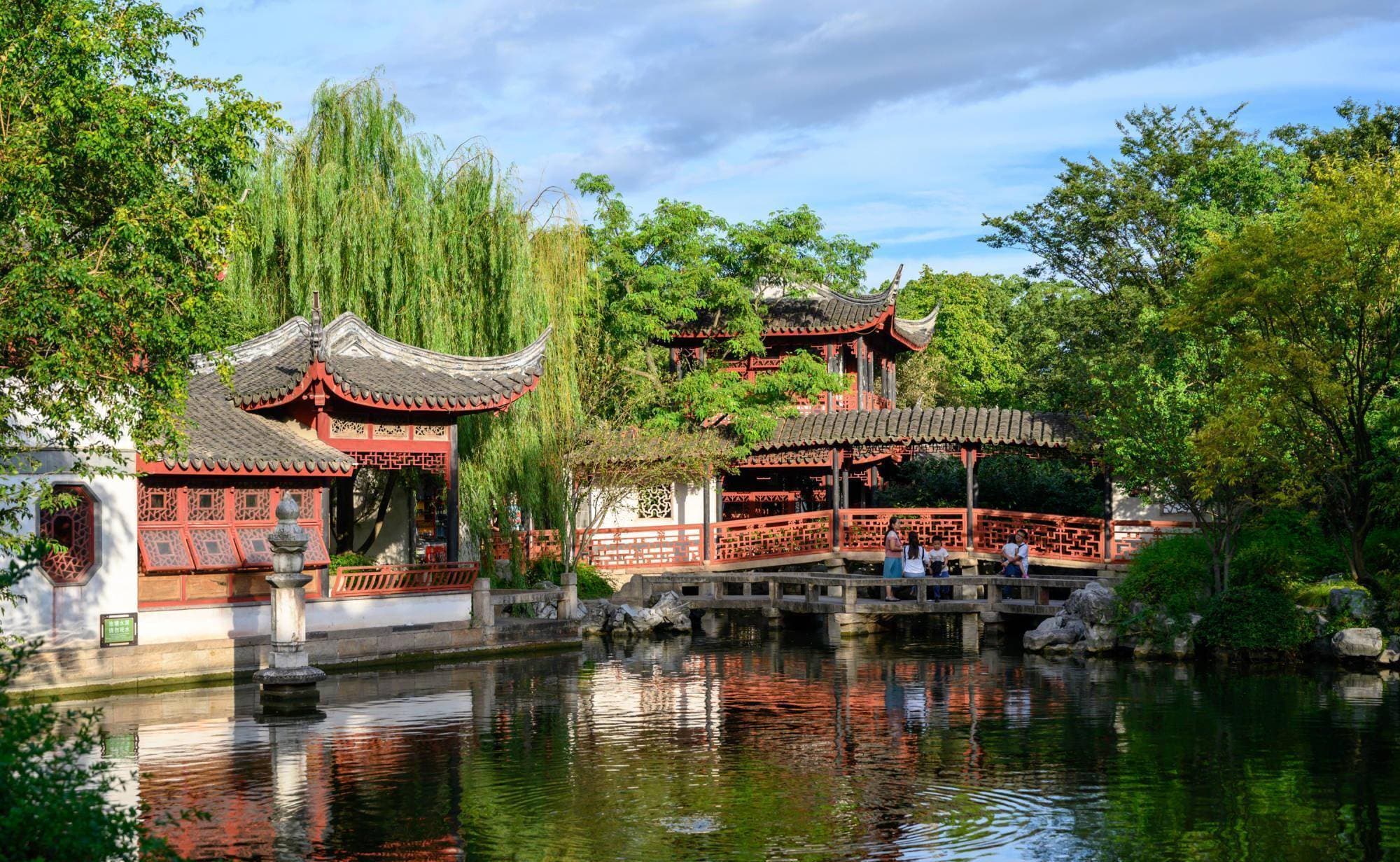
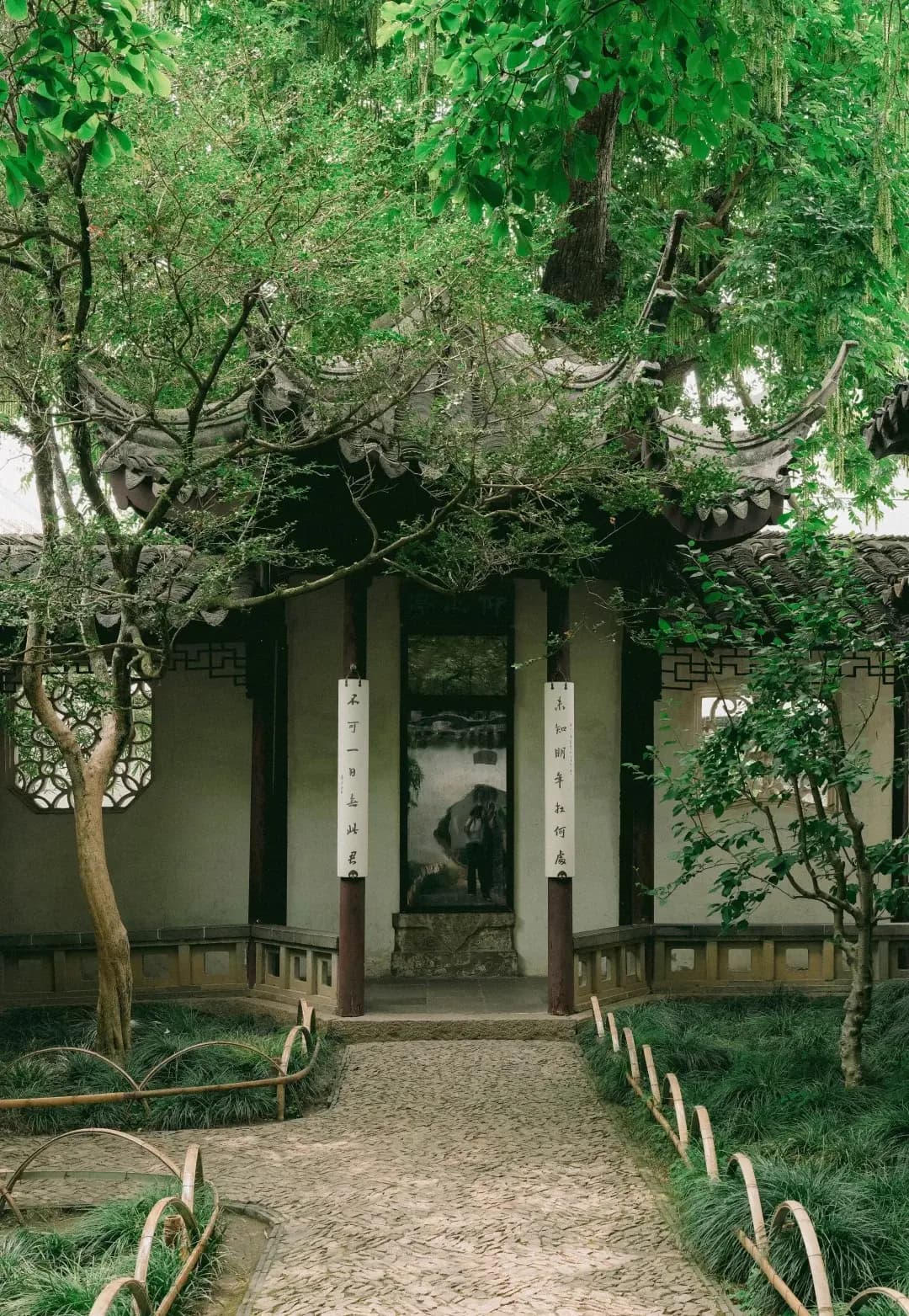
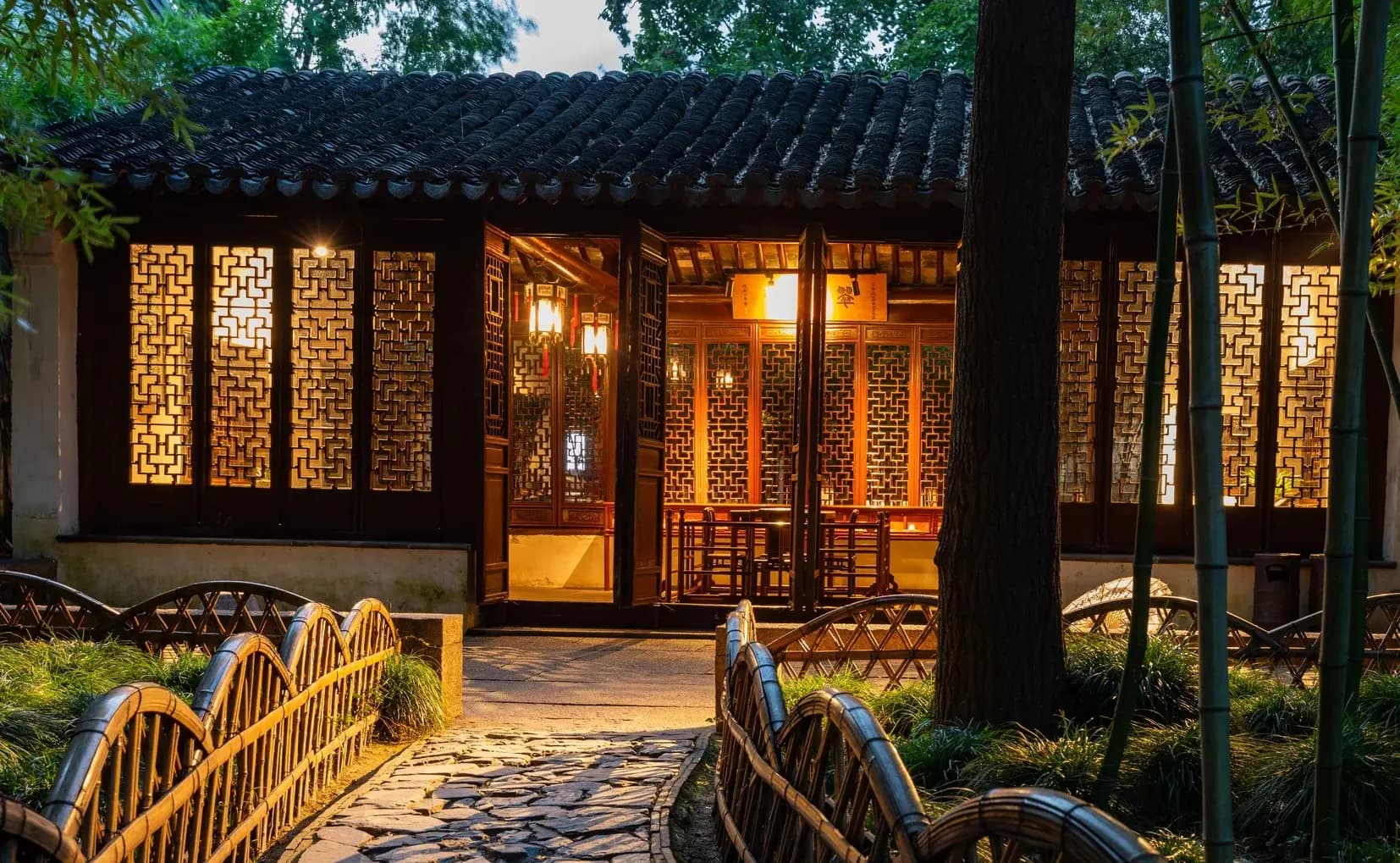
Canglang Pavilion (Canglang Ting) is the oldest of Suzhou's existing gardens, dating back to the Northern Song dynasty (1044). Unlike other gardens that hide behind walls, Canglang's signature feature is its "borrowed scenery" (jie jing) technique — the garden's surrounding canal is incorporated into the view through openwork corridors. A famous double corridor runs along the canal, with one side facing the water and the other facing the inner garden, blending interior and exterior landscapes seamlessly.
Travel Tips:
Admission: ¥20 peak season / ¥15 off-season (combo ticket with Ke Garden: ¥40/¥30).
Open 07:30–17:30 (summer), 07:30–17:00 (winter). Night visits available in peak season.
Allow 1–1.5 hours; the double corridor is the highlight.
Far less crowded than the Humble Administrator's Garden — ideal for quiet contemplation.
Couple's Retreat Garden: A Romantic UNESCO Gem
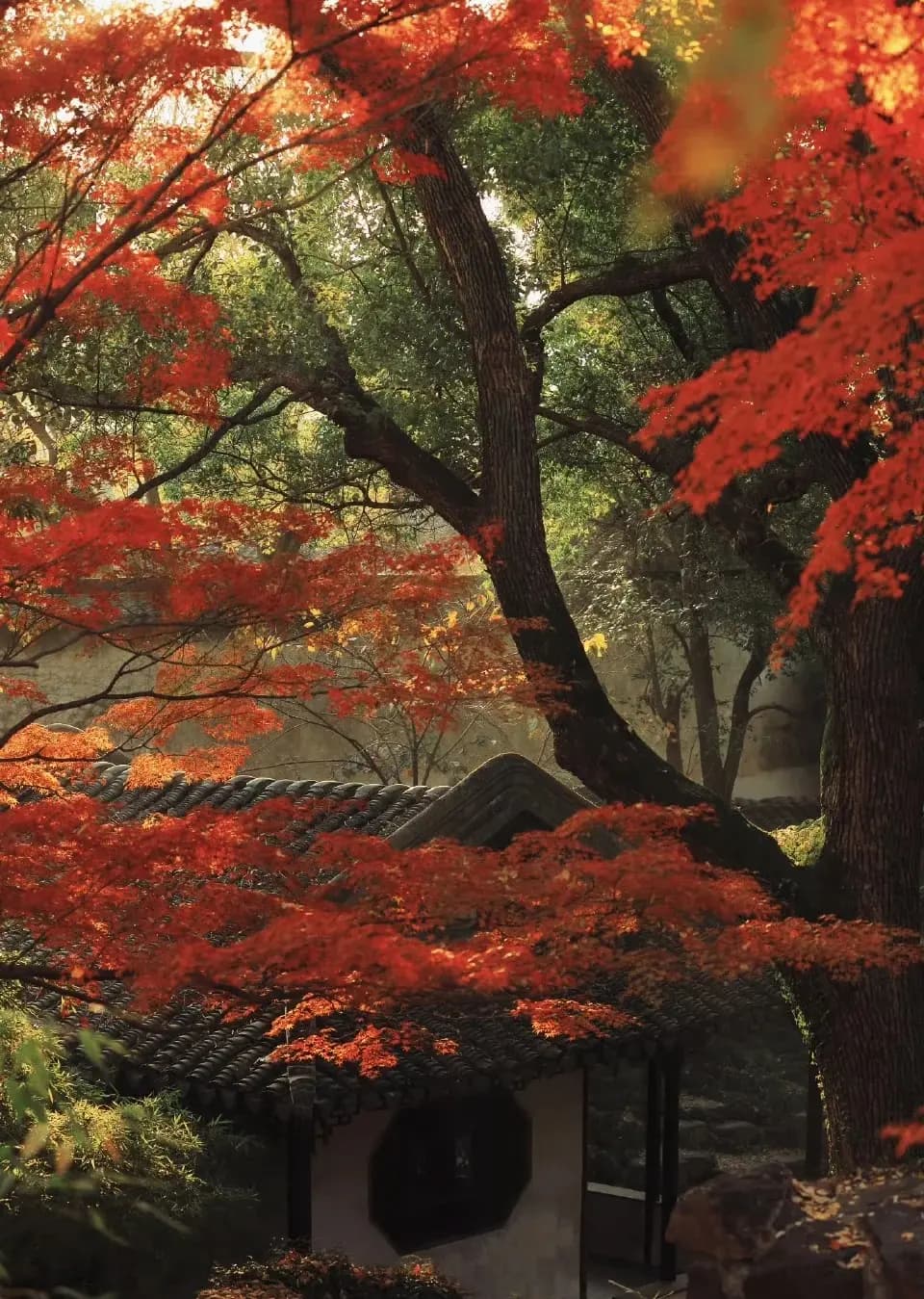
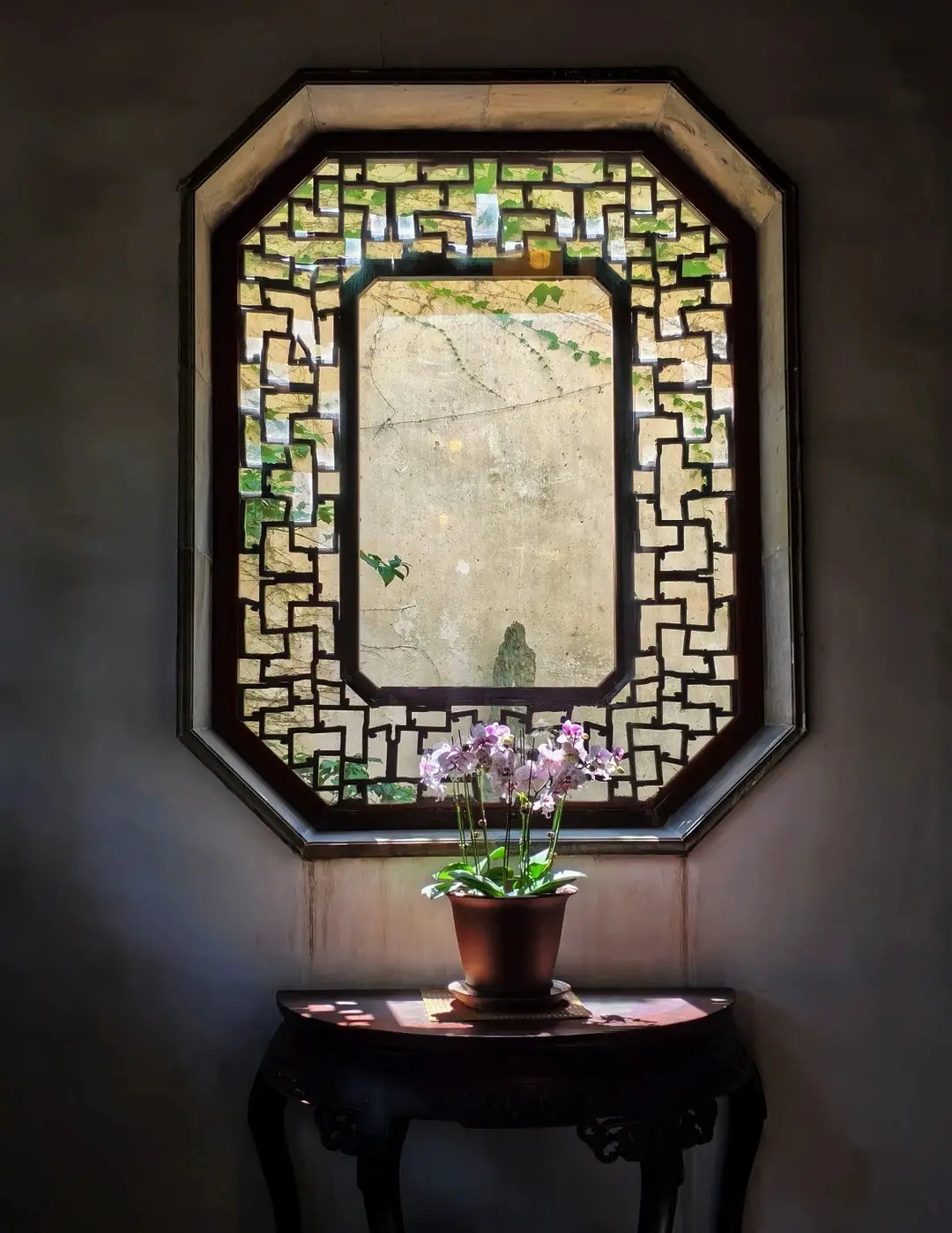
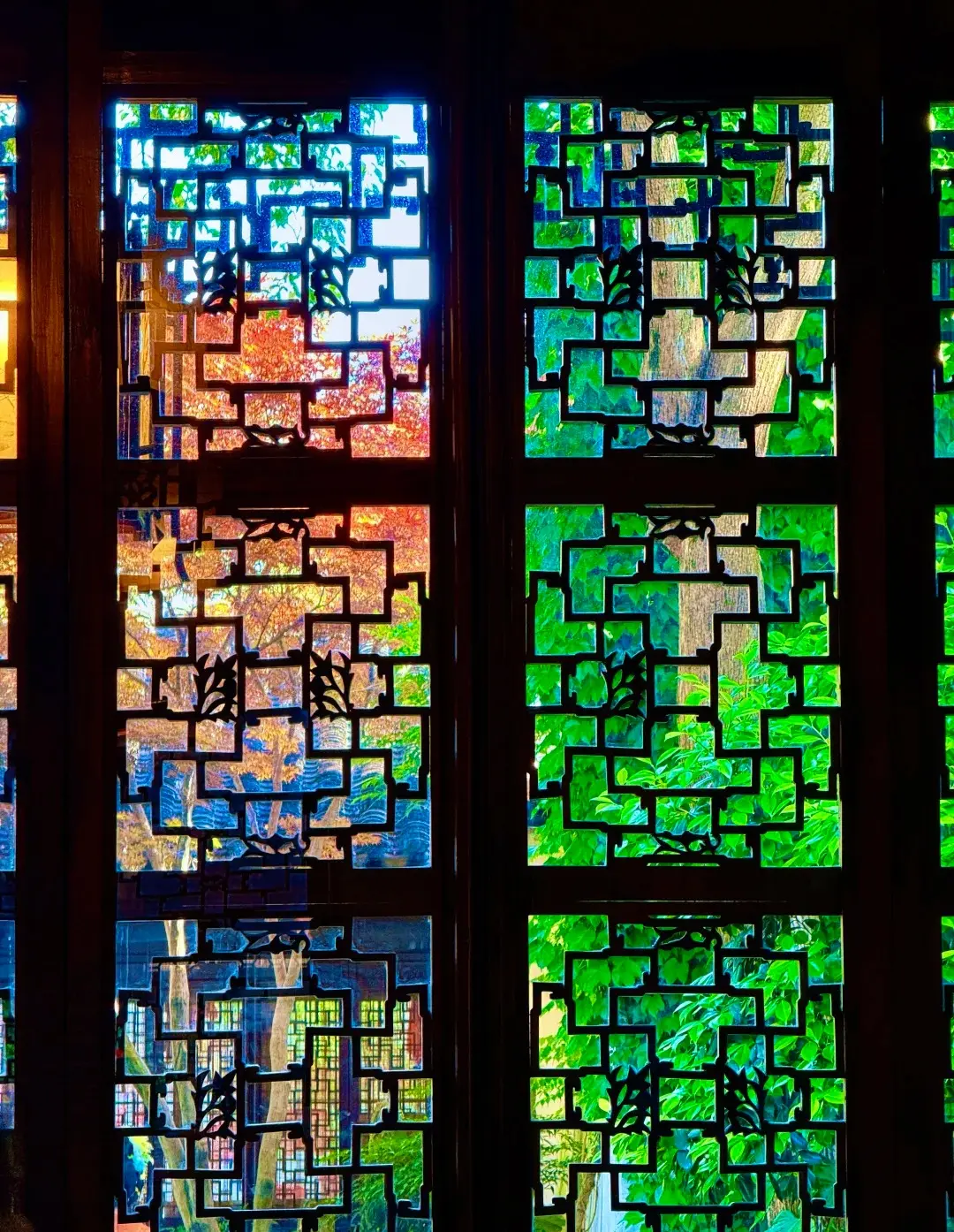
The Couple's Retreat Garden (Ou Yuan) is a UNESCO World Heritage Site and one of Suzhou's most underrated gardens. Built around 1874 by Qing-dynasty official Shen Bingcheng for his musician wife, the garden's unique feature is its "double garden" layout: an East Garden and a West Garden separated by the residential rooms, designed for husband and wife to enjoy independently while sharing the same compound. The East Garden is larger with a dramatic yellow-stone rockery; the West Garden is more intimate with a serene pond. The entire garden sits beside a canal, and you can arrive by boat.
Travel Tips:
Admission: ¥25 (Mar–Oct) / ¥20 (Nov–Feb).
Open 07:30–17:30 (summer), 07:30–17:00 (winter).
Allow 1 hour; the garden is compact but rich in detail.
Take a canal boat from Pingjiang Road to arrive by water — a unique entrance.
Popular with couples for wedding photography; visit on weekdays for tranquillity.
Retreat & Reflection Garden: The Tongli Masterpiece
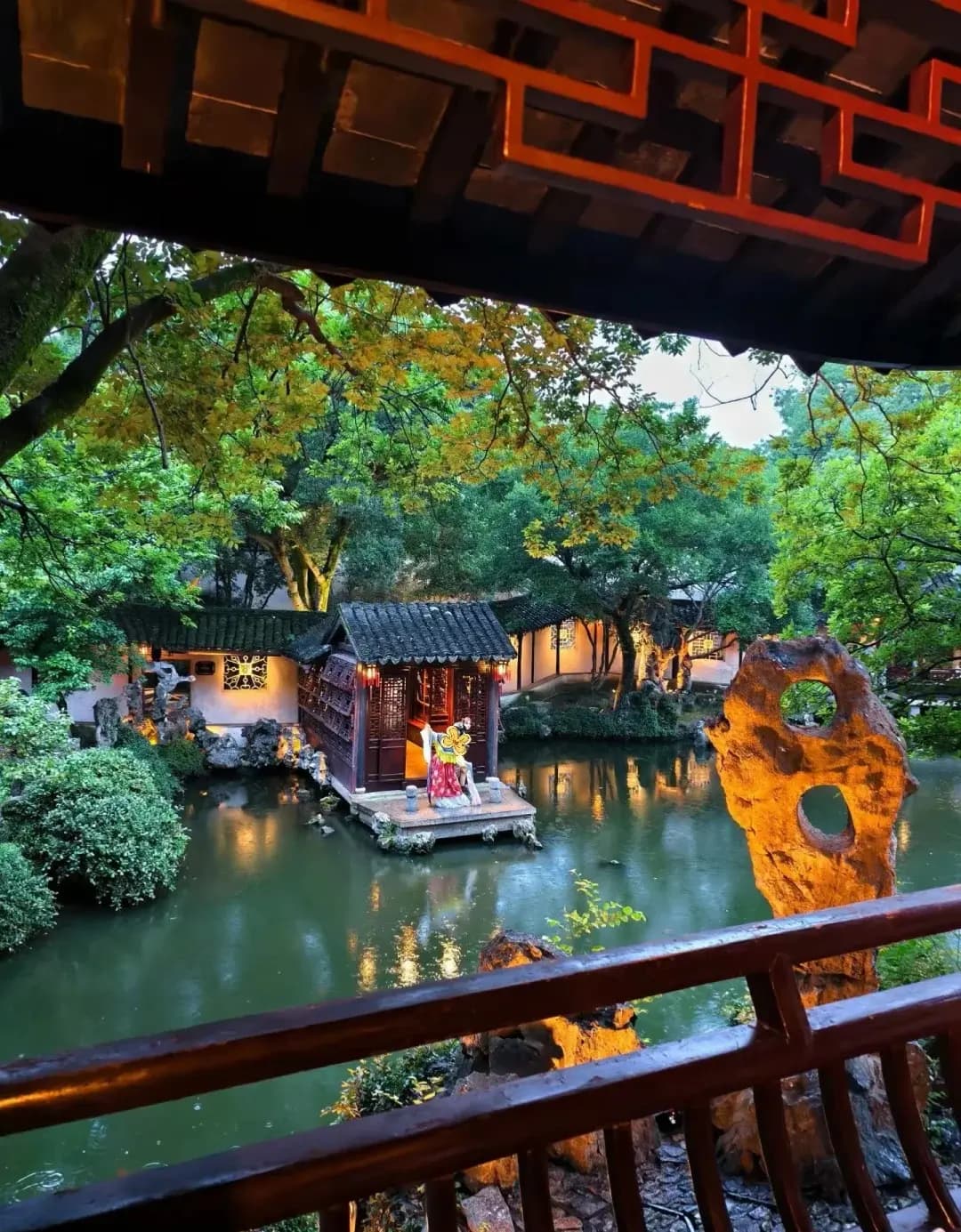
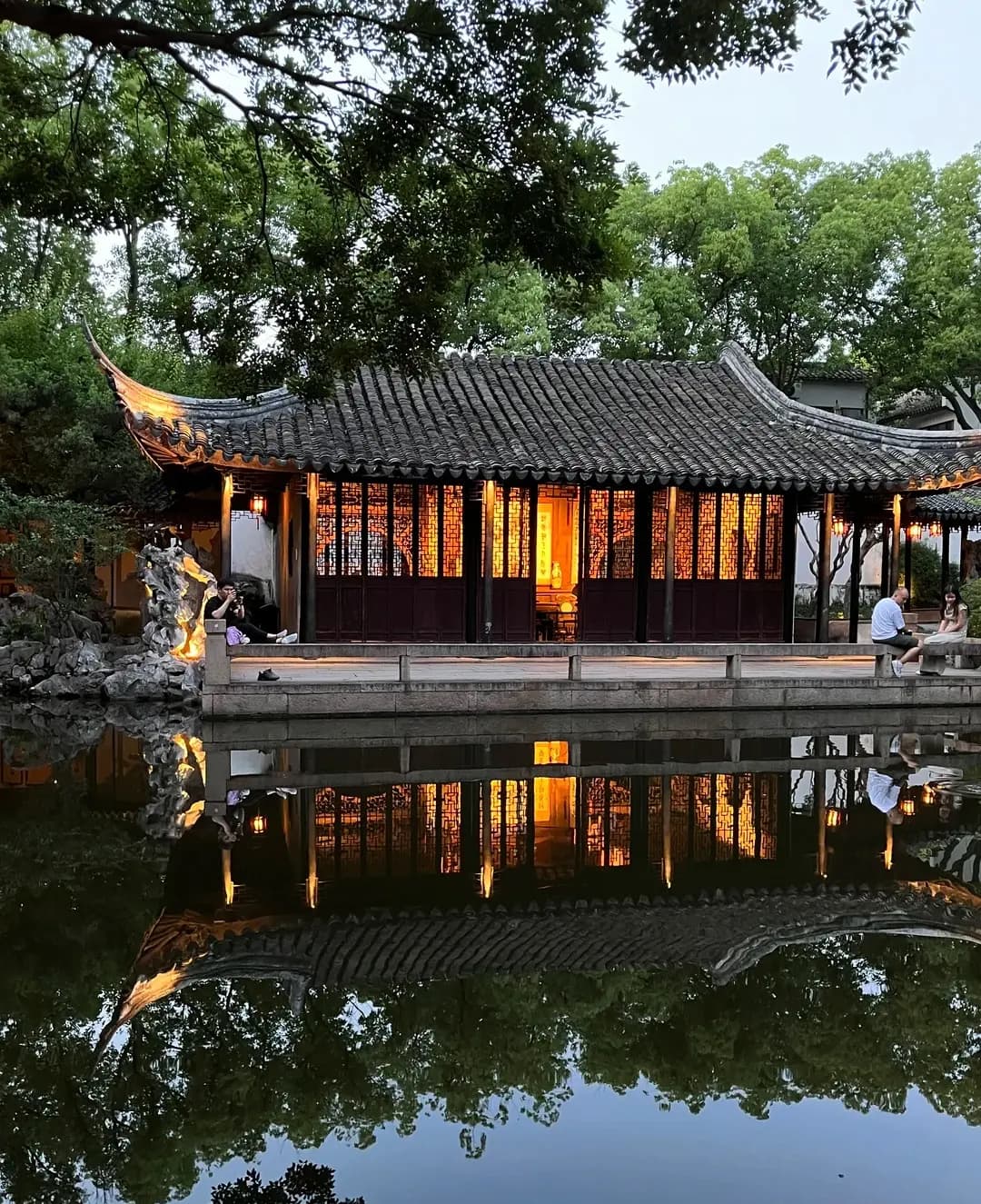
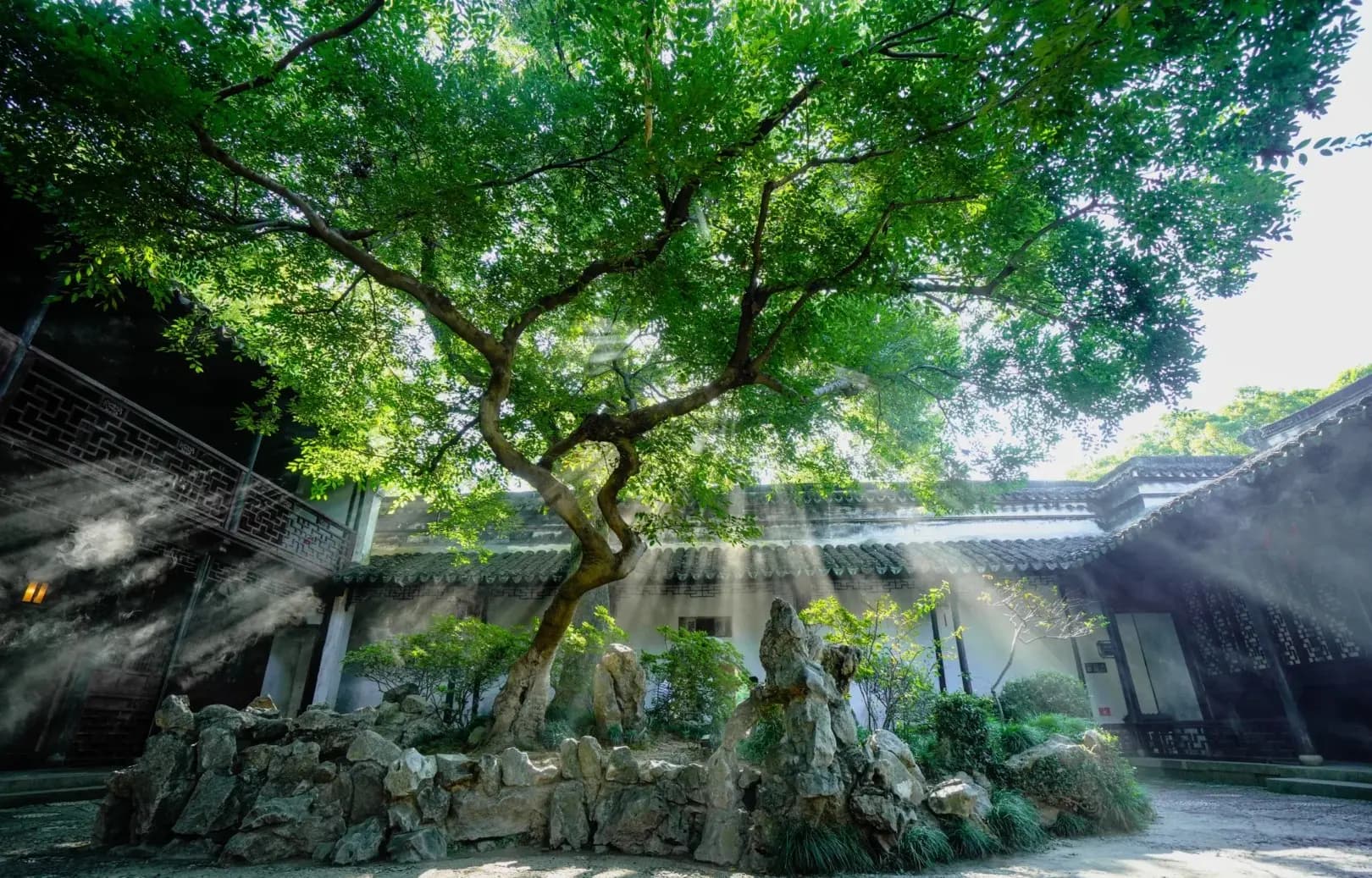
Located in Tongli Water Town, the Retreat & Reflection Garden (Tuisi Yuan) is a UNESCO World Heritage Site and one of the finest examples of late-Qing garden design. Built in 1885 by a retired official, its name means "garden of retreat and reflection." Every structure in the garden is designed to "hover" over water — pavilions, corridors, and even the boat-shaped pavilion all appear to float on the central pond. The compact 0.6-hectare site achieves an extraordinary sense of depth through masterful spatial layering.
Travel Tips:
Admission included in Tongli Water Town entry ticket (¥100).
Allow 45 minutes; it is the highlight of a Tongli visit.
Arrive in Tongli via Metro Line 4 — the garden is a 15-minute walk from the station.
Hanshan Temple & Maple Bridge
Hanshan Temple (Hanshan Si) ranks among China’s most celebrated Buddhist temples, immortalised by Tang-dynasty poet Zhang Ji’s famous poem Night Mooring at Maple Bridge. Founded in the 6th-century Liang Dynasty, the temple was named after the Tang-era monk Hanshan.
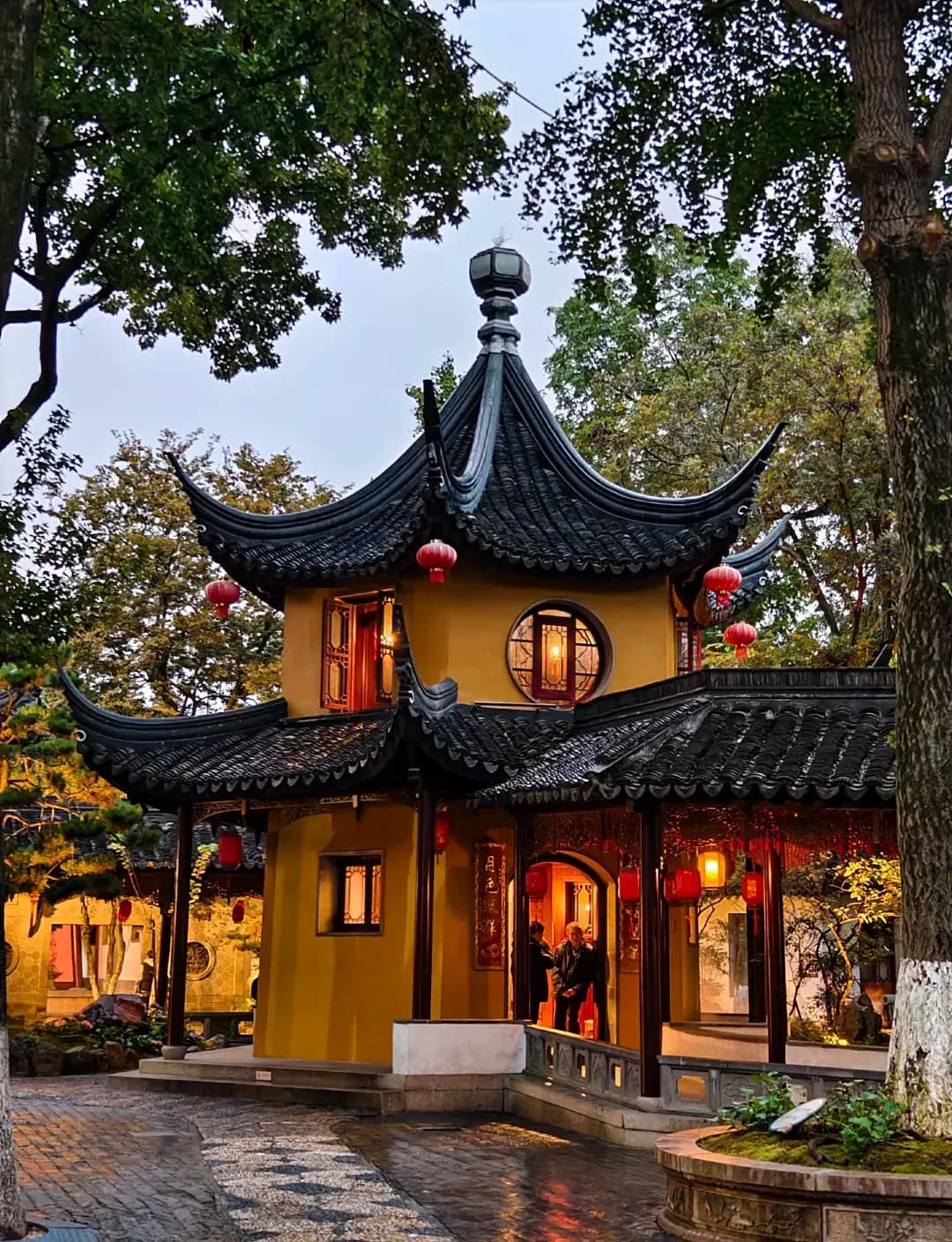
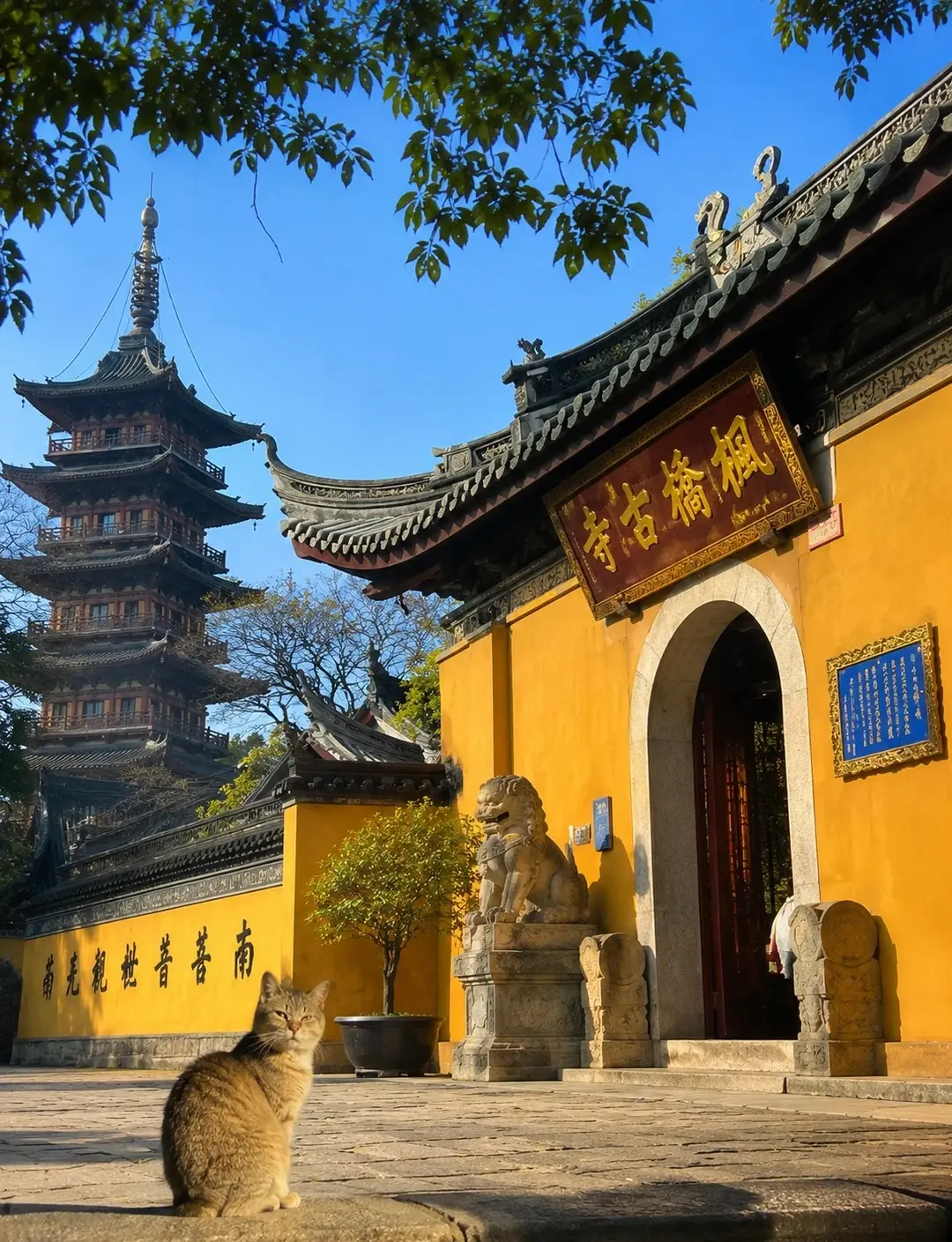
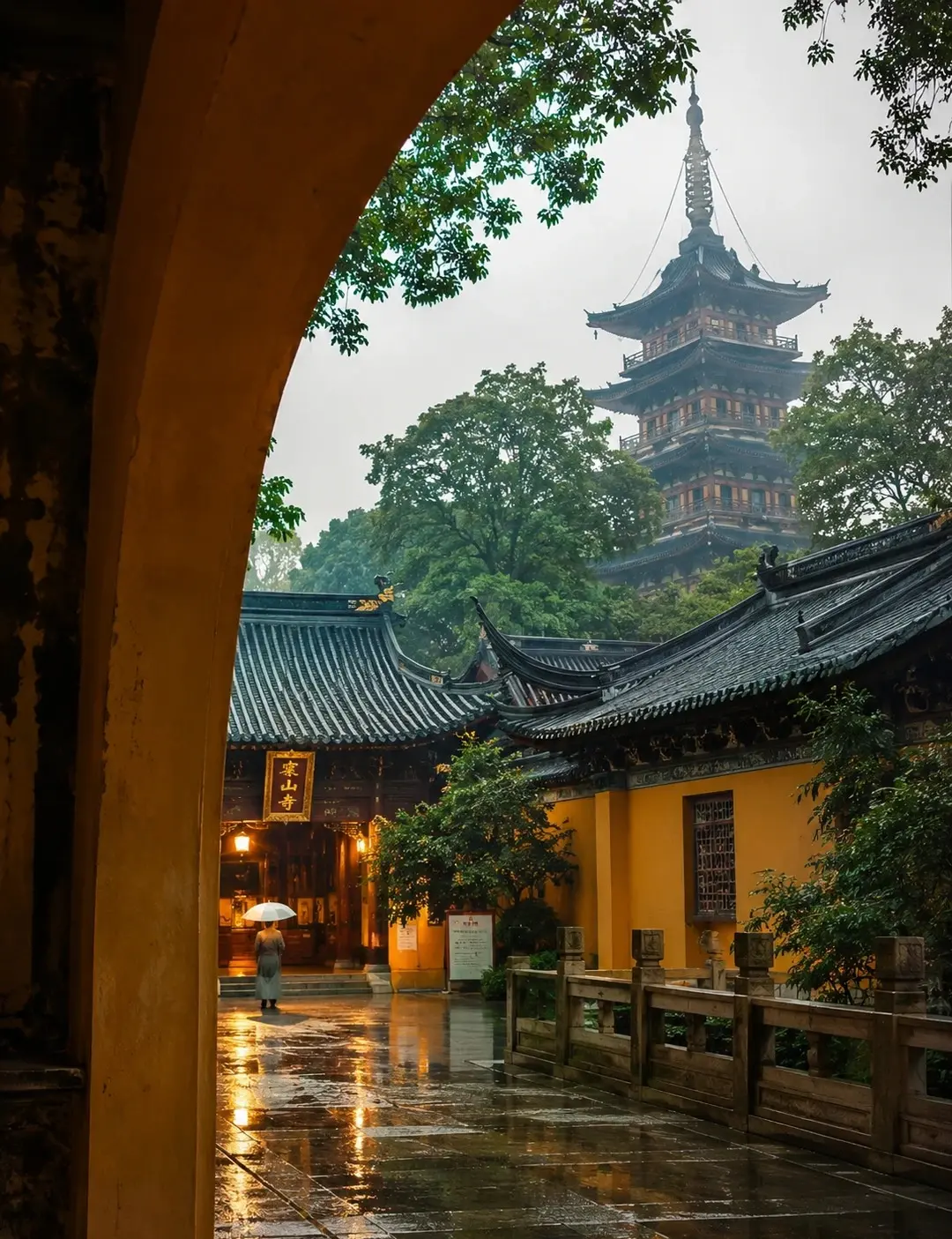
Key highlights:
The famous large bronze bell used for collective New-Year-Eve ceremonies
Stone calligraphy inscriptions of Zhang Ji’s poem from renowned calligraphers
Adjacent Maple Bridge (Fengqiao) and canal scenery featured in the classic poem
Multi-tiered Puming Pagoda offering panoramic surrounding views
Travel Tips:
Admission: ¥20.
Open 07:30–18:00 (hours vary on holidays; check before visiting).
Allow 1–1.5 hours.
New-Year-Eve bell-ringing ceremony: requires a special event-entry ticket at ¥100 per person. Tickets sell out months ahead and must be pre-booked.
Combine with a walk along the Maple Bridge scenic area (free).
Kunqu Opera & Suzhou Pingtan
Suzhou is the birthplace of two of China's most refined performing arts: Kunqu opera — the 600-year-old "mother of all Chinese operas" and a UNESCO Masterpiece of the Oral and Intangible Heritage of Humanity — and Suzhou Pingtan, a storytelling art performed in the melodic Wu dialect with pipa and sanxian accompaniment.
Venue | What to Experience | Practical Info |
|---|---|---|
China Kunqu Opera Museum | Carved ancient stage; regular Kunqu performances | Free; no reservation; closed Mondays |
Suzhou Pingtan Museum | Wu-dialect storytelling; historic phonograph recordings | Free; no reservation; closed Mondays |
Shantang Kunqu Opera House | Daily performances of Kunqu, Pingtan, guzheng | ¥80–150; evenings; Shantang Street |
Master of the Nets Night Tour | Kunqu, pipa, classical dance in illuminated pavilions | ¥120; book 7 days ahead; Mar–Nov only |
Modern Suzhou: Jinji Lake & Beyond
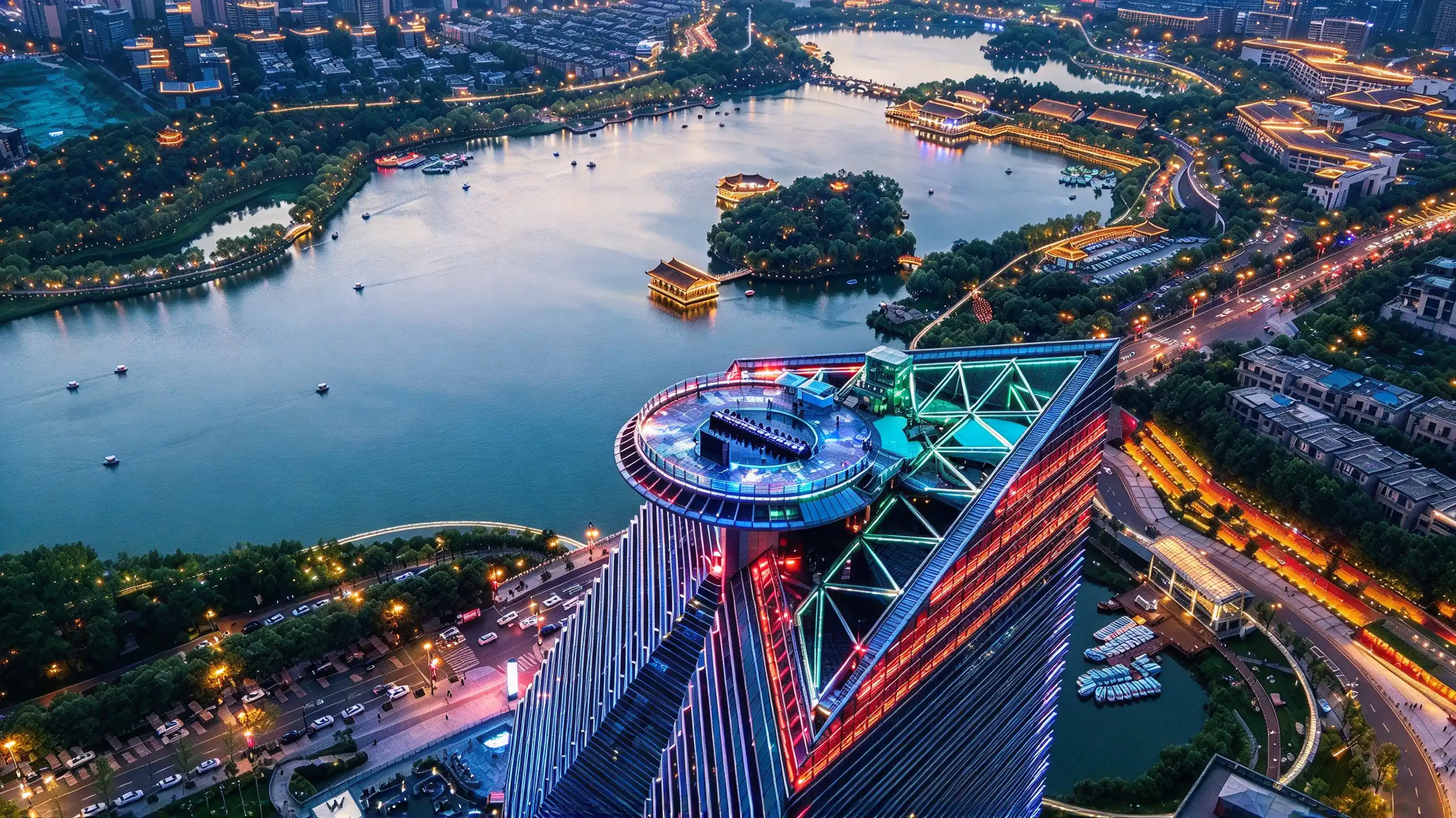
While Suzhou's old town captivates with ancient gardens and canals, the city's eastern SIP (Suzhou Industrial Park) district offers a striking contrast — a futuristic skyline centred on Jinji Lake, Asia's largest waterfront Ferris wheel, and cultural landmarks that blend old and new. Spending an evening here after a day of gardens provides a powerful "then-and-now" contrast.
Modern Attraction | Highlights | Practical Info |
Jinji Lake Ferris Wheel | 120m tall; 28 air-conditioned transparent cabins; 30-min rotation; panoramic lake and skyline views; modelled on London Eye structure | Metro Line 8, Suzhou Museum of Contemporary Art station, Exit 1; ¥80–120; best at sunset |
Suzhou Culture & Arts Centre | Architectural landmark shaped like a "bird's nest" (designed by Paul Andreu); hosts opera, symphony, theatre, and IMAX cinema | Metro Line 1, Culture & Expo Centre station; Ticket prices vary by show |
Gate of the Orient | 301m-tall arch-shaped skyscraper; Suzhou's most recognisable modern landmark; lit up spectacularly at night; best viewed from Jinji Lake | Free to view exterior; Metro Line 1, Gate of Orient station |
Moon Harbour | Waterfront dining and entertainment promenade; restaurants, bars, and live music with lake views; evening light show | Free; Metro Line 1, Culture & Expo Centre station; best at evening |
More Water Towns: Luzhi, Mudu & Beyond
Beyond the famous Tongli and Zhouzhuang, the Suzhou region is dotted with over a dozen ancient water towns, each with its own character. These lesser-known towns offer equally beautiful canal scenery, stone bridges, and traditional architecture — often with far fewer tourists. Here are the best alternatives:
Water Town | Distance from Suzhou | Highlights | Best For |
Luzhi | 25 km southeast | Ancient bridges (41 surviving, many Song-Yuan era); Baosheng Temple with famous Luohan clay sculptures; water women's traditional dress; very traditional and uncrowded | Authentic culture seekers; photography |
Mudu | 15 km southwest | "Garden town" at the foot of Tianping Mountain; Qianlong's southern tours stopped here; Yan Family Garden; Hongyin Mountain Villa; great local food; underrated and quiet | Garden lovers; foodies; half-day trip |
Xitang | 60 km northeast (Zhejiang border) | Covered corridor streets (langpeng); narrow stone alleys; magical night lanterns; more atmospheric than Zhouzhuang | Photographers; overnight stays |
Lili | 30 km south | One of "four major towns of Wu"; 12 rivers and 99 lanes; Liu Yazi Memorial Hall; extremely well-preserved Ming-Qing streets; almost no tourists | Tranquillity seekers; off-the-beaten-path |
Jinxi | 35 km south | Old brick-bridge museum town; 10th-century Chen Fei Water Tomb; lotus lake; antique markets; charming and overlooked | Architecture lovers; antique enthusiasts |
Suzhou Food Guide: What to Eat
Su cuisine (Su Bang Cai) is one of China's eight major culinary traditions, characterised by delicate flavours, emphasis on seasonal ingredients, and a subtle sweetness. Half the experience of eating in Suzhou is also drinking: the city is the home of Biluochun green tea, one of China's ten most famous teas.
Dish | Description | Where to Try |
|---|---|---|
Squirrel Mandarin Fish | Suzhou's signature: deep-fried fish shaped like a squirrel with sweet-and-sour sauce | Songhelou, ¥168–198/fish |
Biluochun Tea | One of China's top ten teas; tender spiral-shaped leaves from Dongshan hills | Any canal-side teahouse on Pingjiang Road |
Su-Style Noodles | Thin noodles in clear broth with slow-braised pork, eel, or shrimp | Zhu Hongxing Noodle Shop, Bifengfang |
Braised Pork Belly | Meltingly tender pork in soy sauce, sugar, and Shaoxing wine | Any Su-cuisine restaurant; Shantang Street |
Shengjian Bao | Pan-fried pork buns with crispy bottoms and juicy fillings | Xinzhenyuan, Daru Alley, ¥12 for 2 |
Sweet Lotus Root | Lotus root stuffed with glutinous rice, drizzled with osmanthus syrup | Pingjiang Road snack stalls |
Wansan Pork Knuckle | Braised pork knuckle named after Ming-era merchant Shen Wansan | Zhouzhuang old town |
Suzhou Seasonal Food Calendar
Suzhou cuisine is deeply seasonal — locals say a dish is only worth eating in its proper season. Following the "24 solar terms", here is what to seek out month by month. Timing your food choices to the season is one of the best ways to eat like a local in Suzhou.
Season | Month | Must-Eat Seasonal Food | Where to Find |
Spring | Feb–Mar | Biluochun first-flush tea; spring bamboo shoots; pickled pork with fresh vegetables | Dongshan tea farms; Su-cuisine restaurants (Songhelou) |
| Mar–Apr | River shrimp; Qingtuan green glutinous rice cake; fried spring fish | Pingjiang Road stalls; Guanqian Street bakeries |
| Apr–May | Cherry pork; sweet broad-bean paste; loquat fruit | Su-cuisine restaurants; Dongshan fruit farms |
Summer | Jun–Jul | Fresh lotus seeds; Yangcheng Lake small crabs; white fish | Taihu Lake area restaurants; Pingjiang Road |
| Jul–Aug | Lotus root stuffed with rice; iced Biluochun tea; cold noodles | Pingjiang Road; noodle shops citywide |
Autumn | Sep–Oct | Hairy crab from Yangcheng Lake; osmanthus cake; roasted chestnuts | Yangcheng Lake crab restaurants; Shantang Street |
| Nov | Begonia pastry; sweet taro; ginkgo nuts | Old town street stalls; Mudu Ancient Town |
Winter | Dec–Feb | Reconstructed dried tofu; lamb soup; winter solstice tangyuan | Cangshu town lamb restaurants; Guanqian Street |
Where Should You Stay in Suzhou?
Area | Best For | Price Range | Pros & Cons |
|---|---|---|---|
Guanqian Street / Pingjiang Road | First-time visitors | ¥400–1200/night | Walk to gardens, museums, old streets; lively evening scene |
Jinji Lake (SIP) | Business travellers & modern luxury | ¥600–1500/night | International hotels, lake views; far from old town |
Shantang Street | Photographers & culture lovers | ¥400–1100/night | Canal-side charm, near Tiger Hill; can be noisy at night |
Suzhou New District | Budget travellers | ¥400–900/night | Affordable; 20+ min to old town by Metro |
Suzhou Shopping Guide
Suzhou's specialities reflect its refined cultural heritage. The best souvenirs are functional and beautiful — silk products, Biluochun tea, Su-style embroidery, and sandalwood fans. For a modern shopping experience, the Guanqian Street pedestrian mall and the Jinji Lake commercial district offer both international brands and local boutiques.
Top Suzhou souvenirs:
Silk products (scarves, pillowcases from the Silk Museum shop or Pingjiang Road boutiques, ¥50–500).
Biluochun tea (spring-harvest first flush is best; buy from tea shops near Dongshan or Guanqian Street tea market).
Su embroidery (Su Xiu — double-sided silk embroidery, a UNESCO intangible heritage craft; small framed pieces start at ¥100). Sandalwood fans (delicately carved wooden fans, a Suzhou tradition since the Song dynasty).
Su-style pastries (walnut cookies and sesame cakes make great edible gifts).
Suzhou Nightlife & Cultural Experiences
Suzhou's nightlife is quieter and more cultural than Shanghai's, but no less rewarding. The city's evening experiences revolve around canal-side strolls, traditional performances, and garden illuminations.
Best evening experiences:
Master of the Nets Garden night tour: Kunqu opera, pipa music, and classical dance in an illuminated garden setting — Suzhou's most unique night experience.
Shantang Street lantern walk: Red lanterns reflecting on the canal create a magical atmosphere; stop for dinner at a canal-side restaurant.
Pingjiang Road teahouse evening: Sip Biluochun tea by candlelight while traditional music plays softly.
Suzhou River night cruise: Boat rides along the old city moat with illuminated bridges and buildings.
Jinji Lake light show: Modern fountain and light show at the contemporary side of Suzhou — a striking contrast to the old town.
Local Experiences You Should Not Miss in Suzhou
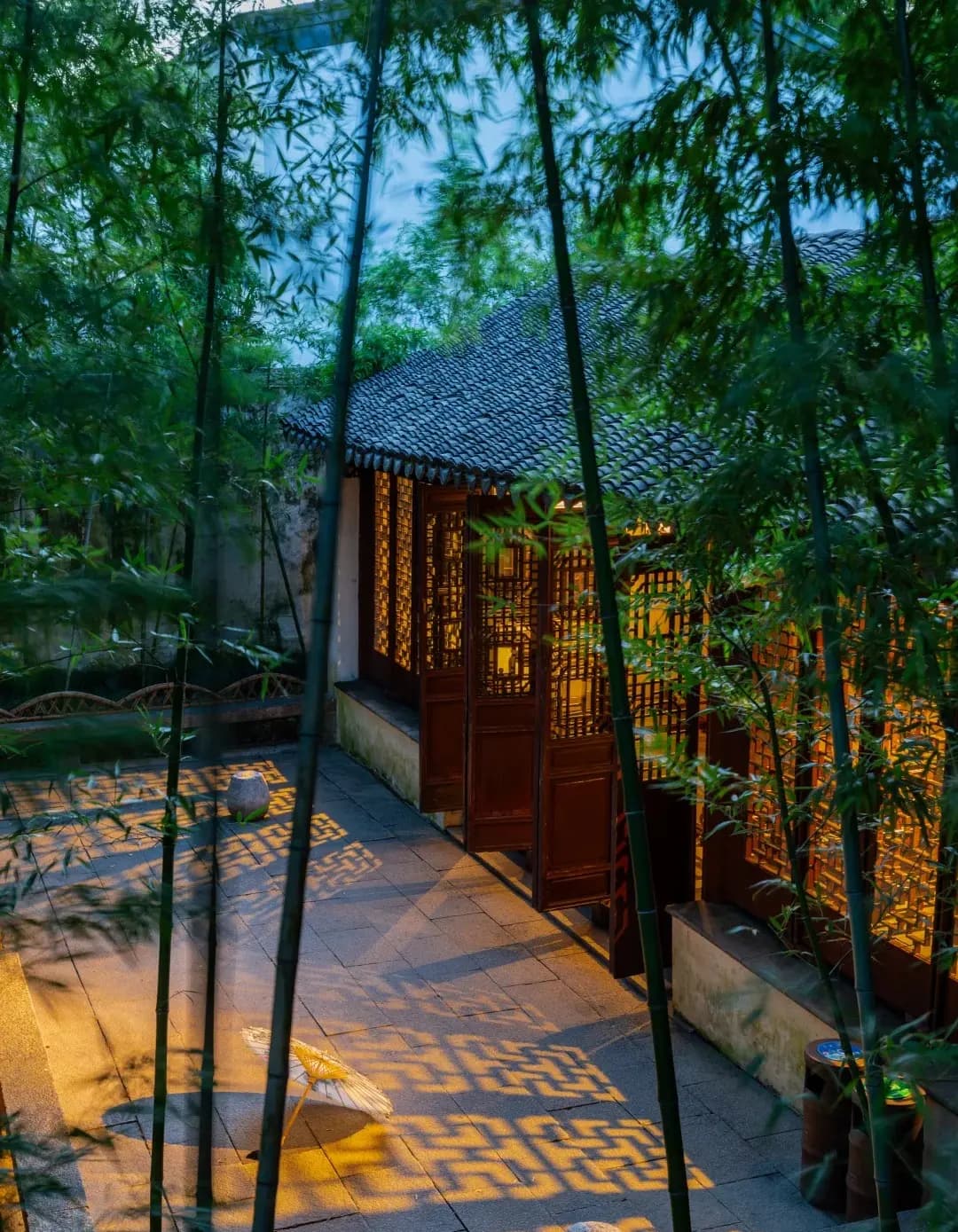
Garden tea tasting: Sit in a garden pavilion with a pot of Biluochun tea and experience the literati lifestyle that inspired these gardens. The Master of the Nets Garden and the Humble Administrator's Garden both have teahouse corners.
Hand-rowed canal boat ride: On Pingjiang Road or in Tongli, take a traditional wooden boat rowed by a local boatman — the slow pace reveals canal-side life you'd miss on foot.
Silk weaving workshop: At the Silk Museum or a traditional workshop, watch master weavers operate wooden looms that have barely changed in centuries.
Early-morning garden visit: Arrive at the Humble Administrator's Garden at 07:30 and watch local residents practice tai chi in the adjacent park before the tourist rush.
Su embroidery demonstration: Visit an embroidery studio to watch artisans create double-sided silk paintings — a craft requiring years of training.
Seasonal food hunt: In spring, seek out fresh Biluochun tea and river shrimp; in autumn, hairy crab (dazhaxie) from nearby Yangcheng Lake is a must.
How to Get to Suzhou & Get Around
Getting to Suzhou
Getting There & Around
From Shanghai (most common entry point): High-speed trains depart from Shanghai Hongqiao Station every 5–10 minutes and arrive at Suzhou Station (not Suzhou North) in just 25–30 minutes. Tickets cost ¥40–60 one-way. The first train departs around 06:00 and the last around 22:30.
From Nanjing: High-speed train, approximately 1 hour, ¥100–150.
From Hangzhou: High-speed train, approximately 1.5 hours, ¥110–150.
From Wuxi: High-speed train, approximately 15-30 minutes, ¥21–90.
From Beijing: High-speed train, approximately 4.5–5.5 hours, ¥550–600. Or fly to Shanghai and take the train.
Within Suzhou: The Metro system (Lines 1, 2, 4, etc.) covers most attractions. Line 4 connects directly to Tongli Water Town. Taxis start at ¥13; Didi (ride-hailing) is widely available.
Getting Around Suzhou
Mode | Cost | Best For |
|---|---|---|
Metro | ¥2–7 per ride | Long distances; Tongli day trip (Line 4) |
Bus | ¥1–2 per ride | Budget travel; routes between old-town gardens |
Taxi | ¥13 flagfall + ¥2.5/km | Evening travel; luggage; short hops |
Didi (Ride-hailing) | Similar to taxi | Non-Chinese speakers; advance booking |
Shared Bikes | ¥1.5 per 30 min | Short distances between gardens |
Walking | Free | Old town core (gardens, Pingjiang Rd, Museum within 10-min walk) |
Canal Boat | ¥40–80 per person | Sightseeing; photography; evening atmosphere |
Suggested Suzhou Itineraries
1-Day Suzhou Itinerary: Day Trip from Shanghai
Time | Activity |
|---|---|
09:00 | Shanghai Hongqiao → Suzhou by high-speed train (25–30 min) |
09:15–11:00 | Humble Administrator's Garden |
11:00–12:00 | Lion Grove Garden |
12:00–13:30 | Suzhou local lunch |
13:30–15:00 | Hanshan Temple |
15:00–17:00 | Pingjiang Road canal walk + boat ride |
17:00 | Return train to Shanghai |
2-Day Suzhou Itinerary: Classic Highlights
Day | Highlights |
|---|---|
Day 1 | Lingering Garden → Tiger Hill → Suzhou Museum → Pingjiang Road |
Day 2 | Grand Canal Cruise → Panmen Gate → Master of the Nets Garden → Shantang Street |
3-Day Suzhou Itinerary: Gardens, Canals & Water Towns
Day | Highlights |
|---|---|
Day 1 | Humble Administrator's Garden → Suzhou Museum → Lion Grove Garden → Pingjiang Road |
Day 2 | Tiger Hill → Lingering Garden → Grand Canal Cruise → Shantang Street |
Day 3 | Tongli Water Town or Zhouzhuang Water Town |
Day Trips from Suzhou
Destination | Travel Time | Highlights | Transport |
|---|---|---|---|
Shanghai | 25–30 min | The Bund, Yu Garden, French Concession | HSR; ¥39.5–60 |
Hangzhou | 1.5 hr | West Lake (UNESCO), Lingyin Temple, Longjing tea | HSR; ¥110–150 |
Nanjing | 1 hr | Sun Yat-sen Mausoleum, Ming City Wall | HSR; ¥100–150 |
Tongli Water Town | 30 min (Metro) | UNESCO Retreat & Reflection Garden; 49 ancient bridges | Metro Line 4; ¥2–7 |
Wuxi | 20 min | Taihu Lake, Lingshan Grand Buddha (88m) | HSR; ¥30–50 |
Taihu Lake (Dongshan) | 1 hr | Biluochun tea farms, fruit orchards | Bus/taxi; ¥50–100 |
Best Time to Visit Suzhou
The best months to visit Suzhou are March–May (spring) and September–November (autumn). April and October are optimal — April brings spectacular garden blooms (azaleas, peonies, and peach blossoms) with temperatures of 12–21°C, while October offers crisp autumn weather of 15–23°C and fiery maple foliage.
Best Time To Visit
Season Guide
Spring
Mar-May | 12-21°C
Peak garden beauty; Biluochun tea harvest; plum blossoms in Feb; Avoid Qingming Festival (early April) crowds
Summer
Jun-Aug | 28-33°C
Lotus blooms in July–August are stunning; Hot and humid; go early morning before 08:00
Autumn
Sep-Nov | 15-23°C
Ideal weather; osmanthus flowers; hairy crab season; Best overall season — book ahead
Winter
Dec-Feb | 2-10°C
Fewer crowds; lower prices; plum blossoms in late Feb
Suzhou Festivals & Events Calendar
Month | Festival | Location | What to Expect |
|---|---|---|---|
Feb–Mar | Plum Blossom Festival | Xiangxuehai; Tiger Hill | Hillsides turn into a fragrant "sea of snow" |
Mar–Apr | Biluochun Tea Festival | Dongshan & Xishan | First spring tea plucking; tea-tasting events |
May | Azalea Exhibition | Humble Administrator's Garden | Hundreds of azalea varieties among pavilions |
Jun–Aug | Lotus Festival | Humble Administrator's Garden | Peak lotus blooms; early-morning sessions at 06:45 |
Sep–Nov | Hairy Crab Season | Yangcheng Lake restaurants | Suzhou's biggest food event; reserve weeks ahead |
Nov | Tianping Mountain Red Maple | Tianping Mountain | 400-year-old maples turn fiery red |
Dec 31 | New Year Bell | Hanshan Temple | 108 bell strikes at midnight; ¥100/strike |
How Can You Stay Connected in Suzhou?
eSIM / roaming: International roaming works but is expensive. Consider a China eSIM or travel SIM card (China Unicom or China Mobile) purchased before arrival.
Airport Wi-Fi: Free Wi-Fi is available at Shanghai airports; connect before boarding the train to Suzhou.
VPN: Google, WhatsApp, Instagram, and other Western apps are blocked in China. Install and test a reliable VPN before you arrive.
WeChat / Alipay: Essential for payments, restaurant ordering, and attraction bookings. Link an international credit card in advance.
Hotel Wi-Fi: Most mid-range and above hotels offer free Wi-Fi, though speeds vary.
What Should You Pack for a Suzhou Trip?
Item | Why |
Comfortable walking shoes | Garden grounds and canal streets involve lots of walking on stone paths |
Light layers (spring/autumn) | Mornings and evenings can be cool; midday warms up |
Umbrella | Suzhou receives rain year-round, especially in spring |
WeChat + Alipay setup | Cashless payment is standard everywhere |
Passport + visa | Required for train travel and some attraction bookings |
Power bank | Long days of navigation and photography drain batteries |
VPN (pre-installed) | For accessing Western apps and Google Maps |
Suzhou Travel Tips: What You Should Know Before Visiting
Book everything early: Garden and museum reservations open 7 days ahead and sell out fast, especially in peak season. Set a reminder.
Carry your passport: Required for high-speed train travel and some attraction entries.
Learn a few phrases: "Xie xie" (thank you), "Duo shao qian?" (how much?), and "WeChat zhifu" (WeChat pay) will go a long way.
Visit gardens early: Most gardens open at 07:30 in peak season — arriving first means fewer crowds and softer light for photos.
Tipping is not expected: Restaurants and hotels do not expect tips; a service charge is usually included.
Watch for ebikes: Electric scooters are everywhere on canal streets and often silent — stay aware when walking.
Final Advice: How to Make the Most of Your Suzhou Trip
Suzhou rewards slow travel. Unlike Beijing's grand imperial scale or Shanghai's hyper-modern energy, Suzhou's magic lies in its intimate details — the curve of a roofline, the way light falls through a lattice window, the taste of a single cup of Biluochun tea.
Resist the urge to rush through every garden on your list; instead, pick two or three and experience them deeply. Walk the canal streets without a destination. Linger in a teahouse. Let the city's 2,500 years of refinement wash over you.
If you only remember three things: book your garden tickets early, visit in spring or autumn, and leave time for a water town. Everything else will fall into place. Suzhou is not a city you conquer — it is a city you savour.


Traveler Discussions
Questions from travelers