
Can you enter China at Tianjin without a visa?
Yes — and for a lot of travellers Tianjin is the easiest door into China precisely because of it. Both of this city's international ports accept 240-hour visa-free transit, which is enough time for every itinerary on this page and a Beijing add-on besides.
Tianjin qualifies on both counts that matter: it is a designated port of entry for China's 240-hour (10-day) visa-free transit , and its stopover area is the whole municipality, with cross-province travel into the permitted regions of 24 provinces — Beijing and Hebei among them. If you are flying long-haul and China is on the way to a third country, you can land at Binhai, spend two or three days here, take the train to Beijing, and fly out of PEK without ever applying for a visa.
The policy has conditions, and they are strict. You must hold a passport from one of the eligible countries, valid for at least three more months; you must have a confirmed onward ticket to a third country or region departing inside 240 hours; and you must enter through an approved port. Coming from your home country and returning to it does not count as transit — the rule is built for people passing through.
One detail that catches people out: the clock starts at 00:00 on the day after entry , not at the hour you land. A Tuesday morning arrival therefore gives you until Friday midnight, effectively ten full days. Tourism, business, visiting relatives and transit are all permitted. Work, study and journalism are not — those still need a visa arranged in advance.
Check the current list before you book. China has been widening this policy every few months, and several countries that were outside it last year are inside it now. Many of the same passports also qualify for 30-day unilateral visa-free entry, which is a simpler rule if you are not actually in transit — see the table below.
At the airport —
Rule | Who it fits | How it works in Tianjin | The catch |
|---|---|---|---|
240-hour visa-free transit | Passport from one of the 55 countries, travelling on to a third country within ten days | Enter at Binhai airport or Tianjin Port. Stay in Tianjin; Beijing and the permitted regions of 24 provinces are open to you. | You must genuinely be in transit. Immigration will ask for the onward ticket, and the 240 hours are counted from the day after arrival. |
30-day unilateral visa-free | Passports from the countries China has granted visa-free entry — a longer and shifting list | Any port, including Beijing Capital and Daxing. Ordinary passports only. | 30 days, no extension, no paid activity. Hotel registration is done for you; keep the slip. |
Ordinary tourist visa (L) | Everyone else, and anyone staying longer, working or studying | Any port. Apply at a Chinese visa centre before you travel. | Allow two to three weeks; biometrics are usually required in person. |
Full list of the 55 eligible passports
The policy overview, with the port table and the current country count. English.
The eligibility conditions for the 240-hour rule and the 55-country list as published. English.
The same text on the government portal, including the port-by-port stay areas. Chinese.
Counts move: the NIA overview currently shows 57 countries and 65 ports, because countries have been added since. The list above follows the November 2025 announcement. Confirm your passport against the live page before you buy the ticket.
Eighteen sights, in one table and then one by one
Start with the table: it is the whole inventory in one screen — what each sight is, where it sits, how long it takes and what it costs. The cards below repeat each row with the practical detail you need at the door: street address, the metro or bus that reaches it, ticket price and closing day, then what to actually do inside and the mistake most visitors make.
Sight or activity | Where | Time | Ticket | Why it is on the list |
|---|---|---|---|---|
Tianjin Eye | Yongle Bridge, north end of the old town | 30 min | Free to look ¥70–110 to ride | The city's one icon. Better photographed from the south bank than ridden at midday. |
Ancient Culture Street & Tianhou Temple | Old town, along the Haihe | 1–1.5 h | Street free Temple ¥10 | Folk crafts, low wooden shopfronts, and a 1326 sea-goddess temple at the far end. |
Five Great Avenues | Heping, two kilometres south of the river | 2–3 h | Free Carriage ¥50 | About 2,000 villas from the 1920s–30s in 1.28 km². The lanes are the sight. |
Prince Qing's Mansion | Chongqing Road, inside the Five Great Avenues | 40 min | ¥40–50 | A 1922 princely villa with its courtyard intact — one of the few interiors you can walk into. |
Jingyuan | Anshan Road, Heping | 1 h | ¥20–30 | Where Puyi, the last emperor, lived 1929–31 before leaving for Manchuria. |
Porcelain House | Chifeng Road, near Xiaobailou | 30–40 min | ¥50 | A French villa coated in some 4,000 vases and millions of ceramic fragments. |
Italian Style Town | North bank, 15 min from Tianjin Station | 1–2 h | Free | Marco Polo Square, arcades and the best evening light in the city. |
Xikai Cathedral | Nanjing Road / Binjiang Dao | 20 min | Free | 1916 French cathedral; the towers read best at 08:30 with nobody in the square. |
Beijiang Museum | Machang Road, inside the foreign-studies campus | 1 h | ¥20 · book ahead | China's first modern natural-history museum, 1922, reopened with its original cases. |
Zhang Xueliang's Residence | Chifeng Road, Heping | 40 min | ¥20–40 | The general's town house: three courtyards, a courtroom of a staircase, jazz-age furniture. |
Binhai Library | Binhai Cultural Centre, 50 min east | 1 h | Free | The white "eye" of stacked books — the most photographed interior in northern China. |
National Maritime Museum | Sino-Singapore Eco-City, Binhai | 2–3 h | Free · reserve 7 days ahead | Four floors on China's sea history, from junks to the modern navy. Closed Mondays. |
Yangliuqing Old Town | Xiqing, 40 min west | half day | Free | Woodblock New Year prints, a canal market street, and Shi Family Mansion next door. |
Shi Family Mansion | Yangliuqing, Guyī Street | 1 h | ¥27 | The best-preserved merchant courtyard house in the region — 12 halls, one opera stage. |
Grand Canal at Yangliuqing | Yangliuqing waterfront | 1 h | Boat ¥40–60 | The surviving reach of the canal that fed Beijing for six centuries. |
Huangyaguan Great Wall | Jizhou, 2 h north | full day | ¥60–80 | Ming wall on a ridge with 3,000 steps and almost no crowd midweek. |
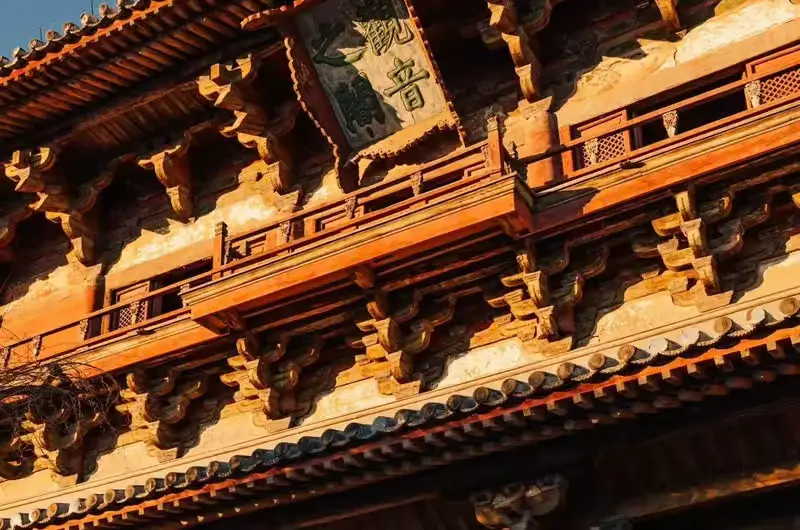
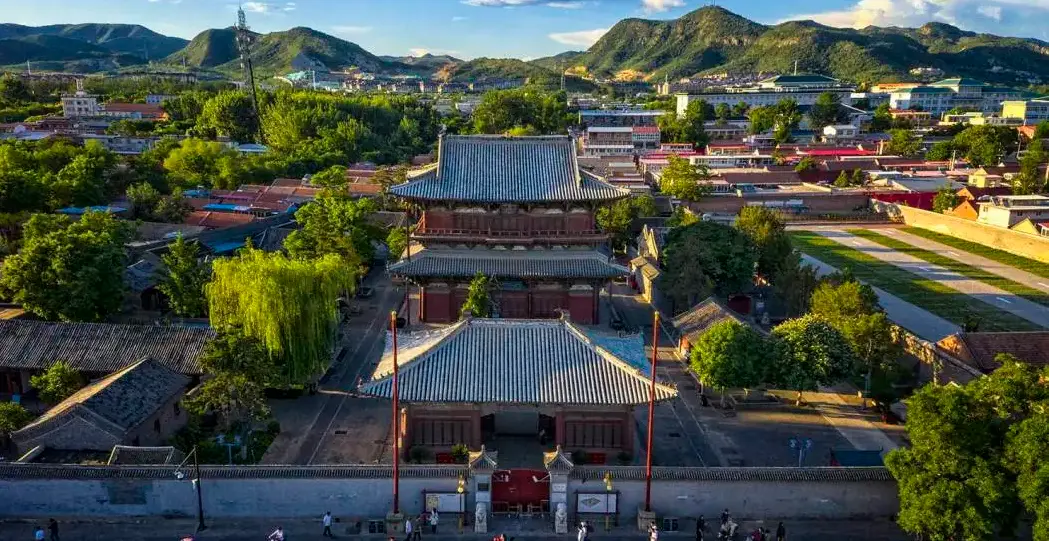
Dule Temple | Jizhou town, 2 h north | 1 h | ¥40 | A 984 Liao timber hall with a 16-metre Guanyin — oldest wooden structure in the region. |
Haihe cruise & crosstalk | Docks at Tianjin Station and Ancient Culture Street | 1–2 h | Cruise ¥80–100 Crosstalk ¥60–150 | The two things to do after dark: the river from the water, then an hour of Tianjin comedy. |
Prices and closing days are as published in late 2026 and marked indicative — museums change their booking rules every season, so check the official account the day before. Everything in the first group is walkable or one metro stop apart.
The same sights are laid out below as ready-made routes. If you want the fuller rundown of each attraction - what is inside, opening hours and what to prioritise - start with our separate guide to the best things to do in Tianjin, then use these itineraries to string them into days.
Group one · City core — Ten sights, all within 3 km of the river
Tianjin Eye
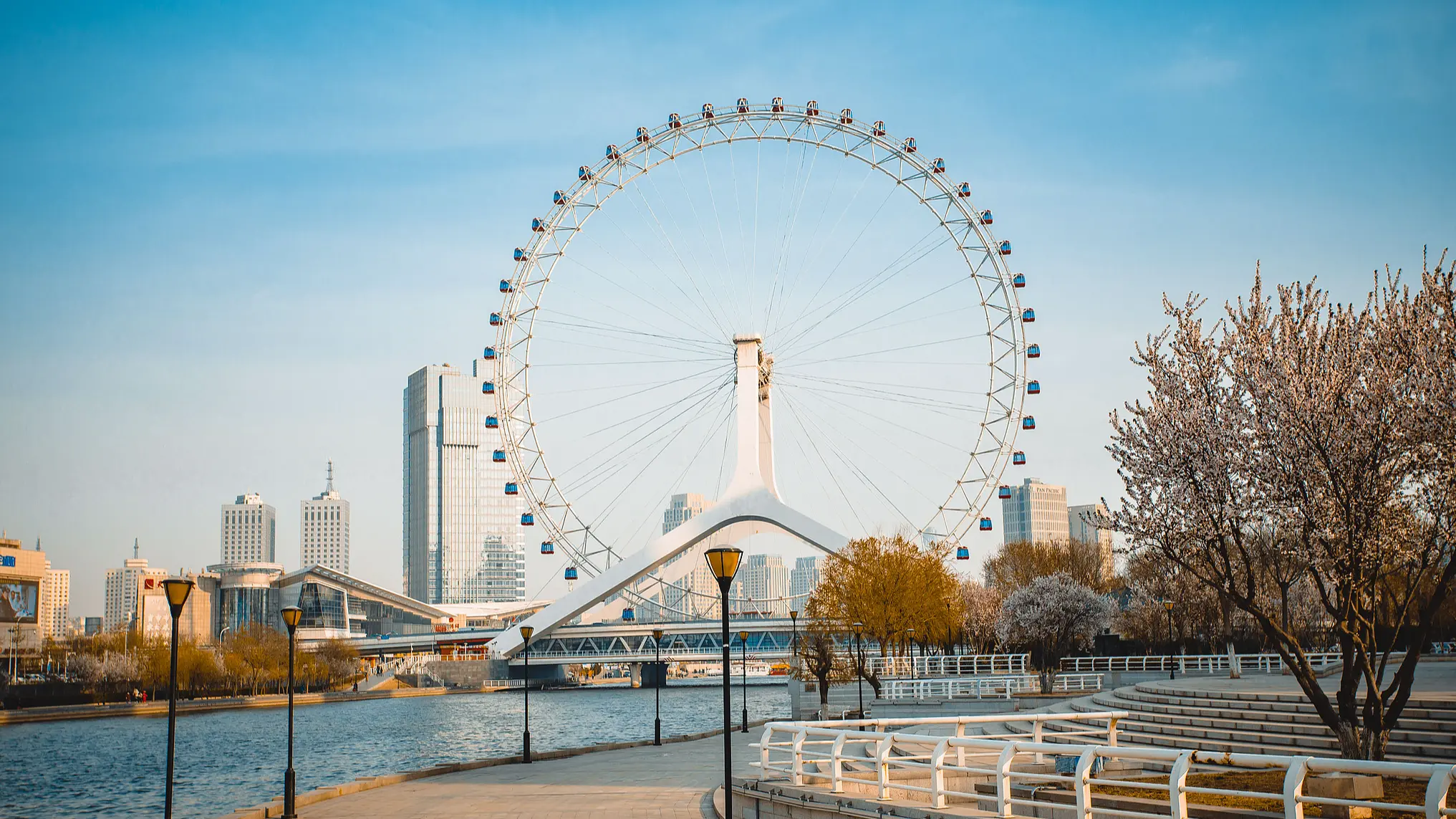
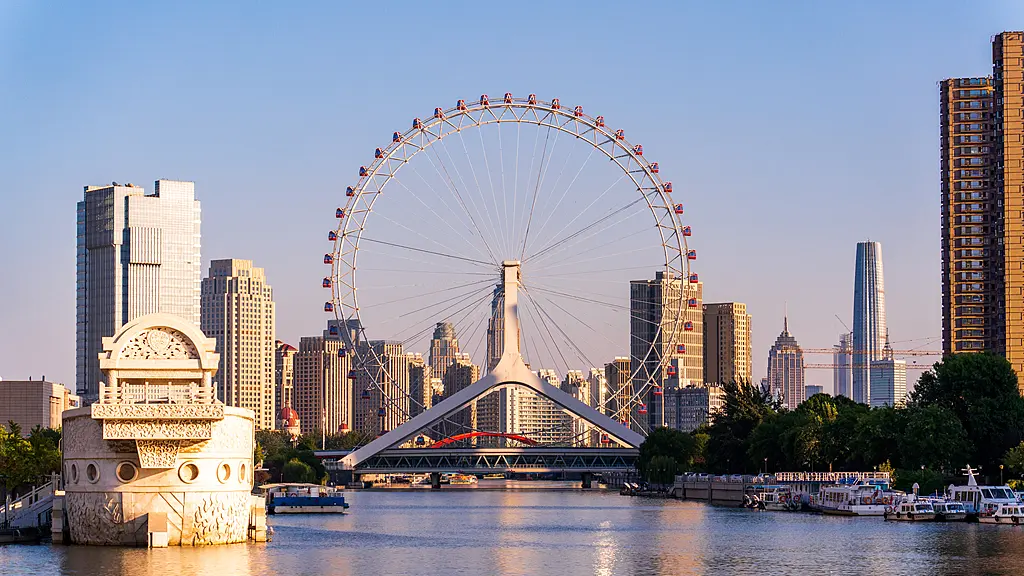
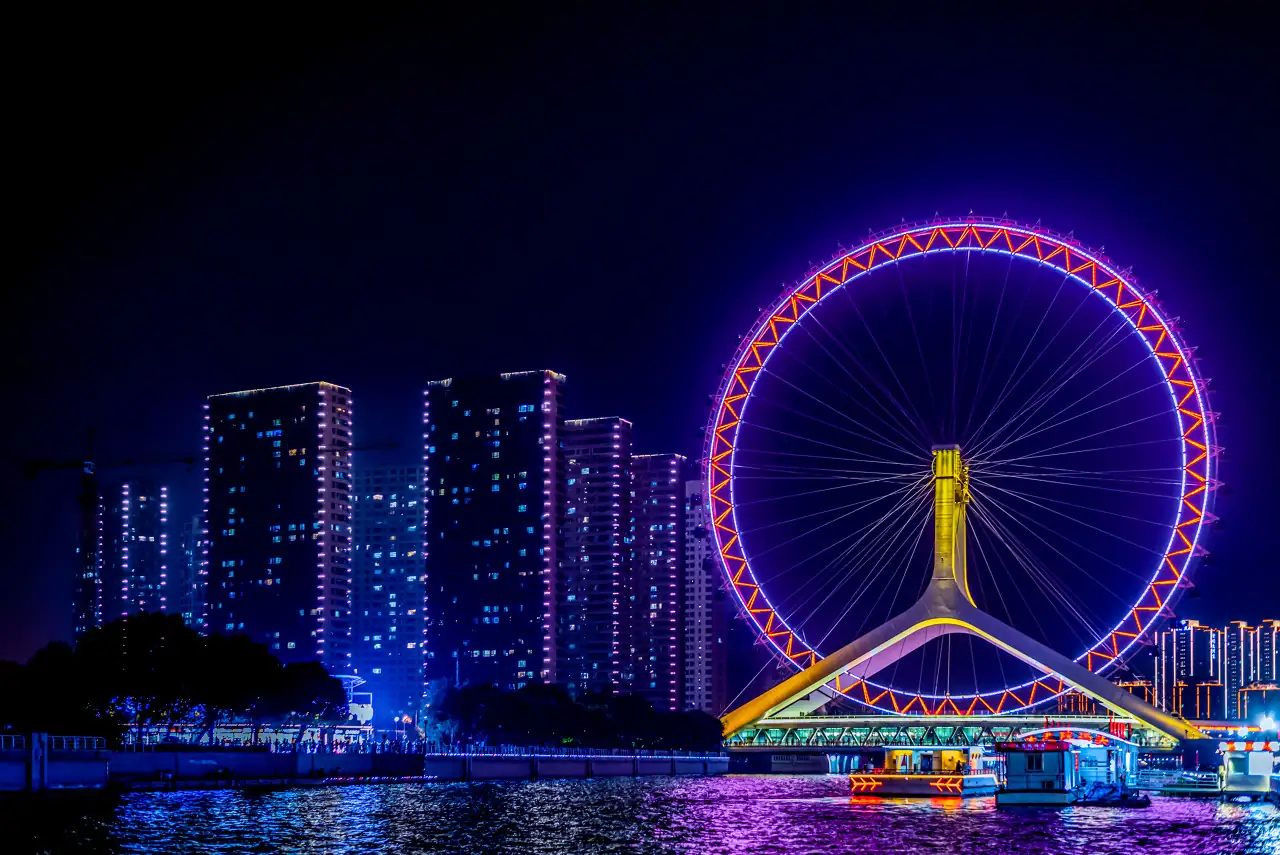
天津之眼 · Yongle Bridge, north end of the old town | 30 min · from ¥70
Address: Yongle Bridge, Hebei/Hongqiao border, north of the old town (河北区永乐桥)
Getting there: Metro line 1 to Xibeijiao, then 12 minutes on foot east along the river; or any taxi to “Tianjin Zhi Yan”
Ticket: ¥70 standard, ¥110 with the glass cabin · 09:30–21:30, last boarding 30 min before close
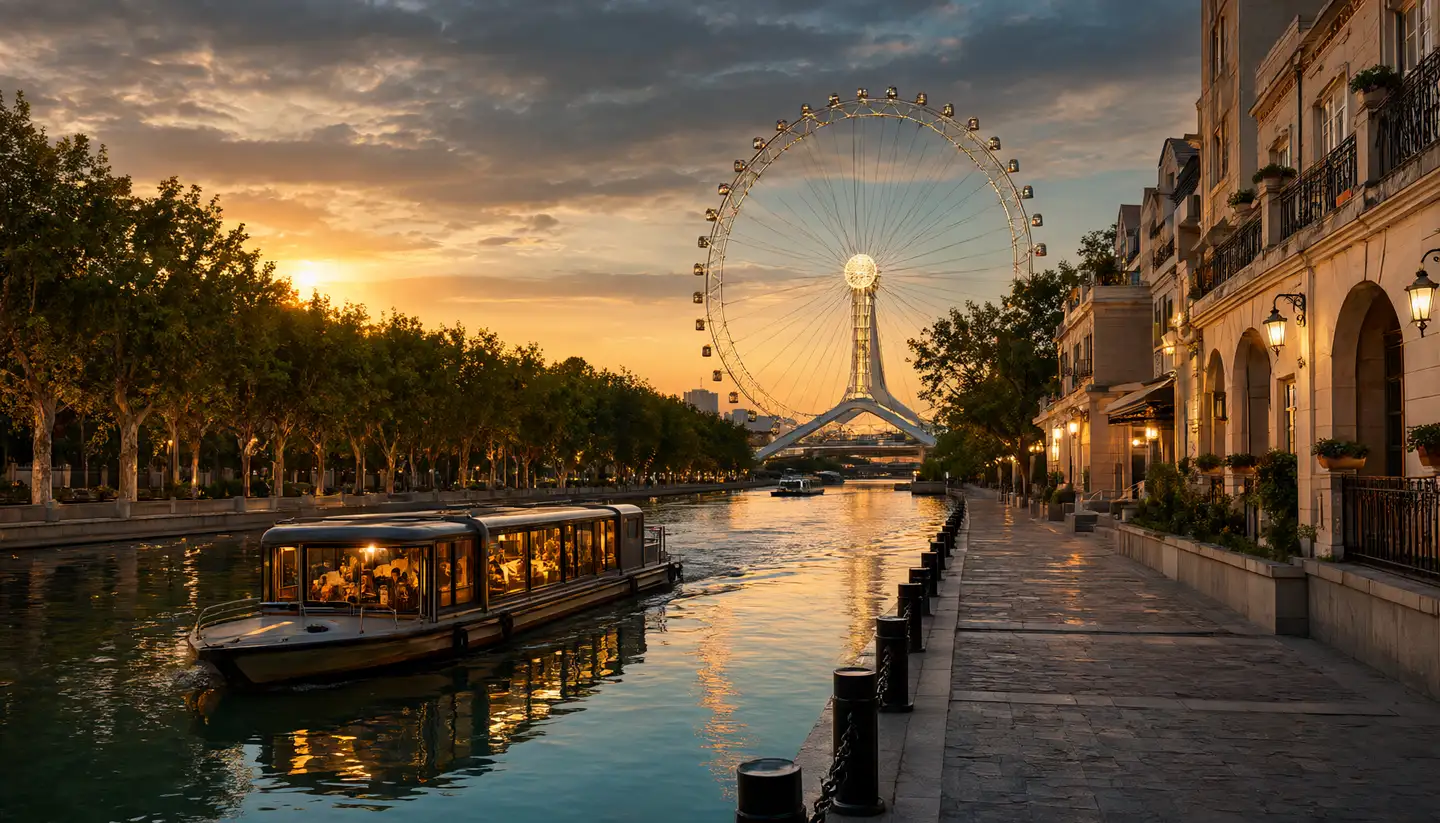
A 120-metre wheel built onto a road bridge over the Haihe — the only one of its kind anywhere, which is why every photograph of Tianjin has it in the frame. One rotation runs about 28 minutes.
What to do: look at it rather than ride it, from the south bank promenade twenty minutes before sunset, when the lights come on with colour still in the sky.
Mistake: queuing at midday for a view you already have from the embankment.
Ancient Culture Street & Tianhou Temple
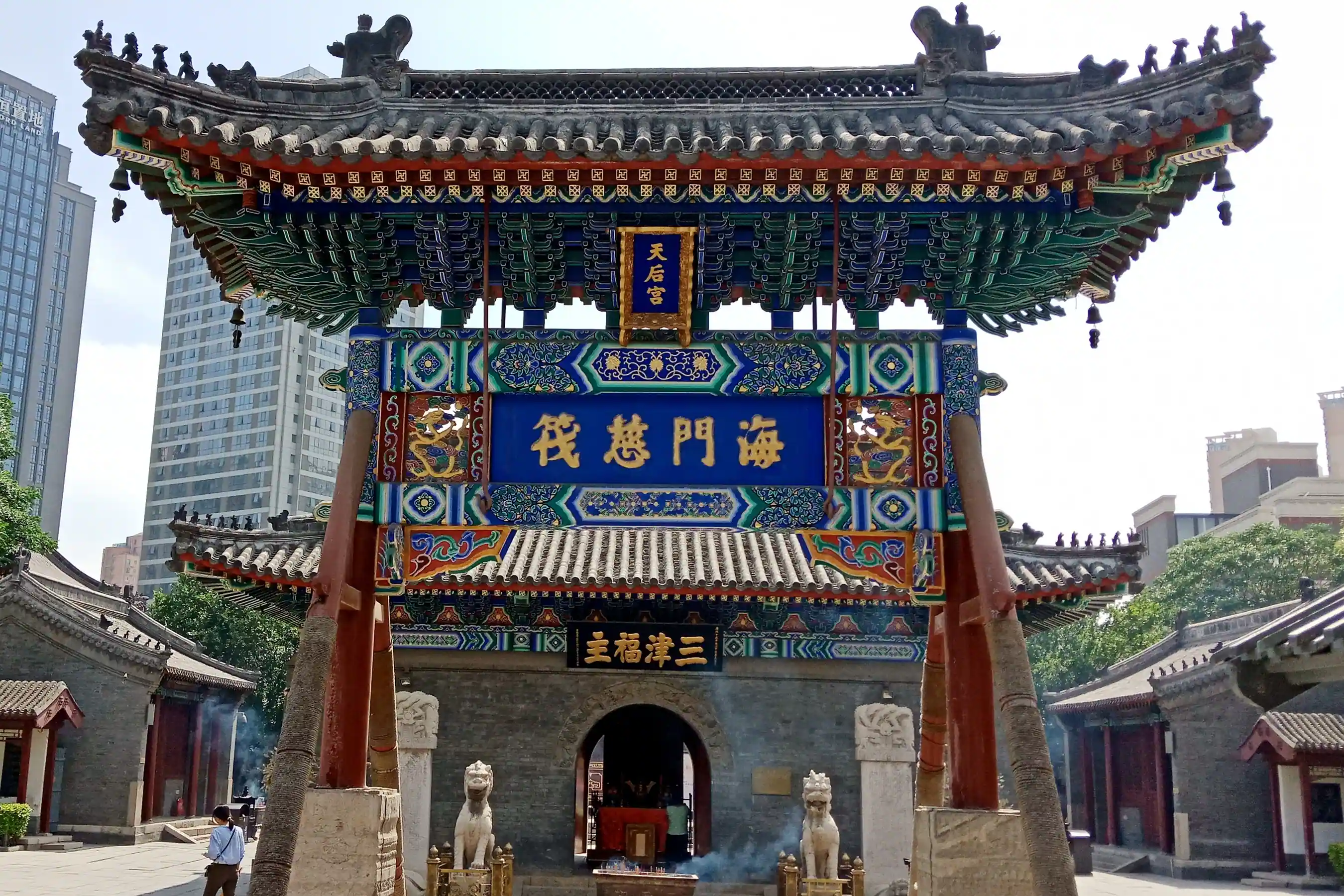
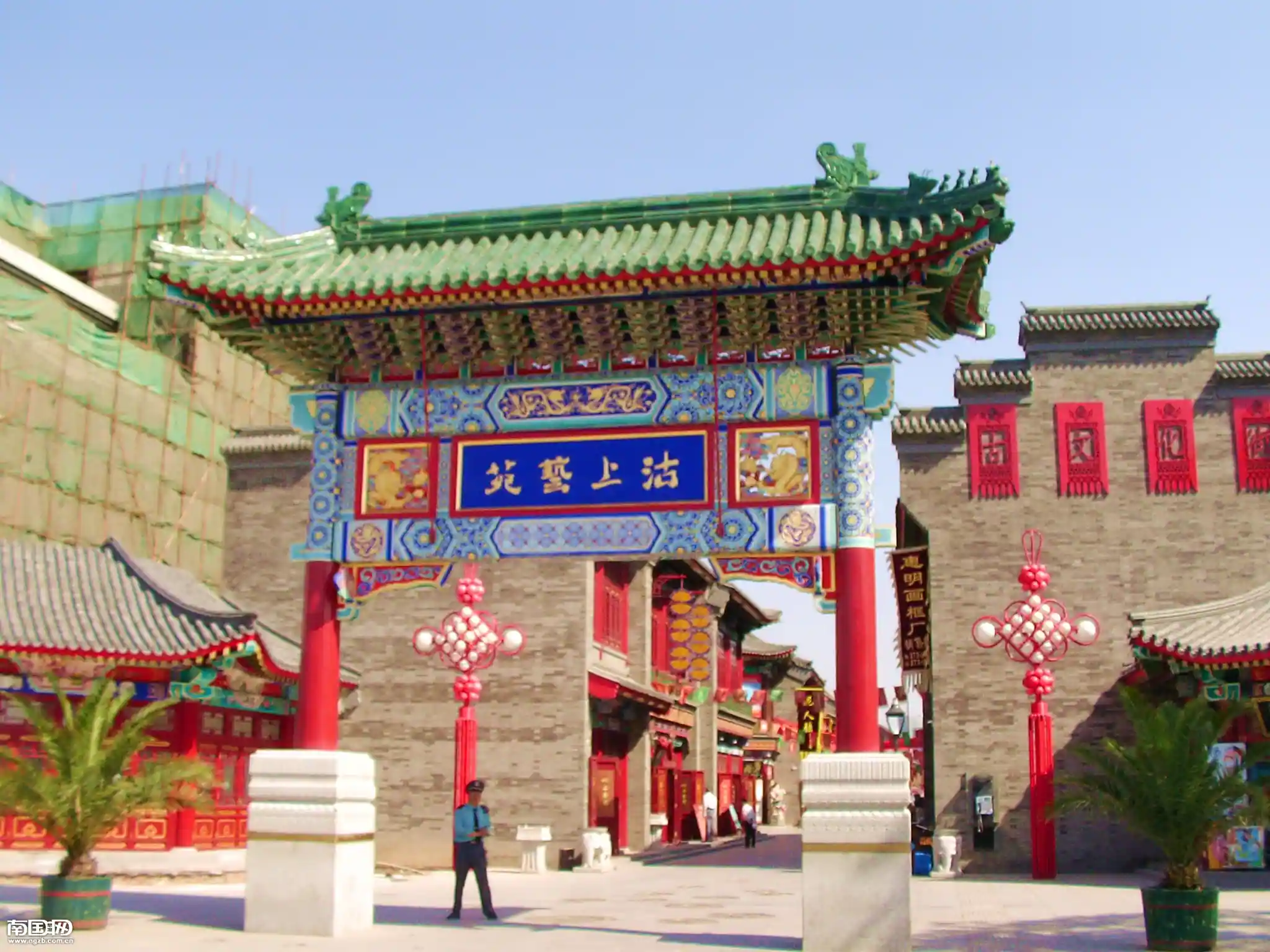
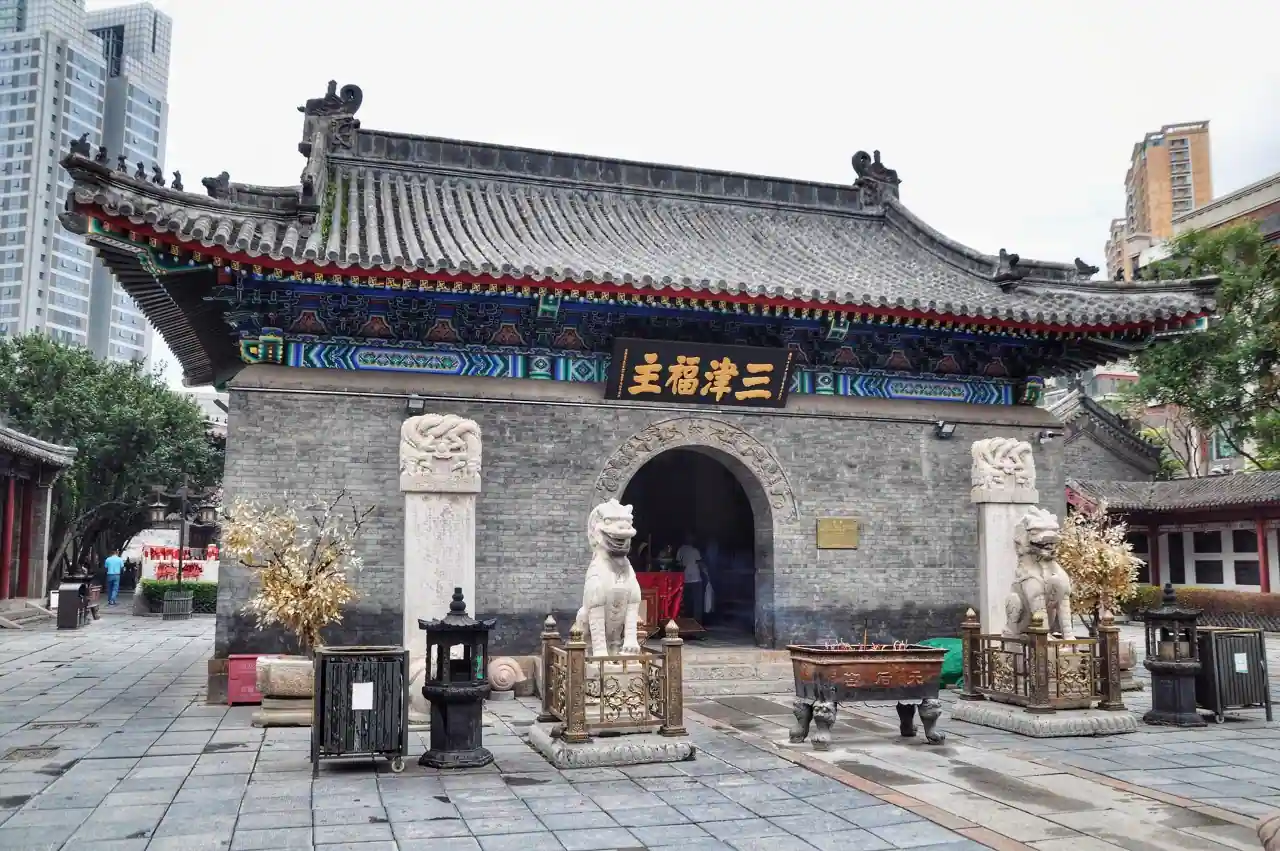
古文化街 · 天后宫 · Old town, along the Haihe | 1–1.5 h · free
Address: Gongnan Street / Tongqing Lane, Nankai (南开区宫南宫北大街)
Getting there: Metro line 2 to Dongnanjiao, exit B, 5 minutes west; the street entrance is the paifang arch
Ticket: Street free · Tianhou Temple ¥10 · shops 09:00–21:00, temple to 17:00
Six hundred metres of low Qing-style shopfronts selling clay figures, kites, paper cuts and fried dough, with the 1326 Tianhou Temple at the northern end — the sea-goddess temple that a port city built before anything else.
What to do: walk it north to south, buy at Nirenzhang (clay figures) and go into the temple for fifteen minutes.
Mistake: treating it as a sight when it is a shop — go at 09:00 or after 19:00 and it becomes a street again.
Five Great Avenues
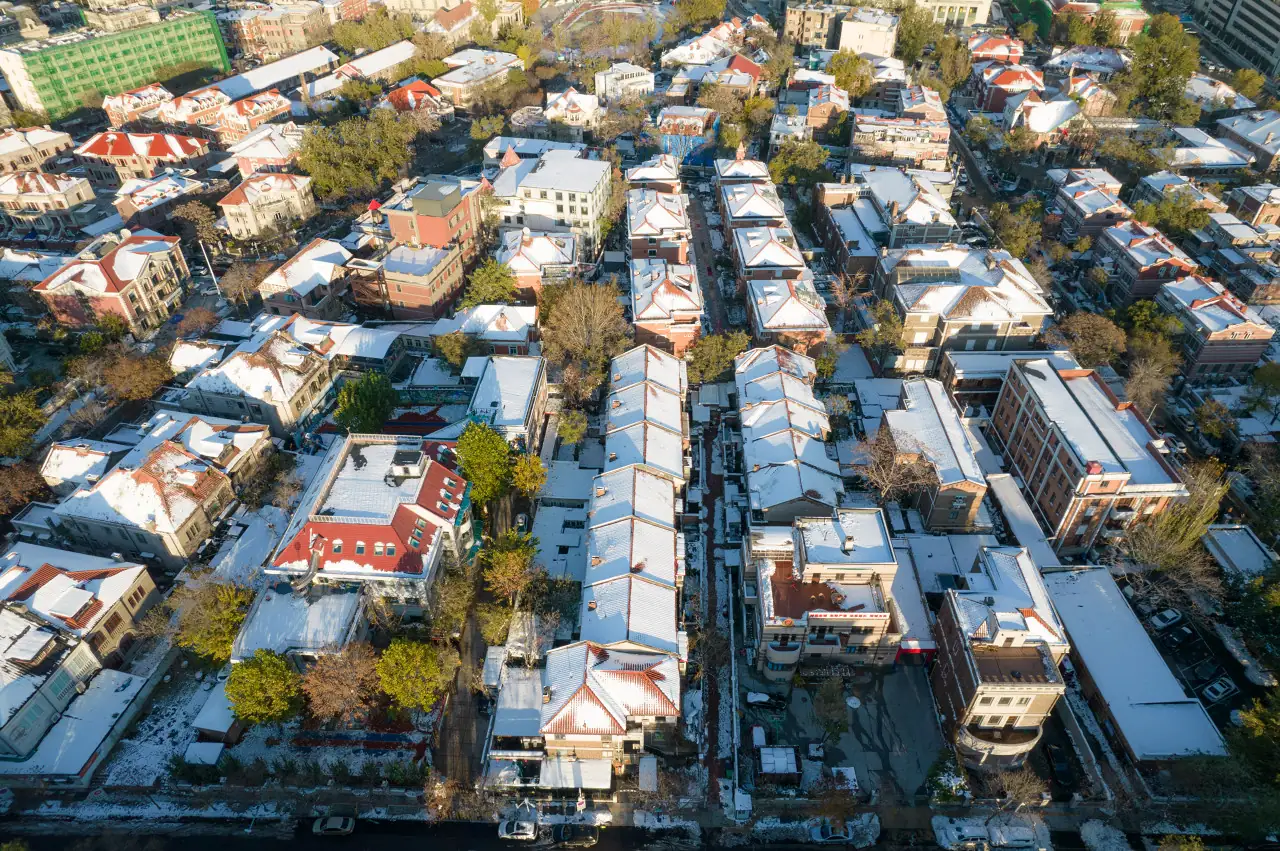
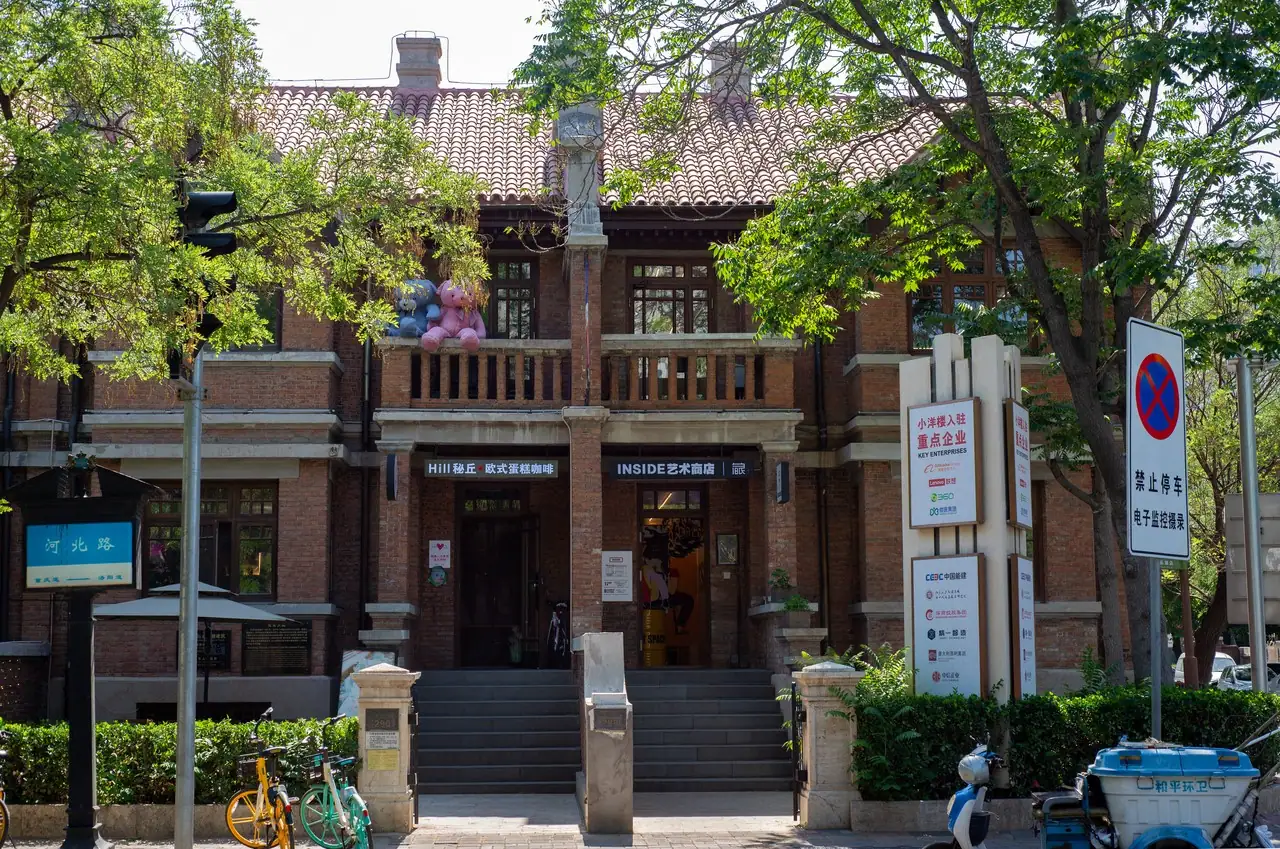
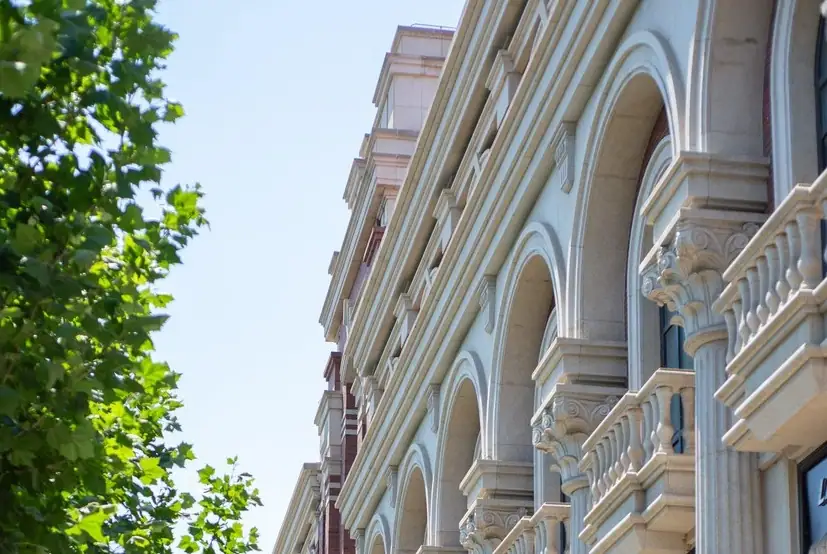
五大道 · Minyuan Square, Heping | 2–3 h · free
Address: Bounded by Chengdu, Machang, Xikang and Nanjing roads, Heping (和平区五大道)
Getting there: Metro line 1 to Xiaobailou then 15 minutes on foot, or line 3 to Xikang Road; start at Minyuan Square
Ticket: Free · horse carriage ¥50 for 20 min · Minyuan up to ¥200 for the full loop
The old British concession: about 2,000 villas in 1.28 square kilometres, brick and stucco and deep eaves, still lived in and still let out as offices and cafés. It is not a museum district and there is no gate.
What to do: start at Minyuan Square, take the carriage once to understand the grid, then walk Chengdu Road and Munan Road on foot.
Mistake: looking for a single famous house — the district is the sight.
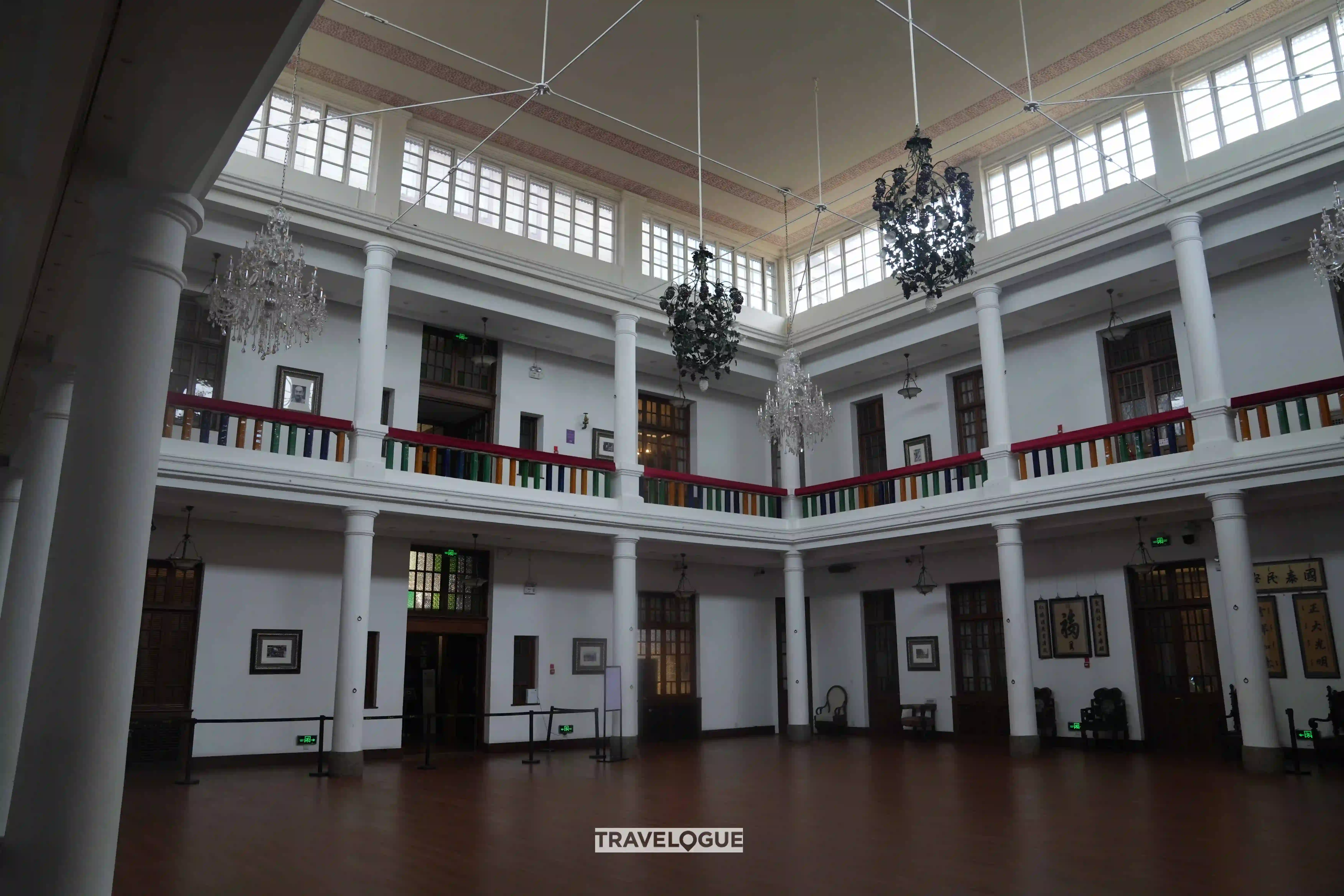
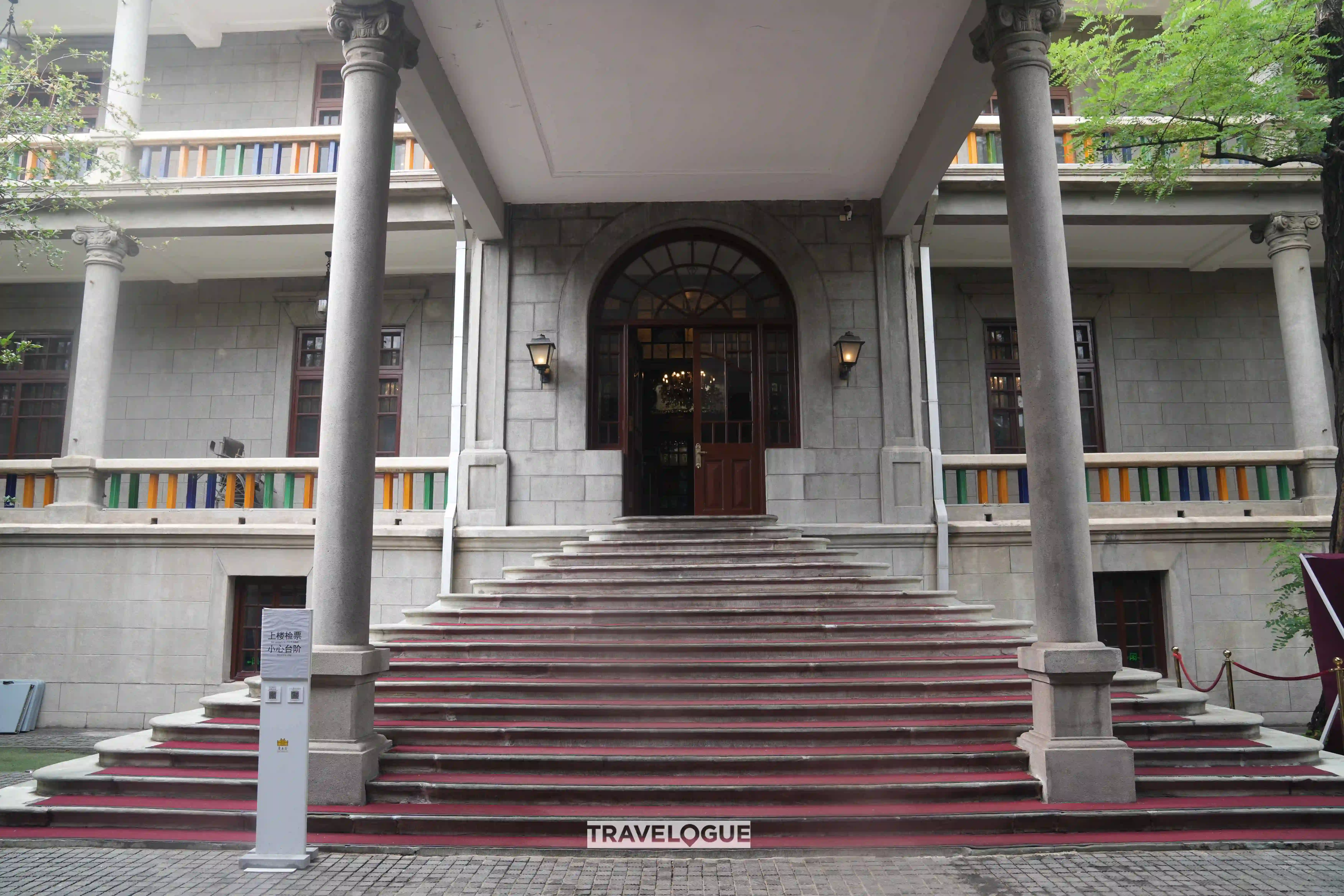
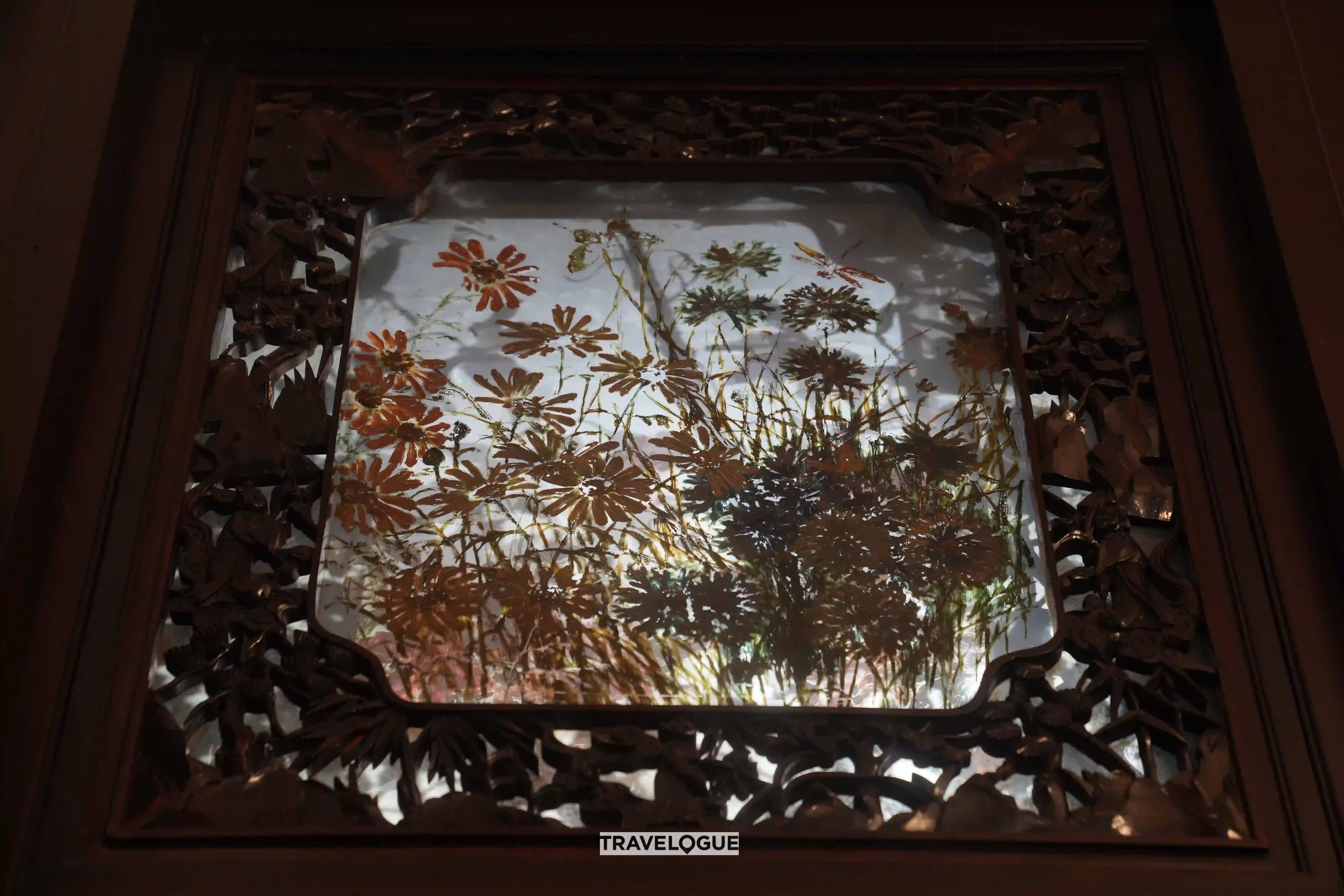
庆王府 · 55 Chongqing Road | 40 min · ¥40–50
Address: 55 Chongqing Road, inside the Five Great Avenues (和平区重庆道55号)
Getting there: Metro 1 to Xiaobailou, exit C, 12 minutes north on foot; or carriage stop 3 on the loop
Ticket: ¥40–50 · 09:00–17:30, closed Mondays
Built in 1922 for Zaizhen, a Qing prince, this is the villa that makes all the other façades legible: tiled courtyard, a piano room, a glassed-in ballroom, servants' passages kept as they were.
What to do: go early and take the interior slowly; it is the only princely interior open to visitors in the district.
Mistake: assuming it is included in a street walk — it has its own gate and ticket.
Jingyuan
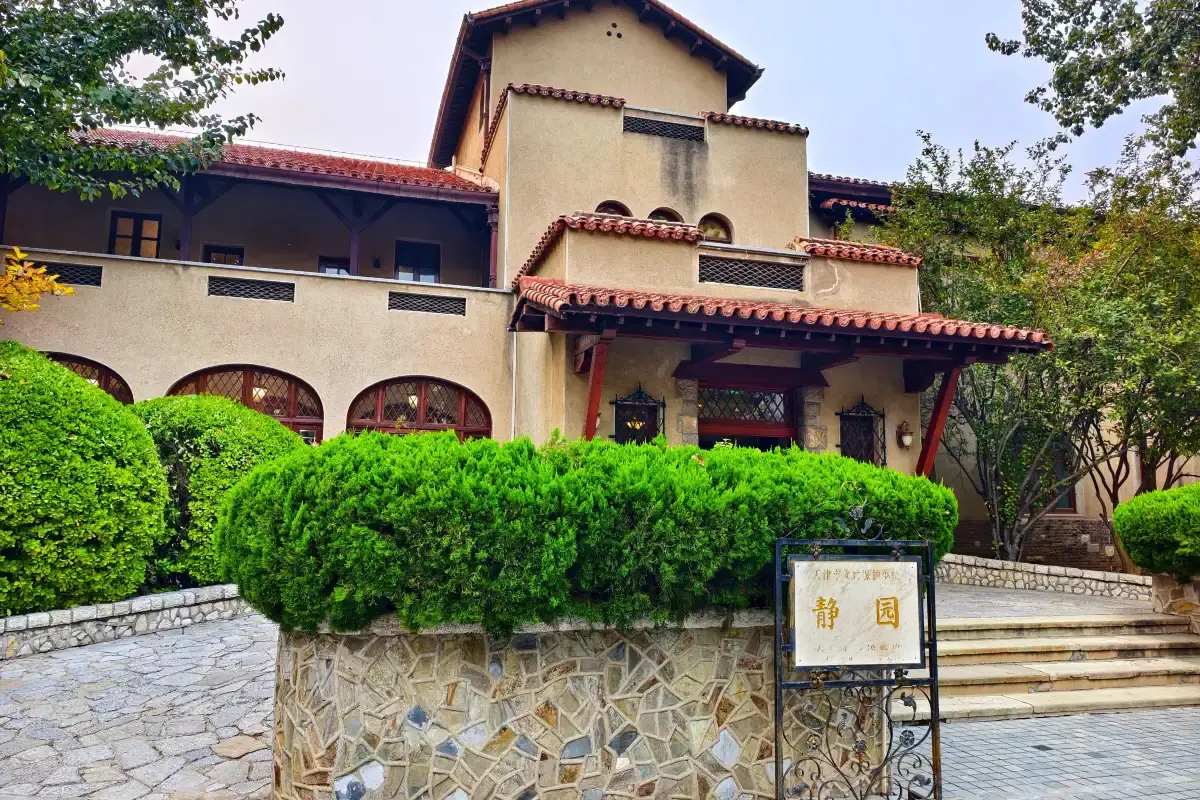
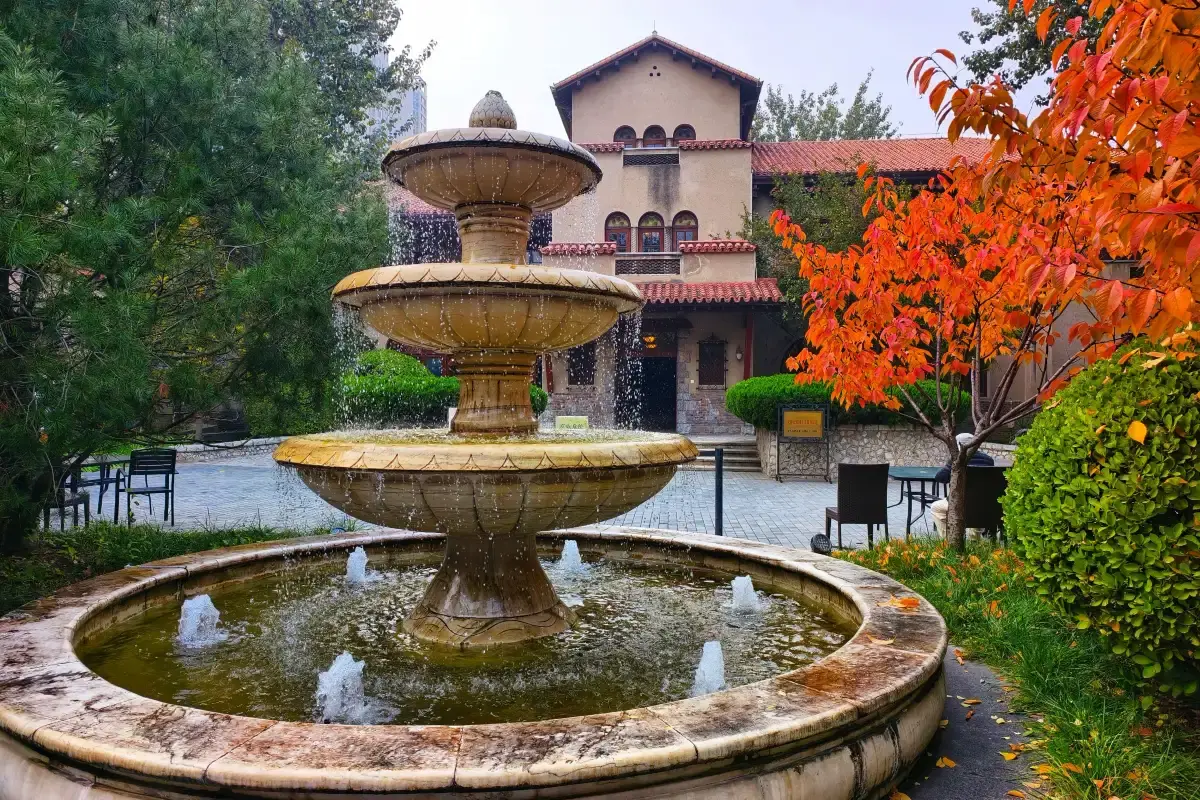
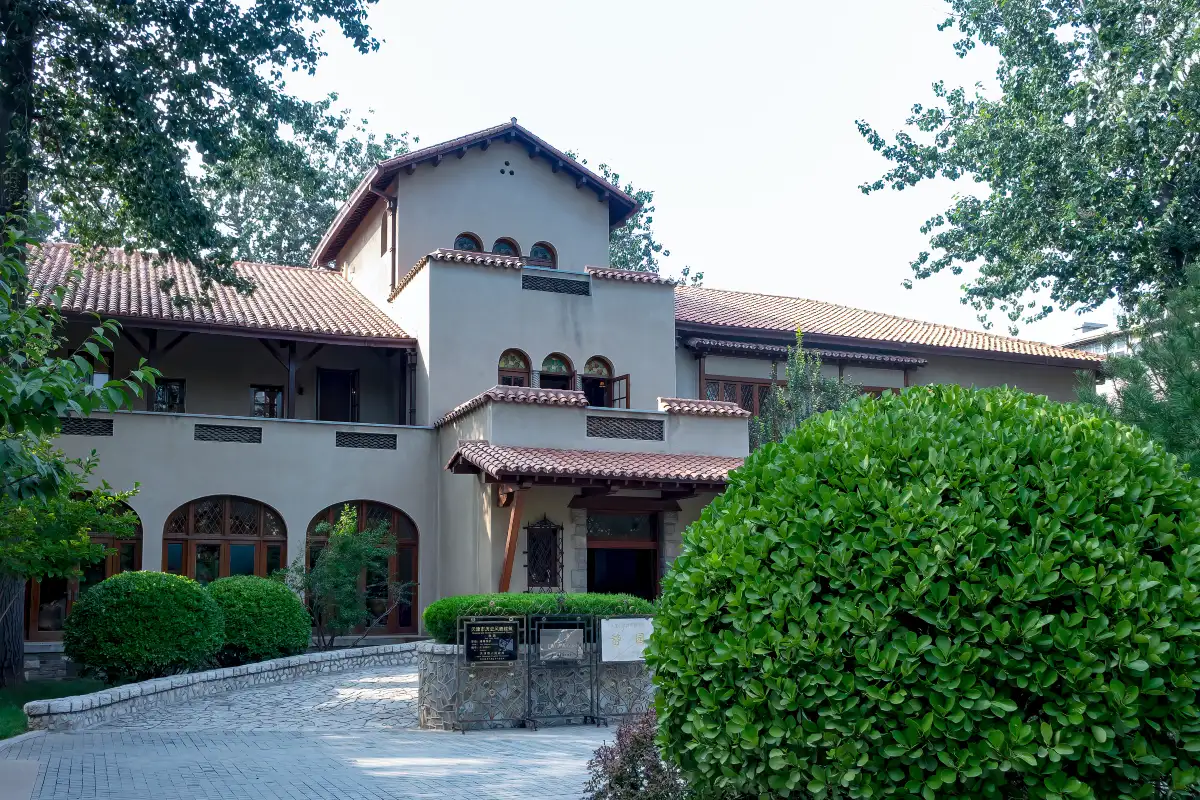
静园 · Anshan Road, Heping | 1 h · ¥20–30
Address: 70 Anshan Road, Heping (和平区鞍山道70号)
Getting there: Metro line 1 to Anshandao, exit B, 4 minutes on foot; 15 minutes by taxi from the station
Ticket: ¥20–30 · 09:00–17:00, closed Mondays
The garden villa where Puyi, the last emperor, lived from 1929 until he left for Manchuria in 1931. Small rooms, a rockery, a little theatre stage, and the odd feeling of a house furnished by someone waiting.
What to do: an hour, and read the wall texts — they carry the whole end of the dynasty.
Mistake: leaving it for the afternoon; it closes at 17:00.
Porcelain House
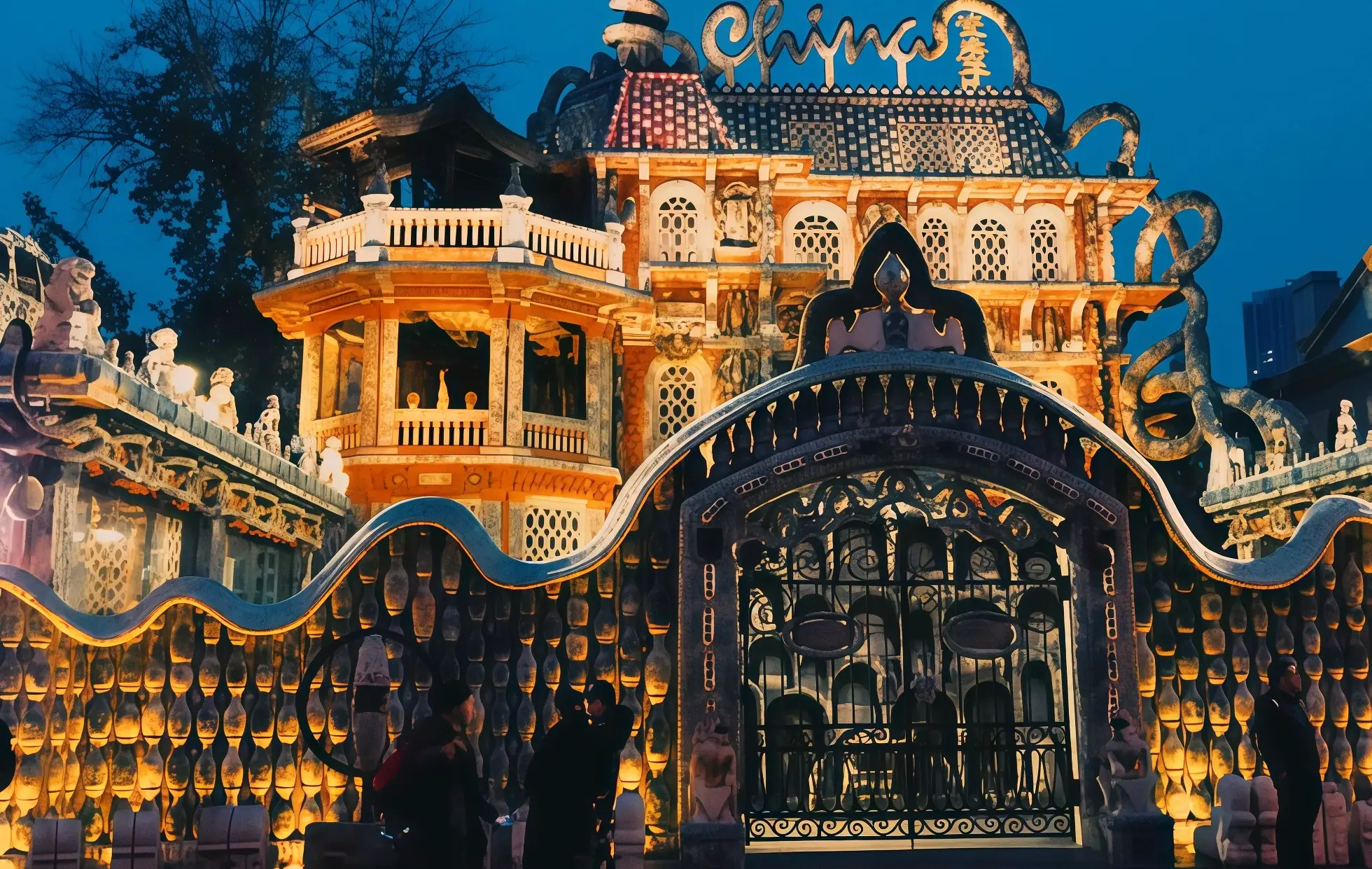
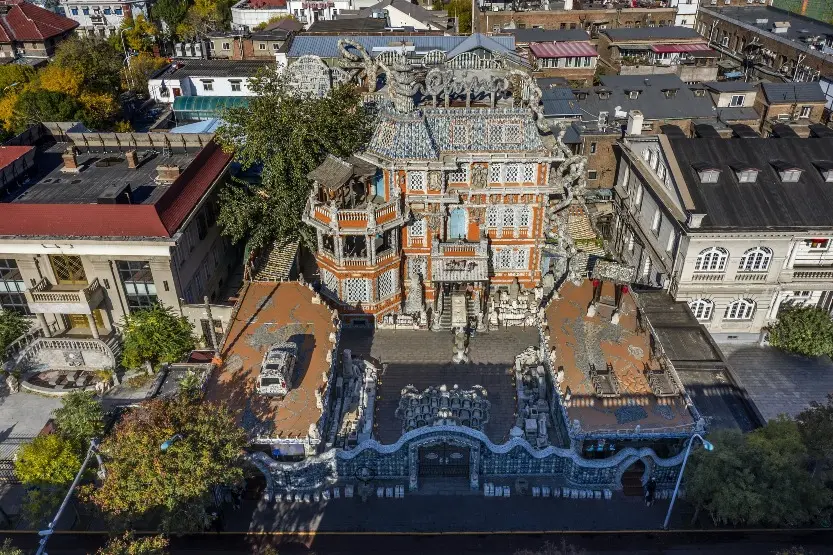
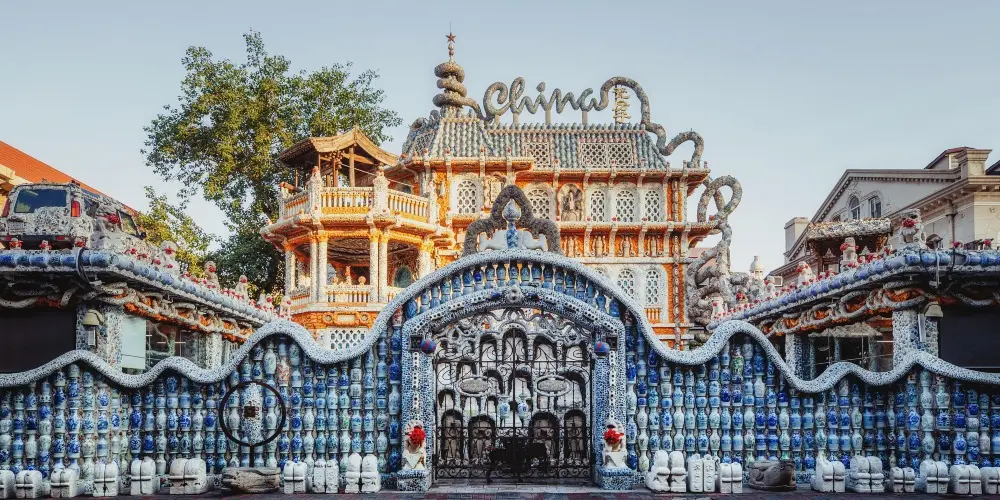
瓷房子 · Chifeng Road, Heping | 30–40 min · ¥50
Address: 72 Chifeng Road, Heping (和平区赤峰道72号)
Getting there: Metro line 3 to Heping Road, exit C, 5 minutes on foot; the queue is visible from the street
Ticket: ¥50 · 09:00–18:00 daily, last entry 17:30
A French villa covered in broken porcelain — some 4,000 whole vases and millions of shards, glued into dragons, letters and ceilings. Gaudy, cheerful, entirely one man's obsession.
What to do: photograph the outside, go in for twenty minutes, leave.
Mistake: arriving at noon; the queue peaks between eleven and three.
Italian Style Town
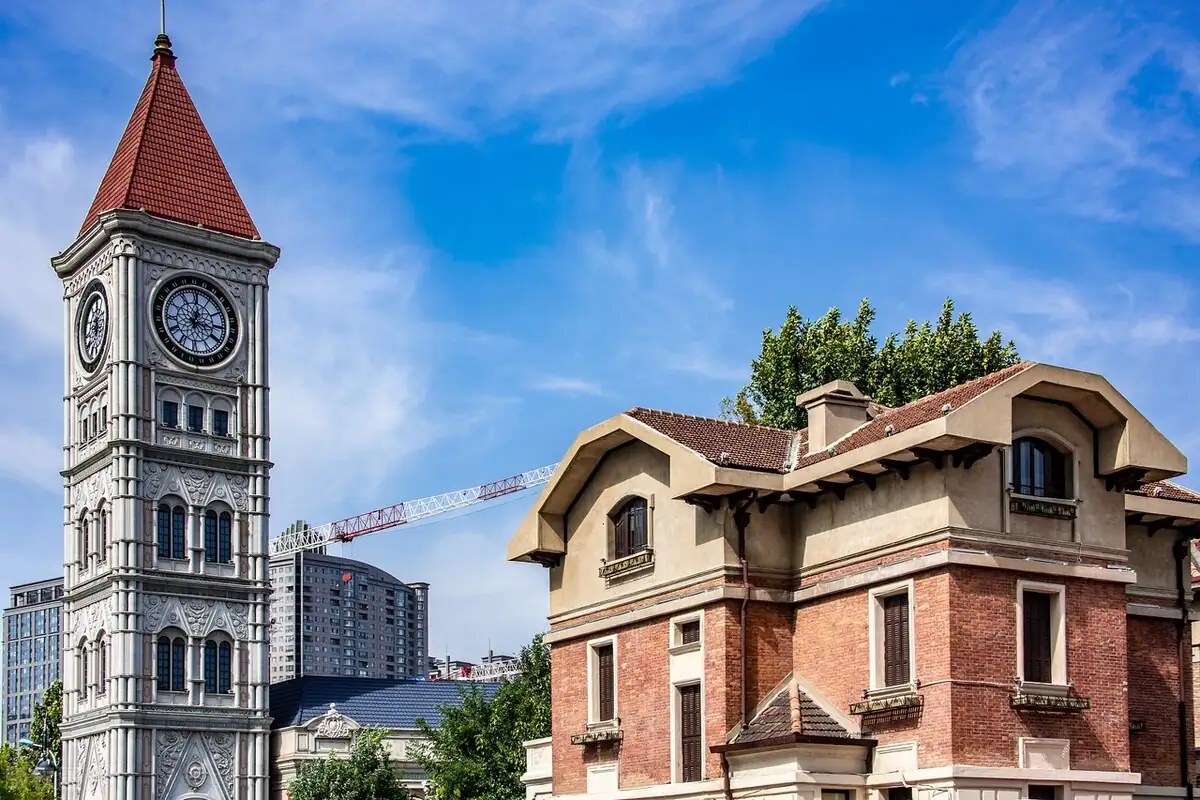
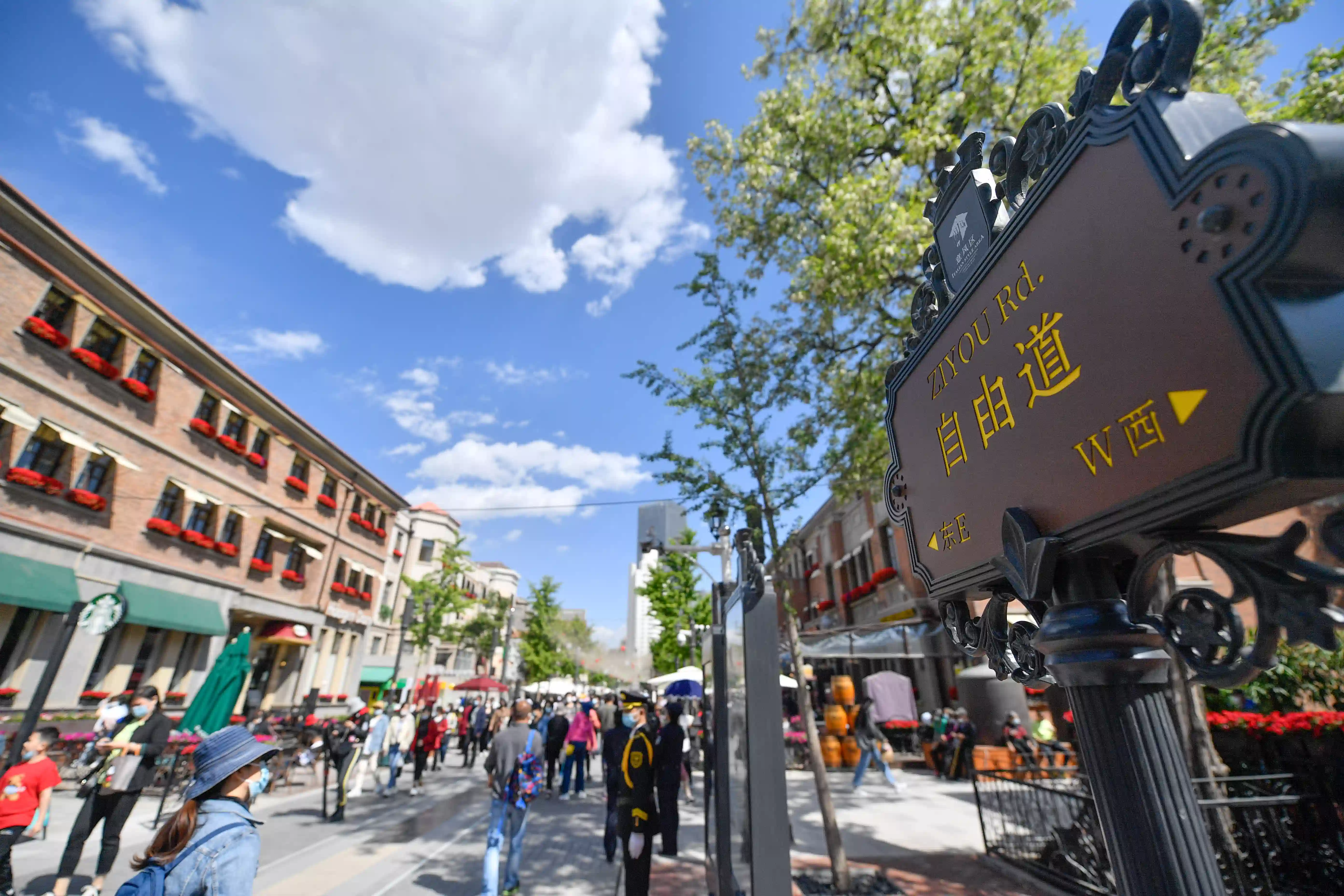
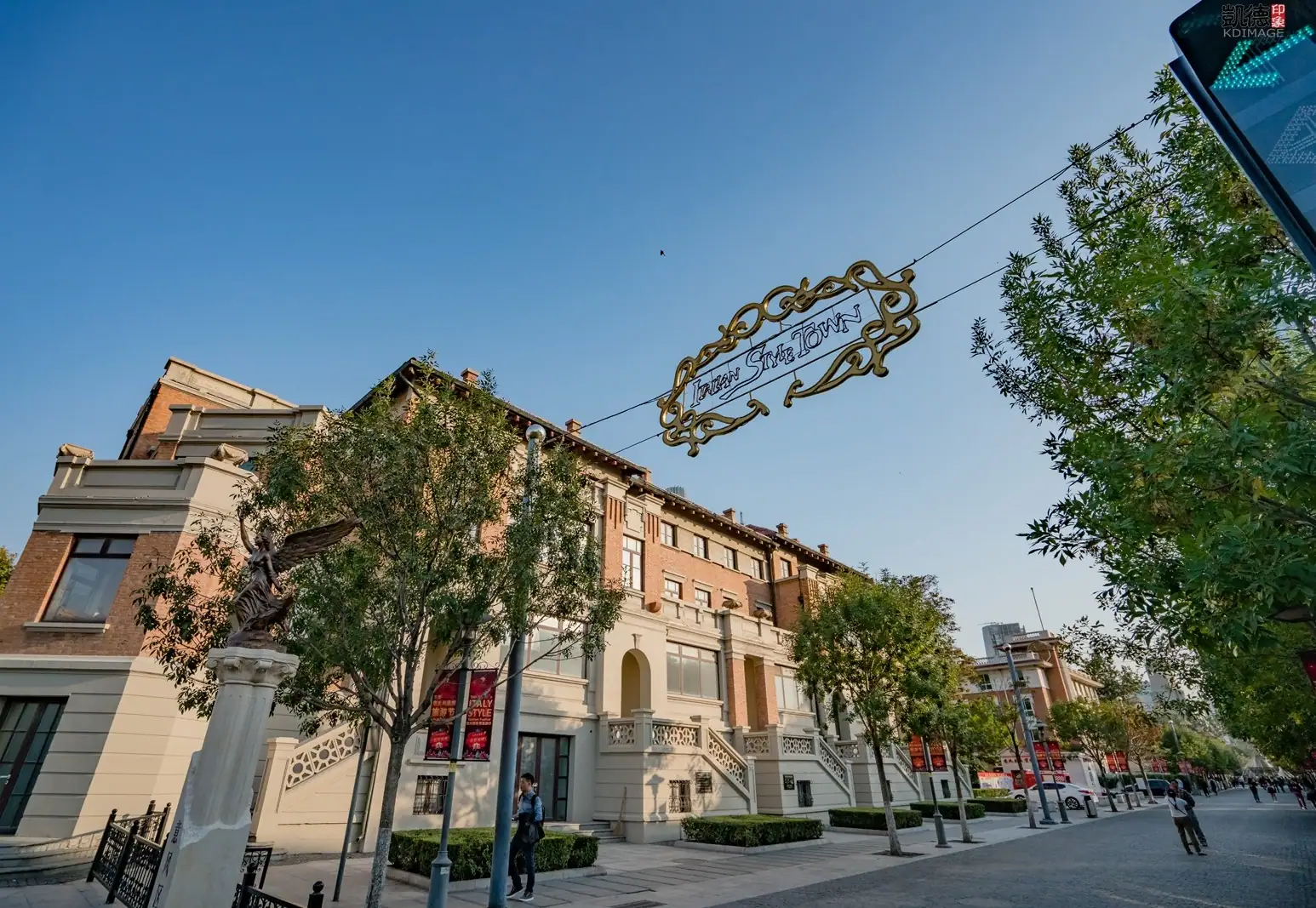
意式风情区 · Marco Polo Square, north bank | 1–2 h · free
Address: Marco Polo Square, Guangfu Road area, Hebei (河北区光复道一带)
Getting there: Metro line 2 to Jianguodao, exit A, 8 minutes south on foot; 15 minutes on foot from Tianjin Station along the river
Ticket: Free · piazza open all day, bars and restaurants 11:00–late
The old Italian concession, rebuilt as a dining quarter: a piazza, an arcade, a theatre, and the only place in the city where the evening starts at six. Crowded with photographers, still worth it at dusk.
What to do: arrive as the lights come on, eat here or two streets away, walk back to the station along the river.
Mistake: going at noon; it needs darkness.
Xikai Cathedral
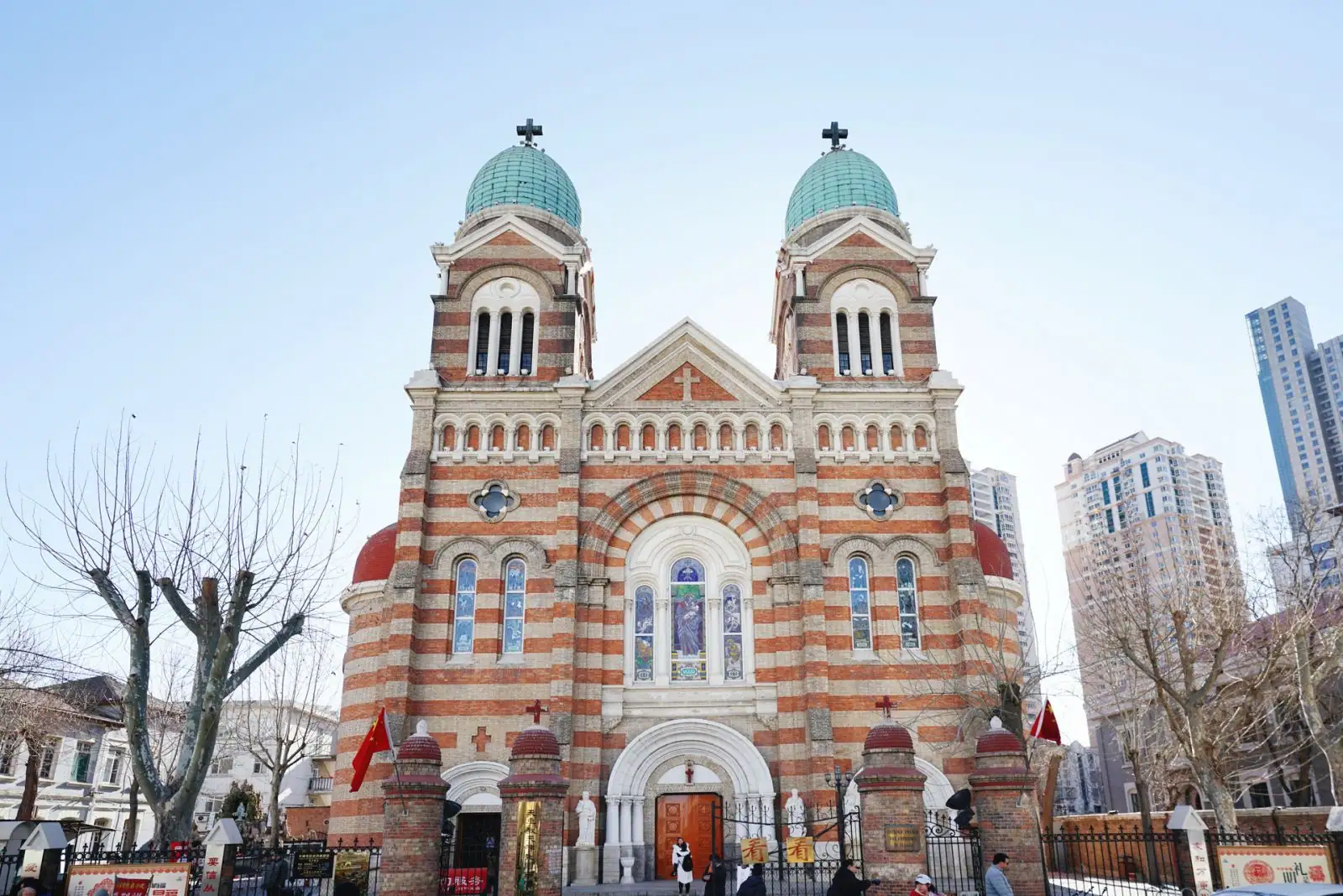
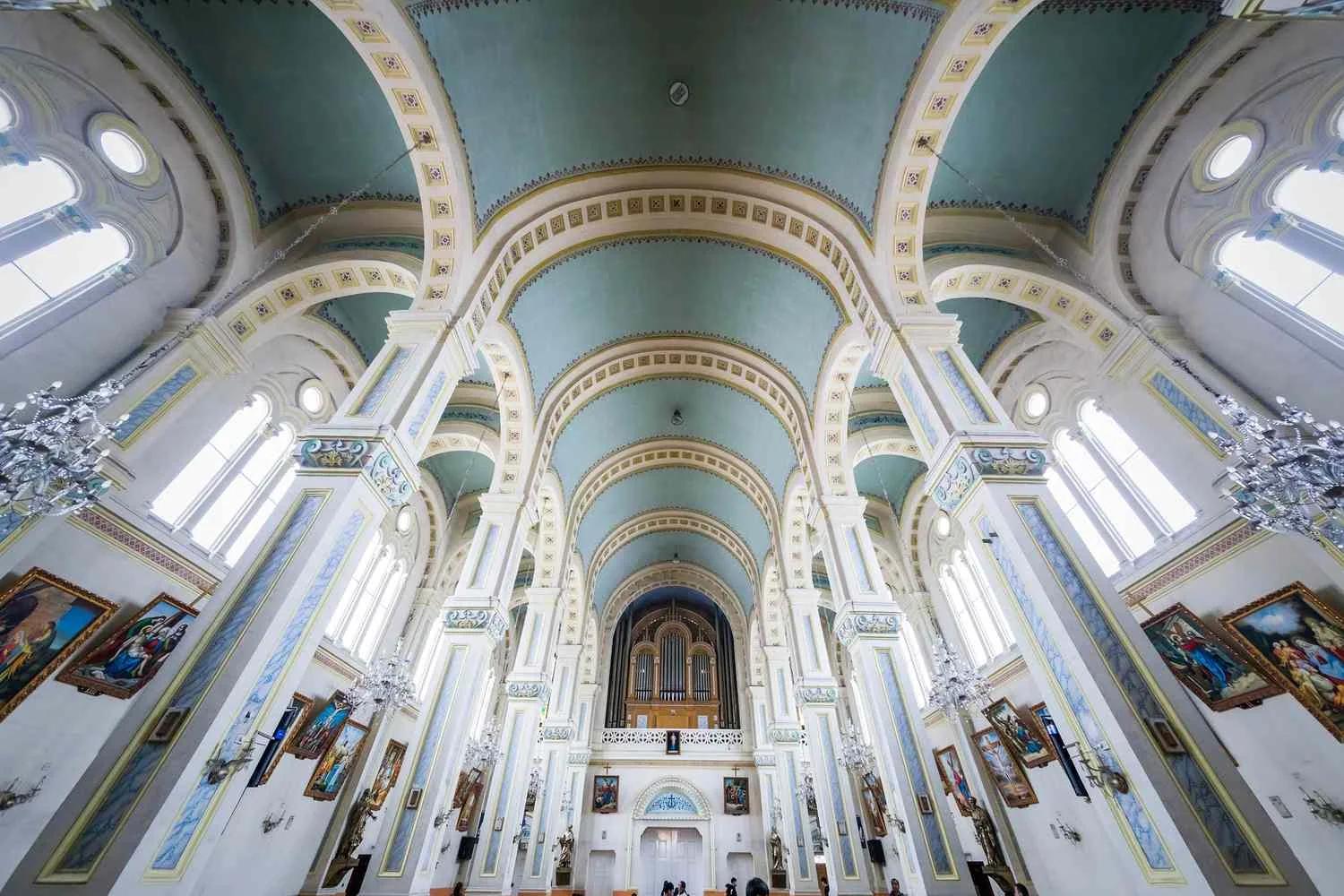
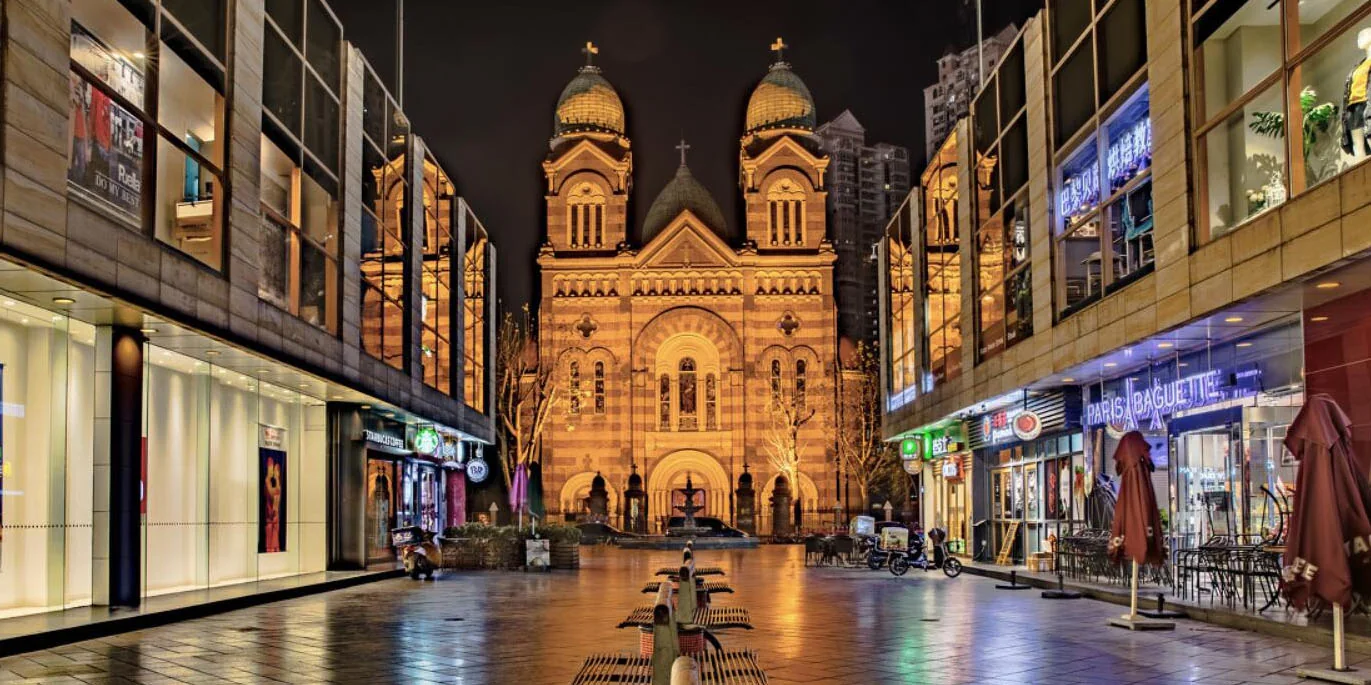
西开教堂 · Nanjing Road, Heping | 20 min · free
Address: Nanjing Road at Xining Road, Heping (和平区南京路西宁道口)
Getting there: Metro lines 1 and 3 to Yingkoudao, exit A, 3 minutes on foot — it faces the shopping street
Ticket: Free · 08:00–18:00; Mass on Sundays keeps the nave closed to sightseeing
Two brick towers from 1916 at the top of the shopping street, built by French Jesuits. Inside, a nave of a size that surprises people who think of Tianjin as a small city.
What to do: 08:30 for the empty square, or 17:00 when the street lights up.
Mistake: turning up during Sunday mass and photographing the congregation.
Beijiang Museum
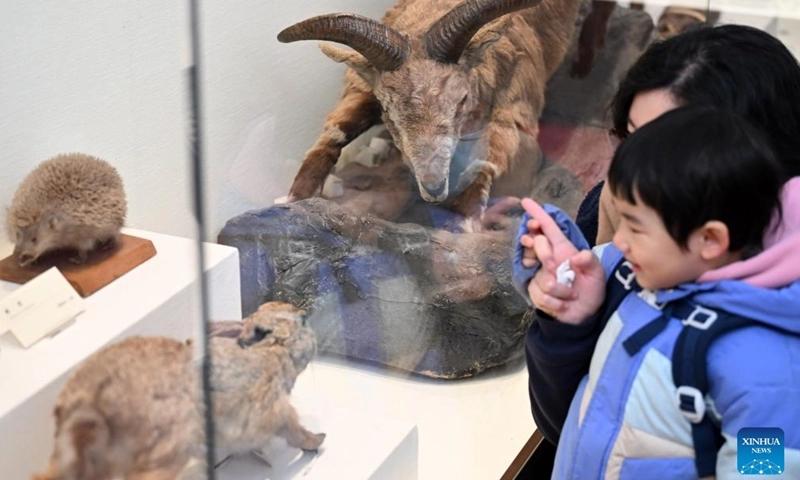
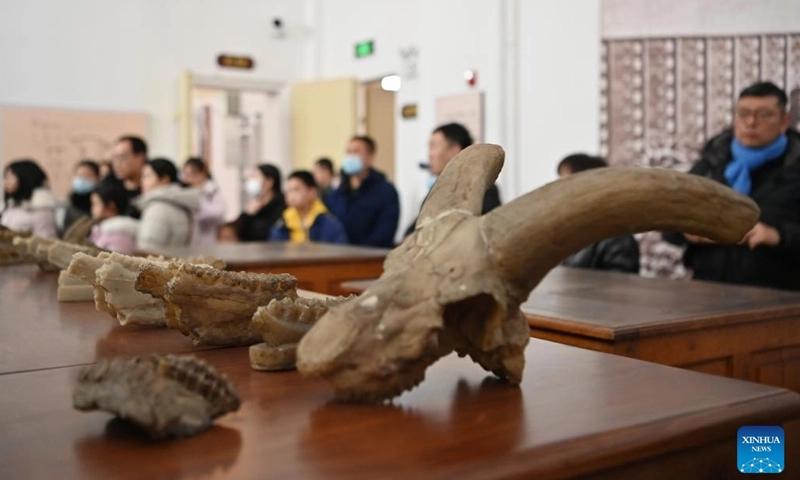
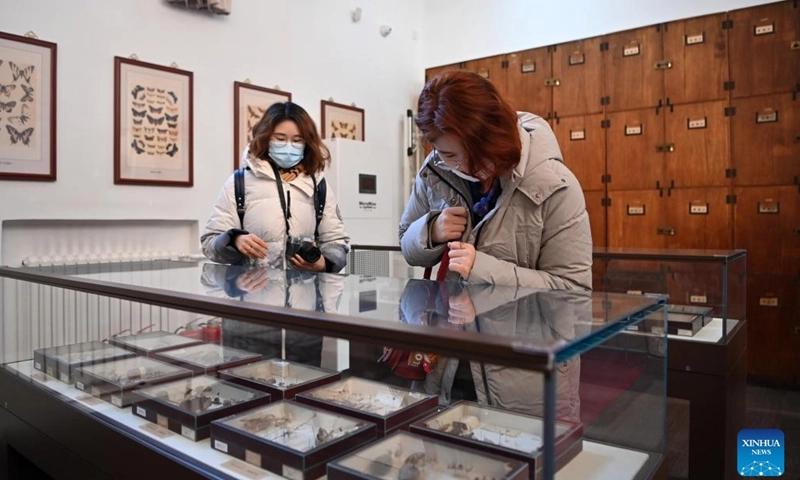
北疆博物院 · 117 Machang Road | 1 h · ¥20
Address: 117 Machang Road, inside the Tianjin Foreign Studies University, Hexi (河西区马场道117号)
Getting there: Metro 1 to Xiaobailou then 10 minutes by taxi; the gate is on Machang Road, ask for “Beijiang Bowuyuan”
Ticket: ¥20 · 09:00–16:30, closed Mondays · reserve on the museum's WeChat account
China's first modern natural-history museum, founded in 1922 by a French Jesuit, reopened with its original glass cases, handwritten labels and specimens still inside them. Small, quiet, unlike anything else in the city.
What to do: book a slot the day before, then pair it with the villas on Machang Road.
Mistake: arriving without a reservation — capacity is a few dozen people per hour.
Zhang Xueliang's Residence
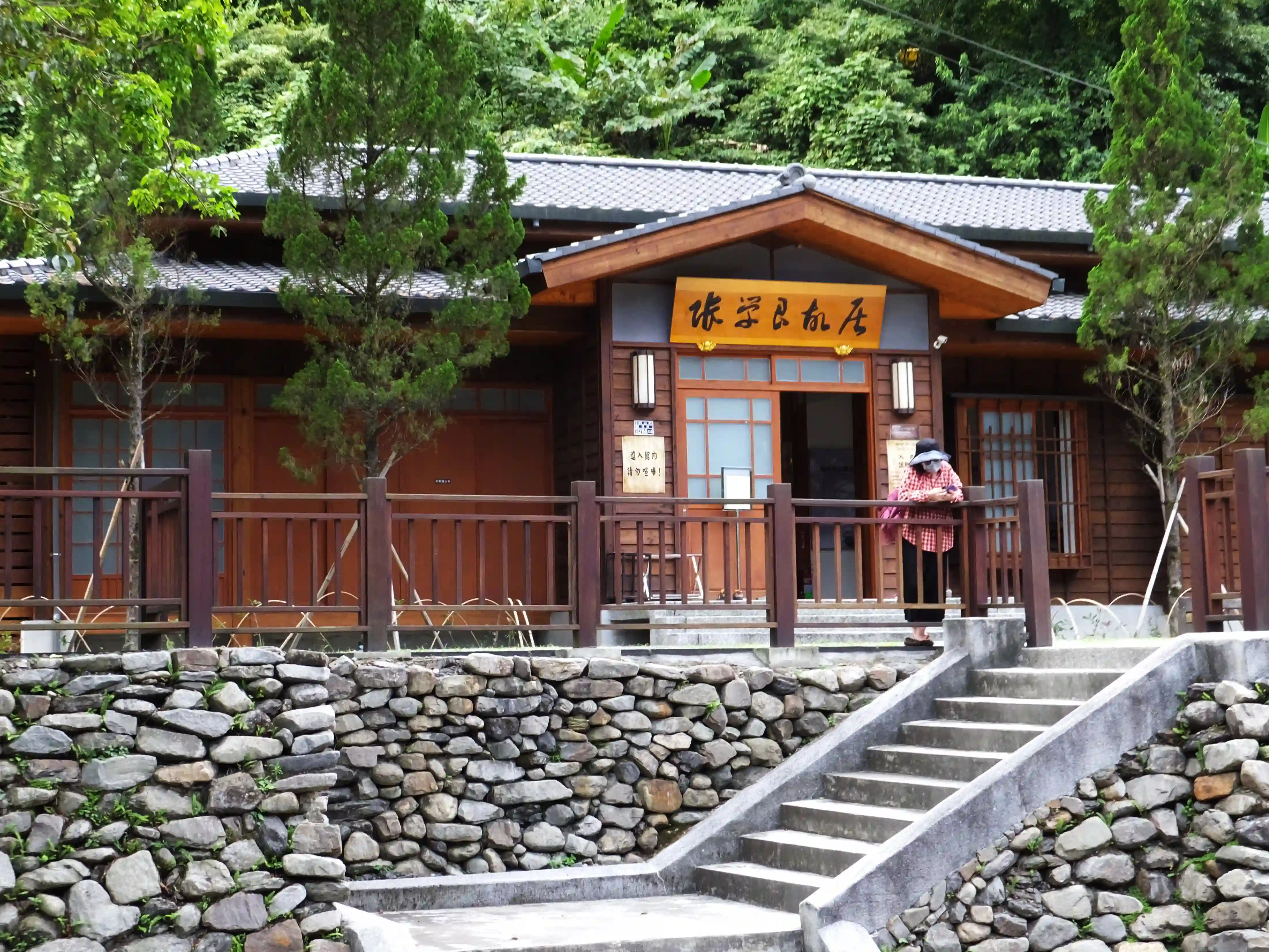
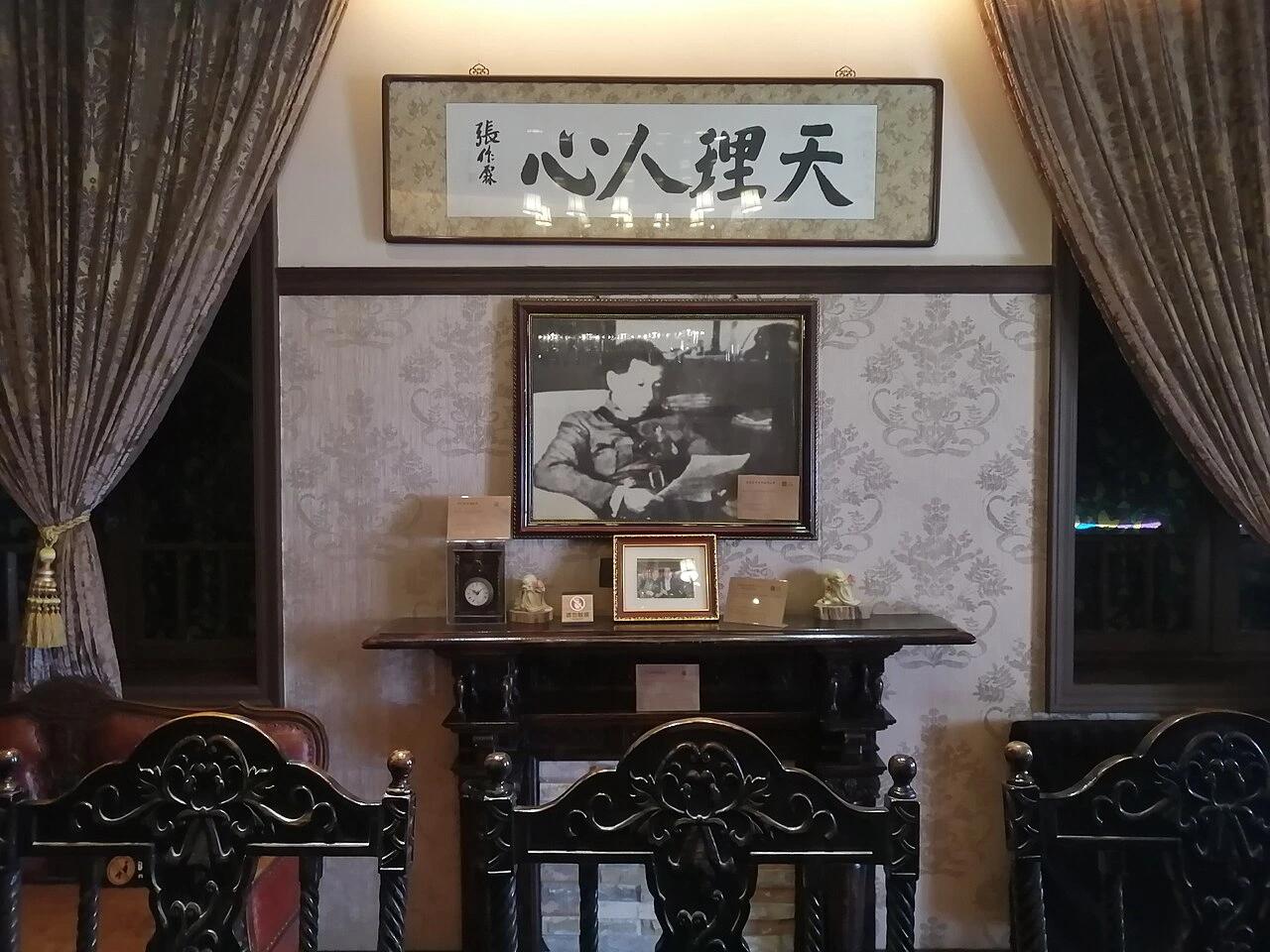
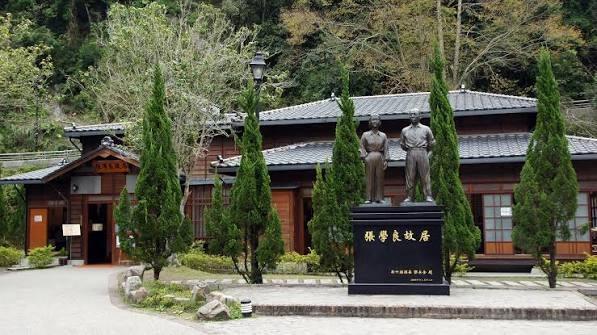
张学良故居 · Chifeng Road, Heping | 40 min · ¥20–40
Address: 78 Chifeng Road, Heping (和平区赤峰道78号)
Getting there: Metro 3 to Heping Road, exit C, 6 minutes on foot; 5 minutes from the Porcelain House
Ticket: ¥20–40 · 09:00–17:30 daily
The general's town house: three courtyards, a staircase that behaves like a courtroom, jazz-age furniture and a lot of photographs of a man who changed China's fate twice.
What to do: combine it with the Porcelain House next door, forty minutes each.
Mistake: expecting a museum of politics — it is a house with a story.
Group two · The coast — Binhai, 50 minutes east on metro line 9
Binhai Library
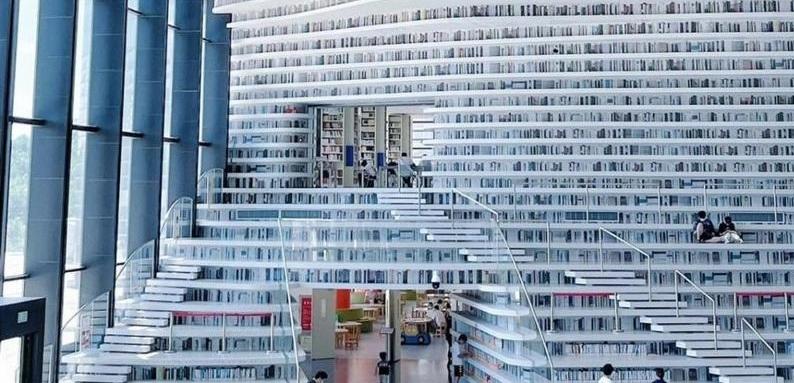
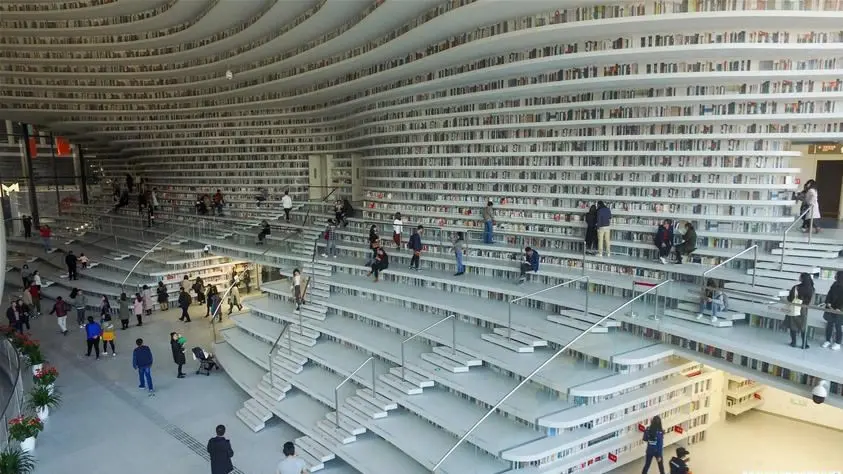
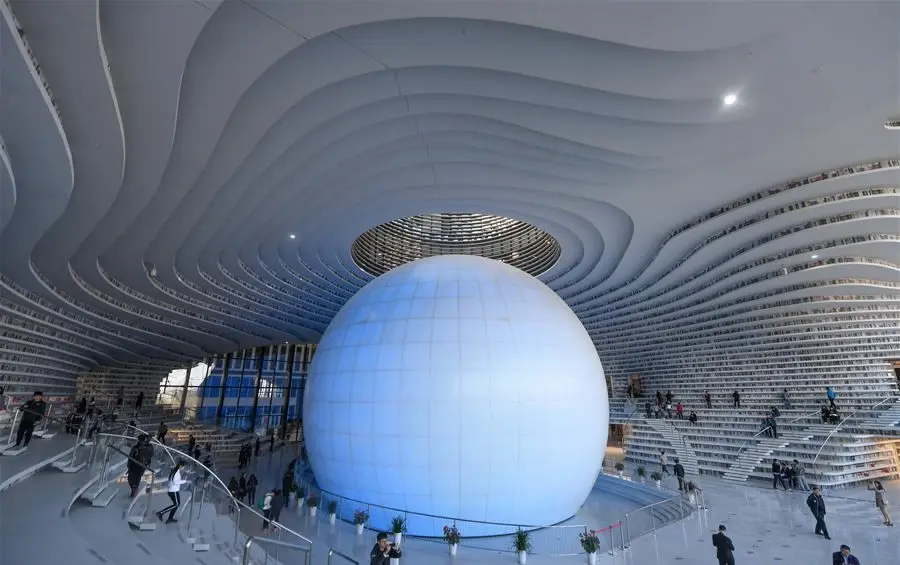
滨海图书馆 · Binhai Cultural Centre | 1 h · free
Address: Binhai Cultural Centre, 347 Xusheng Road, Binhai (滨海新区旭升路347号)
Getting there: Metro line 9 to Shimin Guangchang, then 15 minutes on foot or one bus stop; 50 minutes total from the centre
Ticket: Free · 10:00–21:00, closed Monday morning · bring your passport for the counter
The white "eye" of stacked books — a wall of shelves that turns into seating and a ceiling, the most photographed interior in northern China. The books on the upper tiers are printed images; the real collection is below.
What to do: come at 10:00 opening, shoot the eye from the top of the ramp, then spend twenty minutes in the actual reading rooms.
Mistake: arriving at 14:00 on a weekend, when the queue runs around the building.
National Maritime Museum
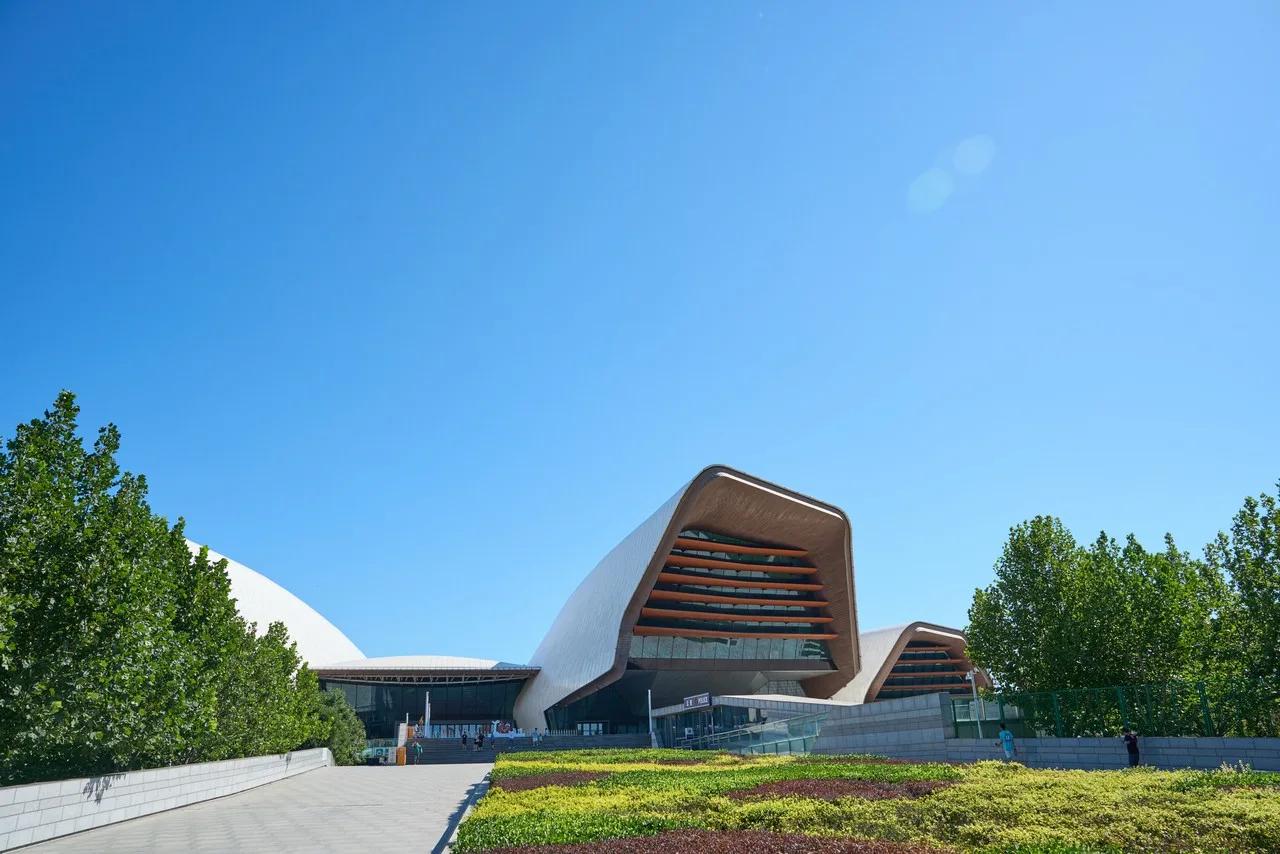
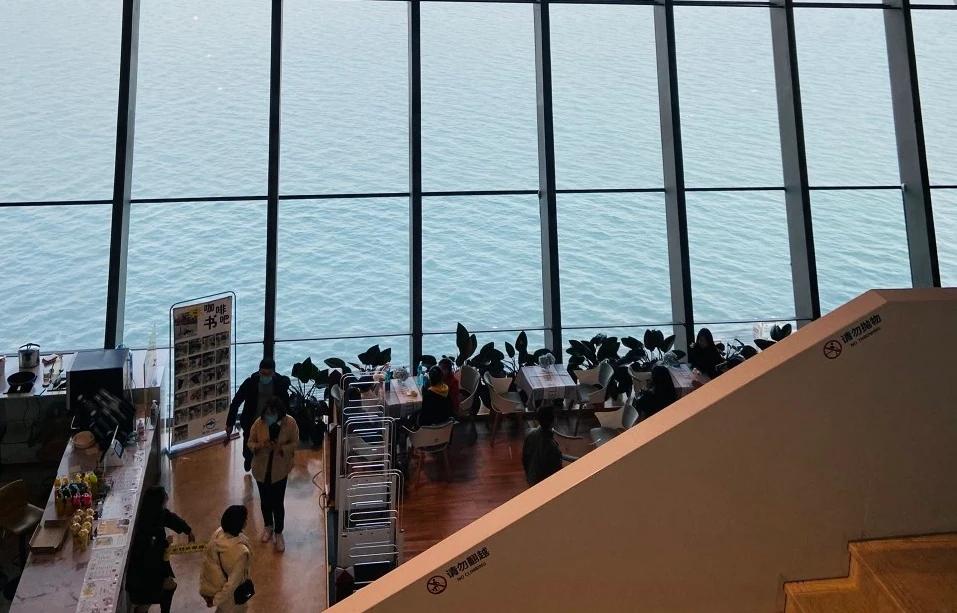
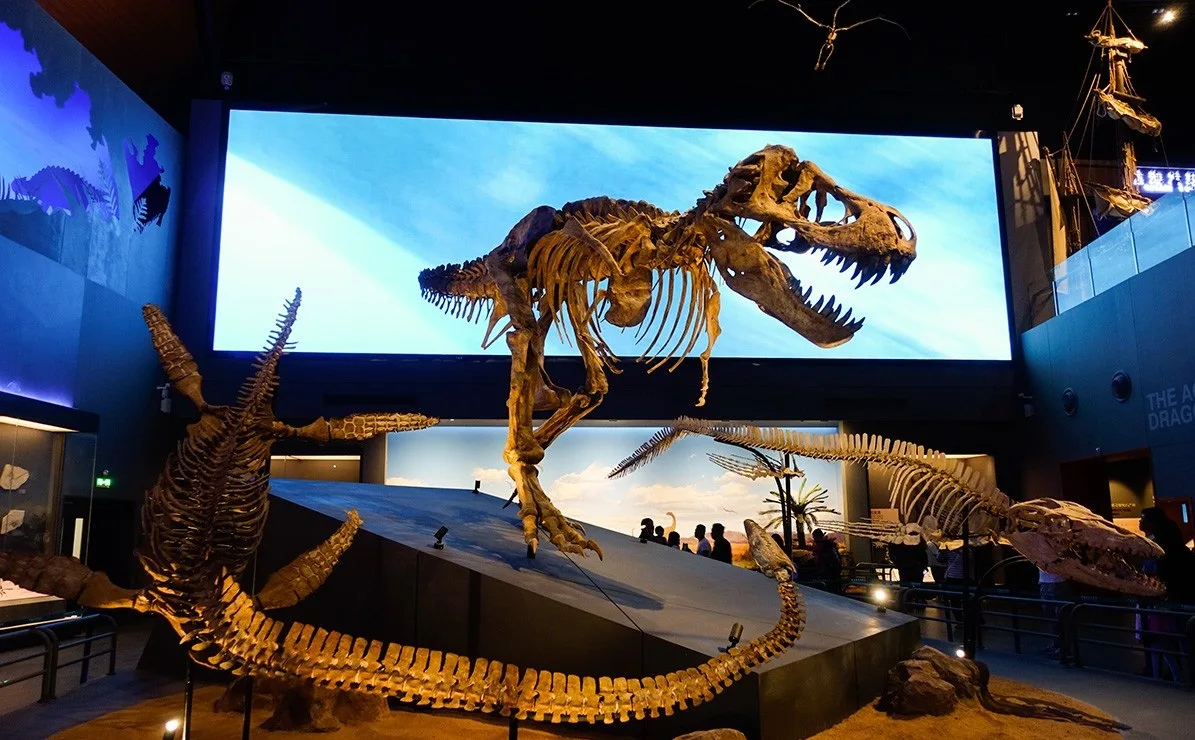
国家海洋博物馆 · Sino-Singapore Eco-City | 2–3 h · free, book ahead
Address: Maritime Museum, Sino-Singapore Eco-City, Binhai (滨海新区中新生态城)
Getting there: Metro 9 to Donghai Road then 15 minutes by taxi, or direct bus from Binhai station; 70 minutes from the centre
Ticket: Free · reserve 7 days ahead on the official account · 09:00–16:30, closed Mondays
Four floors on China's relationship with the sea, from Song-era junks to the modern navy, with a full-size ship model hall and a children's floor that keeps families for half a day.
What to do: reserve before you leave home; go straight to the top floor and work down. Mistake: treating it as a walk-in — without a slot you will be turned away at the gate.
Group three · The west — Xiqing canal country, 40 minutes by road
Yangliuqing Old Town
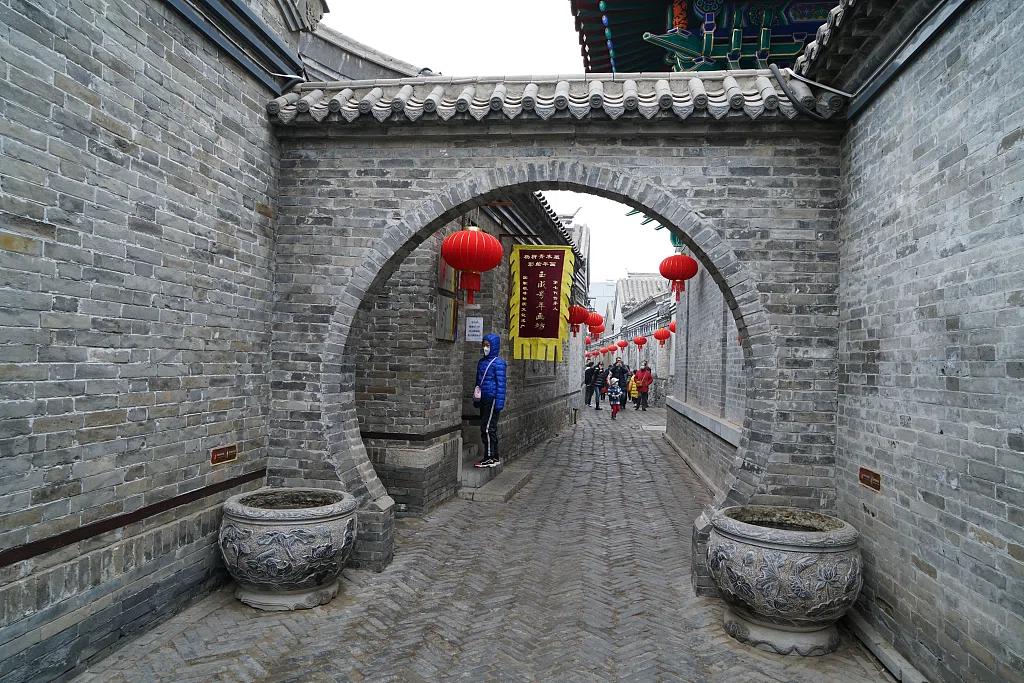
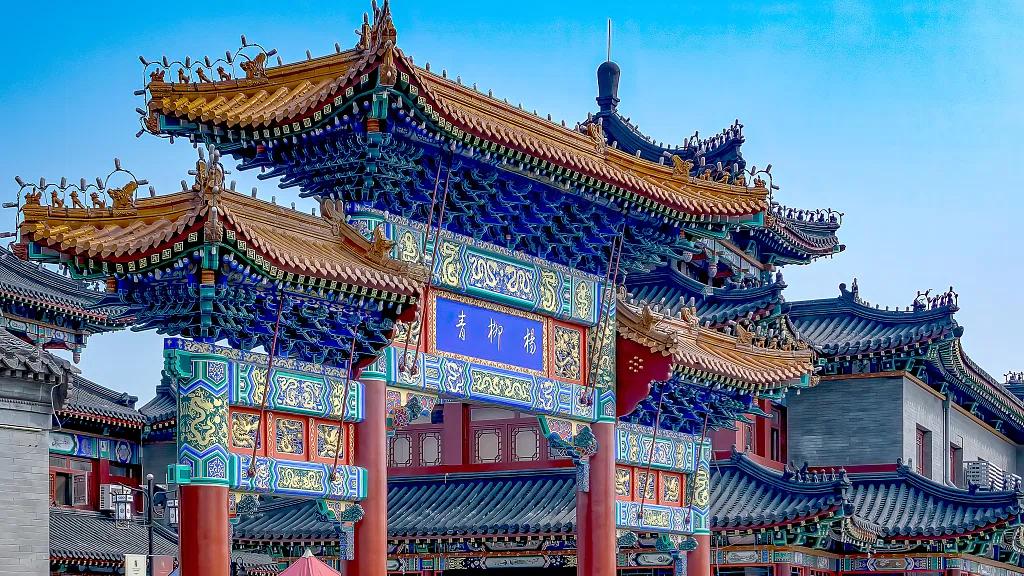
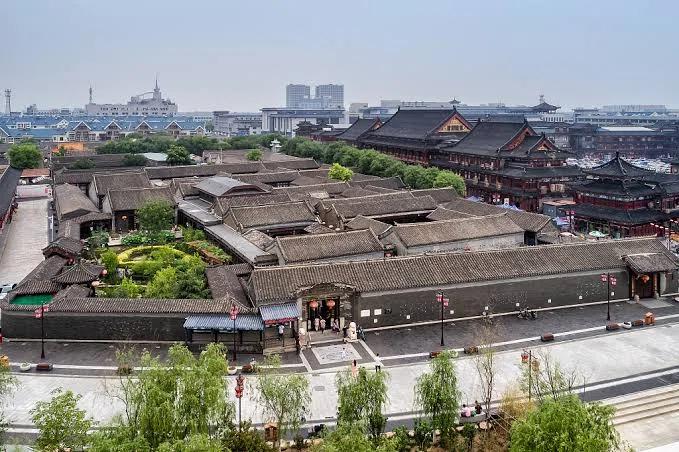
杨柳青古镇 · Xiqing | Half day · free
Address: Yangliuqing town, Xiqing (西青区杨柳青镇估衣街一带)
Getting there: Bus 175 from Tianjin West Station (50 min), or 40 minutes by taxi; the old street starts at the canal bridge
Ticket: Old town free · print workshops ¥30–60 for a hands-on sheet · 08:30–17:30
The town that made China's New Year prints: woodblocks, mineral pigments, and a stone-flagged street that still sells them. Half the visitors come for the prints, half for the canal.
What to do: buy a print at a workshop that prints in front of you, then walk the canal path south. Mistake: coming after 16:00 — the workshops shut and the street empties.
Shi Family Mansion
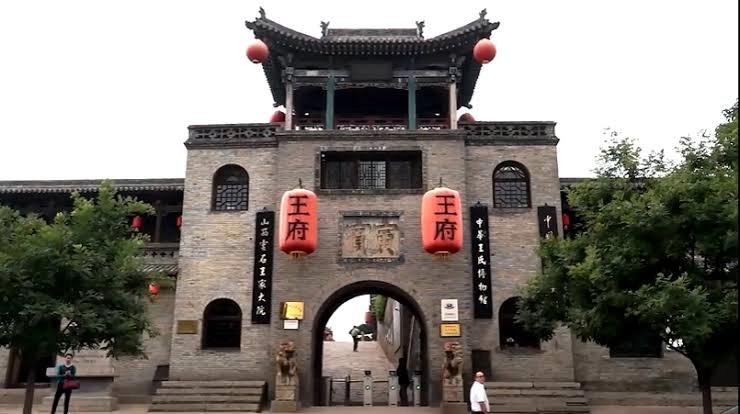
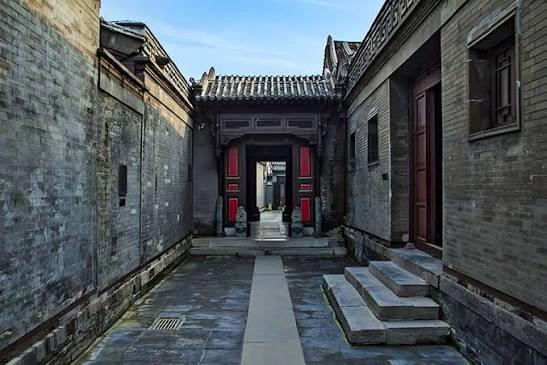
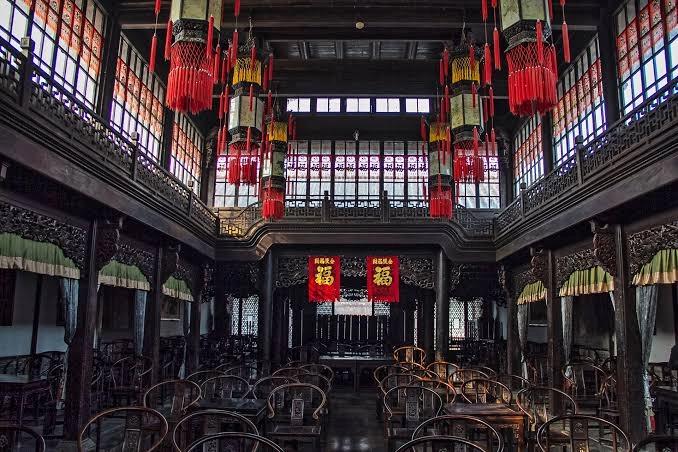
石家大院 · Yangliuqing | 1 h · ¥27
Address: Guyī Street, Yangliuqing town, Xiqing (西青区杨柳青镇估衣街47号)
Getting there: Same stop as the old town; the gate is at the north end of the street, 5 minutes on foot
Ticket: ¥27 · 08:30–17:00, last entry 16:30
The best-preserved merchant courtyard house in the region: twelve halls on a single axis, a private opera stage, and corridors sized to the number of servants a salt trader could afford in 1875.
What to do: follow the axis from the gate to the stage, then look back from the rear court — the scale reads best in reverse.
Mistake: skipping it because the old town street is free; this is the actual house.
Grand Canal at Yangliuqing
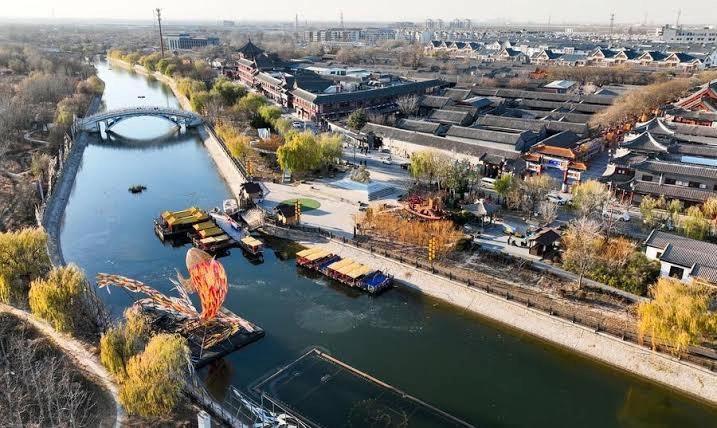
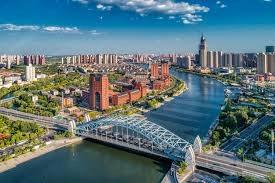
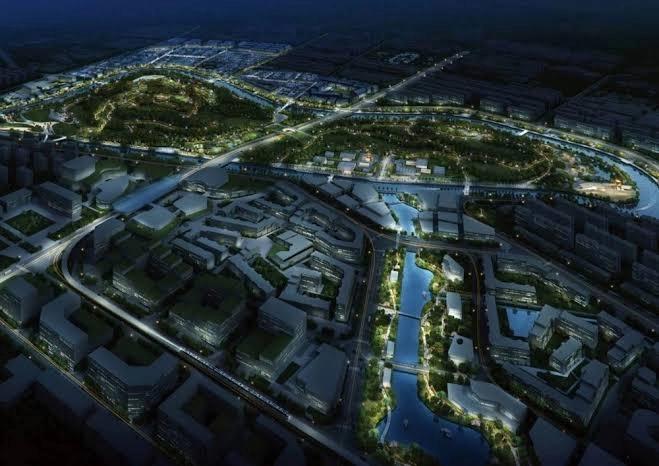
大运河 · Yangliuqing waterfront | 1 h · boat ¥40–60
Address: Canal wharf, south end of Yangliuqing old town (杨柳青镇南运河码头)
Getting there: Walk 10 minutes south from the old town gate; boats leave when full, every 20–30 minutes
Ticket: Boat ¥40–60 · 09:00–17:00, weather permitting · towpath free
The surviving reach of the canal that fed Beijing for six centuries: willows, a stone revetment, and a waterway wide enough to explain why this town got rich.
What to do: take the boat one way and walk the towpath back, forty minutes each.
Mistake: expecting the Grand Canal of Suzhou — this is engineering history, not a postcard.
These two are far apart from the city and from each other, so they work best as an organised Huangyaguan Great Wall and Dule Temple tour from Tianjin rather than by public transport.
Group four · The north — Jizhou, two hours by road — a full day out
Huangyaguan Great Wall
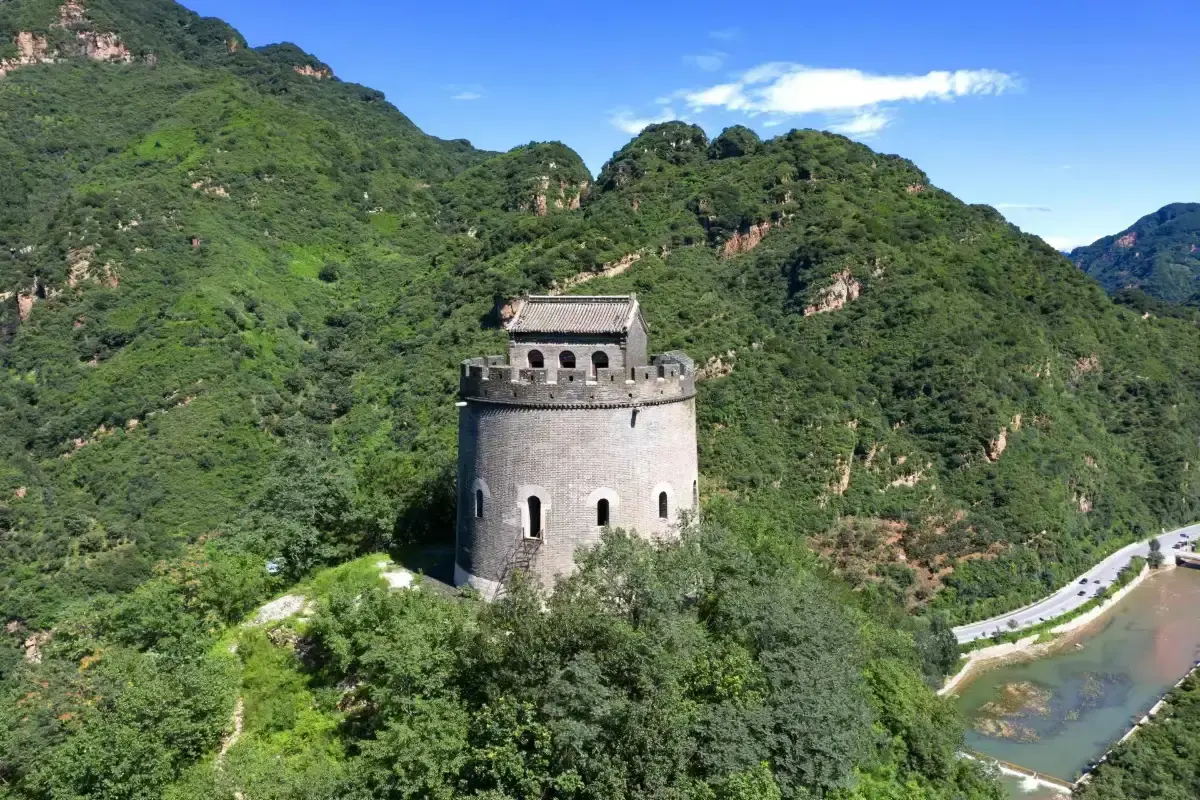


黄崖关长城 · Jizhou, north of the city | Full day · ¥60–80
Address: Huangyaguan village, Xiaying town, Jizhou district (蓟州区下营镇黄崖关村)
Getting there: High-speed rail Tianjin–Jizhou (about 1 h, several per day) then 40 minutes by taxi; or the direct tourist coach from the north square of Tianjin Station, 07:30
Ticket: ¥60–80 · 08:00–17:00 · cable car ¥60 extra · allow 3–4 h on the wall
Ming wall on a ridge, restored but steep, with 3,000-odd steps from the gate to the high tower and almost no crowd on a weekday. The brickwork is the point: drainage channels, watch towers at intervals you can count.
What to do: walk up the east side first and come down the west, so the sun is behind you; carry water, there is one shop at the top of the cable car.
Mistake: booking the 10:00 train and arriving at midday in summer — the ridge has no shade.
Dule Temple
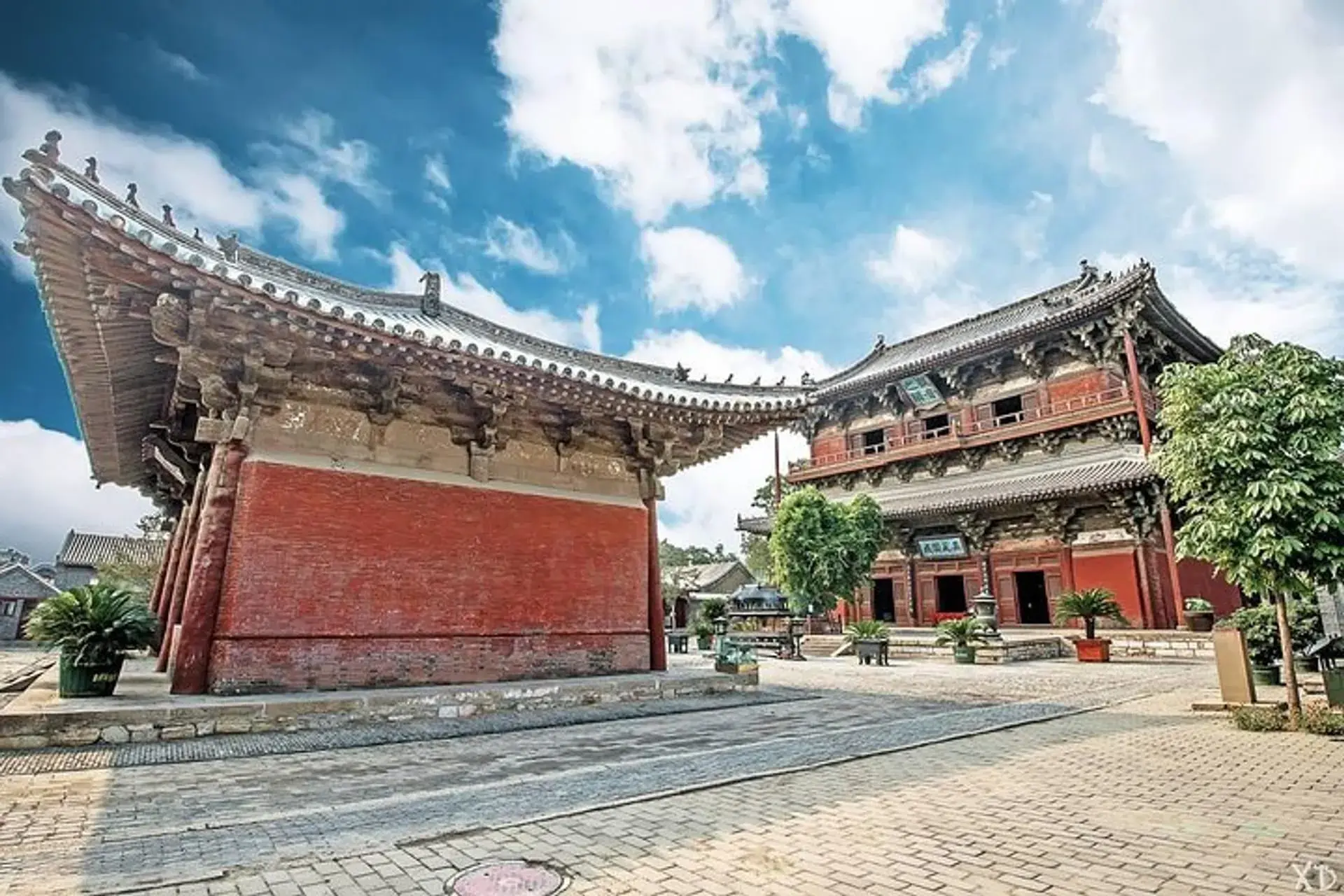
独乐寺 · Jizhou town | 1 h · ¥40
Address: 41 Wuding Street, Jizhou town (蓟州区武定街41号)
Getting there: Rail to Jizhou then 15 minutes by taxi into the old town; combine with Huangyaguan on the way back
Ticket: ¥40 · 08:00–17:00 · 30 minutes if you are quick, an hour if you read
A 984 Liao dynasty timber hall with a 16-metre Guanyin inside — the oldest wooden building in the region and one of the oldest standing structures in China. No nails, no reconstruction, brackets still doing their job.
What to do: stand under the eaves first, then go in; the scale only lands once you have seen the brackets.
Mistake: skipping it because the wall took the whole day — it is 40 minutes from the wall gate and closes at 17:00.
Group five · After dark — Two hours, no ticket queue, the city at its best
Haihe cruise
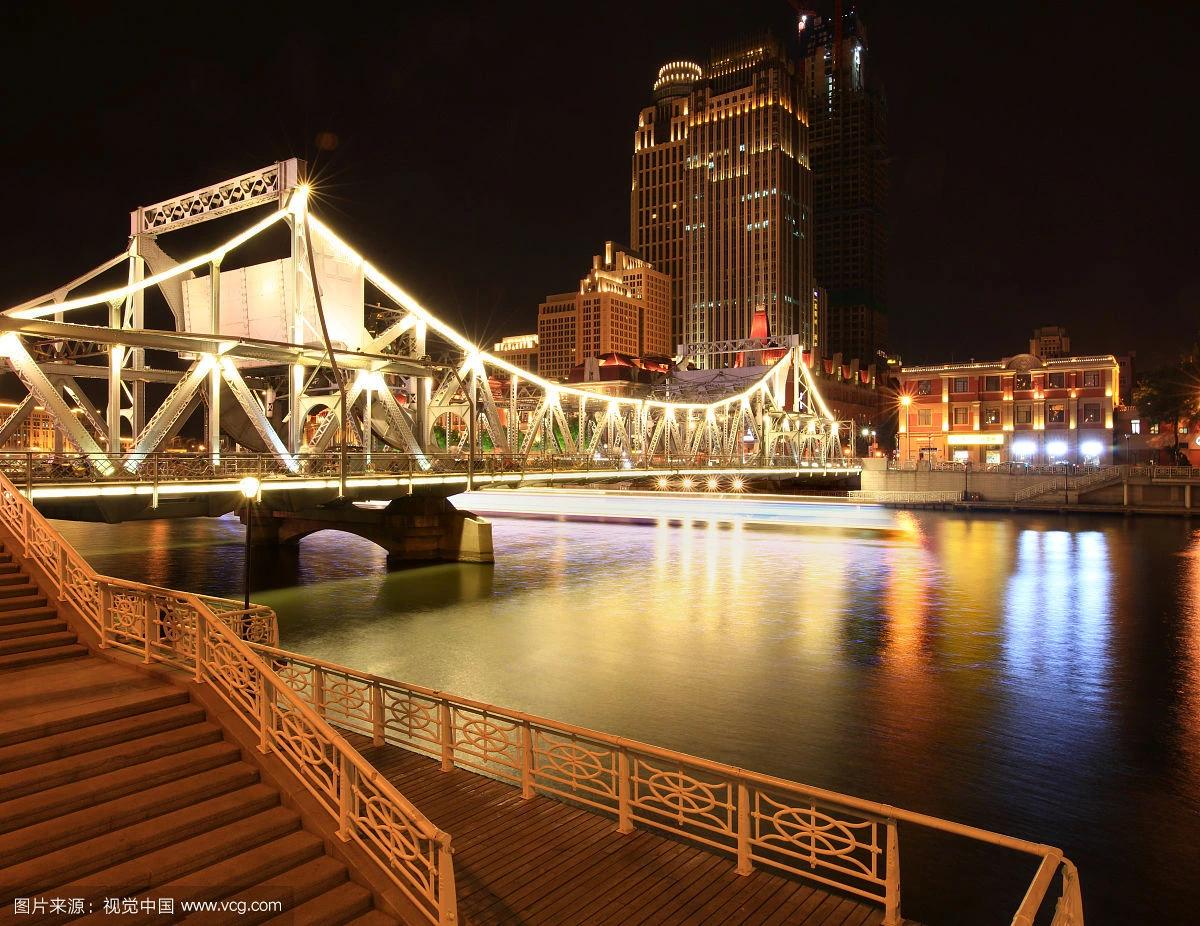
海河游船 · Tianjin Station and Ancient Culture Street docks | 1 h · ¥80–100
Address: Two docks: Tianjin Station wharf and Ancient Culture Street wharf (天津站码头 / 古文化街码头)
Getting there: Both docks are 5 minutes on foot from their namesake; buy at the booth or on the official account an hour ahead
Ticket: ¥80 daytime, ¥100 after 19:00 · 50–60 min round trip · last boat around 21:00
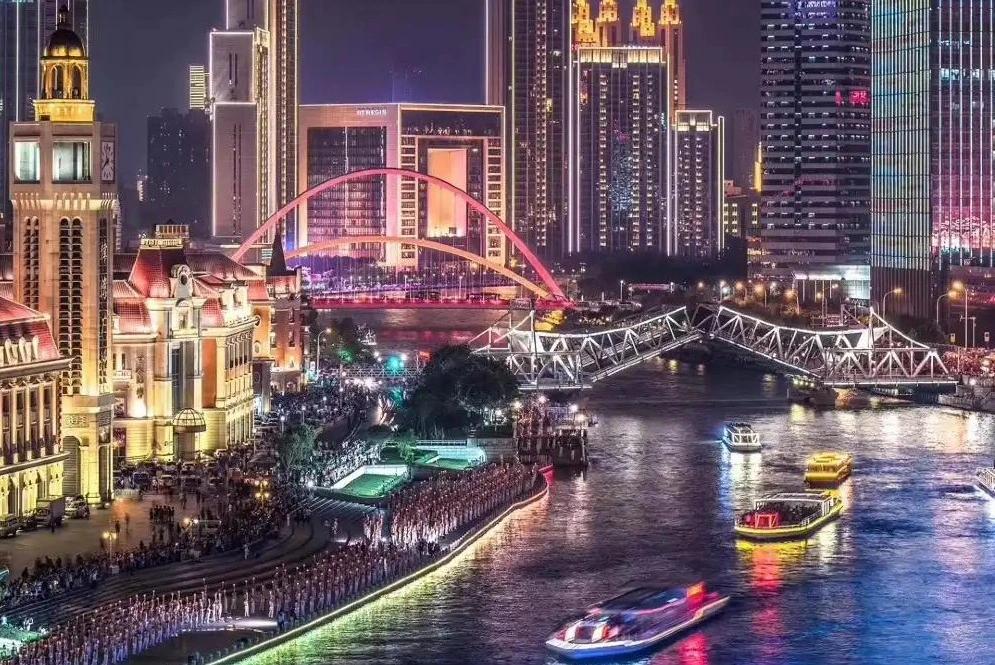
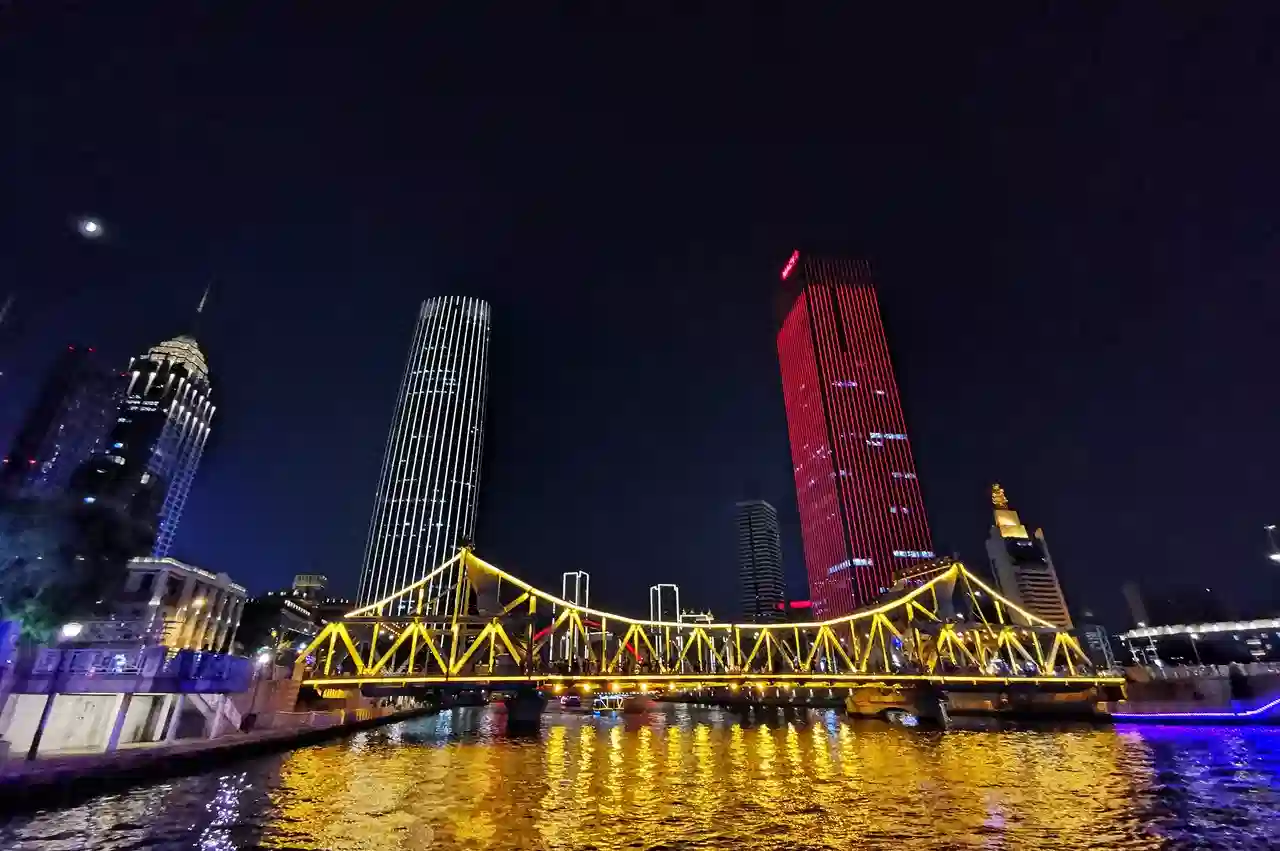
Nine kilometres of river through the middle of the city, under the iron bridges and the illuminated banks. The commentary is in Chinese; the view does not need translating.
What to do: take the 19:30 boat, sit on the open upper deck, and get off at the far dock to walk back over the bridges.
Mistake: booking the daytime cruise — half the effect is the lighting.
Crosstalk at a teahouse
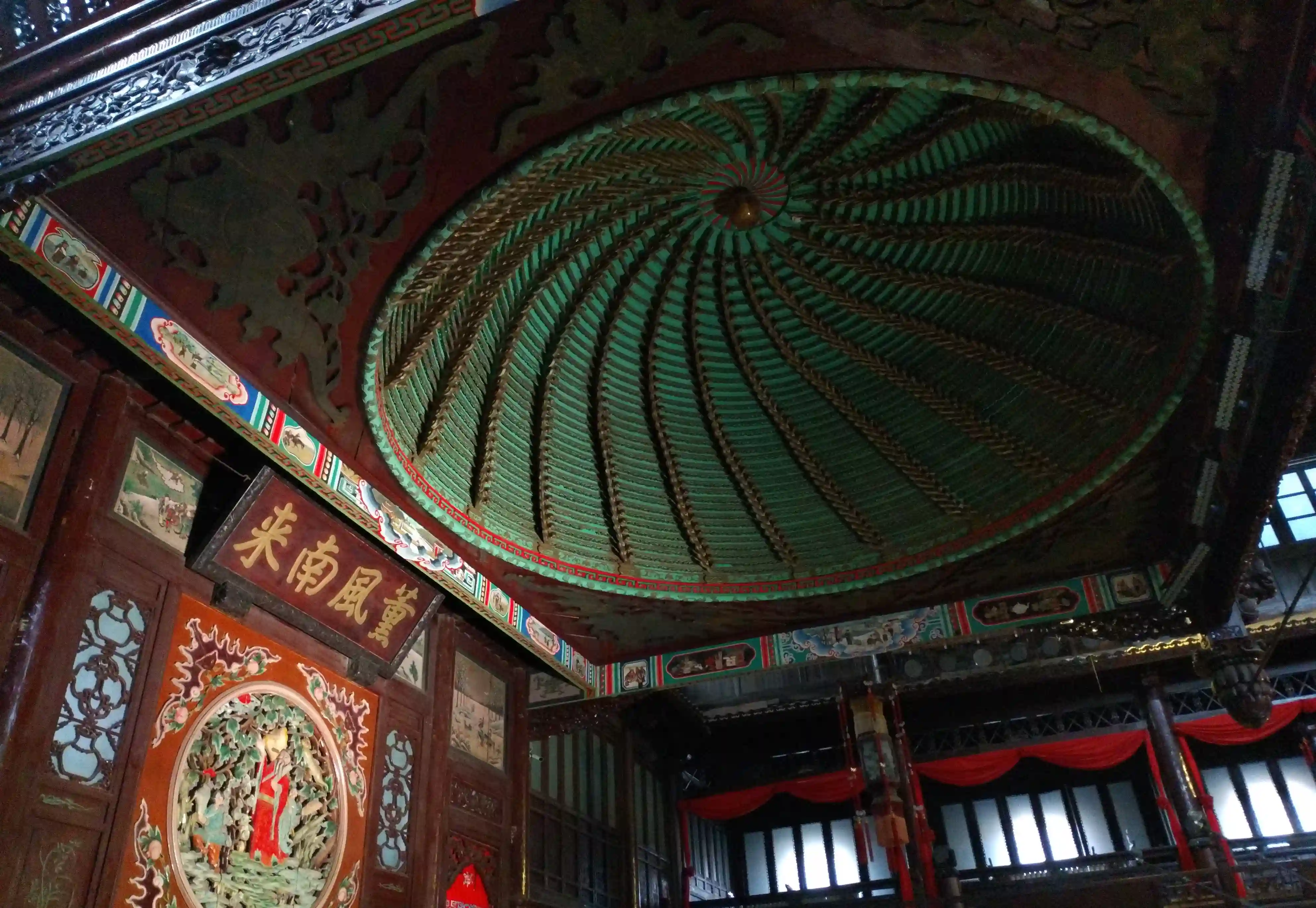
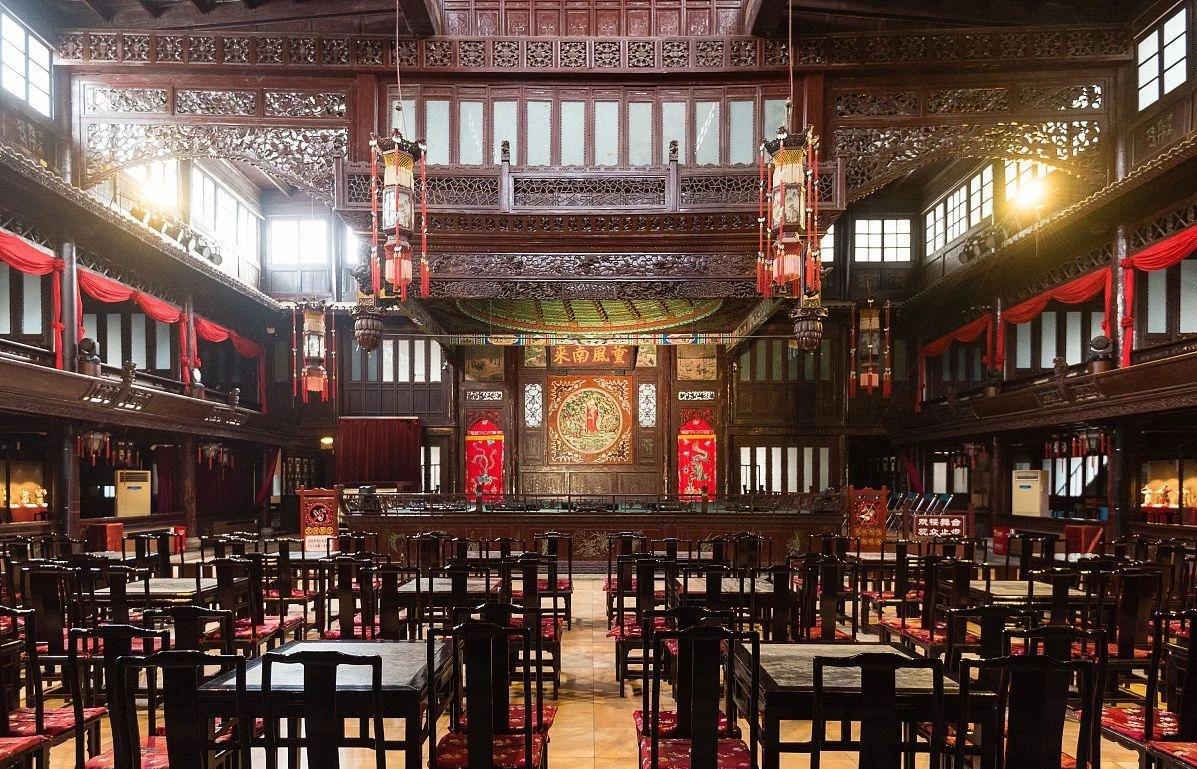
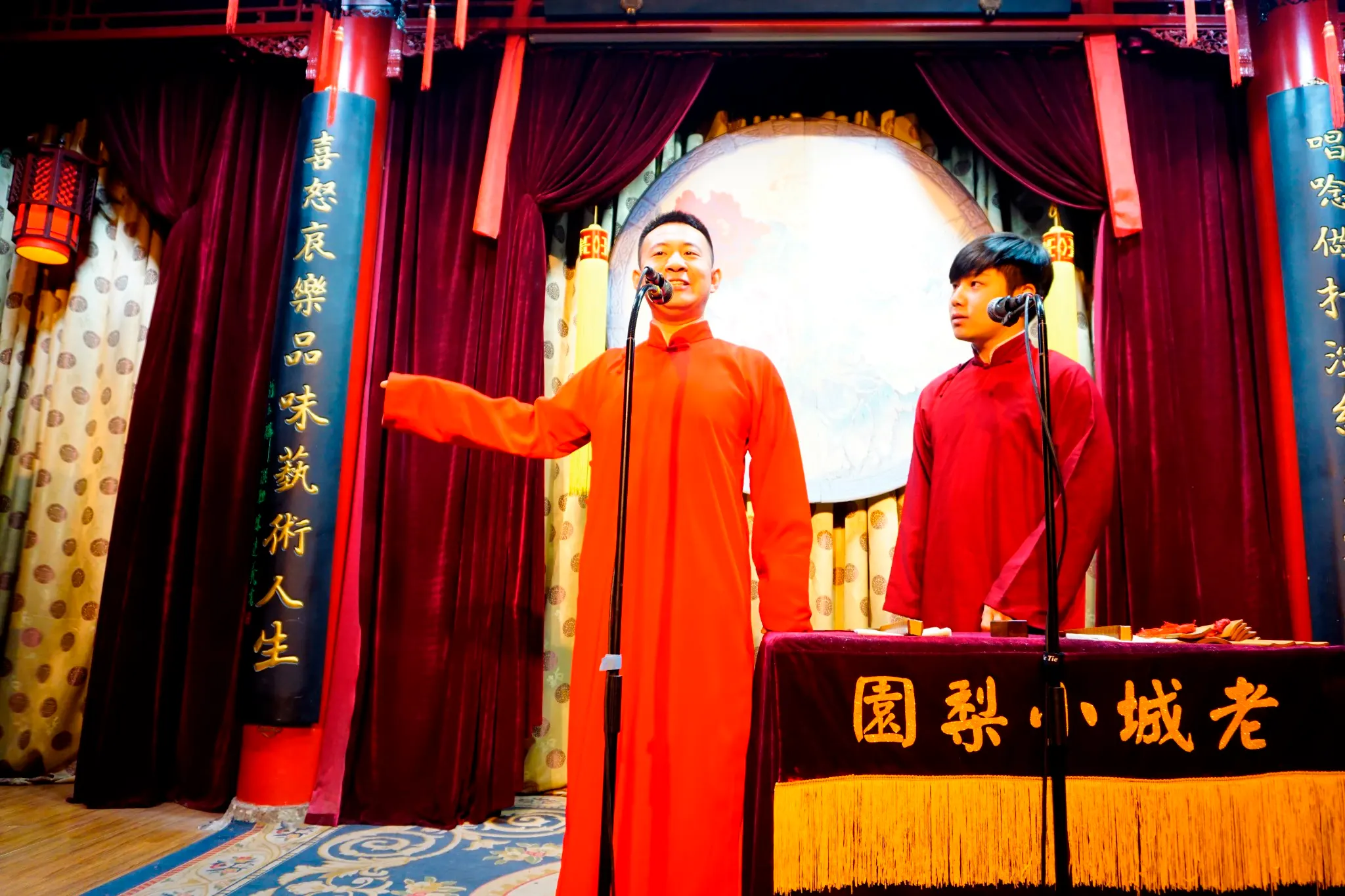
相声茶馆 · Mingliu Teahouse and others | 1.5 h · ¥60–150
Address: Mingliu Teahouse, Xinhua Road and the Ancient Culture Street house (和平区新华路名流茶馆 / 古文化街店)
Getting there: Metro 2 to Dongnanjiao for the old-town house; the Xinhua Road house is 10 minutes on foot from Jinwan
Ticket: ¥60–150 · shows 19:30 and 21:00, weekends add an afternoon set · book same day
Tianjin comedy is fast, local and largely untranslatable — which is exactly why it works: an hour of two men, a table, a folded fan, and a room laughing at something you half understand.
What to do: take a front table, order tea and sunflower seeds, and go with a guide or a translation app if you have one.
Mistake: expecting subtitles; the physical comedy carries the first twenty minutes.
If you only have one day, the first group plus the cruise covers the city. The coast needs a morning; the west needs a half day; the north needs a full day and an early train. That is the whole logic behind the four one-day routes below.
What to eat, where it is sold, and which restaurants do Tianjin cooking properly
Tianjin cooking is northern, salty, slightly sweet, built on river fish rather than sea fish, and finished with vinegar and white pepper. Breakfast is the local religion — the city is out between seven and half nine, and by ten the same stalls are a line of visitors.
The dishes — Ten things to eat before you leave
Dish | What it is | Price | Where to get it |
|---|---|---|---|
Guobacai guō ba cài 锅巴菜 | Shaved mung-bean pancake drowned in a thick savoury broth with tofu, vermicelli and greens — the definitive Tianjin breakfast. | ¥10–15 | Dafulai, Nanshi Food Street, any street stall before 09:30 |
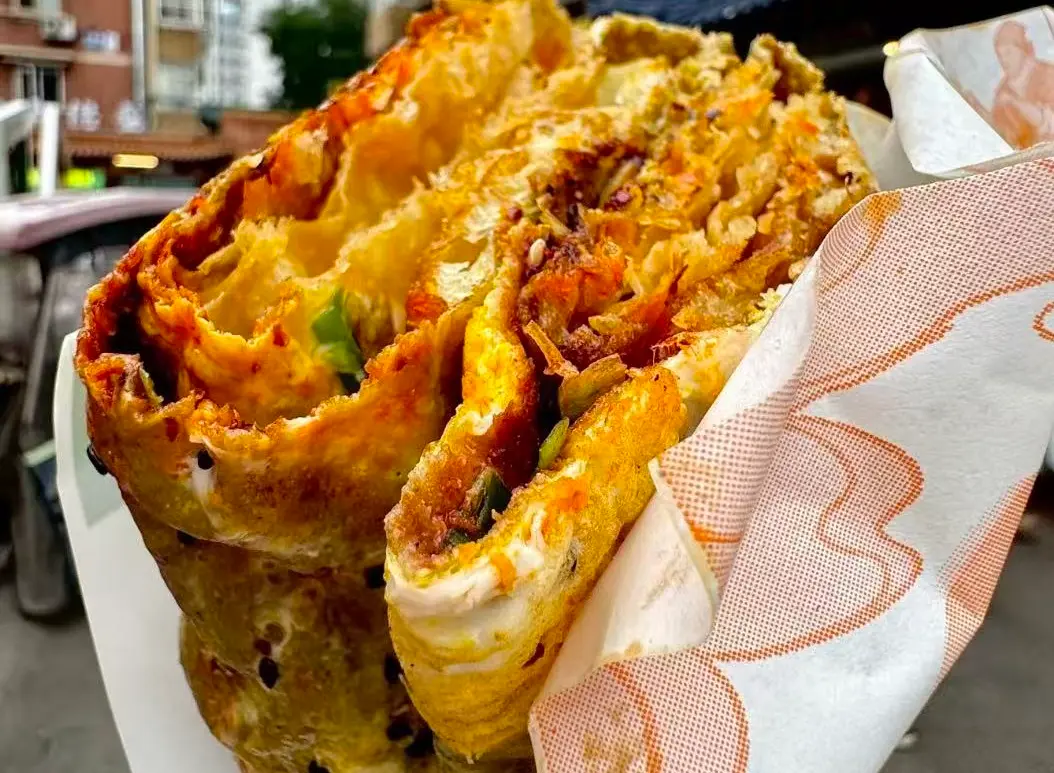
Jianbing guozi jiān bing guǒ zi 煎饼果子 | Mung-bean crepe, egg, crisp fried dough, wrapped in paper and eaten standing. Every other jianbing in China descends from this one. | ¥8–12 | Any corner stall; the good ones have a queue of locals at 07:30 |
Doufunao dòu fu nǎo 豆腐脑 | Silken tofu under a savoury sauce of sesame paste, pickles and vinegar. Northern, never sweet. | ¥5–8 | Breakfast shops, alongside guobacai |
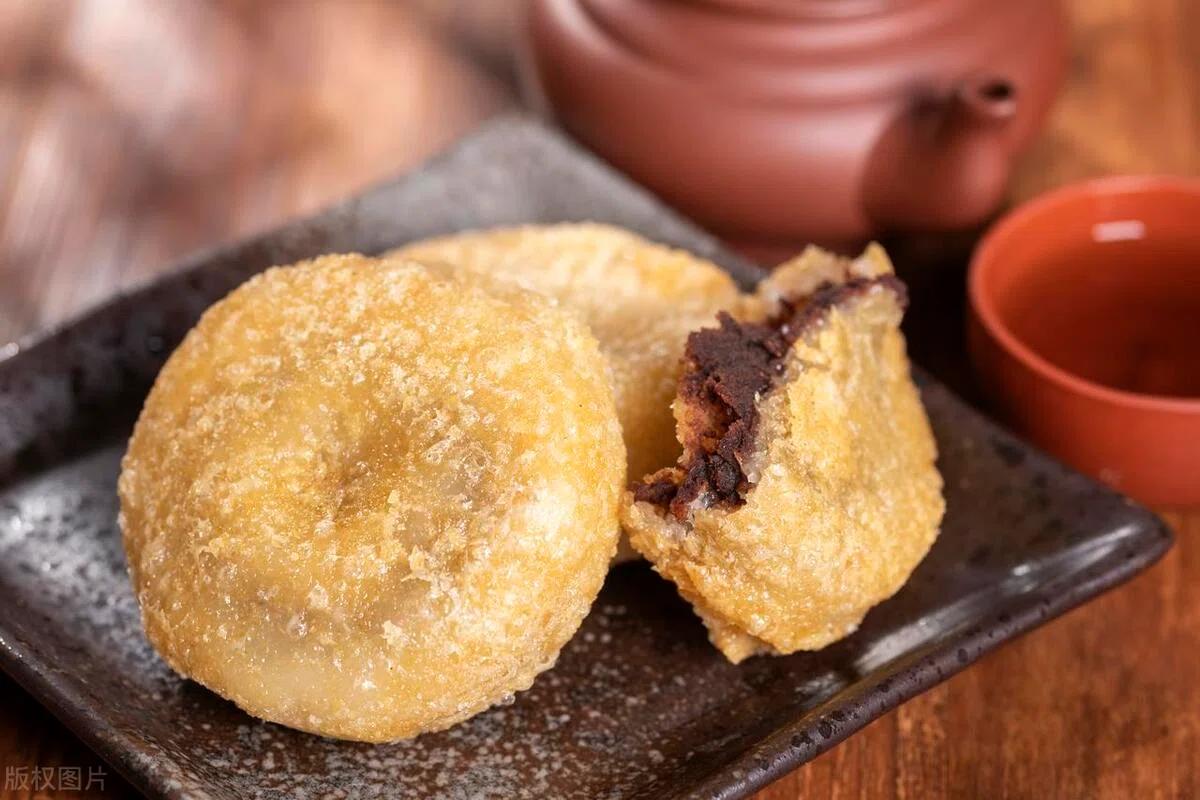
Erduoyan fried cake ěr duo yǎn zhà gāo 耳朵眼炸糕 | Glutinous rice, red-bean paste, deep fried, palm-sized with a hole in the middle. Buy two, carry one. | ¥3–5 each | Erduoyan, Dahutong or Gulou branches |
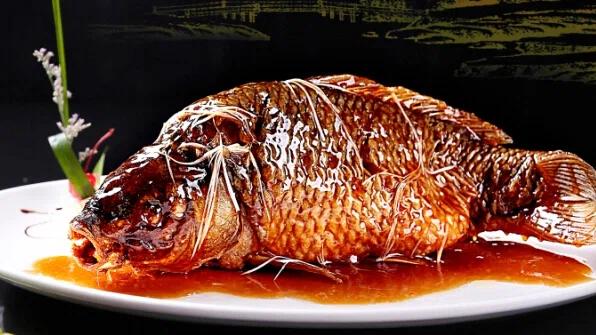
Zengbeng carp zēng bèng lǐ yú 罾蹦鲤鱼 | Whole river carp scored and fried crisp, then braised in vinegar and sugar, served with the scales on. The dish Tianjin puts on the table for guests. | ¥60–90 | Hongqi, Dengyinglou, Shunxingde, Jiuhé Xiangshe |
Vinegar-pepper tofu soup cù jiāo dòu fu tāng 醋椒豆腐汤 | Hot, sour, peppery and thickened. What locals order after a week of oil, and the correction to a heavy meal. | ¥15–25 | Any Tianjin-cuisine restaurant |
River shrimp chǎo qīng xiā 炒青虾 | Small freshwater shrimp stir-fried with spring onion. Cheap, sweet, best in autumn, eaten with the shell. | ¥40–70 | Hongqi (one of its “three treasures”), Yanchunlou |
Eight big bowls bā dà wǎn 八大碗 | The old banquet format — eight bowls of braised meat, fish, tofu and vegetables. Dinner as a ceremony. | ¥120–200 for two | Hongqi, Dengyinglou; order for a group |
Fried dough twist shí bā jiē má huā 十八街麻花 | Sweet, crunchy, keeps for weeks. The only souvenir food worth carrying. | ¥20–60 a box | Guifaxiang, Dongting Road and counters city-wide |
Vegetarian bun sù bāo 素包 | Steamed bun of mushrooms, bean curd and greens, from a shop that has made them since 1900. | ¥3–5 each | Shitoumenkan, Food Street Block A |
Breakfast & snacks — Names, addresses, hours
Shop | What to order | Address | Price · when |
|---|---|---|---|
Dafulai 大福来 · Nanshi branch | Guobacai, sesame flatbread, jianbing, soy milk | Nanshi Food Street, Block 1, unit 3, Heping (和平区南市食品街1区1楼3号) | ¥10–20 · morning to early afternoon |
Dafulai 大福来 · Beima Road branch | The same, ten minutes from the Drum Tower | 32 Dahutong Business Street, Hongqiao (红桥区大胡同商业街32号) | ¥10–20 · from 07:00 |
Shitoumenkan 石头门坎 · vegetarian buns | Su bao, mushroom and bean-curd buns | Food Street Block A, unit 12, Heping (和平区食品街A区12号) | ¥15–25 · all day |
Erduoyan 耳朵眼炸糕 · Dongbeijiao | Fried cake, eat it hot | 32 Dahutong Business Street, Hongqiao (红桥区大胡同商业街32号) | ¥3–5 each · 07:00–19:00 |
Erduoyan 耳朵眼 · Gulou branch | Fried cake, then walk the old town | 12 Gulou East Street, Nankai (南开区鼓楼东街12号) | ¥10 per person · 09:00–19:00 |
Goubuli 狗不理 · Shandong Road | Steamed buns, the classic pork | 77 Shandong Road, Heping (和平区山东路77号) · 022-2730 2540 | ¥60–120 · pricey, one visit for the record |
Nanshi Food Street 南市食品街 · the hub | Everything above in one building; start here with one morning | Nanmenwai Street, Heping (和平区南门外大街) | Free entry · 09:00–21:00, busiest at breakfast |
Guifaxiang 桂发祥十八街麻花 | Boxed twists to carry home | 32 Dongting Road, Hexi (河西区洞庭路32号) and counters city-wide | ¥20–60 a box · 09:00–19:00 |
Tianjin cuisine restaurants — Six tables worth booking, from ¥60 to ¥150 a head
Tianjin cooking is its own school, not a branch of Beijing or Shandong cooking: river fish, sweet-salt sauces, vinegar at the end, and a habit of serving the whole fish with its scales fried crisp. These six are where locals take visitors, roughly in order of how easily a first-timer can order well.
Restaurant | Order this | Address | Price · note |
|---|---|---|---|
Guiyuan 桂园餐厅 · Five Great Avenues | Black-garlic beef cubes (黑蒜子牛肉粒), eight-treasure tofu (八珍豆腐), old-vinegar six (老醋六样) | 62 Chengdu Road, Heping, beside Zhang Zizhong's old house (和平区成都道62号) · 022-8122 7878 | ¥80–110 · 11:00–14:00, 17:00–21:00 · queue before 11:00 |
Shunxingde 顺兴德 · Tianjin cuisine | Zengbeng carp (罾蹦鲤鱼), eight-treasure tofu (八珍豆腐), cashew chicken (酱爆腰果鸡丁) | 1 Shaanxi Road at Duolundao, Heping (和平区陕西路1号 多伦道口) | ¥60–90 · the cheapest good Tianjin table on this list |
Hongqi 红旗饭庄 · since 1958 | The three treasures: river shrimp (炒青虾仁), zengbeng carp (罾蹦鲤鱼), silver-fish and crab pot (银鱼紫蟹锅), plus lao bao san (老爆三) | 167 Xinhong Road, Xiyuzhuang, Hongqiao (红桥区西于庄街道新红路167号) | ¥70–120 · state-run old house, big rooms, book for dinner |
Dengyinglou 登瀛楼 · founded 1913 | Zengbeng carp (罾蹦鲤鱼), nine-turn intestine (九转大肠), fish head with pancakes (鱼头泡饼) | 284 Shaanxi Road near Nanjing Road, Heping (和平区山西路284号) | ¥80–120 · several branches; the Shanxi Road one is central |
Jiuhe Xiangshe 九河香舍 · Republic-era dishes | Scallion sea cucumber (葱烧海参), jar-braised beef (罐焖牛肉), zengbeng carp (罾蹦鲤鱼) | 110 Yueyang Road, Heping (和平区岳阳道110号) | ¥90–130 · villa setting, best for a slow evening |
Yanchunlou 燕春楼 · Haihe view | Ox tongue tail (红烧牛舌尾), coriander tripe (芫爆散丹), mustard duck feet (芥末鸭掌), beef pancake | 7 Zhangzizhong Road at the Haihe, Heping (和平区张自忠路7号) | ¥110–150 · river-facing, the one to book for a last night |
Addresses, phone numbers and hours are as published in late 2026 — branches move and breakfast shops close when the pot runs out. Prices are per person before drinks and marked indicative. For a group of four, order three dishes plus a soup and one staple; Tianjin portions are northern-sized.
Rule one Judge the shop by the queue, not the signboard. A laminated photo menu and a host at the door means the prices are for visitors, not for the dish.
Rule two Ancient Culture Street and the Italian quarter are for looking. Eat two streets away in any direction and the same dish costs half.
Rule three Breakfast is a timed event. Between 07:00 and 09:30 the city is itself; after ten the same stalls are a line of visitors with the same guidebook.
What is worth carrying home, and where it is sold
Tianjin is not a shopping destination the way Shanghai is, and that is the point: what you buy here is small, handmade and local. Four districts cover it, plus one outlet an hour away if you came for brands rather than crafts.
Ancient Culture Street
Old town · 古文化街
Clay figures from Nirenzhang (¥80–300), kites from Fengzheng Wei, woodblock New Year prints, paper cuts, tea, and boxes of dough twists. The street is touristy, the workshops at the northern end are not.
Pay: ¥50–200 for a good small piece.
Avoid: the stands at the entrance — same goods, twice the price.
Binjiang Dao & Heping Road
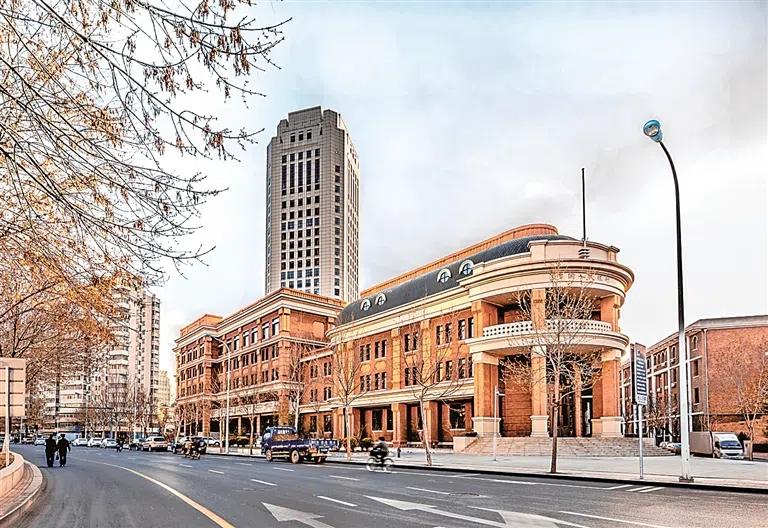
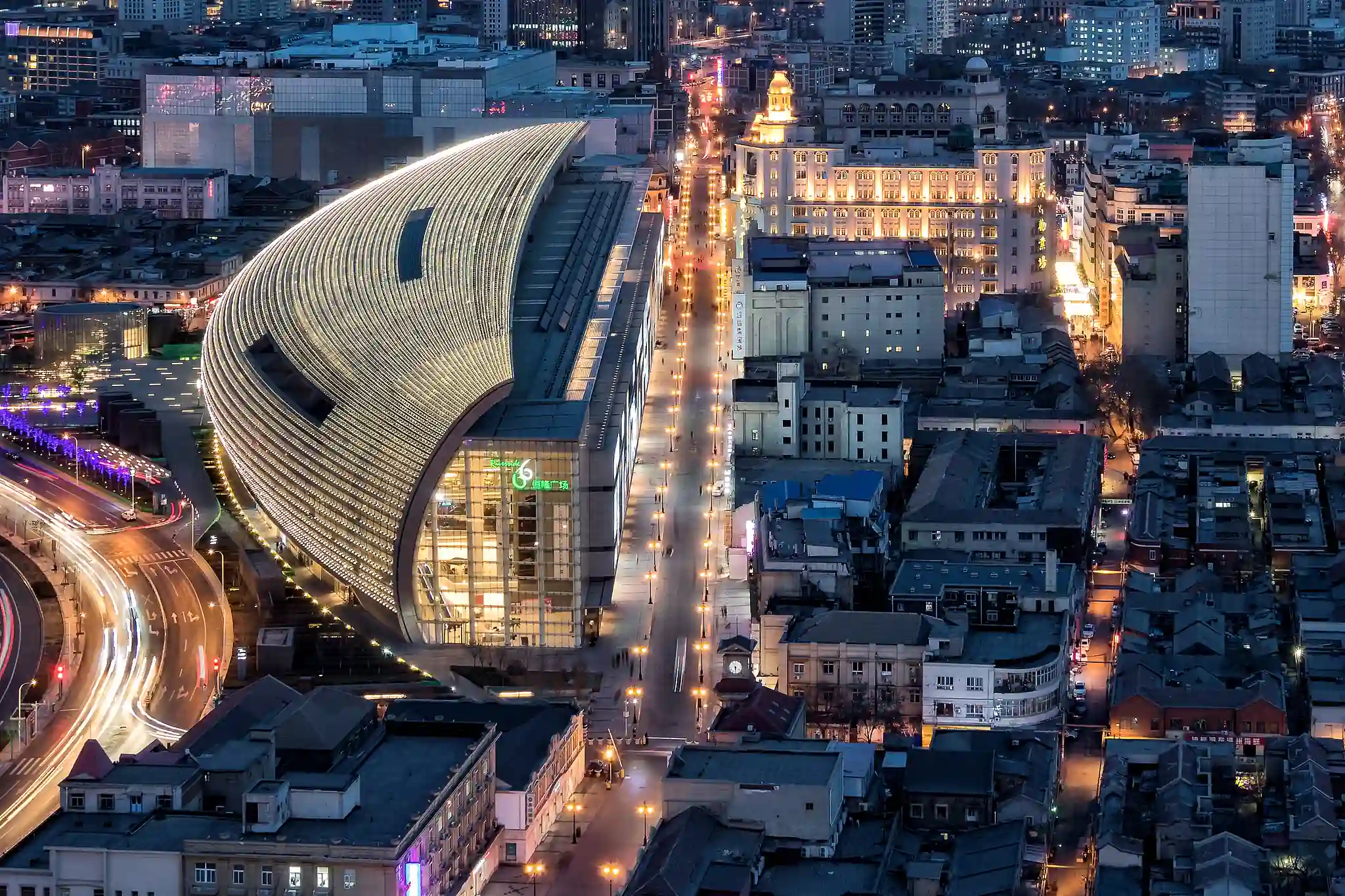
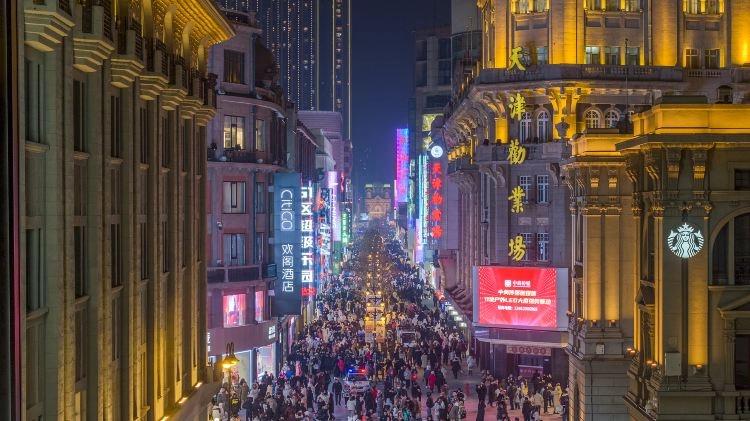
Heping · 滨江道 · 和平路
Two kilometres of pedestrian retail from the river to Nanjing Road, with the 1928 Quanyechang department store at the crossroads, chain shops, and the Jingjin department stores behind it. This is where locals actually shop.
Pay: high-street prices.
Avoid: Saturday afternoon; it is a crowd, not a street.
Minyuan Square & the Five Avenues lanes
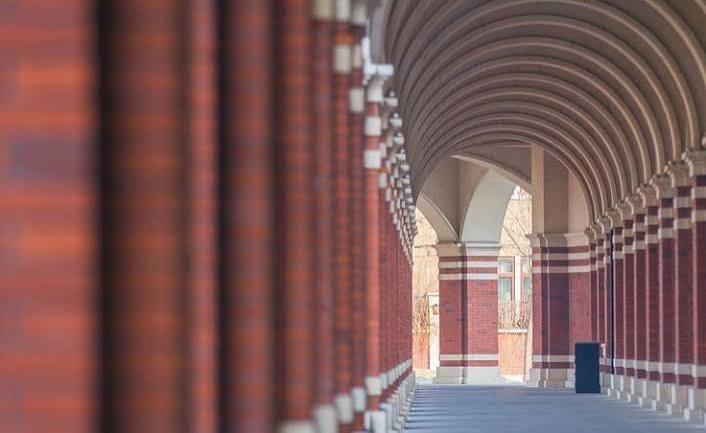
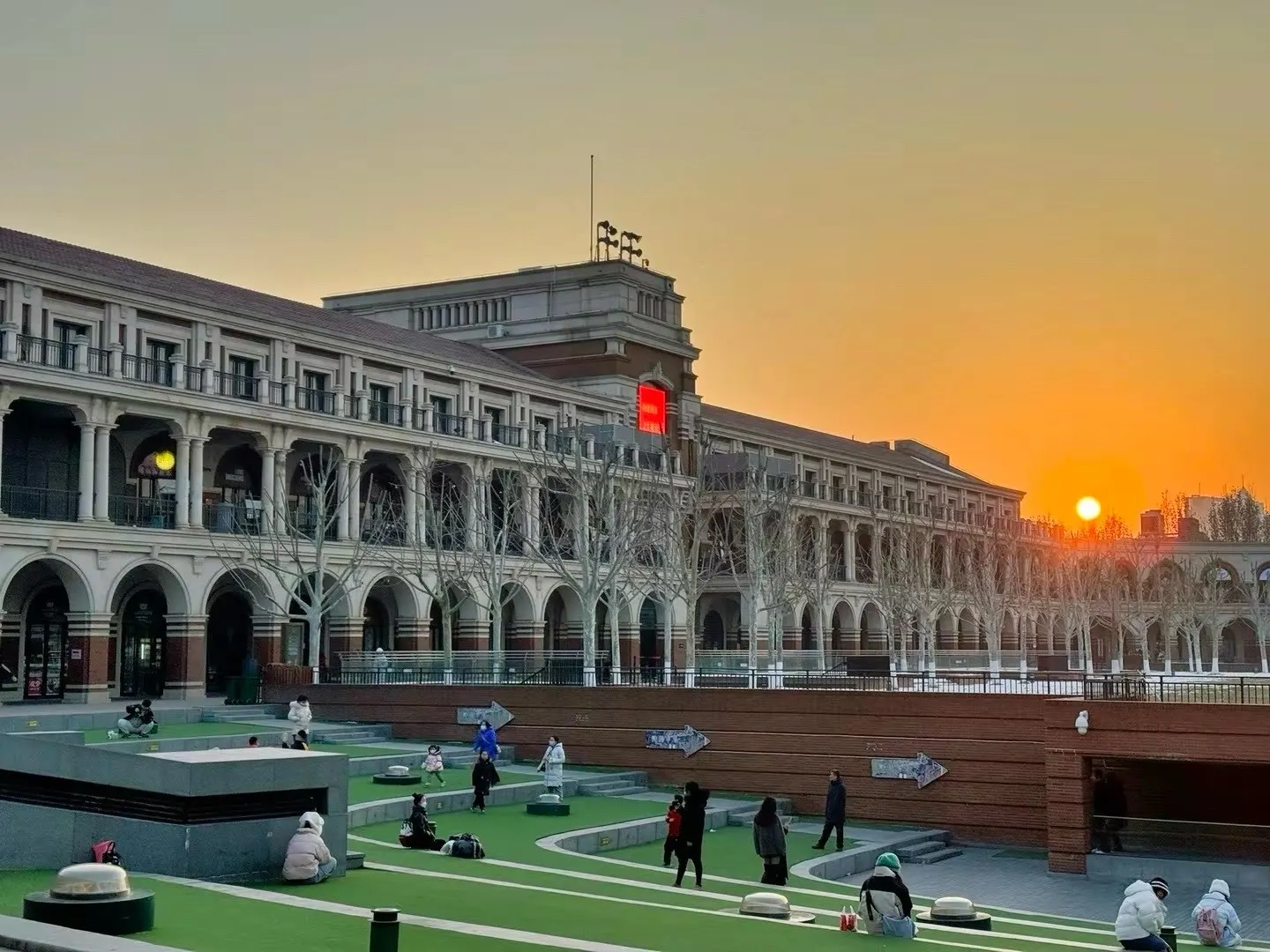
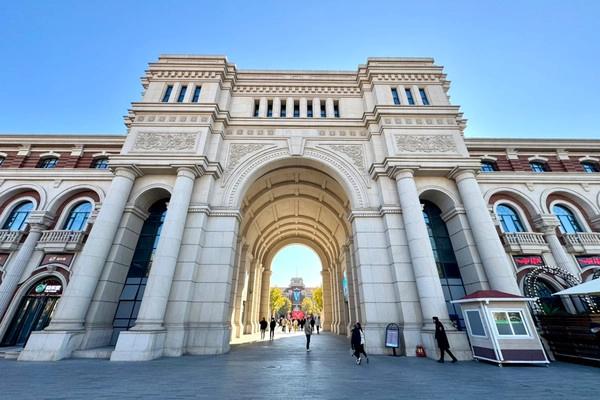
Five Great Avenues · 民园广场
Since 2025 the lanes at Hunan Road and Luoyang Dao have been turned into a pedestrian quarter of design shops, bookshops, coffee and ceramics inside the old brick walls. The best place in the city to buy something you cannot buy elsewhere.
Pay: ¥60–300.
Best time: late afternoon, then stay for dinner.
Italian Style Town
North bank · 意式风情区
Small shops for leather, glasses, gifts and imported food, in the arcades around Marco Polo Square. Buy little here; come for the evening and the piazza.
Pay: ¥30–200.
Avoid: anything sold as “antique” — it is not.
Florentia Village outlet
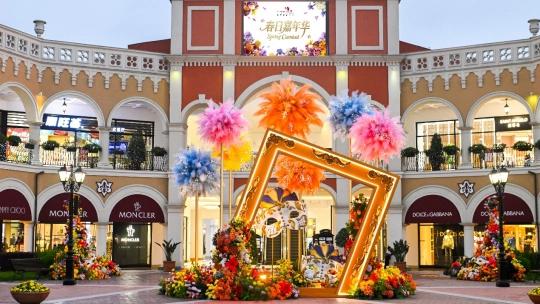
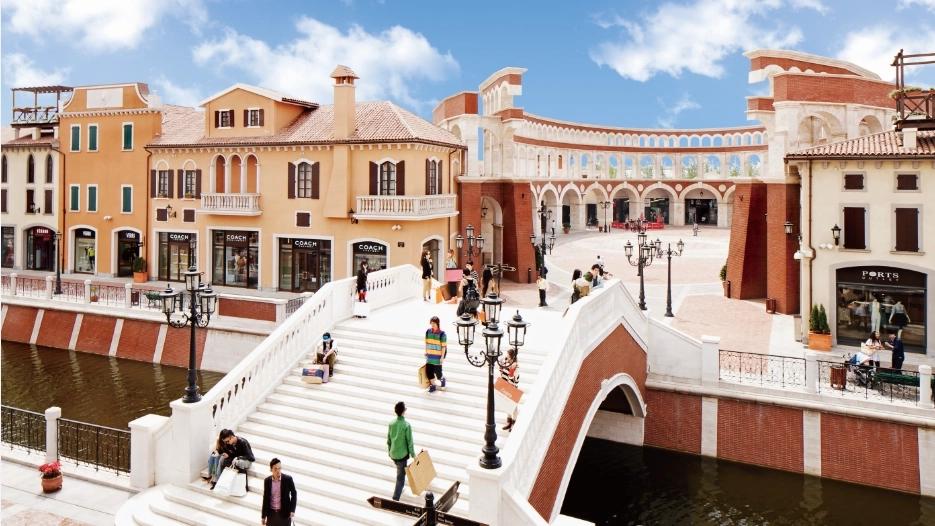
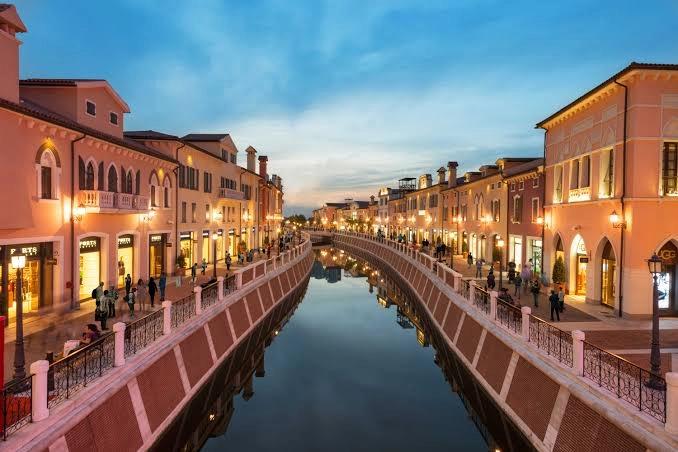
Wuqing · 佛罗伦萨小镇 · opposite Wuqing rail station
Two hundred international brands in an Italianate open-air village, forty minutes by high-speed rail from Tianjin (or twenty from Beijing) and a hundred metres from Wuqing station. Discounts run to 70–80% off at end of season.
Pay: brand prices, seasonal.
Note: the last trains back fill up on Sunday evening — book the return before you go.
Malls, if it rains
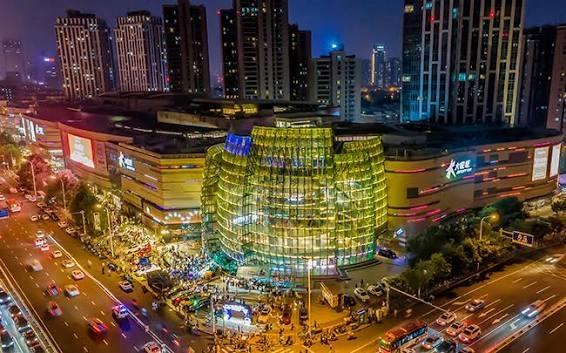
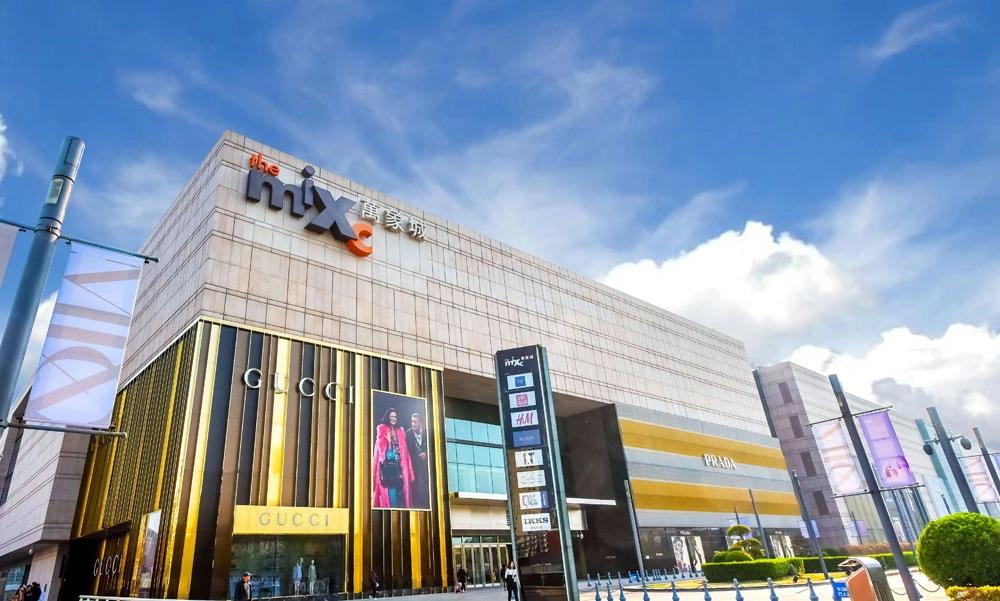
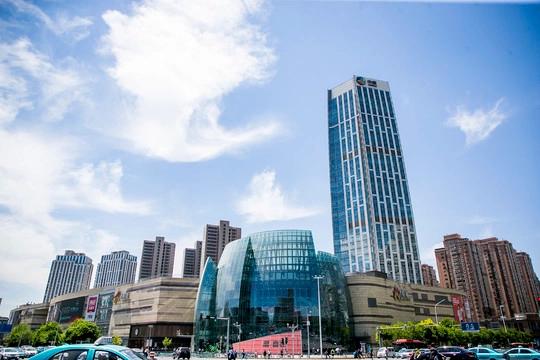
Nankai Joy City · MixC · 南开大悦城 · 万象城
Joy City by the old town is the young one, with food halls and a rooftop; MixC is the quiet, expensive one for international labels and a proper supermarket. Both are ten minutes by taxi from the centre.
Pay: ¥ to ¥¥¥.
Note: tax refund counters exist for foreign passports at larger stores — ask for the form and keep the receipts.
Buy this Clay figures, a New Year print, a box of twists, a paper cut. Small, light, made within fifty kilometres, and no one at home has one.
Skip this “Antique” coins, jade and inkstones sold on the street. The real ones are in the museums; the rest are pressed powder.
Tax note Departure tax refund is available on purchases over ¥500 at participating shops in one day — bring the passport to the till and the goods unopened to the airport.
Where to sleep, hotel by hotel, three stars to five
Choose the area first, then the star level: the whole centre is fifteen minutes across, so a three-star on Tai'an Road beats a five-star out at Binhai for a two-night city visit. Rates below are the ordinary midweek band in 2026 — Friday and Saturday add roughly a third, and every name, address and facility should be reconfirmed at booking.
Best area for a first trip Jinwan and Tianjin Station. The Beijing train, the cruise dock and the river view are all here; the old town is fifteen minutes on foot.
Best area for two or three days Five Great Avenues and Xiaobailou. Villas, plane trees, quiet mornings, and metro line 1 into the centre in ten minutes.
Best area for a budget stopover Old town and Drum Tower. Half the price, breakfast at the door, and the only thing you lose is a river view.
Five star · ¥700–2,000 — Five hotels, all in the centre or on the river
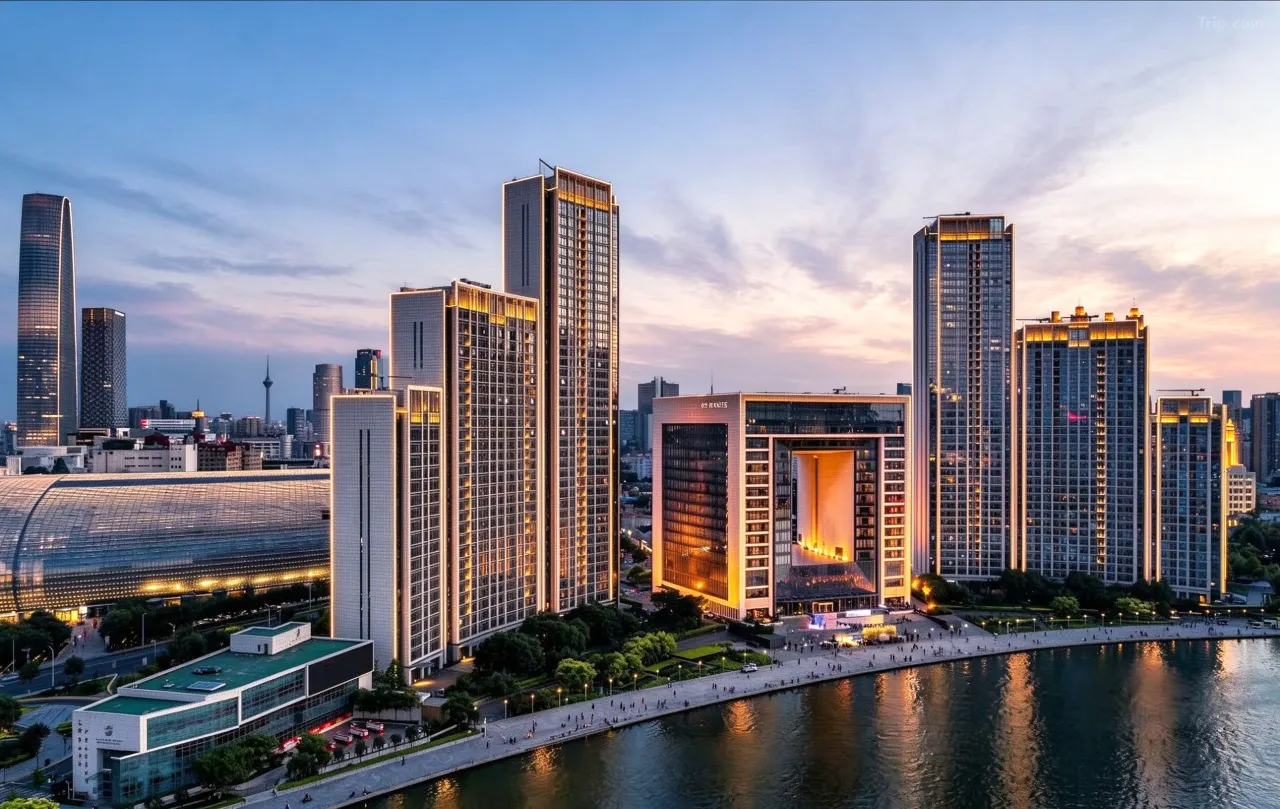
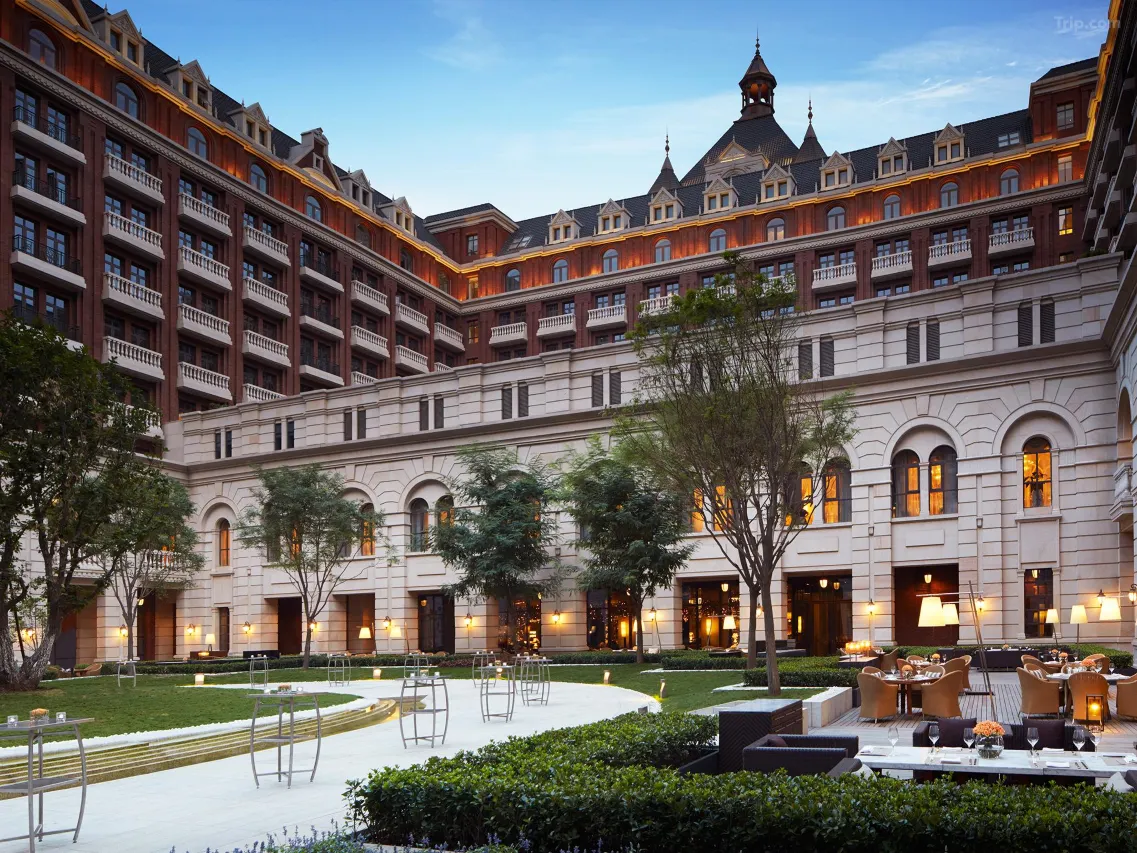
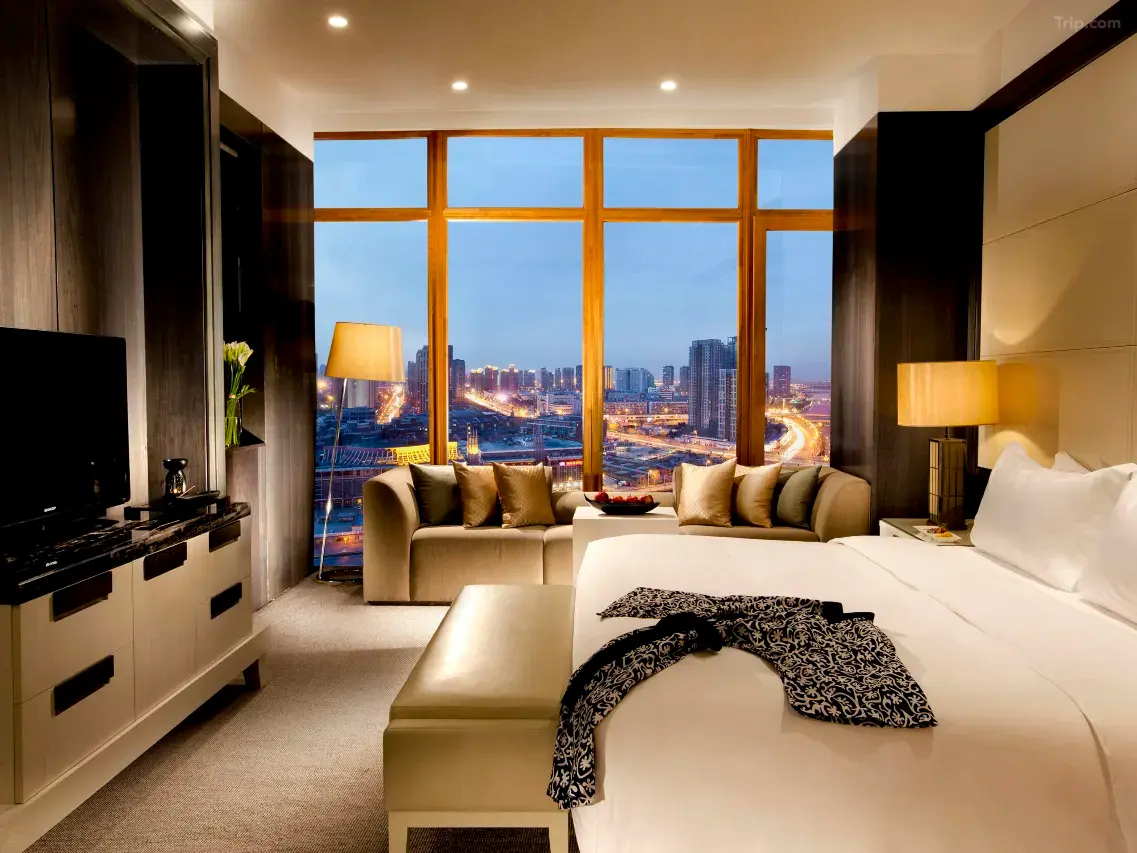
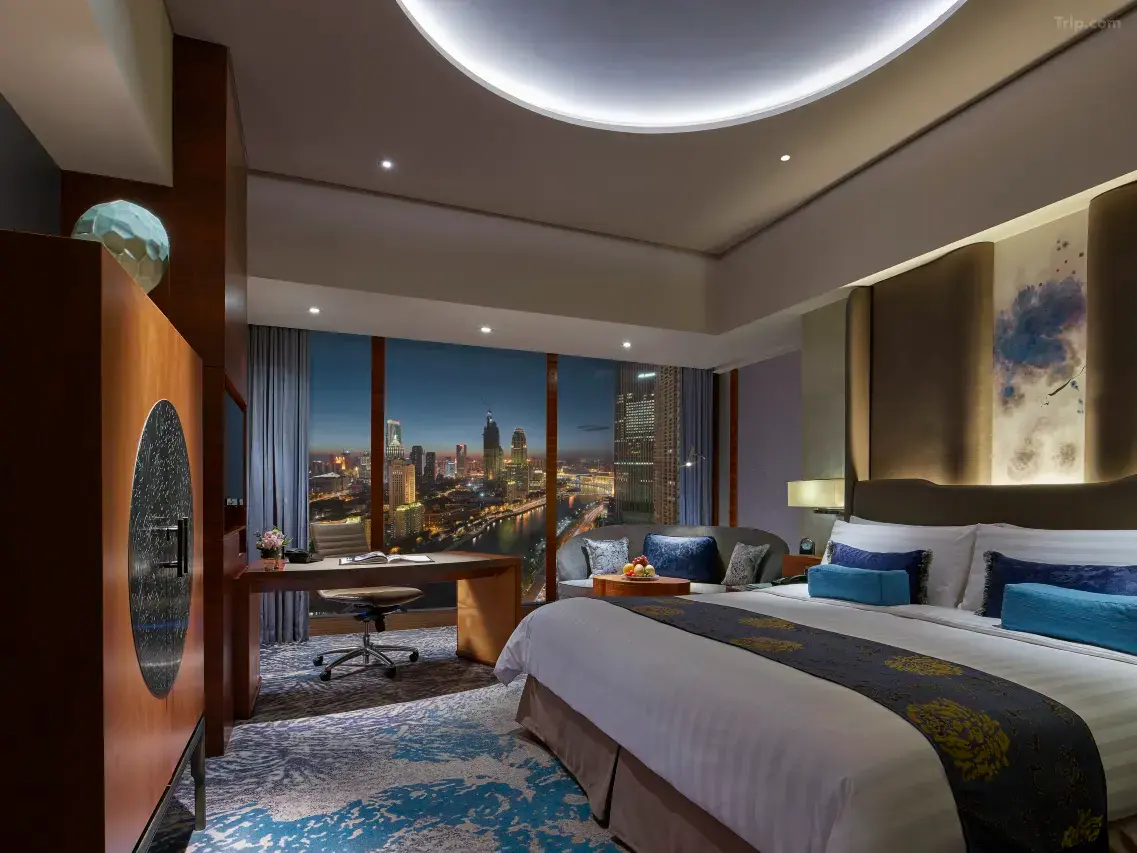
Hotel | Address | Rate | Facilities | Best for |
|---|---|---|---|---|
The St. Regis Tianjin 天津瑞吉金融街酒店 | 158 Zhangzizhong Road, Heping (和平区张自忠路158号) | ¥1,100–2,000 | Butler service, indoor pool, gym, river-view bar, spa | Couples and business travellers who want the river at the window and the station five minutes away |
Four Seasons Hotel Tianjin 天津四季酒店 | 138 Chifeng Road, Heping (和平区赤峰道138号) | ¥1,100–1,900 | Pool, spa, four restaurants, family facilities, club lounge | Families and design-led travellers; Porcelain House and the Five Great Avenues on foot |
The Ritz-Carlton, Tianjin 天津丽思卡尔顿酒店 | 167 Dagu North Road, Heping (和平区大沽北路167号) · 022-5857 8888 | ¥1,000–1,800 | 277 rooms, indoor pool, spa, Chinese restaurant, club lounge, parking | Celebrations and classic luxury; the most polished service in the city, ten minutes from the villas |
Shangri-La Tianjin 天津香格里拉 | 328 Haihe East Road, Hedong (河东区海河东路328号) · 022-8418 8888 | ¥700–1,100 | 304 rooms, pool overlooking the Haihe, CHI spa, gym, club floor, connected to a mall | Families who want a mall, a pool and the river in one building; five minutes by car to the station |
Banyan Tree Tianjin Riverside 天津海河悦榕庄 | 34 Haihe East Road, Hebei (河北区海河东路34号) | ¥900–1,500 | Riverside suites, spa, pool, gym, terrace | Couples wanting quiet water views and the Italian quarter a short walk away |
Four star · ¥270–650 — The best value band in Tianjin
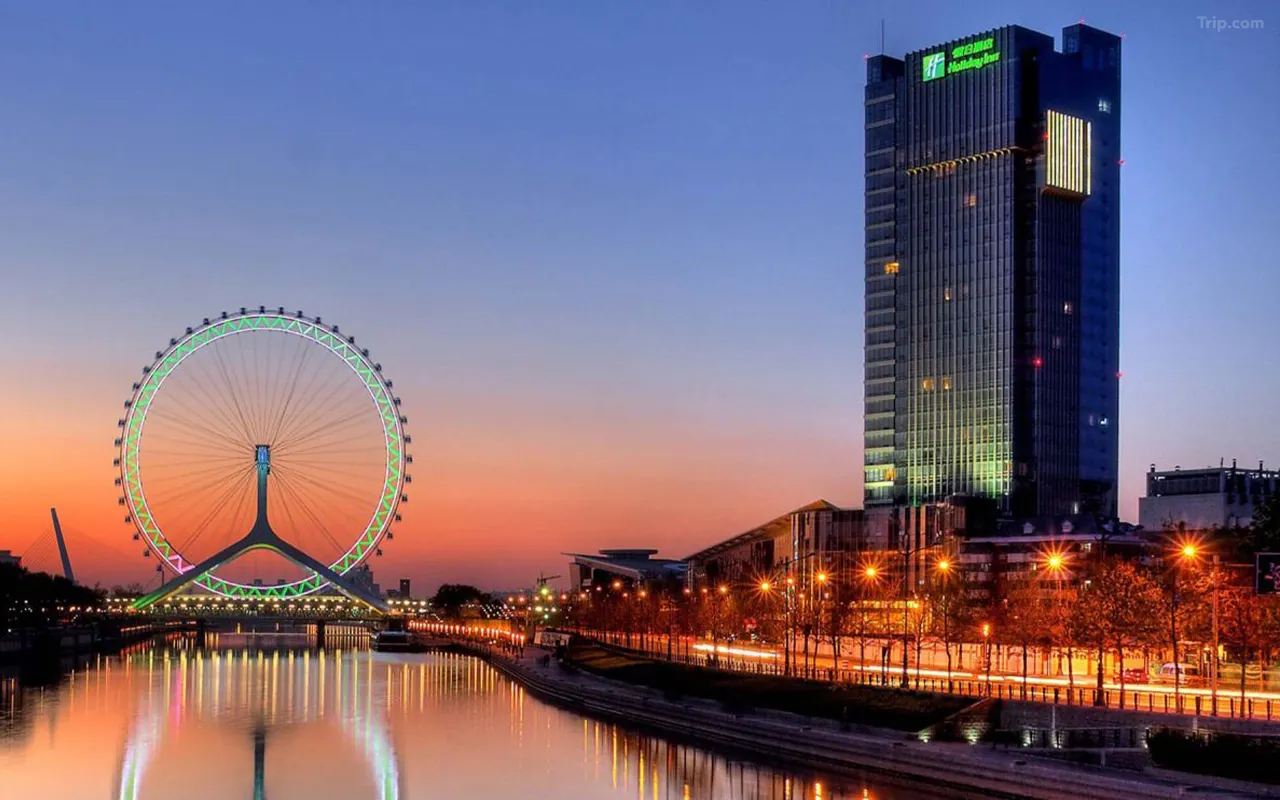
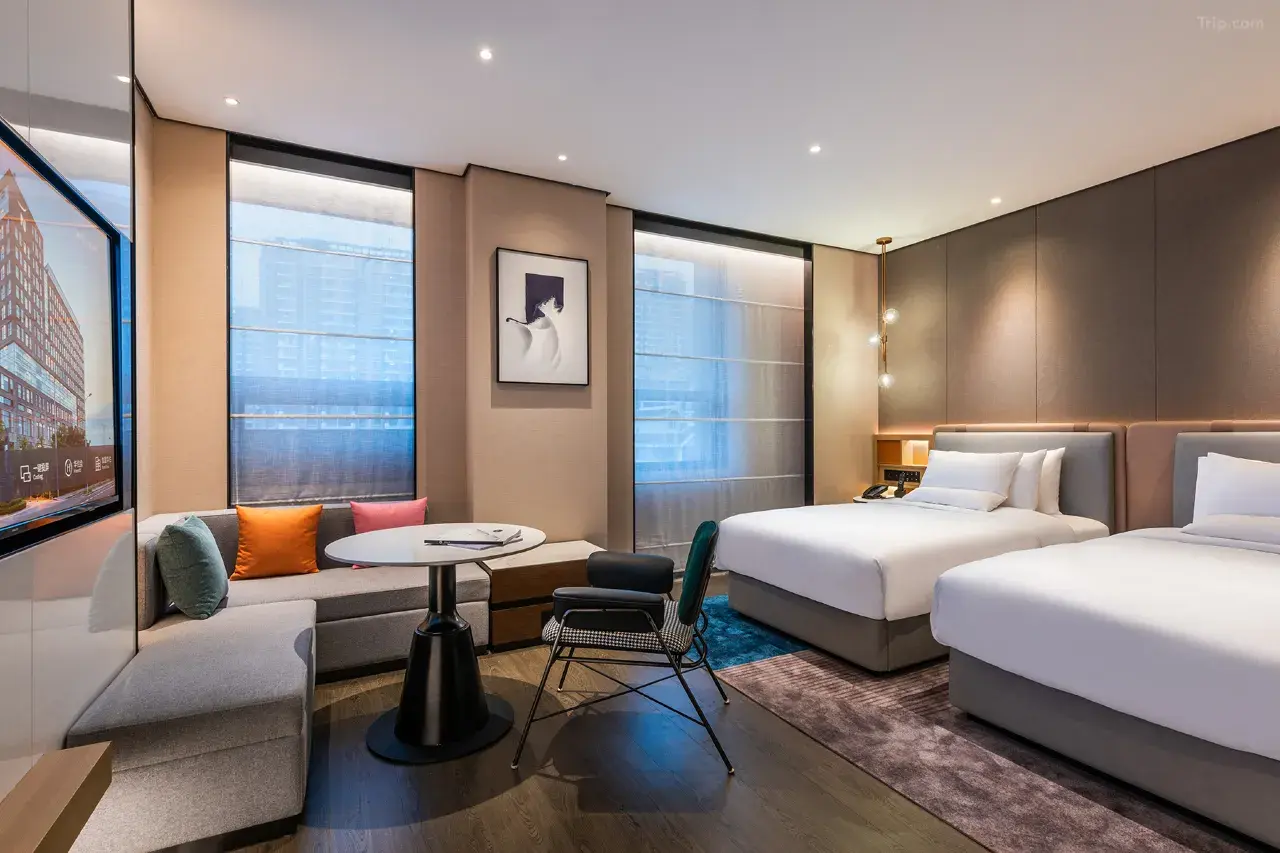
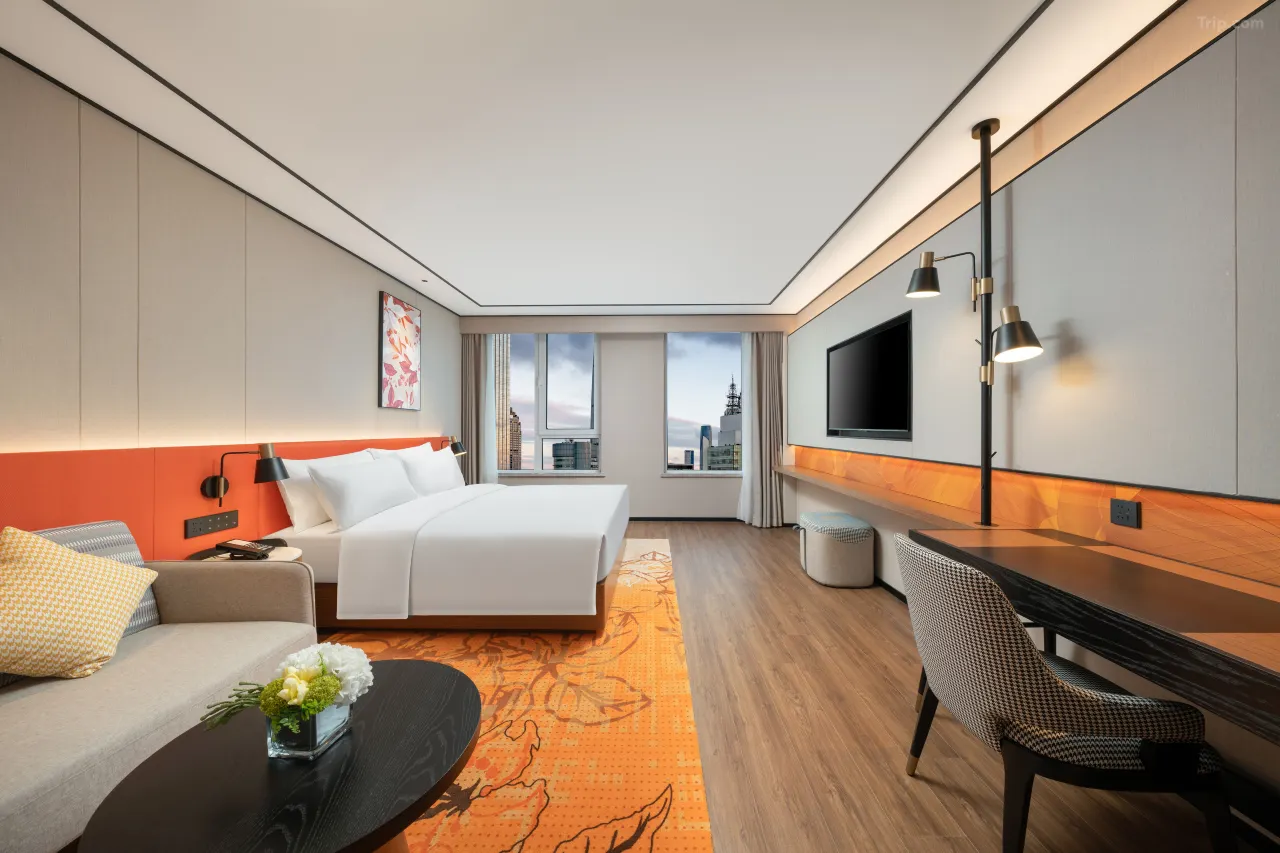
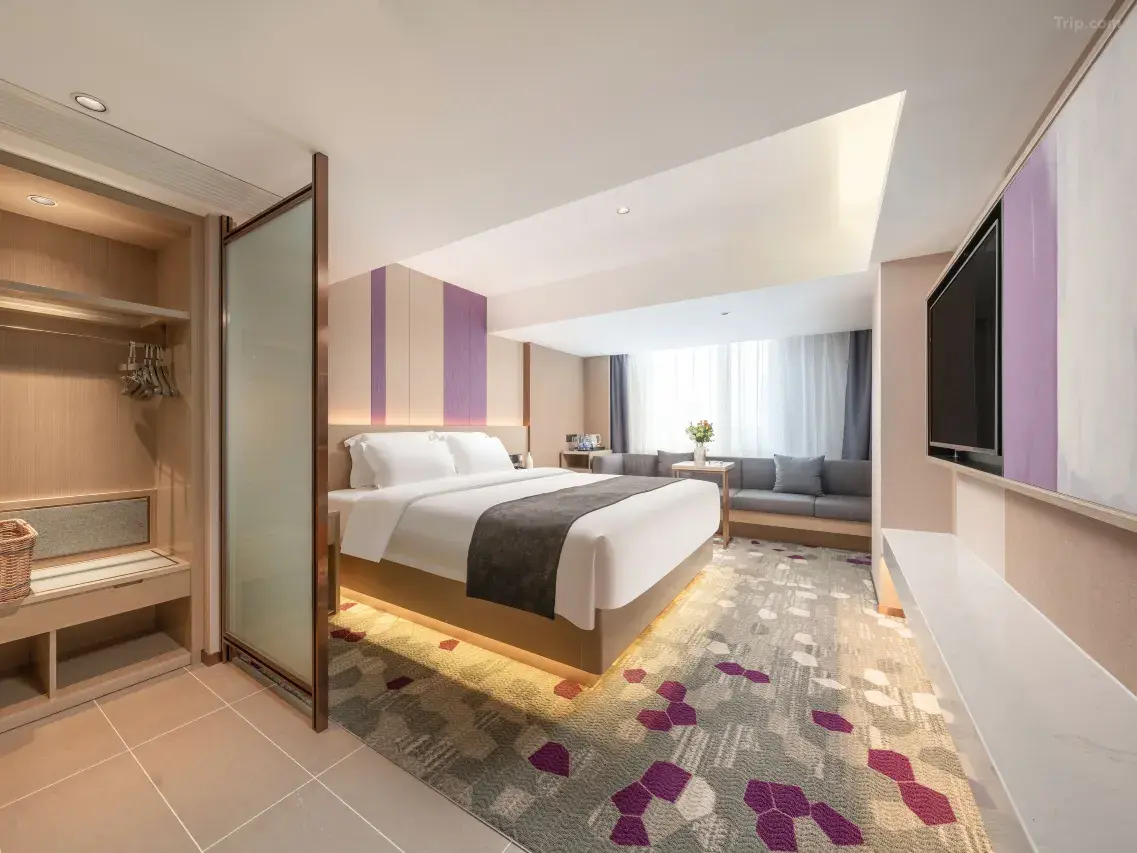
Hotel | Address | Rate | Facilities | Best for |
|---|---|---|---|---|
Holiday Inn Tianjin Riverside 天津海河假日酒店 | Phoenix Commercial Plaza A, Haihe East Road, Hebei (河北区海河东路凤凰商业广场A座) | ¥500–650 | Indoor pool, spa, gym, four restaurants, river frontage | Families and anyone who wants a pool plus the Tianjin Eye literally across the road |
Novotel Tianjin Drum Tower 天津鼓楼诺富特酒店 | Chengxiang East Road, Nankai (南开区城厢东路) | ¥450–600 | Gym, restaurant, 24-hour desk, family rooms | Old-town walkers: Ancient Culture Street and the Drum Tower within fifteen minutes on foot |
Atour Hotel Tianjin Five Avenues Xiaobailou 天津五大道小白楼地铁站亚朵酒店 | Yatai Building, 35 Nanjing Road, Heping (和平区南京路35号亚太大厦) | ¥270–380 | Breakfast, reading room, gym, metro at the door | Mid-budget travellers who want the villas and a metro station without paying five-star rates |
Lavande Hotel Tianjin Station Five Avenues 丽枫酒店 天津站五大道景区店 | 16 Lasa Road at Siping West Road, Heping (和平区拉萨道16号) | ¥300–420 | Smart rooms, breakfast, parking, two metro lines within 10 minutes | Couples and solo travellers; quiet lane, ten minutes from both the station and the villas |
Hilton Garden Inn Tianjin Railway Station 天津站希尔顿花园酒店 | 38 Jinbu Road, Hebei (河北区进步道38号) | ¥360–480 | Gym, breakfast, 24-hour desk, meeting rooms | One-night stays and early trains; ten minutes on foot to the station and the Italian quarter |
Three star · ¥150–300 — Clean, central, no frills — book early in summer
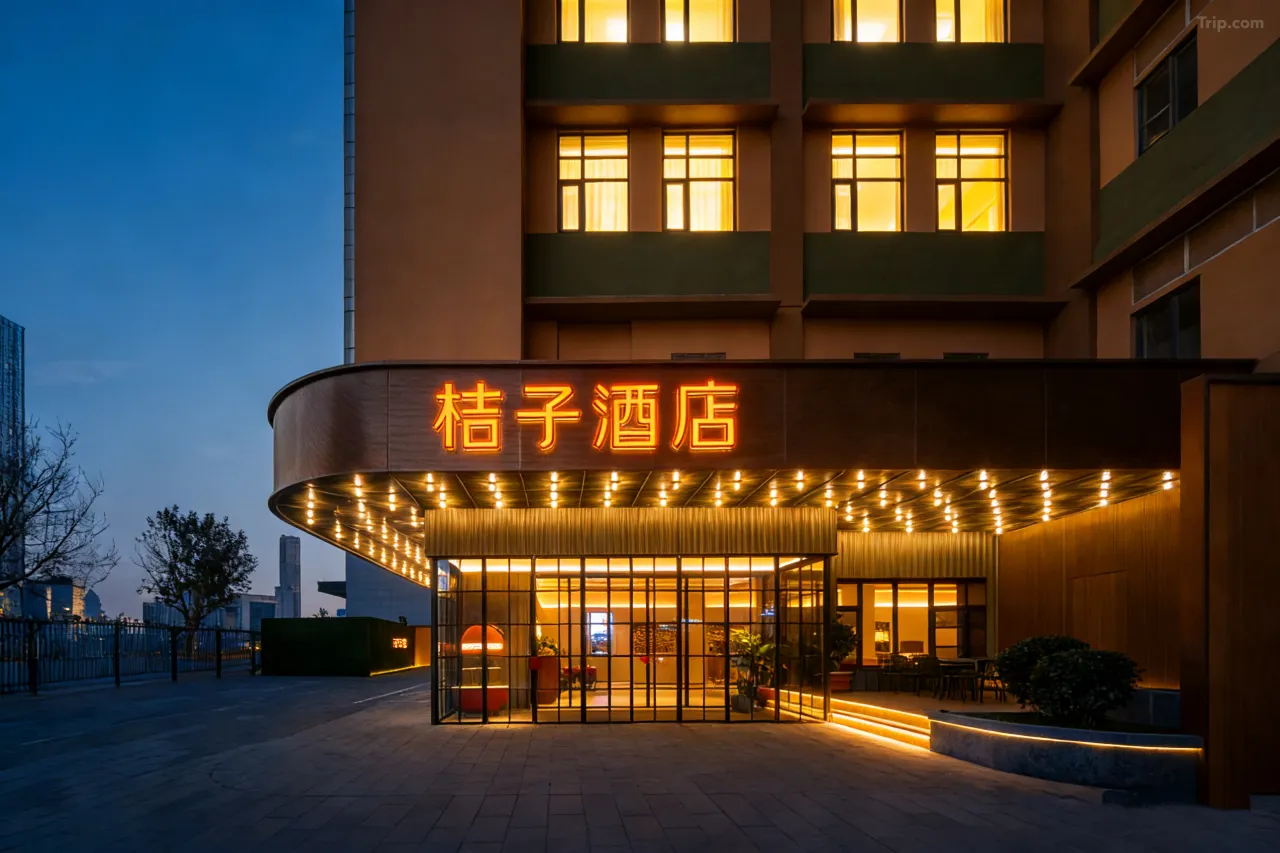
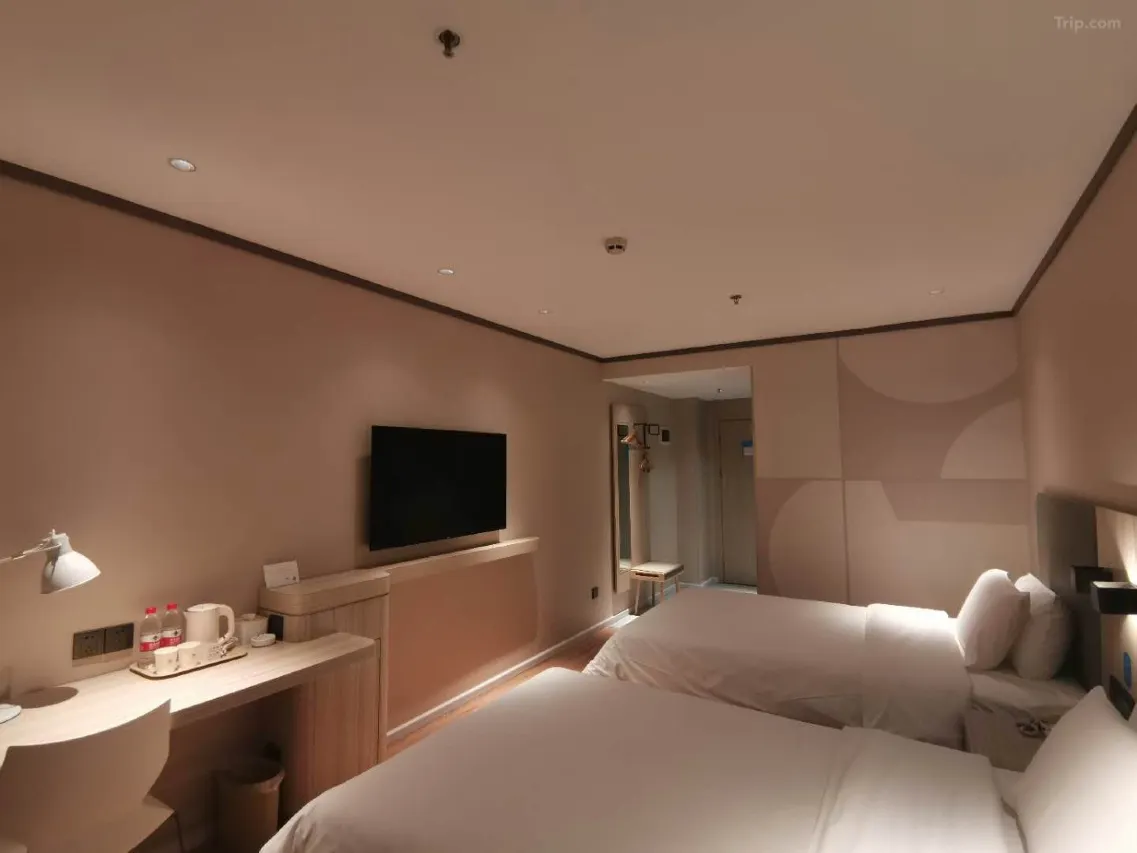
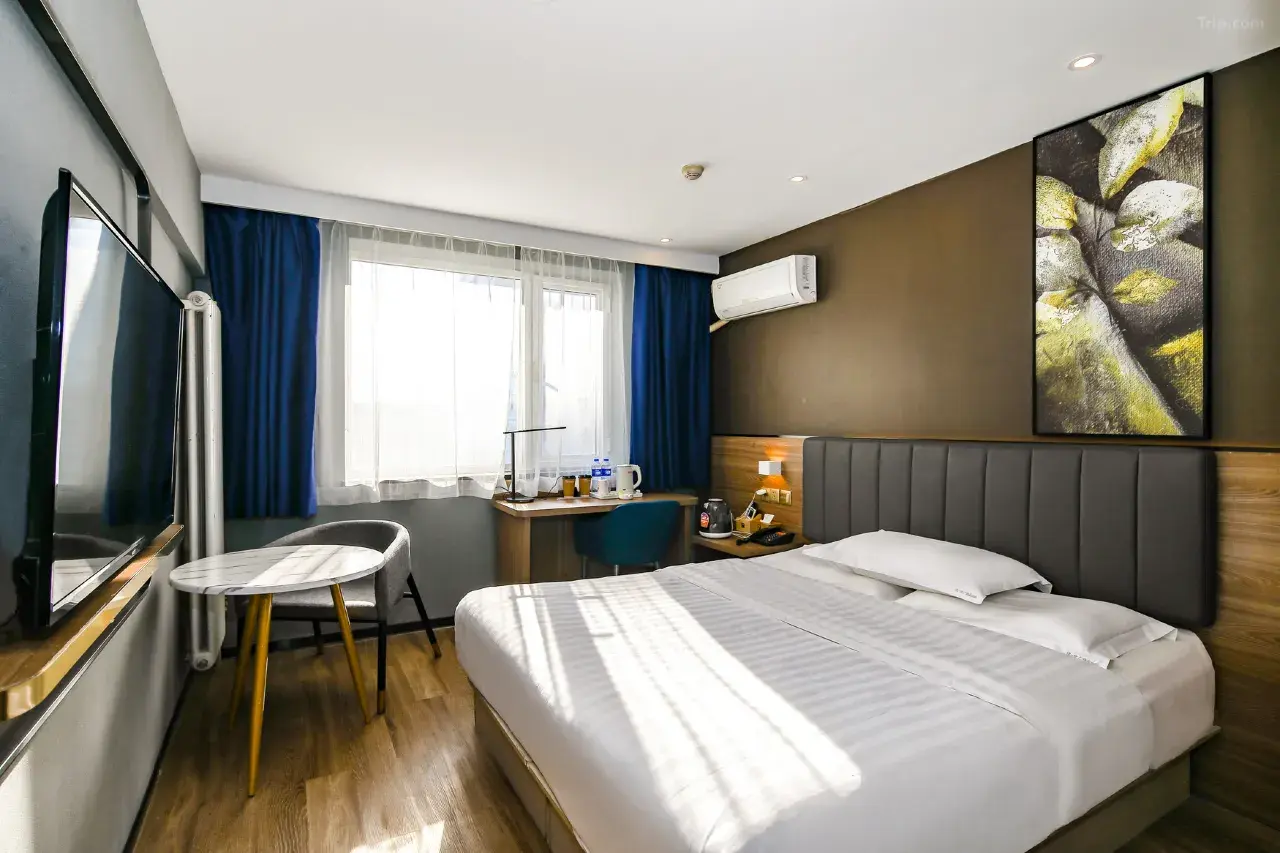
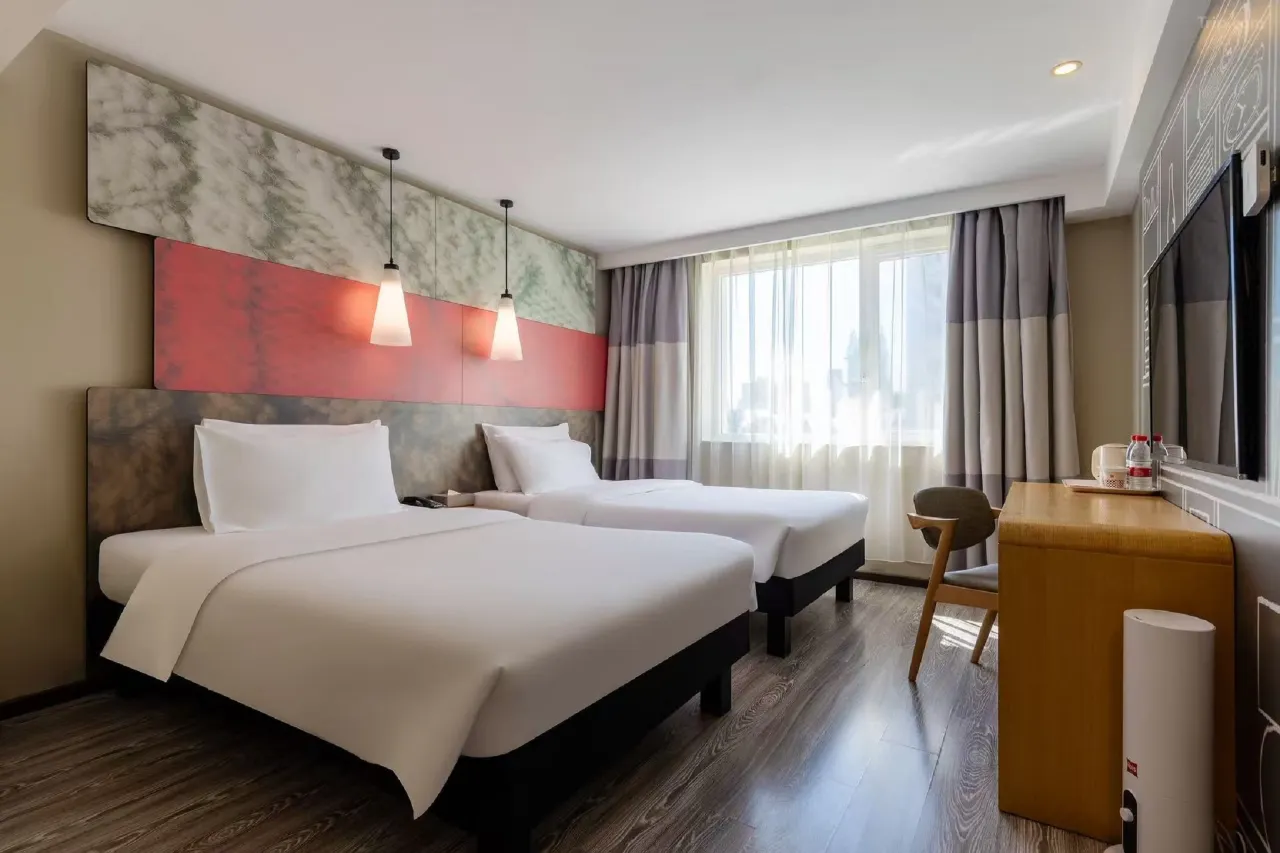
Hotel | Address | Rate | Facilities | Best for |
|---|---|---|---|---|
Hanting Hotel Tianjin Five Avenues Xiaobailou 汉庭 天津五大道小白楼酒店 | Building 2, Wadayuan, 3 Tai'an Road, Heping (和平区泰安道3号五大院2号院) · 022-5868 3666 | ¥180–280 | Self check-in, delivery robots, laundry room, luggage lockers, no pool | Budget travellers who still want to walk to the villas in ten minutes |
Orange Hotel Tianjin Ancient Culture Street 桔子酒店 天津古文化街店 | 7 Xing'an Road, Nankai (南开区兴安路7号) | ¥200–300 | Breakfast, 24-hour desk, compact rooms | One-day visitors: the old street is five minutes away and the Eye fifteen |
Home Inn Tianjin Railway Station Italian Quarter 如家 天津火车站意大利风情街店 | 7 Ziyou Road, Hebei (河北区自由道7号) | ¥180–260 | 24-hour desk, breakfast, laundry | Late arrivals: station and the Italian quarter both within a ten-minute walk |
ibis Tianjin Railway Station North Square 宜必思 天津火车站北广场店 | 1 Chunhua Apartments, Huaxing Dao, Hebei (河北区华兴道春华公寓1号) | ¥160–240 | 24-hour desk, basic breakfast, no gym | The cheapest clean bed next to the station, for a 06:00 train out |
7 Days Premium Tianjin Station North Square 7天优品 天津站北广场地铁站店 | Rongxin Apartments, Huaxing Dao, Hebei (河北区华兴道荣信公寓) | ¥150–220 | 24-hour desk, paid laundry, small rooms | Sole travellers on a hard budget who need the station, nothing else |
Booking note —
If you would rather not piece the trains, taxis and timed entries together yourself, a guided Tianjin day tour from Beijing covers the highlights with a guide and door-to-door high-speed-rail transfers.
One day in Tianjin: four ways to spend it
Everything in the city fits inside a day, because the sights sit in three clusters ten minutes apart. What changes is what you leave out: river and old town, the coast, the western canal town, or the Great Wall. Each route below is written the way the day runs, with the lunch stop in place.
A. The classic city Old street, the wheel from outside, the villas, the Italian quarter. 8 hours, 6 km on foot, ¥230–360 — first-timers who want the postcard set.
B. City plus the coast The Binhai library and the maritime museum, then the old town at dusk. 11–12 hours, ¥150–260, comfortable by car and long by metro.
C. West to Yangliuqing Prince Qing's mansion, the canal town, the Shi family courtyard and the Grand Canal. 8 hours, ¥300–450, half of it in a car.
D. Wall and temple Huangyaguan Great Wall and the Liao-dynasty Dule Temple. 11 hours, ¥500–700 with a driver.
The downtown route logic
01 Tianjin Eye wheel on Yongle Bridge
02 Xibeijiao market breakfast, 07:00–09:30
03 Dabei Temple north bank, near the wheel
04 Ancient Culture Street Tianhou Temple, folk shops
05 Italian Style Town Marco Polo Square
06 Tianjin Railway Station arrival, 24–35 min from Beijing
07 Jinwan Plaza Century Clock, river hub
08 Porcelain House Chifeng Road, ¥50
09 Xikai Church 1916, French Romanesque
10 Five Great Avenues 1.28 km² villa district
Option A
The classic city — old street, the wheel, the villas, one long lunch
Full day · 8 h 5–6 km on foot · ¥230–360
The route a first-time visitor should take, in the order that keeps you walking along the river rather than doubling back. Every hop is fifteen minutes on foot or two metro stops.
09:00 Tianjin Station. Out of the north exit and straight onto the embankment: Century Clock, the iron bridge, the glass towers of Jinwan in one frame. Ten minutes, one photograph — you will come back here after dark.
09:40 Ancient Culture Street (古文化街). Two metro stops or a twenty-minute walk along the water. Six hundred metres of low shops: clay figures at Nirenzhang, kites, paper cuts, and the Tianhou Temple at the far end, with its sea-faring goddess and the oldest timber gate in the city (¥10). An hour, longer if you buy anything.
11:00 Tianjin Eye, from the outside (天津之眼). A ten-minute walk upriver to the south bank. The wheel is the photograph; riding it at midday means forty minutes in a queue for a view you already have. Look at it from the embankment, then walk back through the old town.
12:30 Lunch at the Nanshi food street. Five minutes from the temple, inside the old town: guobacai, jianbing guozi, fried dough, a bowl of tofu soup. Sit down rather than graze — ¥30–60 for a full meal, and the square empties by one.
14:00 Five Great Avenues (五大道). A fifteen-minute taxi to Minyuan Square. Two thousand villas from the 1920s and 30s inside 1.28 square kilometres; the point is the lanes, not any single house. Walk Chengdu Road and Chongqing Road, and add Prince Qing's mansion (庆王府) if the gates are open — one of the few interiors you can enter.
15:30 Jingyuan (静园). Twenty minutes on foot, five by car. The garden villa where Puyi, the last emperor, lived after his abdication in 1925 — small, quiet, the strangest piece of history in the city. An hour at most.
16:40 Porcelain House (瓷房子). Ten minutes by taxi. Four thousand vases and a hundred million fragments glued over a French villa; the outside is the photograph, the inside takes twenty minutes. ¥50, and the queue thins after four.
17:40 Italian Style Town (意式风情区). Ten minutes north-east to Marco Polo Square. The piazza, the arcade and the theatre read best as the lights come on. Dinner here or south of the river — carp in vinegar, river shrimp, tofu soup — then a ten-minute walk to the station for an evening train.
Optional Haihe cruise, ¥80 by day and ¥100 after dark, fifty minutes from the docks beside the station. Worth it only if you skip the evening walk; the two show you the same bridges.
Watch out — The wheel and the porcelain house both queue between eleven and three, and the order above puts you at each of them outside that window. Ancient Culture Street is a shopping street at heart — for the temple without crowds, be there at nine instead of ten.
Option B
City and coast — the library, the sea museum, the old town at dusk
11–12 h · long day ¥150–260 · best with a car
For travellers who have seen enough temples and want the two things only Tianjin has: a library that looks like a spaceship, and a national maritime museum on the edge of the Bohai. A long day by metro, a comfortable one by car.
08:00 Metro line 9 to Binhai. Fifty minutes from Tianjin Station to Citizen Plaza, an hour by car on the expressway. Go early: the library opens at ten and the queue forms outside at half nine.
10:00 Binhai Library (滨海图书馆). White terraces with a glowing sphere in the middle — a working library, not a set, so keep your voice down and leave the tripod at the hotel. Free, closed Monday morning. Forty minutes inside; the photographs happen from the upper terraces.
12:00 Lunch in Binhai. Seafood is the reason to eat out here: prawns, clams, a whole fish, cheaper and fresher than in the centre. ¥60–120. The mall beside the library is reliable; the streets behind the fishing harbour are better.
13:30 National Maritime Museum (国家海洋博物馆). Twenty minutes further east. Free, but timed entry has to be booked about a week ahead with your passport. Two hours, and the reason is scale: ships, whales, a whole hall of ocean geography. Closed Mondays.
16:00 Back to the city. Fifty minutes by metro, thirty-five by car. Sit on the right for the river.
17:00 Ancient Culture Street and the wheel (古文化街 · 天津之眼). An hour in the old town once the tour groups have gone, then the wheel from the embankment as it starts to light.
18:30 Five Great Avenues, one evening lane. A lane on foot, a coffee in a villa café, or the carriage if your legs are finished — then the Italian quarter for dinner, ten minutes from the station.
Watch out — The maritime museum needs its booking roughly seven days ahead and turns away walk-ins on busy weekends; the library closes all day Monday. On public transport, drop the museum rather than the library.
Option C
West to Yangliuqing — a mansion, a canal town, and the Grand Canal
Full day · 8 h · car recommended ¥300–450
The day for travellers who have done the downtown set, or who want one place where nothing was rebuilt for visitors. Yangliuqing is a canal town twenty kilometres west: wooden shopfronts, New Year print workshops, and the Shi family's walled courtyard house.
09:00 Prince Qing's Mansion (庆王府). Start in the city: the 1920s villa of a Qing prince on Chongqing Road, with its tiled courtyard and piano room. Forty minutes, and it makes yesterday's villas legible as houses rather than façades.
10:30 Drive west to Yangliuqing (杨柳青古镇). Thirty-five to forty-five minutes by car, an hour by bus 824. The town is free to walk: one long stone street of two-storey wooden houses, a theatre, and workshops where New Year prints are still carved and pressed by hand.
12:30 Lunch on the old street. Canal cooking: braised fish, river shrimp, cornmeal dumplings, sweet-and-sour ribs. Two or three plain restaurants along the street, ¥40–80 for two; the courtyard one at the north end is the best.
13:45 Shi Family Mansion (石家大院). The largest private courtyard house in northern China — eighteen halls and a theatre stage, built by a salt-and-banking family in the 1870s. Ninety minutes; the theatre and the wedding hall are the rooms people remember. Ticketed at the gate.
15:30 The Grand Canal (大运河). The town grew because of it: the water gate, the old landing stage, the stretch where grain barges turned for Beijing. Walk the towpath for twenty minutes, or take the short boat if it is running — the canal reads better from the water.
17:00 Back to the city. Forty minutes by car. Dinner near the station or in the Italian quarter, and an evening train if you are returning to Beijing tonight.
Watch out — Yangliuqing is a working town rather than a scenic zone: most workshops close between twelve and two, and a weekday afternoon can feel empty. Weekend for the print shops, but book the car — the bus stops are not marked in English.
Option D
Wall and temple — Huangyaguan and the Liao-dynasty Dule Temple
11 h · car essential ¥500–700 with driver
The only route that leaves the city. Huangyaguan is the Great Wall as it runs through the mountains north of Tianjin — restored where it matters, empty on weekdays, steep enough to be a real walk rather than a photo stop. Dule Temple at Jixian is a thousand years older than any of it.
07:30 Leave the city. Two hours north by car through Jixian, or a bus to Jizhou plus a taxi. Take the early start: the wall gets its first tour buses at half ten.
09:45 Huangyaguan Great Wall (黄崖关长城). The Taiping Pass section climbs a ridge with forty-odd watchtowers strung along it; the west stretch takes two hours at an honest pace and gives you the empty photographs. Cable car up if you want to save your legs for the descent. Water from the one shop at the gate — there is nothing on the wall.
12:30 Lunch at the foot of the wall. Farmhouse tables: trout from the mountain streams, chestnut chicken, wild-herb dumplings, ¥50–90. Plain rooms, no English menu, the best meal of this route.
14:00 Dule Temple (独乐寺), Jixian. Forty minutes back down the valley. Two halls from the Liao dynasty, 984 AD: a sixteen-metre wooden Guanyin with eleven faces, and a bracket system that predates every building in Beijing. Forty-five minutes, and quietly one of the most important buildings in China.
15:30 Jizhou old town. An hour on the drum tower street for chestnuts and dried fruit before the drive back.
17:00 Drive back. Two hours; at the station by seven, in Beijing by nine if the trains line up.
Watch out — This is not a metro day: without a car and driver it eats four hours in connections. Huangyaguan runs ten degrees colder than the city in winter and the cable car stops in high wind. If it rains, swap the wall for Dule Temple and the Jizhou museums, and keep the driver.
Two days in Tianjin: the city-only weekend, or the city and the sea
Two days is the sweet spot here — long enough that you stop rushing, short enough that nothing repeats. One version stays inside the ring road; the other spends the second day an hour east on the coast. Both assume you sleep in the centre, near Jinwan or the station.
A The city-only weekend Architecture one day, breakfast and museums the next. 11 km on foot, ¥500–750, nothing beyond the metro.
B City and coast The same first day, then Binhai: library, maritime museum, fishing harbour. ¥600–900, one long metro ride.
Option A
The city-only weekend — architecture one day, breakfast the next
Sat 09:00 – Sun 19:30 11 km on foot · ¥500–750
Day one is the classic city compressed: river, old street, porcelain, villas, the wheel after dark. Day two starts where locals eat breakfast, then goes west to the villas and two small museums most visitors never reach.
Day 1
09:00 Tianjin Station, then the old town. Century Clock on the north exit, then Ancient Culture Street and the Tianhou Temple. At eleven, walk upriver for the wheel from the south bank — exterior only, the queue is not worth a midday slot.
12:30 Lunch at the Nanshi food street, ¥30–60. Guobacai, jianbing, fried dough, tofu soup, then a taxi to the Five Great Avenues.
14:00 Five Great Avenues, Jingyuan, Porcelain House. Two hours among the villas — Minyuan Square, Chengdu Road, Prince Qing's mansion if it is open — then Jingyuan, Puyi's villa, then the porcelain house at four, when the queue has gone.
18:00 Italian quarter, dinner, the wheel lit. Marco Polo Square at dusk, dinner nearby or south of the river, then the embankment between the bridges. Sleep in the centre.
Day 2
08:00 Xibeijiao morning market. The breakfast locals actually eat: guobacai from a stall, jianbing folded in paper, a bowl of soy milk. It closes at nine, so this is the one morning you do not sleep in.
09:40 Five Great Avenues by carriage. Forty minutes seated from Minyuan Square, then one lane on foot — the plaques explain who built what. Morning is when the district belongs to residents rather than tour groups.
12:00 Lunch in a Chengdu Road café, ¥60–120. Inside a converted villa: ordinary food, extraordinary room, the slowest meal of the trip. Give it an hour and a half.
14:00 Beijiang Museum (北疆博物院). The 1914 Jesuit natural-history museum, reopened in its original building with the original oak cabinets and handwritten labels. Ninety minutes; the story of the collector is half the value.
15:45 Xikai Church and Nanjing Road. Ten minutes in the nave of the 1916 cathedral, then the pedestrian street back towards the river for last shopping.
17:30 Haihe cruise, then the train. Fifty minutes from the docks by the station, ¥100 after dark, the bridges lit from the water. Book the 17:30 sailing and you make the 19:30 train.
Watch out — Sunday afternoon is when Tianjin families go to the Five Great Avenues and the carriages queue from two o'clock — villas in the morning, museums after lunch, exactly as ordered above. Beijiang closes on Mondays.
Option B
City and coast — one day of streets, one day of sea
Day 1 09:00 – day 2 18:30 9 km on foot · ¥600–900
For a first trip that has to include something no other Chinese city offers: the Binhai library, the national maritime museum, and a working fishing harbour on the Bohai. Day one stays inland and ends early, because day two starts with a train.
Day 1
09:00 The classic loop. Tianjin Station, Ancient Culture Street and the temple, the wheel from the south bank, then lunch at Nanshi (¥30–60). Afternoon in the Five Great Avenues with Jingyuan and the porcelain house. Dinner in the Italian quarter, which leaves you ten minutes from the hotel.
Day 2
08:30 Metro line 9 to Binhai. Fifty minutes to Citizen Plaza. The library opens at ten; the queue outside starts at half nine.
10:00 Binhai Library (滨海图书馆). Forty minutes inside the white terraces and the glowing sphere — a working library, so no tripods and no voices.
12:00 Lunch by the harbour, ¥60–120. Prawns, clams, a whole fish. The mall beside the library is reliable; the streets behind the fishing harbour are better.
13:30 National Maritime Museum (国家海洋博物馆). Free, timed entry booked a week ahead with your passport. Two hours, closed Mondays.
16:00 Fishing harbour and the seafront. Half an hour among the boats at Beitang, then the metro or the car back into the city — at the station by half six, or straight to the airport, twenty minutes away.
Watch out — The museum booking is the one thing that can break this day — do it before you arrive and keep the passport with you at the gate. Both the library and the museum close on Mondays; a Monday here becomes the city loop twice.
Three days in Tianjin: go deeper into the city, or go out to the wall
The third day decides whether a trip becomes a place you know or a list you finished. Spend it inside the ring road and you get the layers under the sights; spend it outside and you get the Great Wall with a tenth of the Badaling crowd. Both routes assume the two-day weekend came first.
A The slow city Two core days, then small museums, a warlord's house and a teahouse. 15 km on foot, ¥750–1,100.
B City and the wall The same two days, then a full day at Huangyaguan and Dule Temple. ¥900–1,400 with a driver.
Option A
The slow city — the third day as a set of small doors
3 days · 15 km walking ¥750–1,100
Days one and two follow the city-only weekend. The third is built from five small places within two kilometres of each other that almost no short-break visitor reaches: a Qing garden, the house of the general who arrested Chiang Kai-shek, a lane of bookshops, an evening of crosstalk, and one last long dinner.
Day 3
09:00 Jingyuan (静园). The garden villa where the last Qing emperor lived after his abdication. An hour, slowly: the rockery, the theatre stage, the rooms left as they were. The least visited piece of history in the city.
10:30 Zhang Xueliang's residence (张学良故居). Two streets away: the 1920s house of the general who detained Chiang Kai-shek in 1936, with three rooms of photographs that explain the rest of the century.
12:00 Lunch in Heping district, ¥80–150. The best lunch of the trip: a proper Tianjin table — carp in vinegar, prawn, tofu soup, a plate of dumplings. Book, or arrive before noon.
14:00 Heping Road and the book lanes. The pedestrian street and the lanes behind it: old bookshops, stationery, tea shops. Nothing historic, everything alive. Two hours of not being a tourist.
16:30 Five Great Avenues, last look. One lane you did not walk on day two, then a coffee in the villa you liked. Familiarity is the reward for a third day.
18:30 Crosstalk at a teahouse (相声). Tianjin is the home of xiangsheng, and the small houses near the old town run two-hour sets from about seven. No English, all timing — sit near the front and you will still laugh. ¥60–150.
21:00 Late dinner by the river. Noodles or a night-market plate, then the walk back along the lit embankment.
Watch out — Crosstalk tickets are sold on the day or online a few days ahead, and weekend sets sell out; the smaller houses are the better ones. Jingyuan closes at five, so do not move it to the afternoon.
Option B
City and the wall — the third day out at Huangyaguan
3 days · car on day three ¥900–1,400
The two city days, then one long day north: the Great Wall at Huangyaguan and the Liao-dynasty Dule Temple at Jixian. It is the route for travellers who may never come back to China and want both the city and the wall in one trip.
Days 1–2
Old town and villas on day one; the breakfast market, Beijiang and Xikai on day two. Book the car for the third morning before you arrive — drivers quote by the day, not by the kilometre.
Day 3
07:30 Leave the city. Two hours north through Jixian. The wall gets its first tour buses at half ten, so the early start is the whole point.
09:45 Huangyaguan Great Wall (黄崖关长城). The Taiping Pass ridge, forty-odd watchtowers, two hours at an honest pace on the west stretch. Cable car up if you want to save your legs; water from the shop at the gate, because there is nothing on the wall.
12:30 Lunch at the foot of the wall, ¥50–90. Farmhouse tables: stream trout, chestnut chicken, wild-herb dumplings. No English menu, best meal of the route.
14:00 Dule Temple (独乐寺). Forty minutes back down the valley: two Liao-dynasty halls from 984 AD, a sixteen-metre wooden Guanyin with eleven faces, and the oldest timber bracket system in China. Forty-five minutes.
15:30 Jizhou old town, then the drive back. An hour for chestnuts and dried fruit on the drum tower street; at the station by seven.
Watch out — Without a car this day eats four hours in connections, and the last bus back from Jixian leaves early. Expect the cable car to stop in high wind and the wall to run ten degrees colder than the city in winter; if it rains, keep the driver and give the day to Dule Temple and the Jizhou museums.
The practical part: trains, tickets, money, weather, traps
Prices below are indicative for 2026 and should be confirmed when you book. Timed entry is now normal in Tianjin — turning up without a reservation is the most common reason people miss a sight.
Tianjin and Beijing share a rail corridor, so the two are easy to pair; if Tianjin is one stop on a wider trip, our Beijing itineraries show how to combine them.
Getting there from Beijing
High-speed trains leave Beijing South and Beijing Fengtai roughly every 10–20 minutes from early morning to about 22:00. Journey time is 24–35 minutes. Arrive at Tianjin Station , not Tianjin South — the main station sits on the river, five minutes from the Italian quarter and ten from the villas' edge.
Buy the return leg when you buy the outbound. Friday evening and Sunday afternoon trains fill first, and Chinese rail tickets are name-bound: there is no walk-on flexibility and no cheap last-minute option. Bring your passport — it is your ticket.
Getting around
Metro lines 2 and 3 cover the centre, line 9 runs east to Binhai. Fares are ¥2–7 and stations have English signage; single-journey tickets are sold from machines that accept cash or mobile payment. Shared bikes are the fastest way around the Five Great Avenues and cost ¥1.5 per 30 minutes.
Use ride-hailing apps for anything cross-town — a 10-minute ride is ¥12–18 and removes the language problem entirely. Do not accept the drivers who approach you inside the station; the official taxi rank is downstairs.
Money and payment
Tianjin is close to cashless: mobile payment works everywhere from the wheel to a market stall. Set up Alipay or WeChat Pay with an international card before you arrive — foreign cards work in most shops but not all, and small breakfast stalls may not take them. Carry ¥200 in cash for the rare case.
ATMs at the station and in bank branches accept foreign cards; airport and hotel exchange rates are poor.
Weather through the year
April–May is the best window: 15–25°C, dry, plane trees in leaf. September–October is equally good and slightly clearer. June–August is hot and humid with heavy rain; the coast is at its best but the city is sticky. November–March is cold and dry, −6 to 6°C, with crisp light and very few tourists — dress for wind off the river.
Hours, closures and timing
Museums close on Mondays; the wheel stops for maintenance on Monday until 18:00. Most sights open at 09:00, which means the first hour of a day is best spent outdoors. Sunset in Tianjin falls between 16:50 in December and 19:40 in June — plan the riverbank accordingly, because the whole city looks different once it is lit.
Common traps
Near the old street and the Italian quarter you may be invited into a "free tea tasting" or an "art exhibition" that ends with a price list. Souvenir porcelain sold as antique is not antique. Teahouse comedy tickets bought from touts outside cost double. None of this is dangerous — it is just the standard tourist belt, easily avoided by walking two streets away.
Entry prices and booking, at a glance
Place | Price | How to book | Watch out |
|---|---|---|---|
Five Great Avenues | Free | Open all day, no booking | Carriage loop ≈ ¥80 |
Ancient Culture Street | Free | Open all day; Tianhou Temple ¥10 on site | Crowded 11:00–16:00 |
Italian Style Town | Free | Open all day | Best before 10:00 or after 17:00 |
Porcelain House | ¥50 | Online or on site; open daily to 19:00 | 45 minutes inside is enough |
Tianjin Eye | ¥70 day / ¥100–110 night | Timed slot online, 1–3 days ahead | Monday maintenance until 18:00 |
Haihe cruise | ¥80 day / ¥100 night | At the dock or online | Last departures around 21:00 |
Tianjin Museum | Free | Free timed reservation | Closed Monday |
National Maritime Museum | Free | Reserve about 7 days ahead, passport on entry | Closed Monday; 3 hrs needed |
Binhai Library | Free | No booking; working library rules | No tripods, quiet floors |
Budget, per personDay-tripper on the one-day route: ¥150–250 on the ground, plus ¥110–180 return rail. Two-day weekend with a mid-range hotel in Heping: ¥700–1,100 all-in. Adding Binhai costs about ¥60–120 in transport and one long day. Tianjin is one of the few Chinese cities where the sights cost less than the food.
Plan your Tianjin itinerary
Whether you have a layover, a weekend or a full three days, the route you choose depends on your dates, your mobility and how much of the food and architecture culture you want to sit down and enjoy. Tell us how long you have in Tianjin and what you care about most, and we will shape the days around it - gardens of villas and museums by day, the river and a crosstalk teahouse by night, with a Huangyaguan or Binhai day added if the time allows. You can request a personalised Tianjin itinerary here.

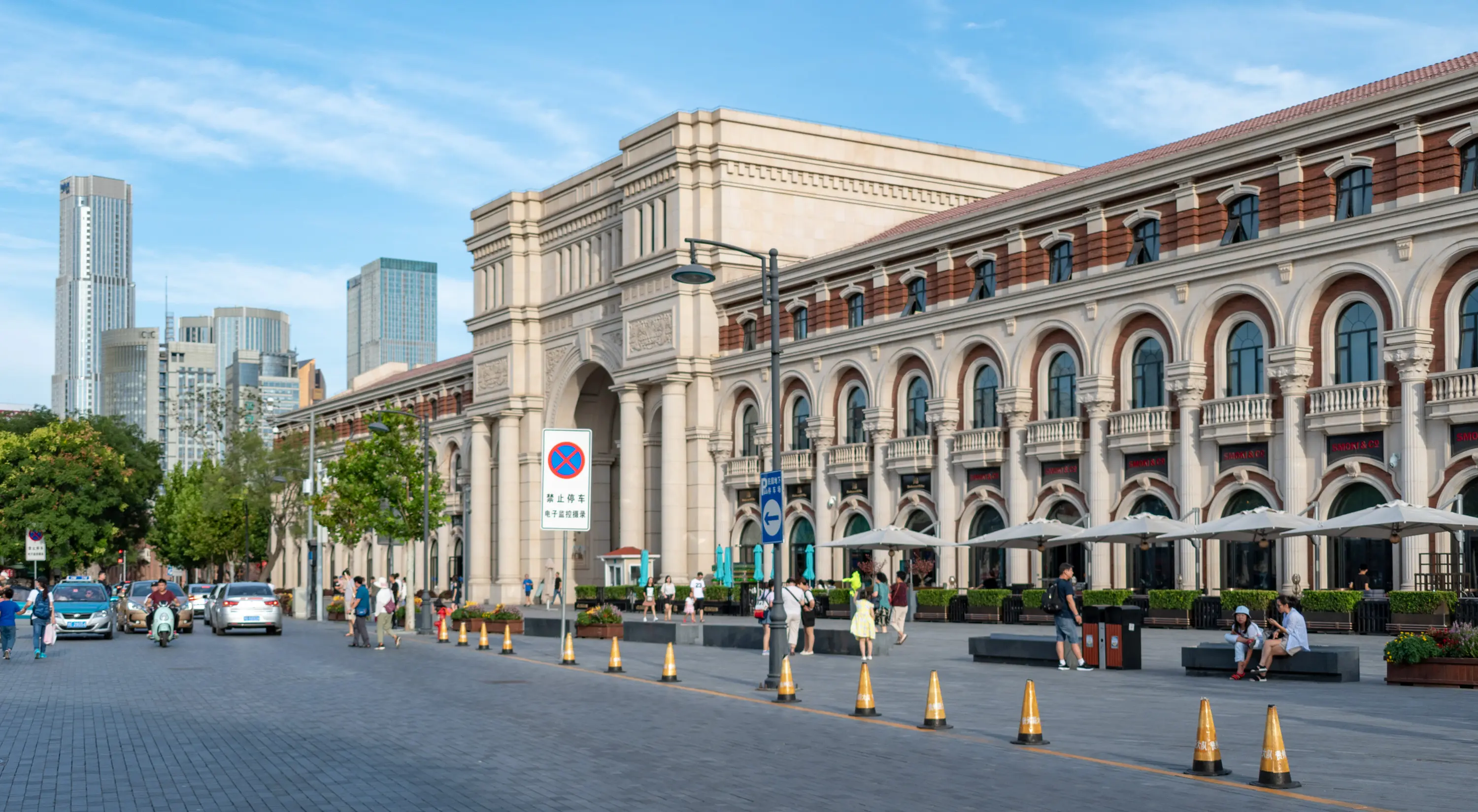
Traveler Discussions
Questions from travelers