
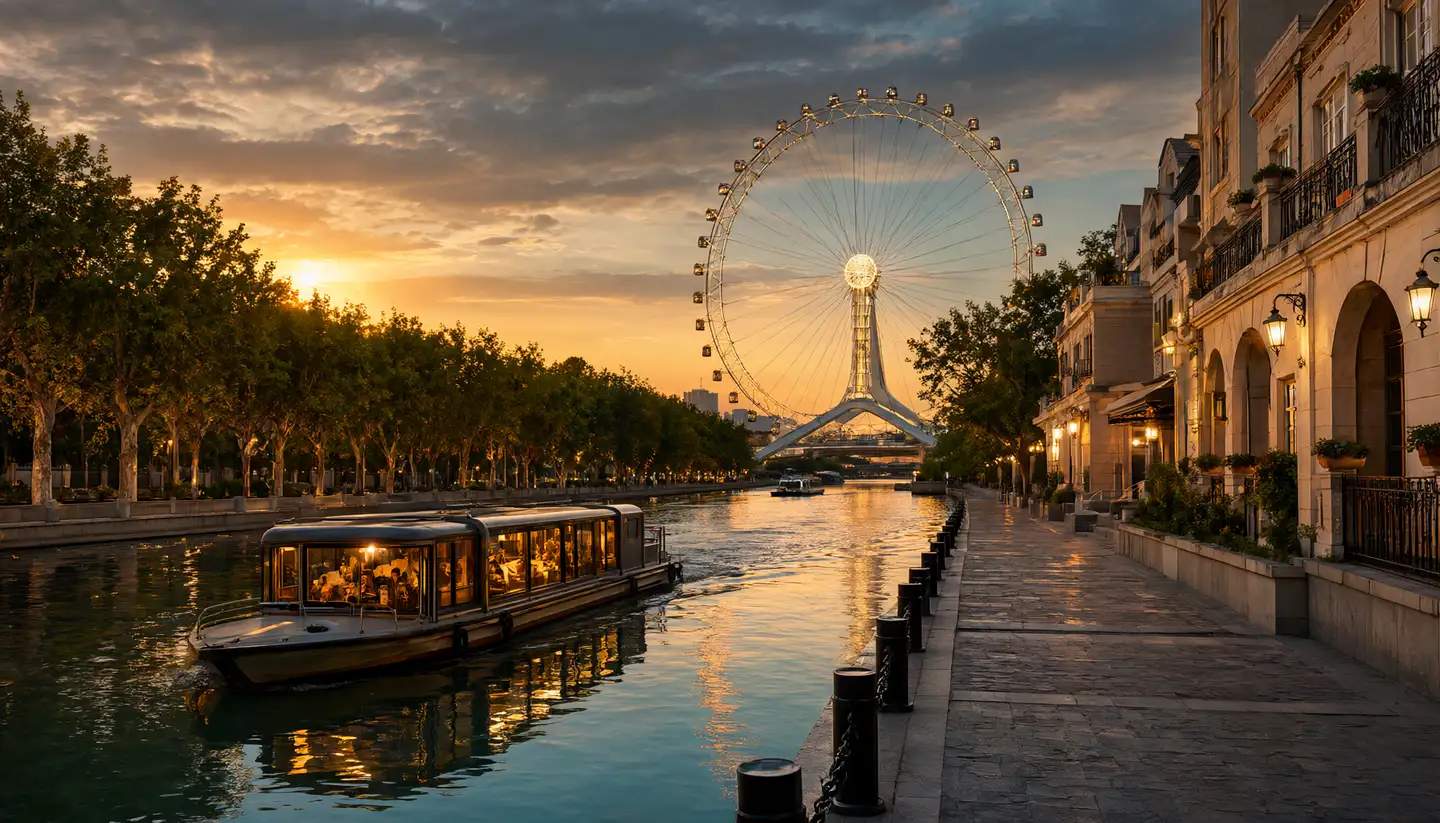
Tianjin is 32 minutes from Beijing by train and costs almost nothing to see. Below are 19 things worth your time across seven districts — with exact prices, opening hours, booking windows, bicycle routes, restaurant lists and six attractions you can skip.
In the north-east corner of the North China Plain, where the Haihe River turns for the sea, Tianjin holds something no other Chinese city has: nine foreign concessions that ran side by side from 1860 to 1945, each with its own government, police and tax office. Their banks, churches, villas and iron balconies are not preserved exhibits — people still live in them, shops still open in them, and the whole thing is free to walk through.
What makes Tianjin unusual as a city break is the cost structure. The two things visitors come for — a European streetscape and a lit riverfront — charge nothing. The one famous paid sight, the Tianjin Eye, is a 110-metre wheel built onto a road bridge, and it is best appreciated from below. Add a breakfast culture that is more interesting than most Chinese cities' dinner culture, and you have a day that costs less than a Beijing museum queue.
Tianjin pairs perfectly with the capital - if Beijing is already on your list, start with our guide to the best things to do in Beijing, then hop the short high-speed train down for a night by the river.
Tianjin at a glance: where to go, district by district
Where to go, and what each district is for
District | Known for | Top things to do | Suggested time |
|---|---|---|---|
Heping | Villas, cafés, the 1920s concession grid | Five Great Avenues, Porcelain House, Xikai Cathedral, Jingyuan, Jiefang North Road | 1 day |
Hebei | The river, the wheel, Italian architecture | Tianjin Eye, Italian Style Town, Haihe night walk, Dabei Monastery | Half day + evening |
Nankai / old town | 1326 temple, crafts sold at the bench | Ancient Culture Street, Drum Tower lanes, Guangdong Guild Hall, Confucius Temple | Half day |
Hongqiao | Breakfast quarter and old Hui neighbourhood | Xibeijiao stalls, Shenyang Road antiques, Great Mosque | 2–3 hrs, early |
Binhai | New-build spectacle and national museums | Binhai Library, National Maritime Museum | Half–full day |
Jizhou | Great Wall without the crowds, Liao timber hall | Huangyaguan, Dule Temple, Panshan | Full day |
Xiqing | New Year prints and merchant mansions | Yangliuqing, Shi Family Mansion, print workshops | Half day |
01 — Heping District
Villas, cathedrals and the 1920s city
Heping is where Tianjin looks least Chinese and works best on a bicycle. Four of the nineteen entries sit inside a 2-kilometre square, and the whole district is flat, tree-lined and free.
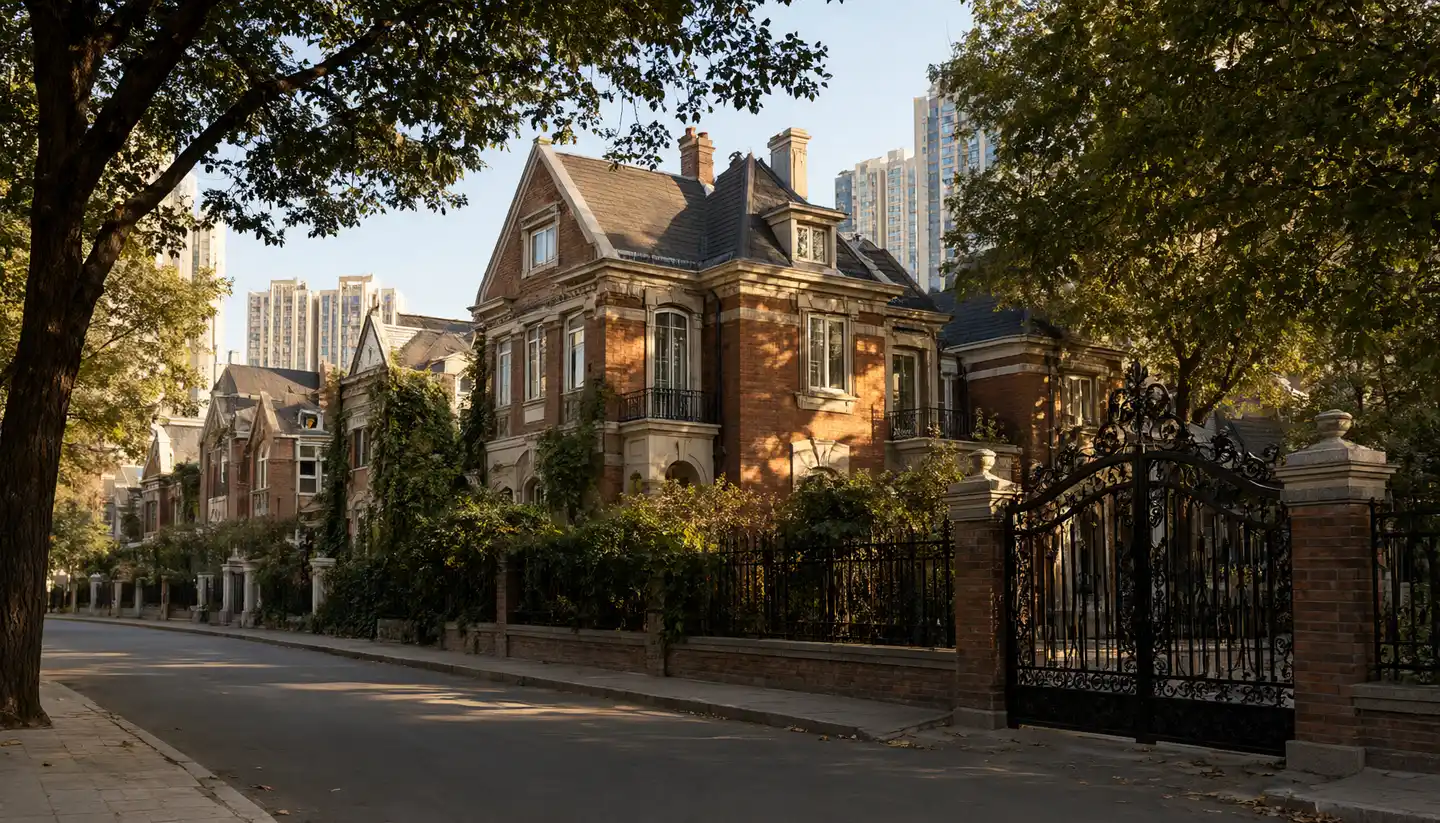
The British concession ran here from 1860, and after 1900 it filled with the villas of warlords, bankers, ousted ministers and industrialists — more than 2,000 of them, in red brick, white stucco and half-timbering. Most are still private homes. The streets are named after Chinese cities that were never there, which is why every corner looks like a different country.
Top attractions
· Five Great Avenues (Wudadao): 1.4 km² of 1920s villas, best ridden.
· Porcelain House: a villa clad in millions of porcelain shards.
· Xikai Cathedral: twin 45-metre spires, 1916.
· Jingyuan & Zhangyuan: where Puyi lived after abdication.
· Jiefang North Road: 1920s bank headquarters you can still walk into.
Best for
Architecture travellers, photographers working at 07:30, couples who want a café street, and anyone with half a day and no budget.
Tips
· Ride before 10:00. After that the trolleys and horse carriages arrive and the lanes fill.
· Shared bikes are banned inside Minyuan Square — park at the gate.
· Mondays close Jingyuan, Zhangyuan and the Qingwang Mansion. Plan Heping as a walking day if you are here on a Monday.
· Carry your passport: the small house museums register every visitor.
01 Free
Ride a bicycle through the Five Great Avenues
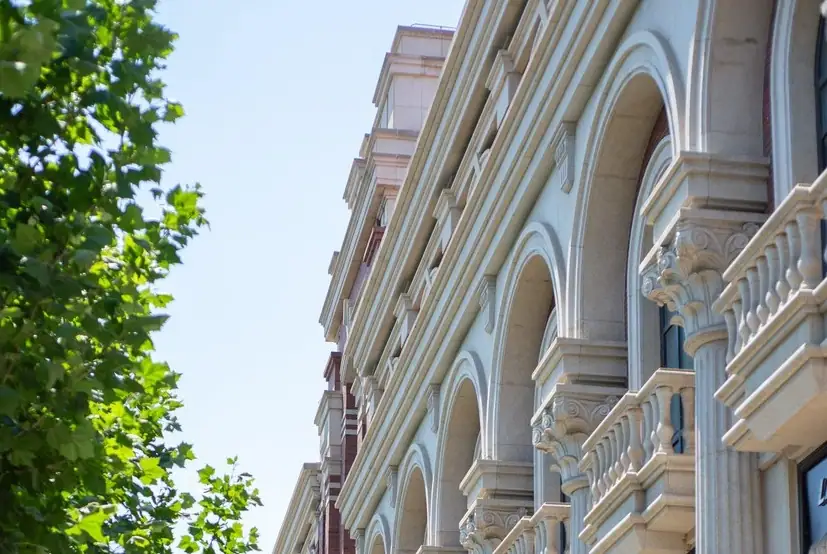
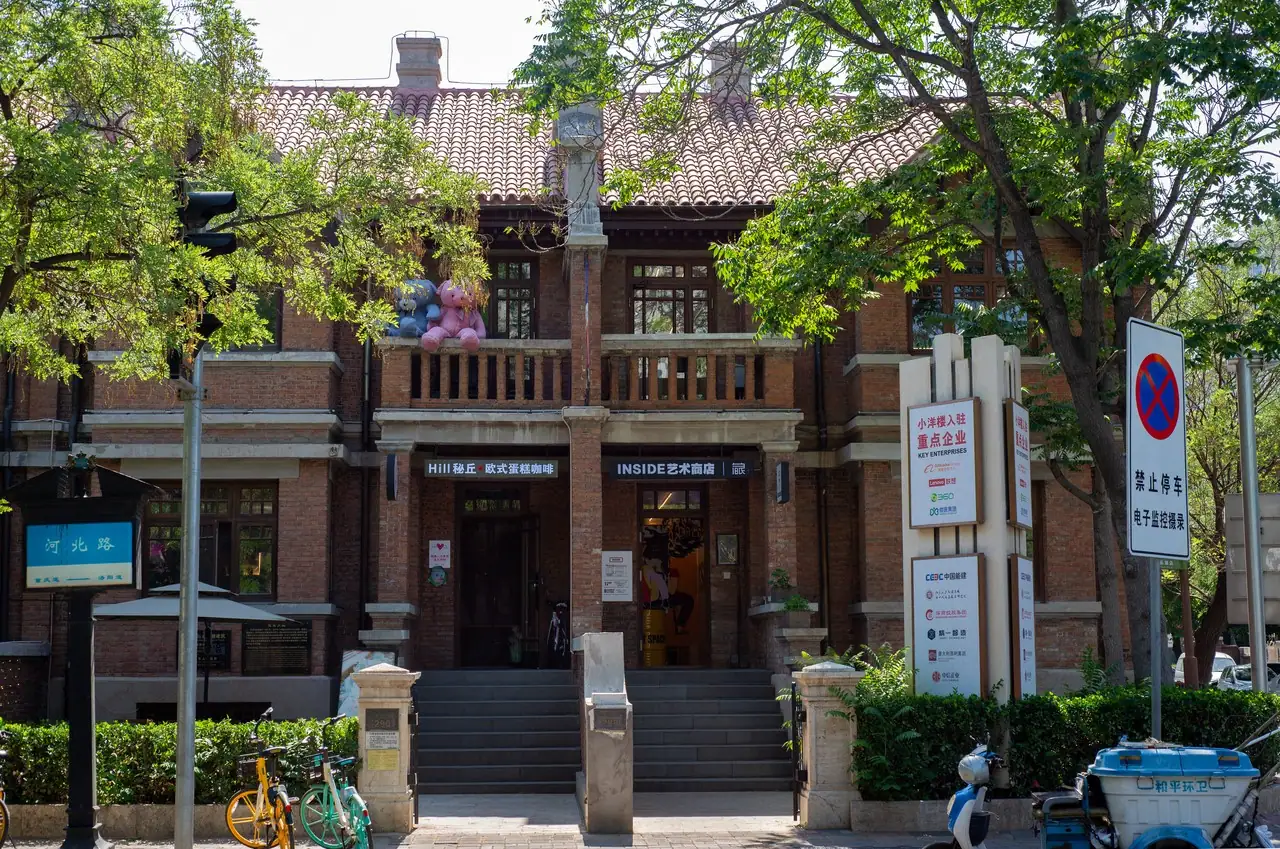
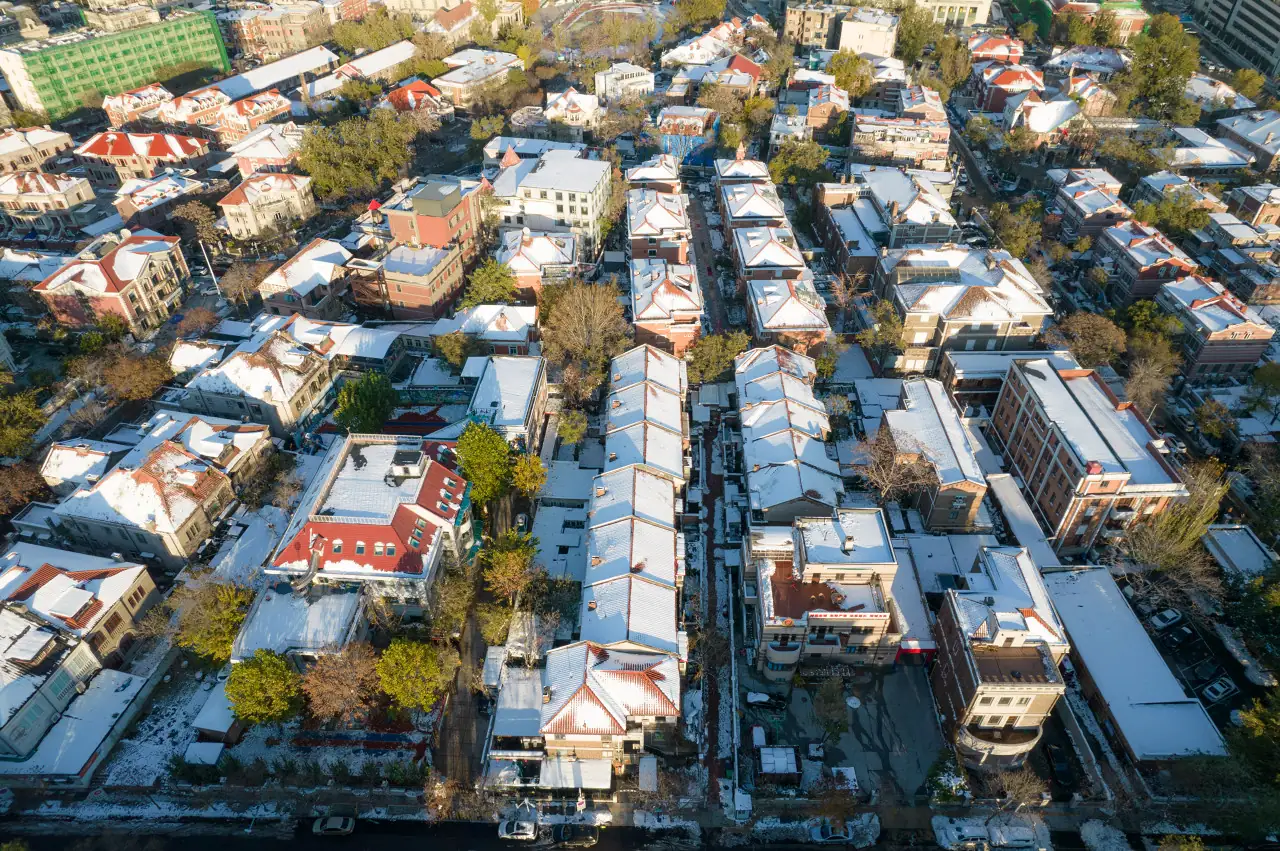
The best hour in Tianjin, and it costs the price of a shared bike.
90–120 min | Free + ¥1.5 bike | 07:00–10:00 | No booking |
Location | Wudadao, Heping District, south of Nanjing Road; start at Minyuan Square |
What it is | 1.4 km² historic district, 2,000+ villas built 1900–1940, most still private homes |
Opening hours | Streets always open; Minyuan Square 06:00–22:00 |
Admission | Free; shared bike ¥1.5 per 15 minutes |
Paid interiors | Qingwang Mansion ¥24 (closed Mondays, ~40 min) |
Suggested time | 90–120 minutes including stops |
Best hour | 07:30–09:30, low sun on brick, almost nobody out |
What to see
The five avenues themselves: Marché, Munan, Dali, Chongqing and Changde, plus the cross streets. Ride them in a loop rather than a line — Chongqing Road for the grandest facades, Munan Road for plane trees and iron balconies rusting through paint, Changde for the quietest stretch of pavement in the district.
Three houses worth getting off the bike for: the Qingwang Mansion on Chongqing Road (¥24, forty minutes, the best-preserved interior); the Xiannong courtyard block where the cafés cluster; and the tiled facade of Geda Lou on Hebei Road, which looks assembled from a skip and is the most photographed wall in Heping.
Minyuan Square: the old racecourse, now a running track, a playground and a ring of cafés. Minyuan Market inside does breakfast from 08:00 — soy milk, youtiao, passable coffee. Better: eat before you come, in Hongqiao, and use the square for a bench at 10:00.
How to get there
Option | Cost | Time | Notes |
|---|---|---|---|
Metro Line 1 to Xiaobailou, then bike | ¥3 + ¥1.5 | 5 min ride | Best combination; bikes dock outside every exit |
Metro Line 1/3 to Yingkoudao, walk | ¥3 | 12 min walk | Edge of the district; walk in from Chengdu Road |
Taxi / DiDi from the river | ¥12–18 | 10 min | Ask for 睦南道 Minyuan; drivers know the square, not the streets |
Restaurants nearby
Place | Where | Hours | Price | Order |
|---|---|---|---|---|
Minyuan Market | Inside Minyuan Square | 08:00–21:00 | ¥15–40 | Soy milk, youtiao; the coffee is the weak point |
Kiessling (Qishilin) | Zhejiang Rd, 10 min walk | 11:00–21:00 | ¥80–150 | 1901 German bakery-café; the bread counter |
Cafés on Xiannong block | Xiannong courtyard | 09:00–22:00 | ¥30–60 | Coffee and a long table; best mid-morning |
02 ¥50
Porcelain House
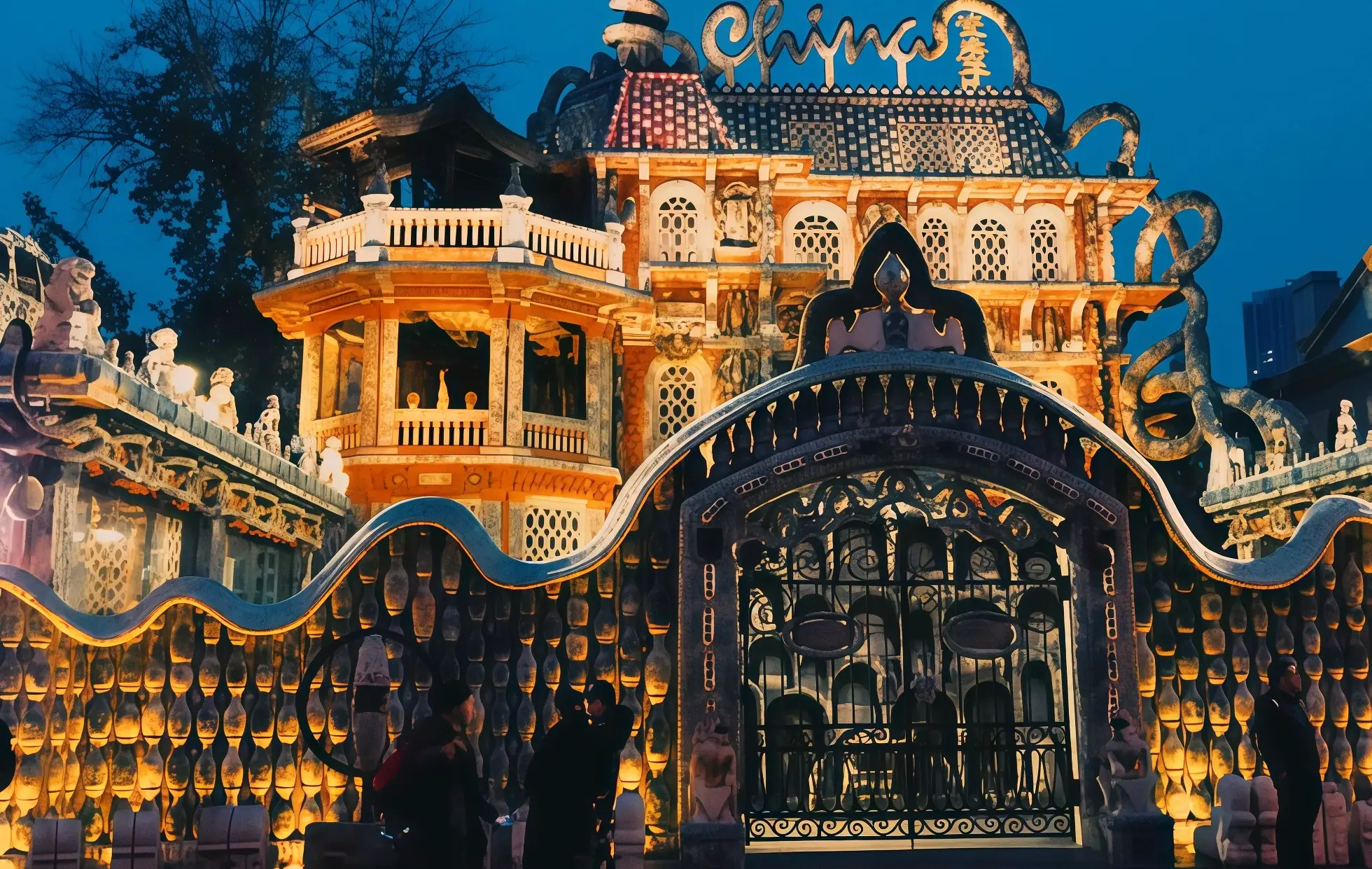
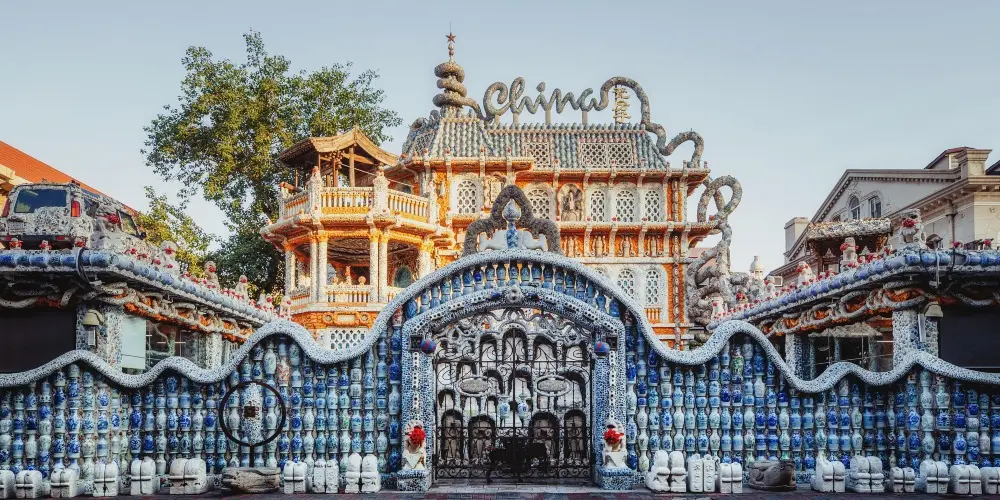
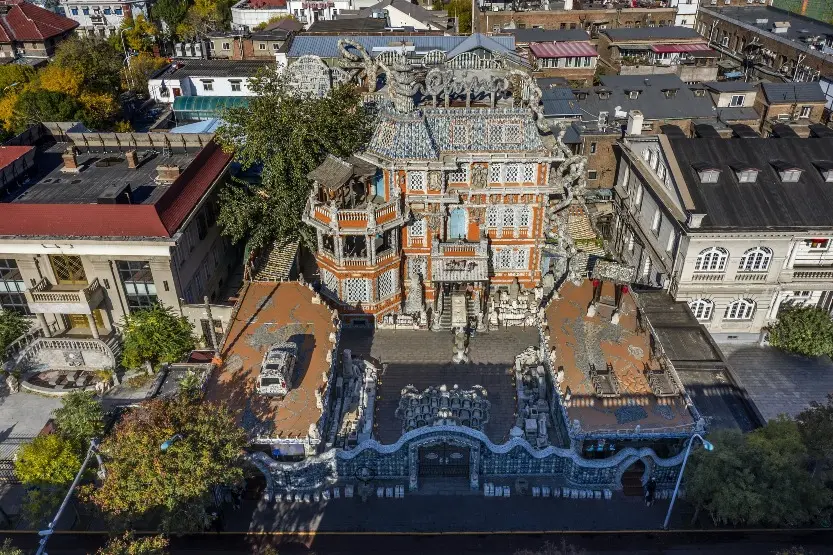
A French villa wrapped in several hundred million fragments of ancient porcelain — spectacle, not scholarship.
40–50 min | ¥50 | 09:00–18:00 | Closed Monday |
Location | 72 Chifeng Road, Heping District |
Built | 1900s French concession villa, re-clad from 2002 by collector Zhang Lianzhi |
Opening hours | 09:00–18:00, last entry 17:00; closed Mondays |
Admission | ¥50 adult; roughly half for children and seniors |
Suggested time | 40–50 minutes including the queue |
Key feature | Mosaic of broken Jun, Qinghua and whiteware; marble lions, porcelain furniture, dragon-spine roof |
What to see
From the pavement opposite: the wall itself — four storeys of shard mosaic, a porcelain dragon climbing the roofline, and marble lions on the step. That is the photograph, and it costs nothing.
Inside: narrow corridors, a stair bottleneck, and twenty minutes of rooms papered with plates and bowls. Worth the ¥50 only if maximalist folk art is your thing; otherwise the outside is the whole experience.
How to get there
Ten minutes by bike or ¥12 by taxi from Minyuan Square; metro Line 3 to Heping Road then 8 minutes on foot. It sits between the Five Great Avenues and the river, which makes it an easy midday stop.
03 Free
Xikai Cathedral
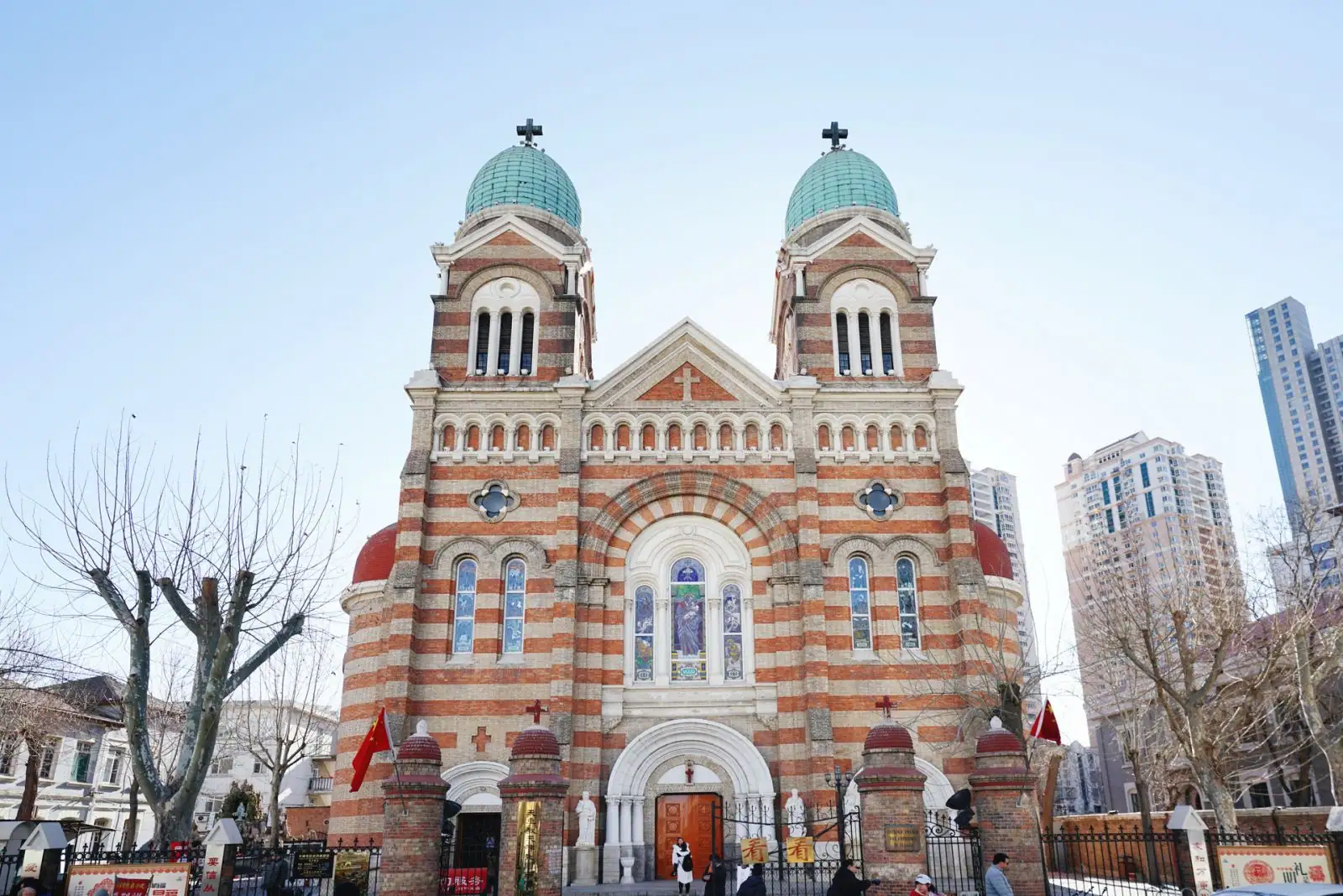
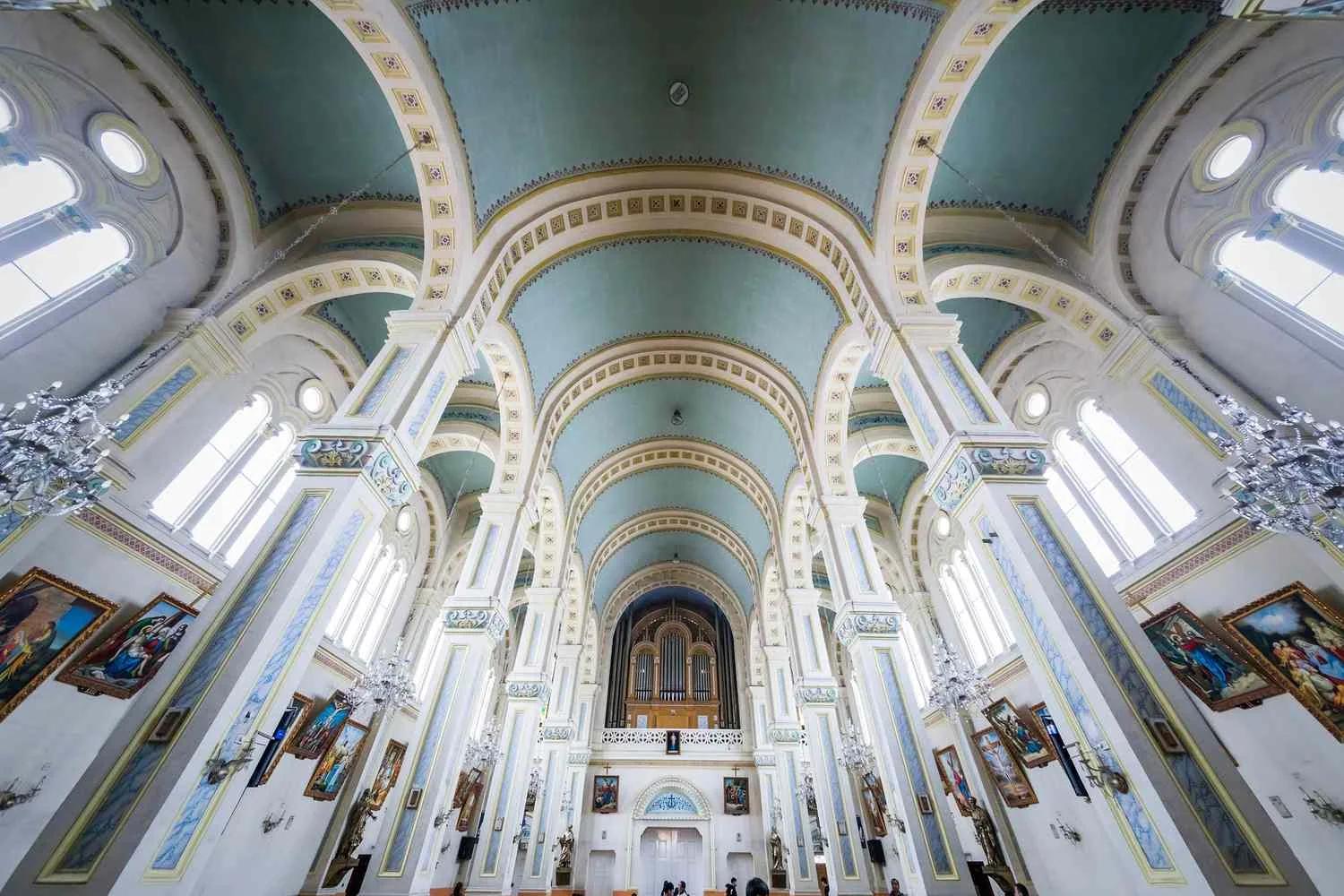
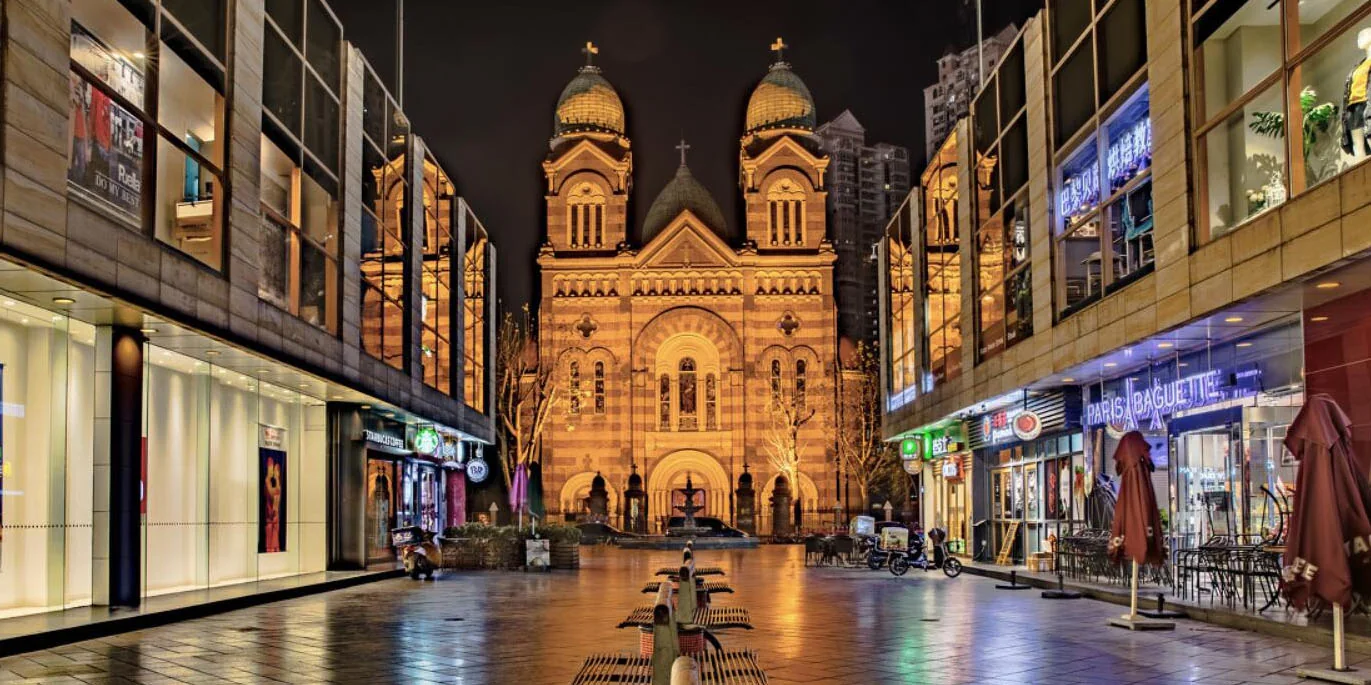
Twin 45-metre spires from 1916, a dark interior, and the best free ten minutes in Heping.
15–20 min | Free | 08:30–16:00 |
Location | Xining Road / Dushan Road corner, Heping District |
Built | 1913–1916, French-style Catholic cathedral, brick with twin bell towers |
Opening hours | Roughly 08:30–16:00 daily; shortened during Mass |
Admission | Free |
Suggested time | 15–20 minutes |
What to see
The facade from the far side of the road, where both spires fit in one frame; then the interior — cool, dark, with stained glass that punishes a phone camera. Check the door for Mass times and do not photograph during one.
04 ¥20–30
Jingyuan, where the last emperor lived
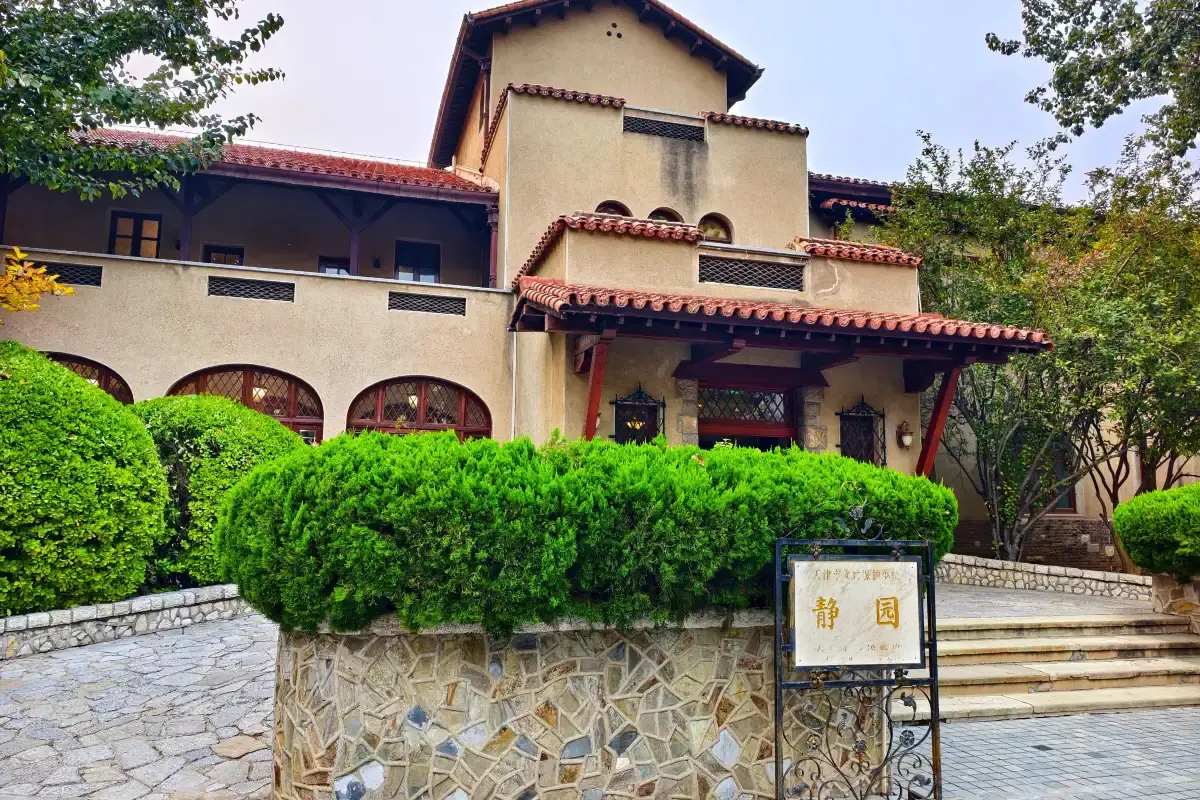
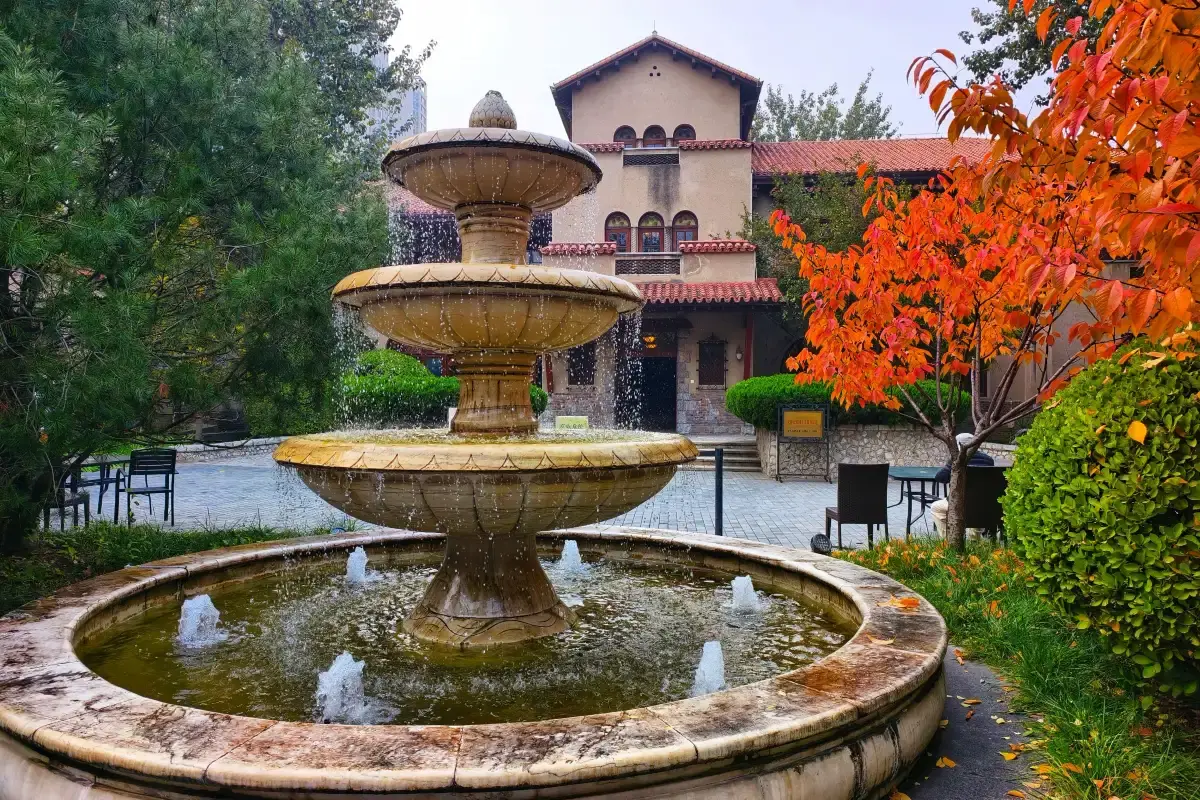
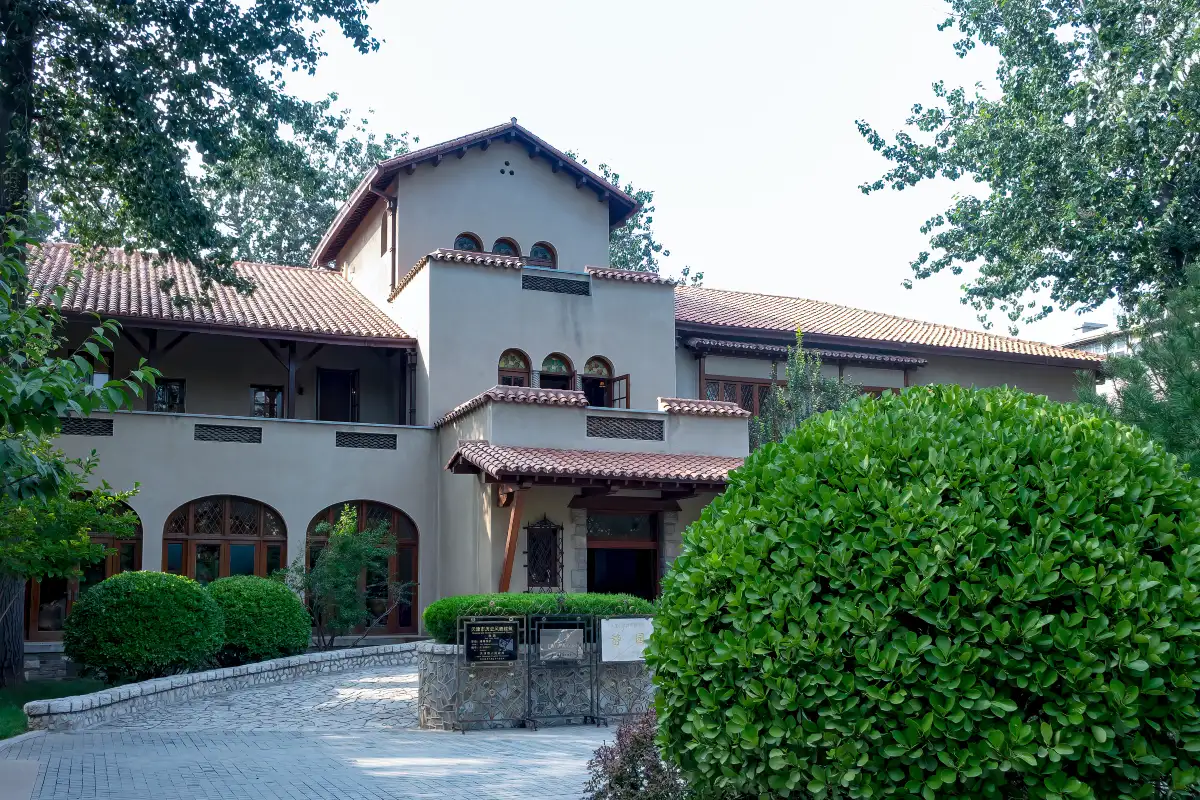
Three rooms, a garden, and the most human hour in the city: Puyi in exile, renting a house like anyone else.
45–60 min | ¥20–30 | 09:00–17:00 | Closed Monday |
Location | 70 Anshan Road, Heping District |
Story | Puyi, deposed in 1924, moved to Zhangyuan in 1925 and to this house in 1929, leaving for Manchuria in 1931 |
Opening hours | 09:00–17:00, last entry 16:30; closed Mondays |
Admission | ¥20–30 depending on the combined ticket |
Suggested time | 45–60 minutes |
Key feature | Rented villa rather than palace: piano, tennis court, upstairs household rooms, English labels throughout |
What to see
The rooms are furnished as a 1930s rented flat, which is exactly what makes them worth an hour — a shrinking retinue, no income, and a man who had been emperor of China playing tennis. The garden is small; the piano and the court are the details people remember.
Pair it with: Zhangyuan, four minutes up the same road, where he lived first (separate small ticket, bigger house), and the Zhang Xueliang residence five minutes further. Three 1920s interiors in one 90-minute block — the best rainy-afternoon plan in the city.
05 Free
Jiefang North Road's bank halls
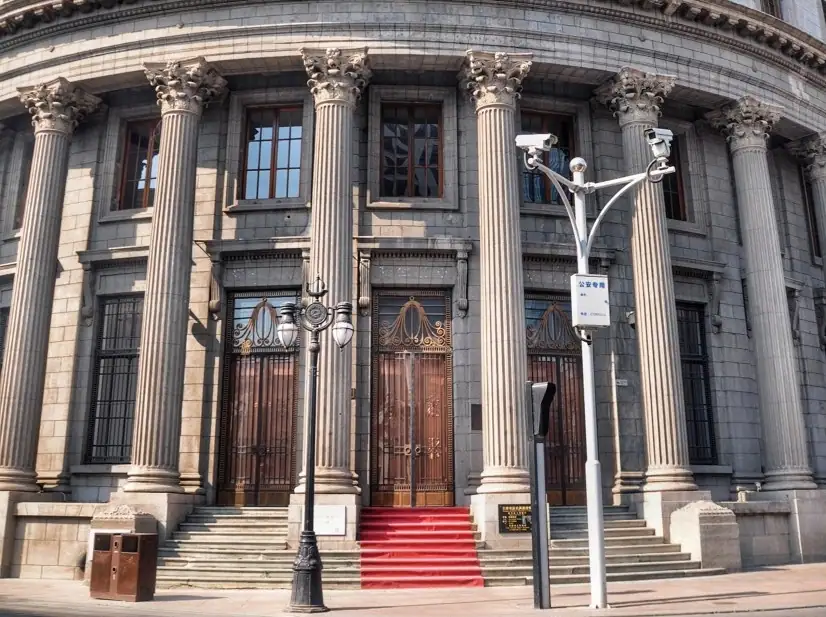
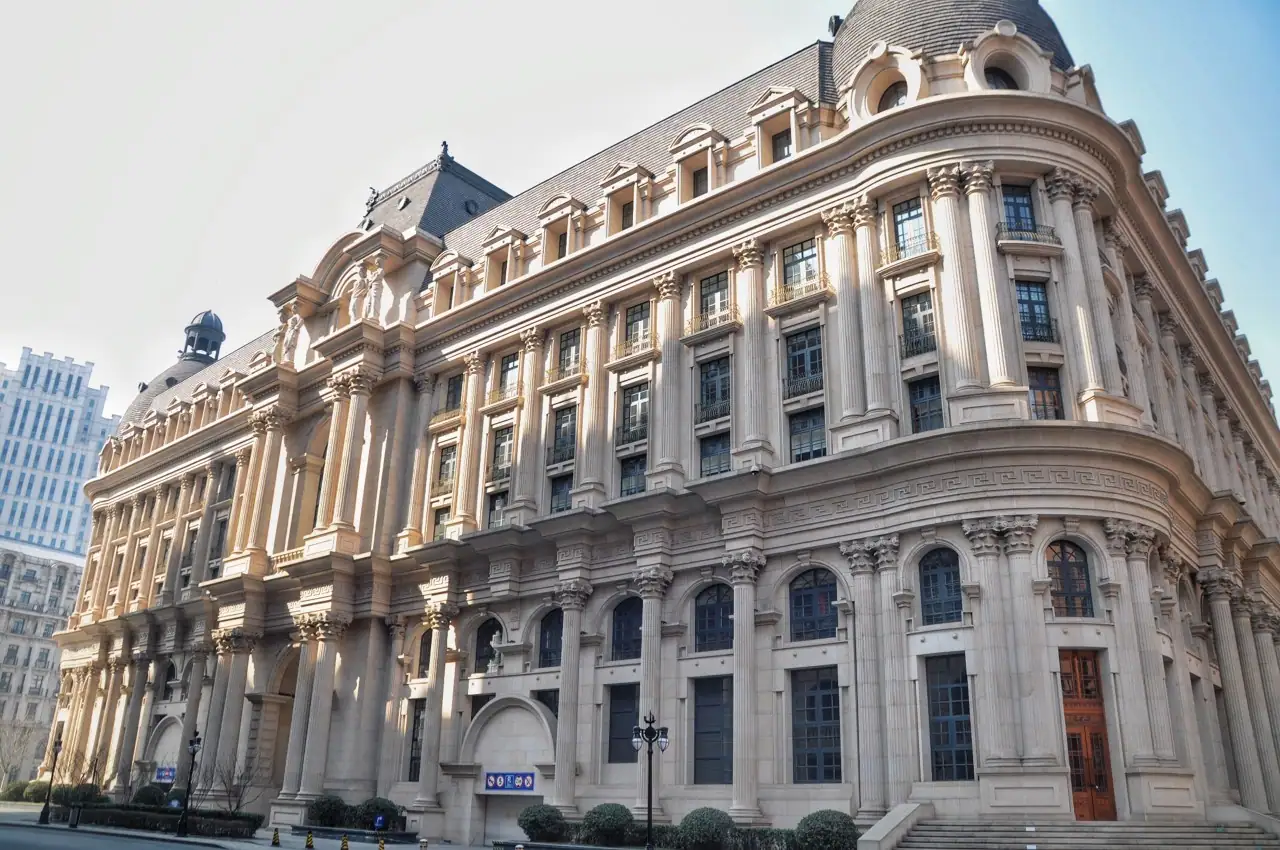
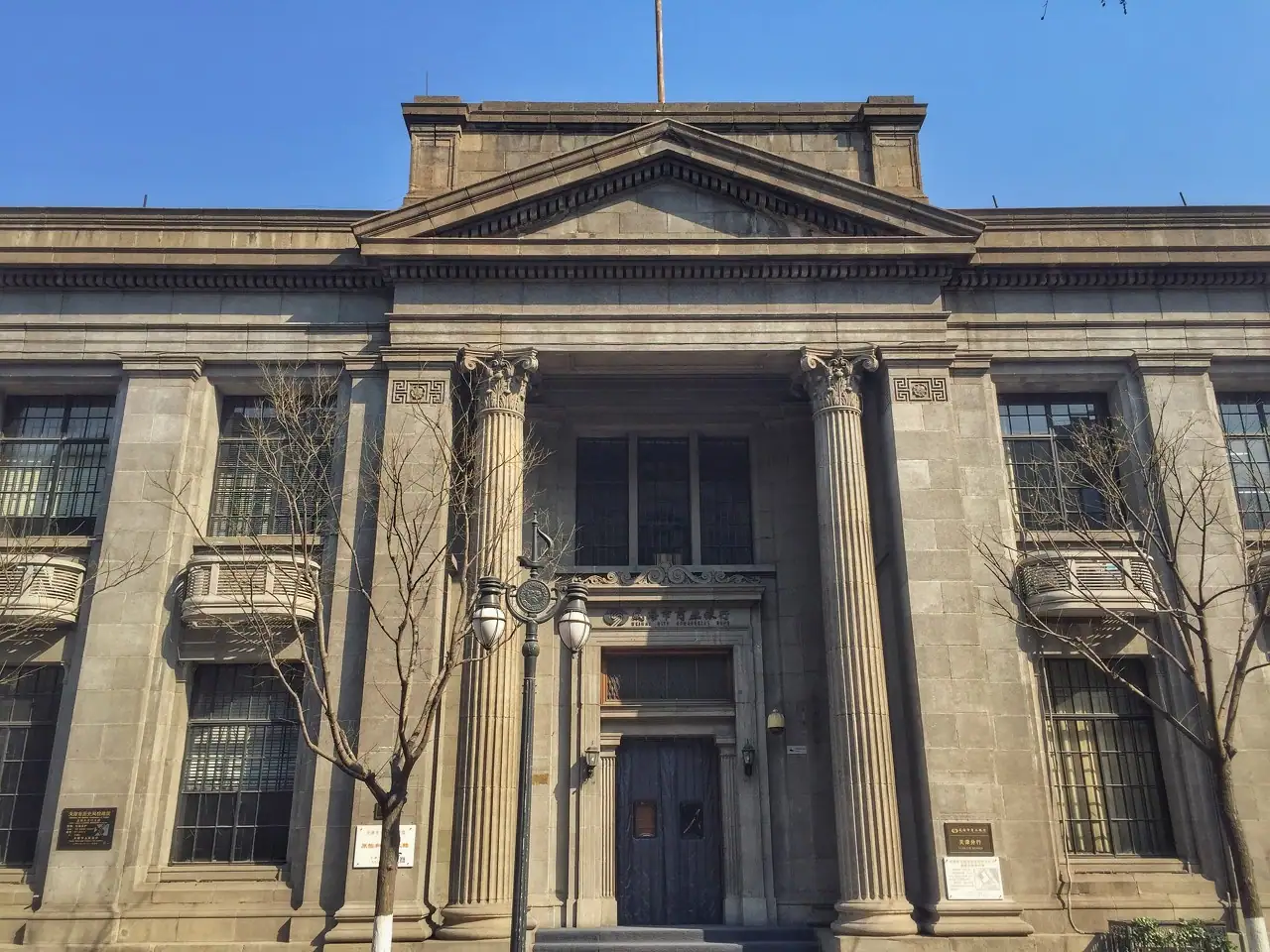
Ten minutes of 1920s bank headquarters with marble halls you can still walk into.
30–40 min | Free | Anytime |
Location | Jiefang North Road, Heping District, running to Jiefang Bridge |
What it is | Former colonial-era banks — Yokohama Specie, HSBC, Banque de l'Indochine — many still banking halls |
Opening hours | Street always open; some lobbies open weekday banking hours |
Admission | Free |
Suggested time | 30–40 minutes on foot |
What to see
Walk from the old town end toward the river: colonnaded stone fronts, old painted signage above the doors, and at least three halls where you can push through the swing door and stand under a coffered ceiling. Weekday mornings are when the lobbies are quiet and open.
02 — Hebei District
The wheel, the river and Italian Style Town
This is the evening half of the city, and the only part that is better after dark. Three of the four entries here are free and within 2 kilometres of each other along the Haihe.
Hebei holds the old Italian concession at the bend of the river, the Austrian concession beside it, and the 110-metre wheel on Yongle Bridge. Between them runs nine kilometres of lit embankment, eight bridges, and the only place in northern China where people sit on steps with a beer at 21:00 and nobody tries to sell them anything.
Top attractions
· Tianjin Eye: the wheel on the bridge, best at dusk.
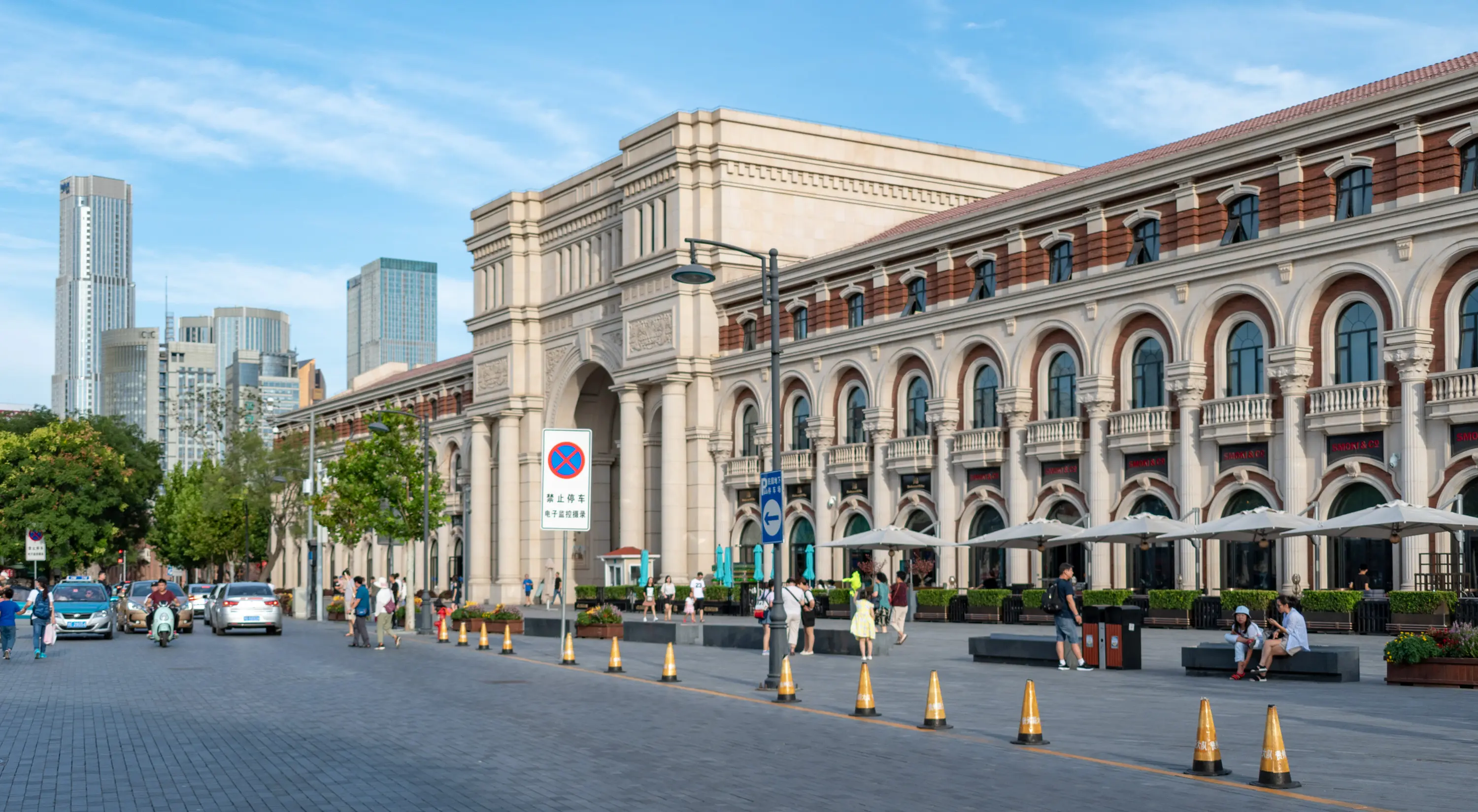
· Italian Style Town: 200 buildings of 1902–1947 Italian concession.
· Haihe riverfront: 3.5 km of walkable, lit embankment.
· Dabei Monastery: quiet, active, three minutes from the wheel.
Best for
Evenings, photographers, couples, anyone arriving on a late train — Tianjin station is ten minutes' walk from Italian Style Town.
Tips
· The wheel's night ticket is 50% more than the day ticket and worth it only if you board 20–30 minutes before sunset.
· The wheel closes for annual servicing for several weeks from mid-November; check before planning the evening around it.
· Italian Style Town restaurants are the priciest per square metre in the city. Come for a drink, eat elsewhere.
· Dabei Monastery closes mid-afternoon — do it before the wheel, not after.
06 ¥90/138
Ride the Tianjin Eye at dusk
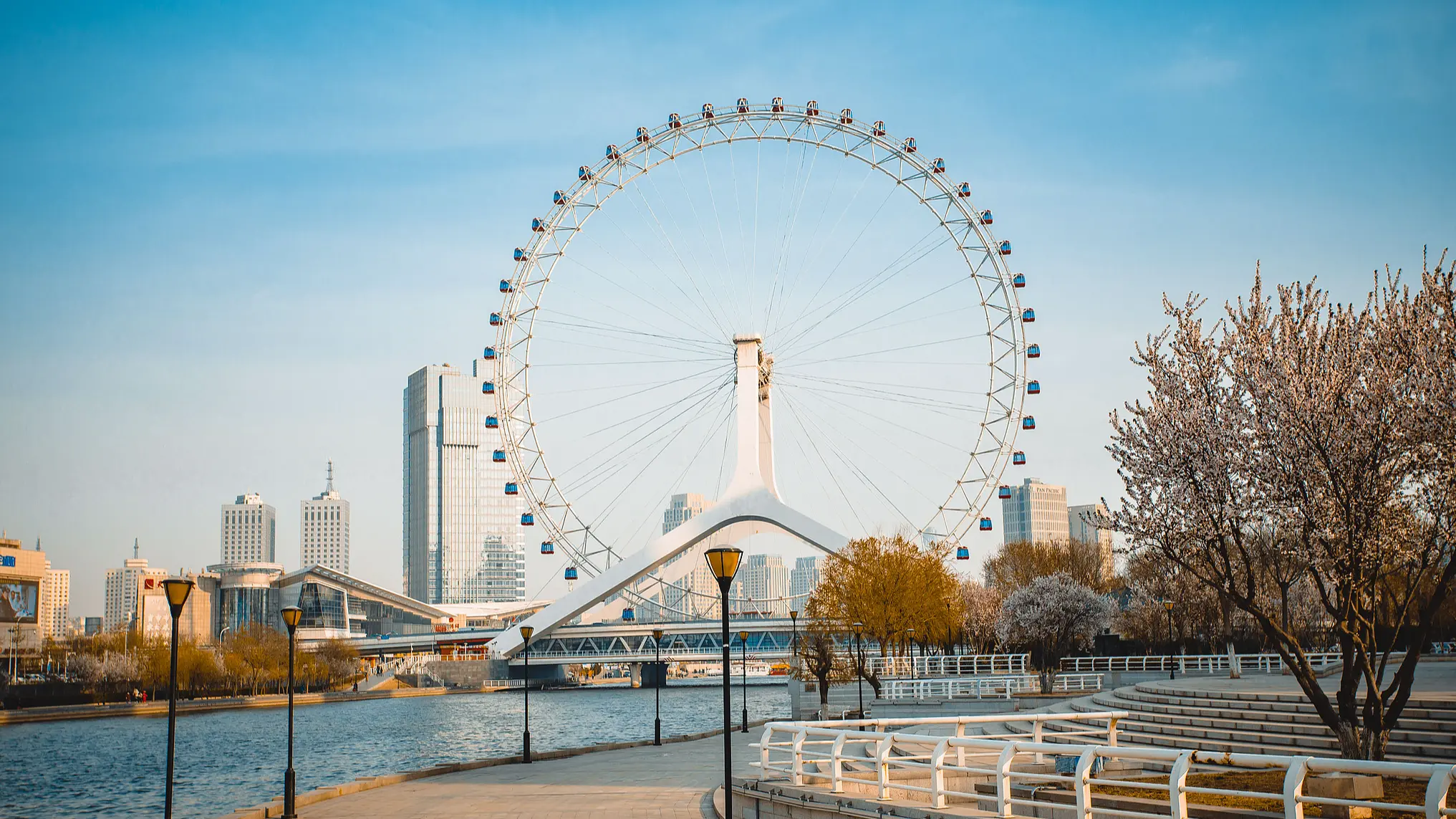
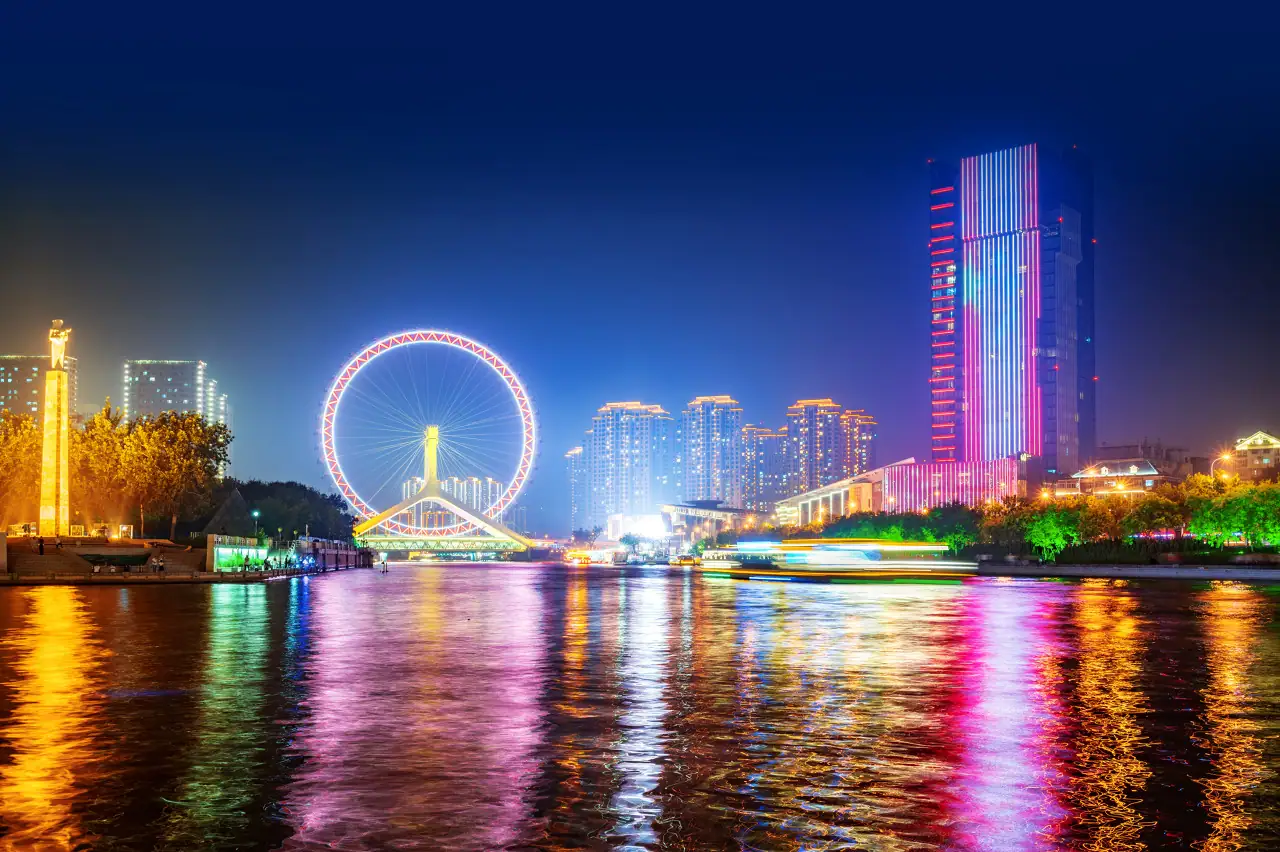
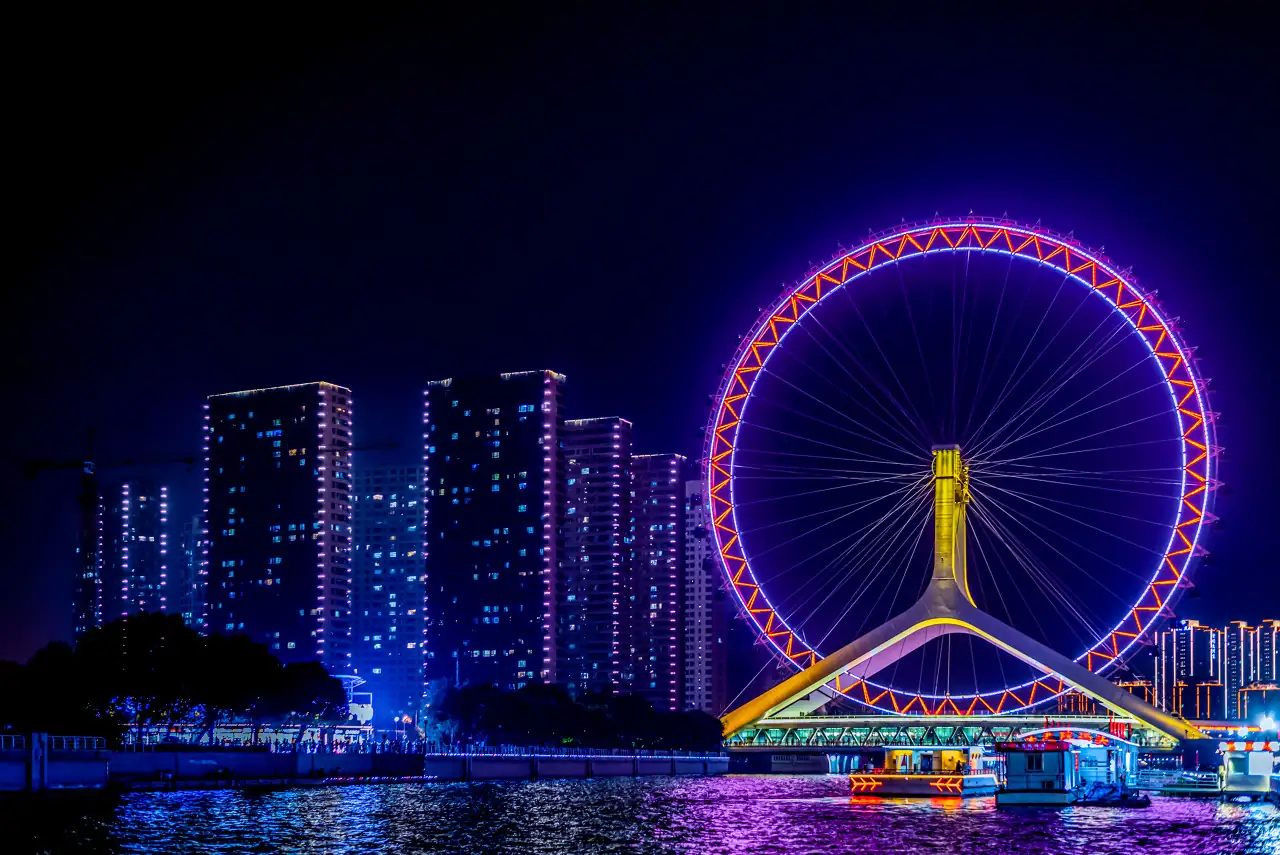
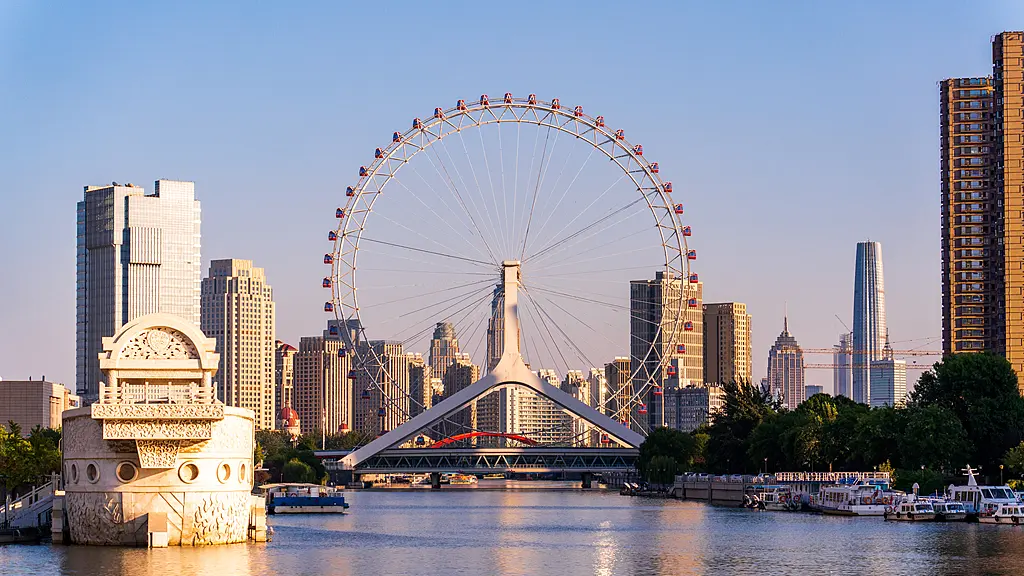
A 110-metre wheel built onto a road bridge over the river — nothing else in China looks like it, and the view is of the city rather than of a skyline.
30 min ride | Day ¥90 / Night ¥138 | 09:30–22:00 | Book 1–3 days ahead |
Location | Yongle Bridge, Sancha Estuary, Hebei District |
Built | 2008; 110 m diameter, 48 air-conditioned capsules of 8 seats |
Opening hours | 09:30–22:00; Mondays from 18:00 (maintenance); closed several weeks from mid-November for annual servicing |
Admission | ¥90 day, ¥138 night; senior and child roughly half; under 1.4 m needs a child ticket plus an adult |
Suggested time | 30 minutes ride + 15–30 minutes queue at sunset |
Booking | Official WeChat account, released 3 days ahead, one per passport per day; passport at the gate |
What to see
The mechanics. One rotation of 28–30 minutes that never stops — you board while it turns, at walking pace, from a platform at the base of the bridge. You rise out of the bridge deck and the old city, the three rivers and eight bridges open up beneath you. Capsule 48 has the glass floor if you care; there is no queue system for it.
The ticket that works: buy night and board 20–30 minutes before sunset. Last light going up, the whole city lit coming down, and the wheel itself glowing when you step off. Day tickets stop boarding at 18:00, which in summer is still daylight.
How to get there
Metro Line 1 to Xibeijiao then 10 minutes on foot, or ¥12–15 by taxi from Italian Style Town. Everything in this district is walkable in one evening.
Ticket options, per person
Ticket | Price | Notes |
|---|---|---|
Day adult | ¥90 | Last boarding 18:00; cheap but flat light |
Night adult | ¥138 | The ticket to buy; sunset boarding |
Senior / child | ~¥45 / ¥69 | Passport or ID required |
Glass-floor capsule | same price | Not bookable; first come |
07 Free
Italian Style Town at blue hour
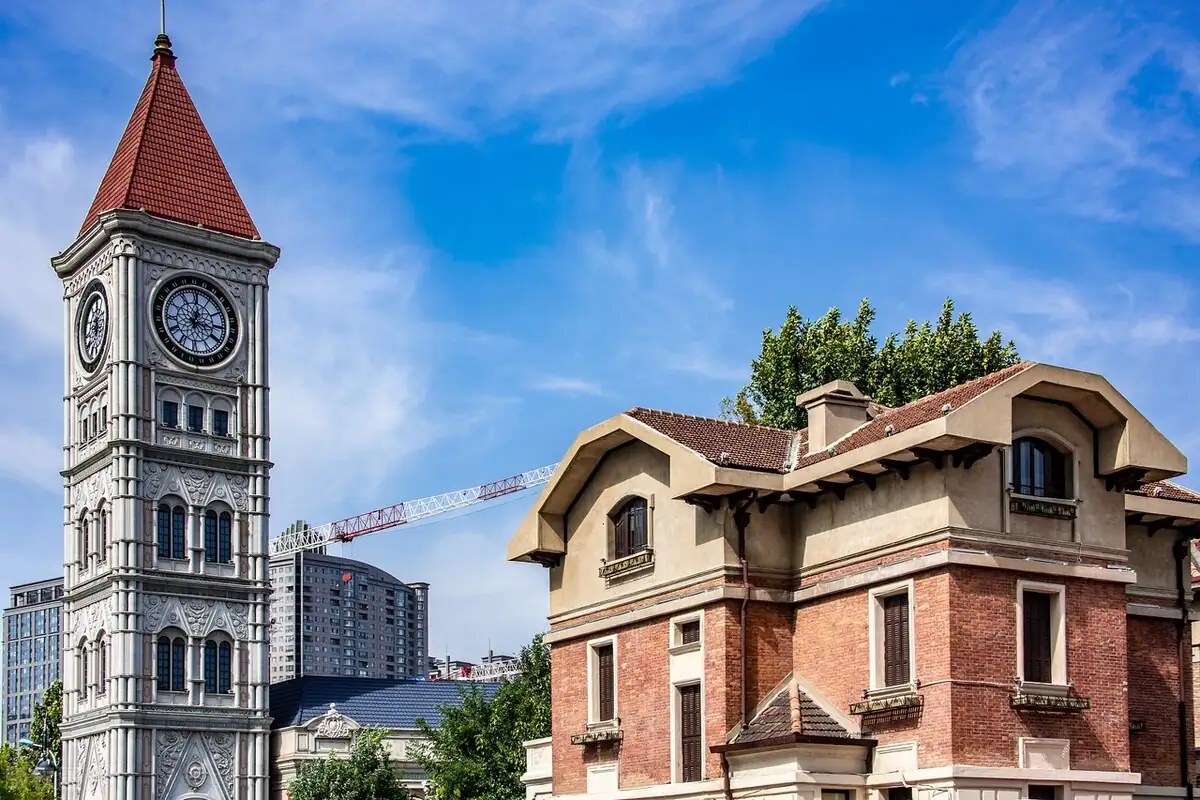
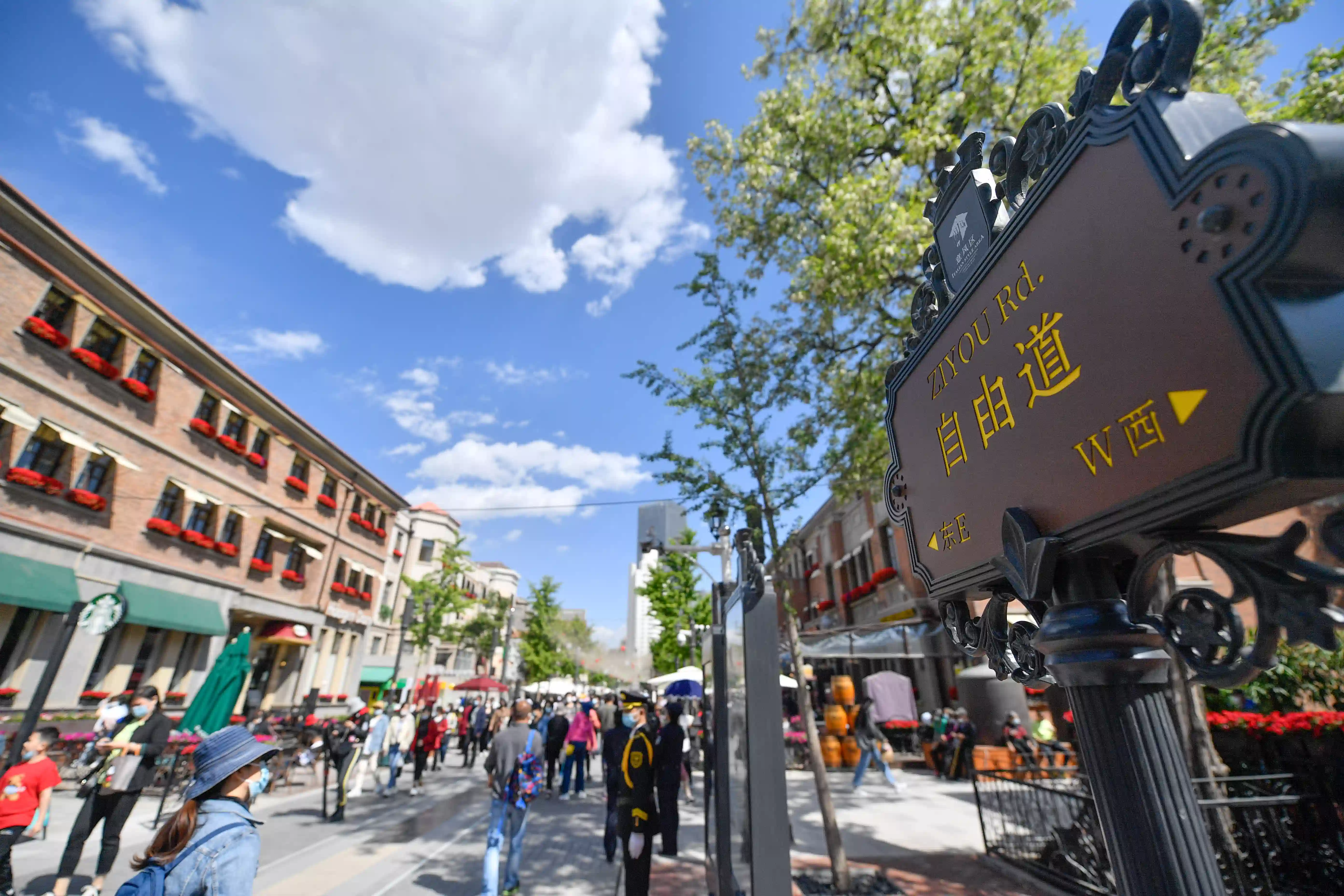
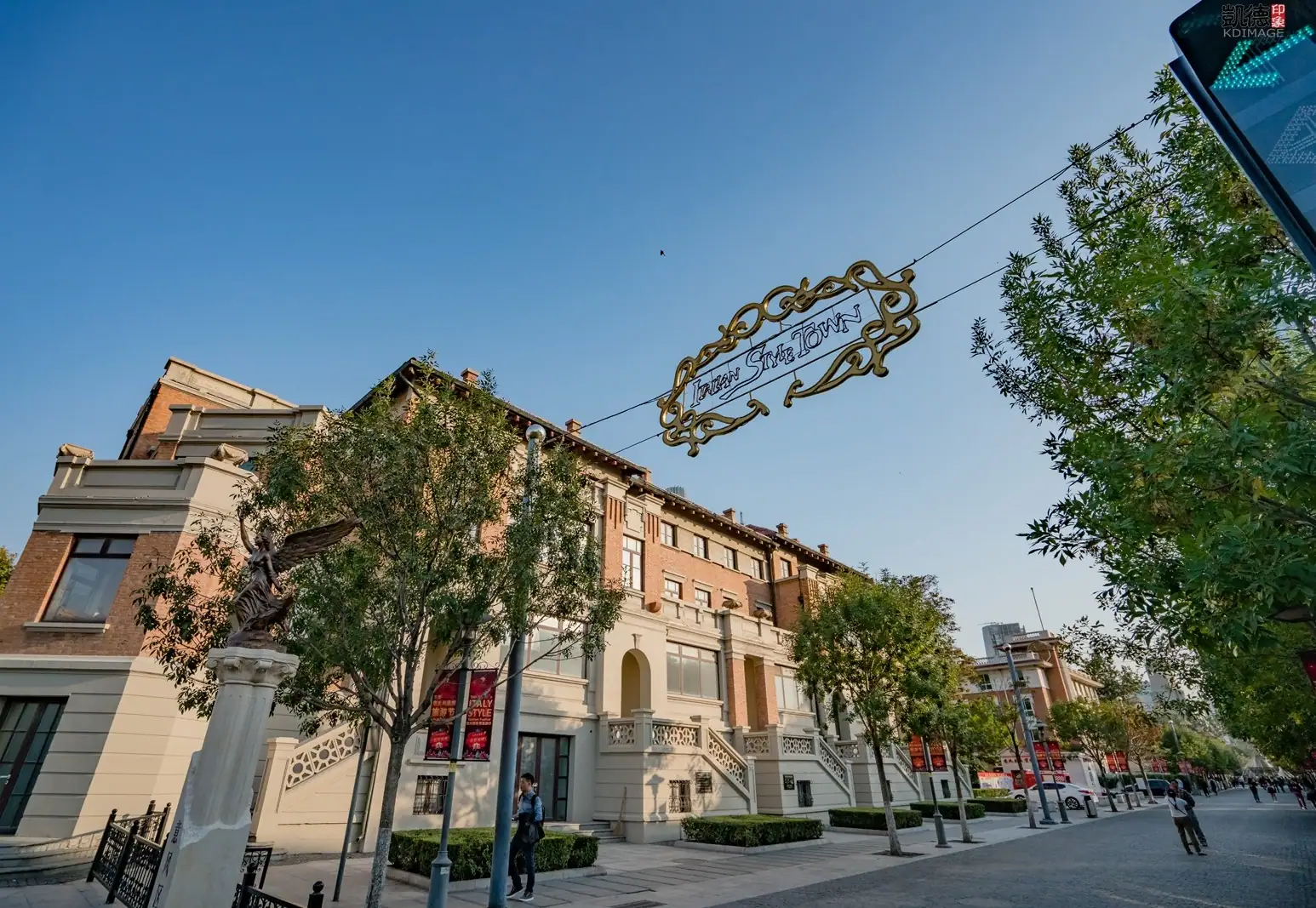
The only intact Italian concession in Asia, and the one place in the city where you can sit outside after dark and be left alone.
2 hrs incl. dinner | Free | 17:30–21:00 |
Location | Italian Style Town, Hebei District, along the river west of Tianjin station |
Built | Italian concession 1902–1947; about 200 buildings, ochre and cream stucco, Turin-trained architects |
Opening hours | District open all day; restaurants 11:00–22:30 |
Admission | Free; individual historic houses charge small fees |
Suggested time | 2 hours including a drink |
Key feature | Marco Polo Square with column and clock tower; Dante Square two lanes north, quieter, better café tables |
What to see
The two squares: Marco Polo Square has the bronze victory column, arcades on three sides and the clock tower on the corner. Dante Square is quieter and where locals actually sit. Between them, campaniles, shuttered windows and cobbles that go blue at 18:30.
Do it twice: once at 16:00 in flat daylight for the architecture, then again at 18:30 when the lamps come on and every restaurant puts its tables out. The second pass is the one people remember.
Two houses worth paying for: Liang Qichao's study, where the reformer wrote in the 1920s, and Cao Yu's residence, the playwright's house. Both small, both a few yuan, both regularly mistaken for restaurants by people following maps.
How to get there
Ten minutes' walk west along the riverbank from Tianjin station; metro Line 2/3/9 to Tianjin station, exit toward the river not the taxi rank.
Restaurants nearby
Place | Where | Hours | Price | Order |
|---|---|---|---|---|
Kiessling (Qishilin) | Zhejiang Rd, 10 min walk | 11:00–21:00 | ¥80–150 | 1901 German menu, executed for Chinese tastes; the building is original |
Marco Polo Square restaurants | Around the square | 11:00–22:30 | ¥150–300 | Italian at Italian prices; a drink and one small plate is the honest move |
Riverside bars | Dante Square side | 17:00–24:00 | ¥60–120 | Outside tables, worth it on a warm night |
08 Free / ¥100
Walk the Haihe at night — or take the boat
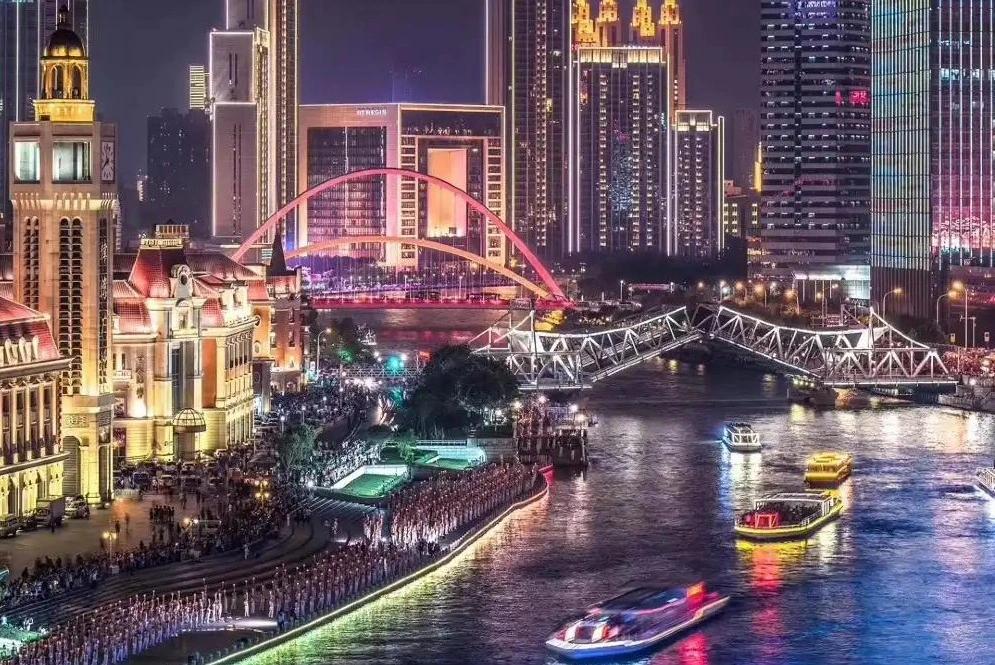
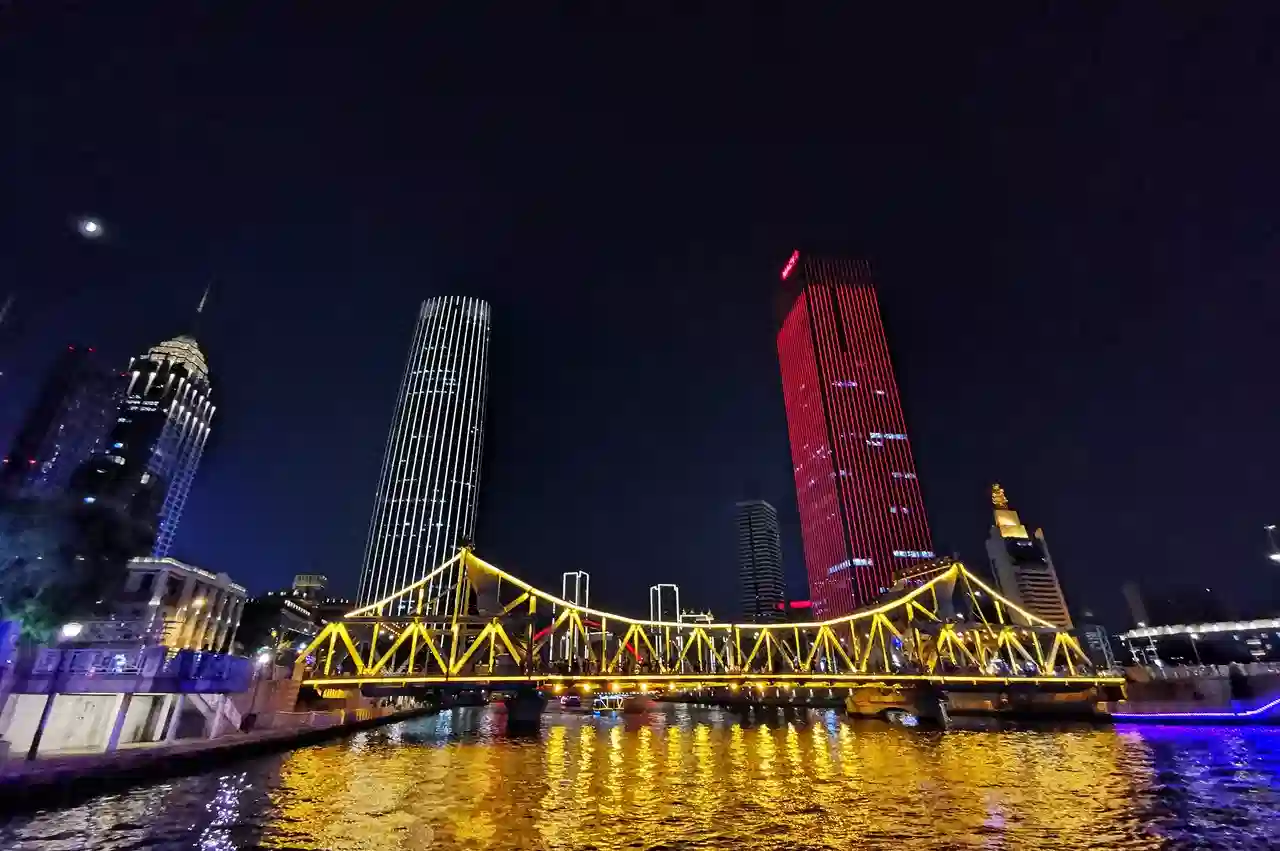
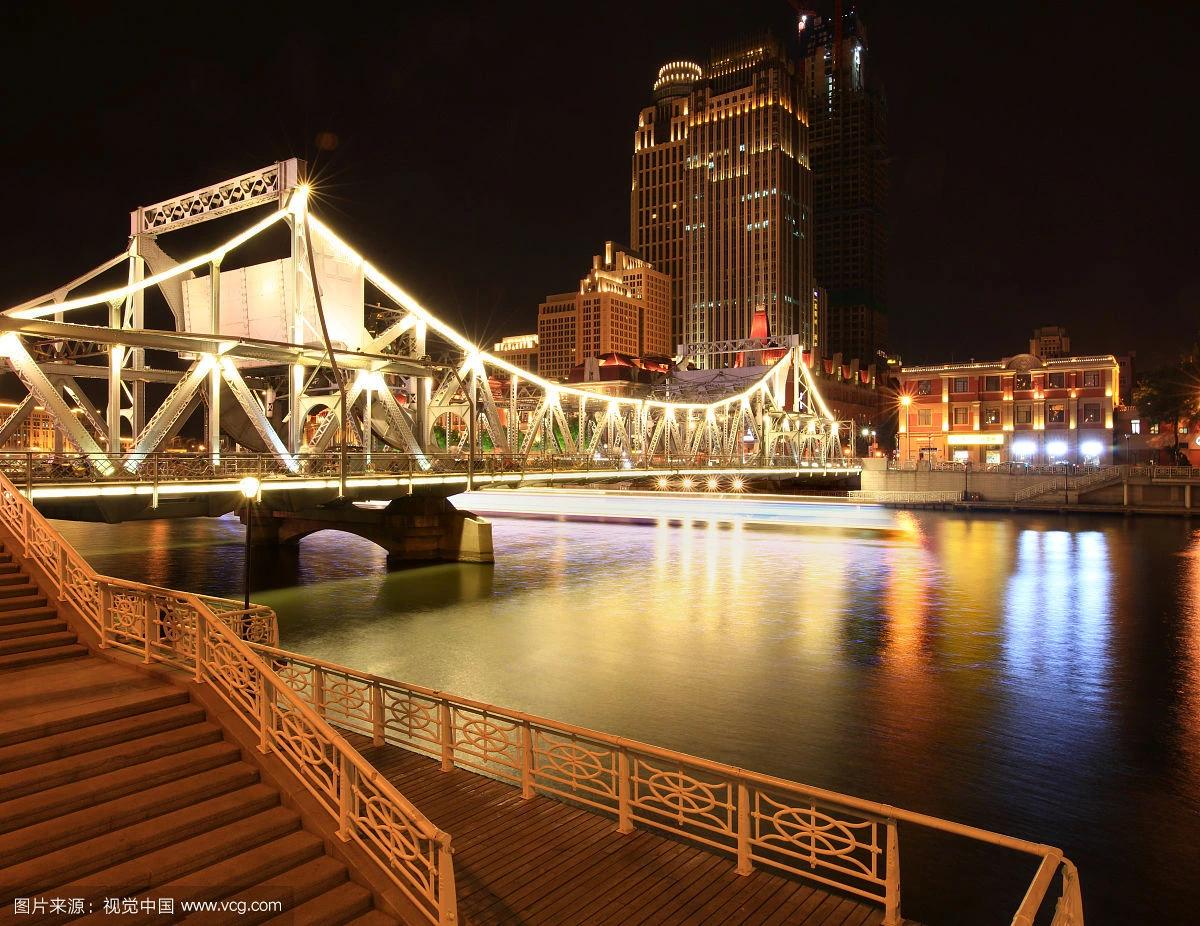
Nine kilometres of lit riverfront, a 1927 bridge that still lifts, and the cheapest good evening in northern China.
1–1.5 hrs | Walk free, cruise ¥100–160 | Sailings from 19:00 |
Route | Jiefang Bridge → Dagu → Beian → Jinbu → Shizilin → Jin'gang, 3.5 km |
Walking time | 90 minutes with stops |
Admission | Free to walk |
Cruise | ¥100–160 depending on deck and route; 45–50 minutes; wharves near Tianjin station and Italian Style Town |
Best time | 19:00–21:00; the best free photos are from the south bank at Daguangming Bridge |
What to see
The walk, in order: start at Jiefang Bridge — the 1927 double-leaf bascule bridge that still opens, with the Century Clock tower beside it — then north-east along the bank: Dagu, Beian, Jinbu, Shizilin with its stone lions, and Jin'gang under the wheel. Every bridge is lit differently, which is the point of walking rather than cruising.
The boat: take the 19:30 sailing — blue hour out, full illumination back. Sit on the open upper deck in a coat, not in the glass cabin; the reflections are the whole reason to be on the water.
How to get there
Metro Line 2/3/9 to Tianjin station, exit toward the river. Wharves are signed from the embankment; the Italian Town wharf is the more convenient of the two.
09 Free
Dabei Monastery
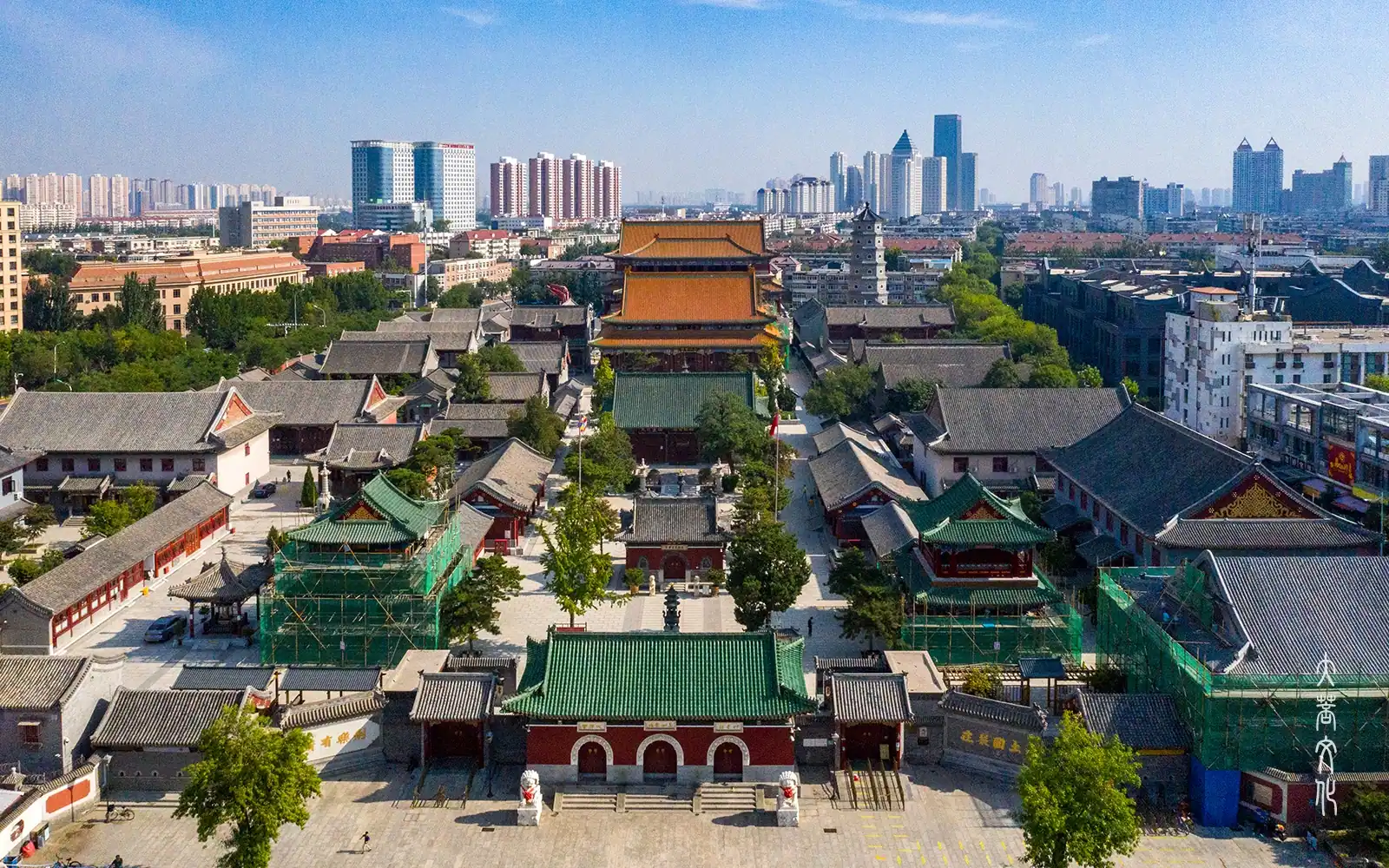
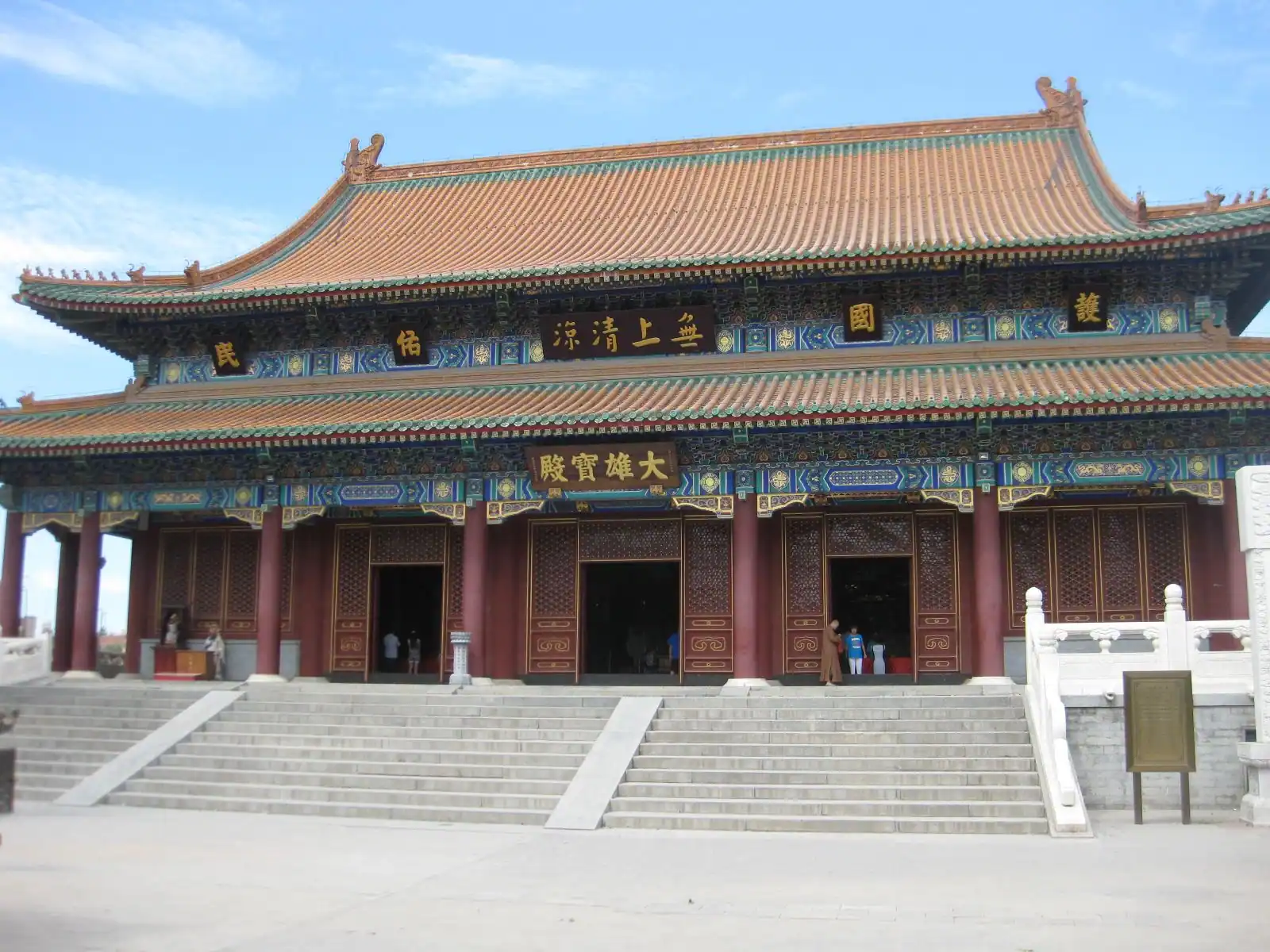
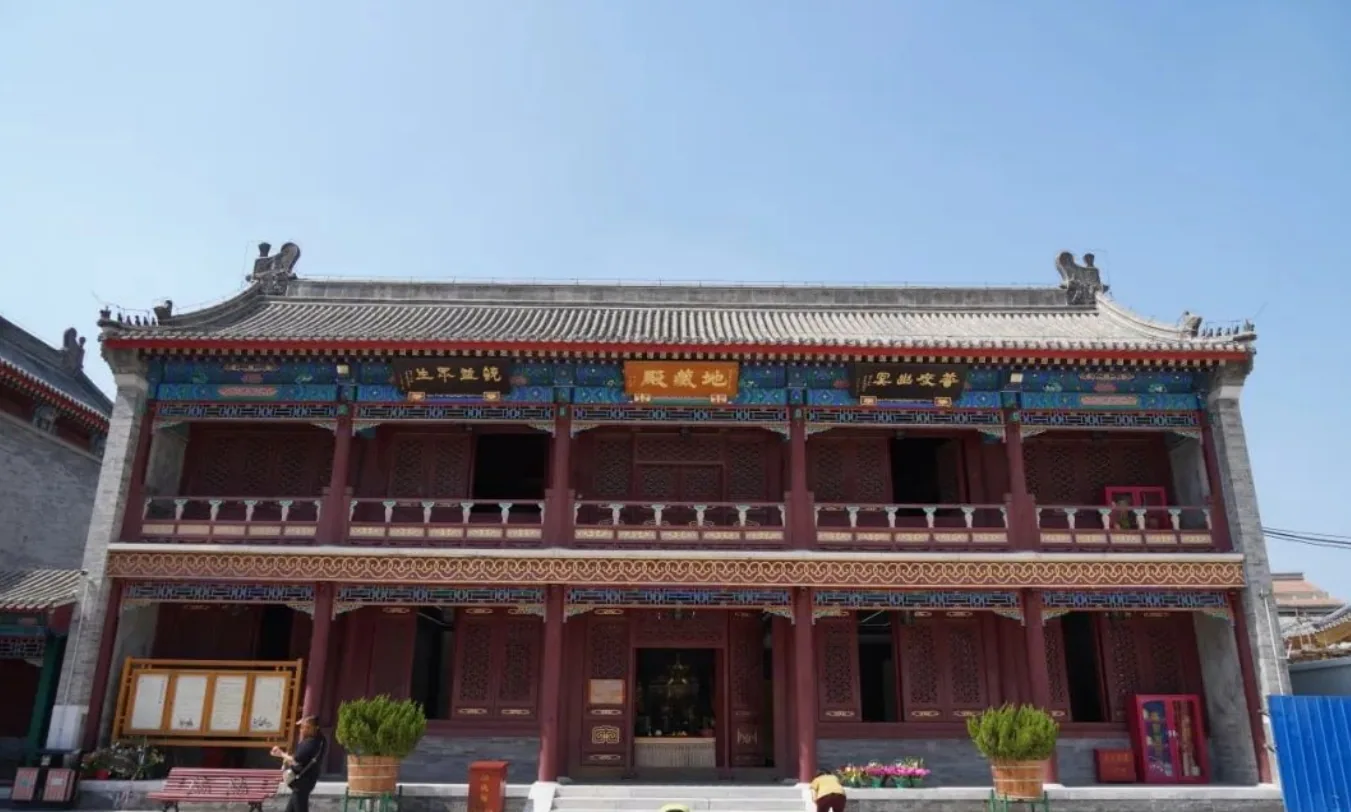
An active temple three minutes from the wheel's queue — ten quiet minutes, and free.
10–20 min | Free | 08:00–16:00 |
Location | Tianwei Road, Hebei District, 3 minutes' walk from Yongle Bridge |
What it is | Working Buddhist monastery with halls, incense and resident monks |
Opening hours | Roughly 08:00–16:00; closed to visitors during services |
Admission | Free |
Suggested time | 10–20 minutes |
What to see
The main hall and the courtyard incense burners; the side halls where people are actually praying rather than photographing. Keep your voice down and do not photograph faces.
03 — Nankai & the old town
Crafts, a 1326 temple and the lanes behind it
The old town is the only part of Tianjin that predates the concessions, and it is at its best before 09:00, when the craftsmen are at their benches and the temple is empty.
This is the original walled city, laid out in the Ming dynasty around the Drum Tower, with the Haihe on two sides. Ancient Culture Street is its restored spine; the lanes north of the tower are what the rest of it actually looks like, and they are free, unrenovated and full of people who live there.
Top attractions
· Ancient Culture Street & Tianhou Palace: 687 m of crafts, entered under the Jinnan Guli archway.
· Drum Tower & the old lanes: the city's centre point, ¥10 to climb.
· Guangdong Guild Hall: a Qing merchant hall now used for xiangsheng comedy.
· Confucius Temple (Wenmiao): the quietest courtyard in Nankai.
Best for
Souvenir shoppers who want something actually made in front of them, breakfast grazers, and anyone who wants one street that feels old rather than European.
Tips
· By 08:30 the street is yours; by 11:00 on a Saturday it is a single moving queue.
· Buy from the two ends of the street, where the workshops are — skip the middle third.
· The temple costs ¥10 and is the only gate on the street; carry cash as a backup for small vendors.
· Xiangsheng shows need booking a day ahead by phone or through your hotel.
10 Free
Ancient Culture Street, before the crowds
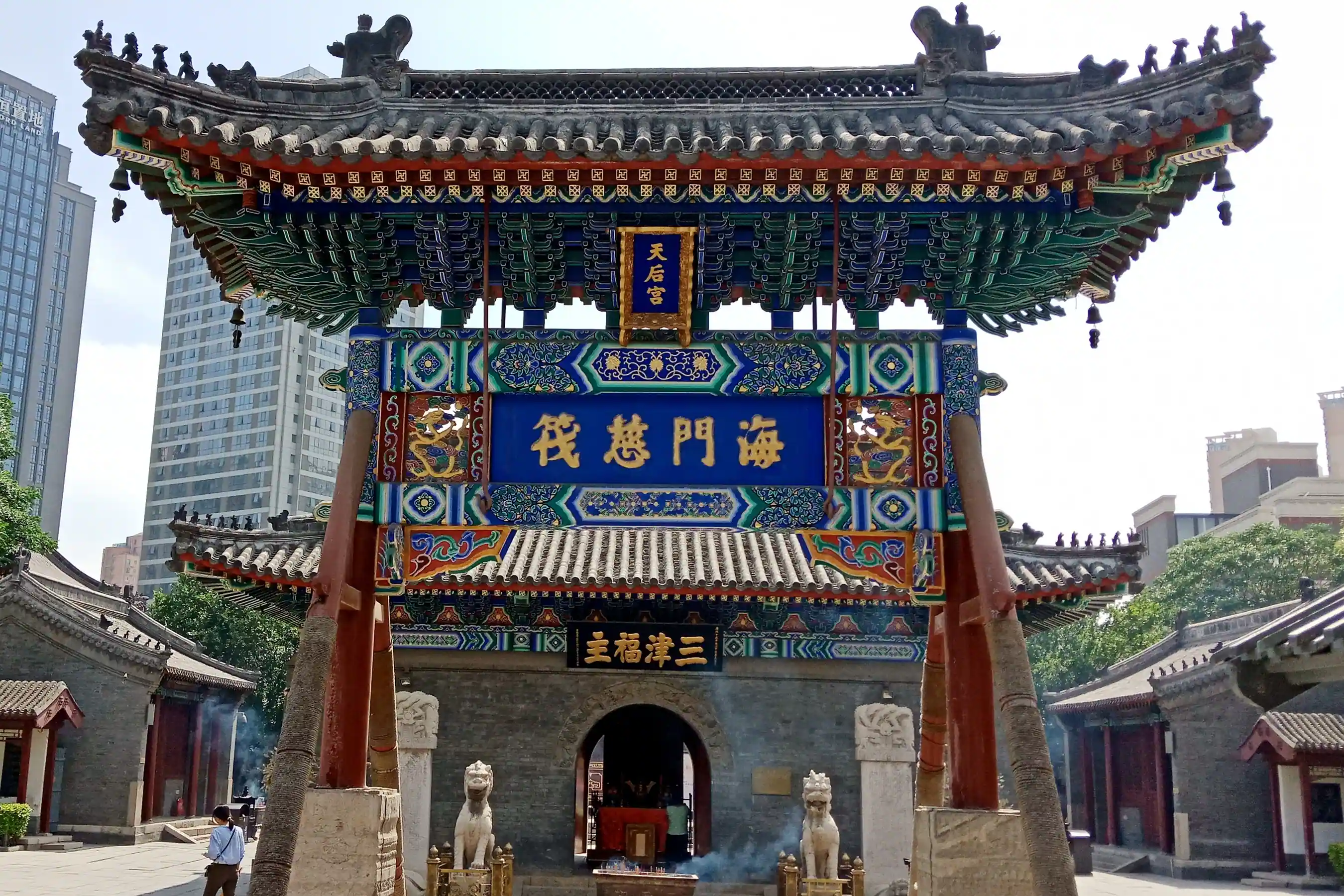
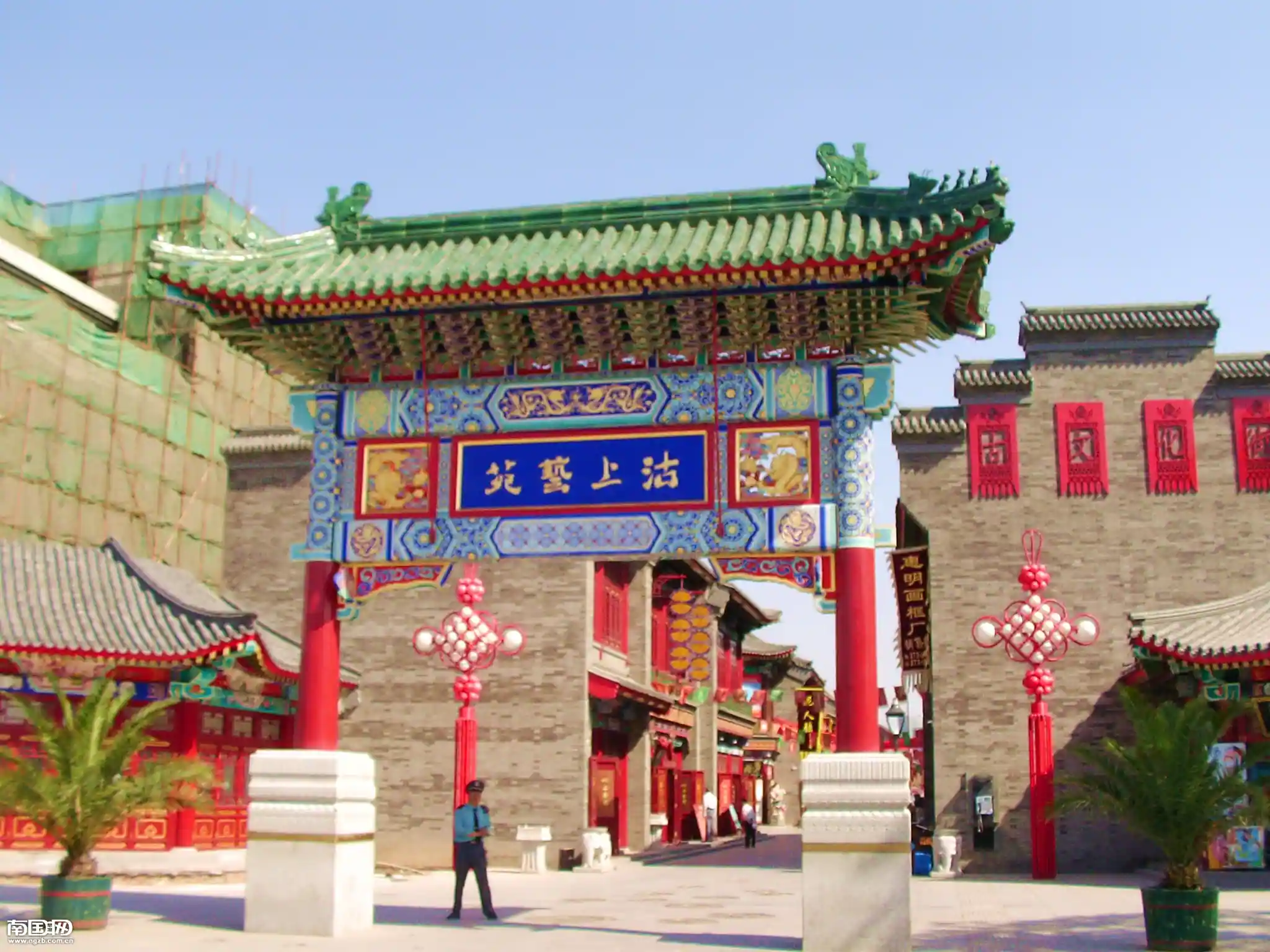
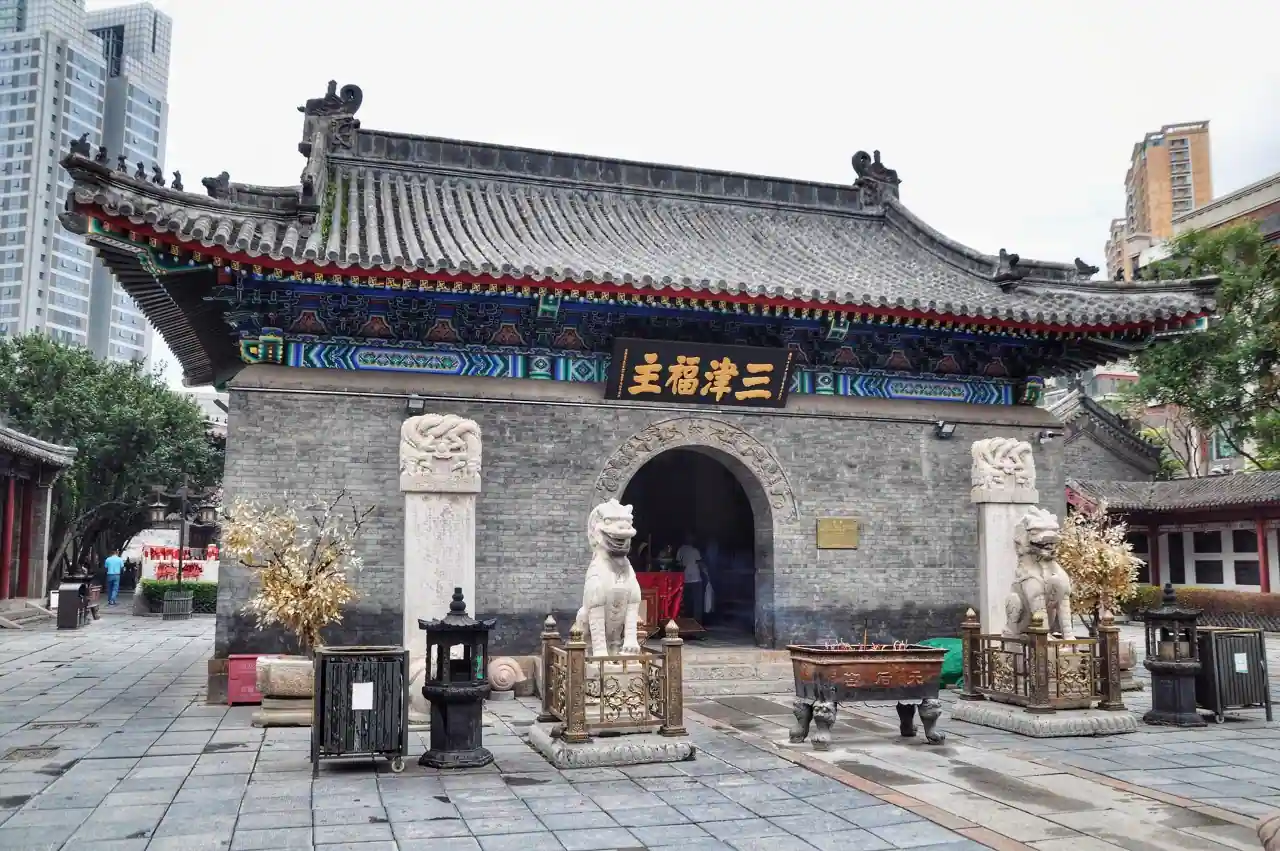
The one place where traditional crafts are still sold at the bench they are made on — and the best breakfast grazing in the city.
1.5 hrs | Street free, temple ¥10 | Shops 09:00–21:00 | Go by 08:30 |
Location | Ancient Culture Street, Nankai District, from the Jinnan Guli archway to Gongqian Square |
Length | 687 m, pedestrian, restored on the Qing street pattern |
Opening hours | Street always open; shops 09:00–21:00; Tianhou Palace 09:00–17:00 |
Admission | Street free; Tianhou Palace ¥10 |
Suggested time | 1.5 hours |
Key feature | Niren Zhang clay figures, Yangliuqing New Year prints pulled by hand, kites, hand-made cloth shoes |
What to see
The temple: Tianhou Palace, founded in 1326, is the city's oldest building group and the hall behind the main shrine is where fishing families still leave offerings — the only quiet room in the district. ¥10 gets you in; go before 10:00 or queue forty minutes.
What is actually made here: clay figures painted at the bench (¥30–120 for a small figure, more for a signed piece), New Year prints pulled off a woodblock (¥20–80), kites the shop will fly-test for you, and hand-made cloth shoes. Buy from the person doing the work.
Eat as you go: fried rice cakes hot from the pan, a dough twist, steamed rice cakes from the stacked steamers, a bowl of cha tang. Five minutes' walk out of the north end puts you on Beima Road, where breakfast is cheaper and the queue is local.
How to get there
Metro Line 2 to Dongnanjiao, two minutes' walk to the archway. From the Five Great Avenues it is one change at Yingkoudao, about 15 minutes and ¥3.
Restaurants nearby
Place | Where | Hours | Price | Order |
|---|---|---|---|---|
Dafulai | Multiple branches incl. old town | 06:00–13:00 | ¥8–15 | Guobacai — the sesame-gravy bean sheets this city is built on |
Shitoumenkan | Old town, near the temple | 10:00–20:00 | ¥15–25 | Vegetarian buns; the local dumpling tradition without the queue |
Nanshi Food Street | Nanshi, 15 min walk | 09:00–21:00 | ¥40–80 | Eight snacks in one hour, as a sampler — not as dinner |
11 ¥10
The Drum Tower and the lanes behind it
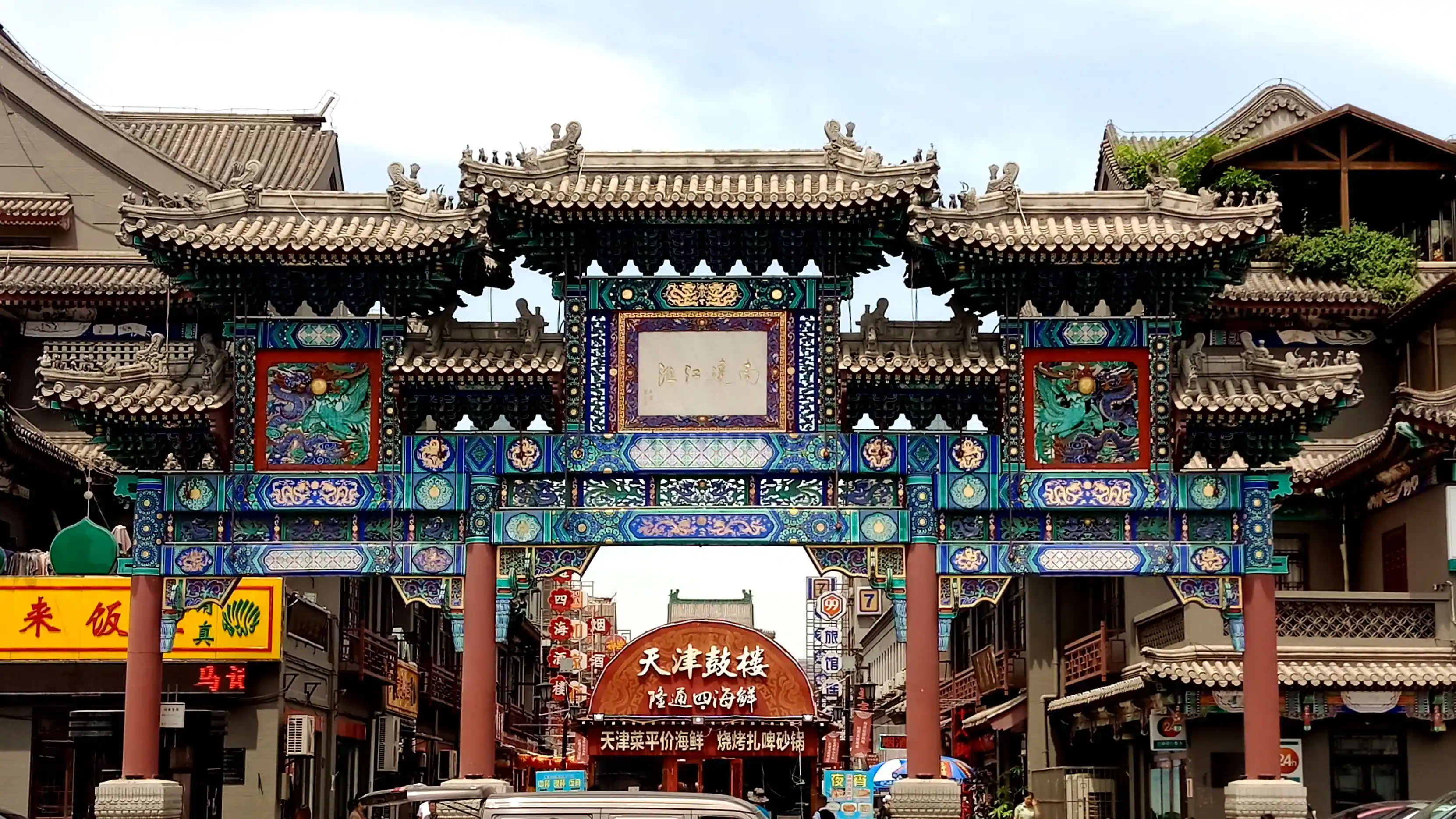
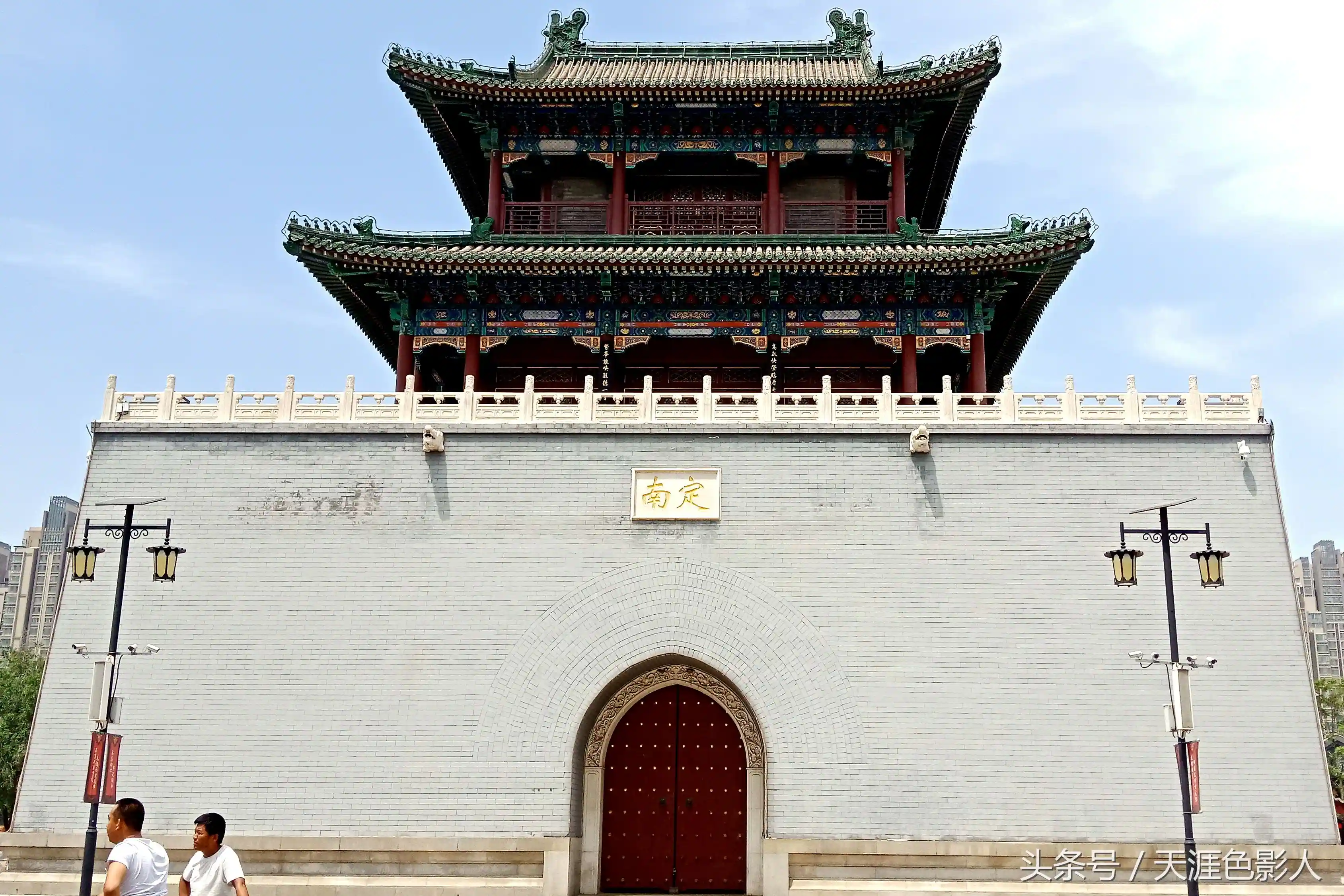
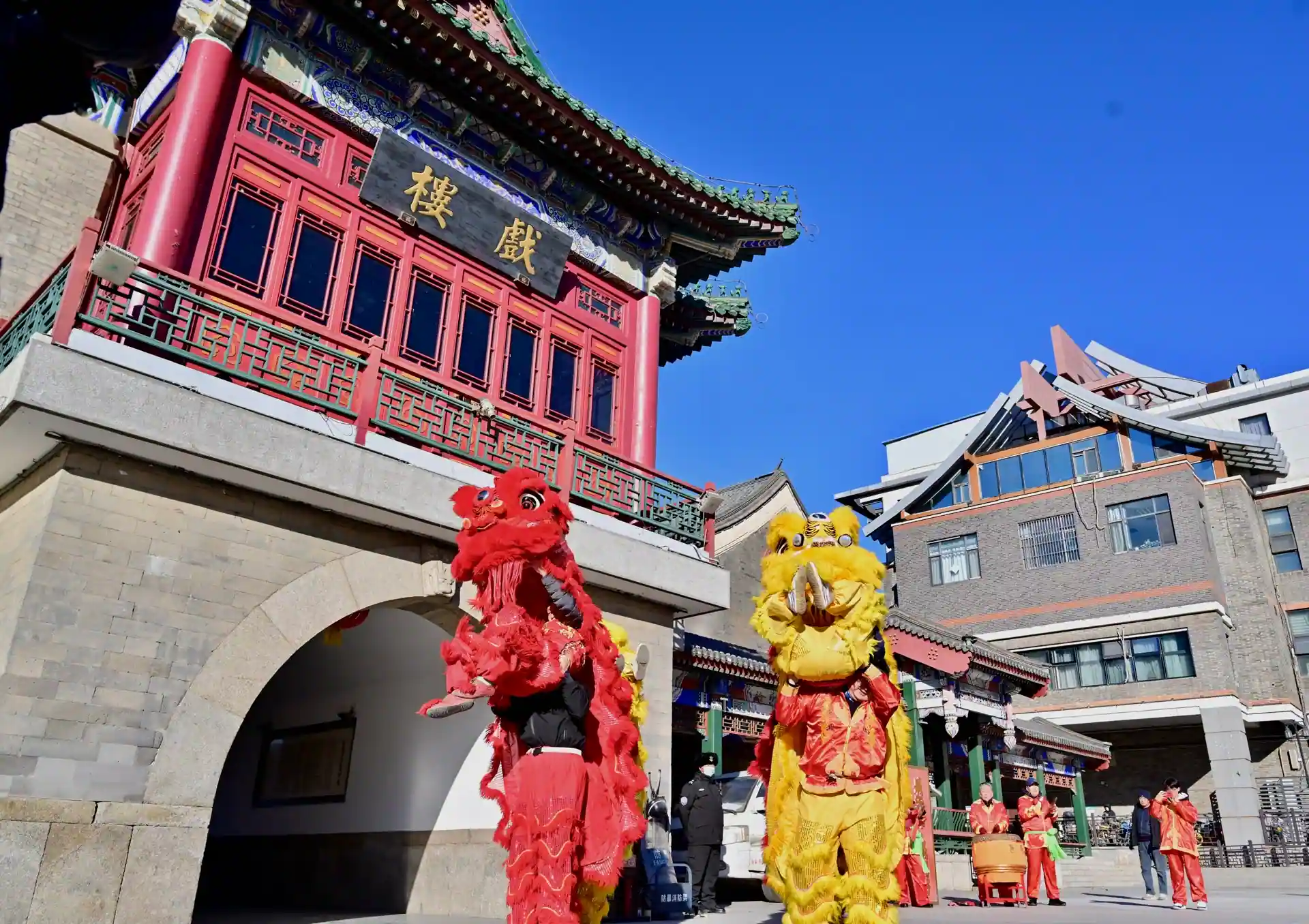
Ten minutes from the tourist street, a different century: coal stoves, bird cages, painted shopfronts, no tour groups.
40–60 min | ¥10 to climb | 09:00–17:00 |
Location | Drum Tower, old town centre, Nankai District |
What it is | Rebuilt Ming-style tower marking the centre of the walled city |
Opening hours | 09:00–17:00 |
Admission | ¥10 to climb; the lanes around it are free |
Suggested time | 40–60 minutes including the lanes |
What to see
Climb for the view over the grey-tiled roofs, then walk north and east into the lanes: coal stoves on doorsteps, bird cages hung out at 07:00, painted shopfronts, old men on stools. No English, no tour groups, and the neighbourhood still lives there — walk slowly and do not photograph faces.
12 ¥60–120
Xiangsheng at the Guangdong Guild Hall
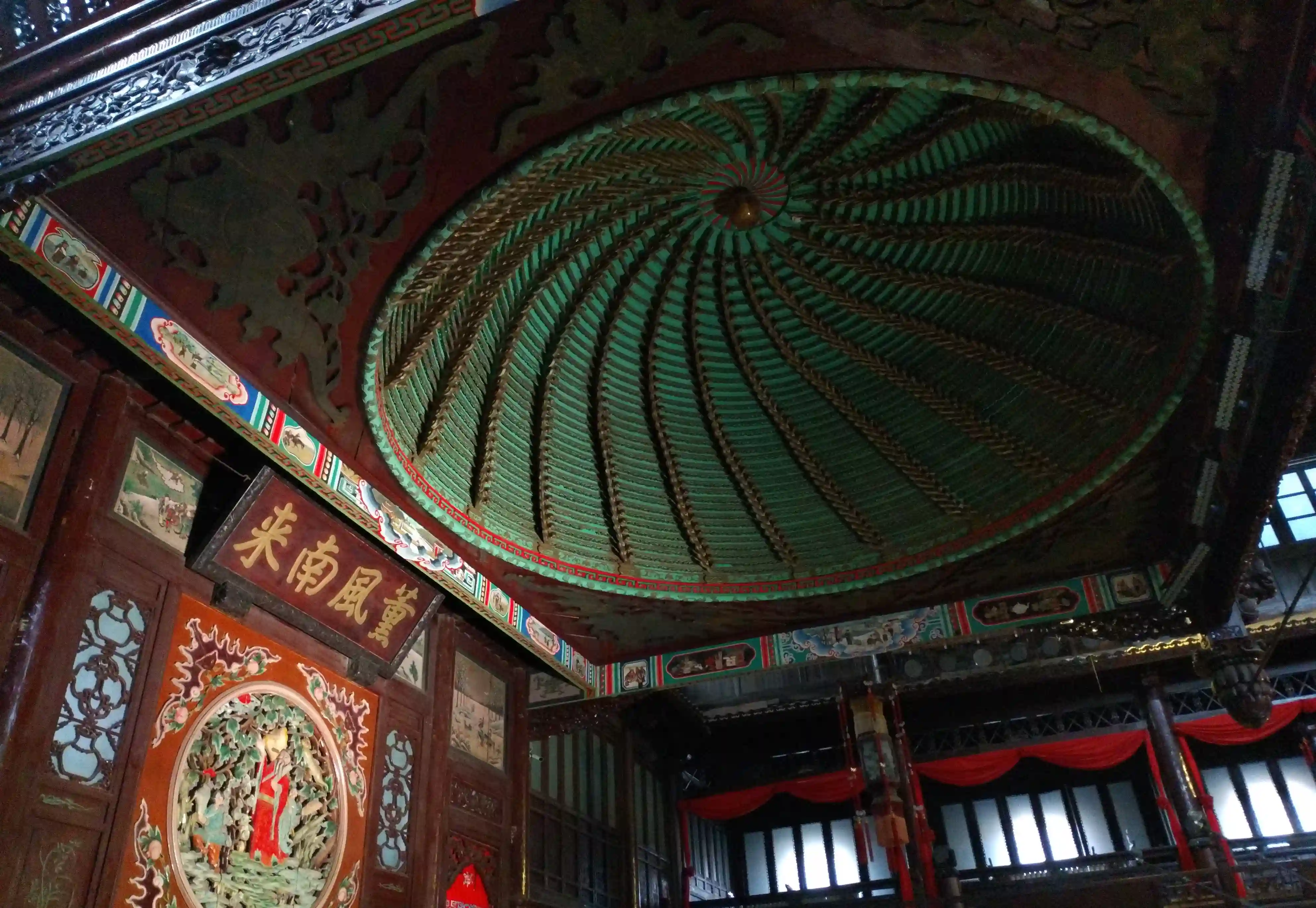
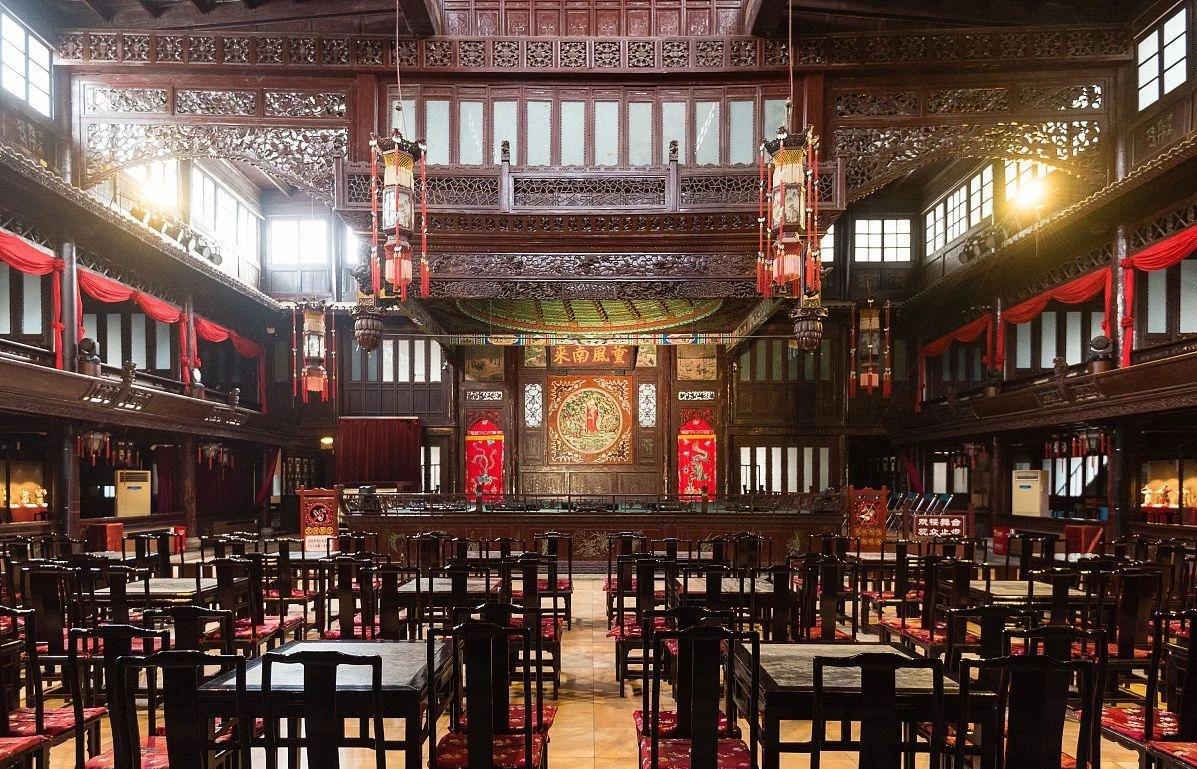
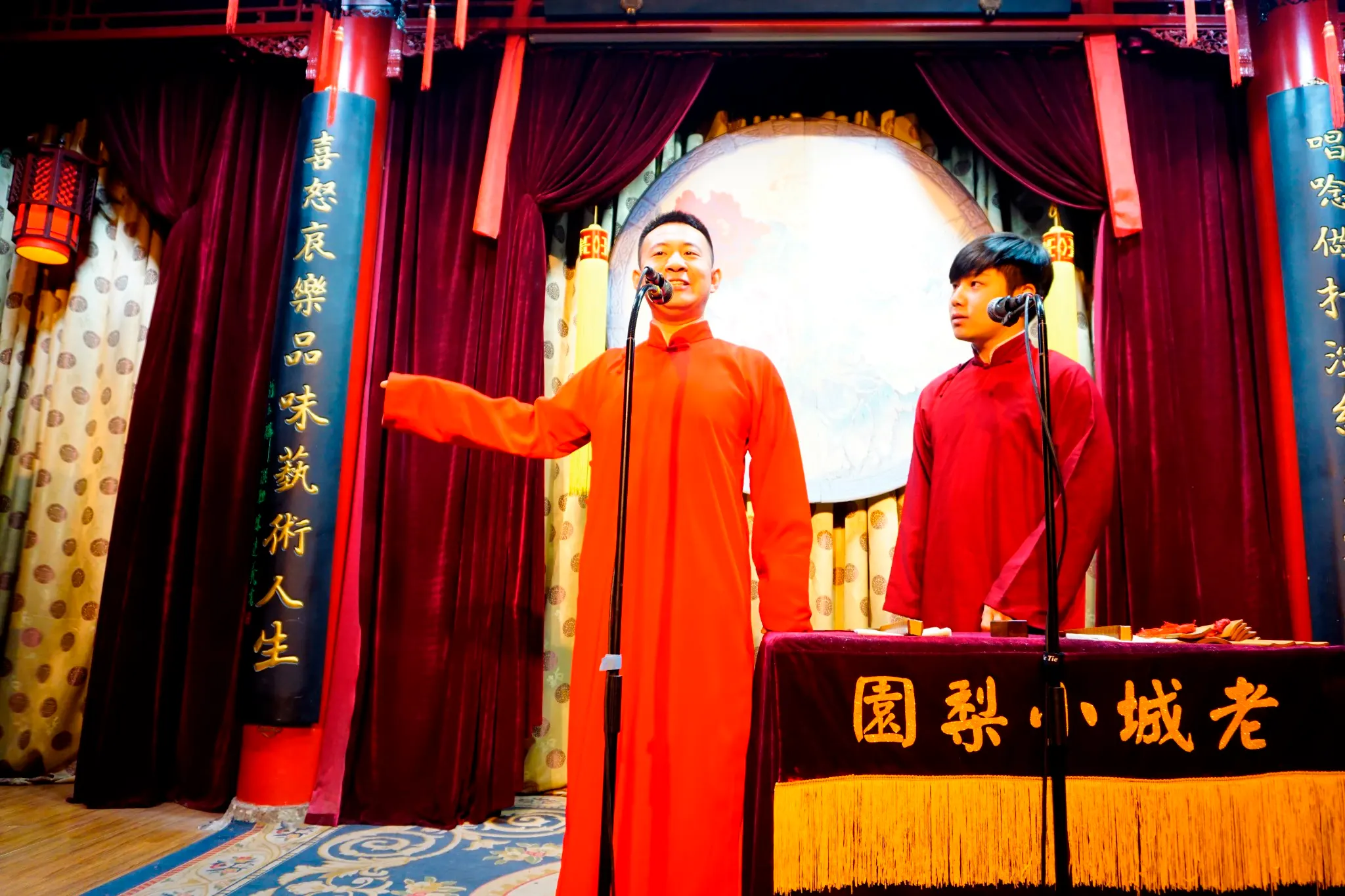
Two hours of northern Chinese comedy in a Qing merchant hall — the most local evening in the city, and the cheapest entertainment.
2 hrs | ¥60–120 incl. tea | 19:30 shows | Book a day ahead |
Location | Guangdong Guild Hall, old town, Nankai District |
What it is | Qing-dynasty merchant guild hall with a stage; xiangsheng (comic dialogue) performances |
Show times | Evening shows around 19:30; weekend matinees |
Tickets | ¥60–120 including tea and melon seeds |
Suggested time | 2 hours |
Language | Mandarin with heavy Tianjin dialect; material is local |
What to see
The hall itself — stone carvings, a wooden stage, and rows of tables rather than seats. Then the show: two performers, a fan, a folded cloth, and rapid-fire dialect that defeats most Chinese speakers from outside the city, which somehow makes it funnier.
The alternative: Mingliu Teahouse runs the same format in a more central location, ¥60–120, and is easier to book through a hotel.
13 Free
Confucius Temple (Wenmiao)
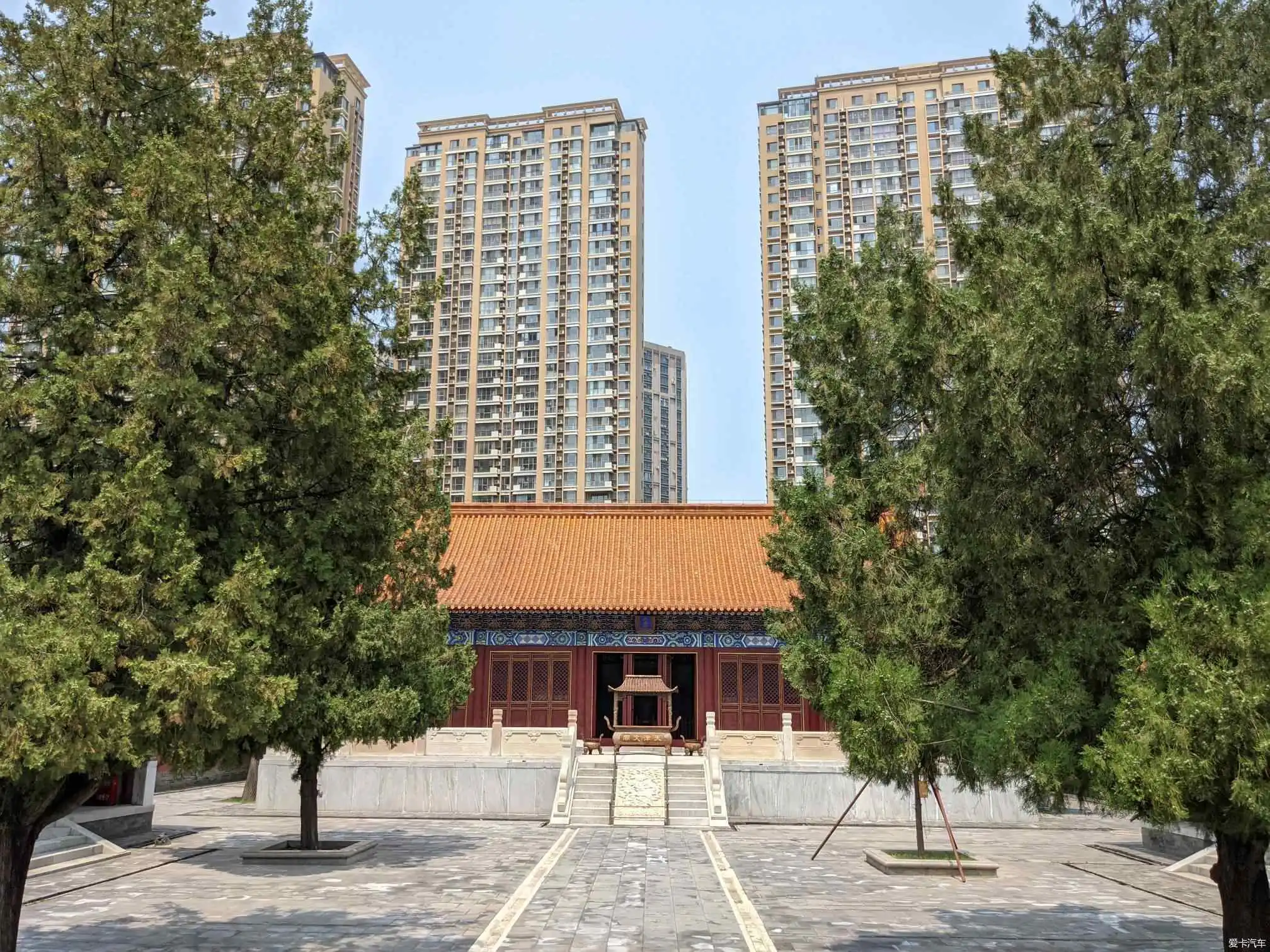
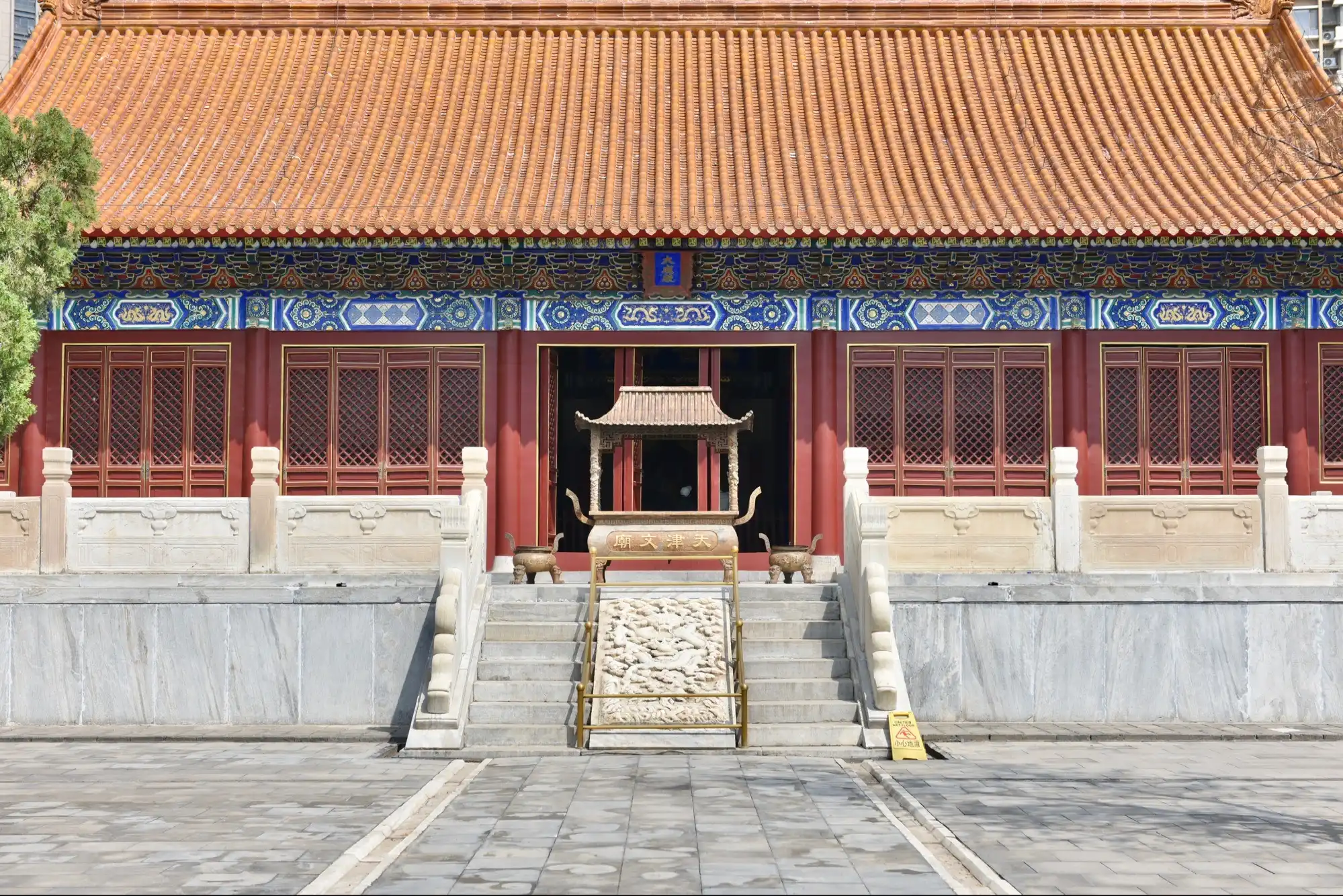
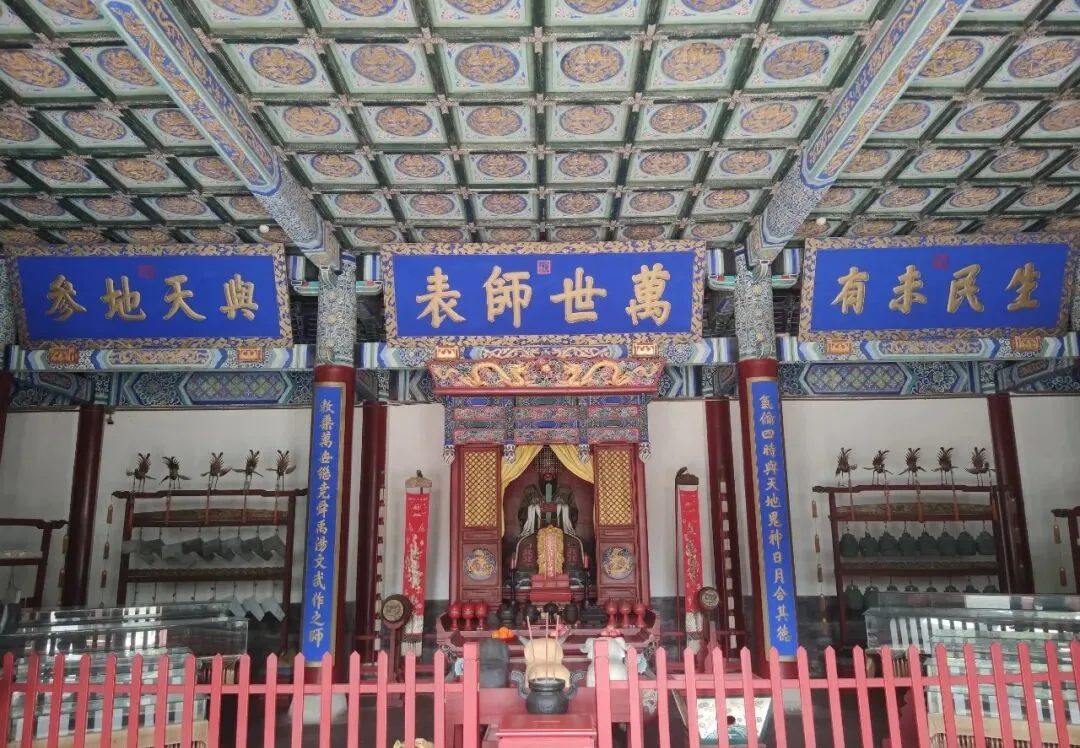
A Ming-era courtyard with almost nobody in it, ten minutes from the busiest street in the city.
20–30 min | Free | 09:00–16:30 | Closed Monday |
Location | Dongmennei Street, Nankai District, east of the old town |
What it is | Confucian temple complex with gate, stone bridge and main hall |
Opening hours | 09:00–16:30; closed Mondays |
Admission | Free |
Suggested time | 20–30 minutes |
What to see
The single-span stone bridge over the half-moon pool, the cracked paving, and the main hall's bronze and stelae. It is small, unrenovated and quiet — which is precisely why it appears in no tours.
04 — Hongqiao District
Breakfast, antiques and the Hui quarter
Hongqiao is the city at 07:00, before it has put its coat on. Three entries, all free, all better early, and none of them on a tour route.
This was the Hui neighbourhood outside the west gate: mosques, bakeries, slaughterhouses and the densest cluster of breakfast stalls in northern China. Come for the food, stay for the antiques market on a Sunday, and be gone by noon — after that there is nothing here for a visitor.
Top attractions
· Xibeijiao breakfast quarter: a lane of stalls, sesame gravy and fried dough.
· Shenyang Road antique market: Sunday mornings only.
· Tianjin Great Mosque: Qing-dynasty Hui place of worship.
Best for
Food travellers, early risers, photographers who want street life rather than architecture, and anyone who has already seen the concessions.
Tips
· Everything shuts by 09:00. This is a 06:30–08:30 district.
· Point at what the person ahead of you is eating; ¥8–15 and standing up is the correct format.
· Bring ¥50–100 in cash for the antiques market — dealers prefer notes.
· Dress for cold mornings: in November it is 0–8 °C at 07:00 and the stalls are outdoors.
14 ¥8–15
Breakfast in Xibeijiao
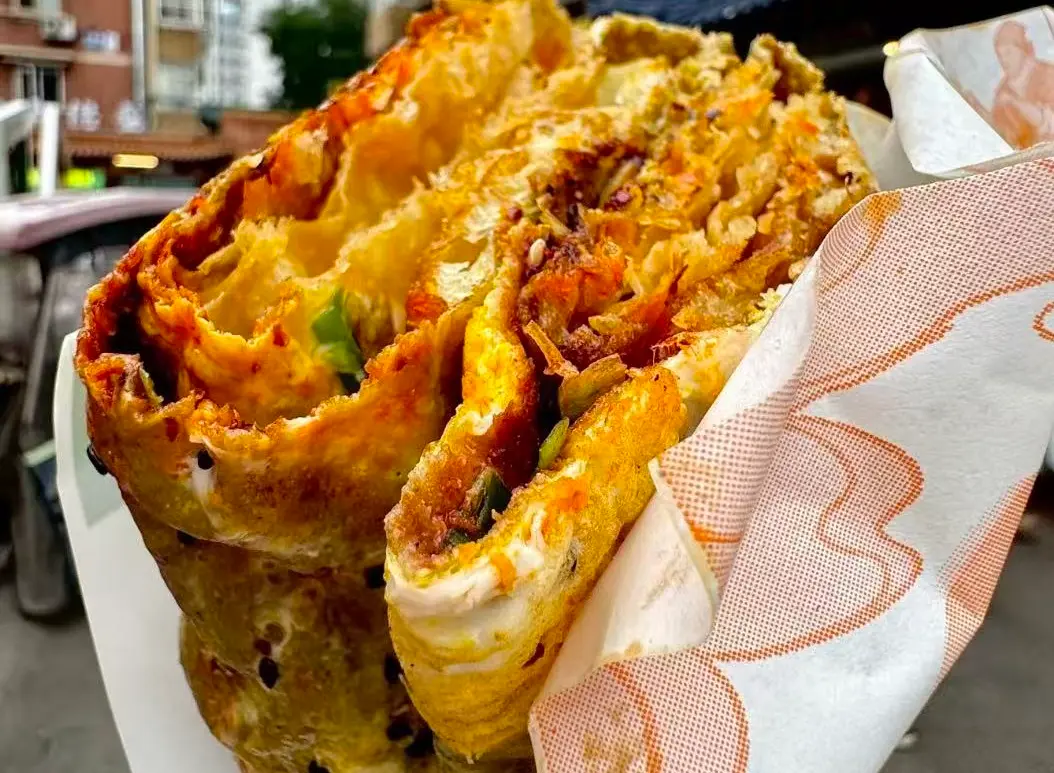
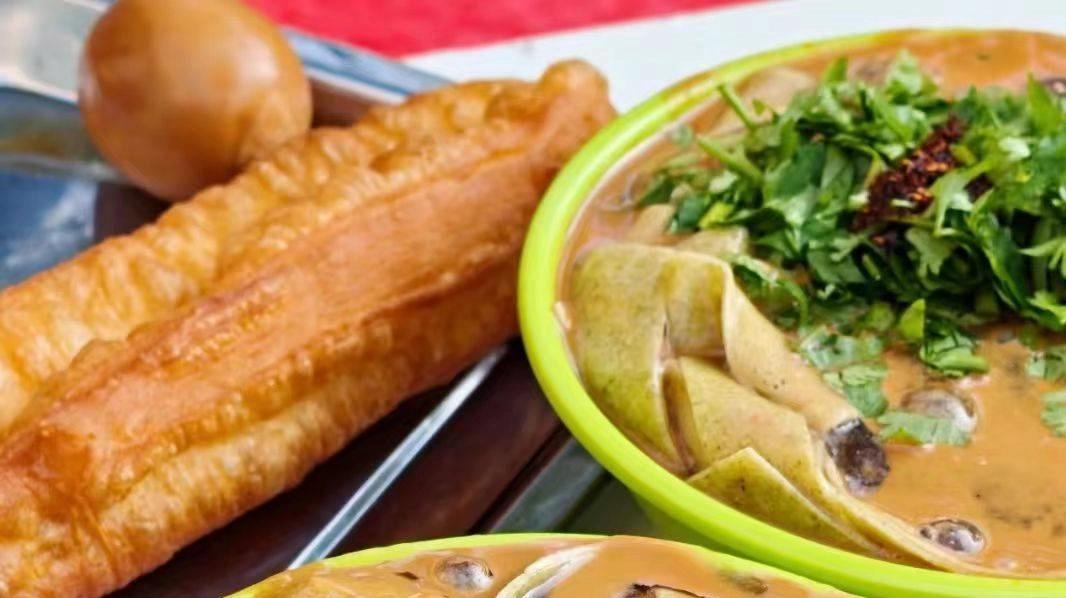
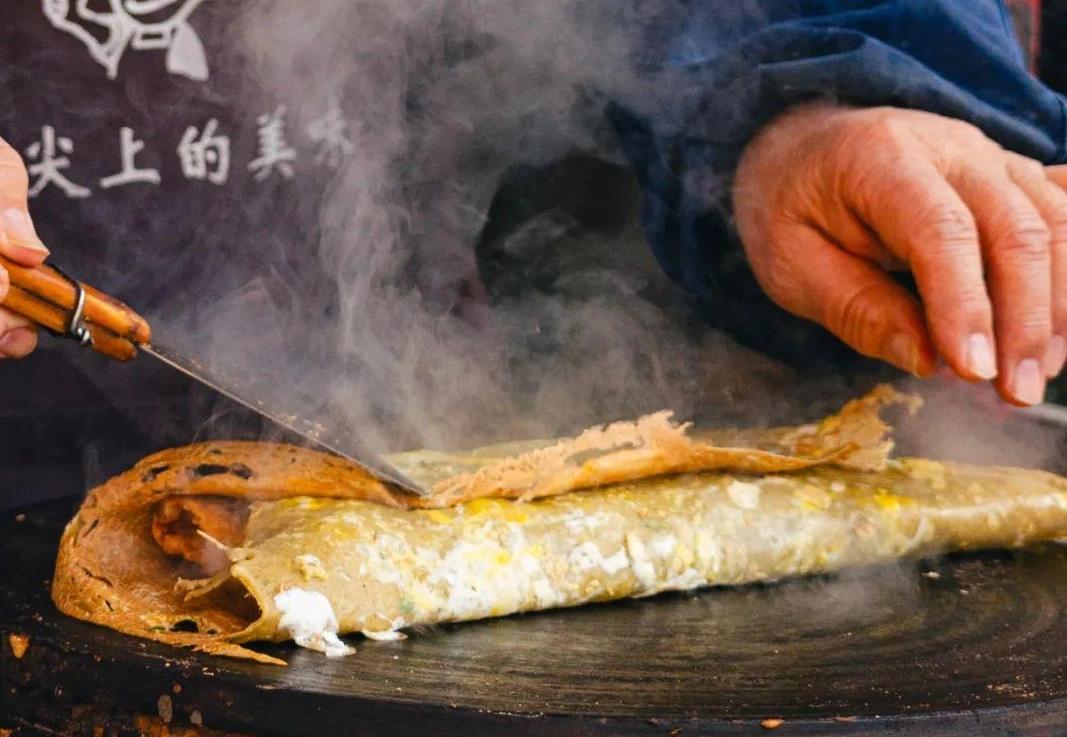
The city's breakfast laboratory: a lane of stalls and queues of locals who have been coming for thirty years.
45–60 min | ¥8–15 | 06:30–08:30 |
Location | Xibeijiao, Hongqiao District, west of the old town |
What it is | Old Hui quarter; a lane of breakfast stalls, sweets and bakeries |
Opening hours | 06:30–09:00, best 07:00–08:00 |
Cost | ¥8–15 per person, eaten standing |
Suggested time | 45–60 minutes |
Key feature | Jianbing guozi, guobacai, lao doufu, cha tang, fried dough |
What to see
Three stalls at the mouth of a lane: a griddle, a steamer and a pot of sesame gravy. Men in pyjama trousers queue without speaking; you order by pointing, pay ¥10, and eat standing in the cold with the paper burning your fingers. That is the whole experience, and it is the best meal of the day.
What to order, in order: jianbing guozi (¥8–12, say yi tao — "one set"); guobacai (¥8–10, mung-bean sheets in sesame gravy, eaten with a plastic spoon); lao doufu (¥6–8); cha tang (¥6). Two of those is a full breakfast.
How to get there
Metro Line 1 to Xibeijiao, exit and follow the queues rather than the map. Ten minutes' walk from the old town's north end.
15 Free
The Sunday antique market on Shenyang Road
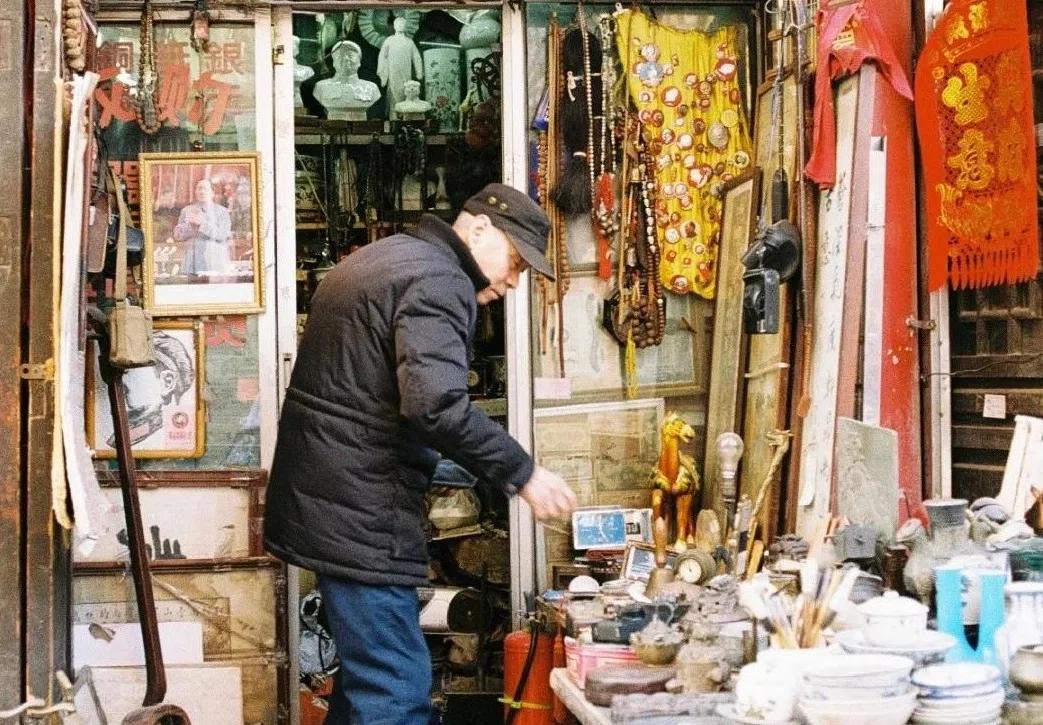
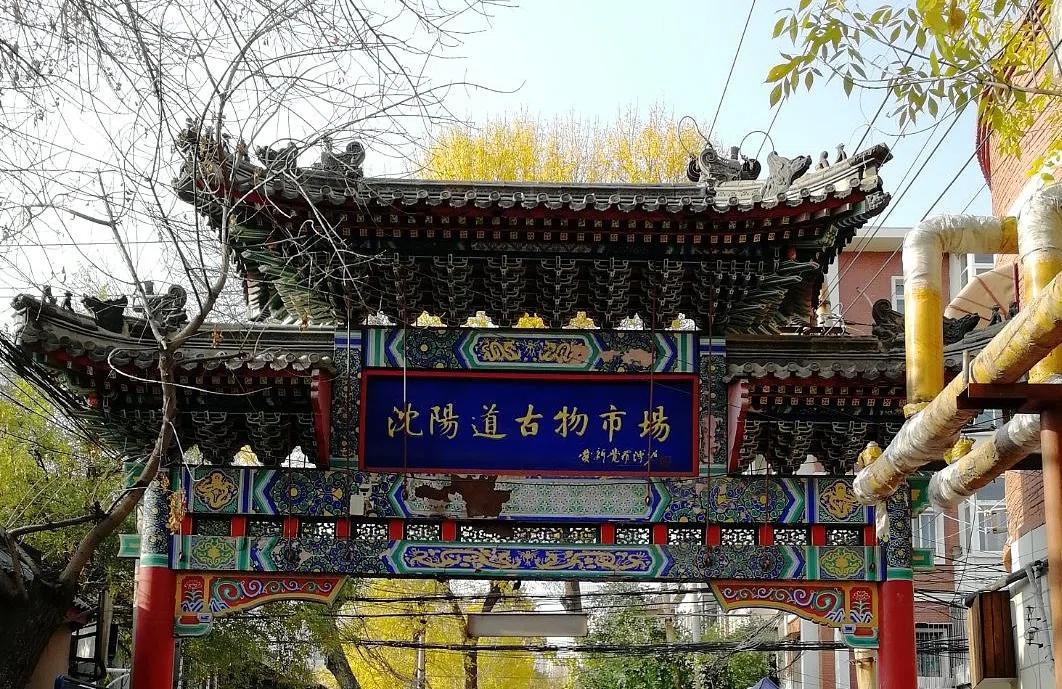
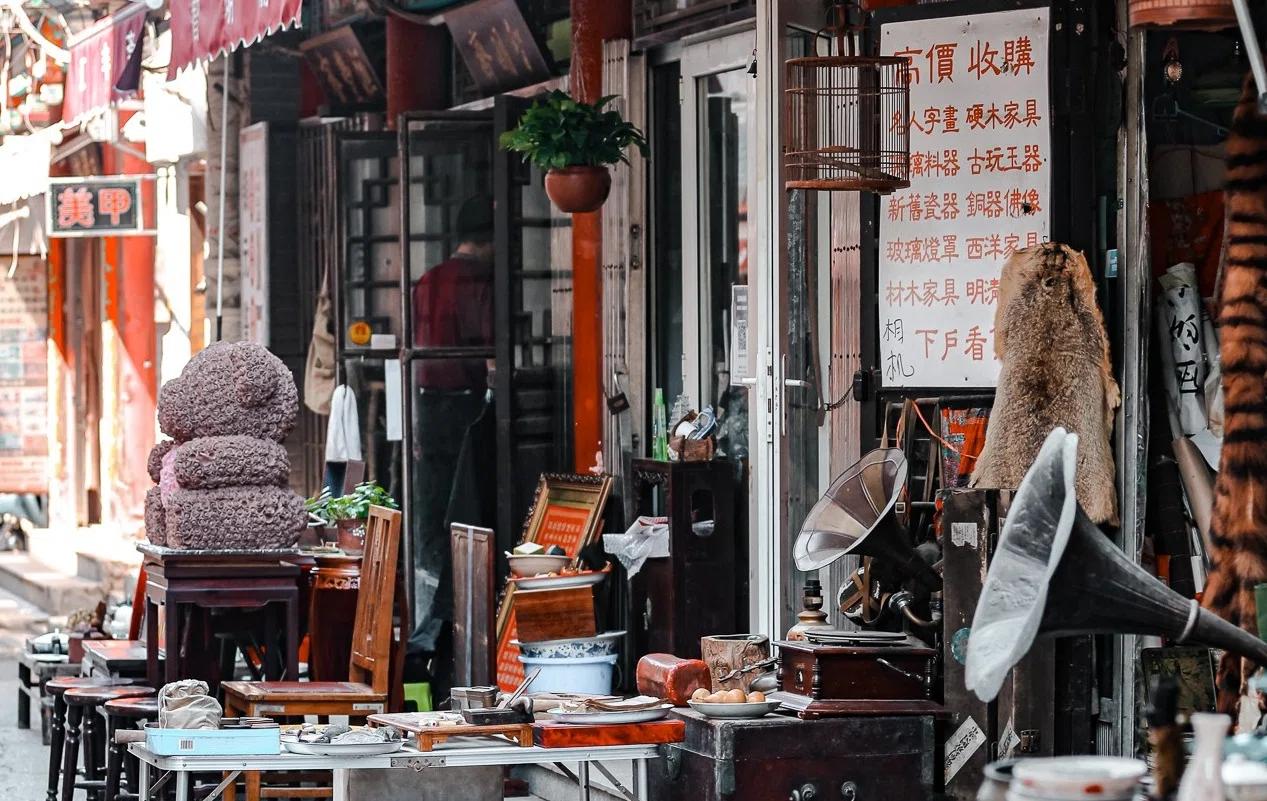
Four hours of cameras, banknotes, jade, Mao-era enamelware and bicycle parts laid out on the pavement, with no pressure to buy.
1–3 hrs | Free | Sun 07:00–12:00 |
Location | Shenyang Road, Hongqiao District |
When | Sunday mornings, roughly 07:00–12:00; dealers pack by noon |
Admission | Free |
Suggested time | 1–3 hours |
What sells | Old cameras, banknotes, jade, enamelware, books, bicycle parts, porcelain |
What to see
Stalls laid directly on the pavement, blankets of banknotes, a table of broken watches, a man selling only bicycle bells. Browsing is the activity; buying is optional and requires a little Mandarin or a calculator app.
16 Free
Tianjin Great Mosque
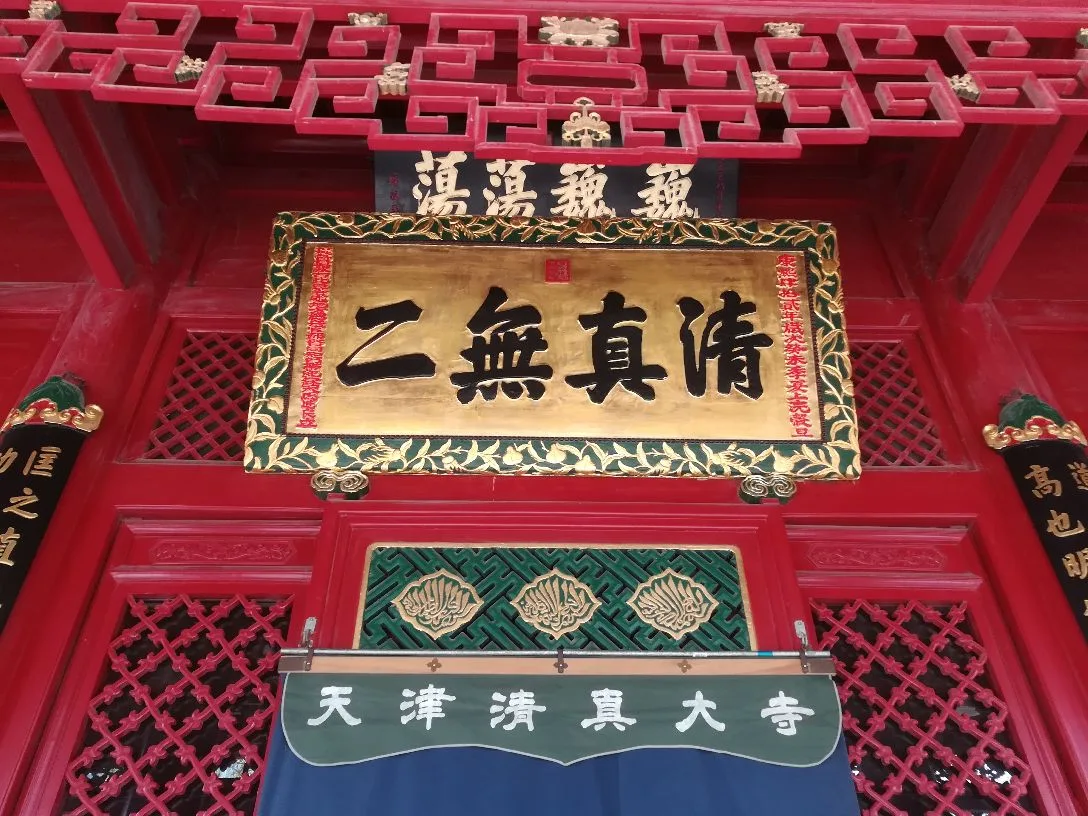
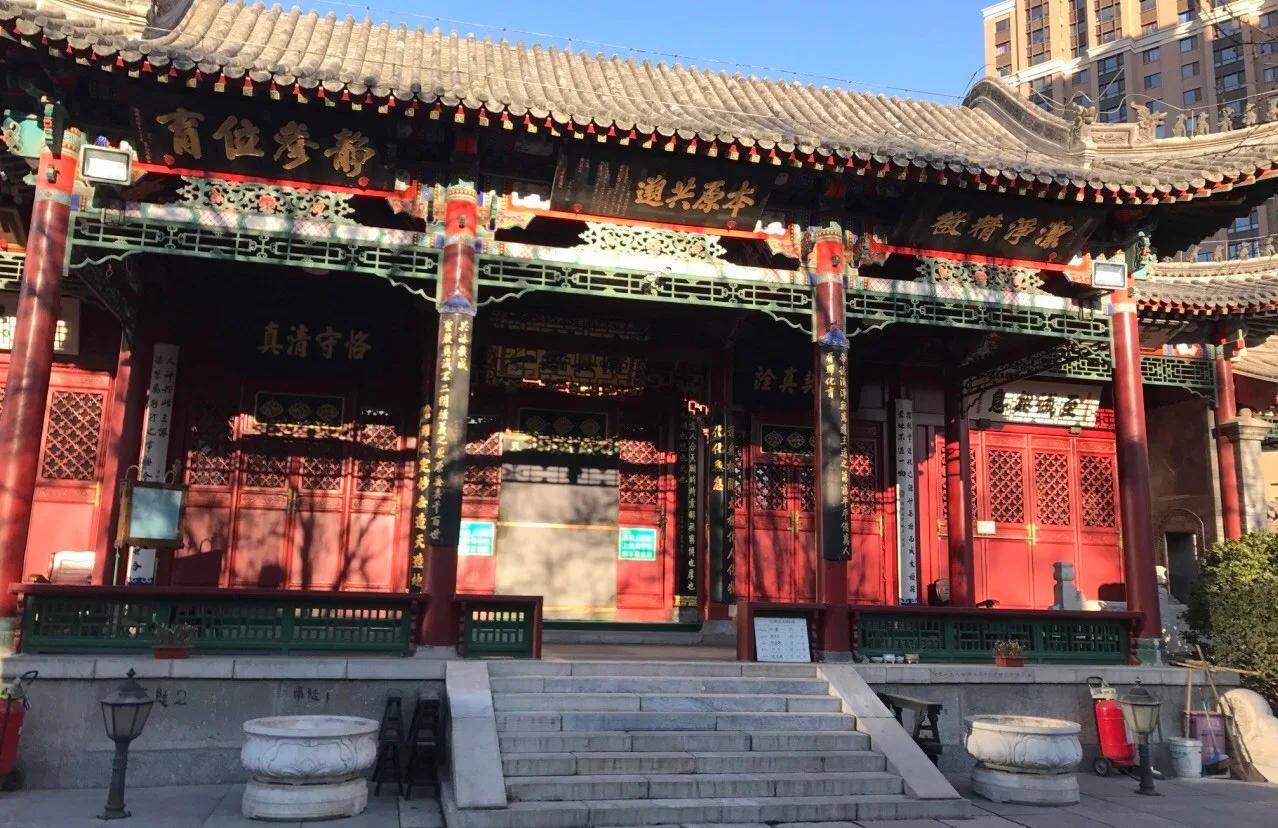
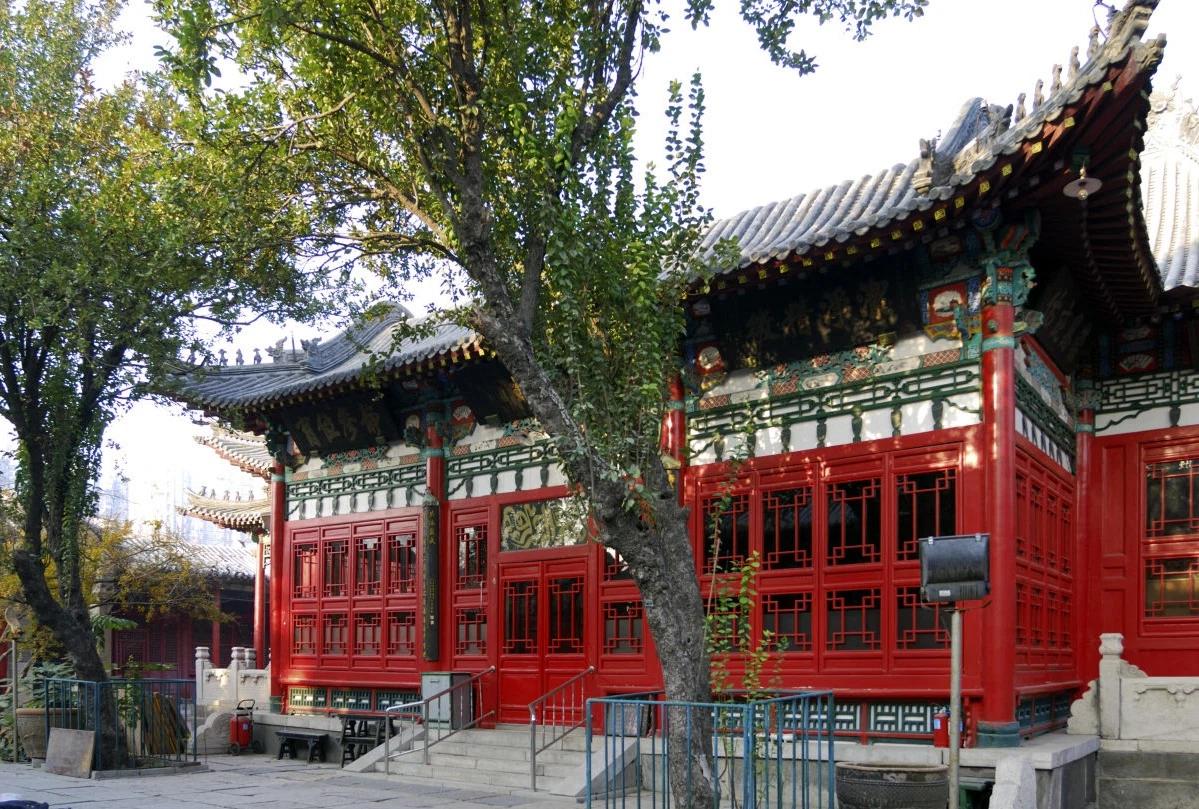
A Qing-era mosque in the middle of the Hui quarter, still in daily use and rarely visited by outsiders.
20–30 min | Free | Outside prayer times |
Location | Great Mosque, Hongqiao District, near Xibeijiao |
What it is | Qing-dynasty mosque with Chinese-style timber halls and Islamic decoration |
Opening hours | Open to visitors outside prayer times; modest dress required |
Admission | Free |
Suggested time | 20–30 minutes |
What to see
The courtyard and main prayer hall seen from the doorway — a building where Islamic ornament sits on Chinese timber construction, which is the architectural point. Do not enter the prayer hall during services, and cover shoulders and knees.
05 — Binhai
The library, and a genuinely good national museum
Two entries, 45–50 km east, and only worth it as a pair on their own half-day. Do not attempt Binhai and the city centre in one day.
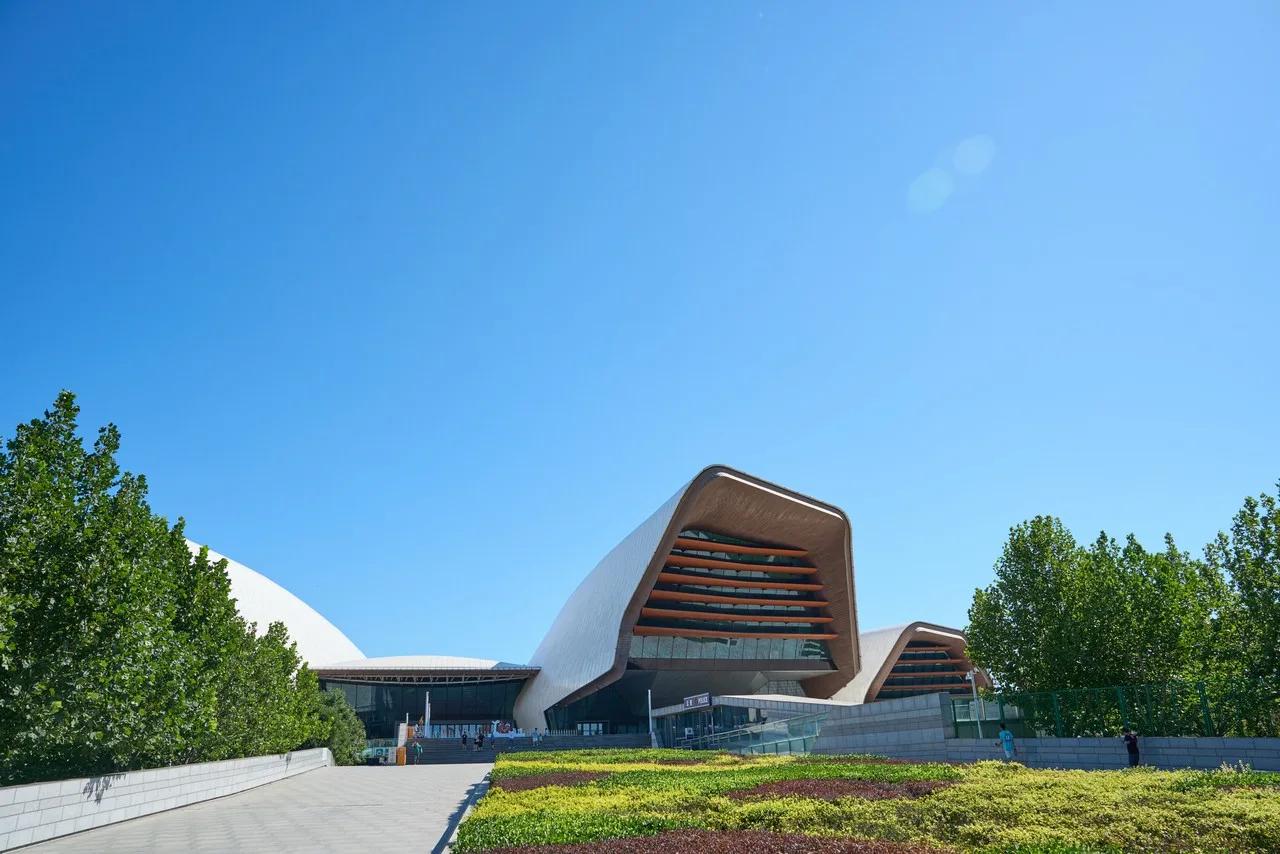
Binhai is the new city on the coast: container port, mudflat, wide roads, and two buildings that justify the trip — a library that became the most photographed room in northern China, and a maritime museum that is a proper national collection rather than an attraction.
Top attractions
· Binhai Library: white sphere wrapped in terraced shelves, opened 2017.
· National Maritime Museum: full-size ship hall, naval history, aquaria.
Best for
Families, museum people, and photographers who want one specific image. Not worth it for anyone with only one day in the city.
Tips
· Both are free but neither is open-door: every visitor reserves by real name, passport number required.
· Both close Mondays; the library closes Monday mornings only.
· Do the museum first, at opening, then the library at 15:00 when the coaches have gone.
· The Binhai coast here is port and mudflat, not beach — the swimmable sand is further north at Dongjiang Bay.
17 Free
Tight on time or arriving by cruise? Our Tianjin Port day tour to the Binhai Library and old street folds the photogenic modern sights into one easy loop.
Binhai Library
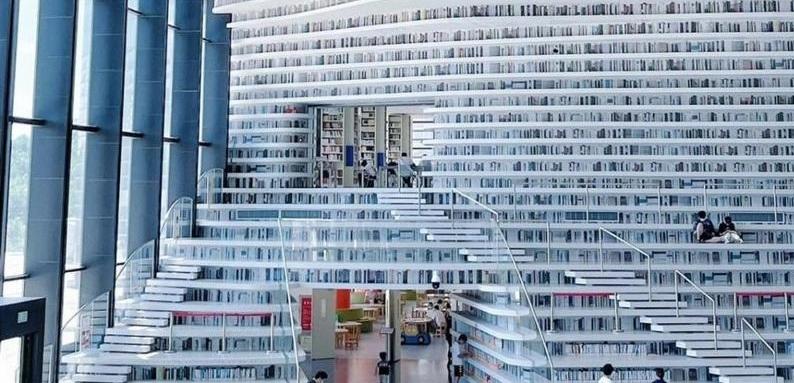
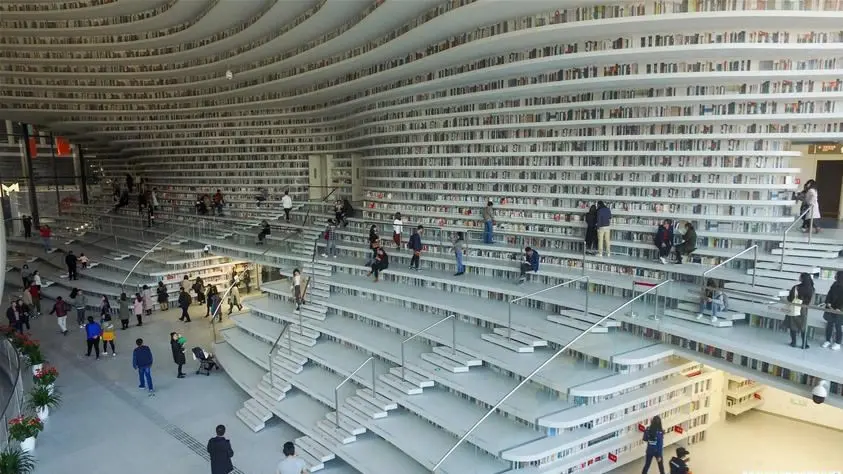
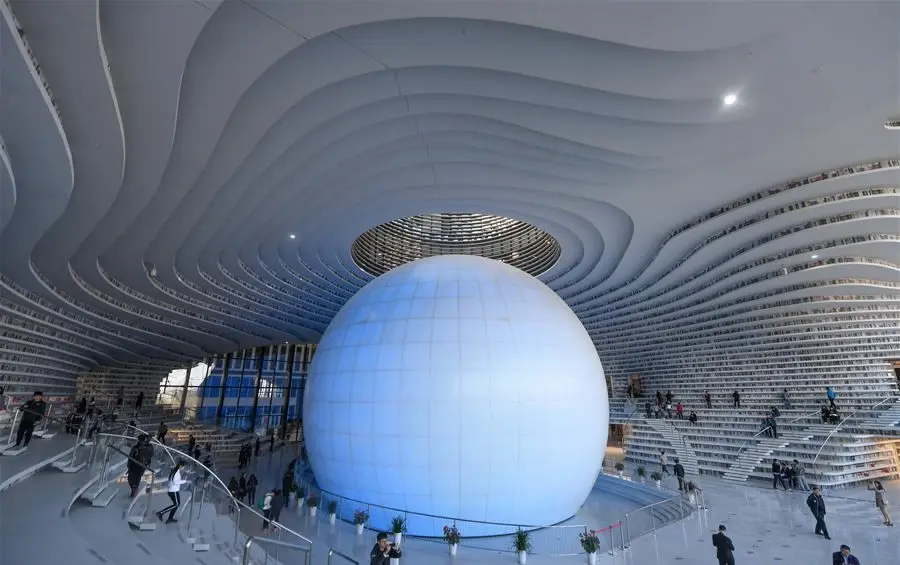
A white sphere wrapped in terraced shelves — twenty minutes, thirty photographs, and the most photographed room in northern China.
45 min | Free, timed booking | 09:30–20:00 | Closed Mon a.m. |
Location | Binhai Cultural Centre, Binhai New Area |
Opened | 2017; designed by MVRDV with the Tianjin Planning Institute |
Opening hours | 09:30–20:00; closed Monday mornings |
Admission | Free with a timed reservation from the library's WeChat account |
Suggested time | 45 minutes |
Key feature | Wave of terraced shelves with the sphere reflected in the floor |
What to see
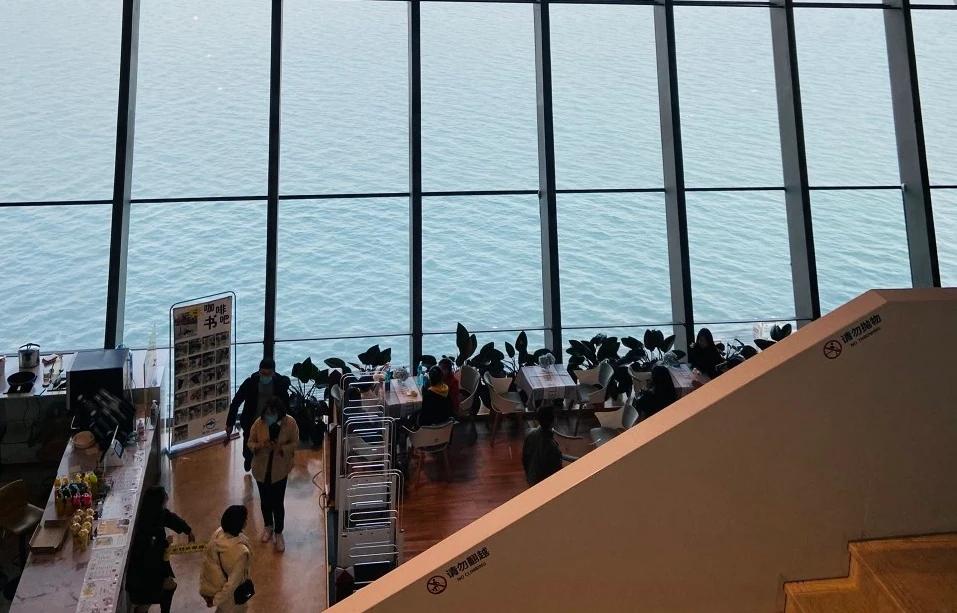
The atrium: the shelving curves up both walls and the white sphere sits in the middle, reflected in the polished floor. Then the upper terraces, which are sometimes roped off for actual readers — which is fair, and the reason to come at opening or late afternoon.
18 Free
National Maritime Museum
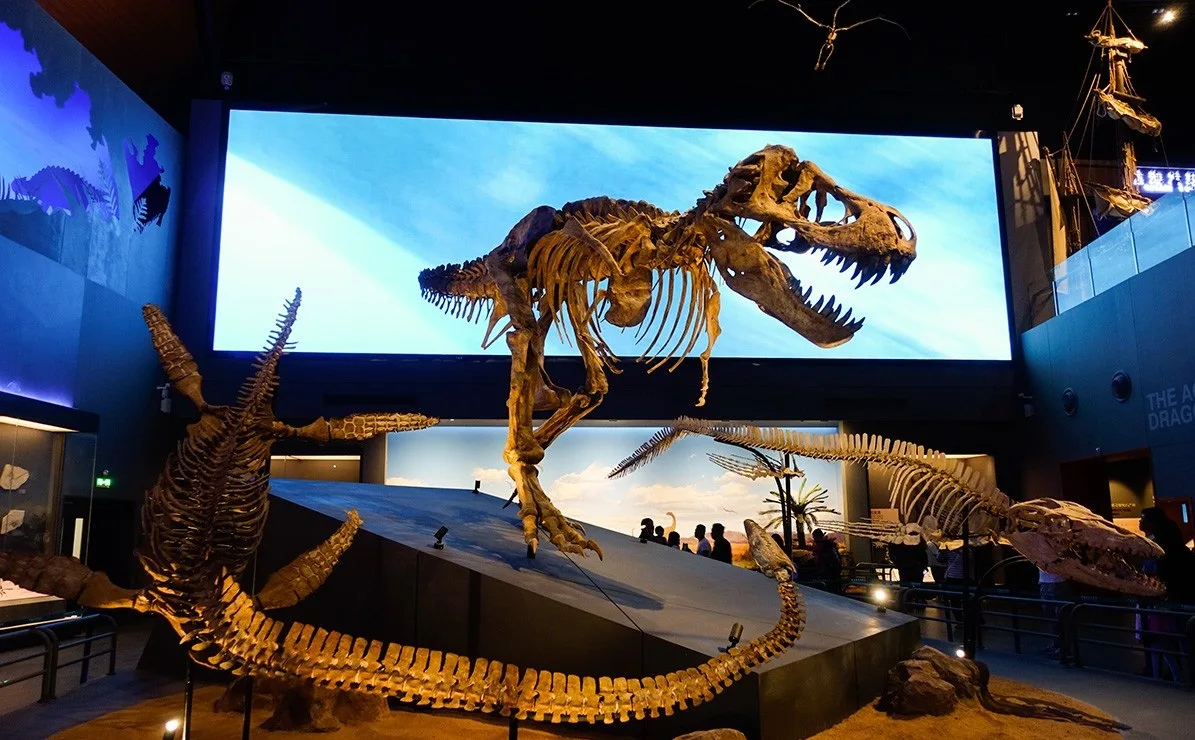
A full-size ancient ship hall, naval history from junks to destroyers, live tanks and a planetarium — three hours, free.
2.5–3 hrs | Free, book up to 7 days | 09:00–16:30 | Closed Monday |
Location | National Maritime Museum of China, Binhai New Area |
Opening hours | 09:00–16:30, last entry 16:00; closed Mondays |
Admission | Free; every visitor reserves by real name, up to 7 days ahead, slots released 07:00 |
Suggested time | 2.5–3 hours |
Key feature | Full-size ancient ship hall, naval and port history, live specimen tanks, planetarium |
What to see
The ship hall first — a reconstructed ocean-going junk at full scale, which no photograph prepares you for. Then the modern naval gallery, the port and lighthouse material, and the oceanarium floor. English labels are decent throughout, which is not true of most city museums here.
How to get there
Option | Cost | Time | Notes |
|---|---|---|---|
Private car | ¥80–110 each way | 50 min | The sane choice; door to door |
Metro Line 9 + taxi | ¥10–15 + ¥25 | 75–90 min | Cheapest; the last leg is a taxi from the Binhai end |
Group tour | ¥200–300 pp | Half day | Includes both venues; less flexible on time |
06 — Jizhou, Xiqing & the day out
The wall, a 984 timber hall, and hand-pulled prints
One entry, three directions, and only one of them per trip. North is wall and mountains; west is craft and merchant money.
Everything here needs a car or a long train-and-taxi combination, and each option eats most of a day. Choose Jizhou for scale and the Great Wall, Yangliuqing for craft and a half-day that fits around an evening train — and do not try both.
Top attractions
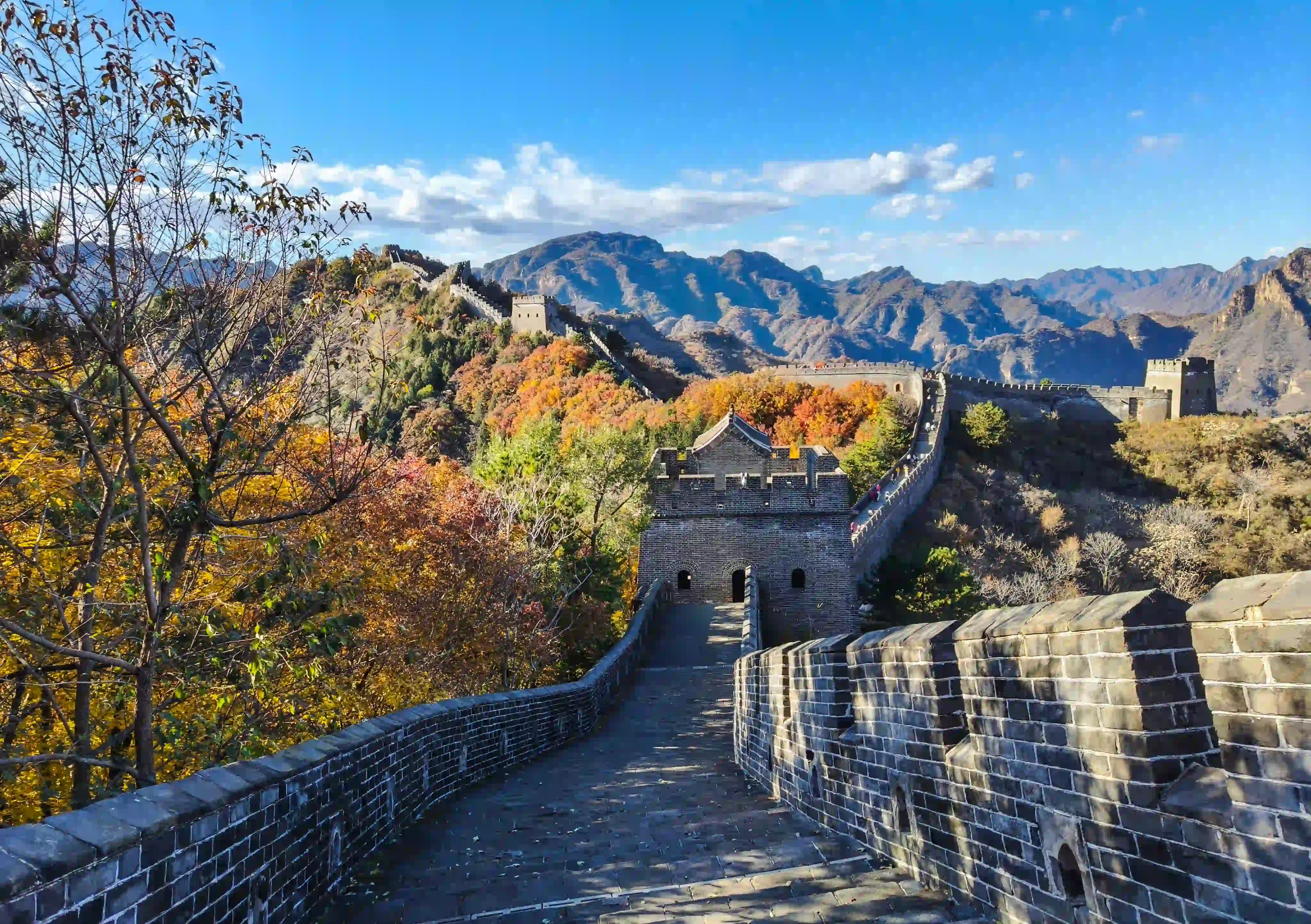
· Huangyaguan Great Wall: 3 km of ridge, a water gate, a Bagua maze town.
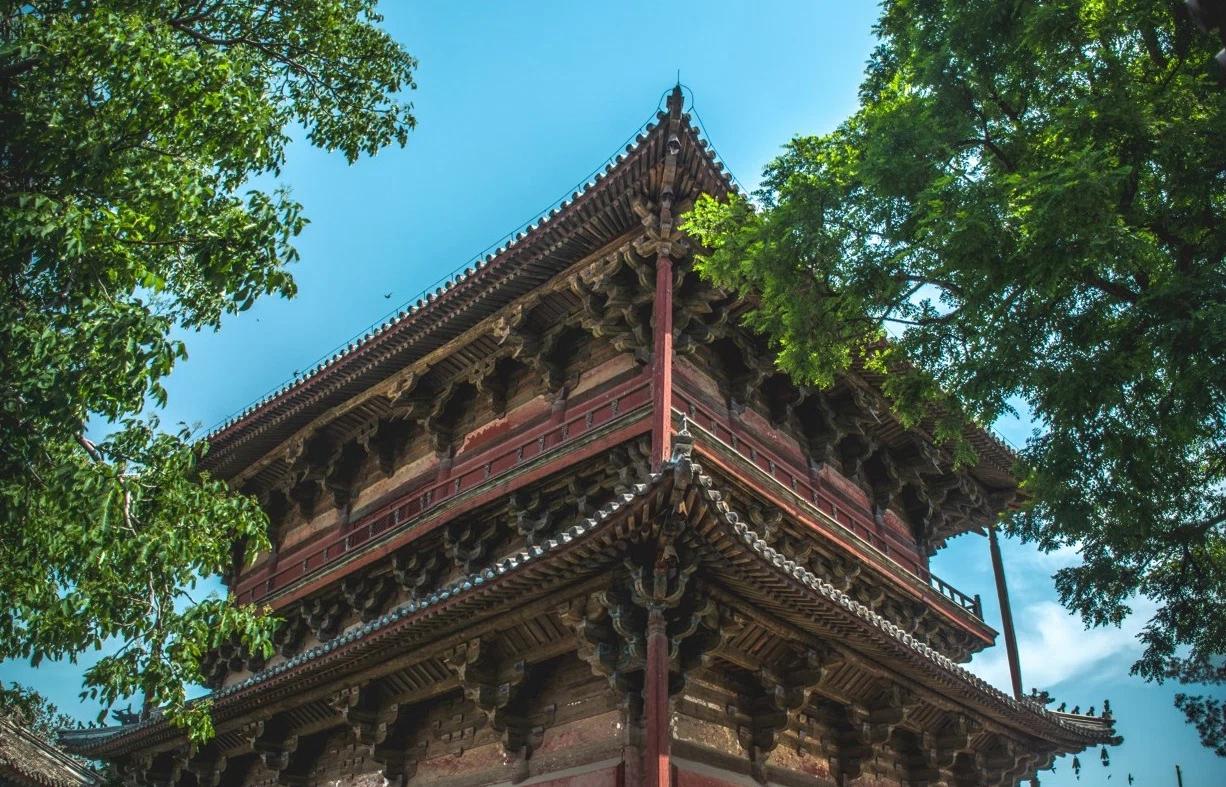
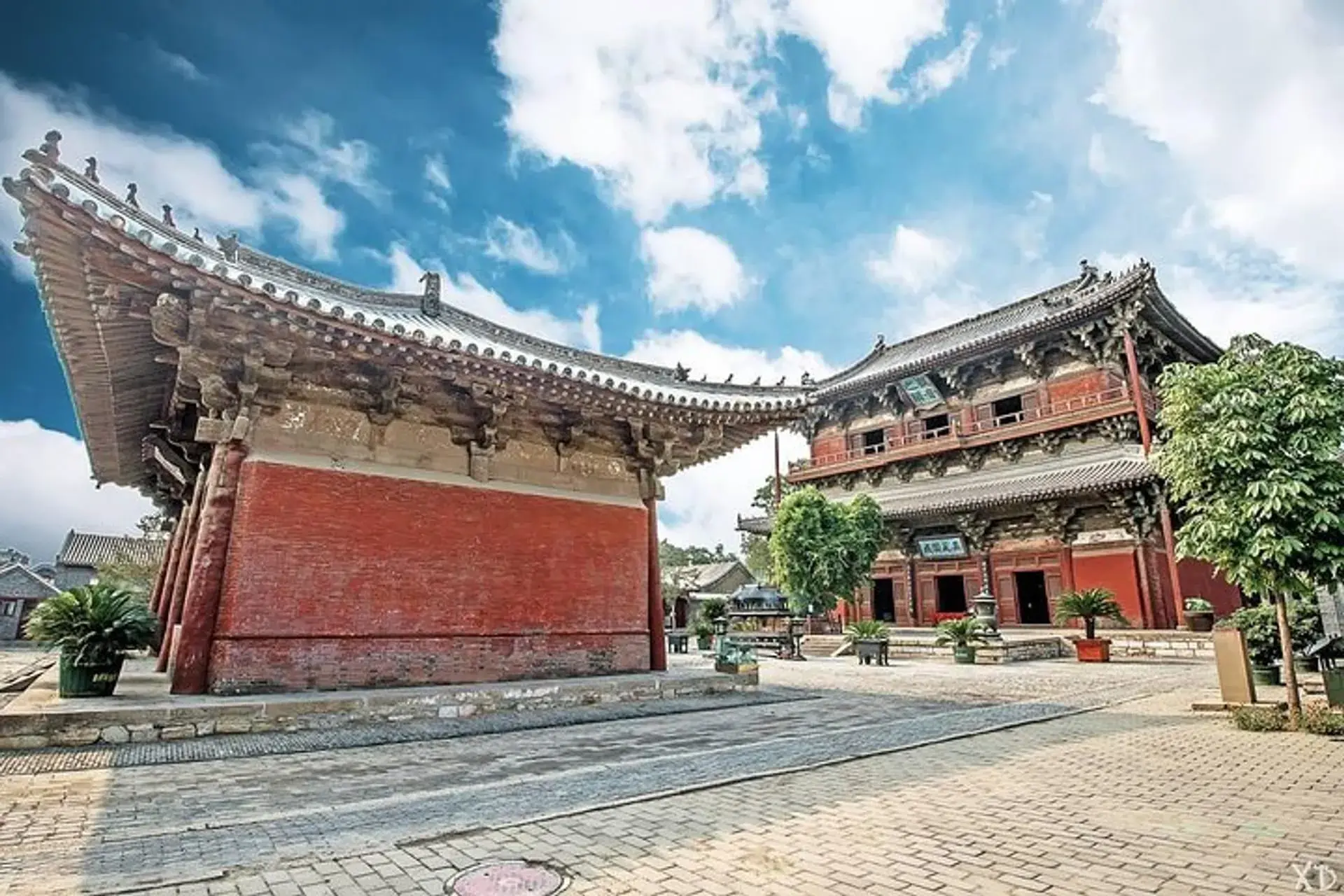
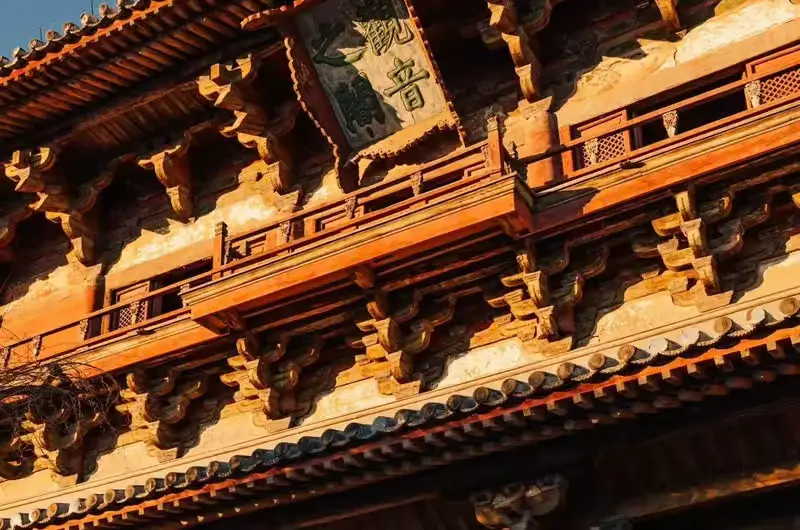
· Dule Temple: a 984 AD Liao timber hall with a 16-metre Guanyin.
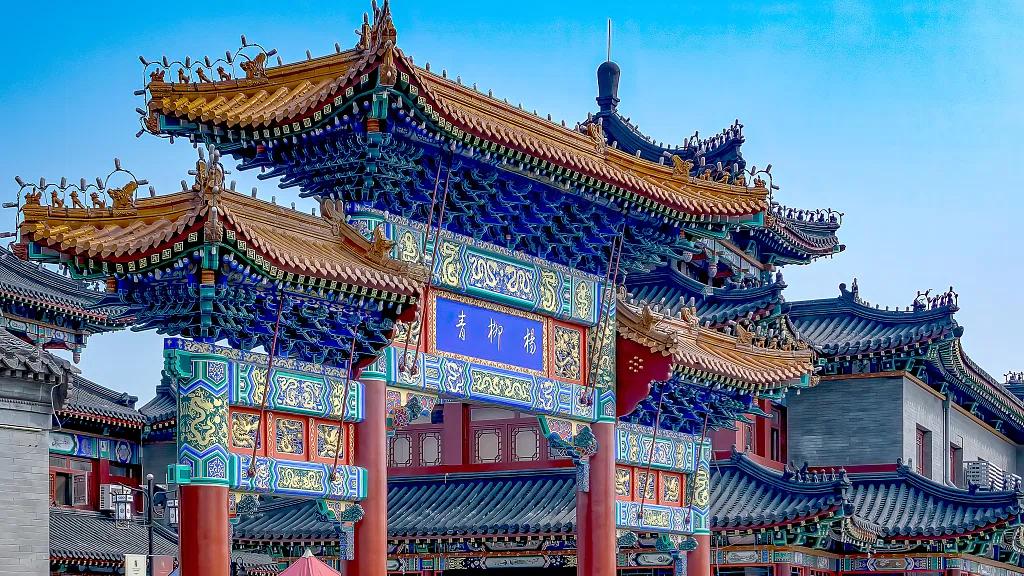
· Yangliuqing: New Year print workshops and the 278-room Shi Family Mansion.
Best for
Second-day travellers, hikers, craft shoppers, and anyone who has already done the city centre and wants the wall without Badaling's crowds.
Tips
· A car with driver for the day is ¥500–700 and cheaper than three taxis.
· Leave by 07:30 to have the ridge before the coaches arrive.
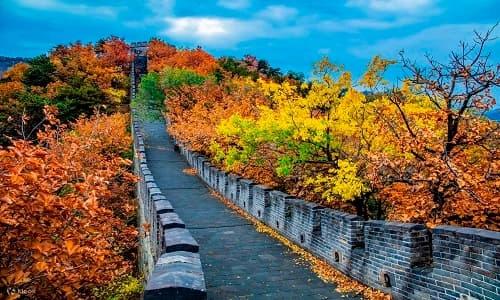
· Late October is the season: red maple and yellow smoke tree across the whole ridge.
· There is nothing to eat on the wall — carry water and something salty.
19 ¥10–70
For the wall and the ancient timber hall without working out trains yourself, this Huangyaguan Great Wall and Dule Temple tour from Tianjin covers the best day trip out of the city.
A day outside the city
Three very different half-days: wall and mountains to the north, craft workshops to the west.
Half–full day | From ¥10 | 08:00–17:30 | Car recommended |
A. Huangyaguan Great Wall


Location | Jizhou District, 100–130 km north of the city |
Opening hours | 08:00–17:30 |
Admission | ¥70 adult |
Suggested time | 3–5 hours on site; a full day with transport |
Key feature | 3 km of steep restored wall, watchtowers, a water gate, a garrison town laid out as a Bagua maze |
The route: enter at Taipingzhai and walk down to Huangyaguan rather than up — the descent is easier on the knees and a shuttle connects the two gates. Below the main gate, twenty minutes in the maze town; children love it.
Getting there: car with driver ¥500–700 for the day, 2 hours each way; or the slow Jizhou railway from Tianjin North plus a 30–40 minute taxi, which costs less and consumes the whole day.
B. Dule Temple, Jizhou town
Location | Jizhou town centre |
Built | 984 AD, Liao dynasty; one of the oldest timber halls in China |
Opening hours | 08:00–17:00 |
Admission | ¥50, or ¥40 with the combined ticket |
Suggested time | 45–60 minutes |
Key feature | 16-metre clay Guanyin, original Liao construction, no queue |
Pair it with the white pagoda and old Yuyang street for lunch on the way back from the wall. Add Panshan if you want a mountain climb — that is half a day on its own.
C. Yangliuqing, west
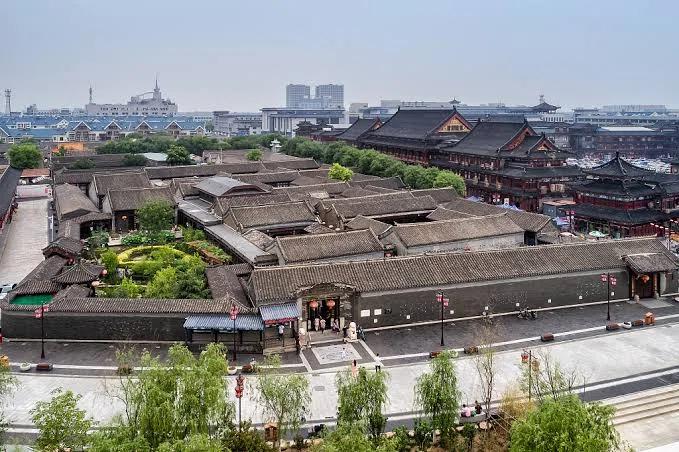
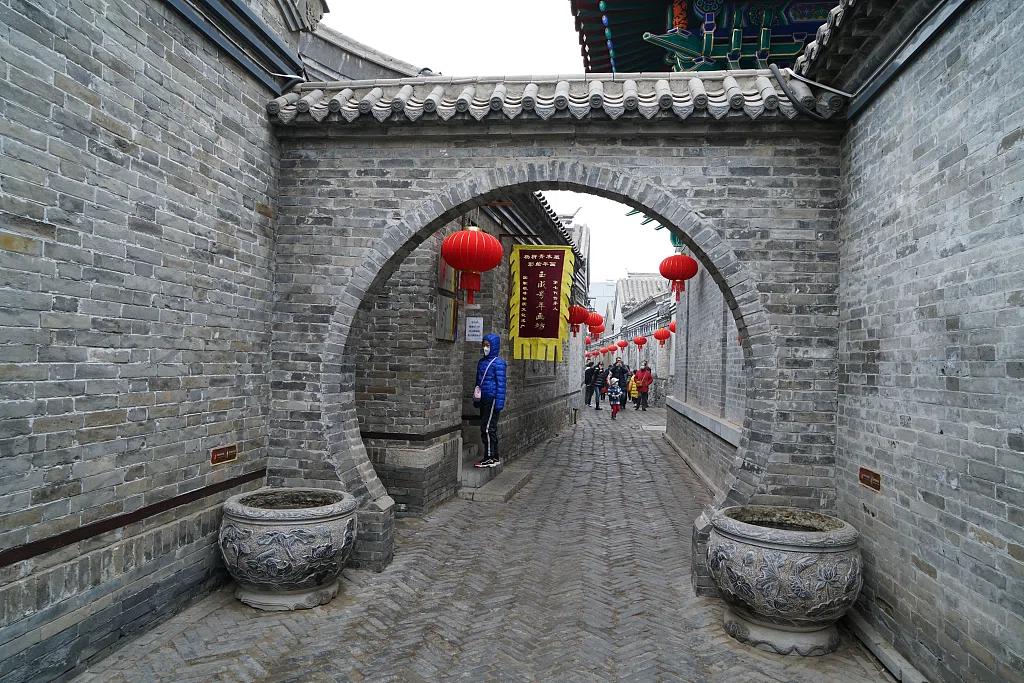
Location | Yangliuqing, Xiqing District, 30 minutes west |
Admission | Shi Family Mansion ¥25; print museum ¥10; workshops free to enter |
Suggested time | 2 hours |
Key feature | 278-room merchant mansion; woodblock New Year prints still pulled by hand, ¥20–80 |
Birthplace of Chinese New Year prints: a 278-room merchant mansion, a print museum that explains the blocks, and workshops where the pigment is still mixed by hand. ¥60 in a taxi from the centre, almost no other foreign visitors, and the best shopping for something made in front of you.
The list
All 19 at a glance
Sorted the way you will actually use them: by district, with what each is for and how long it takes.
19 things to do in Tianjin, by district
# | Experience | District | Best for | Time |
|---|---|---|---|---|
1 | Ride a bicycle through the Five Great Avenues | Heping | 1920s villas, cafés, low-sun photography | 1.5–2 hrs |
2 | Porcelain House | Heping | Maximalist folk art, one wall photo | 40–50 min |
3 | Xikai Cathedral | Heping | 1916 spires, free interior | 15–20 min |
4 | Jingyuan & Zhangyuan | Heping | Puyi in exile, 1920s interiors | 1–1.5 hrs |
5 | Jiefang North Road's bank halls | Heping | Colonial architecture, free lobbies | 30–40 min |
6 | Tianjin Eye at dusk | Hebei | The one iconic ride in the city | 45–60 min |
7 | Italian Style Town | Hebei | Blue-hour streetscape, outside tables | 2 hrs |
8 | Haihe river walk or cruise | Hebei | Night lights, free walking, ¥100 boat | 1–1.5 hrs |
9 | Dabei Monastery | Hebei | Quiet ten minutes by the wheel | 10–20 min |
10 | Ancient Culture Street & Tianhou Palace | Nankai | Crafts at the bench, 1326 temple | 1.5 hrs |
11 | Drum Tower & the lanes | Nankai | Old-town street life | 40–60 min |
12 | Xiangsheng at the Guangdong Guild Hall | Nankai | Local comedy, cheapest evening | 2 hrs |
13 | Confucius Temple (Wenmiao) | Nankai | A quiet Ming courtyard | 20–30 min |
14 | Breakfast in Xibeijiao | Hongqiao | The best meal of the day, ¥10 | 45–60 min |
15 | Sunday antique market, Shenyang Road | Hongqiao | Browsing, old objects, cash deals | 1–3 hrs |
16 | Tianjin Great Mosque | Hongqiao | Qing-era Hui heritage | 20–30 min |
17 | Binhai Library | Binhai | One very famous room | 45 min |
18 | National Maritime Museum | Binhai | Ships, naval history, families | 2.5–3 hrs |
19 | Huangyaguan wall, Dule Temple or Yangliuqing | Jizhou / Xiqing | The Great Wall without the crowds | Half–full day |
Eating
What to eat, and how to order it
Tianjin eats earlier and saltier than most Chinese cities, and what it is famous for is cheap, handheld, and eaten standing up. Four things explain the city; the rest is ordering and avoiding.
The breakfast, which is the whole point
Jianbing guozi, ¥8–12. Mung-bean batter spread thin on a round griddle, an egg cracked over it, scallion and sesame, a brush of fermented bean paste and chilli, then a folded crisp rolled inside and cut in half. Ninety seconds, eaten one-handed, still too hot. Order with yi tao — "one set".
Guobacai, ¥8–10. Mung-bean sheets cut into ribbons and simmered in a thick gravy of sesame, coriander and tofu. It looks like wallpaper paste and tastes like toasted sesame and salt — the most Tianjin thing you can put in your mouth. Dafulai, several branches, mornings only.
Lao doufu, ¥6–8. Silky tofu pudding under a savoury gravy with sesame and chilli oil. Cha tang, ¥6, is millet flour cooked into a paste and topped with sesame and salt — order it if you want to understand how savoury this city's breakfast really is.
Where. Xibeijiao in Hongqiao is the densest cluster; Ancient Culture Street's north end is the most convenient; every neighbourhood has one corner doing the same three things.
What else to order, once
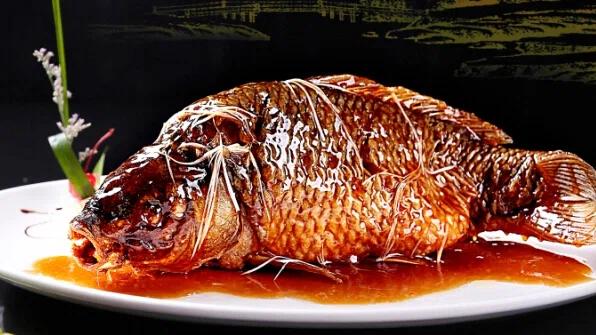
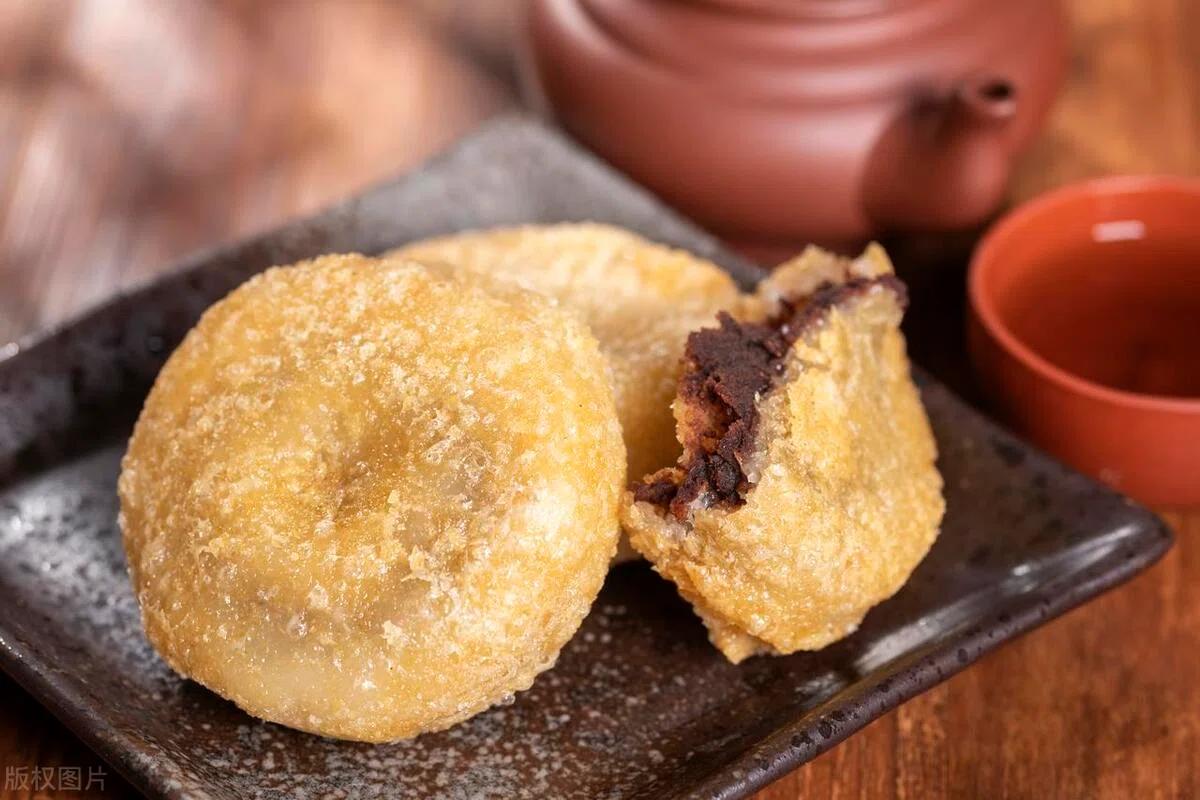
The dishes worth planning a meal around
Dish | Price | What it is, and how to order it |
|---|---|---|
Zengbeng carp | ¥60–100 | Whole carp scored, fried upright, covered in glossy sweet-sour sauce. Order at a proper restaurant for three or more people; it is the point of the meal. |
Du mianjin | ¥28–38 | Braised wheat gluten. The dish locals order first, and why vegetarians eat well here. |
Erduoyan gao | ¥3–5 each | Fried glutinous rice cake with red bean: crisp outside, molten inside for about four minutes. |
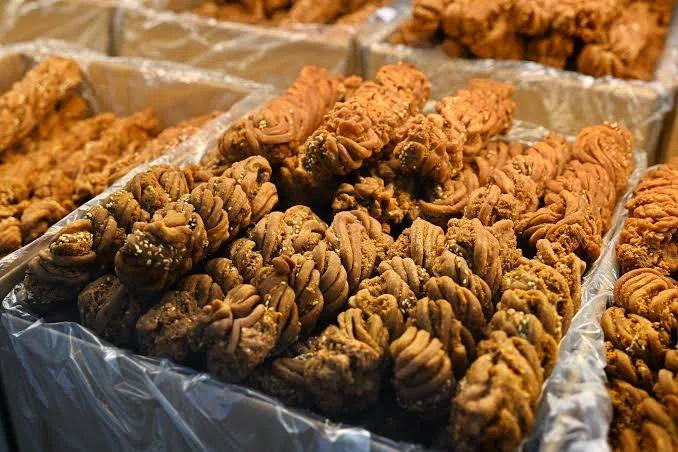
Mahua | ¥15–40 a box | The honeyed dough twist from Guifaxiang — the only souvenir here worth carrying. |
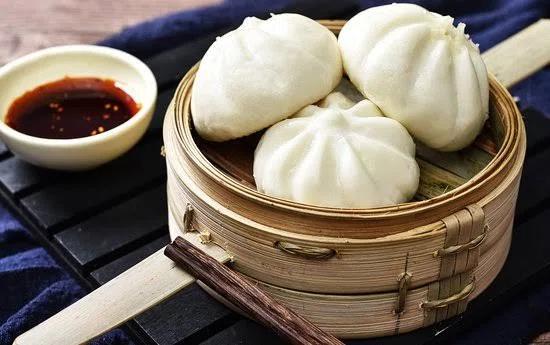
Goubuli buns | ¥50–80 a steamer | 1858 institution, thin-skinned, eighteen pleats. One steamer, accept the price, avoid peak hours. |
Shitoumenkan buns | ¥15–25 | The local dumpling tradition without the famous name or the queue. |
Where to eat it, by meal
Restaurants by meal, with price band
Meal | Place | Price | Order |
|---|---|---|---|
Breakfast | Street stalls, Xibeijiao or Beima Rd | ¥8–15 | Jianbing + guobacai; standing up |
Lunch | Hongqi Fanzhuang | ¥60–120 | Old-school Tianjin cooking; the carp and du mianjin |
Lunch | Dumpling shops, old town | ¥25–50 | Speed and value before the afternoon block |
Dinner | Dengyinglou | ¥80–150 | Full repertoire, tablecloths, book ahead at weekends |
Dinner | Kiessling (Qishilin) | ¥80–150 | 1901 European menu in a Chinese city; the curiosity meal |
Sampler | Nanshi Food Street | ¥40–80 | Eight snacks at 16:00, not dinner at 19:30 |
After dark | Mingliu Teahouse | ¥60–120 | Two-hour xiangsheng show; book ahead |
The plan
Arriving from Beijing and would rather someone else ran the day? Our Tianjin day tour from Beijing by high-speed train strings the highlights together with a private guide and transfers.
One perfect day, hour by hour
The route I would give a friend, with the transit, the money and the buffer. Everything is walkable or one metro stop apart, and nothing needs booking except the wheel.
The classic day 8 hours · 6 km on foot
07:45 | Breakfast, ¥12. Street stall near your hotel: one set of jianbing, a bowl of soy milk. Standing. Ten minutes, and the day's best meal is already done. |
08:30 | Ancient Culture Street. Metro to Dongnanjiao (Line 2), two minutes to the archway. Shutters still coming up, temple empty, craftsmen at their benches. Walk the full 687 m, ¥10 into Tianhou Palace. |
10:00 | Metro to Xiaobailou (Line 1, one change at Yingkoudao, ~15 min, ¥3), then a shared bike, five minutes to Minyuan Square. |
10:15 | Five Great Avenues by bicycle. Chongqing → Yunnan → Marché → Munan → Dali → Changde, 90 minutes with photo stops. Qingwang Mansion if the gate is open. Park at the square gate. |
12:00 | Porcelain House, 1.2 km east on Chifeng Road: ten minutes by bike, half an hour outside and in. Queue is short at noon. |
12:45 | Xikai Cathedral, ten minutes north on foot. Free, ten minutes inside, then lunch. |
13:15 | Lunch, ¥40–70. Hongqi Fanzhuang or a dumpling shop; if it is hot, sit indoors — 14:00 is the worst hour to walk. |
14:45 | Jingyuan on Anshan Road, ten minutes by taxi (¥12). One hour, English labels, cool and quiet. Add Zhangyuan up the same street if you have legs left. |
16:15 | Jiefang North Road, then the riverbank: from the old bank buildings to Jiefang Bridge and the Century Clock — twenty minutes of the best free architecture in the city. |
17:15 | Italian Style Town. Fifteen minutes' walk or one metro stop. Architecture in daylight, then a table outside as the lamps come on around 18:20. |
18:45 | Jingang Bridge for the wheel lit up — ten minutes by taxi, ¥15 — or stay on the bank and watch the boats. |
19:30 | River cruise from the Italian Town wharf, 45–50 minutes, ¥100–160, or walk the south bank instead. Dinner afterwards, late, near the station. |
If you are running late: cut the cathedral and Jingyuan, never the bicycle loop — the villas are the reason you came. If it rains: swap the loop for the Tianjin Museum or Jingyuan and keep the evening exactly as planned, because the river is better wet.
More time
If you are only ashore for a few hours, the Mutianyu Great Wall trip from Tianjin cruise port is the classic way to make a short stopover count.
Two days, and a four-hour stopover
Two days add Binhai or the wall
Day 1 | The classic day above, minus the cruise, ending with dinner in Italian Town. Sleep in Heping. |
Day 2 | Morning: the museum you actually care about — Tianjin Museum (free, closed Mondays) or Binhai if you are heading east. |
Four hours between trains hand luggage only
0:00 | Tianjin station. Lockers ¥10–30; leave the big bag. Exit toward the river, not the taxi rank. |
0:10 | Italian Style Town, 12–15 minutes' walk west along the bank. Marco Polo Square, the clock tower, one side lane, a coffee standing up. |
1:05 | River walk south past Jiefang Bridge and the Century Clock — twenty minutes, then one metro stop or a ¥12 taxi to Jingang Bridge. |
1:40 | The wheel if tickets exist (day tickets stop boarding at 18:00), otherwise the bridge view and Dabei Monastery. |
2:40 | Lunch near the station or Minyuan Square, ¥40. Back on the platform with a 25-minute margin — Chinese stations close gates five minutes before departure. |
The rule for stopovers: one district, not three. Attempting the old town and the villas in four hours means seeing two car parks.
Admin
Book these first — everything else, walk in
Four things in Tianjin cannot be done on impulse. Each releases tickets on a schedule, needs a passport number, and has a workaround if you miss out.
What needs a reservation, and how far ahead
Venue | Price | Release | How it works, and the workaround |
|---|---|---|---|
Tianjin Eye | ¥90 / ¥138 | 3 days ahead | Official WeChat account, one ticket per passport per day; sunset and weekends go first. Miss out: Jingang Bridge at dusk, free. |
National Maritime Museum | Free | Up to 7 days | Official mini-programme, slots at 07:00, real-name for everyone including children. Miss out: try a weekday afternoon for cancellations. |
Binhai Library | Free | 1 day ahead | Library WeChat account. Walk-ins turned away when full; reserve before travelling out. |
Tianjin Museum | Free | 1 day ahead | Museum WeChat account, released 09:00. Passport number at booking, physical passport at the gate. |
Money
What it actually costs
Tickets, line by line, per person
Item | Price | Note |
|---|---|---|
Tianjin Eye | ¥90 / ¥138 | The only significant ticket inside the centre |
Porcelain House | ¥50 | Optional, and cheap enough that the decision is time, not money |
Jingyuan, Zhangyuan, Qingwang Mansion | ¥20–30 each | Three interiors, one street; ¥75 for the set |
Tianhou Palace | ¥10 | The street is free; this is the only gate on it |
River cruise | ¥100–160 | Deck and route dependent; the walk is free and better for photos |
Xiangsheng teahouse | ¥60–120 | Includes tea and seeds; best value entertainment in the city |
Huangyaguan / Dule Temple | ¥70 / ¥50 | Plus ¥500–700 for a car and driver — the real cost of that day |
Museums, cathedral, riverfront, villas | Free | Everything that makes this city worth a night costs nothing |
Day totals, excluding the train from Beijing
Style | Per day | What it buys |
|---|---|---|
Shoestring | ¥250–320 | Old-town guesthouse ¥150, street breakfast and noodles ¥90, metro and bikes ¥20, free sights |
Comfortable | ¥650–850 | Central three- to four-star ¥450, one proper Tianjin meal ¥180, taxis when tired, the wheel |
Treat yourself | ¥1,300+ | Villa boutique hotel ¥900+, Kiessling at lunch, riverside dinner with wine ¥350, private car to the wall |
Sleeping
Where to stay, in four choices
Pick by what your evening looks like
Area | Rate | Why, and what to watch |
|---|---|---|
Heping / Five Great Avenues | ¥450–900 | Prettiest streets, best cafés, walk to the villas and cathedral. Quiet at night, ten minutes by taxi from the river; the only hotels in the city with real character. |
Italian Style Town / Tianjin station | ¥350–700 | River one side, station the other. Best for short trips and early trains; noisier at weekends, priciest restaurants. |
Ancient Culture Street | ¥250–500 | Cheapest central option, five minutes from the temple. Lanes go quiet after 21:00. |
Binhai | ¥300–600 | Only for the museums or an early flight from TSN — otherwise 45 km from everything else. |
Booking notes. Weekend rates in Heping run 30–50% above midweek, and September–October is peak. Hotels take foreign passports without fuss but charge a deposit; cheaper guesthouses near the old town may not be licensed for foreign guests, so confirm before paying. Anything within 500 m of Minyuan Square is a good default.
Honesty
What to skip
A good guide should also say what is not worth it. Six things get sold to visitors and rarely earn their hour — with the exception that makes each worth it.
· The sightseeing trolley and horse carriages in the Five Great Avenues, ¥50–100. Less ground than a bicycle, commentary you cannot hear. Worth it only if you cannot ride at all.
· Nanshi Food Street as a dinner plan. Fine to graze eight snacks in an hour; depressing as a meal, with laminated menus and reheated stock. Go at 16:00 as a sampler, not at 19:30.
· Queueing at Goubuli at noon. Fine buns, one-hour queue, ¥50–80 a steamer. Go at 10:30, or skip — old-town dumpling shops are better value at half the price.
· "Concession tours" sold near the pier. Everything they show you is free to walk into, and the villas they promise are private houses.
· Binhai on the same day as the centre. Two hours in transit for three hours of museum; give it its own half-day or leave it.
· The middle of Ancient Culture Street. Souvenirs priced for people who will never return. The two ends are the real street.
Timing
Best season, and what to bring
Tianjin by season
Season | Weather | Best for | Things to note |
|---|---|---|---|
Spring | 8–24 °C | Villa walking, river, weekend markets | Sand-wind possible in early spring; April is the clearest month |
Summer | 25–35 °C, humid | Early mornings, museums, evenings on the river | Peak crowds; shift sightseeing to 07:00–11:00 and after 17:00 |
Autumn | 10–25 °C | Everything — the best light of the year | Golden September–October is peak; late October adds red leaves at Jizhou |
Winter | −4 to 5 °C | Museums, empty streets, cheap hotels | Cold, dry, quiet; the wheel may be shut for servicing from mid-November |
Best overall: late April–mid May and September–late October. Fewest crowds: late November–March, excluding Chinese New Year. Avoid: 1–5 May, 1–7 October, and the July–August school holiday.
What to bring
· Passport: needed for the wheel, every museum, and hotel check-in. A phone photo is refused everywhere.
· Comfortable shoes: the concessions are a 6 km walking day, and the Great Wall's steps are worn into slopes.
· Payment setup: Alipay or WeChat Pay linked to a foreign card before you fly — this replaces cash almost everywhere.
· Layers: spring and autumn mornings are 8–10 °C colder than midday; winter needs a proper coat for the river.
· Power bank: maps, translation and ticket QR codes all live on the phone.
Cameras
Where to take the photo
Six spots, with the hour, the angle and the settings that make them work. No tripod, no tickets.
· The wheel, whole. Jingang Bridge, 20 minutes after sunset, from the south side. Brace on the parapet: 1/8 s at ISO 800 for light trails, 1/60 s for crisp spokes.
· The villas. Munan Road at 07:30, low sun raking the brick. Shoot up the facade at 35 mm with a doorway in the corner for scale.
· Marco Polo Square. North-east corner at blue hour — column lit, sky still blue, arcade as a leading line. Ten minutes of usable light.
· Ancient Culture Street. 08:00 from under the archway, shooting into the street as the shutters come up. Vertical, 28 mm, wait for a cyclist.
· The old-town lanes. North of the Drum Tower, 16:00–17:00, side light on painted brick. Ask before photographing faces.
· The river at 21:00. Daguangming Bridge, south bank, phone on the parapet for a 2 s exposure — the lit buildings double in the water.

Traveler Discussions
Questions from travelers