
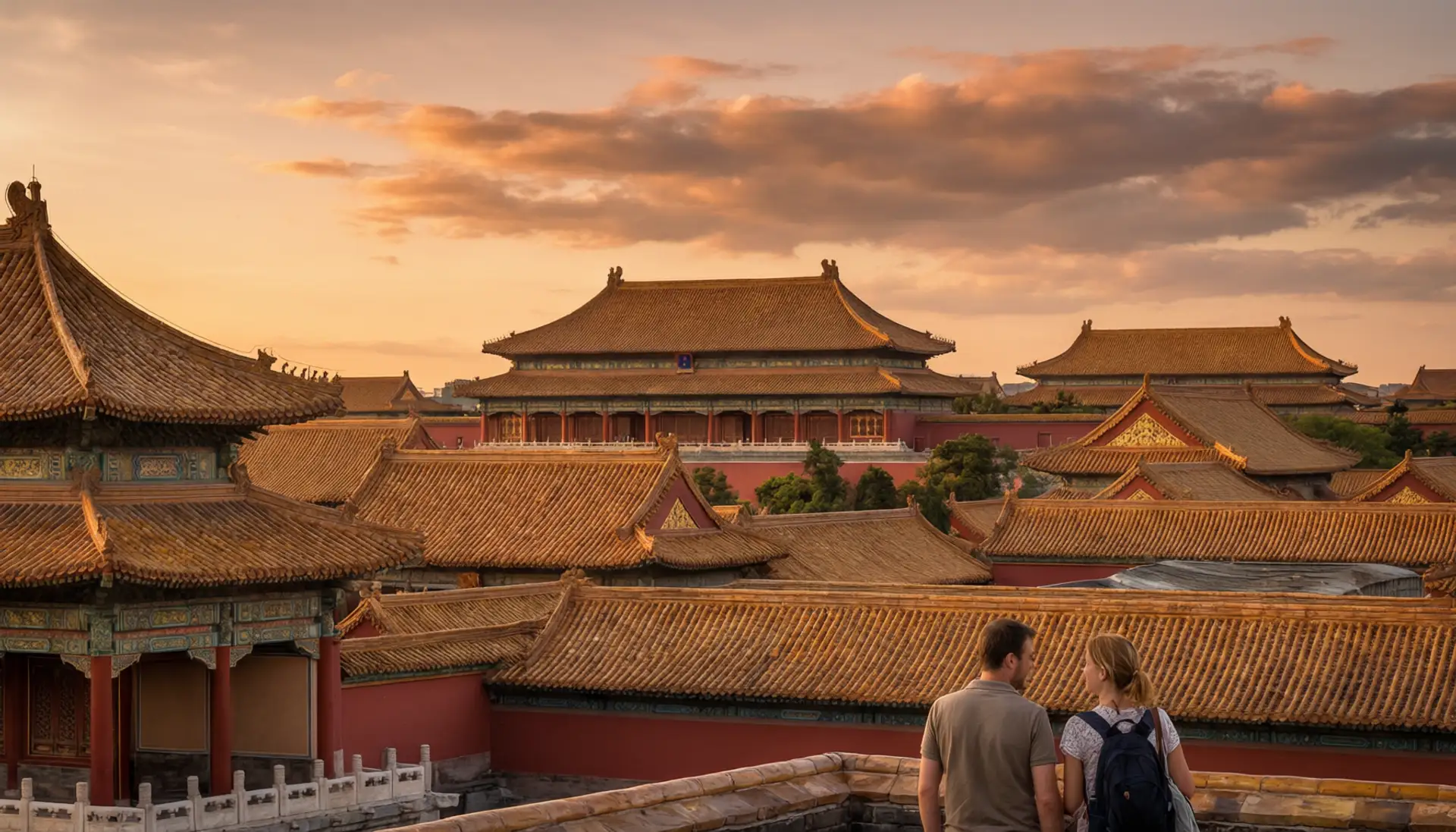
In the heart of Beijing, where ancient hutong alleys weave between imperial palaces and neon-lit skylines, lies a city that rewards the curious traveler with layer after layer of discovery. This is not just the Beijing of guidebook postcards — it is a living, breathing capital where 3,000 years of history unfold across 19 unforgettable experiences in 8 distinct districts.
From the marble terraces of the Forbidden City to the toboggan slide off the Great Wall at Mutianyu, from morning tai chi in Temple of Heaven Park to spicy crayfish under red lanterns on Gui Jie — this local's guide covers every price, opening hour, walking route, and insider tip you need for 2027.
Quick Overview: 19 Things to Do Across 8 Beijing Districts
| District | Known For | Top Things to Do | Suggested Time |
|---|---|---|---|
| Dongcheng | Imperial axis, hutongs & religious heritage | Forbidden City, Temple of Heaven, Yonghegong, Nanluoguxiang, National Museum | 1–2 days |
| Xicheng | Royal gardens, lakes & local snacks | Shichahai, Beihai Park, Prince Gong's Mansion, Huguosi Snack Street | Half day–1 day |
| Chaoyang | Modern Beijing, art & nightlife | 798 Art Zone, Sanlitun, Olympic Park | 1–2 days |
| Haidian | Imperial gardens & mountain parks | Summer Palace, Old Summer Palace Ruins, Fragrant Hills | 1–2 days |
| Huairou | Famous Great Wall & mountain scenery | Mutianyu Great Wall, Hongluo Temple | 1–2 days |
| Fengtai | Temple culture & urban leisure | Marco Polo Bridge, Wanping Fortress | Half day |
| Mentougou | Mountain temples & ancient villages | Tanzhe Temple, Cuandixia Ancient Village | 1–2 days |
| Yanqing / Hebei | Great Wall variants | Badaling, Jinshanling | 1 day each |
1. Dongcheng District: The Imperial Heart of Beijing
Dongcheng sits in central-east Beijing, covering the core of the old walled capital. It holds the heart of Beijing's imperial central axis, world-famous palaces, ancient temples, and labyrinthine hutong alleyways where old Beijing residential culture still survives. This is where most visitors spend their first two days — the density of must-see sights here is unmatched anywhere else in the city.
Visit the Palace Museum (Forbidden City)
The Ming-Qing imperial palace complex needs no introduction. Built 1406–1420, this UNESCO World Heritage Site served as the imperial palace for 24 emperors. Strict north-south axis layout: the Outer Court for grand ceremonies, the Inner Court for imperial living quarters.
Enter through Meridian Gate (the only entrance) and follow the central axis: Meridian Gate → Hall of Supreme Harmony (China's largest wooden hall) → Inner Court Palaces → Imperial Garden → exit via Gate of Divine Prowess. Most visitors skip the Eastern/Western Palace galleries — don't. The Treasure Gallery and Clock Gallery (¥10 each) hold the finest collections.
| Detail | Info |
|---|---|
| Hours (peak Apr–Oct) | 8:30am–5pm, last entry 4pm |
| Hours (low Nov–Mar) | 8:30am–4:30pm, last entry 3:30pm |
| Ticket | ¥60 peak / ¥40 low season + ¥10 Treasure/Clock galleries |
| Closed | Every Monday (except national holidays) |
| Time needed | 3–4 hours |
| Metro | Line 1 Tiananmen East (Exit A), 5-min walk |
Insider tip: Tickets release 7 days in advance at midnight Beijing time via the official Palace Museum WeChat mini-program and sell out within minutes in peak season. No on-site same-day sales. Bring your passport — it's required for entry. After exiting north, cross to Jingshan Park (¥2) for the rooftop panorama of the entire palace complex.
Explore the Temple of Heaven
This UNESCO-listed imperial ritual complex (1420) is where Ming and Qing emperors prayed for good harvests. The 273-hectare park contains three masterpieces: the Hall of Prayer for Good Harvests (38m tall, built entirely without nails), the Echo Wall (500-year-old acoustic marvel), and the Circular Mound Altar.
But the real magic happens at 6:30am — hundreds of retirees practice tai chi, fan dancing, and ground calligraphy in the misty park. This is the authentic Beijing, not found in any museum.
| Detail | Info |
|---|---|
| Hours | Park 6am–10pm; buildings 8am–5:30pm |
| Ticket | Park ¥15; combined ¥35 peak / ¥30 low |
| Time needed | 2–2.5 hours |
| Metro | Line 5 Tiantan Dongmen (Exit A) |
Insider tip: Enter from the west gate for the most direct path. The combined ticket (¥35) is essential — the buildings are the highlight. Stand on the "Heaven's Heart" center stone at the Circular Mound Altar and your voice echoes back amplified.
Visit Yonghegong Lama Temple
Originally a Qing prince's residence (1694), converted to a Tibetan Buddhist monastery in 1744. Five successive halls culminate in the Wanfu Pavilion, housing an 18-meter Maitreya Buddha carved from a single white sandalwood tree — a Guinness World Record. The air is thick with free incense and monks in crimson robes chanting sutras.
| Detail | Info |
|---|---|
| Hours | 9am–5pm (Apr–Oct); 9am–4:30pm (Nov–Mar) |
| Ticket | ¥25 (includes free incense) |
| Time needed | 1–1.5 hours |
| Metro | Line 2/5 Yonghegong (Exit C) |
Insider tip: Go on a weekday morning. Weekends and lunar 1st/15th are packed. Don't photograph inside halls. Walk the central axis through all five halls — each more ornate than the last. The 18m Buddha at the end will take your breath away. Nearby: Confucius Temple (¥30), a peaceful courtyard with 700-year-old cypresses and almost no tourists — a true hidden gem.
Wander Nanluoguxiang & Surrounding Hutongs
This 800-year-old hutong alley (786m long) is Beijing's most famous pedestrian lane — but the real treasure lies in the smaller branching alleys. Turn into Mao'er Hutong or Ju'er Hutong for quiet residential lanes with beautiful courtyard doors, no shops, and authentic old Beijing life.
Look for unmarked courtyard cafes with no signage — the best ones have rooftop terraces overlooking the hutong rooftops. Try Peking yogurt (¥10–15 in a porcelain jar) and tanghulu (candied haws, ¥10).
| Detail | Info |
|---|---|
| Hours | 24/7 (shops 10am–10pm) |
| Admission | Free |
| Time needed | 1.5–3 hours |
| Metro | Line 6 Nanluoguxiang (Exit A) |
Insider tip: Main Nanluoguxiang is very commercial. Real hutong atmosphere lies in smaller branching alleys — turn left or right at any cross-street. Skip rickshaw tours; walk the alleys for free. Weekday mornings are far quieter than weekends.
Tour the National Museum of China
One of the world's largest national museums with 2 million artifacts spanning 5,000 years. The "Ancient China" permanent exhibition (ground floor, north wing) is the single best chronological overview of Chinese civilization — jade, bronze, ceramics, calligraphy. Don't miss the Si Mu Wu Ding (832kg Shang dynasty bronze vessel) and the Tang dynasty tomb murals.
| Detail | Info |
|---|---|
| Hours | 9am–5pm, last entry 3:30pm |
| Admission | Free (reservation required) |
| Time needed | 2–4 hours |
| Closed | Mondays |
| Metro | Line 1 Tiananmen East (Exit A) |
2. Xicheng District: Royal Gardens, Lakes & Old-Beijing Flavors
Xicheng is where you slow down. Famous for royal gardens, the Shichahai lake system, historic mansions, and local snack streets, this district offers the most atmospheric walks in the city.
Stroll Beihai Park
One of the oldest imperial gardens in China (Liao-Jin dynasties). The iconic White Dagoba sits on Jade Islet, visible from across the lake. Rent a paddle-boat in spring-summer for the classic Beijing postcard view — white stupa reflected in the lake. The Nine-Dragon Screen (glazed tile wall with unique dragon reliefs) is one of three in China.
| Detail | Info |
|---|---|
| Hours | Park 6:30am–9pm; spots 8:30am–5pm |
| Ticket | Park ¥10; combined ¥20 with White Dagoba |
| Time needed | 1.5–2 hours |
| Metro | Line 6 Beihai North (Exit B) |
Insider tip: The park is 5 minutes' walk from the Forbidden City north exit — perfect as an afternoon stop. Paddle to the south shore and look back at the stupa. Best in late afternoon light.
Explore Shichahai (Qianhai & Houhai)
Beijing's most romantic walk: willow-lined paths around connected lakes, from Drum Tower past Yinding Bridge (the single most photographed spot in old Beijing) to Houhai's bar terraces. In winter, a natural ice rink opens when the lake freezes solid (¥20 entry, skate rental ¥30).
Start at Drum Tower at golden hour, follow the south shore of Qianhai, cross Yinding Bridge with both towers visible in one frame at sunset, then walk the Houhai perimeter. End at the small family-run restaurants around the northwest corner.
| Detail | Info |
|---|---|
| Admission | Free |
| Time needed | 2–3 hours |
| Metro | Line 8 Shichahai (Exit A2) |
| Best time | 4–7pm (golden hour into dusk) |
Tour Prince Gong's Mansion
The largest and best-preserved Qing Dynasty prince mansion — a scaled-down Forbidden City with six successive courtyard compounds. The rear garden is a masterpiece of landscape design with rockeries, pools, and a famous "Fu" (good fortune) character stone hidden in the rockery, said to be the Kangxi emperor's calligraphy.
| Detail | Info |
|---|---|
| Hours | 8:30am–5pm (closed Mondays) |
| Ticket | ¥40 |
| Time needed | 1.5–2 hours |
| Metro | Line 6 Beihai North (Exit B), 10-min walk |
Eat Local Food at Huguosi Snack Street
This is where local Beijingers actually eat — not tourists. Permanent shops (not stalls) serve consistent quality: pea flour cake (¥8, universally loved), sesame cakes with beef (¥15), and douzhi (¥6, fermented mung bean drink — an acquired taste that most foreigners find undrinkable but it's a 300-year-old tradition).
| Detail | Info |
|---|---|
| Hours | Most shops 8am–9pm |
| Admission | Free |
| Time needed | 1–2 hours |
| Metro | Line 4 Ping'anli (Exit C) |
3. Chaoyang District: Modern Beijing, Art & Nightlife
If Dongcheng is the past, Chaoyang is the present. Art spaces, international shopping, modern architecture, and nightlife define this cosmopolitan district — and it's where you'll spend your evenings.
Wander 798 Art Zone
A former 1950s East German-designed factory complex turned China's largest contemporary art district. UCCA Center for Contemporary Art (¥60–100) anchors the zone. The big graffiti walls on the north side are the best free photo spot, constantly changing as artists paint over each other's work. The Bauhaus-influenced industrial architecture — exposed brick, steel trusses, sawtooth roofs — is as compelling as the art.
| Detail | Info |
|---|---|
| Hours | Most galleries 10am–6pm; many closed Mondays |
| Admission | Free (individual galleries may charge) |
| Time needed | 2–3 hours |
| Metro | Line 14 Jiangtai (Exit B) |
Experience Sanlitun Nightlife
Beijing's premier bar and shopping district. Start at Taikoo Li for dinner, then bar-hop on smaller streets behind the mall. The mega-clubs near Workers' Stadium get going after 11pm. Don't miss Hai Di Lao hotpot (3/F Taikoo Li) — the famous noodle dance performance alone is worth the 2-hour wait.
| Detail | Info |
|---|---|
| Best time | 8pm–2am |
| Time needed | 3–4 hours |
| Metro | Line 10 Tuanjiehu (Exit A) |
Insider tip: Use DiDi for late-night returns — the subway closes at 11pm. For a more local evening, try Gui Jie (Ghost Street) in Dongcheng: 1.5km of red lanterns, 24-hour restaurants, and the best spicy crayfish in Beijing.
Visit Olympic Park
The Bird's Nest (¥50) and Water Cube (¥30) sit in a free public park aligned with the Forbidden City axis. Go at dusk to see both buildings in daylight, then watch them light up — the Bird's Nest glows red, the Water Cube shifts through colors starting at 7pm.
4. Haidian District: Imperial Summer Retreats & Mountain Parks
Northwest Beijing is greener and quieter than the center, home to UNESCO-listed imperial gardens, China's top universities, and the city's best autumn foliage.
Visit the Summer Palace
The largest and best-preserved Qing imperial summer garden — 2.9 sq km, 75% water. Walk the 728m Long Corridor (14,000 painted scenes from Chinese mythology), climb the Tower of Buddhist Incense for the lake panorama, then take a dragon boat across Kunming Lake. The Marble Boat — built with funds meant for the navy — is a study in Qing irony.
| Detail | Info |
|---|---|
| Hours | 8am–5pm (peak); 8am–4:30pm (low) |
| Ticket | Park ¥30 peak; combined ¥60 including all halls |
| Time needed | 3–4 hours |
| Metro | Line 4 Beigongmen (Exit D) |
Insider tip: Enter from North Palace Gate for the best route. The combined ticket (¥60) is essential — the buildings inside are the highlight. Allow 4–5 hours; it's massive.
Walk Old Summer Palace Ruins
The remains of a magnificent imperial garden destroyed by Anglo-French forces in 1860. The European Palaces section — stone remnants designed by Italian Jesuit Giuseppe Castiglione — is the most photographed: broken stone pillars against the sky. The labyrinth (Wanhua Zhen) is a fun 10-minute maze walk.
| Detail | Info |
|---|---|
| Hours | 7am–7pm (Apr–Oct) |
| Ticket | ¥10 |
| Time needed | 1.5–2 hours |
| Metro | Line 4 Yuanmingyuan Park (Exit B) |
Enjoy Red Leaves at Fragrant Hills
From mid-October to mid-November, the entire mountainside turns red and gold — one of Beijing's most famous seasonal spectacles. The summit (557m) offers views of the Beijing CBD skyline to the east and Western Mountains to the west on clear days.
| Detail | Info |
|---|---|
| Hours | 6am–6pm (Apr–Oct) |
| Ticket | ¥10 |
| Time needed | 2–3 hours |
| Best season | Mid-October to mid-November |
Insider tip: Only go during red leaf season — outside that window, it's just a hill. Weekdays only during peak; weekends are mobbed. Cable car (¥80 RT) saves the climb.
5. Huairou District: The Great Wall at Mutianyu
Seventy kilometers northeast of Beijing, Mutianyu is the best-preserved and most visitor-friendly Great Wall section — fully restored Ming Dynasty wall with 22 watchtowers across 2.25km of forested mountain ridges.
The highlight? The toboggan slide — a stainless-steel track from Tower 6 down the mountain. Single file, you control the brake. It's the most fun you'll have on the Great Wall, and adults love it as much as children.
| Detail | Info |
|---|---|
| Hours | 7:30am–6pm (summer); 8am–5pm (winter) |
| Ticket | ¥45 adult; shuttle bus ¥20 RT (mandatory) |
| Cable car | One-way ¥100; RT ¥140 |
| Chairlift + Toboggan | ¥140 (most popular combo) |
| Time needed | 3–5 hours (full day with transport) |
Suggested day route: 7:30am depart Beijing → 8:45am arrive → shuttle to cable car → cable car to Tower 14 → walk east to Tower 20 (highest point, 45 min) → walk back to Tower 6 → toboggan down → lunch → 2pm depart → 3:15pm back in Beijing.
Getting there: Private car + driver ¥600–800 RT (75–90 min, recommended). Bus 916 + minibus ¥20 (2.5 hrs, budget option). Arrive before 8:45am to beat tour buses.
6. Hidden Gems: Ancient Villages & Historic Bridges
Cuandixia Ancient Village (Mentougou)
A 500-year-old mountain village with 74 surviving Qing dynasty courtyard houses built into the mountain slope. Stone-paved alleys wind up the hillside to a panoramic viewpoint. The village was founded by the Han clan during the Ming dynasty and remained isolated until the 1990s. Farmhouse lunch: braised pork with potatoes, mountain vegetable stir-fry, corn flour porridge (¥40–60/person).
| Detail | Info |
|---|---|
| Ticket | ¥35 |
| Time needed | 4–6 hours (full day with transport) |
| Transport | Private car 1.5 hrs (¥800–1,200/day) |
Marco Polo Bridge & Wanping Fortress (Fengtai)
A 266m stone bridge with 501 unique lion carvings — Marco Polo called it "the finest bridge in the world" in the 13th century. Try to find two lions that look the same (you won't). The adjacent Ming-era Wanping Fortress has walkable walls and a free museum about the 1937 Marco Polo Bridge Incident.
| Detail | Info |
|---|---|
| Admission | Free |
| Time needed | 1–1.5 hours |
| Metro | Line 14 Dawai (Exit C) |
7. Beijing After Dark: Opera & Night Markets
Watch a Beijing Opera Performance
Traditional Chinese theatre with 200+ years of history. Four main roles — Sheng (male), Dan (female), Jing (painted face warrior), Chou (clown) — each with distinctive makeup and costumes. The Jing role's painted face is the visual highlight: red = loyalty, black = integrity, white = cunning, blue = valor. Many scenes feature martial arts acrobatics without safety equipment.
| Venue | Price | Best For |
|---|---|---|
| Li Yuan Theatre (Qianmen) | ¥180–380 | First-timers — English subtitles, 80-min show |
| Chang'an Grand Theatre | ¥80–280 | More authentic, local audience |
Experience Night Markets & Local Nightlife
For local food, Gui Jie (Ghost Street) is Beijing's best night experience — 1.5km of red lanterns with 24-hour restaurants. Order crayfish by weight (medium size, "ma la" flavor), add lamb skewers (¥3–5 each) and cold beer. For drinks, Sanlitun is the place. For romance, Shichahai at sunset.
8. Which Great Wall Section Should You Choose?
Four major Great Wall sections are accessible from Beijing, each delivering a totally different experience. All require advance real-name booking via official WeChat mini programs — foreign visitors need passports.
| Section | Distance | Restoration | Crowds | Best For | Time |
|---|---|---|---|---|---|
| Mutianyu | 73 km | Fully restored | Moderate | First-timers, families, toboggan slide | 3–5 hrs |
| Badaling | 60 km | Fully restored | Very high | Landmark check-in, high-speed rail access | 3–4 hrs |
| Simatai + Gubei Water Town | 120 km | Original Ming masonry | Moderate | Night Great Wall lighting, overnight trip | 1–2 days |
| Jinshanling | 130 km | Mixed restored + wild | Low | Hikers, sunrise/sunset photography | 4–6 hrs |
Quick decision guide: First time + family + fun → Mutianyu. Must-see landmark + easy transport → Badaling. Night scenery + overnight → Simatai + Gubei Water Town. Serious hiking + photography → Jinshanling.
When Is the Best Season to Visit Beijing?
| Season | Weather | Best For | Notes |
|---|---|---|---|
| Spring (Mar–May) | 8–24°C | Garden visiting, hutong walking, flower viewing | Sand-wind possible in early spring |
| Summer (Jun–Aug) | 22–35°C | Museums, evening sightseeing | Hot, humid; peak tourist crowds |
| Autumn (Sep–Nov) | 10–25°C | Great Wall hiking, Fragrant Hills red leaves | Golden September–October is peak travel season |
| Winter (Dec–Feb) | −6 to 6°C | Museums, indoor culture, fewer crowds | Cold and dry; Shichahai ice-skating available |
Best overall: Late April–mid-May and mid-September–early November. Autumn offers the clearest skies and best outdoor conditions. The quietest period is late November–March (excluding Chinese New Year).
Quick Guide to Ticket Booking & What to Bring
All major Beijing attractions require real-name advance booking. Free attractions need online reservations via official WeChat accounts or websites. Paid tickets can be purchased through official websites, attraction ticket offices, or authorized platforms. Top sites like the Forbidden City have NO on-site same-day ticket sales — book 7 days ahead for peak season.
What to bring: Passport (required for foreign visitors at all attractions), comfortable walking shoes (Beijing sightseeing involves long walks), weather-appropriate clothing (layers for spring/autumn, sun protection for summer, thick down jacket for winter), power bank (essential for maps and digital tickets), and a water bottle (many scenic spots have refill points).
Your Beijing Adventure Starts Here
Beijing is a city that reveals itself slowly — through the echo of a voice on the Circular Mound Altar, through the smell of incense at Yonghegong, through the silence of the Great Wall at dawn. Whether you have three days or three weeks, these 19 experiences will give you the full spectrum of what makes Beijing one of the world's great cities.
Every district tells a different story. Every hutong hides a new discovery. And every meal — from ¥10 street-side Peking yogurt to a ¥300 roast duck feast — is a reason to come back.

Traveler Discussions
Questions from travelers