
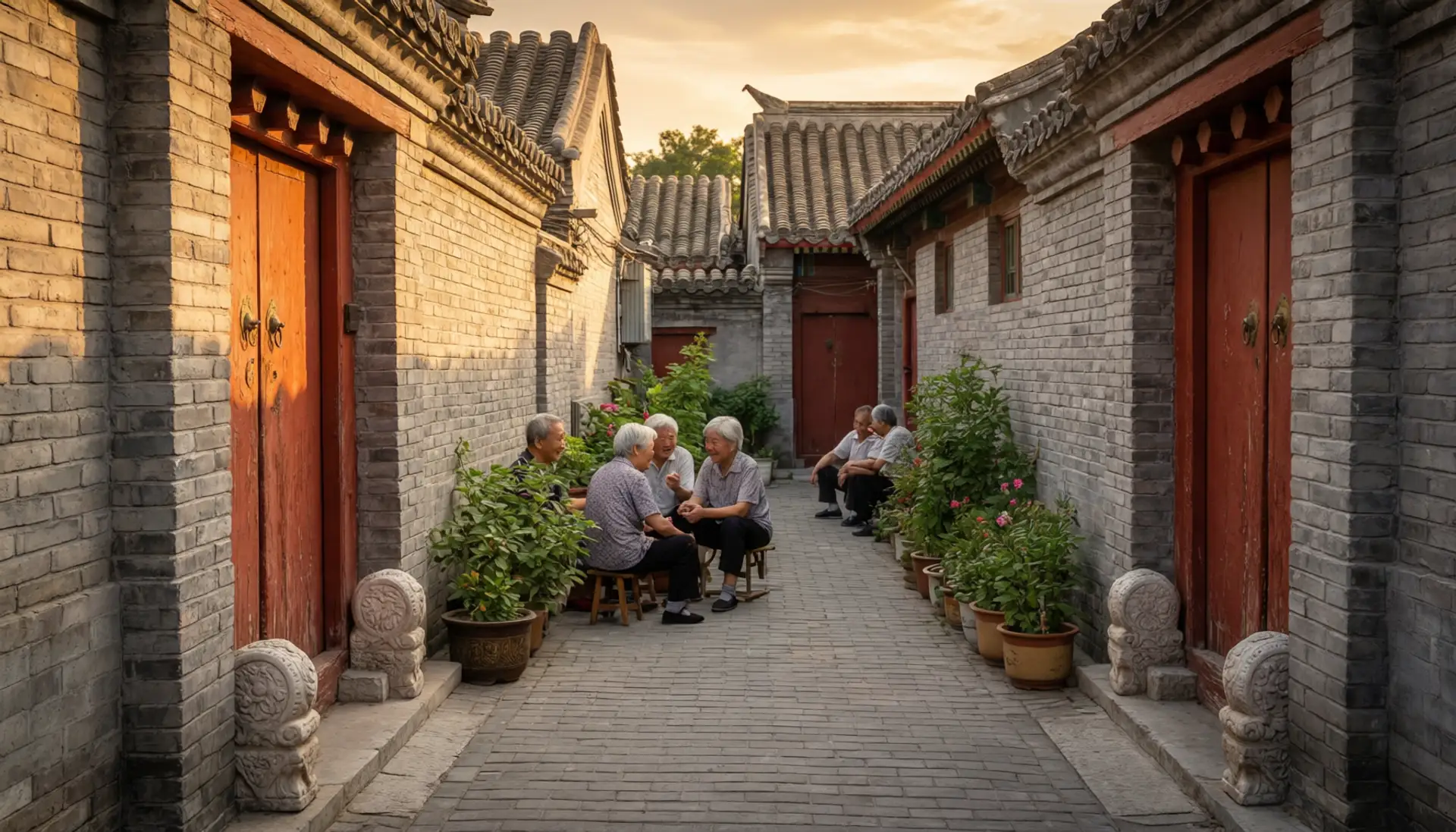
In the grey-brick alleyways of Beijing, away from the grand imperial monuments, lives the real old China. These are the hutongs — narrow lanes that have formed the city’s residential heart for over 700 years, from the Mongol Yuan Dynasty to today. This guide covers their deep history, courtyard architecture, the ten best neighborhoods to explore, food scenes from dawn douzhi to midnight crawfish, nightlife, cultural workshops, and practical walking routes for every type of traveler.
The real old Beijing lives in its hutongs: the narrow grey-brick alleyways that have formed the city’s residential heart for over 700 years. This guide covers their history, courtyard architecture, the best neighborhoods to explore, food scenes, nightlife, seasonal experiences, cultural workshops, and practical walking routes.
Topic | What You Will Find |
|---|---|
History | Mongolian origin, Yuan Dynasty grid system, preservation story |
Architecture | Five gate types, screen walls, door stones, four siheyuan types |
10 Hutong Areas | Each with pros, cons, transport, and basic info table |
Food | Traditional snacks, food streets, hutong cafes, craft cocktails |
Nightlife | Evening walks, rooftop bars, cross-talk, rickshaw tours |
Culture | Workshops, museums, former residences, creative spaces |
Practical | Walking routes, rickshaw prices, etiquette, best timing |
First visit: Nanluoguxiang plus side alleys (Mao’er, Yu’er), then walk to the Drum Tower and Shichahai. Half a day.
For cafes and culture: Wudaoying Hutong. Quieter, more curated, international vibe.
For nightlife: Gulou area cocktail bars and Houhai lakeside bars after sunset.
For authentic residential life: Dongsi cluster (Batiao). Still real, still quiet.
For history and museums: Shijia Hutong Museum and Mao’er Hutong.
For food: Guijie (late-night crawfish), Niujie (halal), Huguosi Street (traditional breakfast).
For shopping and antiques: Liulichang Cultural Street and Dashilar.
Hutong Area | Vibe | Best For | Crowd Level |
|---|---|---|---|
Nanluoguxiang | Touristy, lively | Snacks, souvenirs, first visit | Very high (weekends) |
Wudaoying | Hipster, international | Cafes, brunch, vintage shops | Moderate |
Gulou / Beiluoguxiang | Bohemian, bar scene | Cocktails, live music, night | Moderate to high (evening) |
Shichahai / Houhai | Lakeside, festive | Boat rides, bars, sunset | High (evening) |
Yandai Xiejie | Historic, compact | Quick stroll, browsing | High |
Mao’er Hutong | Aristocratic, quiet | History, architecture | Low |
Dongsi Batiao | Authentic, residential | Real hutong life | Low |
Shijia Hutong | Cultural, museum | Hutong Museum | Low |
Liulichang Street | Scholarly, antique | Calligraphy, old books | Moderate |
Dashilar / Yangmeizhu | Old commercial, design | Time-honored brands, creative | High (daytime) |
The Deep History of Hutongs
The story of Beijing’s hutongs begins not with the Chinese, but with the Mongols. When Kublai Khan established the Yuan Dynasty in 1267, he ordered the construction of a new capital — Khanbaliq, meaning “City of the Khan.” This city was laid out on a strict grid pattern inspired by traditional Chinese urban planning, but the residential lanes between the major avenues took on a character all their own.
The word “hutong” itself is believed to derive from the Mongolian word meaning “water well,” reflecting how these lanes formed around communal water sources. As the Mongol Empire ruled over China, the residential fabric of Khanbaliq grew organically within its rigid grid, creating the distinctive alleyway neighborhoods that would define Beijing for centuries to come.
What makes the hutongs remarkable is their longevity. While dynasties rose and fell, while the Forbidden City was built and rebuilt, and while modern Beijing has transformed beyond recognition, these narrow grey-brick lanes have persisted — adapting, surviving, and continuing to house the daily lives of ordinary Beijing residents across seven centuries.
Era | Year | What Happened |
|---|---|---|
Yuan Dynasty | 1267 | Khanbaliq founded with strict grid pattern |
Ming Dynasty | 1368–1644 | City expands; hutong network grows to thousands |
Qing Dynasty | 1644–1912 | System preserved; social hierarchy encoded in gate styles |
Early 20th century | ~1900s | Peak: over 6,000 named hutongs |
Today | 2026 | Fewer than 1,300 remain; 25 conservation areas |
The Forbidden City Connection
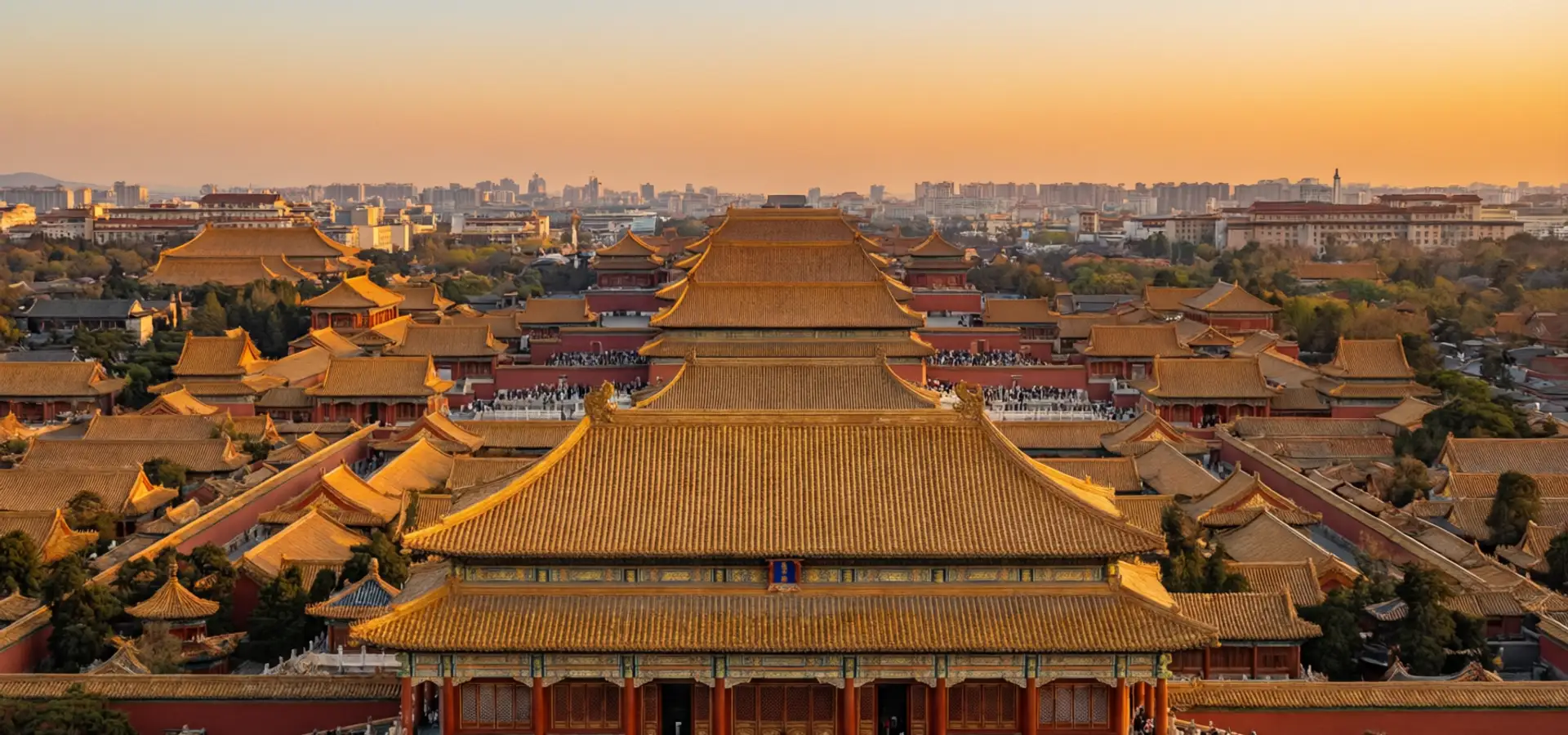
The hutongs were never merely random lanes. They were the urban fabric that surrounded and supported the imperial city. The layout encoded social hierarchy: the closer you lived to the Forbidden City, the higher your status. Officials and nobles occupied the grand courtyard compounds nearest the palace walls, while merchants, artisans, and laborers lived progressively farther out.
This spatial ordering was not accidental. It reflected the Confucian social order that governed all aspects of life in imperial China. The hutongs were the physical manifestation of a worldview in which every person had their place — and that place was written in the very streets they walked each day. Even today, reading the architecture of a hutong gateway tells you exactly who lived there and what rank they held in the old social order.
Siheyuan: Reading the Grey Walls
Every hutong is a corridor of siheyuan — traditional courtyard compounds where four buildings surround a central open space. These compounds are far more than mere housing; they are physical expressions of Confucian hierarchy, feng shui principles, and centuries of Chinese domestic philosophy.
The typical siheyuan faces south, with the main building (zhengfang) on the north side reserved for the head of household. East and west wings house children or extended family, while the south-facing building near the entrance serves as a reception area or servant quarters. The central courtyard is the heart of the compound — a private garden, a gathering space, and a buffer against the chaos of the lane outside.
But before you even enter a siheyuan, its gateway tells you everything about the family’s social standing. The gate is the compound’s calling card, and in imperial Beijing, reading it was a essential social skill.
Five Gate Types: A Social Status Decoder
Gate Type | Who Used It | Key Features |
|---|---|---|
Guangliang Gate | High-ranking officials | Largest residential gate; carved sparrow braces |
Jinzhu Gate | Mid-ranking officials | Set between golden pillars |
Manzi Gate | Merchants, wealthy commoners | More modest overall |
Ruyi Gate | Ordinary residents | Narrow door; exquisite brick patterns |
Wall-Type Gate | Common residents | Small and simple |
The Guangliang Gate was the grandest type, reserved for the highest-ranking officials. Its name literally means “shining beam,” referring to the prominent horizontal beam above the entrance. These gates featured elaborate carved sparrow braces (queti) and were wide enough for a horse-drawn carriage to pass through. Only families of the highest bureaucratic rank could afford — and were permitted — such grandeur.
The Jinzhu Gate, or “golden pillar gate,” was set between a pair of prominent pillars painted red or gold. This type was used by mid-ranking officials and denoted a family of solid but not top-tier status. The Manzi Gate was the choice of wealthy merchants and commoners who had money but lacked official rank — it was more modest in scale but still respectable.
At the humbler end, the Ruyi Gate was named for its resemblance to the ruyi scepter, a symbol of good fortune. These narrow gates belonged to ordinary residents but often featured exquisite brick carving patterns that compensated for their smaller size with artistic beauty. The simplest of all, the Wall-Type Gate, was essentially a doorway cut directly into the compound wall — functional, unadorned, and belonging to common families.
Beyond the Gate: Screen Walls and Door Stones
Step through any hutong gateway and you immediately face a yingbi — a screen wall. This is not decorative excess. In feng shui, evil spirits travel in straight lines, so the screen wall forces them to detour around it, protecting the household within. Practically, it also provides privacy: visitors at the gate cannot see directly into the courtyard beyond.
Screen walls range from simple brick constructions to elaborate structures with carved motifs of bats (symbolizing fortune), peonies (wealth), or pine trees (longevity). The finest examples feature intricate brick carvings that are masterworks of the mason’s art.
At the threshold of the gate itself, you will find baoshi — door stones. These large stone blocks flanking the entrance served multiple purposes: they structuraly supported the gate frame, they provided seating for the household members or servants who guarded the entrance, and they signaled the family’s status through their size, material, and decoration. The grandest door stones were made from fine white marble and carved with elaborate designs; humbler ones were plain grey stone, worn smooth by centuries of use.
Beijing’s Top 10 Hutongs: Pros, Cons & Essential Info
With over a thousand hutongs still surviving across Beijing, choosing which ones to visit can be overwhelming. Here are the ten most rewarding neighborhoods, each offering a distinct experience — from the bustling tourist lanes of Nanluoguxiang to the quiet residential authenticity of Dongsi Batiao.
1. Nanluoguxiang
Detail | Information |
|---|---|
Location | Dongcheng District, central Beijing |
Transport | Metro Line 6 or Line 8, Nanluoguxiang Station |
Length | 786 meters |
History | Yuan Dynasty origin; fishbone layout |
Vibe | Touristy but architecturally rich |
Pros | Easy access, great architecture, side alleys are quiet |
Cons | Extremely crowded on weekends; commercialized main strip |
Best For | First-time visitors, architecture lovers |
Crowd Level | Very high (weekends), moderate (weekdays) |
Nanluoguxiang is Beijing’s most famous hutong, and for good reason. At 786 meters long, it runs north to south with eight symmetrical alleys branching off on either side in a distinctive fishbone pattern — a layout that dates directly back to the Yuan Dynasty grid planning of Khanbaliq. The main lane is packed with shops, street food vendors, and crowds, especially on weekends.
But the real treasure lies in the side alleys. Dive into Mao’er Hutong, home to the former residence of Empress Wanrong (the last empress of China) and the beautiful Keyuan Garden. Explore Yu’er Hutong for its quiet residential character. These side lanes reveal the authentic hutong atmosphere that the main strip conceals.
Pro tip: Visit on a weekday morning to experience the lane nearly empty. The grey brick walls glowing in early light, with residents cycling past and the distant sound of a radio playing — this is the hutong as it was meant to be experienced.
2. Wudaoying Hutong
Detail | Information |
|---|---|
Location | Dongcheng District, near Lama Temple |
Transport | Metro Line 2 or Line 5, Yonghegong Lama Temple Station |
Length | 600 meters |
History | Ming Dynasty origin |
Vibe | Hipster, international, curated |
Pros | Excellent cafes, vintage shops, relaxed atmosphere |
Cons | Can feel overly curated; less “authentic” residential life |
Best For | Cafe culture, brunch, vintage shopping |
Crowd Level | Moderate |
Wudaoying Hutong is the cool younger sibling of Beijing’s hutong scene. Located near the Lama Temple, this 600-meter lane has become the city’s epicenter of hipster cafe culture. Here you will find Metal Hands Coffee, widely considered one of Beijing’s best specialty coffee shops, alongside King’s Joy, a celebrated vegetarian restaurant that has earned international acclaim.
The lane is lined with vintage clothing shops, independent bookstores, and small galleries. Unlike the more touristy hutongs, Wudaoying attracts a mix of expats, young Chinese creatives, and travelers looking for a more curated experience. The pace is slower, the coffee is world-class, and the people-watching is superb.
3. Gulou and Beiluoguxiang
Detail | Information |
|---|---|
Location | Dongcheng District, around the Drum Tower |
Transport | Metro Line 8, Shichahai Station, then walk north |
Length | Varies; the area covers several interconnected lanes |
History | Yuan Dynasty; centered on the Drum and Bell Towers |
Vibe | Bohemian, bar scene, creative |
Pros | Best nightlife, craft cocktails, live music venues |
Cons | Noisy at night; some areas feel commercialized |
Best For | Evening cocktails, live music, night walks |
Crowd Level | Moderate to high (evening) |
The area around the Drum Tower (Gulou) and Beiluoguxiang represents Beijing’s best nightlife scene. This is where the hutong meets the cocktail bar — where centuries-old grey brick walls house some of the city’s most innovative drinking establishments. Craft cocktail bars here use distinctly Beijing ingredients: baijiu-based cocktails, Sichuan pepper infusions, osmanthus syrups, and teas sourced from nearby shops.
During the day, the lanes are relatively quiet, with residents going about their daily routines. But after sunset, the area transforms. Rooftop bars offer views over the grey-tiled rooftops with the Drum Tower illuminated in the background. Live music venues host everything from jazz to traditional Chinese folk. The contrast between ancient architecture and modern creativity is what makes this area special.
4. Shichahai and Houhai
Detail | Information |
|---|---|
Location | Xicheng District, west of the Drum Tower |
Transport | Metro Line 8, Shichahai Station |
Length | The lakeside area covers roughly 1.5 km of walking paths |
History | Yuan Dynasty; historically a canal and lakeside district |
Vibe | Lakeside, festive, scenic |
Pros | Beautiful sunset walks, boat rides, lively bar scene |
Cons | Very touristy in the evening; can be noisy |
Best For | Sunset walks, boat rides, lakeside bars |
Crowd Level | High (evening), moderate (daytime) |
Shichahai — the area encompassing three connected lakes (Qianhai, Houhai, and Xihai) — offers one of Beijing’s most scenic experiences. The hutongs here wind along the water’s edge, with willow trees draping over the lakes and traditional grey-brick compounds reflected in the water.
During the day, you can rent a paddle boat and glide across the lake while the old city surrounds you. In the evening, the lakeside comes alive with bars and restaurants, many offering outdoor seating with views of the water. The sunset from the Houhai bridge, with silhouettes of traditional rooftops against the sky, is one of Beijing’s most photographed scenes.
5. Yandai Xiejie
Detail | Information |
|---|---|
Location | Xicheng District, between Drum Tower and Shichahai |
Transport | Metro Line 8, Shichahai Station, then walk north |
Length | 232 meters |
History | Yuan Dynasty; one of Beijing’s oldest commercial streets |
Vibe | Historic, compact, atmospheric |
Pros | Quick stroll, connects two major areas, historic shops |
Cons | Short; can be done in 15 minutes |
Best For | Quick stroll, browsing, connecting Drum Tower to Shichahai |
Crowd Level | High |
Yandai Xiejie, or “Tobacco Pouch Oblique Street,” is a short but atmospheric diagonal lane that connects the Drum Tower to the Shichahai lakes. At just 232 meters, it can be walked in minutes, but its history stretches back to the Yuan Dynasty, making it one of Beijing’s oldest commercial streets.
The street got its name from the tobacco pouches that were once sold here in abundance. Today, it is lined with small shops selling everything from traditional snacks to handmade crafts. The diagonal layout is unusual in Beijing’s otherwise grid-like urban plan and creates a charming, slightly disorienting atmosphere. It serves as a perfect connector between the Drum Tower area and the lakeside walks of Shichahai.
6. Mao’er Hutong
Detail | Information |
|---|---|
Location | Dongcheng District, branching off Nanluoguxiang |
Transport | Metro Line 6 or 8, Nanluoguxiang Station |
Length | 585 meters |
History | 700+ years; home to Empress Wanrong |
Vibe | Aristocratic, quiet, historically rich |
Pros | Rich history, beautiful architecture, quiet atmosphere |
Cons | Limited dining options; mostly residential |
Best For | History enthusiasts, architecture lovers |
Crowd Level | Low |
Mao’er Hutong is one of the most historically significant lanes in Beijing. At 585 meters long and over 700 years old, it was home to some of the city’s most aristocratic residents. Most famously, it was the childhood home of Empress Wanrong, the last empress of China, who lived here before her marriage to Puyi, the last emperor of the Qing Dynasty.
The lane’s crown jewel is Keyuan Garden, a stunning private garden compound dating from 1861. The garden features classical Chinese landscaping with rockeries, ponds, and pavilions — a miniature paradise hidden behind the unassuming grey walls of the hutong. The contrast between the quiet lane outside and the refined beauty within perfectly captures the hutong ethos: never judge a compound by its gate.
7. Shijia Hutong
Detail | Information |
|---|---|
Location | Dongcheng District, near Chaoyangmen |
Transport | Metro Line 2 or Line 6, Chaoyangmen Station |
Length | 700+ years of history along its length |
History | One of Beijing’s oldest surviving hutongs |
Vibe | Cultural, museum-focused, educational |
Pros | Beijing’s first hutong museum, rich exhibitions |
Cons | Less atmospheric as a walking lane; more museum than neighborhood |
Best For | Museum visitors, history enthusiasts |
Crowd Level | Low |
Shijia Hutong is home to Beijing’s first — and finest — hutong museum. Established to preserve the memory of vanishing hutong life, the museum occupies a restored siheyuan compound and features eight exhibition halls covering every aspect of traditional alleyway living.
The exhibits include recreated rooms showing how families lived across different eras, displays on hutong crafts and trades, and a unique “Sound Room” where visitors can hear the authentic sounds of old Beijing: the calls of street vendors, the clatter of mahjong tiles, the evening drum from the Gulou tower. It is an essential stop for anyone who wants to understand what hutong life was — and still is — really like.
8. Dongsi Batiao
Detail | Information |
|---|---|
Location | Dongcheng District, east of Wangfujing |
Transport | Metro Line 5, Dongsi Station |
Length | 700 meters across six major alleys |
History | 700+ years; one of Beijing’s most intact residential clusters |
Vibe | Authentic, residential, uncommercialized |
Pros | Most authentic hutong life, no tourist shops, real neighborhoods |
Cons | Few amenities for tourists; no cafes or restaurants |
Best For | Experiencing real hutong residential life |
Crowd Level | Low |
If you want to see what a hutong neighborhood actually looks like when it is not performing for tourists, come to Dongsi Batiao. This cluster of six major alleys spanning 700 meters is one of the most intact residential hutong areas remaining in Beijing. There are no souvenir shops, no themed cafes, no tourist infrastructure — just real people living real lives in a neighborhood that has existed for over seven centuries.
Residents hang laundry between trees, play chess on stone stools outside their gates, and buy vegetables from the small shops that have served the community for decades. The small museum at No. 77 provides context about the area’s history, but the real exhibit is the neighborhood itself. This is hutong life as it has been lived for generations — and it may not last much longer.
9. Liulichang Cultural Street
Detail | Information |
|---|---|
Location | Xicheng District, south of Qianmen |
Transport | Metro Line 2, Hepingmen Station, then walk south |
Length | 800 meters |
History | Qing Dynasty origin; scholarly and cultural hub |
Vibe | Scholarly, antique, traditional |
Pros | Calligraphy shops, antique books, Rongbaozhai gallery |
Cons | Can feel like a museum piece; limited dining options |
Best For | Calligraphy, old books, traditional culture |
Crowd Level | Moderate |
Liulichang is Beijing’s cultural soul made physical. This 800-meter street has been the center of China’s literary and artistic world since the Qing Dynasty, when scholars and officials came here to buy ink, brushes, paper, and old books. The street’s crown jewel is Rongbaozhai, founded in 1672, which began as a small stationery shop and grew into one of China’s most prestigious art galleries and publishers.
Today, the street is still lined with shops selling calligraphy brushes, ink stones, rice paper, seal carvings, and antique books. You can watch calligraphers at work, browse centuries-old woodblock prints, and find treasures hidden among the shelves of dusty bookshops. It is a place where the scholarly traditions of old China remain alive and accessible.
10. Dashilar and Yangmeizhu
Detail | Information |
|---|---|
Location | Xicheng District, south of Qianmen |
Transport | Metro Line 2, Qianmen Station, then walk south |
Length | 570+ years of history; the area covers several lanes |
History | Ming Dynasty origin; old commercial district |
Vibe | Old commercial meets new design |
Pros | Time-honored brands, creative spaces, authentic architecture |
Cons | Under renovation in parts; some areas still in transition |
Best For | Time-honored brands, creative design spaces |
Crowd Level | High (daytime) |
Dashilar (pronounced “Dahshilan”) is one of Beijing’s oldest commercial districts, with over 570 years of trading history. The area is home to time-honored brands — shops that have operated continuously for centuries, selling everything from traditional Chinese medicine to silk and tea. These are not tourist replicas; many of these shops have served Beijing families for generations.
Yangmeizhu Xiejie, one of the lanes within the Dashilar area, has become a pilot zone for creative renewal. Young architects and designers have restored old buildings and converted them into studios, galleries, and boutique shops. The result is a fascinating blend of old and new: a 300-year-old merchant’s house might contain a contemporary art installation, while next door, a traditional tea shop continues business as it has for a century.
Eating Through the Hutongs
Beijing’s hutong food scene spans centuries. These lanes have fed emperors and beggars, scholars and soldiers, and the culinary traditions that developed here are as much a part of the city’s identity as the Forbidden City itself. From the fermented tang of dawn douzhi to the fiery crawfish of midnight Guijie, hutong food tells the story of Beijing through flavor.
Traditional Snacks: The Beijing Identity Test
Ask any old Beijinger about their favorite hutong food and you will get passionate, contradictory answers. The traditional snacks of Beijing are an identity marker — locals take enormous pride in their food culture, and many of these dishes have been perfected over centuries in specific shops at specific addresses.
Snack | Venue | Address | Price |
|---|---|---|---|
Douzhi & Jiaoquan | Hu Guo Si Snack Bar | No. 93 Huguosi St | ~8 yuan |
Luzhu Huoshao | Beixinqiao Luzhu Old Store | 141 Dongsi North St | ~35 yuan |
Chaogan & Buns | Yaoji Chaogan | 311 Gulou East Main St | ~25 yuan |
Mending Roubing | Baorui Mending Roubing | 142 Dongsi North St | ~32 yuan |
Spicy Wings | Guiwei Wings | 20 Black Sesame Hutong | ~50 yuan |
Douzhi is the ultimate Beijing test. This fermented mung bean drink has a sour, almost unpleasant taste that baffles first-time visitors — but old Beijingers consider it the nectar of the gods. At Hu Guo Si Snack Bar on Huguosi Street, locals line up every morning for a bowl of douzhi paired with jiaoquan (fried dough rings). The combination is an acquired taste, but once acquired, it becomes an addiction.
Luzhu Huoshao is a hearty stew of pig offal, tofu, and火烧 (baked bread), slow-cooked in a rich broth. Beixinqiao Luzhu Old Store on Dongsi North Street has been serving this dish for decades. The broth is dark, complex, and deeply savory — a dish born from the tradition of using every part of the animal, turning humble ingredients into something extraordinary.
Chaogan is a thick starchy soup made from ground millet flour, topped with sesame sauce and served with steamed buns. Yaoji Chaogan near the Drum Tower has perfected this simple dish over generations. The texture is smooth and comforting, the sesame sauce adds richness, and on a cold Beijing morning, it is pure sustenance.
Mending Roubing — literally “horse hoof burnt bread” — is a flaky layered flatbread stuffed with spiced meat. Baorui’s version on Dongsi North Street is legendary: the bread is impossibly flaky, shattering at first bite to reveal tender, well-seasoned meat within. At 32 yuan, it is one of the best-value meals in Beijing.
For something with more heat, head to Guiwei Wings in Black Sesame Hutong for their spicy chicken wings. Cooked in a fiery sauce with Sichuan peppercorns and dried chilies, these wings are addictive — the kind of dish that keeps you ordering more even as your mouth burns.
Guijie (Ghost Street): Late-Night Food Capital
When Beijing’s hutongs fall dark, Guijie comes alive. This stretch of Dongzhimen Inner Street is known as “Ghost Street” because its most active hours are between 10 PM and 4 AM. The entire street is lined with restaurants, many specializing in spicy crawfish (xiaolongxia), and the air is thick with the aroma of chili, garlic, and beer.
Dish | Venue | Address | Price |
|---|---|---|---|
Spicy Crawfish | Huda Restaurant | Guijie, Dongzhimen Inner St | ~120 yuan per portion |
Peking Duck (late night) | Huajia Yiyuan | Guijie, Dongzhimen Inner St | ~200 yuan per duck |
Huda Restaurant is the Guijie institution. Their spicy crawfish are served in enormous bowls, piled high with crimson crustaceans swimming in a broth of chili, Sichuan peppercorn, garlic, and secret spices. Eating them is a communal, hands-on experience — you peel, dip, and devour while washing it down with cold beer. A portion feeds two to three people.
Huajia Yiyuan takes a different approach, offering late-night Peking duck — a concept that sounds unusual until you taste it. The duck is roasted to order, the skin impossibly crisp, and served with all the traditional accompaniments at a time when most duck restaurants in Beijing have long since closed their doors.
Niujie (Ox Street): The Halal Food Quarter
Niujie has been Beijing’s Muslim quarter for over a thousand years, and the food here reflects the city’s Hui Muslim culinary tradition — a rich fusion of Chinese cooking techniques with Islamic dietary laws. The result is some of Beijing’s most distinctive and delicious food.
Dish | Venue | Address | Price |
|---|---|---|---|
Lamb Dumplings | Ju Bao Yuan | Niujie, Xicheng District | ~40 yuan |
Glutinous Rice Cakes | Various street vendors | Along Niujie | ~10 yuan |
Roasted Lamb | Niujie Halal Restaurant | Niujie, Xicheng District | ~80 yuan |
Ju Bao Yuan is the star of Niujie. Their lamb dumplings are legendary — hand-folded with a filling of freshly ground lamb, ginger, and scallions, boiled to perfection and served with a dip of vinegar and chili oil. The queue can be long, but it moves fast and the reward is worth the wait.
Walking down Niujie itself is a food experience. Street vendors sell glutinous rice cakes stuffed with sweet red bean paste, stacks of flatbread still warm from the oven, and skewers of lamb seasoned with cumin and chili. The atmosphere is vibrant and distinctly different from the rest of Beijing — a reminder of the city’s multicultural heritage.
Hutong Nightlife: From Evening Strolls to Craft Cocktails
Beijing’s hutongs transform after dark. The narrow lanes that seem so ordinary in daylight take on a mysterious, atmospheric quality as red lanterns are lit and the warm glow of restaurants spills onto grey brick walls. Nightlife in the hutongs ranges from peaceful evening walks to world-class cocktail experiences.
The gentlest option is an evening stroll through the hutongs near Shichahai or the Drum Tower. As the sun sets, the lakeside paths fill with locals taking their evening walk. The light turns golden, then blue, and the silhouettes of traditional rooftops against the darkening sky create one of the most atmospheric urban walks in Asia.
For something more social, the craft cocktail bars around Gulou represent Beijing’s most exciting drinking scene. Bartenders here blend traditional Chinese ingredients — baijiu, osmanthus, Sichuan pepper, pu-erh tea — with modern mixology techniques. The bars are often hidden behind unmarked doors in hutong lanes, adding an element of discovery to the experience.
For a uniquely Beijing entertainment experience, seek out a cross-talk (xiangsheng) show. This traditional Chinese comedy form — a rapid-fire dialogue between two performers full of wordplay, puns, and social commentary — has been performed in teahouses and hutong venues for centuries. Several venues in the Gulou area host nightly shows, some with English subtitles or bilingual performances.
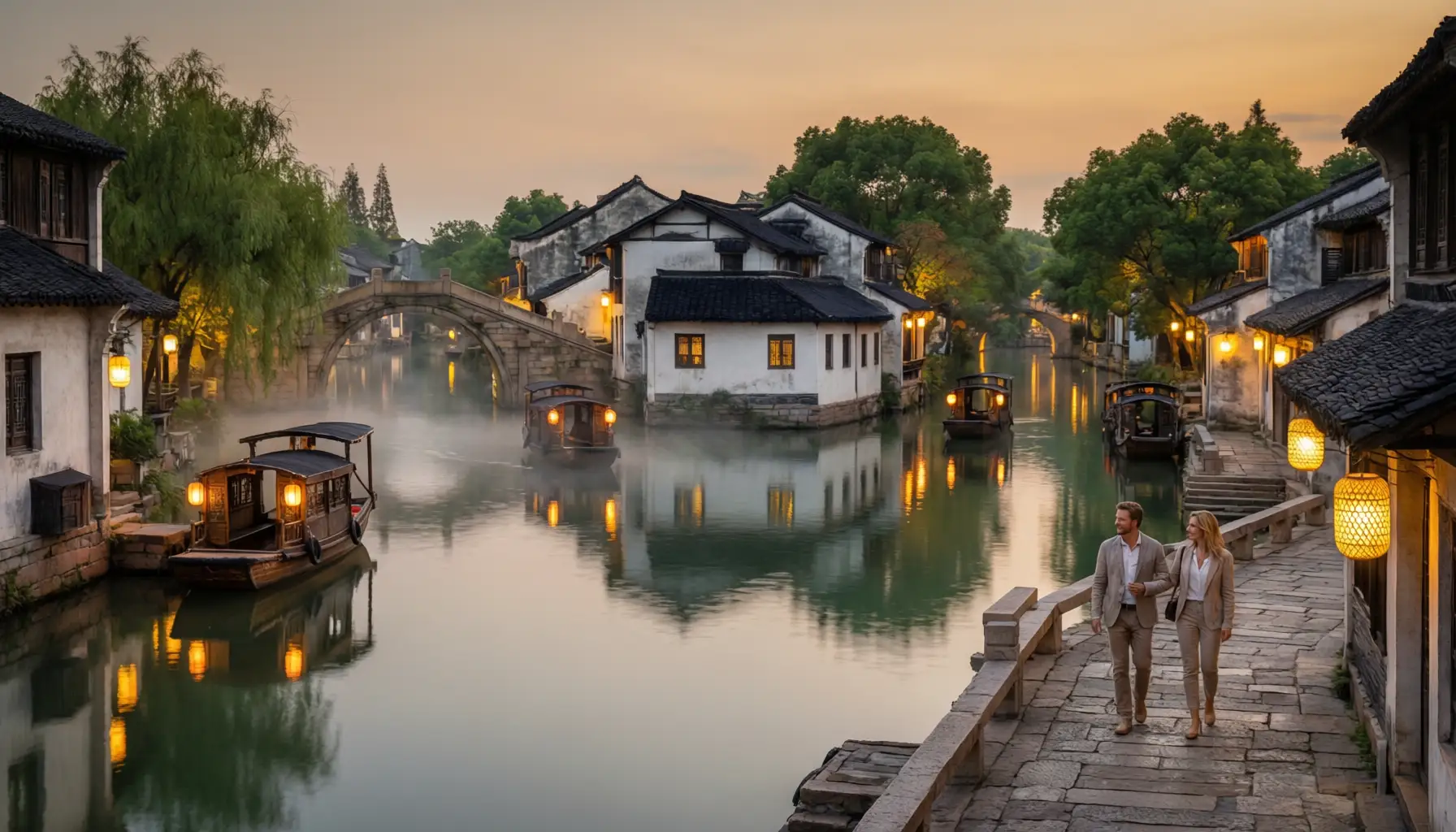
For a more traditional evening, rickshaw night tours offer a romantic way to experience the hutongs. Pulled by bicycle, the rickshaws wind through narrow lanes lit by lanterns, past glowing doorways and quiet courtyards. The rhythmic clicking of the rickshaw on old stone pavement, the lantern light playing on grey walls — it is a sensory experience that connects you to centuries of Beijing evenings.
Culture and Workshops: Hands-On Hutong Experiences
Beyond sightseeing and eating, Beijing’s hutongs offer hands-on cultural experiences that connect visitors to the living traditions of old China. From calligraphy workshops in restored courtyards to small museums preserving vanishing crafts, the hutongs are where Beijing’s cultural heritage is practiced, not just displayed.
Calligraphy workshops are available at several venues in the hutongs near Liulichang and Gulou. Under the guidance of experienced calligraphers, visitors learn the basics of brush technique, the structure of Chinese characters, and the meditative discipline that makes calligraphy one of China’s highest art forms. Sessions typically last two to three hours and you take home your own work.
Paper-cutting workshops teach the delicate art of jianzhi — creating intricate designs by cutting paper with small scissors. This folk art has been practiced in Beijing for centuries, with traditional motifs including zodiac animals, flowers, and scenes from daily life. Several community centers in the Dongsi area offer drop-in sessions.
The Shijia Hutong Museum goes beyond static displays with interactive exhibits on traditional hutong crafts. Visitors can try their hand at making traditional Beijing-style kite frames, learn about the ancient art of cricket cage construction, and explore how hutong residents have adapted their living spaces across centuries.
For contemporary culture, the creative spaces in Dashilar and Yangmeizhu host rotating exhibitions, artist talks, and design workshops. The Beijing Design Week uses these hutong venues as satellite exhibition spaces, and throughout the year, young Chinese artists and designers use restored courtyard compounds as studios and galleries open to the public.
Tea ceremonies in hutong tea houses offer a window into China’s tea culture. Several venues near Wudaoying and Mao’er Hutong host traditional gongfu tea sessions where a tea master guides you through the preparation and tasting of fine Chinese teas — from delicate Longjing green tea to aged pu-erh — while explaining the philosophy and history behind each cup.
Practical Information for Your Hutong Visit
Exploring Beijing’s hutongs is best done on foot, but a little planning goes a long way. Here is what you need to know to make the most of your visit.
Walking routes: The most rewarding hutong experience combines several neighborhoods in a single walk. A classic half-day route starts at Nanluoguxiang Station, walks north through the main lane, dives into Mao’er Hutong, continues to the Drum Tower, follows Yandai Xiejie diagonally down to Shichahai, and ends with a lakeside walk at Houhai. Total distance: roughly 3 kilometers. Total time: 3–4 hours at a leisurely pace.
For a quieter experience, try the Dongsi route: start at Dongsi Metro Station, walk through the Batiao cluster, visit the museum at No. 77, then continue south toward Chaoyangmen. This route has almost no tourist infrastructure — bring water and snacks.
Rickshaw tours: Licensed rickshaw tours operate from the Shichahai area and typically cost 150–300 yuan per person for a one-hour tour. The drivers often double as informal guides, pointing out architectural details and sharing local stories. Agree on the price and route before departing. Avoid unlicensed operators who may overcharge or take you to specific shops for commission.
Etiquette: Remember that most hutongs are residential neighborhoods. Keep noise levels down, especially in the early morning and evening. Ask permission before photographing people or entering private courtyards. Do not block doorways or narrow passages. In residential hutongs like Dongsi Batiao, you are a guest in people’s neighborhood — act accordingly.
Best timing: Weekday mornings (8–10 AM) offer the best combination of good light, low crowds, and authentic daily life in action. Late afternoon (4–6 PM) provides beautiful golden light and the chance to see residents returning home, cooking dinner, and settling into the evening. Avoid weekends and Chinese national holidays if you want to experience the hutongs without overwhelming crowds.
What to bring: Comfortable walking shoes are essential — hutong paths can be uneven. Carry cash, as many small shops and street food vendors do not accept cards or mobile payment from foreign visitors. A bottle of water, sunscreen in summer, and layers in winter (the lanes offer little wind protection).
Seasonal Hutong Experiences
Each season transforms the hutongs into a different world, and knowing what to expect helps you choose the best time for your visit.
Spring (March–May): The hutongs come alive with blossoms. Magnolia trees bloom in compound courtyards, their white petals contrasting against grey brick walls. The air warms gradually, and residents emerge from winter confinement, setting up chairs outside their doors and socializing in the lanes. This is an ideal season for walking, with comfortable temperatures and the beauty of new growth in ancient neighborhoods.
Summer (June–August): Beijing’s summers are hot and humid, but the hutongs offer pockets of shade and relief. Evening is the best time to visit — after sunset, the lanes fill with residents enjoying the cooler air. The Shichahai lakeside comes alive with boat rides and outdoor bars. Summer also brings the sound of cicadas, which fill the lanes with their rhythmic chorus — a sound that has accompanied hutong evenings for centuries.
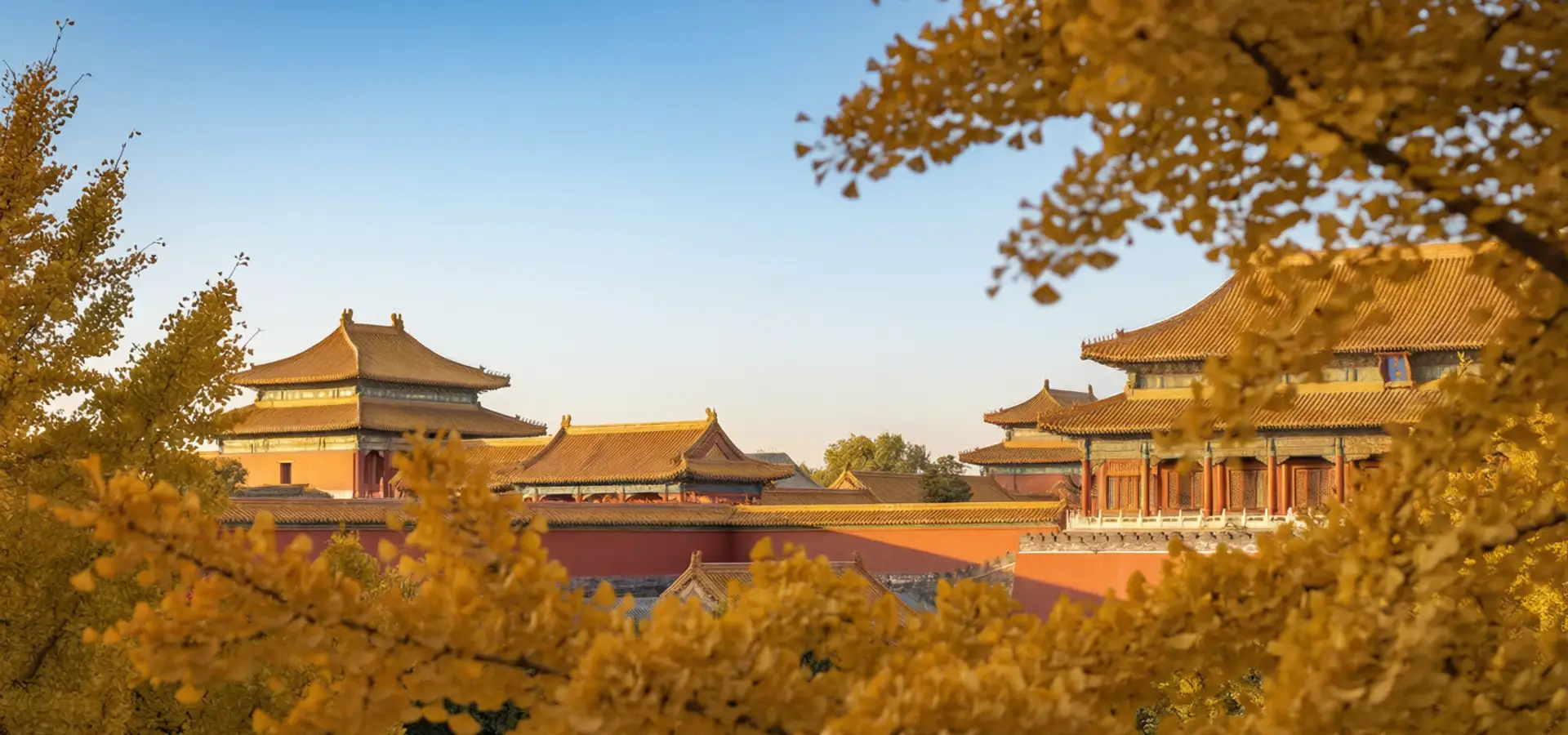
Autumn (September–November): Widely considered the best season for hutong exploration. The weather is cool and dry, the skies are clear and blue, and the leaves of the courtyard trees turn golden and red. The contrast of autumn colors against grey brick is stunning. Photography is at its best, and the comfortable temperatures make long walks a pleasure.
Winter (December–February): The hutongs in winter are quiet, austere, and deeply atmospheric. Snow transforms the grey brick into a monochrome landscape of white and grey, with red lanterns providing the only color. The lanes are nearly empty of tourists, and the experience is intimate and contemplative. Hot food takes on special importance — a bowl of hot douzhi or a plate of lamb dumplings on a freezing winter morning is a profound pleasure.
How to Get to Beijing Hutongs
Beijing’s hutongs are concentrated in the Dongcheng and Xicheng districts, the two central urban areas that formed the core of the old city. The metro system makes them easily accessible from anywhere in Beijing.
Key metro stations:
Nanluoguxiang Station (Line 6, Line 8): Access to Nanluoguxiang, Mao’er Hutong, and the Gulou area
Shichahai Station (Line 8): Access to Shichahai, Houhai, Yandai Xiejie, and the lakeside area
Yonghegong Lama Temple Station (Line 2, Line 5): Access to Wudaoying Hutong
Dongsi Station (Line 5, Line 6): Access to Dongsi Batiao cluster
Chaoyangmen Station (Line 2, Line 6): Access to Shijia Hutong and the eastern hutongs
Hepingmen Station (Line 2): Access to Liulichang Cultural Street
Qianmen Station (Line 2): Access to Dashilar and Yangmeizhu
Dongzhimen Station (Line 2, Line 13): Access to Guijie (Ghost Street)
From major landmarks: The hutongs around Nanluoguxiang and the Drum Tower are within walking distance of the Forbidden City’s north gate (Shenwumen). After visiting the palace, walk north through Jingshan Park and continue into the hutong grid — it is about a 20-minute walk from the palace moat to the Drum Tower.
Bus routes: Several bus lines serve the hutong areas, but the metro is generally faster and more convenient. Bus routes 5, 60, 82, and 107 serve the Gulou and Drum Tower area. Bus route 13 serves the Liulichang area.
Pro Tip: The absolute best time to visit any hutong is a weekday morning between 8 and 10 AM. The light is soft and golden, the crowds are minimal, and you will see the neighborhood at its most authentic — residents buying breakfast, walking to work, watering plants in their courtyards. This is the hutong as it has existed for centuries, before the day-trippers arrive.
The hutongs of Beijing are more than a tourist attraction — they are the living heart of old Beijing, a continuous thread connecting the Mongol Empire to the modern era. In these narrow grey-brick lanes, seven centuries of daily life have left their mark on every wall, every gateway, every courtyard garden. To walk through a hutong is to walk through layers of history, to glimpse the social order of imperial China written in architecture, to taste food recipes perfected over generations, and to experience a way of urban living that values community, privacy, and harmony with the seasons. As modern Beijing continues to transform, these ancient alleyways become ever more precious — not as relics of a dead past, but as living neighborhoods where the spirit of old China endures. Visit them, walk slowly, look carefully, and you will understand why Beijingers say: “The real Beijing is in the hutongs.”
Traveler Discussions
Questions from travelers