
The Chengdu Panda Base is the single best place in China to see giant pandas — and, to most visitors' surprise, one of the best places to see red pandas too. But it is also a large, busy park where timing makes or breaks the experience. This guide walks you through everything you need to know before you visit: tickets, opening hours, the best time to see active pandas, how to get there, what to see, and the small decisions that separate a magical morning from a frustrating one.
If it is your first time planning around the city, our full Chengdu travel guide and Chengdu destination page show how a panda morning fits into the rest of your trip.
Chengdu Panda Base Quick Facts at a Glance
Before we go deeper, here are the essentials most travellers look for first.
Detail | Information |
|---|---|
Full name | Chengdu Research Base of Giant Panda Breeding (成都大熊猫繁育研究基地) |
Location | 1375 Panda Avenue, Chenghua District, Chengdu, Sichuan, China |
Adult ticket | CNY 55 |
Half-price ticket | CNY 27 (full-time students, seniors 60-69) |
Free entry | Children under 1.3 m, seniors 70+, visitors with disabilities |
Peak season (Mar-Oct) | 7:30-18:00; last entry 17:00 |
Low season (Nov-Feb) | 8:00-17:30; last entry 16:30 |
Pandas on site | ~244 giant pandas and 160+ red pandas |
Best time to visit | 7:30-10:00 AM, when pandas are most active |
Recommended visit length | 3-4 hours |
Nearest metro | Panda Avenue Station (Line 3), Exit B/D |
Official site | www.panda.org.cn |
What Is the Chengdu Panda Base?
The Chengdu Research Base of Giant Panda Breeding — known worldwide as the Chengdu Panda Base — is the most famous and most visited giant panda facility on the planet. It is both a working conservation and research centre and one of Chengdu's top attractions.
History and mission
Founded in 1987 with just six giant pandas rescued from the wild, the base has grown into the largest captive giant panda population on Earth. Its work spans four areas: panda breeding and conservation research, public education, scientific study of panda biology and health, and international cooperation on panda conservation.
Why it matters
The base is home to roughly 244 giant pandas — about one third of the world's captive population — and has played a central role in the species being downgraded from "endangered" to "vulnerable" on the IUCN Red List. It also keeps the world's largest captive red panda population, with more than 160 individuals.
What makes it special
The largest and most famous panda base in the world
Home to celebrity pandas such as Hua Hua (花花), followed by millions online
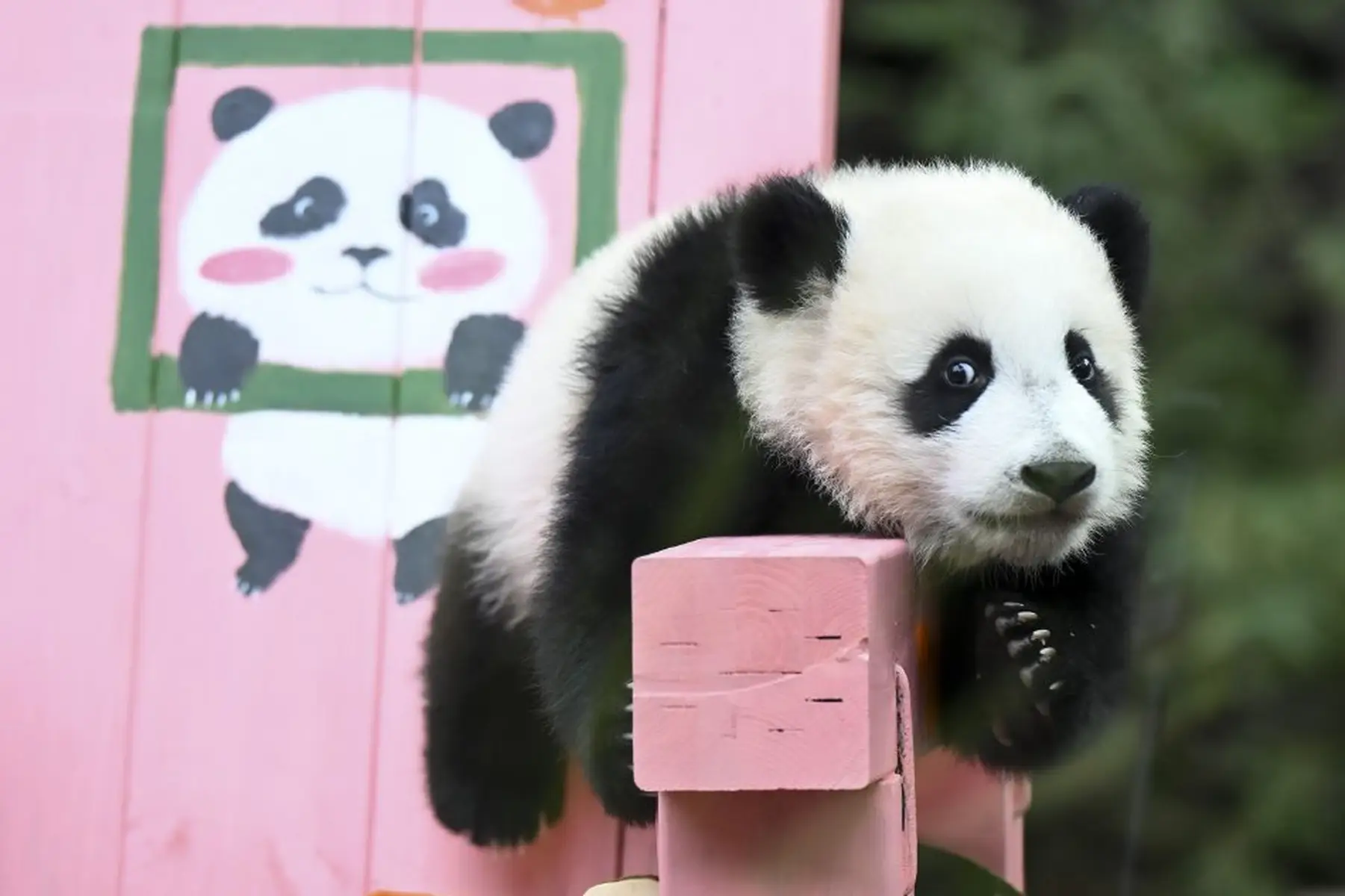
Panda cubs — one of the few places you can reliably see baby pandas
Beautifully landscaped grounds with lakes, gardens and bamboo forest
The iconic Panda Tower, an architectural landmark with panoramic views
Museums and exhibits on pandas and conservation
Easy to reach from central Chengdu by metro
Chengdu Panda Base Tickets: Prices and How to Book
Ticket prices
Ticket type | Price | Who qualifies |
|---|---|---|
Adult | CNY 55 | Visitors aged 18-59 |
Half-price | CNY 27 | Full-time students (with ID), seniors 60-69 |
Free | Free | Children under 1.3 m, seniors 70+, visitors with disabilities |
Shuttle bus (optional) | CNY 30 day pass | Anyone using the internal electric shuttle |
How to book
Tickets must be booked online in advance. There is generally no on-site ticket purchase, so plan ahead rather than turning up at the gate.
Book through the base's official WeChat mini-program, where tickets are released seven days in advance, or through a reputable third-party booking platform such as Trip.com if you do not use WeChat.
International visitors should book under the exact name printed in their passport and bring that same document to enter.
Time slots
The base uses a timed-entry system with two daily sessions.
Session | Entry period | Best for |
|---|---|---|
Morning | 7:30/8:00 AM - 12:00 PM | Best panda viewing; this slot sells out first |
Afternoon | 12:00 PM - 17:00/16:30 | Quieter, but pandas are often napping |
Booking tips: reserve 3-7 days ahead for weekends, holidays and peak season; the morning slot goes first; bring the ID you booked with; tickets are date- and slot-specific with single entry only; and always re-check the latest rules on the official site or WeChat account before you go.
Pro tip: if morning tickets are sold out for your day, book the afternoon slot and arrive right at midday. Some pandas wake for an afternoon snack, especially in cooler weather.
Opening Hours and the Best Time to See Pandas
Opening hours
Period | Opening | Last entry | Closing |
|---|---|---|---|
Peak season (Mar 1 - Oct 31) | 7:30 AM | 5:00 PM | 6:00 PM |
Low season (Nov 1 - Feb 28/29) | 8:00 AM | 4:30 PM | 5:30 PM |
Best time of day to see pandas
The best time to see pandas in Chengdu is early morning, roughly 7:30 to 10:00 AM. Giant pandas are naturally most active around dawn and dusk, so the morning feed is when you are most likely to see them eating bamboo, climbing and playing.
After about 10:00-10:30 AM they slow down, and by midday most are asleep — up in trees, on platforms or inside cool dens, especially in summer heat. A few stir again late in the afternoon. Winter and cool days are the exception: comfortable temperatures can keep pandas active all day.
Arrive at opening. The first two to three hours are magical. Sleep in, turn up at 10 or 11 AM, and you will mostly see sleeping pandas.
Best season to visit
Season | Weather | Panda activity | Crowds | Overall |
|---|---|---|---|---|
Spring (Mar-May) | Mild, 15-25°C | Very good all morning | Busy, especially holidays | Excellent |
Summer (Jun-Aug) | Hot, humid, 25-35°C | Morning only | Very busy | Good if you arrive early |
Autumn (Sep-Nov) | Cool, clear, 15-22°C | Very good | Moderate to busy | Excellent |
Winter (Dec-Feb) | Cold, damp, 3-10°C | Surprisingly good | Least crowded | Great value |
Many people are surprised that winter is a good time to visit. Pandas have thick fur and thrive in the cold, often playing right through a chilly morning — and with far fewer visitors, viewing is much calmer.
How to Get to Chengdu Panda Base
By metro
Take Chengdu Metro Line 3 to Panda Avenue Station (熊猫大道站) and use Exit B or D. From the station it is a short DiDi ride or, in peak hours, a free shuttle to the South Gate (about 5-10 minutes). The full trip from Tianfu Square in the centre is roughly 30-40 minutes and costs a few yuan per person.
By DiDi or private transfer
A DiDi or a pre-booked car with driver from the Chunxi Road or Tianfu Square area takes about 25-45 minutes depending on traffic and is the easiest option if you have children, luggage or a group. If you would rather not think about routes and time slots yourself, a tailor-made Chengdu day with your own guide and car handles the early start for you — you can start planning here.
By bus
Several city bus routes serve the base and are the cheapest option, but they can be slow and crowded. For a first visit we would not recommend them, given the language barrier and morning traffic.
Which gate: South or West?
The base has several entrances. The South Gate (南门) is the main and most popular, closest to the busiest panda enclosures and the Panda Tower, so most visitors enter there. The West Gate (西门) is a quieter alternative. Check your ticket, as the active entrance can change.
What to See at Chengdu Panda Base: Key Areas
The park is large, so it helps to know where to head first. These are the main areas, roughly in the order many visitors explore them starting from the South Gate.
Moon Nursery (月亮产房)
Best for baby pandas, and the most popular spot in the whole base. The Moon Nursery raises newborn and very young cubs; visit during cub season and you may see tiny babies. It is also the most crowded area on weekends, so go right at opening. Do not spend your whole visit queuing — see the highlights, then move on before the tour groups arrive.
Sun Nursery (太阳产房)
Slightly older cubs and young pandas, usually a little calmer than the Moon Nursery. The pandas here are often playful in the morning.
No. 1 Panda Villa (一号别墅)
Home to some of the base's most famous pandas, including Hua Hua (花花), whose round face and gentle manner draw long queues. Viewing time can be limited during peak hours.
Red Panda Area
A separate, often quieter part of the park — don't skip it. More on the red pandas below.
Panda Tower (熊猫塔)
The bamboo-inspired observation tower has exhibition floors and a top deck with 360-degree views over the whole base — worth the climb or elevator for the panorama and the conservation displays.
Museums and gardens
The Giant Panda Museum covers panda biology, evolution and conservation history and is a good midday stop while the pandas nap. The Panda Science Exploration Museum is more interactive and great for children. Between all of it, the landscaped gardens, lakes and bamboo groves — with swans and peacocks wandering the paths — are pleasant places to slow down.
A good 3-4 hour route: South Gate - Moon Nursery - Sun Nursery - Panda Villas 1 and 2 - Red Pandas - lunch - Panda Tower - remaining villas and gardens - museums - exit. Adjust for crowds and interest.
Famous Pandas to Look For
Several residents are genuine celebrities in China. You might spot:
Panda | Known for | Where | Why they're famous |
|---|---|---|---|
Hua Hua (花花) | The "flower" panda | No. 1 Panda Villa area | One of the most famous pandas in China, with a round, flower-like face and millions of fans; long queues. |
Meng Lan (萌兰) | "Cute orchid" | Various villas | Loved for being playful and active. |
He Hua / He Ye | Sibling pair | Nursery / young panda area | Popular young panda siblings. |
Qi Guo (七果) | Distinctive look | Various enclosures | Known for a distinctive appearance and personality. |
Pandas move between enclosures for breeding, health and management, so your favourite may not be in its usual spot. Check the information boards at the entrance or ask staff for current locations.
Don't Miss the Red Pandas at Chengdu Panda Base
Most visitors come for giant pandas — but the red pandas are a wonderful surprise. With more than 160 individuals, this is the largest captive red panda population in the world.
What red pandas are
Red pandas are a separate species from giant pandas. About the size of a house cat, reddish-brown with bushy tails and masked faces, they live in trees and eat bamboo, and are native to the mountain forests of the Himalayas and southwest China. They are classified as endangered, and the base plays an important role in their conservation.
Why you will love them
Incredibly charming — part fox, part raccoon, part teddy bear
Often more active than giant pandas, especially in the morning
Amazing climbers who spend much of their time overhead
Usually less crowded, so you get good, unobstructed views
Pro tip: don't rush past the red pandas. Give yourself 20-30 minutes — many visitors rate them right alongside the giants.
Panda Feeding Times and Behaviour
Understanding how a panda's day runs helps you plan around it. Here is a general sense of the rhythm at the base:
Time | What pandas are doing | Best for |
|---|---|---|
7:30-10:00 AM | Breakfast and bamboo feeding; the most active period | Best viewing - eating, climbing, playing |
10:00-11:30 AM | Still active but slowing; some begin to nap | Good viewing before they sleep |
11:30 AM-3:30 PM | Midday nap time; most are asleep | Use for museums and gardens |
3:30-5:00 PM | Afternoon snack; some wake and get active | Decent, but variable |
5:00-6:00 PM | Evening feed and settling down | Good in season, but closing soon after |
Fun panda behaviour facts
Bamboo is their life - a giant panda eats 12-38 kg of it every day.
They sleep a lot - roughly 10-16 hours of resting and napping between feeds.
Tree climbers - despite their size, pandas often nap high in trees.
Mostly solitary - in the wild pandas live alone, and most adults here have their own enclosures.
Scent marking - pandas rub scent glands on trees and even do handstands to leave their mark higher up.
Cubs are tiny - a newborn weighs just 100-150 g, about one nine-hundredth of its mother.
Crowds: When to Go and How to Beat Them
The Panda Base gets very busy on weekends, Chinese public holidays and during the summer school break. Knowing when — and how to dodge it — matters.
When it is most crowded
Weekends, when crowds are far larger than on weekdays
National Day (Oct 1-7), Spring Festival, Labor Day and Qingming - avoid if you can
July and August, peak family-travel season
Mid-morning (9:30-11:30 AM), when tour groups arrive
Celebrity pandas such as Hua Hua, which always draw queues
How to beat the crowds
Arrive at opening - by far the most effective single tip.
Go on a weekday.
Visit in winter, the quietest season.
Hit the nurseries and celebrity enclosures first, then do the calmer areas later.
Use the shuttle to reach the far end of the park quickly.
Skip a 45-minute queue for one famous panda when dozens of others need no wait.
Feed-break window: many visitors leave for lunch between 11:30 and 1:00, so the park briefly empties.
Best crowd-to-panda ratio of all: a weekday morning in winter or early spring, arriving at 7:30.
Photography Tips at Chengdu Panda Base
The base is a photographer's delight — with a bit of strategy.
Gear
A zoom lens of 200 mm or longer is ideal, since pandas sit at a distance behind glass or fencing.
Modern smartphones are fine in good light; use a telephoto lens if your phone has one, and limit digital zoom.
A tripod is rarely needed and awkward in crowds; a spare battery or power bank is essential.
Best light and spots
The first two hours give the best natural light for portraits.
Outdoor enclosures beat glass indoor ones - no reflections, more active pandas.
The red panda area suits tree-climbing shots against green backgrounds.
The Panda Tower and the lakes are great for wide and panorama shots.
Photography rules
Flash is prohibited - it disturbs the pandas.
Do not tap glass or make loud noises to get attention.
Stay behind barriers; selfie sticks and tripods may be restricted.
Visiting Chengdu Panda Base with Kids
It is one of the best family attractions in Chengdu. Children love the cubs, the red pandas, the Panda Tower and watching pandas eat their way through bamboo.
Tips for families
Arrive early - fresh kids and active pandas make a happier morning.
Bring snacks and water, even though food is sold on site.
Use the shuttle (CNY 30 day pass) when little legs tire.
Most paths are stroller-friendly, with some hills and steps.
Plan for 2-3 hours with young children and leave before anyone melts down.
Pack sun protection in summer, and know that accessible and baby-care facilities exist in the main areas.
Beyond the fun, the museums quietly teach children about panda biology and why endangered species matter.
Food, Facilities and Services
Food and drink: a few on-site restaurants, snack stands and drinks; expect tourist prices and average quality. Bring your own bottle, but do not drink the tap water.
Souvenirs: panda-themed shops throughout, the largest near the main gate. For better value and variety, find panda gifts at Kuanzhai Alley or Jinli in the city.
Accessibility: main paths are paved and fairly flat; the shuttle helps across the large park, and accessible restrooms are in the main areas.
Other facilities: restrooms, drinking fountains, a first-aid station, luggage storage and information centres with maps; Wi-Fi and charging are limited, so bring a power bank.
Rules and Etiquette at the Panda Base
Following the rules protects the pandas and keeps the visit pleasant for everyone.
Important rules
Do not feed, touch or try to pet the pandas.
No flash photography; do not tap glass or shout to get attention.
Stay behind barriers and viewing platforms; never enter enclosures.
No littering, no smoking, and no drones; follow staff instructions.
Keep an eye on children so they follow the rules too.
Good panda etiquette
Be quiet (their hearing is sensitive), be patient (never wake a sleeping panda - come back later), give other visitors space, take turns at the viewing windows, and put the phone down now and then to simply watch.
You are a guest in the pandas' home. Their welfare always comes first.
What to Do Near Chengdu Panda Base
The base sits in northern Chengdu, so it pairs neatly with a city-centre afternoon. Most visitors do pandas in the morning and something calmer after lunch.
Attraction | Travel time | What it is |
|---|---|---|
Zhaojue Temple | ~10 min by car or 3 metro stops | A historic, peaceful Buddhist temple |
Beihu Park | ~15 min by car | A large lake park popular with locals |
Kuanzhai Alley | ~30 min by metro or car | Restored Qing-era lanes of food and shops |
People's Park | ~30 min | Teahouses, a lake and everyday local life |
Jinli / Wuhou Shrine | ~35-45 min | Traditional street and Three Kingdoms site |
For what to eat afterwards, see our guide to where to find the best hot pot in Chengdu. If you have more days in the region, the Leshan Giant Buddha day trip from Chengdu and the wider options in where to see pandas in China - including Wolong, Bifengxia and Dujiangyan Panda Valley - are natural follow-ups.
Top Tips for a Great Visit
Before you go
Book tickets online 3-7 days ahead, earlier for holidays.
Choose the morning slot and set your alarm for opening.
Wear comfortable shoes - you will walk 3-5 km.
Bring water, snacks, sun protection and a portable charger.
Grab a park map at the entrance or download one in advance.
During your visit
Start at the nurseries and celebrity enclosures before the crowds build.
Do not spend the whole morning in one queue; there are dozens of pandas to enjoy.
See the red pandas, and visit the museums during the midday nap.
Use the shuttle when you tire, and stay hydrated.
End at the Panda Tower for a last panorama of the whole base.
Pro-level: if morning tickets are gone, book the afternoon slot and arrive at 12:00 for the snack-time wake-up; walk the quieter paths; and on a rainy day, bring an umbrella - pandas like the cool and the crowds thin out.
Final Thoughts
The Chengdu Panda Base lives up to the hype. There is something genuinely magical about seeing giant pandas in person - their size, their clumsy grace and their endless bamboo-eating. The secret is timing: arrive early, do the popular spots first, and pace yourself, because the pandas wait for no one.
Look beyond the giants too. The red pandas, the gardens and lakes, the Panda Tower and the museums make this a place of conservation, education and real natural beauty — very likely the highlight of your trip to Chengdu.
Want to pair a well-timed panda morning with the rest of a smooth Chengdu day, without worrying about slots, routes and queues? Tell us your dates and we will shape a tailor-made visit with your own guide and car — start planning your Chengdu trip.




Traveler Discussions
Questions from travelers