
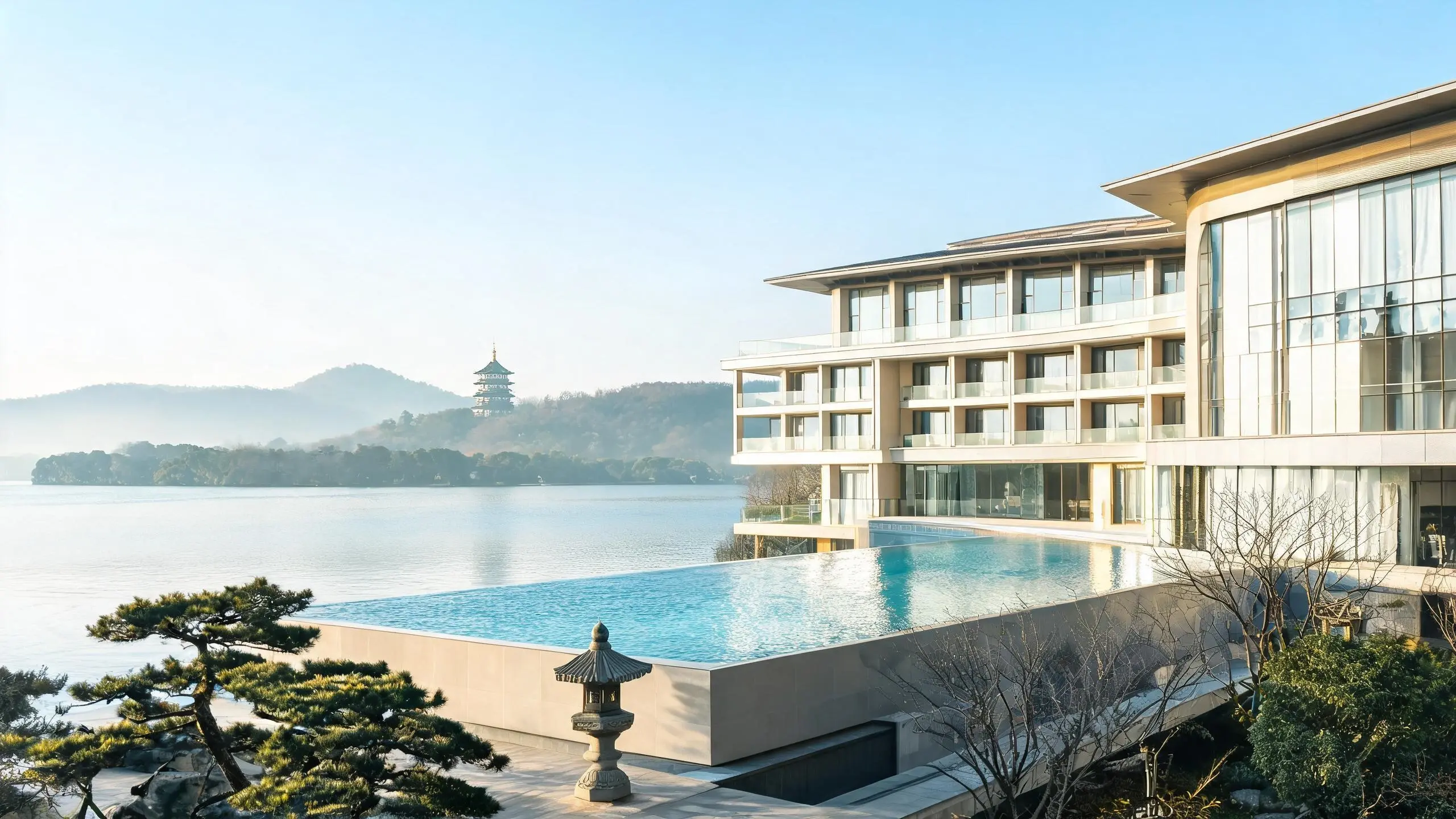
There are roughly two hundred luxury hotels in Hangzhou that call themselves worth the name. Eight of them are worth a decision. The rest are either business hotels with marble in the lobby, or resorts that are perfectly pleasant and completely interchangeable.
The eight that follow are not ranked, because ranking them would be dishonest. A hotel that is wrong for a honeymoon is often right for a family of five, and the most expensive room in the city is not the one most people should book. What matters is the match.
👉If this is your first trip to Hangzhou, read our complete Hangzhou travel guide alongside this one - it covers the sights, food, and logistics behind every hotel choice below.
The Short Answer: Which Luxury Hotel Fits Your Trip
The Match Table
If you only read one thing here, read this table. Each row names the hotel that solves a specific problem, and the reason is the part that matters — the same hotel can be the best and the worst choice in the city depending on why you are in Hangzhou.
If you are… | Stay at | Why this one |
On your first luxury trip to Hangzhou | Grand Hyatt Hangzhou | Of the eight hotels covered here, the only hotel where you walk out of the lobby and the lake is simply there. No transfer, no planning, no wasted mornings. |
Planning a proposal, honeymoon or anniversary | Four Seasons Hotel Hangzhou at West Lake | Bill Bensley's Jiangnan gardens, a sequence of courtyards, and 81 rooms that make the rest of the city feel far away. |
Coming to disappear for two or three days | Amanfayun | A restored village of 46 stone houses inside the Lingyin valley. You do not visit Hangzhou here; you stop hearing it. |
Someone who plans the trip around dinner | Seven Villas (Zixuan Resort) | Jiexianglou, which was upgraded to two Michelin stars in the 2026 guide, sits inside the resort grounds. |
Travelling with your parents | West Lake State Guest Hotel | Flat gardens, buggy service between buildings, and a pace that nobody hurries. The hotel offers access to a quieter stretch of lakeside grounds. |
Wanting a modern city stay, not a garden | Park Hyatt Hangzhou | High floors over the Qiantang River, walkable to shopping, and the widest skyline view in this group. |
On your second or third visit | Banyan Tree Hangzhou | Xixi Wetland is a different geography entirely — water lanes, reeds and villages instead of a lake. |
Wanting the newest rooms in the city | Four Seasons Hangzhou Centre | Opened in September 2024, so the hardware is the freshest of the eight, and the metro is underneath you. |
Travelling with children changes the shortlist more than any other factor.
The Four Seasons Hangzhou Centre has the largest standard rooms in this group, connecting rooms on request, a mall and supermarket in the same tower and the metro below — the simplest choice for a family that wants to move around.
The State Guest Hotel suits families who want space rather than convenience: flat gardens, buggy service and no traffic inside the gates.
The Grand Hyatt is the best compromise if you also want the lake on foot, though its standard rooms are compact.
The villas at Amanfayun, Seven Villas and Banyan Tree are beautiful but spread out, with water and steps between buildings — worth it with older children, harder with toddlers.
The Three Questions That Decide It
Most people choose a Hangzhou hotel by looking at photos of the lake. That is the wrong input, because almost every luxury hotel in the city has a photograph of the lake somewhere on its website, and half of them are a taxi ride away from it.
Three questions do the actual work.
Question #1: Do you want the lake, or do you want quiet?
In Hangzhou these are opposites. The hotels closest to the water sit inside the busiest part of the city, while the quietest ones are in the mountains or the wetland, six to twelve kilometres out. Deciding this first removes about half the list.
Question #2: Will you pay for location, or for space?
At the same nightly rate, a lakeside hotel gives you a smaller room and a better view; a resort gives you a larger room and a commute. Neither is better. They are different purchases, and the price difference between them is smaller than most people assume.
Question #3: How many nights are you actually staying?
Two nights in the Lingyin valley is a mistake — you will spend a third of your trip in a car. Two nights at the Grand Hyatt is close to ideal. The right hotel changes with the length of the stay, which is why no single "best hotel" answer exists.
Answer those three out loud before you look at prices, and the eight hotels collapse to two or three. The next section explains why this market behaves the way it does — and why the famous names are not always the right ones.
Where to Stay: Best Areas for Different Travelers
If this is your first trip to Hangzhou, decide on the area before you decide on the hotel. Six zones account for almost every luxury stay, and each one solves a different problem. The hotel brand matters less than where it sits on the map.
Hubin / Longxiangqiao — Best for first-time visitors
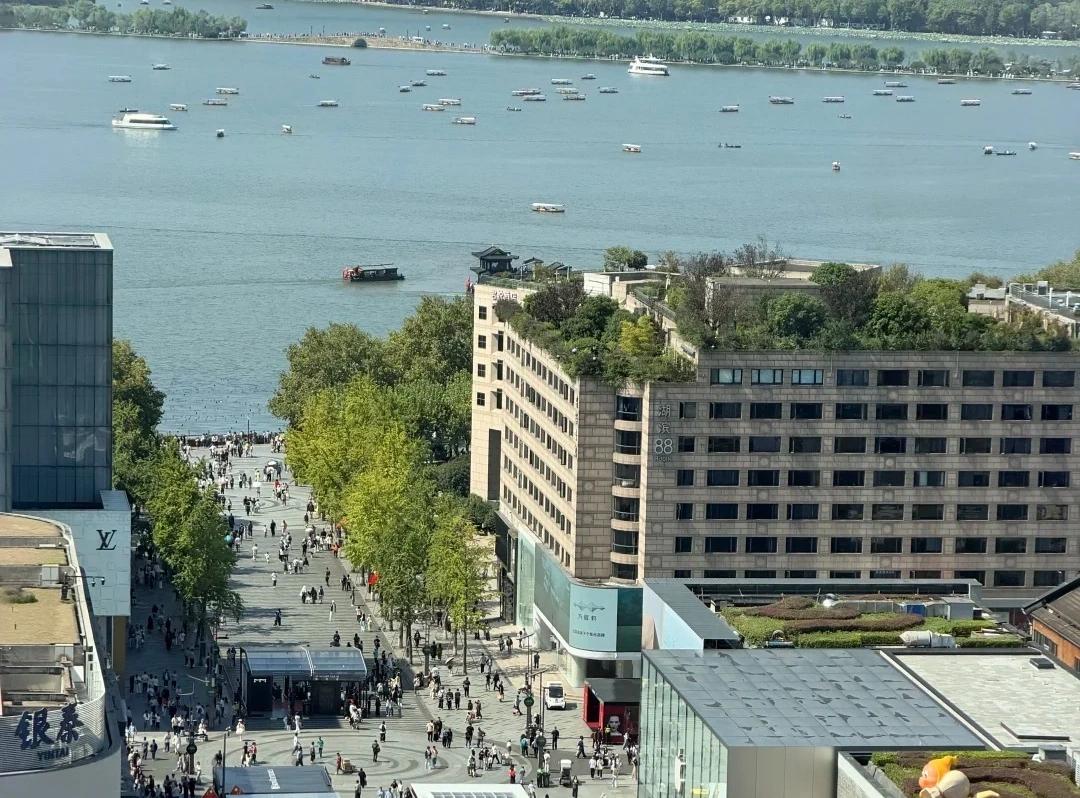
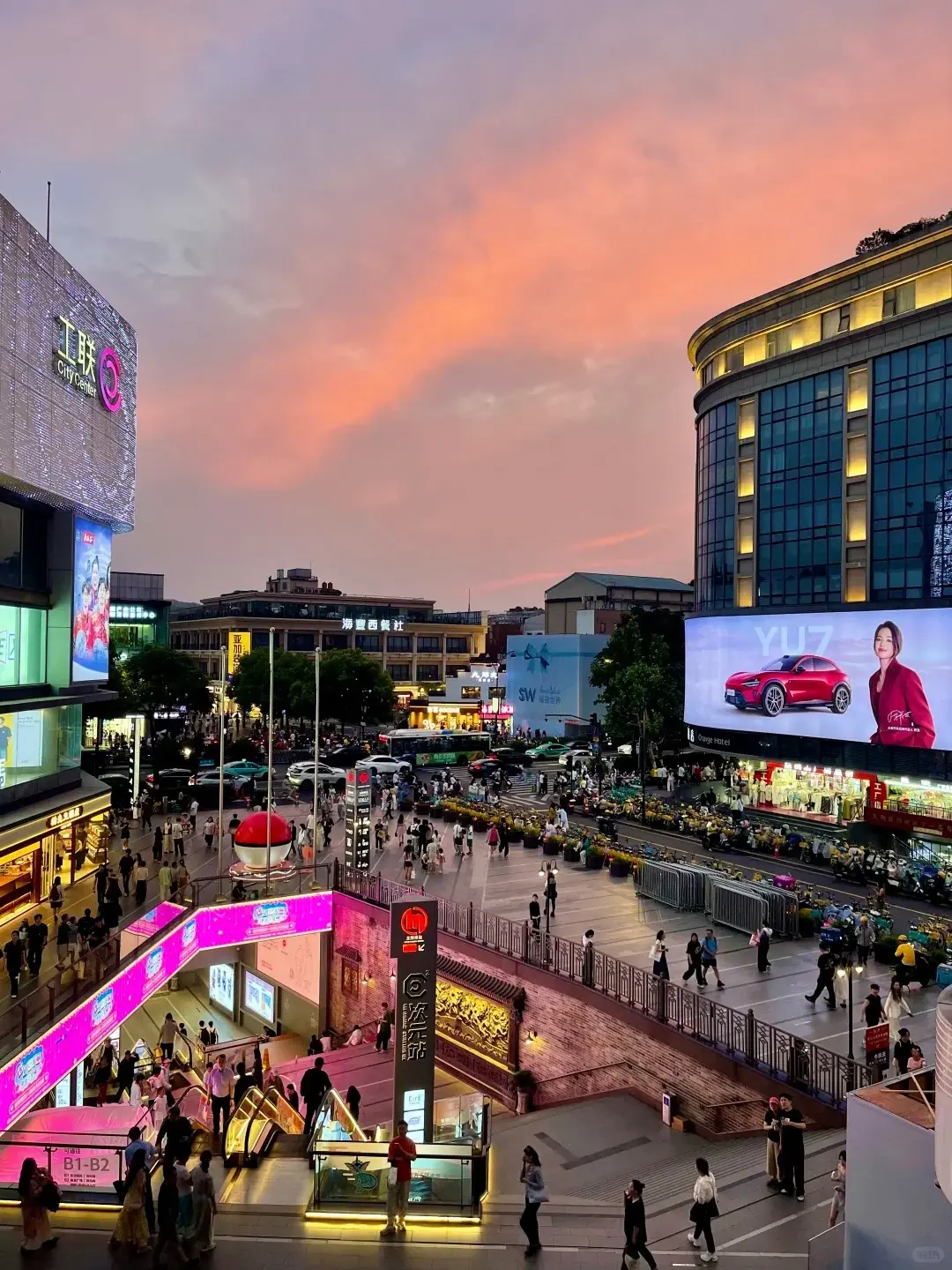
The strip along Hubin Road is the most practical base for your first visit. You step out of your hotel and you are on the shore of West Lake. Restaurants line the streets, and Longxiangqiao station on Line 1 is a five-minute walk away. For sightseeing, this is the only zone where you can genuinely go for days without a taxi.
The trade-off is density — the streets are loud at night, and the best hotels here charge a premium for the lakefront. Grand Hyatt Hangzhou is the standout.
West Lake West Shore / Beishan — Best for gardens and quiet
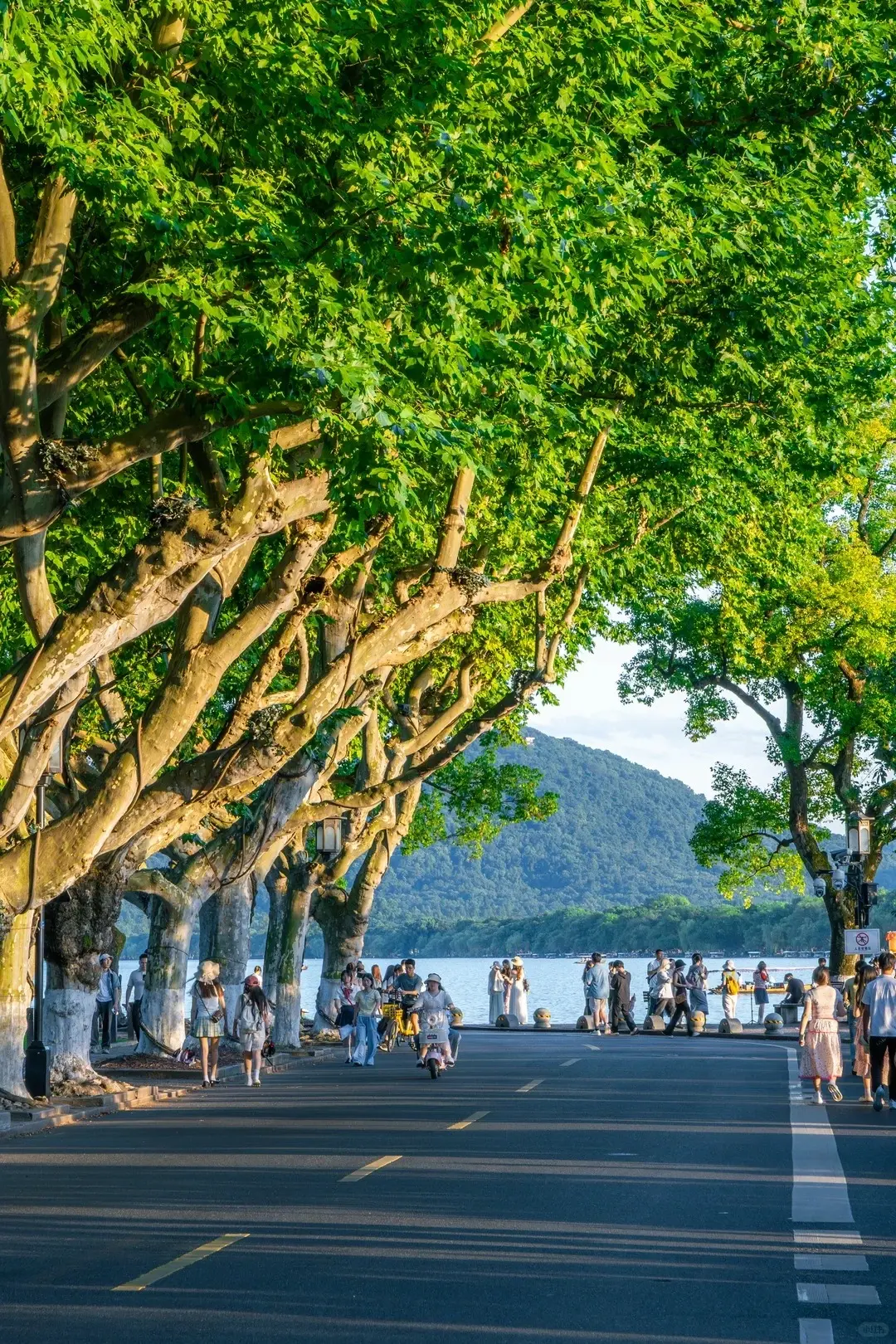
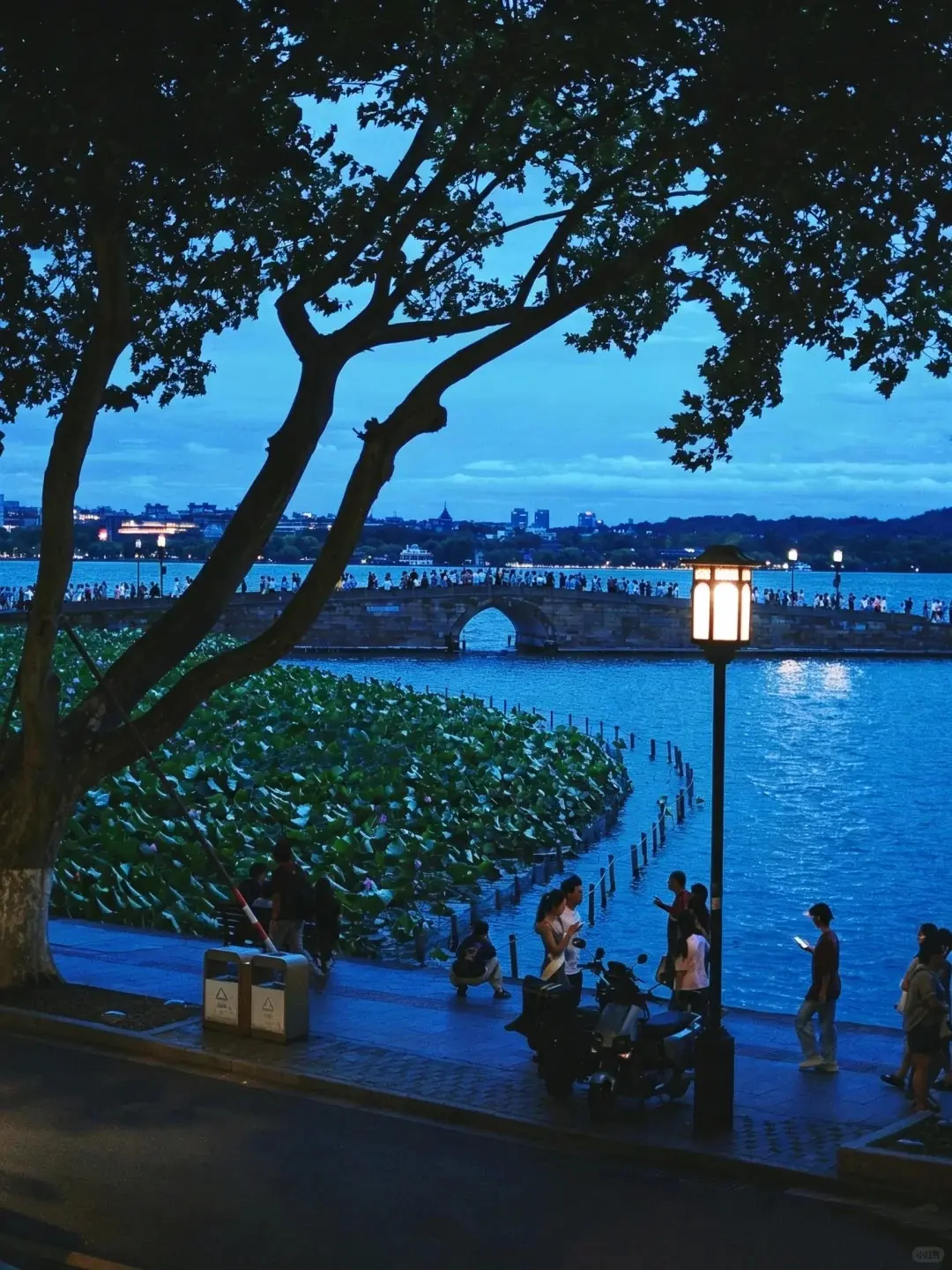
The west shore is where Hangzhou puts on its garden face. Two luxury hotels sit here — Four Seasons at West Lake and State Guest Hotel. You are inside the scenic area, surrounded by willows, bridges and teahouses. The water is still a short walk, but not directly outside the door.
The trade-off is access: the scenic area restricts private cars on weekends and holidays, so taxis become unreliable, and the walk in is longer than you expect. The exact hours change with the season and the traffic plan, so confirm with the hotel before you book an arrival time. Great for a slow-paced stay, less ideal if you plan to be out early every morning.
Lingyin / Jiuxi — Best for temples, tea and seclusion
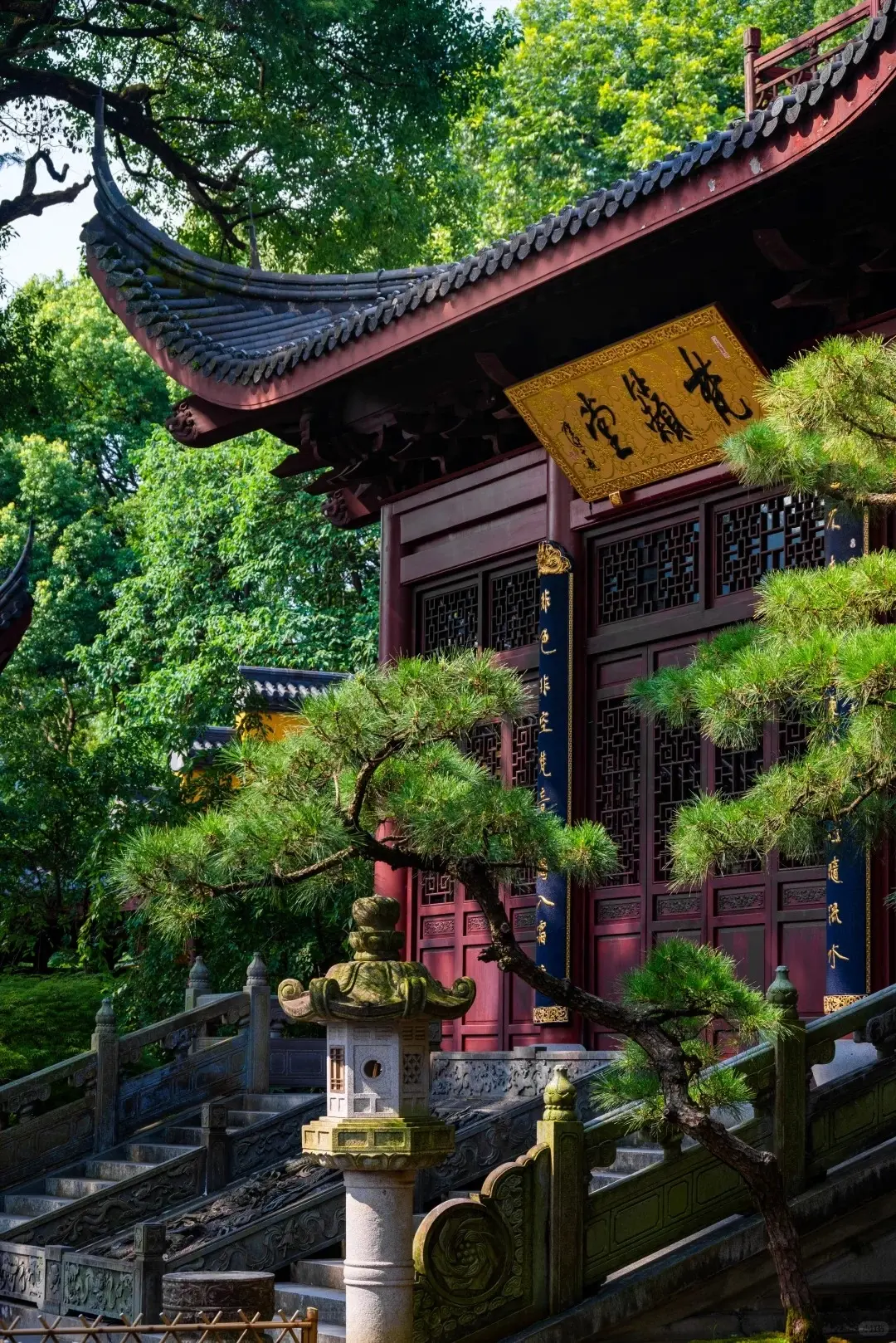
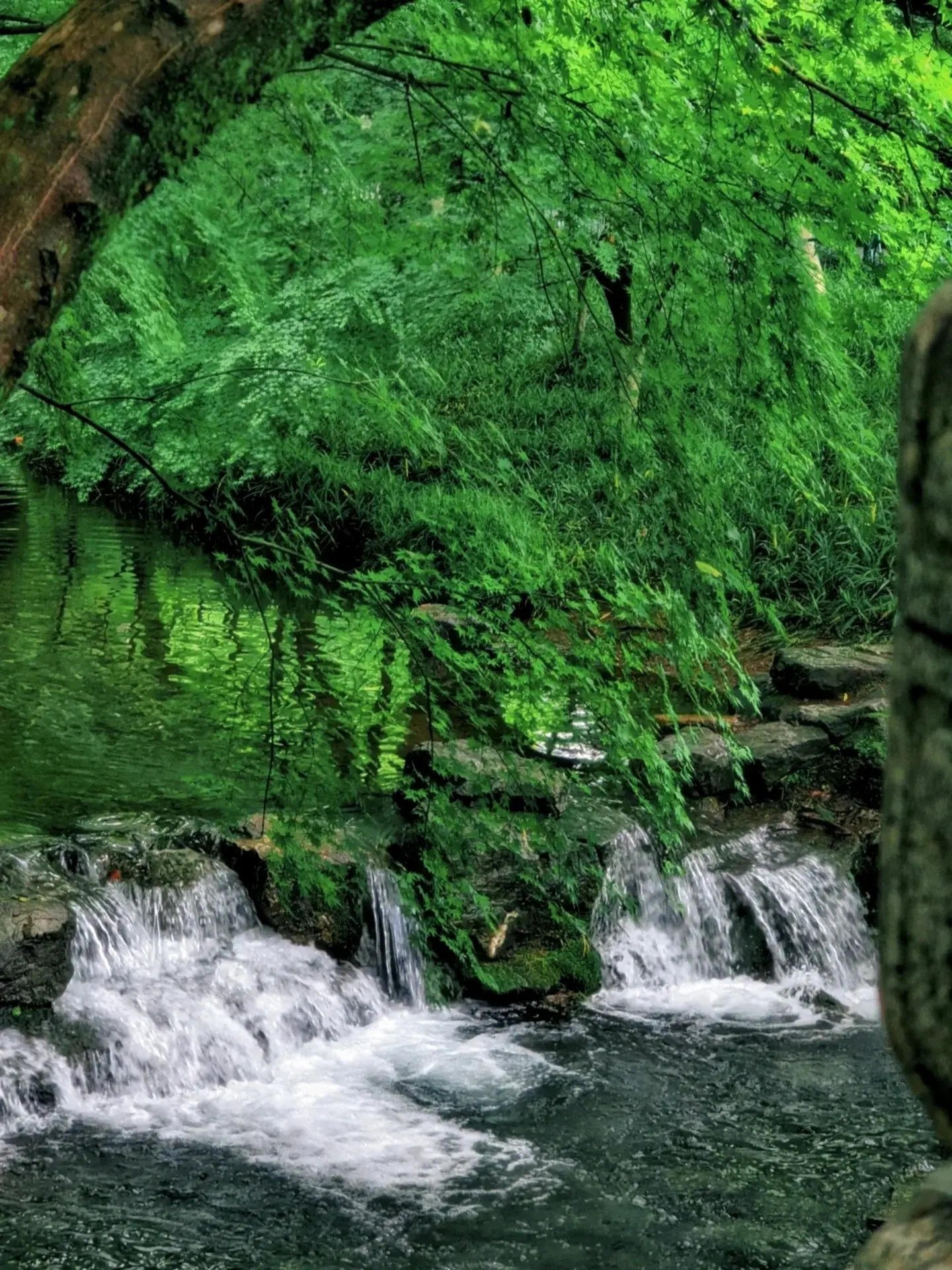
Set back from the lake in the hills, Lingyin and Jiuxi are not about convenience. They are about silence, tea terraces, and old temples you can reach before the day crowds arrive. Amanfayun lives here, and Seven Villas (Zixuan Resort) is a little closer to the city. The area is a forty-minute taxi ride from Hangzhou East Station and twenty-five minutes from the lake.
Do not stay here for two nights and plan to commute to West Lake every day — you will resent the trips. Stay here for three nights or more, and treat it as a retreat that happens to be close to a city.
Xixi Wetland — Best for slow days and nature
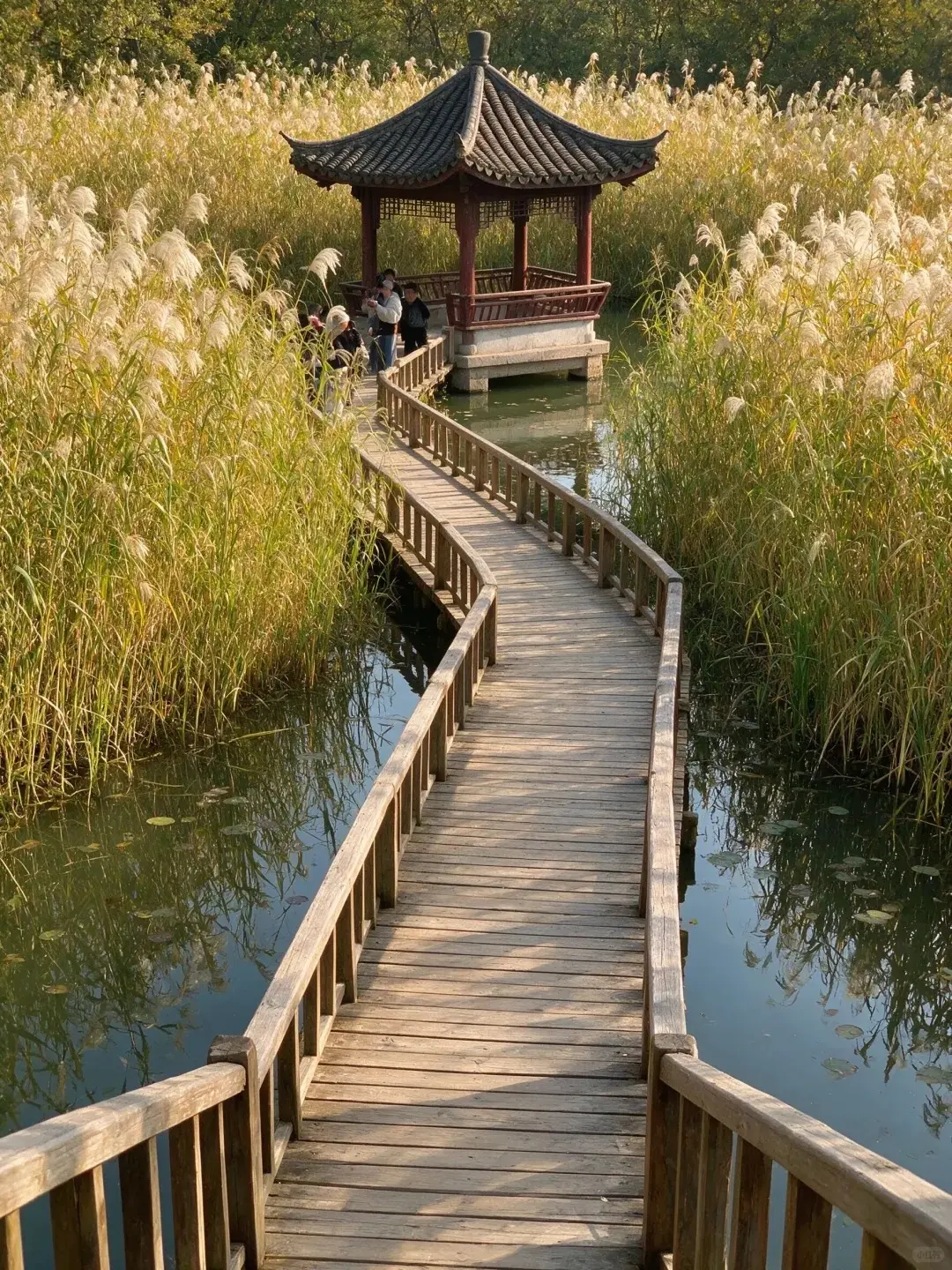
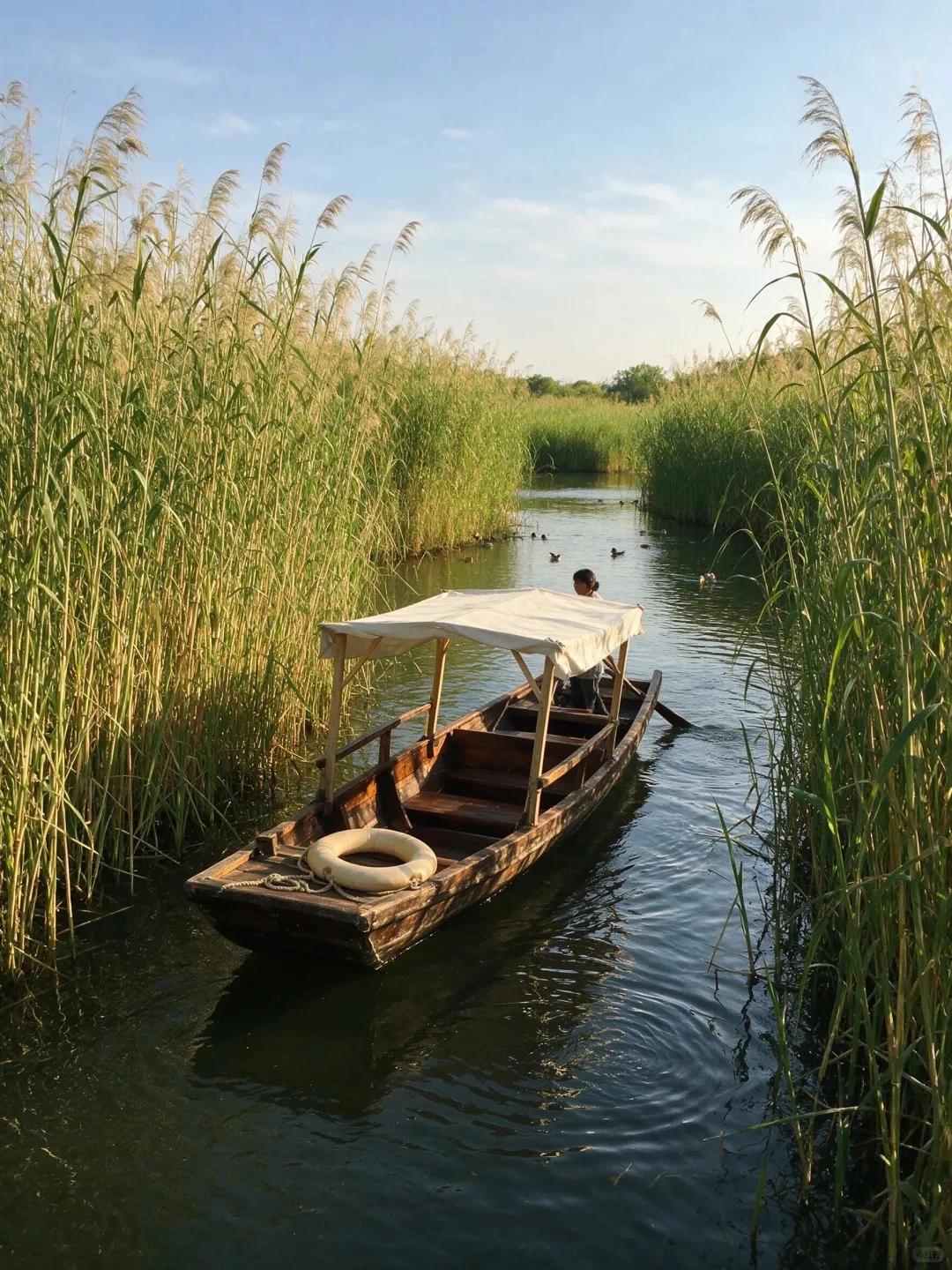
Banyan Tree sits inside Xixi National Wetland Park, on its own island accessible by bridge. You are surrounded by reed beds and slow-moving canals. This is the best area in Hangzhou if you want to do almost nothing except walk, watch birds and eat well.
It is the wrong area if you want to be at West Lake. Count on a thirty-five-minute taxi to Hubin. There is no metro station nearby. The hotel provides a free shuttle to a shopping centre, but for most meals and sightseeing you will need transport.
Qianjiang New Town — Best for riverside modern luxury
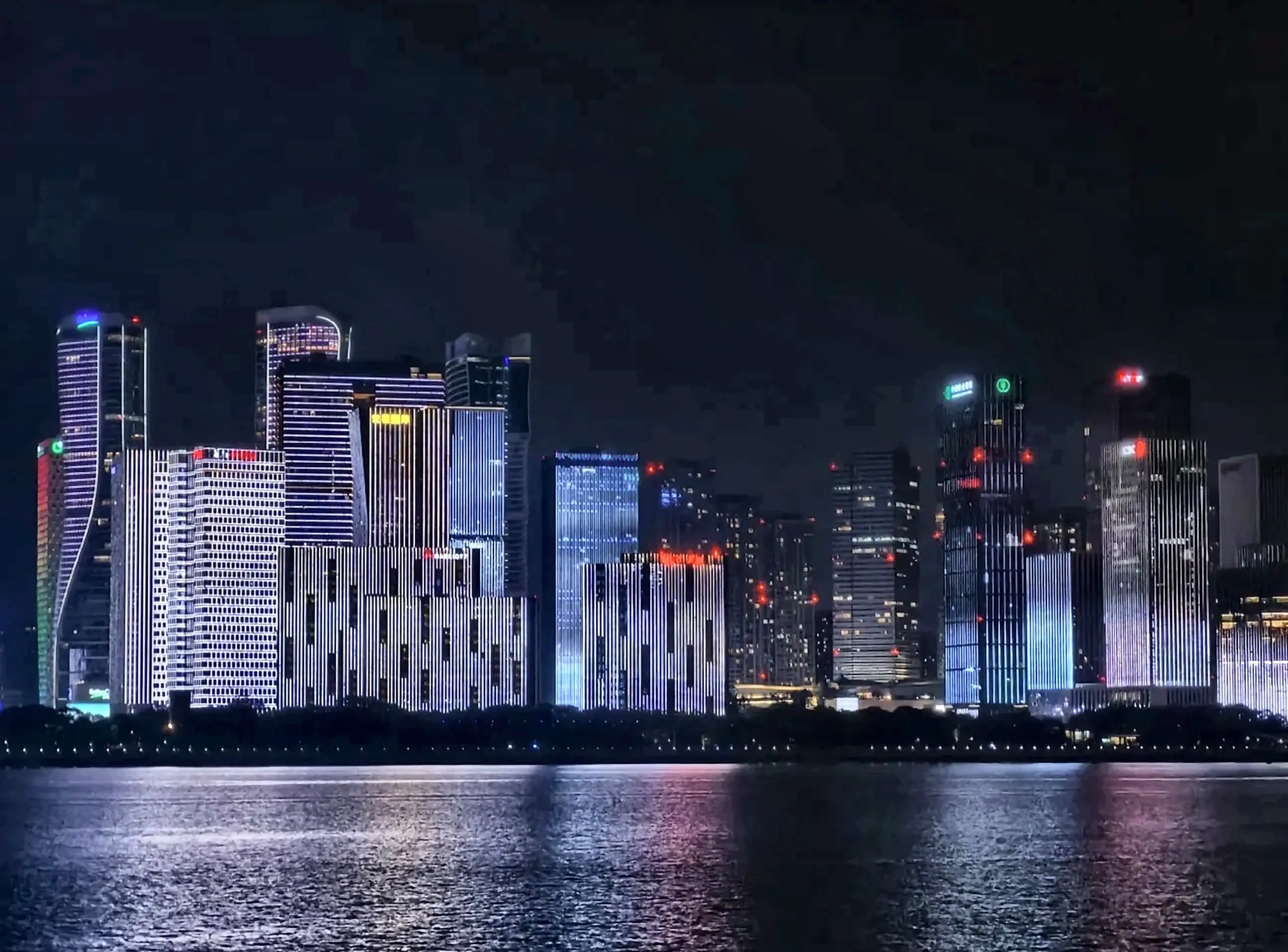
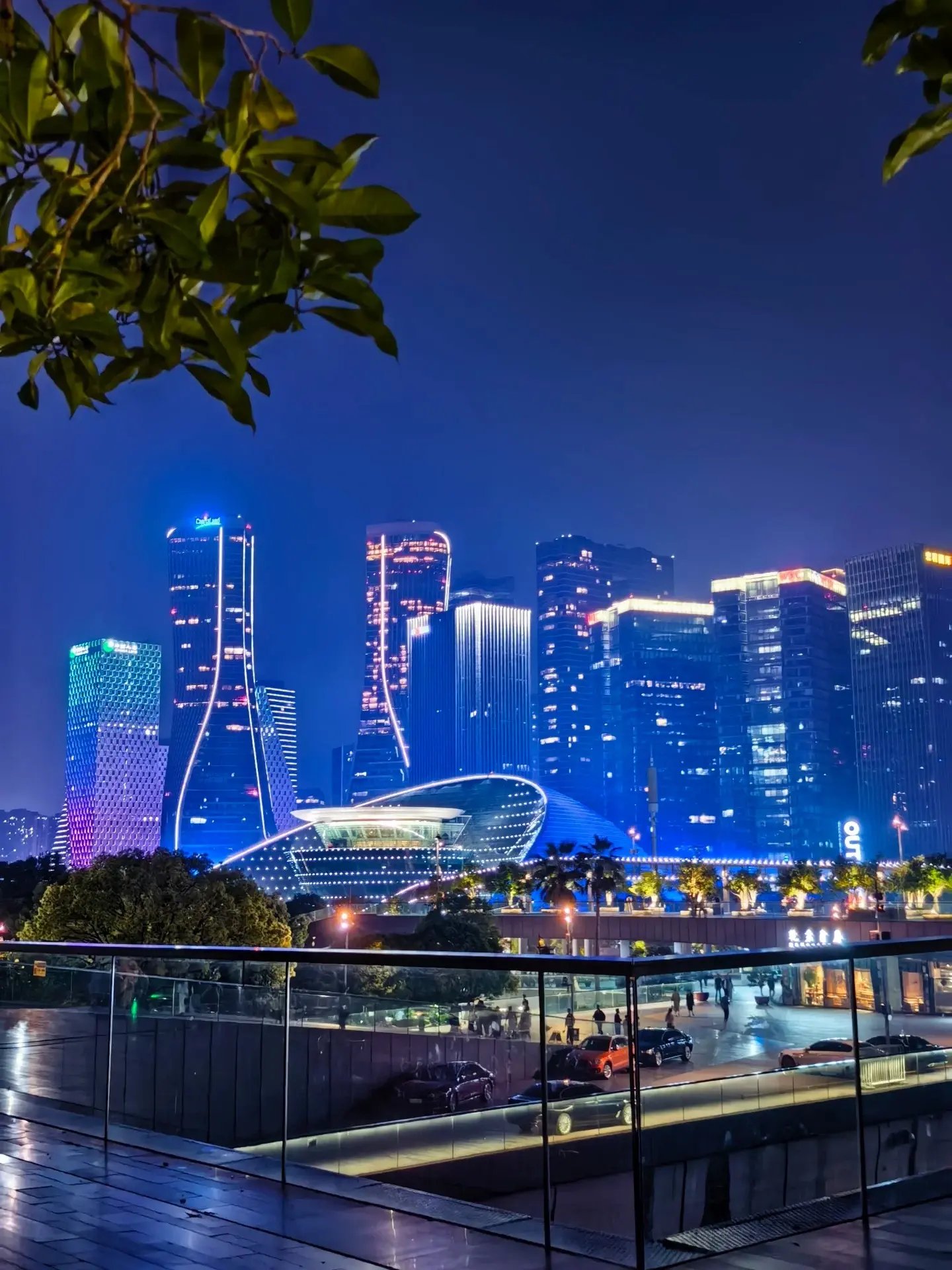
Park Hyatt Hangzhou sits here: a glass tower with direct Qiantang River views and Four Seasons Place shopping mall in the same building. The nearest metro stop is Jiangjin Road (Line 4), a two-minute walk away. Hangzhou East Station is a thirty-minute taxi or a one-transfer metro ride away. West Lake is a twenty-minute taxi ride.
For airport arrivals, the fastest option is a private transfer — roughly forty minutes from Xiaoshan International Airport depending on traffic. It is also the least "Hangzhou" of the five areas: if you are not specifically interested in a modern hotel with river views, you are paying premium rates to be far from the city’s most famous asset.
Wulin — Best for shopping and city convenience
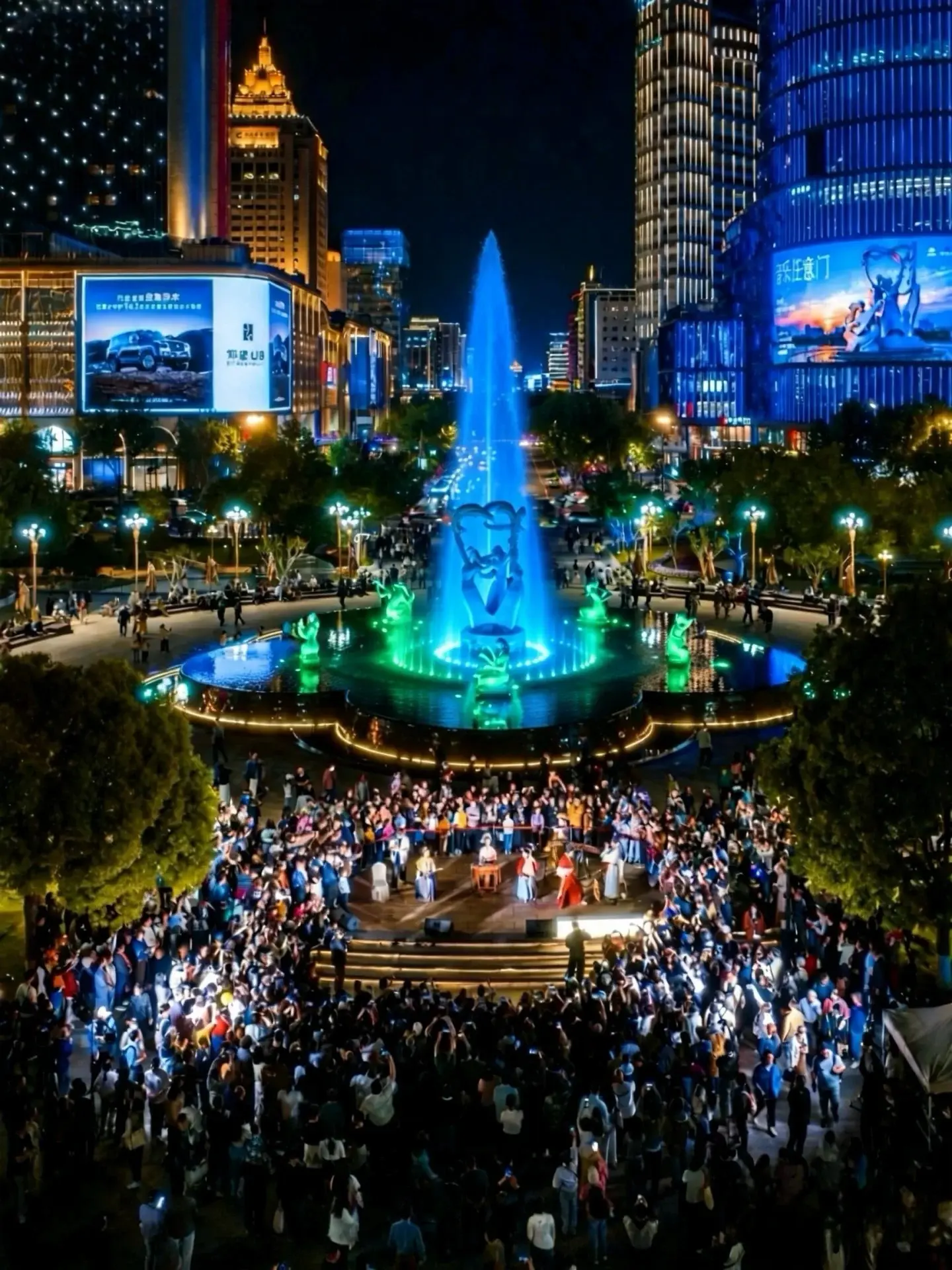
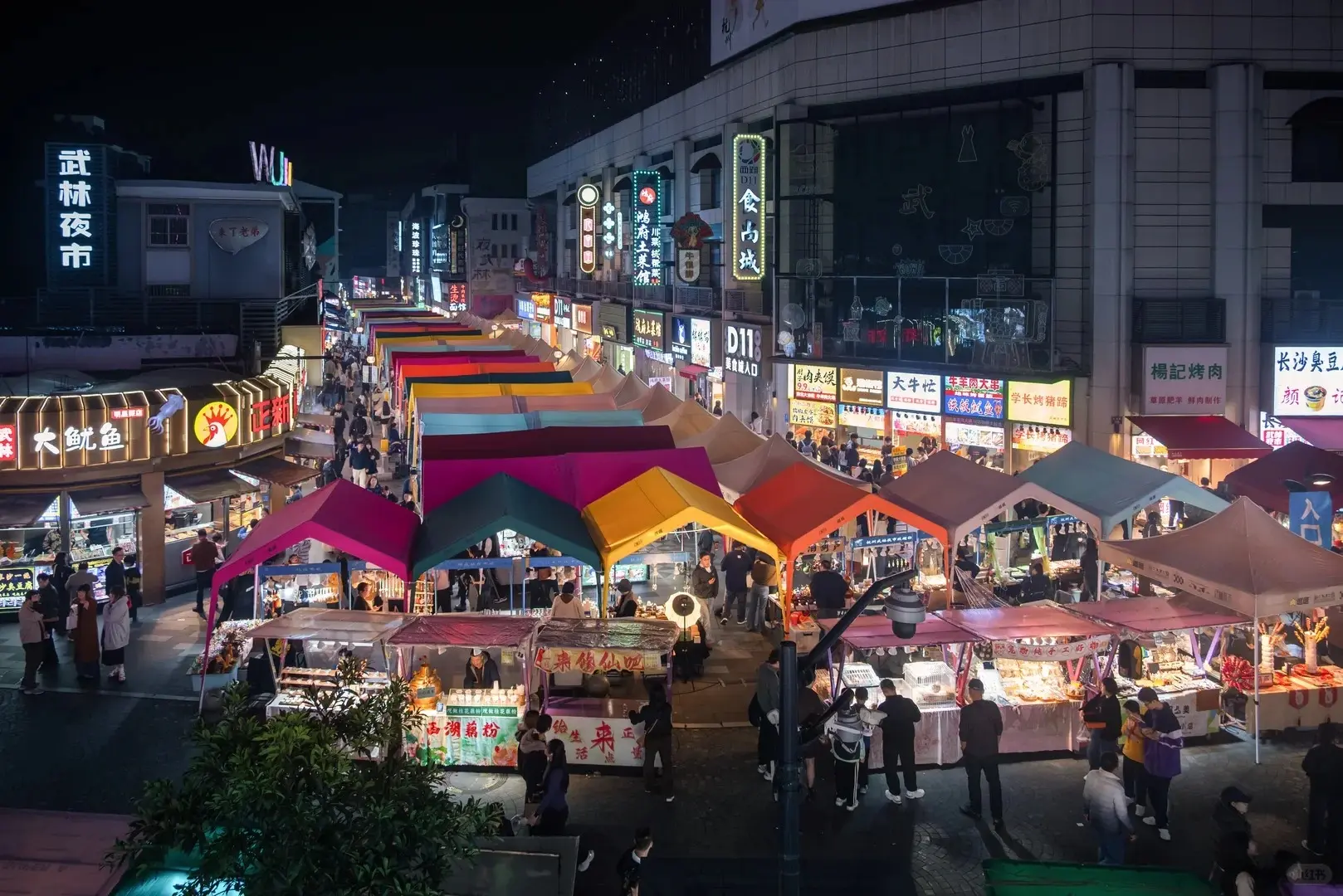
Four Seasons Hotel Hangzhou Centre occupies the upper floors of a tower above Wulin Plaza, one of the city’s largest shopping and dining complexes. The nearest metro is Fengqi Road (Lines 1 and 2), directly underneath the building. Hangzhou East Station is a twenty-minute taxi or a direct three-stop metro ride on Line 1. West Lake is a fifteen-minute taxi. This is the most conveniently connected of all eight hotels for pure transport.
The trade-off: the neighbourhood is office-heavy and feels generic, so the hotel itself — not the location — becomes the main attraction.
👉Once you have a base, our roundup of the best things to do in Hangzhou fills the days around it, from West Lake boat rides to Longjing tea villages.
How Hangzhou Luxury Actually Works
Three things about this market are worth understanding before you look at any individual hotel -- and that will shape the whole of your Hangzhou luxury travel experience: why Hangzhou's idea of luxury differs from Shanghai's, what "near West Lake" actually means on a map, and how the prices behave.
Hangzhou Is Not Shanghai
Shanghai and Hangzhou are forty-five minutes apart by high-speed train, and they have opposite ideas about what a luxury hotel is. Shanghai builds upward: towers of several hundred rooms, a lobby on the fortieth floor, enough restaurants that a guest never needs to leave the building.
Hangzhou builds sideways, and competes on restraint — on how little building a hotel dares to put on a very good piece of land. Its most prestigious address is a state guesthouse set in a garden, and one of its best-known hotels has just 81 rooms. Part of that is regulation, since the scenic area limits height and density, but the restraint is also the product.
A hotel with 46 rooms on fourteen hectares can offer something a 600-room tower cannot: silence, and the sense that the grounds belong to you rather than to a queue. What you give up is equally real — the restaurant count, the round-the-clock room service, the sheer polish of a brand-new Shanghai property.
There is a further consequence that the brochures leave out. Because these hotels are small, old and built into landscapes rather than towers, their hardware ages faster than a new city hotel's does. A property that opened in 2010 and has never closed for a rebuild will have rooms that feel a decade behind one that opened last year. That is why the room-by-room notes in the hotel entries below matter more here than they would in Shanghai.
Guests who arrive expecting Shanghai and find this are the ones who leave disappointed. Guests who come for the garden, the view and the emptiness tend to return. Knowing which of those you are is more useful than any ranking.
Three Meanings of "Near West Lake"
Almost every hotel in Hangzhou describes itself as near West Lake. The phrase covers three completely different situations spread across twelve kilometres, and the difference matters more than the star rating does.
What the hotel says | What it actually means | Hotels | Time to the water |
Lakefront | The lobby opens onto the shore | Grand Hyatt Hangzhou | Under a minute on foot |
In the scenic area | Inside the park, but still a walk from the shore | Four Seasons at West Lake, State Guest Hotel | 10–20 minutes on foot |
In the hills or wetland | A drive away, often a long one | Amanfayun, Banyan Tree | 15–30 minutes by car |
Marketing language makes this harder than it needs to be. "Steps from the lake" usually means a fifteen-minute walk, and "lake views" can mean a sliver of water between two buildings. The reliable test is to open a map, drop a pin on the hotel, and measure the walking route to the shoreline rather than the straight-line distance.
The practical question is how often you plan to be at the water. If the answer is twice a day, book the first category and accept the smaller room. If you are coming to read, swim and eat well, the third category is better value — provided you accept that the lake becomes a day trip rather than a backdrop.
What Actually Drives the Price
Rates in Hangzhou are not set by star rating. They are set, fairly bluntly, by how close the hotel sits to the water and how few rooms it has. A five-star tower on the ring road can cost less than a four-star courtyard ten minutes from the shore.
Three variables move the number more than anything else. Season is the largest, with spring blossom and autumn osmanthus roughly doubling the midweek rate. Day of the week is second: a Saturday in October can cost half again what the Tuesday before it costs. Lead time is third, and it matters most at the small properties, where a sold-out weekend cannot be fixed by opening more rooms.
Price tier | Hotels | Indicative range, Nov 2026 | What you are really paying for |
Highest | Amanfayun, Four Seasons at West Lake | ¥5,000–8,000 / ¥3,500–6,000 | Scarcity — very few rooms on land that cannot be replicated |
Upper | Banyan Tree, Seven Villas | ¥2,500–4,500 / ¥2,000–3,500 | Space — villas, gardens, and privacy from other guests |
Middle | State Guest Hotel, Park Hyatt, Four Seasons Centre | ¥1,800–3,500 / ¥1,500–2,800 / ¥1,600–3,000 | Either location or newness, rarely both |
Lowest of the eight | Grand Hyatt | ¥1,200–2,400 | Location, with hardware that shows its age |
Ranges are indicative: standard entry-level room, 2 adults, 1 room, 1 night, November 2026, including tax and service charge. Prices sourced from hotel websites and major OTAs as of mid-November 2026. Rates vary by day of the week, season, special events, and booking channel. They are not offers. Always confirm the exact price before you book.
The multiplier is more useful than any single figure. Across these eight hotels, a peak-season weekend typically runs two to three times the quiet-season weekday rate for the same room. That ratio holds even as base prices drift, which is why this guide gives tiers rather than numbers — any figure printed here would be out of date within a year, but the ratio stays roughly true.
Use it in reverse. If Amanfayun is out of reach in April, price it in January. If the Four Seasons at West Lake is impossible during osmanthus season, look at the first week of December. The same room, the same view, and less than half the money — with quieter water outside the window.
The Eight Hotels That Actually Matter
Eight hotels, six locations, one decision. What follows takes each property in turn — where it sits, which room you should actually book, what the kitchen does, what repeat guests complain about, and who it suits. Read the ones that match your trip and skip the rest; the entries are self-contained.
They appear in no particular order, because a ranking would be meaningless. Amanfayun and the Grand Hyatt are not better or worse than each other; they are answers to different questions.
The “What guests say” notes that follow draw on aggregated recent reviews from Tripadvisor, Booking.com and Ctrip, read in November 2026, together with published hotel information. They describe patterns rather than every room, and where only one or two sources mention something, we say so.
Amanfayun
Location and setting
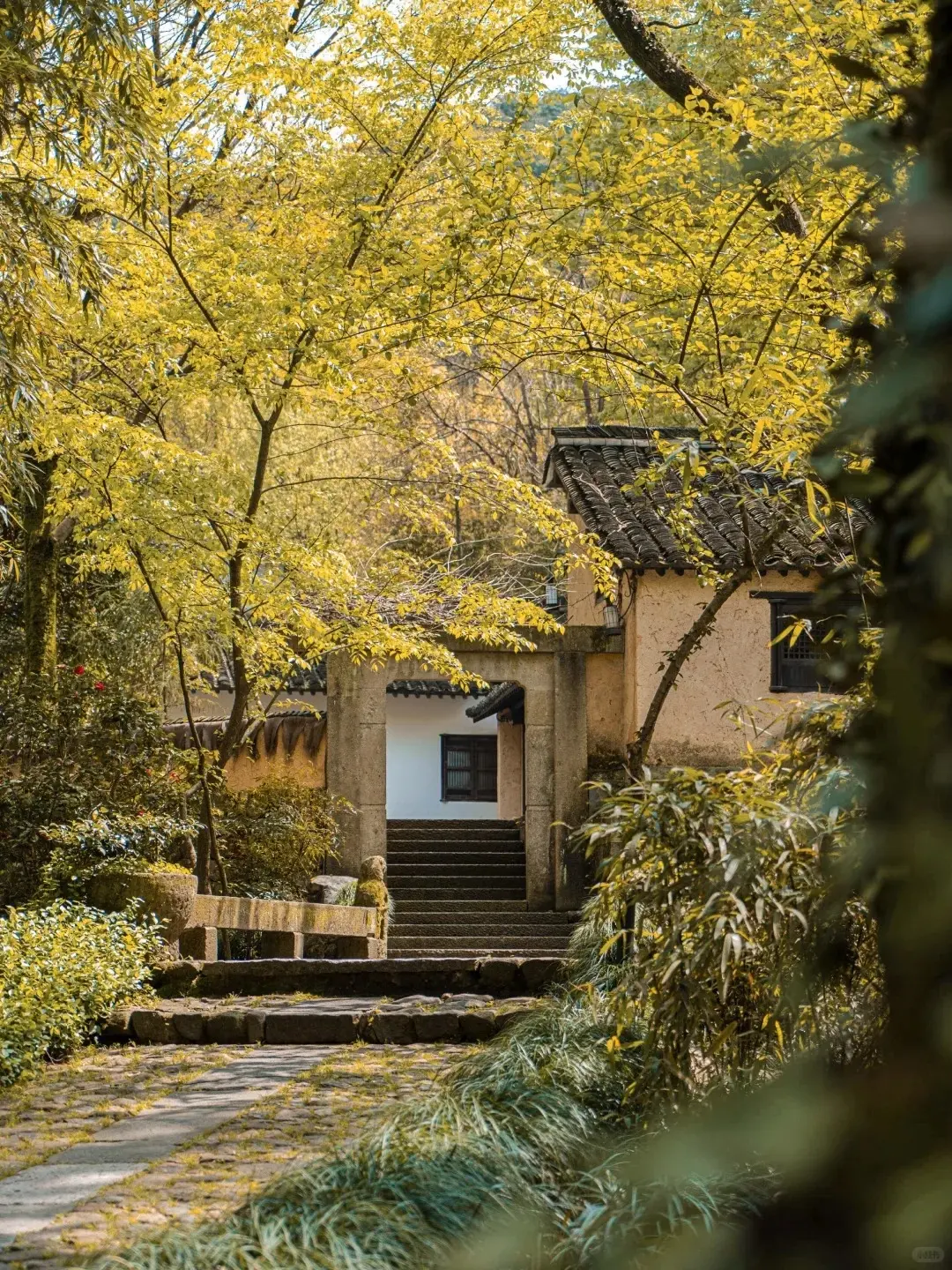
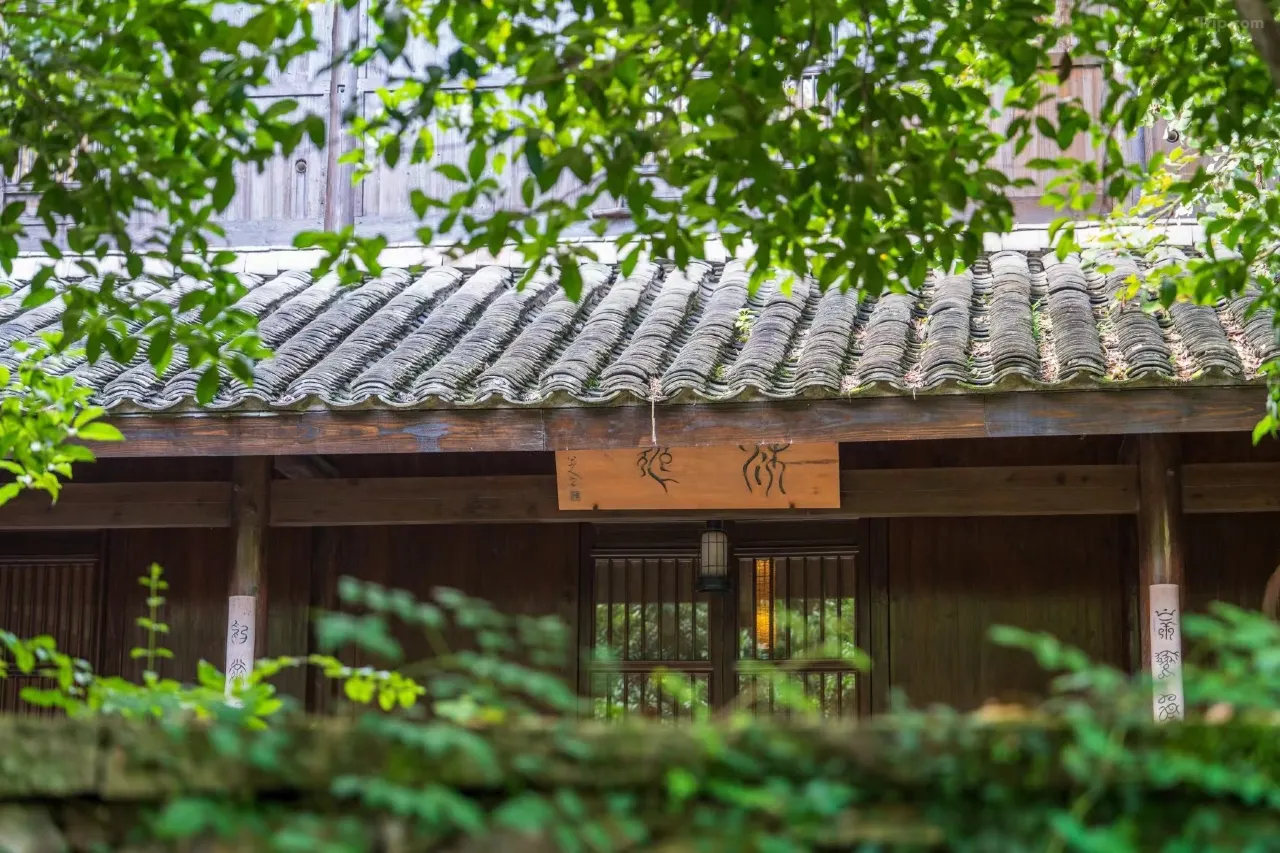
Forty-six stone houses, most of them a century old, arranged along lanes that were laid out for a village rather than for a hotel. Tea fields run up one slope, bamboo covers the other, and the bell from Lingyin Temple marks the hours. It is the only property in this group where the building itself is the attraction rather than the view from it.
The location is also the cost. Amanfayun sits six kilometres from West Lake, at the end of a lane that temple visitors use on foot. The hotel runs a shuttle, but most guests simply have the concierge call a car — a taxi to the lake takes about fifteen minutes and costs little. The complication comes at peak weekends, when private cars cannot enter the Lingyin area, and even a hotel car has to stop at the nearest transfer point.
Rooms
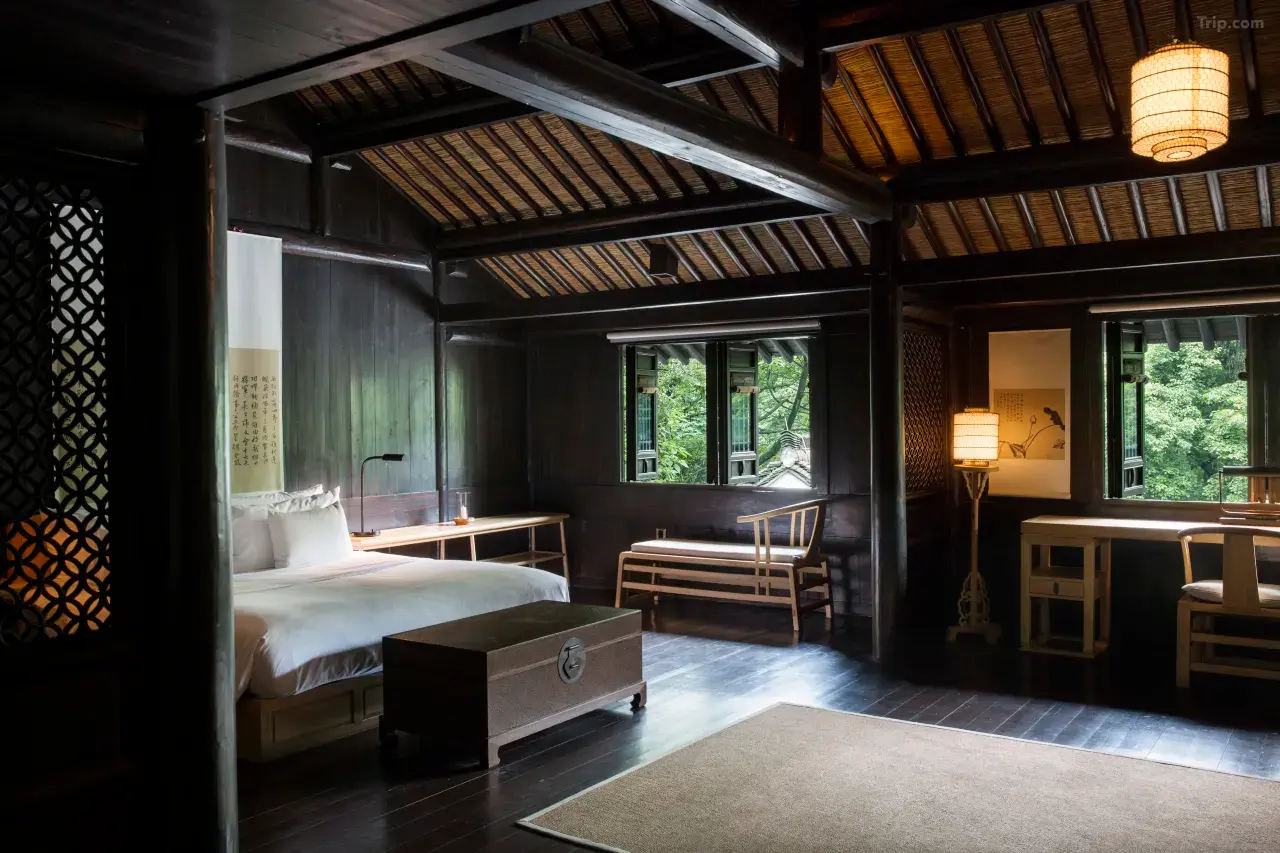
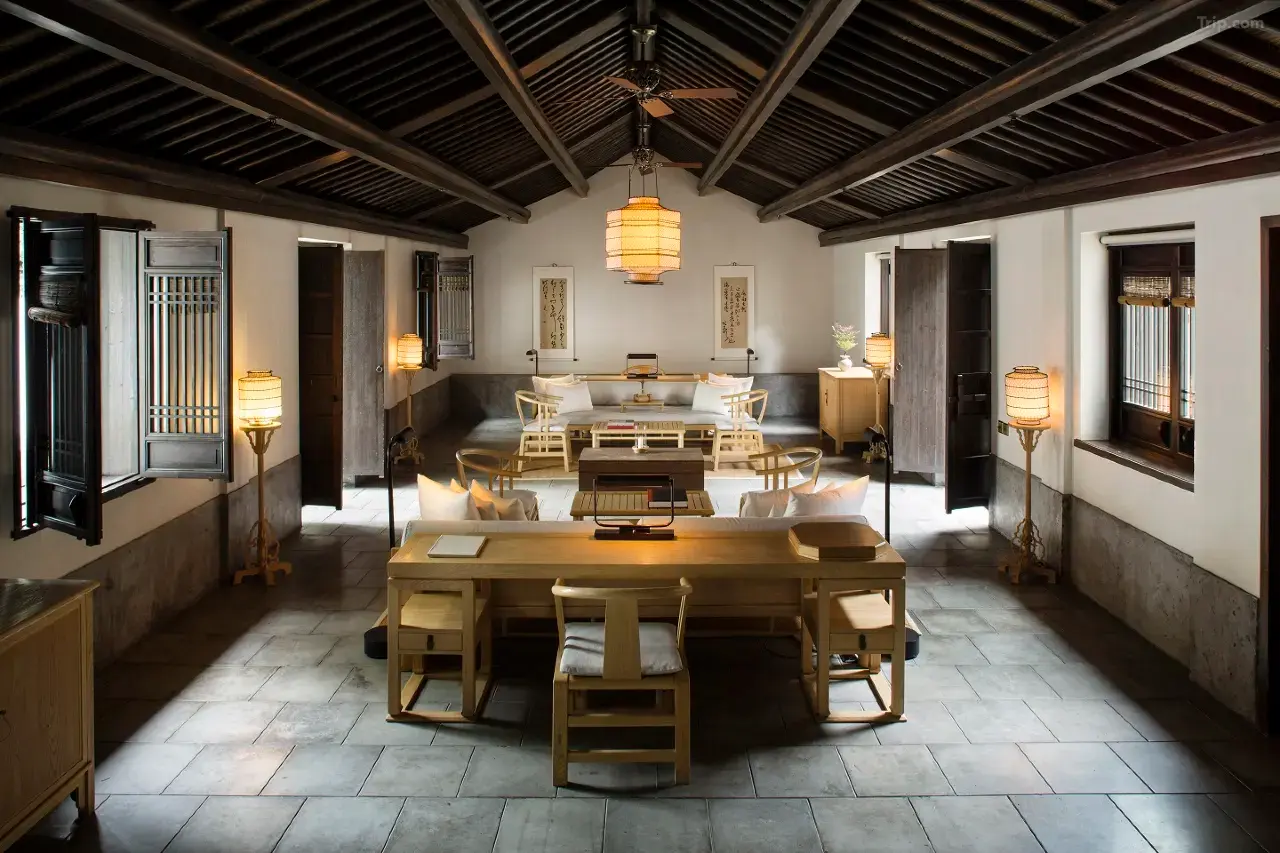
Room categories climb from the entry suites to two-storey Village Homes with private courtyards and, in some cases, a double massage room. The price roughly quadruples across that range, and almost all of it buys space and privacy rather than a better view — every category looks into the same woodland.
Food
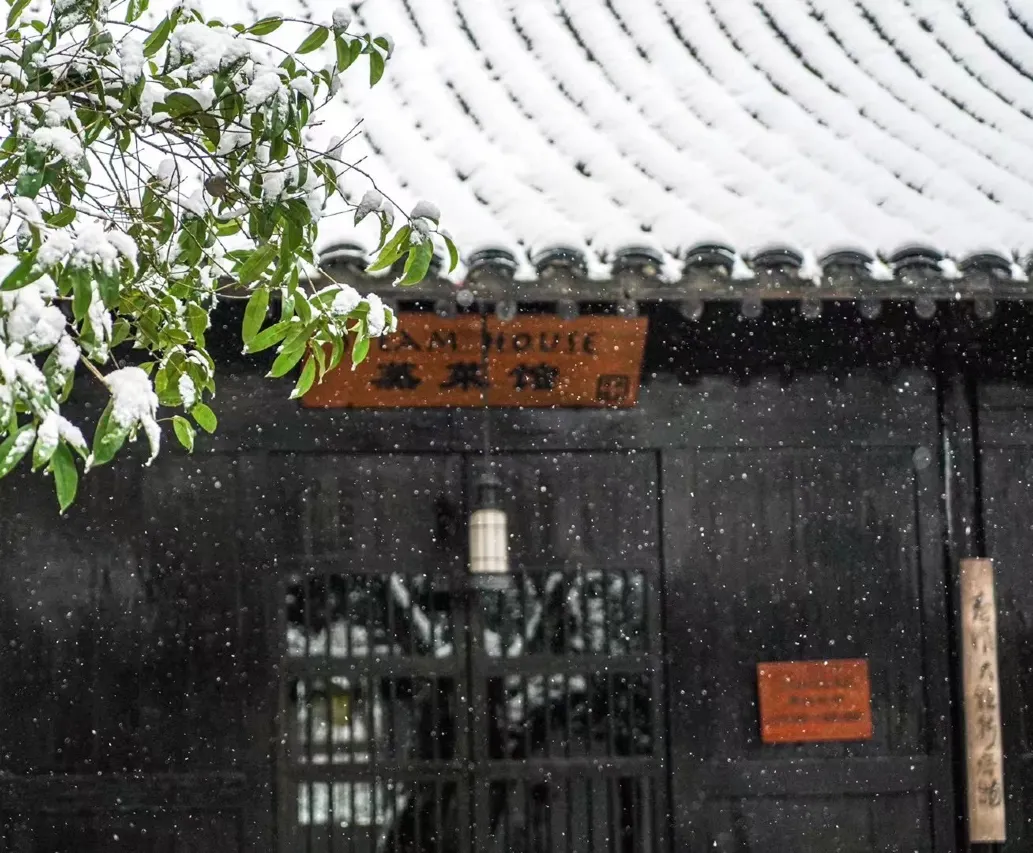
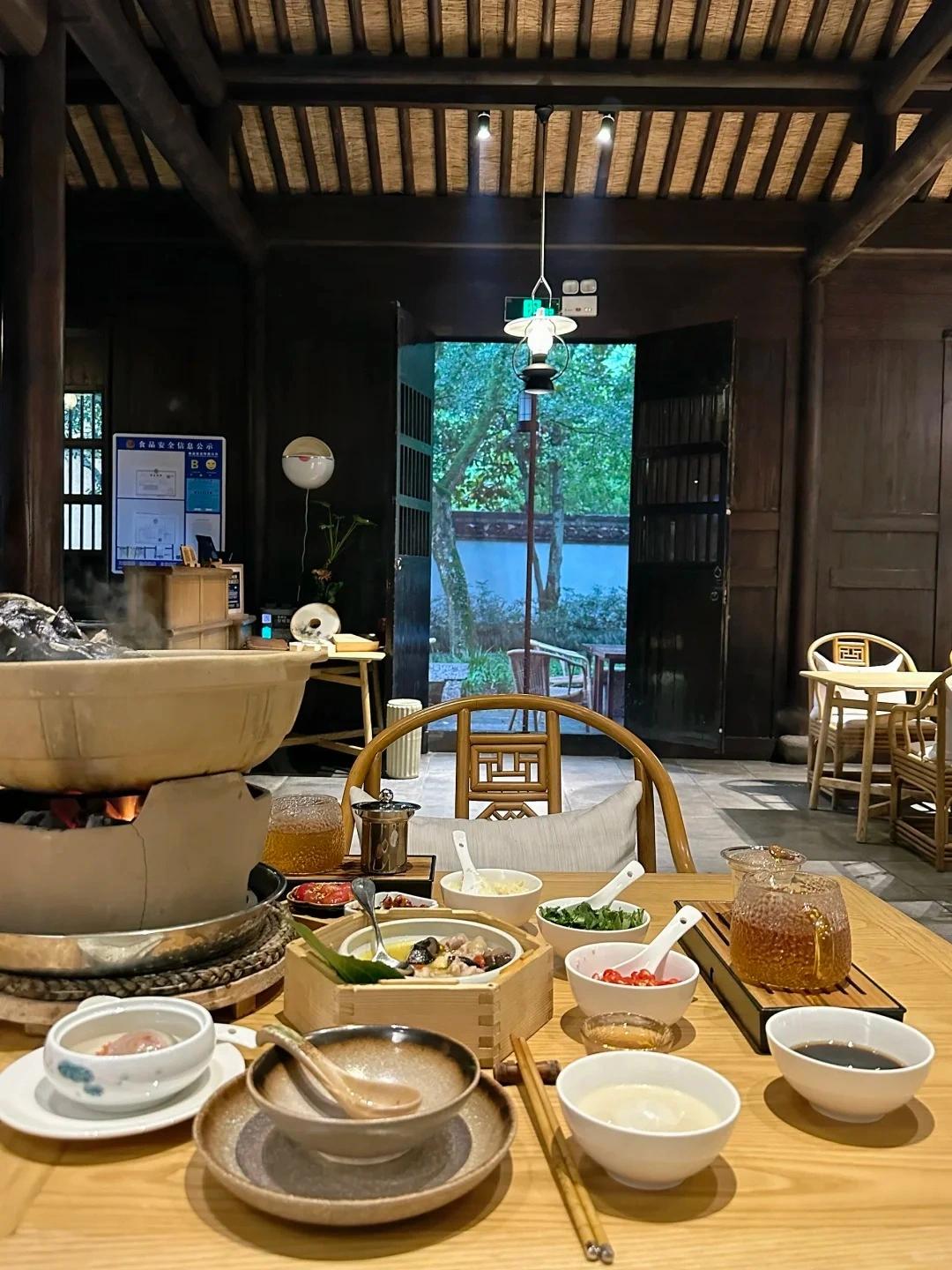
Steam, the main restaurant, occupies a converted village house and serves Zhejiang cooking that follows the season rather than a fixed menu. Breakfast is the meal guests mention most often, and it rewards a slow start. There is also a tea house beside a stream, where the Longjing is local and nobody hurries you out.
Getting there
About fifty-five minutes by taxi from Xiaoshan Airport, and around forty minutes from Hangzhou East Station. There is no metro in the valley; the hotel shuttle runs within the Lingyin area, and a car is the practical option for anything outside it.
What guests say
Repeat guests praise the stillness, the spa — described by more than one reviewer as the best they have experienced anywhere — and a concierge team that tends to anticipate rather than react. The complaints are just as consistent, and they are about hardware: rooms that show their age, hot water that varies, a damp smell in some houses, and lighting so low that reading at night is difficult.
Worth it?
At ¥5,000–8,000 a night, the question is not whether it is worth it in the abstract. It is whether you want a village or a hotel. Guests who want both leave disappointed; guests who want the village rarely regret it.
Book it if you are coming to disappear for two or three nights and will spend most of that time on the property. Skip it if you plan to be at West Lake every morning.
Good to know
Have the concierge arrange a car rather than waiting for the shuttle; at peak weekends, ask them to confirm the drop-off point first.
If damp bothers you, ask for an upper-level room rather than a ground-floor house.
The spa is the reason many guests return, and it is worth booking a session before arrival rather than on the day.
Four Seasons Hotel Hangzhou at West Lake
Location and setting
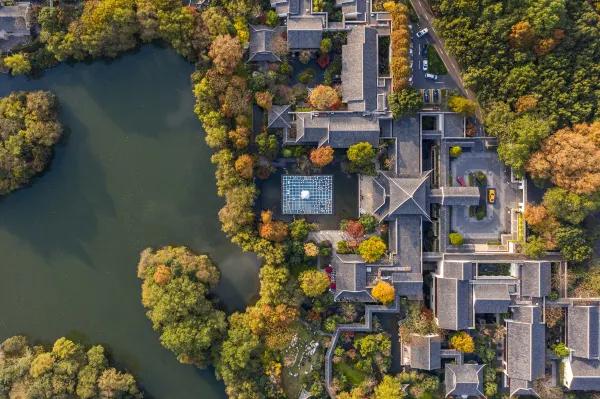
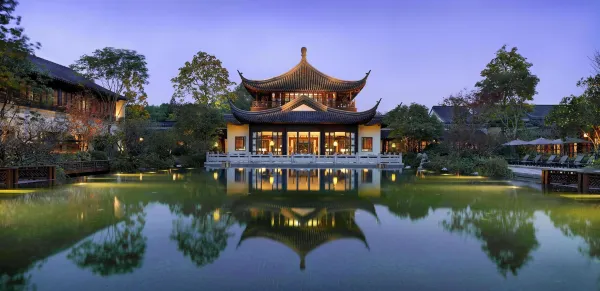
Eighty-one rooms behind a gate on Lingyin Road, beside the lotus ponds of Quyuan Fenghe, with gardens that Bill Bensley designed as a sequence of courtyards rather than a single lawn. Low buildings, white walls, dark tiles, water in the middle of everything — of the eight hotels here, this is the one that looks most like the postcard people carry in their heads.
The setting carries the same restriction as the rest of the scenic area. On peak-season weekends and public holidays, cars cannot reach the door between 08:00 and 17:00. A taxi stops at the nearest permitted point, and the last stretch is a five-minute walk; the hotel's own car faces the same limit. The hours are set by the traffic plan and do change, so ask the hotel to confirm the window for your dates, and time your arrival outside it.
Rooms
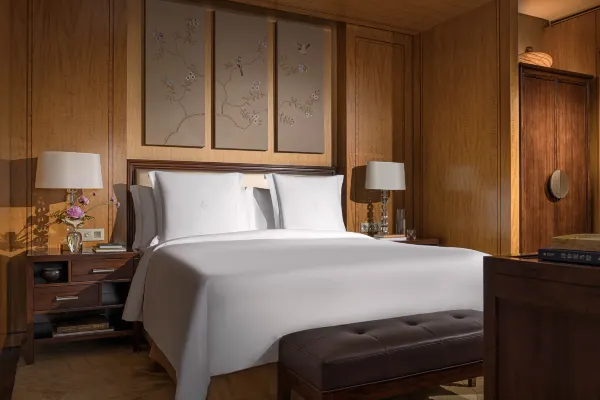
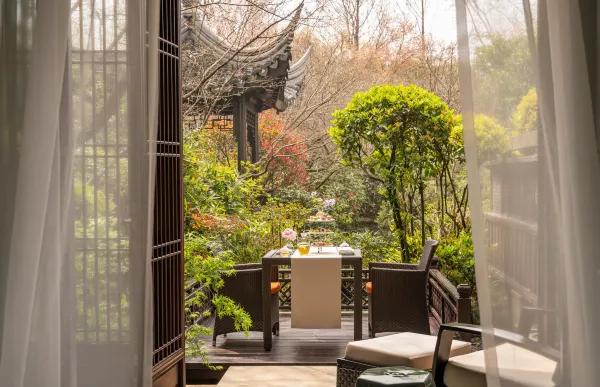
Room categories matter more here than at Amanfayun. The entry-level rooms are among the smallest in this group, and guests describe them as tight, with thin walls and limited daylight; more than one mentions hearing the neighbours. The garden villas and the rooms facing water cost considerably more, and the difference is space, privacy and quiet rather than decoration. If the budget only reaches the base category, this is probably not the hotel to choose.
Food
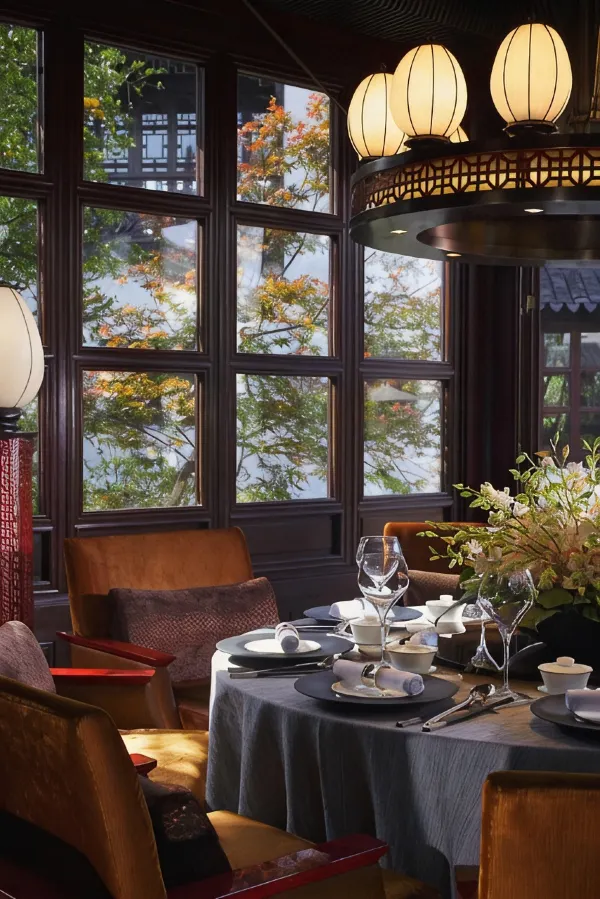
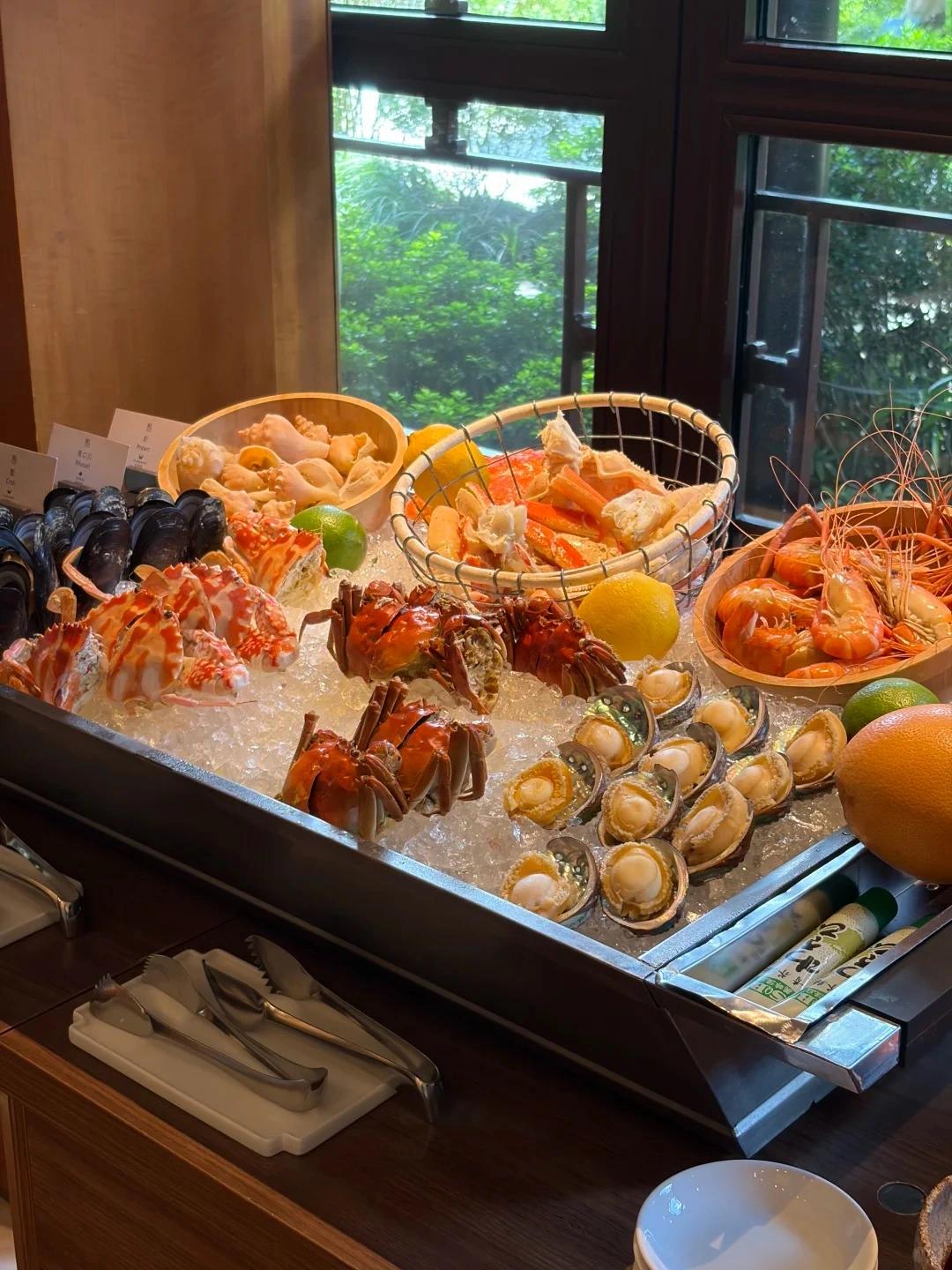
Jin Sha, the Chinese restaurant, holds one Michelin star and is the reason some guests book the hotel at all — Hangzhou classics cooked precisely, in a room that looks onto the garden. Breakfast runs late enough to be unhurried. The lounge does a competent afternoon tea, though the lake is better viewed from the causeway than from the window.
Getting there
About fifty minutes by taxi from Xiaoshan Airport and thirty-five minutes from Hangzhou East Station. There is no metro within walking distance, and the last stretch is on foot during restricted hours — a pre-booked car plus a short walk is the normal arrival.
What guests say
Guests praise the location above everything: the ability to walk out and be at the water before the tour buses arrive. Service is warm rather than formal, and the garden rewards an hour of doing nothing. The complaints are familiar ones. Several recent reviews mention the pool being closed for maintenance during their stay, so confirm pool access when you book; some ground-floor rooms smell damp, and the interiors show their age against newer competition.
Worth it?
At ¥3,500–6,000, you are paying for the address and the garden, not for the newest bathroom in Hangzhou. For a proposal, an anniversary, or a first trip where the lake is the entire point, that trade is easy to make. For a traveller who wants a large, immaculate, silent room above all else, the Four Seasons Centre later in this chapter does it better for less.
Book it if the lake is why you came and you can afford a room above the base category. Skip it if small rooms bother you, or if you will be out from morning to night and barely use the grounds.
Good to know
Ask for an upper floor; guests in the entry categories mention thin walls and noise from neighbours.
The hotel's own boat is the best way to see the lake without the crowds — reserve it when you check in.
In peak season, ask the concierge to schedule cars outside 08:00–17:00, when the scenic-area restriction applies.
State Guest Hotel Hangzhou (Xihu Guobin Guan)
Location and setting
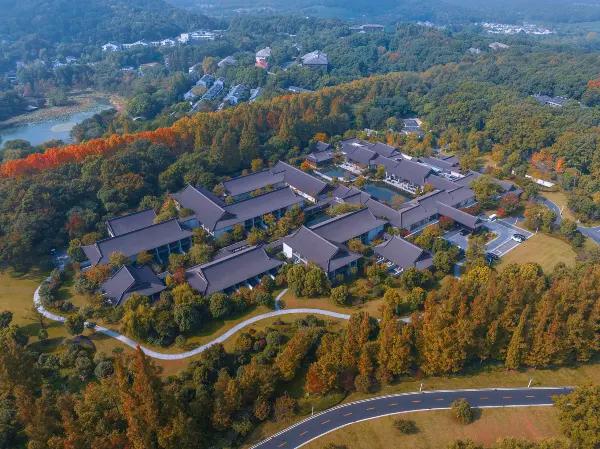
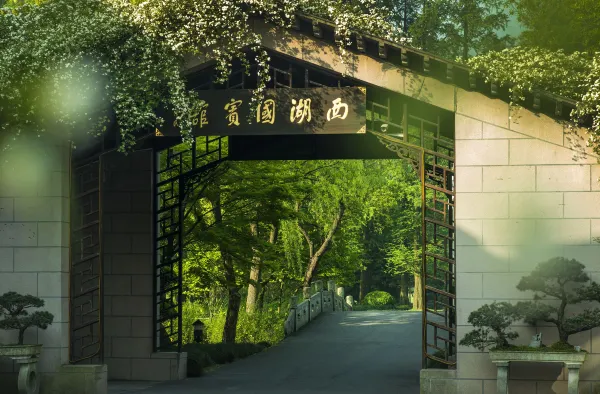
This is one of the largest pieces of lakeside ground, and it was a garden long before it was a hotel. The estate on Yanggong Causeway began as a late-Qing private retreat, became a state guesthouse in the 1950s, and has received visiting heads of state ever since; Mao Zedong stayed here repeatedly, and the G20 summit used it in 2016. The camphor trees in the grounds are older than all of that.
What the history buys you is space. There is a long stretch of shoreline here that no other hotel in the city can match, a lawn large enough to lose the buildings behind the trees, and enough distance from the road that traffic noise stops at the gate. It is the quietest address in this chapter, and in peak season the hardest to book.
Rooms
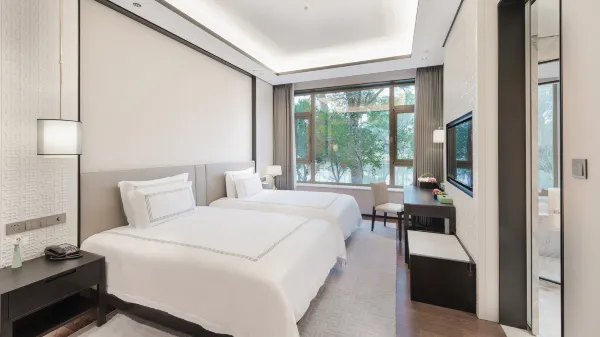
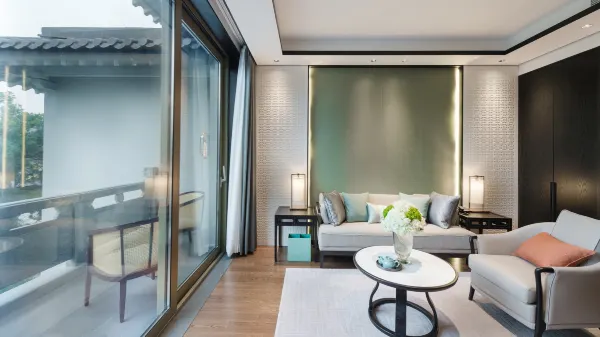
Here the usual advice breaks down. You are not choosing between price tiers so much as between buildings, and the buildings went up decades apart. Rooms in the newer blocks are larger and better maintained; rooms in the older ones carry the atmosphere, along with the maintenance problems that come with age.
The practical rule is to ask, at the time of booking, which building your room is in, which floor, and what it faces. A "lake view" can mean water outside the window or a glimpse across a lawn and a car park, and the difference is not always reflected in the rate.
What you book | What you usually get |
Lake view, main building | The water across the garden — beautiful, but often at a distance |
Garden view | The estate itself, which is the real asset here |
A stand-alone villa | Space and privacy, with older fittings |
Food
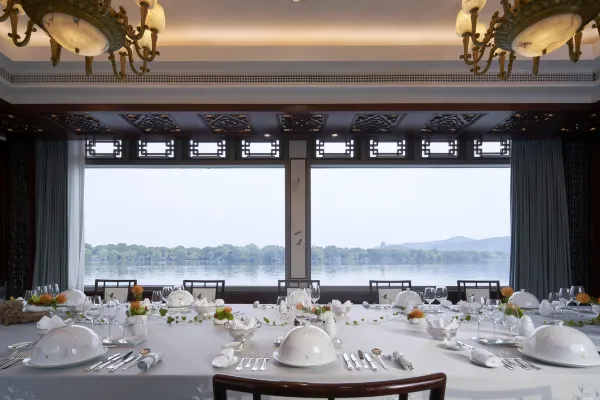
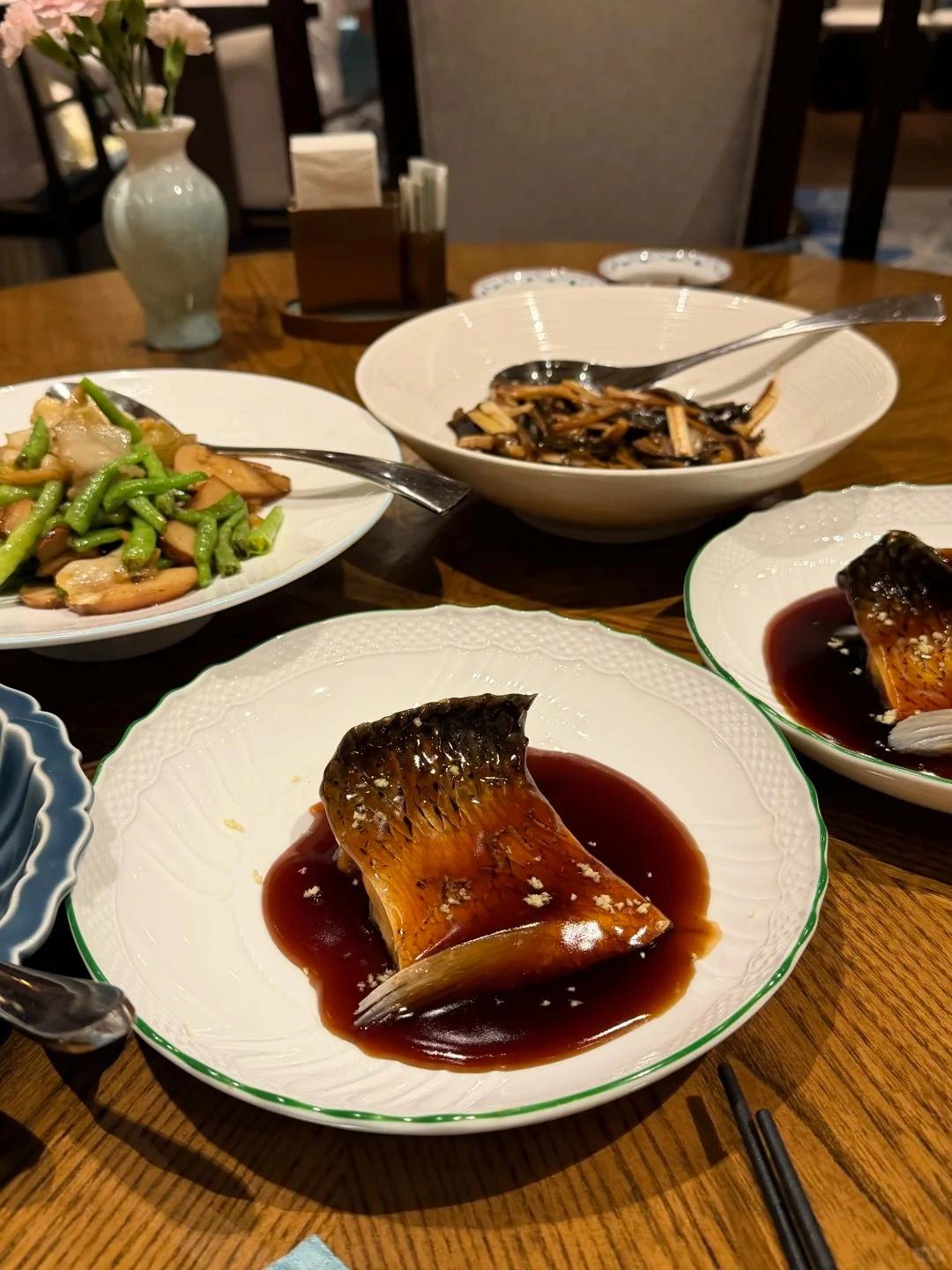
Ziwei Hall, the main Chinese restaurant, is not a hotel dining room in the usual sense — locals book it for the Hangzhou cooking, and the lake views from the windows are a bonus rather than the reason to come. Breakfast is served in a separate building and is generous, if a little institutional in feel.
Getting there
About forty-five minutes by taxi from Xiaoshan Airport and thirty minutes from Hangzhou East Station. There is no metro; the estate has more than one gate, so ask the hotel which entrance your building uses before you give a driver an address.
What guests say
Guests return for the grounds: the morning walk along the private shore, the camphor avenues, the sense of staying inside a park rather than beside one. Older visitors tend to mention the history with affection, and the staff are used to being asked about it.
The complaints are about the things a garden cannot fix. Rooms in the older blocks feel dated, the air conditioning can be slow, and the estate is large enough that moving between buildings means waiting for a buggy. Service is correct rather than warm, which some guests find formal and others find refreshing.
Worth it?
At ¥1,800–3,500, you are paying for land that cannot be replicated. No new hotel is likely to be granted this kind of frontage inside a UNESCO World Heritage site. The room, by contrast, is ordinary for the money.
Book it for the setting and accept the fittings. If you would rather have a brand-new bathroom than a camphor avenue, the Four Seasons Centre later in this chapter costs about the same and is a decade newer.
Good to know
Ask which building, which floor and which direction before you pay; the answers vary more than the rate does.
Ziwei Hall fills with local diners — reserve a table when you book the room, not when you arrive.
The grounds are at their best before 08:00, when the gates open and the tour groups have not yet arrived.
Seven Villas (Zixuan Resort)
Location and setting
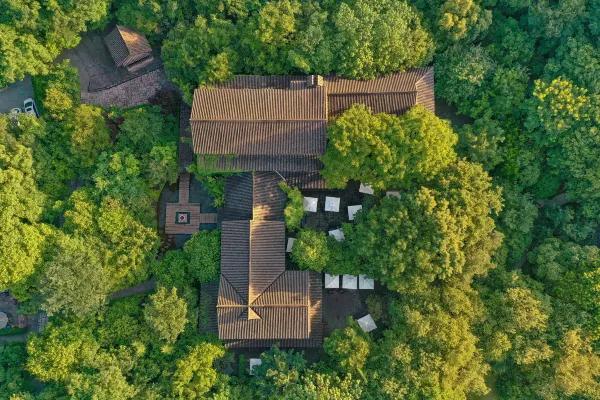
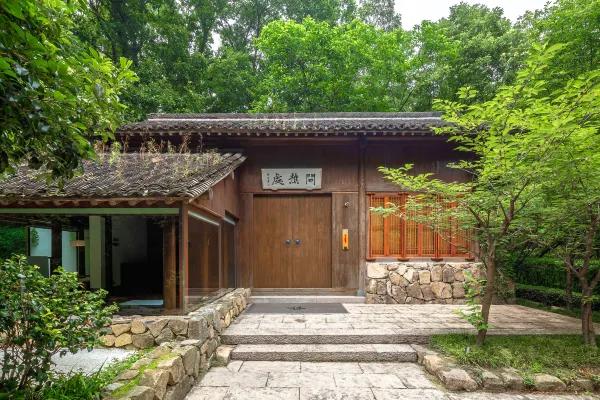
Seven villas beside Turtle Lake, a small body of water in the southwest corner of the scenic area, ten minutes' quiet walk from Yanggong Causeway. The buildings are modern in feel but set among bamboo, and the site is deliberately unmarked — you arrive at a gate, not a lobby.
What the location buys is privacy. What it costs is convenience. To reach any restaurant outside the hotel you are calling a car or walking; the nearest taxi stand is a short drive away. This is not a base for a day of exploring; it is a place to stay put.
Rooms
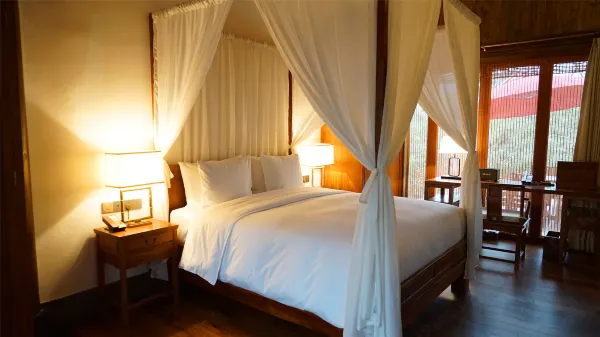
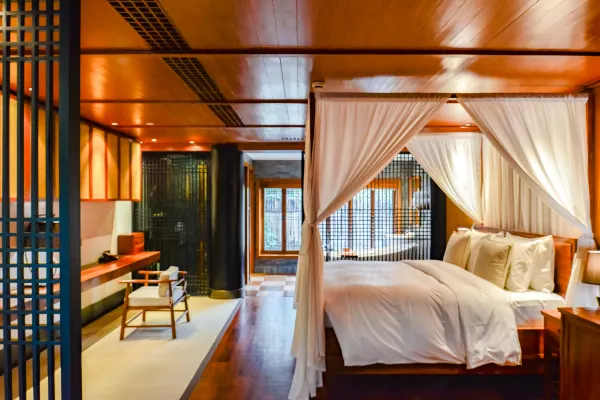
Villa types correspond roughly to size, but the differences are modest. Every villa has its own garden or terrace. Guests frequently mention damp here: bamboo and water keep the ground wet, and several recent reviews describe a musty smell or wet floors in the morning. Towels hang heavy even after a full night's heating.
Food
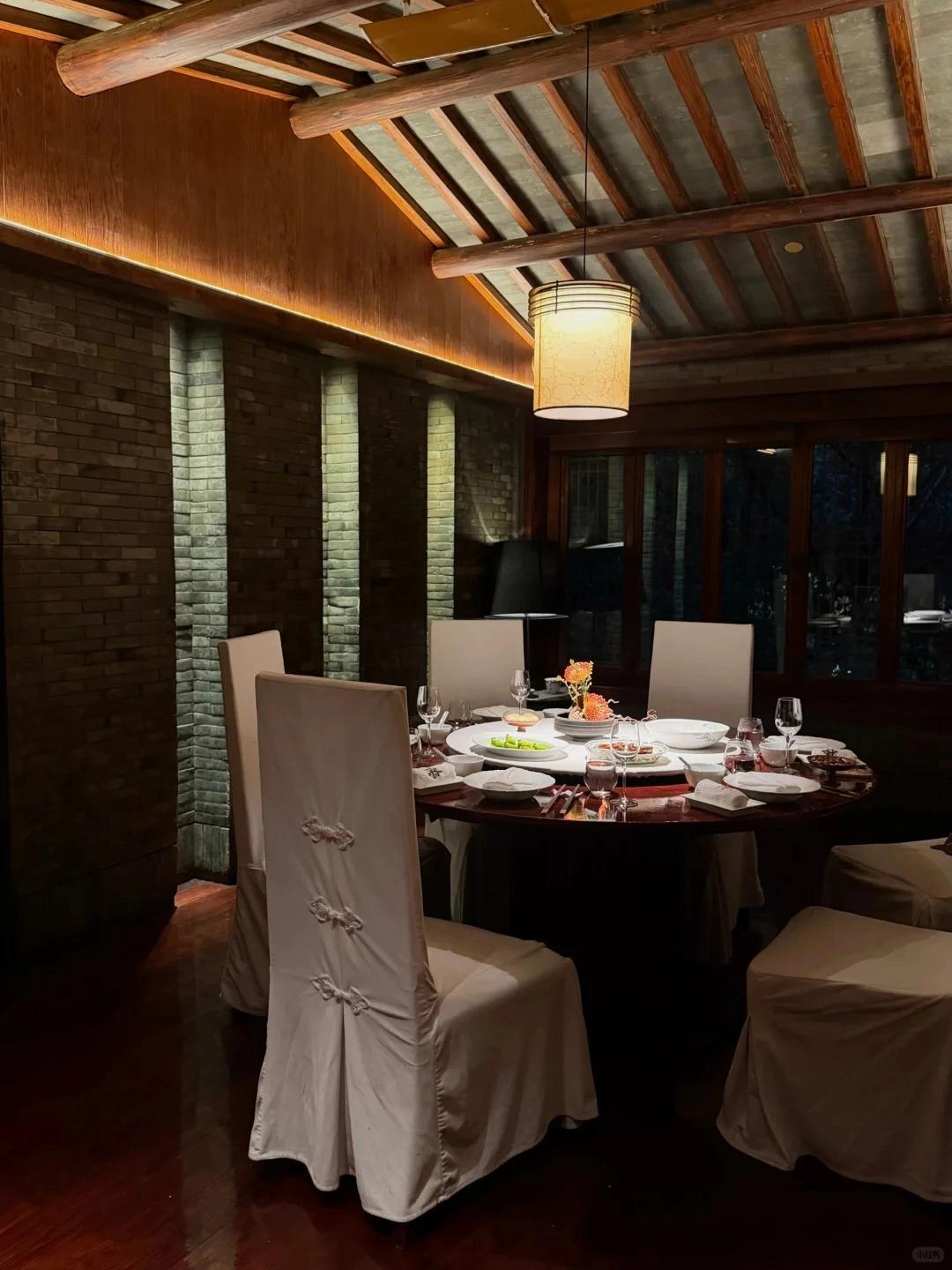
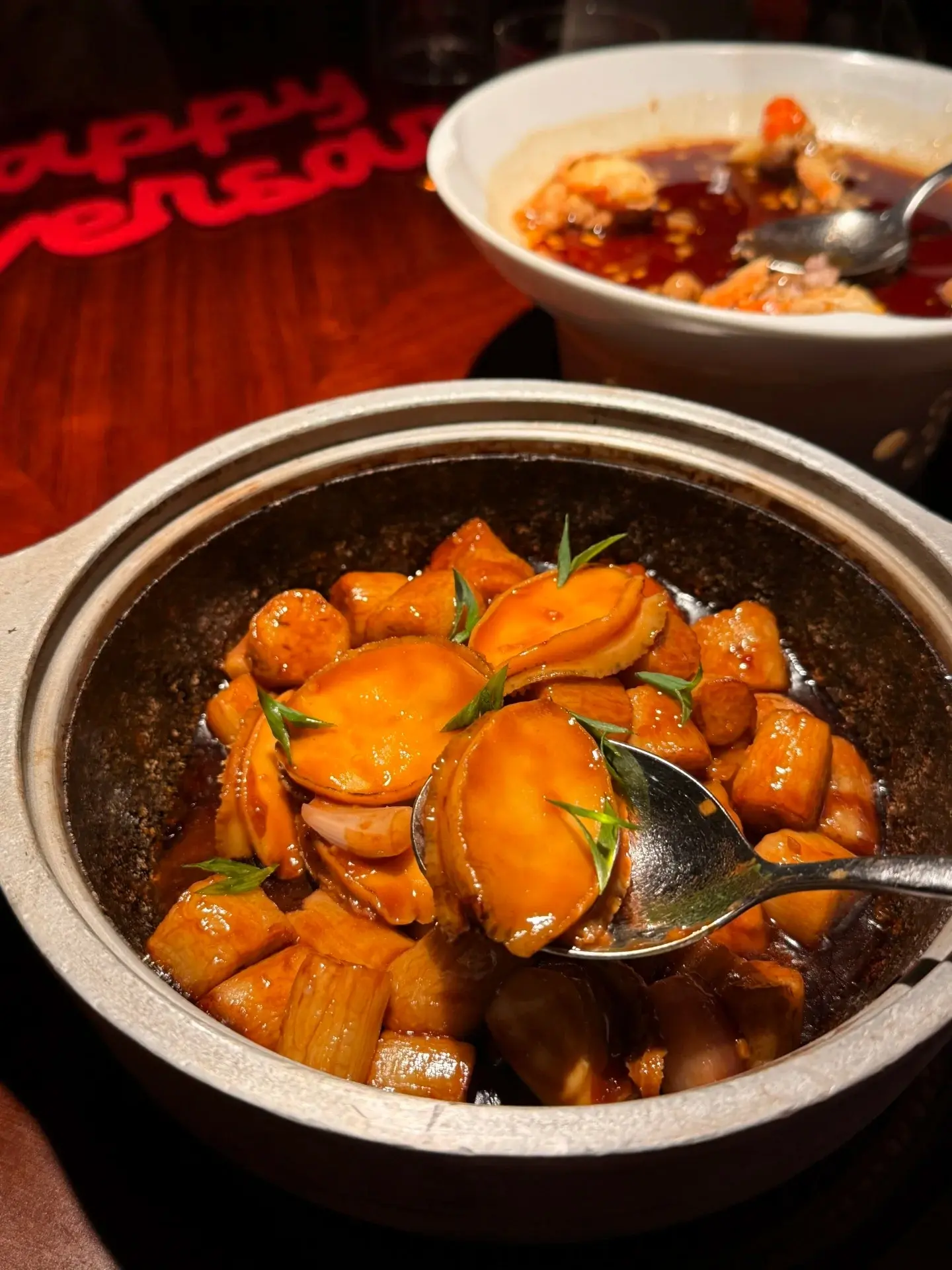
Jiexiang Lou, the two-Michelin-starred Chinese restaurant, is the reason most guests book Seven Villas. Zhejiang classics rethought but never pushed too hard, served in a room with garden views and almost no ambient noise. Reserve early — tables are scarce in the evening.
The breakfast is small and careful; there is no lunch service. There is also a tea house in a side building where Longjing is brewed in copper kettles and served with candied osmanthus.
Getting there
About fifty minutes by taxi from Xiaoshan Airport and thirty-five minutes from Hangzhou East Station. There is no metro, and the entrance is easy to miss — give the driver the Chinese name, 紫萱度假村, and the Bapanling Road address.
What guests say
Almost everyone who stays here comes back for Jiexiang Lou. The villas themselves divide opinion: some find them charmingly low-key, others find them too small and too damp. Service is quiet and attentive, with none of the ceremony of a larger hotel.
Worth it?
At ¥2,000–3,500 a night, you are paying for access to one of the best restaurants in Hangzhou, and for a villa to sleep in afterwards. That is a very specific trade. Book it if dinner is the point of the trip. Skip it if you plan to be out from morning to night, or if damp floors put you off.
Good to know
Ask about dampness when booking; the hotel does not always volunteer it, but they can move you if a room is worse than others.
Reserve Jiexiang Lou when you book the villa — the restaurant is busier than the hotel.
Bring layers even in summer; the bamboo makes the villas cool after sundown.
Grand Hyatt Hangzhou
Location and setting
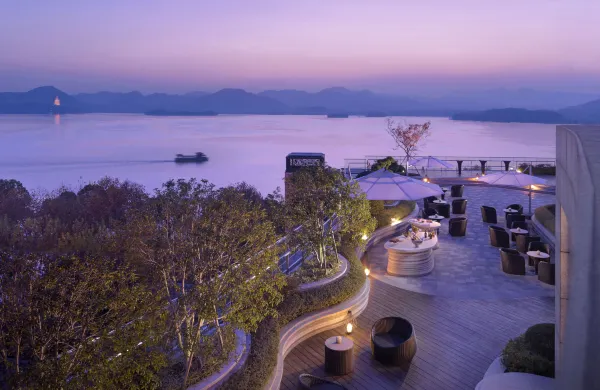
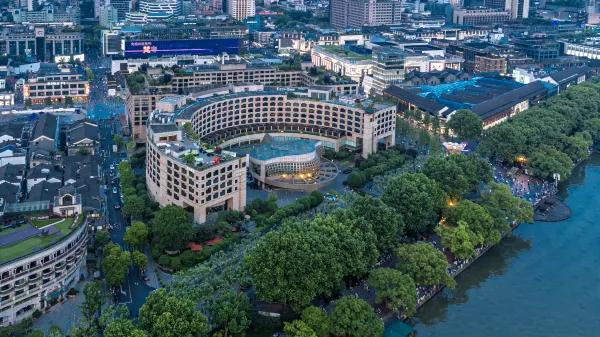
Of the eight hotels in this guide, this is the only one that opens directly onto West Lake. Step out of the lobby and the water is across Hubin Road; behind the hotel is Yintai, the city's main shopping centre, and the lakeside promenade runs both ways from the door.
That centrality is everything. You do not need a car to see the lake; you do not even need a plan. What you give up is peace. This stretch is alive from mid-morning until the lights come on, and the upper floors are the only ones that truly escape the pavement noise.
Rooms
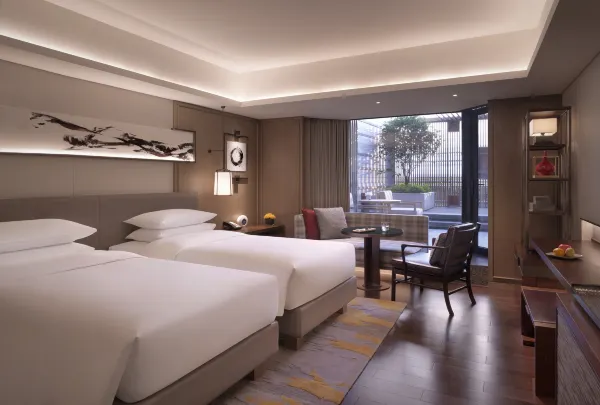
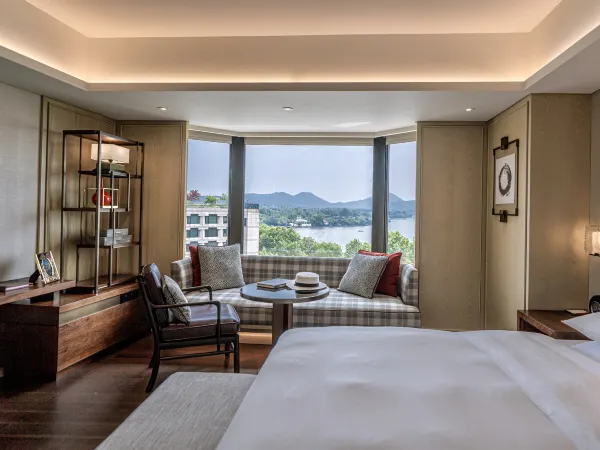
Room categories here are straightforward. The base rooms are the smallest in the group; lake-view rooms cost more and deliver exactly what they promise; suites cost a good deal more and are spacious enough to warrant it. All are modern, well maintained and free of the dampness that troubles the older scenic-area properties.
Food
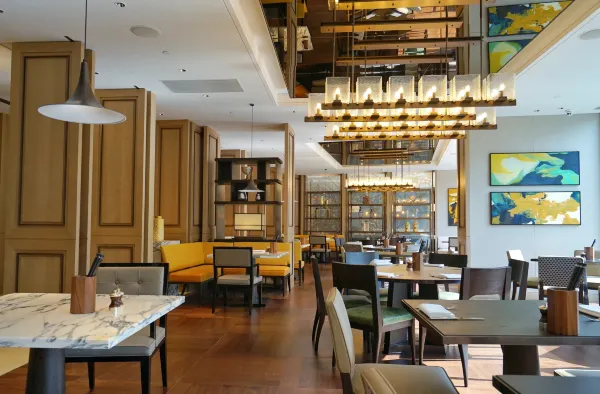
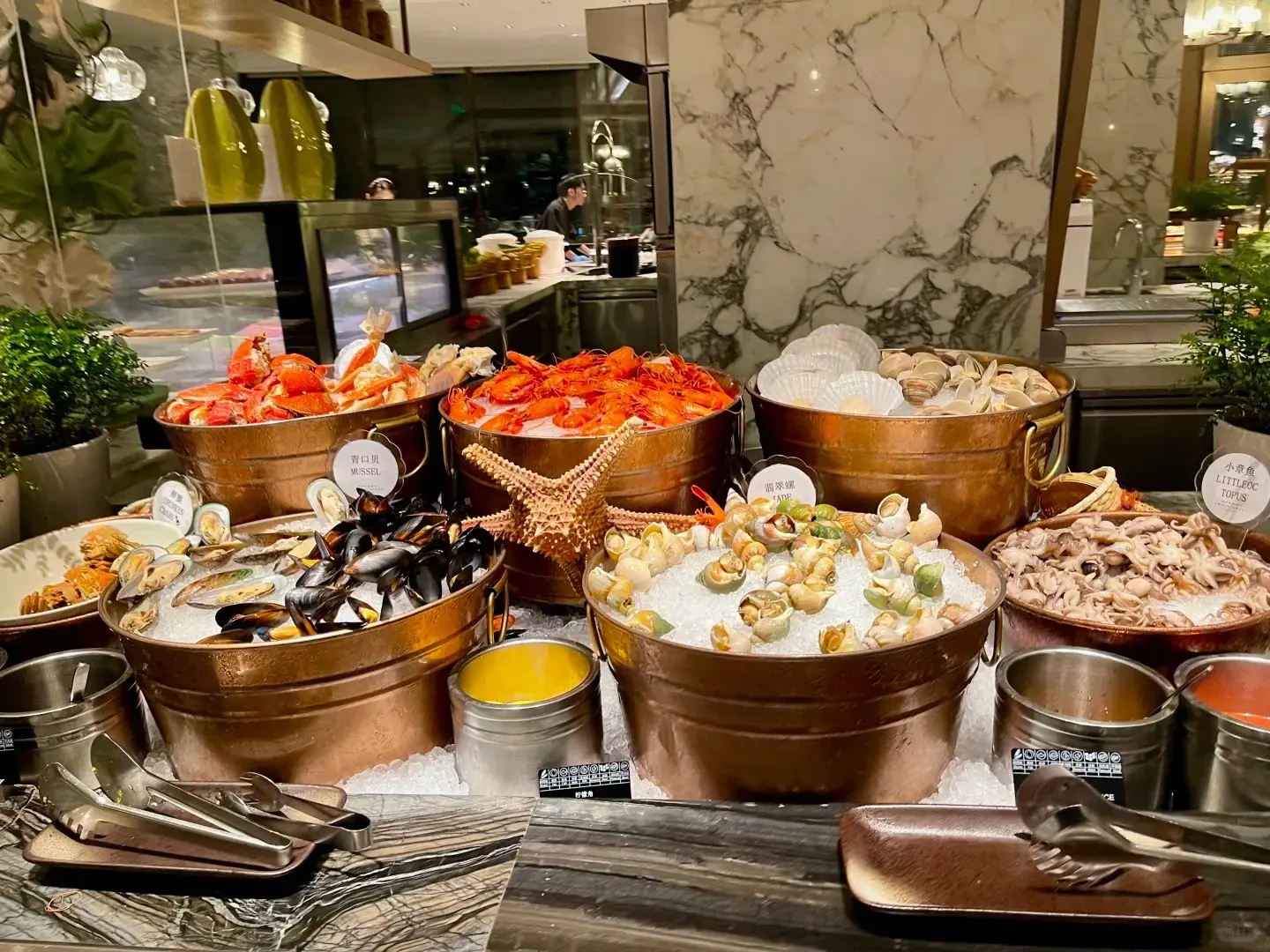
The Hyatt does two things well. Its hotel Chinese restaurant serves solid Hangzhou classics, and its breakfast is one of the largest in the city — not for quality so much as for variety. There is also a rooftop bar with lake views that is best in the early evening, before the crowds on the promenade spread across the whole area.
Getting there
About forty-five minutes by taxi from Xiaoshan Airport and twenty-five minutes from Hangzhou East Station. Longxiangqiao station on Line 1 is a five-minute walk, which makes this the easiest of the eight to reach without a car.
What guests say
First-time visitors almost always love it. Walking everywhere from the door, being able to come back to the room in the middle of the day, having the lake on one side and shops on the other — all of it works. Guests who return after a few days start noticing that the standard rooms feel tight for the money, and that at weekends the lobby can be noisy.
Worth it?
At ¥1,200–2,400 this is the least expensive hotel in the group by a clear margin, and the price is for the location alone. You are not getting 46 hectares of private ground or two Michelin stars. You are getting the most convenient door in Hangzhou.
Book it for a first trip, for a short trip, or for anyone who wants to walk rather than sit. Skip it if you want quiet, or if a large suite matters more than the view.
Good to know
Book a lake-view room on an upper floor; the lower ones carry road noise that the upper rooms avoid.
Enter and exit at the side door if you want to avoid the crowds in the main lobby.
The early morning, before 08:00, is the only quiet time on this stretch of lakefront.
Park Hyatt Hangzhou
Location and setting
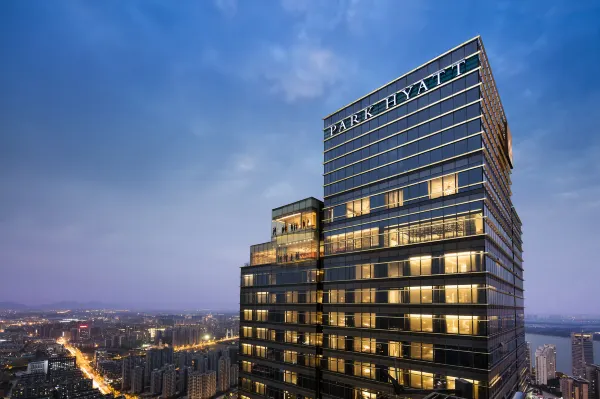
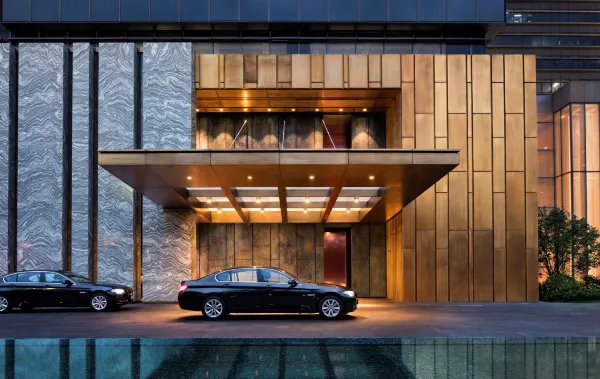
Park Hyatt rises in two glass towers over the Qiantang River, ten minutes south of the lake by taxi and a world away from the gardens of the scenic area. This is modern Hangzhou: skyscrapers, convention halls, a metro station, and a river that runs brown most of the year but lights up at night.
The trade-off is clean. You lose the postcard. You gain the newest interiors, a spa that guests mention repeatedly, and the fastest transport links of any luxury hotel in the city.
Rooms
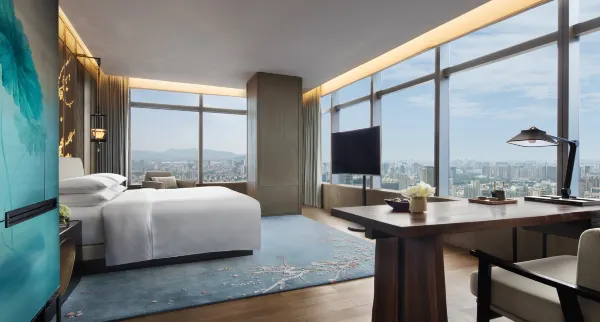
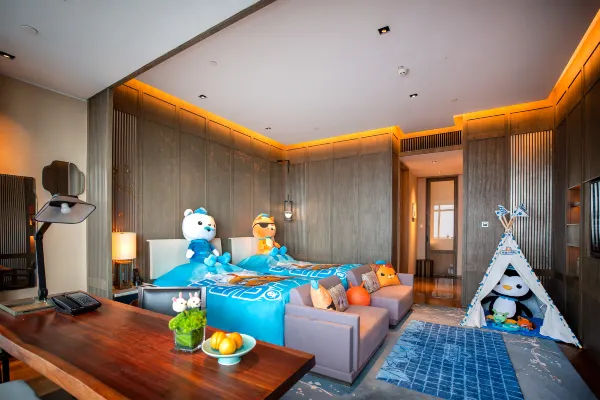
Rooms are large, modern and well maintained. River-view rooms cost more than city-view ones, and the difference is striking in the evening when both sides light up. There is no dampness here and no maintenance backlog — this property is less than a decade old and shows it.
Food
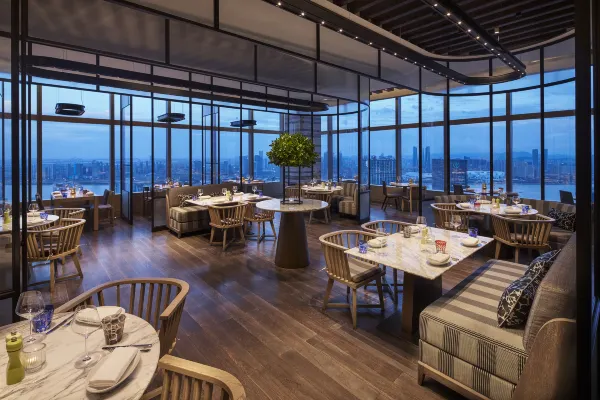
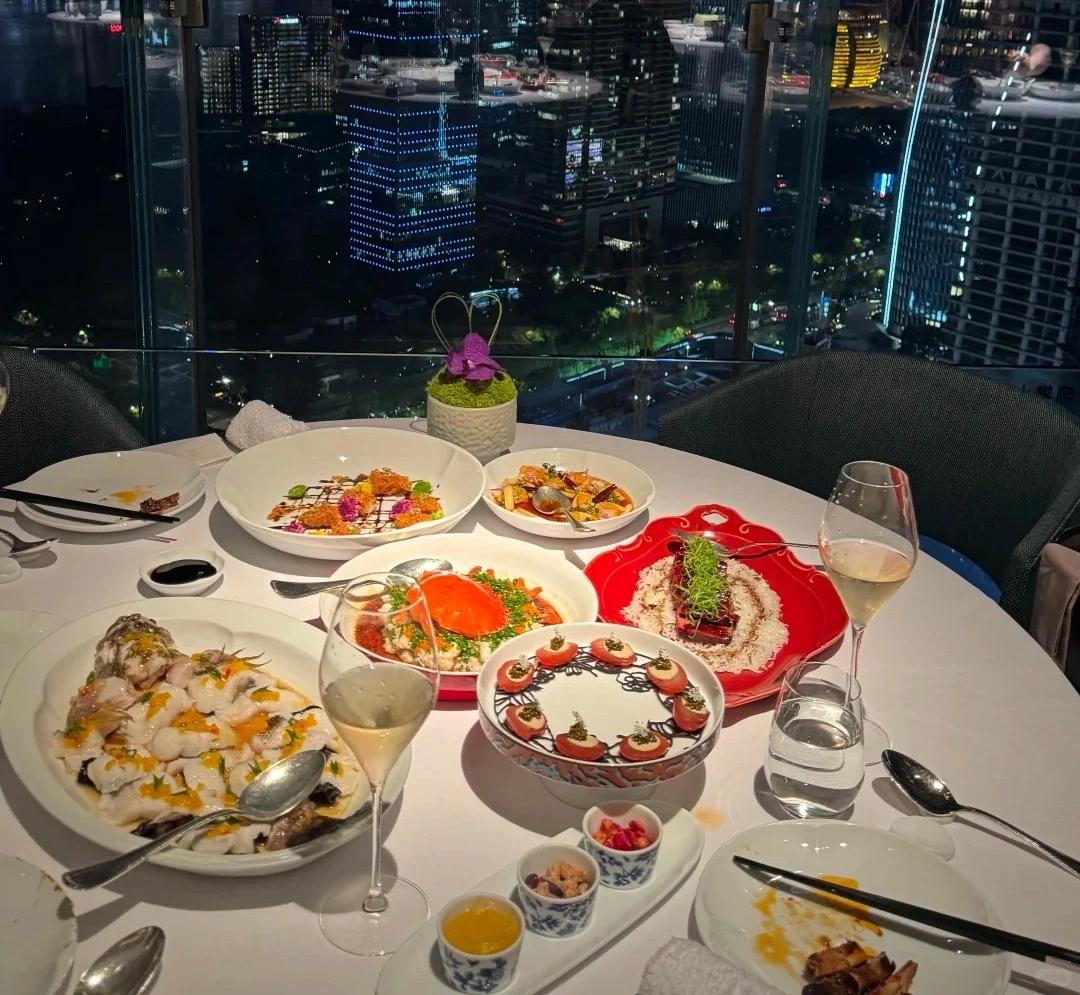
Dining Room (悦轩), on the 37th floor, serves Hangzhou and Cantonese cooking and appears on the Black Pearl list — it is not a Michelin-starred kitchen, but the view and the consistency are the draw. The cooking is precise and the portions small. Breakfast is a generous buffet, and the rooftop lounge, with a river view, is best for late drinks.
Getting there
About forty minutes by taxi from Xiaoshan Airport and thirty minutes from Hangzhou East Station, or one metro transfer. Line 4 is a short walk from the building.
What guests say
Business travellers and repeat visitors love it for the same reasons: consistent quality, easy transport, and a modern feel rather than a faded one. Reviews are far less passionate than the scenic-area hotels — which is itself a recommendation, because it means the small problems are rare.
Worth it?
At ¥1,500–2,800, the Park Hyatt is cheaper than the lake-side properties and newer than most of them. It is not romantic, but it is reliable — which is the right thing to be for a business trip, a family trip or a third visit to Hangzhou.
Good to know
River-view rooms on an upper floor are worth the extra; the city view is pleasant but the river view is the one guests remember.
The metro station underneath is faster to the airport than a taxi at peak hours.
If you need to be at the lake in the morning, have the concierge schedule a car the night before.
Banyan Tree Hangzhou
Location and setting
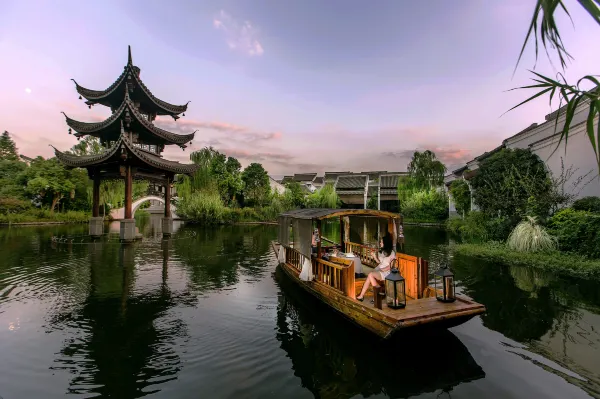
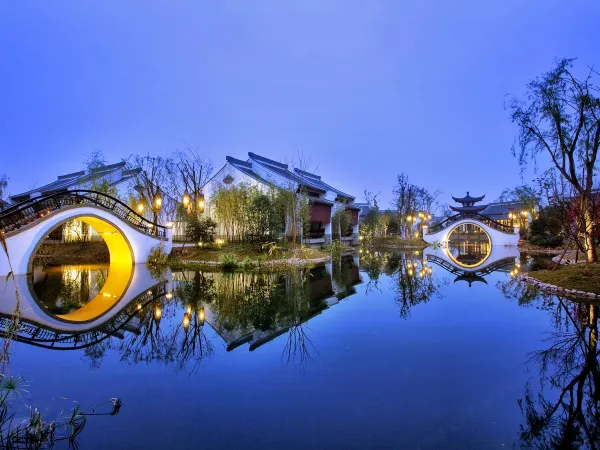
Villas on a network of water lanes inside Xixi Wetland, a thousand-hectare nature reserve ten minutes west of the city centre by taxi. There is no skyline here, no causeway, and no crowd — just water, reeds and village houses. It is another Hangzhou entirely.
The cost is isolation. Restaurants outside the reserve are a drive away, and the hotel's own dining is thin. This is a place to spend two nights on the property, not to use as a base.
Rooms
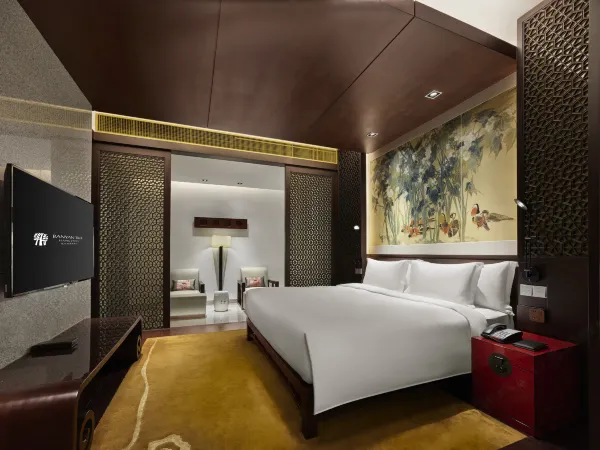
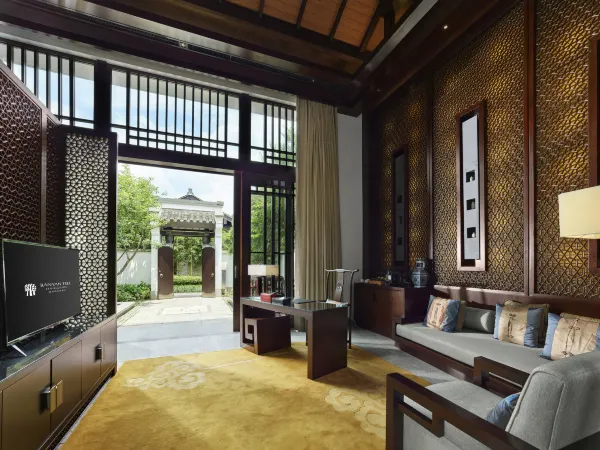
Villas sit along water lanes and are approached by a narrow bridge. Each has its own walled garden and a small outdoor pool. Ground-floor villas and low-rise rooms in landscaped, humid settings can sometimes feel damp, particularly during Hangzhou’s wetter months. Recent guest reviews mention this, more so in certain buildings than in others.
Food
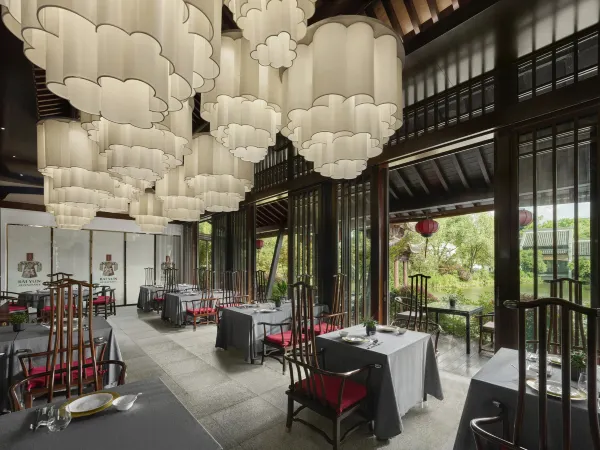
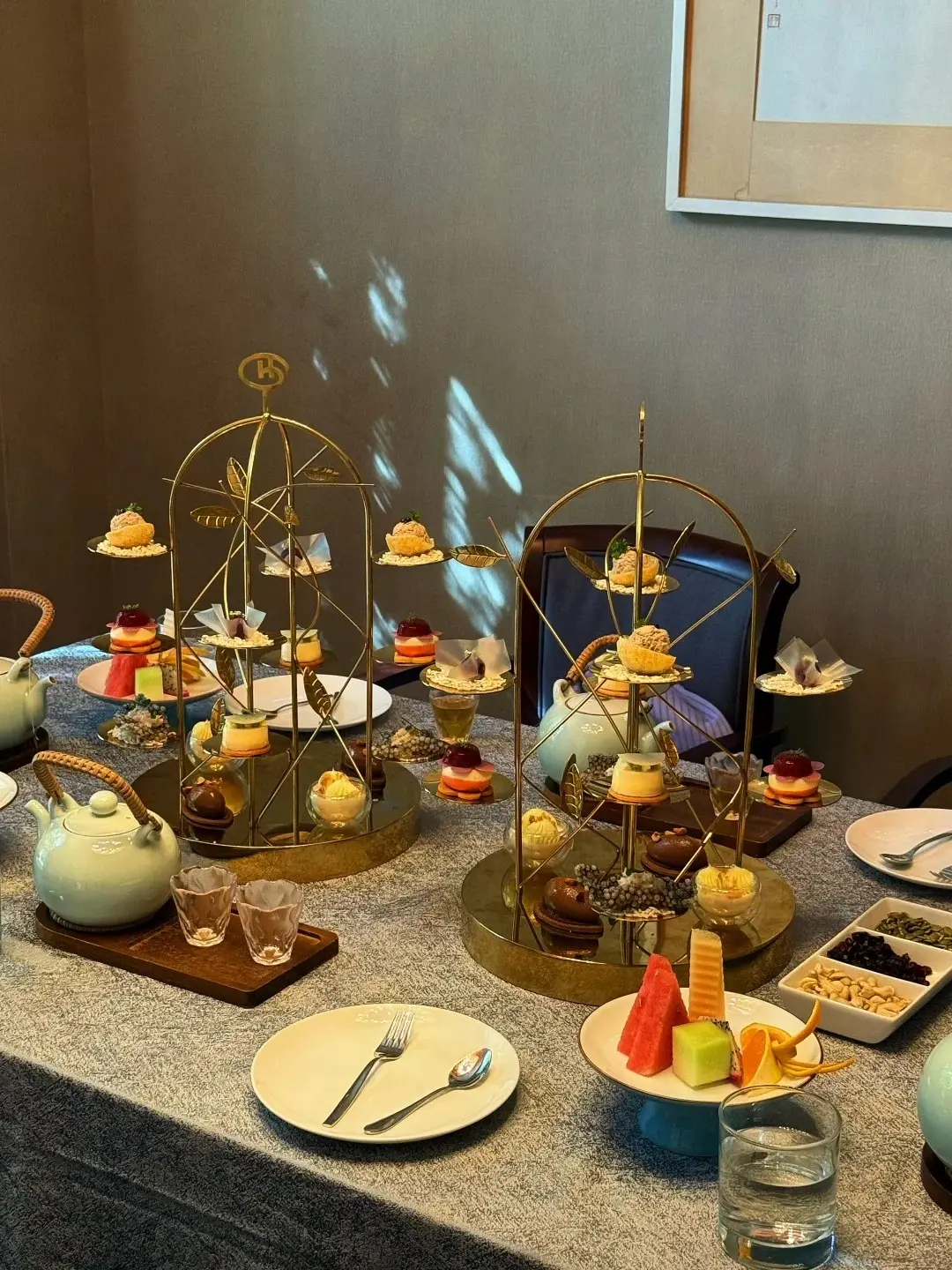
The main restaurant serves a mix of Southeast Asian and Chinese dishes. It is adequate rather than memorable. Breakfast is the stronger meal here, and the tea house beside the water is a peaceful place to end the day. For a serious meal, the Xixi branch of Xin Rong Ji — one Michelin star — is a short drive away inside the same wetland park.
Getting there
About forty-five minutes by taxi from Xiaoshan Airport and forty minutes from Hangzhou East Station. There is no metro at the door; the hotel runs a shuttle to a nearby shopping centre, and a car is the practical way to reach West Lake.
What guests say
Almost everyone talks about the quiet. This is the only hotel in the chapter where you can sit outside after dinner and hear only insects. The complaints are about food variety, the slow pace of service, and the isolation — all of which are real trade-offs, not problems.
Worth it?
At ¥2,500–4,500, you are paying for being somewhere that feels remote without being remote. Book it for a romantic two nights or a second visit to Hangzhou. Skip it if this is your first trip and the lake is the entire reason you came.
Good to know
Bring insect repellent; the wetland is not a problem inside the villa but matters on walks.
Dinner reservations at the hotel's restaurant are necessary on weekends, even if you are staying.
There is a shuttle to the nearest metro station if you need to escape the isolation for an afternoon.
Four Seasons Hotel Hangzhou Centre
Location and setting
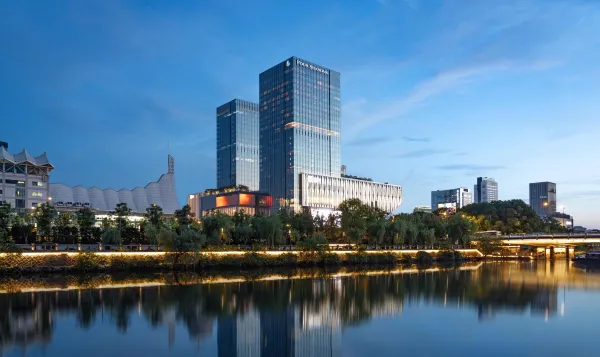
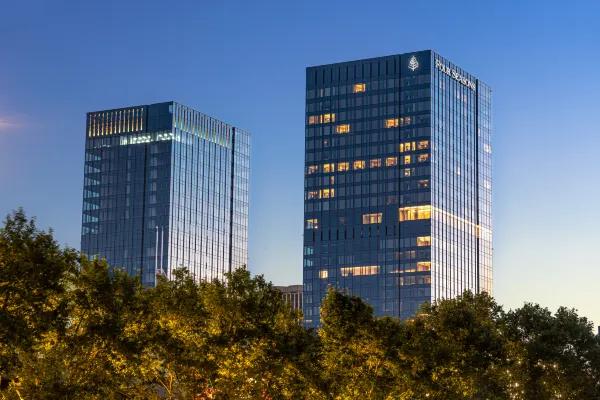
The newest hotel in this group, opened in September 2024 beside Wulin Square in central Hangzhou. Glass tower, metro station underneath, Yintai department store around the corner, and a twenty-minute taxi ride from the lake.
It is not trying to be the other Four Seasons. There is no garden, no lake view, no century-old village. It is a modern Four Seasons in a city that also happens to have an old town, and that makes it the most flexible choice in the group.
Rooms
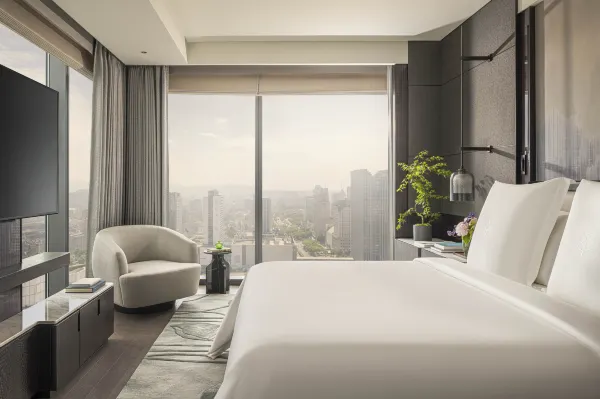
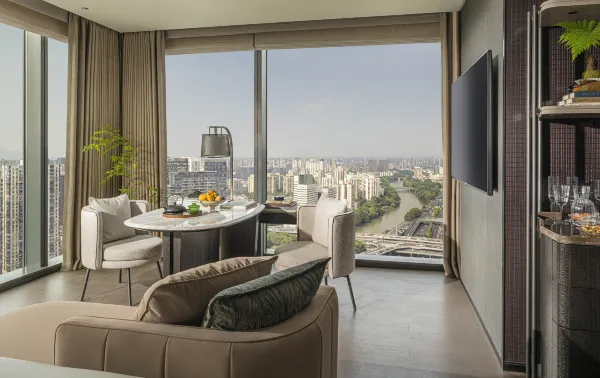
Rooms are large, bright and immaculate. The standard category here is larger than the Four Seasons at West Lake's entry level, and there is no dampness, no maintenance backlog and no sense of "faded glory". The difference is deliberate: these rooms were built to be modern and quiet, not to be viewed through a garden.
Food
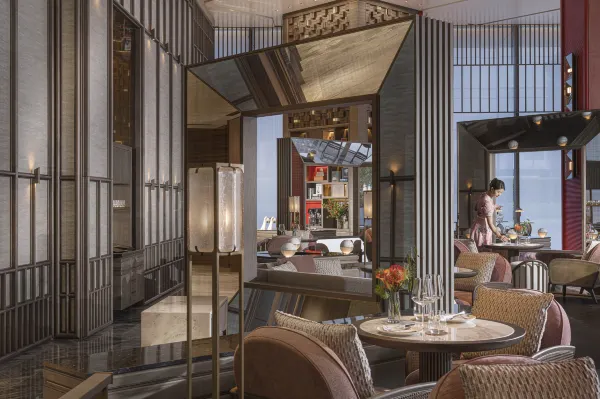
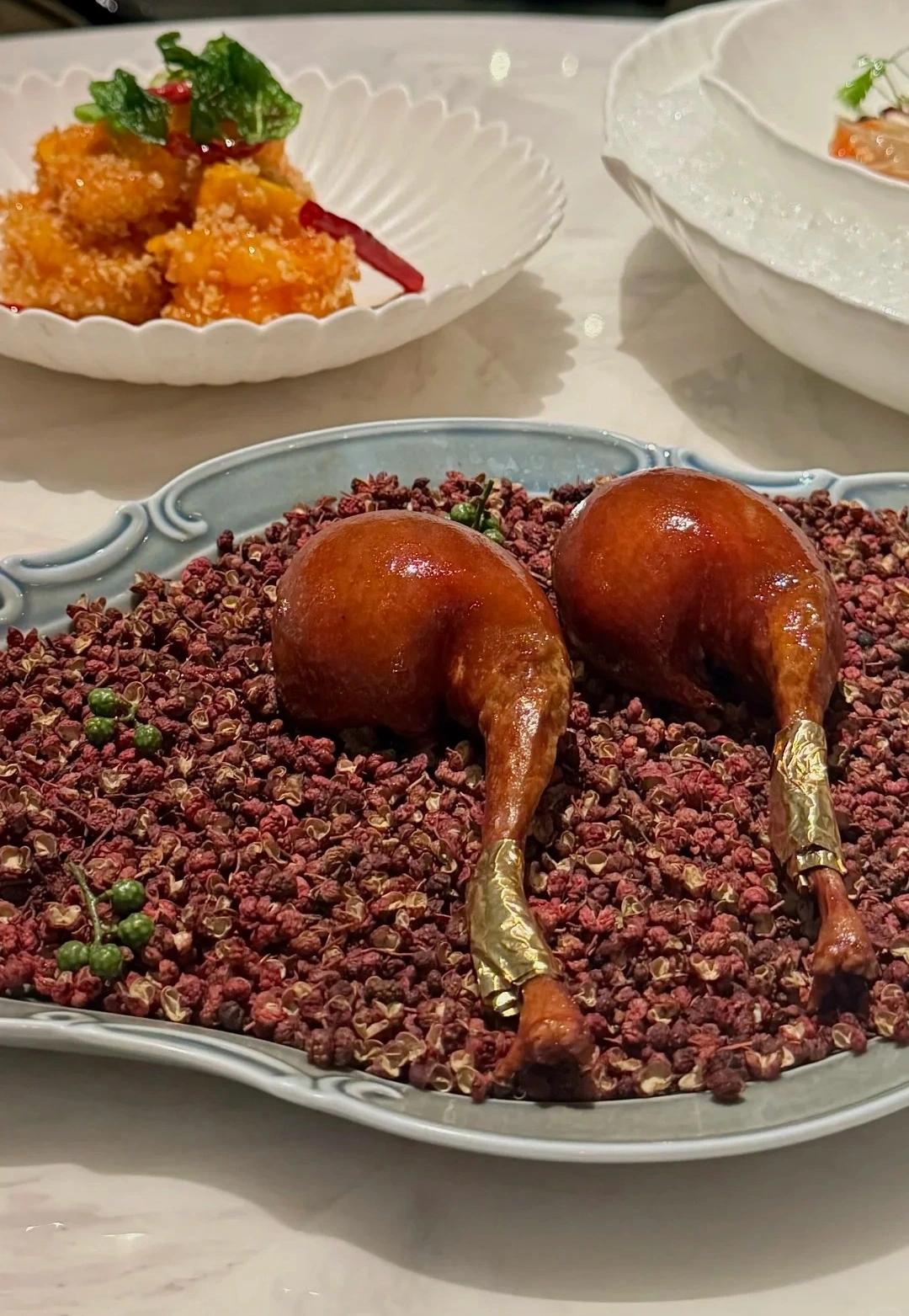
Song (颂), the Chinese restaurant on the eighth floor, holds one Michelin star in both the 2025 and 2026 guides and cooks Ningbo cuisine — the Western restaurant is better than most hotel F&B in this category. Breakfast is strong and runs late. There is also a speakeasy-style bar downstairs that the locals use as much as guests do.
Getting there
About forty minutes by taxi from Xiaoshan Airport and twenty minutes from Hangzhou East Station, or three stops on Line 1. Fengqi Road station (Lines 1 and 2) is directly below the building, which makes this the best-connected of the eight.
What guests say
Reviews are consistent and positive. The property is modern, the rooms are large, transport is excellent, and nothing feels tired. The most common mild complaint is that the hotel lacks the romance of a lake-side property — which is true, and also why it suits some travellers better.
Worth it?
At ¥1,600–3,000 this is not cheap, but it is newer, better maintained and usually larger than the Four Seasons at West Lake for less money. If the lake view is not non-negotiable, this is often the better choice — and for anyone who values modern comfort over postcards, it is not even a contest.
Good to know
Upper-floor rooms offer better light; the lower ones can carry minor street noise from Wulin Square.
The metro line below opens directly into the hotel lobby — useful for early-morning airport trips.
If you are comparing it to the Four Seasons at West Lake, do so without the garden bias; the Centre rooms are better in almost every measurable way.
Room Categories — What the Names Actually Mean
Every hotel in this chapter uses the same room-category vocabulary, and every one of them means something different. "Villa" at Seven Villas is not the same as "villa" at the State Guest Hotel, and "suite" at a tower means almost nothing at the older scenic-area properties. Before you book, you need a translation.
Villa, suite, pavilion — and why the words matter in Hangzhou
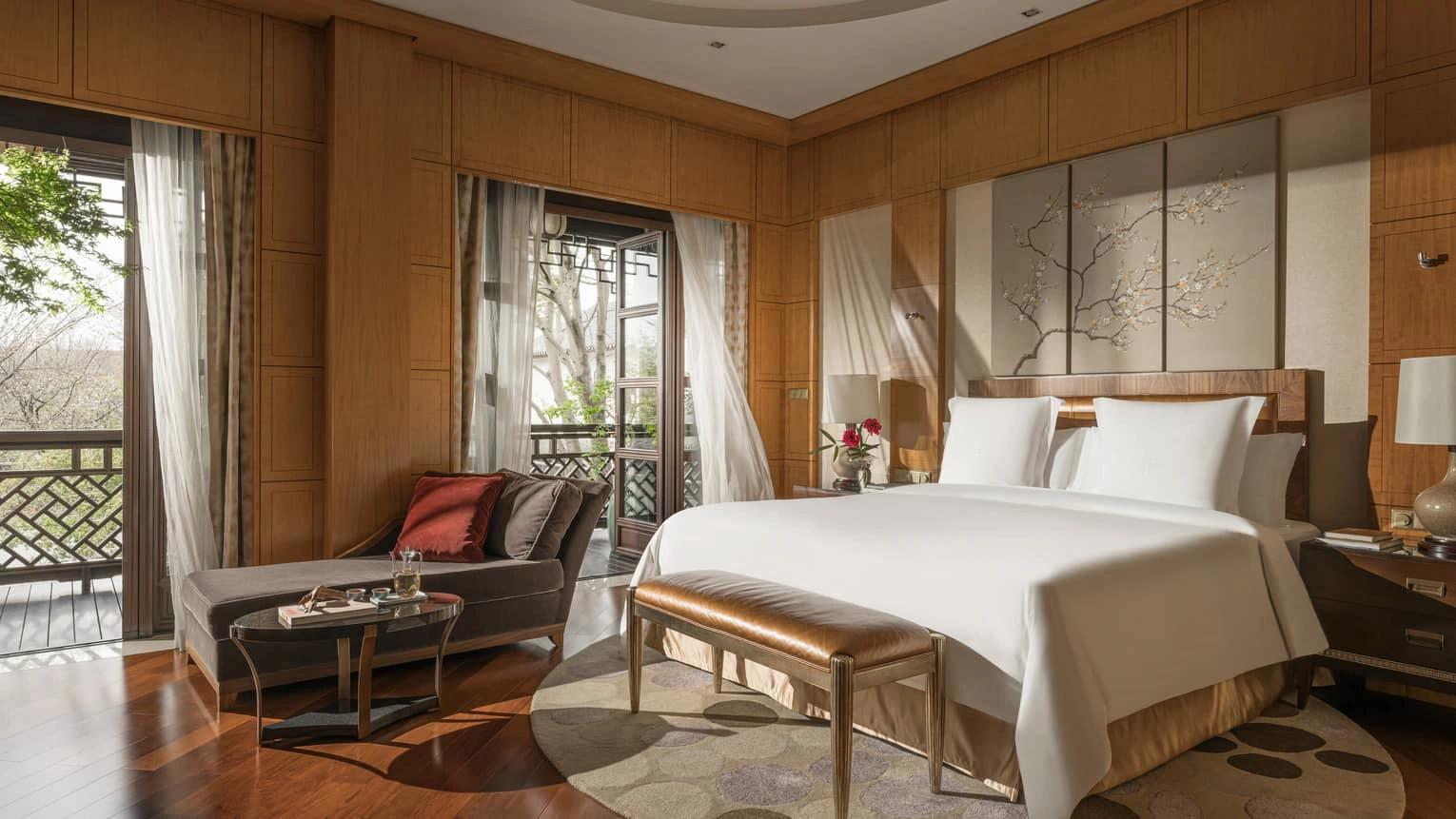
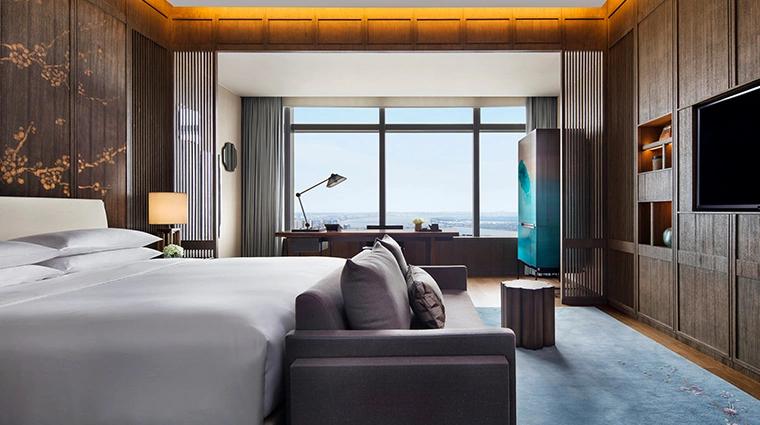
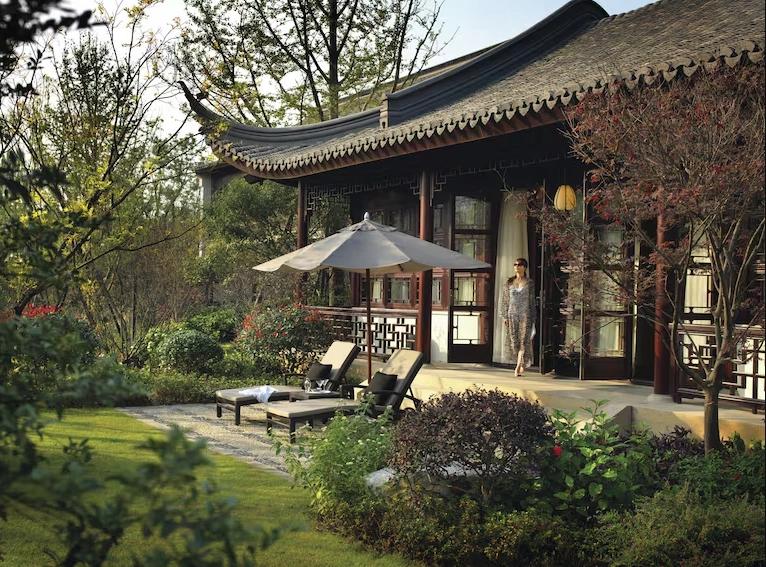
Villa-style properties — Amanfayun, Seven Villas, Banyan Tree — are built low, among bamboo, stone and water, and that construction holds moisture. Guests report being damp more often at these properties than at the towers. That is not always a flaw; it is the reason these places feel cool even in summer. But it is a real trade-off, and it is specific to low-rise Hangzhou hotels.
By contrast, a suite in a tower (Park Hyatt, Four Seasons Centre, Grand Hyatt) is built above ground, uses different materials, and is rarely described by guests as damp. The price comparison is also different: a villa at Seven Villas costs about the same as a mid-range suite at the Grand Hyatt, and the two products solve very different problems.
"Pavilion" — you will see this at the State Guest Hotel — means a stand-alone building with several rooms inside. The word carries no necessary implication of luxury or privacy; some pavilions are newer than the main blocks, some are older. Again, this is why building matters more than category name at that particular hotel.
What to ask the concierge before you book
Hotel descriptions leave out the things that matter. The concierge knows the answers. Here are the questions that actually change the room you get:
£ | Which building am I in? (State Guest Hotel) The difference between a 1950s wing and a 2005 wing is bigger than the difference between categories. | |
£ | Which floor, and what is directly below me? (Grand Hyatt, Four Seasons West Lake) Upper floors escape road noise and avoid seeing the restaurant roof instead of the garden. | |
£ | How damp is this room right now? (Amanfayun, Seven Villas, Banyan Tree) Hotels do not volunteer this, but they will move you if you ask specifically. | |
£ | Is this room renovated? (Four Seasons West Lake, State Guest Hotel) Some rooms at older properties have been updated and some have not, and the category does not always tell you. | |
Do not ask "can I have a nice room?" — the answer is always yes. Ask specific things, and you will get a specific room.
A note on upgrades
Whether you get one depends on two things: how full the hotel is that day, and how you ask. The front desks at properties like the Four Seasons and Park Hyatt do hold upgrade authority, especially in low season, and guest reports include genuine free upgrades.
The highest-success route is a special occasion flagged in advance — a birthday, anniversary, or proposal noted at booking or mentioned to the desk a few days ahead, asking for “a better room with a view if occupancy allows” rather than “a free upgrade”. Members should simply ask politely at check-in.
What International Travelers Should Know Before Booking
Three things are different about checking into a hotel in China, and Hangzhou is no exception.
1. You must present a valid passport
All international travellers must present a valid passport or other travel document at check-in. Hotels are required to complete the relevant accommodation registration procedures, but the exact document checks and registration process may vary. If your passport is lost or expired, contact your embassy and the hotel well in advance to confirm what alternative documents are acceptable.
2. Save the hotel’s Chinese name and address
Your booking confirmation will show the English name and address. Save that file, but also save the full Chinese name and the full Chinese street address. Taxi drivers, map apps and police checkpoints work in Chinese. If you show up at the hotel gate with only the English address, you will spend time explaining where you want to go. The hotel can give you this information on request before you arrive.
3. English varies, even at international brands
The front desk will almost always have at least one English-speaking staff member, but the quality of English varies. Housekeeping, engineering and the restaurant staff may speak none. Write down your special requests in a short English message before arrival — early check-in, a quiet room, a late departure — and ask the hotel to confirm in reply. That is more reliable than explaining it at the front desk when you arrive tired from a train or a flight.
4. Confirm child amenities in advance if you are travelling with kids
Cots are often called "extra beds" in Chinese hotel systems. Say "cot" and "two year old" and "extra sheet" if the hotel seems uncertain. Connecting rooms exist at most of the eight hotels, but they are rarely available on short notice.
👉For weather, festivals and flower timing that drive these rates, see our guide to the best time to visit Hangzhou.
When to Book — Seasonal Pricing and Availability
The hotels in this chapter price by supply and demand, not by calendar month. The same room can be ¥1,800 on a Tuesday in January and ¥4,200 on a Saturday in late March, and neither price is wrong — they are just different markets. The table below shows the general pattern; actual numbers move every week.
Window | Relative price | Availability | Notes |
Mid-February to early March | Lowest | Wide open | Off-season; some scenic-area hotels open for limited days only |
Late March to mid-April | Highest (2–3x January) | Tight | Flower season + warm weather; book six weeks ahead for scenic-area properties |
May | High | Tight | Mid-Autumn period for some travellers; rates climb late in the month |
June to August | Moderate | Loose | Hot and humid; scenic-area hotels cut rates, business hotels hold steady |
September | Moderate to high | Tight | Autumn begins; rates climb after Mid-Autumn Festival |
Late October to mid-November | High (second peak) | Tightest of all | Osmanthus + maple season; book two months ahead for state-owned properties |
Late November | Moderate | Open | Maple season ends; rates drop fast after November 20 |
December to early February | Low | Open | Cold and damp; hotel occupancy drops to the year's lowest levels |
For the scenic-area hotels — Amanfayun, Four Seasons West Lake, State Guest, Seven Villas — the pattern is extreme. In peak season there is almost no last-minute availability at any price. In off-season, you can sometimes book the same room a day before arrival. The tower properties — Park Hyatt, Four Seasons Centre, Grand Hyatt — are more stable year-round because their guest mix includes business travel.
The one exception to the off-season low is Chinese New Year. Some hotels raise rates, but more importantly, local restaurants close for 3–5 days in late January or early February. If you travel then, confirm hotel dining and outside restaurant hours before you go.
Scenic-area properties in peak season need 2–3 months. Tower properties need 3–6 weeks. In off-season, three days is usually enough for any of the eight. These are not rigid rules — rates and availability move every day — but they are realistic starting points.
If you are visiting during spring blossom or autumn osmanthus season, book scenic-area hotels earlier than city-center properties, as their smaller room inventory makes availability more limited.
When Luxury Hotels Are the Wrong Choice in Hangzhou
This guide recommends each of the eight hotels for specific reasons. That does not mean every trip needs one of them. Here are the cases where a luxury hotel is the wrong call.
❌You Plan to Spend Most of Your Time Sightseeing
The luxury hotels in this guide are built for a specific rhythm — slow mornings, hotel dining, spa sessions, garden time. If you plan to be on the lake at 07:30, eat street food for lunch, and visit three temples before dinner, you are paying premium rates for facilities you will barely use. In that case, a mid-range hotel with excellent location in Hubin or near a metro exit will serve you better than a resort-style luxury property. The Grand Hyatt Hangzhou sits in both worlds — it is the only hotel in this guide with genuine walk-to-West-Lake convenience — but the other seven are not.
❌You are coming during a national holiday
All eight hotels raise rates by at least 50% during the seven-day National Day holiday in early October, and availability disappears weeks in advance. The quality of service drops because every hotel is operating at full capacity. If you can travel the week before or the week after, do that; if you cannot, consider a mid-range hotel where the holiday premium is smaller and the service level does not collapse as visibly.
❌You do not like being waited on
This sounds like a small thing, but it matters. Luxury hotels in Hangzhou have staff ratios that mean someone will open the door for you, someone will carry your bag, someone will answer every question. If that makes you uncomfortable, you will not enjoy the hotel no matter how good the room is.
👉If you would rather have the whole thing arranged - hotels, drivers, and a private guide to West Lake and the tea villages - our 2 days in Hangzhou private tour builds it around your dates.
The Honest Verdict
Hangzhou has eight luxury hotels that matter, and each one solves a different problem. There is no ranking because the comparison is not meaningful — Amanfayun and the Grand Hyatt are not competing against each other; they are competing against different versions of the same trip.
If you do nothing else before you book, ask yourself the three questions above: will you be outside the hotel for most of the day, do you need direct lake views, and is quiet non-negotiable. The answers narrow the eight to two or three. Then read the full entry for each of those two or three, check the room advice in the room guide below, and book the one that matches the trade-offs you are willing to make.
That is all you need.
Ready to start planning your Hangzhou trip? Our team knows these hotels well — rates, seasonality, and which one fits which traveller. Send a note with your dates and a short sense of what you're after (quiet garden or direct lakefront, two nights or a week), and we'll help you narrow it down.
If you would also like help arranging airport transfers or private sightseeing around Hangzhou, our team can help coordinate those details alongside your hotel stay.


Traveler Discussions
Questions from travelers