Five Great Avenues
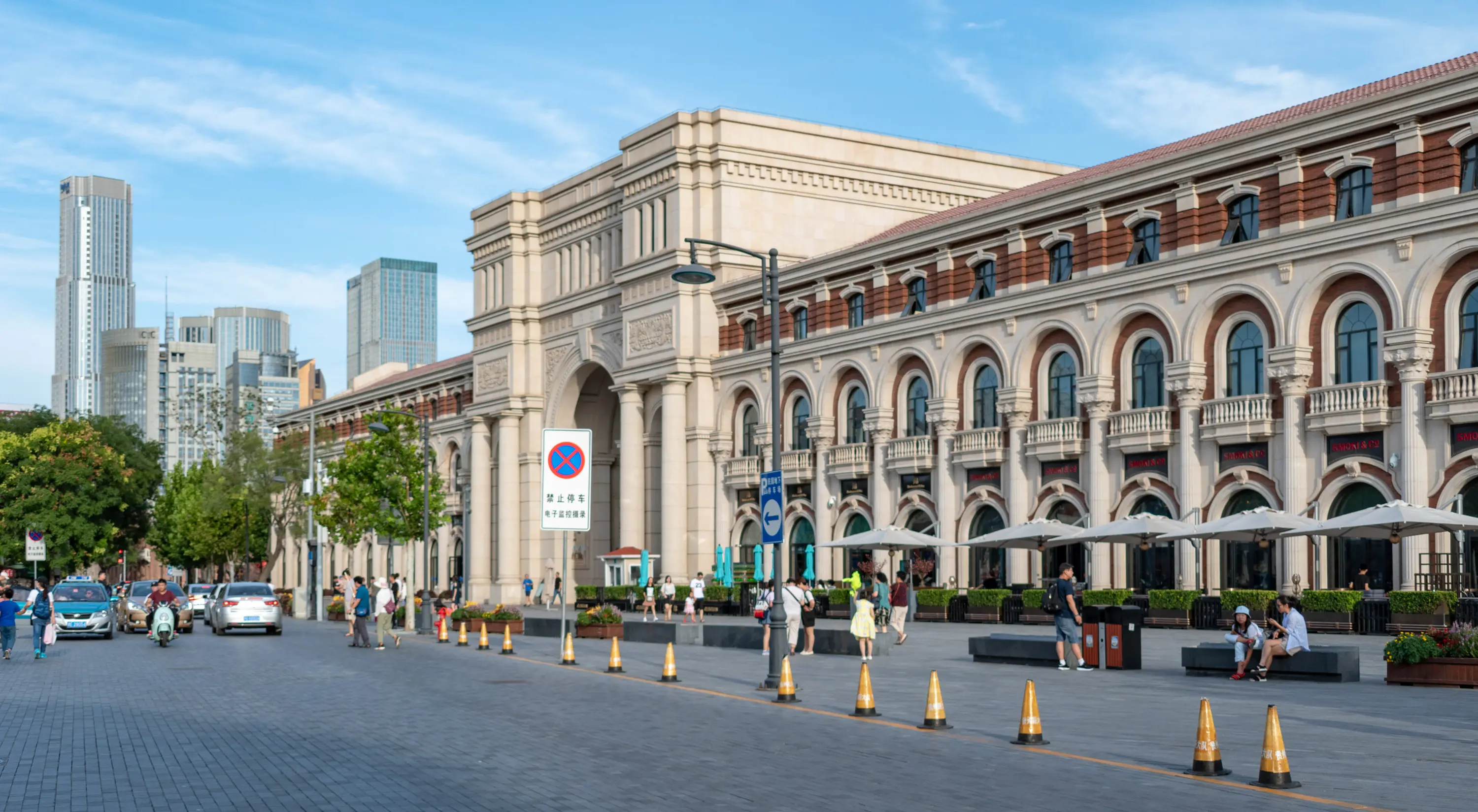
Over 2,000 colonial buildings from the 1920s and 30s — diplomats and warlords once lived here. Walking these tree-lined streets feels like flipping through a photo album of old China, just repainted and with better coffee shops.

Wander European-style avenues, cruise the Haihe River at dusk, taste Goubuli steamed buns, and discover a city where colonial heritage meets modern China.
Why Visit Tianjin
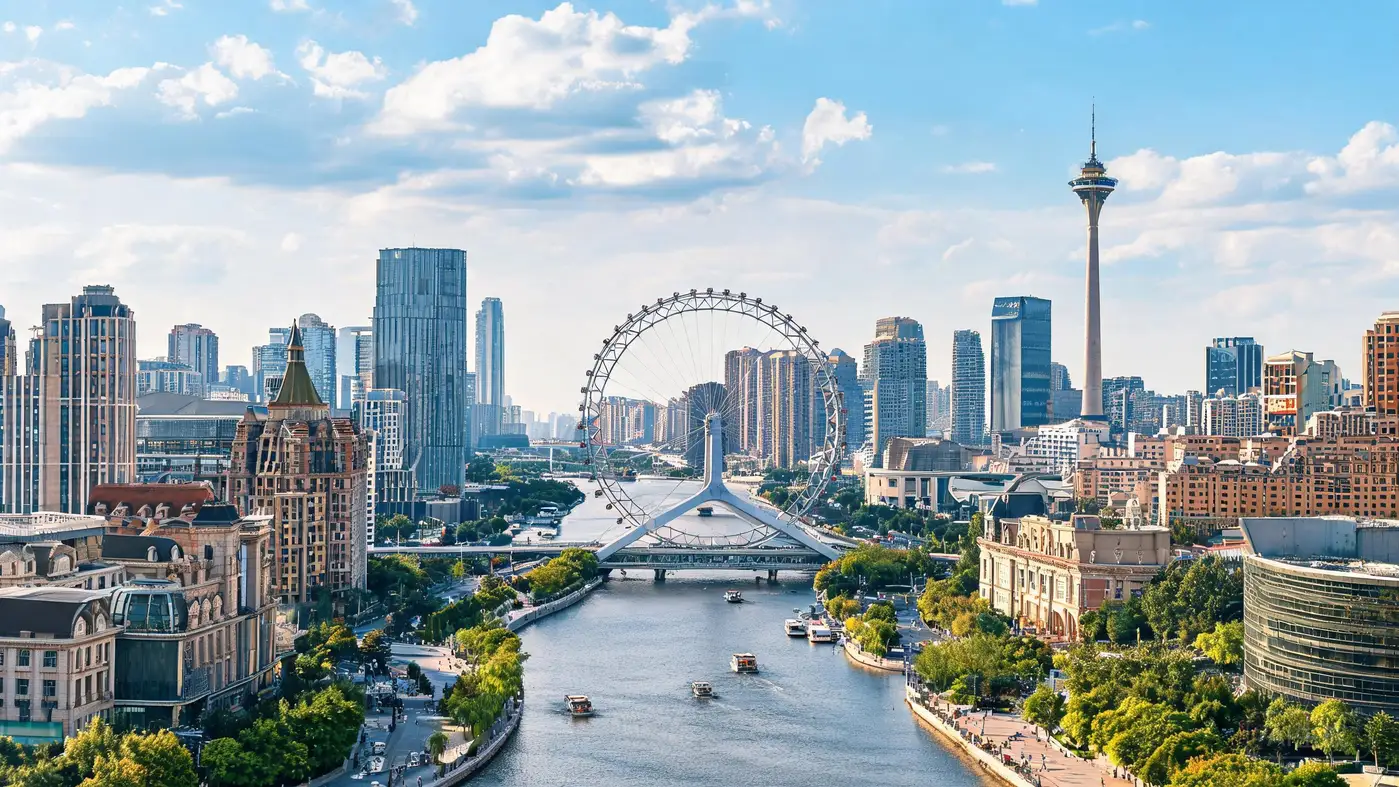
Tianjin sits where European treaty-port history meets old Chinese streets. Five Great Avenues carry the quiet weight of 1920s colonial architecture, while Ancient Culture Street has served folk art and fried rice cakes since the Ming dynasty. The Haihe River ties it together — a waterfront skyline with the Tianjin Eye and a food scene built on Goubuli steamed buns and crosstalk comedy. Thirty minutes from Beijing by high-speed rail, a Tianjin vacation works as a day trip or a slower two-day detour.
Map Focus
Tianjin, China
Quick Facts
5 factsOver 2,000 colonial buildings from the 1920s and 30s — diplomats and warlords once lived here. Walking these tree-lined streets feels like flipping through a photo album of old China, just repainted and with better coffee shops.
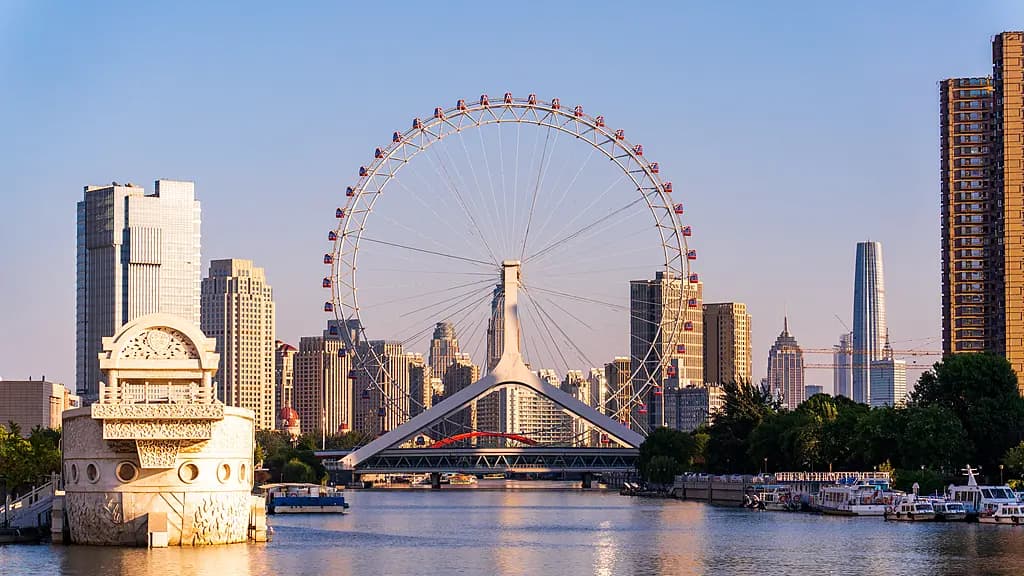
When the lights come on, the whole waterfront changes. Bridges glow in different colors, locals stroll with their families, and someone is always fishing off the bank. This is where Tianjin residents actually go to unwind — not a tourist strip, just a river and a city exhaling.
Stone lanes that have been a trading street since the Ming dynasty. Watch craftsmen making clay figurines and New Year prints, grab a Jianbing Guozi, and explore the Mazu temple tucked behind the main drag.
An entire quarter rebuilt as an Italian piazza — stone arcades, an open square, and the Tianjin Eye framed in the background. Sounds gimmicky until you sit down at an actual restaurant here and realize people live and work in this postcard.
A ferris wheel built on top of a bridge, 120 meters above the Haihe. The 30-minute rotation gives you enough time to actually take it all in — the city lights, the river bends, the scale of a place most travelers only pass through on the way to Beijing.
A four-story French concession building covered floor to ceiling in millions of ceramic fragments and vases. The owner spent decades gluing everything in sight — it's the kind of maximalist art project that makes you wonder whether it's genius or madness. Locals love bringing visitors here.
Travel Notes
Useful planning reads from the current content library, prioritizing Tianjing-tagged posts where available.

Planning notes from the Your Way Holiday team.
Read More
Planning notes from the Your Way Holiday team.
Read More
Planning notes from the Your Way Holiday team.
Read More
Planning notes from the Your Way Holiday team.
Read More
A private wine-estate journey to Chateau Sanggan and Canaan Winery in Huailai, with vineyard tours, cellar access, professional tastings, and gourmet dining less than two hours from Beijing.
Read More
China nightlife is far more than bars and clubs: night markets, KTV, rooftop bars, hotpot, river cruises, teahouses, live music, and cultural shows, with each city offering a different evening.
Read MoreThe Traveler’s Companion
Everything you need to know before your Tianjin trip — from local transport tips and food recommendations to practical advice on visas, money, and getting around. These FAQs come from real traveler questions we answer every day.
Goubuli steamed buns are the famous one — pillowy, richly filled, and a bit touristy at the original shop. Erduoyan fried rice cakes (sweet and chewy) are better as street snacks. Jianbing Guozi — savory crepes with egg and crispy cracker — is what locals actually eat for breakfast. Nanshi Food Street has the widest selection under one roof.
Head to Nanshi Food Street for a concentrated taste of Tianjin's snack culture. The night markets along the Haihe River offer grilled skewers and local favorites, while morning visits to local breakfast stalls give you Jianbing Guozi made the way locals expect it.
Tianjin street food is generally safe for tourists. Stick to stalls with high turnover — where locals queue up — and watch the food being cooked in front of you. Jianbing Guozi and mahua are made fresh to order. Avoid raw items at quiet stalls, and carry hand sanitizer. Nanshi Food Street is a reliable one-stop option.
Yes, though options are more limited than in Beijing or Shanghai. Buddhist restaurants near the Temple of Great Compassion offer vegetarian set menus. Many Tianjin restaurants have vegetable-based dishes like stir-fried greens, braised tofu, and mushroom hotpot. Ask for “su cai” (vegetarian dishes) when ordering.
Tianjin is known for jasmine tea, served at every crosstalk venue and teahouse. Try Jianbing Guozi with a soy milk or doufu nao (tofu pudding) for breakfast. Local craft beer is emerging — a few brewpubs have opened around Five Great Avenues. For something unique, try Haihe River-side tea at an outdoor teahouse.
Wider Horizons
Common next chapters for travelers extending Tianjing into a broader China route.

China · Northern China
Choose the right Great Wall section around crowd level, walking pace, season, and photography goals.

China · Southwest China
Morning panda base visit planned around active feeding windows

China · Southwest China
Night views from Hongya Cave and mountain-top city viewpoints


China · Eastern China
Longjing tea picking with a 4th-generation tea family

China · Northeast China
Experience the world-famous Harbin Ice and Snow Festival with spectacular ice castles, winter landscapes, and night illuminations.

China · UNESCO World Heritage Mountain Site
Ancient Huangshan pine trees clinging to cliff faces