

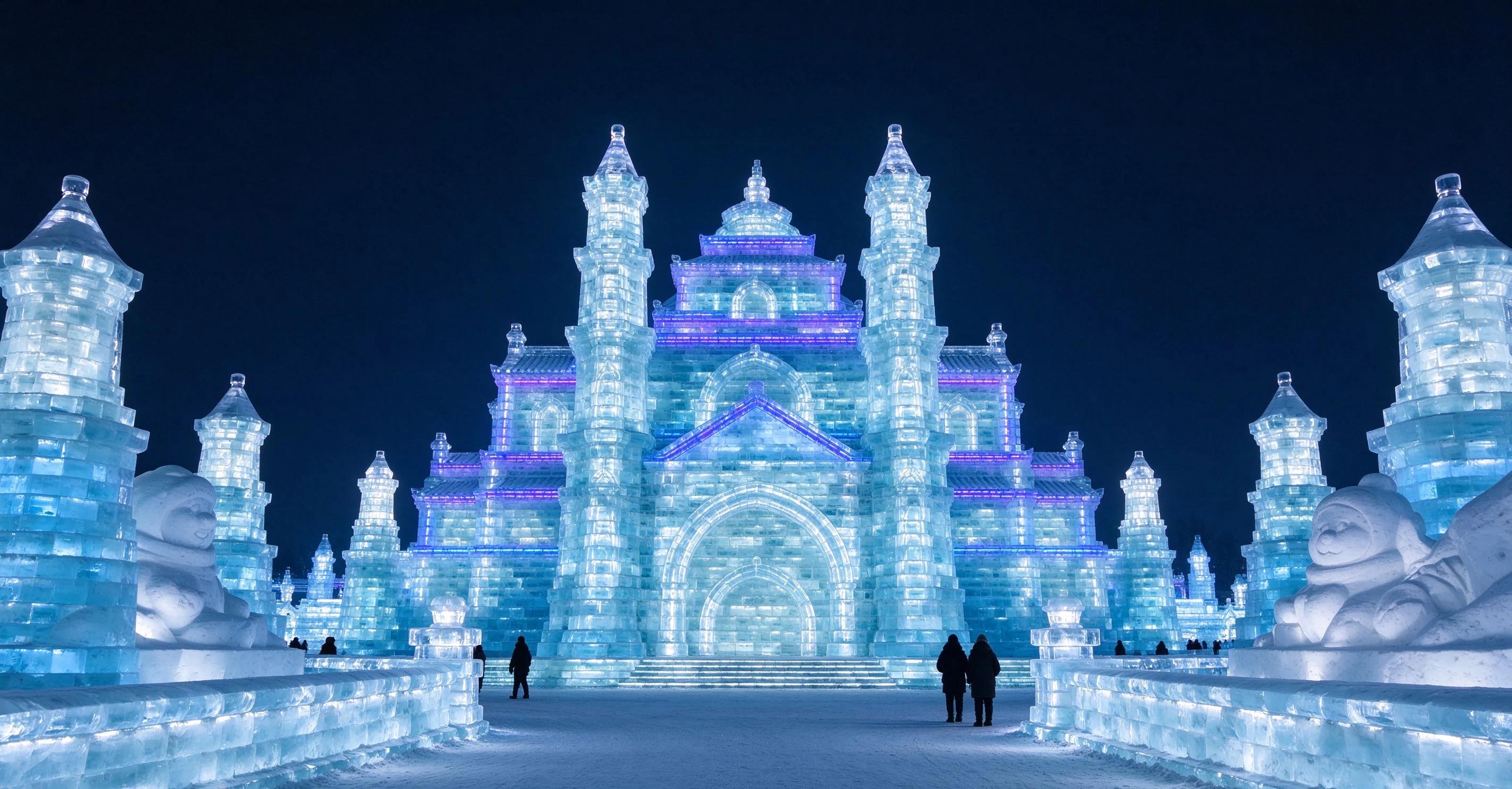
Harbin doesn't do "mild." For four months a year, this city in China's far northeast turns into a walk-in freezer — and the whole world shows up to admire it. Ice palaces glow neon blue at −25°C, snow sculptures the size of buildings rise on Sun Island, and steam curls off bowls of hot stew in the −30°C air. 🥶✨
QUICK ANSWER: late December to mid-February is the best time to visit Harbin if you want the full ice-and-snow spectacle. But "best" depends on what you're chasing — the deepest cold, the thinnest crowds, the cheapest flights, or the warmest sunshine. This guide breaks all of it down, month by month, so you can pick your window with confidence. 🎯
The Short Answer: When Is the Best Time to Visit Harbin?
Your Priority | Best Window | Why |
|---|---|---|
Overall experience | Late Dec – Mid Feb | Full Ice Festival, guaranteed snow, peak atmosphere |
Best single month | January | Coldest air, thickest ice, festival in full swing |
Fewer crowds | Early – Mid December | Ice park opens, tour groups haven't arrived yet |
Cheaper prices | Early December & Late February | Shoulder-season hotel rates, softer demand |
Mildest winter weather | Late February | −5 to −15°C days, longer daylight, still fully frozen |
No ice, no freezing | June – August | 20–28°C, river cruises, beer festival, green parks |
Photography & golden light | Mid – Late January | Crystal-clear skies, dramatic low sun, blue hour at 3:30 pm |
Harbin at a Glance: Season-by-Season Comparison
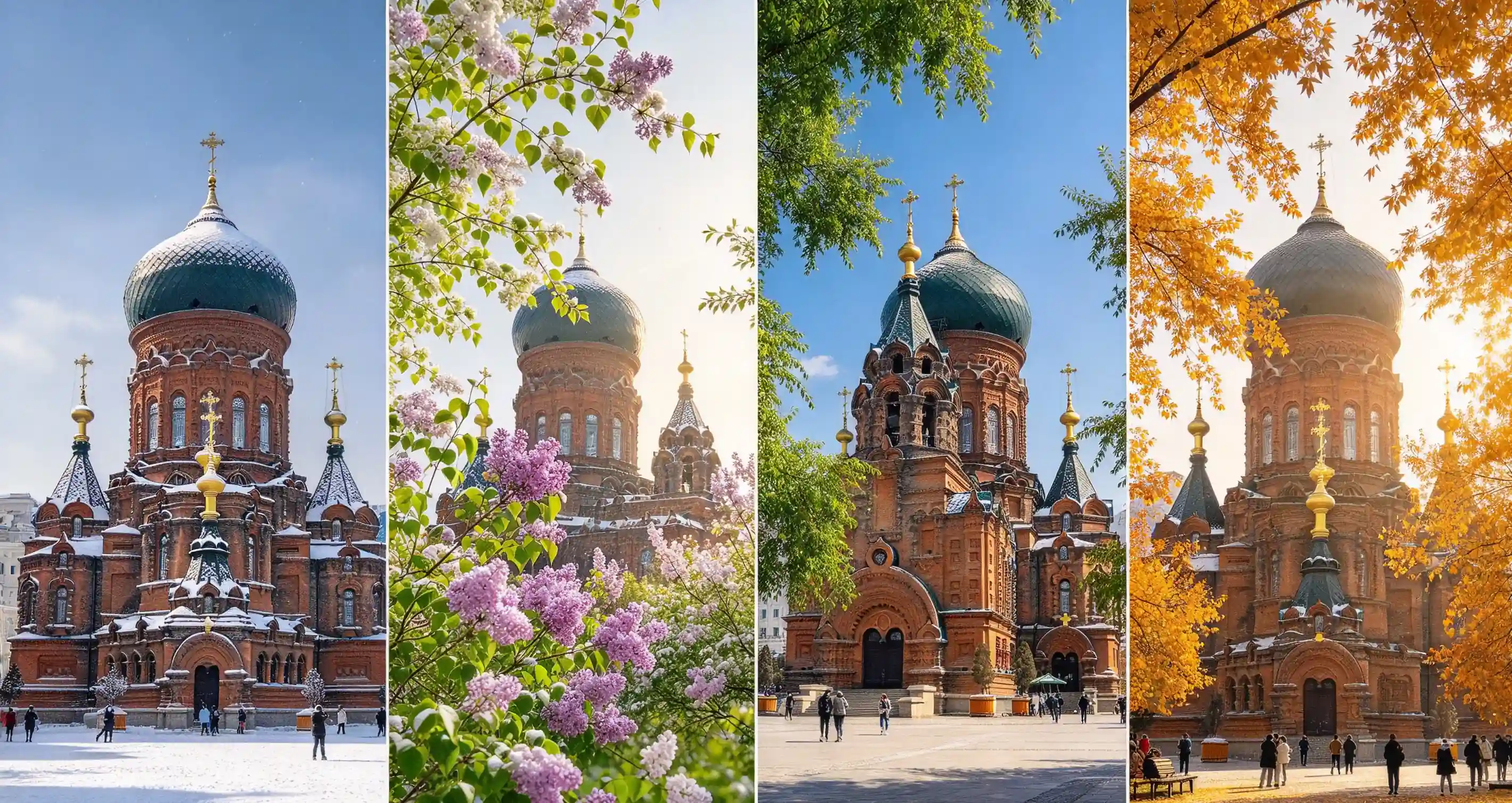
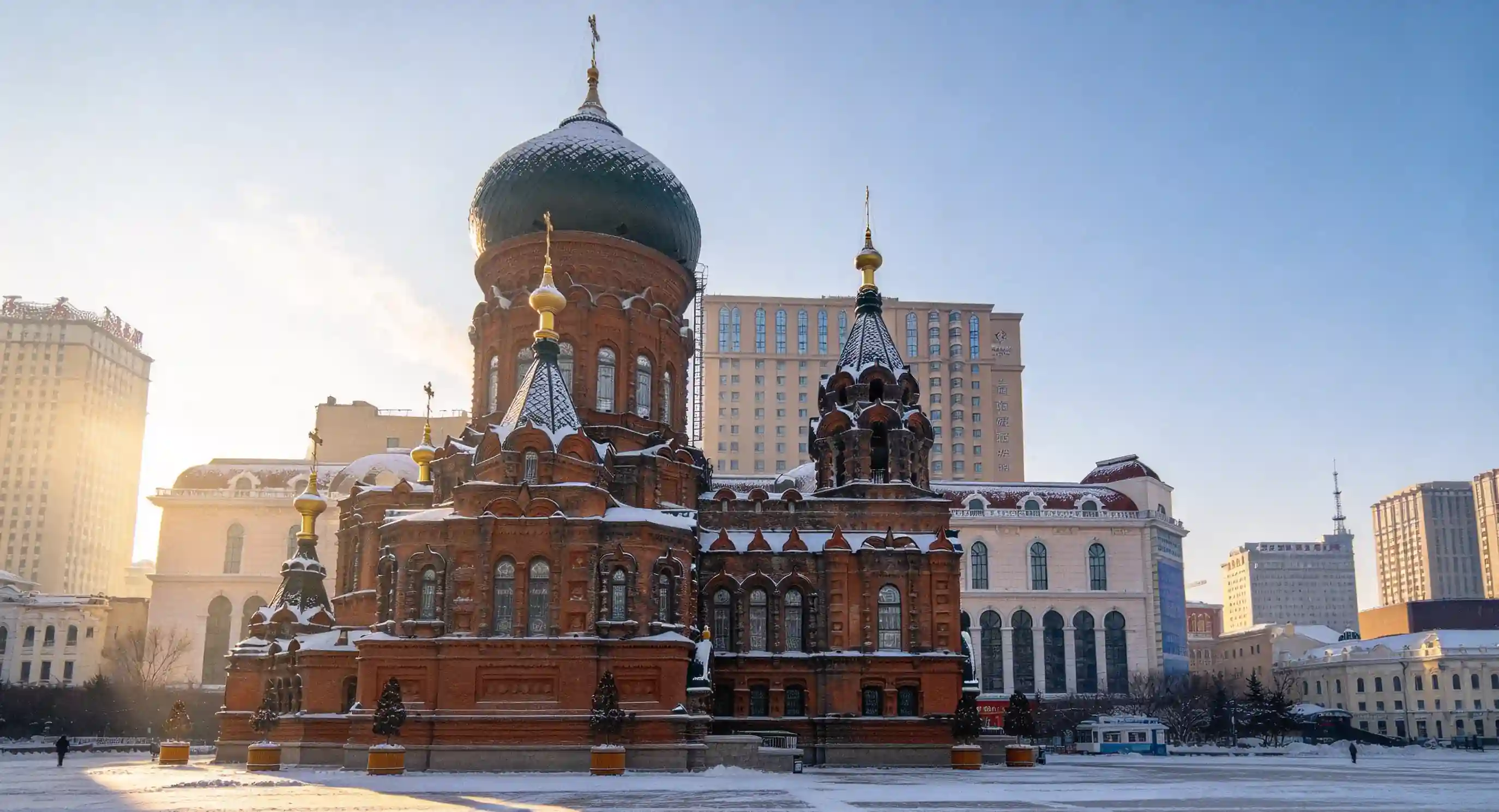
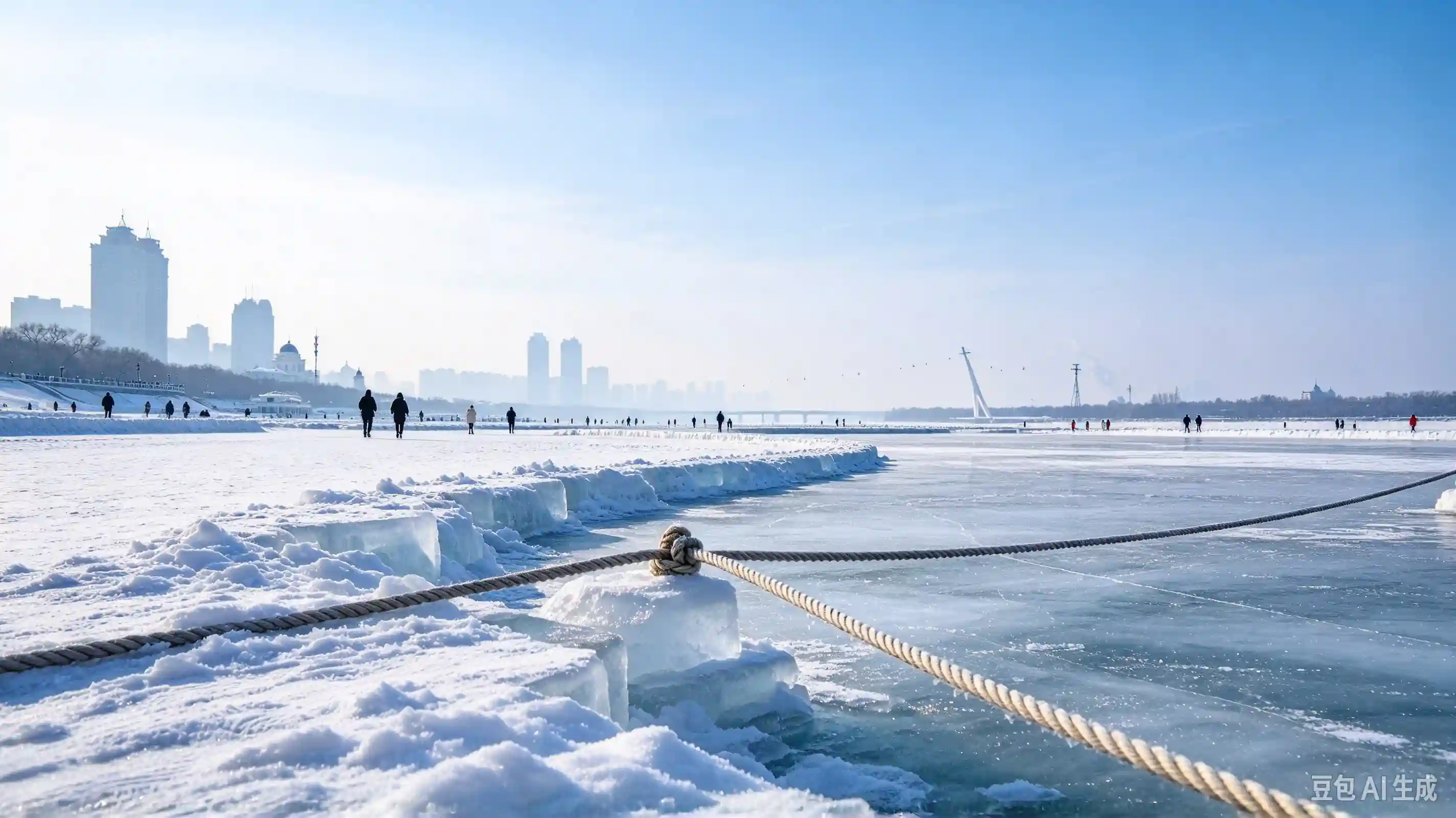
Harbin sits at roughly the same latitude as Minneapolis and Vladivostok — a climate band that means genuinely brutal winters and surprisingly warm, green summers. Here's the bird's-eye view:
Season | Months | Typical Temp (°C) | Signature Experience | Crowds | Verdict |
|---|---|---|---|---|---|
Late Autumn | Nov | +2 to −12 | First snow, ice forming on the Songhua | Low | ❄️ Preview season |
Deep Winter | Dec – Feb | −10 to −28 | Ice Festival, snow sculptures, frozen river | 🔥 Peak | 🧊 The main event |
Thaw | Mar – Apr | −8 to +13 | Melting ice, muddy streets, cheap hotels | Low | 🌫️ Not ideal |
Spring | May | +8 to +21 | Lilac Festival, blossoms, comfortable air | Medium | 🌸 Underrated |
Summer | Jun – Aug | +15 to +29 | River life, beer festival, cool escape | Medium–High | ☀️ Best non-winter pick |
Autumn | Sep – Oct | +9 to 0 | Golden foliage, crisp air, no crowds | Low | 🍂 Quiet charm |
Harbin Weather by Month: The Full Breakdown
Understanding Harbin weather by month is the single most useful thing you can do before booking. The difference between December 1 and January 15 is not cosmetic — it changes how you dress, how long you can stay outside, and what's actually open.
Quick Reference Table
Month | Avg High | Avg Low | Snow | Ice Festival Status | Crowd Level |
|---|---|---|---|---|---|
November | +1°C | −9°C | First snowfalls | Ice forming, nothing open | 🟢 Low |
December | −10°C | −21°C | Reliable cover | Parks open late Dec | 🟡 Building |
January | −13°C | −25°C | Peak snow | Fully operational | 🔴 Peak |
February | −8°C | −20°C | Still solid | Open until late Feb | 🟠 High (CNY) |
March | +2°C | −8°C | Melting | Closing / closed | 🟢 Low |
April | +13°C | +1°C | Gone | Closed | 🟢 Low |
May | +21°C | +8°C | None | Closed | 🟡 Medium |
June | +26°C | +15°C | None | Closed | 🟡 Medium |
July | +28°C | +19°C | None | Closed | 🔴 High |
August | +26°C | +17°C | None | Closed | 🟠 High |
September | +21°C | +9°C | None | Closed | 🟢 Low |
October | +12°C | 0°C | First flakes possible | Closed | 🟢 Low |
What Harbin Winter Temperature Actually Feels Like
A number on a weather app never tells the full story. Harbin's cold is dry and wind-driven — which means it bites exposed skin fast, but feels far more tolerable than the same temperature in a damp coastal city. Here's the honest translation:
Air Temp | Calm | 15 km/h wind | 30 km/h wind |
|---|---|---|---|
−5°C | −5°C | −11°C | −14°C |
−10°C | −10°C | −17°C | −20°C |
−15°C | −15°C | −23°C | −27°C |
−20°C | −20°C | −29°C | −33°C |
−25°C | −25°C | −35°C | −39°C |
−30°C | −30°C | −41°C | −46°C |
Approximate wind-chill values. The wind is the variable that decides whether −20°C feels "brisk" or "brutal."
What frostbite actually looks like, in order:
Fingers and toes go numb first — you stop noticing them, which is the danger.
Ears and nose turn waxy and white at the edges.
At a wind chill of −25°C or below, exposed skin can freeze in 20–30 minutes; at −40°C, in under 10 minutes.
Pain returns as you warm up — that's a good sign. White, hard, painless skin is not.
🧠 Counter-intuitive tip: Alcohol does not warm you up. It dilates blood vessels and accelerates heat loss. Save the baijiu for indoors after you're back. 🍶
Daylight & Golden Hour by Month
Harbin runs on China Standard Time despite sitting far east, so the sun rises brutally early in summer and sets shockingly early in winter. Plan your outdoor sightseeing around this table — it matters more than most guides admit.
Month | Sunrise (approx.) | Sunset (approx.) | Practical Note |
|---|---|---|---|
January | 7:10 am | 4:00 pm | Golden hour starts ~3:00 pm |
February | 6:45 am | 5:00 pm | Noticeably brighter by month-end |
March | 6:15 am | 5:30 pm | Spring light returns |
April | 5:15 am | 6:05 pm | Long, pleasant evenings |
May | 4:25 am | 6:45 pm | Sunsets after dinner |
June | 3:50 am | 7:20 pm | Very early sunrise |
July | 3:55 am | 7:25 pm | Peak daylight |
August | 4:20 am | 7:00 pm | Still long and warm |
September | 5:00 am | 6:15 pm | Best light of the year |
October | 5:35 am | 5:25 pm | Rapidly shortening days |
November | 6:15 am | 4:40 pm | Sunset before afternoon tea |
December | 6:55 am | 3:55 pm | Earliest sunset ~3:50 pm |
When Does It Snow in Harbin?
This is one of the most-searched questions about the city, so let's be precise.
First snow: Harbin typically sees its first flakes in late October to early November. It's often light and melts during the day — pretty, but not the postcard.
Reliable snow cover: From late November through mid-March, snow stays on the ground. This is the Harbin winter travel season in earnest.
Peak snow conditions: December through February. The air is so cold and dry that snow doesn't melt — it just accumulates and stays crisp. You'll find consistent coverage on rooftops, in parks, along the Songhua River banks, and on Sun Island.
When does it stop? Snow lingers into late March, but by then it's grey, slushy, and melting. The ice sculptures start to soften and close. Not the season you're dreaming of.
The Harbin Ice Festival: Timing Is Everything
The Harbin International Ice and Snow Sculpture Festival is the reason most travelers come — and the reason "when to visit Harbin" has a very specific answer.
Official vs. Actual Dates
Official festival period: Usually January 5 to late February (weather-dependent).
Ice and Snow World park: Typically opens in the last week of December (around December 20–25) and runs until late February or early March.
Sun Island Snow Sculpture Expo: Opens late December, closes late February.
Zhaolin Park Ice Lantern Show: Opens around late December, smaller and more traditional.
So here's the insider nuance: the park can be open before the "official" festival begins. If you arrive in late December, you'll see almost everything — sometimes at lower prices and with thinner crowds.
Best Time Within the Festival
Goal | Best Timing |
|---|---|
Ice sculptures at full completion | January 5 – February 5 |
Avoid Chinese New Year chaos | Before CNY (dates shift yearly — check!) |
Best light for photos | 3:00–5:00 pm (sunset + illuminations) |
Fewest people | Weekday evenings in early January |
Warmest tolerable cold | Late February |
What It Costs
Expect roughly 300–350 CNY for an adult Ice and Snow World ticket. Book online in advance during peak dates — same-day tickets can sell out, and prices/opening hours fluctuate with weather.
Attraction by Attraction: The Best Time to Visit Each Harbin Winter Site
Generic advice like "go in January" only gets you so far. Each major site has its own rhythm — one is a night park, one demands daylight, one is best at blue hour. Here's the granular breakdown.
At a Glance
Attraction | Best Month | Best Time of Day | Time Needed | Crowd Tip |
|---|---|---|---|---|
Ice and Snow World | Jan 5 – Feb 5 | 3:00 pm – 9:00 pm | 4–6 hrs | Weekdays; avoid Jan 1 & CNY |
Sun Island Snow Sculpture Expo | Late Dec – Feb | 9:30 am – 2:00 pm | 2–3 hrs | Go before noon; pairs with Ice World |
Zhaolin Park Ice Lanterns | Late Dec – Jan | 5:00 pm – 8:00 pm | 1–1.5 hrs | Quietest of the big three |
Central Street | Dec (lights) / Jul (terraces) | Dusk or early morning | 1–2 hrs | Early morning = empty photos |
St. Sophia Cathedral | Any winter month | Blue hour or snowy morning | 45 min | Exterior is free; go early |
Songhua River | Jan – Feb (ice) / Jun – Aug (cruise) | 10:00 am – 3:00 pm | 1–2 hrs | Follow safety ropes on ice |
Siberian Tiger Park | Nov – Mar | 9:30 – 11:00 am (feeding) | 2 hrs | Tigers are livelier in cold |
Yabuli Ski Resort | Jan – Feb | First tracks, 8:30 am | Full day | Weekdays; book gear ahead |
China Snow Town | Jan – Feb | Overnight stay | 1–2 days | Go right after a snowfall |
Harbin Ice and Snow World (冰雪大世界) — The One You Must Time Right
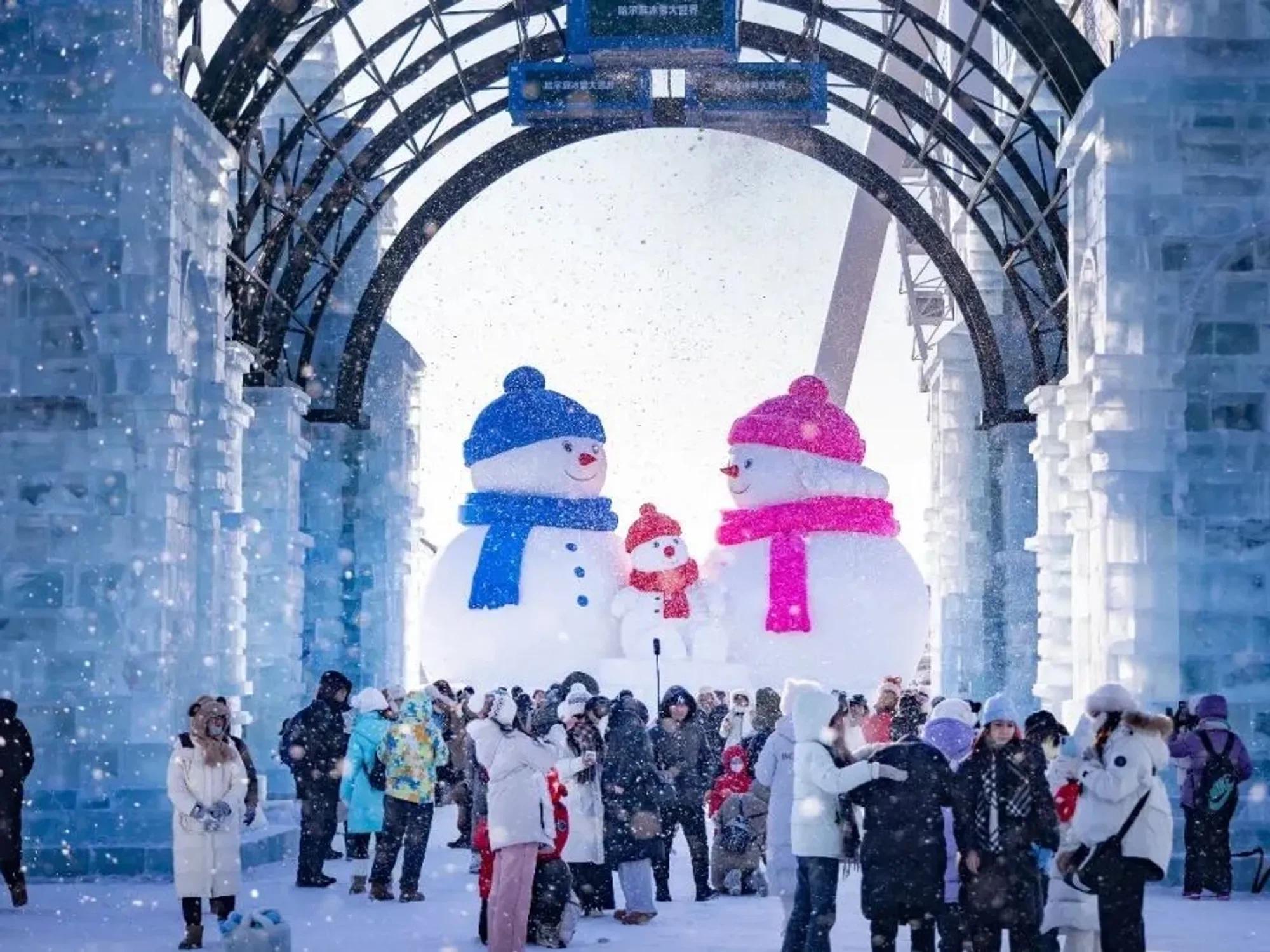
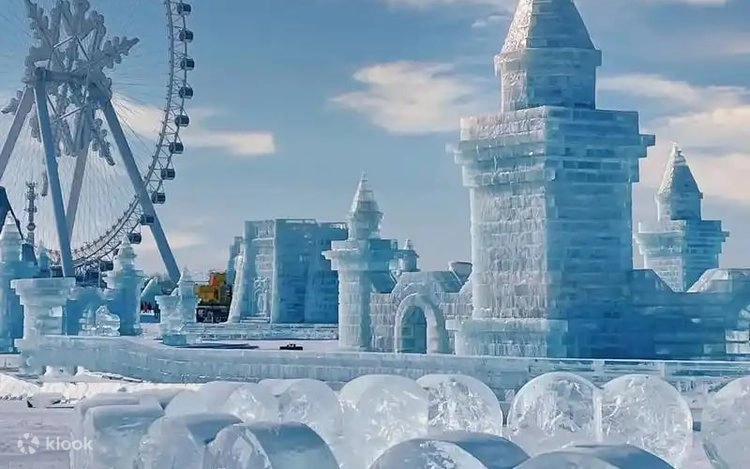
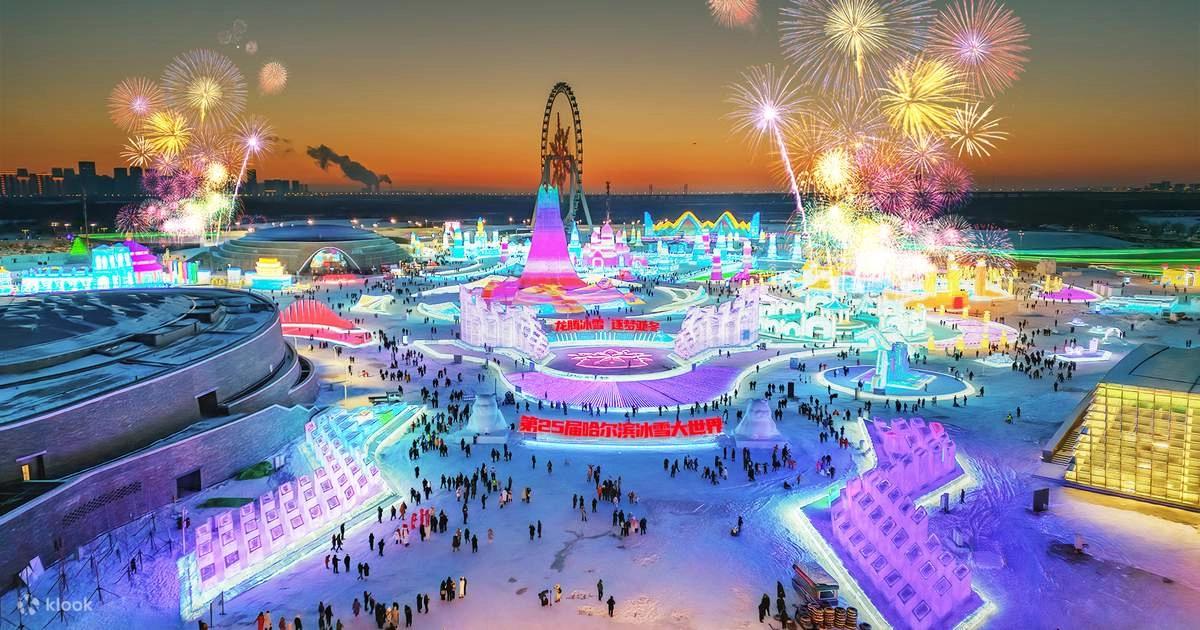
This is the headline act, and it's a night park. Going at the wrong hour is the single most common visitor mistake.
Best month: January 5 – February 5. All structures are finished, the ice is at maximum thickness and clarity, and every light is running.
Best time of day: Arrive around 3:00 pm. You get three experiences in one ticket:
3:00–4:00 pm — sculptures in daylight, queues still short
4:00–4:30 pm — sunset turns the ice pink and gold (the best photos of the trip)
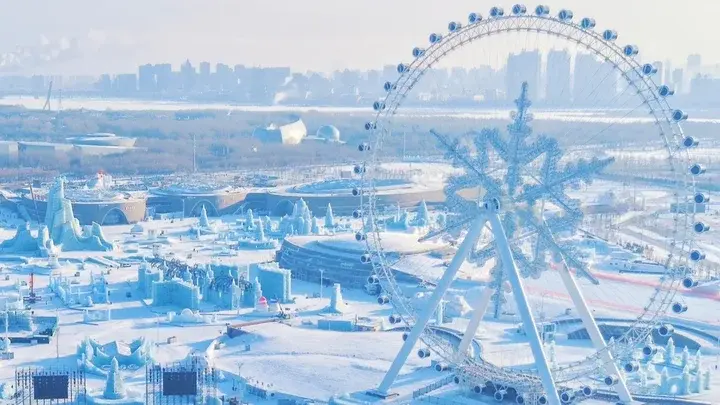
4:30–9:00 pm — full neon illumination, ice slides, shows, and the giant snow stage
How long: 4–6 hours. It's huge, and you'll be walking on ice the whole time.
When to avoid: January 1 and the Chinese New Year week — ticket queues, taxi shortages, and shoulder-to-shoulder crowds.
Insider note: Late February is warmer and cheaper, but check recent photos first — a warm spell can dull the sculptures' edges.
Sun Island Snow Sculpture Expo (太阳岛雪博会) — A Daylight Attraction
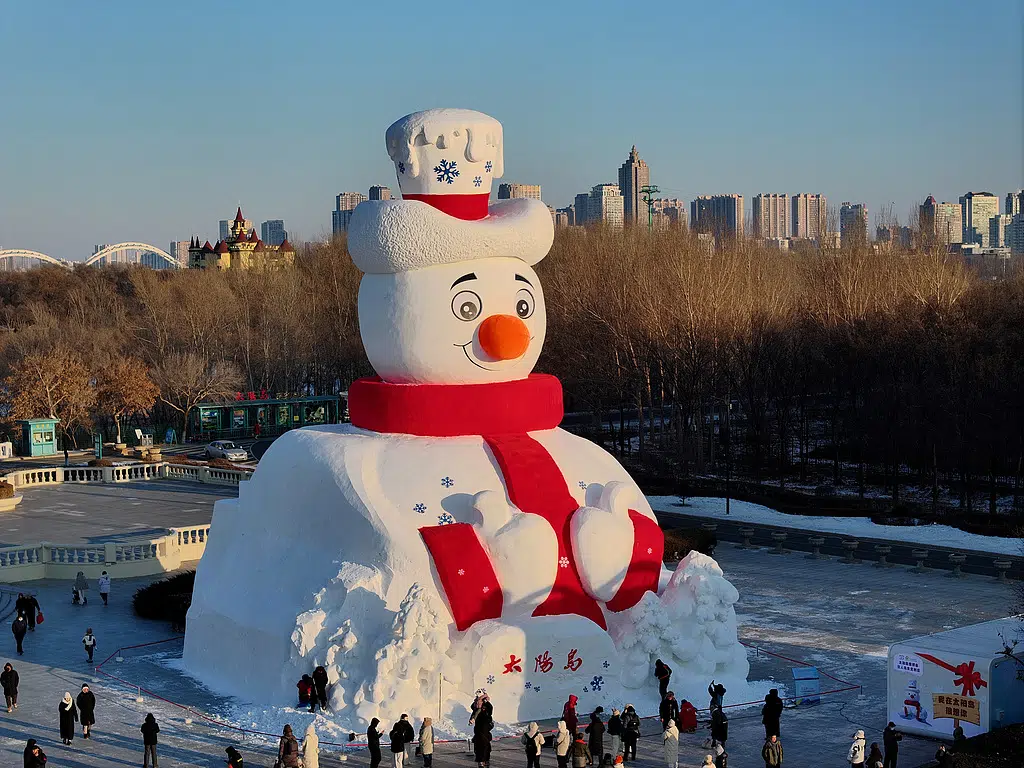
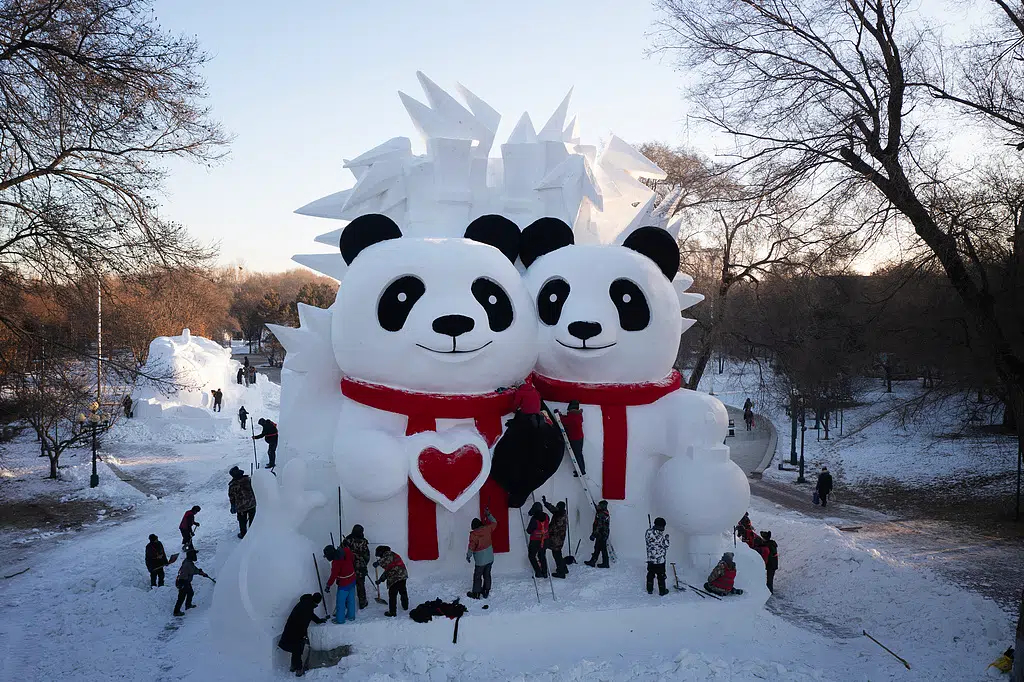
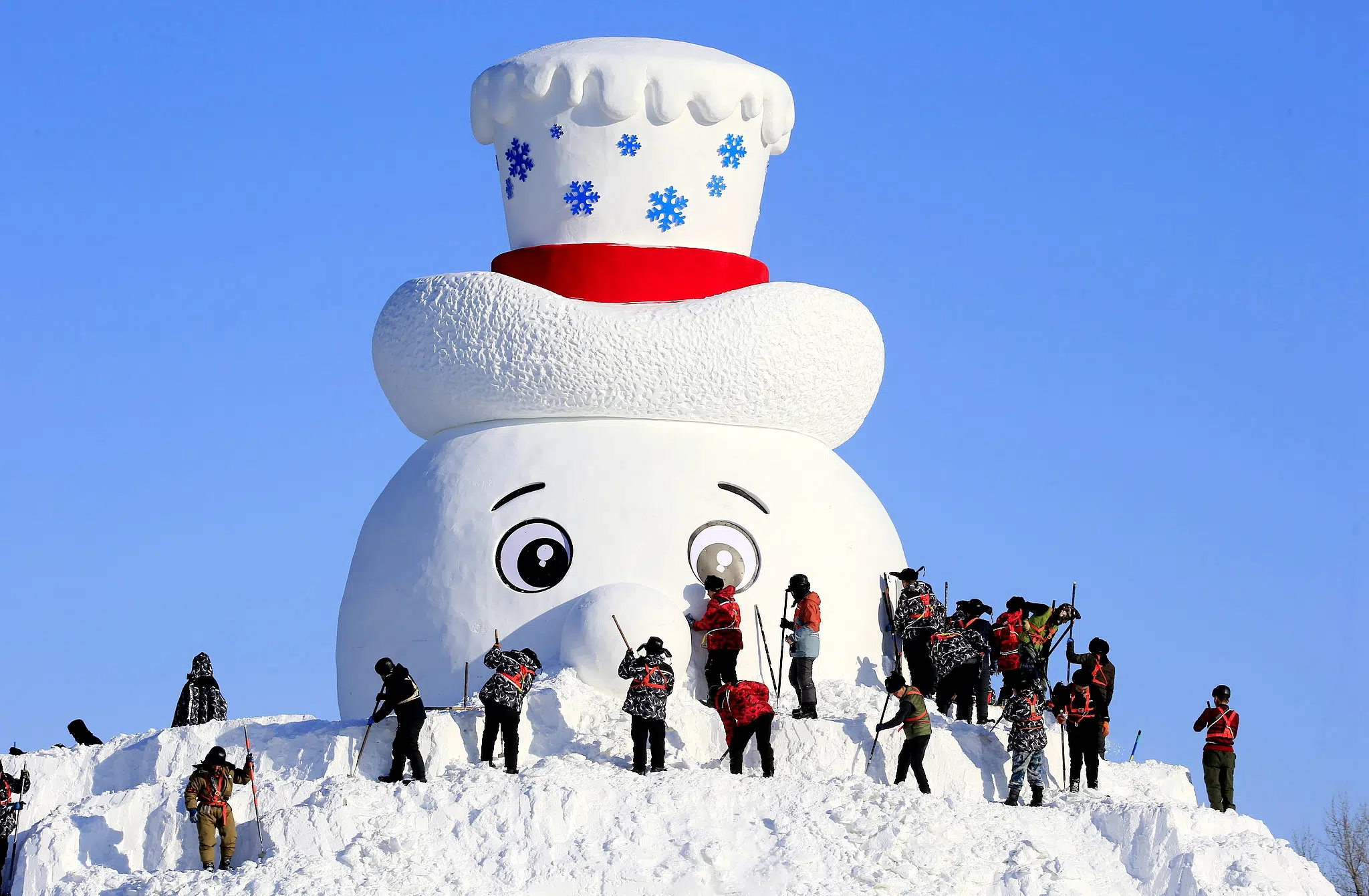
Opposite the ice park across the Songhua River, this is the snow counterpart — enormous carved snow sculptures, best seen in bright daylight. Shadows and sunlight are what give snow its shape.
Best time: Morning to early afternoon, 9:30 am – 2:00 pm, on a clear day right after a snowfall.
Best month: Late December through February.
Don't go at night — there's little illumination, and the sculptures flatten visually.
Smart pairing: Do Sun Island by day + Ice and Snow World the same evening. They're close, and the contrast is perfect. ❄️➡️🧊
Zhaolin Park Ice Lantern Show (兆麟公园冰灯游园会) — The Traditional, Calmer Option
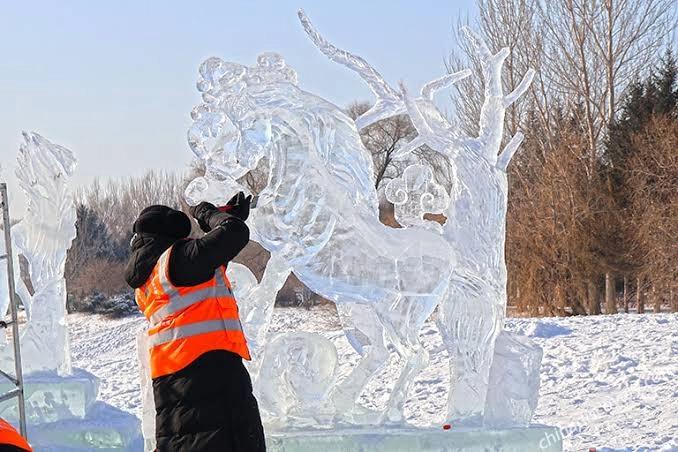
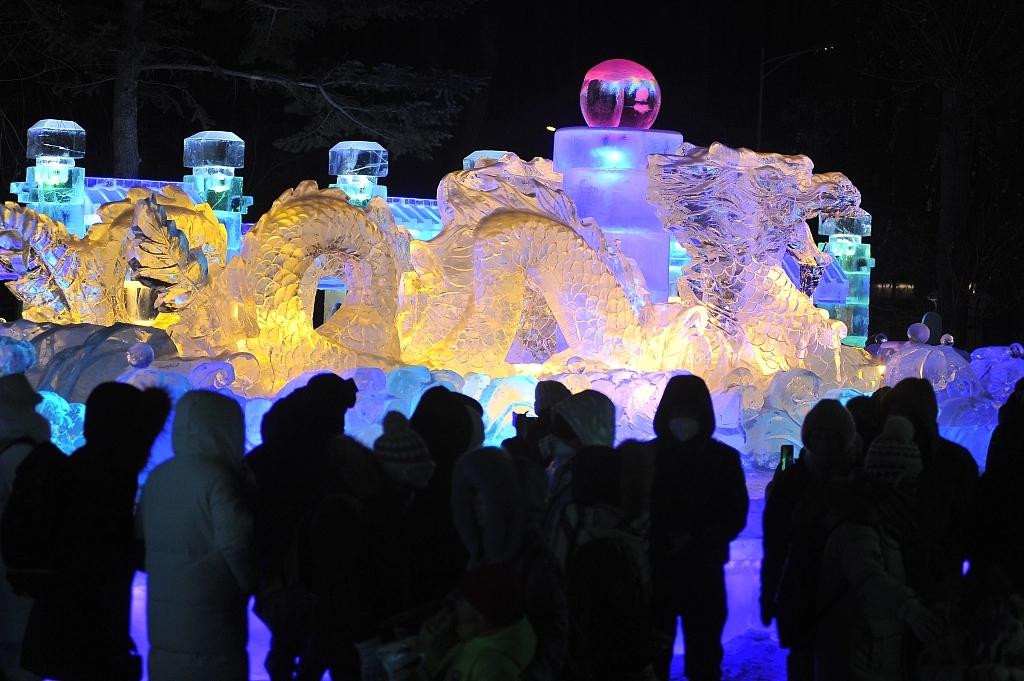
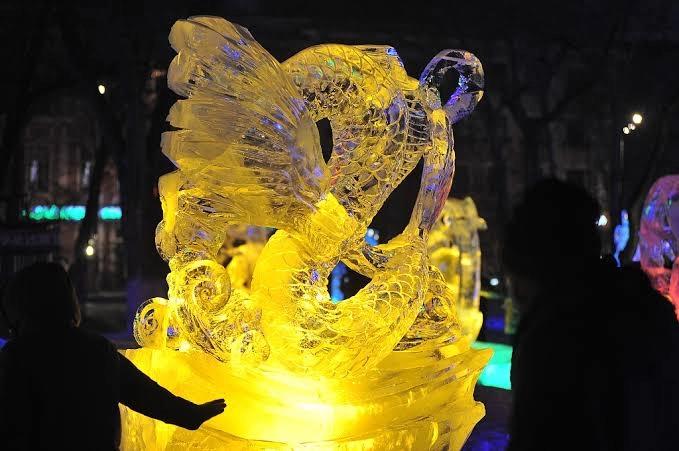
Harbin's original ice lantern festival site, and still the most local feeling of the big three. Smaller, cheaper, and far less crowded.
Best time: After dark, 5:00–8:00 pm.
Best month: Late December through January.
Why go: Intricate traditional lanterns, ice sculptures you can walk among, and room to breathe. Great with kids or if the mega-park feels overwhelming.
Pair with: An evening stroll down Central Street, five minutes away.
Central Street (中央大街) & St. Sophia Cathedral (圣·索菲亚教堂)
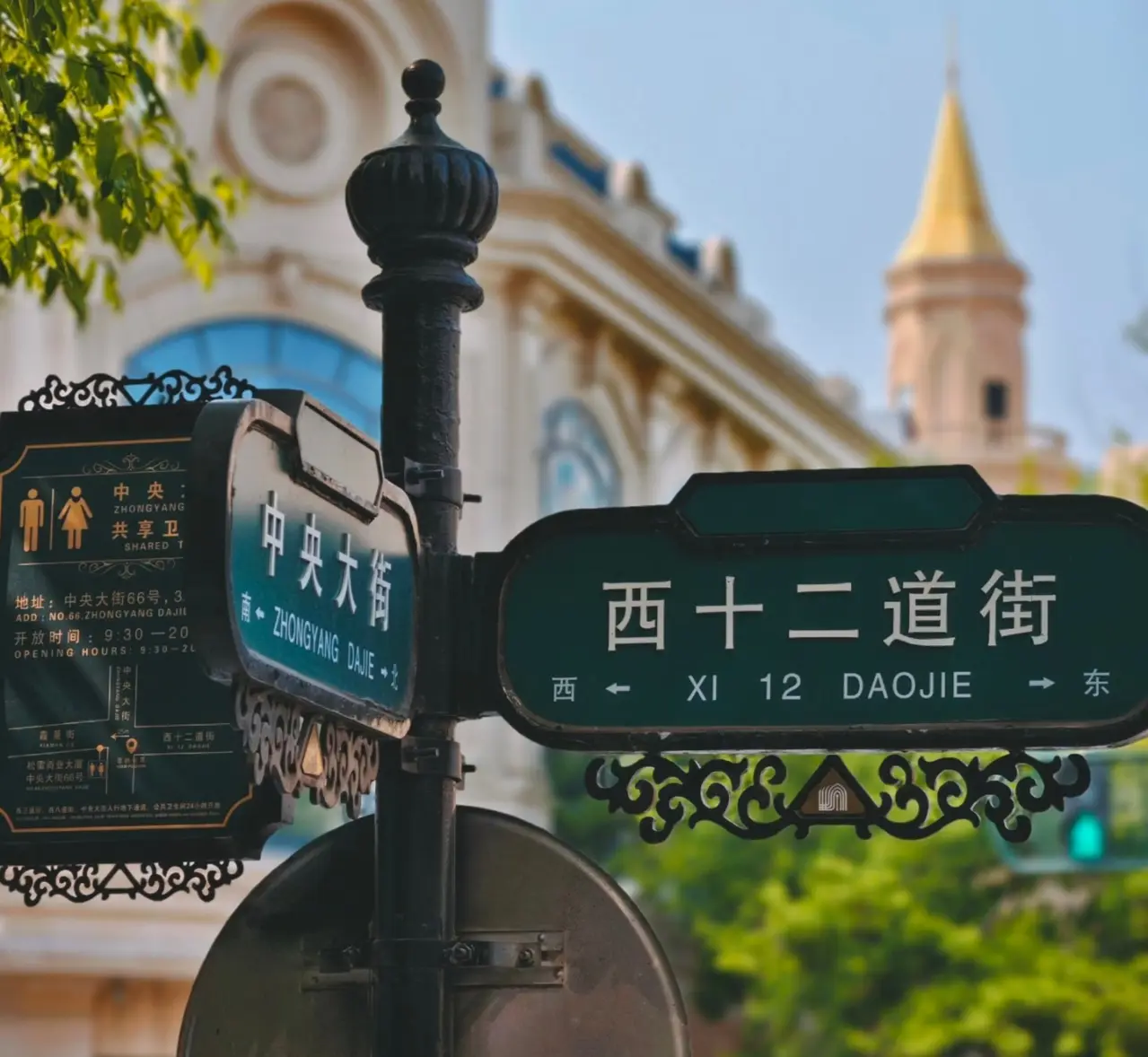
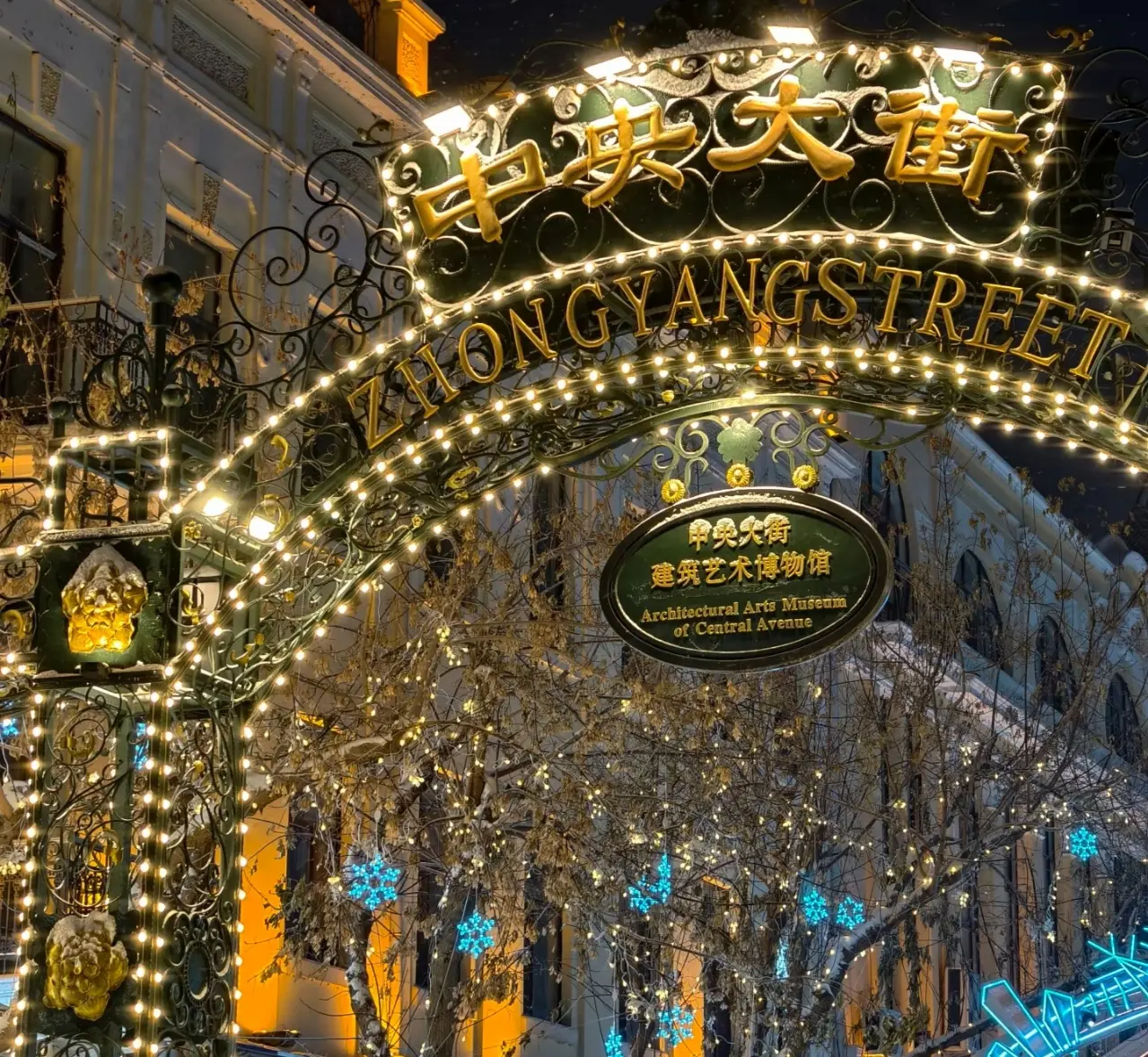
Central Street is magical at dusk (4:00–6:00 pm) when the European facades light up, or at dawn if you want empty cobblestones for photos. December brings Christmas lights; summer evenings bring outdoor beer terraces.
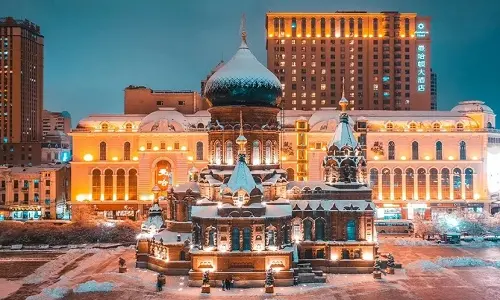
St. Sophia Cathedral photographs best at blue hour (4:00–5:00 pm) or during a fresh snowfall. The interior museum is best visited in the morning when tour groups haven't arrived.
Side Trips: Yabuli (亚布力) & China Snow Town (雪乡)

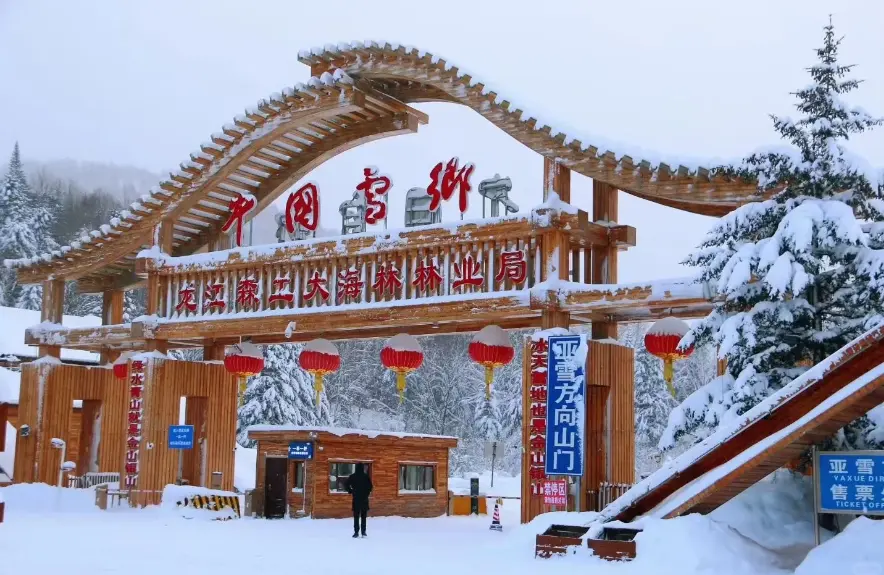
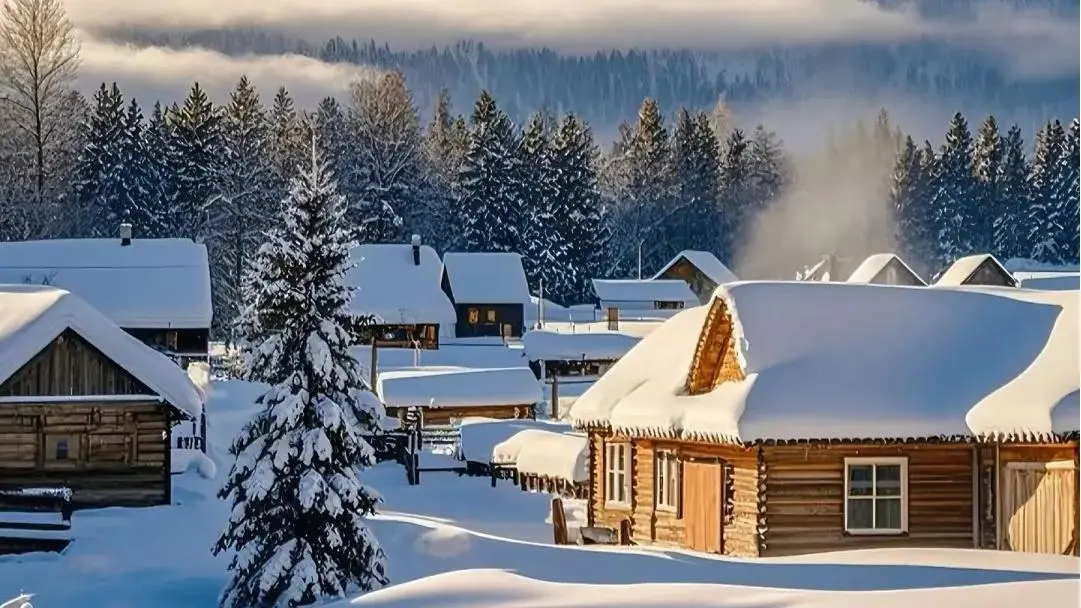
Yabuli Ski Resort: Season runs late November to late March; January–February gives the best snow. Arrive at first lift (8:30 am) for untouched runs.
China Snow Town: Peak "snow mushroom" conditions are January–February, ideally right after a heavy snowfall. Stay overnight — day-trippers miss the lantern-lit village at night. Avoid the CNY week entirely.
Harbin in December: The Quiet Opening Act
Weather: Highs around −10°C, lows near −21°C. Daylight is short — sunset is around 3:50–4:00 pm — so plan outdoor sightseeing for the morning and early afternoon.
What's happening: The city is dressing itself in ice. The Songhua River freezes hard enough to walk on (though always follow local guidance). Ice and Snow World opens in the final week, often with a soft-launch feel — some sculptures still being finished, but tickets easier to get.
Pros:
🟢 Fewer tourists than January
🟢 Lower hotel and flight prices before the holiday surge
🟢 You see the city becoming the Ice City — barges cutting ice blocks, sculptors at work
🟢 Christmas atmosphere along Central Street
Cons:
🔴 Some attractions not fully open until late December
🔴 Very short daylight
🔴 Occasional construction zones at the ice park
Best for: Budget travelers, photographers who want empty streets, and anyone who hates crowds more than they hate cold.
Harbin in January: The Deep Freeze (and the Main Event)
Weather: This is the coldest month. Highs hover around −13°C, lows around −25°C, with cold snaps pushing past −30°C. Wind chill can make it feel like −40°C. Sunset is around 4:20–4:50 pm — slightly longer days than December.
What's happening: Everything. The festival is officially open, all venues are running, and the city is at maximum winter spectacle. This is the best month to visit Harbin for the classic experience.
Pros:
🟢 Every attraction fully operational
🟢 Ice is at its thickest, clearest, and most spectacular
🟢 Crystal-clear skies — excellent photography conditions
🟢 Peak festive energy: fireworks, parades, night markets
Cons:
🔴 Genuinely dangerous cold if you're unprepared
🔴 Highest prices of the year
🔴 Biggest crowds, especially weekends and around New Year
🔴 Phone batteries die in minutes outdoors
Best for: First-time visitors, ice-festival bucket-listers, and anyone who wants the full cinematic Harbin.
Harbin in February: The Sweet Spot?
Weather: Noticeably gentler. Highs climb to −8°C and lows to about −20°C early in the month, warming further by late February. Sunset stretches to 5:00–5:30 pm, giving you more usable daylight.
What's happening: The festival continues through late February. Chinese New Year often falls in late January or February — and that's the wildcard. CNY brings spectacular fireworks and cultural energy, but also domestic travel chaos, packed hotels, and surged prices.
Pros:
🟢 Slightly warmer and brighter than January
🟢 Festival still fully open
🟢 Better for families and cold-sensitive travelers
🟢 Late February = shoulder-season pricing with full spectacle
Cons:
🔴 CNY crowds and price spikes (check the exact date each year)
🔴 Snow can look a little worn by late month
🔴 Some sculptures may show melting damage in a warm spell
Best for: Travelers who want the festival without the brutal January cold, and anyone combining Harbin with a Spring Festival trip.
Beyond Winter: Is Harbin Worth Visiting in Other Seasons?
Yes — but it's a different city. If you're asking when to visit Harbin outside the ice season, here's the honest picture.
Spring (March – May): Slow, Muddy, Then Suddenly Beautiful
Spring in Harbin is less a season than a transition. Don't expect cherry blossoms in March — expect slush.
March: The ice festival closes, the Songhua River thaws, and the streets turn grey and wet. Temperatures swing between −8°C and +2°C. Hotels are cheap, but this is the least photogenic month of the year. 🫠
April: Still cold and windy, with dust storms possible. Daytime highs reach 13°C, but nights hover near freezing. The city shakes off winter slowly. Low crowds, low prices.
May: The payoff month. Temperatures settle between 8°C and 21°C, parks turn green, and the Harbin Lilac Festival fills the city with purple blooms in late May. Locals emerge en masse for riverside walks and outdoor dining. This is the most underrated month for city sightseeing. 🌸
Verdict: Skip March and April unless you're budget-driven. Late May is genuinely lovely — comfortable, green, and crowd-free.
Summer (June – August): China's Cool Escape
Harbin markets itself as a "summer capital" for good reason. While southern China swelters at 38°C, Harbin sits at a comfortable 20–28°C — and the city is built for it.
June: Warm but not hot (15–26°C), long days, and the start of festival season. Riverside cafés and beer gardens open up. A sweet spot before school holidays.
July: The hottest and liveliest month (19–28°C). The Harbin International Beer Festival takes over the riverside — a huge, friendly, outdoor party. Also peak domestic summer holiday season, so book ahead. 🍺
August: Still warm (17–26°C) and slightly less frenetic than July. The Harbin Summer Music Concert — the city is a UNESCO "Music City" — brings orchestras and open-air performances. Great month for culture.
What to do in summer:
🚢 Cruise the Songhua River
🏛️ Tour the Harbin Grand Theatre, a striking piece of contemporary architecture
🌳 Wander Sun Island Park and the riverside wetlands
🥟 Eat outdoors on Central Street at its most relaxed
🎶 Catch free concerts and street performances
Verdict: The best non-winter window. June and August are calmer than July; July is the most fun if you don't mind crowds.
Autumn (September – November): The Hidden Gem
September: Arguably the most comfortable month of the entire year — 9–21°C, low humidity, brilliant blue skies, and golden light. The summer crowds leave, prices drop, and the city is yours. This is the connoisseur's pick. 🍁
October: Still pleasant early on (around 12°C), but cools fast. Fall foliage peaks, and the first snowflakes can appear by late October. A moody, beautiful month for photography.
November: Winter arrives in earnest. The river starts to freeze, ice blocks are cut, and the city begins building its ice kingdom. Cold, grey, and quiet — the calm before the spectacle.
Verdict: September is the single best non-winter month — better weather than May, fewer people than summer, and the best light of the year.
Off-Season Comparison
Month
Temp Range
Crowds
Prices
Best For
March
−8 to +2°C
🟢 Low
💰 Low
Budget travelers, avoiding cold
April
+1 to +13°C
🟢 Low
💰 Low
Cheap city breaks
May
+8 to +21°C
🟡 Medium
💰 Low
Lilacs, comfortable sightseeing
June
+15 to +26°C
🟡 Medium
💰 Moderate
Early summer, river life
July
+19 to +28°C
🔴 High
💰💰 High
Beer festival, warm nights
August
+17 to +26°C
🟠 High
💰💰 High
Music festival, families
September
+9 to +21°C
🟢 Low
💰 Low
Best overall non-winter month
October
0 to +12°C
🟢 Low
💰 Low
Foliage, early snow
November
−9 to +1°C
🟢 Low
💰 Low
Watching winter arrive
Crowds, Prices & the Hidden Holiday Calendar
Timing isn't just about weather — it's about who else is there.
Period
Crowds
Prices
Notes
Early Dec
🟢 Low
💰 Low
Best value winter window
Christmas – New Year
🟠 High
💰💰 High
Domestic holiday + international tourists
Jan 5 – Feb 5
🔴 Peak
💰💰💰 Highest
Festival fully open, ideal conditions
Chinese New Year
🔴 Extreme
💰💰💰 Highest
Book months ahead; transport chaos
Late Feb
🟡 Medium
💰 Moderate
Warmest festival weeks, softer rates
May, Sep
🟢 Low
💰 Low
Best non-winter value
Jul – Aug
🟠 High
💰💰 High
Summer holiday season
May 1–5 (Labour Day)
🔴 Extreme
💰💰 High
Domestic "golden week"
Oct 1–7 (National Day)
🔴 Extreme
💰💰 High
Biggest travel week in China
Weekends matter too. Harbin locals and regional tourists flood the ice park on Saturday nights. If your schedule allows, visit Sunday to Thursday.
Week-by-Week Through Peak Season (December – February)
This is the granular calendar that most guides skip. If your dates are flexible, use it to find the exact sweet spot.
Window
What's Open
Crowds
Prices
Verdict
Nov 15–30
Ice forming, parks closed
🟢 Low
💰 Low
Preview only — no ice city yet
Dec 1–15
Parks under construction
🟢 Low
💰 Low
Cheapest winter flights; gamble on weather
Dec 20–25
Ice World soft-opens
🟡 Medium
💰 Moderate
Best value for the real experience
Dec 25–Jan 1
Fully open
🟠 High
💰💰 High
Christmas/New Year energy, long queues
Jan 1–5
Fully open
🔴 Peak
💰💰💰 Highest
Busiest domestic holiday window
Jan 5–Feb 5
Fully open, official festival
🔴 Peak
💰💰💰 Highest
The gold-standard window
Chinese New Year week
Fully open
🔴 Extreme
💰💰💰 Highest
Spectacular but exhausting; book months ahead
Mid–Late Feb
Fully open
🟡 Medium
💰 Moderate
Warmer, brighter, better value
Late Feb–Early Mar
Closing down
🟢 Low
💰 Low
Risk of melting sculptures
What a Harbin Trip Actually Costs by Season
Rough per-person estimates for a 3-day trip, excluding flights, in Chinese yuan:
Style
Accommodation / Night
Food / Day
Tickets & Transport
3-Day Total
Budget
100–200
80–120
400–500
1,200–1,800
Mid-range
300–600
150–250
500–700
2,300–3,500
Upscale
800–1,500+
400+
700–1,000
5,000+
Season multiplier:
Early December / late February: −20% to −30%
January 5 – February 5: baseline to +40%
Chinese New Year week: +60% to +100%, with scarce availability
September / May: −30% to −40% versus winter peak
Harbin Events Calendar: What Happens When
When
Event
Why It Matters
Jan 5
Ice and Snow Festival official opening
Fireworks, full illuminations, ceremonial start
Late Jan / Feb
Chinese New Year
Fireworks and festivities — but peak crowds
15th day of CNY
Lantern Festival
Ice lantern displays at their most atmospheric
Late May
Harbin Lilac Festival
The city's prettiest off-season moment
June
Dragon Boat Festival
River races and traditional food
July
Harbin International Beer Festival
The city's biggest summer party
August
Harbin Summer Music Concert
Open-air classical and folk performances
September
Mid-Autumn Festival
Mooncakes, family reunions, clear skies
Oct 1–7
National Day Golden Week
Avoid unless you love crowds
Late Dec
Ice parks open
The season unofficially begins
What to Pack for Harbin in Winter (and How to Survive −25°C)
This deserves its own guide - see our full Harbin winter clothing & packing guide - but here's the essential kit:
Clothing system (the three-layer rule):
Base layer: thermal merino or synthetic long johns — not cotton
Mid layer: fleece or down vest
Outer layer: long, windproof down parka with a hood
Extremities (where cold actually hurts):
🧤 Insulated mittens (warmer than gloves) + thin liner gloves for phone use
🧦 Wool socks + insulated, waterproof boots with thick soles
🎩 Fur-lined hat that covers the ears + a neck gaiter or balaclava
🥾 Consider heated insoles — a game-changer
Tech & extras:
🔋 Power bank (keep it in an inside pocket — cold kills batteries)
📱 Keep your phone zipped inside your coat between shots
♨️ Disposable hand warmers (buy them locally, dirt cheap)
🧴 Heavy moisturizer and lip balm — the air is bone-dry
🕶️ Sunglasses — snow glare is real
The Best Time to Visit Harbin for Your Travel Style
"Best" is personal. Here's how different travelers should choose their window.
Traveler Type
Recommended Window
Why
First-time visitors
Jan 5 – Feb 5
Everything open, maximum spectacle
Families with kids
Late Dec – early Jan, or late Feb
Full festival, slightly gentler cold
Budget backpackers
Early December or late February
Same attractions, 20–30% cheaper
Photographers
Mid – late January
Clear skies, low sun, dramatic blue hour
Couples / honeymooners
Late December
Christmas lights, ice castles, cozy cafés
Older travelers
Late February or September
Milder temperatures, fewer crowds
Skiers & snowboarders
January – February (Yabuli)
Best snow conditions of the season
Crowd avoiders
Early December or September
Near-empty streets and parks
A few notes on the trade-offs:
Families should favor late February: the ice park is still fully open, but daytime temperatures are gentler and daylight lasts longer. Keep outdoor sessions to 90 minutes and plan warm indoor breaks.
Photographers should target mid-to-late January. The air is at its clearest, snow is crisp rather than slushy, and the low winter sun produces long shadows. Remember that golden hour starts around 2:30 pm.
Budget travelers get the best deal in early December: the park is open, but flights and hotels haven't hit peak pricing. The risk is that a few sculptures may still be under construction.
If Your Dates Are Already Fixed
Not everyone can choose the perfect week. Here's how to make the most of each scenario.
You're coming in November
The ice festival hasn't opened yet. Manage expectations and pivot to city culture: St. Sophia Cathedral, Central Street, the Heilongjiang Provincial Museum, the Jewish heritage sites, and Harbin's excellent Russian-influenced food scene. The Songhua River begins to freeze — atmospheric, but don't walk on it until locals do.
You're coming in early December
Check the official opening date for that year's Ice and Snow World before booking — it usually lands around December 20–25. If you arrive before it opens, you'll still get snow, Christmas lights, and cheap prices. Book flexible tickets where possible.
You're coming in March
The ice festival is closed or closing. Expect melting streets and grey skies. Your best options: museum-heavy sightseeing, a food-focused trip, or a side trip to Yabuli for late-season skiing. Hotels are at their cheapest.
You're coming in summer
You're not getting ice, but you're getting Harbin at its most livable. Focus on the river, parks, architecture, beer festival, and food. Use the city as a cool-weather base for exploring Heilongjiang's forests and wetlands.
Sample Itineraries by Season
2-Day Winter Classic (January)
Day 1: Morning at St. Sophia Cathedral → walk Central Street → warm up with guobaorou (sweet-and-sour pork) → afternoon at Sun Island Snow Sculpture Expo → evening at Ice and Snow World (arrive 3 pm).
Day 2: Morning Songhua River walk and Siberian Tiger Park → lunch of iron-pot stew → Zhaolin Park ice lanterns at dusk → frozen pear and Madier ice cream on Central Street.
3-Day Deep Winter (Best Overall)
Add a day trip to China Snow Town or Yabuli Ski Resort — both are at their best from January to mid-February. Overnight in a snow-covered village for the full fairy-tale effect. 🏔️
2-Day Summer Escape (July–August)
Day 1: Songhua River cruise → Sun Island Park → evening at the beer festival. Day 2: Harbin Grand Theatre architecture tour → Central Street cafés → Russian-heritage food → sunset by the river.


Traveler Discussions
Questions from travelers