
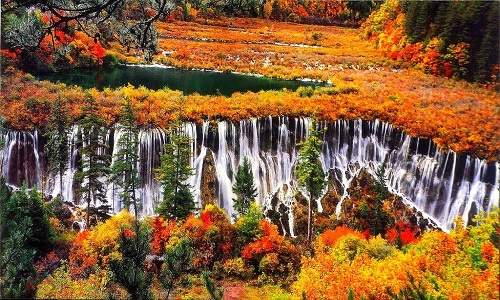
In a valley where the same lakes wear entirely different costumes each season, asking for the best time to visit Jiuzhaigou is really asking what you want to see. Autumn paints the forest gold and crimson over turquoise water, summer sends the waterfalls into full thunder, winter freezes them into blue ice, and spring slips in between with wildflowers and near-empty boardwalks. This guide breaks down Jiuzhaigou weather, temperatures, foliage timing, crowds and prices month by month, so you can match your trip to the season that fits you.
1. Quick Answer: When Is the Best Time to Visit Jiuzhaigou?
But "best" depends on what you're looking for. Jiuzhaigou transforms dramatically with the seasons, and each one has its own magic. Here's a snapshot to help you decide. Pair the right season with the right number of days in our Jiuzhaigou itinerary guide.
You Should Go In... | If You Want... | Crowd Level | Rating |
|---|---|---|---|
Mid-October | Iconic autumn colors, the "postcard" Jiuzhaigou look | Very high | 5/5 |
Late September | Early autumn colors with fewer crowds than October | Moderate-High | 4/5 |
July | Thundering waterfalls and lush green valleys | High | 4/5 |
May | Spring flowers, mild weather, and thinner crowds | Moderate | 4/5 |
January | Snow-covered wonderland, frozen waterfalls, no crowds | Very low | 3/5 |
Early Oct (Golden Week) | — Avoid — National Day holiday = max crowds & prices | Extreme | 2/5 |
2. Jiuzhaigou Seasons at a Glance
Jiuzhaigou sits at 2,000–3,100 meters above sea level, giving it a highland climate with four distinct seasons. Day-to-night temperature swings of 10–15°C are common year-round. Here's what each season feels like — for the full park orientation (valleys, lakes and shuttle logic), start with our Jiuzhaigou travel guide.
Season | Months | Temp (Day) | Scenery Vibe | Crowds | Ticket Price |
|---|---|---|---|---|---|
Autumn | Sep – Nov | 8–18°C | Golden forests + turquoise lakes | Very high (Oct) | ¥280 (peak) |
Summer | Jun – Aug | 16–23°C | Lush green + thundering waterfalls | High | ¥280 (peak) |
Spring | Apr – May | 9–18°C | Fresh green + wildflowers | Moderate | ¥280 (peak) |
Winter | Dec – Mar | -5–5°C | Snow + blue ice + silence | Very low | ¥160 (off-season) |
3. Jiuzhaigou in Autumn: When the Fall Colors Peak
Autumn, the crown jewel season — when Jiuzhaigou looks exactly like the postcards.
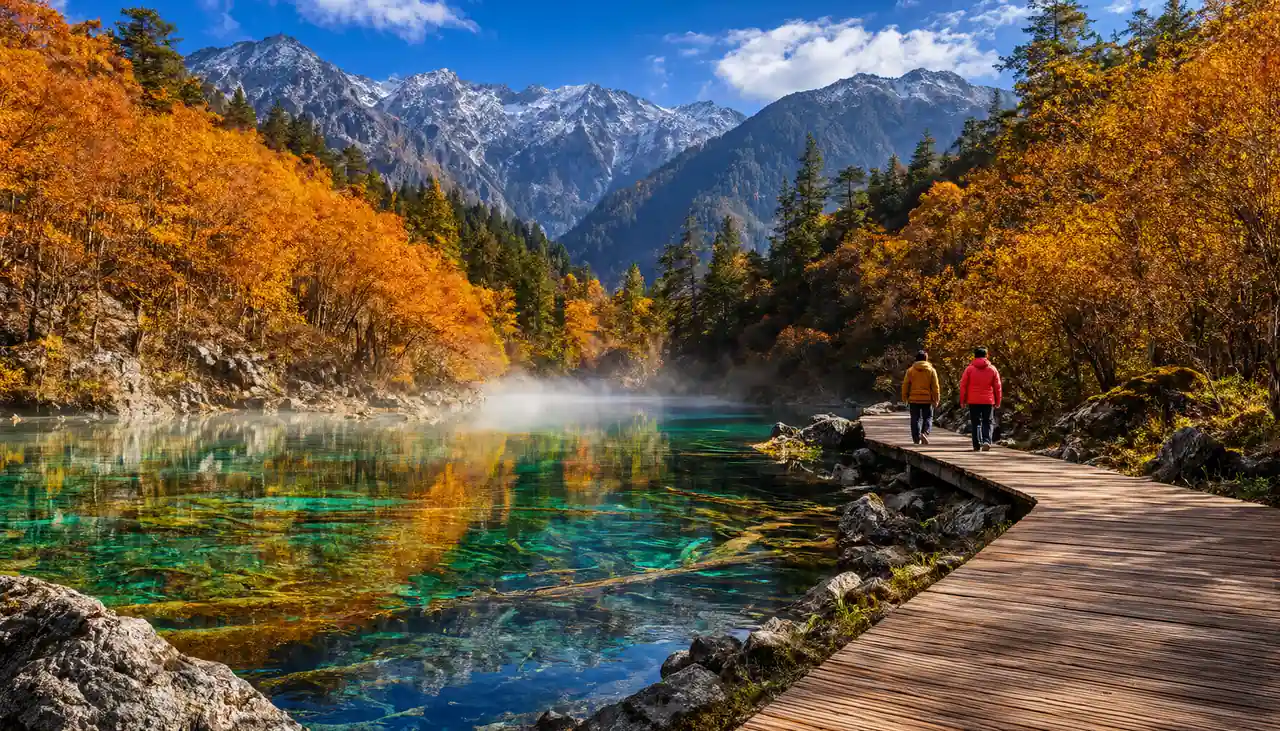
Autumn is Jiuzhaigou's most famous and most crowded season. As temperatures drop, the forest canopy transforms from green to layer upon layer of gold, amber, crimson, and deep red. The colors reflect in the sapphire lakes, creating a double-exposure effect that photographers travel across the world to see.
What Makes Autumn Special
The "double color" effect: Colorful forests above, mirrored in turquoise lakes below
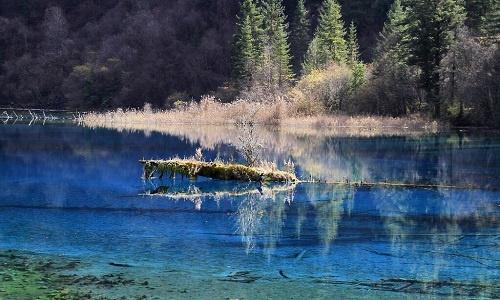
Five Flower Lake at its best: The most photographed spot in the park reaches peak saturation
Crisp, clear skies: Rain decreases sharply after summer monsoon season
Perfect hiking weather: Cool days (10–18°C) are ideal for walking the boardwalks
Autumn Timeline: When Do Leaves Change?
Foliage timing varies slightly each year based on temperature and rainfall, but here's the typical progression:
Period | Color Change | What It Looks Like | Crowds |
|---|---|---|---|
Early Oct (Oct 1–10) | 10–35% | Higher elevations start turning. Lower valleys still mostly green. | Extreme (Golden Week) |
Mid-Oct (Oct 10–20) | 50–70% | Colors deepen rapidly. Red and gold spread through mid-elevations. | Very high |
Late Oct – Early Nov | 70–95% (PEAK) | Full spectrum of red, orange, gold, and remaining green. The park looks like a painting come to life. | High (but less than early Oct) |
Mid-Nov (Nov 8–20) | 30–60% leaves fallen | Leaves begin falling noticeably. Lower Shuzheng Valley retains color longest. | Low |
4. Jiuzhaigou in Summer: Waterfalls and the Rainy Season
Summer, lush green and thundering waterfalls — cool mountain air, nature at its most vibrant.
Summer is Jiuzhaigou's green season. The forests are thick and emerald, waterfalls are at their fullest and most dramatic, and the cool mountain air offers a perfect escape from the sweltering heat in Chengdu and other lowland cities.
What Makes Summer Special
Waterfalls at their peak: Nuorilang and Pearl Beach Waterfalls are massive and thundering
Cool escape: Average 16–23°C is a relief from 35°C+ Chengdu summers
Lush and vibrant: Deep green forests contrast brilliantly with blue lakes
Family-friendly: School holidays make it popular for family trips
Summer Weather: Rainy Season Realities
Summer is also Jiuzhaigou's rainy season. Here's what to expect:
Month | Rainfall | Rainy Days | What to Know |
|---|---|---|---|
June | ~85–95 mm | ~15 days | Early summer — less rain than July/Aug, lusher foliage building |
July | ~100–105 mm | ~16–18 days | Wettest month — afternoon showers are common, mist can obscure views |
August | ~80–90 mm | ~14–16 days | Still rainy but improving. Humidity is noticeable. School holiday crowds peak |
5. Jiuzhaigou in Spring: Wildflowers and Fewer Crowds
Spring, the underrated shoulder season — melting snow, blooming wildflowers and fewer crowds.
Spring is one of Jiuzhaigou's most underrated seasons. Snow melts from the peaks, water levels rise, wildflowers bloom, and the forests turn a fresh, bright green. Crowds are smaller than autumn or summer, and hotel prices are more reasonable.
What Makes Spring Special
Thinner crowds: Fewer tourists than peak summer and autumn seasons
Lower prices: Hotels and flights are cheaper than peak October
Melting snow scenery: Snow-capped peaks contrast with green valleys below
Wildflowers: Azaleas, rhododendrons, and mountain flowers bloom from April onward
Comfortable temperatures: 9–18°C is ideal for walking and hiking
Spring by Month
April
Early spring still feels cool, especially in the mornings and at higher elevations. Snow gradually melts from the valley floor, and the first hints of green appear. Late April brings blooming flowers at lower elevations. Crowds are still light. This is a budget-friendly and peaceful time to visit.
May
May is arguably spring's best month. The forests are fully green, water levels are healthy and stable, and temperatures are pleasant (10–20°C). Wildflowers are in bloom across the hillsides. Crowds are moderate — busier than April but nothing compared to summer or autumn. This is a fantastic "sleeper" month for a balanced trip.
6. Jiuzhaigou in Winter: Snow, Ice and the Snow Season
Winter, snow-covered solitude — frozen waterfalls, blue ice and almost no crowds.
Winter is Jiuzhaigou's quietest season — but it's far from boring. The valleys transform into a snow-dusted fairy tale. Waterfalls freeze into massive blue ice sculptures. Lakes develop ice patterns that look like abstract art. And with off-season prices and almost no crowds, you can experience the park in peaceful solitude.
What Makes Winter Special
Frozen waterfalls: Nuorilang and Pearl Beach become giant ice sculptures with eerie blue light
Virtually no crowds: You might have entire boardwalk sections to yourself
Cheapest prices: Off-season tickets (¥160 vs ¥280) and deeply discounted hotels
Blue ice phenomenon: Arrow Bamboo Lake develops crystal-clear blue ice that looks like gemstone
Ice Waterfall Festival: The annual Jiuzhaigou International Ice Waterfall Festival opens in early January
Winter Lakes — Which Ones Freeze?
Not all lakes freeze, and some freeze only partially — which makes winter photography incredibly interesting:
Lake / Waterfall | Freezes? | Winter Highlights |
|---|---|---|
Five Flower Lake | Mostly no — springs keep it liquid | Emerald-green water surrounded by snow-covered trees — striking contrast |
Nuorilang Waterfall | Partially — massive ice wall | China's widest travertine waterfall becomes a 100m+ crystal ice wall |
Pearl Beach Waterfall | Partially — blue ice formations | Natural blue ice sculpture with water still flowing underneath |
Arrow Bamboo Lake | Yes — fully freezes | Crystal-clear blue ice surface; cracks form natural abstract art patterns |
Long Lake | Yes — fully freezes | 7km-long frozen lake surrounded by snow peaks. A vast, silent white expanse |
Panda Lake Waterfall | Partially — icicle formations | Icicles hang like an ice castle; dramatic for photos |
7. Jiuzhaigou Weather and Temperature, Month by Month
A closer look at every month of the year, with temperatures, rainfall, scenery highlights, and crowd levels.
Winter Months (Dec–Feb)
Month | Temp (day) | Rain | Crowds | Rating | What to expect |
|---|---|---|---|---|---|
January | -5–3°C | ~8 mm | Very low | 3/5 | Frozen waterfalls at their most dramatic. Ice Waterfall Festival in early January. Perfect for silence-seekers and photographers who love winter. Dress very warm. |
February | -3–5°C | ~20 mm | Low | 3/5 | Still wintry but with milder days. Chinese New Year (if in Feb) can bring short crowds. Snow at higher elevations, occasional thaw in lower valleys. |
Early Spring (Mar–Apr)
Month | Temp (day) | Rain | Crowds | Rating | What to expect |
|---|---|---|---|---|---|
March | 2–10°C | ~50 mm | Low | 3/5 | Snow melts, water levels rise. Early March still cold and brown; late March brings first green. Budget-friendly and peaceful. Good for tranquility seekers. |
April | 7–16°C | ~75 mm | Moderate | 4/5 | Comfortable daytime temperatures. Forests turn greener, lakes regain clarity after winter ice. Wildflowers begin blooming. No extreme crowds. |
Late Spring & Early Summer (May–Jun)
Month | Temp (day) | Rain | Crowds | Rating | What to expect |
|---|---|---|---|---|---|
May | 10–20°C | ~85 mm | Moderate | 4/5 | One of the most underrated months. Fully green forests, healthy water levels, comfortable temperatures. Moderate crowds before summer holidays. Excellent balance. |
June | 13–22°C | ~85 mm | Moderate+ | 4/5 | Waterfalls strengthen. Forests deepen in green. Afternoon showers begin but full monsoon hasn't arrived yet. Great time before peak summer crowds. |
Peak Summer (Jul–Aug)
Month | Temp (day) | Rain | Crowds | Rating | What to expect |
|---|---|---|---|---|---|
July | 15–24°C | ~105 mm | High | 3/5 | Most dramatic waterfalls of the year. But also the wettest month — afternoon rain and mist are common. School holidays bring big crowds. Start early. |
August | 15–23°C | ~90 mm | High | 3/5 | Continued rainy pattern with high humidity. Forests at their most saturated green. Still popular with families during summer break. Book early. |
Autumn (Sep–Nov)
Month | Temp (day) | Rain | Crowds | Rating | What to expect |
|---|---|---|---|---|---|
September | 10–19°C | ~85 mm | Moderate+ | 4/5 | Turning point season. Rain decreases, skies clear, cooler air arrives. Early autumn colors start at higher elevations late in the month. Photographers love late September. |
October | 6–16°C | ~60 mm | Very high | 5/5 | The crown jewel — peak autumn foliage. Forests explode into red and gold, perfectly mirrored in the lakes. Avoid Oct 1–7 (Golden Week). Best color: Oct 20–Nov 7. |
Late Autumn & Early Winter (Nov–Dec)
Month | Temp (day) | Rain | Crowds | Rating | What to expect |
|---|---|---|---|---|---|
November | 1–10°C | ~35 mm | Low | 3/5 | Peak foliage fades by mid-month. Early November still has autumn charm with much fewer people. Temperatures drop steadily. Off-season pricing kicks in Nov 16. |
December | -3–4°C | ~10 mm | Very low | 3/5 | Winter returns — snow becomes more frequent, especially at higher elevations. Visitor numbers drop sharply. Off-season prices apply. Ice begins forming on waterfalls. |
8. What to Pack for Jiuzhaigou Weather in Every Season
Jiuzhaigou's plateau climate means cool temperatures year-round and dramatic differences between day and night. Here's what to expect and what to pack:
Month | Avg High | Avg Low | Rainfall | Rainy Days | What to Wear |
|---|---|---|---|---|---|
Jan | 3°C | -5°C | 8 mm | ~5 | Heavy winter coat, thermals, gloves, hat, warm boots |
Feb | 5°C | -3°C | 20 mm | ~6 | Winter coat, layers, warm accessories |
Mar | 10°C | 2°C | 50 mm | ~10 | Jacket + fleece layers, scarf, warm shoes |
Apr | 16°C | 7°C | 75 mm | ~13 | Light jacket + sweater, layers for morning/evening |
May | 20°C | 10°C | 85 mm | ~14 | Long sleeve + light jacket, rain shell, comfortable shoes |
Jun | 22°C | 13°C | 85 mm | ~15 | T-shirts + light jacket, rain jacket, sunscreen |
Jul | 24°C | 15°C | 105 mm | ~17 | Summer clothes + rain jacket, umbrella impractical at altitude |
Aug | 23°C | 15°C | 90 mm | ~15 | Summer clothes + light fleece for evenings, rain gear |
Sep | 19°C | 10°C | 85 mm | ~14 | Long sleeve + jacket, layers, rain shell (decreasing rain) |
Oct | 16°C | 6°C | 60 mm | ~10 | Warm jacket + fleece, layers, scarf — crisp and cool |
Nov | 10°C | 1°C | 35 mm | ~7 | Winter coat, warm layers, hat and gloves by late Nov |
Dec | 4°C | -3°C | 10 mm | ~4 | Heavy winter gear, thermals, waterproof boots, gloves |
Layering matters on the way in and out, too: if you are sequencing Sichuan cities around this trip, cross-check our best time to visit Chengdu guide before fixing your arrival day.
9. Autumn Foliage: Peak Dates and Best Color Spots
Autumn is the superstar season at Jiuzhaigou — here's everything you need to know to catch the colors at their peak.
Why Jiuzhaigou Autumn Is Different
Jiuzhaigou's autumn foliage isn't just pretty — it's unique because of the double-reflection effect. The colorful forest canopy is mirrored in the crystal-clear lakes below, doubling the visual impact. The white travertine lake bottoms and mineral-rich water create that impossible turquoise-blue, which contrasts dramatically with the red and gold leaves.
Best Spots for Autumn Colors
Five Flower Lake (五花海)
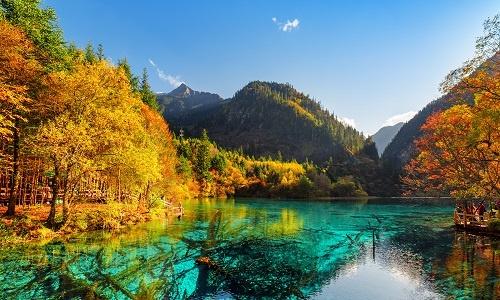
The most iconic autumn view in Jiuzhaigou. From the upper observation deck, you look down onto a lake of five simultaneous colors, surrounded by forest at peak autumn. Arrive 9:30–10:30 AM for the clearest color saturation before wind disturbs the surface.
Shuzheng Lakes (树正群海)
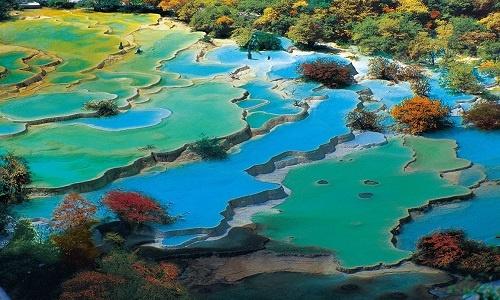
Nineteen terraced lakes cascading through the forest create a "necklace of emeralds." In autumn, the golden and red trees frame each lake. Morning light filters through mist for "God ray" effects — 9:00–10:30 AM is magical.
Long Lake (长海)
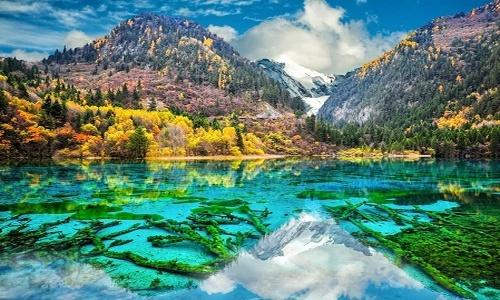
At 3,100m, Long Lake's surrounding forests turn color first (earlier in October). The combination of snow-capped peaks, autumn forest, and a 7km-long alpine lake is breathtaking. Best in late afternoon for warm side-light.
Panda Lake & Arrow Bamboo Lake
The stretch of boardwalk between Arrow Bamboo Lake and Panda Lake in Rize Valley is one of the most beautiful autumn walks. The dense forest canopy turns a brilliant mix of gold and red, with lake views through the trees.
If the peak-foliage window is the reason for your trip, give yourself three days rather than one: the 3-day Western Sichuan highlands tour builds the buffer that a same-day return cannot.
10. Best Time for Jiuzhaigou Photography
Jiuzhaigou is one of the most photographed places in China — and for good reason. Here's when to go for the best shots:
Photo Goal | Best Season | Best Time of Day | Top Spot |
|---|---|---|---|
Iconic autumn colors | Oct 20 – Nov 5 | 9:30–10:30 AM | Five Flower Lake overlook |
Reflections (mirror lakes) | Autumn (calmest air) | Before 9:00 AM | Mirror Lake (Jing Hai) |
Waterfalls at full flow | July – August | Morning (before rain) | Pearl Beach Waterfall, Nuorilang |
Rainbows in mist | Summer (rainy season) | 2:00–4:00 PM | Pearl Beach Waterfall base |
Blue ice & snow | January – February | Midday (sun on ice) | Arrow Bamboo Lake, Nuorilang Ice Fall |
Golden hour / sunset | Autumn (clear skies) | 17:00–18:00 | Long Lake (snow peaks at golden hour) |
No crowds / solitude | Winter (Dec – Feb) | All day | Entire park — almost empty |
Pro photography tips:
Arrive at 7:30 AM — the first 90 minutes have the softest light and fewest people in your frame.
Bring a polarizing filter — cuts glare on water surfaces, enhances lake colors and foliage saturation.
Wide-angle lens (16-35mm) for big landscape shots at Five Flower Lake and Long Lake.
Extra batteries — cold weather (autumn/winter) drains batteries much faster at altitude.
Use the boardwalks — stay on marked paths. Tripods are allowed but be mindful of other visitors.
11. Jiuzhaigou Peak Season: Crowds and Prices by Month
When you go dramatically affects both how many people you'll share the park with and how much you'll pay — and so does how you arrive; our Chengdu-to-Jiuzhaigou transport guide covers the high-speed rail option that compresses the approach to under two hours. Here's the breakdown:
Period | Crowd Level | Hotel Prices | Ticket Price | Book Ahead |
|---|---|---|---|---|
National Day (Oct 1–7) | Extreme | 2–3x normal | ¥280 (peak) | 2–4 weeks |
Mid-October (peak foliage) | Very High | 1.5–2x normal | ¥280 (peak) | 1–2 weeks |
July – August (summer) | High | 1.2–1.5x normal | ¥280 (peak) | 3–7 days |
Late September | Moderate-High | 1.2x normal | ¥280 (peak) | 3–7 days |
May – June | Moderate | Normal | ¥280 (peak) | 2–3 days |
April, November | Low-Moderate | Normal / slight discount | ¥280 / ¥160* | 1–2 days |
December – March (winter) | Very Low | 50–70% off | ¥160 (off-season) | Same day OK |
*Nov 1–15 is peak season price; Nov 16+ switches to off-season.
Three windows where Jiuzhaigou gives you the most for your money:
Late May to early June: Peak-season scenery (lush green, good water flow) at moderate prices and crowds.
Late November: Off-season prices kick in Nov 16, and you might still catch some late autumn color in the lower valleys.
January (excluding Chinese New Year): The cheapest time to visit — deeply discounted hotels, cheap tickets, and almost no crowds. But you need to be okay with cold weather.
No single month owns Jiuzhaigou — October owns the postcards, but May owns the quiet, July owns the thunder and January owns the ice. Fix your priority first, then let the season select itself. If your dates fall inside a peak window, a private series removes the ticket-capture scramble entirely: the 2-day Chengdu-to-Jiuzhaigou tour and the 4-day Jiuzhaigou, Huanglong & Songpan tour run year-round with hotels and entry permits arranged in advance. Start planning your trip if you want the timing engineered around your calendar.

Traveler Discussions
Questions from travelers