
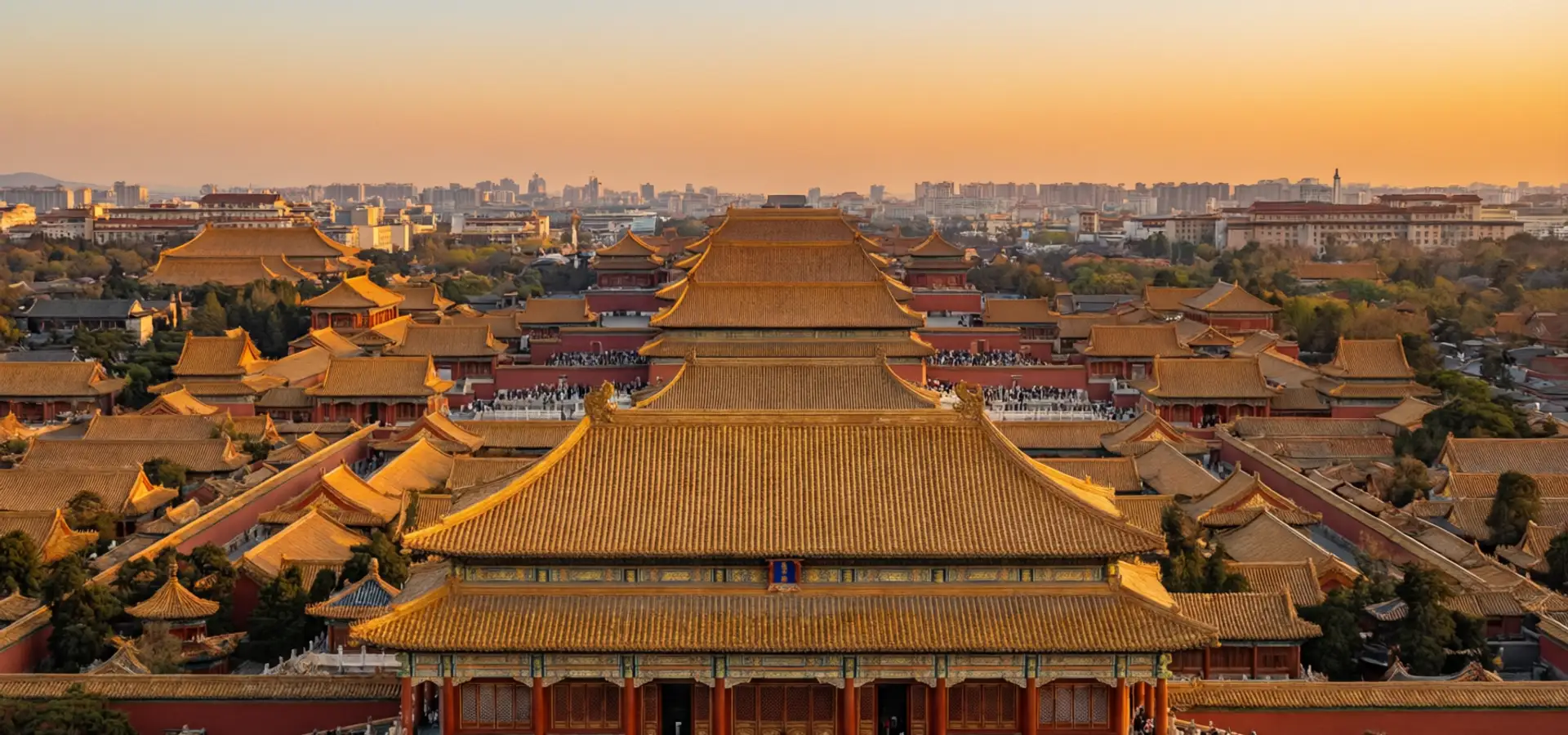
In the heart of Beijing, behind towering vermilion walls and sweeping golden rooftops, lies the Forbidden City — the world's largest preserved palace complex and the single most important sight in the Chinese capital. For nearly 500 years, 24 emperors of the Ming and Qing dynasties ruled from within these 720,000 square meters and more than 9,000 rooms, their every movement governed by ritual, their every decision shaping the fate of millions. Today, this extraordinary complex — known officially as The Palace Museum (Gu Gong) — welcomes millions of visitors each year, yet the sheer scale and depth of history can be overwhelming without expert guidance. A private Forbidden City tour transforms what can feel like a bewildering maze of courtyards and halls into a clear, structured, and deeply moving journey through imperial China — one led by a personal guide who brings the stories of emperors, rituals, court intrigue, and power struggles vividly to life.
The best way to visit is to book your ticket online exactly 7 days in advance at 8:00 PM Beijing time via the official platform bookingticket.dpm.org.cn (passport required; no tickets are sold at the gate). Enter through the Meridian Gate (south) and exit at Shenwu Gate (north). A private 3–4 hour morning tour is suitable for most travelers. Tickets cost 60 RMB in peak season and 40 RMB off-season, plus 10 RMB each for the Treasure and Clock Galleries. Arrive at the 8:30 AM opening, wear comfortable shoes, and consider pairing the visit with Jingshan Park for the classic panorama over the golden roofline. With a private guide, every detail — from ticket acquisition to route planning to storytelling — is handled seamlessly, so you can focus entirely on the experience.
Trip Overview: The Forbidden City (The Palace Museum) is a full-day destination that rewards early starts and thoughtful planning. Your private guide will meet you at a convenient point — typically Jinyu Hutong Station or your hotel lobby — and lead you through security, along a carefully curated route, and past the highlights at the perfect pace for your group. Expect 8–10 km of walking across marble terraces and ancient stone courtyards, with plenty of stops for storytelling, photography, and quiet reflection in the lesser-known side palaces that most visitors pass by without a second glance. The experience is easy (rated 2 out of 5 in difficulty), mostly flat, and entirely customizable to your interests, energy level, and schedule. Whether you are a first-time visitor eager to see the iconic halls, a history enthusiast seeking the hidden corners of the inner court, or a photographer chasing the perfect play of light on red walls, a private guide ensures every minute inside the palace walls is meaningful.
Why a Private Forbidden City Tour Is Worth It
Traveling through the Forbidden City on your own is certainly possible, but it is a profoundly different experience from walking its courtyards with a knowledgeable private guide at your side. Without a guide, visitors often find themselves following the crowds along the central axis, reading brief labels in crowded halls, and missing the stories that make each building come alive. With a private guide, the palace transforms from a collection of beautiful but silent buildings into a vivid narrative of ambition, artistry, and human drama that unfolded over five centuries.
Here is a detailed side-by-side comparison to help you understand the difference a private guide makes:
Traveling on Your Own | With a Private Guide |
|---|---|
Risk of missing the ticket release window — tickets sell out within minutes during peak season | Guide or agency secures tickets when sales open at exactly 8:00 PM — no stress, no missed slots, no disappointment |
Confusing routes through multiple security checkpoints and entry queues | Meet at a fixed point and walk directly to the gate with confidence, bypassing the uncertainty |
Halls can feel like empty buildings with tiny labels — hard to grasp their significance | Stories of emperors, rituals, court life, and power struggles come alive through expert narration |
Crowded central-axis route by default — the same path every large group takes | Flexible route with side palaces, galleries, and hidden photo spots that most visitors never discover |
Fixed pace of large tour groups — rushed through highlights with no time to linger | Flexible pace with time for photos, rest, questions, and spontaneous detours to hidden corners |
More difficult with children or seniors — no one to adjust the route or pace | Family-friendly pace with accessibility advice, rest stops, and route adjustments built in |
Best fit: first-time visitors, history lovers, families, honeymoon couples, photographers, and travelers with limited time in Beijing. A private guide ensures every minute inside the palace walls is meaningful, turning what could be a confusing half-day into an unforgettable journey through China's imperial past.
Forbidden City Beijing Overview: What You Need to Know Before You Visit
Before stepping through the Meridian Gate, it helps to understand the scale and significance of what lies ahead. The Forbidden City is not merely a museum — it is the physical embodiment of five centuries of Chinese imperial power, a UNESCO World Heritage Site, and the largest ancient palatial structure in the world. Here are the essential facts for planning your visit:
Detail | Information |
|---|---|
Also known as | The Palace Museum (Gu Gong) |
Built | 1406–1420 (Ming Dynasty, under Emperor Yongle) |
Imperial residence | Home to 24 emperors of the Ming and Qing dynasties until 1912 |
Scale | 720,000 sqm; over 9,000 rooms; 980 buildings |
Difficulty | Easy (2/5), mostly flat but 8–10 km of walking |
Best for | History lovers, first-time visitors, photography enthusiasts, culture seekers |
Address | 4 Jingshan Front Street, Dongcheng District, Beijing |
Closed | Every Monday, except national traditional holidays |
For nearly five centuries, these vermilion walls concealed the most powerful court on earth — a world of ritual, intrigue, and breathtaking artistry that only a private guide can fully reveal.
The complex is organized along a central north-south axis, with the most important ceremonial halls at the southern end and the private imperial quarters to the north. Side palaces, gardens, and galleries extend to the east and west, each with its own story. A private guide will help you navigate this vast layout efficiently, ensuring you see the highlights while also discovering the quieter corners that make the Forbidden City truly special.
Opening Hours
The Forbidden City operates on two seasonal schedules. Plan your visit accordingly, and remember that last entry times are strictly enforced:
Season | Opening Hours | Last Entry | Clock / Treasure Gallery Last Entry |
|---|---|---|---|
Apr 1 – Oct 31 (Peak Season) | 8:30 AM – 5:00 PM | 4:00 PM | 4:10 PM |
Nov 1 – Mar 31 (Off-Season) | 8:30 AM – 4:30 PM | 3:30 PM | 3:40 PM |
Your private guide will time your arrival to beat the crowds and make the most of the morning light — especially important during the short winter days when the palace closes early. Arriving at the 8:30 AM opening gives you the best chance to experience the grand halls before the main tour groups arrive, and your guide will know exactly when to pivot to quieter areas as the crowds build.
Forbidden City Tickets and Online Booking Guide
There are no on-site general admission tickets for sale. Every visitor must book in advance with a passport, and the same passport must be presented at the gate — no exceptions. This is one of the many logistical details your private guide handles seamlessly on your behalf, ensuring you arrive with a confirmed ticket and zero stress.
Ticket Type | Price |
|---|---|
General Admission (Apr 1 – Oct 31) | 60 RMB |
General Admission (Nov 1 – Mar 31) | 40 RMB |
Treasure Gallery add-on | 10 RMB |
Clock Gallery add-on | 10 RMB |
Multi-language audio guide | 40 RMB |
The Treasure Gallery and Clock Gallery are both well worth the small additional cost. The Treasure Gallery houses an extraordinary collection of jade carvings, gold artifacts, imperial crowns, and ritual objects that reveal the refined taste and immense wealth of the imperial court. The Clock Gallery displays an remarkable collection of 18th- and 19th-century timepieces from Britain, France, and the imperial workshops — many of them still in working order, with intricate automata that fascinate visitors of all ages.
How to Book Your Forbidden City Tickets
Tickets are released 7 days in advance at exactly 8:00 PM Beijing time and can sell out within minutes during weekends, holidays, and peak season.
Official booking website: bookingticket.dpm.org.cn or the official WeChat Mini Program, "The Palace Museum" (故宫博物院).
Passport number and full name must match the booking exactly; bring the same passport to the gate for identity verification.
Morning tickets have a latest entry of 12:00 PM; afternoon tickets allow earliest entry at 11:00 AM. Choose morning for the best experience.
Children under 6 or under 1.2 m enter free but still must be registered at the time of booking.
Each visitor can book only one ticket per visit — double-booking is not permitted.
When you book a private tour, your guide or agency takes care of the entire ticketing process — securing the exact date and time slot you need, well before the public rush. This alone is worth the investment, as popular dates (especially weekends and holidays) can sell out in seconds.
Best Time to Visit the Forbidden City and Seasonal Highlights
Every season paints the Forbidden City in a different palette, and each offers a distinct experience. Your private guide can advise on the best timing for your visit based on weather, crowd patterns, and the seasonal beauty you most want to experience. Here is what to expect throughout the year:
Period | What It Is Like | Highlights |
|---|---|---|
Mar – Apr | Mild, dry; spring blooms begin to appear | Magnolia, lilac and peach blossoms framing red walls — one of the most photogenic seasons |
May – Sep | Hot and crowded; July–August is peak tourist season | Start at 8:30 AM; bring hat, sunscreen and water; your guide will plan shade breaks |
Oct – Nov | Cool, clear skies, noticeably fewer crowds | Golden ginkgo trees against red walls — arguably the most beautiful time to visit |
Dec – Jan | Cold and quiet; the fewest visitors of the year | Snow-covered red walls and golden roofs — magical and almost uncrowded |
Winter Solstice | Around Dec 22 | Special low-sunlight effect illuminating the Zhengda Guangming plaque inside the Hall of Supreme Harmony |
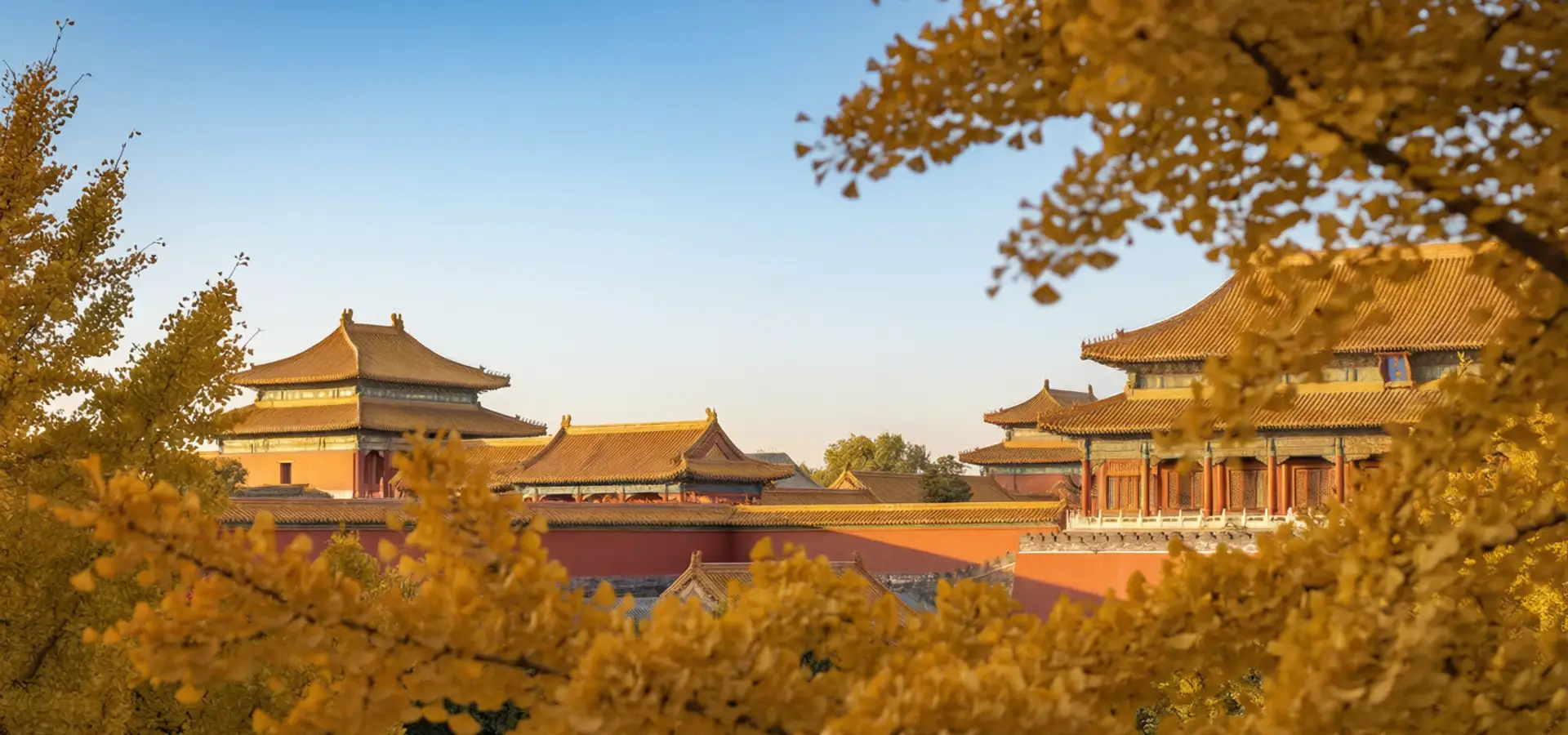
In late autumn, golden ginkgo leaves drift across ancient stone courtyards — a moment of quiet beauty that feels unchanged since the days of the emperors themselves.
Days to avoid: Chinese national holidays such as Spring Festival (late January or early February), Labor Day in May, and National Day in October. During these periods, the palace can receive over 80,000 visitors per day. The palace is also closed every Monday, except during certain traditional national holidays or special arrangements. Always check the official booking system for the exact opening date when planning your visit.
How to Get to the Forbidden City and Entrance Logistics
Entry is through the Meridian Gate (Wumen) in the south — the only entrance for visitors. Exit is at Shenwu Gate in the north, or Donghua Gate on the east side. There is no re-entry once you leave the complex, so plan accordingly. Your private guide will arrange the most efficient route to the entrance, whether by subway, car, or on foot.
Route | Directions | Notes |
|---|---|---|
Best route (recommended) | Subway Line 8 to Jinyu Hutong Station, Exit C; walk west to Donghua Gate, then along the moat to Meridian Gate | Quieter than the Tiananmen approach; avoids the heaviest foot traffic |
Alternative route | Subway Line 1 to Tiananmen East or West Station; walk north through Tiananmen Gate to Meridian Gate | Passes Tiananmen Square; multiple security checks along the way |
Here are the key logistics to keep in mind on the day of your visit:
Security: airport-style bag screening at Meridian Gate; allow 20–30 minutes in peak season. Your guide will help you navigate the checkpoints efficiently.
Luggage storage: free lockers available at Meridian Gate and Shenwu Gate; items deposited at Meridian Gate must be collected at Shenwu Gate within 2 hours. Travel light if possible.
Restricted items: large bags (over 40 cm), lighters, flammable items, professional tripods, selfie sticks, and drones are not permitted inside.
Taxi / ride-hail: cars cannot stop near the gates in the core area due to traffic restrictions; get off at Wangfujing or Donghuamen and walk the remaining distance.
Private car pickup: your guide can arrange for a car to meet you at the nearest accessible drop-off point after your tour exits at Shenwu Gate or Donghua Gate.
Your private guide will arrange a smooth pickup and meet you at the optimal entry point, handling all logistics so you can focus entirely on the experience ahead. There is nothing quite like the moment you step through the Meridian Gate and the vast courtyard of the Hall of Supreme Harmony opens before you — your guide will make sure that moment is as seamless and impactful as possible.
Recommended Forbidden City Tour Routes for Every Traveler
Choosing the right route is the key to a memorable visit. The Forbidden City's vast layout means that without a plan, you risk either rushing through the highlights or getting lost in the endless courtyards. Your private guide will tailor the path to your interests, fitness level, and time available. Here are three recommended itineraries, each designed for a different style of exploration:
Route 1 — Quick Snapshot Tour (2–3 hours)
This route covers the iconic central axis — the ceremonial heart of the palace — plus the beautiful Imperial Garden at the north end. It is ideal for travelers with limited time, families with young children, or anyone who wants to see the grandest halls without committing to a full day.
Route: Meridian Gate → Inner Golden Water Bridge → Gate of Supreme Harmony → Hall of Supreme Harmony → Hall of Central Harmony → Hall of Preserving Harmony → Gate of Heavenly Purity → Palace of Heavenly Purity → Hall of Union → Palace of Earthly Tranquility → Imperial Garden → Shenwu Gate.
Focus: the iconic central axis and Imperial Garden. Arrive at 8:30 AM to beat tour groups and experience the grand halls in relative quiet.
Route 2 — Essential Tour (4–5 hours)
This is the most popular choice for a private Forbidden City tour. It covers everything in Route 1 plus the two outstanding galleries — the Treasure Gallery and the Clock Gallery — which many solo visitors skip due to time constraints or uncertainty about the extra cost.
Route: Meridian Gate → Inner Golden Water Bridge → Gate of Supreme Harmony → Hall of Supreme Harmony → Hall of Central Harmony → Hall of Preserving Harmony → Gate of Heavenly Purity → Clock Gallery → Treasure Gallery → Palace of Heavenly Purity → Hall of Union → Palace of Earthly Tranquility → Imperial Garden → Shenwu Gate.
Focus: grand halls plus the Clock and Treasure Galleries. Your guide will provide detailed commentary on the imperial artifacts and explain the significance of each gallery's collection.
Route 3 — In-Depth Exploration (6–8 hours)
For those who want to go beyond the central axis and discover the Forbidden City's hidden corners, this full-day route covers the side palaces, lesser-known gardens, and the fascinating courtyards where concubines lived, schemed, and spent their days. This is the route that turns a visit into a deep immersion.
Morning: Meridian Gate → Inner Golden Water Bridge → Gate of Supreme Harmony → Hall of Military Eminence → Hall of Supreme Harmony → Hall of Central Harmony → Hall of Preserving Harmony → Palace of Compassion and Tranquility → Palace of Longevity and Health → Ice Cellar Restaurant (lunch break).
Afternoon: Gate of Heavenly Purity → Treasure Gallery → Clock Gallery → Palace of Gathered Elegance → Yanxi Palace → Hall of Union → Palace of Earthly Tranquility → Imperial Garden → Shenwu Gate.
Hidden gems: Yanxi Palace — famous for its unfinished Western-style structure — and the courtyards of Cining Garden, where the empress dowager retreated from the formality of the outer court. These are places most visitors never see, and your guide will bring their stories to life.
Top Highlights Inside the Forbidden City Palace
The Forbidden City contains some of the most significant architectural and cultural treasures in all of Asia. While every corner has something to offer, certain highlights stand out for their historical importance, artistic beauty, or sheer grandeur. Here is what your private guide will make sure you do not miss:
Highlight | What You Will See |
|---|---|
Central Axis Halls | Three great ceremonial halls — the Hall of Supreme Harmony, Hall of Central Harmony, and Hall of Preserving Harmony — symbols of imperial power, set atop triple-tiered marble terraces with dragon motifs and golden roof decorations |
Hall of Supreme Harmony | The largest and most important building: throne room for coronations, imperial weddings, and New Year ceremonies; the golden throne beneath a coiled dragon caisson ceiling is one of China's most iconic interiors |
Treasure Gallery | Jade and gold artifacts, imperial crowns, ritual bronze vessels, and exquisite Buddhist sculptures — a window into the refined taste and vast wealth of the imperial court |
Clock Gallery | 18th–19th century clocks from Britain, France, and imperial workshops — many still working, with intricate automata of birds, boats, and figures that perform at set intervals |
Imperial Garden | Ancient cypresses some over 500 years old, elaborate rockeries, peaceful pavilions, and the famous Qianqiu Pavilion with its stunning coiled-dragon caisson ceiling — look straight up |
East and West Six Palaces | The concubines' residences: quieter courtyards with intimate living quarters, each with its own stories of court life, rivalry, and daily ritual |
Cining Palace and Garden | The empress dowager's private domain — a peaceful garden complex with a more relaxed atmosphere, offering a glimpse of how the most powerful women in the empire spent their time |
Standing before the Hall of Supreme Harmony, with its golden throne gleaming beneath a coiled dragon ceiling, you begin to understand the sheer scale of power that was concentrated within these walls.
Best Photo Spots and Photography Tips at the Forbidden City
The Forbidden City is a photographer's dream — endless corridors of red and gold, dramatic marble terraces, hidden courtyards that feel untouched by time, and light that changes character throughout the day. Your private guide knows exactly where to pause for the best compositions, when the light is most flattering, and which spots have the fewest crowds. Here are the top photo locations your guide will take you to:
Corridors flanking the Hall of Union — repeating red columns and golden roofs create a mesmerizing symmetrical frame. Best in the early morning when the light is soft and the corridors are less crowded.
Stone lions at the Gate of Supreme Harmony — the iconic pair of bronze lions guarding the gate. Best captured from a low angle for dramatic perspective, with the gate's red walls as backdrop.
Below the Hall of Supreme Harmony steps — stand at the base of the triple-tiered marble terraces and shoot upward to capture the full scale and grandeur of the building.
Walkways outside Jingren Palace and Yanxi Palace — quieter red-wall lanes with almost no crowds, perfect for atmospheric portraits and detail shots of door knockers, roof tiles, and carved stonework.
Caisson ceiling of Qianqiu Pavilion in the Imperial Garden — look straight up for one of the most intricate and colorful ceiling designs in China, a spiraling dragon motif in painted wood.
Jingshan Park after exit — climb the hill directly across from Shenwu Gate for the single best overview of the entire palace complex: a sweeping panorama of golden rooftops stretching to the horizon.
Photography rules: no flash photography inside any of the halls — this is strictly enforced to protect the artifacts and painted surfaces. Handheld cameras and phones are perfectly fine throughout the complex. Tripods and selfie sticks are not permitted. Your guide will point out the best natural-light moments throughout the tour and suggest the ideal time to visit each spot for the best photographic conditions.
Accessibility and Visitor Information for the Forbidden City
The Forbidden City has made significant efforts to improve accessibility in recent years, though the historic nature of the complex means some limitations remain. Here is what you need to know:
The Forbidden City is partially wheelchair-friendly, with accessible paths along the central axis and near the Treasure Gallery. The main ceremonial halls can be accessed via ramps.
Wheelchairs are available for on-site rental at no charge, without advance booking. They are distributed on a first-come, first-served basis at the Meridian Gate entrance.
Some side sections — particularly the East and West Six Palaces and parts of Cining Palace — have high steps and uneven thresholds and may require assistance or may not be accessible.
The route is long (8–10 km on the essential tour) with limited seating areas; seniors and travelers with mobility limits can benefit from a shorter, carefully planned route with scheduled rest stops.
Strollers are permitted but larger-wheeled models handle the uneven stone surfaces better than small umbrella strollers.
Your private guide can plan an accessible route in advance, ensuring a comfortable and enjoyable visit for everyone in your party — including families with strollers, travelers with mobility considerations, and seniors who want to experience the palace at a relaxed pace. The guide will also know where the nearest rest areas and toilets are located along your route.
Where to Eat Inside and Near the Forbidden City
Whether you want a quick bite between halls, a refined lunch inside the palace walls, or a memorable meal to cap your tour, there are dining options to suit every taste and budget. Here are the best choices your guide can recommend and arrange:
Place | Specialty / Offer | Price / Person |
|---|---|---|
Ice Cellar Restaurant (inside the palace) | Traditional Beijing dishes served in a converted imperial ice cellar — a unique atmospheric dining experience | 150–200 RMB |
Wanchun Jinfu Afternoon Tea (inside the palace) | Royal-style pastries, cakes, and specialty coffee in an elegant setting | 200–300 RMB |
Snack counters (inside the palace) | Bottled water, simple snacks, instant noodles, and basic hot food | Low |
Siji Minfu (nearby) | Excellent Peking duck; English menu available; expect a long queue at peak hours | 150–200 RMB |
Hehe Roubing (nearby) | Local meat pies — quick, casual, and authentically Beijing | 30–50 RMB |
Jinyu Hutong Station Food Court | Noodles, dumplings, and other quick Chinese staples | 40–60 RMB |
TRB Hutong (nearby) | One-Michelin-star contemporary French cuisine served in a beautifully restored historic temple | Fine dining |
Your private guide can reserve tables in advance, recommend the best dishes at each restaurant, and time your meal to avoid peak queues — a small luxury that makes a big difference, especially after several hours of walking through the palace. For a truly memorable experience, consider the Ice Cellar Restaurant for lunch (dining in a space once used to store ice for the emperor) or TRB Hutong for an exceptional dinner after your tour.
Nearby Attractions to Combine with Your Forbidden City Tour in Beijing
One of the great advantages of a private tour is the flexibility to combine the Forbidden City with other landmarks in a single, seamless day. The palace sits at the geographic and cultural center of historic Beijing, surrounded by parks, temples, and neighborhoods that each offer a different perspective on the city. Here are the best options to pair with your visit:
Attraction | Distance | Suggested Time | Why Combine |
|---|---|---|---|
Jingshan Park | Directly across from Shenwu Gate | 40–60 min | Classic panorama of the golden roofs — the single best view of the entire palace complex |
Tiananmen Square | South of Meridian Gate | 30–60 min | World's largest city square; a powerful contrast to the enclosed world of the palace |
National Museum of China | East side of Tiananmen Square | 2–3 hours | Bronze Age vessels, dynastic treasures, and revolutionary history under one roof |
Beihai Park | 1.5 km west of Jingshan | 1.5–2 hours | Imperial lake park with the iconic White Pagoda — a peaceful contrast to the palace |
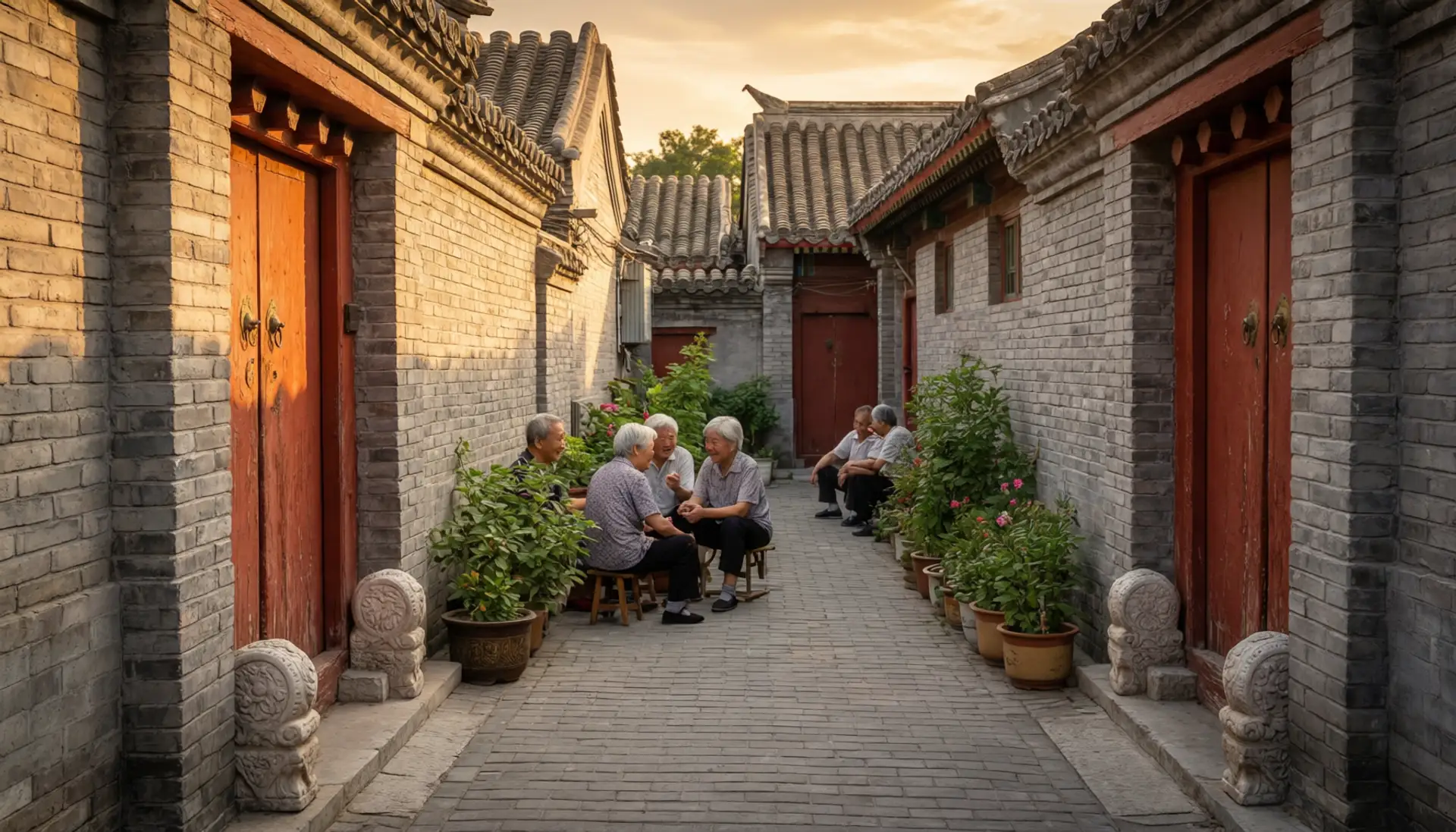
Drum and Bell Towers / Hutongs | About 2 km north of Beihai | 1–2 hours | Old Beijing lanes and traditional courtyard life; rickshaw or walking tour available |
Nanluoguxiang | 2 km north-east | 1–2 hours | Lively hutong lane with snacks, craft shops, tea houses, and cafés |
Wangfujing Street | 1.5 km east | 1–2 hours | Beijing's most famous shopping street; ideal for an evening stroll and dinner |
Temple of Heaven | 4 km south | 1.5–2 hours | Ming-era altar complex where emperors prayed for good harvests — stunning architecture |
Lama Temple | 4 km north-east | 1–1.5 hours | Tibetan Buddhist temple with active monks; pair with a walk through Wudaoying Hutong |
Good to know: Jingshan Park, Tiananmen Square, and the National Museum may require free advance reservations during peak periods. Your private guide handles all of this for you, ensuring seamless transitions between sites with no waiting or confusion.
Shopping Near the Forbidden City in Beijing
After your tour, there are several excellent shopping areas within easy reach of the palace. Whether you are looking for a meaningful souvenir, luxury goods, or simply want to browse, here is what to expect at each area:
Area | What to Buy | Notes |
|---|---|---|
Palace Museum Gift Shops | Designer souvenirs, high-quality replicas, notebooks, jewelry, and cultural products inspired by the palace collection | Best selection near the Imperial Garden and Shenwu Gate exit; unique items you cannot find elsewhere |
Wangfujing Street | International malls, fashion brands, cosmetics, and department stores | About 1.5 km east of the palace; the famous Snack Street is touristy but fun for a quick look |
Nanluoguxiang | Handicrafts, postcards, specialty tea, vintage items, and novelty snacks | Bargaining is not common here; prices are generally fixed and reasonable |
Qianmen Street / Dashilar | Silk, fine tea, traditional Chinese medicine, handmade hats, and heritage brand goods | Beautifully restored heritage pedestrian streets with a traditional atmosphere |
Hongqiao Pearl Market | Pearls, jewelry, electronics, silk, and souvenirs | Near Temple of Heaven; bargaining is expected and can be significant — bargain firmly but fairly |
Your guide can recommend the best shops for specific items and even accompany you if shopping is part of your day's plan. The Palace Museum gift shops, in particular, offer beautifully designed products that make thoughtful and unique souvenirs.
Where to Stay Near the Forbidden City
Choosing the right neighborhood makes a real difference when you are visiting the Forbidden City. Proximity to the palace means you can start early, avoid traffic, and explore the surrounding hutong neighborhoods before or after your tour. Here are three convenient areas, with the atmosphere and traveler profile of each:
Area | Atmosphere | Who It Suits | Typical Options |
|---|---|---|---|
Wangfujing / Donghuamen | Central, convenient, and close to the Meridian Gate entrance | First-time visitors and travelers on short trips who want maximum convenience | 5-star and mid-range international chains; well-connected to subway and shopping |
Forbidden City / Jingshan | Historic hutong courtyards with a quiet, traditional atmosphere | Couples and culture travelers seeking an authentic Beijing experience | Boutique courtyard hotels; check stairs and elevator access before booking |
Dongcheng / Beihai / Drum Tower | Local hutong life, lakeside walks, independent cafés and restaurants | Return visitors and families who want a more residential, relaxed feel | Boutique and mid-range hotels with character; many in converted courtyard compounds |
Booking advice: choose a hotel within the Second Ring Road, especially in Dongcheng or Xicheng district, to keep the palace, Tiananmen, Wangfujing, and the hutong neighborhoods all within a short ride. Your private tour guide can recommend specific properties that match your style, budget, and accessibility needs — from world-class five-star hotels to charming boutique courtyard guesthouses.
Suggested Private Tour Itineraries for the Forbidden City
Here are three curated itinerary formats to help you plan your visit. Each can be fully customized by your private guide to match your pace, interests, and energy level. These are starting points — your guide will adjust the timing, add or remove stops, and ensure the day flows naturally:
Itinerary | Plan |
|---|---|
Half-Day Imperial Highlights (4–5 hours) | 8:15 Meet guide at Jinyu Hutong Station → 8:30 Meridian Gate → central axis through the three great halls → Clock Gallery → Treasure Gallery → Imperial Garden → 12:30 exit at Shenwu Gate → walk to Jingshan Park for the panorama → Peking duck lunch at a nearby restaurant. |
Full-Day Imperial Beijing (8 hours) | Morning visit to Tiananmen Square → enter the Forbidden City through Meridian Gate → comprehensive tour of the central axis and side palaces. Lunch at the Ice Cellar Restaurant inside the palace or at a nearby duck restaurant. Afternoon: Jingshan Park panorama → hutong walking or rickshaw tour through the old neighborhoods → evening shopping and dinner on Wangfujing Street. |
Two-Day Deep Dive | Day 1: Tiananmen Square → Forbidden City In-Depth Route covering the central axis, east and west palaces, and hidden gardens → Jingshan Park → dinner at TRB Hutong. Day 2: Temple of Heaven morning visit → National Museum of China → Beihai Park or Lama Temple with Wudaoying Hutong → Qianmen Street for evening tea and shopping. |
All itineraries include your private English-speaking guide, ticket arrangement, and flexible pacing. Your guide will adapt the route in real time based on crowd levels, weather, and your group's energy — ensuring the best possible experience regardless of conditions.
Practical Visiting Tips for Your Forbidden City Private Tour
Here are the essential tips your private guide will share before you step through the Meridian Gate. Following these will ensure a smooth, comfortable, and enjoyable visit:
Shoes: wear comfortable walking shoes with good support; expect 8–10 km of walking even on the shortest tour route. The stone surfaces can be slippery, especially after rain.
Sun protection: bring sunscreen, a hat, and sunglasses. There is very little shade in the main courtyards, and the marble surfaces reflect heat in summer.
Water: bring an empty bottle and refill for free at palace restaurants and water stations. Staying hydrated is essential, especially in summer.
Snacks: pack light snacks such as energy bars or fruit; queues and walking can take longer than expected, and snack counters inside have limited options.
Flash photography: no flash inside any of the halls — this is strictly enforced to protect the artifacts and painted surfaces. Handheld cameras and phones are fine.
Crowds: avoid the central axis between 10:00 AM and 2:00 PM when possible. Your guide will plan the route to visit the busiest areas early or late, and pivot to quieter side palaces during peak hours.
Audio guide: a 40 RMB multi-language audio guide device is available on-site; free English audio is also available via the official WeChat Mini Program. However, nothing compares to the depth and flexibility of a live private guide.
Toilets: free public toilets are available at regular intervals throughout the complex. Your guide will know the cleanest and least crowded facilities along your route.
Passport: carry the same passport you used for booking — it will be checked at the gate and may be requested inside.
Connectivity: consider a local eSIM or pocket Wi-Fi in advance if you need internet access. Mobile signal is available throughout the complex, but WiFi is limited.
Weather backup: in case of rain, your guide will adjust the route to include more covered areas and can provide ponchos or suggest indoor highlights.
With a private guide, every threshold crossed becomes a doorway into a story — of emperors and concubines, of ritual and rebellion, of a civilization that shaped the world from within these walls.

Traveler Discussions
Questions from travelers