
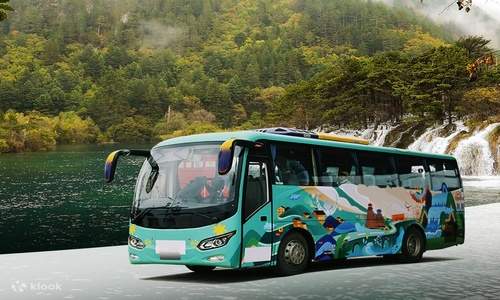
In Jiuzhaigou, the easiest way to see the park is to enter at Pengfeng, use the Y-shaped shuttle network, and walk down the boardwalks between lake stops. This Jiuzhaigou scenic area guide explains the three valleys, bus transfers, walking distances, and realistic one- and two-day routes. For a broader overview, read our Jiuzhaigou travel guide.
1. How to Visit Jiuzhaigou: The Essential Route
The essential Jiuzhaigou valley route is simple: start high in Rize or Zechawa, transfer at Nuorilang, and finish through Shuzheng on the way to the exit. The sections below turn that layout into a practical plan.
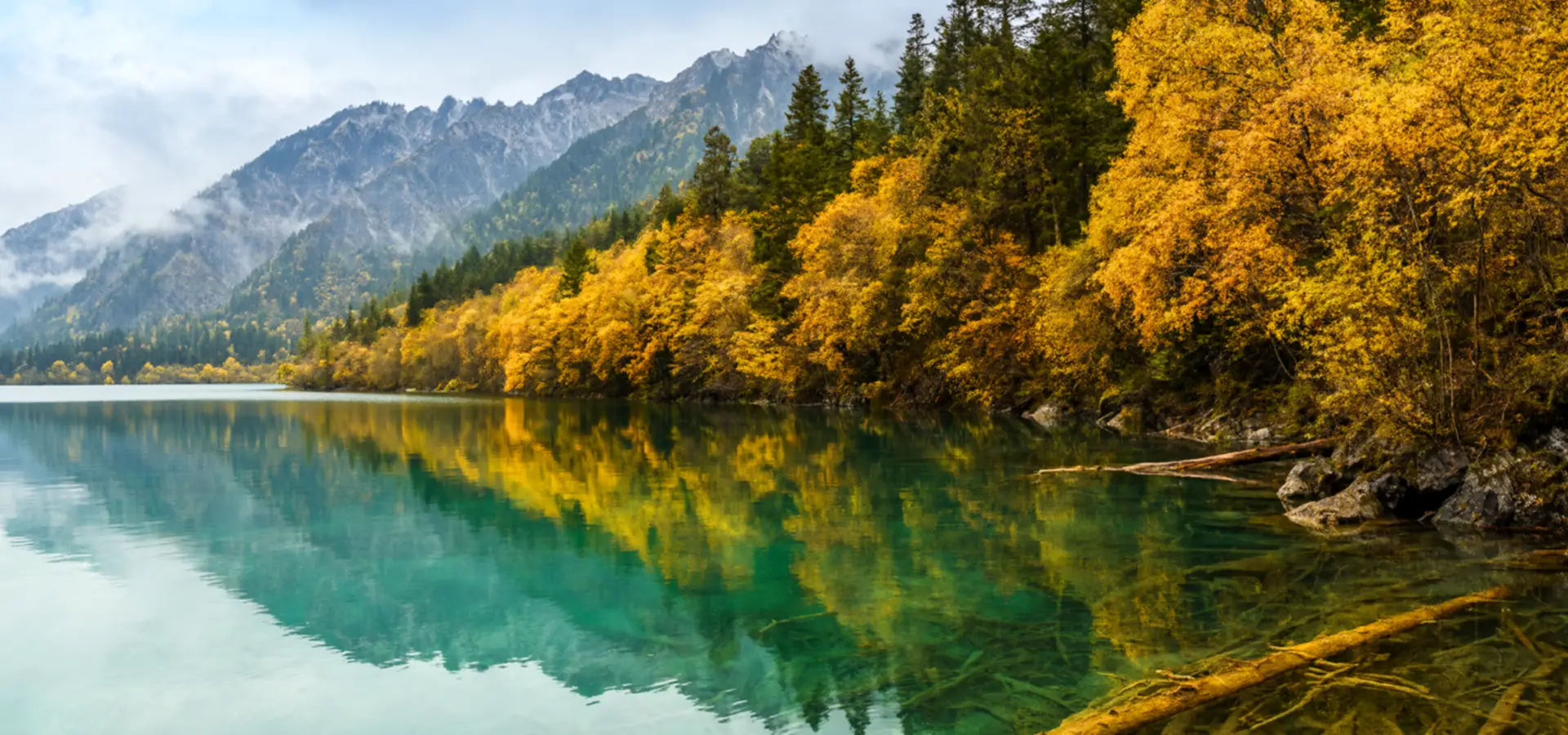
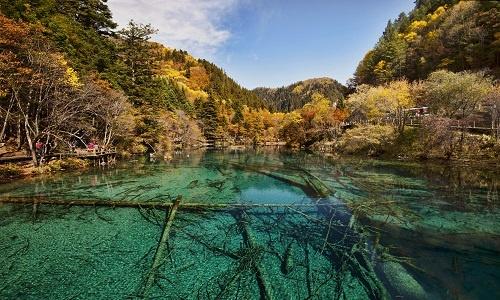
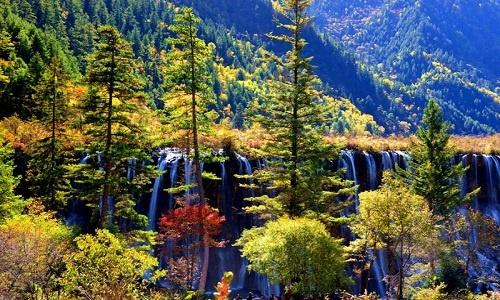
2. Jiuzhaigou Entrance & Getting There
Jiuzhaigou Entrances
Jiuzhaigou has one primary entrance for tourists. Unlike some large Chinese scenic areas with multiple gates, Jiuzhaigou channels all visitors through the main entrance where the shuttle bus system begins.
➤Pengfeng Entrance (Main Entrance)
The Pengfeng Entrance (彭丰入口) is the only visitor entrance to Jiuzhaigou Valley. It's located at the southern end of Shuzheng Valley, near Zhangzha Town (漳扎镇), where most hotels and restaurants are. Here's what you'll find at the entrance:
Ticket office – for collecting pre-booked tickets or buying on-site (not recommended during peak season)
Security & baggage check – standard park security screening
Visitor center – with park maps, information desks, and restrooms
Shuttle bus boarding area – all sightseeing buses depart from here
Food & drinks – small shops and vending machines before entering
➤Arriving at the Entrance
Most visitors stay in Zhangzha Town, which stretches along the road leading to the park entrance. From your hotel, getting to the gate typically takes:
Walking: 10–30 minutes from hotels near the entrance
Taxi: 5–15 minutes from farther hotels (CNY 10–30)
Hotel shuttle: Many mid-range and luxury hotels offer free morning shuttles to the gate
Jiuzhaigou Entrance Tickets
Season | Entrance | Eco-Bus | Total |
|---|---|---|---|
Peak (Apr 1 – Nov 15) | CNY 190 | CNY 90 | CNY 280 |
Off-Peak (Nov 16 – Mar 31 of the following year) | CNY 80 | CNY 80 | CNY 160 |
📌The eco-bus pass is separate from entrance admission and is required for most visitors. Confirm current ticket-release windows and two-day admission rules in the official booking channel before purchase.
How to Get to Jiuzhaigou
Jiuzhaigou is located in northern Sichuan Province, about 430 km from Chengdu. Here are your main options:
Transport | Duration | Price Range | Best For |
|---|---|---|---|
Flight (Chengdu → Jiuzhaigou) | 1h flight + ~1.5h transfer | CNY 500–1,500 + transfer | Short on time, comfort priority |
High-Speed Rail + Shuttle | 3.5–4.5 hours total | CNY 122–151 train; shuttle extra | Scenic, cost-effective |
Direct Bus (Chengdu) | 8–10 hours | CNY 150–200 | Budget travelers |
Private Car/Driver | 7–9 hours | CNY 1,200+/day | Groups, flexible schedule |
3. Jiuzhaigou Park Map: The Y-Shaped Layout
Understanding the layout of Jiuzhaigou is the key to planning your route efficiently. The park has a distinctive Y-shape formed by three valleys that converge at the Shuzheng Valley.
Three valleys, one entrance, one shuttle network.
😍The Three Branches
Valley | Position | Length | Highlights | Altitude Range |
|---|---|---|---|---|
Shuzheng Valley | Main / bottom of Y | 14 km | Waterfalls, lakes, reed marshes | 2,000–2,400 m |
Rize Valley | Right branch | 18 km | Five Flower Lake, Pearl Beach, Panda Lake | 2,200–2,900 m |
Zechawa Valley | Left branch | 18 km | Long Lake, Five Color Pond, seasonal lakes | 2,300–3,100 m |
The Convergence Point: Nuorilang
All three valleys meet at Nuorilang (诺日朗), roughly 14 km inside the park from the entrance. This is the most important junction in Jiuzhaigou:
Nuorilang Waterfall – the largest travertine waterfall in China (320 m wide)
Shuttle bus hub – all three shuttle routes pass through here
Restaurant & service center – the main dining facility inside the park
Transfer point – switch between Rize, Zechawa, and Shuzheng directions
Key Stops on the Map
Here are all the major shuttle bus stops in order from the entrance:
Shuzheng Valley (Entrance → Nuorilang)
Entrance → Shuzheng Village → Reed Lake → Sparkle Lake → Sleeping Dragon Lake → Shuzheng Lakes → Nuorilang Waterfall → Nuorilang Hub
Rize Valley (Nuorilang → Primeval Forest)
Nuorilang → Nuorilang Lakes → Mirror Lake → Pearl Beach → Five Flower Lake → Panda Lake → Arrow Bamboo Lake → Primeval Forest
Zechawa Valley (Nuorilang → Long Lake)
Nuorilang → Seasonal Lakes (Lower → Middle → Upper) → Five Color Pond → Long Lake
4. Jiuzhaigou Three Valleys: Which Route First?
Jiuzhaigou's three valleys each have a distinct character and different highlights. Understanding their personalities will help you plan which to prioritize and how much time to allocate.
Valley | Vibe | Best For | Time Needed | Don't Miss |
|---|---|---|---|---|
Rize Valley | Dramatic & colorful | Photography, first-time visitors | 3–5 hours | Five Flower Lake, Pearl Beach |
Zechawa Valley | Serene & alpine | Peaceful views, less crowded | 2–3 hours | Long Lake, Five Color Pond |
Shuzheng Valley | Classic & accessible | Waterfalls, easy walks | 2–4 hours | Nuorilang Waterfall, Shuzheng Lakes |
Which Valley Should You See First?
The most popular strategy is to see Rize Valley first in the morning, when the light hits Five Flower Lake best and crowds are thinner. Then do Zechawa Valley in the early afternoon, and finish with Shuzheng Valley on the way out. Here's why:
Rize Valley has the most iconic scenery — start with your energy fresh and the light at its best
Zechawa Valley is more spread out and less visually dense — good for midday when the sun is high
Shuzheng Valley is closest to the exit — perfect for your final hours when you're tired
5. Rize Valley Jiuzhaigou Route: Lakes & Waterfalls
Rize Valley (pronounced "Rr-zuh") is the right branch of the Y and is widely considered the most beautiful of Jiuzhaigou's three valleys. It features the famous Five Flower Lake, the thundering Pearl Beach Waterfall, and a series of stunning lakes connected by wooden boardwalks.
Rize Valley Basics
Metric | Detail |
|---|---|
Length | 18 km (from Nuorilang to Primeval Forest) |
Altitude Range | 2,300 m (Nuorilang) – 2,900 m (Primeval Forest) |
Shuttle Stops | 7 main stops |
Recommended Time | 3–5 hours (walking most boardwalks) |
Best Time to Visit | Morning (8:00–11:00 AM) for best light |
Highlights from Top to Bottom
The best way to explore Rize Valley is to take the shuttle bus all the way to the Primeval Forest at the top, then walk your way down. Here are the highlights in order:
➤1. Primeval Forest (原始森林)
At 2,900 m, this is the highest point in Rize Valley. A short boardwalk loop takes you through ancient fir and spruce trees draped with moss. It's peaceful and cool, with views of snow-capped peaks on clear days. Many people skip this to save time for the lakes below, but it's a nice change of scenery if you have time.
Walking: 20–30 minute loop
Crowd level: Low (most people don't come all the way up)
➤2. Arrow Bamboo Lake (箭竹海)
A long, narrow lake surrounded by bamboo forests and mountains. The reflections are stunning on calm mornings. The lake is named after the arrow bamboo that grows around it — the same bamboo that pandas eat.
Walking: 20–30 minutes along the boardwalk
Best time: Early morning for reflections
➤3. Panda Lake (熊猫海)
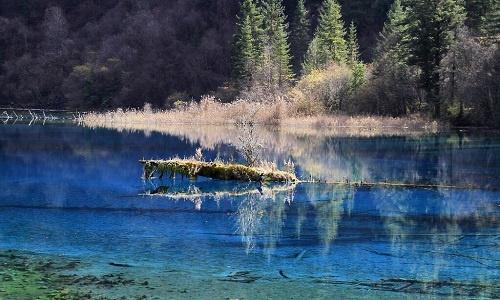
A deep blue lake with clear water that reveals submerged tree trunks and travertine formations. Legend says pandas used to come here to drink. The water level drops significantly in winter, exposing the travertine bottom.
Walking: 15–20 minutes
Don't miss: The small waterfall between Panda Lake and Five Flower Lake
➤4. Five Flower Lake (五花海) — Not to Miss
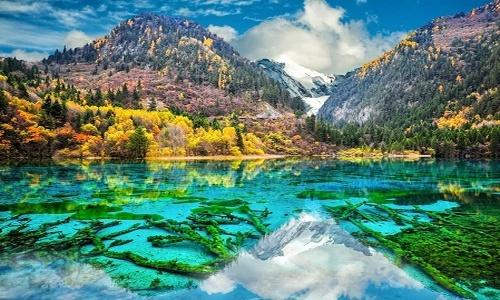
This is the most famous and photographed spot in all of Jiuzhaigou. Five Flower Lake is renowned for its multi-colored water — ranging from turquoise to emerald to sapphire — caused by different minerals, algae, and submerged tree trunks. On a sunny day, the colors seem to shift as you walk around the lake.
Walking: 30–45 minutes around the lake boardwalk
Best time: 9:00–11:00 AM when sunlight hits the water
Crowd level: Very high — go early!
Photography tip: The overlook at the southern end offers the classic panoramic view
➤5. Pearl Beach (珍珠滩) & Pearl Beach Waterfall
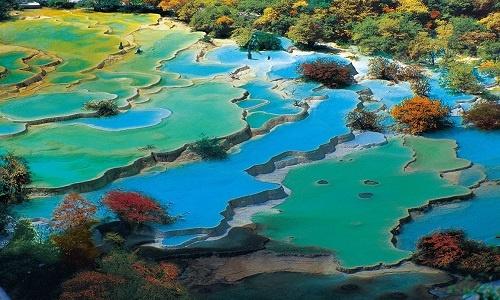
A wide, gently sloping travertine terrace where water flows over thousands of small calcified bumps, creating a shimmering "pearl" effect. The boardwalk crosses right over the beach, so you can feel the spray. At the end of the terrace, the water drops 40 m as Pearl Beach Waterfall — one of Jiuzhaigou's most dramatic.
Walking: 30–40 minutes across the beach + waterfall viewing
Best time: Any time — the spray looks great in any light
➤6. Mirror Lake (镜海)
A long, narrow lake famous for its perfectly still surface that mirrors the surrounding mountains like glass. The mirror effect is best at dawn when there's no wind.
Walking: 20 minutes along the boardwalk
Best time: Before 8:00 AM for perfect reflections
➤7. Nuorilang Lakes (诺日朗群海)
A series of small stepped lakes just above Nuorilang Waterfall. The water cascades from one level to the next through travertine dams, creating small waterfalls and pools.
Walking: 15–20 minutes
Good for: A quiet walk before reaching the busy Nuorilang hub
6. Zechawa Valley Jiuzhaigou Route: Long Lake & Five Color Pond
Zechawa Valley (pronounced "Zuh-cha-wah") is the left branch of the Y and reaches the highest altitude of any valley in Jiuzhaigou. It's known for Long Lake — the largest and deepest lake in the park — and the jewel-like Five Color Pond. Zechawa has fewer stops than Rize but offers a quieter, more alpine atmosphere.
Zechawa Valley Basics
Metric | Detail |
|---|---|
Length | 18 km (from Nuorilang to Long Lake) |
Altitude Range | 2,300 m (Nuorilang) – 3,100 m (Long Lake) |
Shuttle Stops | 5 main stops (3 seasonal lakes, Five Color Pond, Long Lake) |
Recommended Time | 2–3 hours |
Best Time to Visit | Late morning or early afternoon |
Highlights from Top to Bottom
Like Rize Valley, take the shuttle bus all the way to Long Lake at the top and work your way down.
➤1. Long Lake (长海) — Not to Miss
Long Lake is the largest, highest, and deepest lake in Jiuzhaigou. It stretches about 8 km long (though only the first section is accessible) and reaches depths of over 100 meters. Surrounded by forested mountains and snow-capped peaks, it has a grand, alpine feel that's different from the smaller, more colorful lakes elsewhere in the park.
Walking: 20–30 minutes along the viewing platform and short boardwalk
Altitude: 3,100 m — take it slow if you feel breathless
Best time: Clear days for mountain views
Winter highlight: Freezes completely, becoming a vast ice field
➤2. Five Color Pond (五彩池) — Not to Miss
Don't let the small size fool you — Five Color Pond is one of Jiuzhaigou's most beautiful spots. This compact pool displays an astonishing range of colors: sky blue, jade green, lemon yellow, and deep navy, all visible simultaneously. The water is so clear you can see every detail of the travertine bottom.
Walking: 15–20 minutes around the boardwalk
Fun fact: It never freezes in winter, even at 3,000 m altitude, due to high mineral content
Crowd level: High — it's small and popular
➤3. Seasonal Lakes (季节海)
Three lakes (Upper, Middle, and Lower Seasonal Lake) that fill and dry up with the seasons. In spring and early summer, they're full and beautiful. By late autumn and winter, they shrink significantly or dry up completely. The shuttle bus passes by them, and there are stops if you want to get off.
Best when: Rainy season (July–September) when they're full
Skip if: Visiting in winter or early spring when they're dry
Walking: 10–15 minutes per lake
7. Shuzheng Valley Jiuzhaigou Route: Waterfalls & Lakes
Shuzheng Valley (pronounced "Shoo-jeng") is the main branch of the Y — the one you enter through from the park gate. It features Jiuzhaigou's most famous waterfall (Nuorilang) and a beautiful series of 40+ terraced lakes that cascade down the valley. It's the easiest valley to explore and is perfect for the end of your day.
Shuzheng Valley Basics
Metric | Detail |
|---|---|
Length | 14 km (from entrance to Nuorilang) |
Altitude Range | 2,000 m (entrance) – 2,400 m (Nuorilang) |
Shuttle Stops | 8 main stops |
Recommended Time | 2–4 hours |
Best Time to Visit | Afternoon or golden hour for waterfall photography |
Highlights from Top to Bottom
You'll likely explore Shuzheng Valley on your way back to the entrance at the end of the day. Starting from Nuorilang and working downward:
➤1. Nuorilang Waterfall (诺日朗瀑布) — Not to Miss
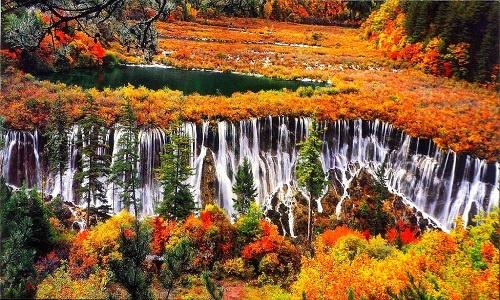
At 320 meters wide, Nuorilang Waterfall is the widest travertine waterfall in China and one of Jiuzhaigou's most iconic landmarks. Water cascades over a wide travertine ledge in a broad curtain of white. There are viewing platforms both at the top (from the bus stop) and at the bottom (after walking down the stairs).
Walking: 20–30 minutes (including stairs to the bottom viewing platform)
Height: 24.5 m tall, 320 m wide
Best time: Afternoon — the sun lights up the spray
Note: Damaged by the 2017 earthquake but restored and reopened in 2019
➤2. Shuzheng Lakes (树正群海)
A series of over 40 terraced lakes cascading down the valley, separated by natural travertine dams. It's like a staircase of lakes — each one flows into the next through small waterfalls. The colors range from turquoise to emerald depending on depth and light.
Walking: 45–60 minutes along the boardwalk
Best time: Late afternoon for warm light on the water
Don't miss: Shuzheng Waterfall in the middle of the series
➤3. Sleeping Dragon Lake (卧龙海)
A medium-sized lake with a long, submerged travertine ridge that looks like a sleeping dragon lying at the bottom. The deep blue water makes the "dragon" appear to move when the water ripples.
Walking: 15 minutes
➤4. Sparkle Lake (火花海)
A beautiful lake whose surface shimmers with golden highlights when the sun hits it — like sparks dancing on the water. Sparkle Lake was damaged in the 2017 earthquake but has been naturally restored and is now even more beautiful.
Walking: 15–20 minutes
Best time: Morning or late afternoon when sun is low
➤5. Reed Lake (芦苇海)
A 2 km-long marshy lake covered with reeds, with a narrow channel of turquoise water winding through it. It's especially beautiful in autumn when the reeds turn golden. This is one of the quieter parts of the park.
Walking: 30–45 minutes along the boardwalk
Best for: Bird watching and peaceful walks
➤6. Shuzheng Tibetan Village (树正寨)
A traditional Tibetan village located inside the park. The residents are part of the original Jiuzhaigou community. You can see traditional architecture, visit a small temple, and buy snacks and handicrafts.
Walking: 20–30 minutes to explore
Note: Photography of villagers without permission is not polite
8. Jiuzhaigou Sightseeing Bus & Shuttle System
The Jiuzhaigou sightseeing bus system is the backbone of any visit. With valleys stretching 18 km each way, you simply cannot see Jiuzhaigou on foot alone. The shuttle network runs continuously throughout the day and is covered by a daily eco-bus pass purchased separately from entrance admission.
How the Shuttle Bus System Works
The Three Routes
There are three main shuttle bus routes, all passing through the Nuorilang hub:
Route | Path | Duration (one way) | Frequency |
|---|---|---|---|
Route 1: Entrance ↔ Nuorilang | Shuzheng Valley | ~30 minutes | Every 2–5 minutes |
Route 2: Nuorilang ↔ Primeval Forest | Rize Valley | ~30 minutes | Every 3–5 minutes |
Route 3: Nuorilang ↔ Long Lake | Zechawa Valley | ~30 minutes | Every 5–8 minutes |
Important Shuttle Bus Rules
The eco-bus pass is required for most visitors and is priced separately from entrance admission
All buses depart from the entrance in the morning — you'll be assigned a direction (Rize or Zechawa) by park staff to distribute crowds evenly
After the initial trip up, you can freely get on and off at any stop in any direction
Last bus from Nuorilang to entrance is at 5:00 PM (peak) / 4:00 PM (winter) — don't miss it!
Buses are large coaches that seat about 40–50 people with large windows for sightseeing
Sit on the right side going up Rize Valley for better lake views
Sit on the left side going up Zechawa Valley for better views
Morning Dispatch: How It Works
The morning shuttle system works differently from the rest of the day. Here's what to expect:
After entering the park, you'll follow signs to the shuttle bus boarding area
Park staff will direct you to board buses going to either Rize Valley (Primeval Forest) or Zechawa Valley (Long Lake)
This is to balance crowds — the park sends visitors to different valleys first to prevent overcrowding
You can't choose your first bus — you go where they direct you
Once you reach the end of one valley, you can take buses anywhere else in the park
Bus Frequency by Time of Day
Time | Frequency | Wait Time | Crowd Level |
|---|---|---|---|
7:00 – 9:00 AM | Every 1–2 minutes | < 1 minute | Very high (morning rush) |
9:00 AM – 3:00 PM | Every 3–8 minutes | 2–10 minutes | Moderate |
3:00 – 5:00 PM | Every 2–5 minutes | 1–5 minutes | High (everyone going back) |
After 5:00 PM | Reduced service | Variable | Low (closing time) |
9. Jiuzhaigou Park Transport & Accessibility
Jiuzhaigou's park transport system is well-organized and efficient. Here's everything you need to know about getting around once you're inside the scenic area.
Transport Options Inside the Park
➤Sightseeing Shuttle Buses (Primary)
The shuttle buses are the primary mode of transport inside Jiuzhaigou. They cover all three valleys and operate with a daily eco-bus pass. See the Jiuzhaigou sightseeing bus section above for full details.
➤Walking & Boardwalks
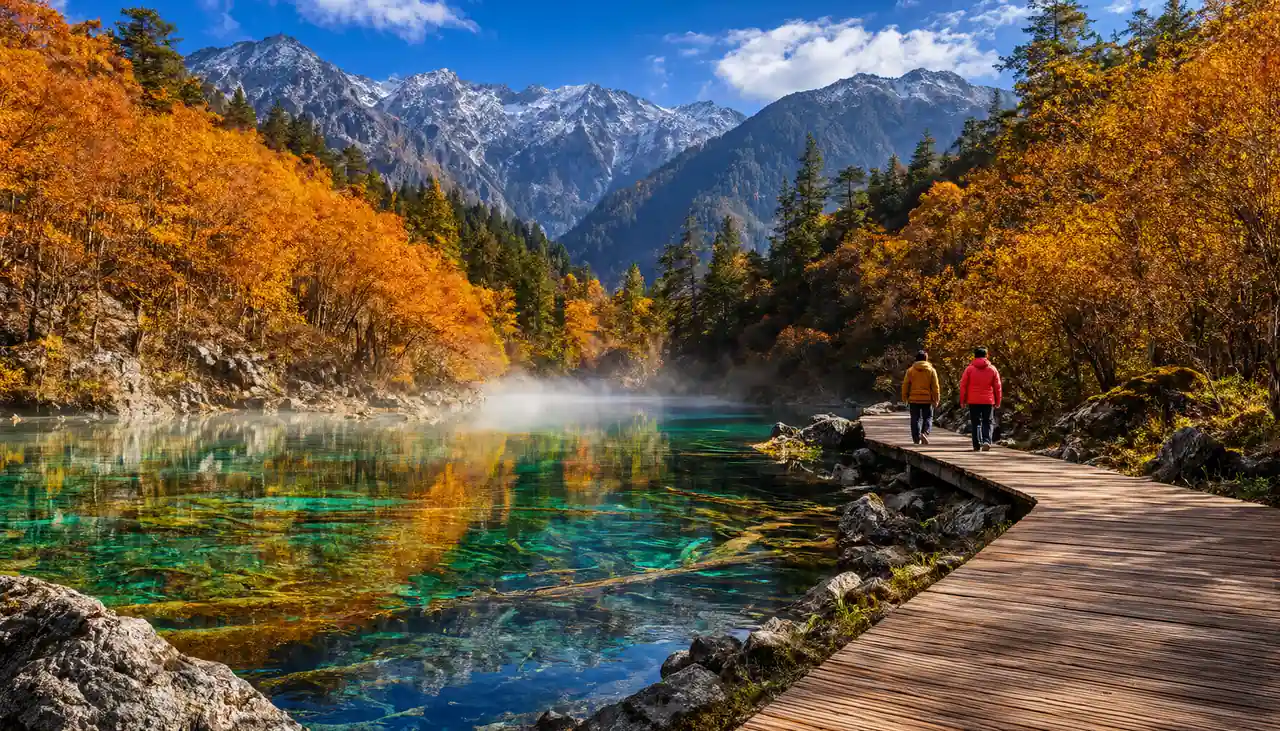
Wooden boardwalks run alongside every lake and waterfall, making walking the best way to actually experience the scenery. You'll walk between nearby stops and use the bus to cover longer distances.
➤Electric Carts (Limited)
There are a few electric golf cart services in specific areas, but they are very limited and not a primary means of transport. The main shuttle bus system covers everything you need.
How to Navigate Between Stops
The most efficient strategy is a mix of bus and walking. Here's the typical pattern:
The "Bus Up, Walk Down" Strategy
1. Take the bus all the way to the top of a valley2. Walk down along the boardwalks, stopping at each lake and waterfall3. When you're tired or want to skip a section, hop back on the bus4. Repeat for each valleyThis works because most of Jiuzhaigou's paths are gently downhill when walking from the top, making it easier on your legs.
Example: Getting from Five Flower Lake to Long Lake
To go between valleys, you always go through Nuorilang:
From Five Flower Lake (Rize Valley), take any shuttle bus heading toward Nuorilang (~15 minutes)
At Nuorilang, get off and follow signs for Zechawa Valley buses
Take a bus from Nuorilang up to Long Lake (~25 minutes)
Total travel time: about 50 minutes including waiting and transfer
Accessibility
Jiuzhaigou has made efforts to improve accessibility, but it's important to set realistic expectations:
Shuttle buses are the main accessible transport — they stop at all major viewpoints
Boardwalks are mostly flat and wooden, but some sections have stairs
Wheelchair access is limited — some viewing platforms are accessible, but many boardwalk sections have steps
For visitors with mobility issues, focus on the main viewing platforms accessible directly from bus stops
10. Jiuzhaigou Walking Distance & Boardwalk Guide
Jiuzhaigou walking distance is one of the most common questions from visitors. The good news is that you can customize how much you walk — the shuttle bus system means you can walk as little or as much as you want.
Walking Distances by Valley
Here are the approximate walking distances between major stops along the boardwalks:
Rize Valley (Top to Bottom)
Section | Distance | Walking Time | Difficulty |
|---|---|---|---|
Primeval Forest → Arrow Bamboo Lake | 1.5 km | 20–25 min | Easy (flat) |
Arrow Bamboo → Panda Lake | 1.0 km | 15–20 min | Easy |
Panda Lake → Five Flower Lake | 1.2 km | 20–25 min | Easy (gentle downhill) |
Five Flower Lake → Pearl Beach | 1.5 km | 25–35 min | Moderate (some stairs) |
Pearl Beach → Mirror Lake | 1.8 km | 30–40 min | Easy |
Mirror Lake → Nuorilang | 1.5 km | 25–30 min | Easy |
Full Rize Valley walk | ~8.5 km | 2.5–3.5 hours | Moderate |
Zechawa Valley (Top to Bottom)
Section | Distance | Walking Time | Difficulty |
|---|---|---|---|
Long Lake viewing (loop) | 0.5 km | 15–20 min | Easy |
Long Lake → Five Color Pond | 1.0 km (stairs) | 20–30 min | Moderate (steep stairs down) |
Five Color Pond → Upper Seasonal Lake | 2.0 km | 35–45 min | Easy |
Upper → Middle Seasonal Lake | 2.0 km | 35–45 min | Easy |
Middle → Lower Seasonal Lake | 1.5 km | 25–30 min | Easy |
Lower Seasonal Lake → Nuorilang | 2.5 km | 40–50 min | Easy |
Full Zechawa Valley walk | ~9.5 km | 3–4 hours | Moderate |
Shuzheng Valley (Top to Bottom)
Section | Distance | Walking Time | Difficulty |
|---|---|---|---|
Nuorilang Waterfall (viewpoints) | 0.3 km | 15–20 min | Easy (stairs) |
Nuorilang → Shuzheng Lakes | 2.0 km | 30–40 min | Easy |
Shuzheng Lakes (full boardwalk) | 2.5 km | 50–70 min | Easy to moderate |
Shuzheng → Sleeping Dragon Lake | 1.0 km | 15–20 min | Easy |
Sleeping Dragon → Sparkle Lake | 1.2 km | 20–25 min | Easy |
Sparkle Lake → Reed Lake | 1.5 km | 25–30 min | Easy |
Reed Lake → Park Entrance | 3.0 km | 45–60 min | Easy (but tiring at end of day) |
Full Shuzheng Valley walk | ~11.5 km | 3.5–5 hours | Moderate |
How Much Will You Actually Walk?
Most visitors don't walk every section. Here's what typical visitors cover:
Visitor Type | Total Walking | Sections Walked | Bus Usage |
|---|---|---|---|
Relaxed / Casual | 3–5 km | Best sections only (Five Flower, Pearl Beach, Nuorilang) | Heavy |
Average / Typical | 6–9 km | All highlights in all three valleys | Moderate |
Active / Hiker | 12–15 km | Most boardwalks in all three valleys | Light |
Hardcore | 18–20 km+ | Everything, including full length of all valleys | Minimal |
What to Wear and Bring for Walking
Comfortable walking shoes — the boardwalks are wooden but you'll be on your feet all day
Layers — temperatures vary throughout the day and by altitude
Water bottle — there are refill stations at some rest areas
Snacks — energy bars or fruit for quick fuel
Rain jacket — afternoon rain is common in summer
Sunscreen and hat — high altitude means strong UV rays
11. Jiuzhaigou One-Day Route: See the Highlights
Most visitors spend one day in Jiuzhaigou, and it is absolutely possible to see all the highlights. The key is an early start and efficient use of the shuttle bus system. Here is the recommended Jiuzhaigou one day route.
Enter at Pengfeng before 7:30 AM and board the first shuttle.
Prioritize Rize Valley: Five Flower Lake, Panda Lake, and Pearl Beach.
Transfer at Nuorilang to Zechawa Valley for Long Lake and Five Color Pond.
Finish in Shuzheng Valley and board an entrance-bound bus before the last service.
Hour-by-Hour One Day Itinerary
6:30 AM — Wake Up & Breakfast
Eat a substantial breakfast at your hotel
Pack water, snacks, sunscreen, and layers
Head to the park entrance
7:00–7:30 AM — Enter the Park
Arrive at Pengfeng Entrance, scan your ticket QR code
Board the first available shuttle bus
Park staff will direct you to either Rize or Zechawa Valley first
Goal: Be on a bus by 7:30 AM at the latest
8:00–11:30 AM — Rize Valley (The Priority)
If your first bus goes to Rize Valley:
Take the bus all the way to Primeval Forest (optional — skip if you want more time at the lakes)
Bus down to Five Flower Lake — spend 30–45 minutes walking around it
Walk from Five Flower Lake down to Pearl Beach (25–35 min)
Walk across Pearl Beach and view Pearl Beach Waterfall (30 min)
Optional: Walk to Mirror Lake if you have time (30 min)
Take the bus from Mirror Lake to Nuorilang (10 min)
If your first bus goes to Zechawa Valley, do Zechawa first (see below), then switch to Rize Valley from Nuorilang.
11:30 AM – 12:00 PM — Lunch at Nuorilang
Eat at the Nuorilang Restaurant (buffet or à la carte)
Or eat packed lunch you brought with you
Use the restrooms and refill water bottles
12:00–2:30 PM — Zechawa Valley
Take the bus from Nuorilang up to Long Lake (25 min)
Spend 20 minutes at Long Lake viewing platform
Walk down the stairs to Five Color Pond (20 min)
Spend 20 minutes at Five Color Pond — it's small but stunning
Take the bus back down to Nuorilang (25 min)
Skip the Seasonal Lakes to save time (they're less impressive)
2:30–4:30 PM — Shuzheng Valley
View Nuorilang Waterfall from both top and bottom platforms (20 min)
Walk down through the Shuzheng Lakes (45–60 min)
Stop at Shuzheng Waterfall and Sleeping Dragon Lake
Optional: Continue to Sparkle Lake if you have time
Take the bus from wherever you are to the entrance
4:30–5:00 PM — Exit the Park
Make sure you're on a bus heading for the exit by 4:30 PM
Buses can be crowded at the end of the day — allow extra time
Last bus from Nuorilang to entrance: 5:00 PM
12. Jiuzhaigou Valley Itinerary: A Relaxed Two-Day Visit
A two-day Jiuzhaigou valley itinerary gives you time to see everything at a relaxed pace, revisit your favorite spots, and discover hidden corners. It's especially recommended for photographers, hikers, and anyone who doesn't want to rush.
Two-Day Ticket Info
Day 1: Rize Valley + Shuzheng Valley
On your first day, focus on the two valleys with the most to see. Take your time and don't rush.
Morning: Rize Valley (Full Exploration)
7:30 AM — Enter park and take bus to Primeval Forest
8:15 AM — Explore Primeval Forest (30 min)
9:00 AM — Walk down to Arrow Bamboo Lake (20 min)
9:30 AM — Walk to Panda Lake (15 min)
10:00 AM — Walk to Five Flower Lake — spend extra time here (45 min)
11:00 AM — Walk to Pearl Beach and Pearl Beach Waterfall (40 min)
12:00 PM — Walk to Mirror Lake (30 min)
12:30 PM — Bus to Nuorilang for lunch
Afternoon: Shuzheng Valley (Leisurely)
1:30 PM — Nuorilang Waterfall (30 min, both viewpoints)
2:00 PM — Walk through Nuorilang Lakes (20 min)
2:30 PM — Walk through Shuzheng Lakes — take your time (75 min)
3:45 PM — Shuzheng Village (20 min)
4:15 PM — Sleeping Dragon Lake (15 min)
4:45 PM — Sparkle Lake (15 min)
5:00 PM — Bus back to entrance
Day 2: Zechawa Valley + Favorites Revisited
On your second day, explore Zechawa Valley thoroughly and revisit any spots you loved from day 1 — maybe at a different time of day for different light.
Morning: Zechawa Valley (Deep Dive)
7:30 AM — Enter park, take bus to Nuorilang, transfer to Zechawa bus
8:30 AM — Arrive at Long Lake. Walk the full boardwalk (30 min)
9:15 AM — Walk down to Five Color Pond (25 min)
9:45 AM — Five Color Pond (30 min — it's worth time for photos)
10:30 AM — Walk down to Upper Seasonal Lake (40 min)
11:15 AM — Middle and Lower Seasonal Lakes (50 min total)
12:15 PM — Bus back to Nuorilang for lunch
Afternoon: Revisit Favorites + Hidden Gems
1:30 PM — Revisit Five Flower Lake (different afternoon light = different colors)
2:30 PM — Reed Lake (often skipped, very peaceful) (45 min)
3:30 PM — Walk from Reed Lake to Bonsai Beach (20 min)
4:00 PM — Any final spots you want to see again
4:45 PM — Head back to entrance
Why Two Days is Better
With two days, you can:• Walk more boardwalks and skip fewer spots• Revisit the best lakes at different times of day for different light• Take more time for photography• Not feel rushed — enjoy the scenery instead of checking a list• Have time to rest and eat properly instead of always being on the go
13. Jiuzhaigou Without a Guide: Self-Guided Tips
Wondering if you can visit Jiuzhaigou without a guide? Absolutely — Jiuzhaigou is one of the easiest national parks in China to visit independently. Here's everything you need to know for a great self-guided visit.
Why You Don't Need a Guide
Reasons to Go Without a Guide:
Save money — private guides cost CNY 300–800 per day
Go at your own pace — stay as long as you want at each spot
More flexibility — change your plan whenever you want
Better experience — enjoy the peace and natural beauty without commentary
It's easy — the park is well-signposted and the bus system is simple
What You Need to Know Before You Go
Buy Tickets Online in Advance
This is the most important preparation step. Tickets often sell out, especially during peak season. You can buy tickets through:
Official Jiuzhaigou website (jiuzhai.com) — Chinese only
Travel apps — Ctrip, Meituan, Fliggy (some have English versions)
Your hotel — many hotels can help book tickets for guests
Tour agencies — for hassle-free booking, especially from abroad
Download a Map Offline
Cell service inside the park can be spotty, especially in the upper valleys. Download an offline map before you go:
Maps.me or Google Maps offline — for general navigation
Official Jiuzhaigou app — has park maps and information (Chinese)
Screenshot a park map — keep it on your phone for quick reference
Learn the Shuttle Bus System
Read the Jiuzhaigou sightseeing bus section above carefully. Understanding how the shuttle buses work is the key to a smooth self-guided visit.
Bring Everything You Need
Inside the park, selection is limited and prices are high. Pack:
Water — at least 1–2 liters per person
Snacks — energy bars, nuts, fruit, sandwiches
Sunscreen and hat — strong UV at high altitude
Layers — it can be 10–15°C colder at the top of the valleys
Rain jacket — afternoon showers are common in summer
Power bank — for your phone (you'll use it for photos and maps)
Navigation Tips for First-Time Visitors
How to Know Where You Are
Every shuttle bus stop has a name sign in Chinese and English
Boardwalks have directional signs pointing to the next stop
The bus attendant announces each stop in Chinese and usually English
Follow the crowd — everyone is going to see the same things
What If You Get Lost?
Stay on the boardwalk — all boardwalks connect to bus stops
Ask any staff member — they wear uniforms and can help
Follow the signs to the nearest shuttle bus stop
Walk downhill — you'll eventually reach a bus stop or the entrance
Use Bus Attendants as Your "Guide"
Every shuttle bus has an attendant. They know the park inside out. Ask them:• "Which stop for Five Flower Lake?"• "How long to walk from here to the next stop?"• "Which bus do I take to Long Lake?"• "What time is the last bus back?"They're like having a free guide on every bus.
Language Tips
Major signs are in both Chinese and English
Bus attendants speak basic English in peak season
Restaurant menus at Nuorilang have picture menus
Download a translation app — Google Translate or Pleco works offline for text
Learn a few Chinese phrases: "请问" (qǐng wèn = excuse me), "谢谢" (xiè xiè = thank you)
14. Essential Jiuzhaigou Park Tips
These Jiuzhaigou park tips come from multiple visits and will make your trip smoother, cheaper, and more enjoyable.
Ticket & Booking Tips
Book Tickets as Soon as They Are Released
Peak-season dates, especially October and Golden Week (Oct 1–7), can sell out. Check the official booking channel for the release schedule and reserve as soon as tickets become available rather than relying on a fixed advance-booking window.
Visit on a Weekday If Possible
Weekends are significantly busier than weekdays. If your schedule allows, visit Monday–Thursday for smaller crowds, shorter bus waits, and quieter boardwalks.
Bring Your Passport
Foreign visitors need their passport to collect tickets and enter the park. Make sure the name on your ticket matches your passport exactly.
Timing & Crowd Tips
Arrive at the Gate by 7:20 AM
The earlier, the better. The first 2 hours in the park are magical — quiet boardwalks, clear light, and no crowds. By 10 AM, tour groups arrive and the magic fades a bit.
For weather, autumn color, and crowd trade-offs, see our best time to visit Jiuzhaigou guide.
Skip Golden Week (Oct 1–7)
National Day holiday is the busiest week of the year. Crowds are extreme, bus waits are long, and hotels cost 2–3x normal. If you can go the week before or after Golden Week, you'll get similar autumn colors with a fraction of the people.
Counter-Crowd Strategy
Most people visit Rize Valley first thing in the morning. If you want fewer people at Five Flower Lake, try visiting in the late afternoon (3–4 PM) when most people have already left and are heading down Shuzheng Valley.
Photography Tips
Best Light by Location
Spot | Best Time | Why |
|---|---|---|
Five Flower Lake | 9:00–11:00 AM | Sunlight hits the water at the perfect angle to show all colors |
Mirror Lake | 7:30–8:30 AM | No wind = perfect reflections |
Pearl Beach Waterfall | Any time | The spray catches light at any hour |
Nuorilang Waterfall | 2:00–4:00 PM | Afternoon sun lights up the spray |
Long Lake | 10:00 AM – 2:00 PM | Midday sun reduces haze for mountain views |
Shuzheng Lakes | Late afternoon | Warm golden light on the water |
Bring a Polarizing Filter
A polarizing filter removes glare from the water surface, letting you see the colors and submerged features more clearly. It's the single most useful filter for Jiuzhaigou photography.
Shoot from the Boardwalk Edges
Most of the best photo spots are right along the boardwalk. Look for gaps in the trees and unobstructed viewpoints. The classic "postcard" view of Five Flower Lake is from the overlook at its southern end.
Comfort & Practical Tips
Wear Layers — Always
Jiuzhaigou has huge temperature swings. It might be 5°C at the entrance in the morning, 18°C at Five Flower Lake at noon, and then cool down again by late afternoon. Wear layers you can add or remove easily.
Bring Snacks — Food Inside is Expensive
The Nuorilang restaurant is convenient but pricey (CNY 60–100 per person for a buffet). There are also small snack stands at major stops selling instant noodles, sausages, and drinks at marked-up prices. Pack your own snacks to save money and time.
Use Restrooms at Bus Stops
Restrooms are available at every major shuttle bus stop. They're generally clean and well-maintained. There are very few restrooms along the boardwalks between stops, so go when you see one.
Altitude Sickness: Take It Easy
The top of the valleys reaches 2,900–3,100 m. Most people don't have serious issues, but you might feel slightly breathless or have a mild headache. Drink plenty of water, avoid alcohol the night before, and take it slow at the highest points.
Hidden Gems & Secret Tips
Walk the "Less Popular" Sections
Most people get off the bus at Five Flower Lake and Pearl Beach, then get back on. The sections between famous stops — like Panda Lake to Five Flower Lake, or Mirror Lake to Nuorilang — are much quieter and still beautiful.
Stay Until Near Closing
The last hour before closing (4:00–5:00 PM in peak season) sees crowds thin out dramatically. Most tour groups leave early. Staying until the end gives you some of the quietest time of the day, especially in Shuzheng Valley.
Visit Reed Lake
Reed Lake is one of the most underrated spots in Jiuzhaigou. Most people take the bus past it and never stop. But the 2 km boardwalk through golden reeds (in autumn) with a turquoise river winding through is incredibly peaceful and beautiful.
Jiuzhaigou is straightforward once you understand the Y-shaped layout, the shuttle hubs, and the boardwalk connections. Book admission early, arrive at Pengfeng before the crowds, and use the bus for uphill travel. For a tailored route, plan your Jiuzhaigou trip with Your Way or compare our private Jiuzhaigou day tour.


Traveler Discussions
Questions from travelers