
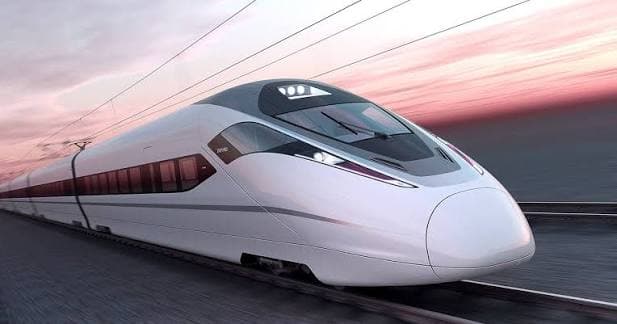
A Hangzhou day trip from Shanghai is one of the easiest and most rewarding escapes you can fit into a China itinerary. The high-speed train covers roughly 170 kilometers between the two cities in about 45 to 60 minutes, which means you can leave your Shanghai hotel after breakfast, spend a full day beside West Lake, walk through a working tea village, and be back on the Bund by dinner. This guide covers the train times, ticket prices, a tested hour-by-hour itinerary, the sights worth your limited time, and the practical details that separate a smooth day from a frustrating one.
1. Is Hangzhou Worth a Day Trip from Shanghai?
A Complete Change of Scene
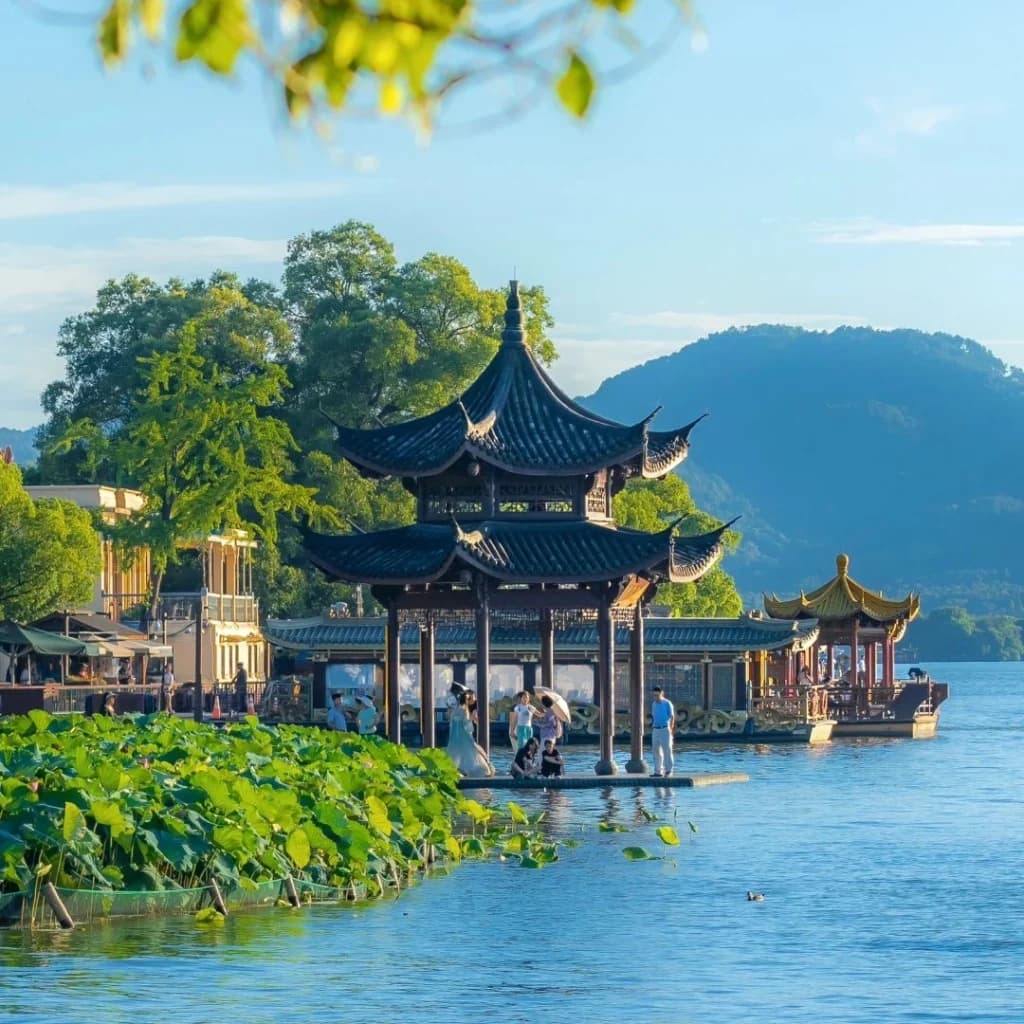
Shanghai is vertical, fast, and built around commerce. Hangzhou is the opposite — horizontal and unhurried, with weeping willows leaning over still water, arched stone bridges, lotus beds, pagodas perched on wooded hills, and tea terraces climbing the slopes just west of the lake.
Marco Polo, who claimed to have visited in the 13th century, called it "beyond dispute the finest and noblest city in the world." Whether or not he actually did, the reputation stuck, and for good reason: Hangzhou has been a byword for refined living since the Southern Song dynasty made it their imperial seat in the 12th century.
UNESCO World Heritage Status
The West Lake Cultural Landscape was inscribed on the UNESCO World Heritage List in 2011, becoming China's 41st World Heritage Site. The inscription covers 3,322.88 hectares and cites more than a thousand years of influence on Chinese garden design, landscape painting, and poetry — an influence that extended to Japan and Korea as well.
According to the Hangzhou Municipal Administration of Gardens and Cultural Heritage, West Lake is "a cultural phenomenon that is ever evolving and never static," built upon the scenery of hills and waters to become the epitome of a traditional Chinese landscape.
What One Day Can Realistically Cover
The honest caveat: one day comfortably covers one cluster of sights, not the entire region. You can pair West Lake with Lingyin Temple and the tea hills because they sit close together on the western side. What you cannot also squeeze in is the Grand Canal district, Xixi National Wetland Park, or the Qiantang River tidal bore — each of which really wants its own half-day. If those appeal, build in an overnight rather than trying to cram everything between two train rides.
2. How to Take the High-Speed Train from Shanghai to Hangzhou
Which Shanghai Station to Depart From
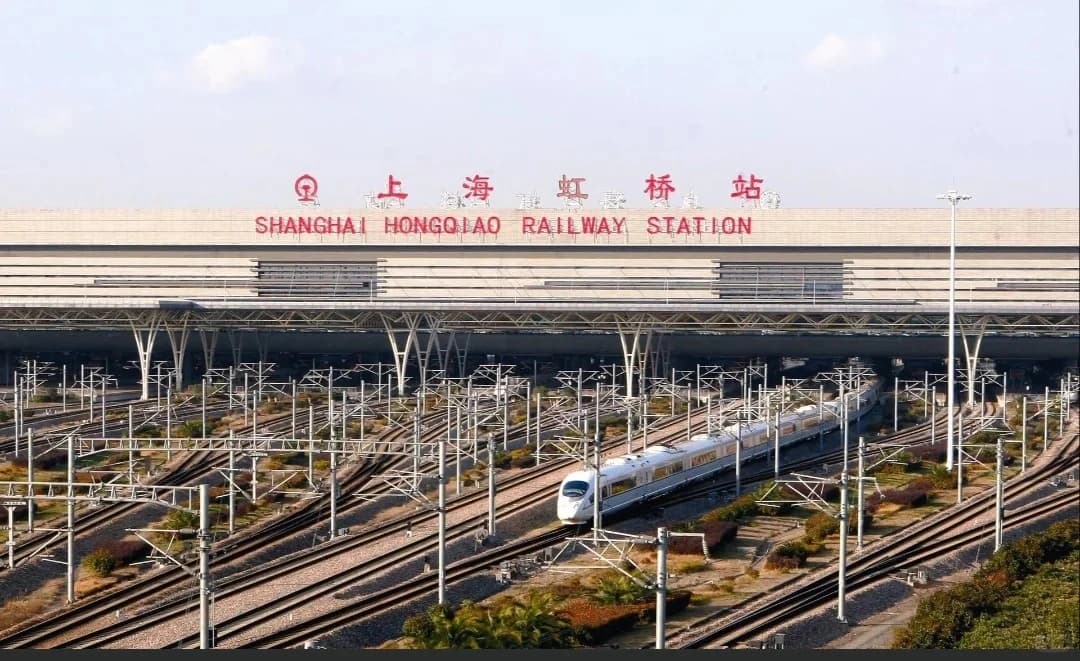
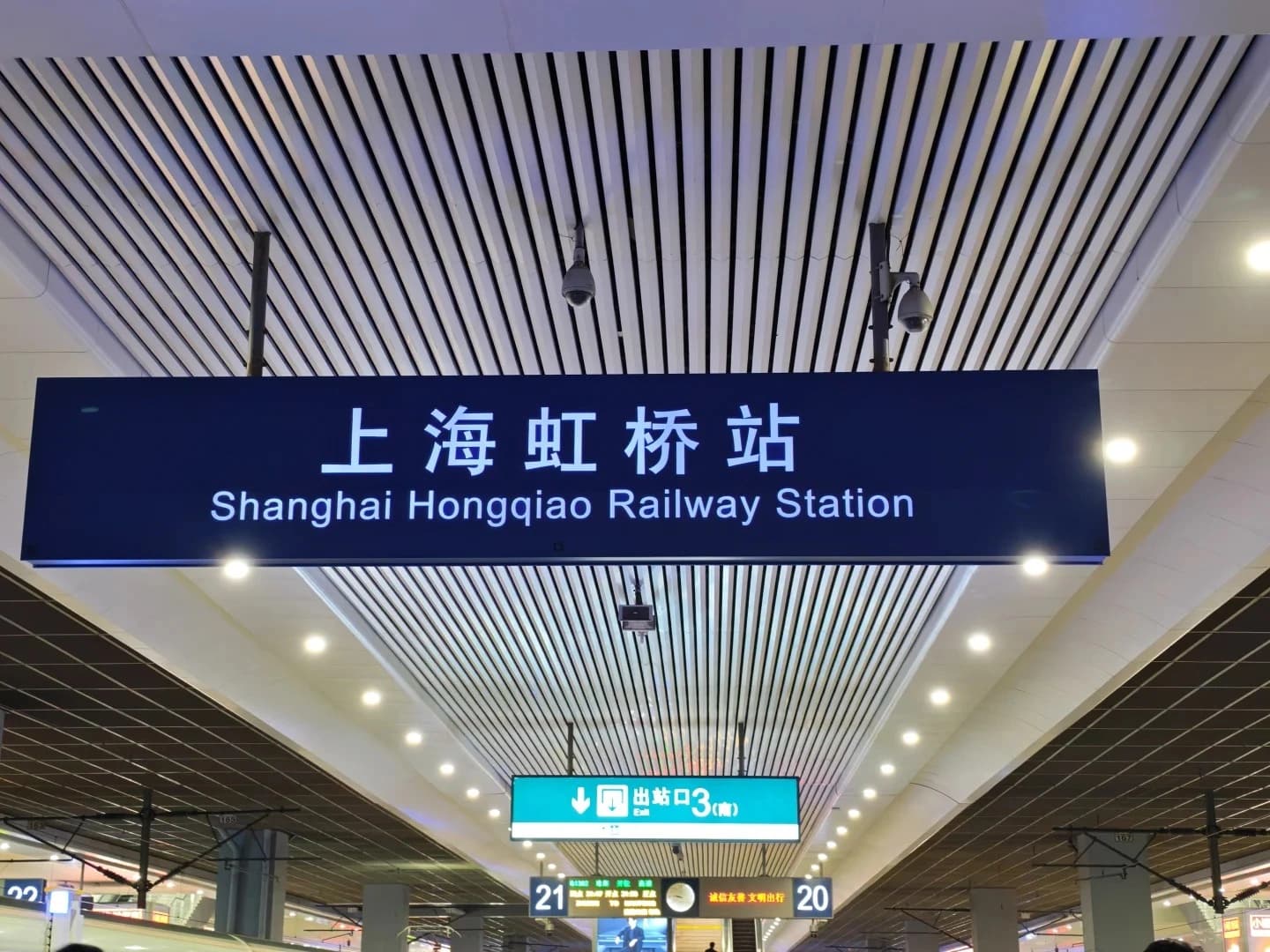
The default departure point is Shanghai Hongqiao Railway Station. It has by far the densest service to Hangzhou, with trains departing every few minutes for much of the day. Hongqiao is wired straight into the metro system: Lines 2, 10, and 17 all stop at the station, so wherever you are staying centrally, you can ride the subway to the platforms without a taxi. Allow roughly 30 to 45 minutes on the metro from People's Square or the Bund area.
Which Hangzhou Station to Arrive At
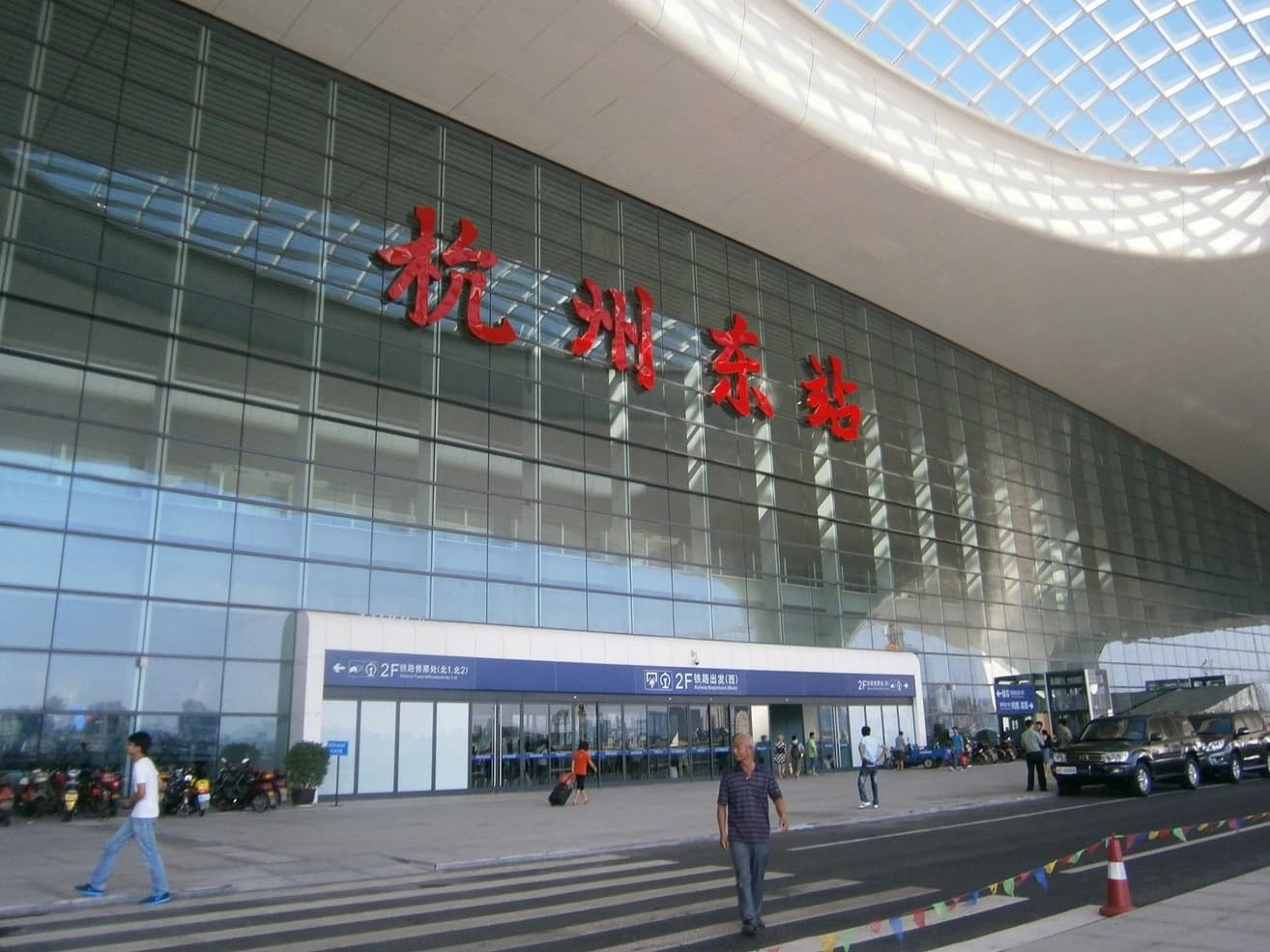
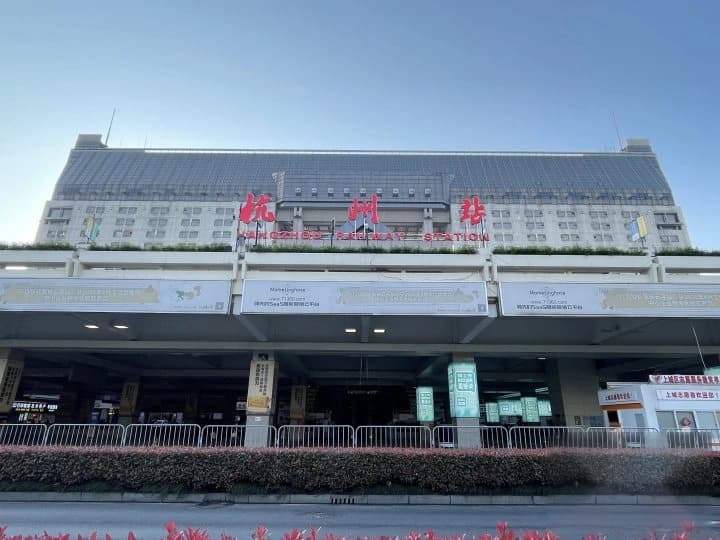
Most high-speed trains from Shanghai arrive at Hangzhou East Railway Station, a large, modern station on the eastern edge of the city with excellent metro connections. A smaller number of services call at Hangzhou Station, the older facility closer to West Lake.
For first-time visitors, Hangzhou East is the better choice: the metro from there to the lake is quick and straightforward, and the station itself is cleaner and easier to navigate. Hangzhou Station is closer geographically, but the difference is marginal once you factor in metro time, and the reduced train frequency means less flexibility.
Train Schedule & Frequency
The Shanghai–Hangzhou high-speed rail corridor is one of the busiest in China. Over 150 trains run the route daily, with the first departures around 06:00 and the last trains near 22:30. The fastest G-series trains complete the journey in approximately 45 to 60 minutes, while D-series services take around an hour. Frequency is the real luxury: trains depart every 5 to 15 minutes during peak hours.
For a full day trip, a practical pattern is an outbound train around 07:30 to 08:30 and a return around 19:30 to 20:30. The later return is worth booking deliberately — it leaves room to see West Lake in the softer late-afternoon light, which is when the lake looks its best.
Ticket Prices by Class
Class | One-Way Fare | What to Expect |
|---|---|---|
Second Class | ¥87 | Comfortable for under an hour; 5-abreast seating, adequate legroom |
First Class | ¥140 | 4-abreast seating, wider seats, marginally more legroom |
Business Class | ¥306 | Lie-flat-style seats, complimentary snacks, most spacious |
For a journey under an hour, standard second class is perfectly comfortable. A round trip in second class lands near ¥174 per person.
How to Book Tickets
Tickets generally open about 15 days before departure. The weekend trains sell out fastest, and during major national holidays they can vanish within minutes of release, so book early if your dates fall in those windows.
The most reliable way to purchase is through the official China Railway 12306 platform. However, the 12306 app and website are primarily in Chinese, and foreign card payments can be cumbersome to set up. We can handle the entire train booking process for you — purchasing directly through 12306 on your behalf, selecting optimal departure and return times, and ensuring your passport information is correctly registered.
As of 2026, foreign passport holders can scan their passport directly at the electronic ticket gates rather than collecting a paper ticket at a counter — a significant improvement over past years. Still, carry your passport at all times; it is your ticket, your ID, and your backup.
3. Getting from Hangzhou East Station to West Lake
By Metro
The cleanest option is the Hangzhou Metro. Follow signs to Metro Line 1 (direction: Xianghu) and ride to Longxiangqiao Station, the closest stop to the northeastern shore of West Lake. The ride takes roughly 15 minutes and costs about ¥4. Take Exit C, and the lake shore is a 7- to 10-minute walk.
By Taxi or Didi
A taxi or Didi (China's ride-hailing app) from Hangzhou East to the West Lake area runs about ¥35 to ¥50 and takes 20 to 30 minutes depending on traffic. Didi is the easier choice if you do not speak Mandarin, since you set the destination in the app and skip the conversation entirely.
At the Lake
Once you are at West Lake, the surrounding area is genuinely walkable. Public bicycles are available for rent around the shore for roughly ¥10 to ¥20 per hour — a pleasant way to cover the causeways. Sightseeing electric carts also loop the lakeside roads for a few yuan per hop if you want to save time between the southern and western sights.
4. What Should You See at West Lake?
West Lake is the reason most people come, and it is large enough that trying to "do" all of it in a day is a mistake. The lake's circumference is about 15 kilometres — possible to cycle in two hours or walk in four to five, but for a day trip you want to focus on the best sections and actually sit with them.
The Ten Scenes — Pick Three or Four
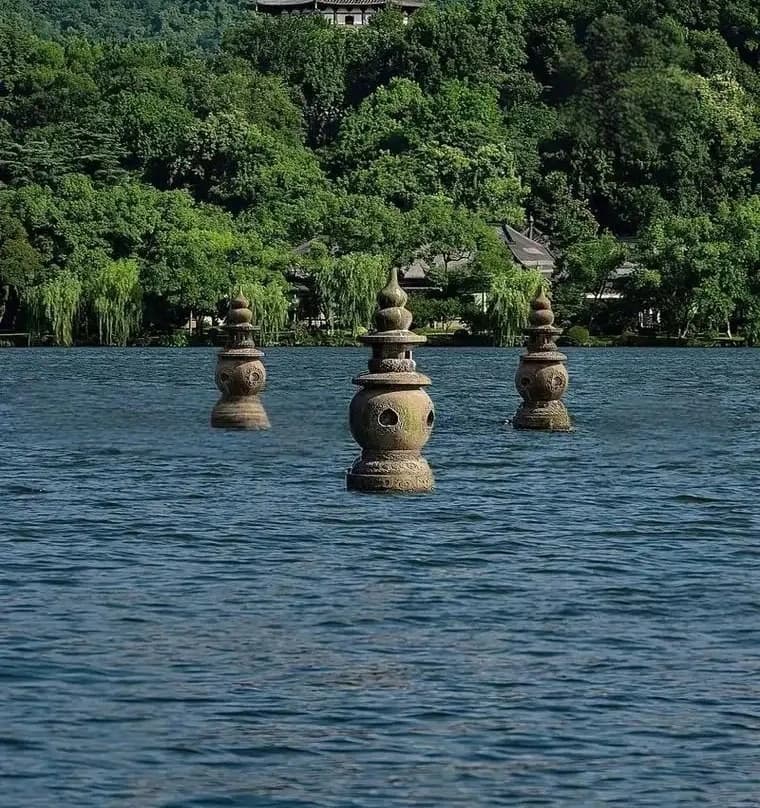
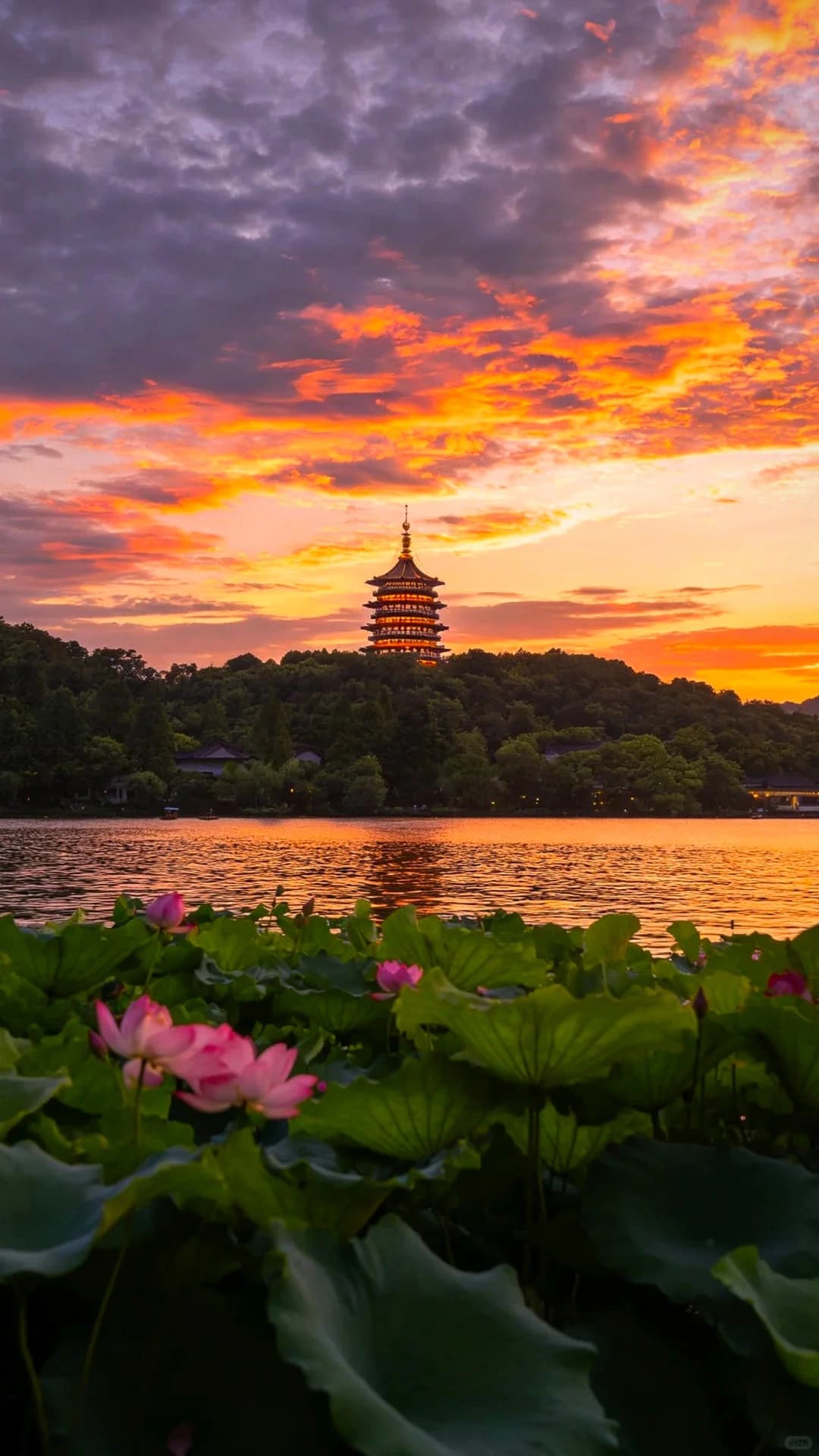
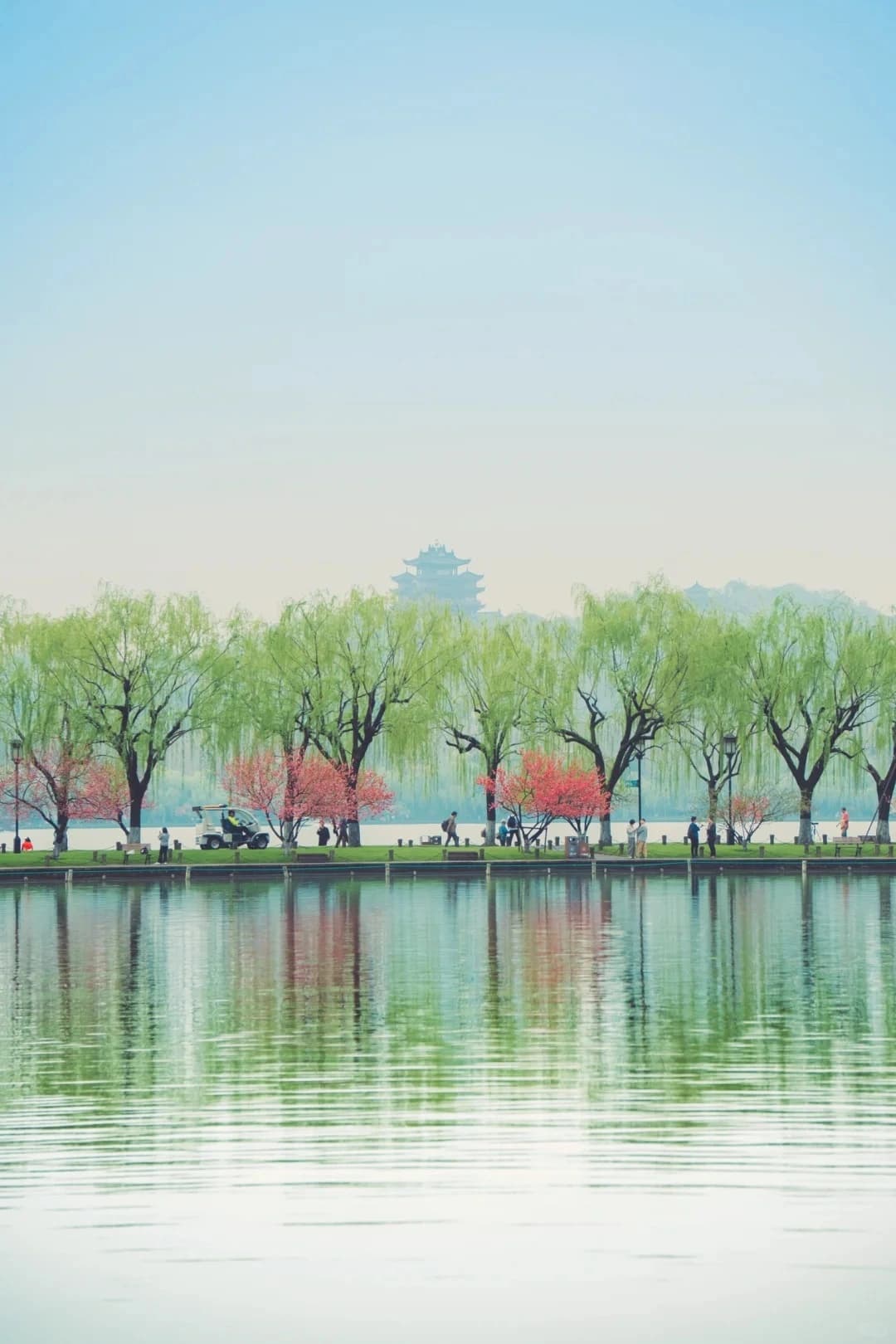
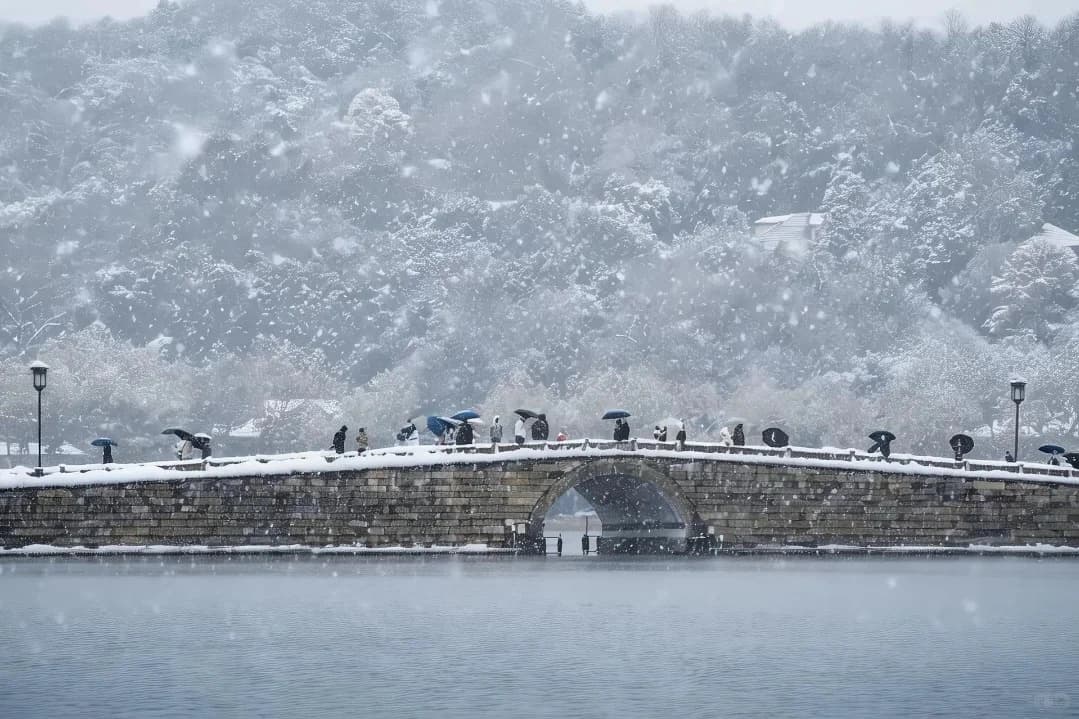
A canon of viewpoints known as the "Ten Scenes of West Lake" was codified during the Southern Song dynasty, each bearing a four-character poetic name. For a first visit, the most rewarding are:
Three Pools Mirroring the Moon — the small island whose three stone pagodas appear on the back of the ¥1 banknote. Reached by boat from the northern or southern shore.
Leifeng Pagoda at Sunset — the rebuilt pagoda on the southern shore, magnificent in the golden hour.
Su Causeway in Spring Dawn — the 2.8-kilometre causeway running north to south, lined with willows and peach trees, crossed by six arched bridges.
Broken Bridge in Remnant Snow — at the eastern end of the Bai Causeway, steeped in the legend of the White Snake.
Boat Trip Options
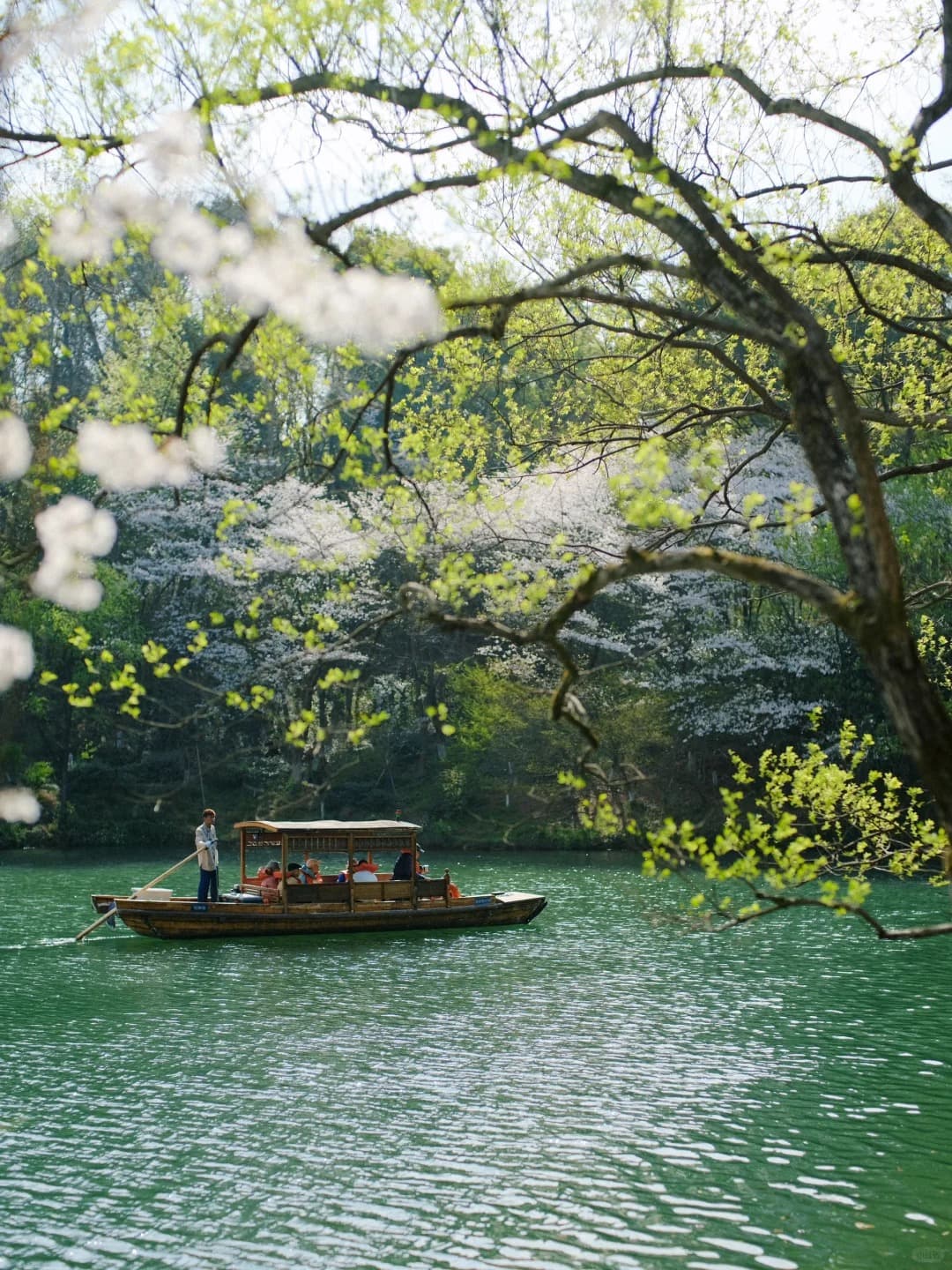
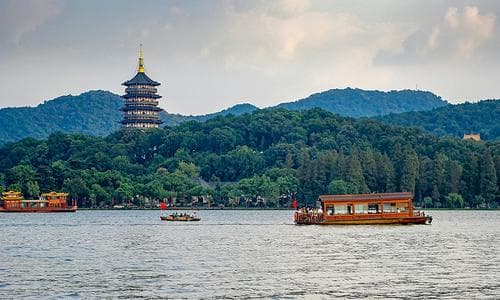
Large public sightseeing boats run set loops from docks along the northern and southern banks to the central islands, including Three Pools Mirroring the Moon. Tickets cost around ¥55, and the circuit takes 45 to 60 minutes. Smaller hand-rowed sampans are available near the shore and cost more; if you opt for one, agree the price and route before you step in.
Su Causeway & Bai Causeway
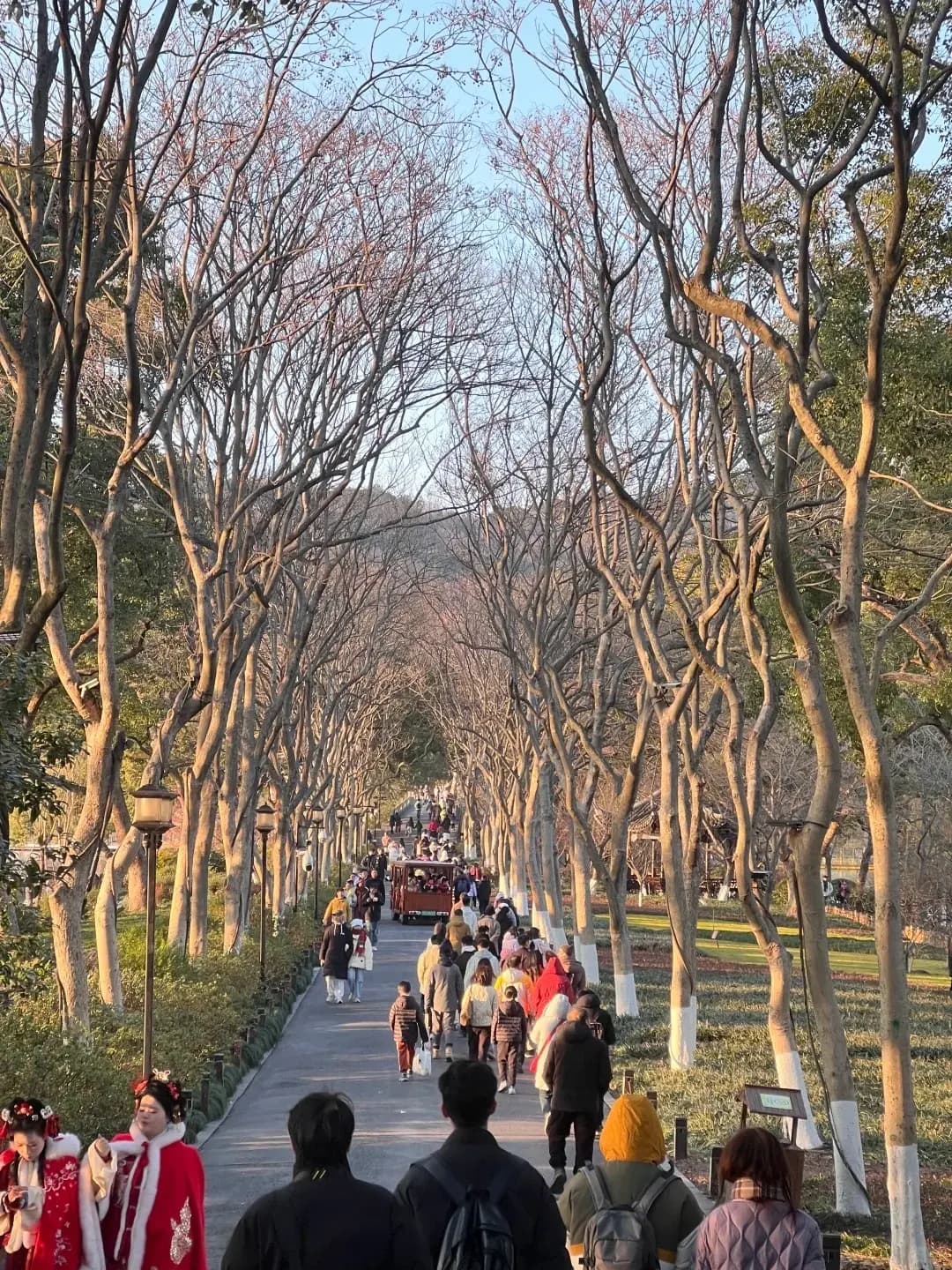
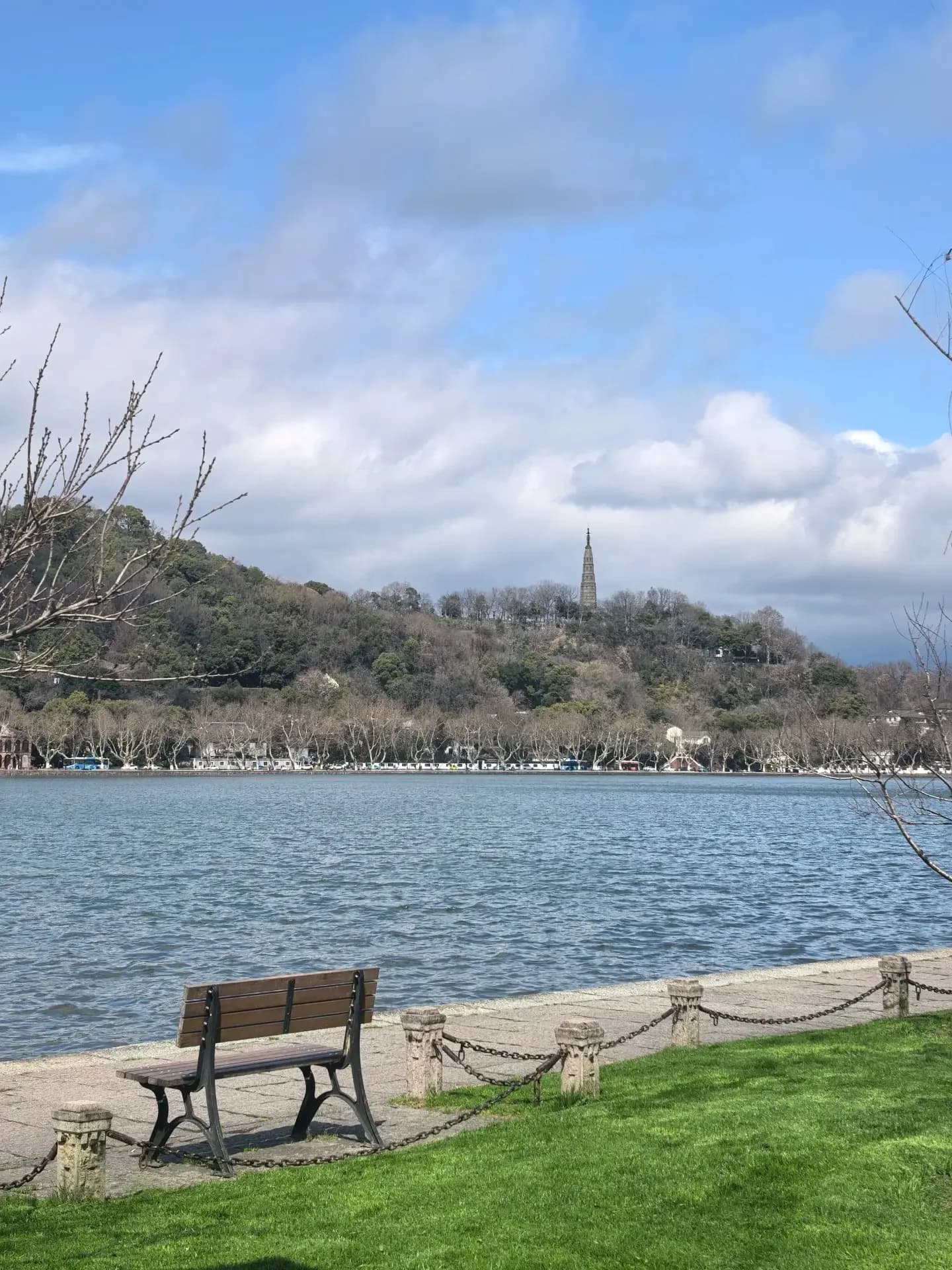
Two ancient causeways cross the lake, both named after poet-governors who shaped the city. The Su Causeway, built by Su Dongpo in the 11th century as a flood-control project, runs 2.8 kilometres north to south with six stone-arch bridges. Walking it from south to north takes about 45 minutes and is the best way to experience the lake at water level.
The Bai Causeway, shorter and named after Tang dynasty poet Bai Juyi, connects to Solitary Hill Island, home to the Zhejiang Provincial Museum (free entry).
Leifeng Pagoda at Sunset
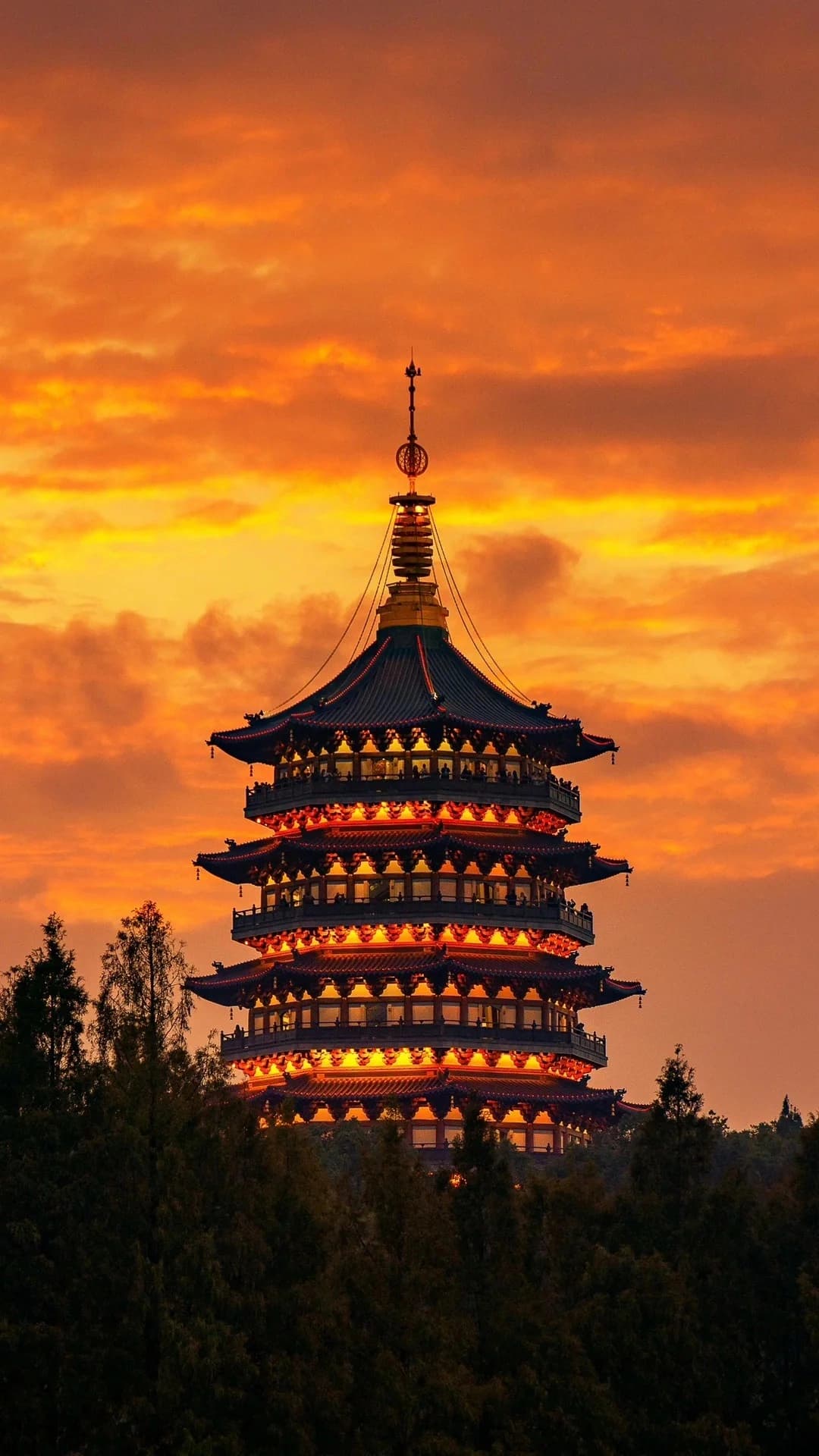
Leifeng Pagoda stands on the lake's southern shore. The original pagoda was built in 975 AD, collapsed in 1924, and was faithfully reconstructed in 2002 — complete with an elevator. The entry fee is about ¥40. The pagoda at sunset, reflected in the lake, is one of Hangzhou's signature images.
Free vs. Paid Areas
Most paths, lawns, and viewpoints around the lake are free to enter. You only pay for boats (¥55–70), climbing Leifeng Pagoda for free, and a handful of specific gardens or museums. Even the China National Tea Museum and the Hangzhou Museum are free, making the lake an unusually good-value sight by Chinese standards.
5. Lingyin Temple and Feilai Feng
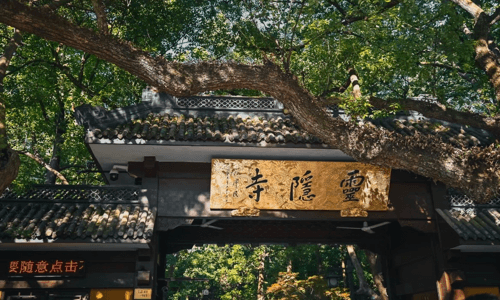
Temple History & Highlights
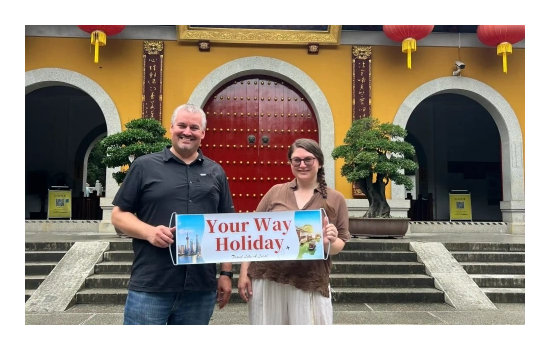
Lingyin Temple, the "Temple of the Soul's Retreat," is one of the oldest and most important Buddhist temples in China. Founded in AD 326 during the Eastern Jin dynasty, it has roughly 1,700 years of continuous history. The grandest hall, the Mahavira Hall, houses a seated Sakyamuni Buddha approximately 24.8 metres tall — one of the largest carved wooden Buddha statues in the country, sculpted from a single piece of camphor wood.
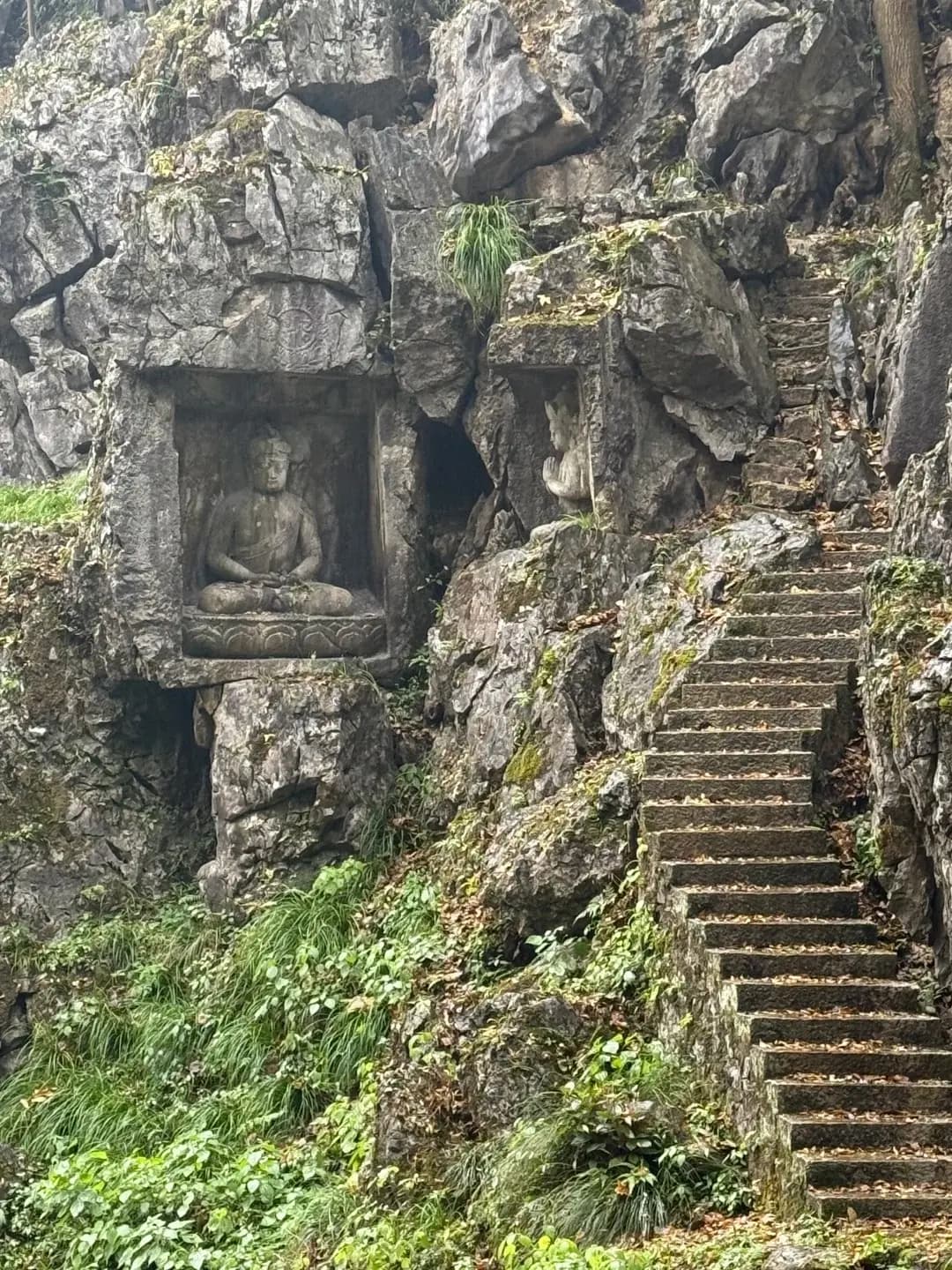
Feilai Feng Grotto Carvings
Directly opposite the temple stands Feilai Feng, the "Peak Flying From Afar" — a limestone outcrop honeycombed with grottoes and carved with roughly 470 Buddhist figures dating from the 10th to 14th centuries. This is the largest concentration of cliff carvings in southern China. Allow at least 90 minutes for the temple and Feilai Feng together.
Entry Fees & Advance Reservation
Since December 1, 2025, the entire Lingyin–Feilai Feng scenic area — including Lingyin Temple, Yongfu Temple, and Zhaoguang Temple — is free to enter, ending four decades of paid admission. However, a free reservation is now mandatory for all visitors: search "杭州灵隐飞来峰" on WeChat or Alipay mini-program, with slots released at 08:00 daily for 1–7 days ahead.
Dress Code & Etiquette
This is an active place of worship, not merely a tourist site. Keep shoulders covered and avoid shorts above the knee. Maintain a quiet, respectful demeanour inside the temple buildings, and do not photograph the Buddha statues from directly in front of them.
6. Authentic Dragon Well Tea Culture
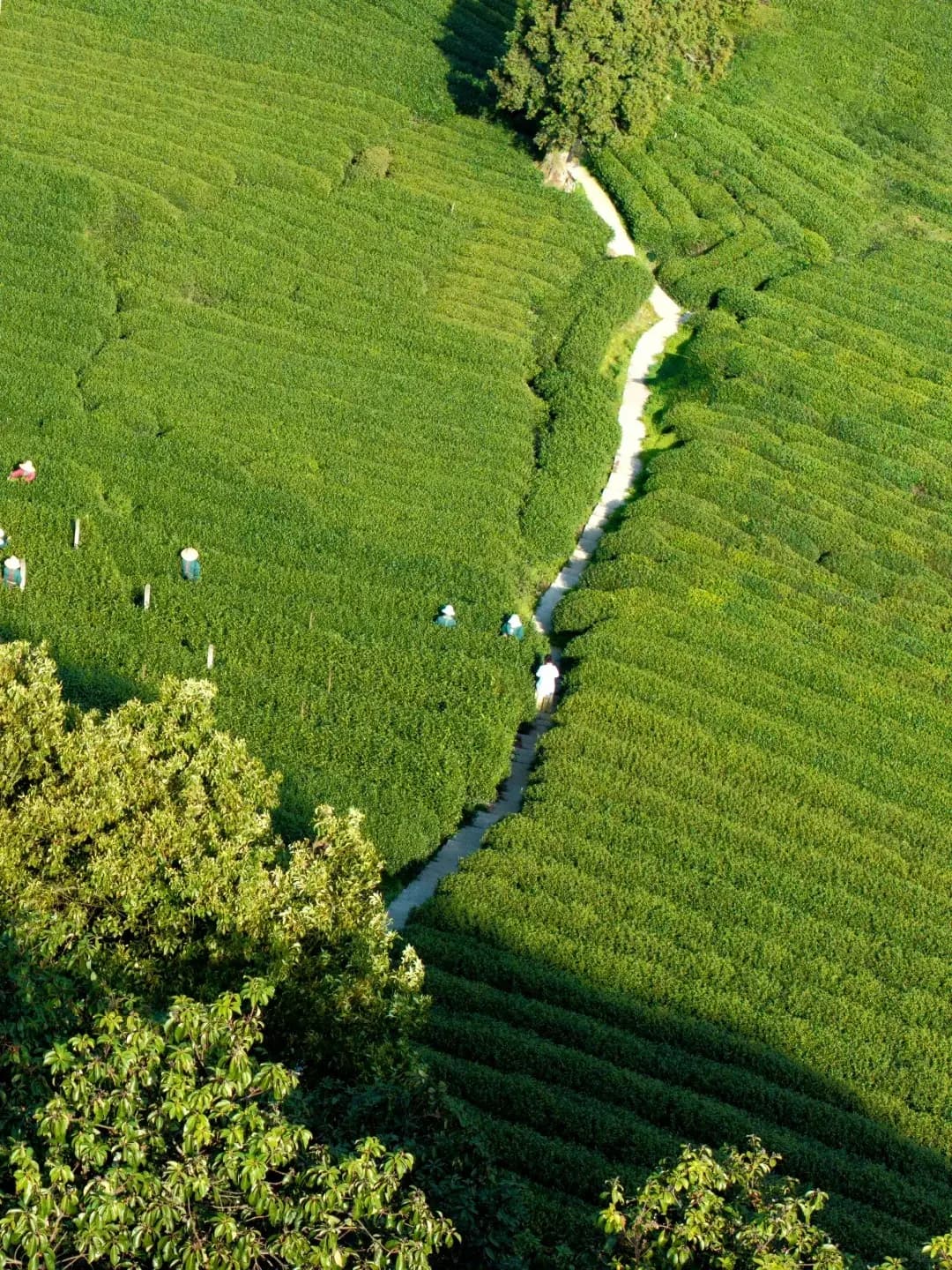
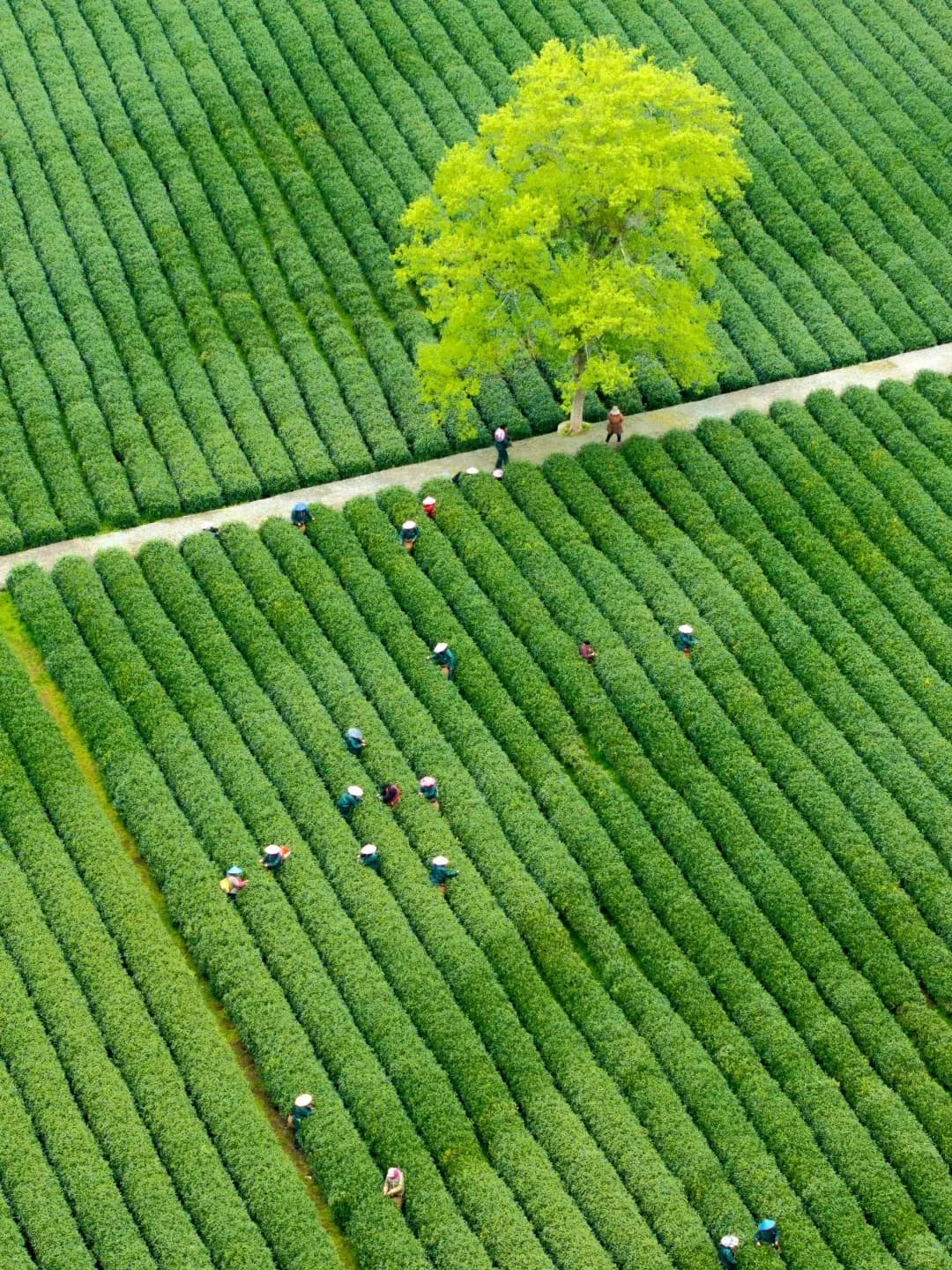
Why Dragon Well Tea Matters
Longjing (“Dragon Well”) is the most celebrated green tea in China, and the hills just west of West Lake are where the most prized leaves are grown. The village that shares the tea's name, along with the neighbouring Meijiawu tea village, is a string of farmers' houses, family-run tea houses, and steep terraces of neat emerald rows carved into the slopes. It is 10 to 15 minutes by taxi from the lake.
What to Do at the Village
Walk the tea fields: public footpaths wind up the hillside through the terraces. Free, and the best way to appreciate the landscape.
Taste the tea: family-run tea houses offer tasting sessions — free, or a nominal ¥20–40 per person. You will be offered multiple grades to compare.
Watch the harvest (spring only): in late March and early April, you can watch farmers hand-picking leaves and pan-firing them in village kitchens.
Buy tea directly: gift-quality Longjing runs about ¥80–200 per 50 grams when purchased from village cooperatives.
How to Avoid Tea Scams
Tea sellers in the village adjacent to the main tourist entrance will try to sell you expensive tea using high-pressure tactics — "this is pre-Qingming special grade," "only five kilos produced this year," and so on. The most effective defence is simple: walk further into the village. The families who live and farm deeper in the village sell at more honest prices and are genuinely more interested in conversation than in a quick sale.
Getting There
Bus 27 runs from near the lake shore to Longjing village (20–30 minutes, ¥2). A Didi costs about ¥20–30 and is faster. If you are short on time, the taxi is worth it — the road up through the tea hills is part of the experience.
7. What to Eat in Hangzhou
Hangzhou cuisine is one of the eight great culinary traditions of China, known for its light, fresh, and elegantly simple flavours.
West Lake Fish in Vinegar Sauce
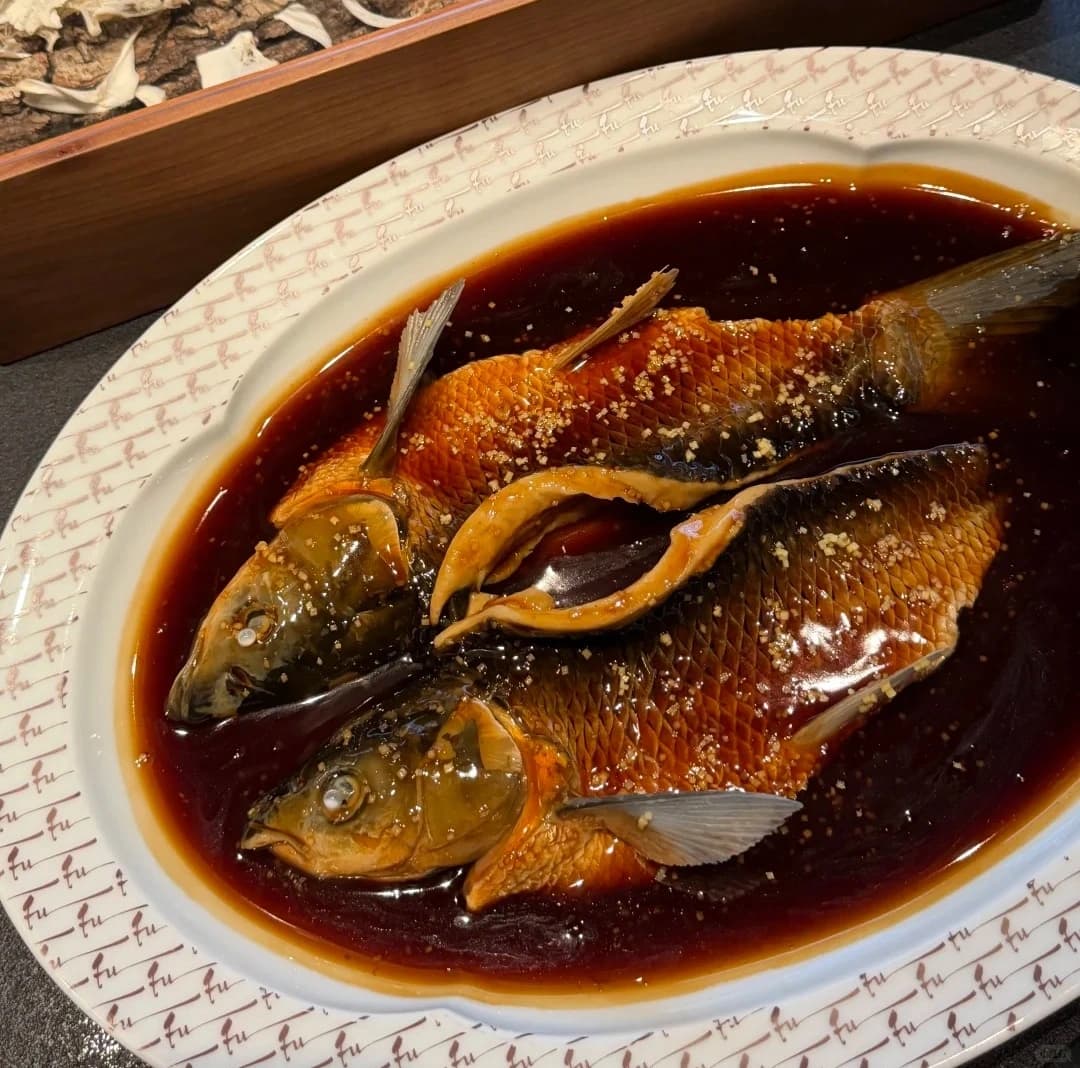
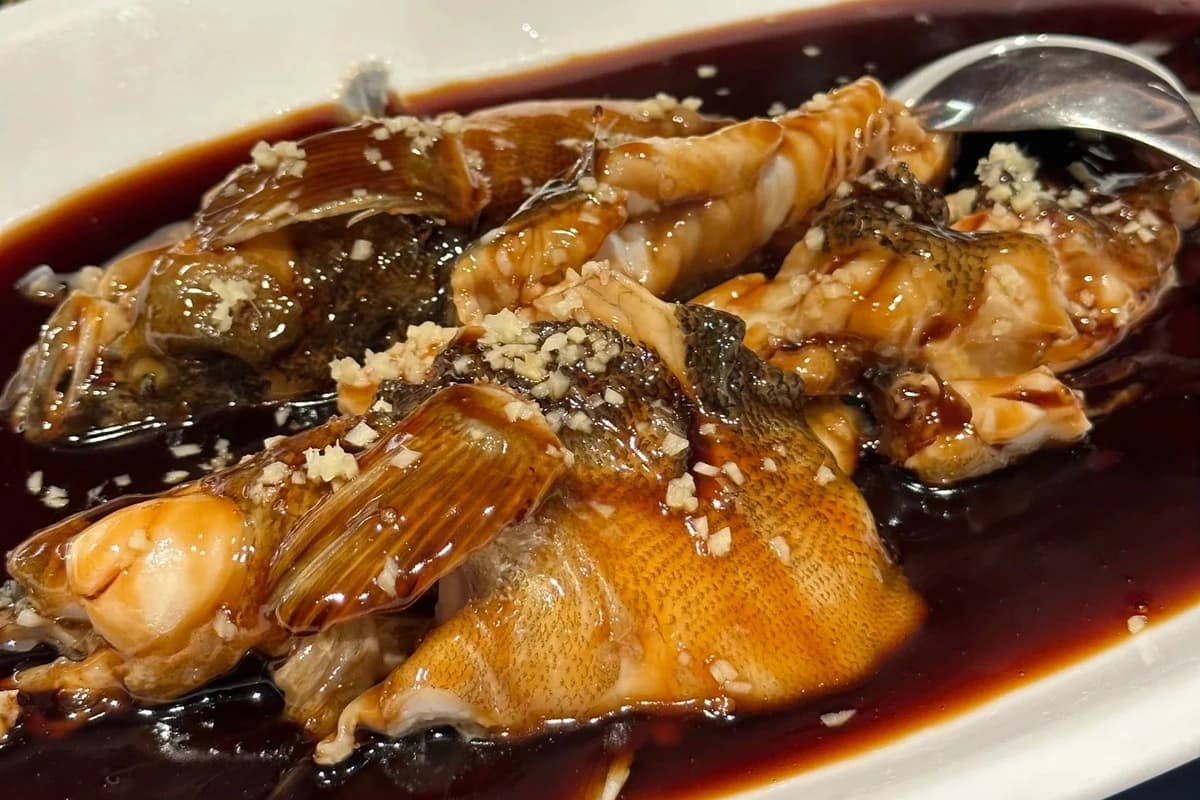
The dish that defines Hangzhou cuisine. Grass carp from the lake, cooked and served with a sweet-vinegar sauce. The most famous restaurant is Lou Wai Lou, on the lakeside at Solitary Hill, serving since 1848. Expect ¥200+ per person. For similar quality at half the price, the mid-range Hangzhou cuisine restaurants along Nanshan Road are excellent, typically ¥80–120 per person.
Dongpo Pork
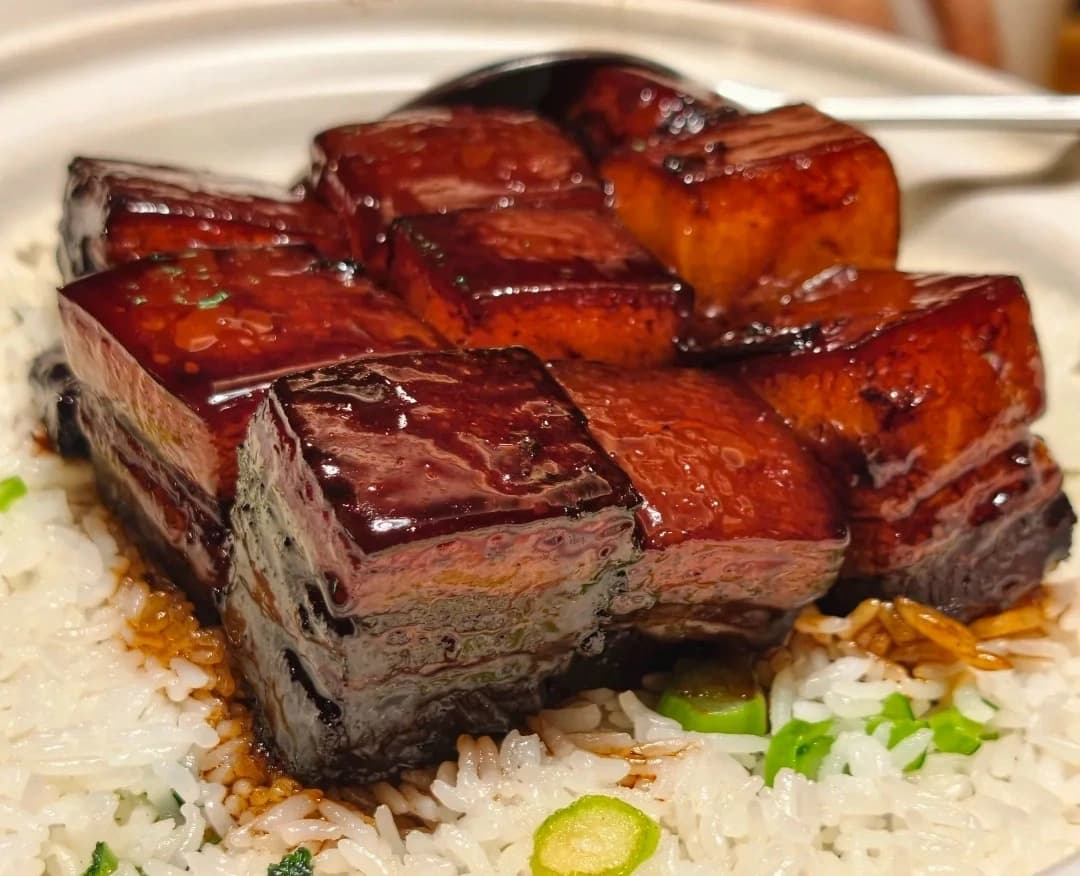
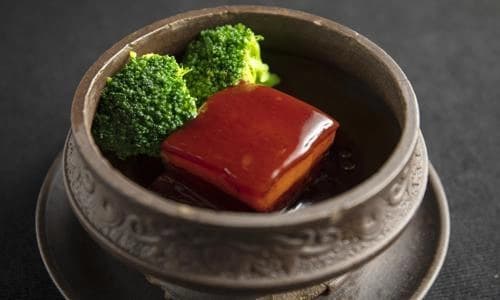
Rich braised pork belly named after Su Dongpo, the Song dynasty poet-governor who supposedly invented it. Fat and lean layers alternate, slow-cooked until the fat turns translucent and the meat falls apart at the touch of a chopstick. Expect ¥30–60 per portion. It is richer than it looks, so order it to share.
Longjing Shrimp
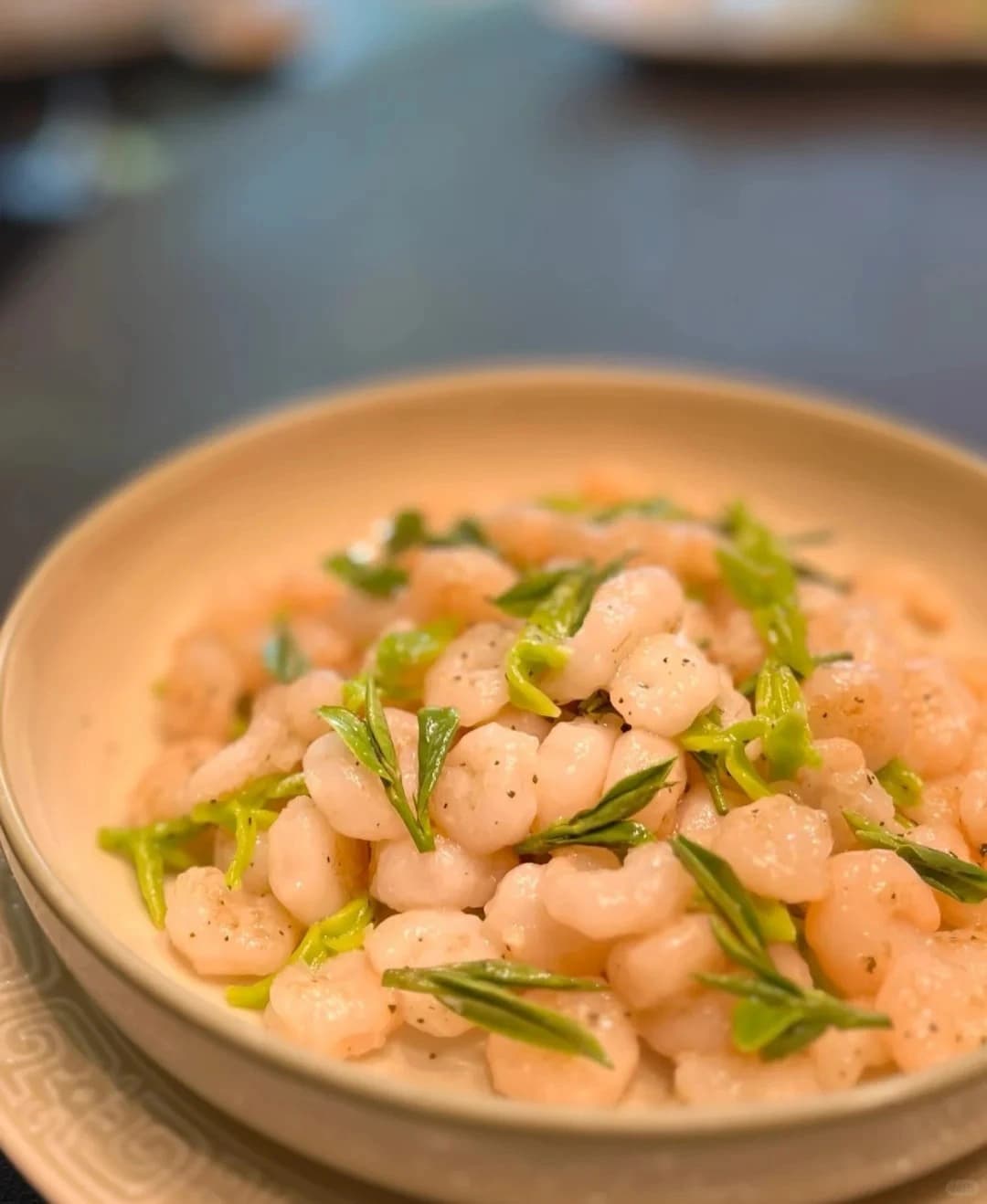
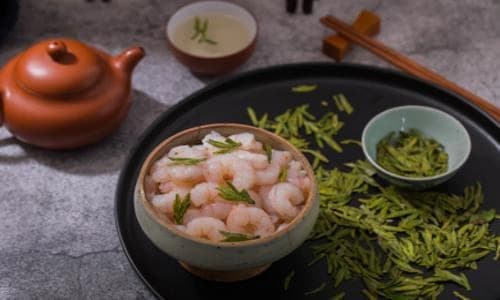
Fresh river shrimp stir-fried with Longjing tea leaves — a dish that literally brings the tea fields to the table. The tea leaves add a subtle, fragrant astringency that cuts the richness of the shrimp. It is a seasonal dish at its best in spring.
Cong Bao Hui
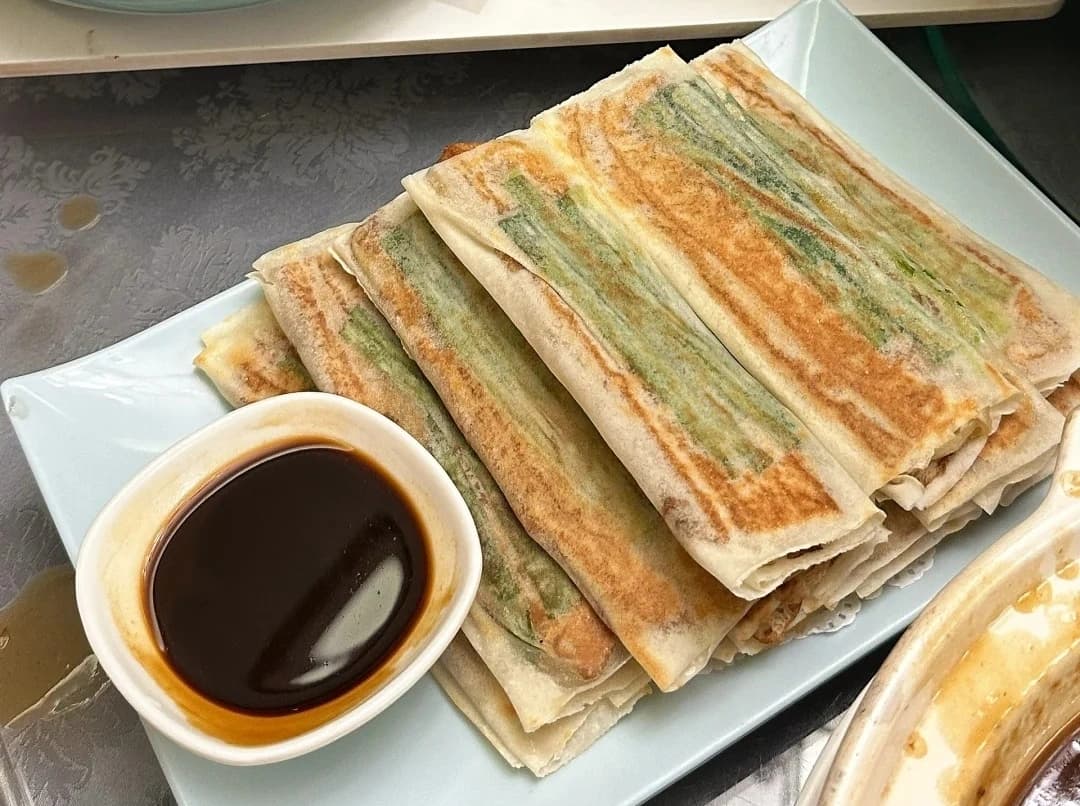
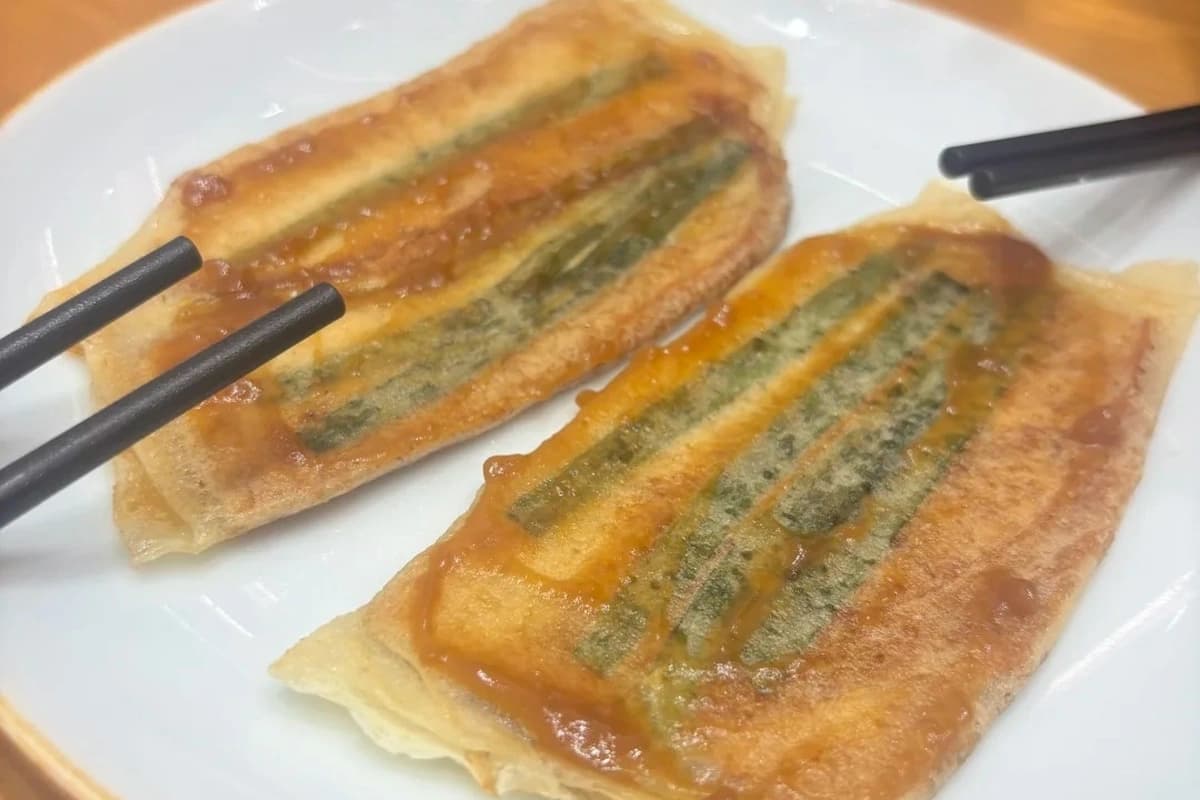
A beloved Hangzhou street snack with a story behind it: spring roll wrappers are wrapped around scallions and pieces of fried dough stick, then pressed flat and baked on a griddle until crispy, and finally brushed with a sweet bean sauce and chili paste. The name is a folk reference to Qin Hui, the Song dynasty traitor who betrayed the general Yue Fei — locals wrapped and crushed his symbolic "skin" in protest. You will find it at Hefang Street stalls and morning markets for just a few yuan each.
Ding Sheng Gao
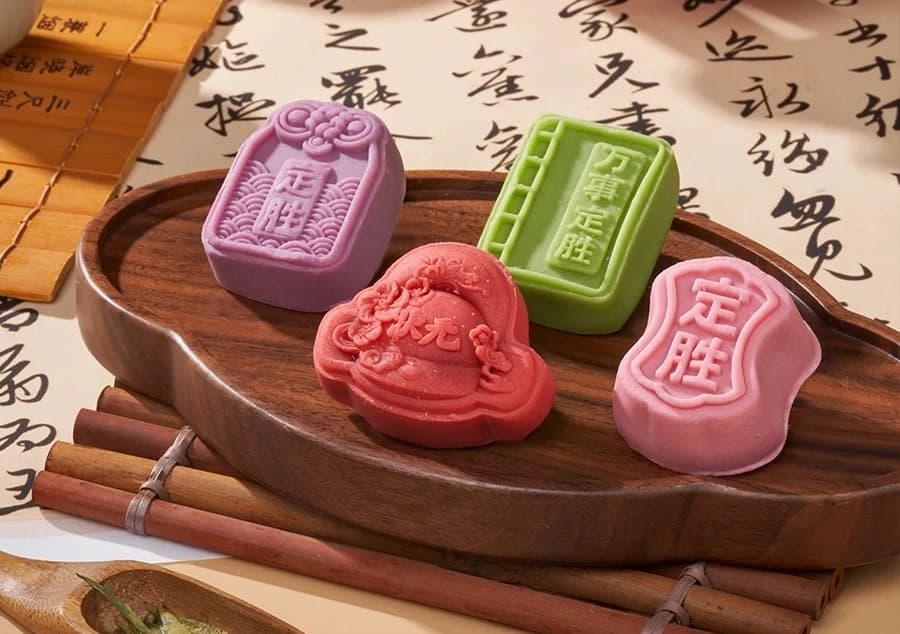
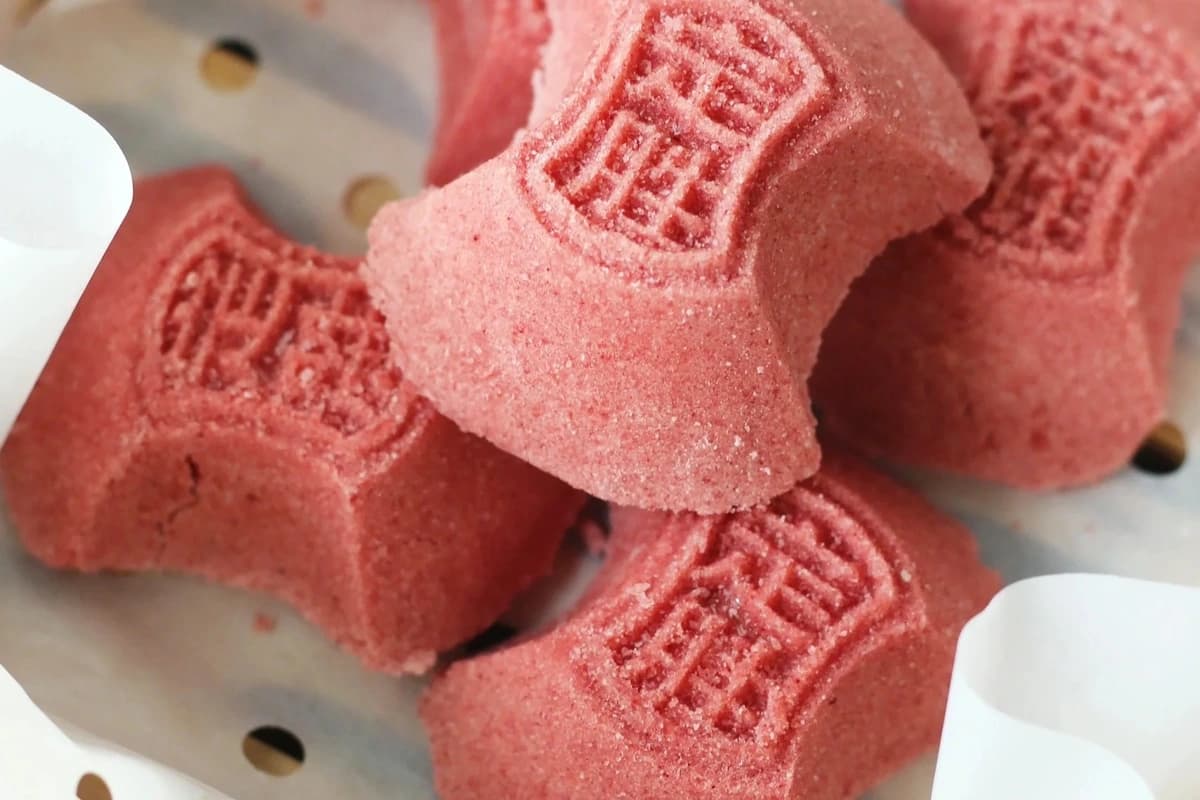
A soft, steamed rice cake filled with sweet red bean paste, lightly sweet and never cloying. The name means "certain victory cake" — it has been a Hangzhou good-luck snack for centuries, traditionally given before exams, battles, or journeys. The texture is pillowy and slightly sticky, best eaten warm. You will see it at Hefang Street and around temple fairs, usually ¥5–10 apiece.
Pian'er Chuan
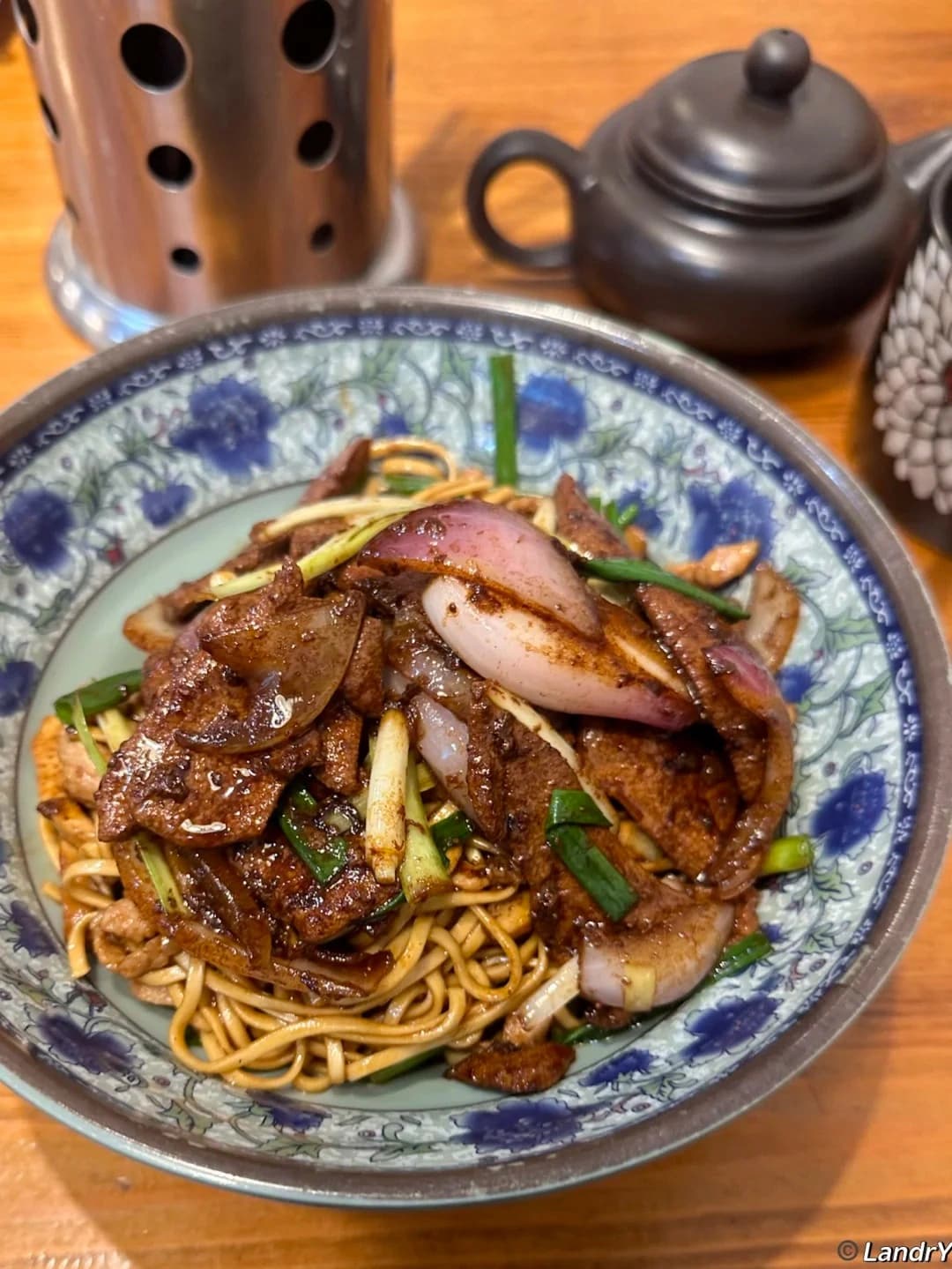
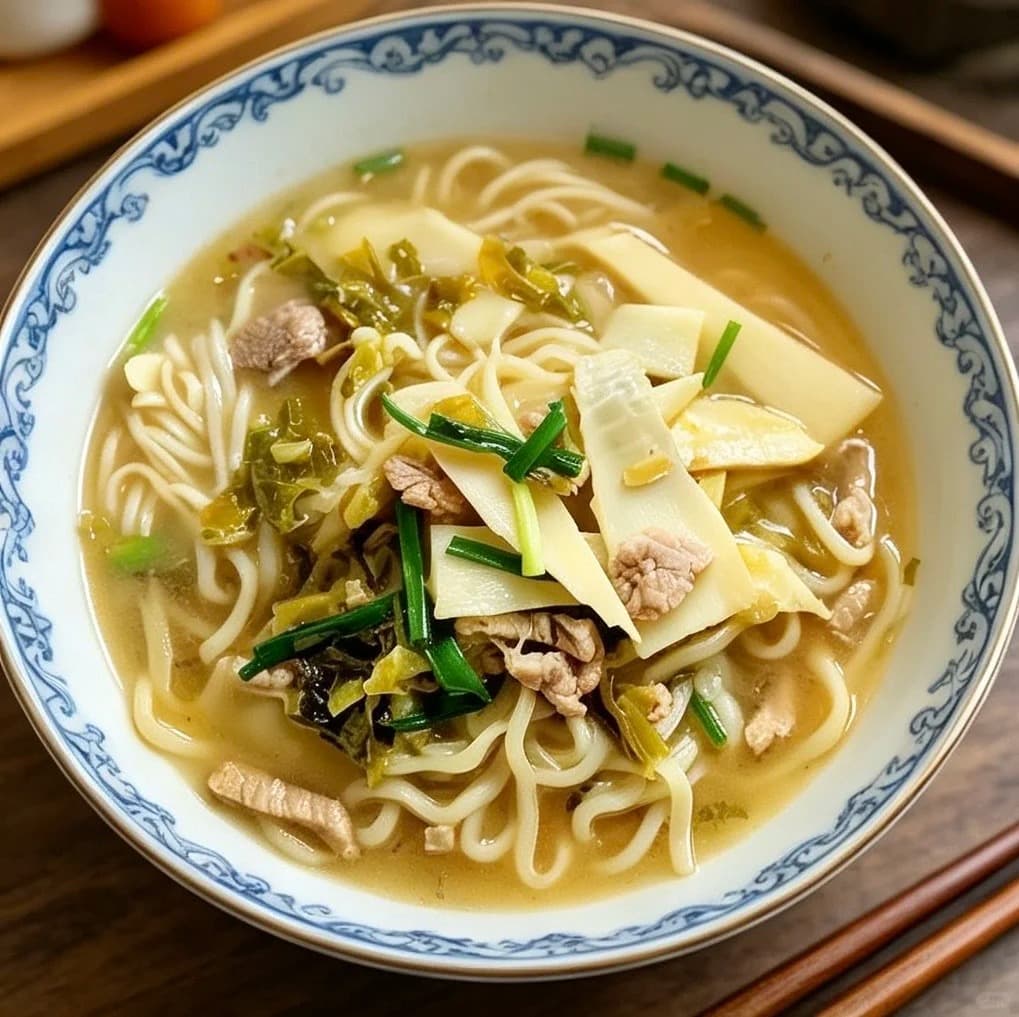
If there is one dish that captures everyday Hangzhou, this is it — a noodle soup with pickled mustard greens, fresh bamboo shoots, and sliced lean pork in a clear, savoury broth. The name comes from the slicing technique ("chuan" refers to the quick parboil of the toppings). Locals eat it for breakfast or lunch, and the best versions come from neighbourhood noodle shops, not tourist restaurants. A bowl costs ¥20–40. For the full experience, pair it with a small plate of crispy pork ribs or braised duck on the side.
Restaurant Tips by Budget
Budget-friendly: Family-run tea houses in Longjing village serve simple Hangzhou-style lunches — steamed fish, bamboo shoot dishes, vegetable stir-fries — alongside their tea. Budget about ¥60–100 per person.
Mid-range: The restaurants along Nanshan Road and around the south shore offer authentic Hangzhou cuisine at fair prices, typically ¥80–120 per person. Look for places where locals are eating.
Splurge: Lou Wai Lou is the historic choice — dining since 1848 with a lake view. Expect ¥200+ per person and a potential queue at peak times. The food is genuinely good, but you are also paying for the history and the view.
8. One Perfect Day in Hangzhou — Hour by Hour
Time | Overview | What to Do |
|---|---|---|
07:30 | Depart Shanghai Hongqiao | Board a G-series high-speed train. Arrive at Hongqiao at least 30 minutes early for passport and security checks. |
08:25 | Arrive Hangzhou East | Take Metro Line 1 (Xianghu direction) to Longxiangqiao Station, Exit C. Walk 7–10 minutes to the lake. |
09:00 | West Lake | Start at Broken Bridge and walk the Bai Causeway west toward Solitary Hill. |
10:00 | Boat to Three Pools Mirroring the Moon | Board a public sightseeing boat (about ¥55). The circuit takes 45–60 minutes. |
11:30 | Leifeng Pagoda | Disembark near the Su Causeway and walk south toward Leifeng Pagoda (about ¥40 to enter). |
13:00 | Lunch | Eat at a classic Hangzhou restaurant near the lake — try West Lake fish in vinegar sauce and Dongpo pork. |
14:30 | Lingyin Temple & Feilai Feng | Take a taxi or Didi (about ¥30–40). Allow 90 minutes minimum. |
16:30 | Longjing Tea Village | Walk the terraces, taste several grades of Dragon Well tea, and enjoy the quiet of the hills. |
17:30 | Return to the Lake for Sunset | The light on the lake in the last half-hour before sunset is the most beautiful moment of the day. |
18:30 | Dinner | Grab a quick meal near the lake or at Hangzhou East Station. |
19:30 | Depart Hangzhou East | Board the high-speed train back to Shanghai Hongqiao. Arrive around 20:25. |
Alternative: Temple-First Sequence
If temples and tea matter more to you than the lake, or if you prefer to avoid crowds, flip the order: do Lingyin Temple and Feilai Feng in the cooler, quieter morning hours, then the tea village, and spend the late afternoon and golden hour walking the lake shore. The grottoes are most atmospheric with fewer people around, and the lake is most beautiful in the soft evening light.
Want to experience Hangzhou without worrying about train schedules, transportation, or attraction planning? Our private Shanghai to Hangzhou day tour follows a carefully designed route covering West Lake, Lingyin Temple, and Longjing Tea Village with a local guide and private transfer.
9. When Is the Best Time to Visit Hangzhou?
Season | Months | Weather | Crowds | Highlights |
|---|---|---|---|---|
Spring | Mar–May | Mild, 15–25°C | Moderate | Longjing tea harvest, blossoms, Su Causeway at its best |
Summer | Jun–Aug | Hot & humid, 30–38°C | High | Lotus blooms at Crooked Courtyard, longest daylight hours |
Autumn | Sep–Nov | Best weather, 18–28°C | Moderate | Osmanthus blooms, autumn foliage, clear lake views — our top pick |
Winter | Dec–Feb | Cold, 3–10°C | Low | Fewest crowds, misty atmospheric lake, chance of snow on Broken Bridge |
Dates to Avoid
Above all, avoid the two major national holidays: National Day Golden Week (October 1–7) and Spring Festival (Chinese New Year, dates vary by lunar calendar). During these periods, train tickets sell out within minutes of release, West Lake's shore paths become shoulder-to-shoulder crowds, and hotel prices double or triple.
10. Why Choose a Guided Day Tour
You can absolutely do this trip independently — the train is easy, the metro is straightforward, and the lake is free to walk. But a guided day tour transforms the experience in ways that go beyond convenience.
Skip the Logistics Headache
Researching which station to use, navigating the 12306 booking system in Chinese, selecting optimal train times, figuring out the metro, coordinating the sequence of attractions — all of this takes hours of planning. With a guided tour, a guide handles every transfer, ticket, and timing decision.
Expert Local Knowledge & Storytelling
West Lake without context is a pretty lake. West Lake with context is a thousand years of poetry, politics, and legend. A knowledgeable guide turns scenery into story. At Lingyin Temple, they explain the iconography of the 470 Feilai Feng carvings. At the tea village, they translate the conversation with the tea farmer and explain why pre-Qingming Longjing costs ten times more than post-Qingming.
Language Barrier Solved
Ordering Dongpo Pork, negotiating a sampan price, asking a tea farmer about harvest timing, reading a temple reservation notice in Chinese — these small interactions are where independent travel in China gets friction. A bilingual guide removes every one of these micro-barriers.
Optimised Route & Time Management
You have roughly 11 hours between your morning and evening trains. A professional guide knows that Lingyin Temple gets crowded after 11:00, that the best boat dock has the shortest queue at 10:00, and that the Leifeng Pagoda elevator line is shortest at 17:00. These are the tactical decisions that determine whether your day feels effortless or exhausting.
Access to Hidden Gems
Beyond the standard highlights, an experienced guide can take you to the corners that tourists miss — a quiet tea-field path above Longjing village, a small family restaurant that serves the best braised bamboo shoots in the area, a vantage point on the western shore where you have the lake to yourself.
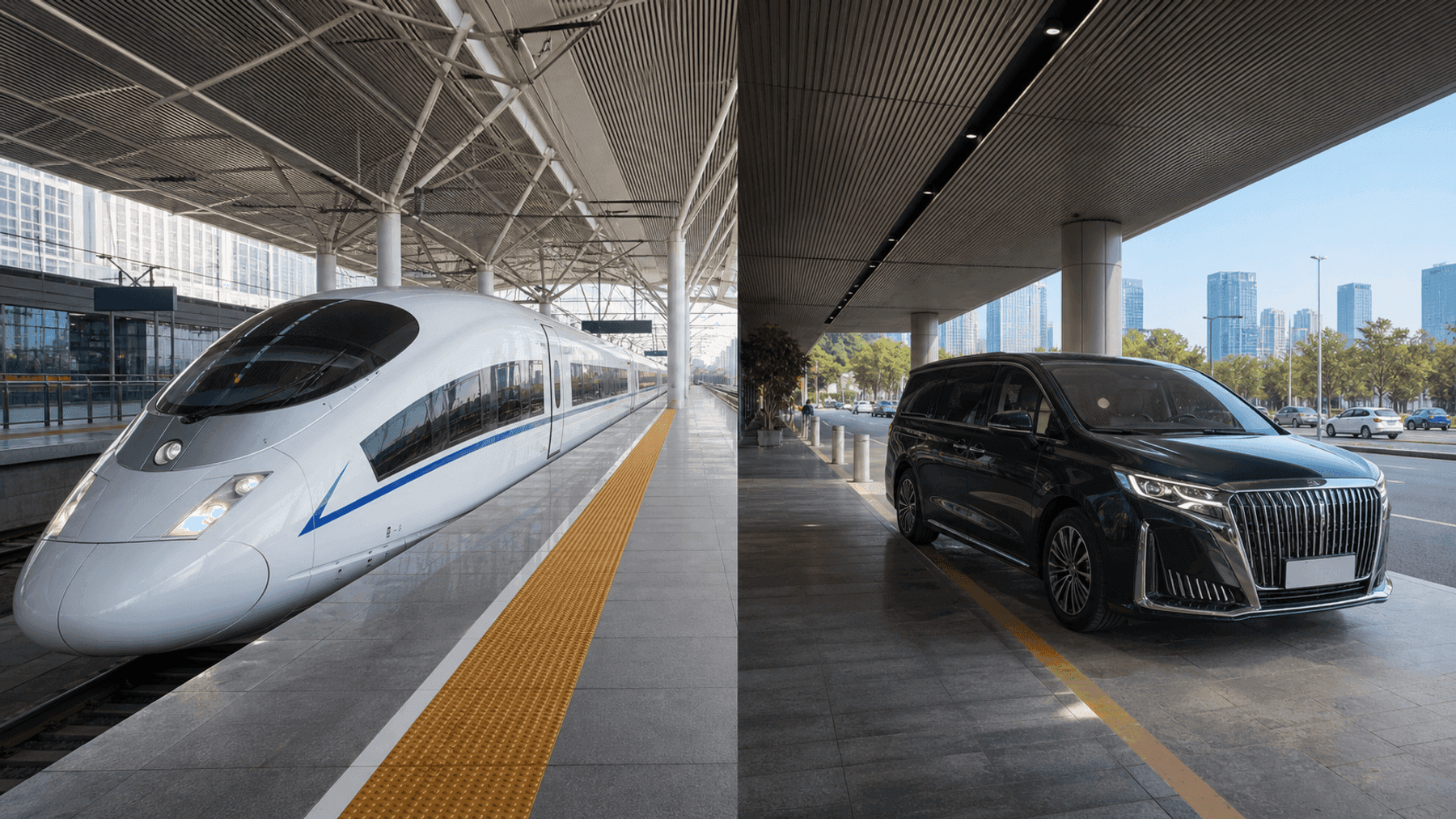
Prefer a more comfortable way to explore Hangzhou from Shanghai? Join our private Hangzhou day tour and enjoy a seamless journey with train arrangements, private transportation, and a local guide who brings West Lake’s stories to life.
11. Practical Tips Before Your Hangzhou Day Trip
What to Bring
Packing List
Essentials
- Comfortable walking shoes — you will walk 8–12 kilometres over the day.
- Your passport — required for train gate scanning, temple reservation, and general ID.
- A portable power bank — you will be using your phone for photos, maps, and payments all day.
- Sun protection or rain gear depending on the season — the lake shore has limited shade in summer.
Luggage Storage
If you have luggage with you, Hangzhou East Station has a left-luggage facility (look for signs reading 行李寄存). Store your bags on arrival, pick them up before your return train, and spend the day unencumbered. The fee is typically ¥10–20 per bag per day.
Visa-Free Transit Note
If you have entered China under the 240-hour visa-free transit policy (expanded in December 2024 from the previous 144-hour scheme), Hangzhou is within your permitted travel area. The policy allows visa-free travel within Shanghai, Jiangsu, and Zhejiang provinces — and Hangzhou is the capital of Zhejiang.
Bad Weather Contingency
Rain happens, particularly in the plum rain season (June–July). If the weather turns, do not cancel — Hangzhou has excellent indoor alternatives:
China National Silk Museum — free entry, near the lake's southern shore.
Hangzhou Museum — free entry, in the city centre.
Zhejiang Provincial Museum — free entry, on Solitary Hill at the north end of the Bai Causeway.
Best Photo Spots & Timing
Leifeng Pagoda area, 30 minutes before sunset — the golden light on the lake is unmatched.
Su Causeway, early morning — mist rising off the water, willows silhouetted, almost no one around.
Broken Bridge, looking west — the classic long view across the lake, especially in soft light.
Feilai Feng carvings, mid-morning — the stream catches the light and the carved faces emerge from shadow.
12. Final Thoughts: Is a Hangzhou Day Trip Right for You?
A Hangzhou day trip from Shanghai is, quite simply, the best single-day escape you can make from the city. Forty-five minutes on a high-speed train, a UNESCO World Heritage lake, a 1,700-year-old temple, and the birthplace of China's most famous green tea — all within reach of a morning departure and an evening return.
Whether you walk the causeways on your own or let a local guide show you the stories behind the scenery, the contrast between Shanghai's vertical energy and Hangzhou's horizontal calm is something you will remember long after you return. If you are planning a longer trip, Hangzhou pairs beautifully with Suzhou (gardens and canals) and Nanjing (imperial history) for a broader Yangtze River Delta itinerary.

Traveler Discussions
Questions from travelers