
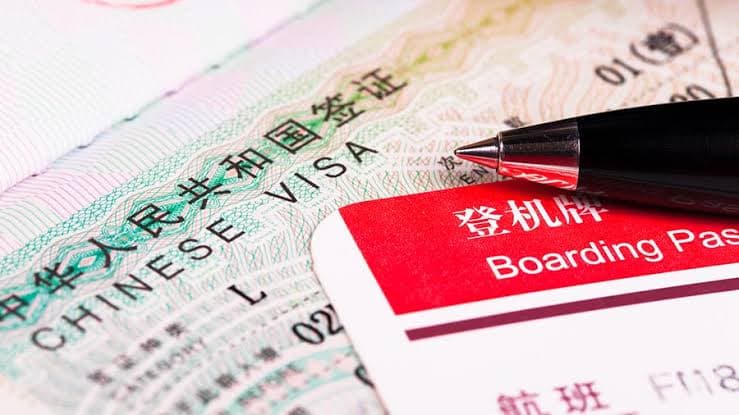
In the heart of the world's most dynamic travel landscape, a critical question echoes through American living rooms, travel forums, and airport terminals alike: Can Americans travel to China right now? The answer is yes — but with important nuances around visa requirements, transit rules, and entry policies that every U.S. citizen must understand before booking. This comprehensive 2027/2028 guide cuts through the confusion, covering everything from L visa applications and 240-hour visa-free transit to flight options, costs, and on-the-ground essentials.
Do Americans Need a Visa to Go to China
Basic Visa Rules for US Citizens Entering the Chinese Mainland
Most US citizens traveling with ordinary US passports need to obtain an appropriate Chinese visa (such as an L-type tourist visa for leisure travel) before entering the China Mainland. However, travelers meeting specific transit or regional program requirements may qualify for visa-free entry under China's expanded policies.
Travel Type for US Citizens | Visa Requirement | Valid Rule Date |
|---|---|---|
Leisure travel or family visits not covered by a visa exemption policy | Chinese L Visa (or appropriate visa type) required | Current rule |
Transit through the Chinese Mainland to a third country/region (up to 240 hours) | Visa-free transit allowed if eligibility requirements are met | Current rule |
Business travel with a valid APEC Business Travel Card and eligible status | Visa exemption may apply according to APEC travel arrangements | Current rule |
Holders of US diplomatic or official passports | Subject to applicable diplomatic arrangements | Case-specific |
How Can Americans Visit China Without a Visa?
240-Hour Visa-Free Transit for Americans
China's 240-hour visa-free transit policy allows eligible travelers from approved countries, including the United States, to stay in designated areas of the Chinese Mainland for up to 10 days (240 hours) without a visa. The policy was expanded from the previous 72-hour and 144-hour transit exemption programs on December 17, 2024. It now covers eligible travelers from 57 countries, with entry available through designated ports across 24 provincial-level regions.
Official policy details and updated lists of eligible ports can be found on the National Immigration Administration website.
Who Can Use the 240-Hour Visa-Free Transit Policy?
US passport holders may qualify if they meet all of the following requirements:
✅ 1. China must be a transit stop, not the final destination
The traveler must enter the Chinese Mainland from one country or region and leave for a different third country or region.
Transit Route Examples | TWOV Eligible? | Duration | Notes |
|---|---|---|---|
NY → Shanghai → Tokyo | Yes | ≤ 240h | Confirmed onward ticket required |
LA → Beijing → LA | No | N/A | Return to USA, not a third country or region |
SF → Guangzhou → Bangkok | Yes | ≤ 240h | Confirmed onward ticket required |
Seattle → Shenzhen → Hong Kong | Yes | ≤ 240h | Confirmed onward ticket required |
USA → Hong Kong → Shanghai | No | N/A | Entering mainland from HK needs regular visa |
✅ 2. A confirmed onward ticket is required
Travelers must hold a confirmed ticket leaving the Chinese Mainland for the next destination before arrival. The onward destination must be a different country or region from the place of departure.
✅ 3. Entry and exit must use designated ports
Travelers must enter and leave through approved airports, railway stations, or ports included in China's 240-hour transit visa-free program. Not every Chinese airport or border crossing supports this policy.
240-Hour Transit: Major Covered Regions
The 240-hour visa-free transit policy now spans 24 provincial-level regions across China. Unlike the previous 144-hour policy, which confined travelers to a single city cluster, the new policy allows cross-province travel within designated regions:
Beijing-Tianjin-Hebei region (enter via Beijing Capital PEK or Daxing PKX)
Shanghai-Jiangsu-Zhejiang region (enter via Shanghai Pudong PVG or Hongqiao SHA)
Guangdong Province (enter via Guangzhou Baiyun CAN or Shenzhen SZX)
Sichuan-Chongqing region (enter via Chengdu CTU or Chongqing CKG)
Plus 20 additional provinces/regions including Liaoning, Fujian, Shandong, Hubei, Hunan, Yunnan, Shaanxi, and more
✅ 4. Stay must not exceed 240 hours
The maximum permitted stay is 240 hours (10 days). The countdown begins from 00:00 on the day after entry according to current immigration regulations.
✅ 5. Travel is limited to the approved areas
Travelers must stay within the permitted provinces and regions covered by the transit visa-free policy. Cross-provincial travel is allowed as long as all destinations remain within the approved area. Travelers must not visit locations outside the authorized travel zone.
✅ 6. Only permitted activities are allowed
Travelers may engage in tourism, business visits, family visits, and other permitted short-term activities during their stay. Activities such as employment, studying, or journalism require a relevant visa obtained in advance.
Common Misunderstandings About 240-Hour Visa-Free Transit
❌"I can fly from the US to China and return home without a visa."
Not correct. A round-trip itinerary, such as New York → Shanghai → New York, is considered a normal visit to China, not international transit. A regular Chinese visa is required.
❌ "Hong Kong and Macau are part of China, so traveling through them does not count."
Not correct. Hong Kong and Macau have separate immigration systems. They may count as different regions for transit purposes. For example, "USA → Shenzhen → Hong Kong" may qualify because Hong Kong is treated as a separate region.
❌ "The 240-hour policy allows unlimited travel anywhere in China."
Not correct. Travelers may only visit areas permitted under the specific regional rules of the transit program. Although cross-province travel is allowed within certain designated regions, it does not provide unrestricted access to all of China.
Note: The full list of 65 designated ports and 24 regions is available on the National Immigration Administration website. Travelers should verify current eligibility before booking.
Hainan Visa-Free Entry
China also operates separate visa-free entry programs for certain travelers visiting Hainan under specific conditions. These programs have their own requirements regarding eligible nationalities, travel purpose, approved travel arrangements, and entry points.
Hainan visa-free entry does not mean travelers can enter the Chinese Mainland freely or continue to other provinces without additional authorization. US travelers should confirm current eligibility before planning a Hainan-focused itinerary.
Cruise Travel Visa Exemptions
Some international cruise passengers may be eligible for visa-free entry into certain Chinese ports under specific cruise travel arrangements. Eligibility depends on factors including cruise itinerary, nationality, port of arrival, group arrangements, and local immigration rules.
A cruise stop in China does not automatically guarantee visa-free entry. Travelers should confirm requirements with the cruise company or immigration authorities before departure.
Should You Apply for a Chinese Visa or Use Visa-Free Transit?
Situation | Best Option |
|---|---|
Staying in China more than 10 days | Apply for visa |
Returning to the U.S. after China | Apply for visa |
Visiting multiple mainland cities freely | Apply for visa |
Short stop in China on the way to a third country or region | Consider 240-hour transit |
Business trip with multiple China entries | Apply for M visa |
Unsure about route eligibility | Apply for visa or confirm with official source |
Common Types of China Visas for Americans
L Visa (Tourist Visa) — Most Common Option
The L visa is the standard tourist visa for Americans visiting China for sightseeing, vacation, or visiting friends. Key highlights for US citizens:
Under the US-China visa reciprocity agreement, eligible US passport holders may receive L visas valid for up to 10 years with multiple entries
Each entry usually allows a stay of 30, 60, or 90 days, depending on the visa issued
Since January 1, 2024, Chinese visa applicants in the US generally no longer need to submit flight tickets, hotel reservations, travel itineraries, or invitation letters for many tourist visa applications
M Visa (Business Visa)
The M visa is for commercial and trade activities, such as business negotiations, trade fairs, and factory visits. Applicants generally need supporting documents, often including an invitation letter from a Chinese business partner.
X Visa (Student Visa)
For university students, language learners, and academic exchange programs. X1 for long-term study (over 180 days), X2 for short-term study. X1 visa holders must generally apply for a residence permit after arrival.
Z Visa (Work Visa)
The Z visa is required for foreigners employed in China, including teachers and company employees. Applicants generally need a Foreigner Work Permit and related employment documents.
Q and S Visas
Used for family visits. Q visas are for relatives of Chinese citizens or permanent residents. S visas are for family members of foreign residents in China.
Q: Q1 > 180 days | Q2 ≤180 days
S: S1 >180 days | S2 ≤180 days
Visa Decision Checklist
Question | Why it matters |
|---|---|
Are you entering the Chinese Mainland? | The Chinese Mainland has separate visa rules from Hong Kong and Macau |
Are you traveling to China as your final destination? | Normal tourism usually requires a visa |
Are you only passing through China to another country or region? | You may qualify for 240-hour visa-free transit |
How long will you stay in China? | Longer stays may require a visa |
What is your purpose of travel? | Tourism, business, study, and work use different visa types |
How to Apply for a Travel Visa to China
The new COVA (China Online Visa Application) system was launched at Chinese embassies and consulates in the US on September 30, 2025. The application process has been streamlined into five clear steps.
New COVA Application Process (5 Steps)
Step 1 | Prepare your valid US passport (minimum 6 months remaining validity, at least 2 blank visa pages). |
Step 2 | Complete the online application form through the COVA system and upload required documents according to the instructions. |
Step 3 | Wait for online preliminary review. Your order status must show "Passport to be submitted" (待递交护照) before proceeding. |
Step 4 | Submit your original passport (in person or through an authorized representative where permitted) to the appropriate Chinese Visa Office. |
Step 5 | Standard processing is usually about 4 working days after passport submission. Express service may be available for urgent cases with additional fees. |
Ways to Submit a China Visa Application in the US
Method | Suitable For |
|---|---|
Submit directly to the Chinese Embassy or Consulate with jurisdiction over your residence | Most individual applicants |
Use an authorized representative or visa service company | Travelers who need assistance with documents or cannot visit in person |
Mail submission (only where accepted by the specific visa office) | Applicants living far from the visa office |
China Visa Documents Checklist
Document | Required | Notes |
|---|---|---|
Original passport | Yes | At least 6 months validity and 2 blank pages |
COVA online application form | Yes | Complete carefully in English or Chinese |
Passport photo | Yes | Must meet official photo standards |
Proof of U.S. residence | If required | Proof of residence or legal stay in the consular jurisdiction |
Previous Chinese visa | If applicable | Especially if in old passport |
Travel itinerary | Not normally required for L visa applicants | Flights, hotels, city plan |
Round-trip flight tickets | NOT required for L visa | Exempt since January 1, 2024 for tourist visa applicants |
Hotel reservations | NOT required for L visa | Exempt since January 1, 2024 for tourist visa applicants |
Invitation letter | For M/Q/S visas only | Not needed for L visa (tourist) |
How Much Does a China Visa Cost for U.S. Citizens?
Visa Type | Fee for US Citizens |
|---|---|
Regular visa (single, double, or multiple entries) | $140 |
10-year multiple-entry L visa | $140 (same flat rate) |
Journalist visa (J1/J2) | $171 |
Third-country citizens (per entry) | From $23 (varies by number of entries) |
Express service fee | Additional $25 per item |
Note: The $140 flat fee results from the US-China reciprocal visa arrangement. Unlike most nationalities who pay per entry, US citizens pay one flat rate whether requesting single-entry, double-entry, or multiple-entry visas. The fee reduction was extended through December 31, 2026.
How Long Does It Take to Get a China Visa in the USA?
The total visa processing timeline includes the online COVA review phase and the in-person passport submission phase.
Stage | Estimated Time |
|---|---|
COVA online form + document upload | 1-2 hours to complete |
Online preliminary review | Varies by cases |
In-person passport submission | Same day |
Regular processing (after submission) | 4 business days |
Express processing (after submission) | 2-3 business days |
Complicated cases | Longer (case-by-case) |
Planning tips:
Apply early, but not too early — allow at least 3-4 weeks before travel
Avoid booking non-refundable flights before confirming visa timing
Peak periods include summer, Thanksgiving, Christmas, and Chinese national holidays
Express service ($25 extra) is available for urgent situations (3 business days)
Plan for 3-4 weeks total from starting COVA to receiving your visa
How to Travel to China from USA
Traveling from the United States to China requires preparation beyond simply booking a flight. Before departure, US travelers should confirm their visa status, passport validity, flight route, and arrival procedures.
Before Booking Your Flight or Cruise
Before booking your trip, confirm three key points:
Visa status: Check whether you need a regular Chinese visa or qualify for a visa-free entry program such as the 240-hour visa-free transit policy.
Passport validity: Your passport should generally be valid for at least six months beyond your planned travel period.
Route eligibility: If you plan to use visa-free transit, confirm that your itinerary meets the third-country/region transit requirements before purchasing tickets.
If you need a regular Chinese visa, apply early and allow sufficient processing time. Flights and hotels can usually be adjusted, but traveling without the required visa authorization may prevent boarding.
Three Core Travel Options Comparison
Travel Option | Common Departure Cities | Typical Duration | Typical Economy Fare Range | Core Advantage |
|---|---|---|---|---|
Direct Nonstop Flight | Major gateways such as Los Angeles, San Francisco, New York, Seattle, Chicago, and Dallas | About 12–15 hours | Around $800–$2,000+ round trip | Fastest arrival, simpler connections, and direct baggage handling |
Connecting Flight | Available from most US airports through hubs such as Tokyo, Seoul, Taipei, Hong Kong, Dubai, Doha, or major European cities | About 18–30 hours total travel time | Around $700–$1,500+ round trip | More departure options and potentially lower fares |
Trans-Pacific Cruise | Mainly departing from West Coast ports such as Los Angeles, San Francisco, or Seattle | Usually 2–10+ weeks depending on itinerary | Several thousand dollars to $30,000+ for luxury voyages | Combines transportation with a long ocean travel experience |
Route tips:
Direct flights: Book 2-3 months ahead for holiday travel. Major carriers include Air China, United Airlines, Delta.
Transit flights: Select layovers under 4-6 hours at transit hubs (Tokyo, Seoul, Dubai) to avoid overnight stays.
Cruises: Trans-Pacific cruises are seasonal with limited schedules. Confirm port entry visa rules before booking. Prices vary widely by duration and cruise line.
Arrival in China: What to Expect
Immigration
At immigration, officers may check your passport, visa, fingerprints, arrival information, and travel purpose. Answer clearly and consistently with your visa type. If you hold a tourist visa, your stated purpose should align with tourism activities.
Customs and Baggage
After immigration, collect your baggage and pass through customs. Travelers carrying large amounts of cash (over 20,000 RMB or $5,000 USD equivalent), professional equipment, product samples, or restricted items must declare them. Failure to declare can result in fines or confiscation.
Registration After Arrival
Hotels usually handle temporary accommodation registration for foreign guests automatically. If you stay with friends, family, or in a private apartment, ask your host about local registration requirements. Some cities require registration within 24 hours of arrival.
Post-Arrival Domestic China Transportation Guide
After landing at Chinese international airports (PEK/PVG/CAN etc.), visitors can take high-speed rail, domestic flights, or taxis to inland destinations. China's high-speed railway network covers most major cities and offers a comfortable, efficient way to explore the country.
Payment, Network and Communication Tips
Category | Recommended | Notes |
|---|---|---|
Mobile Payment | Alipay and WeChat Pay | US travelers can link many international Visa and Mastercard cards before departure. Identity verification may be required. |
Currency | Chinese Yuan (RMB/CNY) | Mobile payment is widely used. Carry some cash for small businesses or remote areas. |
Credit Cards | International Visa/Mastercard cards | Mainly accepted at hotels, major shopping centers, and larger businesses. Smaller shops often prefer mobile payments. |
Mobile Network | China SIM card, international roaming, or supported travel eSIM services | Check compatibility before departure. Some eSIM products may have different coverage and restrictions. |
Internet Access | Research connectivity options before travel | Some international websites and services may not be accessible in the Chinese Mainland. |
Essential Apps | Alipay, WeChat, DiDi, Trip.com, translation apps, map apps | Download and set up important apps before departure. Offline translation and maps can be useful. |
Common Mistakes and Misconceptions
Here are the most frequent errors Americans make when planning China travel, along with clarifications:
Mistake #1: Assuming Americans are on China's 30-day visa-free list
Clarification: US citizens are currently not included in China's unilateral visa-free entry program. Unlike citizens of certain countries that qualify for China's visa-free policies, Americans generally need a visa or qualifying transit status.
Mistake #2: Confusing Hong Kong/Macau rules with the Chinese Mainland rules
Clarification: A US citizen may enter Hong Kong visa-free for up to 90 days, but still needs a Chinese Mainland visa to cross into the Chinese Mainland.
Mistake #3: Using 240-hour transit incorrectly
Clarification: The 240-hour transit exemption requires transit to a third country. Common invalid route: USA → China → USA (return to origin). Valid concept: Country A → China → Country/Region B.
Mistake #4: Booking non-refundable flights before visa approval
Clarification: Since January 2024, many L visa applicants in the US no longer need to submit flight tickets, hotel reservations, or detailed itineraries. However, you should still avoid booking non-refundable flights before confirming visa timing.
Mistake #5: Applying through the wrong consulate
Clarification: Chinese consulates in the US have jurisdictional divisions. Apply at the consulate covering your state of residence. Check jurisdiction maps before submitting.
Mistake #6: Not checking for a valid existing 10-year visa
Clarification: Some travelers may still have a valid 10-year Chinese visa in an expired passport. If your personal information has not changed and the visa remains valid, you can generally travel with both passports.
Mistake #7: Choosing the wrong visa category
Clarification: Tourism (L), business (M), work (Z), study (X), and family visits (Q/S) require different visa types. Using an incorrect visa category may cause application delays, rejection, or problems at entry.
Mistake #8: Thinking 240-hour transit allows travel across all of China
Clarification: The 240-hour transit exemption does not allow unrestricted travel throughout China. Travelers may visit approved areas within the designated transit regions, including certain cross-province routes.
Mistake #9: Working on a tourist visa
Clarification: Even unpaid or short-term activities that look like work may create problems. If your purpose involves employment, apply for the correct Z visa.
Mistake #10: Ignoring Tibet permit requirements
Clarification: Traveling to the Tibet Autonomous Region requires additional permits beyond a standard China visa. Arrange through a licensed travel agency well in advance.
Practical Tips for American Travelers
Tip 1: Visa time planning
Submit visa application at least 3–4 weeks ahead of departure date to avoid processing delay affecting travel schedule; urgent itinerary can choose official expedited visa service with extra charge.
Tip 2: Passport backup
Save clear digital photo of US passport info page and China visa page on cloud disk and mobile phone for emergency loss replacement.
Tip 3: Flight booking backup
Store electronic air ticket confirmation offline in mobile device; save airline customer service hotline for flight delay consultation.
Tip 4: Network matching
Prepare your preferred connectivity options before departure. Some international websites and services may not be accessible in the Chinese Mainland.
Tip 5: Currency control
Cash exceeding RMB 20,000 or foreign currency exceeding USD 5,000 equivalent must be declared according to customs regulations.
Tip 6: Transit travel rule
Visitors using the 240-hour visa-free transit policy should keep their onward ticket unchanged and ensure their itinerary continues to meet eligibility requirements.
Tip 7: Offline emergency reserve
Download offline Chinese translation software and offline domestic city maps before departing USA for sudden network outage in remote scenic areas.
Final Advice
A valid China visa or approved visa-free entry status is the key requirement for most American travelers visiting the Chinese Mainland. Choosing the right flight route and travel preparation strategy can significantly impact your experience.
First-time sightseeing travelers should complete their L visa application through the appropriate Chinese Embassy or Consulate and choose a flight option that matches their budget and schedule. Travelers with complex itineraries or tight timelines should consider professional visa assistance services.
Before departure, prepare essential travel tools such as payment apps, mobile connectivity options, translation apps, and important travel documents. With proper preparation, traveling from the United States to China can be a smooth, rewarding experience that opens the door to one of the world's most fascinating destinations.





Traveler Discussions
Questions from travelers