
China transit rules confuse travelers because the official G visa and China's 240-hour visa-free transit policy are easy to mix up. This guide turns them into a clear decision path for stopovers, airport exits, and short China visits in 2026.
What Is a China Transit Visa (G Visa)?
A China Transit Visa, or G visa, is an official visa for travelers passing through mainland China on the way to a third country or region. It is most useful when you need to leave the airport, stay longer than the visa-free transit limit, or move more freely across China than a regional stopover policy allows.
In practice it suits travelers who do not qualify for visa-free transit, or whose route does not meet the strict stopover rules. It is commonly issued as a single entry, with the allowed stay decided by the visa result, and it is less region-limited than visa-free transit.
China Transit Visa vs. China Stopover Visa (Visa-Free Transit)
One of the biggest misunderstandings about a China transit visa is that many travelers assume every layover automatically qualifies for visa-free transit. In reality, China’s transit policies depend on a combination of:· Your nationality
· Your flight route
· Your transit city
· Whether you enter China officially
· How long you stay
This is why two travelers with similar routes may receive completely different outcomes at immigration.
China Transit Visa Requirements in 2026
Requirements vary slightly by country, but most G visa applications ask for the same core documents. Prepare these before you book non-refundable travel:
Need To Know
G Visa Document Checklist
| PassportPassport | 6+ months validity and at least one blank visa page |
|---|---|
| FormApplication | Completed visa application form and passport photo |
| OnwardTicket | Confirmed onward ticket to a third country or region |
| ProofEntry proof | Visa or entry right for the next destination if required |
| PlanItinerary | Hotel booking and simple travel plan strongly recommended |
| FeeFee | Government and service fees vary by country |
How to Apply for a China Transit Visa
Applying is straightforward once you confirm your route qualifies. Work through these four steps in order:
Check your nearest Chinese visa channel. Confirm whether your local Chinese Embassy, Consulate, CVASC, or authorized agency handles G visa applications, and what documents are currently required.
Prepare passport, form, photo, and onward ticket. Make sure the passport name and number match every booking, and prepare proof of entry for the next country or region when it is required.
Submit the application and pay the fee. Submit in person or through an authorized agency where permitted. Processing often takes several working days, but timing varies by country and case.
Collect your passport before departure. Do not travel until your passport is returned with the visa result. Recheck visa validity, entry count, and allowed stay before flying.
A Hidden Detail Many Travelers Miss: Immigration Officer Discretion
Even if you technically qualify for visa-free transit, Chinese immigration officers can still deny entry if:· Your itinerary looks unclear
· Hotel bookings are missing
· Your onward ticket is not fully confirmed
· You cannot explain your stopover plan
· Your passport has previous immigration issues
This is especially common during busy holiday seasons in Beijing and Shanghai.
Transit Visa vs. 240-Hour Visa-Free Transit
The biggest misunderstanding is assuming every China layover automatically qualifies for visa-free transit. The outcome depends on nationality, flight route, transit city, port eligibility, stay length, and whether you remain inside the permitted region.
Factor | China Transit Visa (G Visa) | 240-Hour Visa-Free Transit |
|---|---|---|
How you get it | Apply before travel at an embassy or consulate | Granted at eligible ports, no advance visa |
Cost | Government and service fees apply | No visa fee |
Stay length | Follows the issued visa | Up to 240 hours (10 days) |
Movement | Broader, depending on the visa | Limited to designated transit regions |
Third destination | Required | Required |
Who Qualifies for 240-Hour Visa-Free Transit?
Travelers from eligible countries may use 240-hour visa-free transit when they arrive and depart through approved ports, hold a confirmed onward ticket to a third country or eligible region, and stay inside the designated transit area. These examples show how routing decides eligibility:
Route | Eligibility | Why |
|---|---|---|
USA → Shanghai → Japan | Usually possible | Genuine third-destination route, subject to port and regional rules |
UK → Beijing → Hong Kong | Usually possible | Hong Kong counts separately for transit routing |
France → Guangzhou → Thailand | Usually possible | Southern China stopover if port and nationality qualify |
USA → Shanghai → USA | Not eligible | Origin and destination are the same country |
USA → Shanghai → Beijing → Japan | Not eligible | Domestic movement between transit regions breaks the rule |
Immigration Officer Discretion
Even when you appear technically eligible, the final decision is made at the port of entry. Unclear routing, missing hotels, unconfirmed onward tickets, or an inability to explain the stopover plan can slow down or jeopardize temporary entry.
Choosing Your Stopover City
Beijing, Shanghai, and Guangzhou are the three most common transit gateways, and each suits a different kind of traveler.
Beijing
Beijing is a strong choice for first-time stopovers: immigration staff handle international transit passengers regularly, signage is relatively clear, and major sights fit into short layovers with careful timing.
Time available | Suggested plan |
|---|---|
8–12 hours | Tiananmen + Forbidden City exterior (needs strong timing and a private transfer) |
24 hours | Great Wall half-day trip, best with early arrival and late departure |
48–72 hours | Great Wall + Hutongs + Temple of Heaven |
240 hours | Full Beijing itinerary, can include Tianjin and Hebei within the rules |
Shanghai
Shanghai is often the easiest gateway for foreign visitors. Immigration is efficient, English support is stronger, the metro is convenient, and you can pair it with Suzhou or Hangzhou when the regional policy allows.
Time available | Suggested plan |
|---|---|
6–10 hours | The Bund + Nanjing Road |
24 hours | Yu Garden + French Concession |
72 hours | Shanghai + Suzhou day trip |
240 hours | Shanghai + Hangzhou combination |
Guangzhou
Guangzhou is a practical gateway for Southeast Asia connections, Canton Fair visitors, and food-focused stopovers. Under applicable transit rules, travelers may stay within Guangdong Province, including Guangzhou, Shenzhen, Foshan, and Zhuhai.
Time available | Suggested plan |
|---|---|
6–10 hours | Canton Tower + Pearl River Night View |
24 hours | Chen Clan Ancestral Hall + Shamian Island + Beijing Road |
72 hours | Guangzhou city highlights + Foshan day trip |
240 hours | Guangzhou + Shenzhen + Zhuhai + Greater Bay Area exploration |
Transit City Inspiration



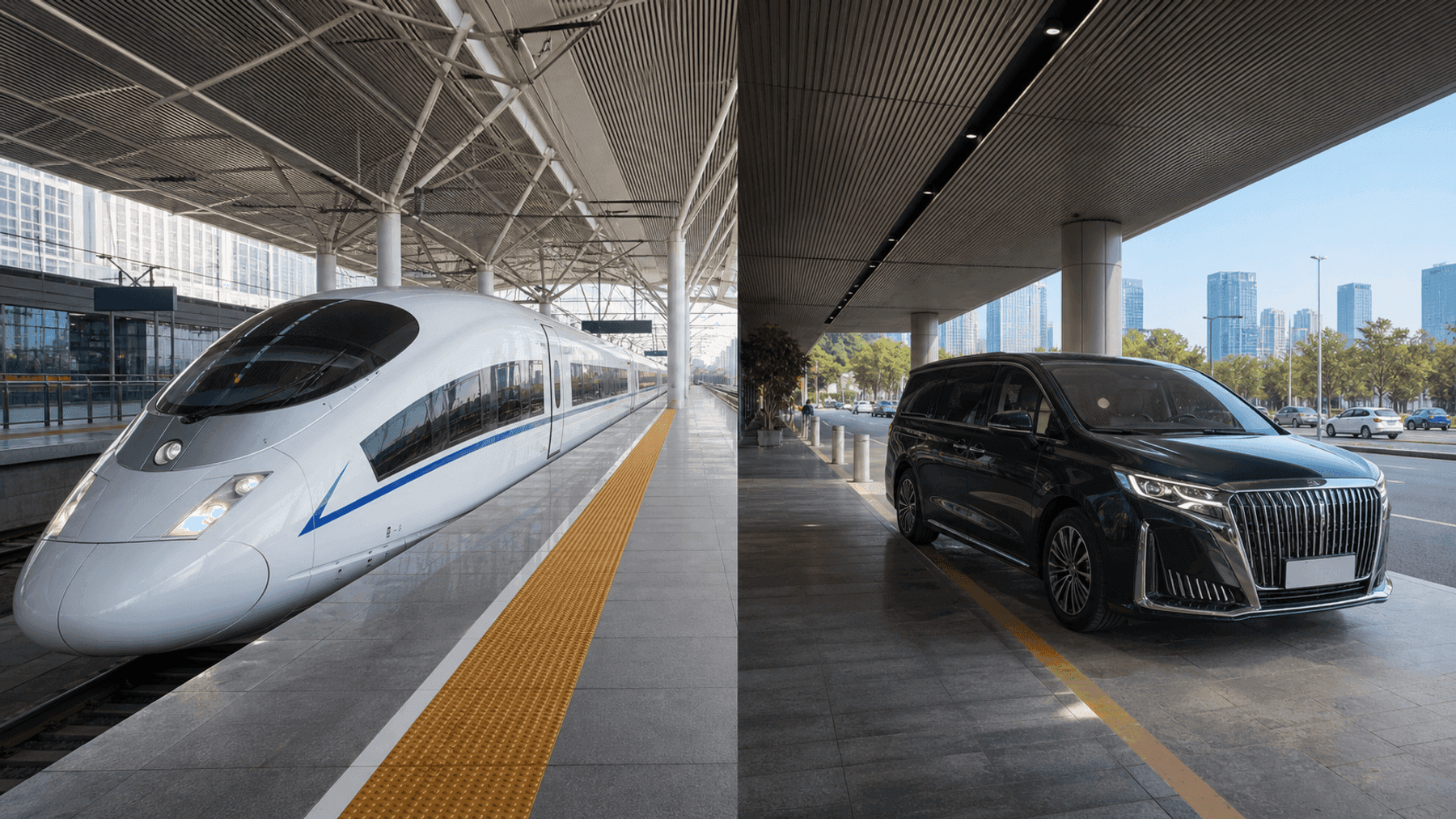
Real Traveler Scenarios
The wrong return ticket. A traveler booked Paris → Beijing → Paris and assumed it qualified for visa-free transit. Because the origin and destination were the same country, temporary entry was denied and they had to remain airside.
The Shanghai success story. A Canadian couple booked Toronto → Shanghai → Hong Kong and used the 240-hour transit policy to visit Shanghai, Suzhou, and Hangzhou without applying for a regular China visa.
Flight Strategies & Transit Tips
Navigating China’s transit system efficiently requires smart flight planning:
1. Direct vs Connecting Flights: If your layover involves multiple cities, ensure that each segment remains within the permitted transit region to qualify for 144-hour visa-free transit.
2. Airport Choice: Beijing Capital (PEK) and Daxing (PKX), Shanghai Pudong (PVG) and Hongqiao (SHA), Guangzhou Baiyun (CAN) offer different levels of service and processing times. Choose the airport closest to your intended sightseeing area to maximize your stopover.
3. Timing Buffer: Allow extra hours for immigration clearance, especially during peak hours. Early morning or late night arrivals often face shorter lines.
4. Transit Planning Apps:Use airline apps or Google Maps to estimate airport-to-city travel times, and plan minimal risk layovers to avoid missing connecting flights.
Seasonal & Peak Period Impacts
Timing your stopover in China can drastically affect your experience:
1. National Holidays: Chinese New Year, Golden Week (Oct 1–7), and major trade fairs like the Canton Fair in Guangzhou can result in extremely long immigration lines and crowded attractions.
2. Weather Considerations: Beijing winters can be cold and dry; Shanghai and Guangzhou are milder. Summer brings heat and heavy rain in southern China.
3. Airport Congestion: PEK, PVG, and CAN experience high passenger flow during holiday peaks. Extra waiting time should be factored into your layover plan.
4. Tourist Density: Planning sightseeing during off-peak hours (early morning or late afternoon) can help maximize your city experience during limited transit windows.
Country-Specific Rules
Eligibility for 144-hour visa-free transit varies by nationality:
1. USA: Eligible in Beijing, Shanghai, Guangzhou, Chengdu, Hangzhou. Must continue to a third country or region.
2. UK: Similar to USA; always check flight routing to ensure compliance with third-country requirement.
3. Canada: Eligible for 144-hour transit in major cities, but domestic transfers may invalidate visa-free status.
4. Australia: Can use 144-hour transit, but always verify onward tickets for third-country compliance.
5. Singapore / Malaysia / Thailand / Japan / South Korea: Many travelers qualify for visa-free transit; shorter stopovers may be allowed depending on city.
6. Important: Nationalities not on the visa-free list must apply for a standard transit visa (G/Visa) even for short layovers.
Final Advice Before Booking
Verify the exact flight routing before buying tickets.
Confirm whether the onward destination counts as a third country or eligible region.
Check airport and port eligibility, not just the city name.
Stay inside the permitted regional movement area if using visa-free transit.
Prepare printed documents for immigration, especially during holiday peaks.
Apply for a regular visa or G visa if your route is unclear.







Traveler Discussions
Questions from travelers