
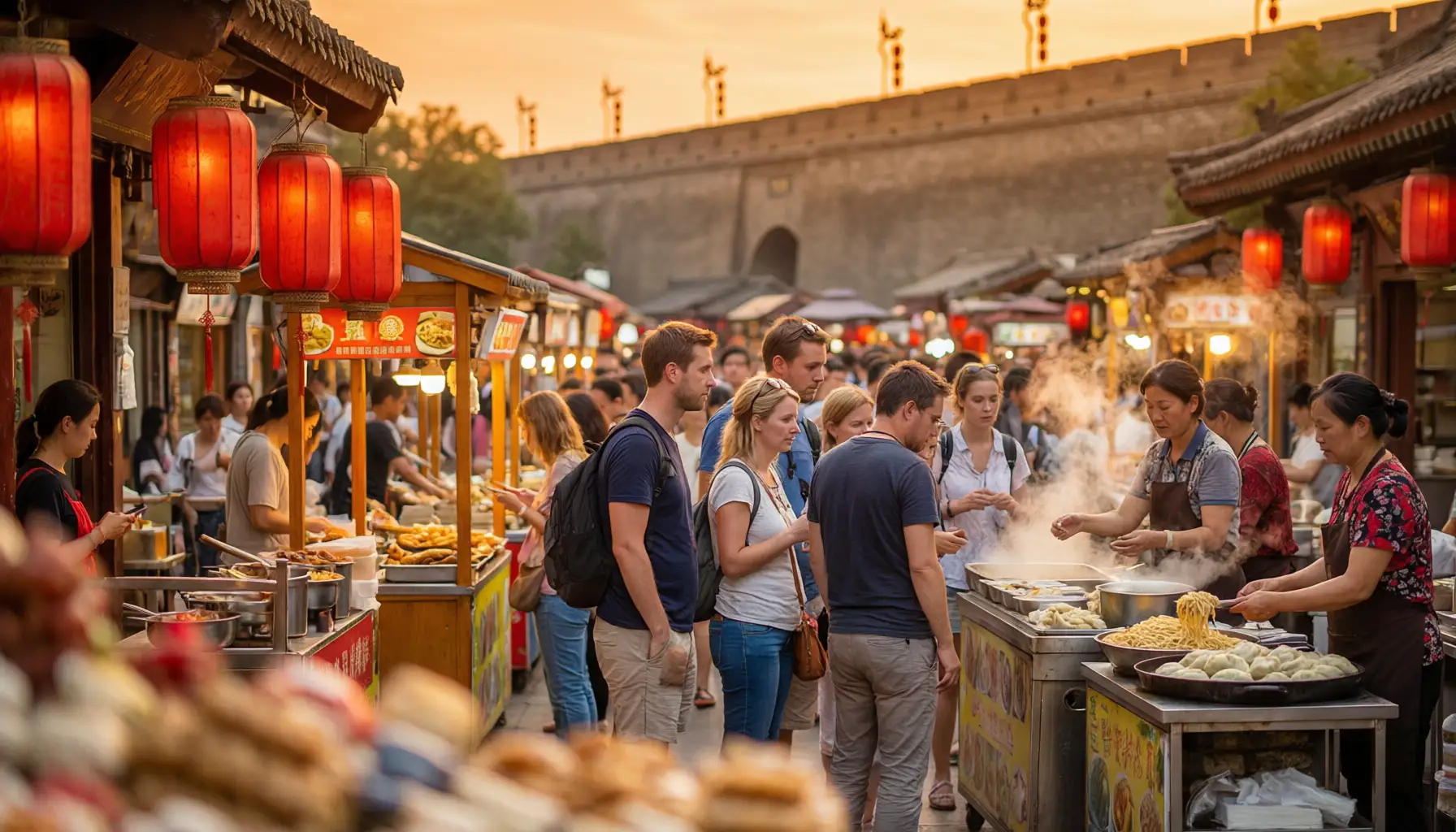
Xi’an Local Markets: A Journey Through Culture and Local Life
Xi’an markets are more than shopping places; they are a cultural journey that reveals how ancient Chang’an continues to live through food, trade, crafts, and everyday markets. From traditional food stalls and Silk Road influences to folk crafts and local communities, these markets preserve the history and daily rhythms of Xi’an.
Why Is the True Xi’an Hidden in Its Markets?
Many travelers know Xi’an through famous landmarks such as the Terracotta Warriors, Ancient City Wall, and Giant Wild Goose Pagoda. These sites show the city’s historical glory, but they do not fully represent the everyday Xi’an experienced by local people.
The real rhythm of Xi’an can be found in its markets: the first bowl of lamb soup in the morning, the street vendors who have practiced their crafts for decades, the Shaanxi dialect heard in neighborhood markets, and the lively atmosphere of night food streets.
Markets are more than places for buying and selling. They are living cultural spaces where history, trade, food traditions, and community life continue to connect, allowing the ancient capital’s culture to remain part of everyday life.
1. From Chang’an’s Ancient Markets to Today’s Streets
Why Did Chang’an Become a City of Markets?
During the Tang Dynasty, Chang’an was one of the world’s largest cities and the eastern starting point of the Silk Road. Its advanced urban planning and open trade environment made markets an essential part of city life.
Markets were not only places for exchanging goods but also important spaces for cultural interaction. Merchants, travelers, and communities from different regions gathered here, allowing products, ideas, and traditions to flow across cultures.
How Did Chang’an’s East and West Markets Shape Its Commercial Culture?
Market | Features | Cultural Significance |
|---|---|---|
East Market (Dongshi) | Near the imperial area; focused on luxury goods and elite consumption. | Reflected Tang wealth and aristocratic life. |
West Market (Xishi) | International trade hub with merchants from Central Asia and beyond. | Showed Chang’an’s openness and Silk Road exchanges. |
How Did Xi’an Markets Transform from Trade Centers to Community Spaces?
Today, Xi’an markets have become more than places for buying daily necessities. People visit local markets not only for fresh food and household goods but also to greet familiar vendors, meet neighbors, chat with friends, and enjoy the relaxed rhythm of everyday life.
A market visit is often a social experience rather than a simple shopping activity. It preserves neighborhood relationships, local memories, and traditional lifestyles because markets fulfill more than shopping needs — they create human connections between people. In this way, Xi’an markets have transformed from ancient trade centers into living community spaces where the spirit of exchange continues.
How Does Xi’an’s Market Culture Continue the Spirit of Ancient Chang’an?
Today, Xi’an’s markets still preserve the commercial and cultural traditions that shaped ancient Chang’an. While modern markets have changed in form, they continue the city’s long history of exchange and connection.
Continuing the Tradition of Trade
Markets remain important places for buying, selling, and exchanging local products.
From food ingredients to handicrafts, everyday trade continues to connect producers, sellers, and communities.
Maintaining Multicultural Connections
Xi’an’s markets continue to reflect the city’s role as a meeting point of different cultures.
Food markets, especially areas influenced by Silk Road traditions, preserve diverse culinary and commercial practices.
Preserving an Open and Inclusive Spirit
Ancient Chang’an was known for welcoming people, goods, and ideas from different regions.
Today’s markets continue this tradition by bringing together locals, travelers, and diverse cultural experiences.
2. Morning Markets: The Hidden Rhythm of Local Xi’an
How Did Wheat Create Xi’an’s Morning Food Culture?
Agricultural Foundation | Impact on Food Culture |
|---|---|
Guanzhong Plain: fertile farmland and major grain-producing area | Supported the cultivation of wheat and shaped local eating habits. |
Wheat as a traditional staple crop | Created diverse techniques for making noodles, buns, and other wheat-based foods. |
Farming culture and local markets | Connected agricultural products with everyday meals. |
How Did Xi’an Morning Markets Develop Through History?
In Xi’an’s morning markets, shopping is closely connected with the rhythm of daily life. Many vendors prepare breakfast and fresh ingredients before sunrise, allowing residents to begin their day with familiar flavors and routines. The market atmosphere reflects the practical and lively character of local mornings.
These small details form the everyday rhythm that distinguishes local markets from modern commercial spaces.
What Defines Xi’an’s Morning Market Food Culture?
Noodle culture:
Is one of the most recognizable symbols of Shaanxi cuisine. From biangbiang noodles and oil-splashed noodles to various handmade noodle dishes, local people have developed different techniques and flavors around wheat flour. These noodles represent not only regional tastes but also generations of cooking traditions passed down through families and communities.
Mo culture
Reflects the close relationship between wheat and daily meals in Shaanxi. Steamed buns and other wheat-based staples have long been common foods on local tables. Simple, filling, and practical, mo represents the influence of farming traditions on everyday eating habits.
Flatbread culture
Shows the creativity of local people in shaping wheat into different forms. Various types of baked or pan-fried breads can be found in morning markets and breakfast stalls, offering convenient and flavorful choices while preserving regional cooking methods.
Together, these three traditions reveal how wheat shaped Xi’an’s food identity. In morning markets, a bowl of noodles, a piece of mo, or a freshly made flatbread is not only a meal but also a continuation of the agricultural heritage and local lifestyle of the Guanzhong region.
How Did Xi’an Morning Markets Become Community Spaces?
Markets Built on Trade and Supply Networks
The history of Xi’an markets can be traced back to Chang’an, the capital of the Tang Dynasty. Ancient markets such as the East and West Markets (Dongshi and Xishi) served as major trade centers, connecting the capital with the Silk Road. They were places where merchants exchanged goods, bringing together products, people, and cultures from different regions.
Markets Growing from Daily Needs
Many modern markets developed from areas once related to grain storage and urban supply systems. Places like Dongcangmen and Xicang originated from historical granaries that supported the city’s food needs. After their original functions declined, these areas gradually transformed into community markets serving local residents.
From Rural Trade to Local Gathering Spaces
Markets such as Weiqu Old Street developed from traditional rural fairs where villagers exchanged agricultural products, handmade goods, and daily necessities. Over time, these fairs evolved into neighborhood markets, but they continued to preserve local food traditions and social connections.
Markets Shaped by Silk Road and Ethnic Diversity
Some markets, especially Sajinqiao in the Hui Quarter, developed through centuries of cultural exchange. Influenced by Silk Road trade and the Hui community, these markets became important spaces where food traditions, religious culture, and family businesses continued across generations.
Markets as Living Community Spaces
Modern morning markets such as Xiaonanmen formed mainly from residents’ daily needs. Today, Xi’an’s morning markets are not only places to buy food but also spaces where neighbors interact, traditional crafts and flavors survive, and local lifestyles continue.
What Can You Find in Xi’an Morning Markets?
Morning Market | Opening Time | What You Can Find |
|---|---|---|
Dongcangmen Morning Market | Around 6:00–9:00 AM; best time 7:00–8:30 AM | Steamed buns, vegetable pockets, Hu La Tang, vegetable rolls, plus fresh vegetables and daily ingredients. |
Xicang Market | Thursday & Sunday, around 8:00 AM–4:00 PM | Local snacks, antiques, flowers, birds, and various daily goods. |
Weiqu Old Street Morning Market | Around 6:30–10:00 AM | Green onion flatbread, zenggao, beef pie, roujiamo, plus traditional Shaanxi snacks. |
Sajinqiao Morning Market | Early morning; recommended before 9:00 AM | Zenggao, cured meat flatbread, oil tea with fried dough sticks, belt noodles, plus Muslim-style snacks. |
Xiaonanmen Morning Market | Around 6:00–9:00 AM | Crispy beef pie, zenggao, roujiamo, vegetable pockets, plus local breakfast foods. |
Behind these morning market foods lies a deeper story. Xi’an’s agricultural heritage shaped its food traditions, which continue to live through local markets. Every bowl of noodles, steamed bun, and breakfast snack reflects the connection between the land, people, and everyday life.
What Sounds Tell the Story of Xi’an Morning Markets?
Xi’an’s morning markets preserve a unique urban soundscape known as “market calls” Vendor voices, local dialects, and everyday conversations have shaped the city’s morning atmosphere for centuries.
Ancient Origins: The Sounds of Chang’an Markets
During the Tang Dynasty, the East and West Markets of Chang’an opened with official signals such as drums. Merchants selling food, fruits, and goods used simple calls to attract customers. As markets gradually expanded beyond official trading areas, these sounds became part of everyday neighborhood life.
From Calls to Local Traditions
During the Song and Yuan periods, vendor calls developed into more rhythmic forms known as “singing sales calls”. These traditions later blended with Guanzhong dialects, creating Xi’an’s distinctive style of street selling.
Market Sounds in Old Xi’an
In the Ming and Qing dynasties, markets around areas such as Dongcangmen and Xicang became important community spaces. Vendors selling vegetables, snacks, and daily goods used unique voices and sounds, such as wooden clappers and other instruments, allowing people to recognize different trades by sound.
A Living Soundscape Today
Although traditional shouting has become less common, morning markets still preserve traces of this culture. Calls for zenggao, oil tea, vegetables, and breakfast foods continue to carry local memories, reflecting Xi’an’s dialects, lifestyles, and neighborhood connections.
From ancient Chang’an to today’s morning markets, these voices are not only sounds of trade but also a living record of Xi’an’s everyday culture.
4. Food Markets: The Historical Roots Behind Xi’an’s Flavors
Why Does Xi’an Cuisine Have Such Distinctive Flavors?
Wheat: Xi’an’s wheat-based tradition created the foundation of local cuisine. Noodles, flatbreads, and steamed foods became everyday staples, providing the base for dishes such as biangbiang noodles, liangpi, and roujiamo.
Meat: Meat became an important part of Xi’an cuisine through the combination of northern pastoral traditions and the long history of the Hui community. Located along the Silk Road, Chang’an attracted merchants from Central Asia, and Muslim communities gradually developed a food culture centered on beef and lamb. Such as yangrou paomo (lamb soup with bread), lamb skewers, and beef dishes. Slow-cooked meat, rich broths, and handmade breads create the hearty and warming flavors that define Xi’an’s cuisine.
Spices: Xi’an’s bold flavors also reflect its role as the eastern gateway of the Silk Road. Spices such as cumin, pepper, and chili entered local cooking through centuries of cultural exchange.
Cumin-covered lamb skewers, chili-oil noodles, and aromatic meat dishes show how foreign ingredients were adapted into local tastes. These spices did not replace traditional flavors but became part of Xi’an’s unique balance of fragrance, spice, and richness.
Together, wheat, meat, and spices created the distinctive character of Xi’an cuisine: filling, bold, and deeply connected with the city’s agricultural roots and Silk Road history
How Do Ingredients Tell the History of Xi’an?
Ingredient | Historical Background | Representative Dishes |
|---|---|---|
Pepper & Spices | Introduced through Silk Road exchanges and regional trade, adding new flavors to local cuisine. | Lamb skewers, biangbiang noodles, spicy dishes |
Lamb | Reflects the integration of agricultural and pastoral cultures, especially Hui food traditions. | Yangrou paomo, lamb soup, beef and lamb dishes |
Wheat Flour | Rooted in the farming traditions of the Guanzhong Plain, becoming a staple ingredient. | Biangbiang noodles, liangpi, roujiamo |
5. Night Markets: The Social Life After Sunset
From Food Streets to Social Spaces: The Changing Role of Night Markets
Xi’an’s night markets have developed from simple neighborhood food stalls into modern urban social spaces. In the past, they mainly served local residents with affordable meals and daily consumption. Today, they continue traditional food culture while adding functions such as leisure, tourism, and cultural experiences.
Xiaonanmen Night Market combines the ancient city wall with modern nightlife, allowing people to enjoy food while experiencing Xi’an’s historical atmosphere.
Yongxingfang Night Market transforms traditional Shaanxi foods into cultural experiences by presenting local specialties and intangible cultural heritage.
Modern night markets preserve old traditions while adapting to new urban lifestyles, connecting food culture with contemporary social life.
The Sounds and Smells of Xi’an at Night
Xi’an’s night markets create a unique sensory landscape where sounds and smells reflect the city’s social life after sunset. Unlike morning markets, which focus on daily routines, night markets are shaped by leisure, conversation, and gatherings.
Sounds of the Night Market
The sizzle of grilled meat, the sound of frying, and the rhythm of cooking utensils create a lively street atmosphere, while conversations between friends, family gatherings, and vendors’ greetings form the social soundscape of the night. Compared with morning market calls, which mainly serve daily transactions, night market sounds are more about interaction, relaxation, and enjoying time together after sunset.
Smells of Xi’an at Night
The aroma of grilled lamb, barbecue, chili oil, spices, and roasted seasonings creates Xi’an’s distinctive northwest flavor identity, while the steam from noodles, soups, and hot snacks adds warmth to the evening streets. These familiar smells not only stimulate appetite but also evoke shared memories of gathering, chatting, and enjoying nighttime social life.
The Nighttime Atmosphere
Together, these sounds and smells transform night markets into social spaces where people relax, communicate, and enjoy urban life. While morning markets preserve the sounds of daily routines and work, night markets capture the sounds, flavors, and connections of people gathering after sunset, reflecting another rhythm of Xi’an’s everyday life.
Daytime Markets vs. Night Markets: Two Different Rhythms of Xi’an Life
Aspect | Daytime Markets (Morning Markets) | Night Markets |
|---|---|---|
Main Purpose | Focus on daily needs, such as buying breakfast, fresh food, and household ingredients. | Focus on leisure, socializing, and enjoying food after sunset. |
Main Visitors | Mainly local residents, elderly people, and nearby families. | More diverse groups, including friends, young people, families, and visitors. |
Atmosphere | Quiet and practical, with the rhythm of daily life: shopping, bargaining, and greetings between neighbors. | Lively and relaxed, filled with lights, conversations, cooking sounds, and street performances. |
Food Style | Traditional breakfast and everyday foods, such as noodles, steamed buns, vegetables, and local snacks. | More social foods, such as barbecue, snacks, drinks, and dishes shared among groups. |
Social Function | Maintains neighborhood relationships through familiar vendors and daily routines. | Creates public spaces for gathering, entertainment, and evening social life. |
Cultural Meaning | Represents the ordinary rhythm of local life and long-term community connections. | Shows the city’s energy after dark, where food becomes a way to connect people. |
Where to Experience Xi’an Night Market Culture?
Night Market | Opening Time | What You Can Find | Social Character |
|---|---|---|---|
Xiaonanmen Night Market | Around 6:00 PM–2:00 AM | Late-night snacks, barbecue, casual dining, and street food stalls. | A relaxed gathering place where people enjoy food, city views, and conversations near the ancient city wall. |
Sajinqiao Night Market | Around 6:00 PM–12:00 AM | Local evening food stalls, halal cuisine, barbecue, and traditional dishes. | A neighborhood space where local residents meet, eat, and experience Xi’an’s Muslim community life. |
Ganjiazhai Night Market | Around 6:00 PM–11:30 PM (some stalls later) | Affordable street food, snacks, and casual meals. | A local gathering place popular with residents and young people, reflecting everyday urban life. |
Yongxingfang Night Market | Around 6:00 PM–10:30 PM | Regional snacks, traditional drinks, cultural food experiences, and local specialties. | A cultural leisure space where visitors combine dining with sightseeing and traditional experiences. |
Jianda South Gate Night Market | Around 5:30 PM–11:00 PM | Student-friendly snacks, affordable meals, and street food. | A youthful social space where students gather after classes and share evening meals. |
Longshouyuan Night Market | Around 6:00 PM–2:00 AM | Street snacks, barbecue, late-night food stalls, and casual dining. | A lively night gathering spot where friends meet for late-night conversations and relaxation. |
Weiqu Old Street Night Market | Around 6:00 PM–1:00/2:00 AM | Local snacks, small restaurants, and neighborhood food stalls. | A community-based night market connecting local families, residents, and young people. |
Luomashi Night Market | Around 6:00 PM–11:00 PM | Snack shops, street food, desserts, and casual dining. | A commercial nightlife area where visitors combine shopping, walking, and eating. |
Dongxin Street Night Market | Around 10:30 AM–2:00/3:00 AM (shops vary) | Late-night restaurants, traditional dishes, and local specialties. | A late-night dining destination where friends and families gather after evening activities. |
Insider Secret
Outdoor night markets are affected by weather and city management; rainy days and winter seasons may reduce the number of stalls.
Portions at Xi’an night markets are often generous; ordering small portions and sharing allows you to try more foods.
Some traditional vendors accept only cash, so carrying a small amount of cash is recommended.
For late-night markets such as Xiaonanmen, Longshouyuan, and Weiqu Old Street, visiting after 7:00 PM usually offers a livelier atmosphere.
How Do Xi’an Night Markets Keep Urban Culture Alive?
Xi’an’s night markets are a way for traditional culture to continue within modern urban life. They are not only places to eat, but also spaces where social connections, street traditions, and everyday memories are preserved through daily activities.
Night markets maintain close connections between vendors and residents. Familiar vendors, regular customers, and casual conversations create a sense of neighborhood belonging that goes beyond simple transactions.
Through open-air dining, traditional cooking methods, and local food customs, night markets keep Xi’an’s street culture visible in contemporary cities. The stalls, cooking processes, and shared seating areas reflect the city’s unique lifestyle.
Night markets are also connected with personal and collective memories. Childhood flavors, family gatherings, and evening walks turn these spaces into emotional landmarks where people remember and experience the city.
The value of Xi’an night markets lies not only in what people eat, but in how people gather, communicate, and share urban life after sunset\.
6. Craft Markets: The Skills and Artistic Traditions of Xi’an
Shuyuanmen: The Cultural Market of Scholars
Shuyuanmen’s history began with Guanzhong Academy, one of the most influential academies in the Ming and Qing dynasties. Located near the southern part of Xi’an’s old city, the academy became an important place for scholars to study, give lectures, and exchange ideas. It represented the strong scholarly tradition of the Guanzhong region and shaped the cultural atmosphere of the surrounding streets.
Over time, although the academy’s educational function disappeared, the area continued to preserve its connection with learning and art. The name Shuyuanmen (“Academy Gate”) keeps the memory of this intellectual tradition, transforming the former space of scholars into a modern cultural street.
The history of Shuyuanmen began not as a marketplace, but as a place of learning and cultural exchange.
How Craft Markets Preserve Xi’an’s Artistic Traditions?
Today, Shuyuanmen is more than a traditional art street; it is a cultural space where scholarly traditions, artistic practices, and modern urban life meet. Unlike ordinary souvenir markets, its value lies in preserving the environment and practices connected with Chinese calligraphy and painting.
Unique Feature | Cultural Meaning |
Calligraphy and Painting Culture | A place where visitors can find calligraphy works, Chinese paintings, ink, brushes, and traditional art supplies, continuing Xi’an’s connection with Chinese literary traditions. |
The Atmosphere of Scholar Studios | Traditional shops, art displays, and writing tools recreate the environment of old study rooms, connecting today’s street with the historical world of scholars. |
A Place for Artistic Exchange | Calligraphers, painters, collectors, and visitors gather to appreciate artworks, discuss techniques, and share knowledge. |
From Products to Cultural Experience | Shuyuanmen allows people to experience the process and meaning behind traditional arts rather than simply buying souvenirs. |
While Shuyuanmen represents the scholarly side of Xi’an’s craft culture through calligraphy and traditional art, the city’s handmade heritage is also preserved by countless folk artisans. Their crafts come from everyday life rather than only scholarly traditions, carrying local memories, skills, and stories passed down through generations.
The Hands Behind the Crafts: Stories of Local Artisans
Traditional crafts are preserved not only through the objects themselves, but through the artisans who maintain the skills, knowledge, and cultural meanings behind them. In Xi’an’s craft markets, handmade works connect historical traditions with modern urban life.
Traditional Skills Passed Down Through GenerationsMany artisans learn their crafts through family inheritance or years of practice. Techniques such as calligraphy, seal carving, paper-cutting, and shadow puppet making carry generations of knowledge, preserving artistic traditions that cannot be replaced by machines.
Handmade Processes Behind Cultural ProductsThe value of traditional crafts comes from the time and effort invested in each piece. Through carving, painting, cutting, shaping, and hand-making processes, artisans transform simple materials into works that reflect patience, skill, and cultural meaning.
Creativity Within Traditional FormsModern artisans continue traditional techniques through daily practice, workshops, and cultural transmission, allowing these skills to survive across generations.They adapt folk art into contemporary designs and daily products, allowing ancient skills to remain connected with modern lifestyles.
Artisans as Cultural StorytellersBeyond creating objects, artisans preserve local memories and cultural identities. Their works reflect regional beliefs, festival traditions, and everyday experiences, making handmade crafts a living record of Xi’an’s history.
How Different Crafts Preserve Xi’an’s Cultural Memories?
Xi’an’s craft markets are not only places where traditional handmade products are displayed; they are spaces where local memories continue to be preserved and renewed. Each craft carries the history, beliefs, and lifestyles of the people behind it, while today’s markets provide new ways for these traditions to survive.
Paper-cutting preserves folk beliefs and festival traditions. Today, artisans combine traditional patterns with modern designs, allowing this folk art to fit contemporary life.
Shadow puppetry connects craftsmanship with storytelling. Modern artisans create cultural products and interactive experiences to bring this tradition to wider audiences.
Calligraphy represents Xi’an’s scholarly heritage. Markets like Shuyuanmen turn calligraphy into a cultural experience through live creation and artistic exchange.
Dough figurines preserve folk imagination and daily memories. New designs help this traditional craft attract younger generations.
Stele rubbing connects craft markets with Xi’an’s historical monuments. It transforms ancient inscriptions into accessible cultural experiences.
Through markets, workshops, and cultural tourism, these crafts are no longer only preserved as historical traditions. They continue to evolve through new designs, younger artisans, and wider public participation.
Where to Experience Xi’an’s Craft Culture?
Craft Market | Opening Time | What You Can Find | Cultural Character |
|---|---|---|---|
Xicang Market | Thu & Sun, 8:00 AM–4:00 PM | Bird cages, carved gourds, folk objects, old textiles, antiques, and handmade items. | Street culture — preserves the original atmosphere of old Xi’an markets and folk life. |
Shuyuanmen Cultural Street | 9:00 AM–9:00 PM | Calligraphy, paintings, seal carving, stele rubbing, paper‑cutting, dough figurines, and handmade artworks. | Scholarly culture — reflects Xi’an’s tradition of learning, writing, and artistic expression. |
Huajue Lane Handmade Area | 9:30 AM–10:00 PM | Shadow puppets, silver crafts, fabric art, Tang‑style decorations, and folk handicrafts. | Folk culture — preserves everyday crafts and local community memories. |
Yongxingfang Intangible Cultural Heritage Workshops | 10:00 AM–10:30 PM | Tang Sancai, paper‑cutting, dough figurines, traditional crafts, and live demonstrations. | Heritage culture — transforms traditional skills into interactive cultural experiences. |
Why Xi’an Craft Markets Offer More Than Traditional Souvenirs?
The value of Xi’an’s craft markets is not only in what people buy, but in understanding the skills, stories, and people behind each handmade work.
Seeing: Visitors can watch artisans create calligraphy, paper-cutting, and folk crafts, experiencing the process behind traditional skills.
Learning: Craft markets reveal the history and cultural meanings behind techniques, connecting crafts with local traditions and daily life.
Connecting: Direct interaction with artisans allows visitors to experience cultural exchange and understand crafts as living traditions.
A tourist souvenir is a finished product; a craft market is a connection between people, skills, and history\.
7. Antique Markets: The Memories and Historical Stories of Xi’an
How Xi’an’s Antique Markets Developed Through Historical Collecting Traditions?
Xi’an’s antique markets grew from the city’s deep historical foundation. As the capital of 13 dynasties, Xi’an preserved rich cultural remains, including bronzes, ceramics, stone inscriptions, ancient books, and artworks, creating a strong collecting tradition.
The city’s antique culture was shaped by scholars and collectors who valued calligraphy, stele inscriptions, and ancient objects. Historical sites such as the Beilin Stele Museum strengthened the connection between collecting and cultural learning.
In modern times, antique trading developed into public markets. The Dàtáng Xīshì International Antique City combines shops and flea markets, offering ceramics, jade, coins, paintings, and old collections. The Baxian’an Antique Market attracts experienced collectors with coins and folk antiques, while the Xiaodongmen Collection Market reflects a more casual street-style collecting culture.
Today, Xi’an’s antique markets are not only places to buy and sell objects, but also spaces where people exchange historical knowledge and stories behind each item.
From Ancient Objects to Modern Collecting Culture
Today, antique collecting has become more accessible to the public. Modern antique markets attract collectors, local residents, and young people interested in history and vintage culture.
An old coin can reveal information about ancient economies, trade routes, and political systems.
An old piece of pottery can show traditional craftsmanship and daily life from another era.
An old photograph or household object can preserve memories of ordinary families and changing communities.
Antique markets are more than places for trading old objects—they are spaces for discovering history. Through conversations between sellers and collectors, people learn the stories behind each item and understand the culture it represents. The meaning of collecting has gradually shifted from “owning objects” to “understanding history,” making places like Xi’an’s antique markets living connections between the past and the present.
How Xi’an Antique Markets Become Spaces for Historical Knowledge Exchange?
Xi’an’s antique markets are not only places for trading objects, but also spaces where historical knowledge is shared. The value of a collection often comes from the stories, experiences, and conversations behind it.
Collectors bring professional knowledge into the market. They discuss the age, materials, craftsmanship, and cultural background of items such as ceramics, coins, calligraphy, and folk collections. Through these exchanges, collecting becomes a way of learning history.
Vendors are also storytellers. Many sellers introduce the origins, previous owners, and local background of objects, turning old books, photographs, watches, and household items into personal memories connected with different periods of society.
Visitors become more than buyers. By observing, asking questions, and communicating with collectors and sellers, they gain a deeper understanding of how objects preserve human experiences.
Unlike museums, where people mainly look at history, antique markets allow people to talk with history\. Here, knowledge is not only displayed through objects but also created through interaction\.
What Can Be Found in Xi’an Antique Markets?
Category | Cultural Meaning |
|---|---|
Ceramics & ancient objects | Reflect craftsmanship, daily life, and the material culture of different historical periods. |
Bronze, jade & traditional collectibles | Represent ancient craftsmanship, social traditions, and collectors’ interest in history. |
Calligraphy, paintings & old books | Preserve scholarly traditions, artistic values, and the knowledge passed through generations. |
Stele rubbings & historical materials | Connect people with Xi’an’s monuments, inscriptions, and local history. |
Folk antiques & vintage items | Record ordinary people’s memories through old furniture, watches, jewelry, coins, and daily objects. |
Xi’an’s antique markets go beyond valuable antiques, including old books, vintage items, folk objects, and everyday collections. These markets are not only places for collecting objects, but also spaces where different layers of history meet, preserving the memories and stories of generations.An object is not only something collected, but something that tells a story of a place and its people.
Where to Experience Xi’an’s Antique Culture?
Market | Opening Time | What You Can Find | Cultural Character |
|---|---|---|---|
Dàtáng Xīshì International Antique City | Shops: 10:00–17:30; Flea market: Fri & Sat 9:30–16:30 | Ceramics, jade, coins, old paintings, bronze objects, calligraphy works, and historical collections | A large-scale collecting space combining professional antiques with modern vintage culture. |
Baxian’an Antique Market | Shops open daily; Street stalls: Sunday | Ancient coins, silver coins, old banknotes, badges, watches, old furniture | A traditional collectors’ market where experienced collectors exchange knowledge and judge items. |
Xiaodongmen Folk Collection Market | 08:00–17:00 | Ceramics, stone carvings, old paintings, historical objects, folk collections | A casual local market showing how ordinary people preserve memories through old objects. |
Xicang West Lane Market | Thu & Sun 7:30–15:00 | Second-hand antiques, old books, photographs, vintage cameras, folk objects | A lively folk market where historical objects mix with everyday urban memories. |
Shuyuanmen Cultural Street | Around 09:00–21:00 | Calligraphy, paintings, seals, ink, brushes, cultural souvenirs, handmade artworks | A cultural street connecting collecting with scholarly traditions, art appreciation, and traditional aesthetics. |
Tips for Visiting Xi’an Antique Markets
Many antique fairs are temporary street markets, especially outdoor stalls at Dàtáng Xīshì, Baxian’an, and Xicang. Weather or special events may affect opening times.
Antique markets contain both genuine collections and modern reproductions. Beginners should avoid purchasing expensive items without professional knowledge.
Many street stalls allow negotiation, especially for folk objects, old books, and vintage items. Prices often depend on condition, rarity, and the seller’s judgment.
Old photographs, second-hand books, vintage cameras, jewelry, and daily objects may have less monetary value but often preserve personal memories and local history.
How Antique Markets Reflect Xi’an’s Historical Identity?
Xi’an’s antique markets give history a different form of existence. Museums protect and display historical objects, while antique markets allow people to interact with them through buying, discussing, and sharing stories. They bring history from exhibition halls into everyday urban life.
Around areas near the city wall and traditional cultural districts, antique markets connect historical spaces with modern city experiences. Visitors can discover old books, coins, calligraphy, folk objects, and vintage items while walking through streets that have preserved Xi’an’s traditional atmosphere.
Markets such as Xicang Market show the everyday side of history. Unlike formal cultural institutions, these markets preserve memories from ordinary people’s lives through old photographs, household objects, second-hand goods, and folk collections.
Through antique markets, Xi’an’s identity is not only represented by ancient sites and museums, but also by the people who collect, trade, and share stories about the past. History becomes a living experience rather than a distant memory.
8. Flower and Bird Markets: The Traditional Leisure Culture of Xi’an
Flower and bird markets reflect a traditional Chinese lifestyle that values harmony between people and nature. For many generations, activities such as growing flowers, raising birds, keeping fish, and appreciating collectibles have been part of everyday leisure, especially in urban neighborhoods.
Through plants, animals, and small objects, people bring elements of nature into their homes. A pot of flowers, a singing bird, or an ornamental fish tank is not only a decoration, but also a way to create a peaceful living environment and enjoy a slower rhythm of life.
These markets are also spaces for social interaction. Residents share experiences about plant care, bird keeping, and collecting with vendors and other enthusiasts. Conversations between familiar sellers and regular visitors create relationships that go beyond simple transactions.
Flower and bird markets preserve a lifestyle where nature, hobbies, and social connections are closely connected.
Xicang: The Old Xi’an Street Culture
Xicang Flower and Bird Market preserves one of the most authentic forms of old Xi’an street life. Unlike modern commercial markets, it remains a traditional neighborhood gathering place where local residents come together through long-standing habits and shared interests.
A Traditional Gathering Place
With a history of local market traditions, Xicang keeps a unique street rhythm. The market opens only on specific days, attracting elderly residents, collectors, and hobby enthusiasts who gather to browse, chat, and exchange experiences. These repeated interactions create a strong sense of community.
Beyond Flowers and Birds
Although known as a flower and bird market, Xicang offers much more than plants and animals. Visitors can find flowers, birds, fish, bird cages, old books, antiques, folk objects, and second-hand items. Each object reflects different memories of local life and traditional hobbies.
A Living Memory of Xi’an
The value of Xicang lies not only in what is sold, but in the lifestyle it preserves. The market keeps alive old neighborhood relationships, folk interests, and everyday interactions that are gradually disappearing in modern cities.
How Modern Creative Spaces Transform Traditional Flower and Bird Markets?
TFEP Flower and Bird Market represents transformation. Located in a renovated old industrial space, it combines the traditional functions of a flower and bird market with modern creative lifestyles.
Traditionally, flower and bird markets focused on plants, aquarium culture, pets, and cultivation knowledge. Visitors came to choose flowers, buy fish, and exchange experiences about caring for nature. These activities continue in TFEP, preserving the traditional connection between people and natural hobbies.
At the same time, the market has introduced new urban elements, including creative shops, cafés, cultural spaces, and photography-friendly environments. The old factory setting gives traditional flower culture a new atmosphere, attracting younger visitors who may experience these hobbies in a more casual and creative way.
This transformation shows that traditional markets do not need to remain unchanged to survive. By combining old interests with new spaces and lifestyles, flower and bird culture becomes accessible to a new generation.Traditional hobbies are not disappearing; they are being redesigned for new generations.
How Different Flower and Bird Markets Offer Different Ways of Experiencing Nature?
Cultural Character | How People Experience Nature |
|---|---|
Traditional Neighborhood Life | Older residents and hobby enthusiasts enjoy flowers, birds, fish, and collectibles while maintaining familiar social connections and traditional leisure habits. |
Young Creative Lifestyle | Younger generations combine traditional flower culture with creative spaces, cafés, and modern urban experiences. |
Everyday Home Gardening | Local residents use flowers and plants to decorate homes, improve living spaces, and bring nature into daily life. |
How Different Flower and Bird Markets Offer Different Ways of Experiencing Nature?
Market | Opening Time | What You Can Find | What It Reveals About Xi’an Life |
|---|---|---|---|
Xicang Flower and Bird Market | Thu & Sun, 7:00–15:00 | Flowers, birds, fish, old books, antiques, folk items, daily goods, and local snacks | A traditional street market in old Xi’an where elderly residents, collectors, and vendors gather. It preserves a slower lifestyle based on hobbies, conversation, and neighborhood connections. |
TFEP Flower and Bird Market (3511 Creative Park) | 09:30–18:00 | Plants, flowers, aquarium products, exotic pets, creative shops, and cafés | A new-style market combining traditional flower-and-bird culture with an old industrial creative space, showing how young people reinterpret traditional hobbies. |
Zhuque Flower Market | 09:00–18:00 | Fresh flowers, potted plants, gardening supplies, fish, and pet-related products | A long-established urban flower market where residents decorate homes and enjoy nature in daily life, reflecting Xi’an’s connection between city living and traditional plant culture. |
9. Vintage and Creative Markets: Where Old Memories Meet New Creativity
How Do Vintage Spaces Preserve the Memories Behind Old Objects?
Unlike antique markets that focus on historical value and collection, vintage spaces preserve the personal memories and everyday experiences behind ordinary objects. They show how past lifestyles continue to connect with modern urban life.
Vintage spaces often include old books, vintage cameras, vinyl records, old furniture, and retro household items. These objects may not always have high market value, but they carry emotional meanings from different generations — a family’s reading habits, a city’s changing lifestyle, or memories of a certain era.
The value of vintage objects lies in their connection to daily life. A used camera records personal moments, an old record reflects past entertainment culture, and a piece of furniture represents the way people once lived. These objects transform ordinary memories into cultural experiences.
Unlike antiques, which emphasize historical and collectible value, vintage objects focus more on emotional connections and everyday stories.Old objects become meaningful not because they are rare, but because they carry the memories of how people lived.
What Can Be Found in Xi’an’s Hidden Craft and Vintage Spaces?
Retro Lifestyle and Creative Spaces: Coffee shops, black vinyl, retro decorations, and creative studios transform old aesthetics into modern urban lifestyles.
Independent Handmade Design: Handmade jewelry, leather goods, illustrations, and creative products combine traditional elements with modern design, showing how young creators reinterpret local culture.
Vintage Objects and Everyday Memories: Old cameras, vinyl records, posters, old books, furniture, and household items preserve personal memories and changing lifestyles.
Local Folk Objects and Everyday Culture: Bird cages, gourds, walnuts, and folk items reflect traditional hobbies and neighborhood life, showing the everyday side of Xi’an’s culture.
Where Old Memories Meet New Creativity
Market / Space | Opening Time | What You Can Find |
|---|---|---|
Xicang Market Complex | Street market: Thu & Sun, 7:00–15:00; Creative Park: Tue–Sun, 11:00–21:00 | Vintage cameras, old books, vinyl records, vintage clothes, folk items, second-hand goods, dough figurines, shadow puppets, handmade crafts |
Laochangchang Creative Block | Community market: 06:00–18:00; shops: 10:00–22:00 | Vintage shops, retro decorations, old cameras, handmade studios, creative products |
Chang’an Time · Tangjiuli | Daily | Vintage jewelry, leather crafts, handmade works, retro cafés, creative spaces |
NUSPACE | 11:00–21:00 | Designer jewelry, handmade crafts, illustrations, vinyl records, vintage items |
10. Markets and Cultural Sustainability: How Xi’an Keeps Traditions Alive
How Do Markets Become Living Cultural Spaces?
The value of markets lies in keeping culture active in daily life, rather than preserving it only as a historical display.
Local Food TraditionsMarkets keep regional flavors connected with everyday life by allowing traditional foods and cooking methods to remain part of local routines.
Handmade CraftsCraft markets allow skills such as paper-cutting, calligraphy, and folk crafts to continue through artisans, workshops, and cultural exchange.
Antique Collecting and Folk HobbiesAntique and flower-bird markets preserve collecting traditions, where old objects become connections to history and personal memories.
Community InteractionsLocal markets create spaces for vendors, residents, and visitors to communicate, maintaining neighborhood relationships and cultural knowledge.
How Do Markets Connect Different Generations Through Cultural Exchange?
Markets connect different generations, allowing cultural knowledge to continue through daily interactions and creative change.
Older Generations: Preserving Memories and SkillsIn markets like Xicang, older residents and vendors preserve traditional hobbies, local memories, and everyday knowledge through collecting, trading, and sharing experiences.
Young Creators: Reinterpreting TraditionIn spaces such as Shuyuanmen and creative craft areas, young creators combine traditional arts with modern design, giving old skills new forms.
Visitors: Joining Cultural TransmissionVisitors become participants by watching artisans, communicating with vendors, and experiencing local traditions beyond sightseeing.
Together, markets connect past memories, present experiences, and future creativity.
Markets create conversations between the past and the future.
The Future of Xi’an Markets
The future of Xi’an’s markets is not only about commercial development, but about keeping cultural traditions active in modern life. Markets allow ancient Chang’an’s heritage to continue through food, trade, crafts, and everyday interactions.
Traditional markets are adapting through creative spaces, cultural products, and new lifestyles. Old skills, local flavors, and folk traditions gain new audiences without losing their original character.
The future of markets depends on the people behind them — craftsmen, vendors, local residents, and young creators. Their daily participation allows traditions to be practiced, shared, and renewed.
From food streets and craft markets to hidden vintage spaces and community markets, Xi’an’s markets show that history is not only preserved in monuments. It continues through everyday experiences.
Xi’an’s markets are not simply places to buy things; they are living spaces where ancient traditions continue to shape the city’s present and future\.
A Local’s Market Route: Experience Xi’an Beyond Tourism
Route | Time | Markets & Places | Theme | Experience |
|---|---|---|---|---|
Nature & Leisure | Morning | Xicang Flower and Bird Market, Zhuque Flower Market, TFEP | Traditional Lifestyle | Flowers, birds, plants, hobbies, local leisure culture |
Morning Local Life | Morning | Morning markets, Laochangchang, local breakfast spots | Daily Life | Fresh food, local snacks, neighborhood routines |
Silk Road Flavors | Noon | Muslim Quarter, spice markets, food streets | Cultural Exchange | Local cuisine, trade history, multicultural traditions |
Craft Heritage | Afternoon | Shuyuanmen, Xicang Creative Park, craft spaces | Traditional Arts | Calligraphy, folk crafts, handmade culture |
Memory Collecting | Afternoon | Datang West City, antique markets, vintage spaces | Historical Memories | Old books, vintage items, antiques, collectors’ stories |
Night City Life | Evening | Sajinqiao, local night markets | Modern Xi’an | Street food, local atmosphere, urban nightlife |
Final Advice
Xi’an markets are not just places to eat or shop; they are living cultural spaces where the city’s history continues through food, crafts, trade, and everyday interactions\.
To truly experience Xi’an, visit beyond famous landmarks and spend time observing local routines, talking with vendors, and discovering the stories behind each market\.




Traveler Discussions
Questions from travelers