
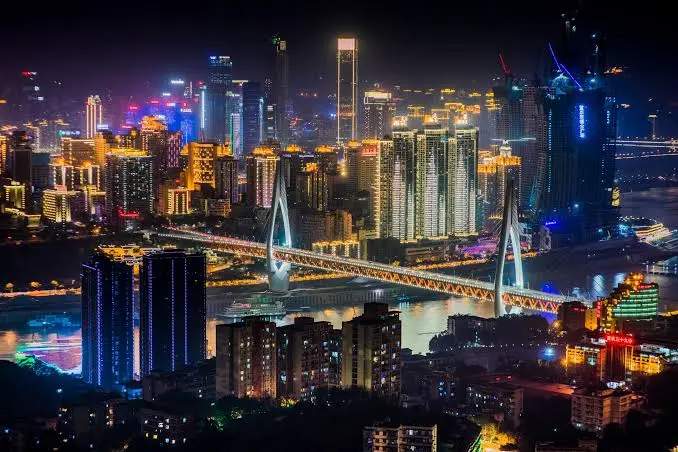
In a city built on hills and cut in half by two rivers, the difference between a good day in Chongqing and a wasted one is almost never what you see. It is the order you see it in. Most itineraries you find online send you crisscrossing the peninsula, over the rivers and back, up and down the same valleys, losing two or three hours a day to transport. The plans below are built around the actual geography of the city, so each day moves in one direction and you never retrace your steps.
Prices, train times and reservation rules were checked against local sources in November 2026. If you want the wider picture first, our Chongqing travel guide covers food, hot pot and the river cruise in more depth; this page is purely about routing your days.
How many days do you need in Chongqing?
Three days is the number most people land on. It gives you the whole centre, one proper night view and a single out-of-town day trip without rushing. Here is the honest breakdown.
Days | What you can see | Best for | Pace |
1 day | Hongyadong, Jiefangbei, the cableway, one night view | Layover, stopover, quick trip | Fast |
2 days | City highlights, one night view, one day-trip option | Weekend, short break | Moderate |
3 days | Major sights plus Wulong or Dazu, two night views | Standard first trip (most popular) | Comfortable |
4 days | Everything plus a day trip and a Chengdu or Yangtze cruise add-on | Relaxed pace, first-timers | Relaxed |
5+ days | Add a Chengdu combo or extend into a Yangtze cruise | Longer Southwest China trip | Slow |
Why these Chongqing itineraries don't backtrack
Chongqing's main sights fall into a handful of distinct clusters. Understand the clusters and the routing takes care of itself.
The geography of the sights
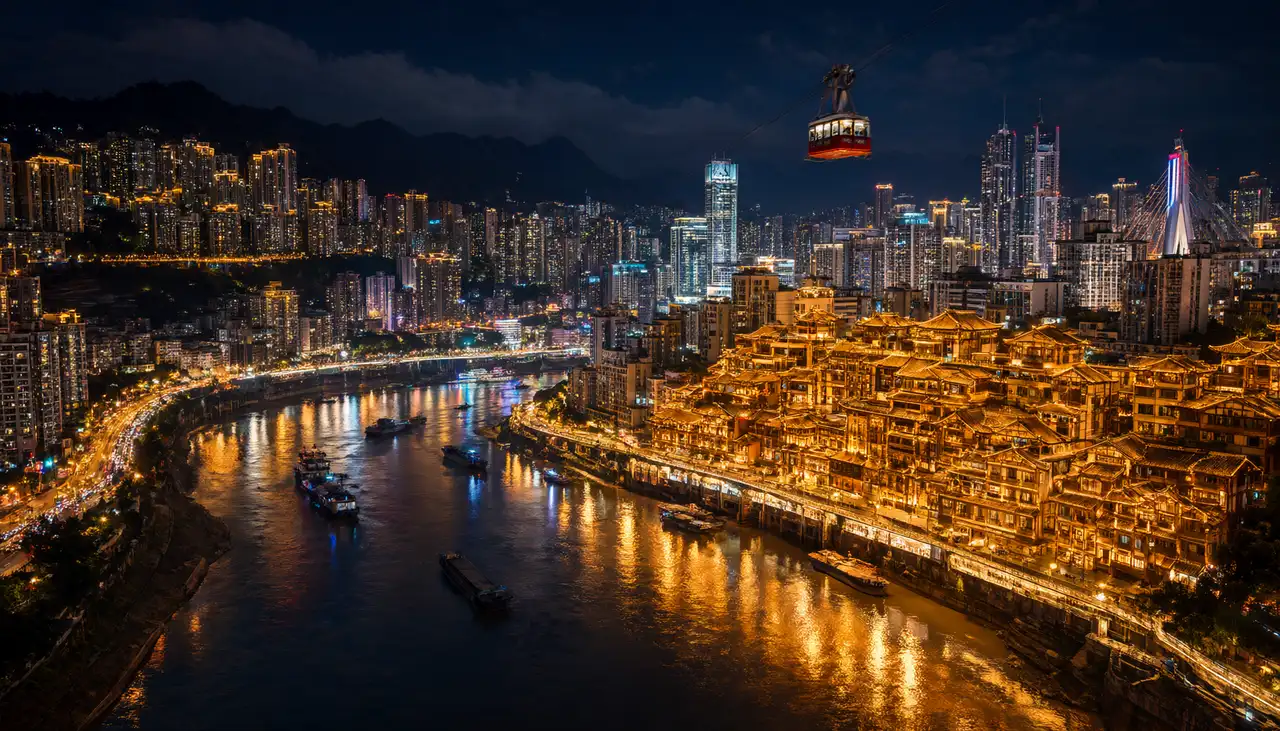
Yuzhong Peninsula — the city centre wedged between the two rivers: Jiefangbei, Hongyadong, Chaotianmen, the cableway's Yuzhong station, People's Square and Luohan Temple. This is where first-timers stay.
Jiangbeizui — across the Jialing to the north, the modern CBD with the best skyline views of Hongyadong and the peninsula.
Nan'an District — across the Yangtze to the south: Nanshan Mountain, Nanbin Road, the cableway's Nan'an station.
Shapingba and Ciqikou — west of the centre: the old town, the university area and the Eling hilltop.
Day-trip destinations — Wulong Karst to the southeast, the Dazu Rock Carvings to the west, Jinyun Mountain to the north. Each needs one to two hours of travel.
The no-backtrack principle
Each day covers sights that are close to each other, not scattered across the map.
You move from one area to the next in a logical direction instead of bouncing back and forth.
You cross each river once, do everything on that side, then cross back at the end.
Night views are folded into the day that already finishes on that side.
Day trips get their own day and never mix with city sightseeing.
The result is simple: you see more, walk less, and spend the day looking at the city rather than navigating it. Once you have the logic, the best night-view and photo spots slot straight into the right evenings.
👉One day in Chongqing
The route: Jiefangbei → Hongyadong by day → Yangtze Cableway to Nan'an → Nanbin Road → back over the Jialing for sunset → Hongyadong at night. It is a clockwise loop, and every step moves you forward.
Morning, Jiefangbei. Start with a bowl of xiaomian in the Jiefangbei area, then the monument and the shopping streets around it. Add Luohan Temple if you like a quiet old temple in the middle of the bustle.
Late morning to midday, Hongyadong. Walk down to Hongyadong while it is still calm and you can actually see the stacked stilt architecture. Have lunch riverside.
Early afternoon, the cableway. Take the Yangtze Cableway one-way across to Nan'an — a four or five minute ride with the best daytime view in the city. Buy one-way, not round-trip; you do not want to cross back the same way.
Afternoon, the south side. Stroll Nanbin Road, then choose Eling Park for an easy, free, local hilltop or push on to Nanshan for the wide panorama.
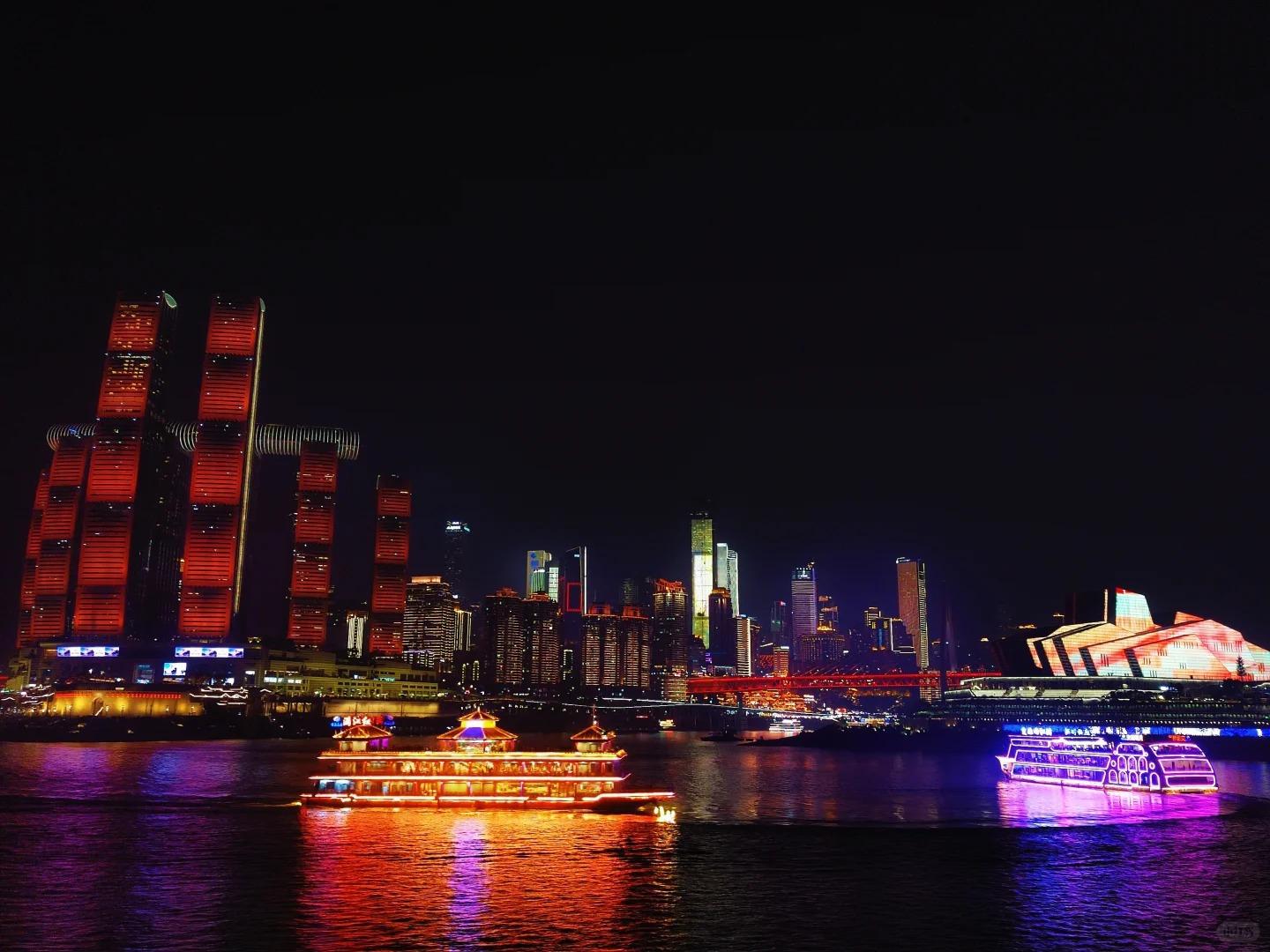
Late afternoon to evening, the north side. Cross to Jiangbeizui for sunset and blue hour along the river promenade, then walk back over Qiansimen Bridge for the classic Hongyadong night angle.
Night. Dinner hot pot on the Yuzhong side, then walk through Hongyadong lit up from the inside, and loop back to Jiefangbei where you started.
Why it works: you cross each river once, you see Hongyadong both by day and by night, and the night views are the tail end of the route rather than a separate trip. If you only have six or eight hours, drop Nanshan and hold the core loop of Jiefangbei, Hongyadong, the cableway, Nanbin Road and the bridge.
Start early and you will be walking away from Hongyadong just as the coach groups arrive. That head start is worth more than any single ticket.
👉Two days in Chongqing
Keep the one-day loop as day one. Day two moves west and south, to neighbourhoods you did not touch on day one, so the two days feel genuinely different.
Day two: Ciqikou, culture and a panoramic night view
Morning. Take Metro Line 1 west to Ciqikou Ancient Town. Wander the old lanes, grab the local snacks — spicy tofu, rice cakes, sesame candy — and eat lunch there.
Afternoon. Either the Eling Park and Eling No.2 Factory creative area, or the Chongqing Museum by People's Square, depending on whether you want cafés or history. Add the Great Hall of the People exterior at People's Square as a photo stop.
Evening. Head south to Nanshan for the wide panoramic night view, the best in the city, and eat there or back downtown.
Optional late night. A two-rivers night cruise from Chaotianmen is an easy, relaxing close.
Two days gives you the iconic river-and-skyline centre and the cultural, hilltop side of the city in one clean sweep, with no repeat ground. For where to sleep once you have the plan, see our guide to the best hotels in Chongqing.
👉Three days in Chongqing: the city plus a day trip
Three days is the most popular length for a reason. Two days of city, then a full day outside it, ending with a relaxed evening before you move on.
Day three, option A: Wulong Karst
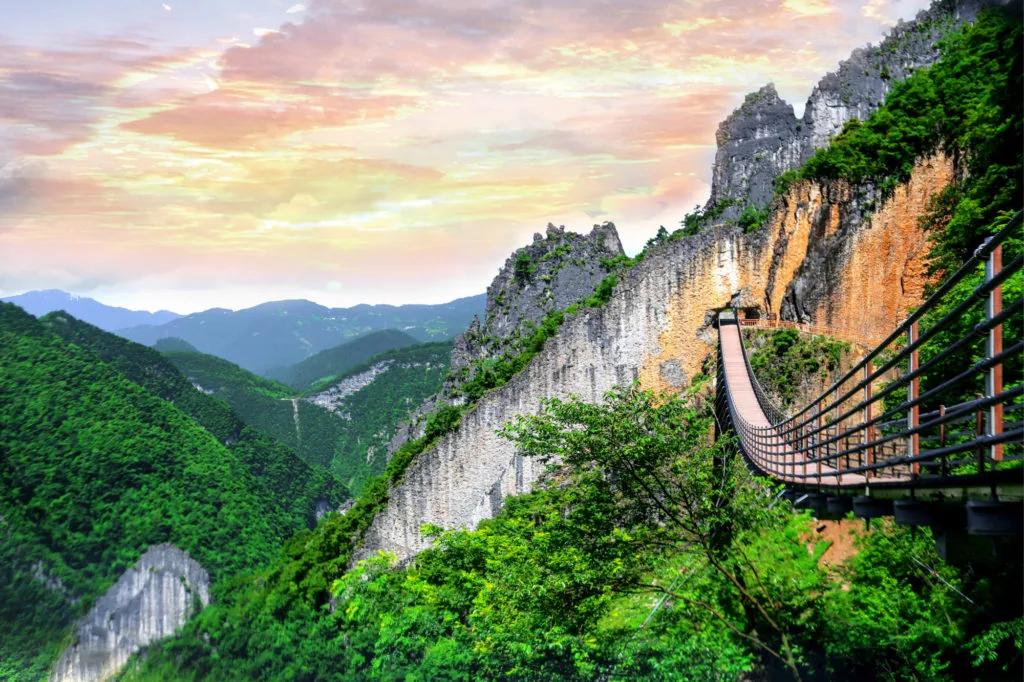
Wulong is a UNESCO site famous for its Three Natural Bridges, the largest cluster of natural limestone arches in Asia, and a Transformers filming location. Take an early high-speed train from Chongqing East — roughly 34 to 38 minutes — then a bus or taxi out to the bridges. Allow two to three hours of mostly downhill walking, with the Longshui Gorge fissure as an optional add-on, and you can be back in the city by early evening.
Good to know | Detail |
Getting there | High-speed train Chongqing East to Wulong, then scenic-area bus or taxi |
Combined ticket | Around CNY 125–135 for the bridges plus in-park transport (off-peak prices drop from November) |
Effort | Plenty of walking, mostly downhill with some uphill climbs; good shoes matter |
Tip | Buy train tickets ahead, especially weekends, and carry water — options inside are thin |
Day three, option B: the Dazu Rock Carvings
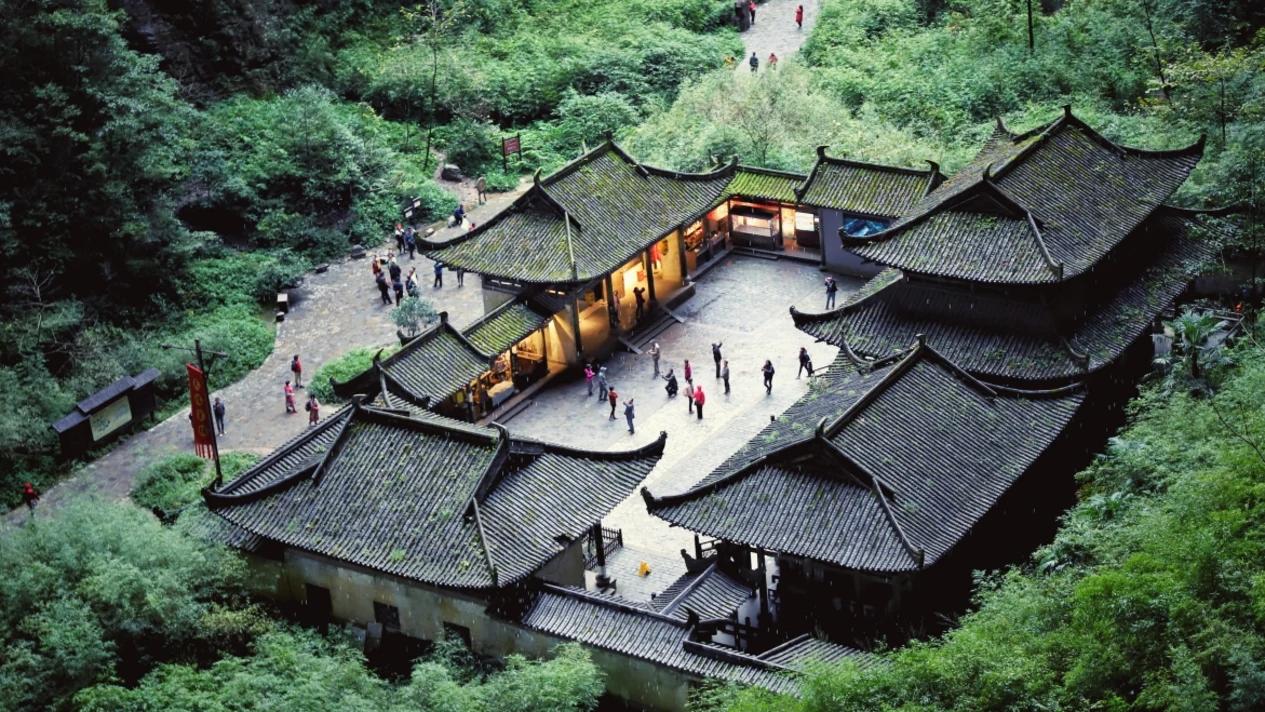
If you prefer art and history to geology, Dazu's 50,000-plus Buddhist statues, cut into cliff faces between the 9th and 13th centuries, are one of China's great carved sites. Baodingshan is the main and most impressive cluster, with Beishan as a smaller second site. A high-speed train to Dazu South takes about 30 minutes, then a short bus or taxi to Baodingshan and two to three hours of flat, easy walking. Our full Dazu Rock Carvings guide covers both sites and how to book.
Wulong or Dazu?
Factor | Wulong Karst | Dazu Rock Carvings |
Type | Nature and karst geology | Buddhist art and history |
Effort | More walking, mostly downhill | Less walking, flat paths |
Best for | Nature lovers, hikers, photographers | History buffs, art and culture travellers |
Our call | Do this if you only pick one and love scenery | Do this if you lean culture over landscape |
Pick one, not both — each deserves its own day. If you would rather not sort the trains and entry passes yourself, our Chongqing tour pages bundle the day trips with a guide and driver.
👉Four days in Chongqing: pick your deep dive
With a fourth day you stop ticking boxes and choose what you actually enjoy. Days one to three stay as above; day four is yours to shape.
Food and street culture. A morning market, the Eling No.2 Factory creative park, a real hot-pot lunch, and an evening food crawl across two or three neighbourhoods.
Art and architecture. The art museums, Huangjueping Graffiti Street, and the Liziba station where the monorail runs straight through a residential block.
Slow luxury. A spa or hot spring, a long lunch with a river view, shopping at IFS in Jiangbeizui or Raffles City, and a final sky-bar night.
Stretch to Chengdu. Take the high-speed train west in the afternoon and let the fourth day become the start of a two-city trip.
Four days in Chongqing does not mean four days of more sights. It means the same sights at a pace you can actually enjoy.
Chongqing and Chengdu itinerary
Chongqing and Chengdu are the two great cities of southwest China and they are stitched together by one of the busiest high-speed lines in the country. Combining them is easy and common.
🚄Getting from Chongqing to Chengdu by train
Train type | Duration | Fare | Notes |
High-speed (G) | 62 min to 2 hr 30 min | CNY 150–300+ | Over 100 trains a day; the fastest direct runs take 62 minutes |
Faster D trains | 2 to 3 hr | CNY 100–200 | Cheaper, a little slower, still frequent |
The 62-minute fastest direct trains sell out first, so book ahead around holidays. Both cities' main stations connect to their centres by metro.
A suggested five-day combo
Days one to two, Chongqing. The city centre loop, then Ciqikou and a Nanshan night view.
Day three, travel and Chengdu evening. A relaxed Chongqing morning, an afternoon high-speed train, then Kuanzhai or Jinli Street for dinner.
Day four, Chengdu. The panda base early, People's Park and its teahouse that afternoon, Sichuan opera and hot pot at night.
Day five, Chengdu. Wuhou Shrine or the Du Fu Thatched Cottage, some final food, then fly out.
Chongqing first is the usual recommendation: you take on the more intense, vertical city while your energy is high and finish in laid-back Chengdu. If you are flying into Chengdu, reverse it and let Chongqing's night views be the finale. Either way, our Chengdu day-by-day itinerary and the broader Chengdu travel guide handle the other half of the trip.
Adding a Yangtze cruise to your Chongqing itinerary
Chongqing is where most Yangtze cruises begin or end. The classic sailing goes downstream from Chongqing to Yichang over three to four days, threading the Three Gorges; longer itineraries push on toward Wuhan or Shanghai.
Build your city days before you board. Two or three relaxed days in Chongqing, then let the cruise be the slow back half rather than cramming it between day trips.
Three-Gorges dam and Shennong Stream are the standard shore stops on the shorter downstream sailings.
Book the cruise before the city hotel if your dates are tight — cabins and dates fix the rest of the schedule, not the other way around.
A cruise changes what a "Chongqing itinerary" means: the city becomes your run-up, and the river becomes the journey itself.
A Chongqing airport layover itinerary
Chongqing Jiangbei Airport is close to the city, which makes it one of the better long-layover stops in China.
Time you need. Five hours or more in the middle makes a short trip downtown worthwhile; under four, stay at the airport.
Visa-free transit. Chongqing is covered by China's up to 240-hour visa-free transit for travellers from more than 53 countries, so you can leave the airport without a visa on qualifying routes.
Getting in. Metro Line 10 links the airport to the rail network; a private transfer is the easier option on a tight connection.
What actually fits. Jiefangbei, a walk to Hongyadong and one bowl of hot pot, back with time to spare, beats trying to squeeze in a hilltop park.
On a layover your real budget is not the sights — it is the time to get back through security. Leave a generous margin and plan the loop around one or two things, not five.
A Chongqing weekend itinerary from Shanghai
Shanghai and Chongqing are about a two- to two-and-a-half-hour flight apart; there is no fast train that makes a weekend sensible by rail. So fly.
Friday night. Land, check in near Jiefangbei, and eat hot pot the moment you drop your bags.
Saturday. The full one-day loop: Hongyadong by day, the cableway, Nan'an, then Jiangbeizui and the bridge for the night view.
Sunday. Ciqikou in the morning, one museum or creative park, and fly home in the evening.
Two nights and a full day and a half is enough for the city itself. Save Wulong or Dazu for a three-day trip.
Reading a Chongqing itinerary map: zones and river crossings
The single biggest win on a Chongqing map is treating the two rivers as borders. Every crossing costs time, so good routing crosses once per half-day, not four times.
Stay on one side. Do the peninsula sights together, the Nan'an sights together, Jiangbeizui together.
Cross at the right point. The cableway crosses the Yangtze south; Qiansimen and the metro lines cross the Jialing north. Choose the crossing that matches where you are heading, not the nearest one.
Use elevation, not just distance. Two places 2 km apart on a map can be a 40-minute climb. Let the metro and cable car do the vertical work.
Practical planning: best time, where to stay, getting around, budget
Best time to visit
Spring (March to May) and autumn (October to November) are the two good windows — mild, dry, comfortable for walking. Summers are hot and humid, winters grey and damp. Avoid the first week of October (National Day) when Hongyadong and the bridges become a queue.
Where to stay
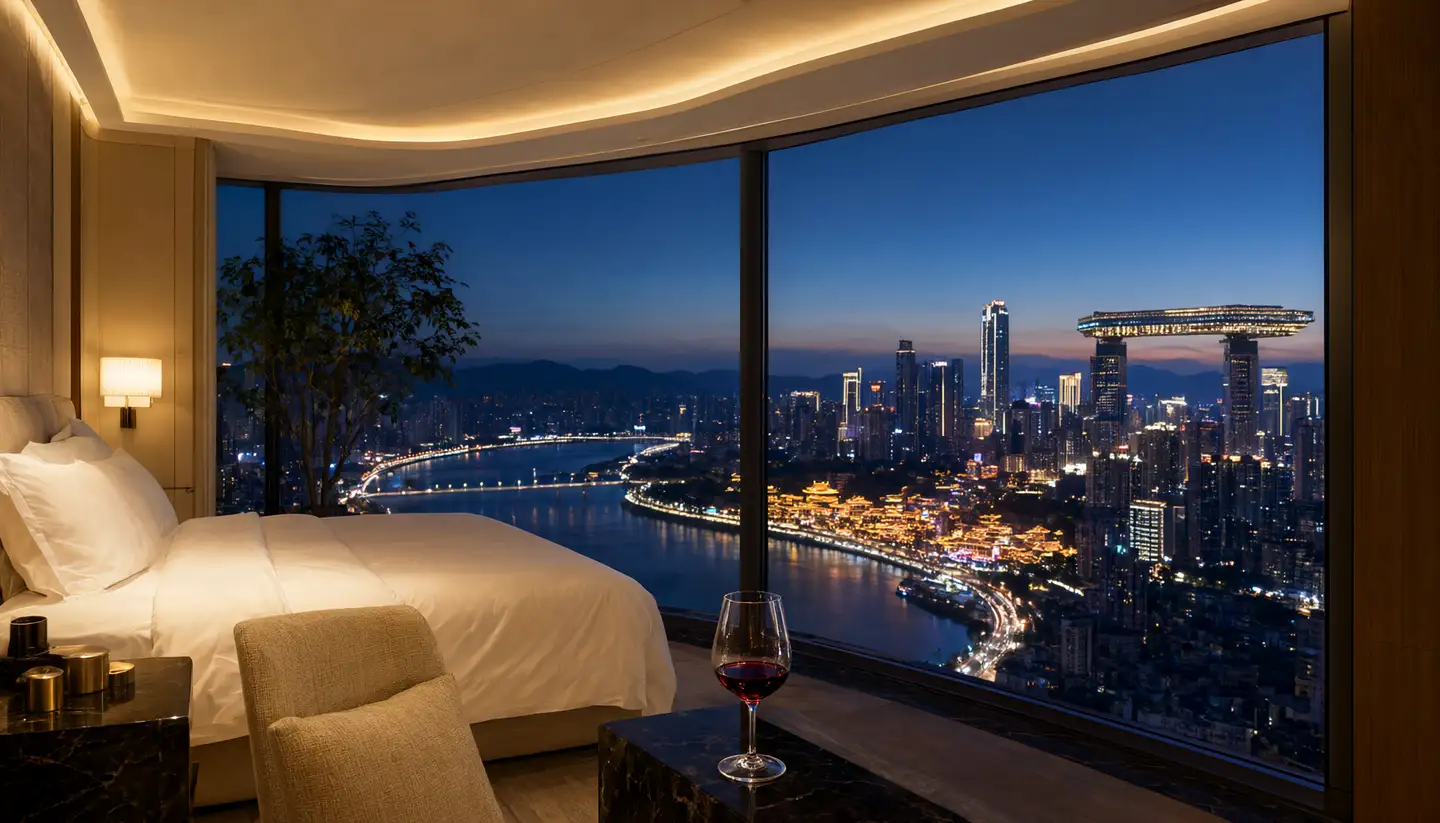
Jiefangbei on the peninsula puts the whole one-day loop within walking distance and is the default for first-timers. Jiangbeizui is the pick if you want a river-view room facing Hongyadong's skyline. Nan'an and the north bank trade proximity for quieter nights.
Getting around
Metro lines 1, 2, 3, 6 and 10 cover the main sights and both sides of the rivers.
DiDi ride-hailing and metro are the reliable pair for foreign visitors; you do not need to rely on street taxis.
The Yangtze Cableway and the riverside ferries are transport and attraction at once — use them on the leg you were crossing anyway.
Rough budget
A day in Chongqing can run from a couple of hundred yuan for a frugal day of metro, street food and free sights up to well over a thousand for hotels, private cars and nicer meals, with a few thousand for a fully guided version. Hot pot for two lands in the middle of that range; the big-ticket items are day trips and accommodation.
Twelve mistakes to avoid on a Chongqing trip
Crossing the same river twice in one day.
Doing Hongyadong only at night, or only by day, and missing one of its two faces.
Treating Wulong and Dazu as a half-day each and cramming both into one city day.
Booking a hotel far from a metro station in a city built on hills.
Trusting map distance and ignoring the vertical, which in Chongqing is the real cost.
Not buying day-trip train tickets ahead before weekends and holidays.
Trying to reach a night-view spot as a separate trip instead of finishing the day on that side.
Planning the airport or train station for the end of a sightseeing day, then misjudging the transfer.
Eating only near the monument square in the centre rather than walking two streets in.
Overlooking the cableway because it looks touristy — it is genuinely the cheapest good view.
Coming during National Day week and acting surprised at the crowds.
Skipping the side lanes behind the famous old streets, where the actual local life is.
The final thought
Chongqing rewards planning more than almost any other Chinese city, because the geography punishes careless routing so hard. Get the river crossings right, give each day one direction, and the mountain city stops being exhausting and starts being the most dramatic place in China.

Traveler Discussions
Questions from travelers