
What Makes Xi'an Buddhist Culture Special for Private Tour Visitors?
Xi'an Buddhist culture is unique because it combines the city's ancient capital history, Tang Dynasty heritage, and living Buddhist traditions — all accessible through a curated private tour.
A Fusion with Ancient Capital History: As ancient Chang'an, Xi'an provided the historical setting where Buddhism entered, developed, and spread across China.
A Connection with Tang Dynasty Culture: During the Tang Dynasty, Buddhism became closely linked with Chang'an's art, architecture, literature, and social life.
A Witness to Buddhist Localization in China: Through masters such as Xuanzang and Kumarajiva, Xi'an contributed to the translation, adaptation, and development of Chinese Buddhism.
A Living Cultural Tradition Today: Buddhist influence continues in Xi'an's temples, architecture, art, festivals, tea culture, and everyday aesthetics.
The Historical Foundation of Buddhist Culture on Your Xi'an Private Tour
Xi'an as the Gateway of Silk Road Buddhism
Xi'an's Buddhist culture developed from its role as the eastern gateway of the Silk Road. After Buddhism entered China, ancient Chang'an became a major center for religious and cultural exchange.
A Hub of East-West Buddhist Exchange
Monks from India, Central Asia, and the Western Regions traveled to Chang'an, bringing Buddhist scriptures, ideas, and artistic influences.
The Center of Buddhist Translation and Learning
As the capital of ancient China, Chang'an provided a place where foreign monks and Chinese scholars translated scriptures and developed Chinese Buddhist traditions.
Why Did Chang'an Become the Center of Chinese Buddhism?
Period | Key Development | Significance |
|---|---|---|
Han-Wei Dynasties | Buddhism began to spread in Chang'an | Established the foundation of Buddhist culture |
Sui-Tang Dynasties | Buddhism reached its peak | Chang'an became a major Buddhist center |
Tang Dynasty Chang'an | Gathered emperors, monks, and scholars | Connected Buddhism with imperial power and urban civilization |
How Did Buddhism Become Part of Tang Dynasty Culture?
During the Tang Dynasty, Buddhism became deeply integrated into the cultural life of Chang'an, making the city one of the most important Buddhist centers in East Asia.
With imperial support, numerous Buddhist temples were built in Chang'an. These temples were not only religious spaces but also centers for learning, translation, and cultural exchange.
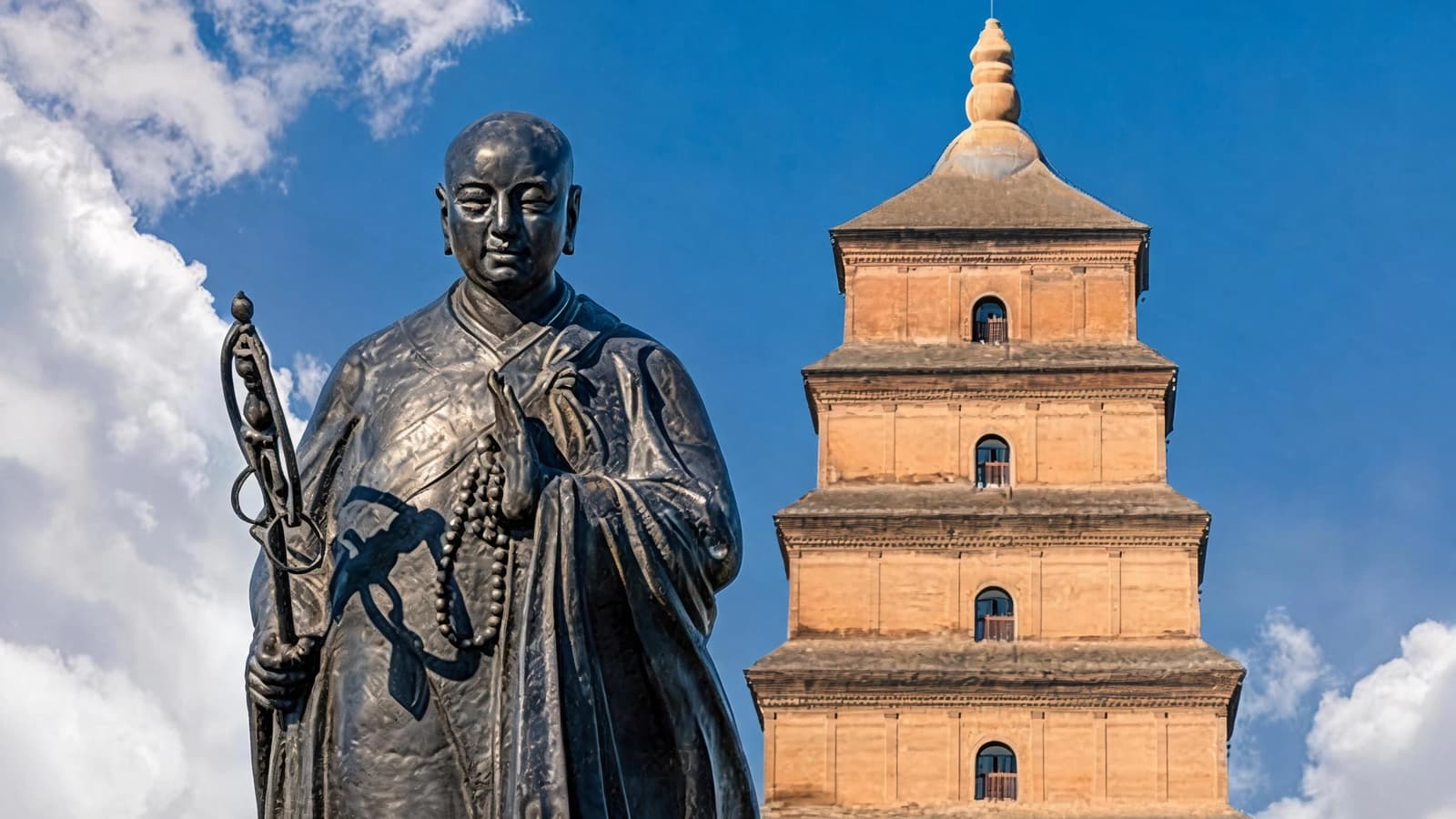
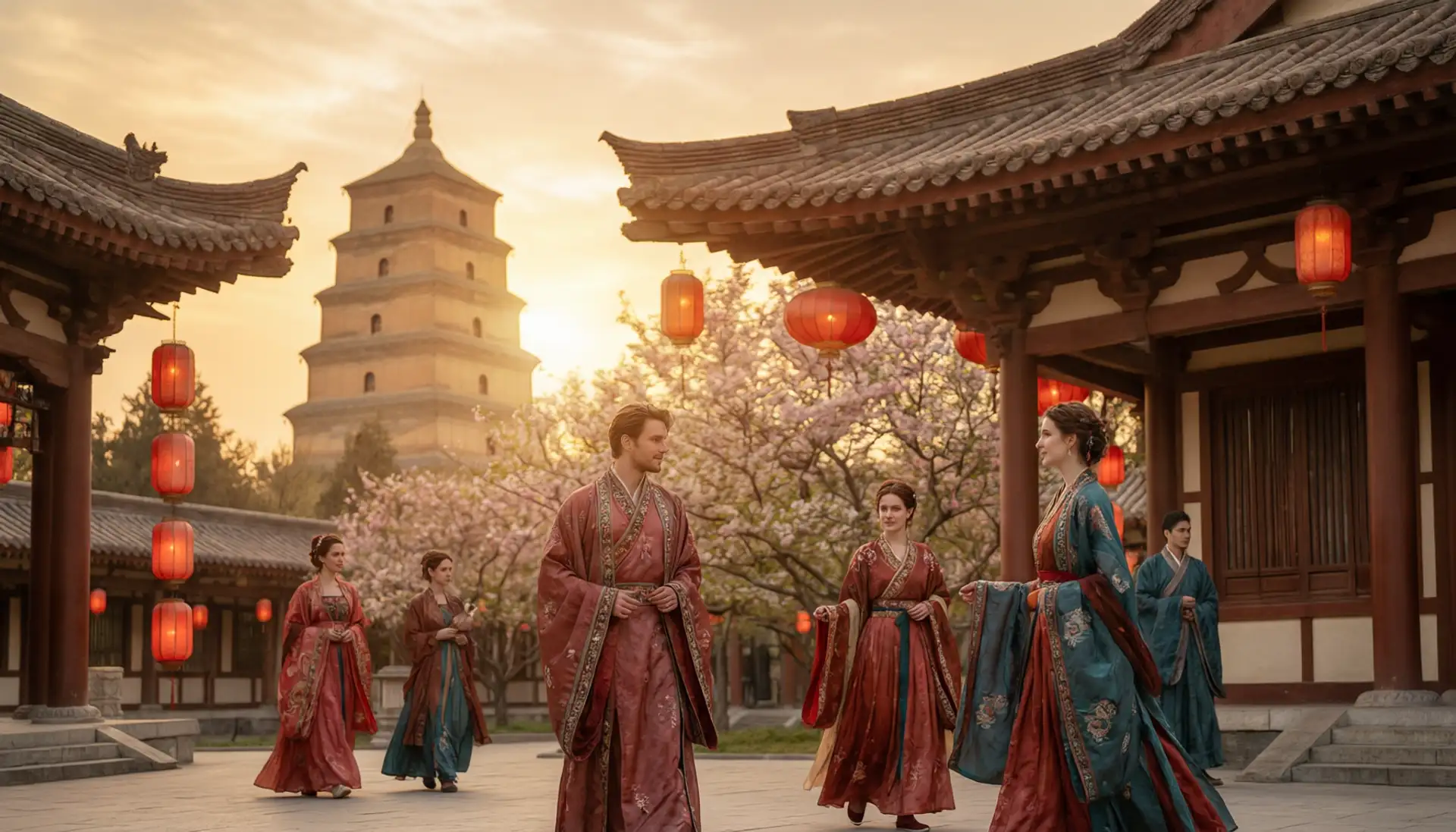
Buddhist ideas shaped Tang poetry, murals, sculptures, and architecture. The Giant Wild Goose Pagoda remains one of the most iconic symbols of this golden era.
Buddhism as Part of Urban Culture: Beyond temples, Buddhism influenced everyday life in Tang Chang'an. Tea culture developed closely with Buddhist monasteries, where tea was used for meditation and daily practice, later becoming an important part of Chinese cultural traditions.
The Buddhist Temples You'll Visit on a Private Xi'an Tour
Why Did the Giant Wild Goose Pagoda and Daci'en Temple Become a Symbol of Xi'an Buddhist Culture?
Built in the Tang Dynasty, the pagoda adapted the Indian Buddhist stupa tradition into a Chinese-style tower structure. Its simple and balanced form represents the localization of Buddhism in China.
As an important imperial temple of Tang Chang'an, Daci'en Temple received royal support and became a center for Buddhist study and ceremonies. The "Preface to the Sacred Teachings of the Tripitaka" inscriptions by Tang emperors reflect the close connection between Buddhism and imperial culture.
Beyond its religious function, the pagoda has become a symbol of Xi'an. It connects ancient Buddhist heritage with the modern city's cultural landscape.
Daxingshan Temple: The Center of Esoteric Buddhism
Category | Key Facts | Cultural Significance |
|---|---|---|
Historical Role | Founded during the Jin Dynasty, developed into an important temple in Tang Chang'an | Shows the long history of Buddhism in Xi'an |
Esoteric Buddhism | Major center of Tang Esoteric Buddhism; associated with monks such as Subhakarasimha, Vajrabodhi, and Amoghavajra | Helped establish and spread Mizong traditions in China |
International Exchange | Foreign monks and scholars studied and exchanged teachings in Chang'an | Connected Chinese Buddhism with India, Central Asia, and Japan |
Influence on Japan | Tang Esoteric teachings later influenced Kukai and Japanese Shingon Buddhism | Demonstrates Xi'an's role in East Asian Buddhist exchange |
Qinglong Temple: Xi'an's Buddhist Connection with Japan
Qinglong Temple reflects the international influence of Tang Buddhism and Xi'an's role as a center of Buddhist exchange. During the Tang Dynasty, it became an important place for the study and transmission of Esoteric Buddhism.
A Center of Tang-Japanese Exchange: Qinglong Temple welcomed Japanese monks who came to Chang'an to study Buddhist teachings. Among them, Kukai learned Esoteric Buddhism here and later established Shingon Buddhism in Japan.
Cultural Significance: Qinglong Temple demonstrates how Buddhism shaped international cultural exchange. It represents Xi'an's role as a bridge where religious ideas, traditions, and cultures interacted.
Caotang Temple: The Hidden Translation Heritage
During the Later Qin Dynasty, Kumarajiva carried out large-scale scripture translations at Caotang Temple with court support. His translations of texts such as the Lotus Sutra and Diamond Sutra became important foundations for Chinese Buddhist study.
Kumarajiva's translation style influenced Chinese Buddhist language and philosophy. Concepts from his translations helped shape later schools such as the Sanlun School, making Buddhism easier to understand within Chinese culture.
Xiangji Temple: The Center of Pure Land Buddhism
Unlike philosophy-focused Buddhist schools, Pure Land Buddhism emphasizes faith, chanting, and daily practice, making Buddhism more accessible to ordinary people. Xiangji Temple reflects the connection between Buddhist traditions and local communities through practices such as Buddha-name recitation and prayer.
Insider Secret: Daxingshan Temple is also known as "the Cat Temple" because of the many rescued cats living there. These friendly animals add a relaxed atmosphere to this ancient Buddhist space. Visit during quieter periods for the most peaceful experience.
The People Who Shaped Buddhist Culture on Your Xi'an Private Tour
How Did Xuanzang Transform Chang'an into a Buddhist Center?
Xuanzang is not only a famous Buddhist monk but also a key figure who shaped the historical identity of Xi'an. His activities in Tang Chang'an helped transform the city into one of the most important Buddhist centers in East Asia.
Symbol | Connection with Xuanzang | Cultural Value |
|---|---|---|
Xuanzang Sanzang Hall, Daci'en Temple | Xuanzang translated Buddhist scriptures here | Center of Tang Buddhist learning |
Giant Wild Goose Pagoda South Square Statue | Built under Xuanzang's supervision to preserve scriptures | Symbol of Silk Road Buddhism and Xi'an |
Xingjiao Temple | Houses Xuanzang's relic pagoda | Preserves his Buddhist lineage and legacy |
How Did Kumarajiva Shape Chinese Buddhism Through Translation?
Born in Kucha (present-day Xinjiang), Kumarajiva studied Buddhism from a young age and became a respected scholar. After years of political struggles, he was invited to Chang'an by the Later Qin court in 401 CE and received national-level support for Buddhist translation.
At Caotang Temple, Kumarajiva led a large translation team and translated important Buddhist scriptures. His work improved the accuracy and readability of Buddhist texts, helping Buddhist ideas become easier to understand in Chinese society.
Kumarajiva's translation activities turned Chang'an from a city that received Buddhism into a center that reshaped Buddhist thought. Today, Caotang Temple and Kumarajiva's Pagoda preserve his memory.
Buddhist Philosophy and Schools to Explore on a Private Xi'an Tour
Faxiang Buddhism: A Thought System Shaped in Chang'an
After returning from India, Xuanzang translated Buddhist scriptures at Daci'en Temple and introduced Yogacara teachings, which later developed into the Faxiang School with the support of Chang'an monks and scholars.
The "Two Sacred Preface Steles" at the Giant Wild Goose Pagoda, written by Emperor Taizong and Emperor Gaozong and calligraphed by Chu Suiliang, reflect the connection between Faxiang Buddhism, imperial culture, and Tang calligraphy.
Pure Land Buddhism: Bringing Buddhism into Everyday Life
Pure Land Buddhism represents the popular side of Xi'an's Buddhist culture. Unlike the scholarly Faxiang tradition, it spread through simple practices such as chanting and devotion, making Buddhism closer to ordinary people.
Master Shandao, an important figure in Chinese Pure Land Buddhism, developed teachings in Chang'an that emphasized faith and daily practice, helping Buddhism spread widely among society. Xiangji Temple, founded in 681 CE, was built by Shandao's disciples to preserve his legacy.
Esoteric Buddhism: Xi'an as a Center of International Exchange
During the Tang Dynasty, monks from India, Central Asia, and China gathered in Chang'an. Figures such as Subhakarasimha, Vajrabodhi, and Amoghavajra introduced and developed Esoteric Buddhist teachings, making the city a major center of Tantric Buddhism.
Region | Connection with Xi'an | Influence |
|---|---|---|
India | Indian monks brought Esoteric teachings to Chang'an | Introduced Indian rituals and Buddhist texts |
Chang'an (Xi'an) | Daxingshan Temple became a major center | Developed Tang Esoteric Buddhism |
Japan | Kukai studied under Huiguo at Qinglong Temple | Inspired the formation of Shingon Buddhism |
Korea | Korean monks studied Tang Buddhist teachings | Spread Tang Buddhist traditions overseas |
Buddhist Architecture and Art You'll Experience on Your Xi'an Private Tour
How Did Buddhist Architecture Become Localized in Xi'an?
Aspect | Indian Buddhist Architecture | Xi'an Buddhist Architecture |
|---|---|---|
Basic Form | Dome-shaped stupas for relic worship | Square pagodas with Chinese tower features |
Main Function | Preserve relics and honor Buddha | Preserve scriptures and serve as cultural symbols |
Design Style | Emphasizes religious symbolism | Combines Buddhism with Chinese symmetry and aesthetics |
Materials | Mainly stone structures | Brick structures with Chinese techniques |
Cultural Meaning | Symbol of Buddhist origins | Symbol of Buddhist localization in China |
How Chang'an Shaped the Humanized Beauty of Tang Buddhism
Tang Buddhist sculpture in Xi'an reflects the interaction between Buddhist beliefs and the aesthetic values of Chang'an society. Rather than simply copying Indian religious images, Tang artists created Buddha figures with fuller bodies, peaceful expressions, and human emotions, making Buddhist figures closer to people's understanding of beauty and compassion.
From divine figures to human compassion — Tang artists incorporated ideals of beauty into Buddhist images, creating figures with fuller forms, peaceful expressions, and human emotions that visitors can still admire today.
Buddhist Tea Culture and Vegetarian Cuisine on a Private Xi'an Tour
How Did Tea Culture Develop with Buddhist Monasteries?
In Tang Dynasty Chang'an, Buddhist monasteries became centers of tea cultivation and preparation. Monks used tea to stay alert during long meditation sessions, and this practice gradually spread to the wider society.
Today, visitors on a private tour can experience Buddhist tea ceremonies at temples such as Daci'en Temple and Qinglong Temple, where the ancient connection between meditation and tea is still honored.
What Makes Buddhist Vegetarian Cuisine in Xi'an Special?
Xi'an's Buddhist vegetarian tradition dates back over a thousand years. Temple kitchens developed sophisticated plant-based dishes that balance nutrition, flavor, and Buddhist principles of compassion.
A private guide can arrange meals at temple restaurants where you can sample tofu dishes, vegetable dumplings, mushroom-based courses, and other specialties that reflect centuries of Buddhist culinary wisdom.
Xi'an's Living Buddhist Heritage Today — A Private Tour Perspective
How Does Buddhist Culture Continue to Shape Modern Xi'an?
Buddhist influence remains visible throughout modern Xi'an. Temple festivals draw locals and visitors alike. Buddhist aesthetics appear in the city's architecture, gardens, and public spaces. Tea houses, vegetarian restaurants, and meditation centers keep ancient traditions alive in contemporary settings.
What Can You Experience on a Private Buddhist Tour?
Temple Visits with Expert Guidance: Explore Daci'en Temple, Daxingshan Temple, Qinglong Temple, and Caotang Temple with a knowledgeable guide who brings the history to life.
Buddhist Tea Ceremonies: Participate in traditional tea preparation at temple gardens, experiencing the meditative practice that links Buddhism and Chinese tea culture.
Vegetarian Dining: Enjoy Buddhist vegetarian cuisine at temple restaurants, from simple monk's meals to elaborate plant-based banquets.
Meditation Sessions: Join guided meditation at select temples, experiencing the contemplative side of Buddhist practice.
Festival Experiences: Time your visit to coincide with temple fairs and Buddhist holidays for an immersive cultural experience.
A private Buddhist tour of Xi'an is not just a sightseeing trip — it is a journey through 1,500 years of spiritual heritage, artistic achievement, and living tradition, tailored entirely to your pace and interests.

Traveler Discussions
Questions from travelers