
In the last two years, something has shifted in how the world travels to China. Visa rules have loosened, payment apps have opened up to foreign cards, and a wave of short online videos has put once-niche places back on the map. The result is a measurable jump in international arrivals — and a growing list of questions from travelers: how many people are actually coming, where they are going, and what the numbers mean for a trip you might be planning.
This guide pulls together the latest official China inbound tourism statistics and turns them into something practical. Rather than just quoting headline figures, it explains what the data counts, which markets are driving the growth, how visa-free entry works in practice, and which destinations are drawing visitors beyond the classic Beijing–Shanghai–Xi'an circuit.
Whether this is your first trip or a return visit, the aim is the same: to help you read the numbers correctly and choose a way of traveling China that fits your time, budget and interests.
Why More International Travelers Are Choosing China
China's inbound tourism market is gaining momentum as more international travelers return to explore the country. Three forces are behind most of the recent growth: easier visa access, noticeably smoother travel services on the ground, and a fresh wave of interest in everyday Chinese culture — from street food and ancient towns to high-speed rail and landscape photography.
 |
Travelers are also looking beyond the country's best-known landmarks. Alongside classic destinations such as Beijing, Shanghai and Xi'an, many visitors are heading for historic towns, mountain regions, local food scenes and hands-on cultural experiences. If you are weighing up a first visit, our broader US to China travel guide covers the practical groundwork, while the figures below explain why the timing is favorable.
China Inbound Tourism Statistics: 2025–2026 at a Glance
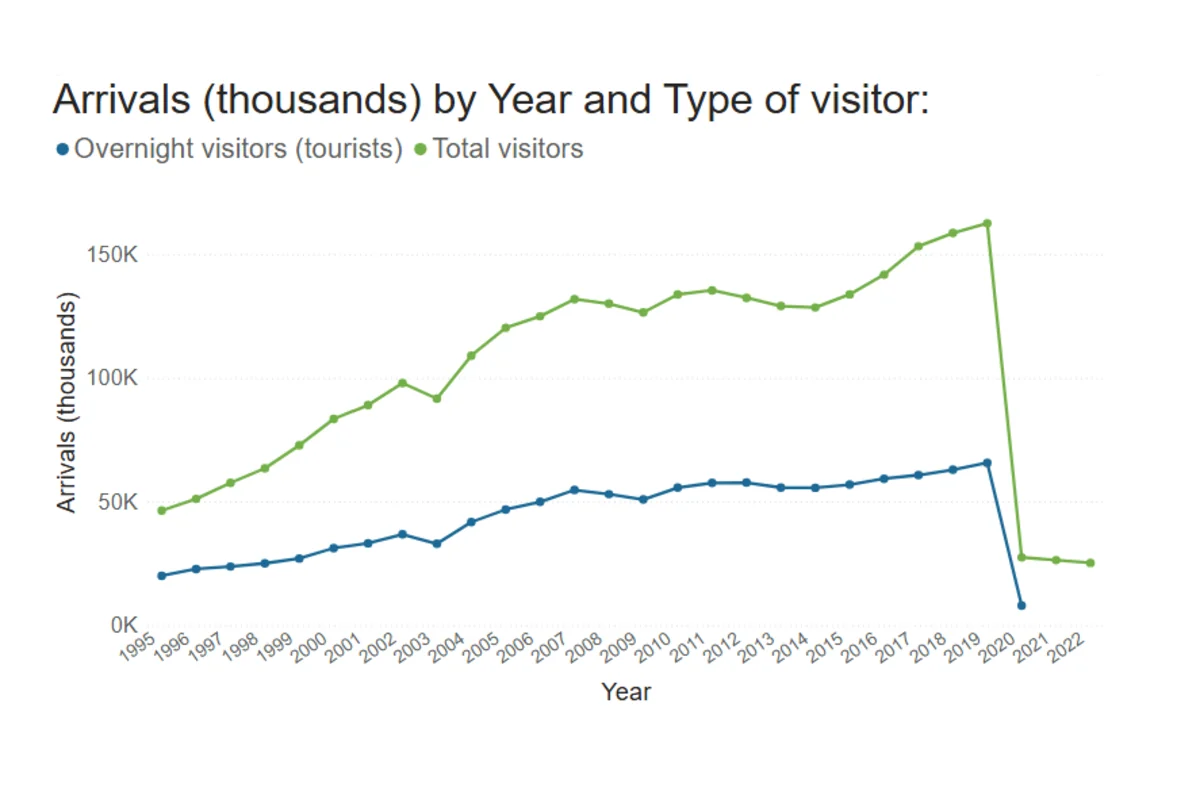
Official figures show that inbound tourism continued to grow through 2025. According to China's National Bureau of Statistics, the country recorded 154.5 million inbound visits in 2025, an increase of 17.1% on 2024. That total included 35.17 million visits by foreign nationals and 119.32 million visits by residents of Hong Kong, Macao and Taiwan. Spending by inbound visitors reached US$131.1 billion, up 39.2% year on year.
More recent data points to continued growth. In the third quarter of 2026, foreign nationals made 11.6 million entries into China, up 15.6% year on year — and 8.99 million of those entries were made under visa-free policies.
Indicator | Latest figure | Notes |
|---|---|---|
Total inbound visits (2025) | 154.5 million | +17.1% vs 2024; includes Hong Kong, Macao and Taiwan residents |
Visits by foreign nationals (2025) | 35.17 million | Part of the total above |
Visits by Hong Kong, Macao and Taiwan residents (2025) | 119.32 million | Part of the total above |
Inbound tourism spending (2025) | US$131.1 billion | +39.2% year on year |
Foreign entries (Q3 2026) | 11.6 million | +15.6% year on year |
Visa-free foreign entries (Q3 2026) | 8.99 million | About 77.5% of Q3 foreign entries |
Reading the numbers: official totals count visits, not individual travelers, and they include residents of Hong Kong, Macao and Taiwan. When you see a headline about "record tourism," check whether the figure covers all inbound visits or foreign nationals only — the two can differ by more than four times. For the latest official figures, see the National Bureau of Statistics of China and the National Immigration Administration.
What does this mean for your trip? Simply put: more visitors are coming, and the most popular sites — especially during Chinese holidays — are busier than in recent years. Booking popular attractions, trains and hotels a little earlier is now well worth it.
Who Is Visiting China? Top Source Markets
China welcomes visitors from a wide range of international markets. In the third quarter of 2026, the top ten source countries for foreign travelers were Russia, South Korea, Vietnam, Malaysia, the United States, Mongolia, Japan, Singapore, Thailand and Australia. Together, they accounted for 63.9% of foreign entries during the period.
Rank | Country | Market type |
|---|---|---|
1 | Russia | Neighboring market — long shared land border |
2 | South Korea | East Asia — short flights |
3 | Vietnam | Neighboring market — shared land border |
4 | Malaysia | Southeast Asia — direct flights |
5 | United States | Long-haul market |
6 | Mongolia | Neighboring market — shared land border |
7 | Japan | East Asia — short flights |
8 | Singapore | Southeast Asia — direct flights |
9 | Thailand | Southeast Asia — direct flights |
10 | Australia | Long-haul market |
That 63.9% share also means roughly one in three foreign visitors arrived from somewhere else entirely. For travel planners, the takeaway is simple: China is drawing travelers from far beyond its traditional neighborhood, and more nationalities can now arrive without arranging a visa in advance.
Geographical proximity, transport connections and visa arrangements all influence travel between China and these markets. But visitor numbers alone do not explain why people travel or what they prefer to do. It is more useful to consider each traveler's interests, available time and preferred style than to assume that everyone from one country has the same expectations.
Visa-Free Entry and Easier Travel to China, Explained
Visa arrangements are a central part of China's effort to attract international visitors. The country has introduced unilateral visa-free entry for eligible passport holders, as well as a 240-hour visa-free transit policy for travelers from designated countries moving on to a third country or region. The transit policy lets qualifying visitors stay up to 10 days in permitted areas.
Entry option | Who it suits | Key things to know |
|---|---|---|
Unilateral visa-free entry | Eligible passport holders visiting for tourism, family visits, business and similar short stays | The eligible-country list and allowed length of stay vary by nationality; check your country's current status before booking |
240-hour visa-free transit | Travelers from designated countries continuing to a third country or region | Up to 10 days in permitted areas; you need an onward ticket and must enter through an approved port |
Traditional visa (L for tourism, M for business) | Travelers not covered by the above, or planning longer or special stays | Apply at a Chinese embassy, consulate or visa center; processing time varies, so apply early |
Other improvements are making travel more convenient too: better access to mobile payments, departure tax-refund services and multilingual assistance. In 2025, inbound tourists spent roughly RMB 80 billion through mobile payment platforms, according to information released by China's Ministry of Culture and Tourism. For the step-by-step rules, see our full China visa application guide and the dedicated China transit visa explainer.
Check before you book: visa-free policies have expiry dates and eligibility lists that can change. Confirm the latest rules on the National Immigration Administration website or through the Chinese embassy in your country. Visa-free entry still means meeting standard requirements — bring a passport with sufficient validity, keep proof of onward travel for transit, and be ready to show where you are staying.
Beyond the Classics: Emerging Destinations Worth Exploring
China's size and regional diversity offer plenty of room to explore beyond its most famous cities. The destinations below are suggested places to consider for different interests — not a ranking of the fastest-growing spots among foreign visitors.
Travel theme | Places to consider | What you'll find |
|---|---|---|
Culture and history | Datong, Pingyao, Luoyang | Ancient architecture, Buddhist art, traditional streets and heritage sites |
Nature and outdoors | Ili (Xinjiang), western Sichuan, Enshi (Hubei) | Mountains, grasslands, forests and dramatic scenery |
Rural and local life | Yangshuo and other countryside areas | Village scenery, local food, traditional crafts and a slower pace |
Multi-region routes | Datong–Taiyuan–Pingyao (Shanxi); Xi'an–Zhangye–Dunhuang (Silk Road) | Two very different sides of China in one journey |
Multi-destination journeys let you experience more than one side of China in a single trip. A Shanxi route might connect Datong, Taiyuan and Pingyao, while a Silk Road itinerary could combine Xi'an, Zhangye and Dunhuang. If pandas are on your list, the giant-panda centers around where to see panda bears in China remain one of the strongest draws for first-time visitors.
Planning a wider route: China is vast, so build realistic travel days into any itinerary. High-speed rail and domestic flights connect most of the destinations above, but remote nature routes such as Ili or Enshi involve long transfers, and mountain areas can be seasonally limited. If you dislike crowds, avoid Golden Week (early October) and Chinese New Year, when domestic travel peaks. Some areas, such as Tibet, also require additional permits for foreign visitors.
What Brings Travelers to China? Five Ways to Build a Trip
China offers a wide range of travel experiences, from major historical landmarks to everyday local culture. Most itineraries are built around one or two of the following themes.
Your interest | What you might do | Where to start |
|---|---|---|
History and heritage | Explore the Great Wall, the Terracotta Warriors, ancient temples and historic towns | Beijing, Xi'an, Luoyang, Pingyao |
Nature and adventure | Discover mountain landscapes, national parks, grasslands and scenic rivers | Ili, western Sichuan, Enshi |
Food and local culture | Try regional cuisines, visit traditional markets and learn about local food traditions | Chengdu, Xi'an, Guangzhou |
Modern China | Experience high-speed rail, contemporary city life, technology and large-scale cultural attractions | Shanghai, Shenzhen, Beijing |
Hands-on activities | Join cooking classes, craft workshops, traditional costume experiences and other cultural activities | Widely available — most cities offer something |
These experiences combine easily, which is why China suits both first-time visitors and travelers returning to explore a new region.
How Travelers Are Exploring China: Choose Your Style
International travel to China is not limited to traditional sightseeing tours. Visitors choose from independent travel, guided group tours, private tours and combinations of these. Some travelers prefer to explore major cities independently; others value a local guide who can explain historical sites, help with language and arrange transport. Families and small groups often appreciate a more flexible schedule, especially when traveling with children or older relatives.
Travel style | How it works | Worth considering if… |
|---|---|---|
Independent travel | You arrange transport, accommodation and sightseeing yourself | You enjoy planning, are comfortable with apps and translation tools, and are focusing on major cities |
Guided group tour | A fixed itinerary with a guide, transport and pre-booked hotels | You want everything arranged and enjoy traveling with companions |
Private or tailor-made tour | A local operator builds the itinerary around your interests, pace and comfort level | You are traveling with family or a small group, have limited time, or want specialist explanations |
Interest-based travel is another useful lens. History enthusiasts might focus on ancient capitals and archaeological sites, food lovers could build a journey around regional cuisine, and nature-focused travelers may prefer longer stays in scenic areas rather than changing cities every day. These are planning considerations and broad patterns — not claims about a measured nationwide shift in visitor behavior.
Where Your Money Goes: What Visitors Spend On in China
Inbound visitors spend on accommodation, transport, meals, shopping, attractions and activities. The exact mix varies considerably by destination, trip length and travel style, so a single breakdown should not be treated as representative of every international visitor.
Category | What it covers |
|---|---|
Accommodation | International and local hotels, guesthouses, homestays and rural stays |
Transport | High-speed rail, domestic flights, private transfers and city transit |
Food and dining | Regional restaurants, street food, markets and special-occasion meals |
Shopping | Local specialties, crafts, tea and silk, clothing and modern retail |
Attractions and activities | Entry tickets, guided tours, performances, classes and cultural experiences |
For many travelers, value means more than the lowest price. Reliable arrangements, clear communication, comfortable transport and experiences that make good use of limited holiday time can matter just as much.
Money matters: most international visitors pay by mobile app in China. Link your international bank card to Alipay or WeChat Pay before you leave home — setup usually takes only a few minutes — and carry a backup card plus some cash for smaller vendors. Our Alipay and WeChat Pay guide for foreigners walks through the setup step by step.
Is a Private, Tailor-Made Tour Right for You?
A private or tailor-made tour can be a practical option for travelers who want to explore China at their own pace. Rather than following a fixed group schedule, you shape the itinerary around your interests, available time and preferred level of comfort.
What a well-planned private trip may include | Why it matters |
|---|---|
A knowledgeable, English-speaking local guide | Brings historical sites to life and helps bridge language barriers |
Private transfers | Smooth connections between airports, hotels and attractions — no navigating unfamiliar transport with luggage |
Flexible sightseeing | Time to rest, linger where you love and adjust plans day by day |
Interest-based experiences | Food, craft and cultural activities selected around what you enjoy |
Family-friendly arrangements | Considerate pacing and support when traveling with children or older relatives |
Possible themes include historical China, family discovery, regional food, photography, nature and luxury travel. The best itinerary depends on your priorities rather than a one-size-fits-all route.
Looking Ahead: China Inbound Tourism Beyond 2026
China's tourism development plans point to continued efforts to attract international visitors and improve the overall experience. The national tourism plan announced in 2026 sets a target of 190 million inbound tourist visits annually by 2030, alongside more than US$150 billion in annual inbound tourism spending. These are policy targets, not guaranteed outcomes.
Official 2030 target | Level set in the national tourism plan |
|---|---|
Annual inbound tourist visits by 2030 | 190 million |
Annual inbound tourism spending by 2030 | More than US$150 billion |
Development area | What it could mean for your trip |
|---|---|
More convenient travel services | Easier payment, transport, communication and accommodation arrangements |
Improved multilingual support | Better access to foreign-language guides and visitor information |
More diverse travel experiences | Greater attention to regional culture, local lifestyles and nature-based travel |
Digital tools | Wider use of translation technology and digital services during planning and travel |
Higher-quality tourism | A stronger focus on visitor experience, service standards and travel convenience |
For international visitors, these developments could make it easier to explore destinations well beyond the main gateway cities.
Practical Travel Tips for International Visitors
Planning a trip to China involves more than choosing destinations. A little preparation before departure makes the journey smoother and more enjoyable.
Check visa and entry requirements. Visa-free policies and transit arrangements depend on your nationality, purpose and itinerary. Confirm the latest rules through official government or embassy websites before booking.
Complete arrival procedures. Check whether you need an arrival card before departure; international travelers can use the National Immigration Administration's online service or complete the procedure at the port of entry.
Prepare your payment methods. Alipay and WeChat Pay support certain international cards, but options vary between merchants. Set up a mobile payment account before arrival and carry some cash or a backup card.
Plan transportation in advance. For long-distance journeys, high-speed rail is a convenient option. Keep your passport details handy when booking, as foreign travelers use their passports for train travel.
Check local travel conditions. Some destinations have extra entry, booking or permit requirements. If your route includes remote areas or special administrative regions, check the relevant regulations and consider travel insurance.
Official Sources and Resources
Because policies and figures change, it is worth checking the primary sources directly when you plan. The most useful starting points are the National Immigration Administration (visa and entry rules, visa-free transit policies), the Chinese Embassy in your country, the Ministry of Culture and Tourism, the National Bureau of Statistics of China, and the State Council's published tourism development plans.
If you want the outbound side of the picture — where Chinese travelers are going and how that market is recovering — our companion article on China outbound tourism statistics covers that data in detail.
Final Thoughts: Discover a Changing China
China's inbound tourism market is growing, and the country's appeal extends well beyond its best-known landmarks. From ancient heritage and regional food to dramatic landscapes and contemporary city life, visitors have many ways to shape a memorable journey.
Whether you are planning a first visit or returning to explore somewhere new, the right itinerary helps you experience more of the country at a comfortable pace. A tailor-made China tour is one way to bring together the places, activities and local experiences that matter most to you — start planning your China journey and we'll help shape a route around your interests, schedule and travel style.








Traveler Discussions
Questions from travelers