
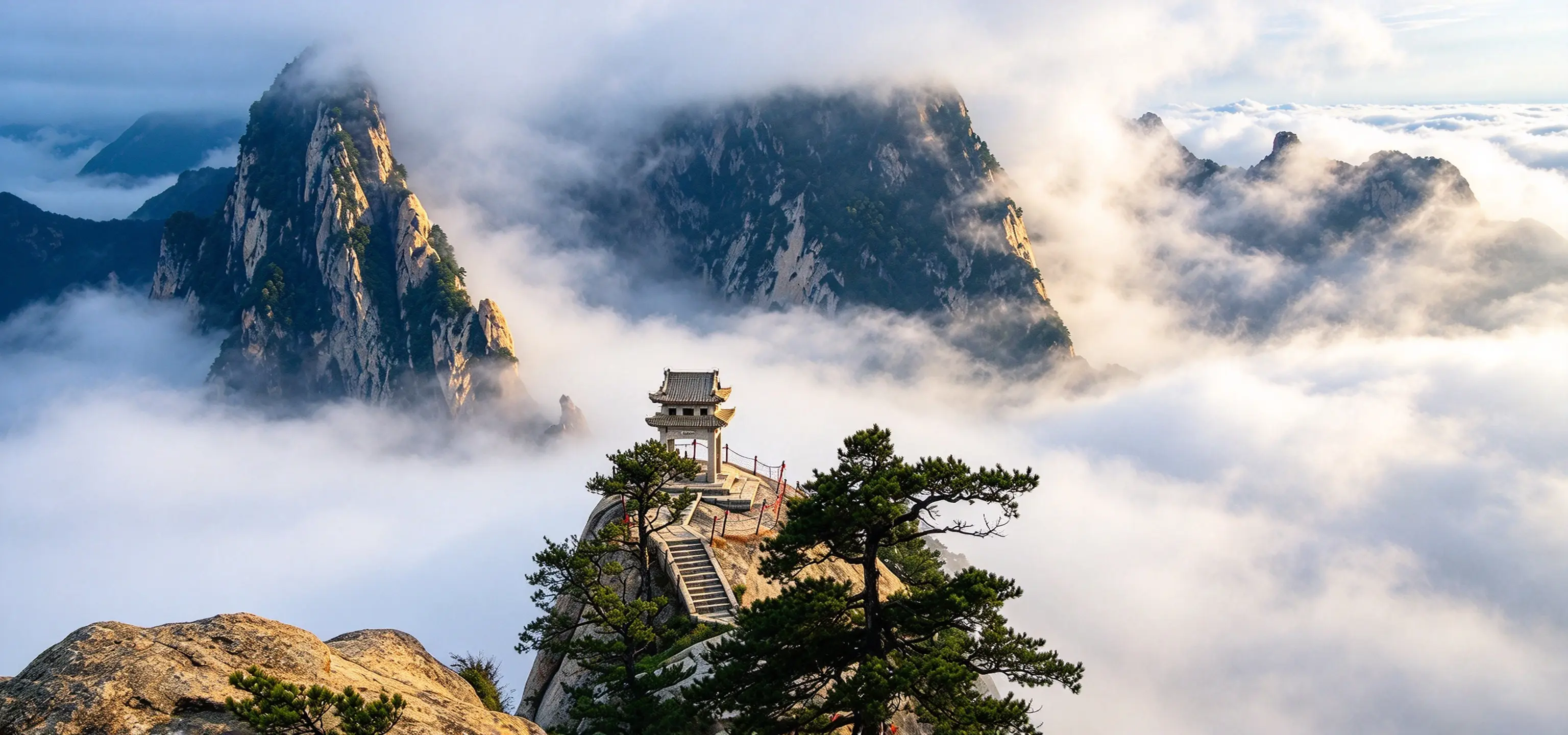
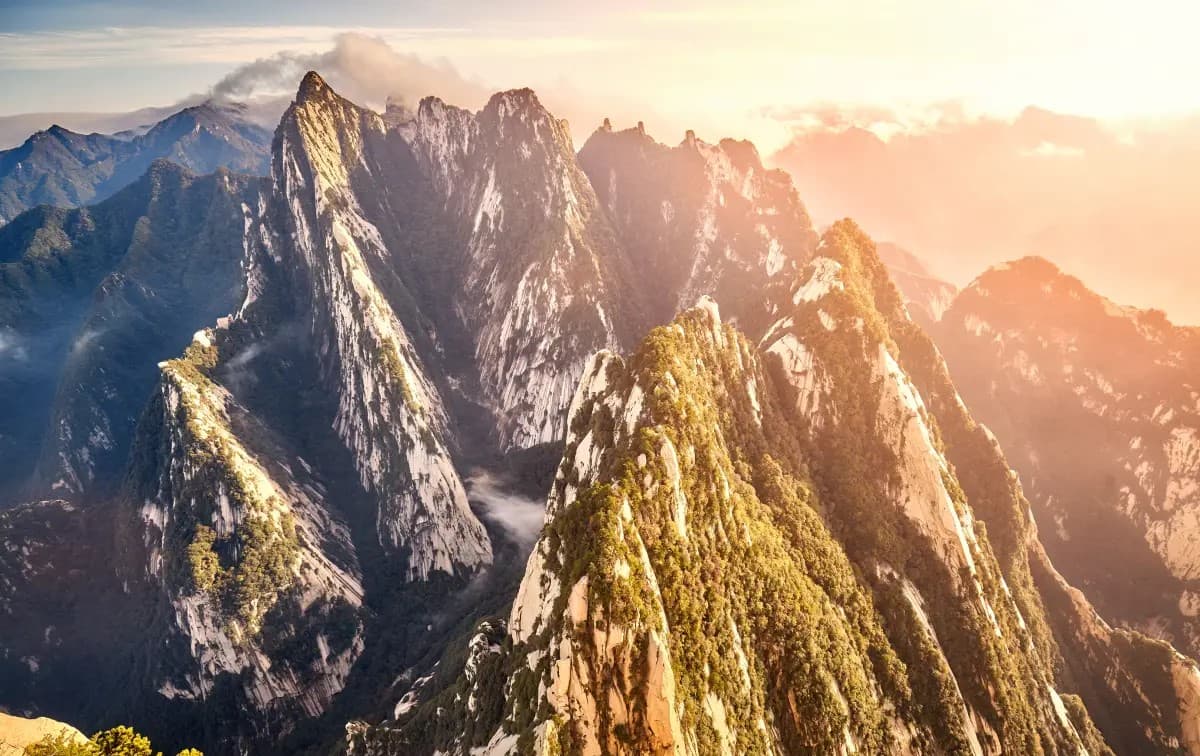
A Mount Hua day trip from Xi’an is an excellent way to experience one of China’s most famous sacred mountains, known for its dramatic cliffs, rugged peaks, and spectacular panoramic views. Located around 120 kilometers east of Xi’an, Mount Hua (Huashan) can be visited in a day with careful planning, whether you prefer taking cable cars to explore the main scenic areas or challenging yourself with sections of the mountain’s hiking trails. Here's everything you need to know.
📋 Mount Hua at a Glance: Essential Information
Before you plan your trip, here are the verified essentials — addresses, ticket prices, and operating hours — sourced directly from the official Mount Hua Scenic Area website:
Basic Information
Item | Details |
|---|---|
Official Name | Mount Hua Scenic Area (华山风景名胜区) |
Chinese Name | 华山 (Huàshān) |
Address | Jiling Road, Huashan Town, Huayin City, Weinan, Shaanxi Province, China (陕西省渭南市华阴市华山镇集灵路) |
Visitor Center | Mount Hua Ecological Square (华山生态广场) — ticket office, shuttle buses, museum, restaurants, parking |
Distance from Xi'an | ~120 km east of Xi'an city centre (~ 1.5-2h by private car) |
Highest Peak | South Peak (南峰) — 2,154.9 m, highest of China's Five Sacred Mountains |
UNESCO / National Status | National AAAAA Scenic Area; one of the Five Sacred Mountains (西岳) |
Official Website |
Entrance Ticket Prices
Season | Period | Adult Ticket |
|---|---|---|
Peak Season | March – November | CNY 160 per person |
Off Season | December – February | CNY 100 per person |
Scenic Area Composition: The Greater Mount Hua
The Greater Mount Hua Scenic Area encompasses far more than just the five peaks. Understanding this structure helps you plan which sections to visit and how they connect:
Section | Chinese Name | What It Is |
|---|---|---|
Main Peak Scenic Area | 主峰景区 | The core zone — includes the ancient "One and Only Path up Mount Hua" (自古华山一条路) and all five peaks: East, West, South, North, and Central. This is where 95% of visitors spend their day. |
Xiyue Temple Scenic Area | 西岳庙景区 | Located at the foot of Mount Hua, this is the imperial temple where emperors of successive dynasties performed sacrifices to the God of the Western Sacred Mountain. A grand palace complex often called the "Forbidden City of the West" — fewer crowds, rich history. |
Xianyu (Fairy Valley) Scenic Area | 仙峪景区 | Immediately adjacent to the main peaks. Known for serene canyon scenery — clear streams, deep gorges, and quiet forest trails. A peaceful alternative to the crowded main peak trails. Light hiking, photogenic waterfalls. |
Mountain Pass Valleys | 华山峪 / 华麓 / 黄甫峪 / 瓮峪 | The multiple valley approaches and foothill zones surrounding the mountain. These include Huashanyu (华山峪, the traditional ascent valley), Hualu (华麓, the foothill zone with temples and inns), Huangpuyu (黄甫峪, the access valley for the North Peak cable car), and Wengyu (瓮峪, the access valley for the West Peak cable car). Most visitors pass through these without realizing they are distinct sub-areas. |
Cable Car Prices (One Way)
Cable Car | Peak Season (Mar–Nov) | Off Season (Dec–Feb) |
|---|---|---|
West Peak Cable Car (西峰索道) | CNY 140 | CNY 120 |
North Peak Cable Car (北峰索道) | CNY 80 | CNY 45 |
Shuttle Bus Prices (Visitor Center ↔ Cable Car Stations)
Shuttle Line | Route | Price (One Way) |
|---|---|---|
Wengyu Line (瓮峪专线) | Visitor Center → West Peak cable car station (~40 min) | CNY 40 |
Huangshanyu Line (黄甫峪专线) | Visitor Center → North Peak cable car station (~20 min) | CNY 20 |
❔️ Why Mount Hua? The Mountain That Defies Gravity
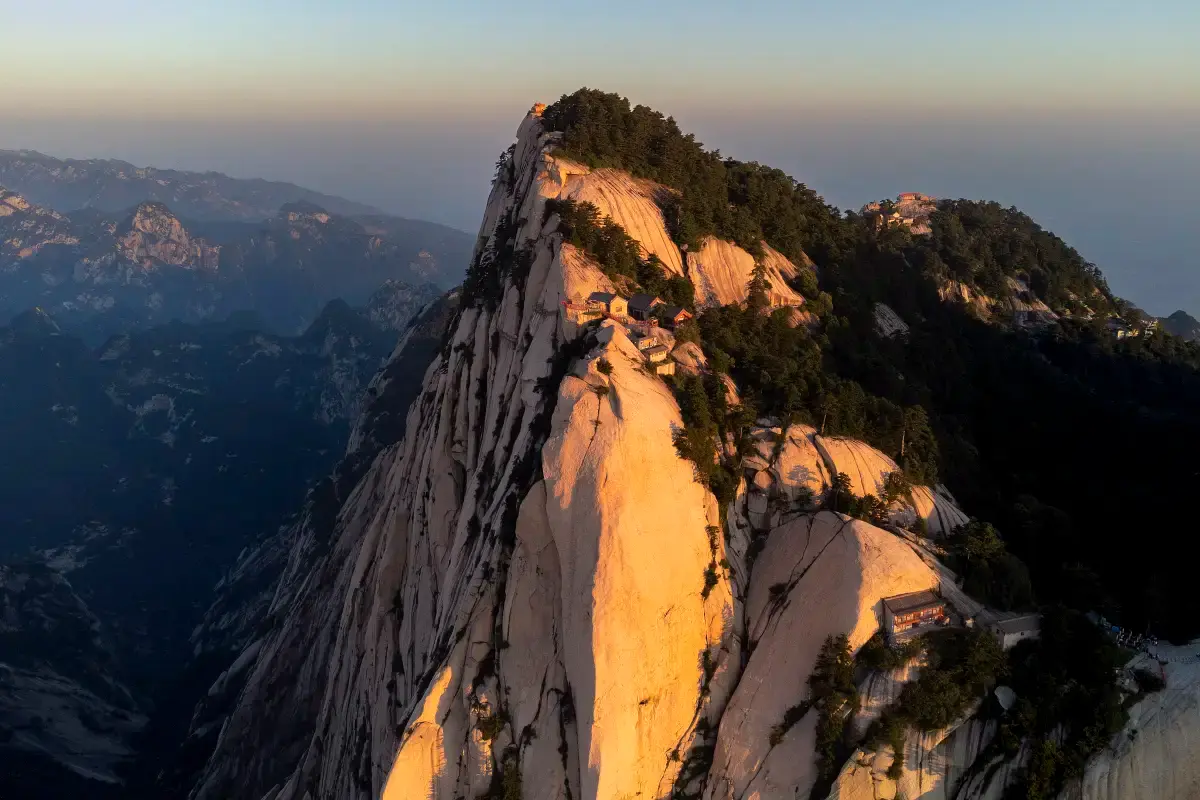
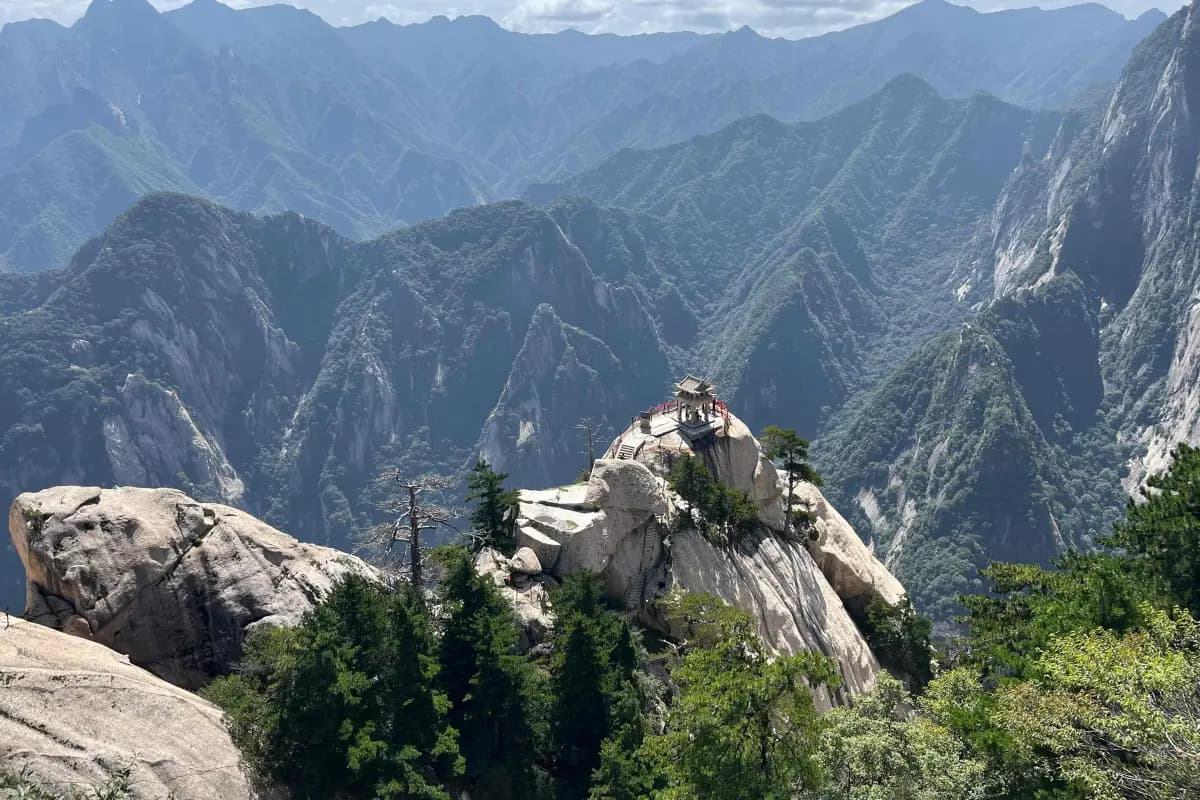
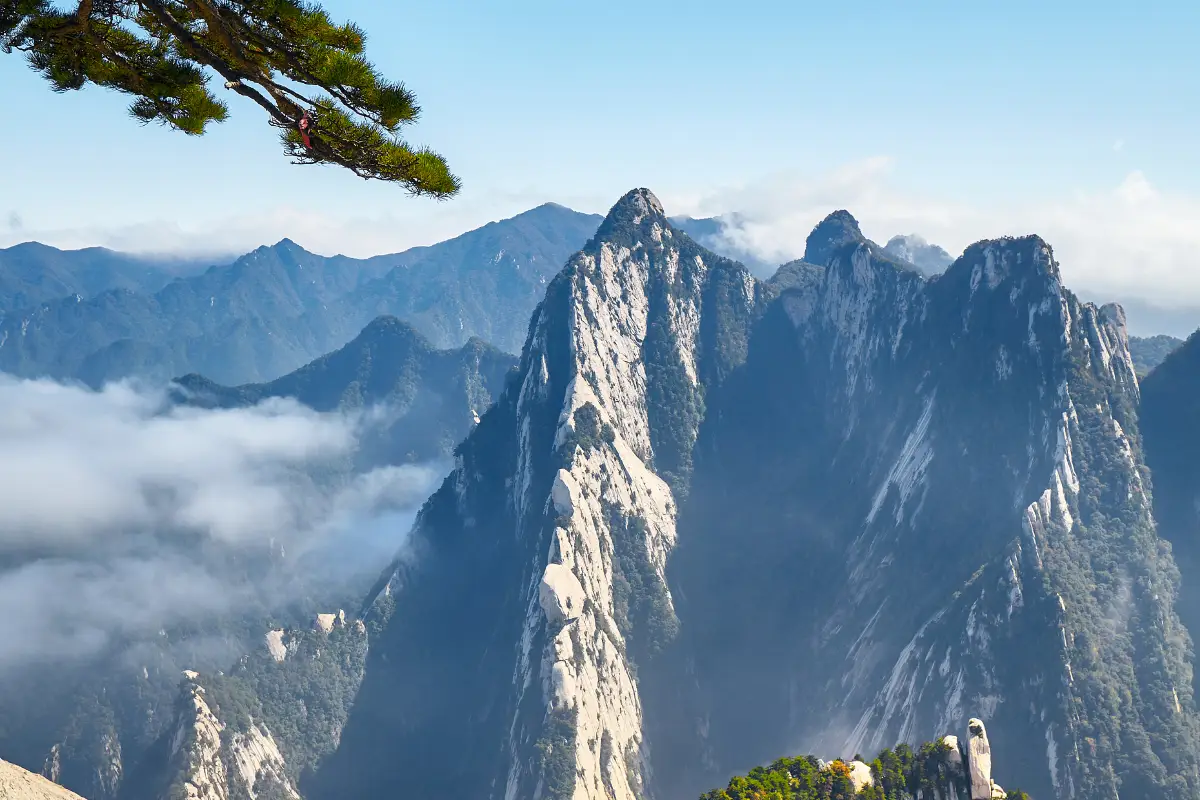
Of China's Five Sacred Mountains (五岳, Wǔyuè), Mount Hua is the one that makes your palms sweat. While Mount Tai in the east, Mount Hengshan in Shanxi in the north, Mount Hengshan in Hunan in the south, and Mount Song in the centre each have their own character, Mount Hua is famous for its dramatic landscapes and sheer granite cliffs. Rising high above the plains of Shaanxi, this massive granite mountain is traditionally said to have five main peaks resembling the petals of a flower — the origin of its name, Hua (花), meaning "flower" in Chinese.
For nearly two thousand years, Mount Hua has been closely associated with Daoism and Chinese spiritual traditions. Ancient temples and shrines cling to the cliffs, while generations of pilgrims have followed mountain paths to seek spiritual connection and admire the scenery. The mountain was also the longtime retreat of Daoist sage Chen Tuan, and according to legend, the Chess Pavilion marks the place where Song Dynasty founder Zhao Kuangyin lost a famous chess match that supposedly led him to give up Mount Hua.
For international visitors, Mount Hua offers a different kind of China travel experience from the Great Wall and Terracotta Warriors: a chance to actively explore one of China's most spectacular natural landscapes. Instead of viewing history from behind glass, visitors can walk ancient mountain routes, discover centuries-old temples, and stand on the same peaks where generations of travellers have watched unforgettable sunrises.
🧘 Taoist History and Sacred Mountain Culture
Mount Hua isn't just a hiking destination — it's one of the most sacred sites in Chinese Taoism, with a religious history spanning over 2,000 years. Understanding this context transforms a hike into a pilgrimage through living history.
The Five Sacred Mountains System (五岳)
For millennia, Chinese emperors worshipped five mountains representing the five directions — north, south, east, west, and centre. Mount Hua is the Western Great Mountain (西岳). This system predates Buddhism in China by centuries and was the spiritual backbone of imperial power. Emperors didn't just visit these mountains — they performed elaborate rituals to legitimise their rule, believing that the mountains connected heaven and earth.
Mountain | Direction | Province | Spiritual Role |
|---|---|---|---|
Mount Hua (华山) 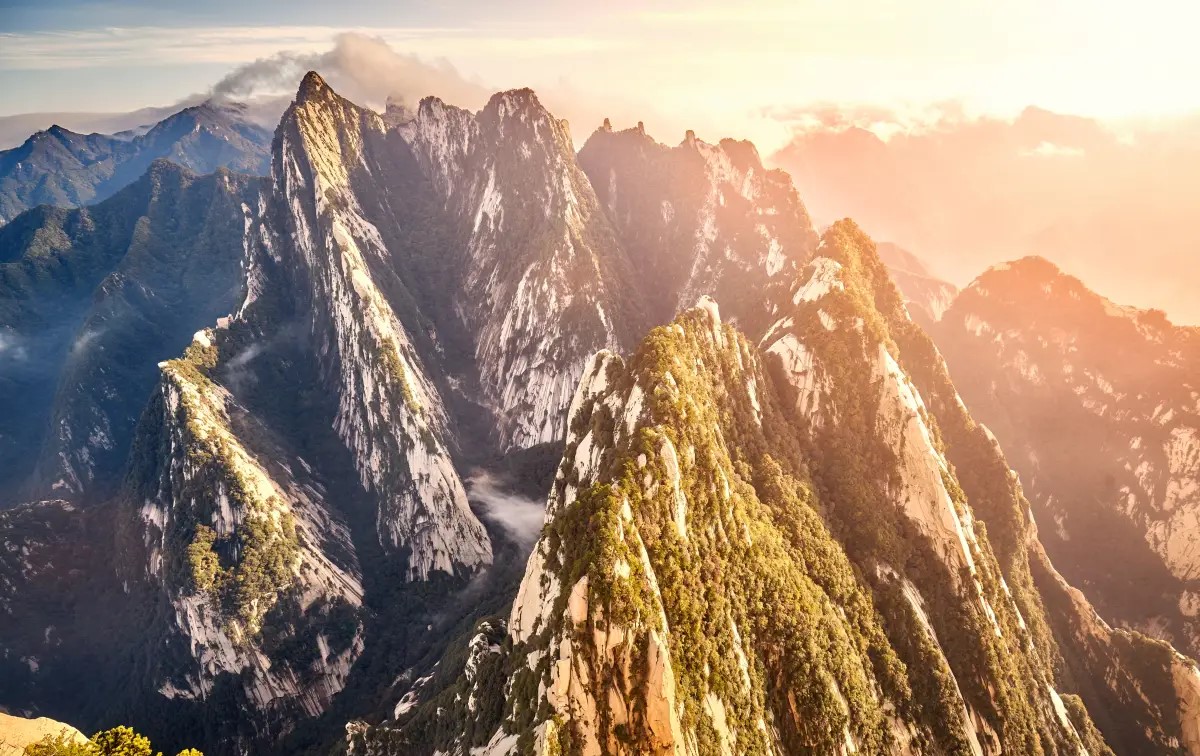 | West | Shaanxi | The "Dangerous Mountain" — closest to heaven, favoured by Daoist hermits |
Mount Tai (泰山) 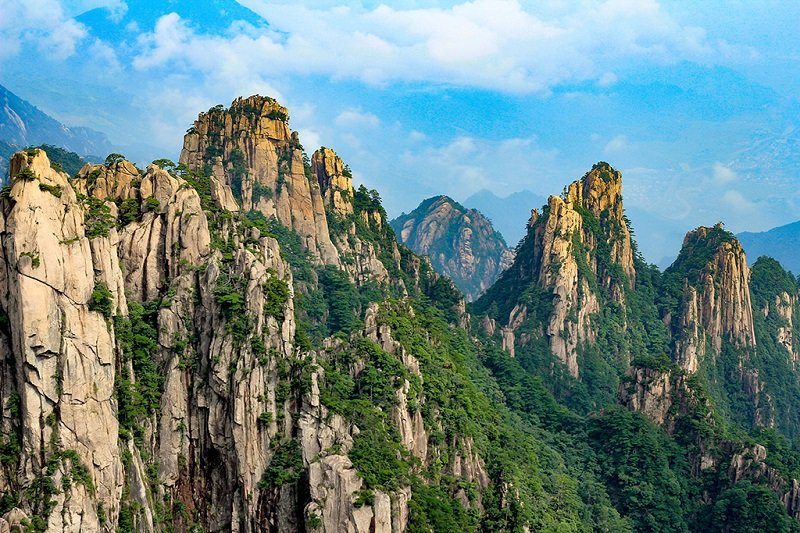 | East | Shandong | The "Supreme Mountain" — where emperors performed the Fengshan sacrifice |
Mount Heng (North, 恒山) 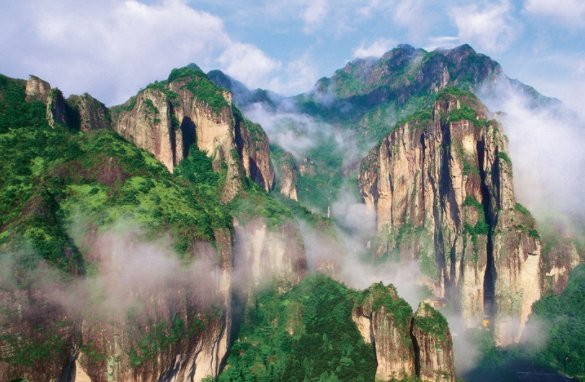 | North | Shanxi | The "Stable Mountain" — associated with immortality and stillness |
Mount Heng (South, 衡山) 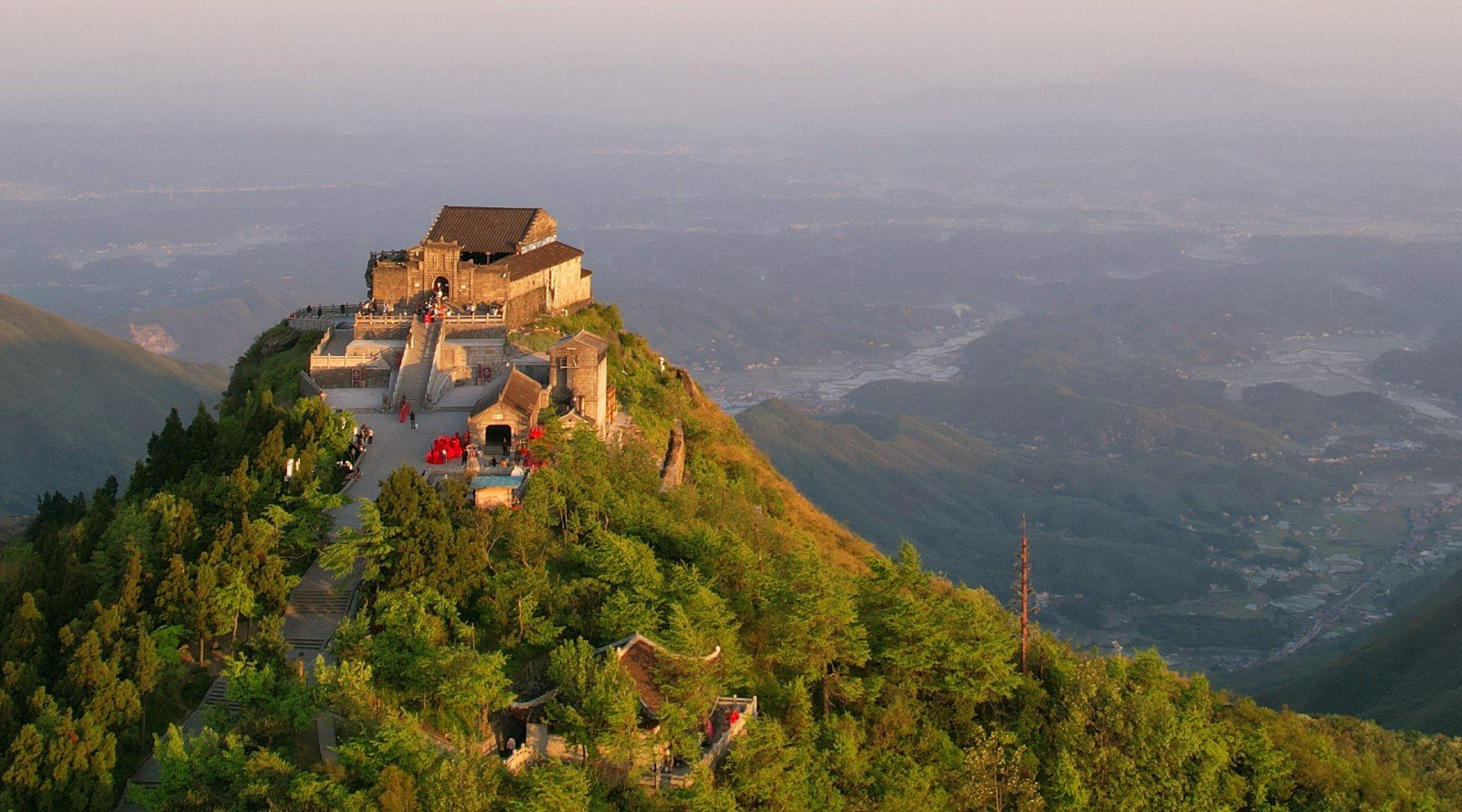 | South | Hunan | The "Balanced Mountain" — harmony and longevity |
Mount Song (嵩山) 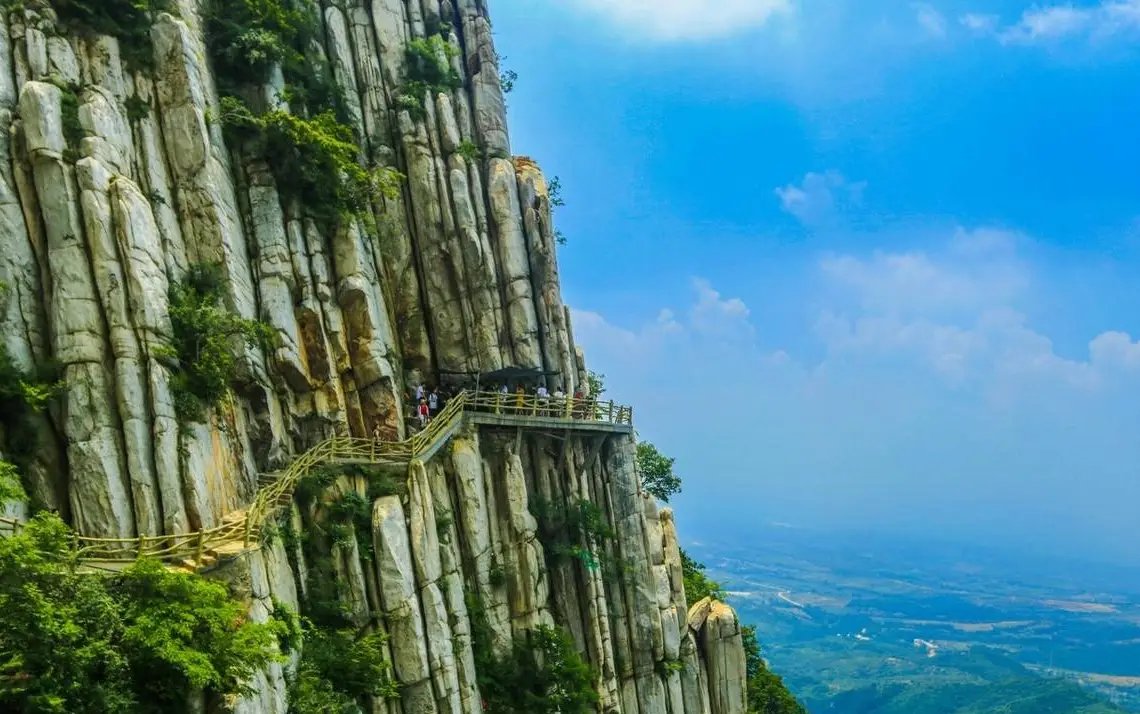 | Centre | Henan | The "Central Mountain" — heart of the empire, near Shaolin Temple |
Chen Tuan: The Sage of Mount Hua
The most legendary figure associated with Mount Hua is Chen Tuan (陈抟, 871-989 CE), a Daoist sage who reportedly meditated in a cave on the mountain for decades — some sources say over 40 years. Chen Tuan was so respected that three emperors summoned him to court. He refused twice, and when he finally went, he fell asleep in the imperial hall and slept for months. His meditation cave (陈抟洞) is still visible on West Peak. The Chess Pavilion on East Peak marks the spot where, according to legend, Chen Tuan played chess with Emperor Zhao Kuangyin — and won the entire mountain as his prize.
Temples You'll See on the Trail
Temple | Location | What to Notice |
|---|---|---|
Cuiyun Palace (翠云宫) 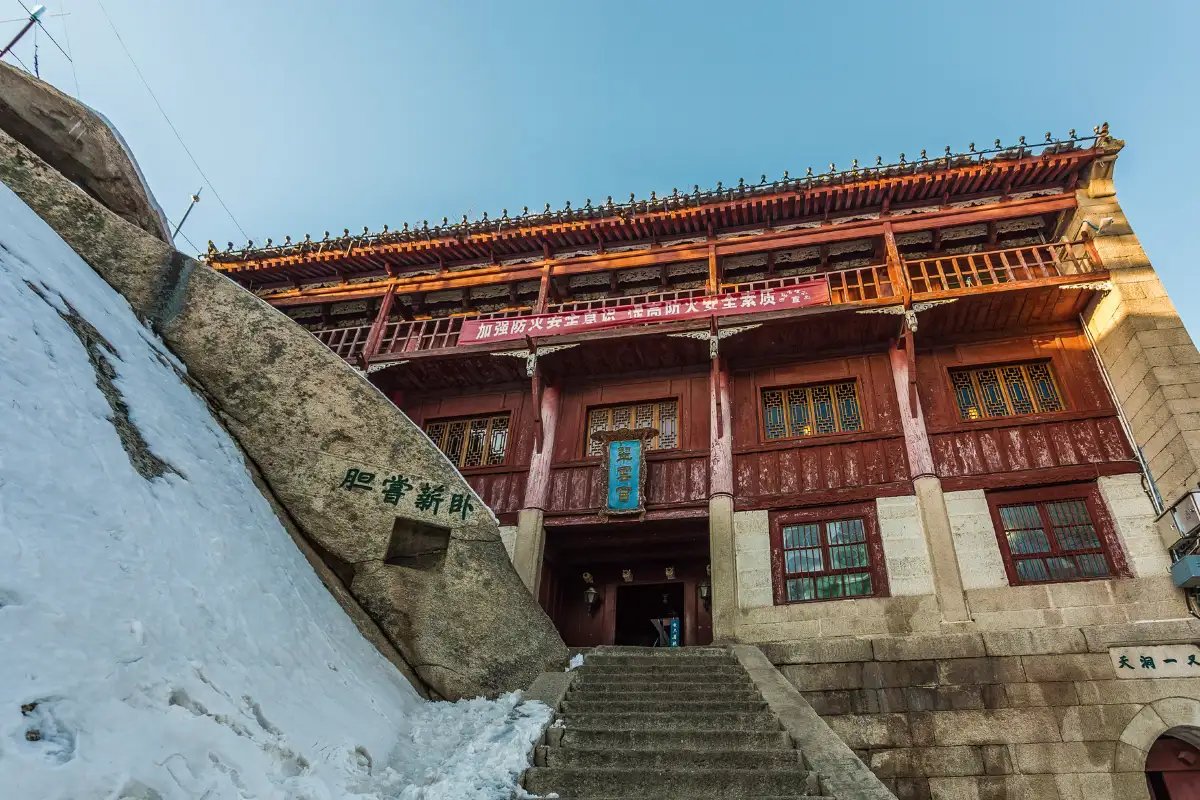 | West Peak | The largest Daoist temple on the mountain. Its courtyard has a massive split boulder — legend says it was cleaved by a deity's axe to rescue a trapped immortal. |
Jade Maiden Temple (玉女祠) 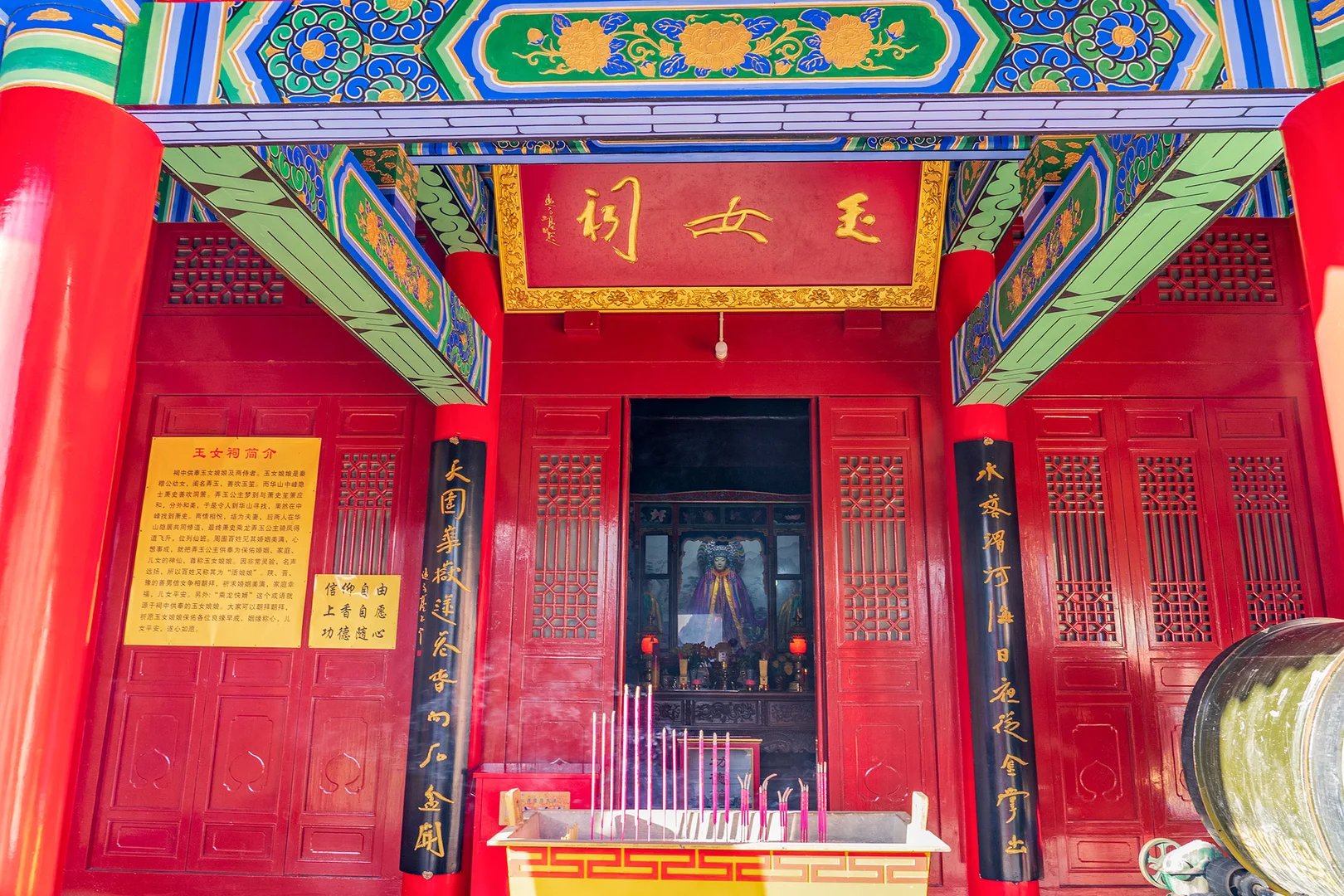 | Central Peak | Dedicated to the Jade Maiden, a Daoist immortal who, according to legend, rode a white horse through the clouds. The smallest and quietest temple. |
Yuquan Courtyard (玉泉院) 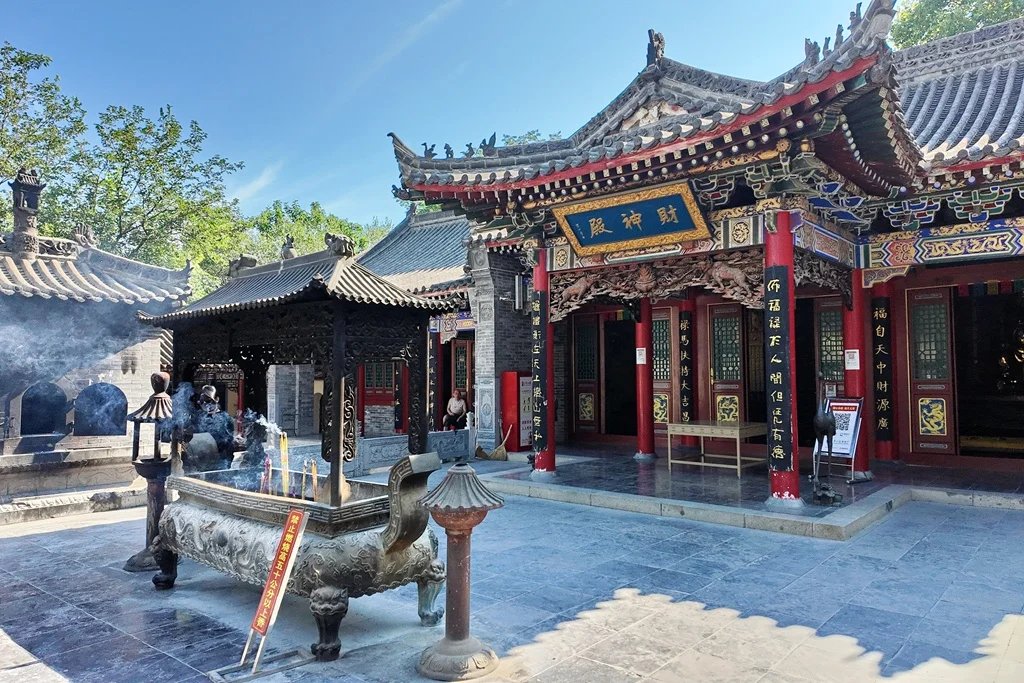 | Mountain base (start of old trail) | The traditional starting point for pilgrims. A beautiful courtyard complex with ancient cypress trees and a spring said to have healing properties. Worth a visit even if you take the cable car. |
Zhenyue Palace (镇岳宫) 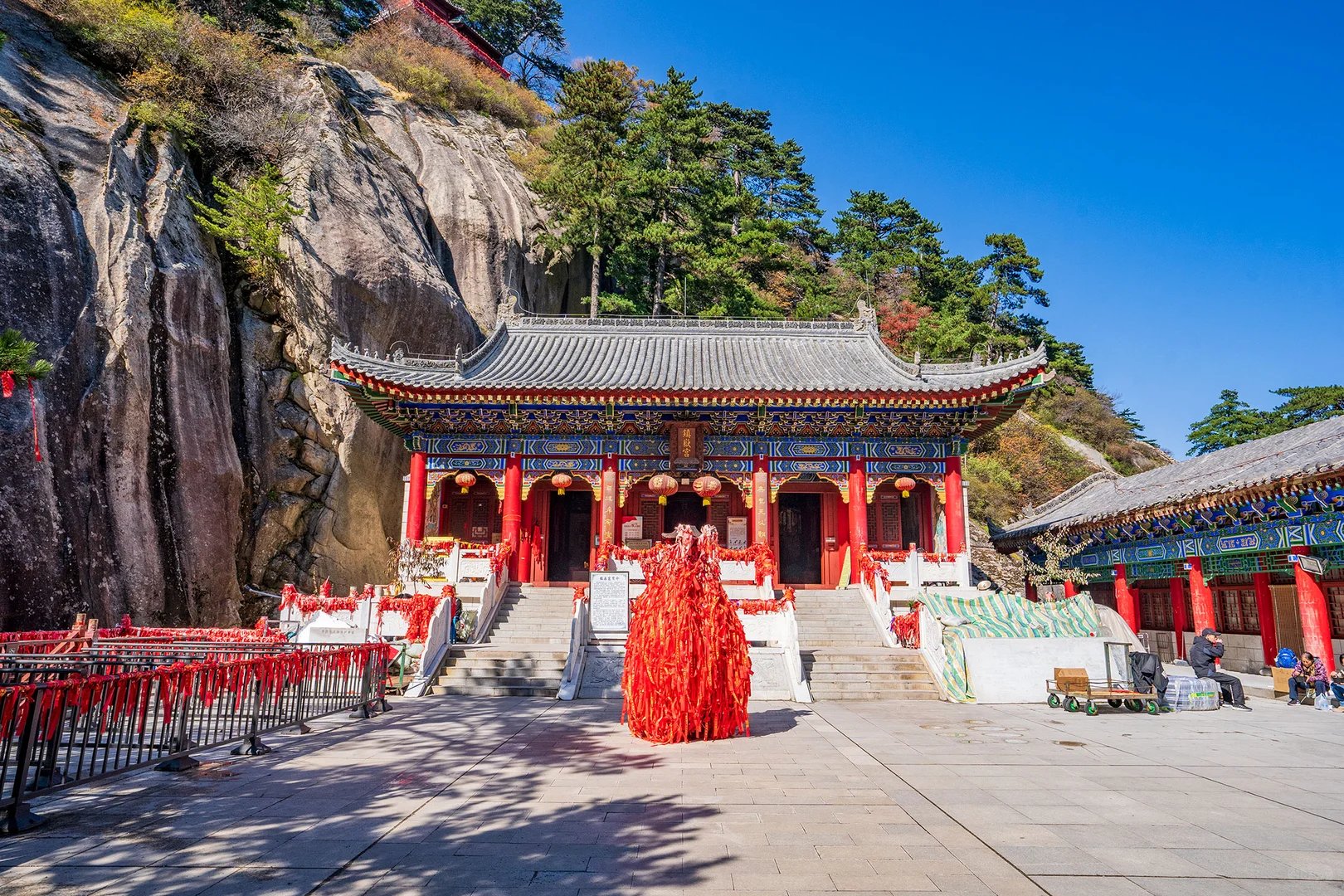 | West Peak area | The main hall enshrines Xiyue Dadi (Great Emperor of the West Peak), the guardian deity of Mount Hua, while the stone cave houses the Jade Emperor (Yuhuang Dadi). |
🆚 Mount Hua vs the Other Four Sacred Mountains
International visitors often don't realise that Mount Hua is part of a system of five sacred mountains. If you're choosing which to visit, here's how they compare:
Mountain | Difficulty | Scenery | Crowds | Best For |
|---|---|---|---|---|
Mount Hua (华山) | 🔴 Hard | Vertical granite cliffs, temples on edges | Medium (fewer international tourists) | Thrill-seekers, photographers, culture lovers |
Mount Tai (泰山) | 🟡 Moderate | Imperial grandeur, 6,600 stone steps | 🔴 Extreme (most visited mountain in China) | History buffs, sunrise pilgrims |
Mount Song (嵩山) | 🟡 Moderate | Gentle slopes, Shaolin Temple nearby | Medium | Martial arts enthusiasts, families |
Mount Heng North (北恒山) | 🟢 Easy | Rolling hills, hanging temple | Low | Casual walkers, architecture lovers |
Mount Heng South (南衡山) | 🟢 Easy | Lush forests, Buddhist temples | Low | Spiritual retreats, nature lovers |
Why Mount Hua Stands Apart
Mount Hua is the only one of the five that genuinely challenges hikers. Mount Tai is famous for its 6,600+ steps, but they're wide, well-paved, and crowded with tourists. Mount Song is a gentle walk. The two Mount Hengs are essentially hills. Mount Hua, by contrast, has trails carved into vertical cliffs, iron chains bolted into granite, and the Plank Walk — a feature no other sacred mountain has.
If you're visiting Xi'an, Mount Hua is the obvious choice — it's the closest sacred mountain (120 km), it's the most spectacular, and it pairs perfectly with Xi'an's other ancient sites. Mount Tai, the second choice, is 700 km east in Shandong Province — a completely separate trip.
📍 Complete Mount Hua Attractions Guide
Mount Hua is far more than its five peaks. The official scenic area contains 20 named attractions, each with its own history, legend, and character. Here's the complete guide — based on the official Mount Hua website — so you know exactly what you're walking through:
Gateway & Base Area
Attraction | Chinese | What It Is |
|---|---|---|
Visitor Center | 游客中心 | The hub: ticket office, guide service, museum, eco-parking, helicopter pad, souvenir shops, and fast food. This is where every visit begins — by shuttle bus to either the West Peak or North Peak cable car station. |
Yuquan Courtyard | 玉泉院 | The traditional starting point for the ancient pilgrim trail. A Daoist temple complex with ancient cypress trees and a spring said to have healing properties. Even if you take the cable car, this serene courtyard is worth a 20-minute visit. Named after a spring that flows from the mountain. |
West Sacred Mountain Temple | 西岳庙 | Located in Huayin City, not on the mountain itself. An imperial temple built in the Han Dynasty where emperors performed sacrifices to the god of Mount Hua. Often called "the Forbidden City of the West" for its layout mirrors Beijing's Forbidden City. Worth combining with your Huashan visit. |
The Ancient Trail — "One Road to Huashan"
Before cable cars, there was only one way up. The ancient pilgrim trail from Yuquan Courtyard to the peaks has been climbed for over 2,000 years. These are the legendary sections you'll encounter:
Attraction | Chinese | What It Is |
|---|---|---|
The One Road | 自古华山一条路 | The phrase that became a Chinese idiom: "there is only one road to Mount Hua." For most of history, a single narrow trail was the only way up — no alternative routes, no shortcuts, no retreat. The trail still exists and is the route used by hikers who walk from the base. |
Hundred-Foot Gorge | 百尺峡 | Also called "Hundred-Zhang Cliff." A vertical rock corridor where you climb steep stone steps wedged between towering walls of granite. The first major obstacle on the ancient trail. |
Thousand-Foot Precipice | 千尺幢 | The most famous section of the old trail. A massive crack in the cliff face with 370+ stone steps, each only one-third of a foot wide, at a near-vertical angle. Iron chains bolted into the rock are your handholds. This is the section that gives Mount Hua its "dangerous" reputation. First-timers grip the chains and don't look down. |
Ear-Rubbing Cliff | 擦耳崖 | A narrow trail from North Peak to the Upper Heaven Ladder. So narrow that the rock face "rubs your ear" as you pass — giving it its memorable name. One of the trail sections where you truly feel the mountain's verticality. |
Laozi's Plow Furrow | 老君犁沟 | A channel in the rock that legend says was plowed by Laozi (the founder of Daoism) riding his blue ox. Geologically, it's a water-eroded channel. The story embodies the Daoist idea that even the mountain's paths were created by spiritual beings. |
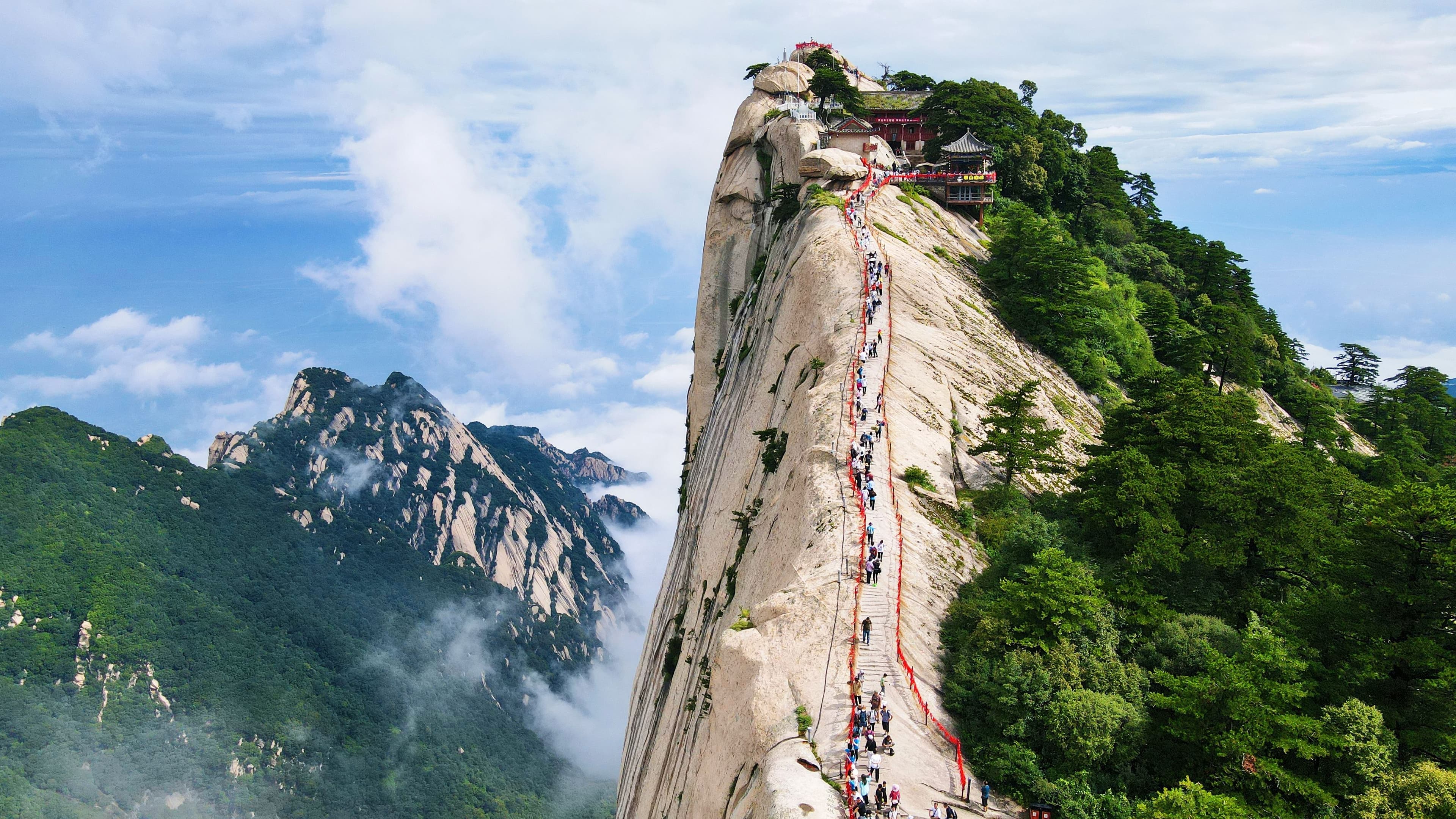
Black Dragon Ridge | 苍龙岭 | A knife-edge mountain ridge between the Rescue Terrace and Five Cloud Peak. One of Mount Hua's most famous dangerous sections — a narrow spine of stone with steep drops on both sides. The trail is carved along the top, with iron chains on both sides. At its narrowest, it's about 1 metre wide. |
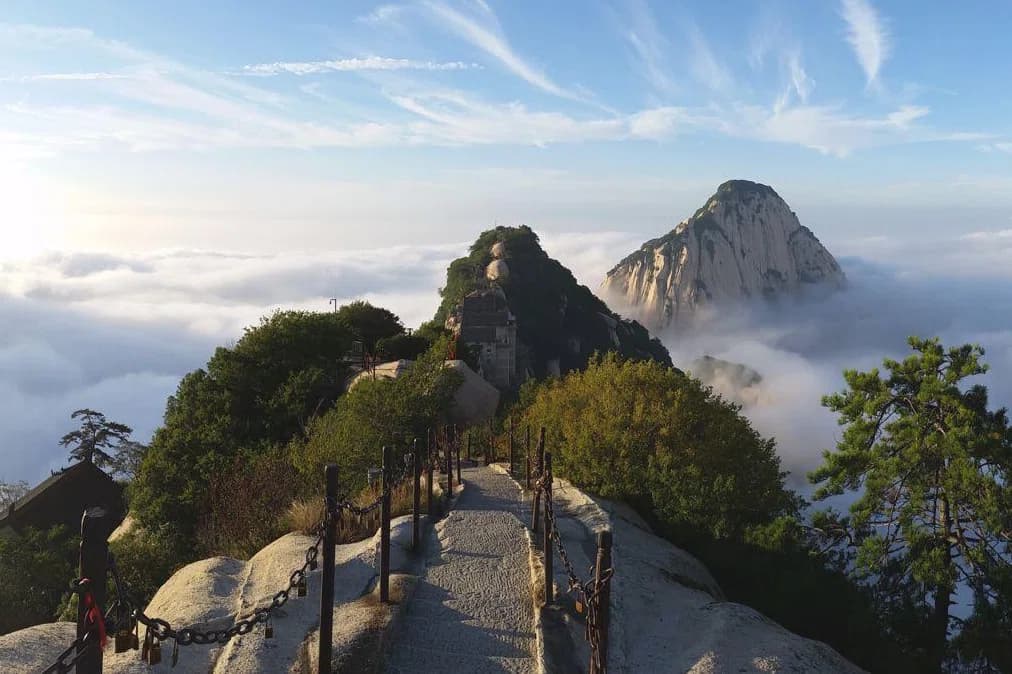
Golden Lock Pass | 金锁关 | A stone archway gateway that marks the junction leading to the four main peaks (West, South, East and Central). Pilgrims for centuries have hung golden locks here — thousands of engraved padlocks cover the chains and railings, left by visitors seeking blessings and protection on the mountain. |
The Five Peaks
Peak | Chinese | Elevation | What Makes It Special |
|---|---|---|---|
North Peak | 北峰 (云台峰) | 1,615 m | The first peak reached on the ancient trail. Strategic military position — three sides are sheer cliffs, only one ridge connects it southward. The cable car terminus for the North Peak line. Best panoramic view of the other four peaks rising above you. |
East Peak (Sunrise Peak) | 东峰 (朝阳峰) | 2,096 m | The premier sunrise viewpoint on the mountain. Home to the Immortal's Palm (华岳仙掌) — a natural palm-shaped pattern on the east-facing cliff, one of Mount Hua's most iconic geological features. |
South Peak (Landing Goose Peak) | 南峰 (落雁峰) | 2,155 m | The highest peak of all Five Sacred Mountains. Two summits: Songgui (east) and Luoyan (west). Home to the Plank Walk in the Air and the South Heaven Gate. |
West Peak (Lotus Peak) | 西峰 (莲花峰) | 2,083 m | The most scenically dramatic peak. Home to Cuiyun Palace and the Axe-Split Rock (where Chen Xiang rescued his mother). The West Peak cable car terminus. |
Central Peak (Jade Maiden Peak) | 中峰 (玉女峰) | 2,043 m | The smallest and quietest peak. Home to Jade Maiden Temple. Often skipped by rushing hikers — a mistake, as it offers the most peaceful moments on the mountain. |
😱 The Famous Danger Spots
Attraction | Chinese | What It Is |
|---|---|---|
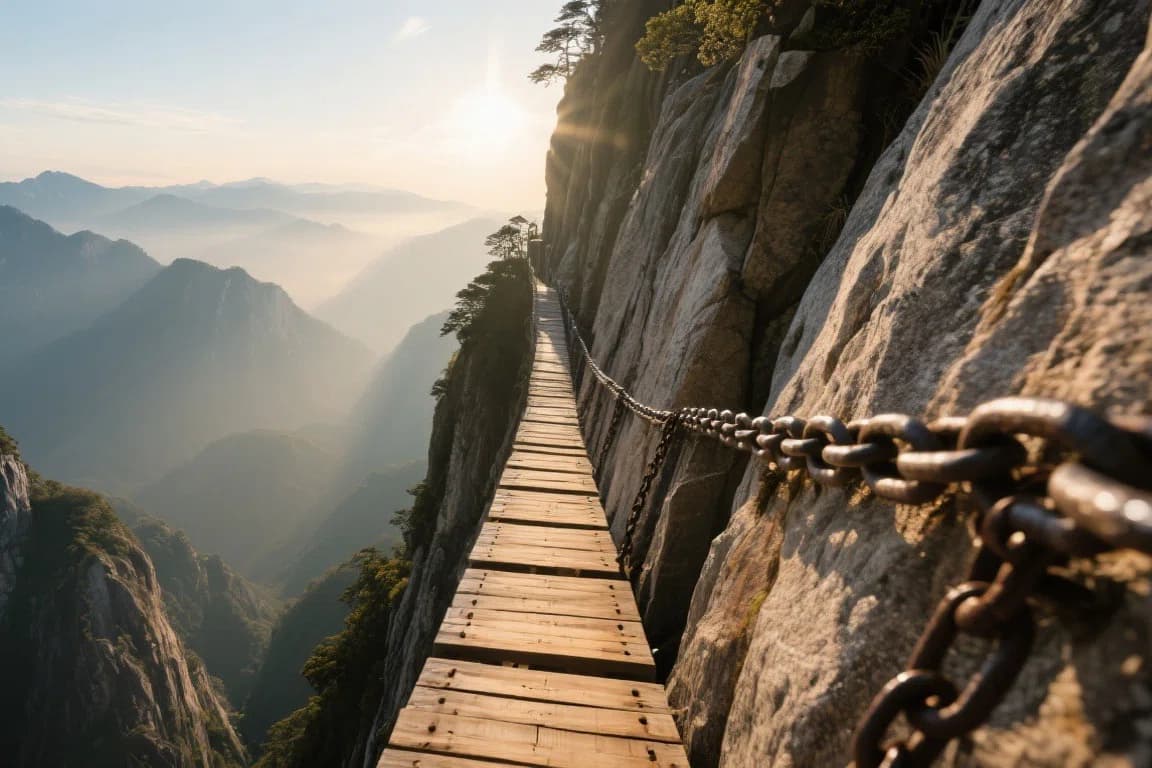
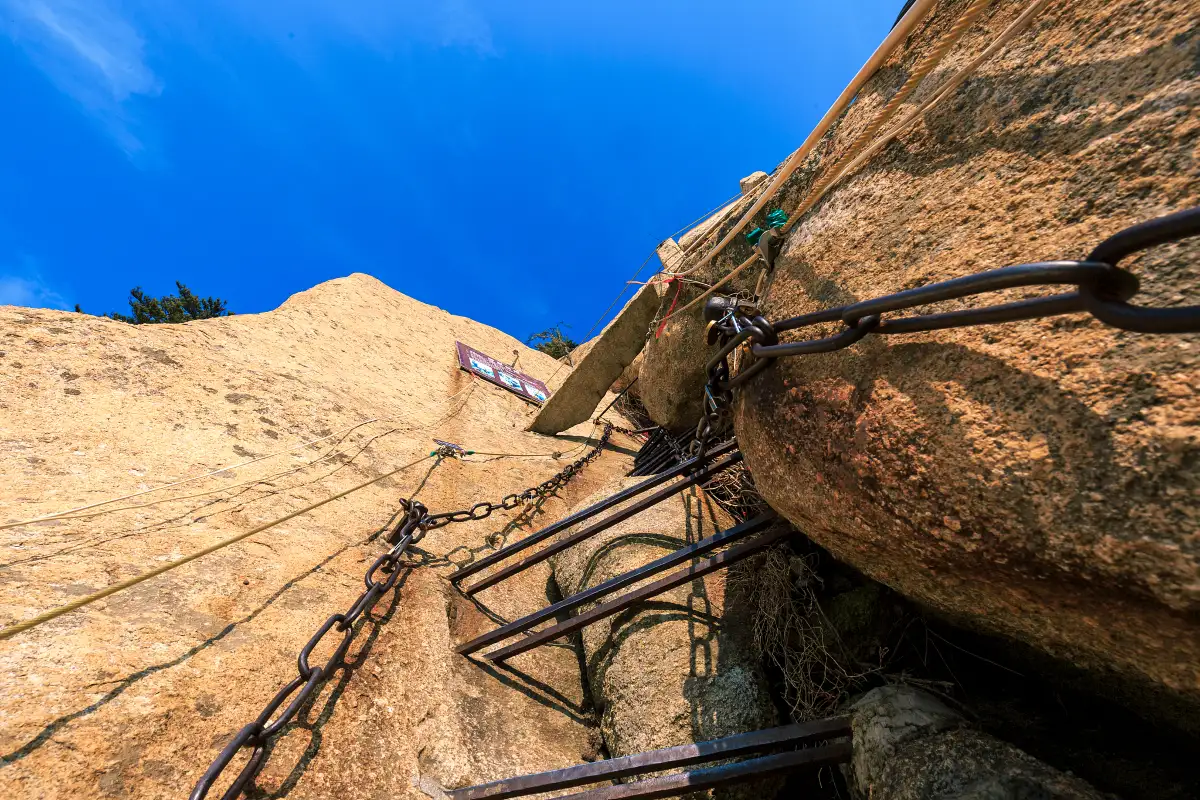
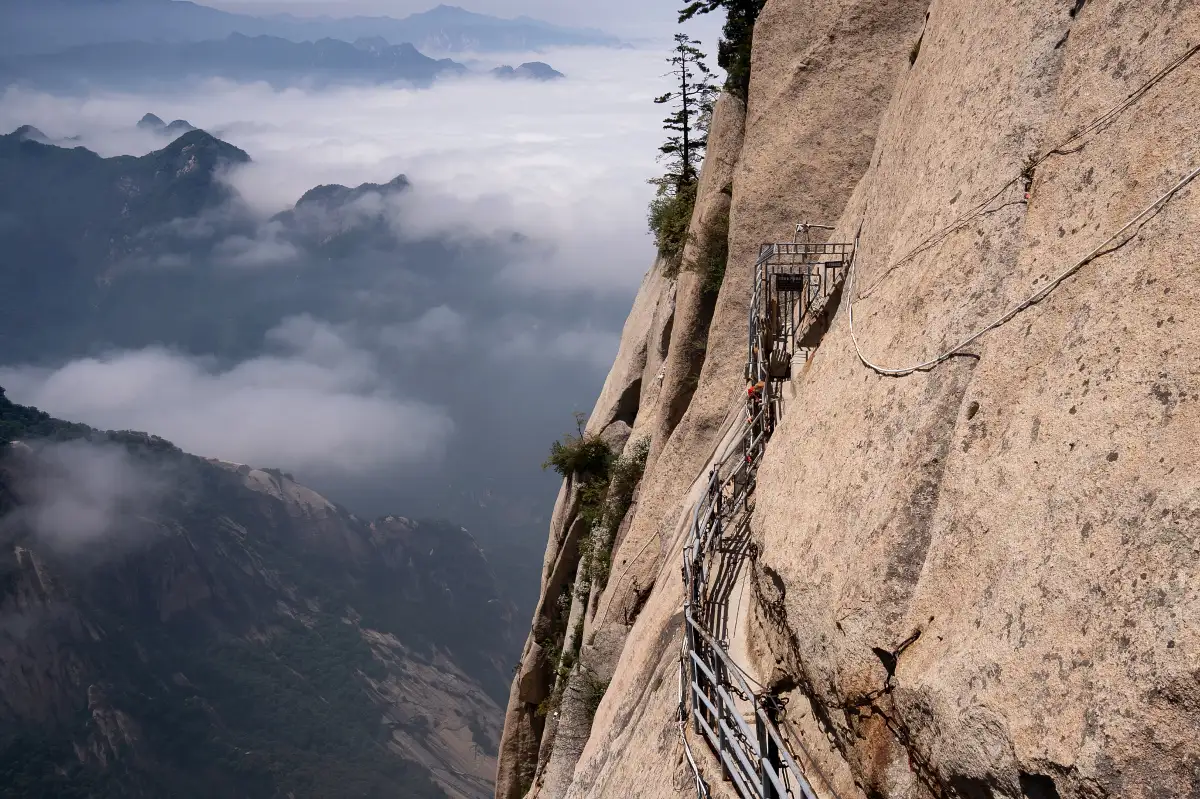
Plank Walk in the Air | 长空栈道 | 700 years old — the most dangerous trail on Mount Hua and possibly in China. Wooden planks bolted to a vertical cliff face on South Peak, 2,160 m above the valley. Harness required. Originally used by Daoist monks as spiritual cultivation. |
Sparrow Hawk Flip | 鹞子翻身 | A descent on East Peak's cliff face where you must face the wall, grip ropes, and use toe-holds to descend — literally turning your body like a sparrow hawk in flight. Leads to the Chess Pavilion. The second most famous danger spot after the Plank Walk. |
South Heaven Gate | 南天门 | On the east side of South Peak. Reached via a rugged path past the Two Immortals Shrine and Purple Qi Terrace. The gateway to the Plank Walk — passing through it means you're committed. |
❗️ The Plank Walk in the Air: China's Most Famous Thrill
Let's address the elephant on the cliff. The Plank Walk in the Air (长空栈道, Chángkōng Zhàndào) is Mount Hua's most famous — and most photographed — feature. It's on the South Peak, and it consists of narrow wooden planks bolted to a vertical cliff face, 2,160 metres above the valley floor, with a sheer drop to your right and the cliff wall to your left.
How It Works
You arrive at the Plank Walk entrance on South Peak. There's a small fee (separate from the main entrance ticket).
You put on a climbing harness and clip into a safety cable that runs along the cliff wall.
You walk out onto the planks — there's a narrow path going out to a small platform, and then you turn around and come back. The entire experience is about 50 metres of walking.
You are clipped in the entire time. If you slip, the harness catches you.
Should You Do It?
Do It If… | Skip It If… |
|---|---|
You've done skydiving, bungee jumping, or via ferrata before | You have a fear of heights that affects your daily life |
You want a once-in-a-lifetime story | You have knee, ankle, or mobility issues |
You're comfortable with exposure and heights | You're travelling with young children |
The weather is clear and dry | It's raining, windy, or icy — the plank walk closes in bad weather |
🎯 Cultural & Scenic Highlights
Attraction | Chinese | What It Is |
|---|---|---|
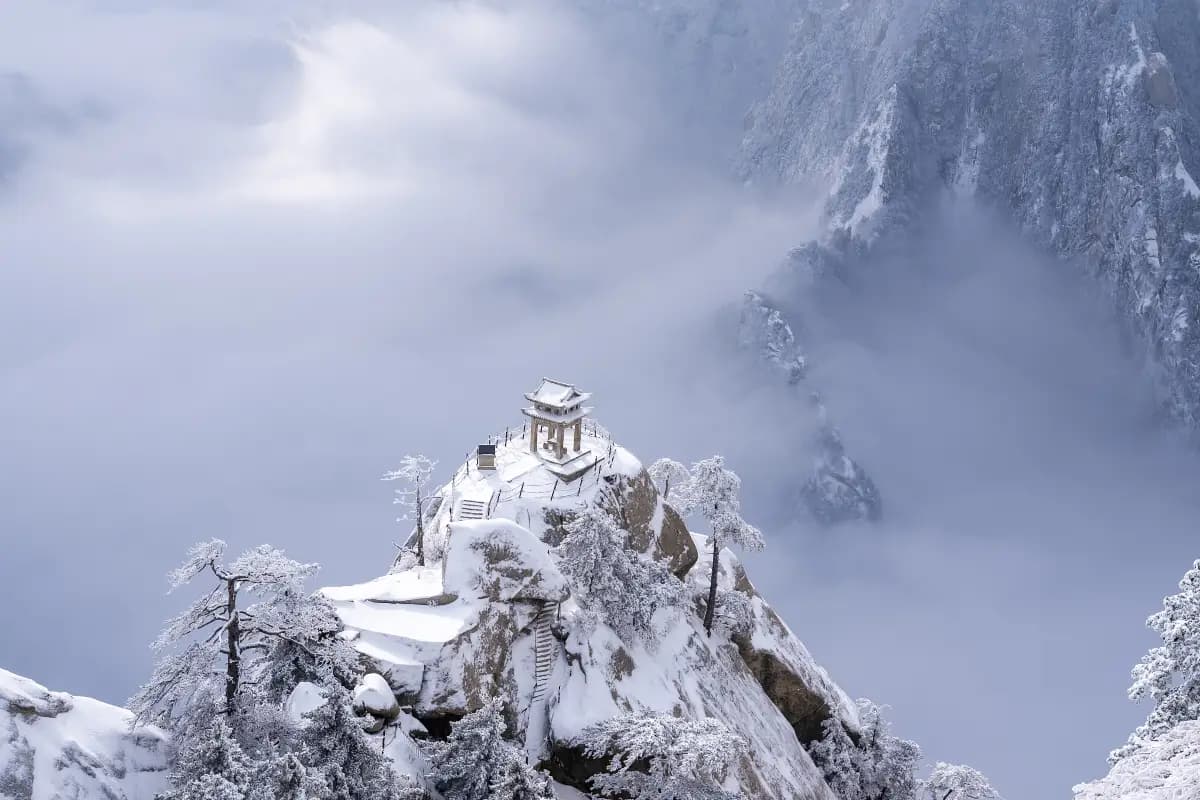
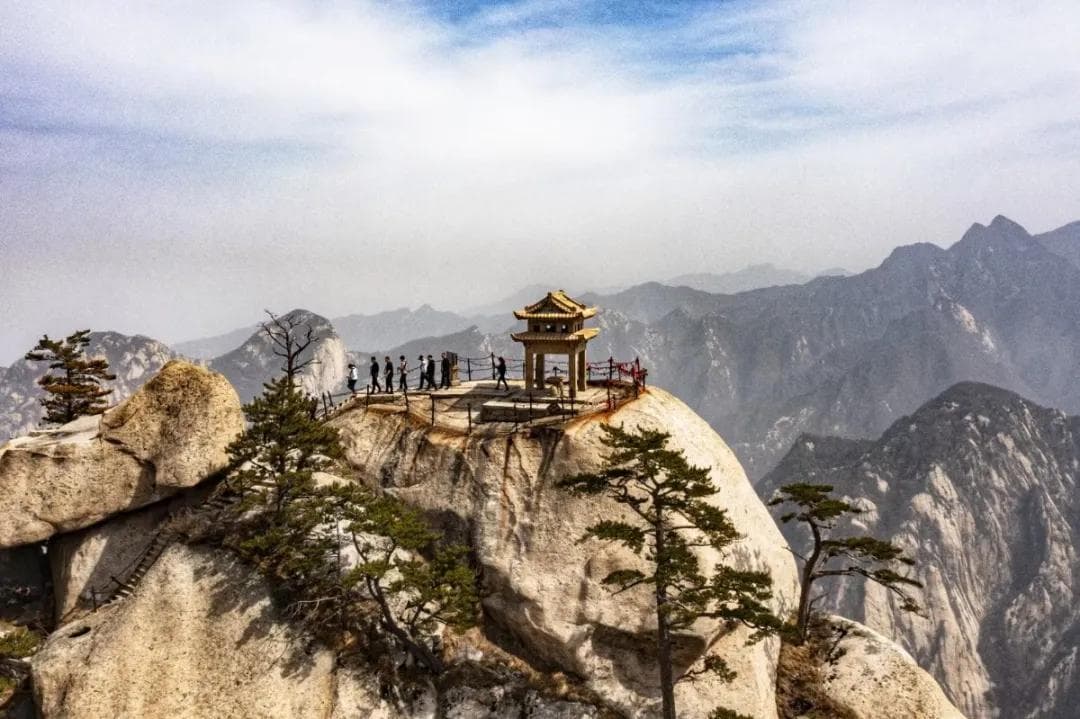
Chess Pavilion | 下棋亭 | On a tiny, isolated rock spur beside East Peak — barely large enough to stand on, with cliffs on all sides. Where Chen Tuan played chess with Emperor Zhao Kuangyin and won the mountain. Accessed via Yaozi Fanshen (Sparrow Hawk Flip). |
Immortal's Palm | 华岳仙掌 | A natural geological formation, a palm-shaped stone pattern dozens of metres high with five distinct "fingers", on the cliff northeast of East Peak. The full view can only be seen from down the mountain. It ranks first among the "Eight Views of Guanzhong", the most famous scenic wonders of ancient Shaanxi. |
Outdoor Adventure Base | 拓展基地 | An extreme sports area at the mountain base for team-building and outdoor challenges. Not part of the hiking experience, but available for groups. |
📖 Mount Hua in Legend & Literature
Mount Hua has inspired Chinese poets, painters, and storytellers for over 2,000 years. Knowing a few of these stories transforms the mountain from scenery into narrative. Here are the legends that bring the trails to life:
🧝 Hua Shan Lun Jian (华山论剑) — "The Duel on Mount Hua"
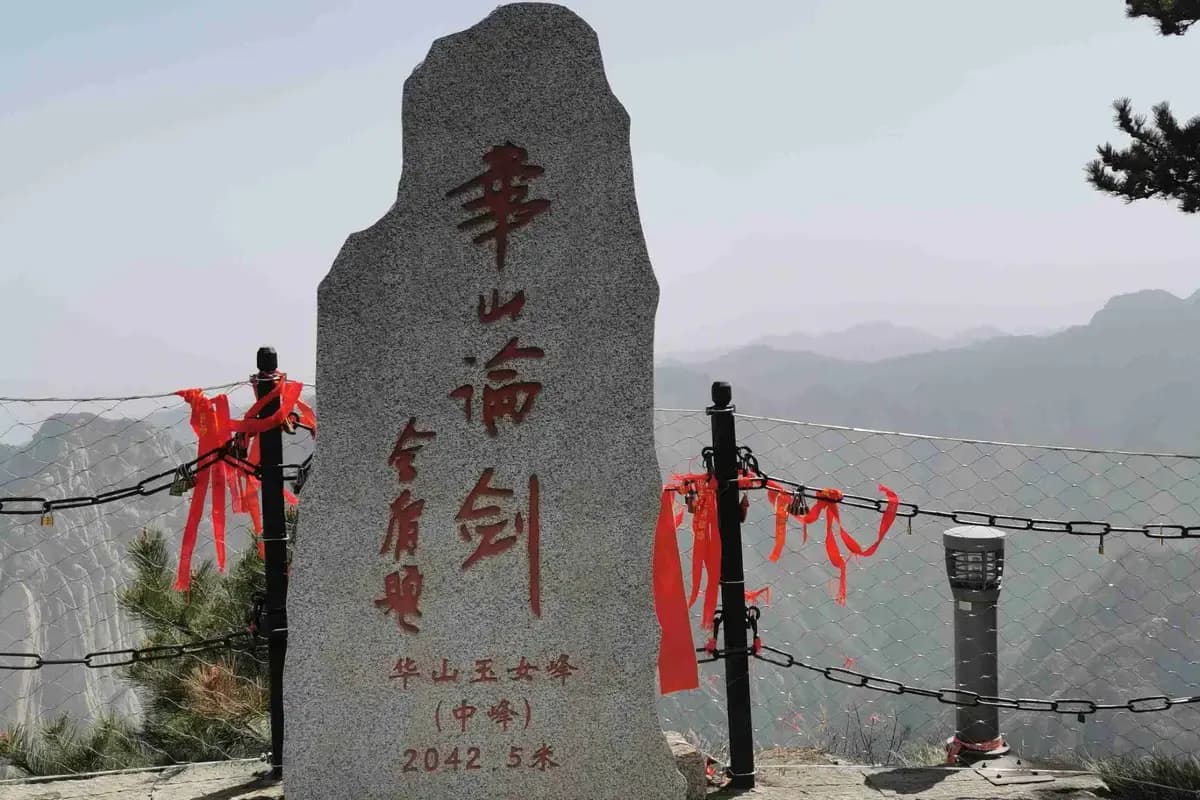
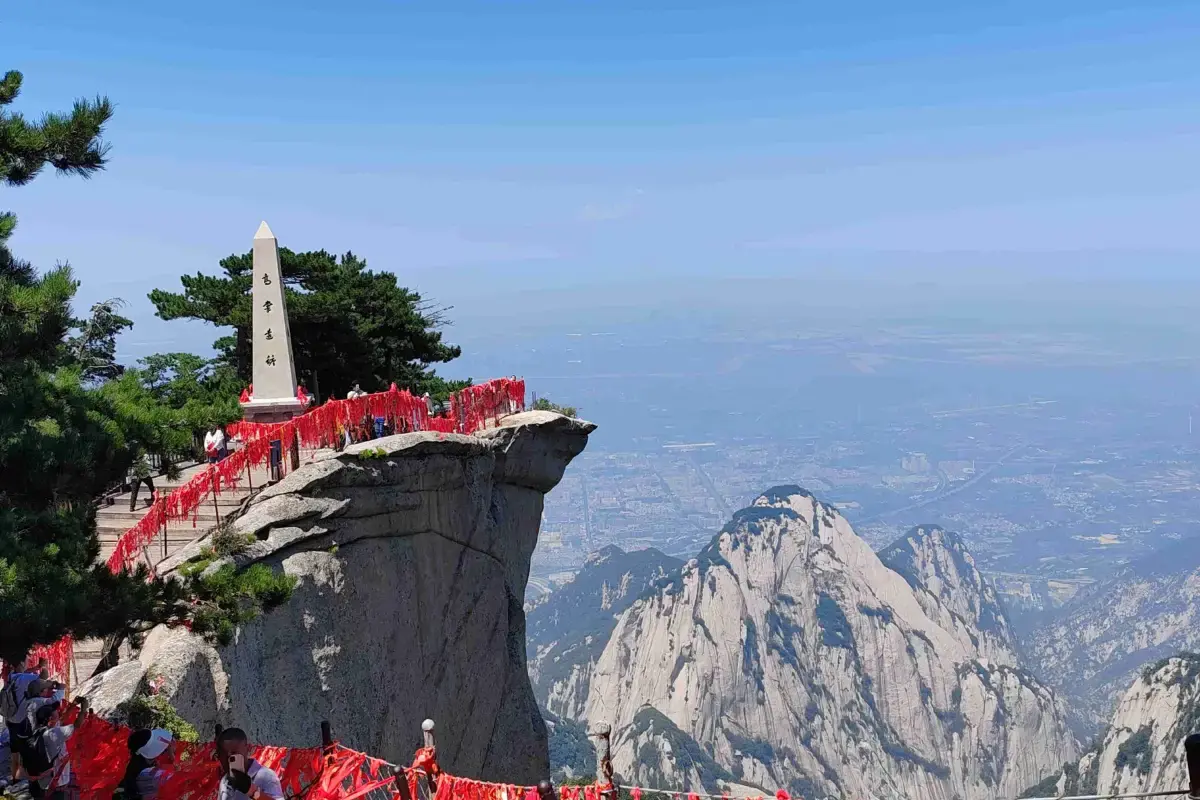
In Jin Yong's (金庸) beloved wuxia novel The Return of the Condor Heroes (神雕侠侣), the greatest martial artists of the era gather on Mount Hua every 25 years to hold a tournament — the "Huashan Sword Debate" — to determine the greatest fighter in the world. The novel has been adapted into countless TV series and films, making this legend part of Chinese cultural DNA. When Chinese tourists stand on the East Peak, many are re-enacting scenes from the novel. There's even a stone marker on the peak inscribed with 华山论剑 — a popular photo spot.
🪓 The Axe-Split Rock (斧劈石)
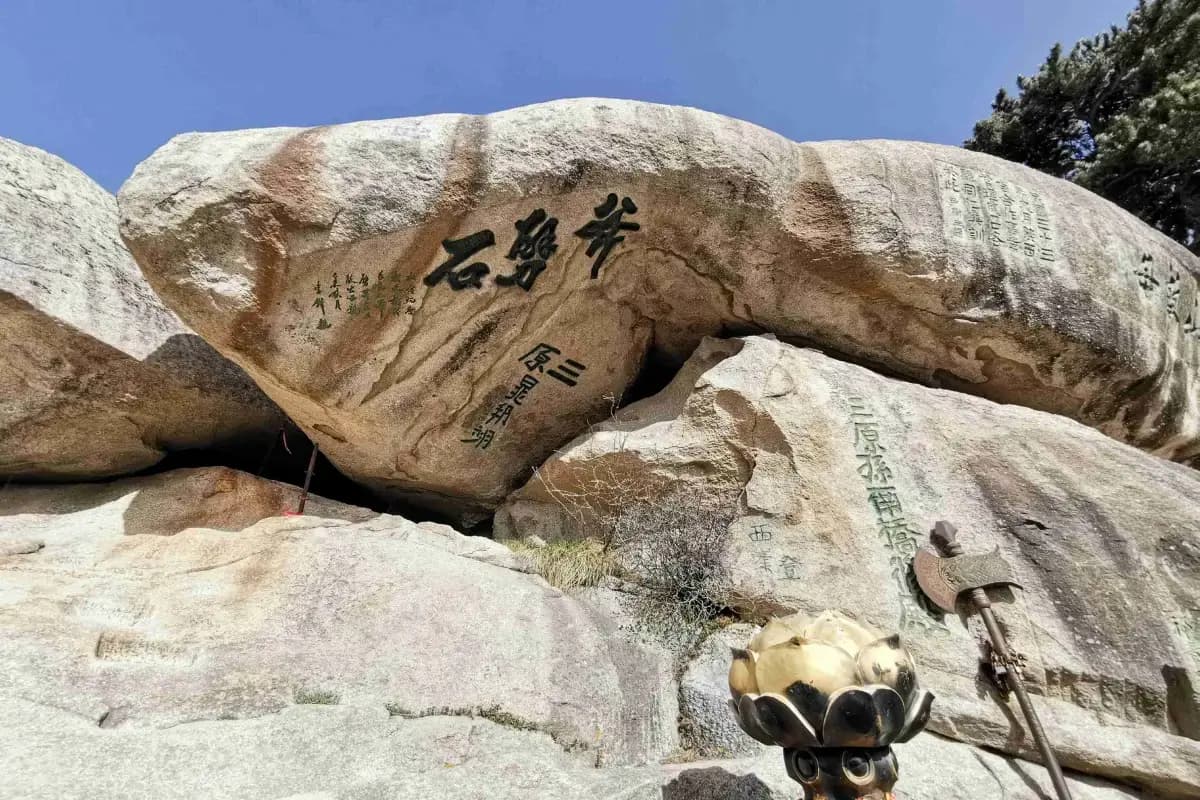
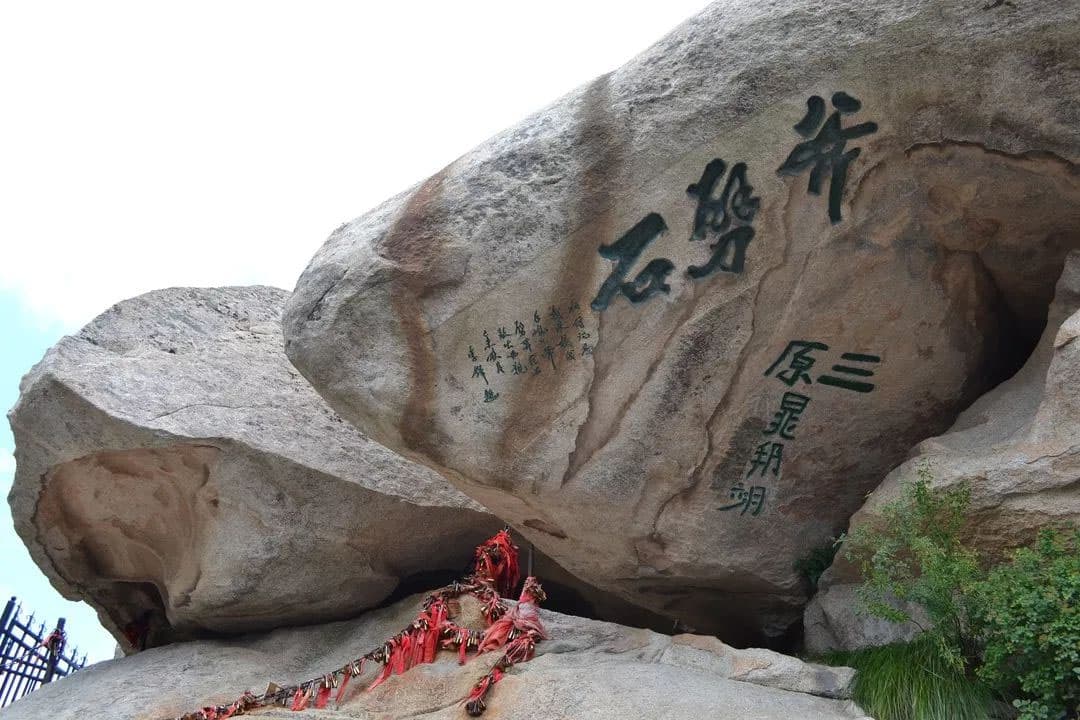
On West Peak, a massive boulder sits split cleanly in two, as if cut by a giant blade. The legend: a deity named Chen Xiang used a magic axe to split the mountain to rescue his mother, the Holy Mother of Mount Hua (三圣母), who had been imprisoned beneath the rock by her own brother for falling in love with a mortal. The story — "Lotus Lantern" (宝莲灯) — is one of China's most famous folktales, performed in operas and animated in films. The split rock is real and genuinely impressive, regardless of whether you believe the story.
♟️ The Chess Pavilion (下棋亭)
As mentioned earlier, the Chess Pavilion marks where the Daoist sage Chen Tuan played chess with Emperor Zhao Kuangyin (founder of the Song Dynasty). The emperor, confident in his skills, wagered the entire mountain. He lost. Chen Tuan's prize was Mount Hua itself — and the mountain has been a Daoist sacred site ever since, free from imperial control. The pavilion sits on a narrow rock spur with 360° cliff drops on three sides. Getting to it requires a short but thrilling walk along a narrow ridge.
🐉 "One Road to Huashan" (自古华山一条路)
For most of history, there was only one path up Mount Hua — the ancient pilgrim trail that climbs from Yuquan Courtyard at the base through the Thousand-Foot Precipice, the Blue Dragon Ridge, and finally to the five peaks. The phrase "自古华山一条路" became a Chinese idiom meaning "there's only one way" — used to describe situations with no alternative. Today, cable cars have added new routes, but the old single path is still there, and walking it connects you to the 2,000 years of pilgrims who climbed before you.
📿 The Plank Walk Monks (长空栈道)
Before safety harnesses, before iron chains, before the wooden planks were replaced with steel-reinforced boards — Daoist monks walked the Plank Walk in the Air as a form of spiritual cultivation. They believed that facing death on the cliff brought them closer to understanding the Dao (the Way). Some monks reportedly carried incense and offerings to a small shrine at the end of the plank. Today's visitors with harnesses and safety cables are experiencing a sanitised version of what monks did as prayer.
📜 Mount Hua in Classical Poetry
The mountain has been a favourite subject of Chinese poets for centuries. The famous Tang Dynasty poem Passing Huayin (行经华阴) by Cui Hao (崔颢) opens with:
Tall Mount Hua overlooks the ancient capital; its three summits carved not by mortal hands.
岧峣太华俯咸京,天外三峰削不成。
The Tang poet Li Bai also wrote about the mountain, describing its cliffs as "cut by heaven's blade." These poems are still taught in Chinese schools — when you stand on the peaks, you're standing in the same views that inspired some of China's greatest literature.
🏔️ The Five Peaks: Which Trail Should You Choose?
Mount Hua has five peaks, each with its own character. The key decision is which cable car to take up — this determines your entire route.
Peak | Elevation | Character | What You'll See |
|---|---|---|---|
North Peak (北峰) | 1,614 m | The "gateway" — lowest peak, most accessible | Best views of the other four peaks rising above you; the classic photo angle |
East Peak (东峰) | 2,096 m | The "sunrise peak" — where photographers gather at dawn | Best sunrise views on the mountain; the Chess Pavilion |
South Peak (南峰) | 2,154 m | The highest peak — home of the Plank Walk | Highest point of all Five Sacred Mountains; the infamous Plank Walk in the Air |
West Peak (西峰) | 2,083 m | The "lotus peak" — most scenic, with a Taoist temple | Most photographed peak; Cuiyun Palace; the "Lotus Flower" rock formation |
Central Peak (中峰) | 2,037 m | The smallest, quietest peak — often skipped | Jade Maiden Temple; a moment of calm away from the crowds |
🗺️ The Four Official Hiking Routes Explained
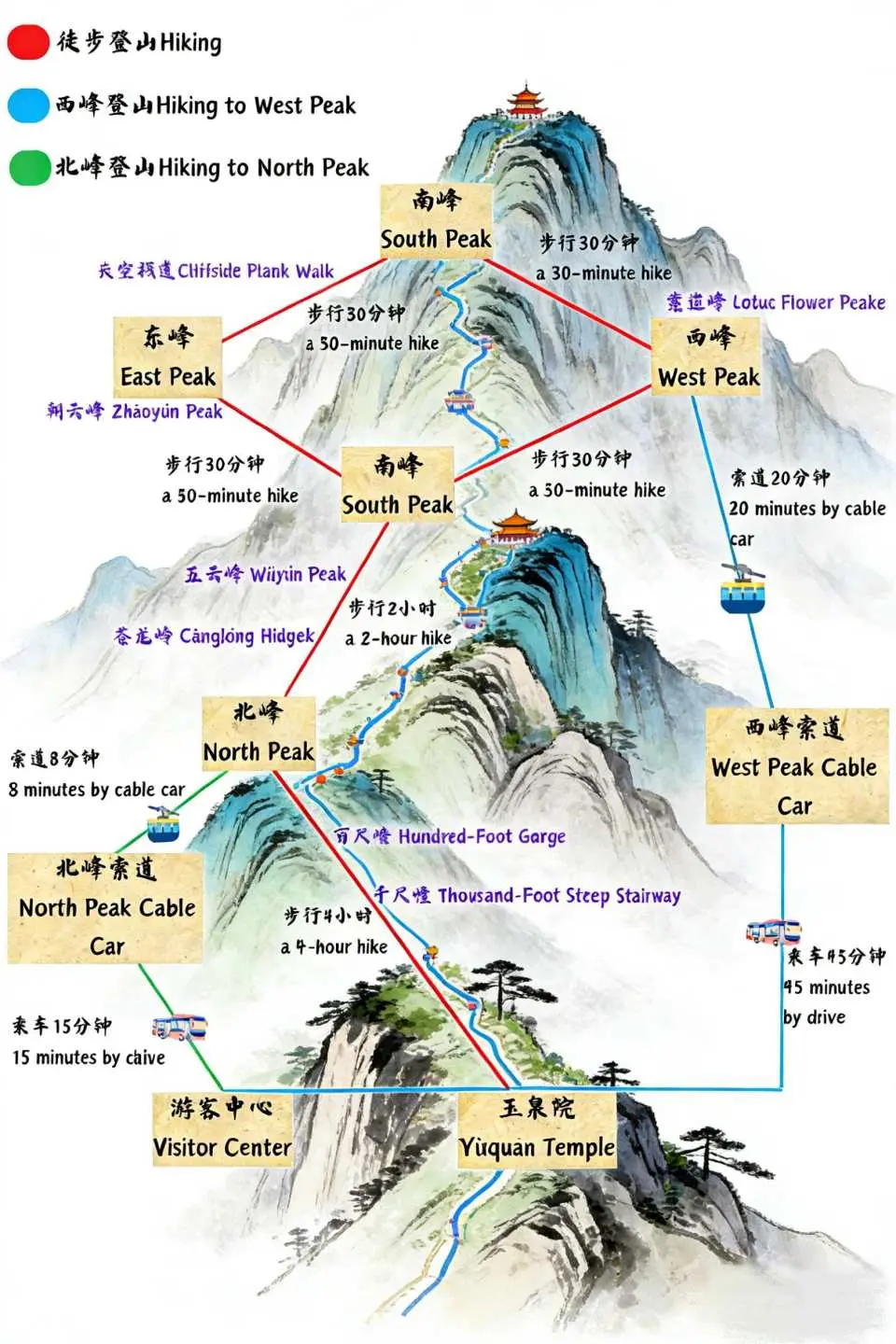
The official Mount Hua website and visitor center recommend four distinct routes, each designed for a different type of traveler. Here's a detailed breakdown of all four — with honest assessments of who each route suits:
Route 1: The Perfect Route (完美登山路线)
Strategy: West Peak cable car up and down — the most comfortable option.
Step | Route | Time |
|---|---|---|
1. Ascent | Visitor Center → shuttle bus (40 min) → West Peak cable car → West Peak | ~1 hr 10 min |
2. Hike | West Peak → South Peak → East Peak | ~1 hr 30 min walk |
3. Return hike | East Peak → Central Peak → West Peak | ~2 hr 40 min walk |
4. Descent | West Peak → West Peak cable car → shuttle bus → Visitor Center | ~1 hr |
Total: ~6 hours.
Best for: Travelers who want the scenic highlights without a long descent. The downside: you miss North Peak and the famous Blue Dragon Ridge. The West Peak cable car (a spectacular ropeway through a narrow gorge) is the most dramatic cable car ride on the mountain.
Route 2: The Panoramic Route (全景登山路线) — ⭐ Recommended
Strategy: West Peak cable car up, North Peak cable car down — the most complete experience.
Step | Route | Time |
|---|---|---|
1. Ascent | Visitor Center → shuttle bus (40 min) → West Peak cable car → West Peak | ~1 hr 10 min |
2. Hike | West Peak → South Peak → East Peak | ~1 hr 30 min walk |
3. Hike | East Peak → Central Peak → North Peak (Yuntai Peak) | ~2 hr 40 min walk |
4. Descent | North Peak → North Peak cable car → shuttle bus → Visitor Center | ~1 hr |
Total: ~6 hours.
Best for: Most travelers. This is the route Your Way Holiday recommends for the majority of our clients. You see all five peaks, use two different cable cars (different scenery each way), and the hike is predominantly downhill (West to North is descending). The most efficient way to experience the complete mountain.
Route 3: The Economy Route (经济登山路线)
Strategy: North Peak cable car up and down — the budget option.
Step | Route | Time |
|---|---|---|
1. Ascent | Visitor Center → shuttle bus (20 min) → North Peak cable car → North Peak | ~40 min |
2. Hike | North Peak → Central Peak → East Peak → South Peak | ~3 hr 40 min walk |
3. Return hike | South Peak → West Peak → Central Peak → North Peak | ~3 hr 30 min walk |
4. Descent | North Peak → North Peak cable car → shuttle bus → Visitor Center | ~1 hr |
Total: ~9 hours.
Best for: Budget-conscious travelers who still want to see all five peaks. The North Peak cable car is less expensive than the West Peak line, and the shuttle bus ride is shorter (20 min vs 40 min). The trade-off: you must hike both up and down between peaks, including significant backtracking through Central Peak and North Peak twice. More walking, same scenery.
Route 4: The Extreme Route (自虐登山路线) — For Hardcore Hikers Only
Strategy: No cable car. The ancient pilgrim trail, two days.
Day | Route | Time / Distance |
|---|---|---|
Day 1 — Ascent | Yuquan Courtyard → Thousand-Foot Precipice → North Peak | ~4 hrs / 6 km hiking |
Day 1 — Continue | North Peak → Ear-Rubbing Cliff → Blue Dragon Ridge → Golden Lock Pass → East Peak | ~3 hrs / 6 km; overnight at East Peak for sunrise |
Day 2 — Traverse | East Peak → Sparrow Hawk's Turn → West Peak | ~1 hr 40 min walk |
Day 2 — Descent | West Peak → Five Cloud Peak → descend via same ancient trail | ~3 hrs / 8 km hiking |
Total: ~11.5 hours over 2 days, ~20 km.
Best for: Very fit, experienced hikers who want the authentic pilgrim experience. This is the route that made Mount Hua famous — the "One Road" trail, the Thousand-Foot Precipice, the Blue Dragon Ridge — every legendary danger spot is on this route. You carry your own gear, stay overnight in a basic mountain guesthouse, and earn every step. The spiritual and physical experience is unmatched.
 |
🚠 Mount Hua Cable Cars: Complete Guide
Mount Hua has two cable car systems, each serving a different peak and offering a completely different experience. Understanding the difference is the key to choosing your route:
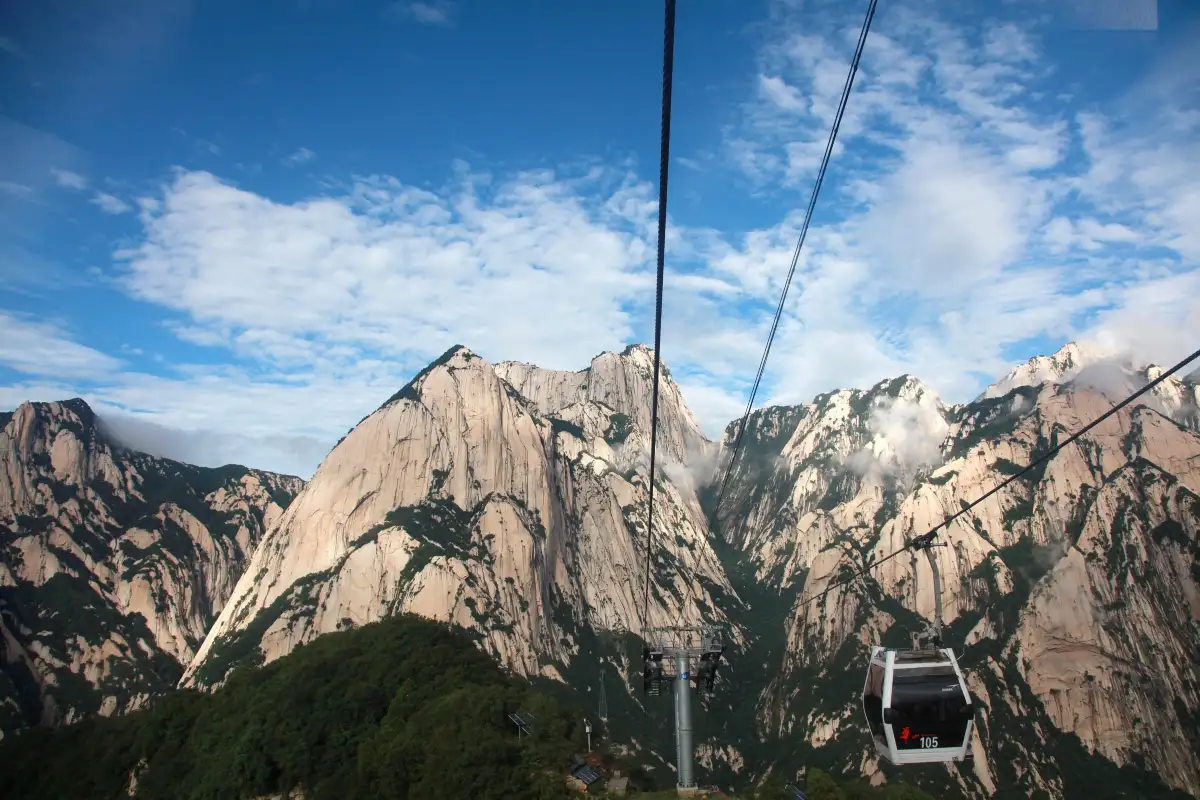
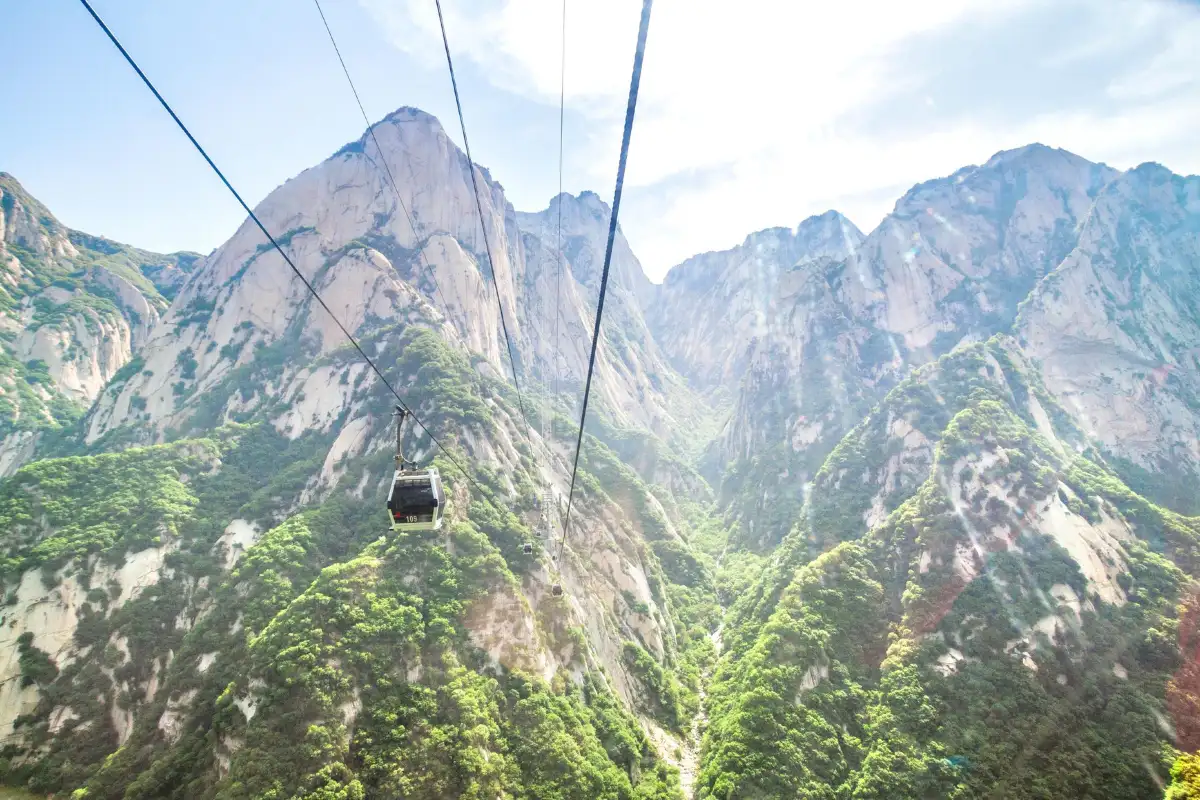
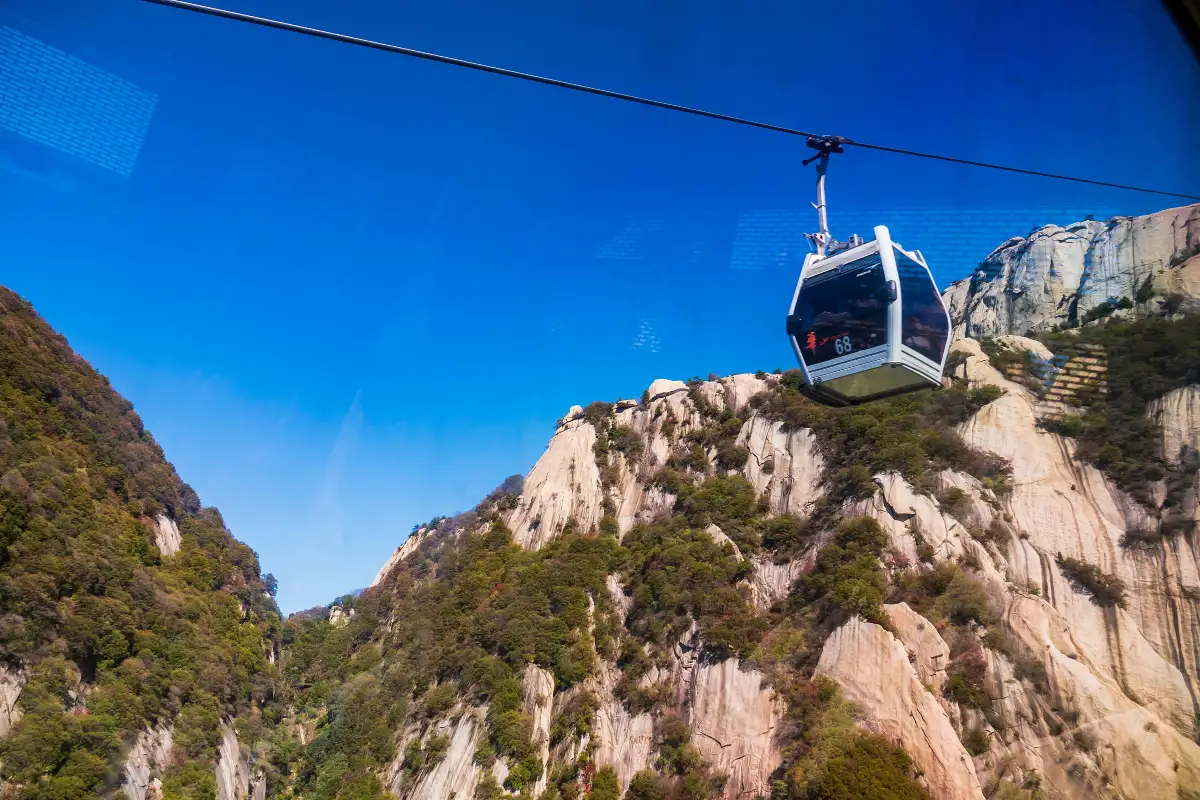
1. West Peak Cable Car (西峰索道 / Taihua Ropeway)
Detail | Information |
|---|---|
Goes to | West Peak (2,083 m) |
Lower station | Wengyu Station — accessed via a 40-minute shuttle bus from the Visitor Center through the Wengyu Special Line (瓮峪专线进山专线) |
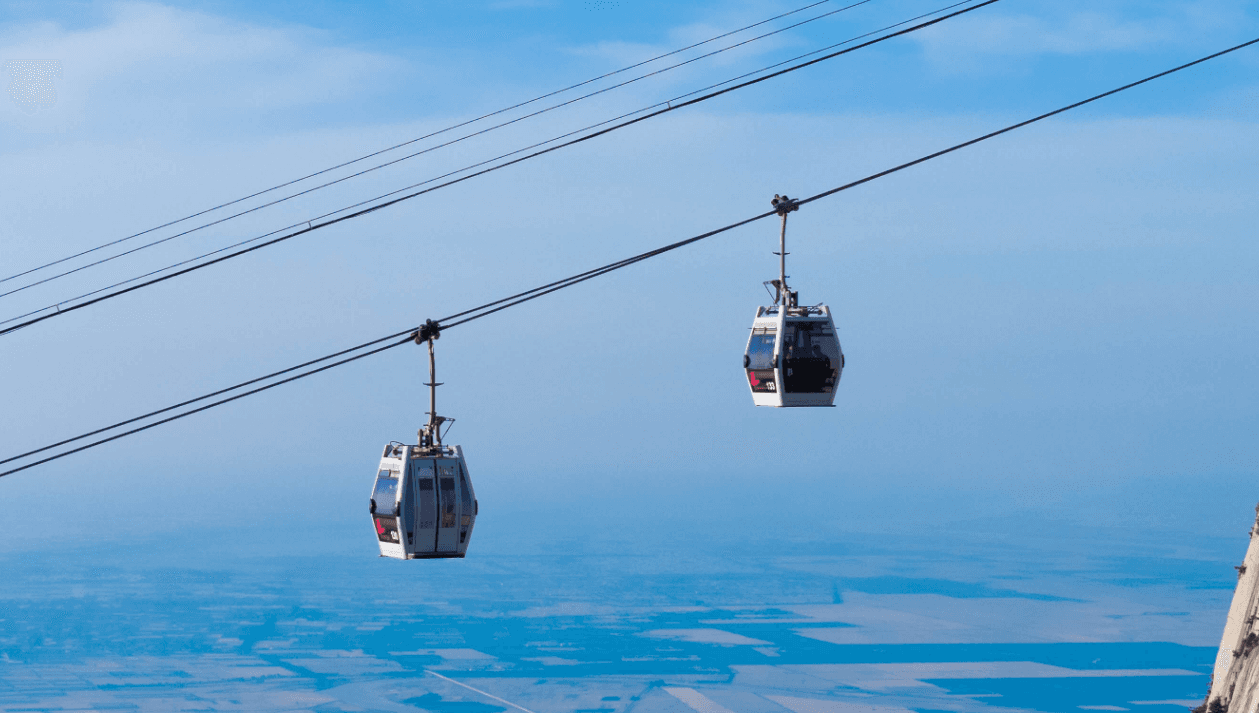
Type | Large-capacity detachable gondola — holds 8 passengers per cabin |
Ride time | ~20-25 minutes (one of the world's longest mountain gondolas) |
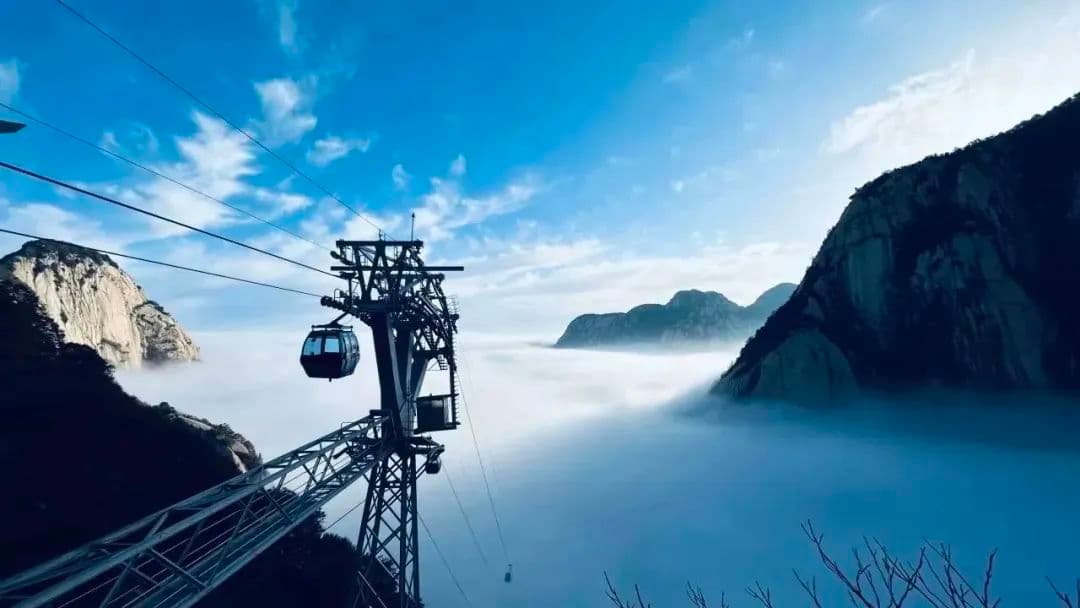
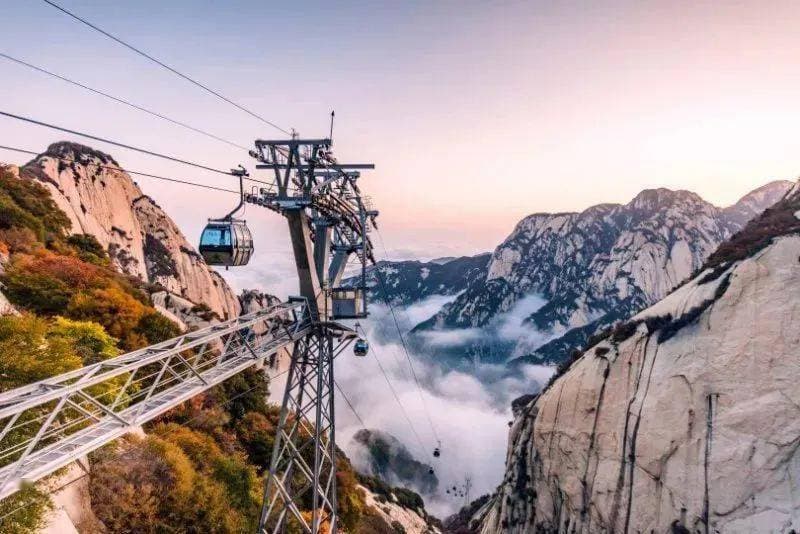
Scenery | Spectacular — the gondola climbs 700 m through a narrow granite gorge, passing cliff faces and waterfalls. The most dramatic cable car ride on any of China's Five Sacred Mountains. |
Best for | Travelers who want to start high and hike the scenic ridge between peaks.Pairs with the North Peak cable car for a one-way traverse (Route 1). |
Operating hours | Peak season: 7:00 AM – 7:00 PM. Off-season: 8:00 AM – 5:00 PM.Subject to weather closures. |
Reference: Official Taihua Ropeway website: https://www.sxtaihuaropeway.com/gsjj
2. North Peak Cable Car (北峰索道 / Sante Ropeway)
Detail | Information |
|---|---|
Goes to | North Peak (1,614 m) |
Lower station | Huangfuyu (Wamiaogou) Station — accessed via a 20-minute shuttle bus from the Visitor Center |
Type | Smaller gondola — holds 6 passengers per cabin |
Ride time | ~8-10 minutes |
Scenery | Views of the granite cliffs and the famous "One Road" trail below. Shorter and less dramatic than the West Peak cable car, but still scenic. |
Best for | Families, budget travelers, or as the descent cable car when combined with the West Peak cable car (Route 1). Also the best option for travelers with mobility concerns. |
Operating hours | Peak season: 7:00 AM – 7:00 PM. Off-season: 8:00 AM – 5:00 PM.Subject to weather closures. |
How to Ride the Cable Cars
Buy your ticket: Cable car tickets are sold separately from the mountain entrance ticket. At the Visitor Center, you can purchase the entrance ticket + cable car ticket + shuttle bus ticket as a package. Your guide handles this for you.
Take the shuttle bus: Both cable car lower stations require a shuttle bus from the Visitor Center. West Peak: 40 min via the Wengyu (瓮峪) Special Line. North Peak: 20 min. Shuttle bus tickets can be purchased together with cable car tickets as a combined package.
Board the gondola: Staff will direct you to an available gondola. Large groups may wait for a private cabin; individuals share with others. No need to remove backpacks.
At the top: Exit the gondola and follow the stone path to the peak. Signage (in Chinese and some English) directs you to each peak.
Cable Car Combinations for Each Route
Route | Up | Down | Shuttle Bus |
|---|---|---|---|
Perfect Route | West Peak cable car | West Peak cable car | Wengyu (瓮峪) Line (40 min each way) |
Panoramic Route ⭐ | West Peak cable car | North Peak cable car | Wengyu (瓮峪) up (40 min) + Huangfuyu down (20 min) |
Economy Route | North Peak cable car | North Peak cable car | Huangfuyu Line (20 min each way) |
Extreme Route | None — hike from Yuquan Institute | None — descend on foot | No shuttle bus required |
Cable Car Ticket Prices
Peak Season: March 1 – November 30
Off-season: December 1 – February 28
Cable Car | One-way | Round-trip | Notes |
|---|---|---|---|
West Peak Cable Car (Taihua Ropeway) | 140 CNY | 280 CNY | Wengyu (瓮峪) shuttle bus: 40 CNY one-way |
North Peak Cable Car (Sante Ropeway) | 80 CNY | 150 CNY | Huangfuyu shuttle bus: 20 CNY one-way |
Discount Policy
Valid for foreign visitors. Valid identification (passport or Chinese permanent residence ID) must be presented for all discounted tickets.
Mountain Entrance Ticket Discounts (1) Free entry: Foreign children aged 6 and under, or 1.2m and below; foreign seniors aged 65 and above. Valid ID: passport or Chinese permanent residence ID. (2) 50% off: Foreign children between 1.2m (exclusive) and 1.5m (inclusive); minors aged 6 (exclusive) to 18 (inclusive). Valid ID: passport or Chinese permanent residence ID.
Cable Car Discount for Students 10% discount (90% of full price) for minors aged 6 (exclusive) to 18 (inclusive) taller than 1.5m, and full-time undergraduate students and below (including international students in China). Valid ID: passport, Chinese permanent residence ID or student ID.
Cable Car Discount for Children
Free cable car ticket: Foreign children aged 6 and under, or 1.2m and below.
50% off cable car ticket: Foreign children between 1.2m (exclusive) and 1.5m (inclusive). Valid ID: passport, Chinese permanent residence ID or student ID.
Cable Car Discount for Seniors 20% discount (80% of full price) for foreign seniors aged 60 and above. Valid ID: passport or Chinese permanent residence ID.
Shuttle Bus Ticket Discounts (1) Free shuttle bus: Children 1.2m and below. (2) 50% off shuttle bus: Children between 1.2m (exclusive) and 1.5m (inclusive).
Important Note
Foreign visitors with a Chinese permanent residence ID may buy tickets online. Visitors using passports must purchase tickets on-site at the special ticket counter.
Reference: Official Huashan Scenic Area Website http://www.chinahuashan.com
🥾 The Hiking Experience: What It's Really Like
Here's what nobody tells you about hiking Mount Hua: it's not a mountain trail in the way most international travelers expect. There are no dirt paths winding through forest. Almost the entire route is stone stairs — carved into the granite over centuries, reinforced with concrete and iron chains. You're essentially doing a 4-6 hour stair workout at 2,000 metres altitude, on cliffs.
The Terrain
Stone stairs: Thousands of them. Most are 20-40 cm high. Some sections (like the Blue Dragon Ridge) are at a 60-70° angle — you'll be pulling yourself up with the iron chains bolted into the rock.
Iron chains: Bolted into the rock face along all steep sections. These are your handrails. Some are centuries old; most have been replaced with modern steel.
Narrow sections: Some trails are only 1-2 metres wide with a cliff drop on one side. The mountain has one-way traffic systems in place during busy periods to prevent jams on narrow sections.
Temples and rest stops: Daoist temples and small kiosks are scattered across all five peaks. You can buy water, noodles, and snacks at several points (prices increase with altitude — that's the cost of carrying goods up 2,000 m of stairs).
Altitude & Physical Sensations
The highest point, South Peak, sits at 2,154.9 m above sea level. Most travellers from lowland cities will not get severe altitude sickness here, but you will notice the thinner air. Uphill stair climbing will leave you out of breath much faster than at sea level.
Your legs will bear the bulk of the strain. Descending stone steps puts heavy pressure on knees and calves; many hikers feel muscle soreness starting halfway through the day.
Weather shifts quickly on the peaks. Bright sunshine can turn into gusty wind, fog or sudden drizzle within an hour. Fog can completely erase cliff views and make narrow stairways feel more exposed. Temperatures drop noticeably as you climb, even in summer, and wind on exposed ridges amplifies the chill.
Take slow, steady steps instead of rushing. Pause regularly at viewing platforms to catch your breath and hydrate, rather than pushing nonstop uphill.
🚗 Getting from Xi'an to Mount Hua
Mount Hua is 120 km east of Xi'an. There are two main ways to get there — and the difference in experience is significant:
Option A: Your Way Holiday Private Transfer (Recommended)
Door-to-door private car from your Xi'an hotel to the Mount Hua scenic area entrance. Your driver knows the route, the best drop-off point (there are two entrances — we choose based on your cable car preference), and where to park. Your guide handles ticket purchase and cable car selection while you enjoy the drive.
Travel time: ~90 minutes. Departure: 7 AM. Return: arrive Xi'an ~7 PM.
The advantage isn't just convenience — it's timing. Public transport adds 30-60 minutes of waiting and transferring. Those 60 minutes are the difference between a relaxed mountain experience and a rushed one. On a mountain where cable car queues can build by 9 AM, arriving early matters.
Option B: Public Transport (For Independent Travelers)
Take the high-speed train from Xi'an North Railway Station to Huashan North Station (~30 minutes, frequent departures from 7 AM). From the station, take the free shuttle bus or a taxi to the scenic area entrance (~15 minutes). The train is fast, but you'll need to: navigate Xi'an North Station (which is 30 minutes from the city centre), buy tickets in advance during peak season, find the shuttle bus, and reverse the entire process when you're exhausted after 6 hours of hiking.
🎒 What to Wear and Bring
Mount Hua is not a place to be underprepared. Conditions change quickly, and the mountain's infrastructure is basic — there are no heated waiting rooms or indoor rest areas.
Clothing by Season
Season | Base Temperature | Summit Temperature | What to Wear |
|---|---|---|---|
Spring (Mar-May) | 15-25°C | 5-15°C | Layers: t-shirt + fleece + light windbreaker. Mornings are cold; afternoons warm up. |
Summer (Jun-Aug) | 25-35°C | 15-25°C | Moisture-wicking t-shirt, shorts or light hiking pants. Bring rain jacket — thunderstorms are common in July-August. |
Autumn (Sep-Nov) | 10-20°C | 0-10°C | Layers: t-shirt + warm fleece + windproof jacket. Best hiking weather of the year. |
Winter (Dec-Feb) | 0-10°C | -15 to -5°C | Full winter gear: thermal base layer, insulated jacket, windproof outer layer, gloves, warm hat. Ice on trails is a real danger — microspikes recommended. |
Packing List
Essentials
- 🥾 Sturdy hiking shoes or trainers
- 💧 2-3 litres of water
- 🍫 Energy snacks
- 📱 Phone & power bank
- 🧤 Gloves
- 🧥 Rain jacket
- 🕶️ Sunglasses and sunscreen
- 💴 Cash or Alipay
🧍🏻 Physical Prep: Are You Ready for Huashan?
Mount Hua is not a casual stroll. You'll be climbing thousands of stone stairs at altitude, gripping iron chains on cliff faces, and spending 4-6 hours on your feet. Here's how to know if you're ready — and how to prepare if you're not quite there yet.
The Self-Test: Can You Do It?
Try this simple test at home before you book:
Test | Pass Mark | What It Tells You |
|---|---|---|
Stair climb test | Climb 500 stairs (about 25 floors) without stopping to rest | If you can do this, you can handle the West-to-North Peak route. If not, consider the North Peak cable car option. |
Walking endurance | Walk 15 km on flat ground in under 3 hours | Confirms your legs can handle a full day on the mountain. |
Step-up test | Step up and down on a 30 cm platform 100 times | Simulates the repetitive stepping motion of Huashan's stone stairs. |
Balance test | Stand on one foot for 30 seconds with eyes closed | Confirms your balance is adequate for narrow trails and cliff-edge sections. |
4-Week Preparation Plan
Week | Exercise | Goal |
|---|---|---|
Week 1 | Walk 10 km daily on flat ground. Climb 200 stairs (10 floors). | Build baseline endurance. |
Week 2 | Walk 12 km with a 3 kg backpack. Climb 300 stairs. Add 30 min of cycling or swimming for cardio. | Introduce load and increase stair capacity. |
Week 3 | Walk 15 km with a 5 kg backpack. Climb 500 stairs. Add squats (3 × 20) and lunges (3 × 15) for leg strength. | Approach mountain conditions. Strengthen quads and glutes. |
Week 4 | Two long walks (15+ km) with a 5 kg pack. One 600-stair climb. Rest for 2 days before your trip. | Peak fitness then taper. Arrive fresh. |
Knee Protection: The Descent Problem
Most hiking injuries on Mount Hua aren't from falling — they're from descending. Stone stairs are unforgiving on knees, especially after 4-6 hours of climbing. Here's how to protect your knees:
Use a walking stick or trekking pole — distributes load and reduces knee impact by 25%. Your guide can provide one, or you can rent one at the mountain base.
Take the cable car down — unless you're a serious hiker, the North Peak cable car descent saves your knees for tomorrow's Xi'an sightseeing.
Walk sideways on steep descents — reduces the angle and impact on each knee. Looks odd, feels great.
Rest when tired — fatigue causes sloppy foot placement, which causes twisted ankles and knee strain. A 5-minute rest every hour prevents more time lost to injury.
📅 Best Time to Visit Mount Hua
Mount Hua is open year-round, but the experience varies dramatically by season:
Month | Conditions | Crowd Level | Verdict |
|---|---|---|---|
March | 5-15°C, occasional rain, wildflowers starting | Low | 🟢 Good — quiet and cool, but bring layers |
April | 10-20°C, clear skies, spring blooms | Medium | 🟢 Excellent — best month of the year |
May | 15-25°C, warm and pleasant | High (Labour Day holiday early May) | 🟡 Good — avoid May 1-5 holiday |
June | 20-30°C, start of thunderstorm season | Medium | 🟡 Okay — check weather forecast closely |
July-August | 25-35°C, frequent thunderstorms, high humidity | Very high (summer holidays) | 🔴 Avoid — heat + storms + crowds = miserable |
September | 15-25°C, clearing skies, comfortable | Medium (drops after schools reopen) | 🟢 Excellent — second-best month |
October | 10-20°C, crisp and clear, autumn colours | Extreme (Golden Week Oct 1-7) | 🟡 Good — avoid Oct 1-7; late October is superb |
November | 5-15°C, cold mornings, few crowds | Low | 🟢 Good for solitude seekers — bring warm layers |
December-February | -5 to 5°C, snow and ice possible | Very low | 🟡 For the adventurous — stunning snowscapes but dangerous ice on trails |
🌅 The Sunrise Question: Day Trip vs Overnight
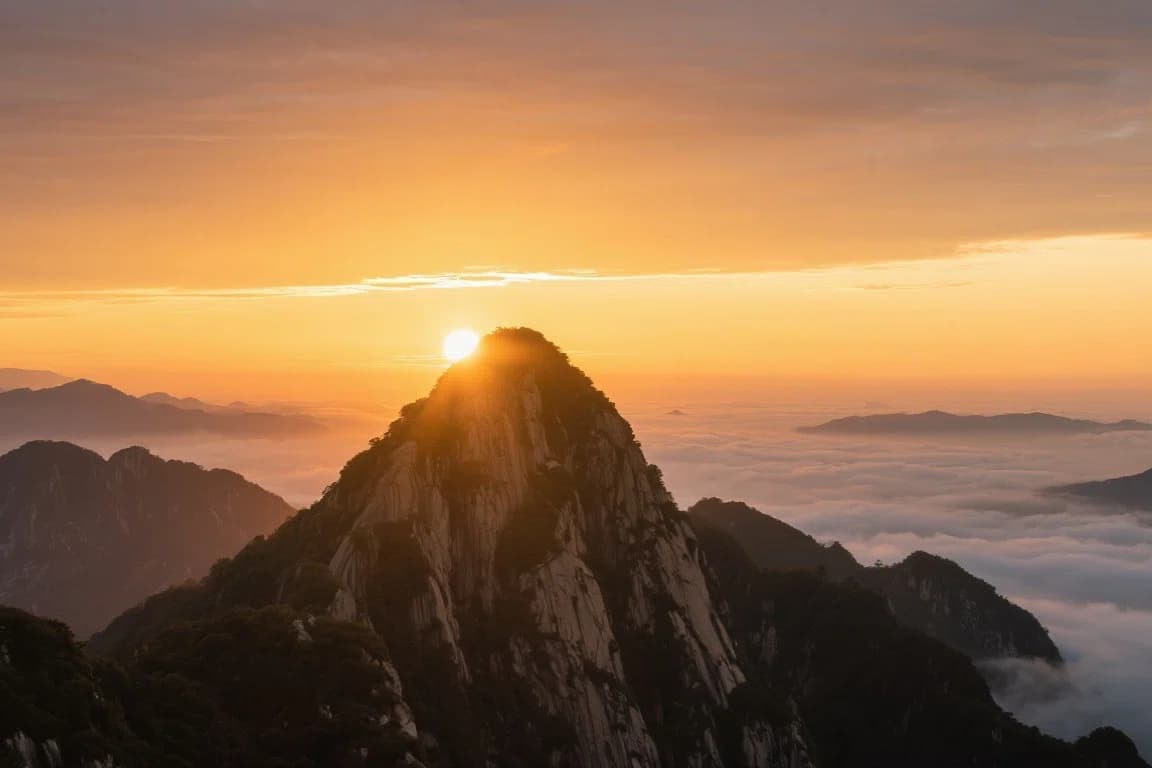
The sunrise from East Peak is one of the greatest sunrise experiences in China — golden light spilling over the Yellow River plain, with the other four peaks silhouetted against the dawn sky. But seeing it requires staying overnight on the mountain. Is it worth it? Here's the honest comparison:
Factor | Day Trip (Cable Car) | Overnight (Sunrise) |
|---|---|---|
Experience | Full mountain hike, all peaks, Plank Walk option | Same + sunrise from East Peak — a once-in-a-lifetime moment |
Total time | 10-12 hours (7 AM to 7 PM) | ~28 hours (Day 1 7 AM to Day 2 3 PM) |
Accommodation | Back to your Xi'an hotel — hot shower, real bed | Mountain guesthouse — dormitory-style, shared bathrooms, limited heating, basic bedding. Expect to pay 3-5x city hotel rates. |
Physical toll | Tiring but manageable — one night of rest recovers you | Two days of hiking with poor sleep in between — exhausting for most travelers |
Weather risk | If it's cloudy, you still see the peaks and scenery | If sunrise is cloudy/foggy, you've spent a night on a mountain for nothing |
Best for | 90% of visitors — most travelers don't need the sunrise | Photographers, spiritual seekers, and travelers who want the complete Huashan experience |
Mountain Accommodation: The Truth
There are several guesthouses on East Peak, West Peak, North Peak and Wuyun Peak. Conditions are basic: shared dormitory rooms (4–8 beds), thin mattresses, shared squat toilets, no showers, and limited heating. You are paying for location, not comfort. In peak season (April–May, September–October), rooms sell out weeks in advance. Overnight stays are recommended for serious photographers chasing the sea of clouds and sunrise — for most travellers, we recommend the day trip.
Guesthouse | Highlights | Check-in / Out | Facilities |
|---|---|---|---|
North Peak Hotel | Martial-arts fans' landmark; 5 min from North Peak cable car; sunset viewing terrace | After 14:00 | Free Wi-Fi, sunrise viewing platform, Chinese restaurant, public restroom; no shower |
Wuyun Peak Hotel | Sunrise and sunset both in frame; convenient photo points between all peaks | After 14:00 | Chinese restaurant, public restroom, sunset viewing; no shower |
West Peak Hotel | Best sunset on the mountain; 5 min from West Peak cable car; two locations: Cuiyun Palace & weather station courtyard | After 14:00 | Chinese restaurant, public restroom, sunset viewing; no shower |
East Peak Hotel | Wake up to sunrise; 5 min from East Peak sunrise platform | After 14:00 | Chinese restaurant, public restroom, sunrise viewing platform; no shower |
🍜 Food and Drinks at Mount Hua
You will get hungry on Mount Hua. Climbing thousands of stairs at over 2,000 m burns serious calories. Here is a curated list of reliable restaurants on and around the mountain, from budget local bites at the base to hot meals at the summit.
Restaurant | Chinese Name | Hours | Location | Price |
|---|---|---|---|---|
A-Qiu Ji Shengcuan Wanzi Tang | 阿邱记生汆丸子汤 | 8:00 – 18:00 | North Crossroads (Beishizi), Huayin town | ~¥20 / person |
Meng Ji Da Dao Mian | 孟记大刀面 | 10:00 – 20:00 | North Crossroads (Beishizi), Huayin town | ~¥19 / person |
Shiye Qiaomai Liangfen | 十冶荞麦凉粉 | 8:00 – 20:00 | Opposite Chengguan Primary School | ~¥10 / person |
Chuantong Maishi Pao | 传统麻食泡 | 9:00 – 18:00 | Southeast corner of Xiqiao Cross (Xiqiao Shizi) | ~¥12 / person |
Huashan Inn Restaurant | 华山客栈餐厅 | 9:00 – 20:00 | Inside Huashan Inn | ~¥69 / person |
Zhao Erliang Hot Pot | 赵二两火锅 | 16:00 – 00:00 | Shop 106, South Gate of Yuhu, West Section of Changcheng Rd, Taihua Sub-district | A la carte |
Dong Dong Bao (East Peak Branch) | 东东包(华山东峰店) | 7:00 – 20:00 | East Peak Restaurant, main peak scenic area | ~¥30 / person |
Huashan Fanhedefan | 华山饭盒的范 | East Peak: 24 hrs | West Peak Lower Plaza, East Peak Hotel, South Peak Lower Plaza, Erxiankan, North Peak Memorial Pavilion | ~¥35 / person |
☕️ Cafes on and Around the Mountain
Need a caffeine break between peaks? These cafés serve coffee, tea and warm drinks — including the highest-altitude café on Mount Hua.
Café | Chinese Name | Hours | Location | Price |
|---|---|---|---|---|
Huashan Xinghe Coffee | 华山星河咖啡(南峰炼丹炉处) | Peak season: 9:30 – 17:00 | South Peak Alchemy Furnace (Liandanlu) viewing platform, main peak area | ~¥40 / person |
Eastern Coffee (East Peak) | 华山东峰Eastern Coffee咖啡 | 8:00 – 18:00 | Courtyard of East Peak Hotel, main peak scenic area | ~¥30 / person |
Erwanduo Café | 两万多咖啡馆 | 9:00 – 23:00 | 50 m north of Chengshi Yinxiang, north end of Taihua Rd, Taihua Sub-district, Huayin | ~¥25 / person |
Note: Mountain weather changes rapidly — opening hours on the peaks may be adjusted on the day, so please check on-site. Prices are per person and in CNY.
🌡️ Mountain Weather Hazards by Season
Mount Hua's weather can change faster than any city forecast can predict. At 2,154 metres, conditions are 10-15°C colder than Xi'an, and the mountain creates its own microclimate. Here are the specific hazards each season brings:
Season | Hazard | How Serious | What to Do |
|---|---|---|---|
Spring (Mar-May) | Fog and low visibility — common in mornings, burns off by afternoon | 🟡 Moderate | Start later (9 AM) if fog is heavy. Visibility usually improves by 11 AM. |
Spring (Mar-May) | Wind — gusts up to 60 km/h on exposed ridge sections | 🟡 Moderate | Avoid the Plank Walk in high winds. Hold chains firmly. Your guide checks wind conditions. |
Summer (Jun-Aug) | Thunderstorms — frequent in July and August, often in afternoons | 🔴 Serious | This is the most dangerous season. Lightning on a granite peak at 2,000 m is life-threatening. If thunder is heard, descend immediately. |
Summer (Jun-Aug) | Heat exhaustion — 35°C at base, high humidity, sun exposure on stone | 🟡 Moderate | Drink 3+ litres of water. Rest in shaded kiosks. Start early and finish by 2 PM before the worst heat. |
Autumn (Sep-Nov) | Early frost — mornings in November can be icy on stone stairs | 🟡 Moderate | Wear shoes with good grip. Walk slowly on shaded sections. Microspikes recommended in November. |
Winter (Dec-Feb) | Ice on trails — the most dangerous hazard. Stone stairs become skating rinks | 🔴 Serious | Microspikes are mandatory. Some trail sections close. The Plank Walk is often closed in winter. Only attempt with a guide who knows winter conditions. |
Winter (Dec-Feb) | Extreme cold — wind chill at summit can reach -25°C | 🔴 Serious | Full winter gear: thermal layers, insulated jacket, windproof shell, gloves, warm hat. No cotton — it loses insulation when wet. |
All seasons | Sudden weather changes — the mountain creates its own weather system | 🟡 Always | Always carry a rain jacket. Check radar with your guide. Never ignore worsening conditions — turn back if visibility drops or storms approach. |
⚠️ Safety: Hiking Huashan Responsibly
Mount Hua has a reputation for danger, and it's earned — but most incidents are preventable. Here's what you need to know:
The Reality Check
Yes, there have been fatalities on Mount Hua. Almost all were due to: venturing off marked trails, hiking in severe weather, or attempting the mountain without proper footwear. The marked trails, cable cars, and the Plank Walk (with harness) are safe when used as intended. The mountain has a well-maintained trail system, iron chains on all steep sections, and park rangers.
Key Safety Rules
Stay on marked trails. Every fatality on Huashan in recent years involved people leaving the official paths. The "secret shortcuts" locals might mention are not safe.
Check the weather before you go. Your guide checks the forecast and radar. If thunderstorms are forecast, we reschedule. Lightning on a 2,000 m granite peak is no joke.
Wear proper shoes. Slippery stone stairs + sandals = disaster. This is the #1 preventable injury on the mountain.
Use the chains. On steep sections, grip the iron chains. They're there for a reason. Even if you're confident, one slippery step can change your day.
Pace yourself. Altitude + stairs = cardio workout. Take breaks. Drink water. If you feel dizzy, stop and rest. There's no shame in turning back.
Follow one-way signs. During busy periods, some trail sections become one-way. Going against the flow creates bottlenecks and is dangerous on narrow cliffside trails.
Don't hike in the dark unless you're doing a sunrise hike with a guide and headlamp. The mountain trail is unlit.
Health Advisory: Heart & Blood Pressure
West Peak sits at 2,083 m — genuine high altitude. Travellers with high blood pressure or heart conditions are strongly discouraged from climbing, especially if your condition is unstable or you have low everyday fitness. Here is what you need to know before you go:
The Specific Risks
Your heart works harder. Above 2,000 m the air contains noticeably less oxygen. To keep you supplied, your heart rate rises and your heart beats more forcefully. This can easily trigger chest tightness, angina, or an acute cardiac event.
Blood vessels constrict sharply. Hypoxia raises pulmonary artery pressure and directly worsens hypertension — it can become dangerous quickly.
The physical effort is extreme. Even with the cable car, the walk from the West Peak station to the summit is a steep, narrow staircase. If you continue on to South Peak or East Peak, the distance and climbing increase dramatically.
Special Warnings
The cable car itself is intense. Known as "Asia's No. 1 Cable Car," the West Peak line has a vertical drop of nearly 900 m and large swings. Travellers with a fear of heights or heart conditions may feel strong anxiety during the ride.
If you still plan to go, consult a cardiologist or pulmonologist beforehand for a fitness assessment. Bring your emergency medication and a portable oxygen canister.
If you develop a severe headache, difficulty breathing, or chest pain on the mountain, stop immediately, use oxygen, and descend to lower elevation as soon as possible for medical care. Do not push through.
Note: Mountain weather changes rapidly — opening hours and guesthouse availability on the peaks may be adjusted on the day, so please check on-site.
📸 Photography Tips: Capturing Huashan
Mount Hua is one of the most photogenic mountains in China. Here's how to get the best shots:
Location | Best Time | What to Shoot |
|---|---|---|
North Peak viewing platform | 9-11 AM (before haze builds) | The other four peaks rising above you — the classic Huashan shot |
Blue Dragon Ridge (苍龙岭) | Mid-morning | The trail snaking up the ridge — if someone is ahead of you, photograph them for scale |
West Peak (Lotus Peak) | Afternoon | Daoist temple against the granite backdrop; the "Lotus Flower" rock formation |
South Peak summit | Anytime | 360° panorama — you're at the highest point of all Five Sacred Mountains |
East Peak sunrise terrace | 5:30-6:30 AM (spring/autumn) | Sunrise over the Yellow River plain — only for overnight guests |
Plank Walk viewing platform | Midday | People on the planks — terrifying and hilarious in equal measure |
🔍 Insider Secrets: Things Most Visitors Miss
After leading hundreds of Huashan trips, here are the things that most visitors walk right past:
Secret | Where | Why It Matters |
|---|---|---|
The Chess Pavilion (下棋亭) | East Peak, on a narrow rock spur | A tiny stone pavilion on a precarious cliff-edge platform where, legend says, Emperor Zhao Kuangyin lost Mount Hua in a game of chess to the Daoist sage Chen Tuan. Most groups rush past it. |
Black Dragon Ridge (苍龙岭) | Between North and East Peaks | A narrow section where the trail is literally carved into a vertical rock face for 30 metres — less famous than the Plank Walk but equally thrilling, and often empty. |
Jade Maiden Temple (玉女祠) | Central Peak | The quietest of the five peaks. A tiny Daoist shrine dedicated to the "Jade Maiden" — a Daoist immortal. You'll likely have it to yourself while everyone else crowds South Peak. |
The "Footprints of Giant" | West Peak trail | A rock with a genuine geological depression that looks like a giant's footprint. Local legend says a giant stepped from Mount Hua to Mount Tai in a single stride. |
The sunrise from East Peak | East Peak (overnight only) | If you stay overnight on the mountain (there are basic guesthouses on East Peak), the 5:30 AM sunrise over the Yellow River plain is one of the great sunrise experiences in China. Most day-trippers miss this entirely. |
Winter snowscape | Entire mountain, December-February | Huashan under snow is otherworldly — white granite peaks under white sky. Almost no crowds. But you need microspikes and extreme cold-weather gear. |
The old pilgrim trail down | From North Peak to base (walking down) | If you choose to walk down, you'll use the trail that pilgrims have been climbing for 2,000 years. The Black Dragon Ridge section — a near-vertical spine of stone with chains — is the most photographed trail section on the mountain, and most cable-car users never see it. |
👨👩👧 Family Guide: Mount Hua with Kids
Can you take children to Mount Hua? Yes — with careful route selection. Here's what families need to know:
Age Guidelines
Age Group | Recommendation | Best Route |
|---|---|---|
Under 6 | ❌ Not recommended. Stone stairs, cliff edges, and long days are not suitable for toddlers. | — |
Ages 6-10 | 🟡 Possible but only on the North Peak cable car route. Short walks only. One adult per child. | North Peak cable car up and down. 2-3 hours on mountain. |
Ages 10-14 | 🟢 Good for active, responsible kids. They'll love the adventure. Brief them on safety rules before you go. | West Peak cable car up → North Peak cable car down. 4-5 hours on mountain. Skip the Plank Walk. |
Ages 14+ | 🟢 Full route possible. Treat as an adult hiker. | Any route. Plank Walk optional (parental discretion). |
Safety Rules for Kids on Mount Hua
Always hold the chain — on any section with iron chains, children should grip the chain even if the trail feels easy to them.
Walk behind, not beside — on narrow sections, children should walk single-file behind an adult, not side by side.
No running — stone stairs are uneven. Running on stairs is the #1 cause of ankle injuries on Huashan.
Stay away from cliff edges — children should not approach any viewing platform edge without an adult holding them. There are railings at major viewpoints, but some sections have none.
Bring snacks and water — hungry, tired kids get careless. Keep them fed and hydrated.
Turn back if tired — there's no shame in a shortened trip. A tired child on a cliff trail is a safety risk.
What About Older Travelers (65+)?
Mount Hua can be enjoyed by many active senior travelers, but it is important to assess your own physical condition, stamina, and mobility before planning the hike. The mountain involves steep stairs, uneven paths, and extended walking, so it may not be suitable for everyone.
For those who are physically fit and comfortable with moderate walking, a cable car-based route can greatly reduce the difficulty. A common option is taking the West Peak Cable Car up, which avoids the steepest ascent, then exploring the relatively gentler sections between the West, South, and East Peaks, before taking the North Peak Cable Car down.
A walking stick can provide additional support and stability. Travelers with heart conditions, serious joint problems, balance issues, or limited mobility should consult a doctor or consider a less demanding sightseeing option before visiting Mount Hua.
💡 Pro Tips from Your Way Holiday Guides
Tip | Details |
|---|---|
Bring gloves | The iron chains on steep sections are cold, rough, and will blister bare hands. Cheap work gloves or cycling gloves are perfect. |
Start early | Our private cars leave Xi'an at 7 AM, arriving at the mountain by 8:30-9:00 AM. This beats the cable car queues that build by 10 AM on weekends. |
Go counter-clockwise | If doing the West-to-North route, the flow is: West Peak → South Peak → East Peak → Central Peak → North Peak. This is the standard recommended direction and avoids oncoming traffic on narrow sections. |
Don't skip the Central Peak | Most groups rush from East to North and skip Central. It adds 15 minutes and you get the quietest, most peaceful spot on the mountain. |
Check the weather that morning | Even if the forecast looks good, check the radar with your guide. Afternoon thunderstorms in summer can appear within an hour. If there's lightning, we don't go. |
Take the cable car down | Unless you're a serious hiker, take the North Peak cable car down. Walking down thousands of stone stairs destroys your knees — the descent is harder on the body than the ascent. |
🌟 Why Travel to Mount Hua with Your Way Holiday?
Mount Hua is one of the few destinations where the difference between going alone and going with a guide is not just convenience — it's safety, efficiency, and experience quality.
Challenge of Going Alone | How Your Way Holiday Solves It |
|---|---|
Navigating Xi'an North Station, buying train tickets, finding shuttle bus — adds 1-2 hours each way | Door-to-door private car from your Xi'an hotel. 90 minutes, no transfers. |
Queueing for entrance tickets and cable car tickets (30-60 min on weekends) | Guide pre-purchases all tickets. Walk past the queue. |
Choosing the right route for your fitness level — trail signage is in Chinese | Guide assesses your fitness and recommends the perfect route. |
Knowing which sections are dangerous in current weather conditions | Guide checks radar and forecasts. We reschedule if weather is dangerous. |
Getting back to Xi'an when you're exhausted after 6 hours of hiking | Private car and driver waiting at the mountain exit with AC and cold water. |
Emergency support if something goes wrong | Guide carries emergency contact numbers, and knows the nearest medical station. |


Traveler Discussions
Questions from travelers