
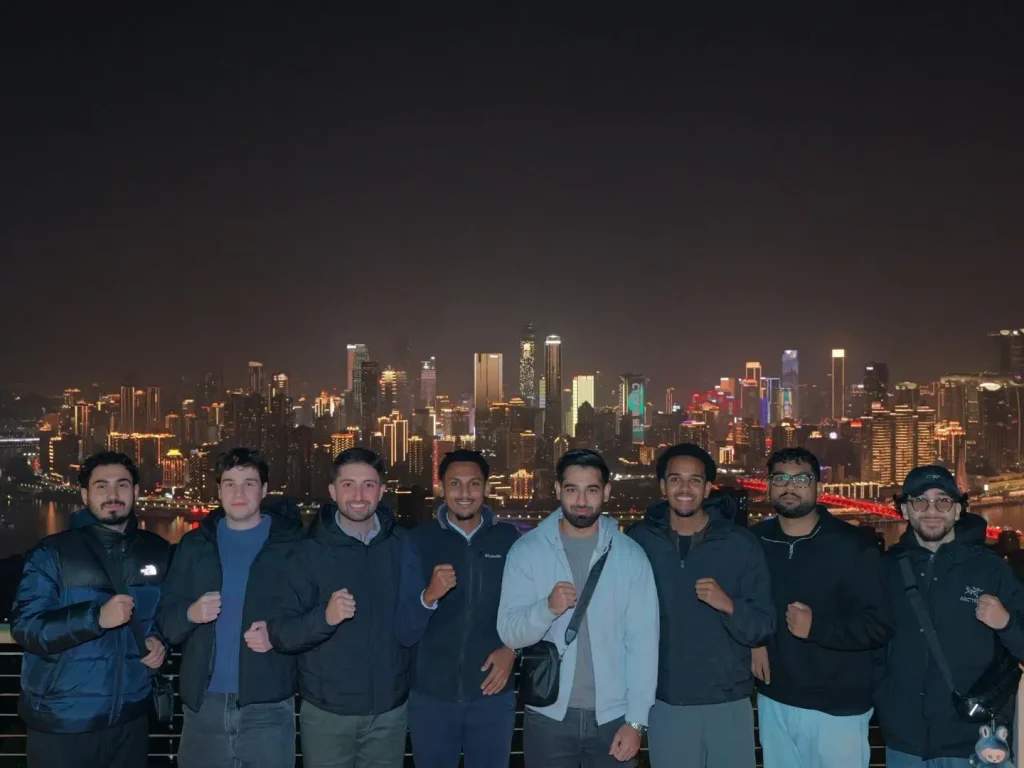
Chongqing is not like any other city in China. Skyscrapers climb hillsides, a monorail disappears into a residential block, two great rivers braid past lit-up cliffs, and the whole place glows with neon after dark. Locals call it the 8D city; the rest of us just call it overwhelming in the best way. The fifteen things below are the genuine highlights — the experiences that separate a Chongqing trip you half remember from one you will not stop talking about.
This is the bucket-list view: what to do, roughly what each costs, and how to slot them together. For the day-by-day routing, see our Chongqing travel guide; for the after-dark picture, the night-view and photo-spot guide goes deeper on the skyline. Prices and hours were checked in November 2026 and can move, so treat them as planning numbers rather than gospel.
All 15 things to do in Chongqing at a glance
Experience | Type | Time | Cost | |
1 | Hongya Cave at night | Iconic sight / night view | 1–2 hrs | Free |
2 | Yangtze Cableway | Unique transport / view | 30 min plus queues | CNY 20–30 |
3 | Wulong Karst day trip | Nature / UNESCO | Full day | CNY 150–300 |
4 | Chongqing hot pot | Food / cultural | 1.5–2 hrs | CNY 80–200 |
5 | Nanshan One Tree night view | Panoramic view | 1–2 hrs | CNY 30 |
6 | Liziba monorail through a building | Unique sight / photo | 30 min | Free |
7 | Ciqikou ancient town | Culture / history | 2–3 hrs | Free |
8 | Yangtze River cruise | Scenic boat tour | 45 min to multi-day | CNY 60 up to $1,000+ |
9 | Dazu Rock Carvings | Culture / UNESCO | Full day trip | CNY 120–250 |
10 | Jiefangbei and street food | Shopping / food | 2–3 hrs | Free, food varies |
11 | Two Rivers night cruise | Night view / boat | 45–60 min | CNY 60–200 |
12 | Sichuan opera show | Culture / performance | 1.5 hrs | CNY 100–300 |
13 | Eling No.2 Factory creative park | Art / hip | 1–2 hrs | Free |
14 | Hot spring experience | Wellness / relaxation | Half day | CNY 100–500 |
15 | Street food crawl | Food adventure | 2–4 hrs | CNY 50–150 |
Why Chongqing is one of China's most exciting cities
What makes Chongqing different from anywhere else in China is the combination: dramatic geography you can feel in your calves, food this is the birthplace of, and infrastructure that looks computer-generated. A few things set it apart:
Dramatic geography. Mountains, rivers and valleys stack the city in three dimensions, so it looks different from every angle.
Incredible food. The home of Sichuan hot pot and one of China's great eating cities — spicy, numbing, endlessly varied.
Defiant architecture. Monorails through towers, cliffside complexes, elevated roads that go nowhere you expect.
UNESCO sites nearby. Wulong Karst and the Dazu Rock Carvings are both doable as day trips.
Spectacular nights. Thousands of lights climbing the hills and reflecting in two rivers — among the best in China.
Real value and real life. Cheaper than the coastal tier-1 cities, and less tourist-finished, so it feels like actual China.
👉1 Hongya Cave at night — the iconic Chongqing view
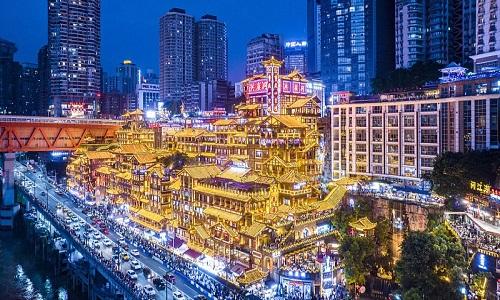
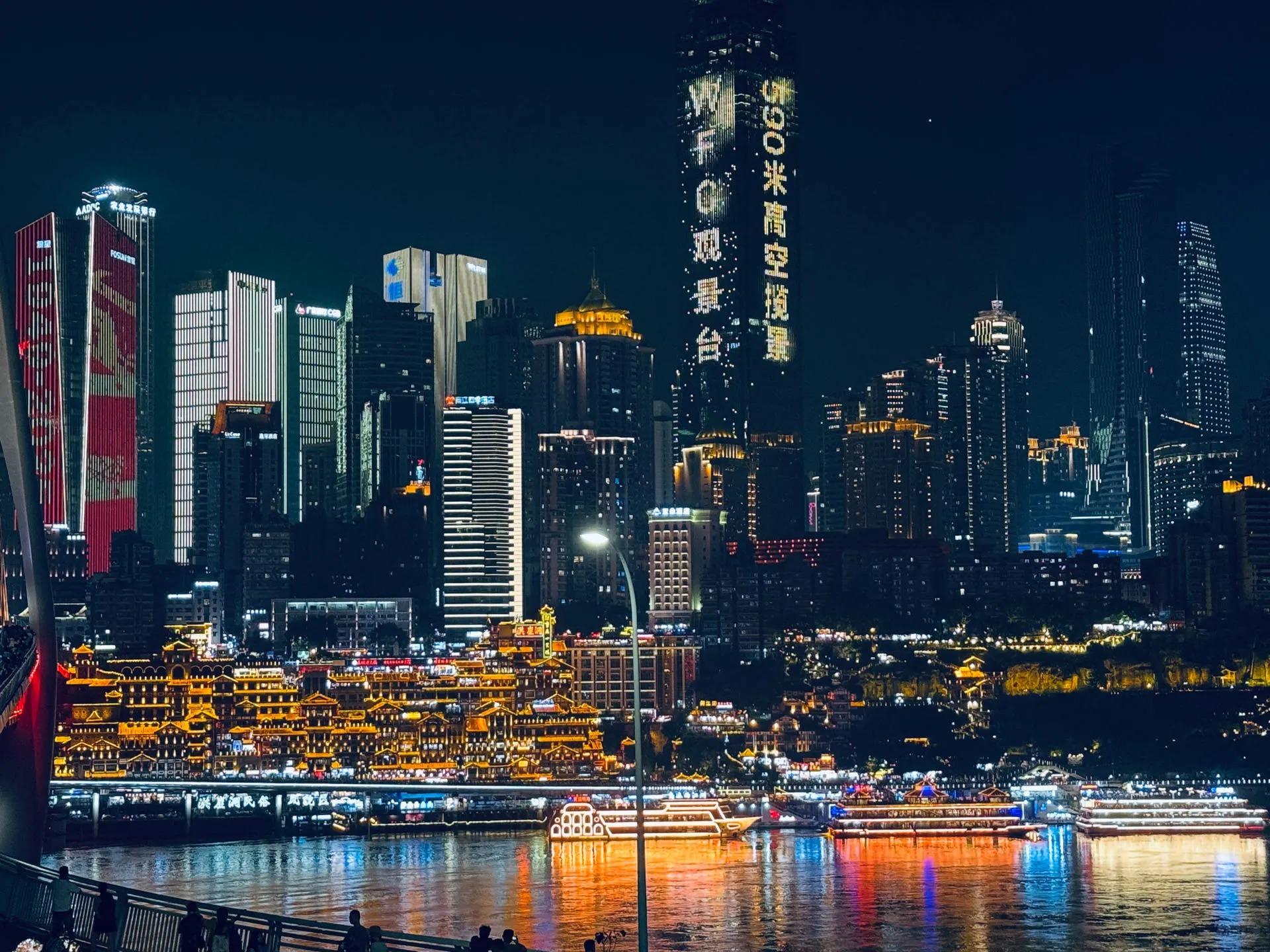
Hongya Cave (Hongyadong) is the image on every poster: an eleven-storey stilt-house complex built into a cliff on the Jialing riverbank, lit by thousands of warm lights after dark and regularly compared to the bathhouse from Spirited Away. It is free to walk around, and day and night are two different attractions.
Location: Jialing riverbank, Yuzhong, a short walk from Jiefangbei; Metro Line 1 or 6 to Xiaoshizi.
Cost: free to explore the building and terraces.
Best time: arrive before sunset so you get the daylight view, the lit-up night, and the skyline photo in one evening.
How to see it properly: go inside and walk the levels, take the lift to the top and work down, then cross Qiansimen Bridge for the classic angle.
It is the symbol of the city for a reason, and our guide to Chongqing's night-view and photo spots shows exactly where on the bridge and the river to stand.
👉2 Ride the Yangtze Cableway — cross a river in the sky
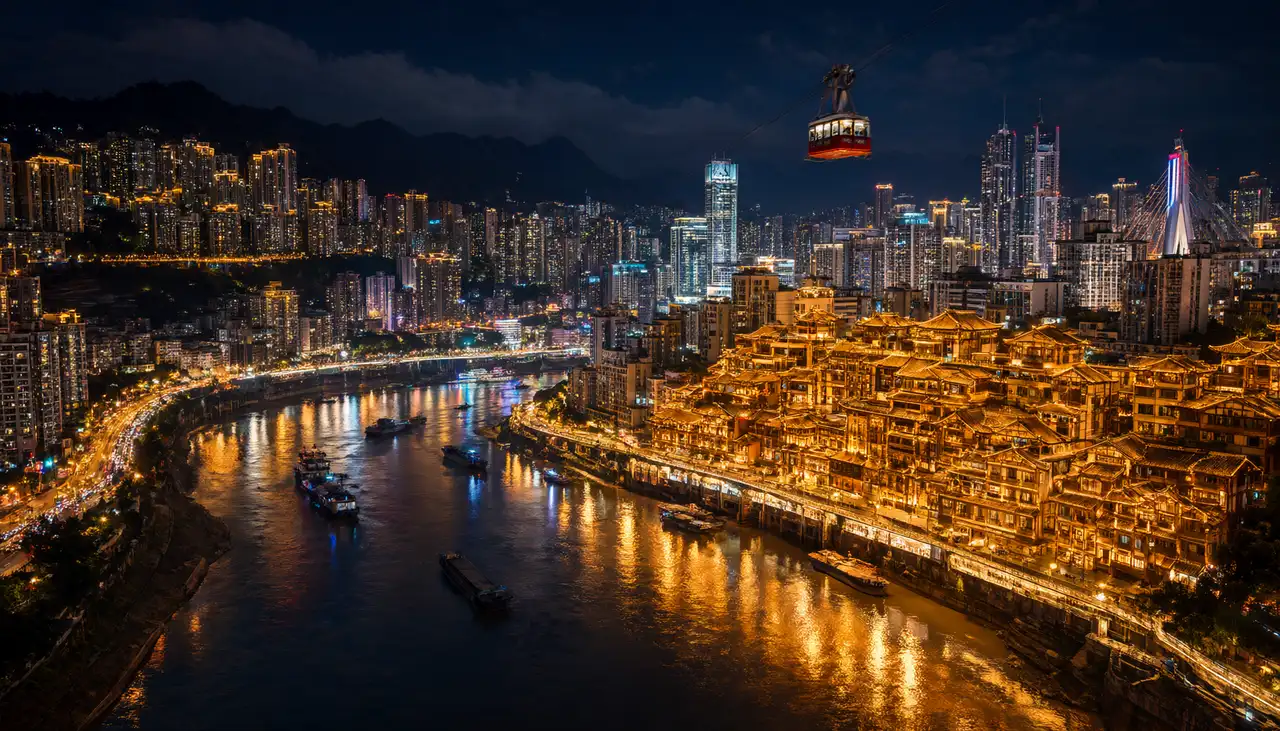
The Yangtze Cableway is the only urban passenger cableway of its kind in China: a pair of gondolas carrying people more than a kilometre across the river, high above the water. It is a working commute for locals and one of the most affordable "wow" experiences in the city.
Route: Yuzhong station near Xinhua Road to Nan'an station at Shangxin Street.
Cost: one-way roughly CNY 20–30; the crossing itself takes a few minutes.
Best time: late afternoon into dusk, when the lit city reflects on the river.
Tip: buy one-way, not round-trip — cross, then walk, metro or taxi back from the other side so you see more and pay less.
The views are generally better heading from Yuzhong to Nan'an, because you face Hongya Cave and the peninsula as you leave.
👉3 Wulong Karst day trip — Asia's natural bridges
Wulong (Wulong Karst) is a UNESCO World Heritage landscape of limestone gorges and the Three Natural Bridges, the largest cluster of natural stone arches in Asia, and a Transformers filming location. It is the most rewarding way to see a completely different side of Chongqing province in a single day.
Getting there: an early high-speed train from Chongqing East — roughly 34 to 38 minutes — then a bus or taxi out to the bridges.
Cost: combined entry plus in-park transport runs about CNY 125–135 (cheaper in the off-peak from November).
Effort: two to three hours of mostly downhill walking with some climbs; good shoes and water matter.
Extras: the Longshui Gorge fissure is a nearby add-on if you have the energy.
Book train tickets ahead for weekends and holidays, or let a private day trip sort the tickets, transfers and timing for you — see the Chongqing tour pages.
👉4 Eat Chongqing hot pot — the city's soul food
Chongqing is the birthplace of Sichuan hot pot, and eating it here is a cultural event, not just a dinner: a bubbling pot of chilli oil and numbing Sichuan peppercorns with an endless parade of ingredients you cook yourself at the table.
Cost: roughly CNY 80–200 a person depending on the restaurant.
Must-orders: thin beef, tripe, duck blood, lotus root, tofu.
If you cannot handle heat: ask for a mandarin duck pot (yuanyang guo), half spicy, half mild.
Etiquette: use the serving chopsticks for the communal pot, cook meat first and starches last, and take your time — it is meant to be slow and social.
The best pots are often tiny neighbourhood places packed with locals rather than the polished tourist rooms. Look for the busy ones.
👉5 Nanshan One Tree — the panoramic night view
Perched high on South Mountain, Nanshan One Tree is the postcard panorama: from several hundred metres up you look down on the whole city, both rivers and the surrounding ridges, the lights strung in every direction. On a clear night it puts the scale of Chongqing into sharp perspective.
Cost: around CNY 30 to enter the viewing area.
Getting there: a taxi or DiDi from the centre is the easy option; the hill is not a pleasant walk at night.
Best time: arrive well before sunset so you get daytime, sunset and the full night view in one visit.
Practical: it is cooler and windier up top, and taxis get scarce on busy nights, so arrange the return before you go.
👉6 Liziba — the monorail that goes through a building
Liziba station is the viral one: Chongqing's Line 2 monorail runs straight through the middle of a nineteen-storey residential block, with the platforms occupying the floors inside the tower. It is a working station, not a gimmick, and the single clearest demonstration of why people call this the 8D city.
Cost: free to watch from the street; a metro ride is a few yuan.
Best photo: the official viewing platform below the station, looking up — follow the signs for the viewing deck.
Do both: shoot it from below, then ride Line 2 yourself for the view from inside and along the elevated stretches.
Combine: it sits on Line 2 near Eling, so it pairs well with the hilltop creative park below.
👉7 Ciqikou ancient town — a step back in time
Ciqikou is a hillside old town on the western edge of the city, more than a thousand years old and once a busy porcelain port. The narrow stone lanes, wooden frontages, tea houses and snack stalls give you the Chongqing that existed before the skyscrapers — though the main street is now heavily touristed, so go early and slip into the side alleys.
Location: Shapingba, west of the centre; Metro Line 1 to Ciqikou station.
Cost: free to wander; pay for food and crafts.
Best time: morning or late afternoon, before the midday crowds.
Eat: spicy tofu, chenpi tangerine candy, rice cakes, and the famous maocai and blood-tofu snacks.
👉8 Yangtze River cruise from Chongqing
Chongqing is the classic starting point for Yangtze cruises, and you can sample it small or go big. The short Two Rivers evening cruise shows you the skyline from the water in under an hour; the multi-day downstream sailings through the Three Gorges are one of the great river journeys in the world.
Short version: an evening cruise from the Chaotianmen and Hongyadong piers, priced by deck class.
Long version: a downstream Three Gorges cruise toward Yichang over several days, with higher fares for cabins and itineraries.
Best: pick a boat with an open deck and book ahead in peak season.
Our Chongqing travel guide walks through how the cruise options compare if you want to plan the longer version.
👉9 Dazu Rock Carvings — a UNESCO cultural treasure
The Dazu Rock Carvings are tens of thousands of Buddhist, Confucian and Taoist figures cut into cliff faces between the ninth and thirteenth centuries, and one of China's greatest collections of religious rock art. Baodingshan is the main and most spectacular site; Beishan is a smaller, quieter second cluster.
Getting there: a high-speed train of roughly 30 minutes to Dazu South, then a short bus or taxi to the sites.
Cost: Baodingshan entry is in the low hundreds of yuan; a combined ticket with Beishan costs a little more.
Effort: mostly flat walking with a lot of ground to cover; a guide turns the carvings into stories.
Wulong or Dazu: pick one for a day trip — Wulong for nature and hiking, Dazu for art, history and gentler walking.
Booking and site-by-site detail are in our full Dazu Rock Carvings guide.
👉10 Jiefangbei and street food — eat your way through downtown
Jiefangbei, the area around the Liberation Monument, is the commercial heart of Chongqing: malls, towers, neon and the densest concentration of street food in the city. It is the best place to feel the daytime-to-nighttime energy shift.
What to eat: chongqing xiaomian spicy noodles, grilled skewers, stinky tofu, cold noodles, candied hawthorn.
Best time: evening, when the food stalls are all open and the square is full of locals.
Budget: a few yuan to a few dozen per dish — you can graze for a long time for very little.
👉11 Two Rivers night cruise — the city from the water
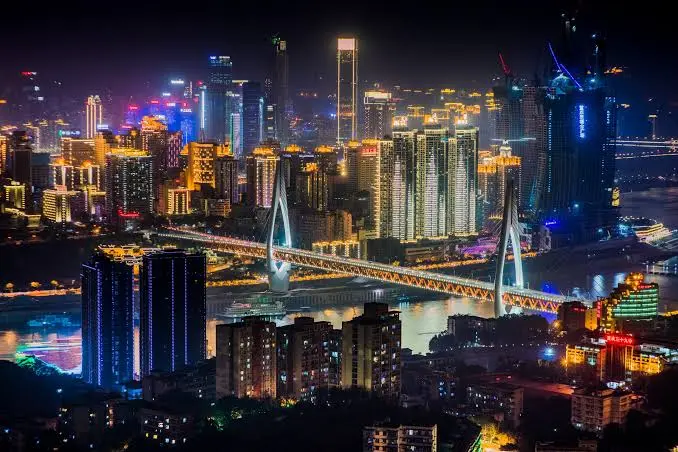
The Two Rivers night cruise threads the Yangtze and Jialing, gliding under lit bridges and past Hongya Cave from water level. It is the relaxing, romantic way to take in the skyline after a long day of climbing hills.
Duration: under an hour, boarding from the Chaotianmen and Hongyadong piers.
Cost: budget to VIP decks run a range; the open upper deck is the one worth paying for.
Tip: an earlier departure in the blue hour lets you see sunset and the night lights on one sailing.
👉12 Sichuan opera — face-changing and fire-spitting
A Sichuan opera show is a fun, very visual introduction to Chinese performing arts, built around bianlian face-changing, fire-spitting, acrobatics and puppetry. The masks flip in a fraction of a second and you will not work out how it is done.
Cost and length: a few hundred yuan, running about an hour and a half.
Best for: first-time visitors and families — the shows are wordless enough that you do not need Chinese.
Tip: sit nearer the front for the face-changing, and look for venues that serve tea alongside the performance.
👉13 Eling No.2 Factory creative park — the hip side
Built inside a renovated old print factory on the Eling ridge, the No.2 Factory creative park is Chongqing's best example of industrial-chic: cafes, galleries, craft shops and rooftop city views, and a gentler pace than the main sights. It is the place to see contemporary, creative Chongqing.
Getting there: Metro Line 1 to Eling, then a short uphill walk.
Cost: free to enter; you pay for coffee and shopping.
Best time: afternoon into golden hour for photos from the rooftop.
Combine: it sits near Eling Park on the same hill, so the two make an easy half day.
👉14 Hot spring experience — relax and recharge
Chongqing sits on real geothermal resources, and soaking is a genuine local pastime rather than a tourist act. After a few days of hills and stairs, a hot spring is the most pleasant way to recover.
Where: resorts to the north around Beibei and south in Banan, ranging from public baths to private villa pools.
Cost: a wide range, a couple of hundred yuan up to a high-end villa soak.
Etiquette: shower before entering, keep soaks short with breaks, and drink water; it is busiest in winter, so book weekends ahead.
For where to stay near the good bathing and skyline areas, see our guide to the best hotels in Chongqing.
👉15 Street food crawl — eat everything
Eating your way across a few neighbourhoods in one evening is the single best value activity in Chongqing. A proper crawl gets you ten or more dishes from tiny stalls and hole-in-the-wall kitchens you would never find on a map.
A simple route: xiaomian near Jiefangbei, then grilled skewers, then stinky tofu or cold noodles, then something sweet, finishing with a sit-down hot pot near Hongya Cave.
Cost: a few dozen yuan per person for a lot of food.
Spice: ask for less spicy (shao la) or not spicy (bu la) if the heat gets too much.
Rule of thumb: follow the longest line of locals, and bring hand sanitiser.
The best Chongqing experiences by category
Category | Top pick | Second | Third |
Iconic sights | Hongya Cave | Yangtze Cableway | Liziba monorail |
Nature and outdoors | Wulong Karst | Nanshan One Tree | Eling Park |
Culture and history | Dazu Rock Carvings | Ciqikou | Sichuan opera |
Food and drink | Hot pot | Street food crawl | Jiefangbei food streets |
Night views | Nanshan One Tree | Two Rivers cruise | Jiangbeizui riverside |
Day trips | Wulong Karst | Dazu Rock Carvings | Jinyun Mountain |
Free things to do | Hongya Cave | Liziba station | Ciqikou |
For photographers | Nanshan One Tree | Hongya Cave and bridge | Eling No.2 Factory |
How many of these can you fit into your trip
Trip length | How many you can do | Priority picks |
1 day | 5–7 | Hongya Cave day and night, cableway, Jiefangbei, one night view, one hot pot |
2 days | 8–10 | The above plus Ciqikou, Nanshan and Liziba |
3 days | 12–13 | The above plus a Wulong or Dazu day trip |
4+ days | All 15 and more | Everything, plus a second day trip, a Chengdu link-up or a river cruise |
Honest advice: do not try to do all fifteen. Pick the eight to ten that genuinely appeal and leave room to wander. Chongqing rewards getting a little lost far more than it rewards a checked-off list.
Practical tips for visiting Chongqing
Best time to go
Spring and autumn are the comfortable windows. Summers are hot and humid — good for night views, hard on daytime walking. Autumn gives the clearest skies and the biggest crowds; winters are cold and foggy but quiet and perfect for hot springs.
Getting around
Metro lines 1, 2, 3, 6 and 10 cover most tourist areas and are cheap and reliable.
DiDi ride-hailing has an English option and is the easiest way to handle the hills; keep street-taxis as a backup.
The Yangtze Cableway is transport and sight at once — use it on a leg you were crossing anyway.
High-speed rail links the Wulong and Dazu day trips, and runs to Chengdu in as little as about an hour.
Food, payment and safety
Street food is generally safe — busy stalls full of locals are the best signal of quality, and bottled water beats tap.
Set up Alipay or WeChat Pay if you can; carry some cash for small vendors, and use cards at hotels and malls.
The city is very safe overall — mind your bag in crowded spots like Hongya Cave and watch your step on steep, slippery stairs at night.
Save your hotel's name and address in Chinese to show a driver, and a few basic phrases go a long way with local staff.
Final thought
Chongqing is not a city you visit to tick off attractions — it is a city you fall into. You get lost on the eight-dimensional streets, your mouth burns at the hot pot, and then you turn a corner and a view stops you cold. Use this list as a starting point, hit the highlights — Hongya Cave, the cableway, a proper hot pot, one night view, one day trip — and leave real time to wander. The best moments here are never on the list.

Traveler Discussions
Questions from travelers