
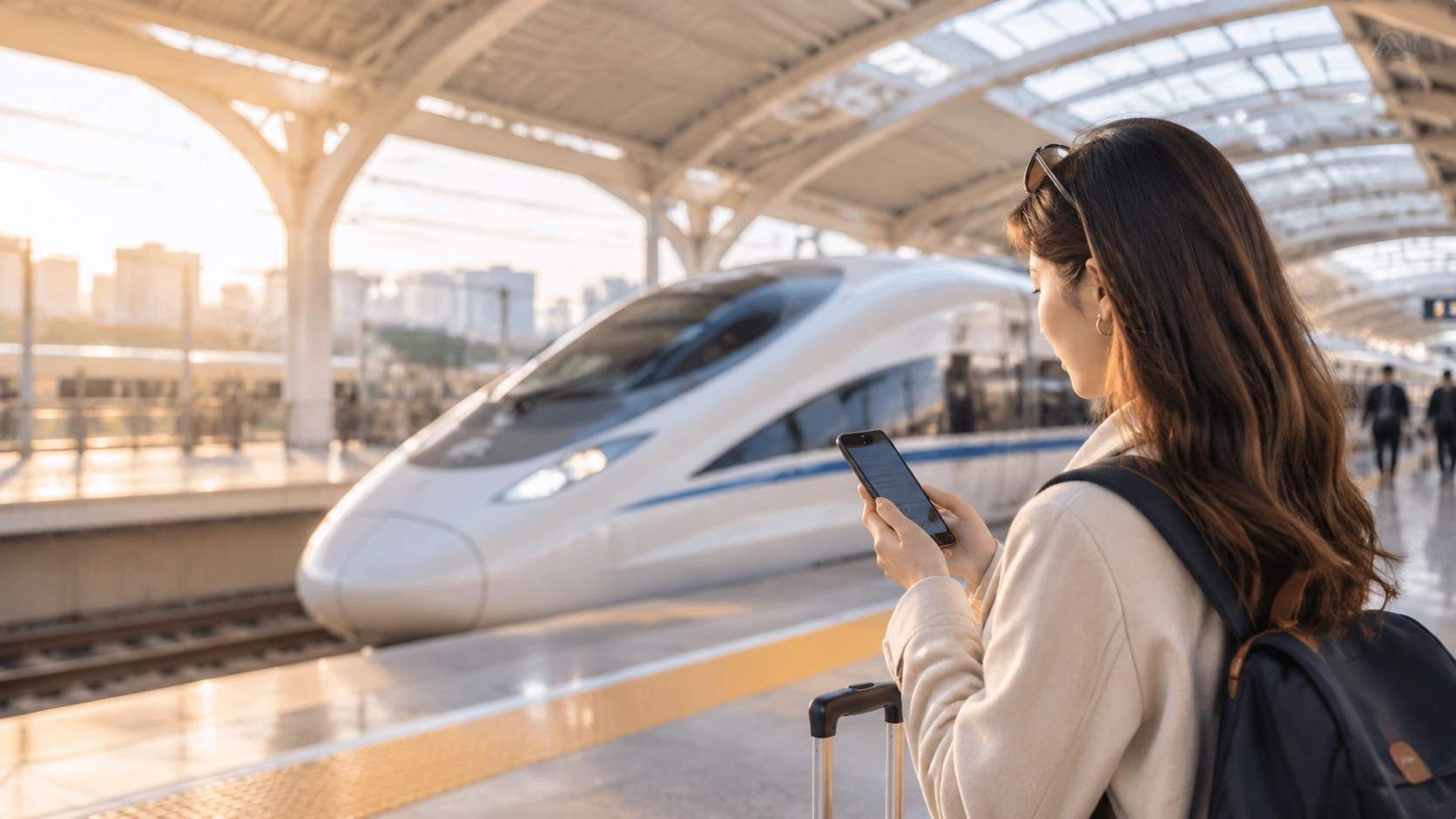
Take the train. Fly only if the airport is already on your side of Beijing
Three ways connect the capital to the old imperial city: a high-speed train that crosses 1,200 km of the North China Plain in a morning, a sleeper that trades a night for a hotel bill, and a two-hour flight that somehow takes five hours door to door. For most visitors the choice is not close.
Best overall — G351 · 4h10. Beijing West 07:55 → Xi'an North 12:05. Second class ¥577.5–587. Roughly ten fast departures a day; the 09:55 G365 is the same 4h10 with a more civilised alarm clock.
Best value — Z19 · 11h51. Beijing West 20:40 → Xi'an Station 08:31, no stops. Hard sleeper from ¥263.5, soft sleeper ¥407.5. One night's sleep replaces one hotel night.
Fastest in the air — Flight · 2h00. Daxing or Capital to Xianyang, 910 km. Airborne time as low as two hours; add an hour into the airport and 75 minutes out of it, and the train is already at the city wall.
How far is Beijing from Xi'an, really?
Roughly 910 km in a straight line, 1,200 km along the rails, and one very flat, very fast piece of infrastructure in between. The distance matters less than what sits at each end of it.
The two cities are joined by the same corridor that carries traffic to Zhengzhou and onward west: the Beijing–Guangzhou high-speed line down to Zhengzhou East, then the Zhengzhou–Xi'an section of the Xu–Lan line across Henan and into Shaanxi. Since the line was completed, the journey stopped being an overnight undertaking and became a morning errand. A train that once took fourteen hours now leaves Beijing West after breakfast and arrives in time for lunch near the Bell Tower.
Measure | Figure | What it means for your day |
|---|---|---|
Flight distance | ~910 km / 565 mi | 2h00–2h35 block time, wheels up to wheels down |
Rail distance | 1,200 km | 4h10 on the fastest G trains, 5–6h on the rest |
Road distance | ~1,100 km | 12–13 hours driving; two long days if you stop |
Time zone | None | Both cities keep UTC+8; no jet lag, no clock maths |
January temperature | Beijing −3°C / Xi'an 3°C | Xi'an is noticeably milder — pack one less layer than you would for Harbin |
Terminus stations | Beijing West → Xi'an North | Both are metro-connected but neither is in the postcard centre |
Figures rounded. Rail distance follows the published route via Zhengzhou; the flight figure is the great-circle distance between Capital and Xianyang airports.
Train vs flight: the comparison everyone gets half right
Airline schedules quote 2h05. Rail schedules quote 4h10. Both numbers are true and neither is the number you should plan around, because neither includes the hour you lose getting to an airport or the forty minutes you spend getting through a Chinese railway station at peak.
Option | Door to door | Typical fare, one way | How often | Choose it when |
|---|---|---|---|---|
Fast G train | 5h30–5h50 | ¥577.5–587 second class ¥939 first ¥1,729–1,945 business | ~10 fast trains daily, 30+ in total | You want a predictable morning, luggage space, and arrival inside the city |
Slower G / D train | 6h30–8h | ¥494–525 second class | Frequent, some from Qinghe | You are flexible on time and want to save ¥60–90 |
Z19 sleeper | 12 hours, overnight | ¥263.5–289 hard sleeper ¥407.5–424.5 soft sleeper | 1 nightly nonstop | You would rather spend the night travelling than pay for a room |
Flight | 5h00–6h30 | ¥250–600 off-peak ¥900+ at peaks | 15+ nonstops daily | You stay near an airport, connect from an international flight, or need a late departure |
Chinese rail fares float; the same seat can cost 15–25% more on a Friday or the day before a public holiday.
3.1 The hidden hours, drawn out
By plane — the honest count: ≈ 5h15–6h30
45–75 min Hotel to PEK or PKX + 90 min Check-in, security, gate walk + 2h05 Flight + 75–90 min T5 → Line 14 → Line 2, or taxi
By bullet train — the honest count: ≈ 5h35–5h55
30–40 min Hotel to Beijing West + 40 min Security, waiting hall, platform + 4h10 Train + 25–30 min Line 2 to Bell Tower
They land within an hour of each other, and the train does it without a connection, a baggage carousel or a 40 km ride into town. That is the whole argument. The plane's advantage is not speed, it is departure slots: there are flights at 21:30 and 22:55, when the last useful train has already gone.
THE ONE CASE FOR FLYING: You are arriving in Beijing at Capital or Daxing and continuing the same day; you live or work in Chaoyang's northeast where PEK is 20 minutes away; or you need to be in Xi'an after 22:00. Otherwise the train is the better product, not just the cheaper one.
Beijing to Xi'an by high-speed train
Thirty-odd departures a day, of which roughly ten do the trip in about four hours. The rest trade speed for stops and a slightly lower fare. All of them leave from Beijing West and arrive at Xi'an North.
4.1 What a normal timetable looks like
The pattern is stable across the year, with extra trains around Spring Festival and the first week of October. Times below are representative weekday departures.
Train | From | Departs | Arrives | Duration | Second class |
|---|---|---|---|---|---|
G351 | Beijing West | 07:55 | 12:05 | 4h10 | ¥577.5–587 |
G357 | Beijing West | 08:10 | 12:31 | 4h21 | ¥587 |
G365 | Beijing West | 09:55 | 14:05 | 4h10 | ¥587 |
G671 | Beijing West | 11:41 | 16:54 | 5h13 | ¥525 |
G353 | Beijing West | 12:55 | 17:08 | 4h13 | ¥618 |
G367 | Beijing West | 14:05 | 18:30 | 4h25 | ¥587 |
G661 | Beijing West | 16:45 | 22:14 | 5h29 | ¥525 |
D1043 | Qinghe | 16:46 | 23:37 | 6h51 | ¥405 |
Z19 | Beijing West | 20:40 | 08:31 (+1) | 11h51 | sleeper only |
Always check 12306 or Trip.com for the date you are travelling; seasonal timetables add and drop trains.
4.2 Fares, seat classes and the floating price
Since 2020 the published fares on this corridor are a ceiling, not a price. A second-class seat that lists at ¥587 can sell for ¥494 on a Tuesday in March and for the full ¥587 the Friday before National Day. The discount is applied per train, which is why two departures an hour apart can differ by ¥90 for the identical seat.
Class | Typical fare | What you get | Worth it? |
|---|---|---|---|
Second class | ¥494–618 | 3+2 seating, 32–35 cm of legroom, recline, power at every seat, overhead rack for a cabin bag | Yes. This is the default and it is comfortable for four hours |
First class | ¥790–988 | 2+2 seating, wider armrests, footrest, quieter carriage, bigger table | Only if you are working or travelling with someone who needs the space |
Business class | ¥1,729–1,945 | 1+2 pods, lie-flat-ish recline, meal service, lounge access at some stations | Rarely. It costs more than a flight |
Hard sleeper, overnight Z19 | ¥263.5–289 | Six-berth compartment, mattress and duvet, upper berth cheapest, power at the carriage end | Yes, if you value the hotel night it replaces |
Soft sleeper, overnight Z19 | ¥407.5–424.5 | Four-berth compartment with a closing door, wider bunk, reading light | Yes for couples — two lower berths make a private room |
Deluxe soft sleeper, Z19 | ¥735.5 | Two-berth compartment, the closest thing on rails to a hotel room | Only if the alternative is a ¥700 hotel |
Sleeper on D15 | ¥373–496 | Second-class sleeper ¥373, first-class sleeper ¥496; arrives Xi'an East at 05:11 | Cheaper than soft sleeper, but a 05:11 arrival |
Standing | Same as second | No seat, no reserved space; sold only on busy days | No, unless you must |
The four sleeper rows are the overnight trains covered in section 04 — same corridor, one bunk instead of one hotel night. Overnight fares do not float the way daytime second class does; they are effectively fixed.
4.3 Four hours on board
The fast sets are CR400AF or CR400BF units, both 350 km/h trains with the same layout. Boarding starts about 15 minutes before departure and the doors close two minutes before, which is earlier than most first-timers expect. There is no catering car on most domestic sets; instead a trolley passes with water, tea and snacks, and you can order delivery to your seat through the 12306 app at stations that support it.
The scenery changes at Zhengzhou: the flat, irrigated plain gives way to the yellow loess bluffs and then, on a clear day, the Qinling wall closing the horizon an hour before Xi'an. If you have a window seat on the right side heading west, that is the view to watch for.
4.4 Booking: the 15-day rule
Tickets open 15 days before departure, at 08:00 Beijing time for most stations. For a weekend in April, May or October, the fast trains sell out within minutes of opening, and the fallback is a 5h30 train departing at an awkward hour.
The overnight train: one bunk instead of one hotel night
Z19 leaves Beijing West at 20:40 and arrives at Xi'an Station at 08:31, nonstop, 11 hours 51 minutes. You board in a lit-up Beijing and wake to a city wall still in shadow.
Train | From | Departs | Arrives | Duration | Cheapest berth |
|---|---|---|---|---|---|
Z19 | Beijing West | 20:40 | Xi'an Station 08:31 | 11h51 | Hard sleeper ¥263.5 |
Z179 | Beijing West | 18:20 | Xi'an Station 06:51 | 12h31 | Hard seat ¥148.5 |
D15 | Beijing West | 17:00 | Xi'an East 05:11 | 12h11 | Second-class sleeper ¥373 |
Z19 is the cleanest option: no intermediate stops, so nothing can delay it for long. D15 uses Xi'an East, a newer station east of the wall — check which station your ticket names before you book a hotel transfer.
Cheapest, and the hardest. Hard seat ¥148.5. Upright bench seating for twelve hours, no recline, lights on all night. Fine if you are 22 and travelling in a group. Not a good first night in China.
Six-berth compartment. Hard sleeper ¥263.5–289. Bunk with a mattress and duvet, charging point at the carriage end, washroom down the hall. Upper berth is cheapest and quietest; lower costs more and is easier to sit up in.
Four-berth with a door. Soft sleeper ¥407.5–424.5. Wider bunk, closing door, carpet, reading light. If you are two people, buying both lower berths gives you a private compartment for the price of a mid-range hotel room.
Two-berth suite. Deluxe soft ¥735.5. One per train on most Z services, with a sofa and a private washbasin. Books out weeks ahead and is usually gone before you think of it.
19:40
Security, then the waiting hall. Buy water and something to eat before you board; the trolley after 22:00 is thin.
20:30
Shoes off, thermos filled at the water point, tomorrow's clothes on top of the blanket. The train leaves on the dot.
22:00
Carriages go quiet. Bring earplugs: sleeper trains are not silent, and the corridor conversation at 23:00 travels.
06:45
Wash at the basin at the carriage end. There are no showers on domestic sleepers, which is the one real cost of this option.
08:31
Inside the Second Ring Road, 1.5 km from the Bell Tower. Metro Line 1 is a short walk; a taxi to the wall costs about ¥15.
Beijing to Xi'an flights: two airports out, three terminals in
Fifteen-plus nonstops a day, 910 km, two hours gate to gate on a good day. The route is short enough that the flight is never the slow part — the airports are.
15+ daily nonstops · 2h00m fastest block time · 2 beijing airports · ¥250+ low-season fare
6.1 Capital or Daxing?
The two Beijing airports are 60 km apart and both fly to Xi'an, often within an hour of each other. Picking the wrong one adds ninety minutes and ¥100 to a trip whose entire flight is two hours.
Beijing Capital (PEK) | Beijing Daxing (PKX) | |
|---|---|---|
Where it is | Northeast, 25 km from the centre | Far south, 46 km from the centre |
Best if you stay in | Sanlitun, Wangjing, Chaoyang, Gulou | Southern Beijing, or connecting from a Daxing international flight |
Into town | Airport Express ¥25 from Dongzhimen (25 min); taxi ¥90–120 | Daxing Express ¥35 from Caoqiao (20 min); taxi ¥130–170 |
Terminals used | T3 for Air China, T2 for most others | One terminal, five levels, very long walks |
Airlines to XIY | Air China, Hainan, Shandong, Sichuan, Xiamen | China Eastern (including C919), China Southern, China United |
Frequency | Several daily, concentrated in the morning | Roughly 100+ weekly departures — the busier of the two |
6.2 Inside the two Beijing airports
Both are shopping centres with runways attached, and the gap in what they offer is wider than the gap in their schedules. Capital is a 2008 complex of three terminals with a food island on the fifth floor. Daxing is one 1.43 million m² hall, five piers, five gardens and more than 340 shops — and because it is new, everything is on one level of wayfinding rather than three.
Capital T3 | Capital T2 | Daxing | |
|---|---|---|---|
Shape of the building | Three halls (C, D, E); international departures from E | One compact 1999 building; the older, quieter sibling | One terminal, four public levels, five piers — no shuttle between buildings |
Check-in level | Level 4 for departures; security on the same level | Level 2, a short walk from the metro | Level 4 for most airlines; Air China and China United on level 3 |
Food | East and west food islands on level 5 (Peking duck, Hunan, noodles, burgers), coffee and bakeries on level 4 | Smaller food court and the Oasis seating area in the transit hall | Lao She Teahouse and Quanjude on level 5, 24-hour restaurants, and a same-price-as-downtown policy |
Shops | Duty free and luxury brands after security; a bookshop and pharmacy landside | Convenience stores and duty free; nothing worth arriving early for | Luxury street, Pop Mart, Beijing souvenirs such as rabbit-god figurines, tea and preserves |
Left luggage | Staffed counter in the T3-C arrivals hall, west side, 24 hours, ¥20–40 per bag per day | Counter beside gate 7 in arrivals, 24 hours, similar prices | Counters on the arrivals level and beside the metro hall |
Killing a delay | Free massage chairs near gate C27 and a sofa zone on level 5; time-based rooms downstairs | Time-based rest rooms in the basement; the quietest terminal of the three | Five Chinese gardens at the pier ends, a free Capital Museum branch, the Central Axis exhibition, and recliners with a view of the apron |
Terminals get reshuffled when airlines move, so confirm your terminal on the boarding pass rather than on the booking email.
Cheaper on the outside. Eat before security. At Capital T3 the level-5 islands are landside, so you can eat there without a boarding pass — useful when you arrive three hours early. At Daxing the same-price policy means there is no reason to wait.
Where the beds are. Sleep between flights. T2 has time-based rooms in the basement and a genuinely quiet transit hall. T3 has free recliners and massage chairs but no beds landside. Daxing has the most comfortable free seating, along the pier windows.
What is actually worth it. Buy before you fly. Beijing souvenirs — rabbit-god figurines, tea, preserved fruit — are better and cheaper at Daxing than at the stations. Duty-free liquor and cosmetics are comparable at both airports; none of it is cheaper than the city.
THE LINK NOBODY USES: Daxing's basement is a railway station. The Daxing Express reaches Caoqiao in about 20 minutes for ¥35, and the Jingxiong intercity line runs to Beijing West— the same station your Xi'an train leaves from — in roughly half an hour. If you land at PKX and continue by rail, you can transfer without ever entering the city.
One practical warning about Capital: T3's security is on the same level as check-in, so the queues you see on arrival are the real ones. At Daxing the walk from security to the far end of pier D is 15–20 minutes, which is why the airline advises 45 minutes between check-in close and departure rather than the usual 30.
6.3 Who flies it, and what you will sit in
Airline | Airport | Aircraft | Notes |
|---|---|---|---|
Air China | PEK T3 | A320 / A321 / 737 | Most frequencies, best for Star Alliance connections |
China Eastern | PKX | A320, C919 | The C919 flies this route daily; ask for it if you care about the aircraft |
China Southern | PKX | A320 / 737 | Hub carrier at Daxing, evening departures |
Hainan Airlines | PEK T2 | 737 | Early 06:35 departure, useful for a full first day |
Shandong / Sichuan / Xiamen | PEK T3 | A320 | Midday and afternoon slots, often cheapest |
Almost every aircraft on this route is a single-aisle A320 family or 737. There is no premium cabin worth paying for on a two-hour domestic hop; buy the cheapest economy seat and put the money into a better hotel.
6.4 Flights that actually work for a short trip
Flight | From | Departs | Arrives | Block | Terminal at XIY |
|---|---|---|---|---|---|
HU7137 | Capital | 06:35 | 08:55 | 2h20 | T2 |
CA1289 | Capital | 08:25 | 11:00 | 2h35 | T2 |
MU2104 | Daxing | 08:45 | 10:55 | 2h10 | T5 |
MU2106 | Daxing | 10:00 | 12:15 | 2h15 | T5 |
CA1223 | Capital | 11:55 | 14:30 | 2h35 | T2 |
MU2110 | Daxing | 12:55 | 14:55 | 2h00 | T5 |
MU2116 | Daxing | 17:00 | 19:10 | 2h10 | T5 |
CZ6948 | Daxing | 17:10 | 19:30 | 2h20 | T5 |
NS8031 | Daxing | 18:50 | 20:50 | 2h00 | T5 |
MU2122 | Daxing | 21:30 | 00:05 (+1) | 2h35 | T5 |
MU2124 | Daxing | 22:55 | 00:55 (+1) | 2h00 | T5 |
Representative schedule, winter 2026–27. Flight numbers, aircraft and terminals change each season; the terminal column is the one that most often catches people out.
THE LATE-FLIGHT TRAP: The 22:55 that lands at 00:55 looks like a clever way to save a hotel night. It is not: Metro Line 14's last train leaves the airport at 22:24, so a midnight arrival means a ¥120–150 taxi or an airport hotel. If you take a late flight, book the hotel at the airport, not in town.
6.5 Fares, season by season
This is one of the most aggressively priced domestic routes in China, because three carriers and two airports compete for the same passengers. Off-peak economy frequently drops to ¥250–390, which is below second-class rail. Peak dates — the first week of October, Spring Festival, the May holiday — climb to ¥900–1,200 and sell out.
Period | Typical one-way economy | What to expect |
|---|---|---|
November–March, midweek | ¥250–450 | Cheapest window; the trade-off is haze and cold |
April–May | ¥400–700 | Good weather, rising demand, book two weeks out |
June–August | ¥500–800 | Afternoon thunderstorms cause the year's worst delays |
September–October | ¥450–750 | Best weather; National Day week doubles everything |
Spring Festival week | ¥900–1,300 | Full fare, few seats, airports at their most chaotic |
6.6 Booking, check-in and the rules that catch people out
Three levers move the price: fly Tuesday or Wednesday rather than Friday; book three to eight weeks out, before the holiday premium appears; and compare both airports on the same day, because PEK and PKX can differ by ¥300.
Check-in closes 45 minutes before departure, counters open two hours before, boarding starts 30 minutes out and the gate shuts 20 minutes before. A domestic flight needs no visa or customs — your passport is simply your ID, and the name on the booking must match it character for character.
Item | Rule | What it means in practice |
|---|---|---|
Checked baggage | 20 kg economy, 30 kg business | One case plus a daypack is comfortably inside |
Cabin baggage | 5–7 kg, one bag, size-checked at the gate | Stricter than in Europe; a heavy roll-aboard may be weighed |
Power banks | Cabin only, labelled, ≤100 Wh | Unmarked banks are confiscated at security, no discussion |
Liquids | No 100 ml limit on domestic flights | Tea, water and cosmetics are fine; they will be swabbed |
Lighters | Banned in cabin and in checked bags | Leave them at the hotel |
Winter coat | Goes through the X-ray separately | Wear layers you can remove in 20 seconds |
6.7 When winter weather hits
Xi'an's airport is less exposed to snow than Harbin's, but the basin is prone to radiation fog in December and January, and that fog cancels flights rather than delaying them. The practical consequences are simple: take the first departure of the day if you are flying in winter, because the aircraft is already there and the fog has not formed; and keep a train as your fallback.
IF YOUR FLIGHT IS CANCELLED
Get the delay or cancellation certificate from the airline desk before you leave the terminal — insurers require the paper, not a screenshot. Ask for rebooking or endorsement onto another carrier the same day, at the desk rather than on the phone, where the queue moves faster than the hotline. If the wait passes four hours, switch to rail: Beijing West is 40 minutes from Capital on the Airport Express plus Line 10, and even the 16:45 departure beats a two-day airport wait. Winter travel insurance costs ¥20–40 and commonly pays ¥300–500 for a four-hour delay.
6.8 The hybrid worth considering
Nothing forces you to use one mode for both directions. Fly out on a morning flight if you are starting near Daxing, and take the 14:05 train home, which puts you into Beijing West at 18:30. Or take the 07:55 train west and fly back on the 19:10, arriving in Beijing before midnight. The useful pattern is train west, plane east, because the westbound train departs at a civilised hour while the eastbound flight lands early enough for a night's sleep.
Xi'an Xianyang airport to the city: Line 14, bus or taxi
The airport sits 40 km northwest of the city, technically in Xianyang. There is no rail link to the centre, but there is a metro line to the high-speed station, and that changes everything.
Option | Time | Cost | Verdict |
|---|---|---|---|
Metro Line 14 + Line 2 | 50–75 min | ¥4–9 | Best value; two changes, no traffic |
Airport shuttle bus | 60–80 min | ¥25 | Best if your hotel is on a bus line and you have luggage |
Taxi / DiDi | 45–70 min | ¥100–130 | Best after 22:00 or with three people sharing |
Private transfer | 50–60 min | ¥180–260 | Only worth it for a 05:00 departure |
7.1 The metro, in detail
Line 14 has two airport stations, and their order surprises people. Coming from the city you reach Airport (T5)first; Airport West (T1/T2/T3)is the end of the line. Passengers moving between the two airport stations ride free on production of a flight booking, which makes a terminal change an eight-minute metro hop rather than a shuttle-bus gamble.
From either station, ride toward Heshao and get off at Xi'an North, where Line 2 continues south to Bell Tower and Yongning Gate, and Line 4 runs east to the Big Wild Goose Pagoda. The first trains leave at 06:00–06:04; the last ones toward the city depart at 22:20 from Airport West and 22:24 from T5, reaching Xi'an North at 22:56.
7.2 What is inside T5
T5 is larger than the other three terminals combined, shaped after Tang-dynasty roof lines, and contains something no other airport has: an archaeology gallery with genuine artefacts from the surrounding sites, free to walk through. For a departure with two hours to spare, it is a better use of time than the lounge.
Shaanxi before security. Food. A food court on the departures level serves roujiamo, biangbiang noodles and paomo at city prices rather than airport prices. Best value is landside, before the security queue.
Local specialities. Shops. Shops sell pomegranate products from Lintong, kiwi preserves from Zhouzhi, tea, and terracotta replicas that weigh more than they look. Prices are fixed; there is no bargaining in airport shops.
Left luggage and charging. Practical. Staffed left luggage on the departures level, free charging counters near the gates, and drinking-water points. Wi-Fi needs a passport scan or a Chinese phone number.
7.3 Taxis, buses and the tout problem
The official taxi rank is signed from arrivals; ignore anyone inside the hall offering a car. Metered fares run ¥100–130 to the Bell Tower area and ¥130–150 to Qujiang, plus ¥10 for luggage in some cars. Airport buses cost ¥25 and run to the Bell Tower hotel district, Xi'an North station and the high-tech zone until roughly the last flight, which makes them the sane choice for a midnight arrival.
Beijing West, Xi'an North and Xi'an Station: what each hub is like inside
Chinese stations are not waiting rooms, they are shopping centres with platforms attached. Knowing what is on which floor saves you from carrying a suitcase through four levels of escalators at 07:40.
Hub | Metro | What is inside | One thing to know |
|---|---|---|---|
Beijing West | Lines 7 and 9, station under the south square | Vast main hall, left luggage, convenience stores, fast food, noodle shops, a bookshop, pharmacies, banks and ATMs | Westbound G trains board from the main hall; allow 40 minutes from metro to platform |
Xi'an North | Line 2 under the south square; Lines 4 and 14 at the north square | 116,000 m² of waiting hall, Shaanxi snack counters, convenience stores, left luggage, nursing room, children's play area, four self-service counters | Arriving by metro Line 2 puts you at the south end; your platform may be a ten-minute walk north |
Xi'an Station | Line 1, ten minutes' walk at Wulukou | Older, compact, inside the Second Ring Road; food stalls, left luggage, bus 306 to the Terracotta Army from the east square | This is where Z19 arrives — 1.5 km from the Bell Tower, walkable with a small bag |
Facilities listed are the ones travellers actually use. Every hub has accessible lifts, drinking water and free charging, but finding them costs time you may not have.
Where to dump the bag. Left luggage. Staffed counters at all three hubs, roughly ¥10–20 per bag per day, passport required. At Xi'an North it is on the arrival level; use it and the Terracotta trip becomes a half-day out rather than a full-day haul.
Better than you expect. Food. Xi'an North has counters selling roujiamo for ¥12 and noodle bowls for ¥25 — cheaper and better than the chain coffee. Beijing West is more generic: noodles, dumplings, KFC, and a supermarket on the ground floor.
What to buy at the station. Shops. Xi'an North sells local snacks — pomegranate juice, dried persimmon, terracotta miniatures — at fixed prices, convenient for a gift you forgot. Beijing West sells travel essentials and nothing you would want to carry.
STATION ROUTINE, IN ORDER
Security at the entrance (bags through the scanner, water bottle tested) → find your train on the departure board → waiting hall and gate number → ticket check 15 minutes before departure → platform. At Xi'an North the gate closes two minutes before departure, and the walk from the hall to platform 20 is longer than the sign suggests.
8.1 Where to kill an hour
If you arrive early at Beijing West, the bookshop and the food court on the upper level are the civilised options; the main hall seating fills by 07:00. At Xi'an North, the snack counters along the west side of the hall are less crowded than the central cluster, and the second-floor rest area has charging points. At Xi'an Station, the square outside is a better place to sit than the hall, and the city wall is visible from the steps.
Which Beijing–Xi'an option fits your trip?
G351 out, G367 back. First visit, three days. 07:55 west, lunch by 13:00, city wall by 16:00. Return on the 14:05 and you are in Beijing for dinner. Two full days on the ground for the price of two train tickets.
Z19 hard sleeper. Budget-first. ¥263.5 buys the journey and the night. Add a ¥60 hostel shower on arrival and you have still spent less than one fast train seat.
Fly out, train home. Business, one meeting. 06:35 from Capital puts you in Xianyang at 08:55 and in a meeting by 10:30. The 14:05 train home avoids the evening airport scrum.
First class, midday. Travelling with parents. The 09:55 at ¥939 a seat buys legroom, a quieter carriage and no 06:00 alarm. Worth every yuan over business class.
Same airport, long buffer. Connecting from abroad. If you land at PEK at 14:00, do not book the 17:00 to Xi'an. Take the 21:30 or stay the night; four hours is the minimum sane connection.
Train west, wall at dusk. Photographers. The 07:55 arrives with the whole afternoon free, and the city wall is best in the hour before the lights come on. Flying costs you that light.
When to go, and what each season does to the trip
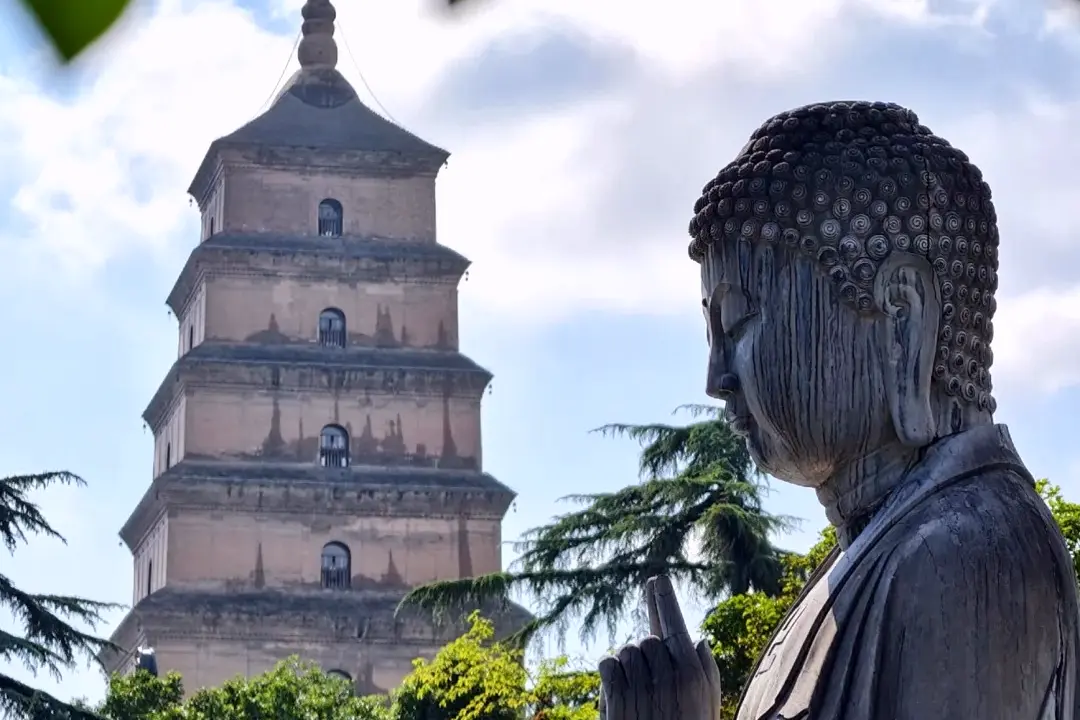
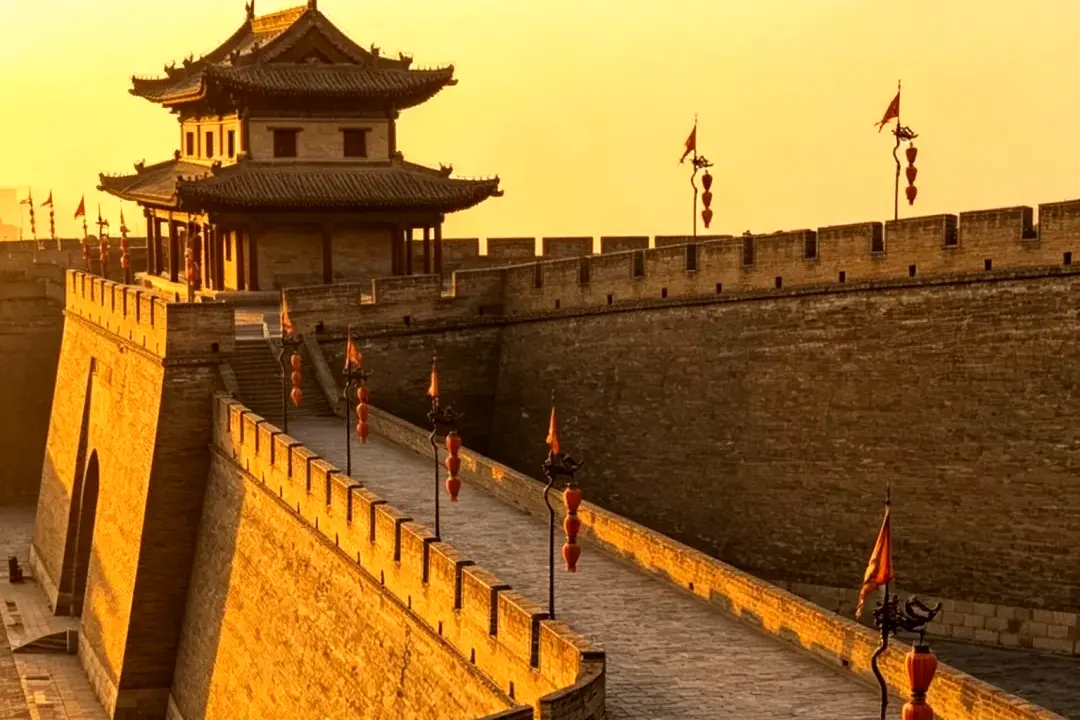
Xi'an is a year-round city with two glorious seasons, one hot one, and a winter that is cold, dry and photogenic in a monochrome way. Month-by-month weather, haze and festival crowds: our best time to visit Xi'an guide.
Season | Weather | Crowds | Verdict |
|---|---|---|---|
March–May | 8–22°C, windy in March, blossom in April | Moderate, heavy at Qingming and May Day | Best overall: cool mornings, long days, wall walkable |
June–August | 28–38°C, humid, afternoon storms | Heavy, domestic school holidays | Doable if you start at 08:00 and rest at 14:00 |
September–October | 12–26°C, clear skies, crisp air | Very heavy in the first week of October | The other best window; book trains 15 days out |
November–February | −4 to 8°C, dry, occasional snow and haze | Light, except Spring Festival | Cheapest and quietest; Terracotta without queues |
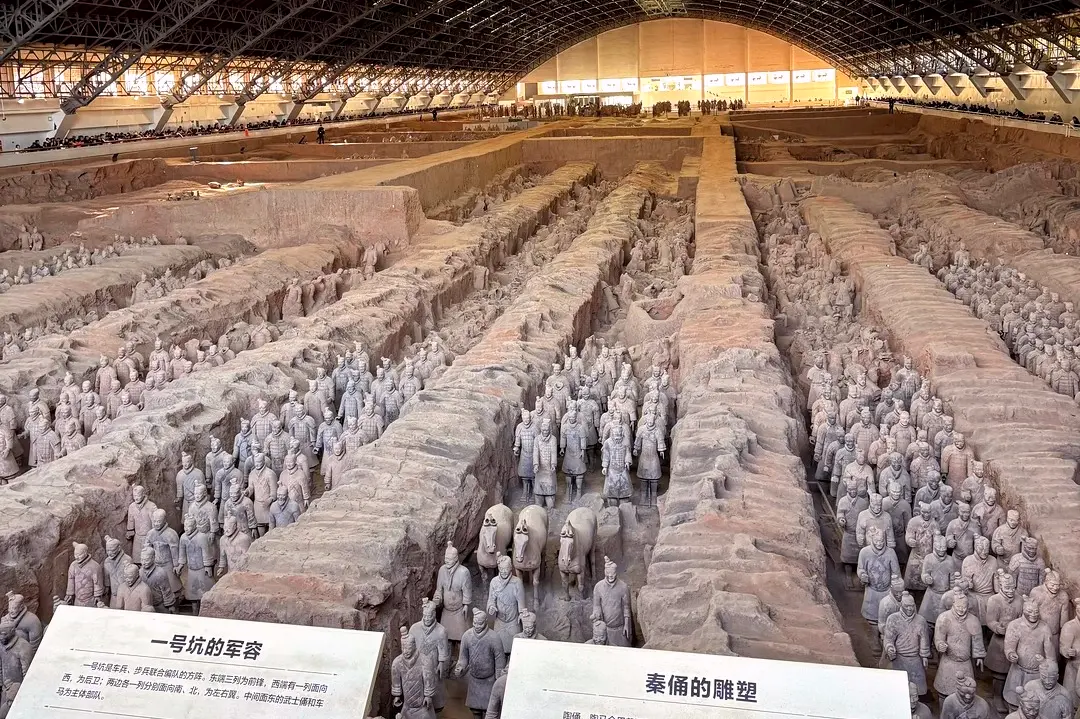
Winter is the season to consider if you want the Terracotta Army pits close to empty. The site is exposed and windy, the walk between pits is cold, and the light fades by 17:00 — but you will photograph a hall of 6,000 soldiers with almost nobody in the frame. Spring Festival week is the exception: the city wall lantern fair draws enormous crowds and hotel prices double.
Beijing to Xi'an in a day: out on the 07:00, back on the 19:00
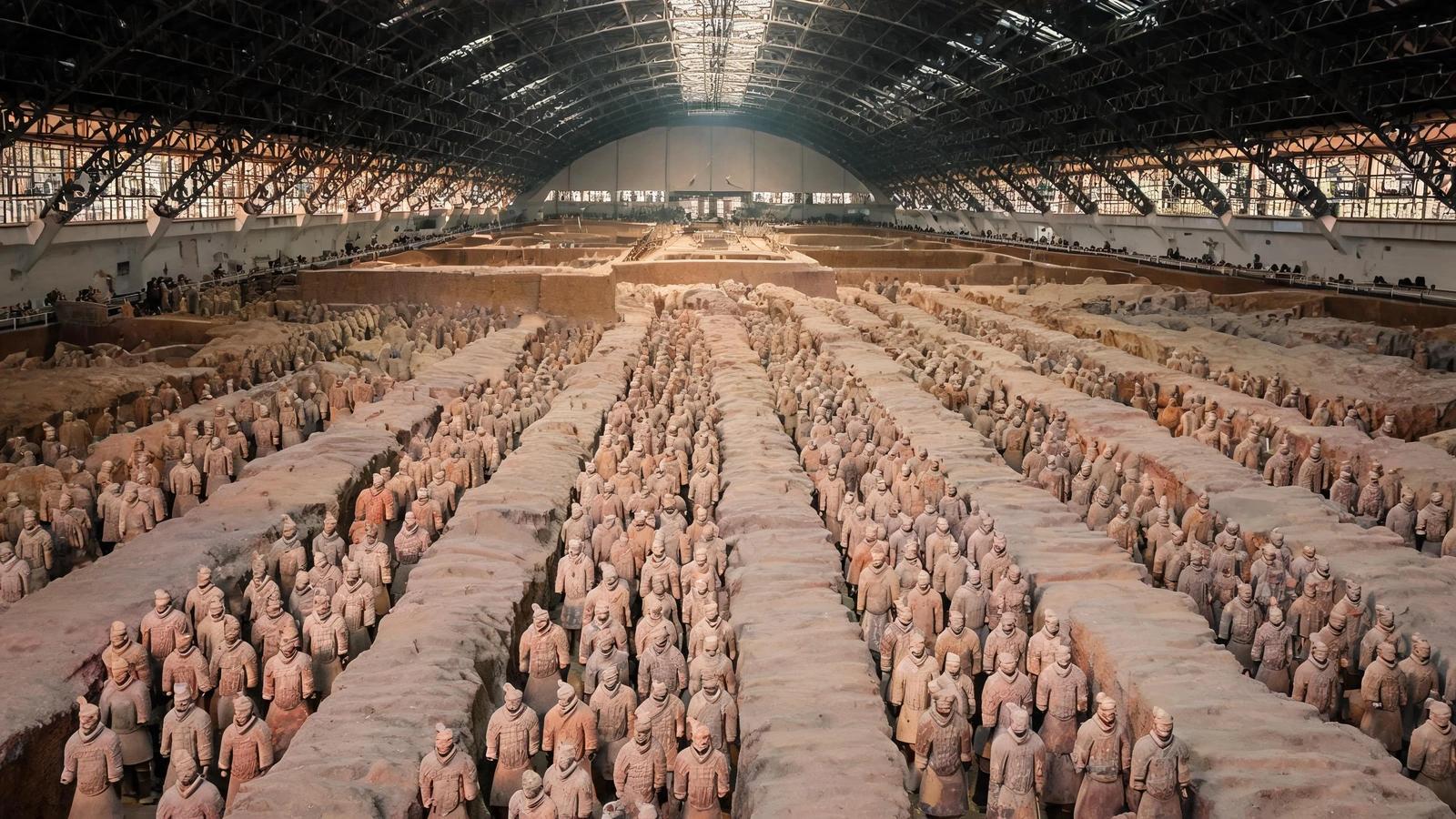
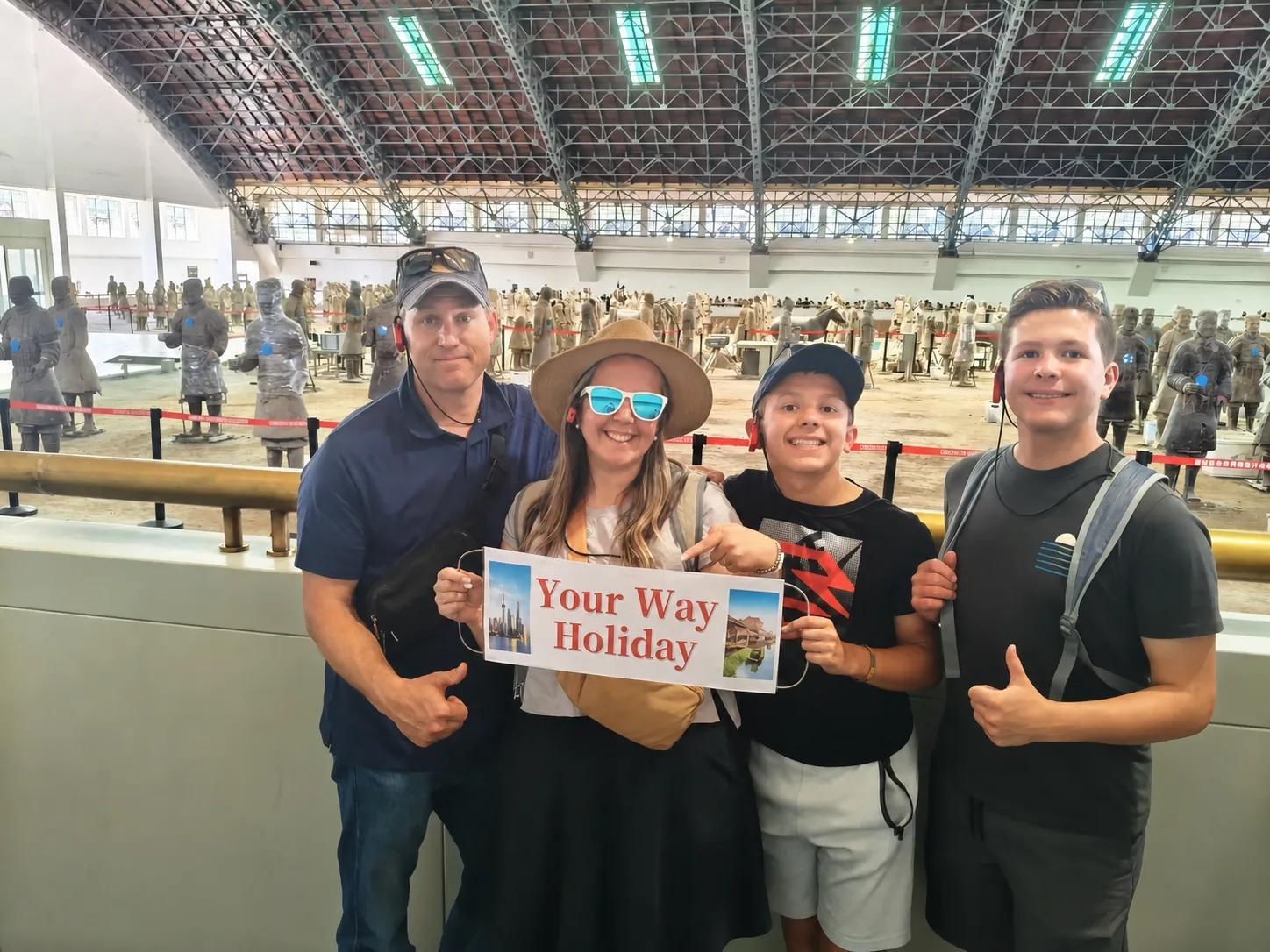
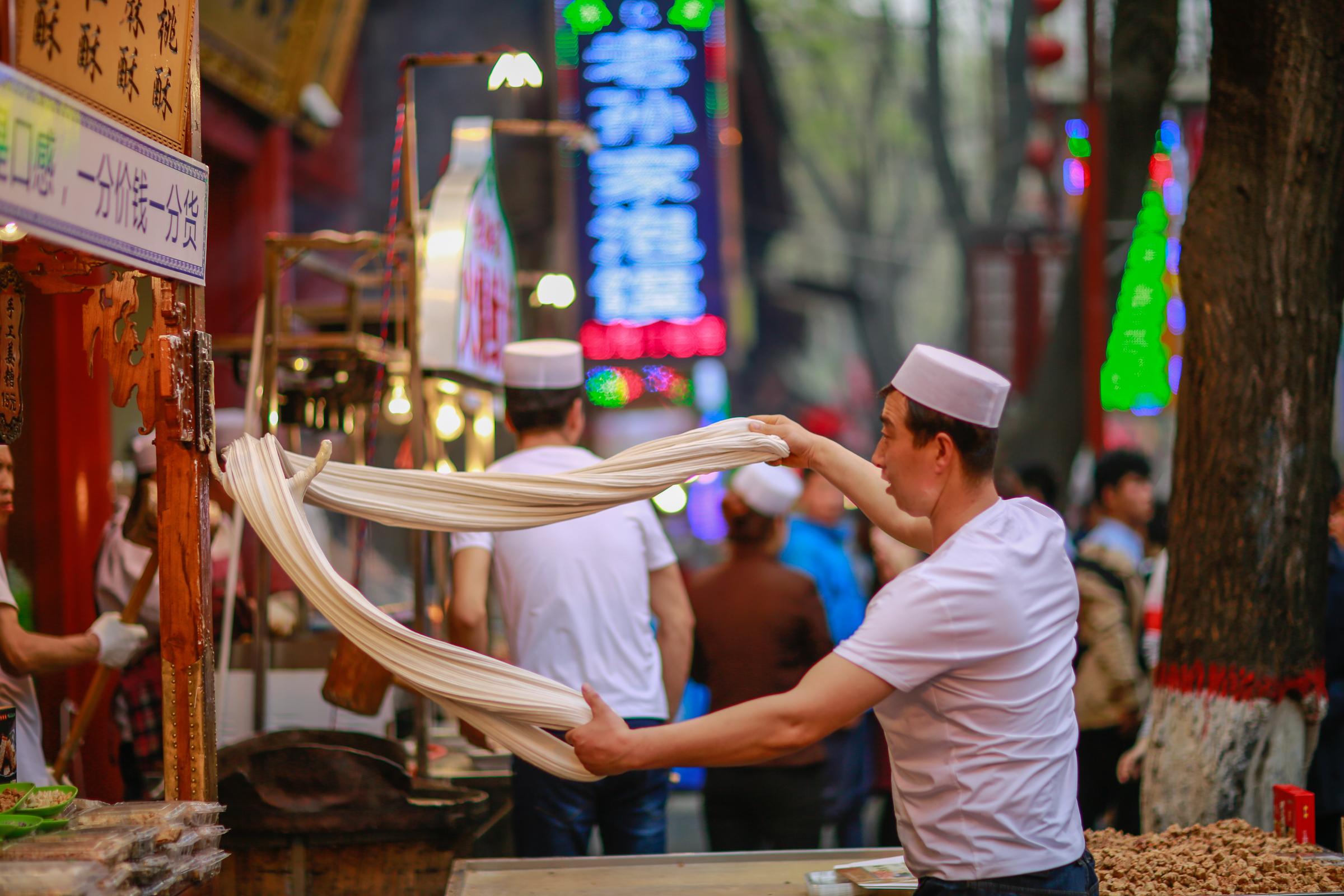
Twelve hundred kilometres each way, and it still works — because the timetable hands you a 4h20 morning train and a 4h17 evening one, with close to five hours on the ground in between, lunch included. It is a long day, not an impossible one.
The pair is not arbitrary. G321 is the first fast departure of the day: Beijing West at 07:00, Xi'an North at 11:20, a through train for Chengdu East with a 4h20 run. G370 returns at 19:00 and reaches Beijing West at 23:17. Anything later westbound eats the afternoon you came for; anything later eastbound puts you in Beijing after the metro stops. This is the only window that fits lunch, a careful visit to the pits and a same-day return.
If you would rather buy the day as a package — trains, guide, transfers and lunch in one booking — the closest off-the-shelf equivalent is this Beijing–Xi'an Terracotta Warriors day tour. Read its inclusions against the timetable below before you book: the question is always which trains it uses and how long it actually leaves you at the pits.
11.1 The day, hour by hour
Time | Where | What happens |
|---|---|---|
06:10 | Hotel | Leave with a cabin bag only. Line 9 takes 20–25 minutes from most of central Beijing. |
06:35 | Beijing West | Security, then breakfast upstairs — congee and dumplings, ¥20–30. Boarding starts 06:45. |
07:00 | G321 | Departs. Four hours twenty minutes; sit on the right for the Qinling wall at the end. |
11:20 | Xi'an North | Arrive. Do not go into the city — stay in the station for lunch, then head to the north square coach rank. |
11:30 | Station food court | Lunch, 40 minutes. Biangbiang noodles ¥25–35, roujiamo ¥12–15, or a hot-pot bowl; all on the arrivals level and basement. |
12:15 | Coach rank, north square | Direct coach to the Terracotta Army, every 15 minutes, ¥30, 40 minutes, seven stops. |
12:55 | Terracotta Army | Ticket gate, security, then the 15-minute walk to Pit 1. |
13:10 | Pit 1 → 3 → 2 → bronze chariots | Three hours at a steady pace. Pit 1 first, while the morning coaches are still on the road back. |
16:40 | Coach back | Same rank outside the car park; 40 minutes to Xi'an North, or ¥120–160 by DiDi if the queue is long. |
17:30 | Xi'an North | Dinner if you are hungry — the same food court — charge your phone, clear security by 18:15. |
19:00 | G370 | Departs nonstop-ish: Sanmenxia South, Zhengzhou East, Shijiazhuang, Beijing West. |
23:17 | Beijing West | Metro Line 9 still running; a taxi to most of central Beijing is ¥40–60. |
G321 second class ¥587, first ¥939, business ¥1,837; G370 second class ¥525, first ¥840, business ¥1,837.
Beyond the two train fares the day costs only the ¥120 museum ticket and ¥60 for the coach — all fares, including the sleeper options, are tabulated in sections 03 and 04.
11.2 Lunch, slotted in at 11:30
Arriving at 11:20 rather than midday is what buys you the lunch stop. Three workable options, in order of speed: the station itself, where the arrivals level and basement have noodle and dumpling counters (biangbiang noodles ¥25–35, roujiamo ¥12–15, roughly 40 minutes door to tray); Lintong town, 15 minutes from the museum gate, for the dish locals actually queue for — a big plate of Lintong-style dapanji, ¥60–80 to share, but it adds 40 minutes to your afternoon; or the museum café by the ticket hall, which is a coffee and a sandwich at ¥45 and open through the middle of the day.
Take the station option. You have a timed ticket at 13:00, the coach rank is a two-minute walk from the food court, and eating in Lintong means standing in the ticket queue at the busiest hour of the day.
FOUR THINGS MUST GO RIGHT
Both trains, booked early.The 07:00 and the 19:00 are the two most contested departures on the route; at weekends and in October they sell out on the day tickets open.
A timed ticket for 13:00–14:00.The museum releases slots seven days ahead on its official WeChat account, and the 13:00 window is gone by mid-morning on release day.
A coach, not a taxi, on the way out. The rank at Xi'an North runs every 15 minutes and beats a queue for a DiDi.
Security by 18:15.Xi'an North is a 34-platform station and the evening queue is real.
11.3 The city wall is not part of this day
It cannot be. G370 leaves at 19:00, and in December the wall lights come on around 17:45 — you would be on a platform, not on the ramparts. If the illuminated wall, the Muslim Quarter and the Shaanxi History Museum matter to you, this is a two-day trip, not a day trip: take a morning train out, stay near the Bell Tower, and come back on the 14:05 or the 19:00 a day or two later — the three-day plan in the next section is exactly that.
IF YOU MISS THE 19:00
The earlier G352 leaves Xi'an North at 18:27 and reaches Beijing West at 22:37 — it means leaving the pits by 16:00. After that there is only G4296 at 20:45, arriving at 01:41, which is a bad way to end a good day. The sane fallback is a ¥300 hotel near the wall and the 07:00 train home.
Is it worth it? If you have exactly one free day in Beijing and the warriors are the reason you came to China, yes — you will spend eleven hours travelling and three and a half hours looking at the thing you came for. If you have two days, spend the night. The difference between the two versions is about ¥400 and an evening on the wall, and the second version is the one you will remember.
Three days in Xi'an, built around the timetable
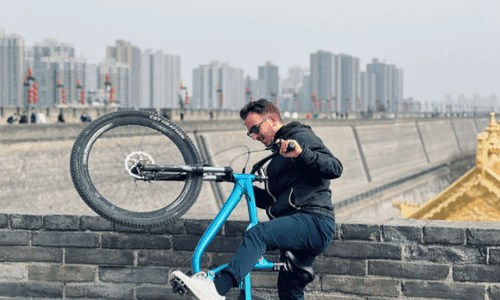
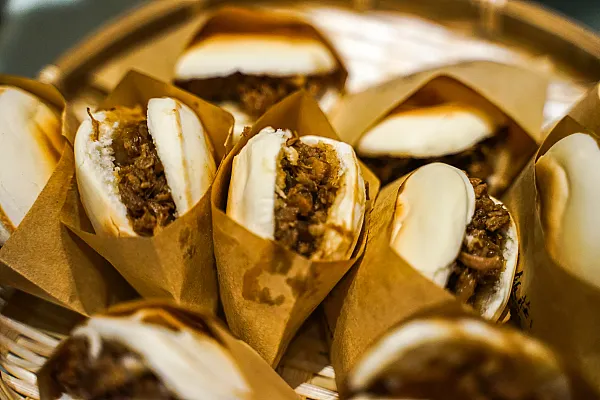
The day trip above is the compressed version. Give it two nights instead and the same morning train becomes the start of a long weekend — G351 at 07:55 out, G367 at 14:05 back three days later, with the wall at dusk, the museum and a proper margin around the warriors. Full hour-by-hour versions of both plans live in our Xi'an itinerary.
Day 1 · 06:50
Metro Line 9 to the station, security by 07:10, coffee on the upper level. Board G351 at 07:40.
12:05
Line 2 to Bell Tower, 30 minutes. Drop bags, then roujiamo and a bowl of biangbiang noodles within sight of the tower.
15:00
Rent a bike at Yongning Gate, ride the 13.9 km circuit in 90 minutes, stop where the light is good. Ticket ¥54.
18:30
Walk north from the tower into the lanes; eat yangrou paomo, then climb to Yongning Gate for the illuminated wall.
Day 2 · 08:00
Bus 306 from Xi'an Station east square, ¥7, 70 minutes. Three to four hours across Pits 1, 2, 3 and the bronze chariots.
14:30
Bus 613 or 602 for ten minutes if you want the hot springs and the mountain; otherwise return for the Shaanxi History Museum's 14:00 slot.
19:30
The north square fountain show draws a crowd at dusk; Line 4 or a ¥20 taxi from the wall.
Day 3 · 09:00
Free but timed; book on WeChat seven days ahead. Two hours is enough for the Tang and Zhou galleries.
12:30
The restored courtyard food street west of the wall does the same dishes as the Muslim Quarter with less noise and better seating.
14:05
Line 2 to Xi'an North, 40 minutes door to platform. Arrive Beijing West 18:30, dinner by 20:00.
STRETCH IT
With five days, add Huashan for the plank walk and a night in Lintong, or take the high-speed line west to Luoyang's Longmen Grottoes, 90 minutes from Xi'an North and easily done as a day trip.
Terracotta Army logistics: tickets, buses and the order to see it in
The site is 40 km east of the city in Lintong, there is no metro to the gate, and every tout in Xi'an knows it. Three legitimate ways get you there. Ticket types, the pit-by-pit order and how to dodge the touts: how to visit the Terracotta Army.
Route | From | Time | Cost | Comment |
|---|---|---|---|---|
Bus 306 / 5 | Xi'an Station east square | 70–90 min | ¥7 | The classic: blue-and-white coaches, run 07:00–19:00, stop at Huaqing Palace |
Line 9 + bus 602/613 | Anywhere on Line 2 to Line 9 | 90–120 min | ¥2–7 | Cheapest by metro; exit at Huaqing Pool and change to a local bus |
Direct coach | Xi'an North north square | ~60 min | ¥35 | No changes, leaves roughly hourly; best if you arrive by train |
DiDi / taxi | City centre | 50–60 min | ¥120–160 | Best for a family of four or a 08:30 arrival |
Tickets are ¥120 for a combined ticket covering the Terracotta pits and Lishan Garden, with a free shuttle between them. They are sold by timed slot only, released seven days ahead on the museum's official WeChat account, and they sell out in summer and at Spring Festival. Bring the passport you booked with; entry is by document scan.
THE ORDER THAT WORKS
Go to Pit 1 first, before the tour groups arrive at 10:00 — it is the largest and the one you came for. Then Pit 3 (the command post), Pit 2 (the cavalry and the famous kneeling archer), and finally the bronze chariot gallery. Budget three hours; the site is bigger and windier than photographs suggest.
Two things are worth knowing before you buy anything on site. Guides offering tours at the gate are freelance and unlicensed more often than not; the audio guide inside the ticket hall is ¥30 and better. And the jade and terracotta shops the buses stop at on the way back are commission stops, not cultural sites — the same "factory" visits appear on every route.
Where to stay, and what to eat within walking distance
Stay inside the wall if this is your first visit. The Bell Tower and Yongning Gate area puts the wall, the Muslim Quarter and Line 2 within ten minutes' walk, and Line 2 runs straight to Xi'an North for the train home. Expect ¥300–600 for a mid-range hotel, ¥800+ for anything with a view of the tower. Property-by-property picks are in our Xi'an hotel guide, and the eating list is where to eat in Xi'an.
Stay near Xi'an North only if you have an early departure or a late arrival — the area is convenient and characterless, with chain hotels at ¥250–400 and a food court in the station basement. Qujiang, south of the wall, is quieter, newer and closer to the Big Wild Goose Pagoda, at similar prices.
The benchmark sandwich. Roujiamo ¥12–18. Shredded pork or beef in a crisp flatbread. The best are from street counters with a queue of locals, not from the neon shops on the main lane.
Wide, long, chilli-oiled. Biangbiang noodles ¥20–30. Belt noodles with garlic, chilli flakes and hot oil poured over. Ask for if you do not want the full experience.
Bread soaked in lamb broth. Yangrou paomo ¥35–50. You tear the flatbread yourself, the kitchen floods it with broth. A winter dish; the shop on Beiyuanmen does it properly.
Sticky rice and dates. Zenggao ¥8–12. Steamed in a giant pot and scraped onto a leaf. Breakfast, not dessert, and worth finding at 08:00.
The Muslim Quarter is the famous address and the most crowded one. Yongxing Fang, west of the wall, serves the same repertoire in a restored courtyard with seats and fixed prices. For a proper meal rather than a snack, the restaurants around Nanmen and along Chang'an Road do Shaanxi home cooking at ¥60–90 per person.
Apps, tickets and the small friction points
Need | Use | Note |
|---|---|---|
Train tickets | 12306 or Trip.com | Passport number required; tickets open 15 days ahead at 08:00 |
Flights | Airline apps, Trip.com | Some airline sites reject foreign cards; Trip.com issues English tickets |
Metro | Alipay transport code, or ticket machines | Xi'an fares ¥2–9; machines accept coins and notes but not foreign cards |
Taxis | DiDi | English interface; airport queues are metered and safe |
Maps | Amap or Apple Maps | Google Maps is unreliable for Chinese public transport |
Payment | Alipay or WeChat Pay | Link a foreign card; almost nothing takes cash outside tourist sites |
Museum tickets | Official WeChat accounts | Real-name booking, passport at entry, timed slots |
Xi'an is a safe city by any standard, including at night around the wall. The friction is administrative, not personal: queues at security, passport checks at every museum, and the fact that most ticket machines want a Chinese ID. Carrying your passport in a zipped pocket solves most of it.
MONEY, ROUGHLY
A three-day trip by train costs about ¥1,200 in transport and tickets, ¥600–900 in hotels and ¥300 in food. The same trip by plane costs roughly ¥300 more once airport transfers are counted — and loses an afternoon.
Ten mistakes first-timers make on this route
Booking from the wrong Beijing station. Almost every Xi'an train leaves Beijing West. A few D trains leave Qinghe, 20 km north. Read the station name, not just "Beijing".
Assuming Xi'an North is near the Bell Tower. It is 12 km north of the wall. Line 2 takes 25–30 minutes; a taxi at 08:30 takes 45. Plan the transfer, not just the train.
Buying a ticket to "Xi'an" without checking the station. G trains use Xi'an North, Z trains use Xi'an Station, and a few overnight D trains use Xi'an East. Three different places, three different transfers.
Booking the 21:30 flight and expecting the metro. Line 14's last train leaves T5 at 22:24. A midnight arrival means a taxi or an airport hotel, and both cost more than the train you skipped.
Arriving at the Terracotta Army at 11:00. That is peak tour-group hour. Go at opening, see Pit 1 first, and you will have the hall to yourself for twenty minutes.
Turning up at the museum without a booking. Terracotta tickets are timed and released seven days ahead; the Shaanxi History Museum is free but also timed. Neither sells at the door in high season.
Taking the "free" tour bus from the station. If someone offers a free shuttle to the warriors, it includes a jade shop and a tea ceremony. Bus 306 costs ¥7 and has no agenda.
Leaving the return ticket to the last day. Sunday afternoon trains back to Beijing sell out first. Book the return when you book the outbound.
Planning the wall at midday in July. The wall has no shade and no water for 13.9 km. Ride it before 10:00 or after 17:00, and carry more water than you think.
Carrying only cash. Xi'an runs on QR codes. Set up Alipay before you arrive, and keep ¥200 in notes for the one taxi that cannot scan.
Beijing–Xi'an tour packages: when they earn their price
Two-day bullet-train packages from Beijing run $250–400 per person, covering return train, one night near the wall, the Terracotta Army with a guide, and transfers. Done yourself, the same components cost roughly $180–260 — so you are paying $70–140 for someone else to hold the tickets. Our own 2-day Xi'an tour from Beijing by bullet train is built on exactly that template.
Component | Do it yourself | Package |
|---|---|---|
Train tickets | Booked by you, 15 days out, ¥577.5 each way | Booked for you, usually second class |
Hotel | ¥300–600, your choice of location | Usually a 4-star near the wall, chosen for coach access |
Terracotta Army | ¥120 ticket, ¥7 bus, audio guide ¥30 | Ticket, coach and English-speaking guide included |
Flexibility | Total — change trains, stay another day | Fixed schedule, fixed hotel, group pace |
Book a package if you are travelling with elderly parents, if your Chinese is nonexistent and your patience is thin, or if you have exactly 48 hours and no appetite for logistics. Skip it if you are comfortable with 12306 and a metro map: the independent version is cheaper, faster and lets you stay inside the wall rather than on a coach route.




Traveler Discussions
Questions from travelers