

For most of the past decade, a trip to China from the UK meant paperwork — a visa application, an appointment at a visa centre, a fee, and a week of waiting for your passport to come back. That changed on 17 February 2026. British passport holders can now walk onto a plane to Beijing or Shanghai with little more than a valid passport and a return ticket.
It is the biggest change to UK–China travel in a decade, and it has arrived at a moment when direct flights between the two countries are more plentiful than at any point since 2019. This guide covers everything that actually matters for a first visit: the entry rules, the flights, how to pay with a UK card, how to stay online, what things cost in pounds, and how to plan an itinerary that works from a UK departure point.
Is China Worth Visiting from the UK?
Yes — and 2026 is the easiest year in a decade to do it. The combination of visa-free entry, a rebuilt network of direct flights and a weak yuan against the pound means a first China trip now costs less, and involves far less admin, than most British travellers expect.
China is also far more varied than the classic images suggest. In a single two-week trip you can move from imperial palaces to karst mountains, from Sichuan hotpot to Cantonese dim sum, and from a 350 km/h train to a village alley where someone is still throwing pots by hand.
No visa needed for most UK visitors, for stays up to 30 days
Direct flights from Heathrow, Gatwick, Manchester and Edinburgh
High-speed rail that makes multi-city travel genuinely easy
Food that is regional, cheap and very different from Chinese food in the UK
Safety — violent crime against tourists is rare
What has changed most: The visa waiver removes the single biggest barrier to a first China trip — the cost, the paperwork and the uncertainty of an application. If a visa was the reason you had not booked China, that reason no longer applies for 2026.
Quick Facts About China Travel from the UK
Quick Fact | Details |
|---|---|
Visa status | Visa-free for UK ordinary passports — tourism, business, family visits and transit |
Policy validity | 17 February 2026 – 31 December 2026 (30 days maximum per entry) |
Direct flights | Direct routes from Heathrow, Gatwick, Manchester and Edinburgh to Beijing, Shanghai, Guangzhou and more |
Currency | Chinese Yuan (CNY/RMB) |
Best season | April–May and September–October |
Time difference | China is UTC+8 — 8 hours ahead of the UK in winter, 7 in summer |
Plug type | Type A and Type I — bring a UK-to-China adapter |
Emergency numbers | 110 (police), 120 (ambulance), 119 (fire) |
Tap water | Not drinkable; every hotel room has a kettle |
Do UK Citizens Need a Visa for China? (2026 Update)
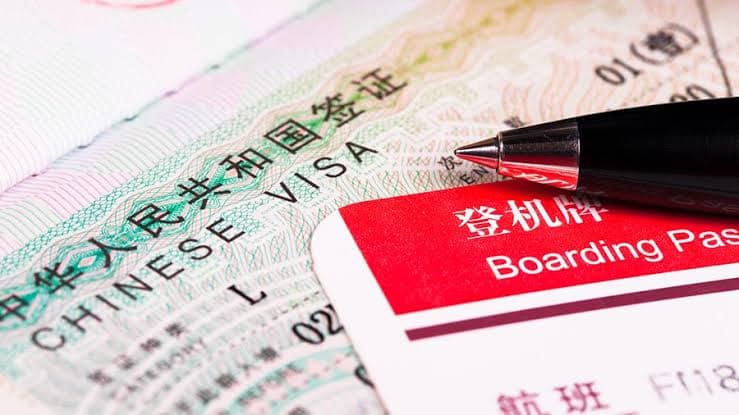
The short answer: no — not right now. Since 17 February 2026, China has operated a unilateral visa-free policy for UK ordinary passport holders. You can enter for up to 30 days without applying for a visa, provided your trip falls within one of the permitted categories and your passport meets the validity requirements below.
Item | Details | Notes |
|---|---|---|
Effective from | 17 February 2026, 00:00 (Beijing time) | Trial policy |
Valid until | 31 December 2026, 24:00 (Beijing time) | See the warning box below |
Maximum stay | 30 days per entry | Calculated from the day after arrival |
Permitted purposes | Business, tourism, family or friend visits, exchange programs, transit | Your stated purpose must fall into one of these |
Passport type | Ordinary passports only | Includes British Crown Dependency passports registered as "British citizen" |
What You Still Need Even Without a Visa
Passport valid for at least 6 months beyond your arrival date
At least two blank pages in your passport for stamps
Online arrival card completed through the National Immigration Administration (NIA) before you land — see the next section
A return or onward ticket — not always checked, but carry it; border staff can ask for proof of your onward travel
Proof of accommodation — a hotel booking confirmation is enough
Biometric data — fingerprints and a photograph are taken at immigration
When Do You Still Need a Chinese Visa?
Situation | Visa Needed? |
|---|---|
Tourism of 30 days or less | No — if you are eligible for visa-free entry |
Tourism of more than 30 days | Yes |
Paid work | Yes (and a separate work permit) |
Long-term study | Yes |
Journalism | Yes |
Any other non-covered purpose | Check the current rules with the Chinese visa centre |
China issues a range of visa categories — tourist (L), business (M), exchange (F), family (Q), study (X), work (Z) and journalist (J) among them — but for a standard UK holiday, the visa-free route covers you and there is no need to look at categories at all.
If a visa is required, applications are handled by the Chinese visa application centres in London, Manchester, Edinburgh and Belfast.
The 240-Hour Transit Visa-Free Option
If you are passing through China en route to a third country, a separate and more generous rule applies. The 240-hour (10-day) transit visa-free policy covers 57 nationalities including the UK, and lets you leave the airport and travel within a designated region for up to 10 days.
Item | Details |
|---|---|
Eligible nationalities | 57 countries, including the UK, US, Canada, Australia and Russia |
Entry ports | 65 designated ports across 24 provinces, regions and municipalities |
Maximum stay | 240 hours (10 days) |
Requirements | Ordinary passport plus a confirmed onward ticket to a third country or region |
Valid onward destinations | Hong Kong, Macau and Taiwan all count |
Permitted activities | Tourism, business and visiting relatives — work, study and journalism still require a visa |
Planning a China trip for 2027? Do not assume the current visa-free policy will continue. The waiver is officially scheduled to end on 31 December 2026, and no extension for the UK has been announced. Check the latest FCDO and Chinese embassy guidance before you book.
What Do You Need to Prepare Before Travelling to China?


Even with the visa waiver, a handful of documents and apps need sorting before you leave. Most of it takes an evening, but two items — insurance and payment apps — are much harder to fix once you are in China.
Before You Go — Checklist
Before You Go | When to Do It |
|---|---|
Check your passport (6+ months validity, 2 blank pages) | 2–3 months before travel |
Check visa eligibility for your dates | Before booking flights |
⭐Book international flights | As early as practical |
⭐Arrange comprehensive travel insurance | Before booking flights |
⭐Book your first-night hotel | Before departure |
⭐Set up Alipay (and WeChat Pay) | At least several days before |
⭐Arrange an eSIM or UK roaming | Before departure |
⭐Download a translation app with the offline Chinese pack | Before departure |
⭐Save your hotel name and address in Chinese | Before departure |
⭐Book popular attractions (Forbidden City, museums) | According to release dates |
⭐Book high-speed train tickets (especially during holidays) | When tickets become available |
Pack medication in original packaging | The week before |
Pack a UK-to-China plug adapter | The week before |
Complete the online Arrival Card | Before arrival, or at the port of entry |
The Online Arrival Card
China replaced the paper arrival card with a digital version in late 2025. Almost all foreign arrivals complete it through an official NIA channel.
Go to the NIA website, the "移民局 12367" app, or the Alipay or WeChat mini-program.
Enter your passport details, flight number, accommodation address and length of stay.
Submit and save the confirmation — you may be asked to show it at immigration.
If you cannot complete it in advance, paper forms are still available at the port of entry.
Registering Your Accommodation
Chinese law requires foreign visitors to register their address with the local authorities within 24 hours of arrival. In practice, hotels handle this for you.
Accommodation Type | Who Registers You | Deadline |
|---|---|---|
Hotel | The hotel registers you automatically at check-in | Within 24 hours |
Private stay (family or friends) | You or your host, at the local Public Security Bureau | Within 24 hours of arrival |
Online registration | Available in seven pilot provinces since March 2026 | Same legal effect as registering in person |
How Do You Fly from the UK to China? (Routes, Airlines and Fares)
There are currently 22 direct routes and around 165 weekly flights between the UK and China — the fullest the network has been in years. You can fly direct from four UK airports: Heathrow, Gatwick, Manchester and Edinburgh.
Route and frequency figures as of mid-2026 published schedules; subject to summer/winter timetable changes
Departure | Main Direct Destinations | Approx. Flight Time | Best For |
|---|---|---|---|
London Heathrow | Beijing, Shanghai, Guangzhou, Shenzhen, Chengdu, Chongqing, Xi'an, Hong Kong | 10–13 hrs | Most choice of destinations and airlines |
London Gatwick | Beijing, Shanghai, Guangzhou, Zhengzhou | 10–12 hrs | Flexible London departures |
Manchester | Beijing, Shanghai, Hong Kong | 10–13 hrs | Northern England, no London transfer |
Edinburgh | Beijing and selected seasonal routes | Around 10 hrs | Scotland |
Flight schedules change between the summer and winter seasons, so always check the airline's current timetable before booking. Some routes are seasonal, and a route that operates daily in July may run only a few times a week in January.
Which Chinese City Should You Fly Into?
This is one of the few genuine decisions of a first China trip. You are not really asking which airports exist — you are asking where to start.
City | Best For | Notes |
|---|---|---|
History and the Great Wall | The strongest first stop for most visitors | |
First-time independent travel and the Jiangnan region | The easiest city to navigate, with water towns and Hangzhou within easy reach | |
The Terracotta Warriors | Usually better as an internal stop than as your arrival point | |
Giant pandas and Sichuan food | Slower pace; works well on a 14-day trip | |
Southern China and Hong Kong | Best combined with Hong Kong | |
Hong Kong | A separate gateway | Its own immigration rules — not the same as entering the China Mainland |
For most first-time visitors, Beijing or Shanghai makes the best starting point. Beijing is the better choice if history is your priority; Shanghai is the easier introduction if you would rather start somewhere that feels more immediately navigable, with the Jiangnan water towns and Hangzhou close by.
When Is the Best Time to Visit China from the UK?
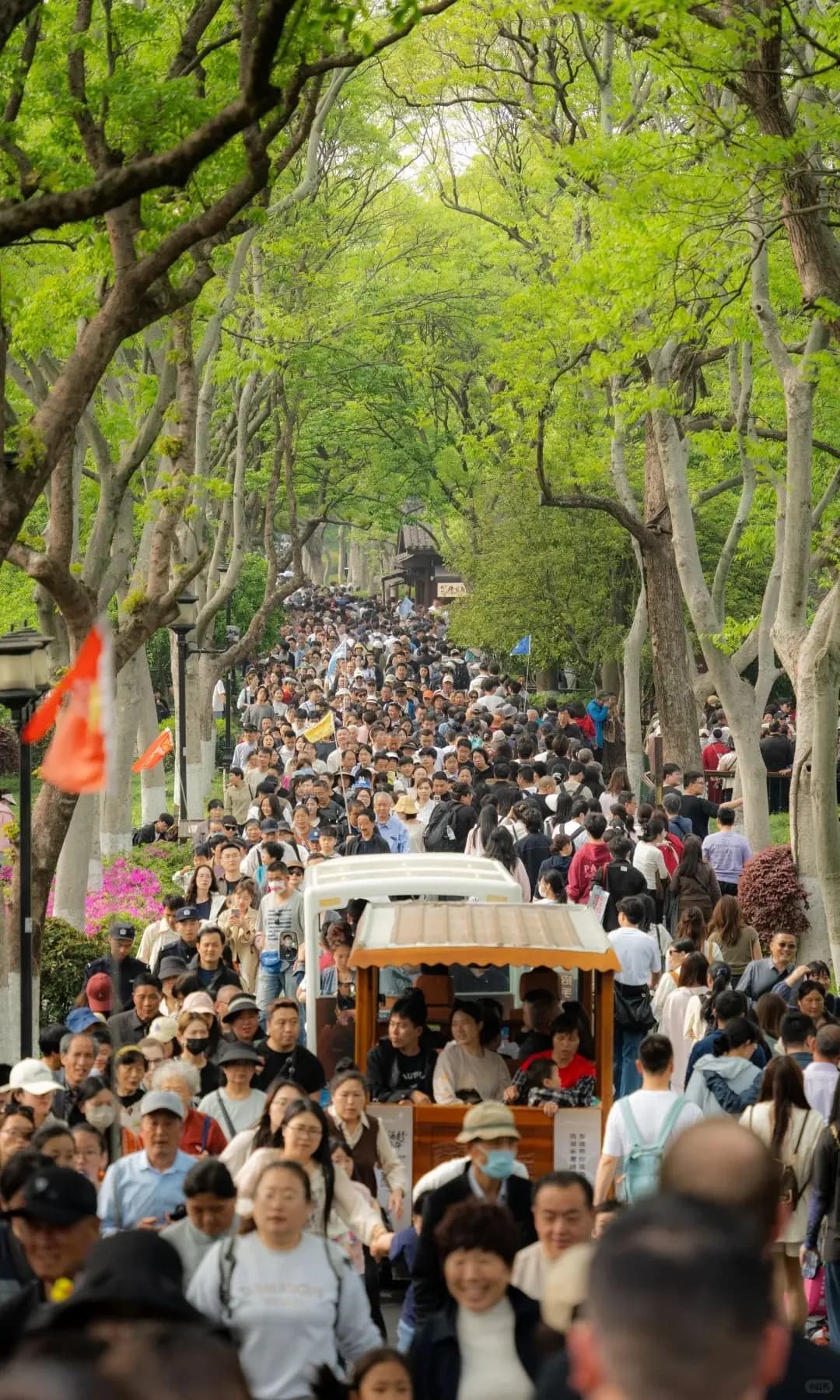

China is large enough that "best time" depends on where you are going. Nationally, the two shoulder seasons are the safest bet; the extremes of summer and winter are worth avoiding unless you have a specific reason.
Season | Months | Weather | Verdict |
|---|---|---|---|
Spring | March–May | Mild and mostly dry | Best — April is peak |
Summer | June–August | Hot, humid, heavy rain | Crowded and uncomfortable |
Autumn | September–November | Cool and clear | Best — October is ideal, November is underrated |
Winter | December–February | Cold in the north, mild in the south | Cheap and quiet, but some sights are bleak |
Best Months by Region
Region | Best Months | Avoid |
|---|---|---|
Beijing & Xi'an | April–May, September–October | July–August (heat and haze), January (freezing wind) |
Shanghai, Suzhou & Hangzhou | March–May, October–November | July–August (humid), June (plum rain) |
Guangzhou & Hong Kong | November–February | May–September (typhoons and heat) |
Chengdu & Chongqing | March–June, September–November | July–August (Chongqing is one of China's hottest cities) |
Guilin & Zhangjiajie | April–October | Winter (bare landscapes), summer (rain closes trails) |
Harbin | January (ice festival, around -25°C) | All other months |
Sanya & Hainan | November–April | May–October (typhoon season) |
Yunnan (Lijiang, Dali) | March–June, September–November | July–August (rainy season) |
Chinese Public Holidays to Avoid
Holiday | When | Why to Avoid |
|---|---|---|
Spring Festival | 2027: 6 February (holiday around 4–12 February) | The largest annual human migration; many shops and restaurants close |
National Day Golden Week | 1–7 October | Hotel prices double; trains sell out weeks ahead |
Labour Day | 1–5 May | A smaller golden week with heavy domestic travel |
Qingming Festival | 4–6 April | Short but busy domestic travel period |
Overlap with UK School Holidays
If you are travelling with children, the UK school calendar shapes when you can go — and some of those windows clash badly with China's own holidays.
UK Holiday | 2027 Dates (England, indicative) | What It Means for China |
|---|---|---|
February half-term | 15–19 February 2027 | Avoid — clashes with Spring Festival (6 February) and its aftermath |
Easter | 29 March – 9 April 2027 | One of the best windows; April is peak season but manageable, and Qingming falls inside it |
May half-term | 31 May – 4 June 2027 | Fine, though early summer heat is beginning in the south |
Summer | Approximately 27 July – 31 August 2027 | China's hottest, wettest and most crowded period — favour northern or high-altitude destinations such as Yunnan, Tibet, Qinghai or the northeast |
April–May and September–October are the best months nationwide, and November is the most underrated — cool, dry, far fewer visitors, and lower prices before the December holidays. Avoid the first week of October entirely.
How Many Days Do You Need for a China Trip from the UK?
A return trip from the UK includes two long-haul flights, so the first and last days are largely written off to travel. Realistically, a ten-night trip gives you eight usable days on the ground.
Days | What You Can Cover | Best For |
|---|---|---|
7 days | Two cities: Beijing and Shanghai, or Shanghai plus the Jiangnan water towns | A short break and a first taste |
10 days | The classic Golden Triangle: Beijing, Xi'an, Shanghai | Most UK visitors — the best balance of depth and pace |
14 days | The Golden Triangle plus Chengdu and Guilin, or Zhangjiajie | Deeper cultural and landscape trips |
Do not try to see everything. Three cities across ten days is a comfortable pace; five cities across ten days is a coach tour. The most common regret from first-time UK visitors is not missing a sight — it is spending too much of the trip on trains and in station queues.
What is the Best China Itinerary for First-Time UK Visitors?
These three itineraries are built around direct UK flights and high-speed rail, with the first day deliberately light.
The 7-Day Short Break



Day 1 — Fly London to Beijing, easy afternoon and early night
Do not schedule anything ambitious. You will lose 7–8 hours and arrive tired.
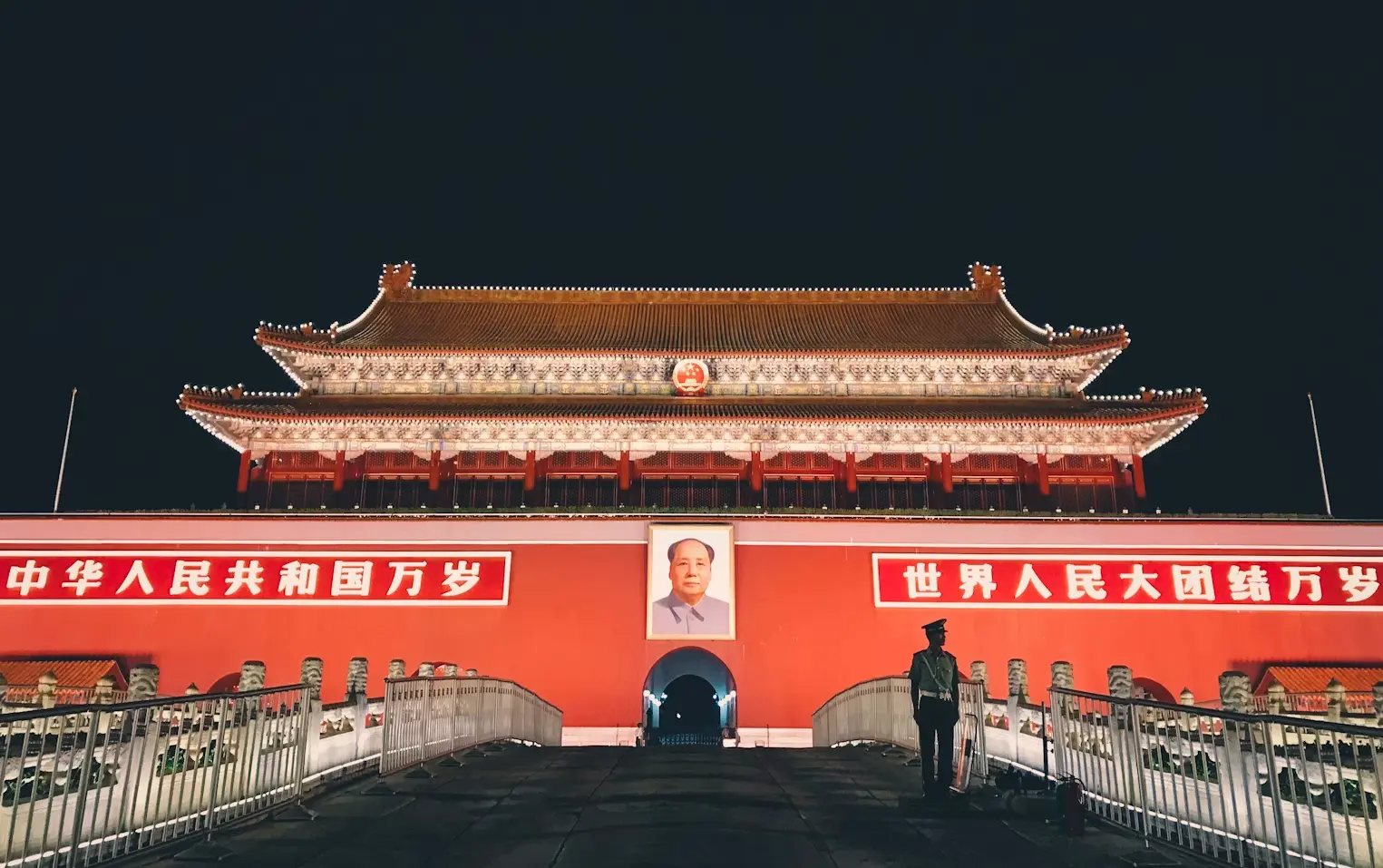
Day 2 — Tiananmen Square, Forbidden City, Jingshan Park
Forbidden City tickets are released about 7 days ahead and sell out — book early.
Day 3 — Great Wall at Mutianyu, then the Summer Palace
Leave by 7:30 AM to beat the tour groups.
Day 4 — Temple of Heaven, hutong walk, then the high-speed train to Shanghai
Beijing–Shanghai takes 4h 30m–6h; evening departures save a hotel night.
Day 5 — The Bund, Yu Garden, Nanjing Road
The Bund is best at dusk and after dark.
Day 6 — Suzhou or Zhujiajiao day trip
Both are within about an hour by train or coach.
Day 7 — Shanghai Museum or the former French Concession; fly home
Allow three hours at Pudong for check-in and security.
The 10-Day Golden Triangle (Recommended)




Day 1 — Arrive Beijing; gentle afternoon to adjust to the time difference
Keep it light — the jet lag runs east, so you will wake early tomorrow.
Day 2 — Tiananmen Square, Forbidden City, Jingshan Park
Start at opening — the Forbidden City is far better before the tour groups arrive.
Day 3 — Great Wall at Mutianyu, then the Summer Palace
Mutianyu is quieter and better preserved than Badaling.
Day 4 — Temple of Heaven and a hutong walk; evening train to Xi'an
The overnight high-speed rail saves a hotel night.
Day 5 — Terracotta Warriors, City Wall, Muslim Quarter
Go to the Warriors early — it is the busiest sight in the city.
Day 6 — Shaanxi History Museum; afternoon train to Shanghai
The museum is free but requires advance booking.
Day 7 — The Bund, Yu Garden, Nanjing Road
Save the Bund for dusk — the light show runs across the river.
Day 8 — Day trip to Suzhou or the water town of Zhujiajiao
Suzhou's classical gardens are a UNESCO site.
Day 9 — Shanghai Museum, former French Concession, Tianzifang
A relaxed final day — good for last-minute shopping.
Day 10 — Fly Shanghai to London
Most departures leave in the late morning or early afternoon.
The 14-Day Deep Dive
Fourteen days sounds like a lot, but two of them are long-haul flights and you will want a slow first day. Do not try to add both the southwest and the scenery. Pick one.
Option A — Culture and food: Beijing → Xi'an → Chengdu → Shanghai. Chengdu adds giant pandas, Sichuan cooking and a much slower pace, and flies easily to Shanghai.
Option B — Classic and scenery: Beijing → Xi'an → Guilin and Yangshuo → Shanghai. The Li River cruise and the karst hills are the highlight, and Guilin connects to Shanghai by air or rail.
Use your jet lag. Flying east from the UK means you may wake unusually early during your first few mornings. Use those hours for the Forbidden City, the Great Wall or the Terracotta Warriors before the crowds arrive — it is the single easiest way to improve your first China trip.
Which Cities Should You Visit on Your First China Trip?
Beyond the three Golden Triangle cities, several others are worth adding — but only if your dates allow. Here is how they compare.
City | Why Go | Ideal Time |
|---|---|---|
 | Giant pandas, Sichuan food, teahouse culture | 2–3 days |
 | Karst scenery and the Li River | 2–3 days |
 | West Lake, classical gardens, water towns | 2 days |
 | The sandstone pillars that inspired Avatar | 2–3 days |
 (Lushan & Wuyuan & Jingdezhen) | Lushan cloud sea, Wuyuan rapeseed fields/autumn sun-drying, Jingdezhen ceramics, Mount Sanqing | 3–5 days |
 | Gulangyu Island, Nanputuo Temple, Island Ring Road, Zengcuo'an, Tianluokeng Tulou | 3 days |
 | Chen Clan Academy, Shamian Island, Pearl River night cruise, dim sum culture, Chimelong Paradise | 3 days |
 (Kunming & Dali & Lijiang & Shangri-La) | Dianchi Lake, Erhai Lake, Lijiang Old Town, Jade Dragon Snow Mountain, Pudacuo, Xishuangbanna | 5–10 days |
 (Taiyuan & Datong & Pingyao) | Yungang Grottoes, Pingyao Ancient City, Mount Wutai, Hukou Waterfall, Jin Temple | 4–5 days |
 (Haikou & Sanya) | Yalong Bay beach, Nanshan Cultural Zone, Wuzhizhou Island, Qilou Old Street | 3–5 days |
 | Ice and Snow World, St. Sophia Cathedral, Central Street, Sun Island snow sculptures | 3 days |
 (Hohhot & Hulunbuir) | Hulunbuir grasslands, Genghis Khan Mausoleum, Xiangshawan Desert, Erguna Wetland | 4–6 days |
 (Urumqi & Ili & Kashgar) | Heavenly Lake, Kanas Lake, Sayram Lake, Nalati Grassland, Kashgar Old Town, Taklamakan Desert | 7–12 days |
Pick three cities, not five. Beijing, Xi'an and Shanghai form a natural line connected by high-speed rail, which is why they work so well as a first itinerary. Everything else is best added by choosing just one, rather than trying to fit several around a ten-day trip.
How Do You Get Around China?
China's high-speed rail network is the backbone of any multi-city trip. Trains run at up to 350 km/h, are punctual, and turn what would be a full day's drive into a comfortable few hours. For travel within cities, a metro and a ride-hailing app will cover almost everything.
Booking Trains with a UK Passport

Aspect | Third Party | |
|---|---|---|
Language | Mostly Chinese, with limited English | Fully English |
Registration | Passport upload with manual review | Email or social login; enter passport details |
Payment | Chinese payment methods | International credit cards accepted |
Support | Limited English support | Multilingual support |
For most UK visitors, a third-party platform is the practical choice — it accepts international cards and is far easier to use with a foreign passport.
You board with your passport, not a paper ticket — and you should arrive early. At most stations you simply scan the passport you booked with. But this is a big country with big stations: at Beijing South or Shanghai Hongqiao, allow 30–40 minutes before departure for security and passport checks — more than you would at a UK station.
Seat Classes Explained
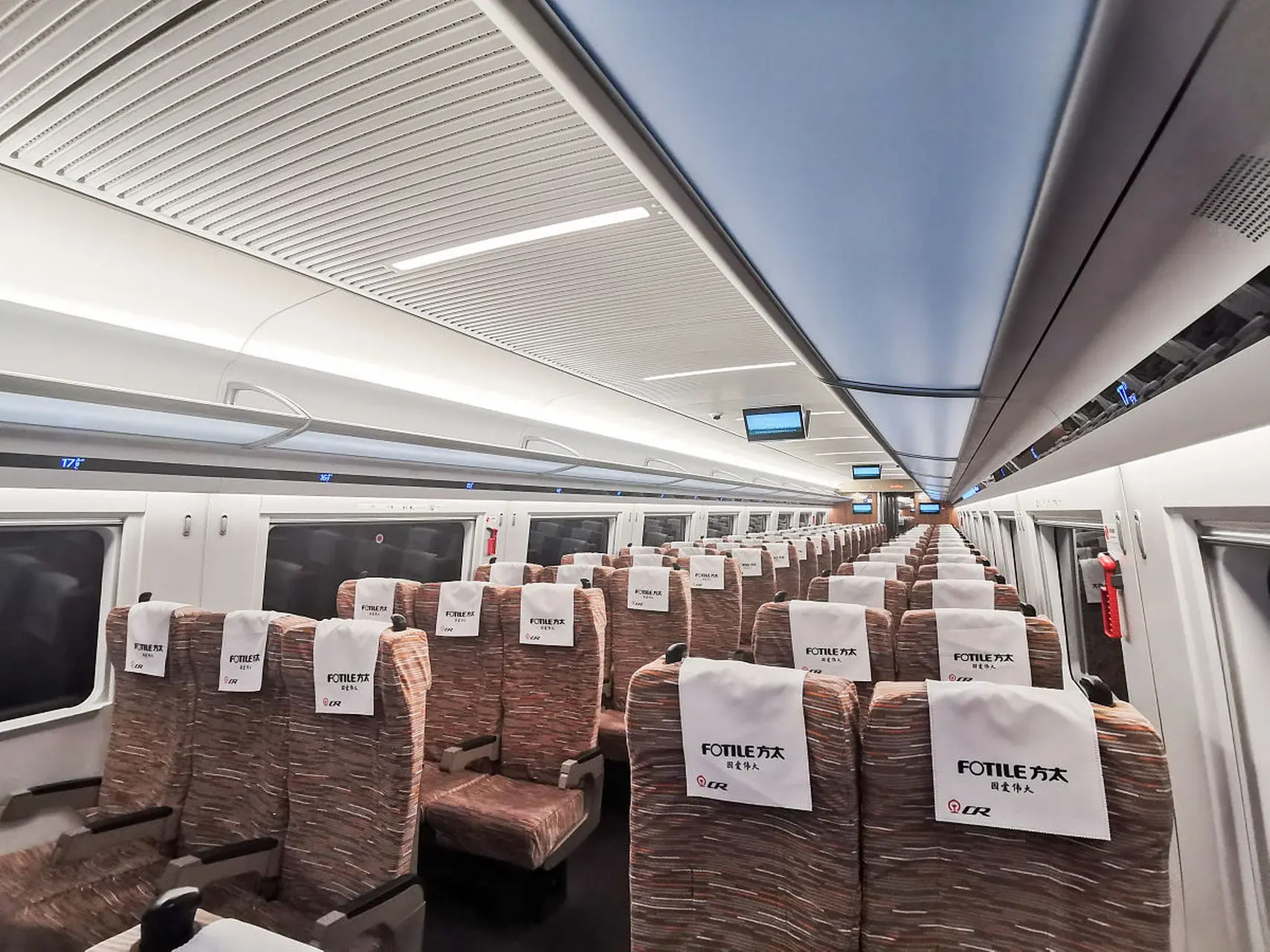
Second Class — the standard and by far the most common; comfortable and good value;
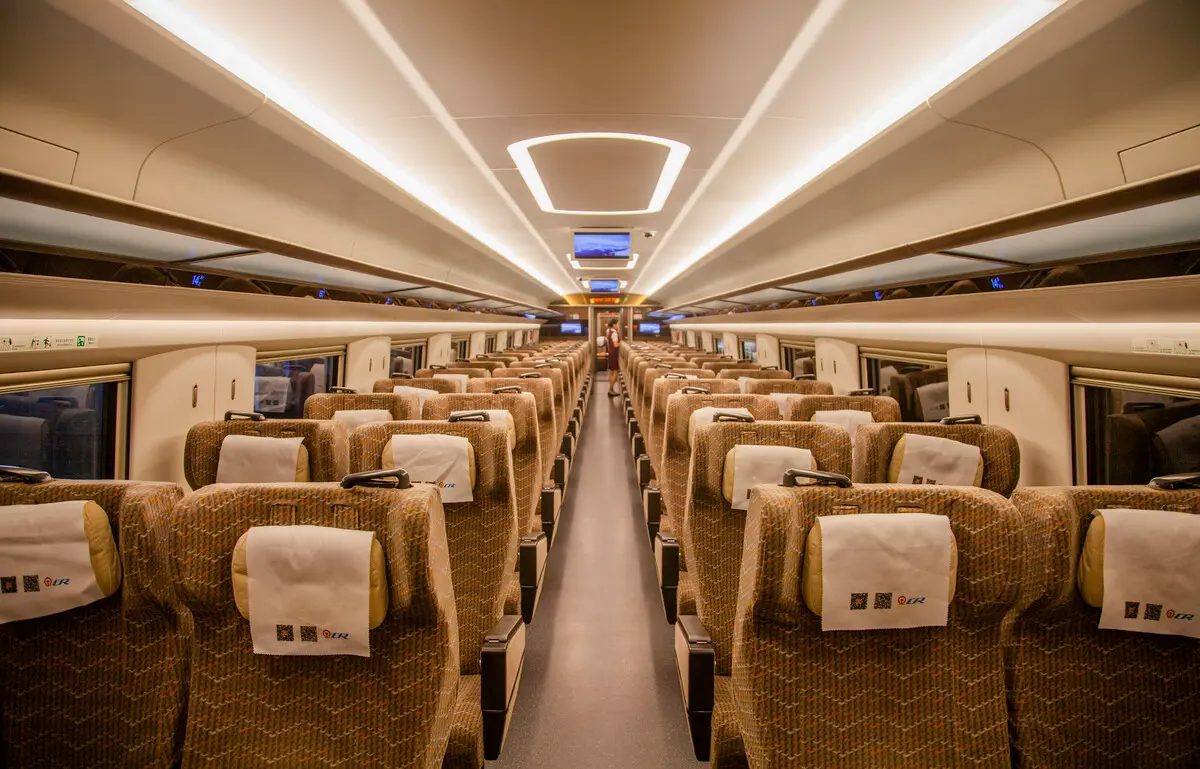
First Class — wider seats, more legroom, quieter carriages;
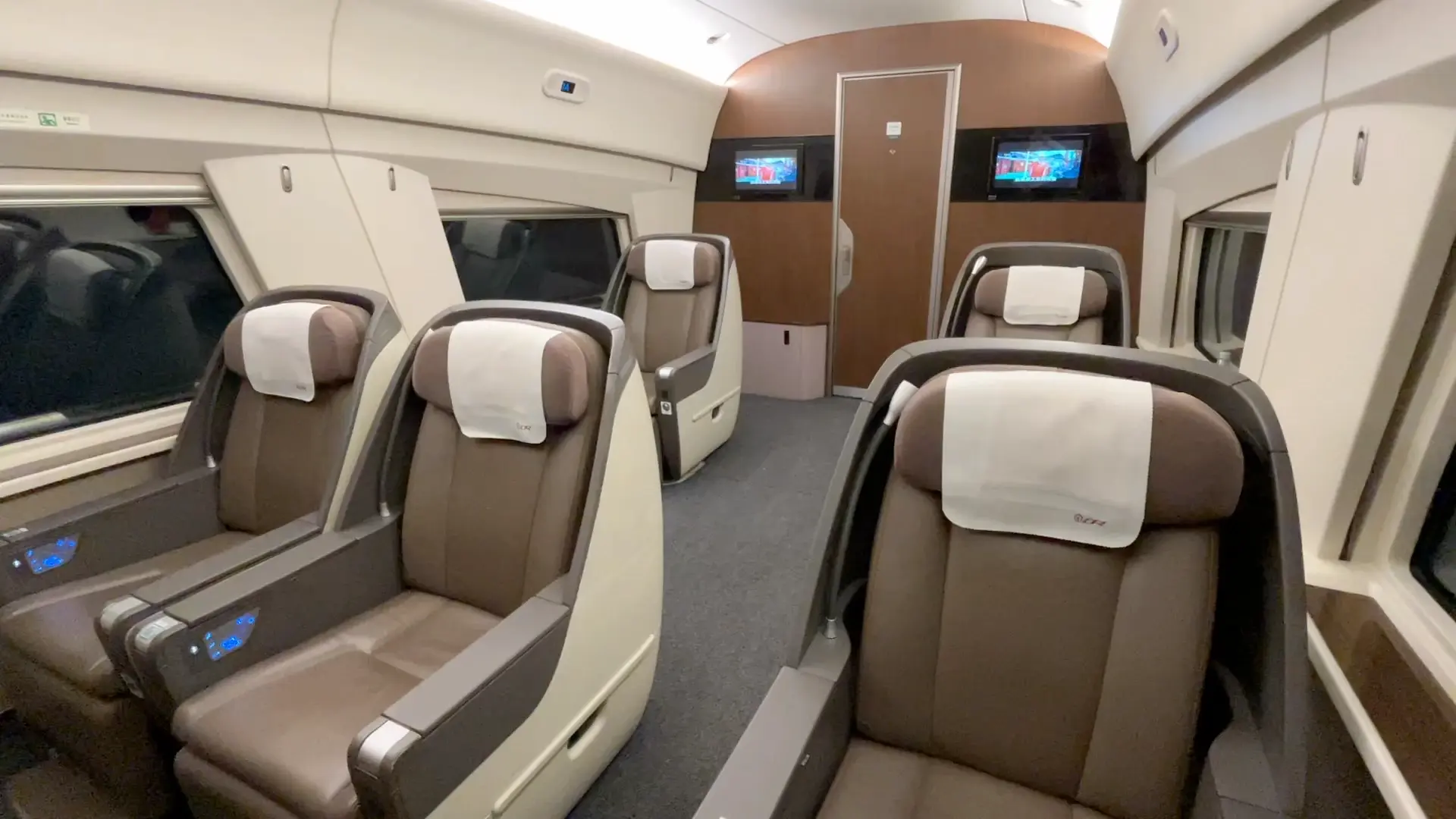
Business Class — airline-style lie-flat seats on some services, with lounge access.
Getting Around Cities
Metro — fast, cheap and the best way across big cities; signage and ticket machines have English options;
DiDi (ride-hailing) — fixed estimate before you accept, pays via Alipay or WeChat, English interface;
Taxis — metered; say "打表" if the driver does not start the meter;
Shared bikes — useful for short hops and unlocked through Alipay.
How Do You Pay in China with a UK Card?

This is the part of a China trip that surprises UK visitors most. China has moved to QR-code mobile payments almost completely, and physical credit cards are accepted in only a small number of places. The good news is that both of China's dominant payment apps now accept UK cards.
The three answers that matter most:
Can I use my UK card in China? | Yes — but almost always through Alipay or WeChat Pay rather than by tapping the card itself. |
Should I set up Alipay and WeChat Pay? | Absolutely. This is the single most important thing to do before you fly. |
Should I carry cash? | Yes, a small amount as a backup — some stalls and smaller places no longer handle cards at all. |
Method | Works for UK Visitors? | How to Set It Up |
|---|---|---|
Alipay | Yes | Bind a UK Visa or Mastercard; widest merchant coverage |
WeChat Pay | Yes | Bind a UK Visa or Mastercard; useful for small vendors |
Physical credit card | Rarely | International hotels and high-end malls only |
Cash | Yes | Airport ATM or currency exchange — keep it as backup |
Setting Up Alipay and WeChat Pay with a UK Card
Download Alipay (and optionally WeChat) from your app store before you fly.
Register with your UK mobile number — no Chinese phone number or bank account is needed.
Complete identity verification by photographing your passport data page. This is mandatory for international cards.
Add your UK Visa or Mastercard as a payment method.
Run a small test payment to confirm the card binds successfully — a failed binding is much easier to fix at home.
Small transactions are usually fee-free, while larger ones may carry a small percentage charge from the payment provider — check the current terms in the app, as they do change.
How Do You Get Online in China?
China's internet is not the open internet you are used to. A number of major services are blocked on Chinese networks, and how you connect — roaming eSIM, UK roaming, or a local SIM — determines whether you can reach them.


Ways to Stay Connected
Option | Access to Blocked Apps | Chinese Number? | Best For |
|---|---|---|---|
Roaming eSIM | Usually yes — traffic routes outside China | No | Most UK tourists |
UK carrier roaming | Usually yes | Your UK number | Short trips, minimal setup |
Chinese local SIM | No — the firewall applies | Yes | Long stays that need a Chinese number |
Recommended eSIM Providers
A travel eSIM is a data-only plan you install before departure. Because the traffic is routed outside China, most blocked apps keep working without a VPN. Plans are available from most major travel-eSIM brands and cost very little for a short trip.
Provider | Network in China | Note |
|---|---|---|
Airalo | China Unicom | Widest range of plan sizes |
Ubigi | China Telecom | Good value; supports hotspot sharing |
Holafly | China Mobile | Unlimited-data plans, with fair-use throttling |
Saily | Auto-select | Simple and beginner-friendly |
Nomad | Unicom / Telecom | Good value for shorter trips |
Do You Need a VPN?
China restricts access to a number of international websites and apps, and internet regulations can change. If you plan to use a VPN, research the current legal position before travelling and make sure any service you use complies with Chinese law. The FCDO advises travellers to follow Chinese law on this. What is clearly illegal is selling or hosting VPN services inside China.
For most short-term visitors, arrange your mobile data before you land. A roaming eSIM is the simplest option, and it often reaches blocked services on its own. If you do want a VPN as a backup, download and test it before you fly — VPN apps are difficult to obtain once you are inside China.
The simplest solution for a two-week trip: A roaming eSIM that routes your traffic outside China often reaches blocked services — including Google Maps, WhatsApp and Gmail — without any VPN at all. It is not guaranteed 100% of the time, but for most UK visitors it is enough on its own.
Is China Easy to Visit Without Speaking Chinese?
Yes, more than most first-time visitors expect. English is not widely spoken, but translation tools have improved to the point where the language barrier is rarely a real obstacle on a standard tourist route.
Translation apps handle most situations. Camera mode reads menus, signs and departure boards; voice mode covers conversations.
QR-code menus are standard. Many restaurants expect you to scan a code, read a web menu and order on your phone — your translation app can read it.
Hotel front desks are the most reliable English speakers you will meet, and they will happily write addresses or dish names in Chinese for you.
Big cities are easier than smaller ones. Beijing, Shanghai and Xi'an see enough foreign visitors that signage and tickets usually include English.
Nobody expects you to speak Chinese. Younger Chinese people use translation apps constantly, and typing sentences back and forth is completely normal.
What Should UK Travellers Expect in Everyday Life?
China is not a country of arcane rituals you need to memorise before arriving. Most of what circulates online about Chinese "etiquette" rarely comes up on an ordinary holiday. What genuinely shapes your day is a list of practical differences.
Situation | What to Expect |
|---|---|
QR-code menus | Scanning a code at the table to see the menu and order is standard in most restaurants |
Cashless payments | Many stalls and small restaurants are effectively cashless — your phone is your wallet |
No tipping | Not part of the culture; in restaurants and taxis, the price is the price |
Shared dishes | Meals are ordered family-style; rice is individual, everything else is communal |
Toilets and tissues | Carry tissues and hand sanitiser; squat toilets are common, though malls and hotels usually have Western-style cubicles |
Queuing | Less orderly than in the UK, especially for trains, lifts and popular sights — hold your place politely but firmly |
Very large railway stations | Stations such as Beijing South and Shanghai Hongqiao are the size of airports; allow extra time |
Security checks at stations | Every station has an airport-style security check with a passport inspection |
Hotel registration | Your hotel registers your stay with the local authorities — you do not need to do anything |
Early opening hours | Sights and breakfast places open early, which suits jet-lagged mornings well |
Holiday crowds | During Chinese public holidays, major sights become extremely busy — plan around them |
Portion sizes | Dishes are designed to be shared, so order fewer than you would at a UK restaurant |
The biggest adjustment is not manners — it is payment. Within a day of landing, you will be scanning QR codes for everything from a coffee to a temple ticket to a shared bike. Get Alipay and WeChat Pay working before you fly and almost nothing else about daily life in China will feel difficult.
What Should You Eat in China?
Chinese food in China is far more regionally diverse than the Cantonese-style takeaway that most UK visitors are familiar with. Regional cooking varies enormously, vegetables are given far more care, and breakfast is a genuine highlight.
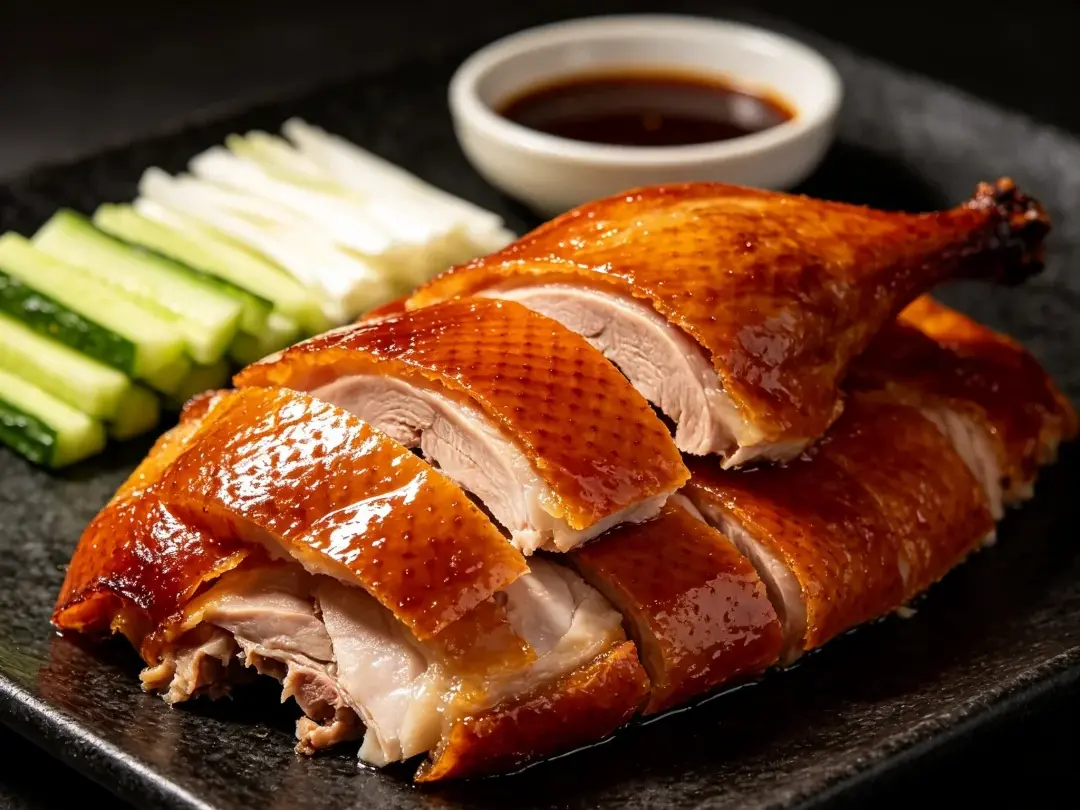
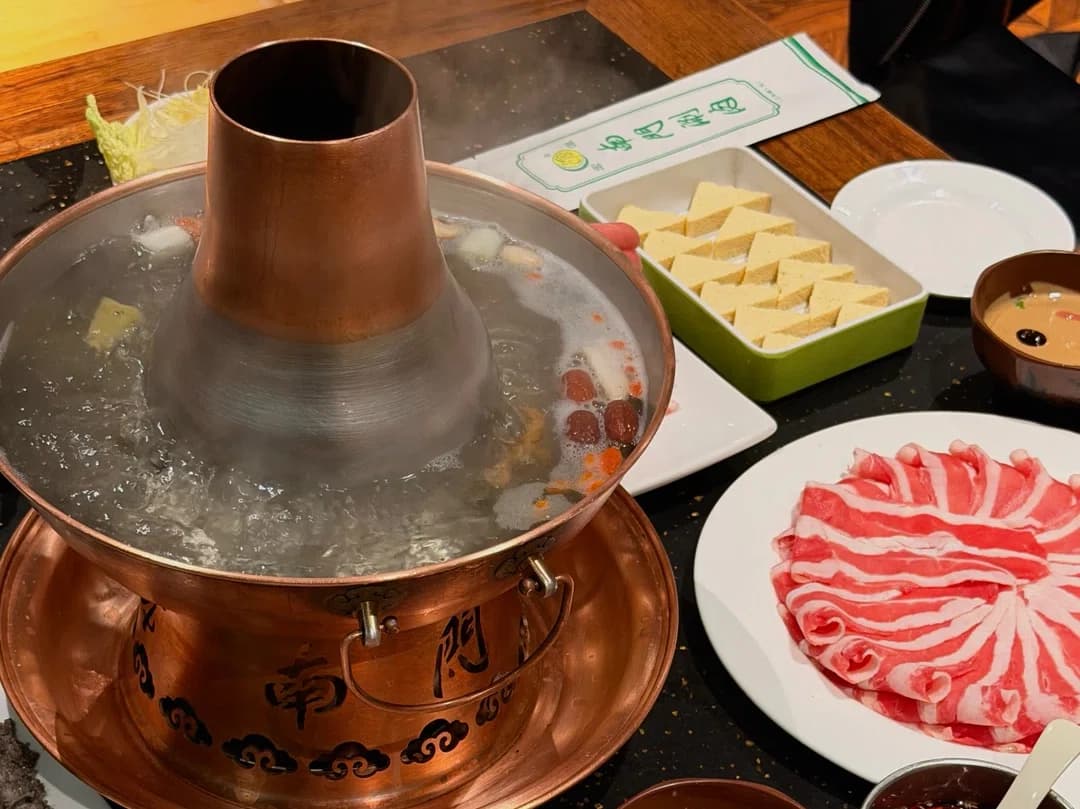
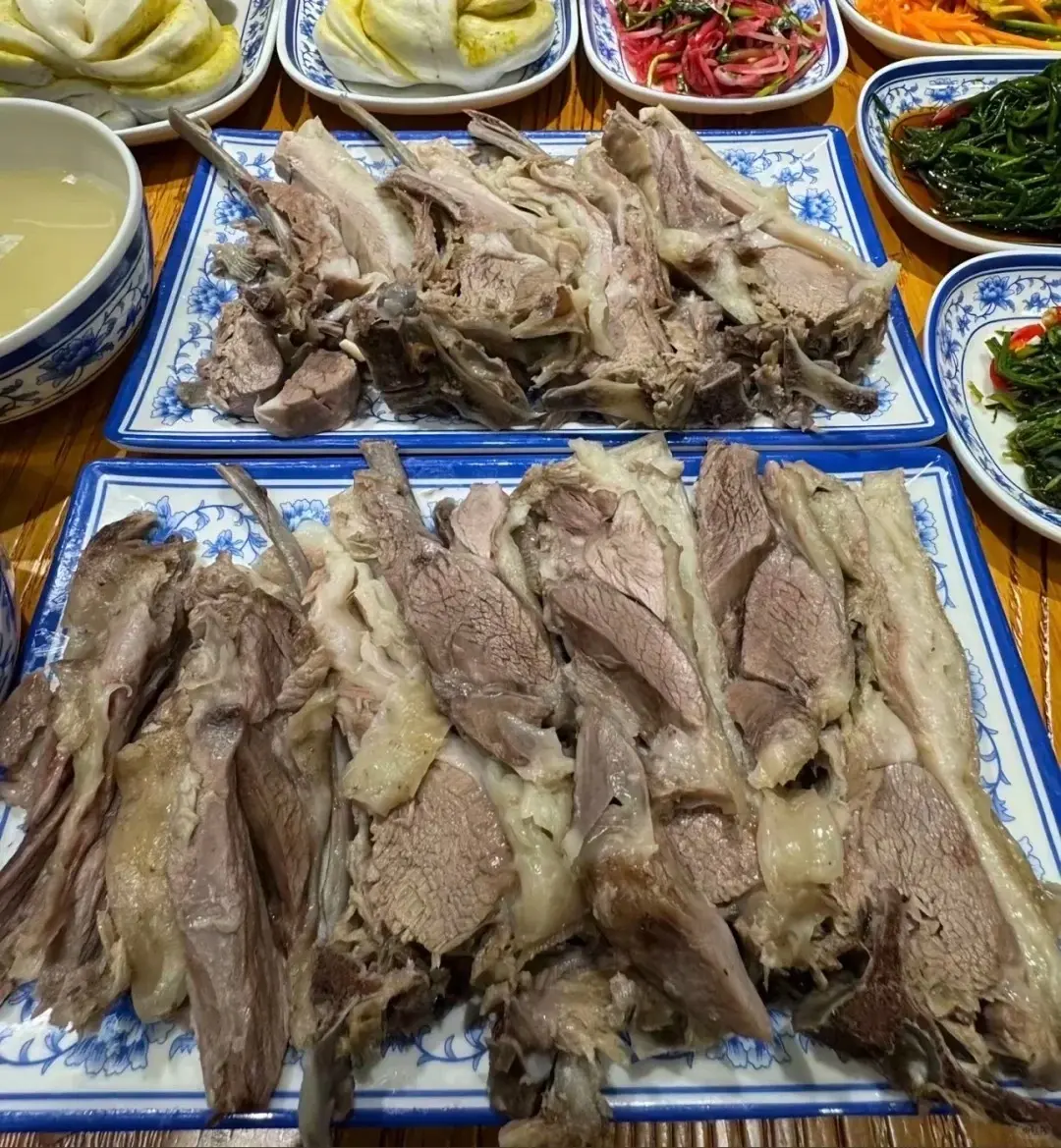

Regional Food at a Glance
Region | Must-Try Dishes | Notes |
|---|---|---|
Beijing | Peking duck, zhajiangmian, jianbing | Restaurant duck needs advance booking |
Shanghai | Xiaolongbao, shengjianbao, hongshao rou | Bite a hole in soup dumplings first — they are scalding |
Chengdu, Chongqing | Hotpot, mapo tofu, dan dan noodles | Ask for "微辣" if you cannot handle heat |
Guangdong | Dim sum, roast goose, congee | Best eaten at breakfast |
Xi'an | Roujiamo, biangbiang noodles, yangrou paomo | The Muslim Quarter is the food centre |
Jiangnan (Hangzhou, Suzhou) | Dongpo pork, Longjing shrimp | Refined, sweet-savoury cooking |
Breakfast Is the Best Meal
City | Breakfast to Try | Where |
|---|---|---|
Beijing | Jianbing, baozi, douzhi | Street carts and small breakfast shops in the hutongs |
Shanghai | Xiaolongbao, cifantuan, soy milk | Local breakfast chains and wet markets |
Guangzhou | Morning tea dim sum | Traditional teahouses — order from trolleys and carts |
Xi'an | Roujiamo and yangrou paomo | Muslim Quarter, from early morning |
Chengdu | Dan dan noodles, red oil wontons | Neighbourhood noodle shops |
How to Order Without Speaking Chinese
Scan the QR code at your table. Most restaurants now use QR-code menus — run the page through your translation app, then order and pay in the app.
Use your translation app's camera mode on menus, blackboards and wall signs.
Look at what other tables are eating. Pointing at a dish you have seen is completely normal.
Ask your hotel to write two or three dish names in Chinese — show the note at the restaurant.
Order family-style. Two or three shared dishes between two people, with individual bowls of rice.
Handle dietary needs in writing. Use your translation app to produce a short written sentence and show it — written Chinese removes all ambiguity.
How Much Does a China Trip from the UK Cost?
China has a reputation for being expensive, but that reputation is out of date for most day-to-day spending. Flights are the single biggest cost; once you are there, food, local transport and many attractions are cheaper than their UK equivalents.
Typical Daily Budget (Excluding Flights)
Tier | Typical Daily Spend (GBP) | What It Looks Like |
|---|---|---|
Backpacker | Around £25–45 | Hostel dorm bed, street food, metro, free or cheap attractions |
Mid-range | Around £65–110 | Comfortable hotel, mixed dining, metro plus occasional taxi |
Comfort | Around £130–220+ | Four- or five-star hotel, restaurant meals, private car or guide |
What Drives the Cost of a China Trip
Expense | What Drives It | How to Keep It Down |
|---|---|---|
International flights | Season and how early you book | Fly mid-week, travel in shoulder season and book as early as you can |
Accommodation | City and distance from the centre | Stay slightly outside the core; Chinese booking apps often list the same hotels cheaper |
High-speed rail | Distance and seat class | Second class is comfortable; book as soon as tickets release |
Food | Whether you eat at sights or where locals eat | Walk one street back from major attractions |
Local transport | Metro versus taxis | The metro is fast and cheap; save taxis for late nights |
Attractions | Number of paid sights and evening shows | Many museums are free; book the big ones in advance |
Mobile data | eSIM versus UK roaming | A travel eSIM is usually the cheapest option |
Flights and hotels move constantly, so we do not quote fixed prices here. Use the daily budget above as a planning baseline, then check live prices when you book — flight fares in particular swing sharply between low season (usually January) and peak summer.
Is China Safe for UK Travellers?
China is generally a safe country for tourists. Violent crime against visitors is rare, and walking around major cities at night is far less concerning than in many Western cities. The realistic risks are scams, payment confusion and health costs.
Safety does vary by region, and conditions can change. Before travelling, check the latest FCDO China travel advice — it covers regional risks, health and current entry requirements, and is updated continuously. In recent years it has flagged issues such as flooding and landslides in remote areas, and the typhoon season along the southern and eastern coasts.
Emergency Numbers
Number | Service | Notes |
|---|---|---|
110 | Police | Multi-language support in Shanghai; Chinese elsewhere |
120 | Ambulance | The call is free, but the ride is charged |
119 | Fire | — |
122 | Traffic accidents | — |
12367 | Immigration (visa and entry queries) | English, Japanese, Korean and Russian |
12345 | Municipal services and complaints | English available in Beijing and Shanghai |
Common Scams and How to Avoid Them
Scam | Where | How to Avoid It |
|---|---|---|
Tea house scam | Near major attractions | Politely refuse invitations from strangers offering tea, English practice or help with photos — the bill at the end is enormous |
Black taxi | Major railway stations, especially at night | Use DiDi instead of accepting offers from touts |
Taxi meter scam | Anywhere | Say "打表" to ask for the meter; if the driver refuses, get out |
Rickshaw scam | Near major attractions | Avoid — cheap fares often end at commission shops |
Health and Water
Topic | What to Know |
|---|---|
Tap water | Not drinkable, even in five-star hotels. Every hotel room has a kettle — boil and cool it |
Bottled water | Widely available and inexpensive |
Vaccinations | A yellow fever certificate is required if you are arriving from a country with a transmission risk. See TravelHealthPro for recommended vaccines |
Medication | Bring prescription medicine in its original packaging with the prescription |
What Are the Biggest Mistakes First-Time UK Visitors Make?
Almost every avoidable problem on a first China trip comes from the same handful of assumptions. Here are the ones we see most often.
Mistake | What to Do Instead |
|---|---|
Assuming you can pay with a card | Set up Alipay and WeChat Pay before you fly |
Arriving with no mobile data | Install an eSIM or arrange UK roaming before departure |
Leaving payment setup until you land | A failed card binding is far easier to fix at home |
Underestimating station time | Allow 30–40 minutes before departure at large railway stations |
Booking popular attractions late | Forbidden City and major museums release tickets on fixed dates and sell out |
Trying to fit too many cities in | Choose three cities, not five |
Not carrying tissues | Many public toilets do not provide paper or soap |
Assuming visa-free entry for 2027 | Re-check the rules before booking 2027 travel |
Not saving your hotel address in Chinese | Screenshot it before you leave the room each morning |
Do You Need a Guide in China?
Most UK visitors do not need a guide for the classic route, but a guide changes the experience in specific situations.
You probably do not need one if:
You are only visiting Beijing and Shanghai, or other large cities
You are an experienced independent traveller
You are comfortable using apps for payment, transport and translation
A private guide is especially useful if:
It is your first trip to China and you would rather not manage everything yourself
You are visiting several cities and want the connections handled
You are travelling as a family or a larger group
You want the Great Wall, rural destinations, water towns or cultural sites explained properly
You value having someone to deal with bookings, tickets and local transport on the day
Should You Travel Independently or Book a Private China Tour?
China is one of the easier countries in Asia to travel independently — the infrastructure is excellent and the apps work. But it is also one where a little professional help removes a disproportionate amount of friction, especially on a first visit.
Aspect | Independent Travel | Private China Tour |
|---|---|---|
Best for | Confident travellers, city-focused trips, flexible budgets | First-time visitors, families, multi-city trips, limited time |
Freedom | Complete — change plans day by day | Scheduled, but adjustable within the day |
Admin | You handle trains, tickets, reservations and translation | All bookings and logistics handled for you |
Language | Apps and translation tools | English-speaking guide and driver throughout |
Depth | Whatever you research yourself | Context and history explained as you go |
Typical trip | Beijing and Shanghai, or a single-city stay | The Golden Triangle or a multi-region itinerary |
A good middle ground: Travel independently in the cities and use a guide for the days that are genuinely hard to organise alone — the Great Wall, rural scenery and cultural sites where context makes a real difference. That combination suits most first-time UK visitors better than either extreme.
Start Planning Your China Adventure
With visa-free entry, direct flights from four UK airports, and mobile payments that now accept British cards, there has never been a better time for a first trip to China. Whether you choose to explore independently or travel with a private guide, the country rewards curiosity at every turn — from the Great Wall at dawn to a Sichuan hotpot shared with strangers who become friends by the end of the meal.
Ready to go? Explore our China tours to find itineraries designed for first-time visitors from the UK, or start building your own custom trip today.








Traveler Discussions
Questions from travelers