
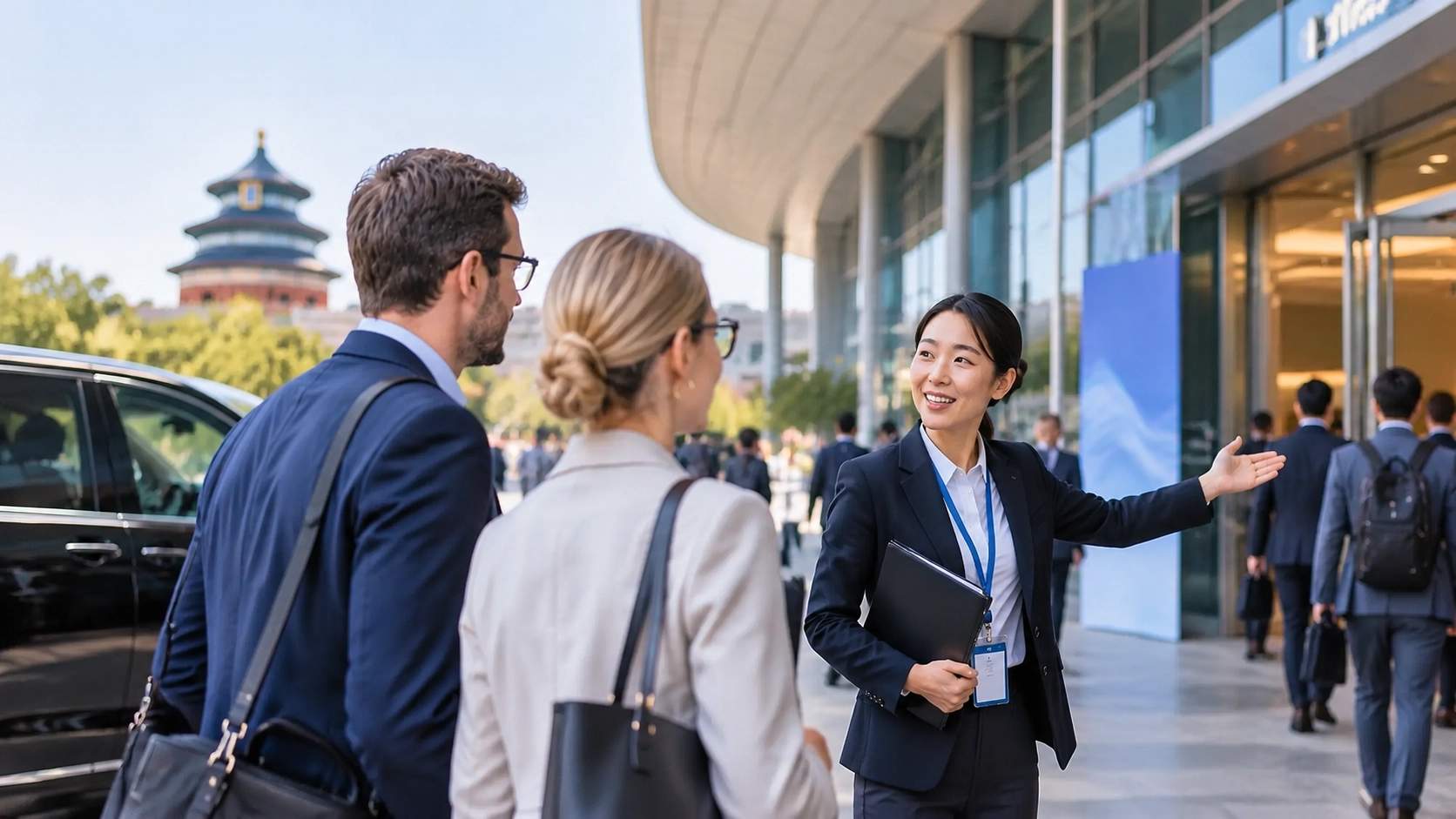
In Beijing, a business trip is unusually well provided for and unusually badly organised — usually in that order. Five-star hotels are genuinely good value, a roast duck dinner costs less than a client lunch in London, and the best morning walk in the city is free, twenty minutes from the finance district, and finished before your first meeting. What nobody is generous with is the machinery around the meetings: the Beijing interpreter service that has read your deck, the car that is already at the door, the hall someone has already walked through. Section 4 is that part, in full.
1. Three Clocks That Shape a Beijing Business Week
In Beijing you are always running on three clocks at once: the meeting clock, the meal clock and the traffic clock. Get them aligned and the week feels luxurious. Ignore one and you spend the trip apologising.
The traffic clock is the one visitors underestimate. Distance means little here; a 12-kilometre run can take twenty minutes at 10 a.m. and fifty at 6 p.m. Which is why the district you sleep in matters more than the star rating of the hotel: a good four-star next to your meetings beats a beautiful five-star across two ring roads.
The meal clock is more generous than visitors expect. Dinner starts early by European standards — 18:00 is normal, 19:30 is fashionable — and a proper Beijing dinner runs two hours without anyone rushing. If you have a 9 a.m. meeting, book the duck for your first night, not your last.
The meeting clock, meanwhile, has a Beijing quirk: lunches are long and are part of the programme, and afternoons often start at 14:00 rather than 13:00. Plan one meeting fewer per day than you would at home, and you will actually have time to eat.
2. Where to Stay on Beijing Corporate Travel: Twenty Hotels, One by One
Beijing hotel choice is a trade between commute, atmosphere and evening options. Below are the five districts we book most often and every hotel we actually use in them — four to six per district, labelled by what they are: official five-star, four-star, mid-market brand, or courtyard boutique. The leisure-side comparison sits in our Beijing luxury hotels, and the smaller, design-first list in boutique hotels in Beijing.
Star ratings below follow the official Chinese grading; courtyard hotels are described by experience rather than by stars. The phone numbers are each hotel's own front desk — confirm the current booking line before you commit.
1. Guomao / CBD
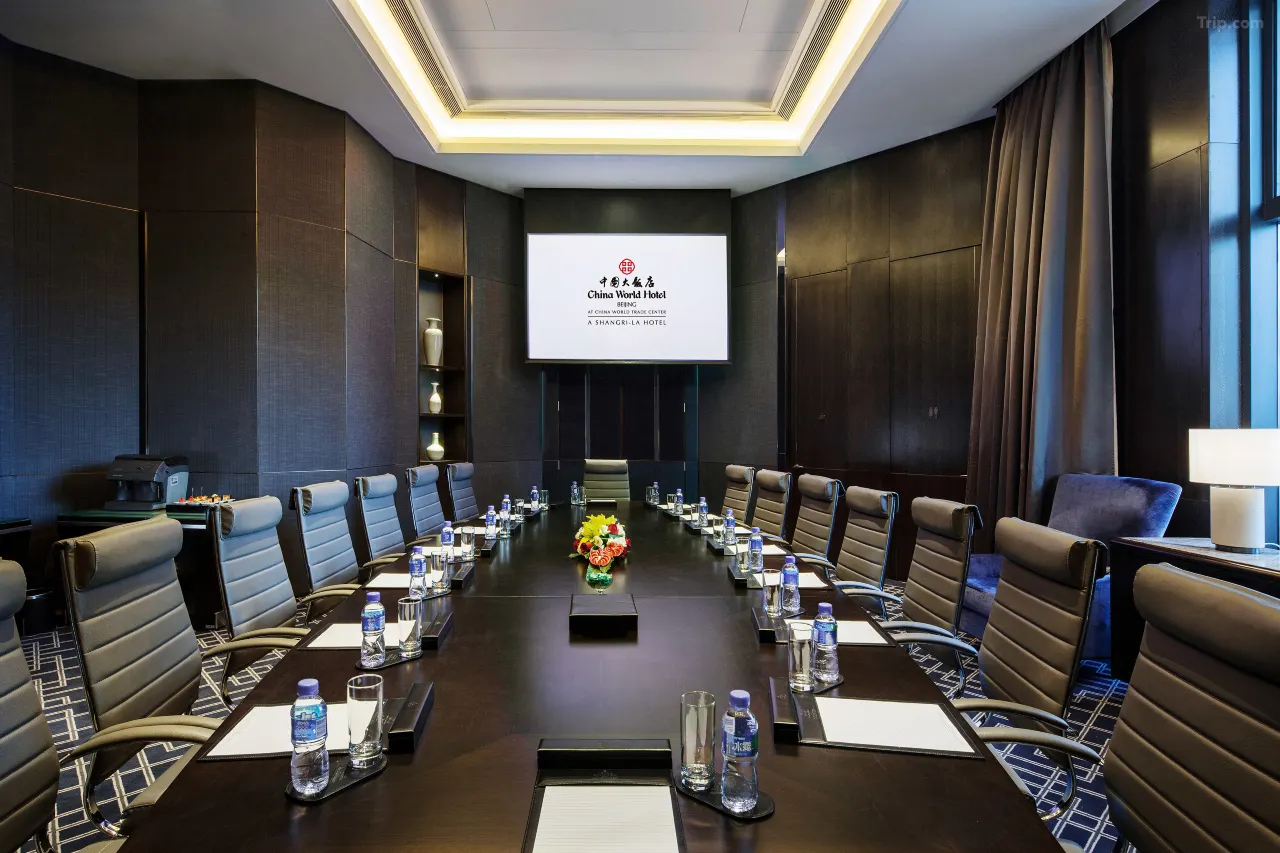
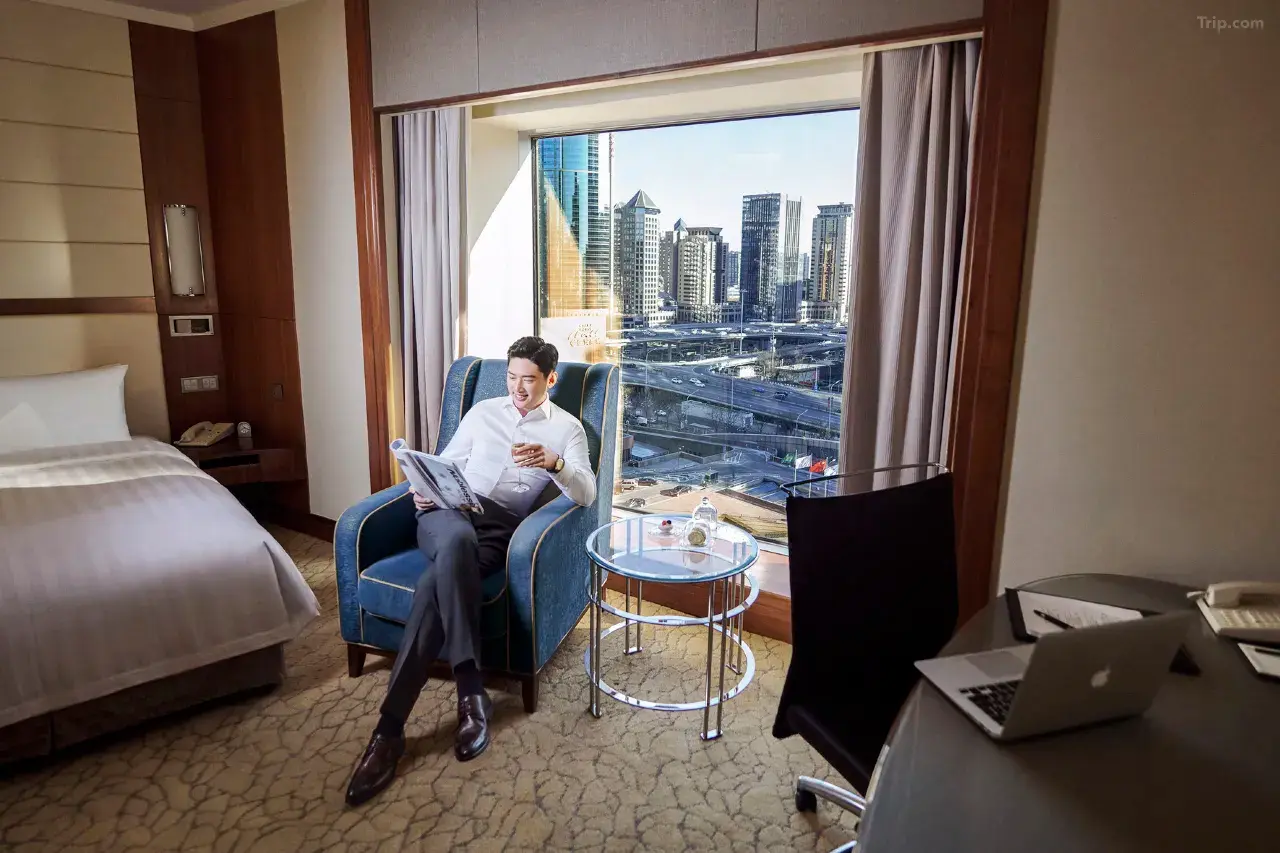
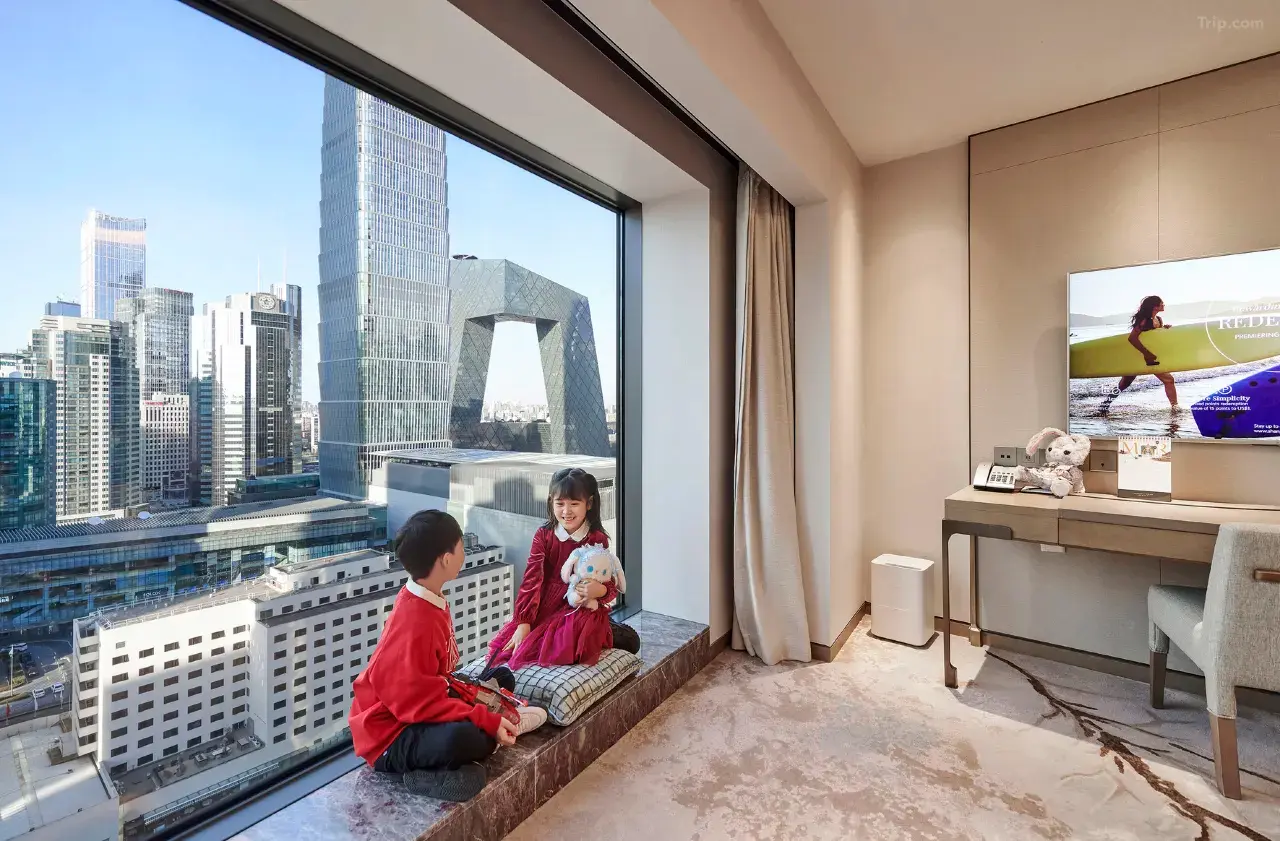
China World Hotel 中国大饭店
Address. Jianguomenwai St 1, Chaoyang — inside the China World complex ·
Phone. 010-6505 2266
Getting there. Metro Line 1 or 10 to Guomao, then walk through the China World Mall, about 5 minutes, no street crossing. From PEK 40–60 minutes by car; from PKX 70–90.
The default for meetings inside the complex. You walk to the room in slippers weather.
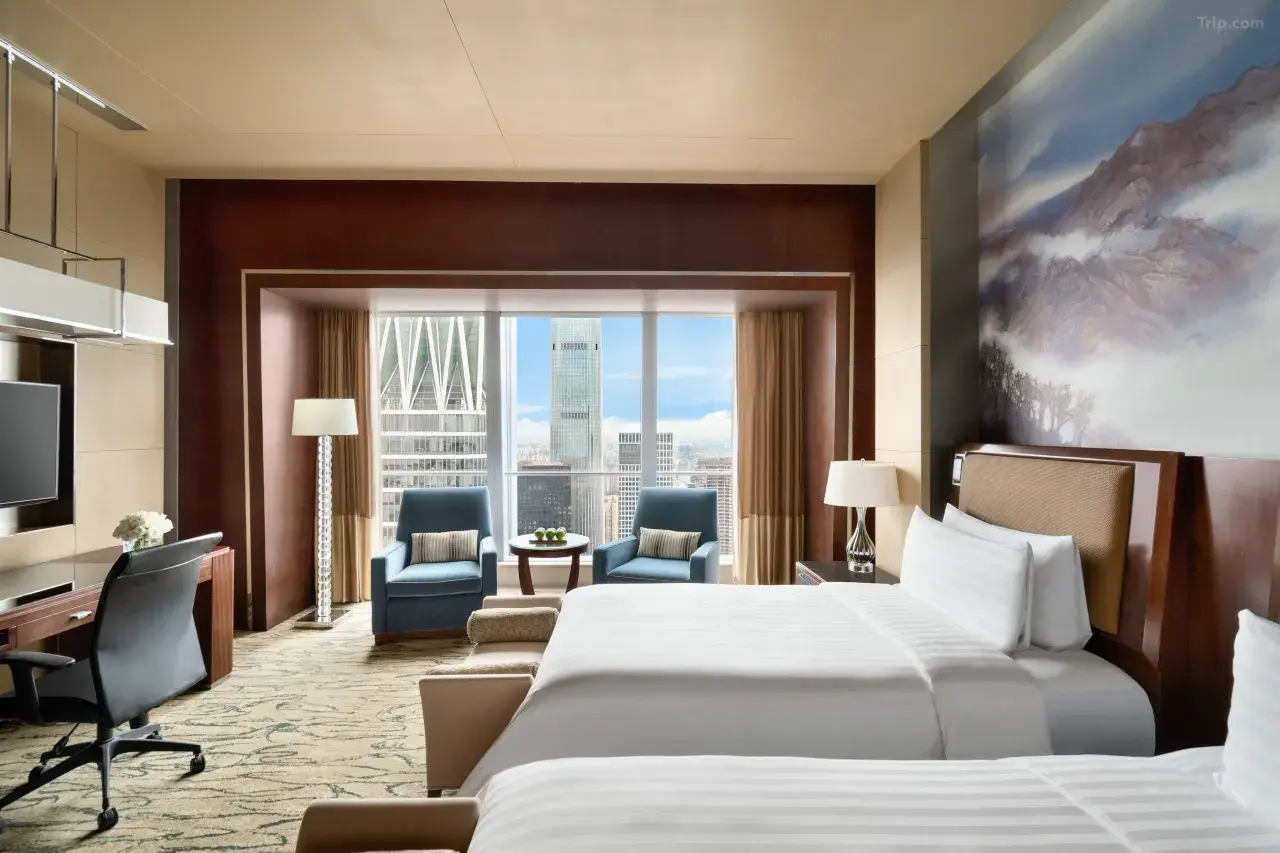
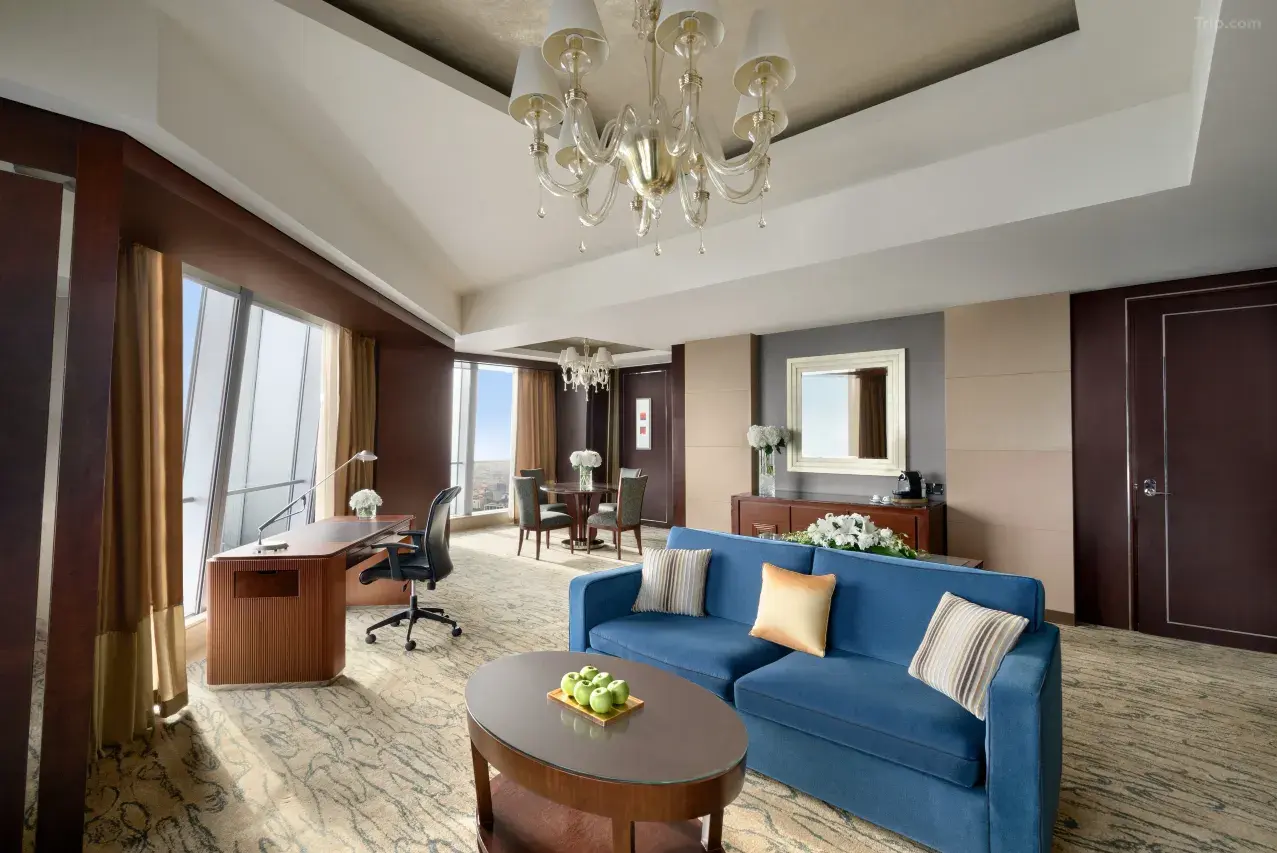
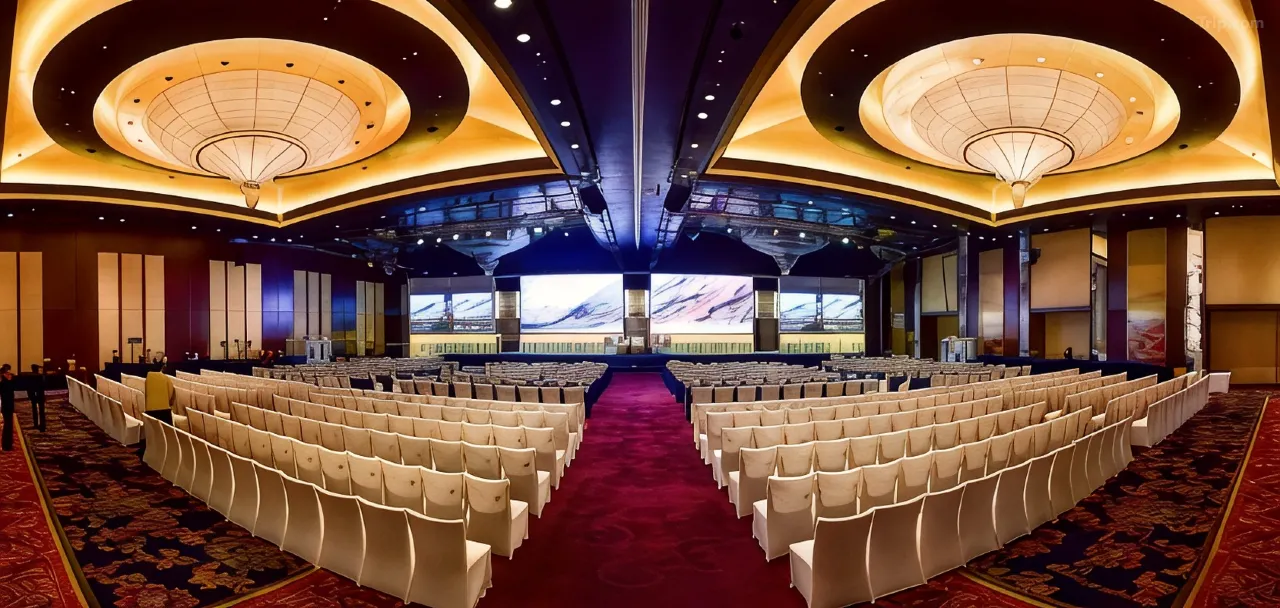
China World Summit Wing 国贸大酒店
Address. Jianguomenwai St 1, Chaoyang — the tower above the same complex ·
Phone. 010-6505 2299
Getting there. Same Guomao station access as China World Hotel; the lobby is on a high floor, so allow five extra minutes. PEK 40–60 minutes; PKX 70–90.
Same address, quieter rooms, better views. Where we put the person who signs.
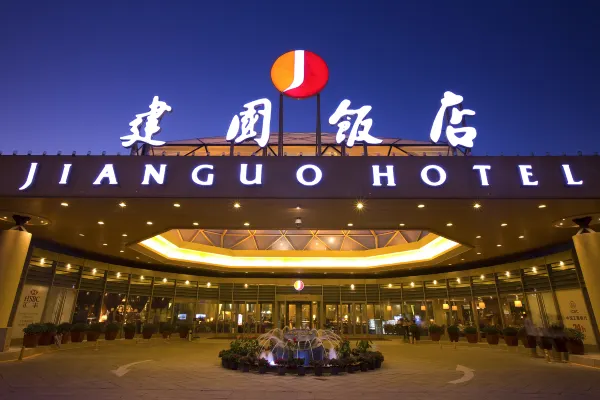
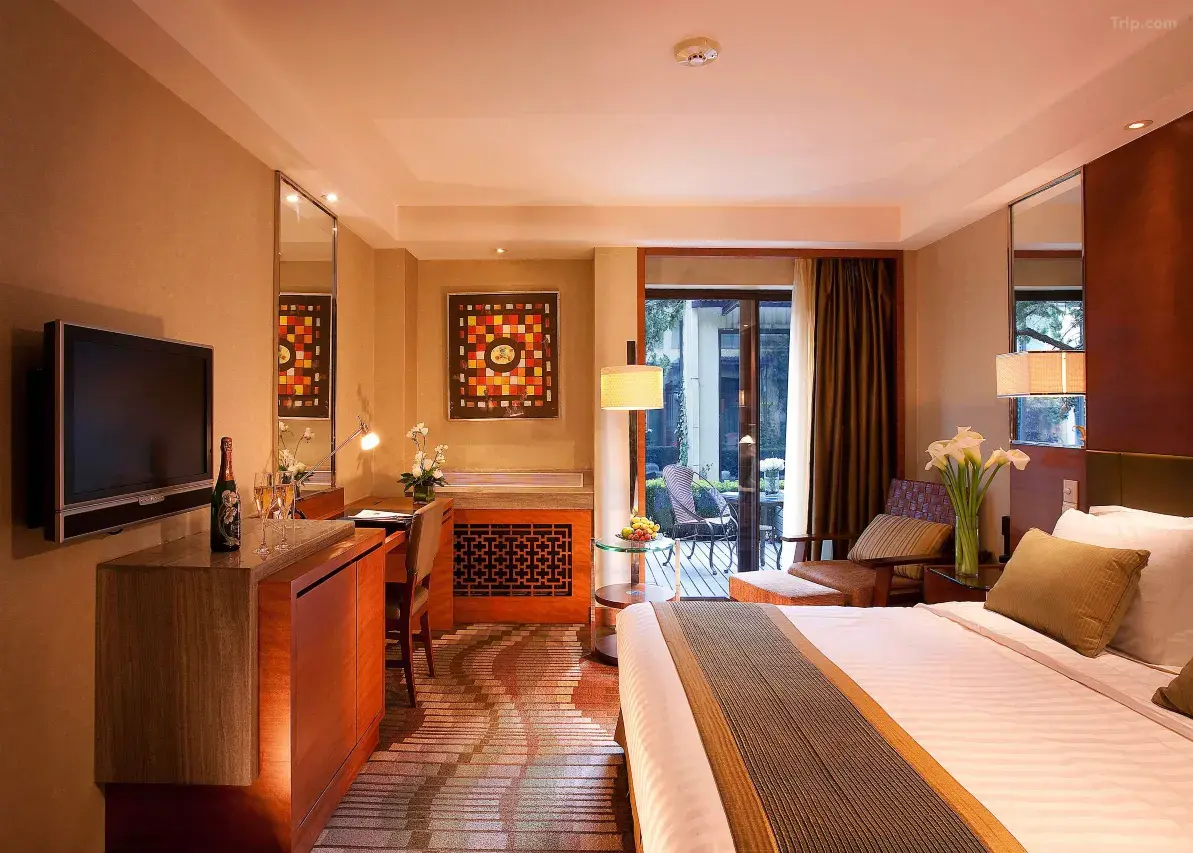
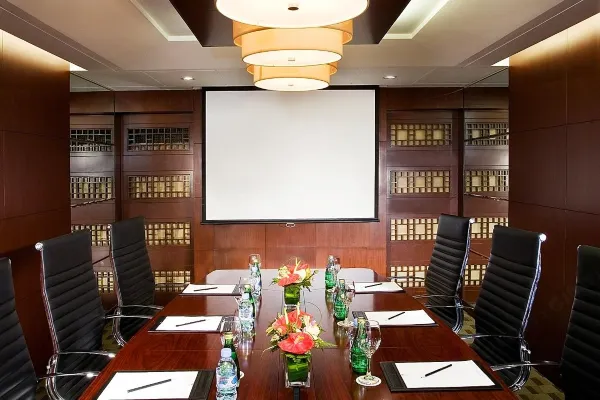
Jianguo Hotel 建国饭店
Address. Jianguomenwai St 5, Chaoyang ·
Phone. 010-6500 2233
Getting there. Metro Line 1 to Yong'anli, exit and walk one minute. PEK 40–55 minutes; PKX 70–85.
Low-rise, gardens, and the shortest walk to a metro exit in the CBD.
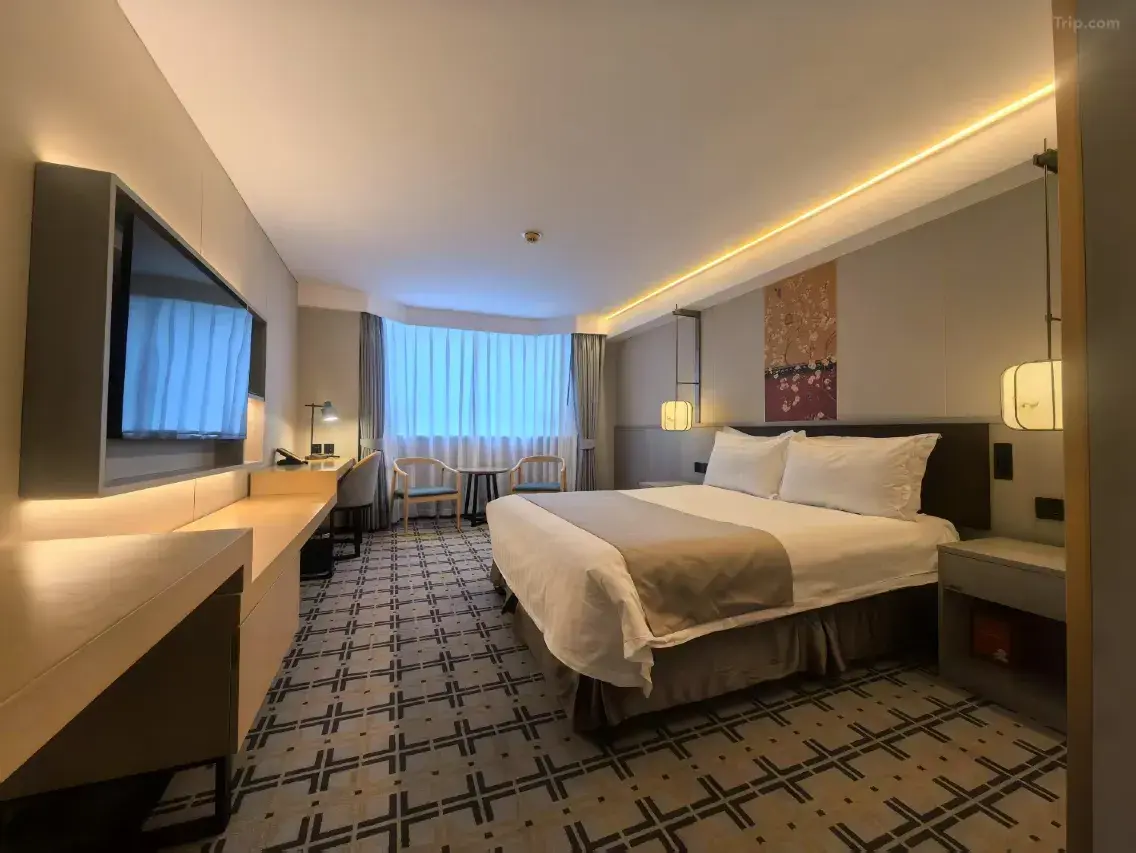
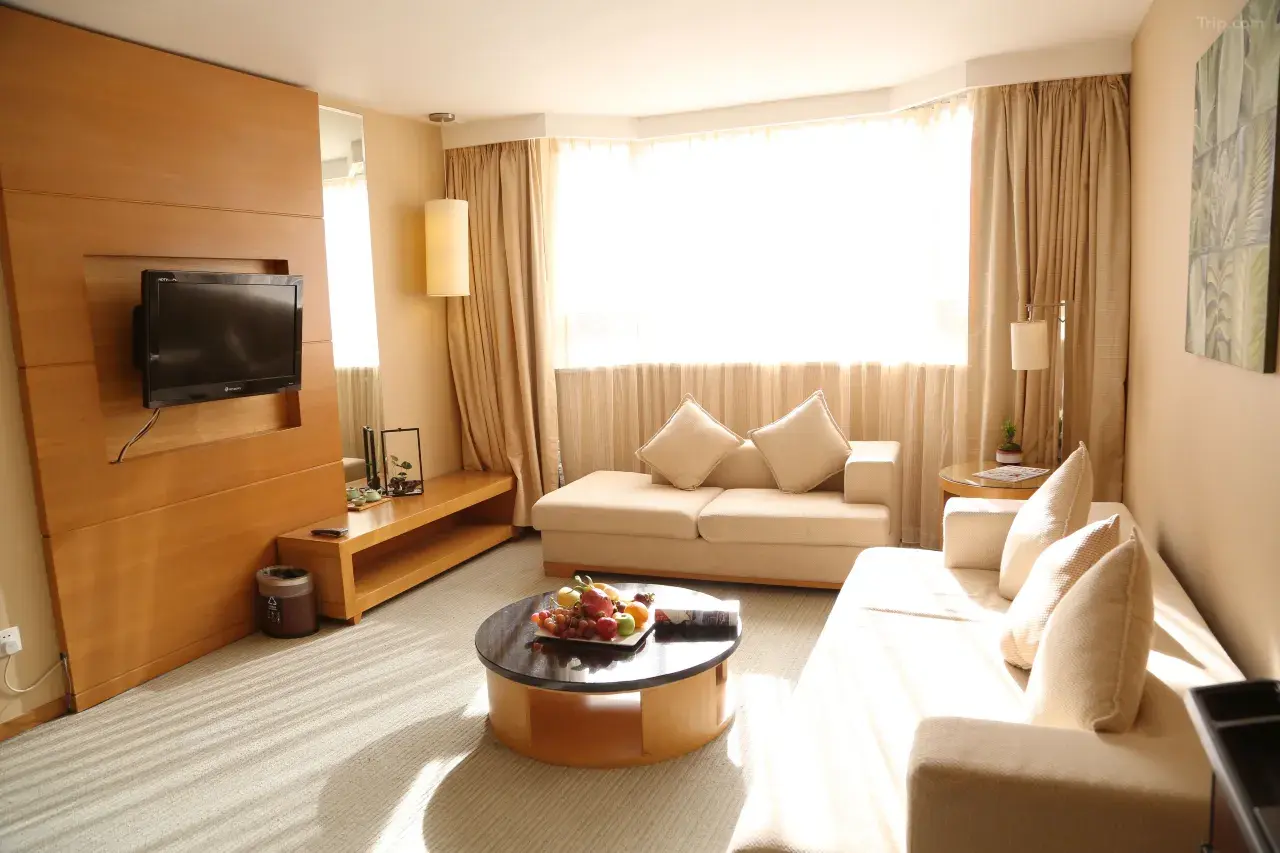
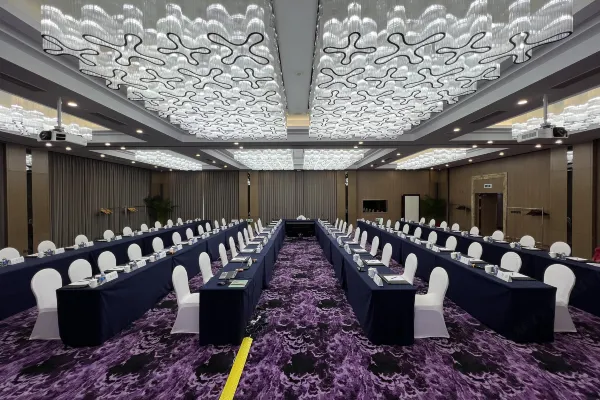
Jinglun Hotel 京伦饭店
Address. Jianguomenwai St 3, Chaoyang · Phone. 010-6500 2266
Getting there. Metro Line 1 to Yong'anli, five minutes on foot; Guomao station is eight. PEK 40–55 minutes.
Best-value four-star for a dense CBD schedule: 600 rooms, fast check-in, breakfast that opens early.
2. Sanlitun / Liangmaqiao
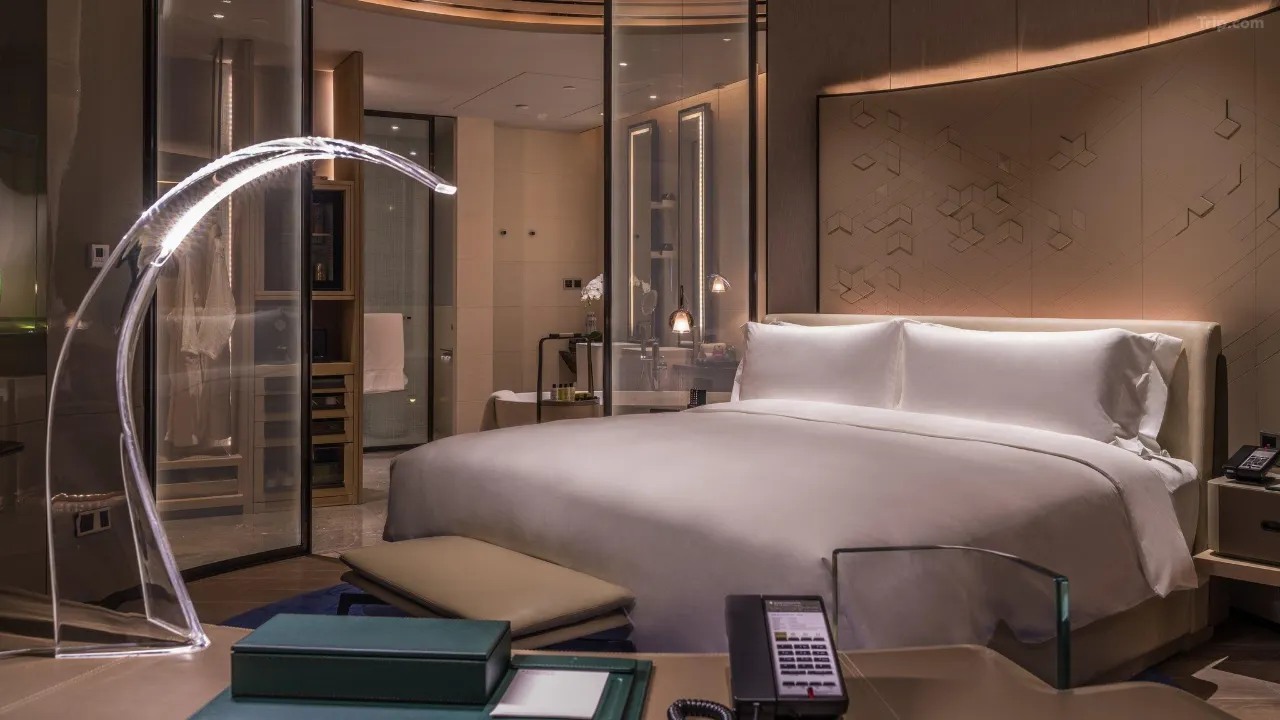
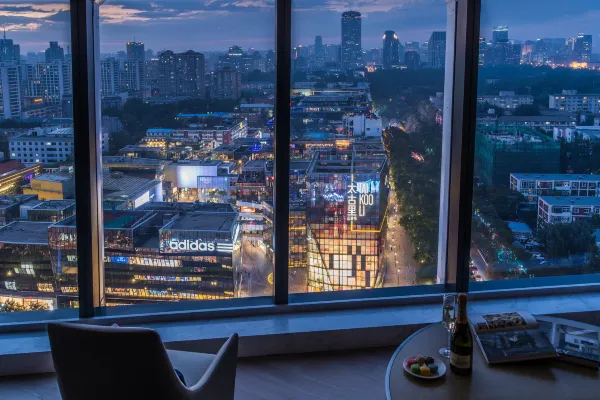
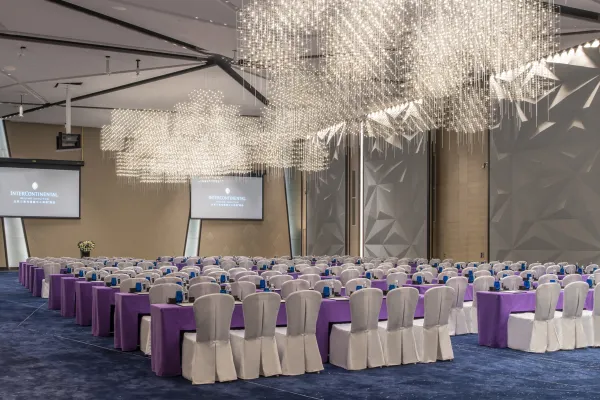
InterContinental Sanlitun 三里屯通盈中心洲际
Address. N Sanlitun Rd 1, Chaoyang ·
Phone. 010-6530 8888
Getting there. Metro Line 10 to Tuanjiehu, then 12 minutes on foot or 5 by taxi; Line 6 to Dongdaqiao is similar. PEK 30–45 minutes; PKX 60–80.
Walk to Taikoo Li, the embassy district and most of the good restaurants. The best hotel for hosting clients.
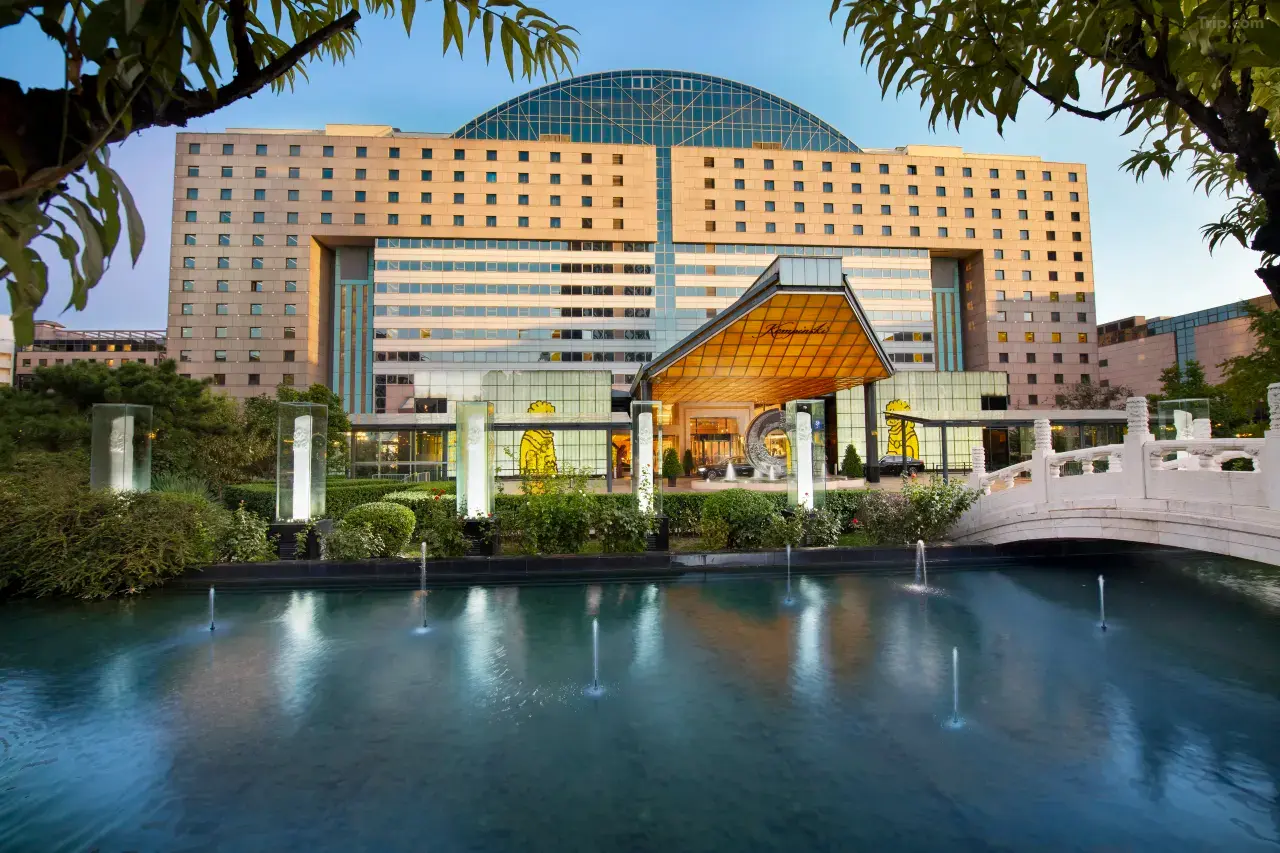
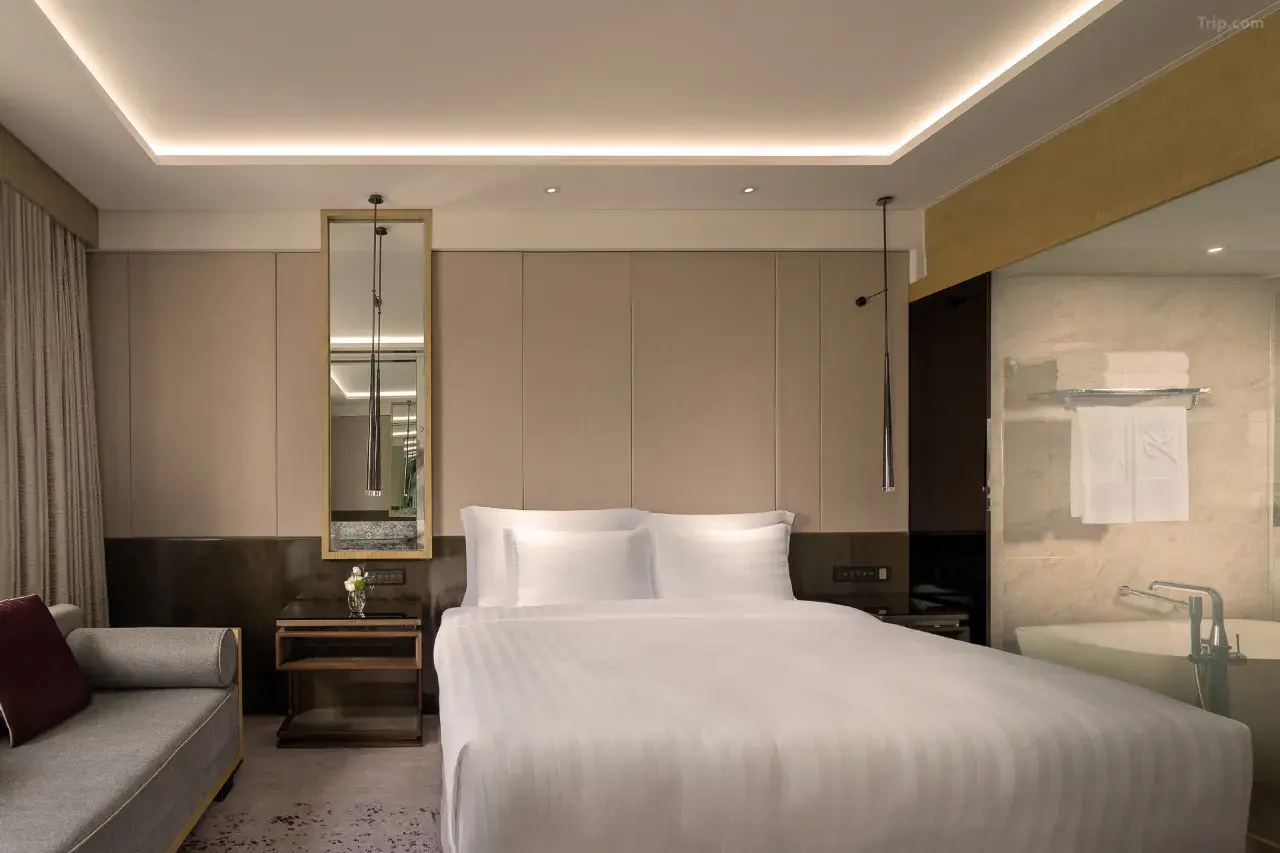
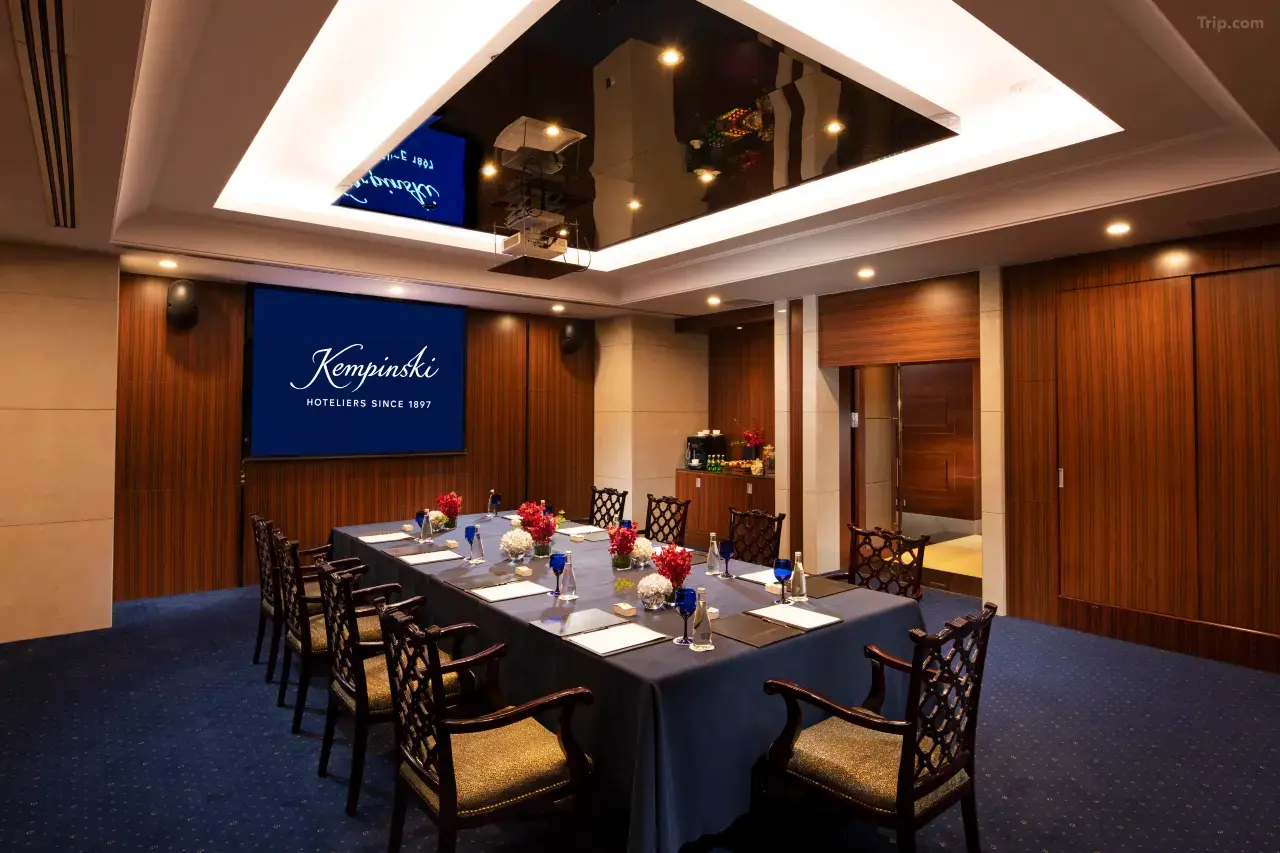
Kempinski Hotel Beijing 燕莎中心凯宾斯基
Address. Liangmaqiao Rd 50, Chaoyang ·
Phone. 010-6465 3388
Getting there. Metro Line 10 to Liangmaqiao, six minutes on foot. PEK 25–40 minutes via the airport expressway; PKX 65–85.
Quiet, German-run, and twenty minutes from the airport expressway — the choice when the flight lands late.
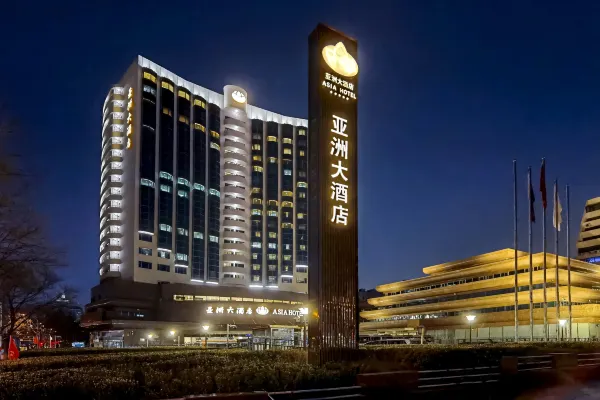
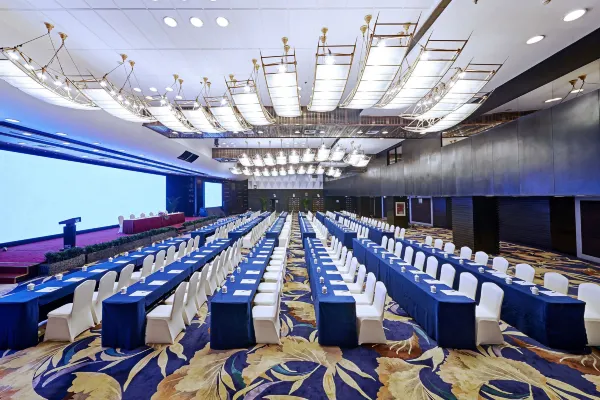
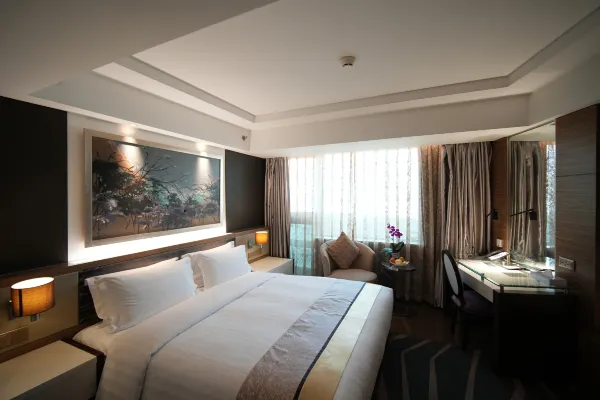
Beijing Asia Hotel 亚洲大酒店
Address. Xinzhongxi St 8, Dongcheng ·
Phone. 010-6500 7788
Getting there. Metro Line 2 to Dongsi Shitiao, about 12 minutes on foot; taxi from Sanlitun is 8 minutes. PEK 35–50 minutes.
Between Sanlitun and the Workers' Stadium: large rooms, a conference floor, and a five-minute walk to dinner.
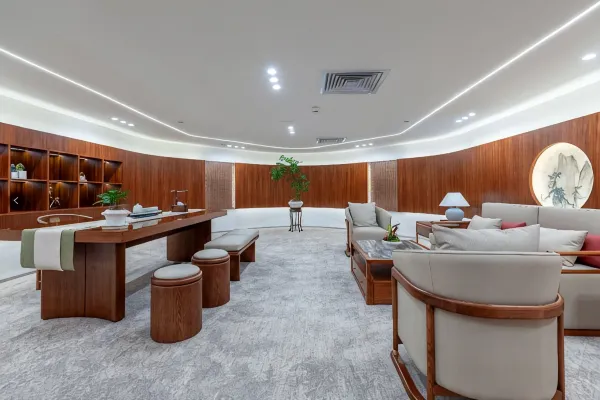
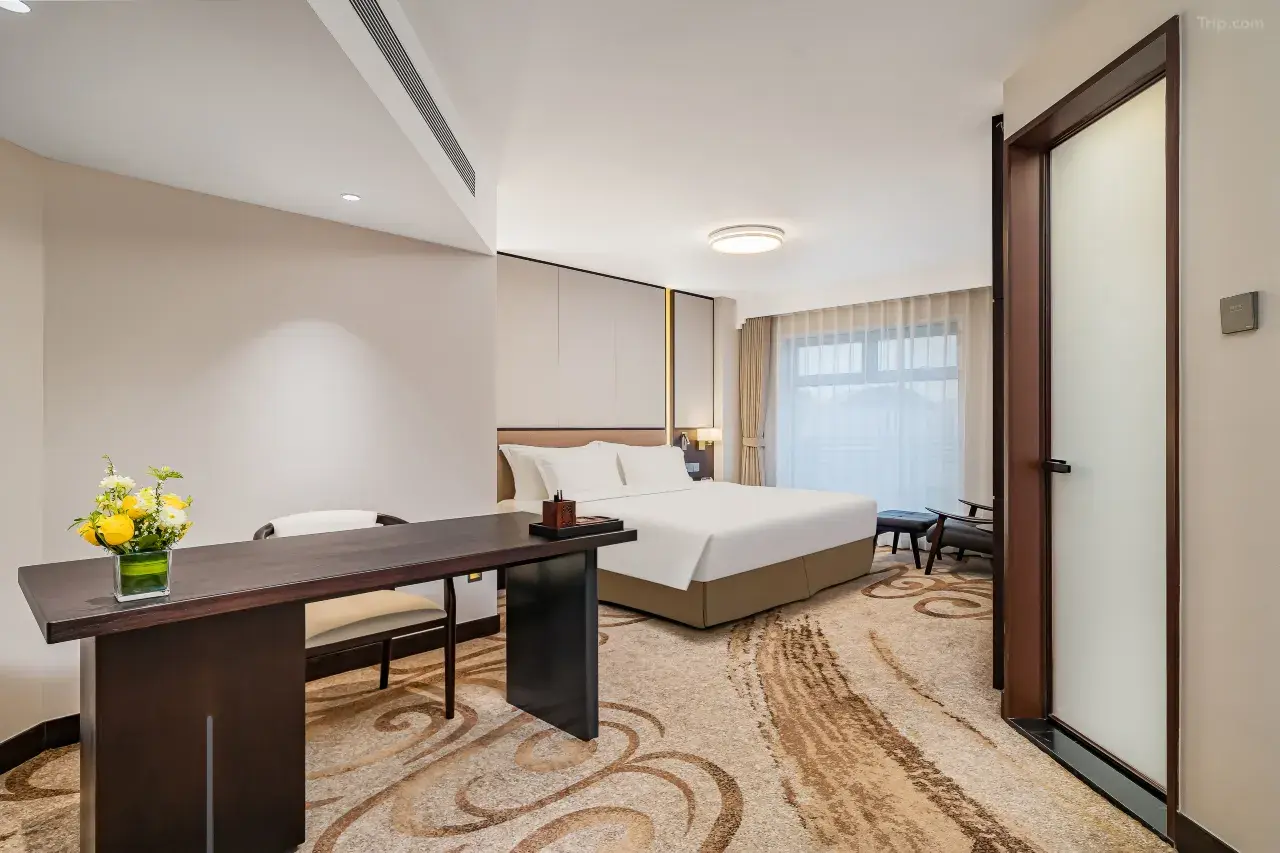
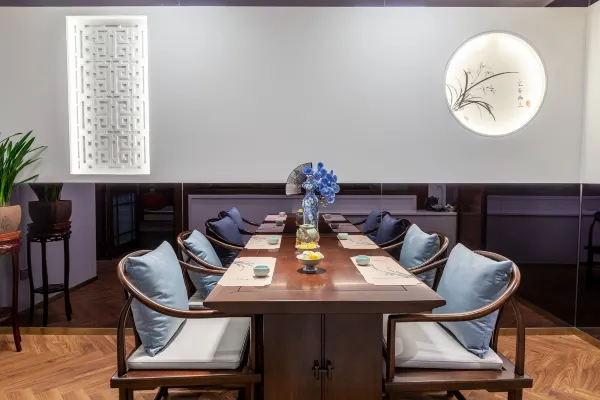
Beijing Landmar k Hotel 亮马河大厦
Address. E Third Ring Rd 8, Chaoyang ·
Phone. 010-6590 6688
Getting there. Metro Line 10 to Liangmaqiao, five minutes on foot. PEK 25–40 minutes; the airport expressway entrance is two blocks away.
Business-plain and quiet, with the Liangma River walk at the end of the block for the evening you do not want a restaurant.
3. Wangjing / Lido / Jiuxianqiao
One district in practice: these four addresses sit within ten minutes of each other and cover the tech offices, 798 and the exhibition halls.
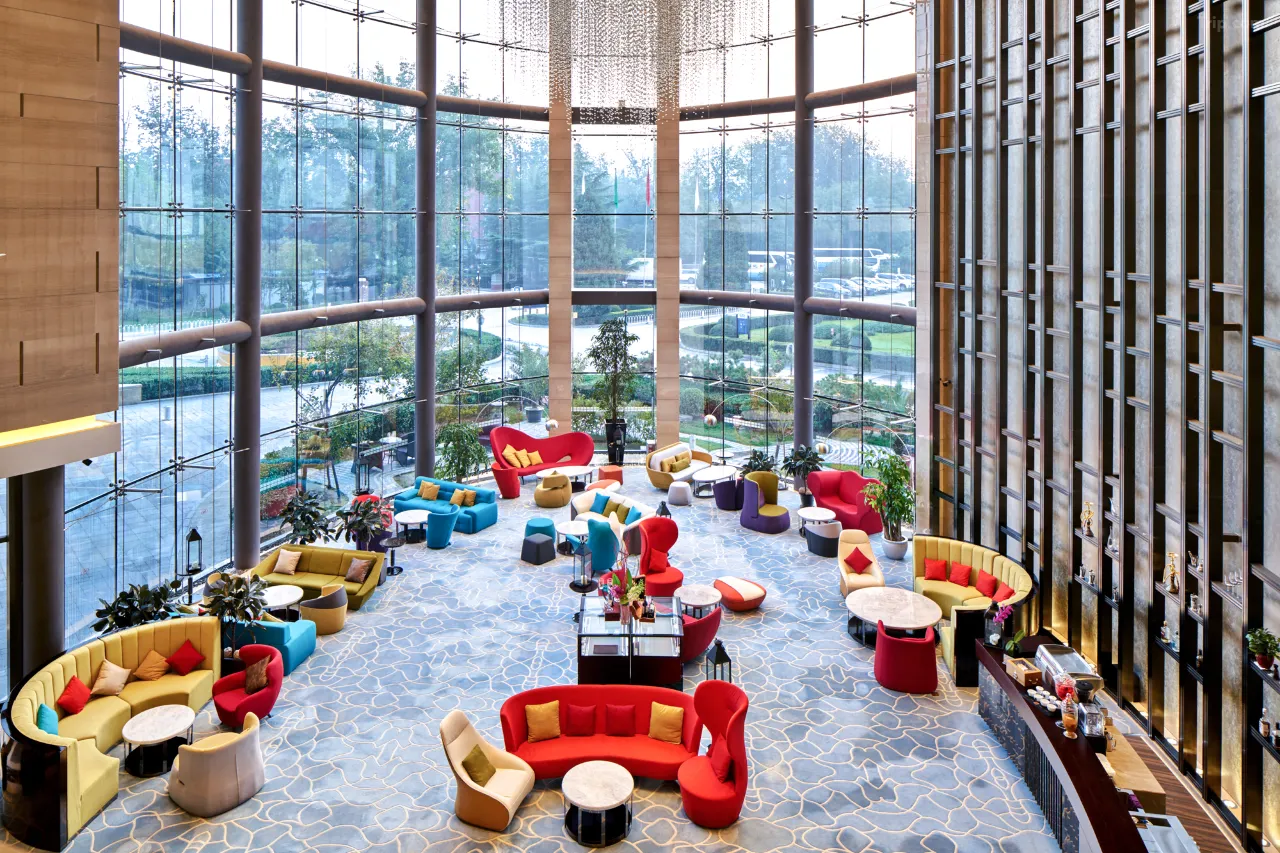
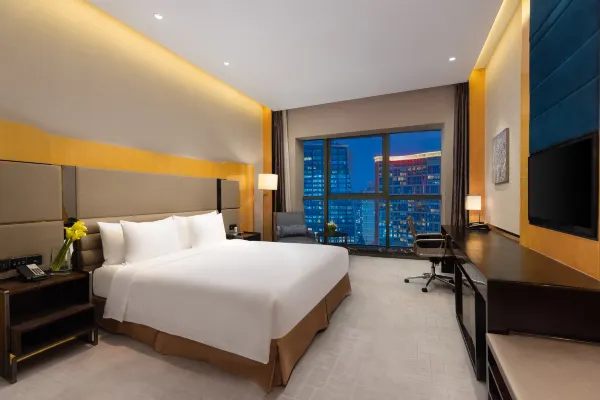
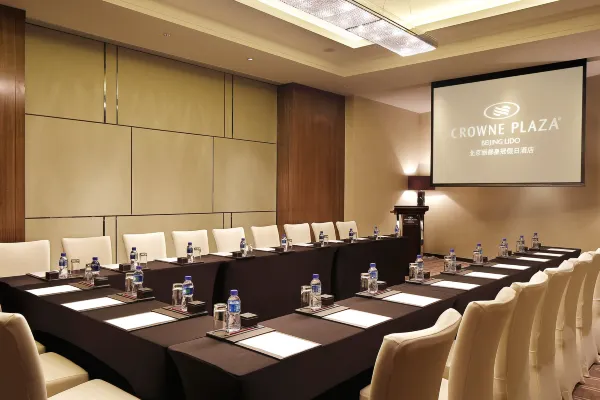
Crowne Plaza Beijing Lido 丽都皇冠假日
Address. Jiangtai Rd 6, Chaoyang ·
Phone. 010-6437 3388
Getting there. Metro Line 14 to Jiangtai, eight minutes on foot. PEK 20–35 minutes by car; 798 is 10 minutes, Wangjing 10.
The all-rounder: 1,600 m² of meeting space, a pool, and access to 798, Wangjing and the airport without crossing the city.
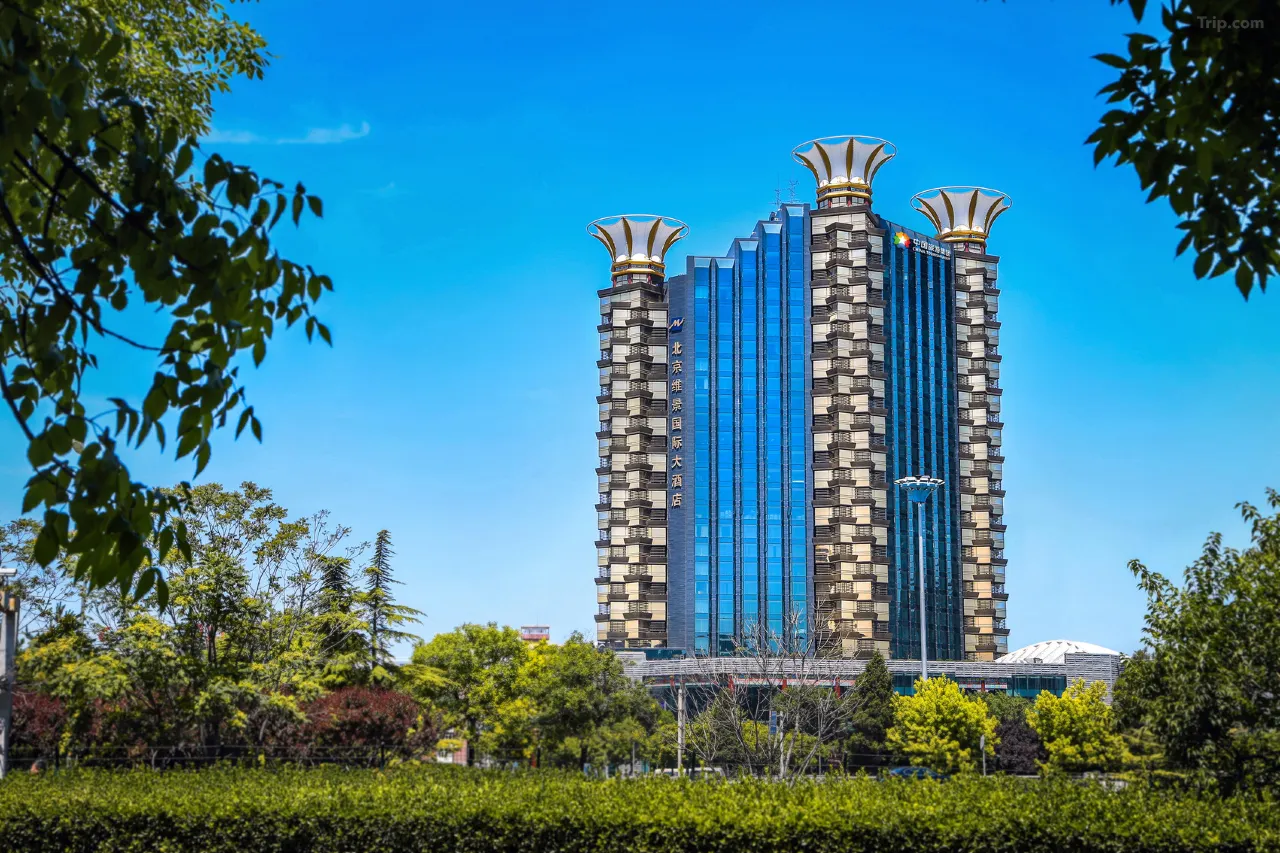
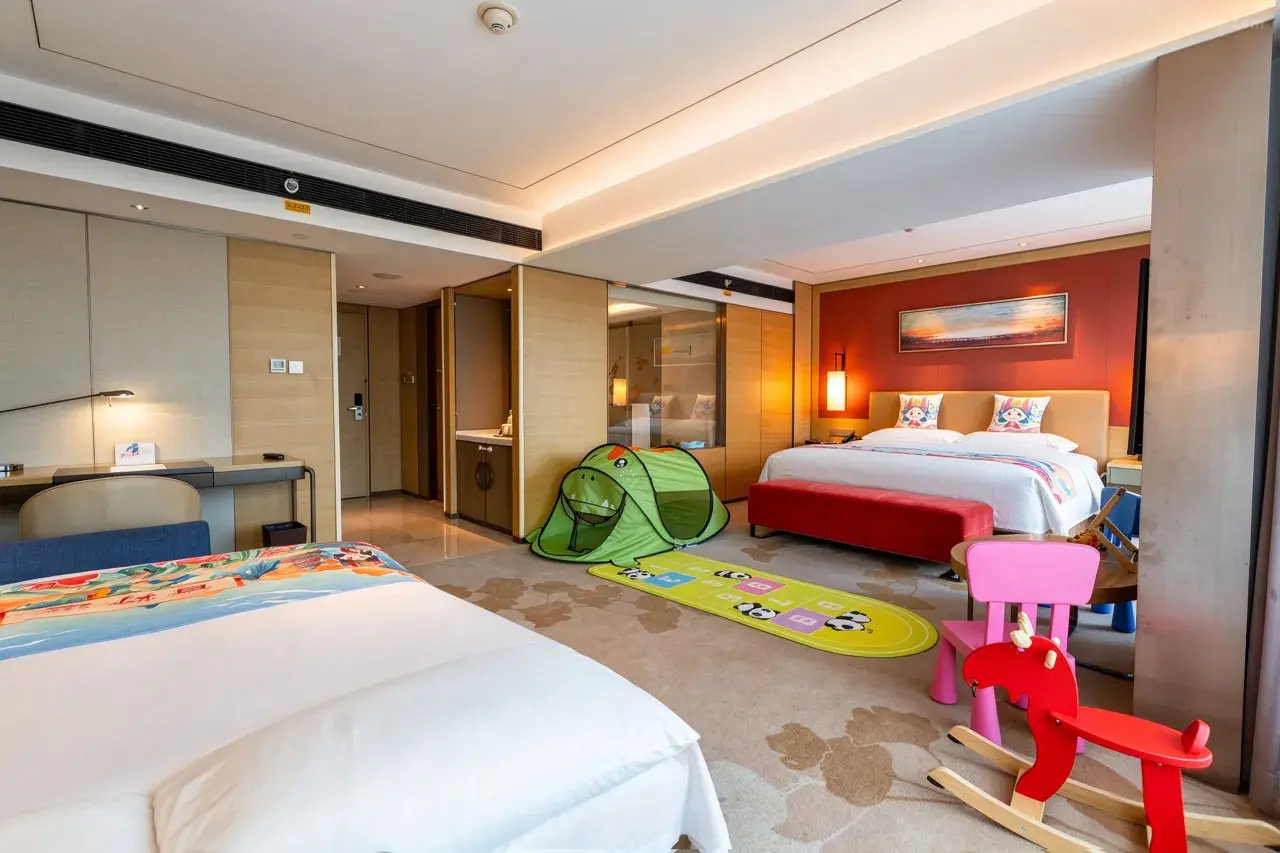
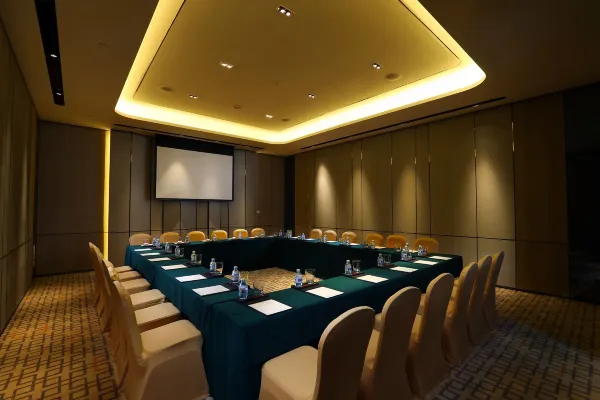
Grand Metropark Hotel Beijing 维景国际大酒店
Address. N Third Ring Rd East 2, Chaoyang ·
Phone. 010-6462 2288
Getting there. Metro Line 10 or the Airport Express to Sanyuanqiao, eight minutes on foot. PEK 25–40 minutes; PKX 65–85.
Sanyuanqiao location, eight meeting rooms and a banquet floor — the practical base for a delegation of ten or more.
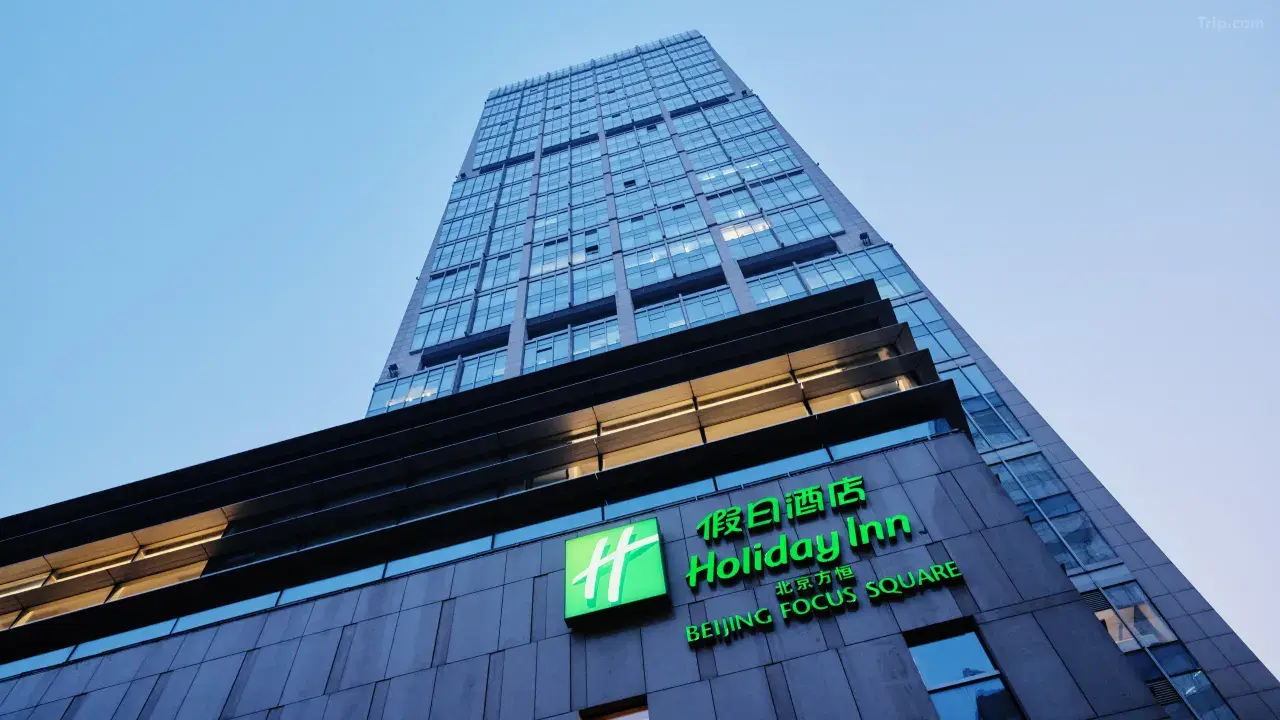
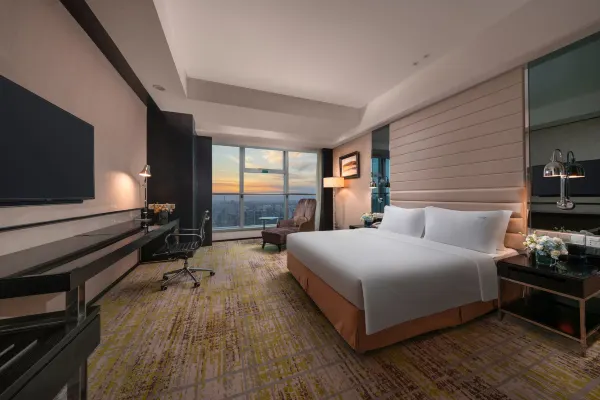
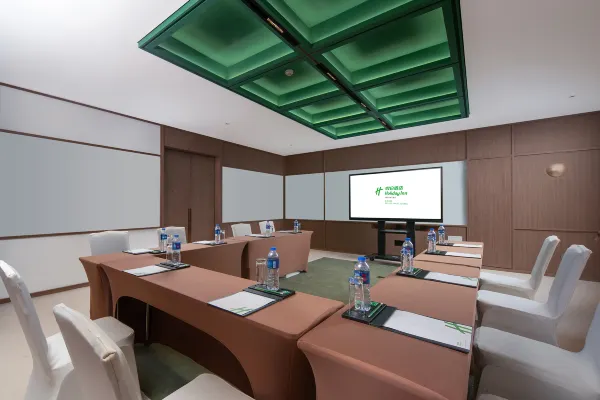
Holiday Inn Beijing Focus Square 方恒假日
Address. Futong E Ave 6, Bldg 3, Chaoyang ·
Phone. 010-6473 3333
Getting there. Metro Line 14 to Wangjing Nan, six minutes on foot; the entrance connects to a mall. PEK 25–40 minutes.
Inside Wangjing's office cluster — walk to Mercedes, Microsoft and Sony, and to a decent dinner after.
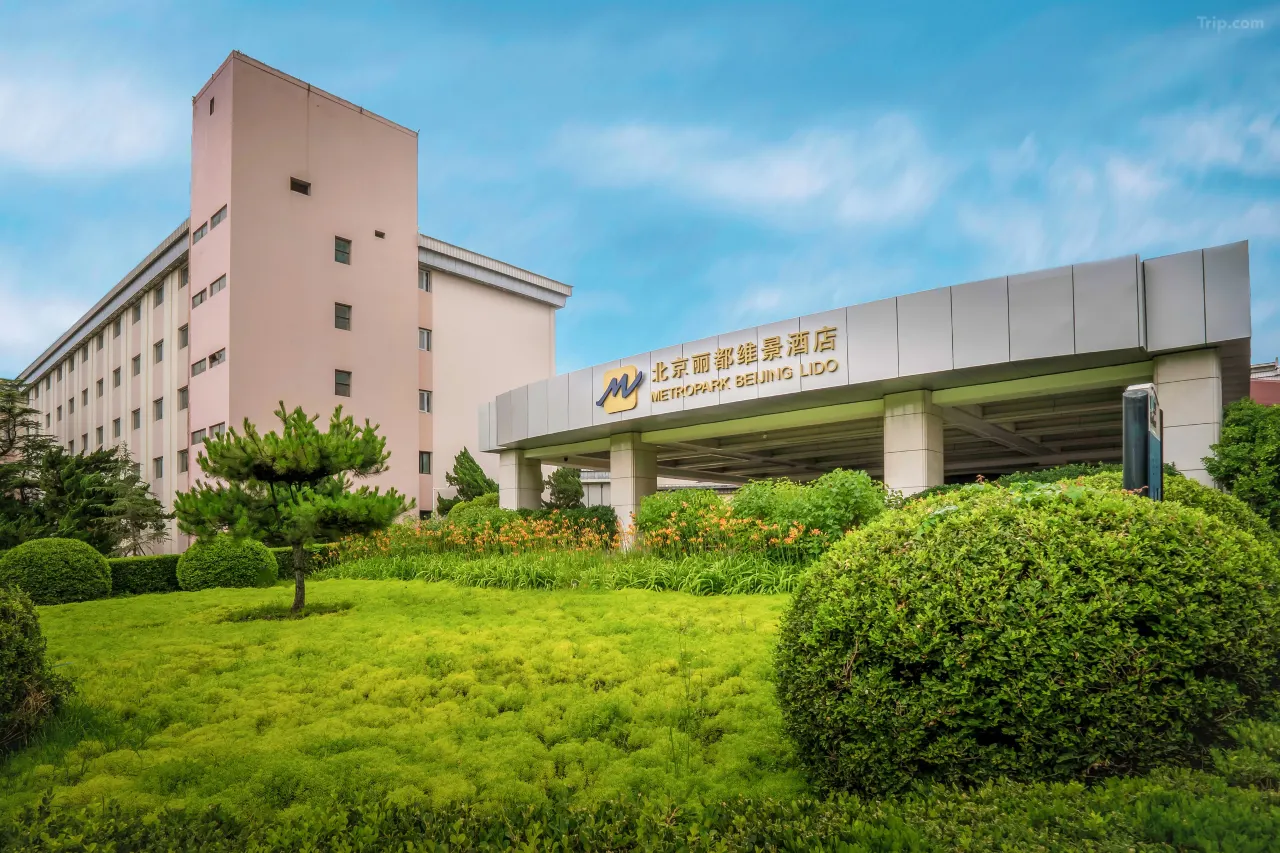
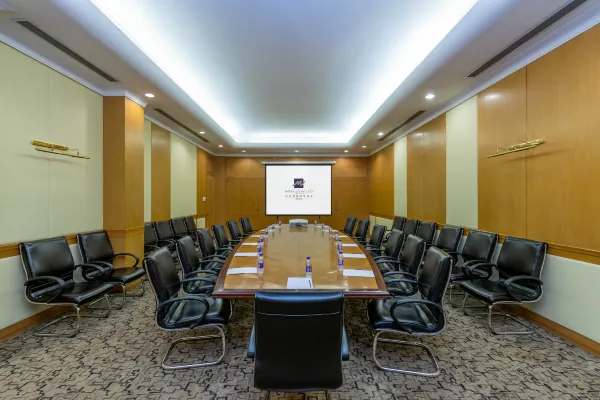
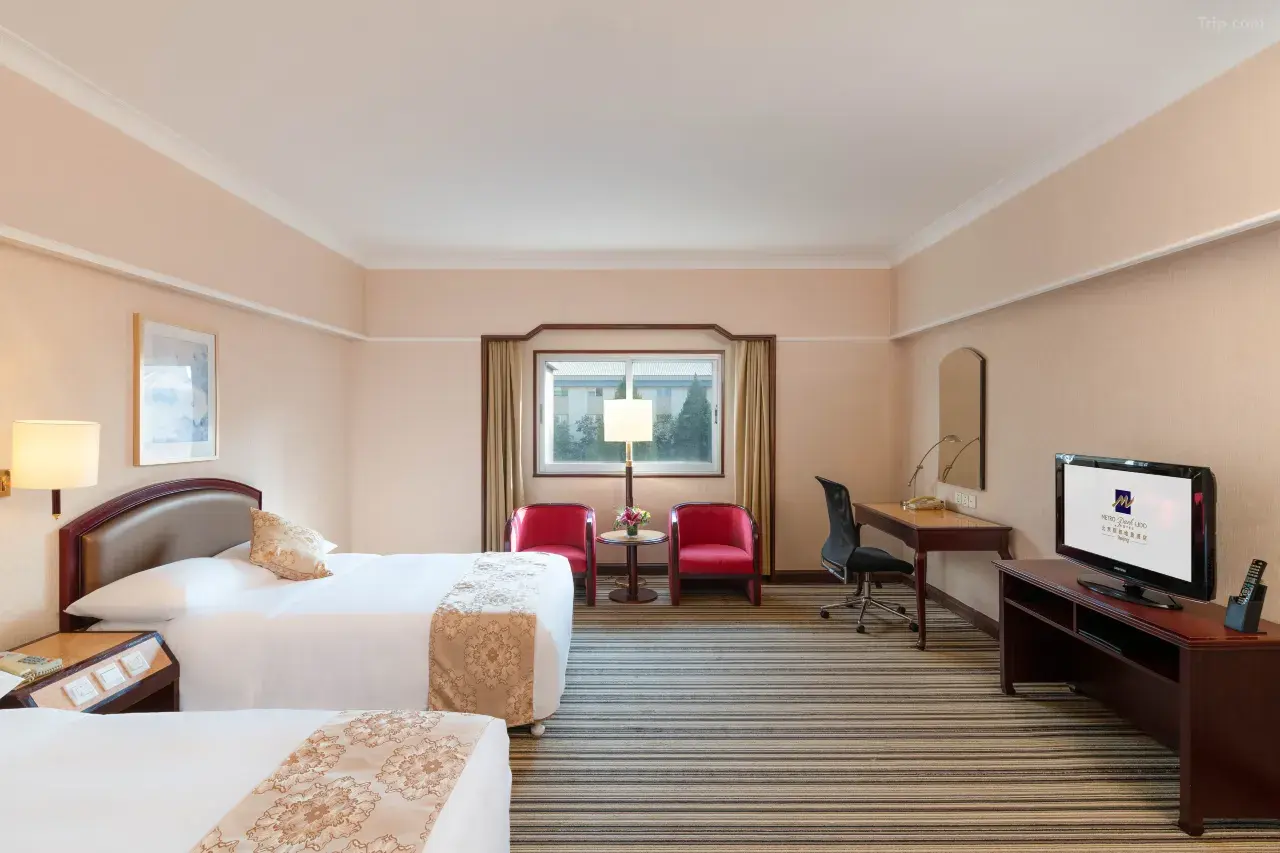
Metropark Lido Hotel 丽都维景
Address. Jiangtai Rd 6, Chaoyang — next door to the Crowne Plaza ·
Phone. 010-6437 6688
Getting there. Metro Line 14 to Jiangtai, eight minutes on foot; shares the Lido compound with the Crowne Plaza. PEK 20–35 minutes.
The value option on the same plot: pool, gardens, and a lower rate for the same Lido address.
4. Dongsi / Gulou
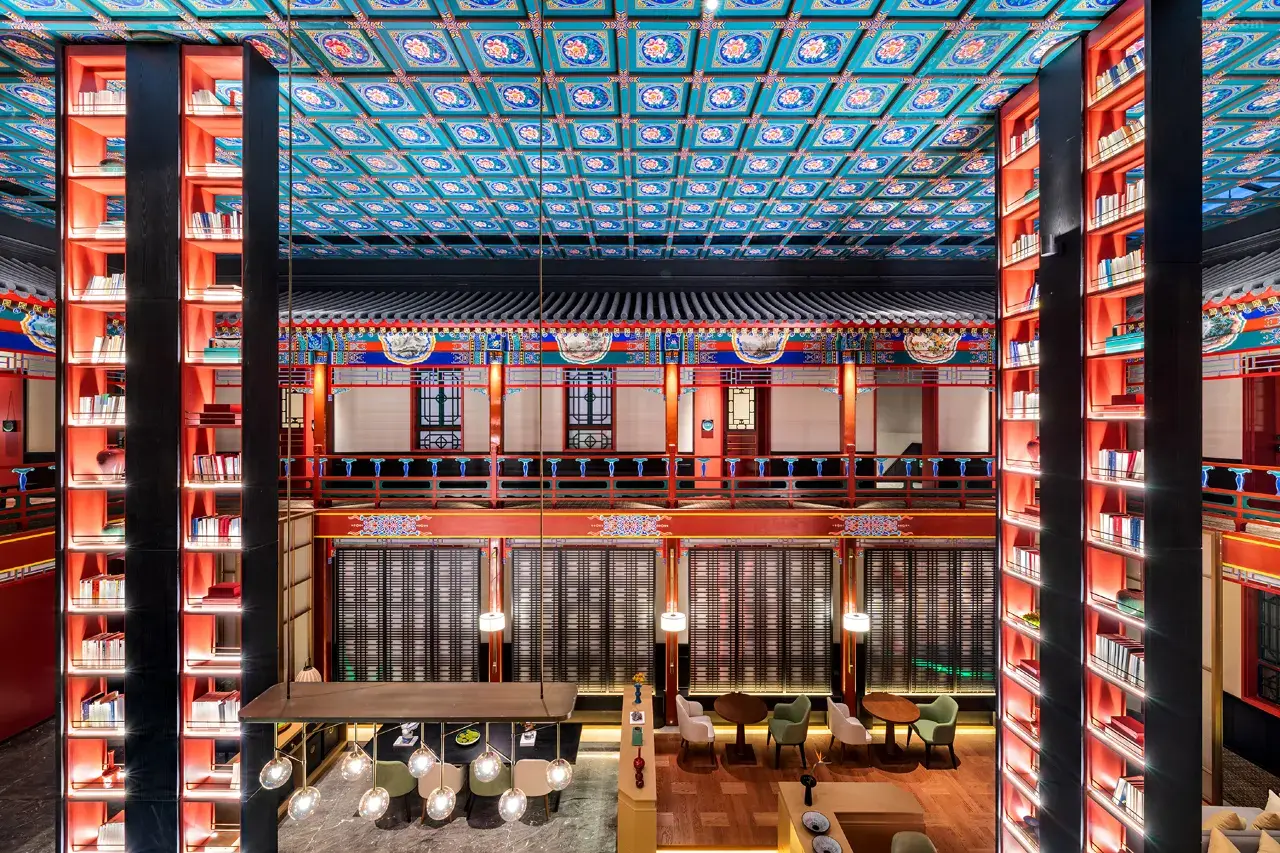
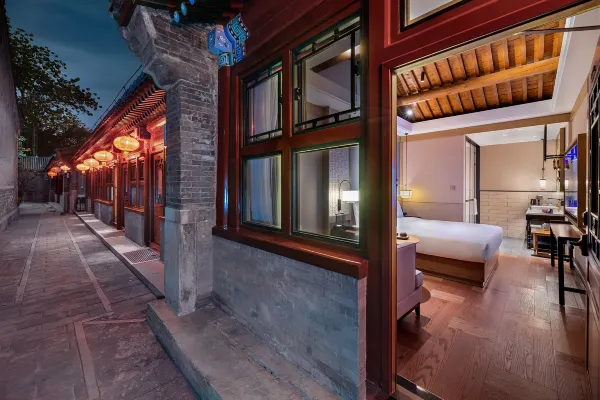
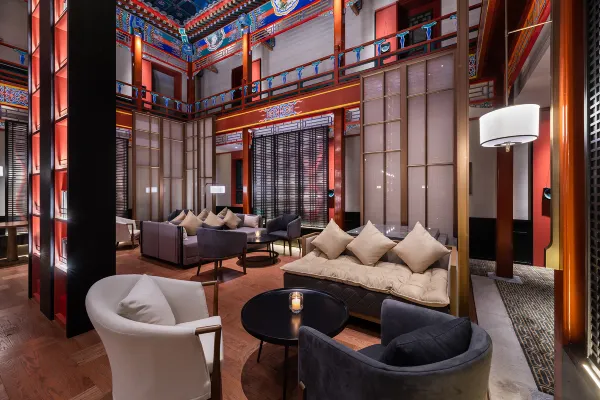
Manxin Mansion Beijing Houhai and Drum Tower Courtyard 后海鼓楼四合院漫心府
Address. Xitao Hutong 2, Jiugulou Dajie, Xicheng ·
Phone. 010-8403 8088
Getting there. Metro Line 2 or 8 to Gulou Dajie, eight minutes on foot; the hutong entrance is narrow, so tell the driver to drop at Xitao Hutong. CBD 25–35 minutes.
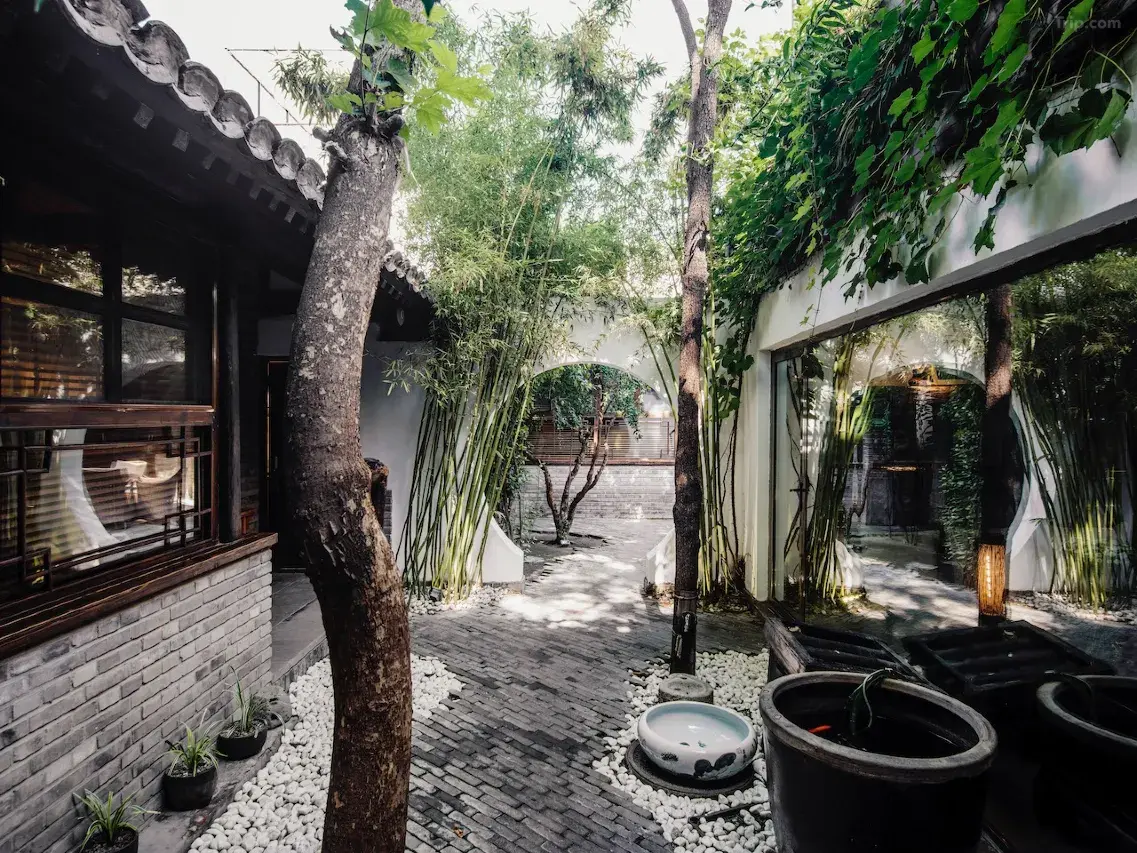
A four-hundred-year-old building with courtyard rooms; Houhai and the Drum Tower are a ten-minute walk.
The Orchid 兰花宾馆
Address. Baochao Hutong 65, Dongcheng ·
Phone. 010-6402 0824
Getting there. Metro Line 6 or 8 to Nanluoguxiang, ten minutes on foot; Line 2 to Gulou Dajie is twelve. Cars stop at the hutong mouth — the last 60 m is walking.
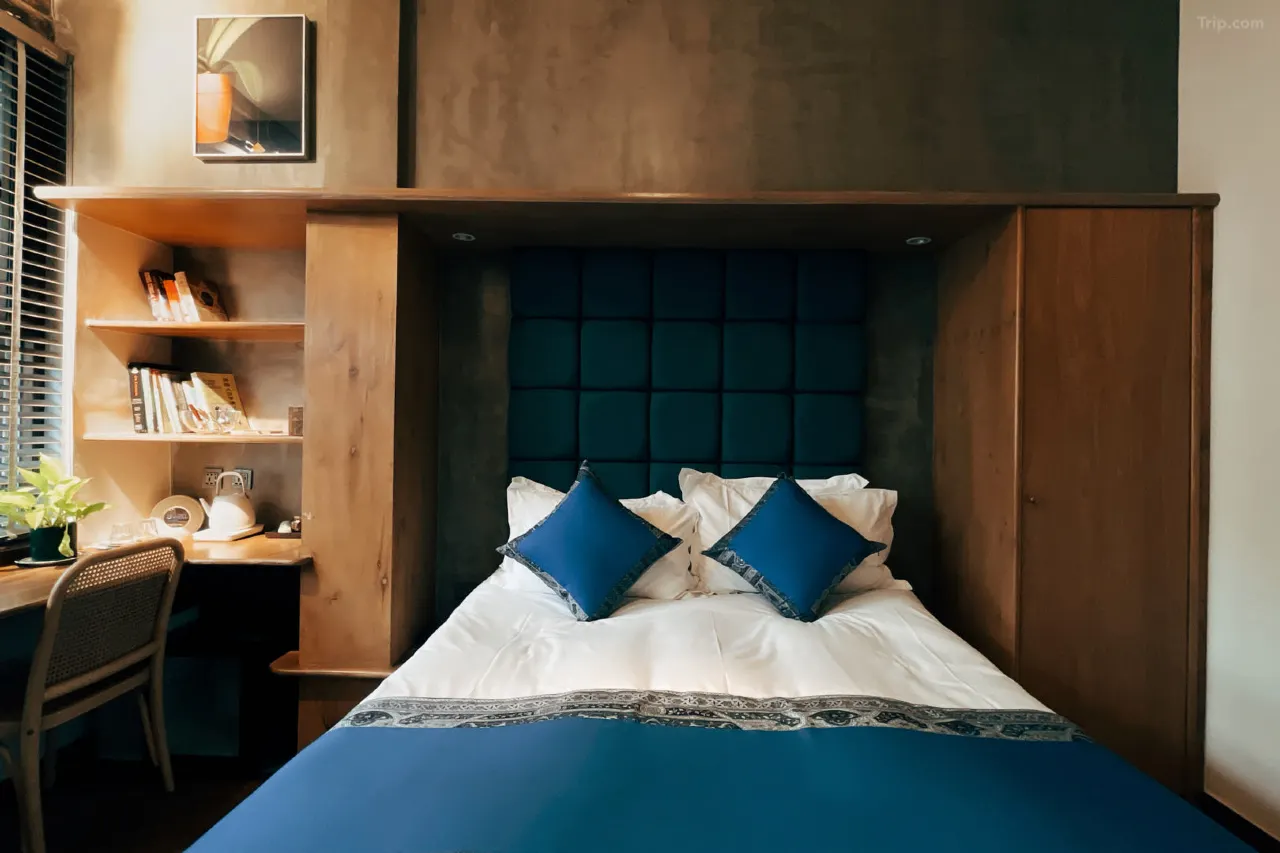
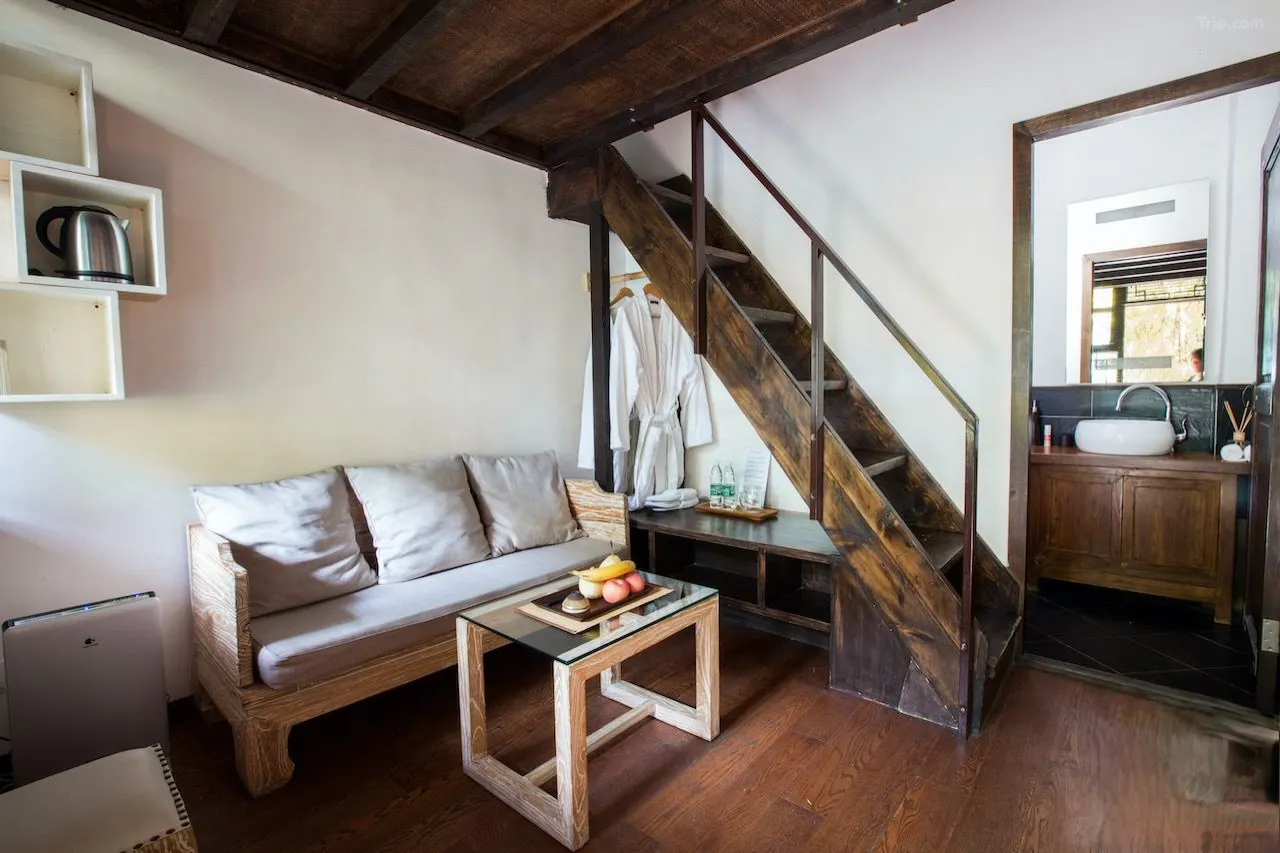
Seventeen rooms, a courtyard restaurant, and the best hutong address for a first visit. Ask for a room over the roof.
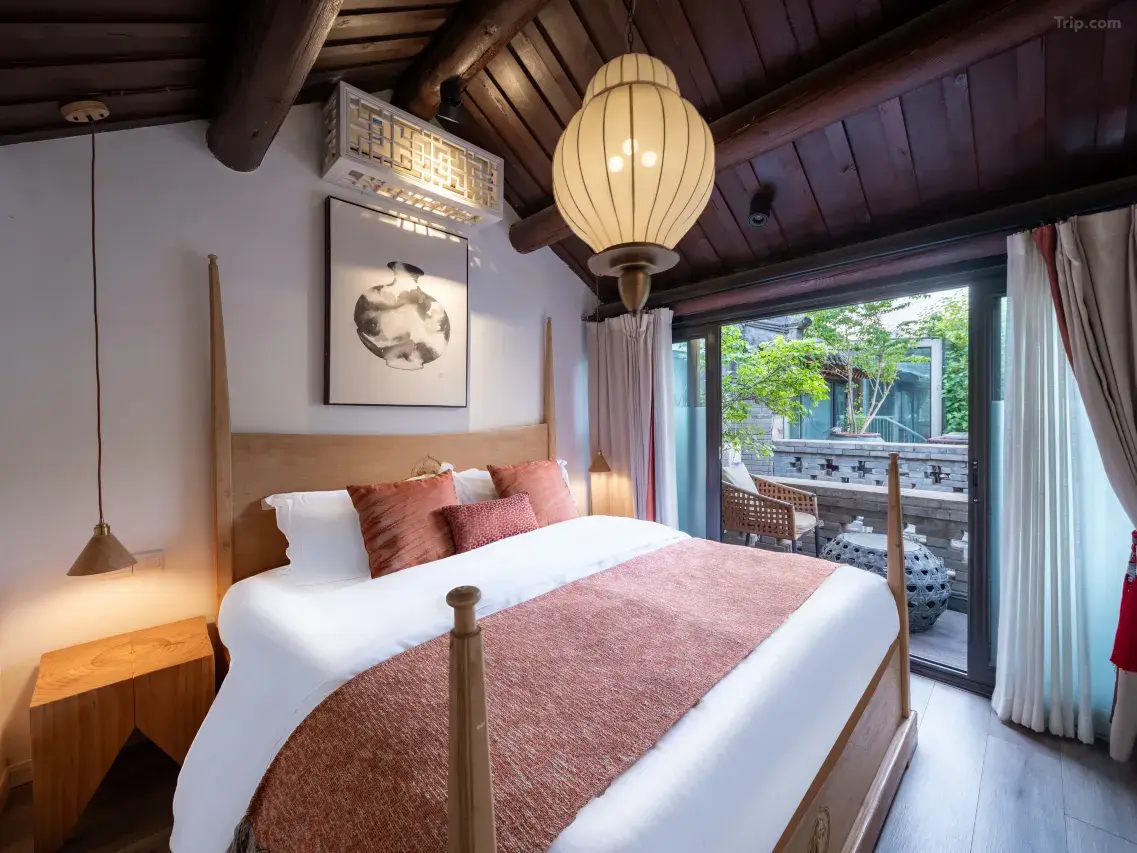
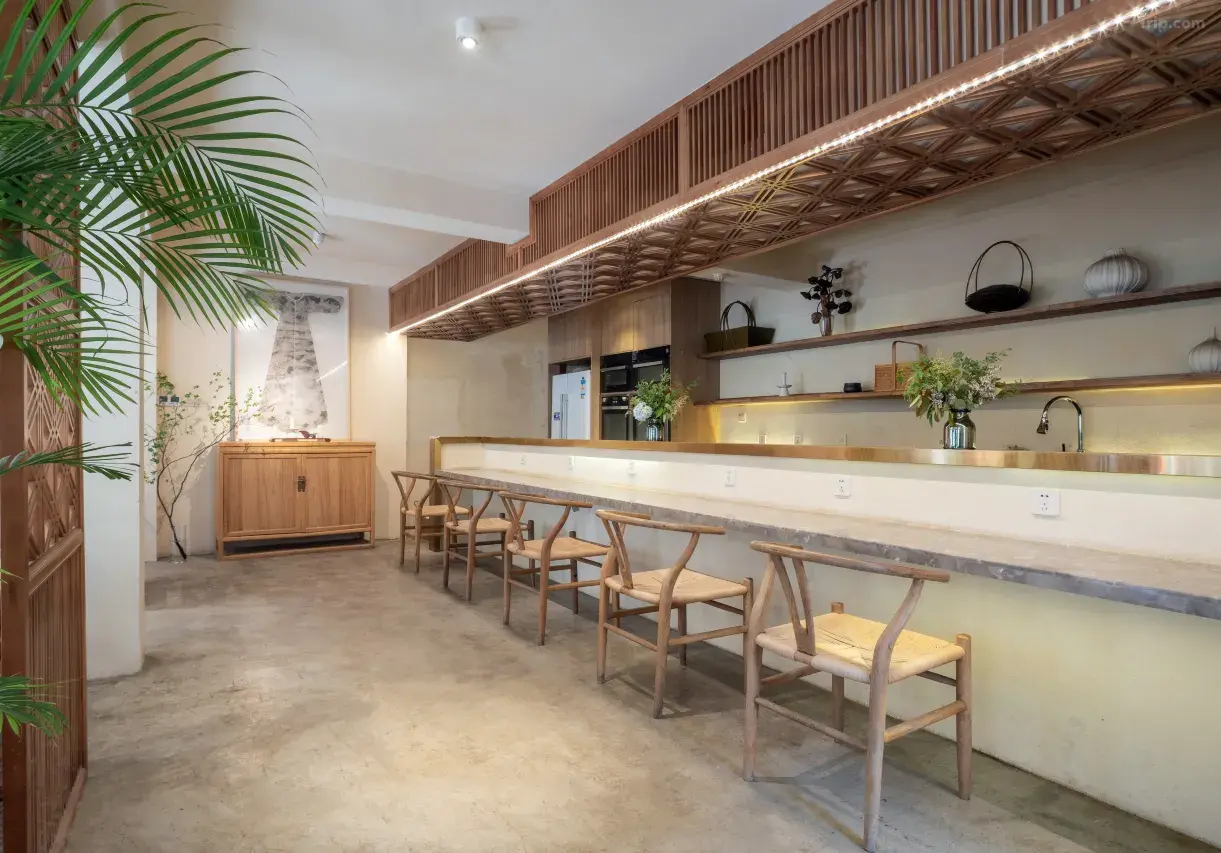
Beijing Lezai Nanluo Boutique Hotel 乐在南锣精品酒店
Address. Shajing Hutong 3, Dongcheng ·
Phone. 010-6400 9982
Getting there. Metro Line 6 or 8 to Nanluoguxiang, five minutes on foot. The lane is pedestrian; luggage goes the last 100 m by hand cart.
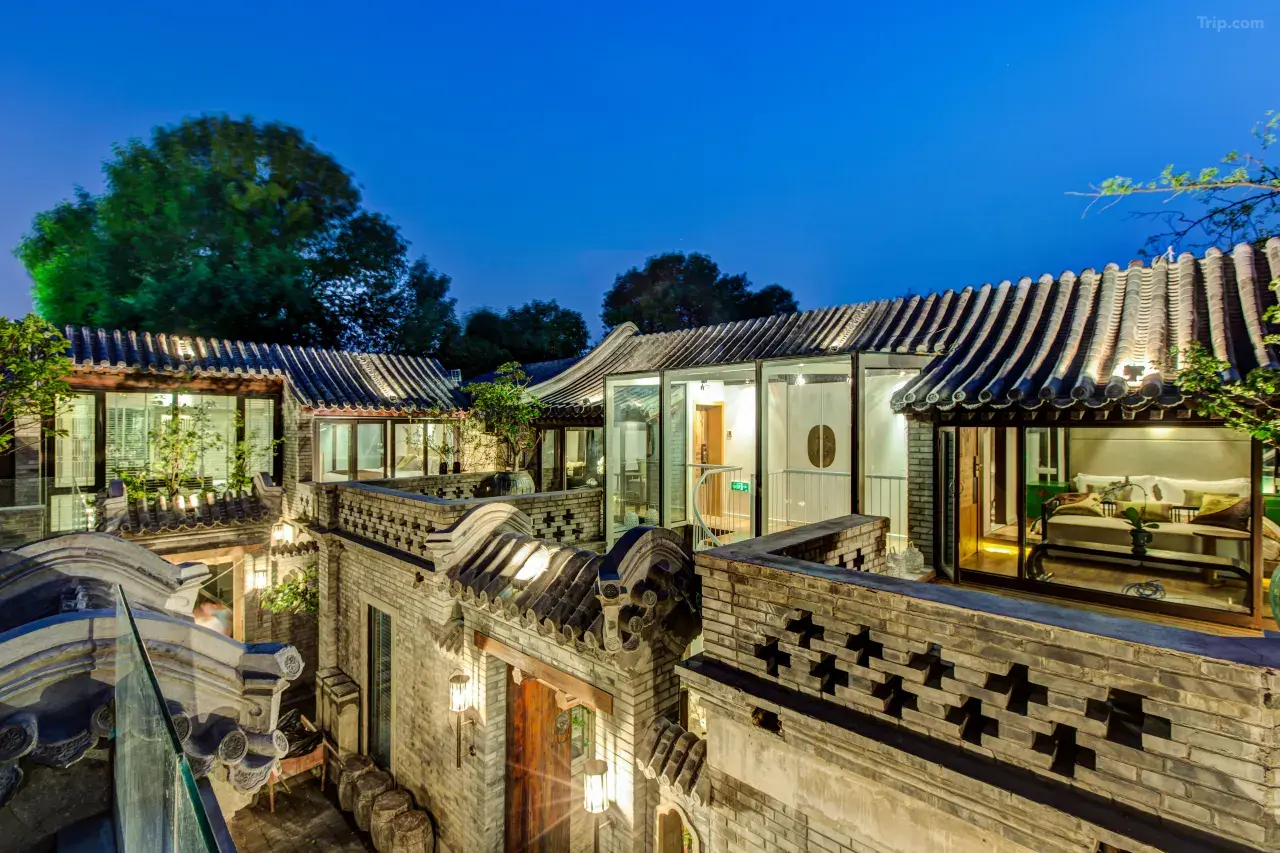
Seven rooms with roof terraces over the grey tiles. Small enough that the staff remember your meeting time.
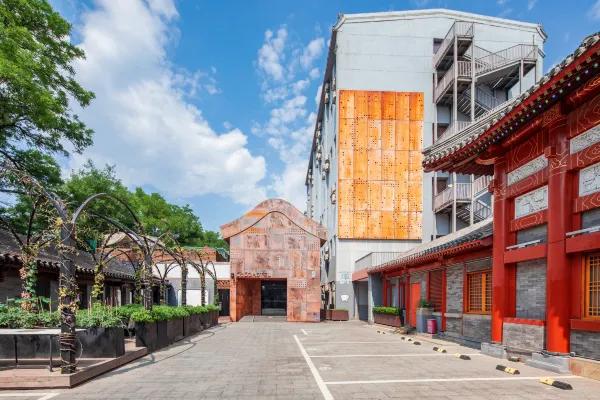
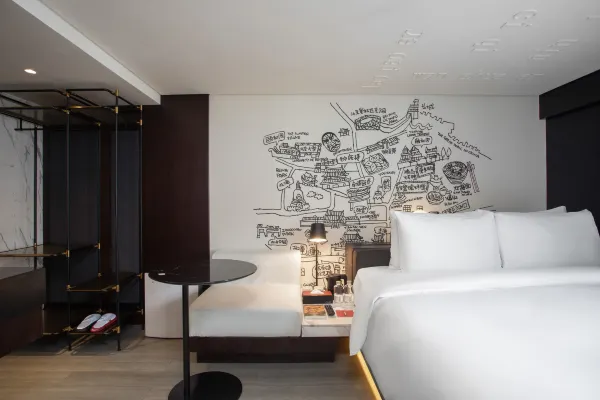
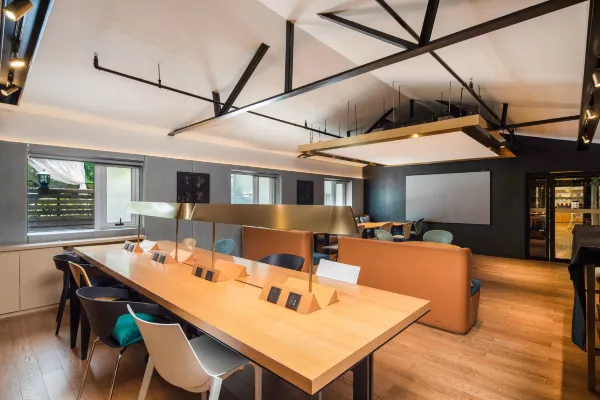
CitiGO Hotel Nanluoguxiang 南锣鼓巷欢阁
Address. Di'anmen E St 89, Dongcheng ·
Phone. 010-8282 5882
Getting there. Metro Line 6 or 8 to Nanluoguxiang, eight minutes on foot; taxis can reach the door. CBD 20–30 minutes.
Modern, inexpensive, breakfast until noon — the practical four-star when you want the old city without the boutique price.
5. Qianmen / Dashilan
Four addresses that cover the whole spectrum: a legacy five-star on the square, two hotels that can host a meeting, and a small design hotel inside Beijing Fun.
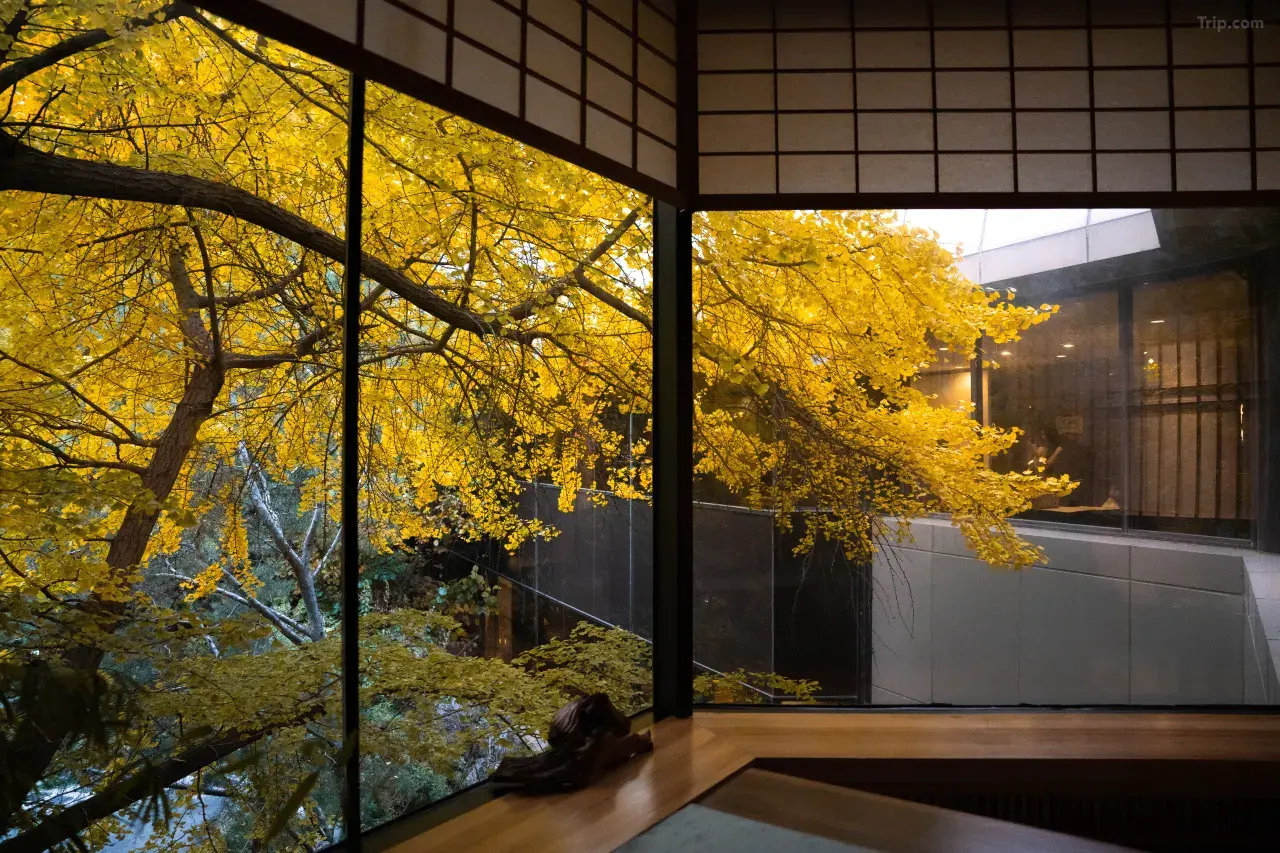
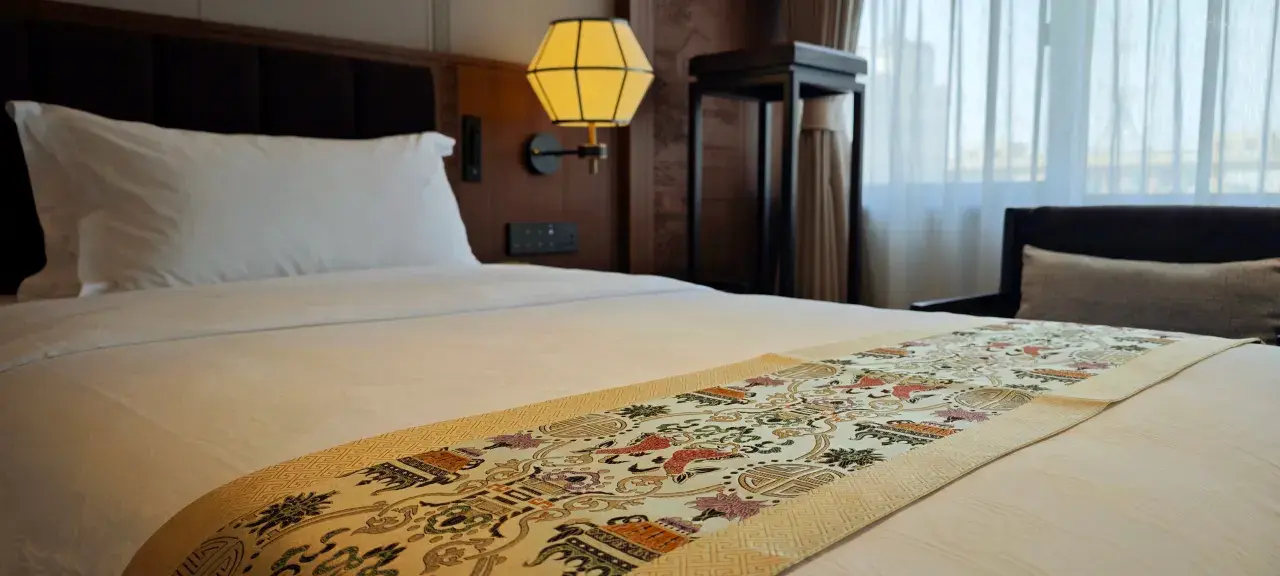
Capital Hotel 首都宾馆
Address. Qianmen E St 3, Dongcheng ·
Phone. 010-5815 9988
Getting there. Metro Line 2 to Qianmen, eight minutes on foot. PEK 45–60 minutes; PKX 70–90. Tiananmen and the Forbidden City are walkable.
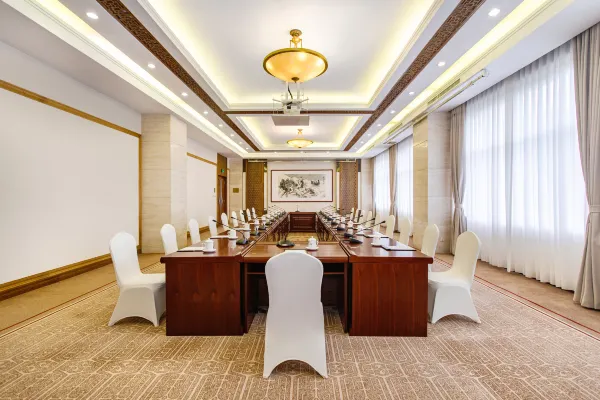
Meetings. Several halls on a dedicated floor, from a 20-person boardroom to a hall of a few hundred; the formal setting a government or state-enterprise meeting expects.
Classic, formal, and close enough to walk to the square before it fills. Good for a first trip with a government meeting.
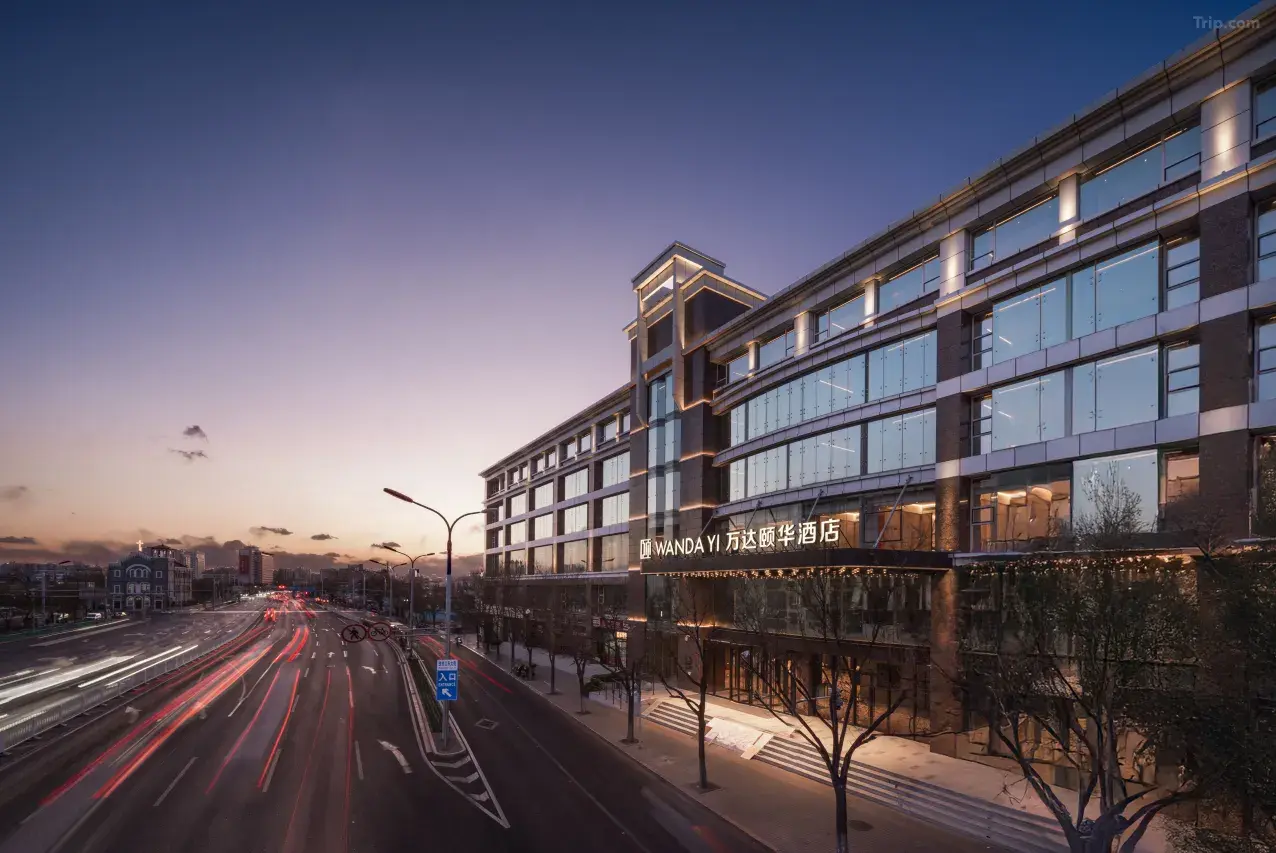
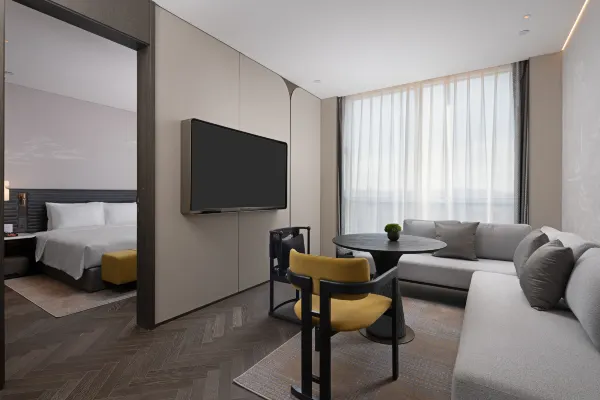
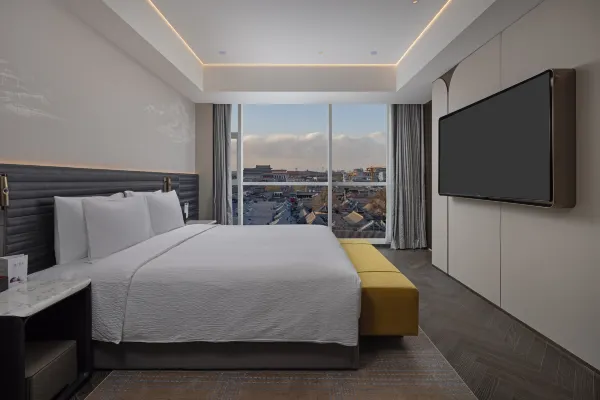
Wanda Yihua Qianmen 北京前门万达颐华酒店
Address. Zhushikou E St 19, Dongcheng ·
Phone. 010-6707 5888
Getting there. Metro Line 7 or 8 to Zhushikou, two minutes on foot; two stops to Qianmen. Tiananmen 20 minutes on foot. PEK 45–60 minutes; PKX 70–85.
Meetings. One multifunction room plus breakout space, roughly 20–100 people; screens, Wi-Fi and a business corner that actually work.
Opened 2025 with 220 rooms — the newest business address in the district, and the one with the most reliable desk and Wi-Fi.
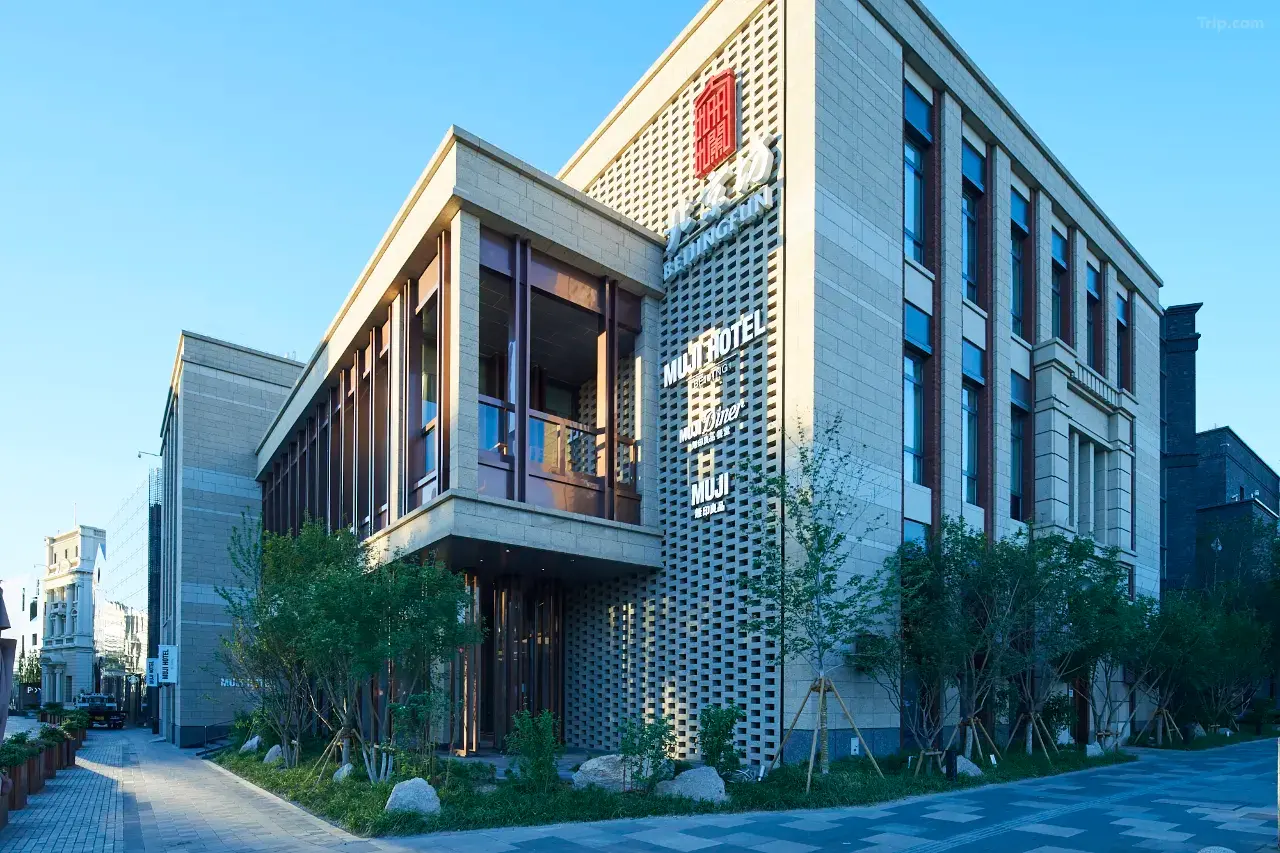
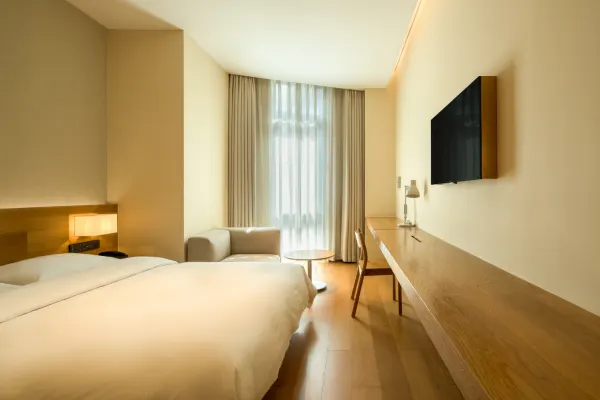
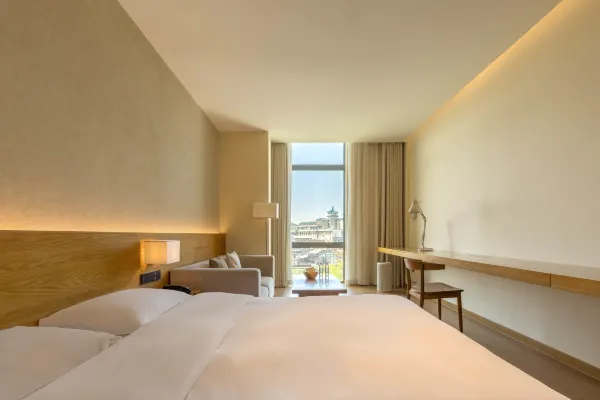
MUJI HOTEL Beijing 无印良品酒店
Address. Langfang Toutiao 21, Bldg 2, Xicheng — inside Beijing Fun ·
Phone. 010-6316 9199
Getting there. Metro Line 2 to Qianmen, exit C, three minutes on foot through the underground passage. 450 m from Tiananmen Square.
Meetings. No meeting space of its own — use it for sleeping, and hold the meeting in a hotel from the table below.
Compact, calm, well designed, and the best located small hotel in the city for a two-night business stop.
Meeting space, hotel by hotel
The cards above tell you where to sleep. This table answers the other question a corporate traveller asks before booking: which of these hotels can hold the meeting, and for how many people. Capacities are working ranges we use when we hold space — the exact room and headcount are confirmed with the hotel at the time of booking.
Hotel | District | Meeting space | Working capacity |
|---|---|---|---|
China World Hotel | Guomao | Convention floor: ballroom plus multiple breakout halls | 300–1,000; the default for a launch or a summit next to the show |
China World Summit Wing | Guomao | Ballroom and boardrooms on the upper floors | 20–300; senior meetings with a view |
Jianguo Hotel | Guomao | Several mid-size rooms, no large hall | 30–150 |
Jinglun Hotel | Guomao | Meeting rooms, no ballroom | 20–100 |
InterContinental Sanlitun | Sanlitun | Ballroom plus breakout rooms | 100–400 |
Kempinski Hotel | Liangmaqiao | Ballroom and function rooms | 100–350 |
Asia Hotel | Dongsi | Dedicated meeting floor | 50–200 |
Liangma River Building | Liangmaqiao | Conference rooms, compact | 50–200 |
Crowne Plaza Lido | Lido | Large ballroom, closest to 798 and the studios | 200–600 |
Grand Metropark | Sanyuanqiao | Eight rooms plus a banquet floor | 50–300 |
Holiday Inn Focus Square | Wangjing | Meeting rooms inside the office cluster | 20–120 |
Metropark Lido | Lido | Meeting rooms, shares the Lido compound | 20–100 |
Manxin Courtyard Gulou | Gulou | One small room | 10–30; briefings only |
The Orchid | Gulou | No meeting space | — |
Le Zai Nanluoguxiang | Gulou | No meeting space | — |
CitiGO Nanluoguxiang | Gulou | One small room | 10–20 |
Capital Hotel | Qianmen | Dedicated meeting floor, boardroom to a few hundred | 20–400 |
Wanda Yihua Qianmen | Qianmen | One multifunction room plus breakouts | 20–100 |
Tiantan Hotel | Qianmen | 450 m² pillar-free hall plus smaller rooms | 100–300 |
MUJI HOTEL Beijing | Qianmen | No meeting space | — |
Capacities above are the hotels' own figures. What we add is a walk-through: someone from our side stands in the room, measures the ceiling against your screen, finds the service door behind the tea break, checks where a coach can legally stop, and photographs the registration area — then sends you six pictures and a one-page note the same evening. Cheaper than discovering a pillar on the morning of the meeting.
Choosing by mood, not by star count
If the trip is dense — three days, six meetings — stay in Guomao or Financial Street and let the hotel be a machine: fast check-in, club lounge, reliable breakfast, car at the door.
If there is space in the schedule — a free afternoon, a weekend tail — stay in Dongsi, Gulou or Qianmen. A courtyard hotel costs less than a CBD five-star and gives you a version of Beijing you will actually describe to people.
If you are hosting clients — Sanlitun works best: good restaurants within walking distance mean the evening does not depend on a car.
If you are exhibiting — Wangjing/Lido, not the centre: ten minutes to the halls, twenty-five to PEK.
3. What to Eat Between Meetings: A Short, Opinionated List
Beijing food has a reputation for being imperial and formal. In practice the city eats well and cheaply, and the dishes visitors remember are usually the least ceremonial ones. Where each of them is worth a reservation is covered in our guide to Michelin restaurants in Beijing; the everyday bowl — zhajiangmian, made in a courtyard, eaten standing up — has its own page here, and a Beijing food tour is the fastest way to work through five of them in one evening.
Dish | What it is | Where and when |
|---|---|---|
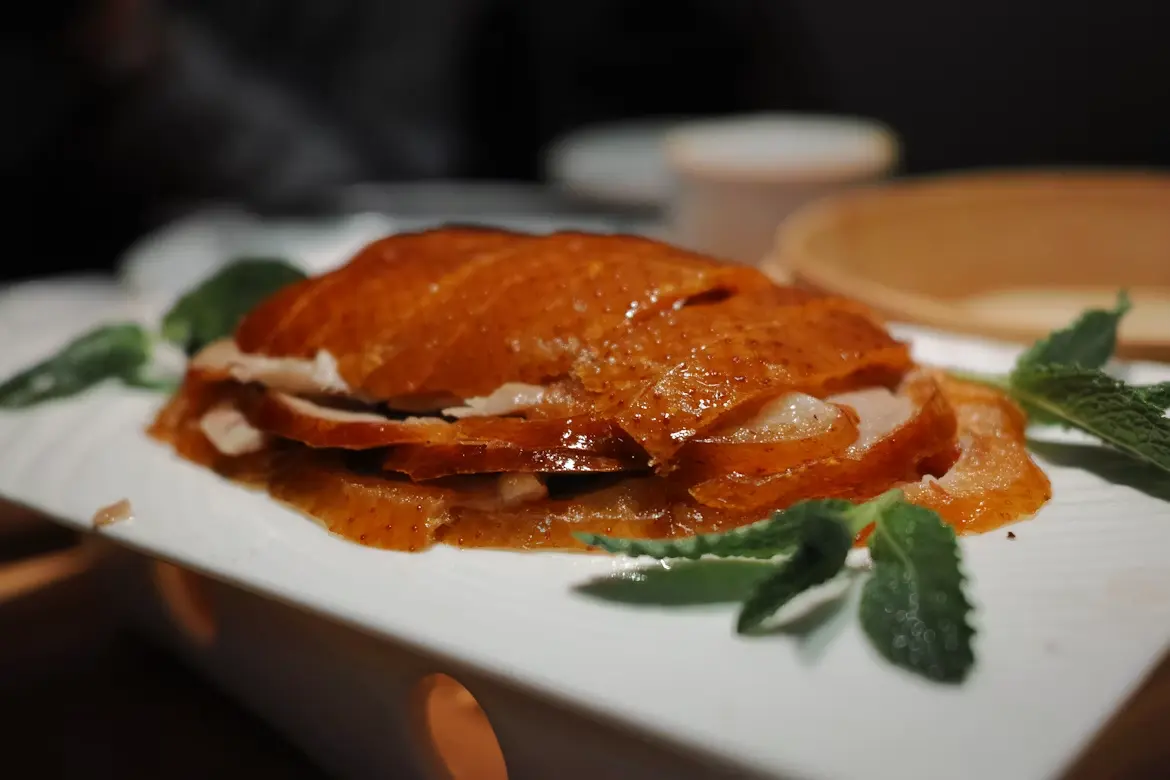
Peking duck | Lacquered, carved at the table, wrapped in thin pancakes with scallion and sweet bean sauce. | A proper duck house, not a hotel restaurant. Book the night before; go hungry and order a whole bird for two. |
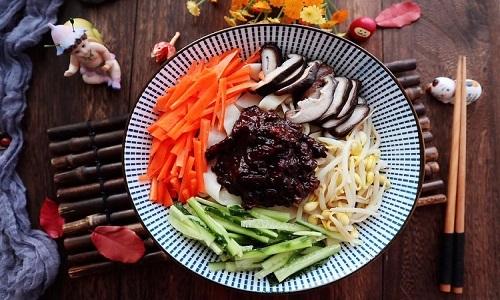
Zhajiangmian | Thick wheat noodles with fermented bean paste, pork and crisp vegetables. The Beijinger's everyday meal. | Old neighbourhood noodle shops; a 20-minute lunch that beats any food court. |
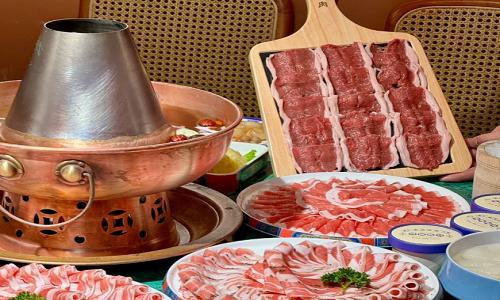
Hotpot | Copper pot, bubbling broth, thinly sliced lamb, sesame dip. Social, unhurried, ideal for a team dinner. | Guijie (Ghost Street) for late nights; expect a queue after 19:00. |
Jianbing | Mung-bean pancake, egg, crisp cracker, chilli and sauce, folded in ninety seconds. | A street corner on your walk to the office. Two dollars of pure Beijing. |
Muslim quarter food | Lamb skewers, sesame cakes, hand-pulled noodles, sweet rice cakes. | Niujie, the Hui neighbourhood south-west of the centre. Go before noon on a weekday. |
Court-style banquet dishes | Refined imperial cooking: braised sea cucumber, pigeon, delicate cold plates. | For hosting a client you want to impress; a full banquet is a two-hour event, not a meal. |
Where to eat, district by district
Ten places we actually book for clients, two per district, with the numbers you need to call them yourself.
Restaurant | Cuisine | Address | Phone | Per person |
|---|---|---|---|---|
Xihe Yayuan 羲和雅苑(国贸商城) | Beijing / roast duck | China World Mall, B1 South Wing, Jianguomenwai St 1 | 010-6505 6587 | ¥146 |
Jade Garden 翠园(国贸商城) | Cantonese | China World Mall South, 5F, Jianguomenwai St 1 | 010-6505 8873 | ¥241 |
Dadong 大董(团结湖店) | Roast duck, fine dining | SE corner of Changhong Bridge, E Third Ring Rd | 010-6582 2892 | ¥300 |
Xiao Dadong 小大董(侨福芳草地) | Roast duck, modern | Parkview Green LG2-11A, Dongdaqiao Rd 9 | 010-8563 0016 | ¥160 |
Huo Lu Huo 火炉火(望京凯德MALL) | Korean barbecue | CapitaMall 5F, Guangshun N Ave 33 | 010-6477 9588 | ¥100 |
Jifudao Seafood Soup 济扶岛韩国海鲜汤 | Korean seafood | Wangjing Xincheng Bldg 423, 2F, Guangshun N Ave | 010-6470 6467 | ¥147 |
Si Shi Min Fu 四季民福(东四十条) | Roast duck, Beijing home cooking | Dongsi Shitiao 23 | 010-6401 3267 | ¥143 |
Furongji 福荣记(宝钞胡同) | Cantonese dim sum | Baochao Hutong 63, Gulou | 010-6402 0824 | ¥120 |
Quanjude Qianmen 全聚德(前门店) | Roast duck, institution | Qianmen St 30 | 010-6701 1379 | ¥164 |
Bianyifang Xianyukou 便宜坊(鲜鱼口店) | Menlu roast duck, Shandong | Xianyukou St 65–77 | 010-6713 2536 | ¥125 |
Two caveats worth passing on: Quanjude is the famous one and books out at dinner, so go at lunch or let us hold a table; and Dadong is a special-occasion restaurant at special-occasion prices, which is fine when a client is paying and awkward when you are.
How a Beijing dinner actually runs
The host orders, the table fills, and dishes arrive in waves rather than courses. Do not expect a menu per person; expect to share. The correct move is to try everything, compliment one dish specifically, and let the host keep ordering.
If you are hosting, order one more dish than the number of guests and include something green — otherwise the table reads as heavy. If you are a guest, arrive with a small gift or a bottle from home; it is not required, and it is always remembered.
Solo dining is easy and underrated. Most restaurants are used to single diners, and a bowl of noodles, a plate of dumplings or a jianbing on the way home is entirely normal. The awkward part is only the size of the tables, not the welcome.
Dietary needs, plainly
Vegetarian: say 素食 (sùshí) and add 不要肉 (no meat). Temple restaurants and modern CBD cafés are the easiest; check that "vegetable" dishes are not cooked with meat stock.
Halal: Niujie and the city's many Hui restaurants are reliable; ask for 清真 (qīngzhēn).
Allergies: peanut and shellfish are common in Beijing cooking. Write your allergy in Chinese on a card, show it before ordering, and avoid unknown street stalls for the first days.
Gluten: wheat is everywhere — noodles, pancakes, dumplings. Rice-based dishes and hotpot are safer, but cross-contact is common.
4. The Business Part: Beijing Business Interpreter, Private Car Service and MICE Support
Your meetings are yours: the agenda, the counterparts, the negotiation. What most visitors need help with is everything around them — landing, arriving on time, being understood in the room, getting a group of fifteen from one building to the next, and standing up a hall for three hundred people without flying in your own production team. That is the part we run, in three lines: interpreters, cars, and MICE.
When | What we do | What it saves you |
|---|---|---|
Before you fly | Hotel block, room list, restaurant holds, tickets that need passport numbers, venue site visit, interpreter briefing pack. | The week of email ping-pong before departure. |
On landing | Driver inside the arrivals hall with your name, flight tracked, 60 minutes of waiting included. Car to hotel or straight to the meeting. | The taxi queue and the 40 minutes of uncertainty. |
Each meeting morning | Car at the door 15 minutes before you need it; interpreter at the lobby with the deck already read. | Arriving late, or arriving without the right vocabulary. |
During the meeting | Consecutive interpretation, half-day blocks; a second interpreter if two rooms run in parallel. | Nuance lost on the numbers, and the sentences that should not be translated literally. |
Between meetings | Car held by the hour, driver who knows the back route, lunch booked within walking distance. | The 20-minute gap that turns into 50. |
Show week or conference | Transport loop hotel–venue–hotel, registration staffing, interpretation booth, badge and freight coordination. | The morning you spend fixing logistics instead of selling. |
Beijing Meeting Interpreter: the Boardroom, the Conference Hall, the Exhibition Floor
A Beijing business interpreter is not a walking dictionary. The good ones carry your numbers, your product vocabulary and your tone, so that by the second day they know which of your sentences have to be exact and which can be shortened. For a first trip we usually keep one Beijing meeting interpreter across the whole visit rather than a different person each morning.
Book a Beijing interpreter service in half-day blocks, and hand any written follow-up or translated deck to a Beijing business translator. A two-hour meeting still consumes a half-day, so it is often better value to keep the interpreter for lunch and the walk afterwards than to release them at 11 a.m.
Send the deck 24 hours ahead. What the fee actually buys is judgement in real time — shortening a sentence without losing the commitment inside it, or warning you that a phrase will land badly in Chinese. Anything written — contracts, technical annexes, a translated proposal — goes to a translator instead, with a few days allowed for terminology review and a glossary kept consistent across the week.
The format decides the interpreter, not the other way round. A boardroom of six is consecutive work, one voice, notes on the table. A hall of eighty is simultaneous interpretation: a booth, a transmitter per listener, and two interpreters per language who alternate every twenty to thirty minutes — one person cannot hold that concentration for three hours, and anyone who says they can is selling you the second hour of a tired voice. Whispered interpretation, one listener leaning in, is the cheap option for a single guest at a large meeting, and it is worth knowing it exists.
For Beijing exhibition interpreter work, two stands per interpreter in half-day shifts is the practical ratio; one interpreter covering four stands produces three unanswered visitors. Give them a one-page bilingual product sheet per stand, and keep the lead sheet in Chinese so the follow-up call on Monday starts from a name instead of a business card.
Beijing Airport Transfer, Chauffeur Service and Conference Transportation
Beijing has two airports, and what most visitors actually book is a Beijing airport transfer, not a taxi rank. Both sit far enough from the centre that the arrival plan deserves a minute of thought: Capital Airport (PEK) is about 25 km from the CBD and 40–60 minutes; Daxing (PKX) is about 50 km and 60–90 minutes in peak traffic.
The difference that matters: a driver who waits inside arrivals with your name, tracks the flight, and includes an hour of waiting removes the worst half hour of the trip. For Beijing conference transportation during the week, hourly hire on a Beijing private car service basis is the practical choice when the day has several stops; for a single airport run, a fixed transfer is simpler.
For the half-day you steal back, a Beijing chauffeur service with an English-speaking driver is the difference between seeing two places and seeing none. Four hours of car and driver gets you from Dongsi to 798 to a duck dinner without a single metro transfer.
Executive sedan
Capacity. 1–3 guests · 2 large + 2 cabin cases
The default for one traveller: airport run, then a car held by the hour between two meetings. Black, quiet, no branding on the door.
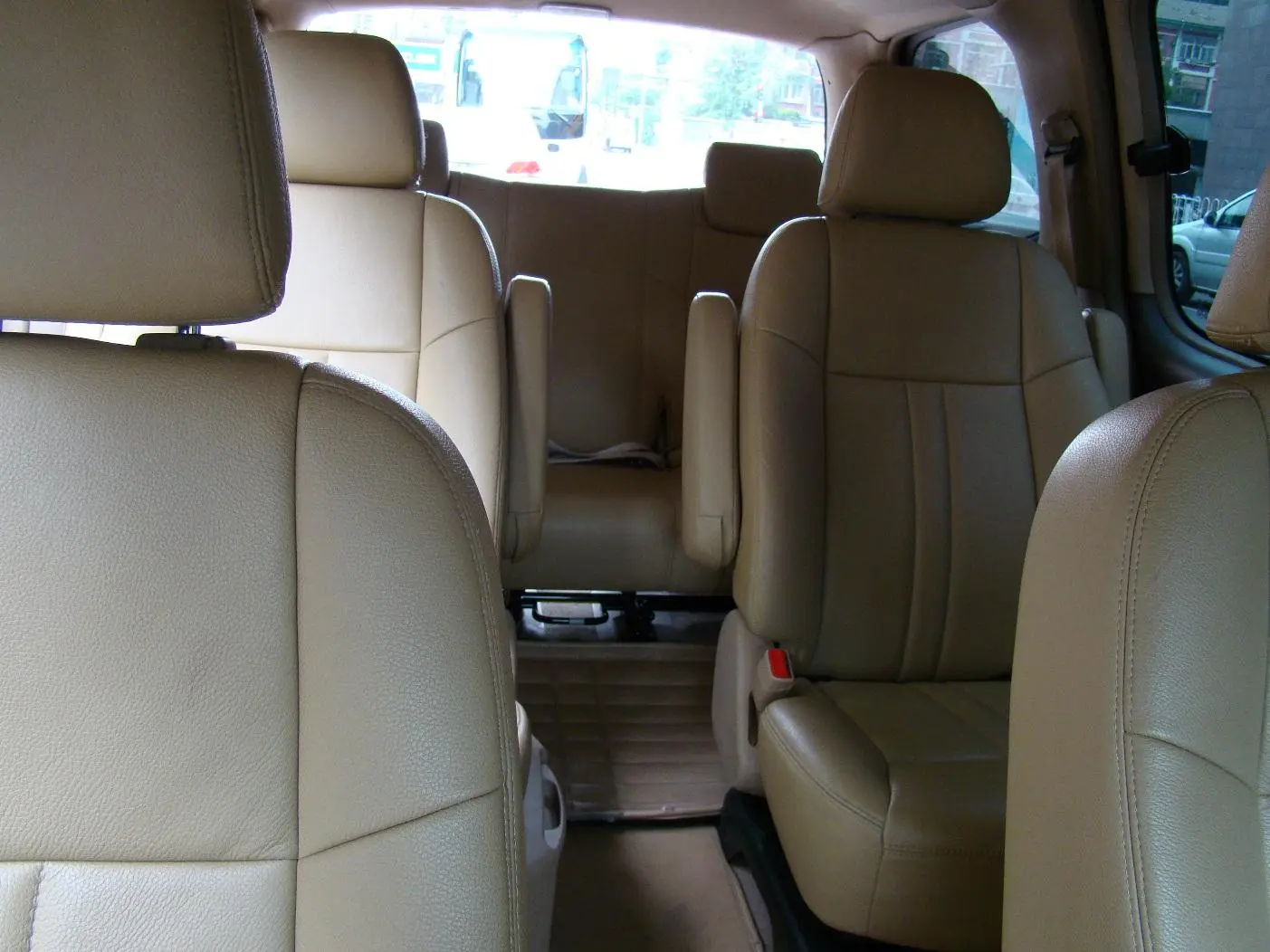
Seven-seat MPV
Capacity. 4–5 guests · 6 with hand luggage only
The workhorse of Beijing business travel. Everyone sits upright, the boot swallows four large cases, and it still fits a hotel forecourt.
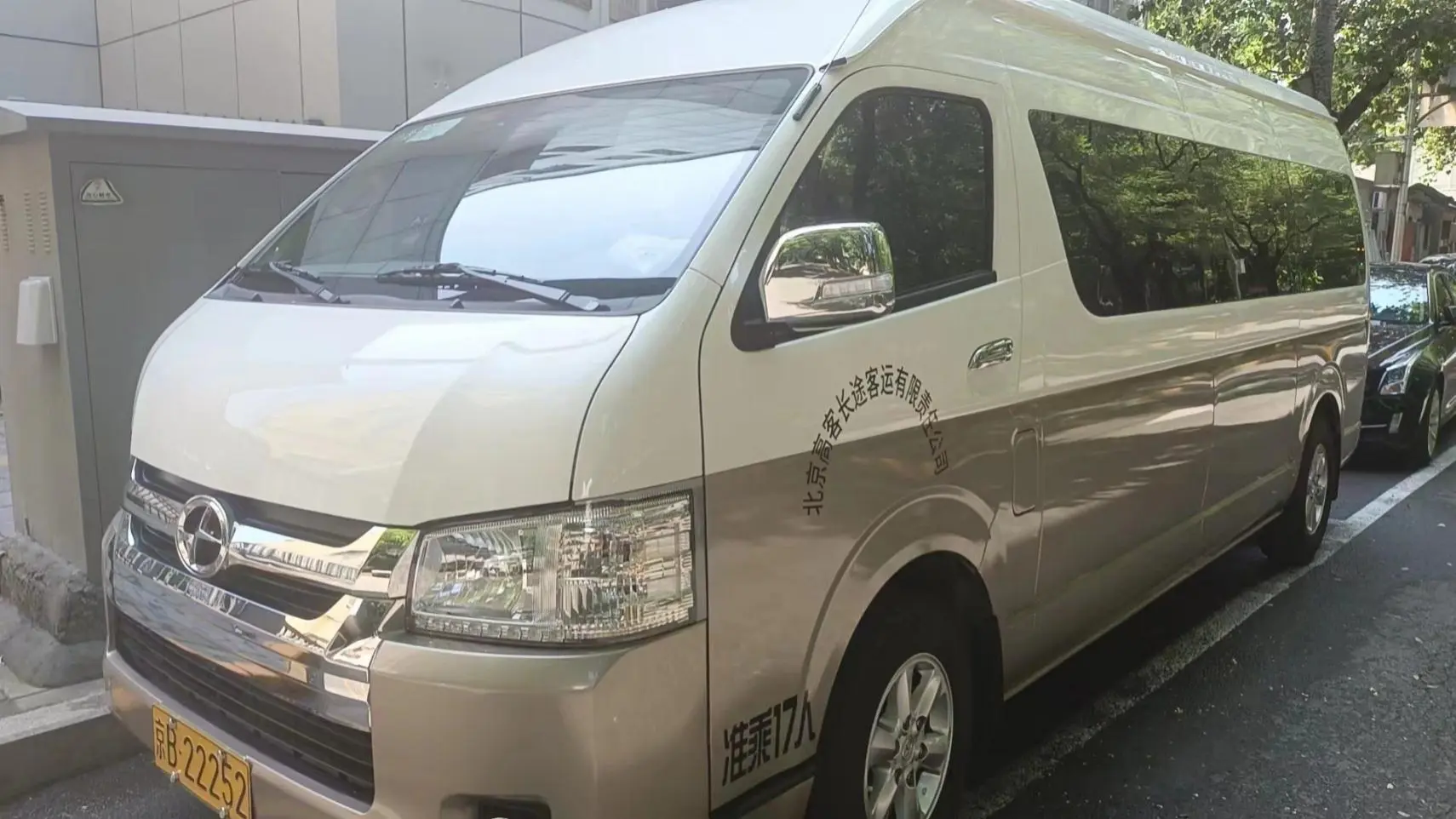
14-seat minibus
Capacity. 7–12 guests with luggage
One group, one venue, one departure time. Same driver all week and a rear compartment that takes the trade-show samples.
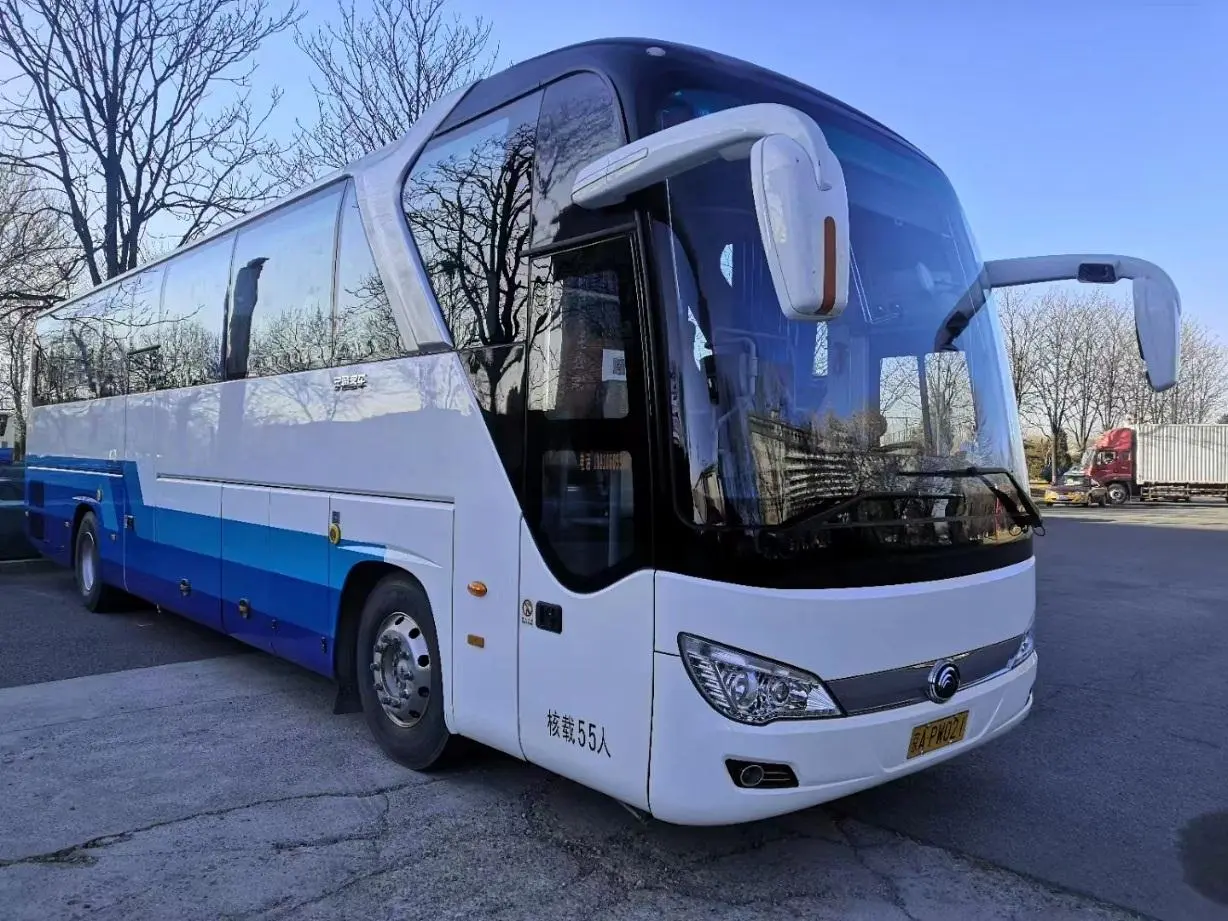
Mid-size coach
Capacity. 15–35 guests · 33–45 seats
Only for a single fixed route. Book 48 hours ahead in fair weeks, and confirm where it can legally stop before you promise a door-to-door drop.
Party | What we send | Why |
|---|---|---|
1–2 | Executive sedan | Fits two people and two large cases; discreet at a client's gate. |
3–4 | Sedan, or one MPV if the bags are heavy | Four adults plus four large cases is an MPV, not a sedan. |
5–6 | One seven-seat MPV | Six works with hand luggage; with checked bags, six needs a minibus. |
7–12 | 14-seat minibus | One vehicle keeps the group on one schedule. |
13–20 | Two minibuses, or one coach if the route is fixed | Two vehicles split by venue when the day has parallel meetings. |
21–35 | Mid-size coach | Single route, single gate, one head count. |
36+ | Two coaches, split by venue | Loading thirty-six people into one door takes twenty minutes. |
Beijing MICE Services: What a Three-Hundred-Person Meeting Actually Needs
When someone searches for Beijing mice services they usually mean one of four things: a board meeting for twelve, a conference for two to three hundred, an exhibition week with a stand, or an incentive group that wants the Wall on the last afternoon. The failure points are different in each case, and none of them is the agenda. For Beijing corporate delegation work of six to fifteen people it is almost always the calendar — too many voices, nobody holding the schedule. We put one coordinator on the ground: rooming list, badges, cars, printouts, restaurant confirmations, and one number to call instead of five.
For anything with a hall, the first job is not booking the room, it is standing in it. A site visit takes half a day and answers the questions a floor plan cannot: the ceiling height against your screen, where the pillars sit relative to the sightline, how wide the loading door is and whether the freight lift takes a two-metre crate, where a coach can legally stop, how far the registration desk is from the hall entrance, and where the coffee queue will form at half past ten. Three numbers kill most venues before you sign: a ceiling under four metres with a big screen, a pillar in the middle of the room, and no service door behind the tea break. We photograph the room, send the pictures with a one-page note the same evening, and tell you the two things you will have to compromise on.
The venue landscape is narrower than it looks. Hotel ballrooms — China World for a launch next to a trade show, Crowne Plaza Lido for anything within walking distance of 798 — do the whole job in one building: hall, breakouts, bedrooms, dinner. The China National Convention Center in the Olympic park and the New China International Exhibition Center in Shunyi are built for scale and freight, but they come with a longer walk from hotel to hall and a stricter loading schedule. Old factories and galleries in 798 are the right answer for a product launch of a hundred and the wrong answer for anything that needs a stage built overnight.
Registration and language are the two places a good conference visibly fails. Two staff per hundred guests in the first hour, badges printed in both scripts, signage in both scripts, and ten per cent spares for the people whose names were spelled differently on the passport. Interpretation for an audience over thirty means a booth, rented receivers, and two interpreters per language alternating every twenty to thirty minutes; the equipment is a rental line item, not something that arrives with the car. And Beijing conference transportation is a loop, not a list of rides: hotel to venue to hotel, same driver, same times, every morning of the week, with one person at the door counting heads. Upstairs, Beijing business meeting assistance means a body in each breakout room: someone who knows where the extra chairs are, keeps the printouts moving, and tells you when the room next door has finished early.
Exhibition weeks have their own clock. Beijing trade show services for us means badge collection the day before, two staff per stand, a bilingual one-pager per product line, a lead sheet in Chinese, and a coordinator who can reach the organiser directly when the aisle power fails. Freight and stand build are booked weeks ahead because the venue's loading schedule is fixed and the trucks queue; samples that arrive on the opening morning arrive after the first buyers have walked past. It is the least glamorous half of Beijing mice services, and the half that decides how the week feels from the inside.
Lead time | What happens |
|---|---|
6 weeks out | Venue shortlist from your head count and your freight; hotel block held; two site visits booked. |
4 weeks out | Contract signed, hall dimensions and ceiling confirmed, interpretation format decided, stand build and freight booked. |
2 weeks out | Interpreters named with industry matched; badge list locked; transport loop drawn; dinner and breakout rooms held. |
1 week out | Run sheet in both languages; staff briefing; spare badges printed; contingency car on standby for the whole week. |
On the day | Coordinator on site from 07:00; registration staffed an hour before the doors; one number for you to call. |
None of this is complicated; it is several small things that must happen at the right hour. That is the case for handing the whole line to one team: a Beijing business assistant who holds the schedule, a car from a Beijing executive transportation fleet, and a room someone has already walked through. Corporate clients call it Beijing corporate travel support; travellers call it the reason a Beijing business trip stopped feeling like work. The test of a Beijing business travel agency is whether your week runs without you managing it — and the test of a good Beijing business travel guide, we think, is whether it tells you where to eat next.
5. Half-Day Plans for the Hours Between Meetings
These five plans assume you have three to five hours, no car of your own, and need to be back at the hotel by evening. Each one lists the address, how to get there without a car, what the ticket costs, and the hours that decide whether the plan works at all — because half of these fail on opening times, not on traffic. If your window is longer than a morning, the wider list is things to do in Beijing.
Hours you can spare | Take this | Why it works |
|---|---|---|
2, weekday morning | Temple of Heaven, 06:30 | Five minutes from Line 5; everything worth seeing is outdoors, and the halls open at 08:00. |
3, any morning | The hutong morning | No car needed, no ticket, and it ends at 09:30 in time for your first meeting. |
3–4, must start early | Summer Palace | Gates at 06:00, halls at 08:00; 35–45 minutes from the CBD if you leave before seven. |
Half a day, weekday | 798, then dinner in Sanlitun | Twenty minutes from the CBD; galleries only open after 10:00, so there is no point arriving early. |
A full day | Mutianyu | Needs a 07:00 departure and a car; nothing else fits around it. |
The hutong morning
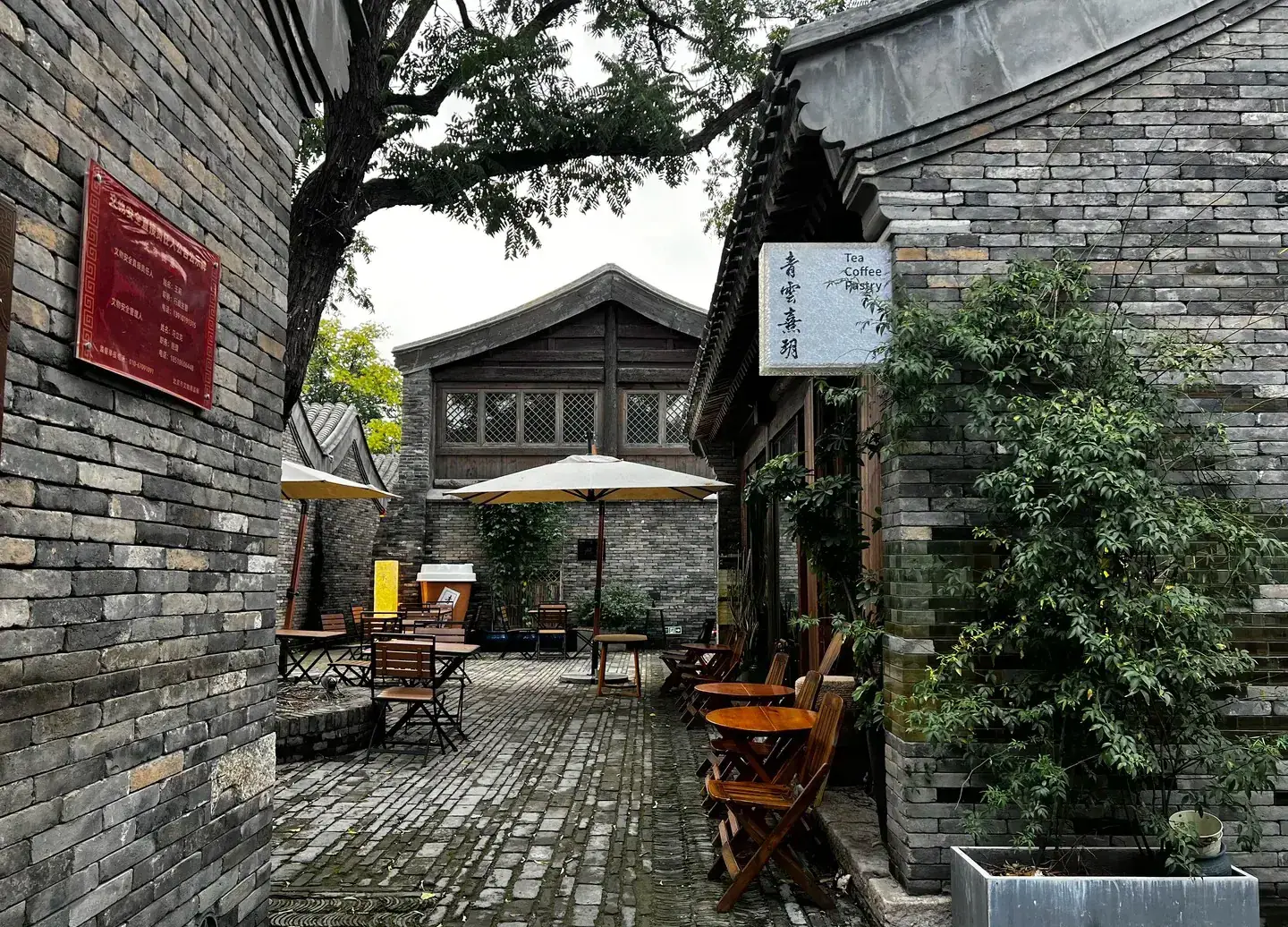
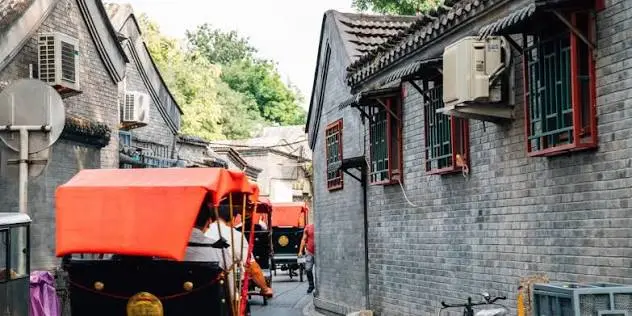
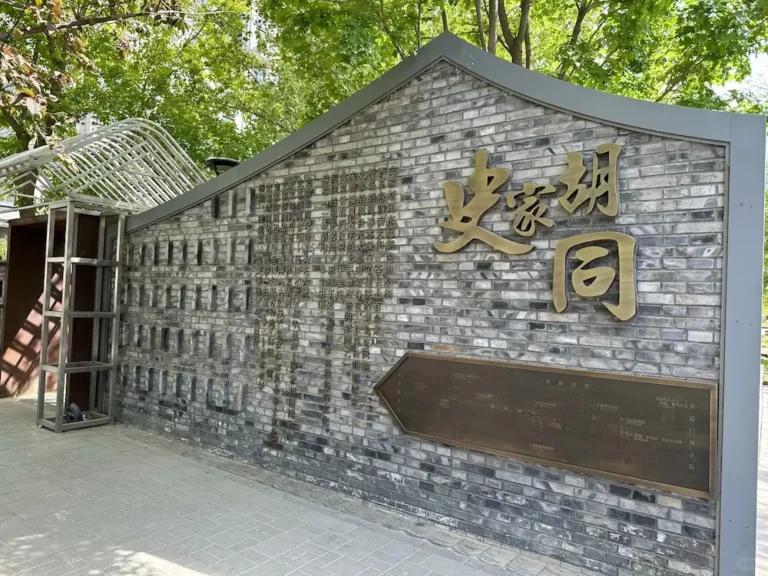
Start at the Drum and Bell Towers in Dongcheng, walk south through the lanes to Nanluoguxiang's quieter side streets, stop for coffee in a courtyard café, and finish at the Houhai lakes before the tour groups arrive. This is the Beijing that surprises people: low grey roofs, bicycles, exercise classes in the park, and not a single tower in sight. Finish by 09:30 and you are at your meeting on time. We book it as a two-hour Beijing hutong walking tour with a guide who lives in one of those lanes; what is original, what is rebuilt and what is stage set is covered in our guide to Beijing's hutongs.
Address. Zhonglouwan Hutong, Dongcheng — the Drum and Bell Tower square, north end of the old city
Getting there. Metro Line 8 to Shichahai, Exit A2, three minutes on foot; or Line 2 to Gulou Dajie, Exit G, eight minutes. Cars drop on Gulou Dajie — the lanes themselves are pedestrian.
Tickets. The walk is free. To go up: Drum and Bell Tower combined ticket ¥30 (Drum ¥20, Bell ¥10), bought on the 北京钟鼓楼 WeChat account or at the window with your passport.
Hours. Towers 09:30–17:30 (late Oct–late Mar 09:30–16:30), closed Mondays. Lanes are awake from 06:30; cafés from 09:00.
Summer Palace before the crowds
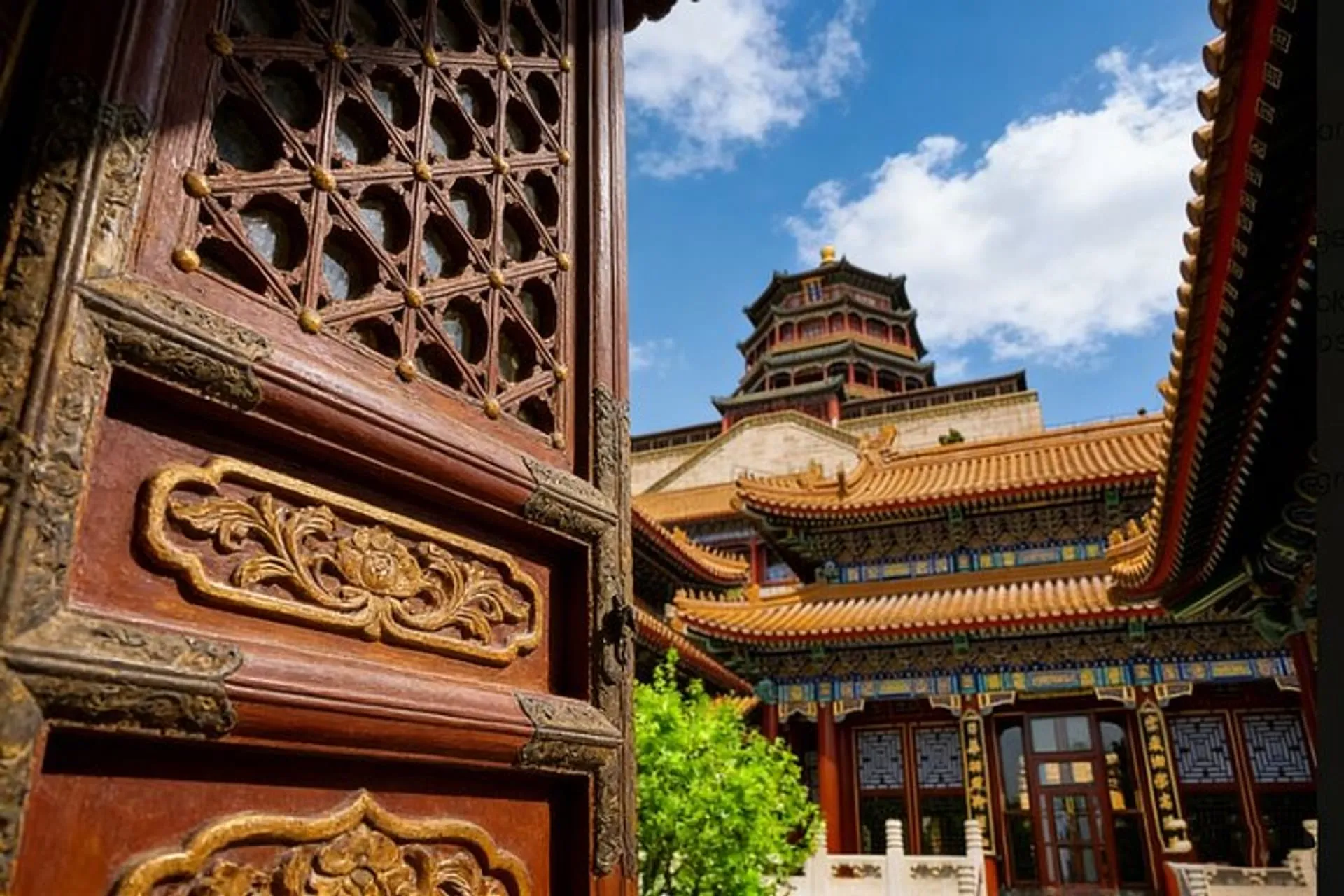
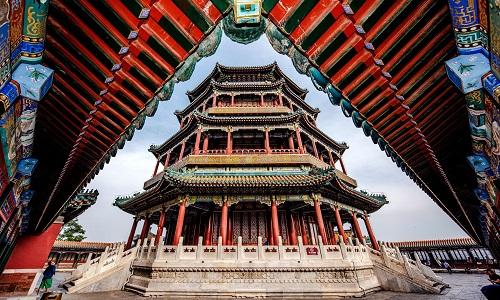
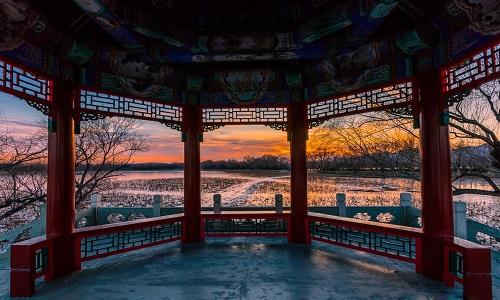
The park opens at 06:00 in high season and the first hour is worth the early start: locals doing tai chi, mist on Kunming Lake, the Long Corridor almost empty. Walk the lake circuit, climb to the Tower of Buddhist Incense once its gate opens at 08:00, and leave by 10:00. From the west side it is 25–30 minutes back to Zhongguancun or Haidian. If you would rather be met at the North Gate by someone who already knows which halls are open, that is our Summer Palace tour from Beijing.
Address. 19 Xinjian Gongmen Rd, Haidian — North Gate (北宫门) is the one closest to the lake
Getting there. Metro Line 4 to Beigongmen, Exit D, five minutes to the North Gate. By car 35–45 minutes from the CBD, 20 from Zhongguancun.
Tickets. ¥30 park entry (Nov–Mar ¥20). ¥60 combined ticket adds the halls inside — Tower of Buddhist Incense ¥10, Deheyuan ¥5, Suzhou Street ¥10, museum ¥20. Passport number required, booked on the official 颐和园 mini-program.
Hours. Park 06:00–20:00, last entry 19:00 (Nov–Mar 06:30–19:00). Halls 08:00–18:00, closed Mondays.
798 Art District
Former electronics factories turned galleries, design shops and large-format photography. It is the easiest cultural half-day from the CBD — 20 minutes by car — and the best place to buy a gift that is not a fridge magnet. Weekday afternoons are calm; weekends are busy with local families.
Address. 4 Jiuxianqiao Rd, Chaoyang — enter from the west gate on Jiuxianqiao Road
Getting there. Metro Line 14 to Wangjing Nan, then a ten-minute taxi to the west gate; or 20 minutes by car from Guomao and Sanlitun. Paid parking inside the district.
Tickets. Free to walk in. Individual galleries charge ¥50–150 for a blockbuster show; most are free.
Hours. District open all day; galleries 10:00–18:00, many closed Monday. Cafés and shops run later.
Temple of Heaven at opening
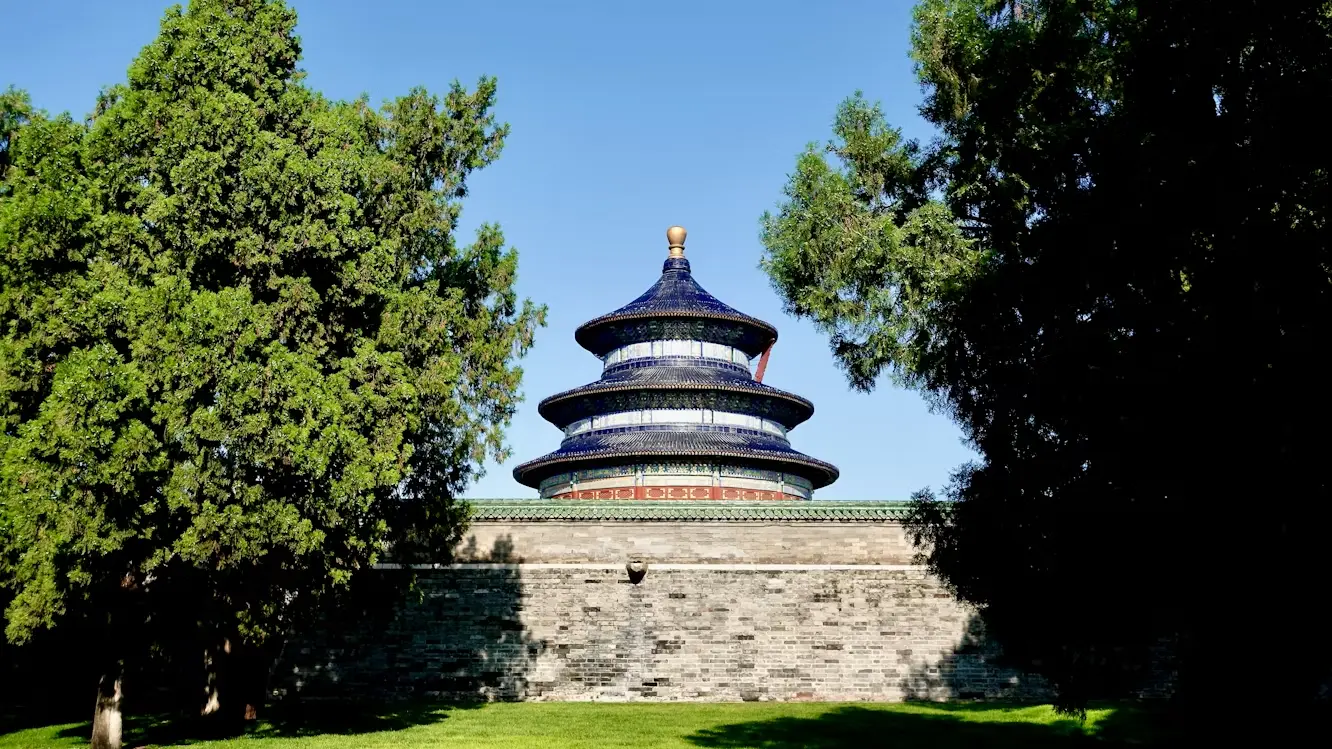
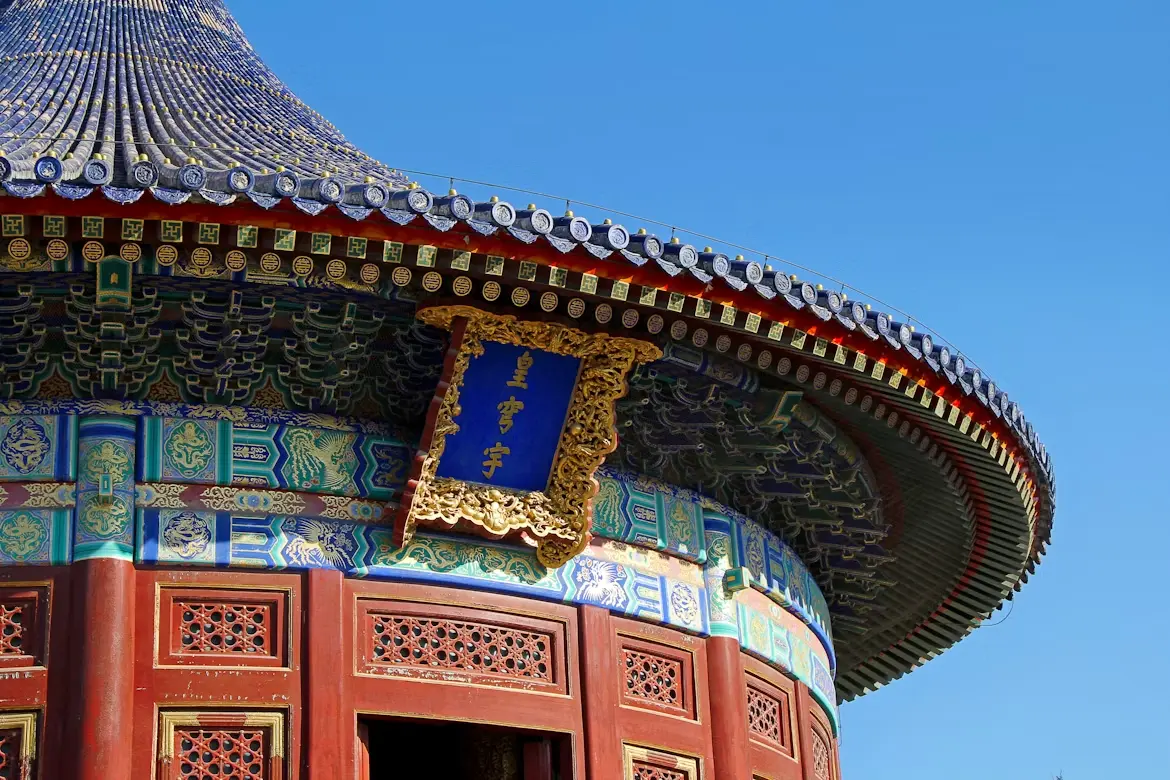
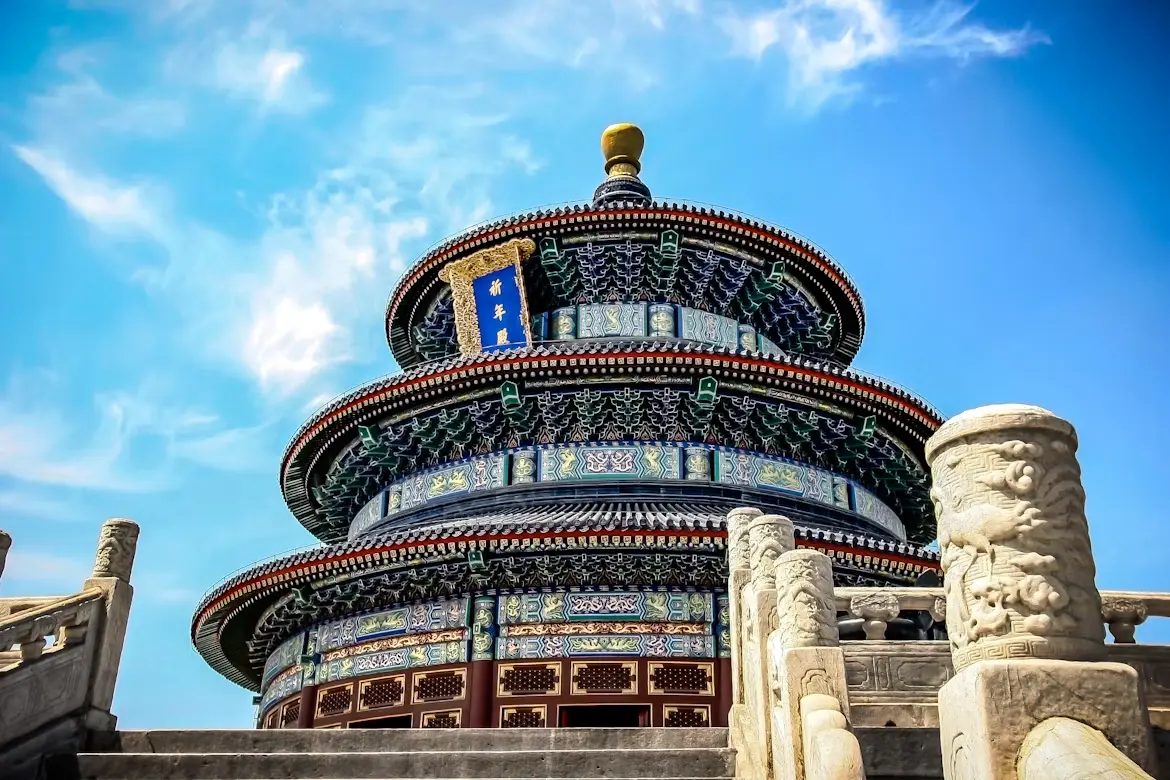
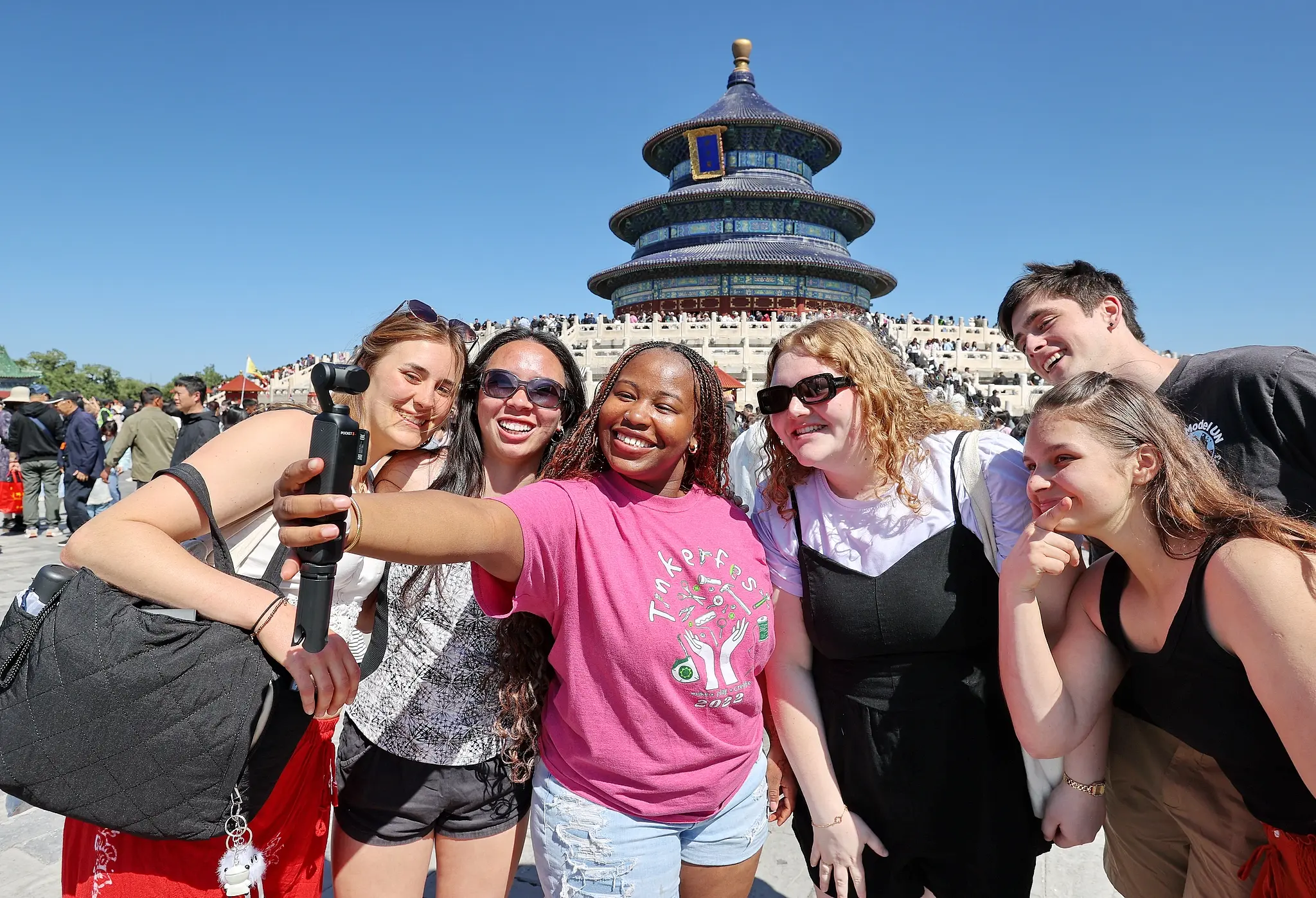
Arrive at the east gate at 06:30 and you walk into the best free show in Beijing: hundreds of locals dancing, playing cards, singing opera to a handheld speaker, practising tai chi under the cypresses. The Hall of Prayer for Good Harvests is almost empty for the first hour after it opens. Two hours is enough, and Qianmen is a fifteen-minute walk south for breakfast.
Address. 7 Tiantan Neidongli, Dongcheng — East Gate is the one on Tiantan Road
Getting there. Metro Line 5 to Tiantan Dongmen, Exit A, five minutes to the East Gate. Qianmen is a 15-minute walk south afterwards.
Tickets. ¥15 park entry (Nov–Mar ¥10). ¥34 combined ticket adds the Hall of Prayer, the Echo Wall and the Circular Mound. Booked on the 畅游公园 mini-program with a passport number.
Hours. Park 06:00–21:00, closes 22:00 (Nov–Mar from 06:30). Halls 08:00–17:30, closed Mondays.
The Great Wall at Mutianyu
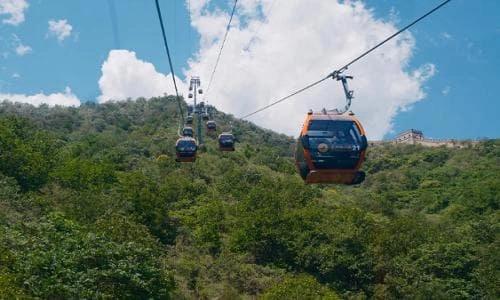
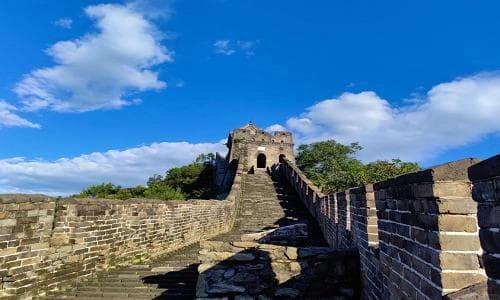
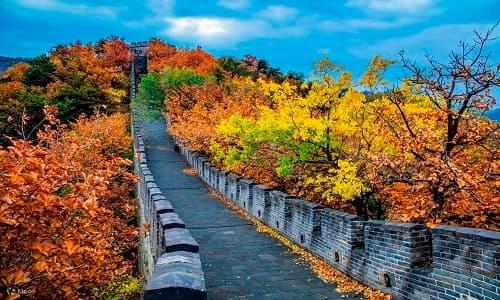
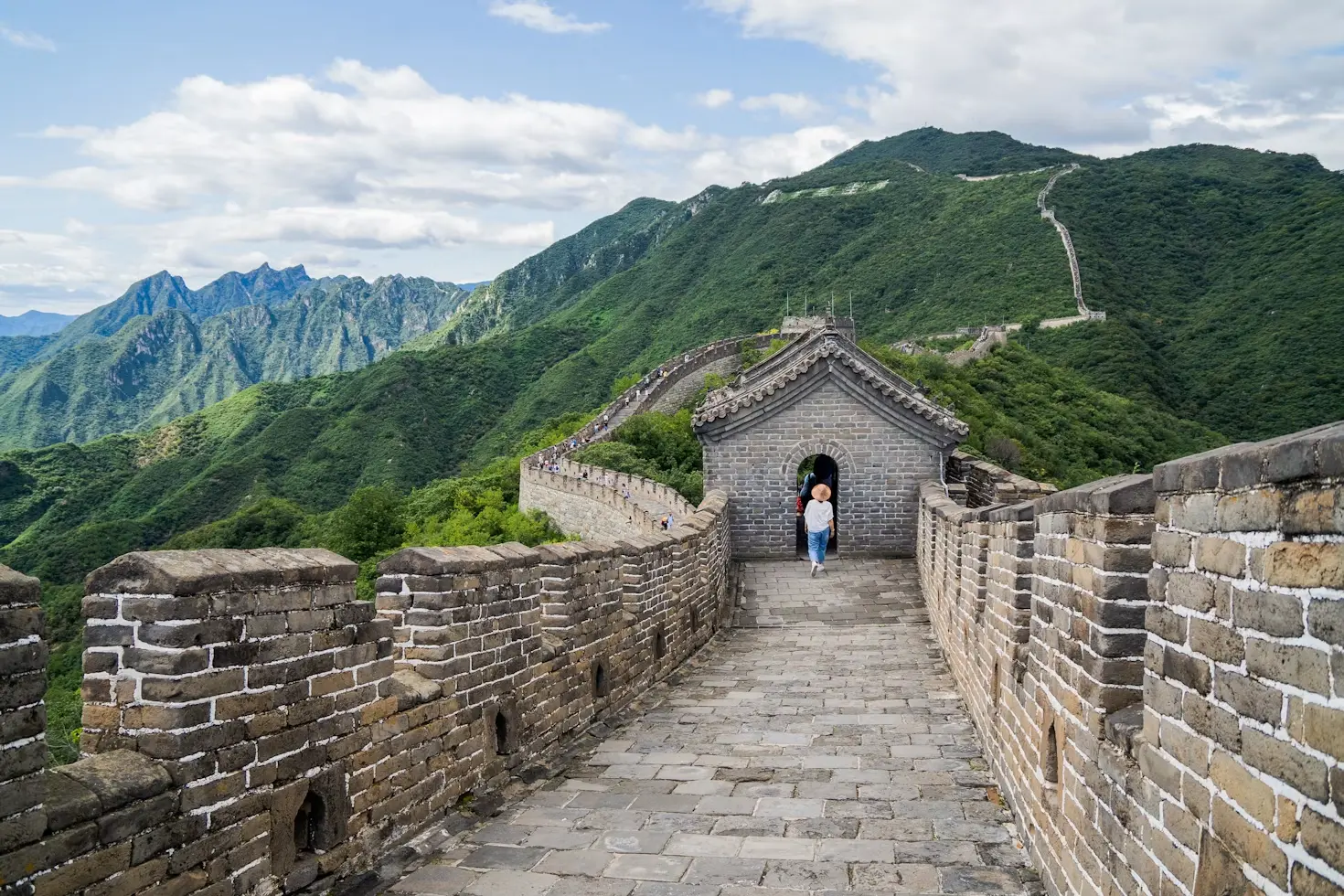
Ninety minutes north of the city, restored but far quieter than Badaling, with a cable car up and a toboggan down. Leave at 07:00, walk two towers, lunch in a village restaurant, and be back in the CBD by 16:00. If you have one free day on a business trip, this is the one to spend it on. We run it as a private Mutianyu day trip from Beijing: cable car up, toboggan down, lunch in the village, driver waiting. Choosing between the sections is its own decision — which Great Wall to see from Beijing.
Address. Mutianyu Village, Bohai Town, Huairou — about 70 km north of the centre
Getting there. Car via the Jingcheng expressway, exit 13 (Beitai Rd), 90 minutes; private cars stop at the visitor centre and a shuttle covers the last 3 km. Public route: 916 Express from Dongzhimen to Huairou, then H23 — 2–2.5 hours and not viable before a meeting.
Tickets. ¥45 entry (mid-Nov–mid-Mar ¥40); shuttle ¥15 return; cable car ¥100 one way or ¥140 return; toboggan separate. Booked on the official Mutianyu mini-program with a passport.
Hours. 07:30–18:00 weekdays, last tickets 17:00; slightly later at weekends. Towers 1–18 are open.
6. Evenings That Work After a Long Beijing Business Day
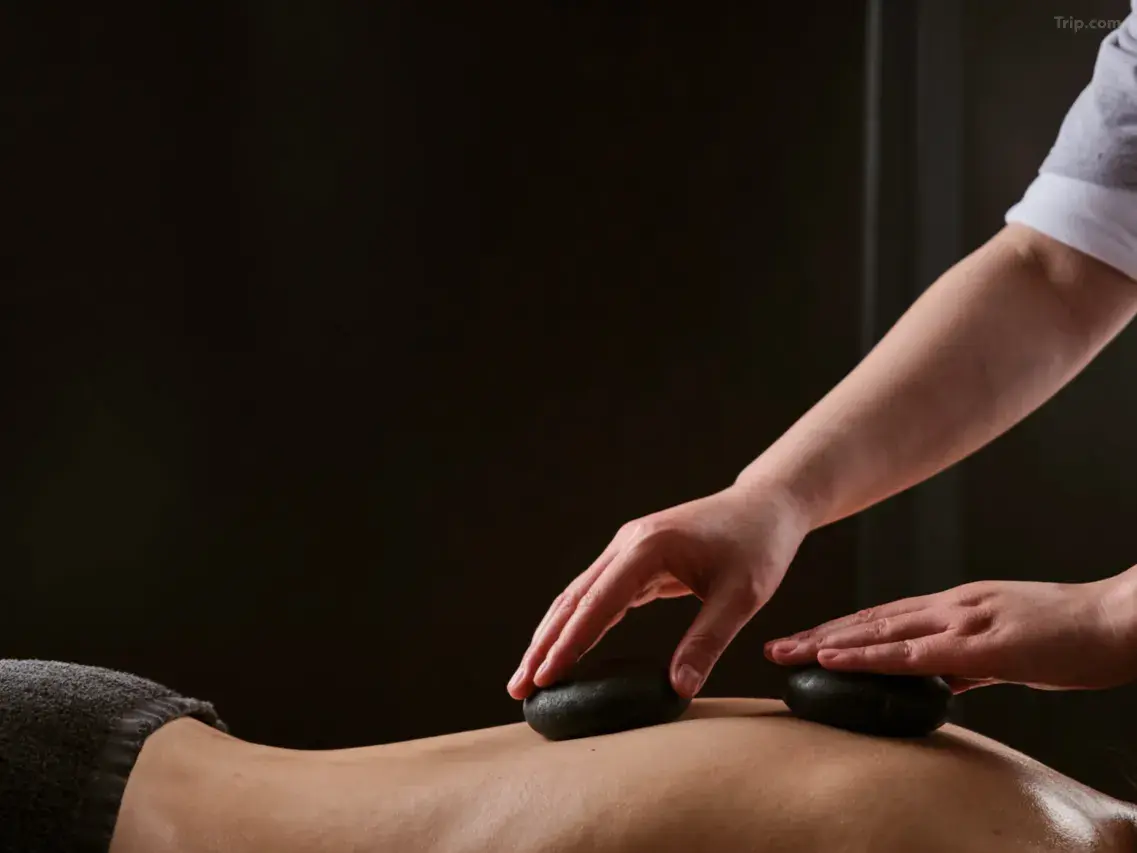
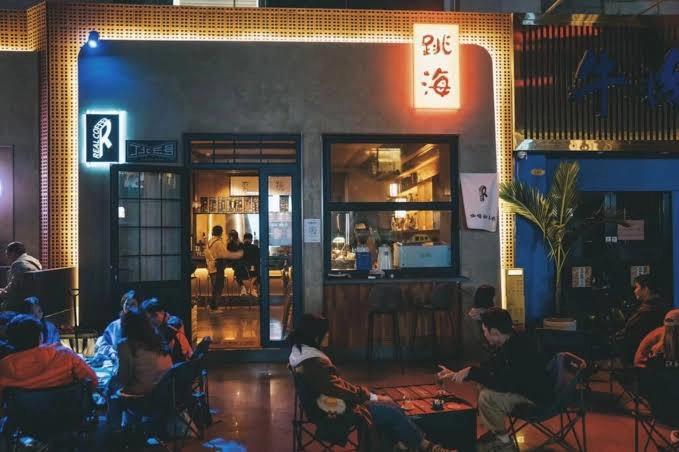
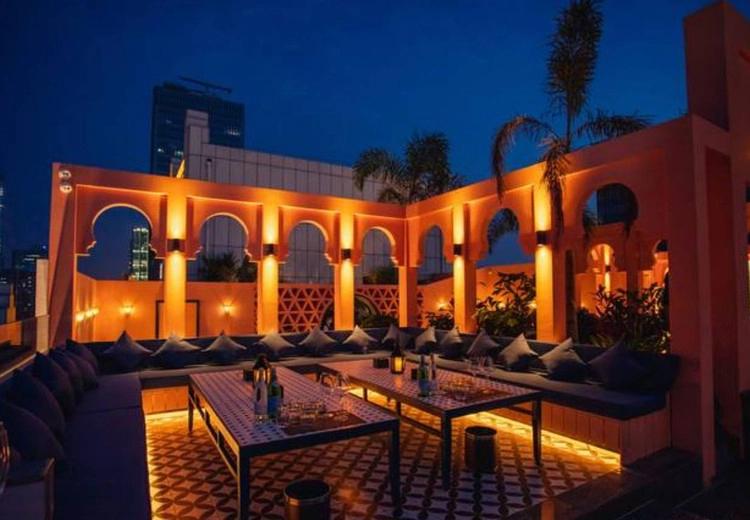
Beijing evenings are where a business trip becomes a memory — and where deals are actually closed. Three formats, in ascending order of formality. Two things we keep off the schedule unless the group asks for them: the lit Beijing night tour along the central axis, and a late massage — the good spas in Beijing are mostly inside the CBD hotels, and most take walk-ins until 21:00.
A good dinner, no ceremony. Duck, a few cold dishes, a bottle of something local. Ninety minutes, walkable from Sanlitun or Guomao. Best for the second night, when everyone is tired.
The hosted dinner. Your counterpart chooses the restaurant, orders for the table, and expects two hours. Bring a small gift, arrive five minutes early, and let the host lead the seating. This is the evening that decides how the next meeting starts.
Something to look at. An acrobatics show, a Peking opera excerpt, or a walk along the Liangma River where the lighting and the crowd make a pleasant hour. Good for a delegation's first night or for hosting guests who have seen the city before.
Two local habits worth adopting: dinner is early, and the walk after dinner is part of the evening. Beijing's parks and riversides are lively after dark, and a twenty-minute walk is the most pleasant way to end a working day.
7. Here for a Trade Show? Beijing Trade Show Services and Two Evenings
Exhibiting in Beijing usually means three days on your feet at the venue, plus two evenings nobody planned. The hall closes, the badges come off, and the week's real conversations start. The two evenings are the part worth designing.
Two scheduling notes: put one proper dinner in the calendar for the night the show closes, and keep the other evening close to the hotel — after three days on marble, nobody wants a forty-minute drive to a restaurant. During the day, walk the floor between 12:00 and 14:00 when the aisles empty; that is when you see what your competitors are doing.
Beijing trade show services and Beijing exhibition interpreter shifts are scheduled by the show calendar rather than by the clock — four to six weeks out in peak season, two staff per stand, half-day shifts. The service line itself is in Section 4.
8. Two Beijing Business Trip Itineraries That Work: 3 Days and 5 Days
Three days: business, with the city folded in
Day | Plan | The good part |
|---|---|---|
Day 1 | Land PEK 11:00 · check in · 16:00 walk the hutong lanes · 19:00 duck dinner | Arrival transfer with meet and greet; duck on day one, when you still have energy. |
Day 2 | 09:30 meeting · 12:30 long lunch with the counterparty · 15:00 second meeting · 18:30 dinner hosted by your client | One meeting fewer than you planned; the lunch is the real meeting. |
Day 3 | 07:00 Summer Palace or 798 · 11:00 final meeting · 15:00 airport transfer | A stolen morning, then a flight you are not sprinting for. |
Five days: a weekend on the end
Day | Plan | The good part |
|---|---|---|
Days 1–3 | Meetings, dinners, one half-day of sightseeing | Business done early, so the weekend is genuinely free. |
Day 4 | Mutianyu Great Wall, village lunch, back by 16:00 | Car and driver for the day; no tour bus, no group queue. |
Day 5 | Temple of Heaven at 07:00 for the park life · Qianmen lanes · afternoon flight | The park at dawn is the single best hour in Beijing. |
Both itineraries assume you will occasionally say no to a third meeting. That is usually the correct call: a counterparty who sees you relaxed at dinner remembers more than one who saw you at four appointments in a day. If the balance tips the other way — fewer meetings, more city — a two-day private Beijing tour covers the same ground with a guide, and the longer shapes are worked out in our Beijing itineraries. Bringing the family along is its own plan: Beijing with kids covers the pacing, and the same car works for both halves of the day.
9. Practical Notes for Beijing Business Travel: Payment, Passports, Weather
Paying, getting online, moving about
Alipay and WeChat Pay both accept foreign cards and cover almost everything: metro, taxis, coffee, museum tickets, the duck dinner. Carry a little cash for the exceptions — tiny shops, some park kiosks, rural stops. An eSIM installed before departure saves the queue at arrivals; hotel Wi-Fi handles email and calls comfortably.
The metro is fast, bilingual and cheap, and the airport express is the simplest way in from PEK. For anything involving a client, a car is worth the difference. Ride-hailing works for solo trips; it struggles when the day changes or when you need the same driver twice.
Reservations, tickets and passports
Carry your passport, not a photocopy: hotels, museums, some attractions and ticket desks ask for it. The Forbidden City requires a passport number at booking and sells out days ahead in peak season. Popular duck restaurants take reservations a day or two out. On the entry side, many nationalities can now spend up to ten days in the Beijing municipality without a visa when they are flying through to a third country, which is enough for two meeting days and a weekend — the current conditions are in our Beijing visa-free transit guide. Ask your hotel concierge or your coordinator to hold everything in one go — it takes minutes and removes most of the friction.
Weather, clothing and air
Spring (April–May) and autumn (September–October) are the pleasant months; summer is hot and wet; winter is dry, cold and occasionally hazy. Business formal is the norm for CBD meetings, smart casual for tech campuses. A light jacket in spring and a mask in winter haze are the two things visitors most often forget. Season by season — the two fair weeks to avoid, the haze months, what a 07:00 walk feels like in December — is the best time to visit Beijing.
Tipping and small change
Tipping is not expected in restaurants, taxis or hotels, and offering it can cause mild awkwardness. Service charges at high-end hotels are the exception. Round up in taxis if you like; nobody will be offended either way.
10. Gifts and Shopping in Beijing, Without the Fridge Magnet
If you need something to bring home that is not a souvenir-shop trinket, Beijing is better than its reputation suggests.
Tea. A small tin of jasmine or oolong from a proper tea shop beats any gift box at the airport. Ask to taste before buying.
Silk and cashmere. Scarves from established shops rather than market stalls; the price difference is real and so is the quality.
Design objects from 798. Prints, ceramics, stationery from small studios — good for colleagues and easy to carry.
Panjiayuan market. Weekend antique and craft market; go early, bargain politely, and buy what you like rather than what looks "old".
Food gifts. Tea, dried fruit, sauces from an old shop. Practical, and customs-friendly.
Gift etiquette for Chinese counterparts: avoid clocks, knives and letter openers, and avoid white or black wrapping. A branded item from your company, or a local specialty from home, is the safest register — and it should be given at the end of a visit, not the start.
11. The Short Version: One Team Holding the Week
Beijing rewards the trip that is planned around the meetings rather than the one that tries to squeeze the city between them. Sleep inside the district you work in, let a car rather than a taxi rank carry the week, book the interpreter by the half-day and send the deck a day early, and keep one morning for the wall or the hutongs. Do that and the city is generous: good hotels at a price that surprises people, dinner that runs two hours without anyone rushing, and a free 06:30 walk that is better than most paid attractions.
The wider city planning — seasons, districts, the standard sights done properly — is in our Beijing travel guide, and the destination overview with the routes out of the city sits on our Beijing destination page.
Tell us your meetings. We’ll build the rest.
Send four things and we can quote the whole week in one reply:
Dates and airports. Which terminal you land at, and whether the outbound is PEK or PKX — the two are an hour apart in traffic.
Your fixed meetings. Address, start time, head count, and whether anyone on the other side reads English.
The language you need. Boardroom consecutive, conference simultaneous, or someone at a stand for two half-days.
How much free time you actually want. Say one half-day and we will spend it well rather than filling the diary.
Send your dates, your fixed meetings and how much free time you want. We come back with a hotel recommendation, a couple of meals worth planning around, and the half-day that fits your week — with transfers and an interpreter if you need one. Email or WeChat is fine; one point of contact from arrival to departure.


Traveler Discussions
Questions from travelers